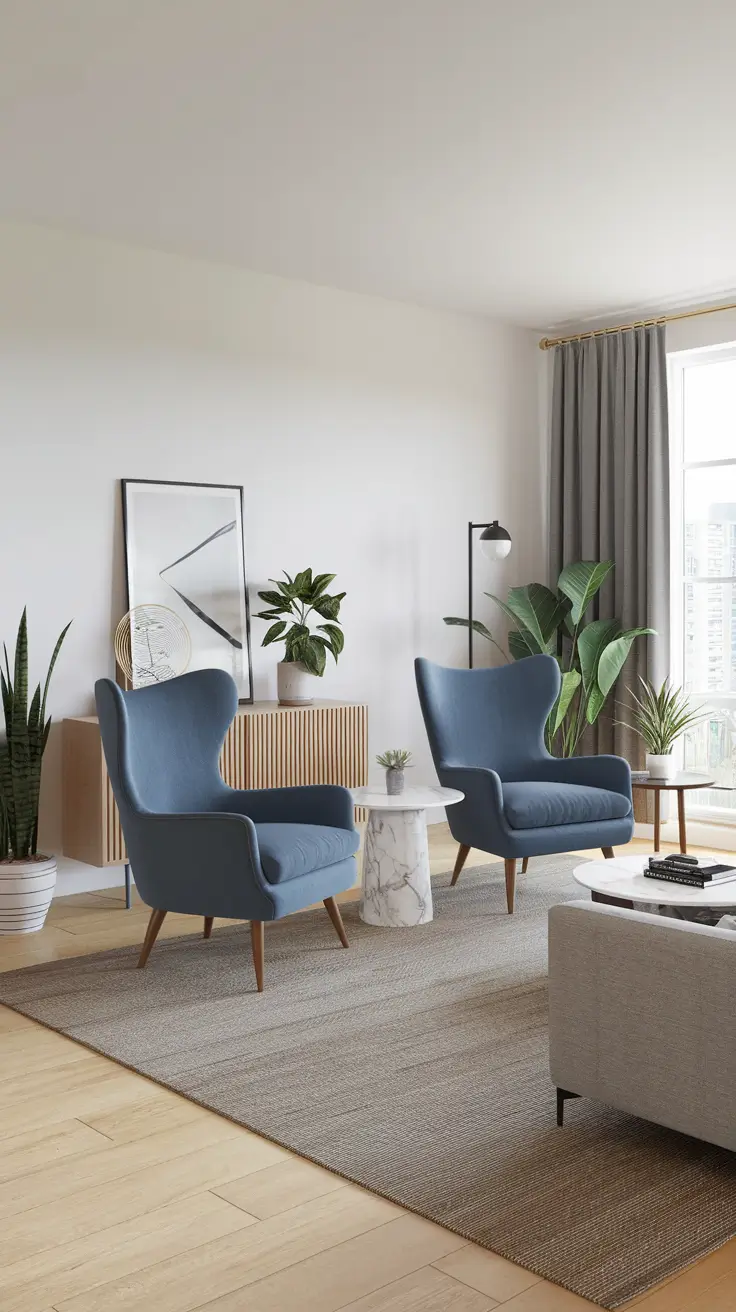
Stylish Living Room Chair Ideas for Every Space
One of the most common inquiries I receive from readers is how to choose chairs that complement a room without overwhelming it, especially when exploring living room chairs ideas for small spaces or modern living room chairs ideas. This comprehensive guide will walk you through harmonizing comfort, scale, and color to create a cozy yet practical layout for compact living areas. We’ll also explore how texture, chair shapes, and their relationship with rugs, lighting, and sofas contribute to a cohesive design. Discover how armchairs can anchor a contemporary scheme, how wooden chairs add warmth to farmhouse styles, and how DIY refurbishments can stretch your budget without sacrificing elegance. Additionally, I’ll explain how strategic placement enhances traffic flow, sightlines, and conversation zones, enabling you to tailor every idea to your unique space. By the end, you’ll have a clear strategy for selecting chairs that align with your room’s dimensions, your aesthetic preferences, and daily habits.
Optimizing Seating in Compact Living Rooms
When designing seating for smaller rooms, prioritizing movement pathways is essential since every square foot counts. For living room chairs ideas for small spaces, I gravitate toward chairs with open bases, slender arms, and minimal visual bulk to create an airy atmosphere. Chairs with slim profiles, tight backs, and exposed legs reveal more of the rug beneath, making the space feel less congested. A common approach is to float two petite accent chairs opposite a loveseat, fostering intimate conversation without crowding corners. In particularly tight areas, a single swivel chair positioned near a window can pivot to face the TV or sofa, adding versatility. These choices help small rooms feel inviting, flexible, and thoughtfully scaled.
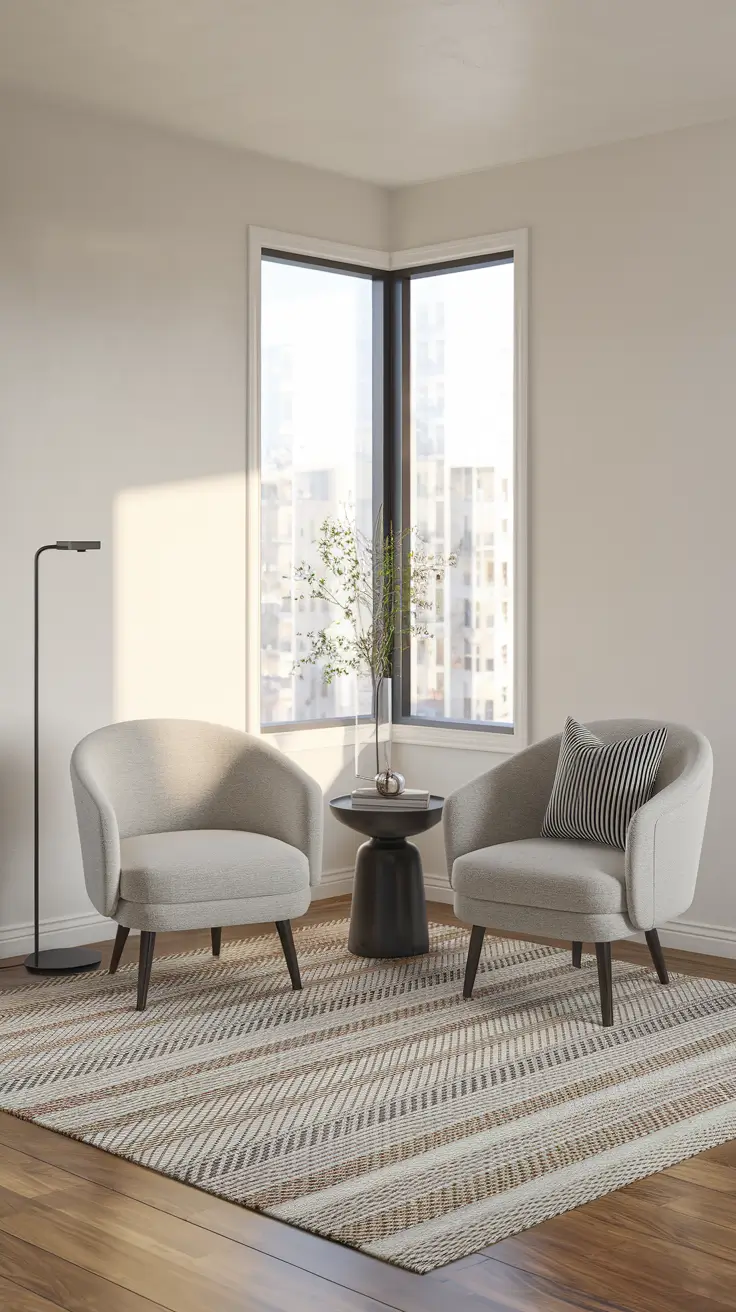
For furniture combinations, I favor armless slipper chairs measuring 26 to 28 inches wide, paired with round side tables about 18 to 20 inches in diameter, and compact floor lamps to avoid surface clutter. Curved-back petite armchairs near corner windows soften the room’s geometry. When storage is limited, a lidded ottoman doubles as a hidden storage spot for remotes and throws, keeping the area tidy. Upholstery in light gray or warm linen reflects light beautifully, while subtle stripes or small-scale patterns add visual interest without overwhelming the design. A low-pile rug around 5 by 7 feet anchors the grouping, and sturdy chair legs ensure stability.
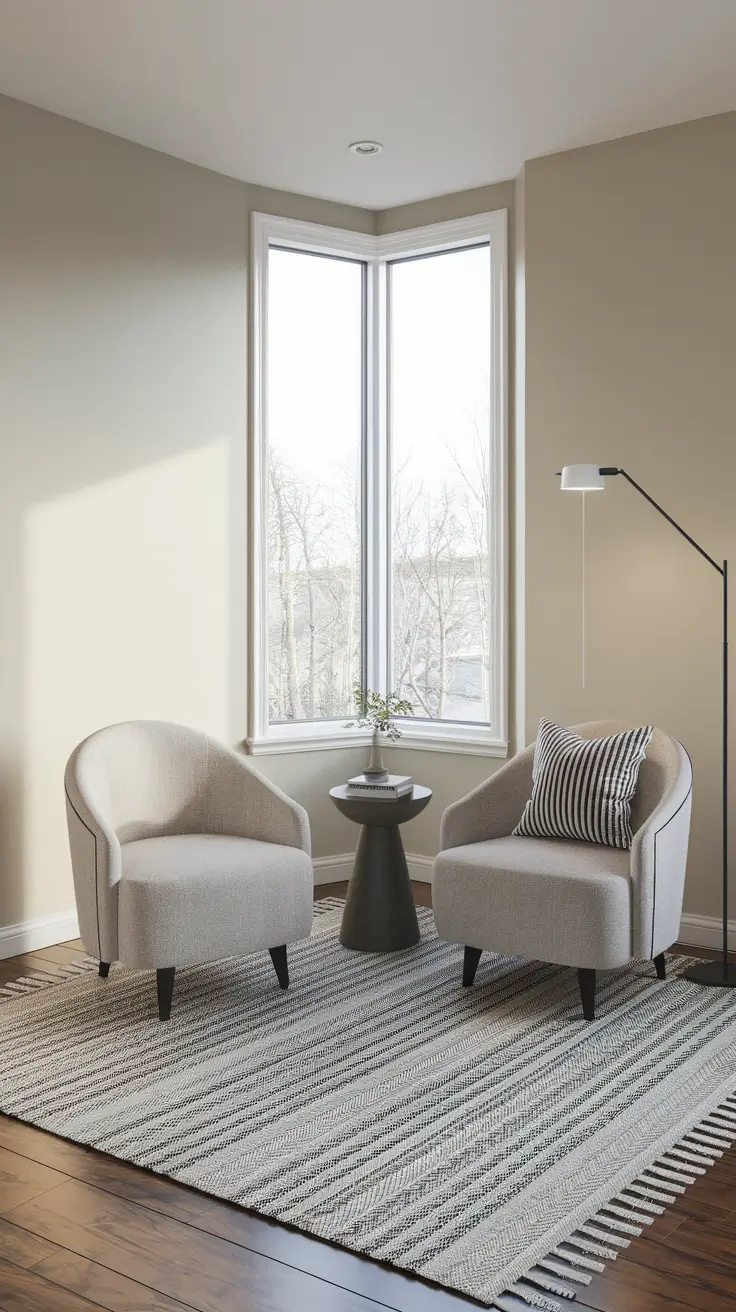
Clearances are crucial in small rooms: maintaining 16 to 18 inches between the coffee table and chair fronts allows easy access, while 30 to 36 inches behind chairs ensures smooth traffic flow, even with guests. Hanging artwork slightly lower than usual can visually lower the ceiling, making chairs feel custom-fitted to the space. Swivel chairs are invaluable in compact layouts, adapting instantly to changing focal points. To unify color schemes, I often echo a chair’s piping color in the rug, creating cohesion.
For lighting, I recommend wall-mounted plug-in sconces above chairs to free up side table space. Opting for a smaller media console on legs rather than bulky cabinets keeps sightlines open. To soften a room that feels too stark, a boucle throw draped over a slim chair adds texture. Finally, a tall plant at chair height breathes life into the corner without consuming precious floor area, completing the setting with effortless charm.
Chic and Contemporary Living Room Chair Inspirations
When assembling modern living room chairs ideas, I emphasize sleek lines, tactile neutral tones, and sculptural elements that double as art pieces. Pairing minimalist armchairs in black or deep navy with a low-profile, blocky sofa creates striking silhouette contrasts. In airy spaces, metal frames in stainless steel or matte black with upholstered seats achieve a crisp yet inviting look. I build a neutral base palette, punctuated by a single green accent in pillows or ceramics to keep the scheme grounded. Repeating thin linear elements—like sled bases or tubular legs—across furniture and lighting reinforces a cohesive modern rhythm.
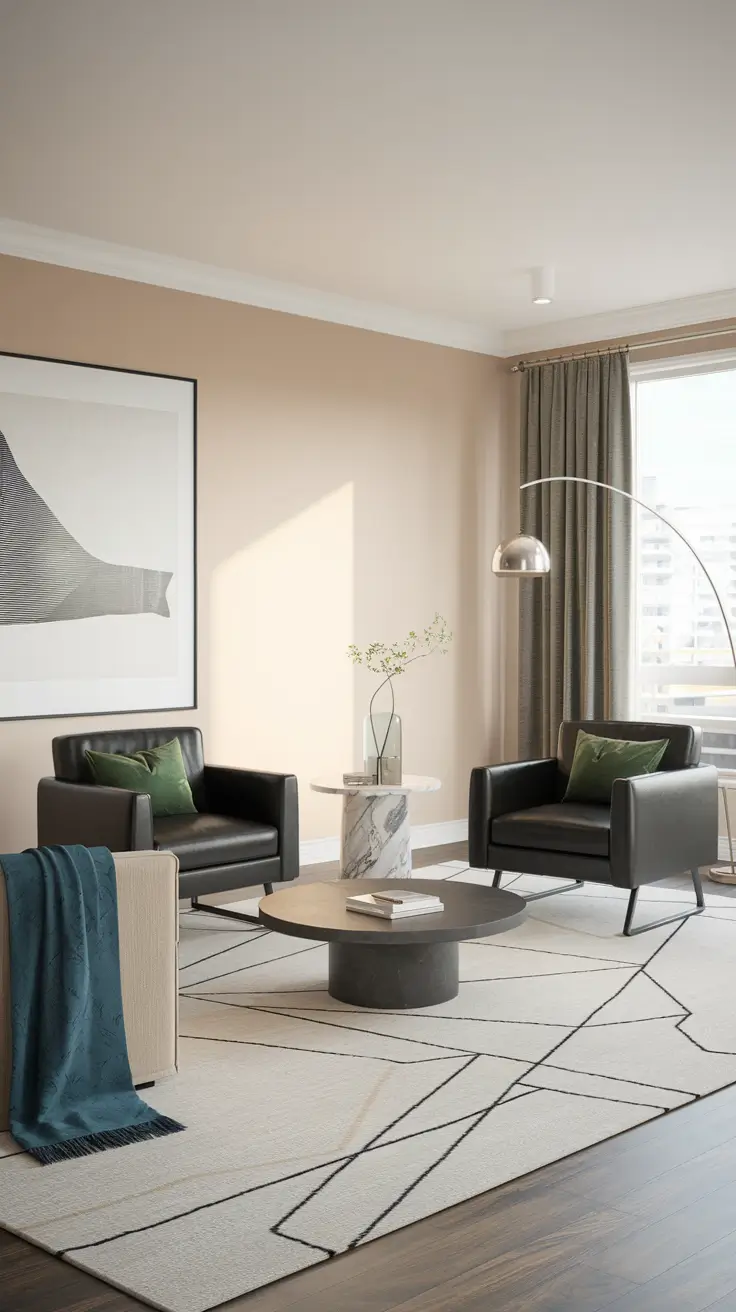
For furnishings, I lean toward box-stitched leather lounge chairs, narrow marble side tables, and drum-shaped coffee tables that soften angular lines. A woven bench offers breathable, extra seating without visual weight. To prevent monotony, I introduce Nigerian indigo textiles or handwoven throws for texture while honoring the modern aesthetic. Mixing warm and cool grays in upholstery and metal finishes adds depth. An arc floor lamp spanning the sofa and chairs unifies the grouping, preventing a scattered feel.
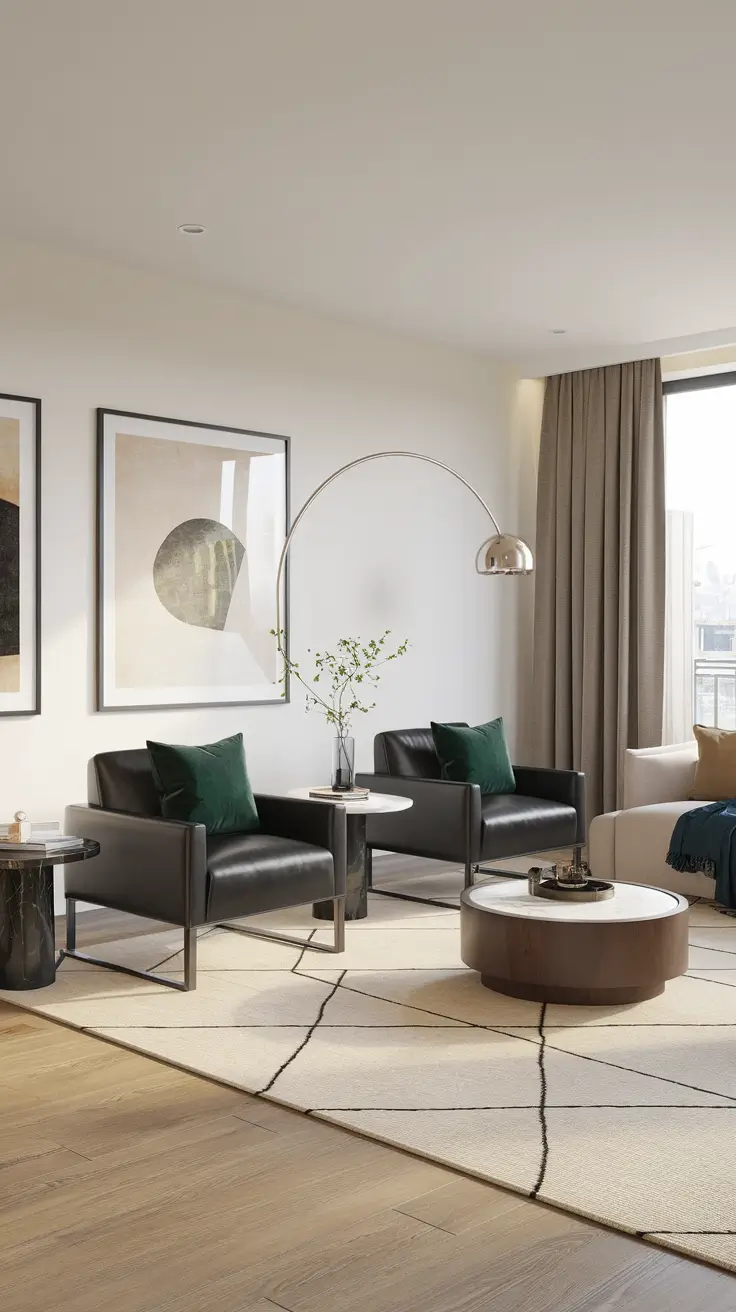
In practice, contemporary rooms feel welcoming when you balance matte leather, nubby wool, and brushed metal textures, which add richness without clutter. Seat heights are kept within 1 to 2 inches above the sofa to maintain conversational balance. The 60-30-10 color rule guides me: 60% neutral, 30% secondary tone, and 10% bold accent through art or a standout chair. Slightly angling one chair inward creates a lived-in vibe. To unify the look, I repeat a material—such as metal—in chair legs, lamp stems, and picture frames.
Low-profile media units and large-scale artwork prevent visual chaos. Soft geometric rugs warm black elements and soften leather’s formality. Glass nesting tables provide flexible surfaces without overwhelming the space. A sculptural planter with greenery adds life and balances the room’s linear modern forms.
Farmhouse-Inspired Chairs for Inviting Living Rooms
For farmhouse living room chairs ideas, I curate cozy, family-friendly pieces that invite lingering. Starting with slipcovered armchairs and spindle-back wooden chairs, I blend comfort with traditional charm without veering into cliché. Vintage-style lighting and braided or flatweave rugs add to the relaxed rhythm. Mixing warm wood tones with crisp upholstery and a neutral palette accented by soft blues or sage keeps the look fresh and adaptable for seasonal updates.
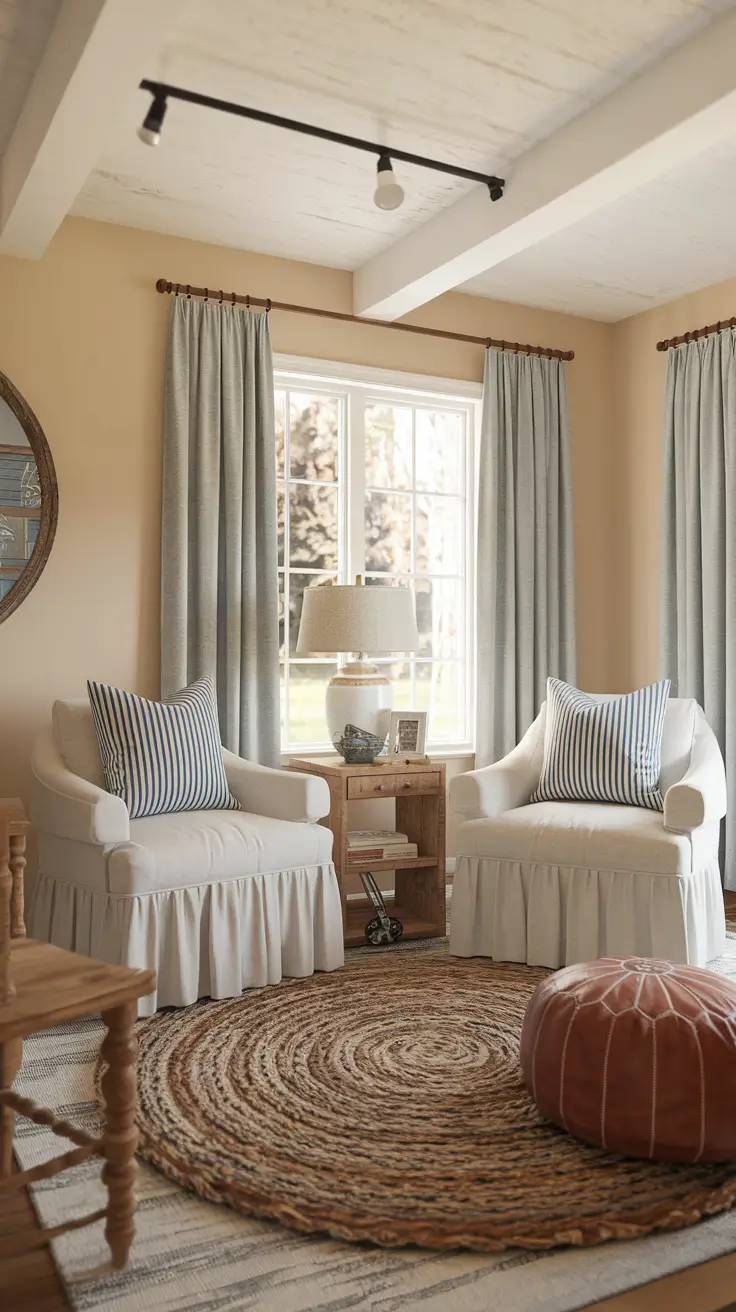
My preferred setup includes two skirted armchairs alongside a reclaimed wood side table, creating a layered yet minimalist feel. A ladder-back chair near the fireplace adds historical character without crowding. Leather ottomans provide durability and easy cleaning, echoed in picture frames or trays. Checked or ticking stripe pillows tie chairs to rugs without overwhelming the eye. Matte, tactile finishes allow sunlight to warm surfaces naturally.
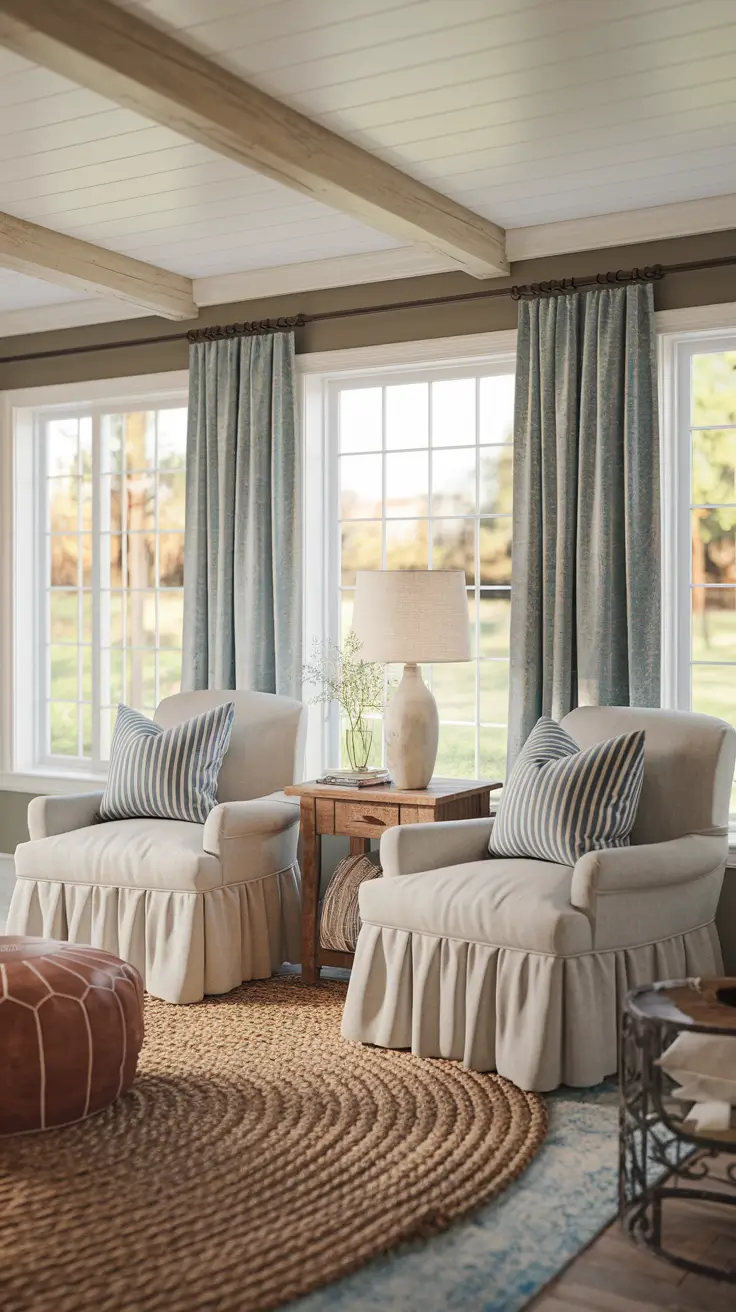
Successful farmhouse designs balance new and worn elements, favor washable fabrics, and keep rolled arms modest to maintain airiness. Adding a linen-shaded table lamp softens rustic vibes and connects to modern pieces. Chairs are spaced at least 36 inches from large objects to preserve traffic flow. Side tables with small vases of clipped branches introduce seasonal freshness.
Wall baskets or peg rails near chairs provide storage for throws, while woven lidded baskets hide magazines. Layering a braided jute rug over a flatweave adds floor texture and warmth. A vintage accent, like an old stool, grounds the story. A plush plaid throw over a spindle chair completes the farmhouse look with simplicity and charm.
Personalized Living Room Chairs Through DIY Projects
When exploring living room chairs DIY ideas, I start with sturdy frames and fresh fabrics to maximize value. Assessing seat foam, joints, and structure is key, as quality foundations elevate any upholstery. Simple updates include repainting wooden frames, reupholstering cushions, and adding new casters or glides for mobility. Replacing old buttons with sleek tufting or opting for clean backs modernizes silhouettes, resulting in custom, polished pieces rather than temporary fixes.
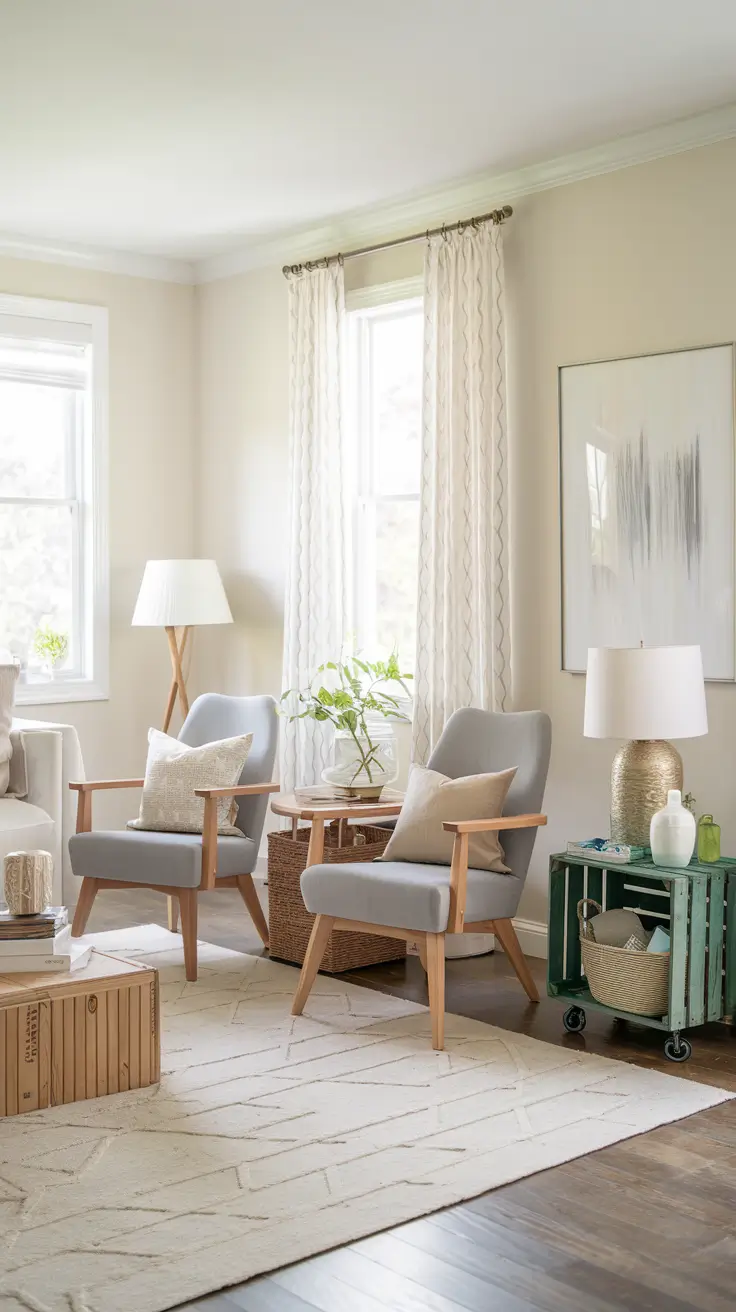
Materials I favor include medium-density foam, durable performance fabrics, and water-based enamel for wood finishes. Renewing straps or webbing restores support, while stain and clear coats refresh wood tones. When coordinating chairs with sofas, I select fabrics that echo the sofa’s undertones for harmony. Patterns are kept small to medium to maintain crispness and seam alignment. Updating lampshades and side table hardware can further unify the look.
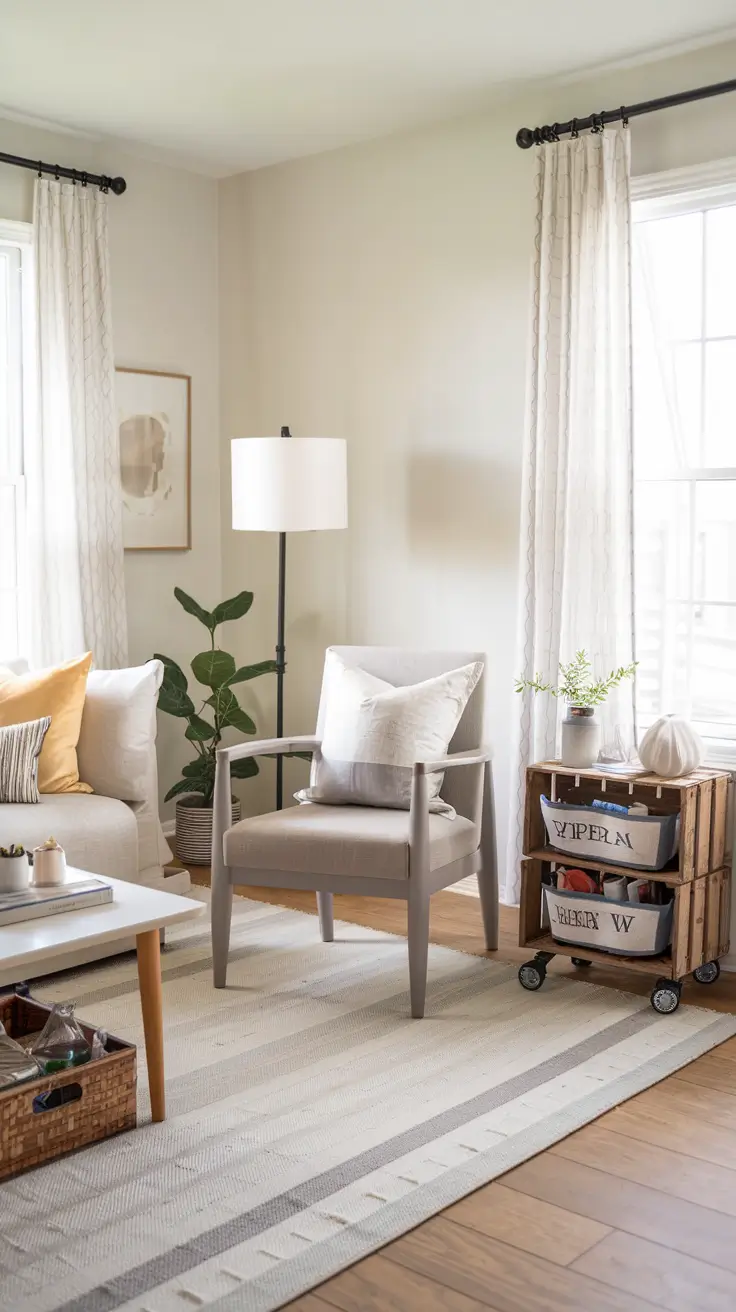
Preparation is vital: sanding, priming, and precise measuring prevent future issues. Seat heights are matched within a few inches of sofas to facilitate conversation. Applying thin paint coats with ample drying time ensures durable finishes. Since gray fabrics shift with lighting, I test samples near rugs and windows. Slipcovers with Velcro tabs offer quick weekend refreshes.
My favorite DIY side table is crafted from an old crate on casters for easy movement. I keep leftover fabric and paint for touch-ups, preserving consistency. Adding a handmade lumbar pillow or painted stripes on chair legs injects personality. Floor protector pads under legs safeguard floors and ease chair movement.
Smart Seating with L-Shaped Chair Arrangements
For L shape living room chairs ideas, I arrange chairs and sofas to form natural conversation corners that also consider TV sightlines. Typically, a sofa is placed against a wall, with two armchairs positioned at right angles, completing the L shape. This layout works well in open plans, providing clear zones without physical barriers. Chairs are set slightly off rug corners to allow breathing room. The L shape encourages easy interaction, reading, or TV viewing without strain.
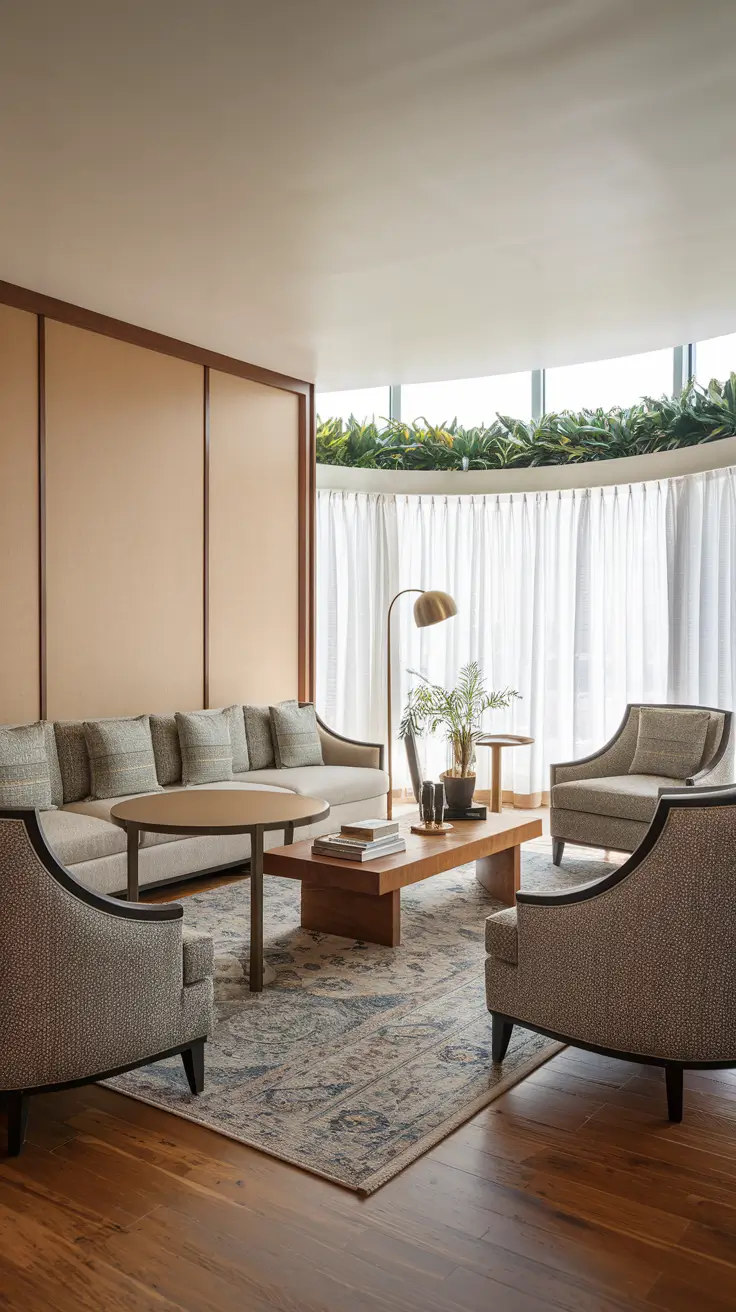
My go-to components include two matching armchairs with supportive backs, a round table centered in the L, and a floor lamp at the elbow for balanced lighting. A low rectangular coffee table aligns with the sofa and round table, unifying the space. Matching wood tones in sofa and chair legs reinforce cohesion. A patterned rug large enough to fit under all seating anchors the arrangement and prevents visual drift. I ensure at least 30 inches of clearance behind chairs for comfortable circulation.
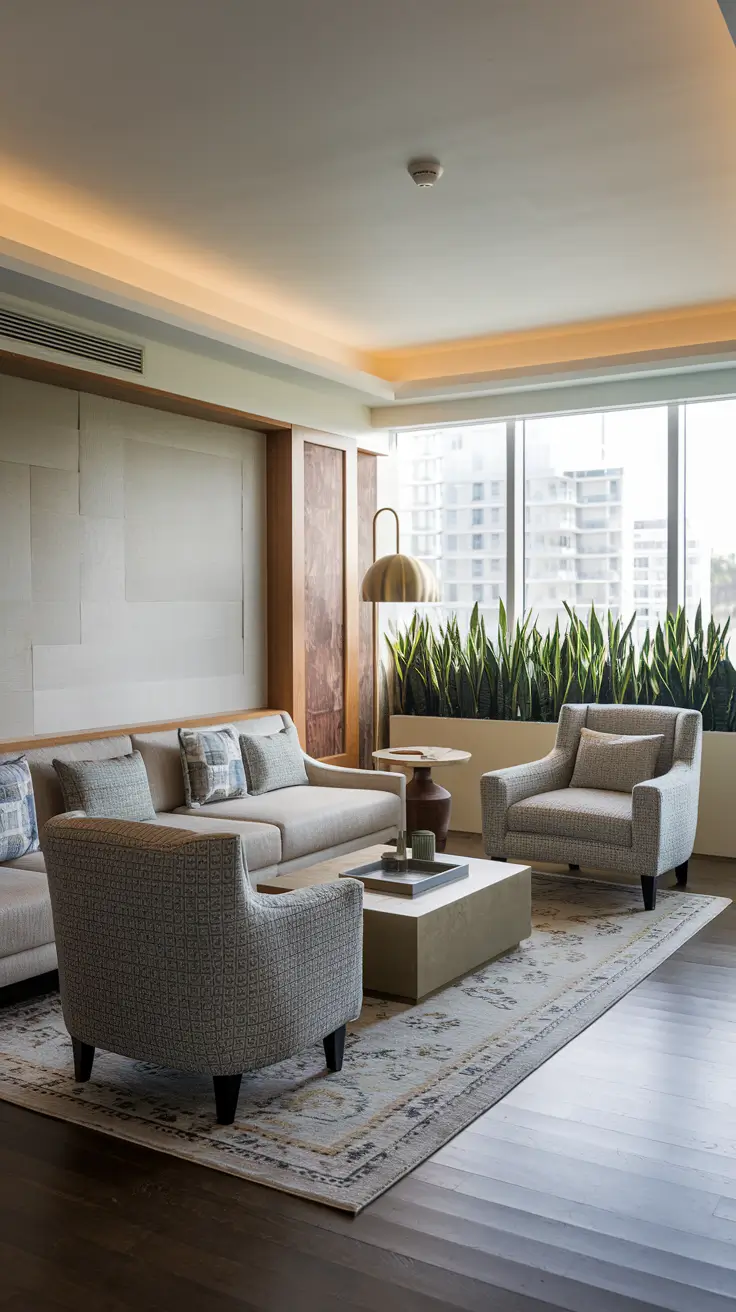
Softening angles and balancing heights are key to a welcoming L shape. Slightly angling one chair inward by 10 to 15 degrees creates a conversational vibe. Warm wood tables or brass lamps counterbalance cool grays, preventing flatness. A swivel chair on the short leg of the L near a side wall TV allows easy viewing without rearranging furniture. This adaptable layout scales well and serves as a reliable design template.
I recommend a narrow console behind the sofa for lamps and cord management, keeping the L’s elbow uncluttered. A tall plant at the outer chair end softens boundaries in open plans. Wall sconces brighten dark corners without occupying floor space. A cozy throw over a chair back adds a welcoming, everyday touch.
Natural Elegance with Wooden Living Room Chairs
Wood-centric rooms benefit from moderated warmth and lighting to highlight grain as an accent rather than a distraction. When pairing wooden chairs with sofas, I select finishes one shade lighter or darker than the floor to avoid heavy matching. Natural oak brightens neutral palettes in sunlit rooms, while walnut grounds vibrant blues or greens. Farmhouse and coastal styles gain rhythm from woven textures and striped pillows. In small farmhouse spaces, simple, slim silhouettes allow chairs to breathe near corners or window seats.
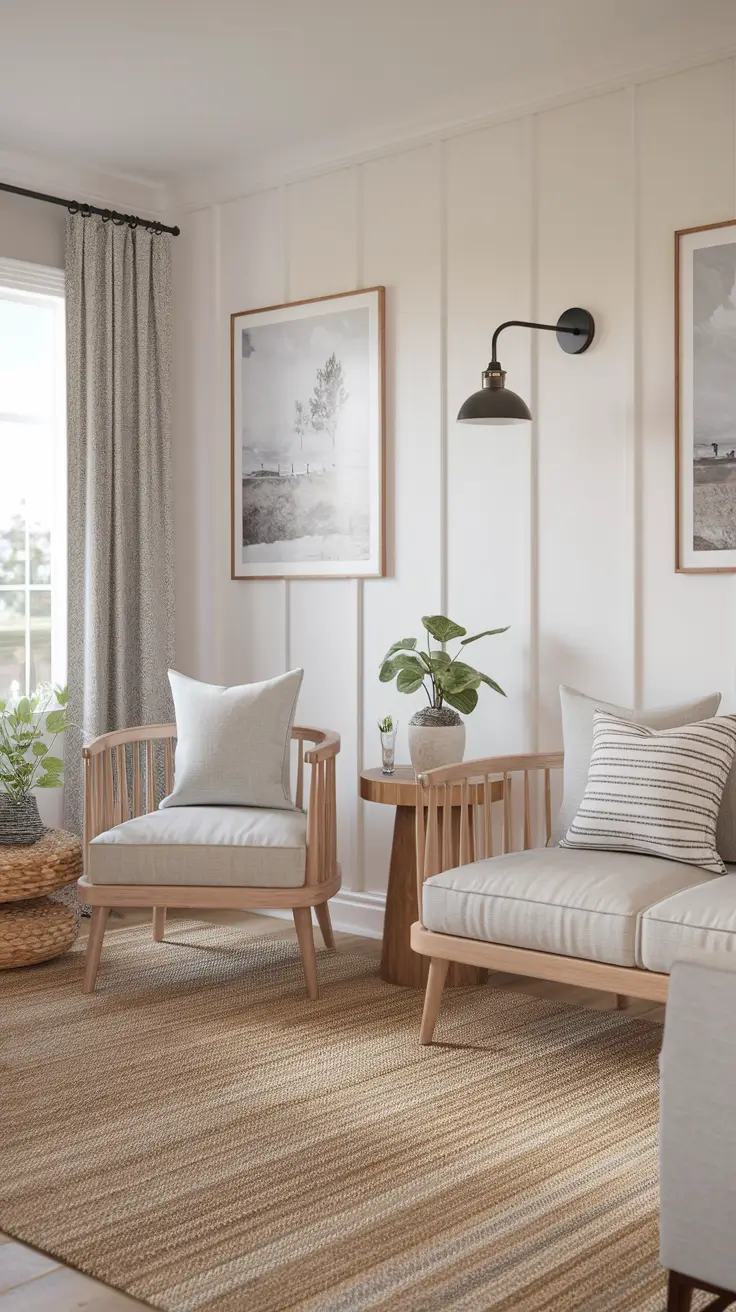
I favor spindle-back wood armchairs with upholstered seats for comfort and durability. A round wooden side table echoes chair tones and offers a spot for books or tea. Flatweave rugs provide a stable base, allowing chair legs to stand evenly and wood to pop against soft flooring. Vintage elements like turned legs or ladder-back profiles are repeated for cohesion. Chairs are placed slightly out of direct sunlight to preserve finishes and offer peaceful views.
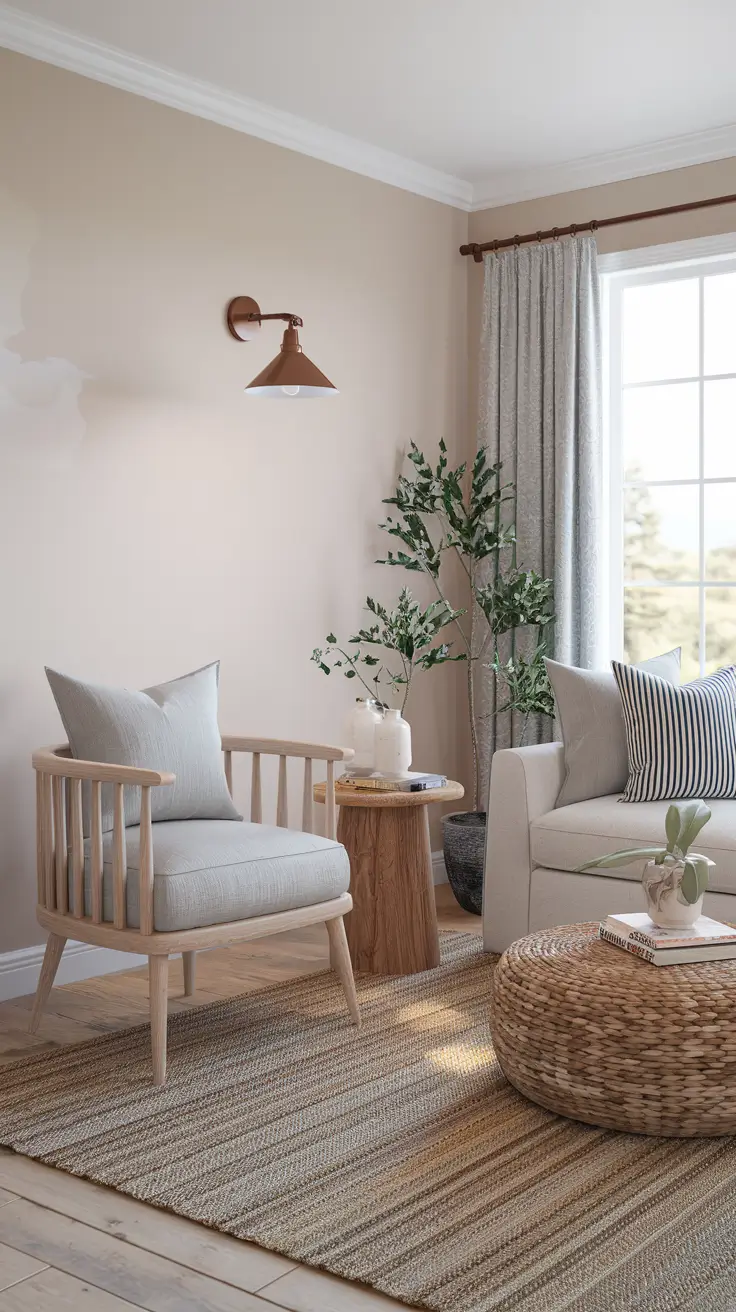
Wood pairs best with soft fabrics and matte metals to maintain a modern feel. Linen cushions in gray tones cool warm grains without dulling character. Leather magazine racks or stitched ottomans add masculine touches complementing polished arms. Following a popular styling tip, I repeat one natural material—wood—in three places, such as chair frames, picture frames, and lamp bases, creating a simple visual loop.
To soften angular compositions and add vitality, I include a small plant stand beside a chair. Plug-in wall sconces free side tables, keeping wooden surfaces clear for daily use. If the palette feels too warm, a cool blue ceramic vase balances the temperature. A low table basket keeps throws organized, enhancing natural charm and convenience.
Harmonizing Chairs with Sofas for Balanced Living Rooms
When pairing living room chairs with couch, I focus first on proportional relationships, then finishes. The goal is to achieve contrast and harmony, so chairs should complement the sofa’s size, height, and comfort. Deep, plush sofas pair well with tighter-back armchairs that encourage upright posture during conversation. Conversely, fuller chairs add cozy volume to slim modern sofas, preventing overly minimalist looks. In small spaces, armchairs with open legs allow the pair to breathe without crowding.
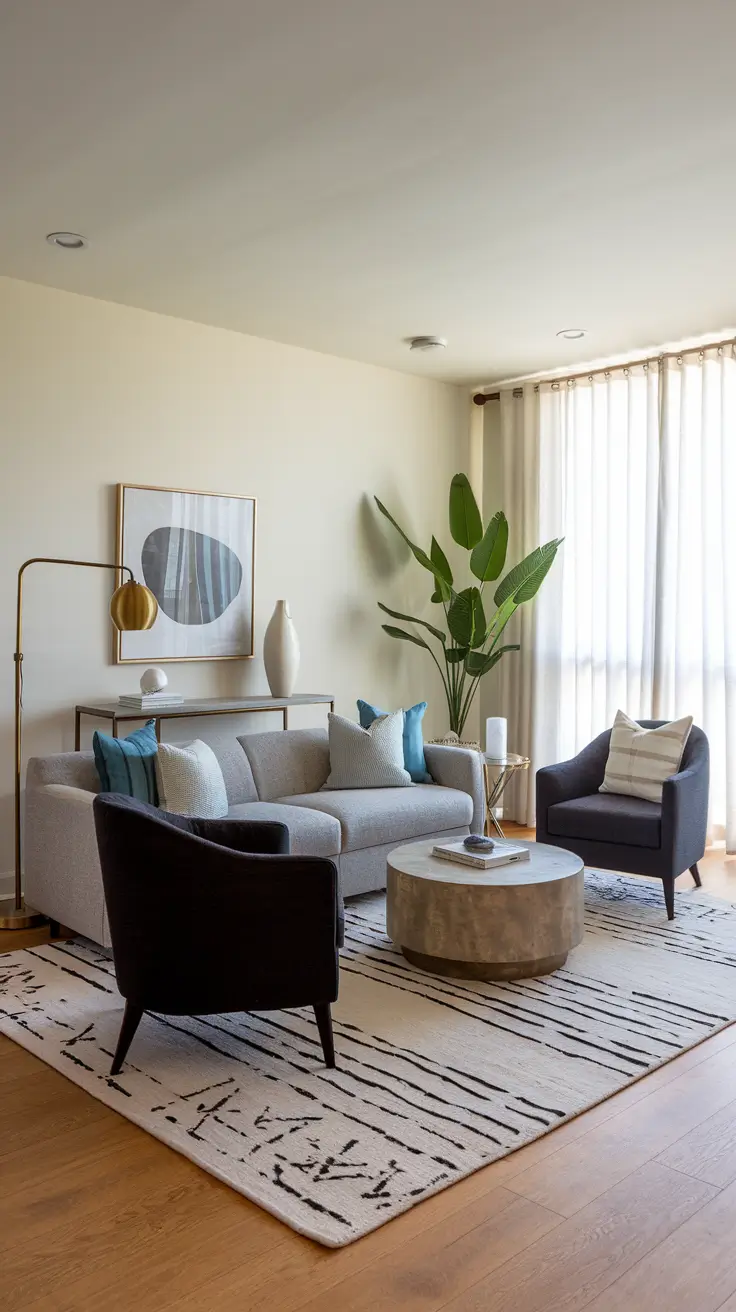
Common combinations include gray sofas with blue or black accent chairs forming a clean, symmetrical triangle. Leather chairs add durable texture next to fabric couches, while nubby wool or boucle contrasts smooth leather sofas. For sectionals, a swivel chair at the open end offers flexible sightlines and conversation. A shared drum table centralizes surfaces, reducing side table clutter. Repeating a metal finish on chair legs and floor lamps ties diverse fabrics together.
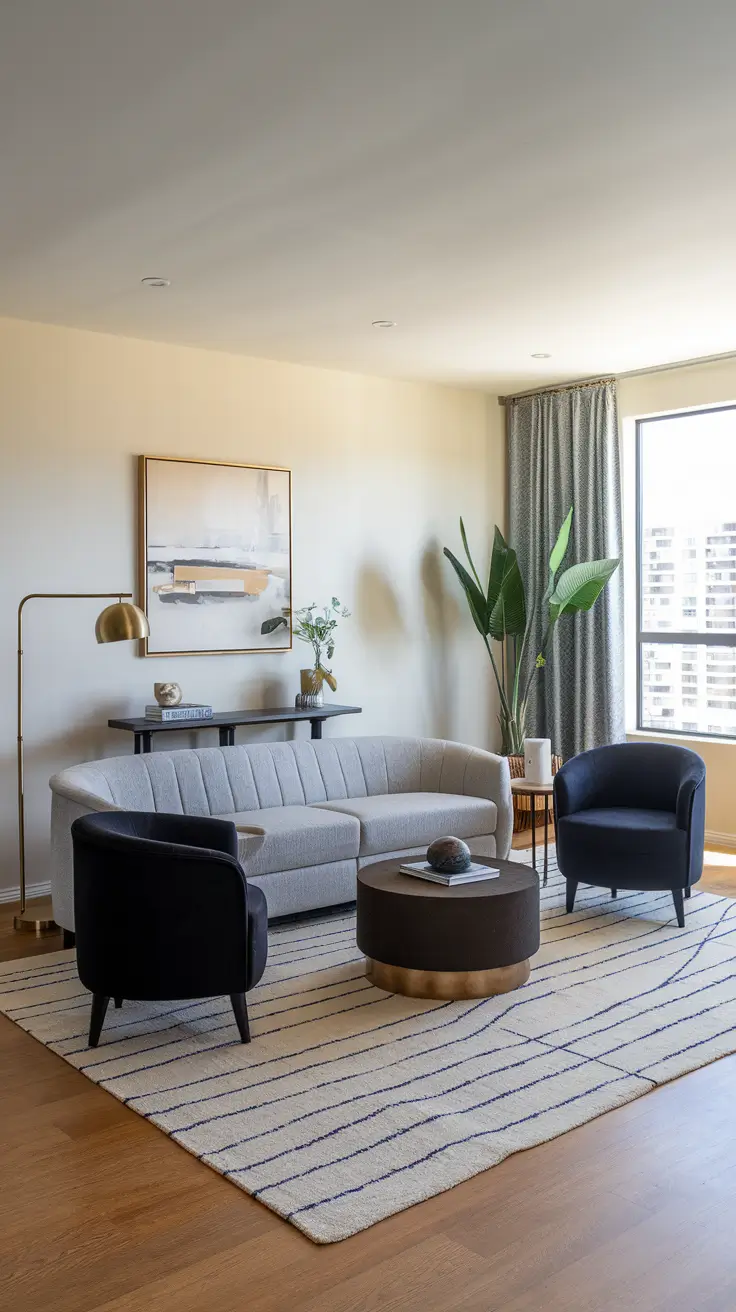
Seat alignment is more critical than often realized; I keep chairs within one to two inches of sofa height. Arm heights vary, but I prefer at least one arm at side-table height for convenience. In neutral palettes, one accent chair may be colored or patterned, echoed in sofa throws. When grays dominate, warm wood tones or brass lamps prevent flatness. A large rug encompassing both sofa and chairs balances proportions and anchors the space.
Adding a slim console behind the sofa supports lamps and hides cords, visually tidying the area. In tight traffic zones, swapping one armchair for an armless slipper chair reduces bulk near walkways. Textural bridges like low ottomans in sofa fabric unify seating. A tall plant beside chairs softens corners and defines the seating island.
Innovative Layouts for Functional and Stylish Seating
My approach to living room chairs layout ideas begins with zoning, then style selection. Conversation areas often form L, U, or circular shapes, each with distinct chair needs. In small spaces, I combine one swivel and one stationary chair to accommodate TV viewing and guests without moving furniture. Bohemian vibes emerge by offsetting chairs, layering rugs, and maintaining a relaxed palette. Minimalist rooms benefit from tightened angles and negative space around legs, creating calm geometry.
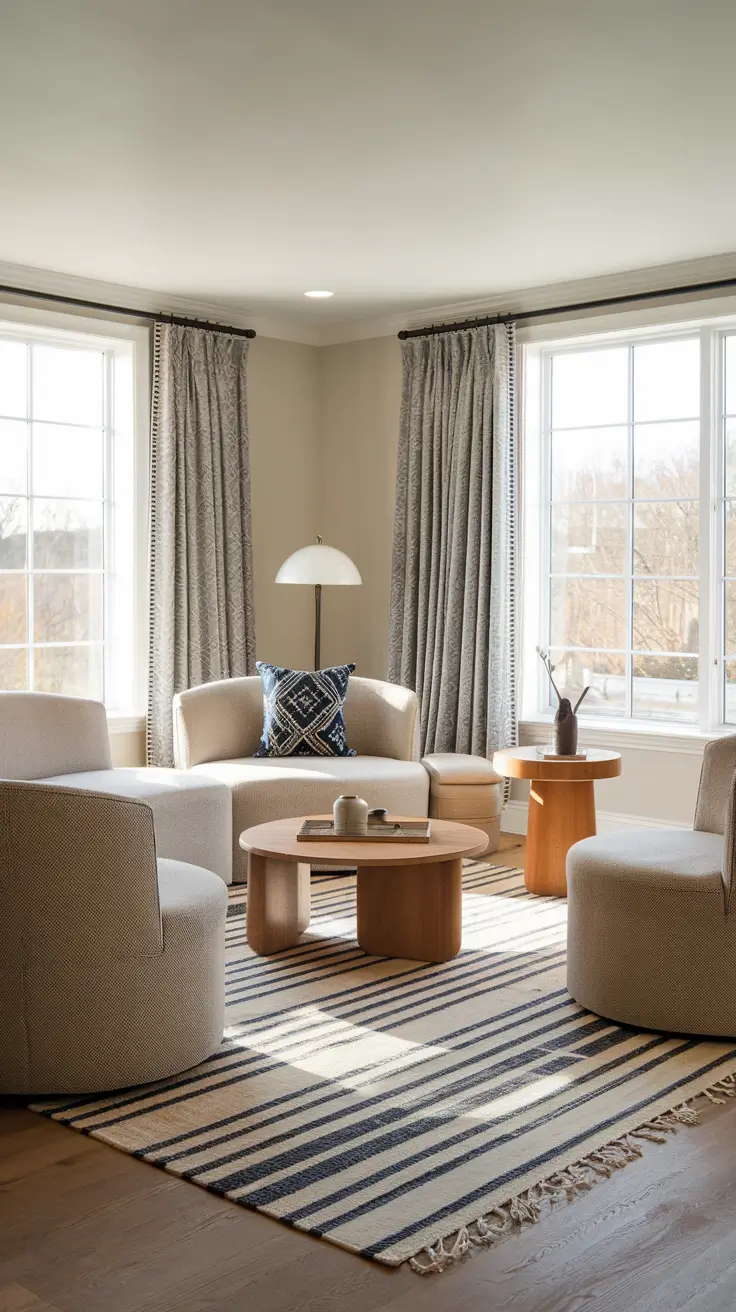
L-shaped layouts position two chairs at right angles to a sofa, while U-shaped add a third chair opposite. Circular arrangements with round coffee tables encourage face-to-face interaction and suit open plans without harsh corners. Placing chairs in front of window walls avoids shadows and glare. Nesting tables extend for guests and fold away to preserve flow. A slender floor lamp at an L’s bend eliminates shadows and unifies the group.
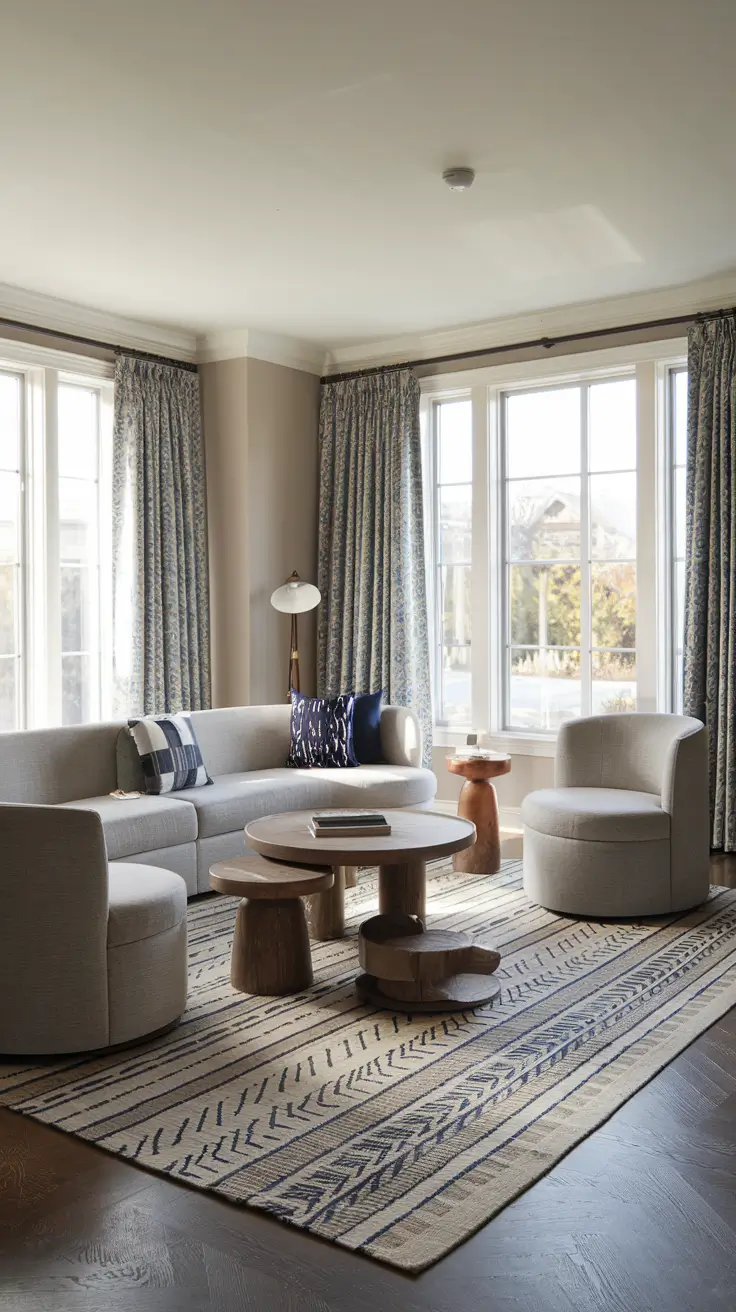
Maintaining 16 to 18 inches between chair fronts and coffee tables facilitates access, while 30 to 36 inches behind chairs ensures comfortable movement. In visually busy rooms, repeating shapes in furniture, art, and lighting controls the scene. Nigerian indigo or patterned pillows add personality without overwhelming. In modern neutral schemes, texture changes define zones instead of extra color.
Felt pads under chair legs protect rugs and ease movement. If seating heights lack variation, adding tall bookcases or wall shelves draws the eye upward. Movable tables like storage ottomans adapt layouts for movie nights. Painter’s tape on floors before rug purchases helps verify clearances and prevents returns.
Timeless Sophistication with Grey Chairs
Grey chairs are versatile, bridging warm and cool palettes effortlessly. When selecting grey, I first identify undertones—warm greige or cool steel—and coordinate metals and woods accordingly. Cool greys pair well with nickel or blackened steel, while warm greiges complement brass and medium oak. Walls remain neutral, allowing chairs to stand out, with blue or green accents in pillows or art to maintain a relaxed, contemporary vibe.
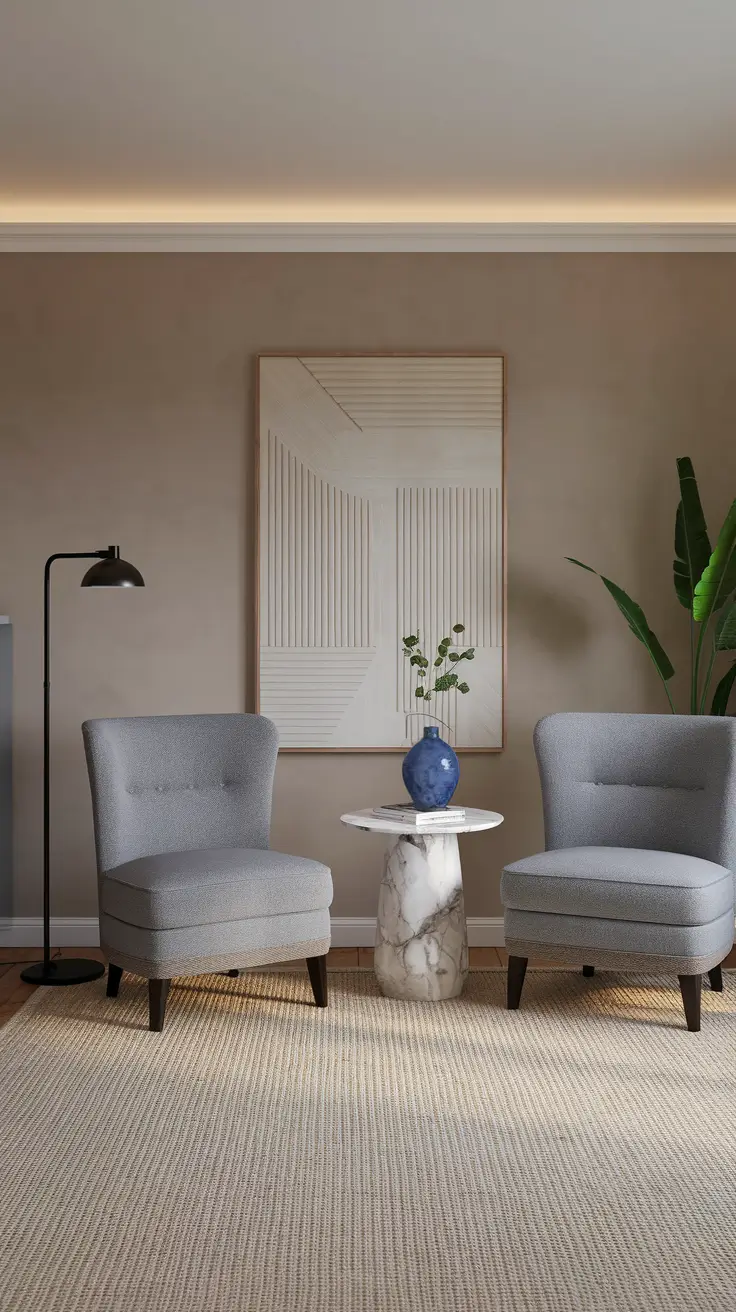
I prefer tight-back grey armchairs with tapered legs paired with plush wool rugs. Marble or stone side tables add contrast and durability. When sofas are darker, chairs are chosen a shade lighter to create depth without stark contrast. Black picture frames or slender floor lamps sharpen edges, making grey intentional. Leather ottomans or trays introduce additional texture and everyday utility.
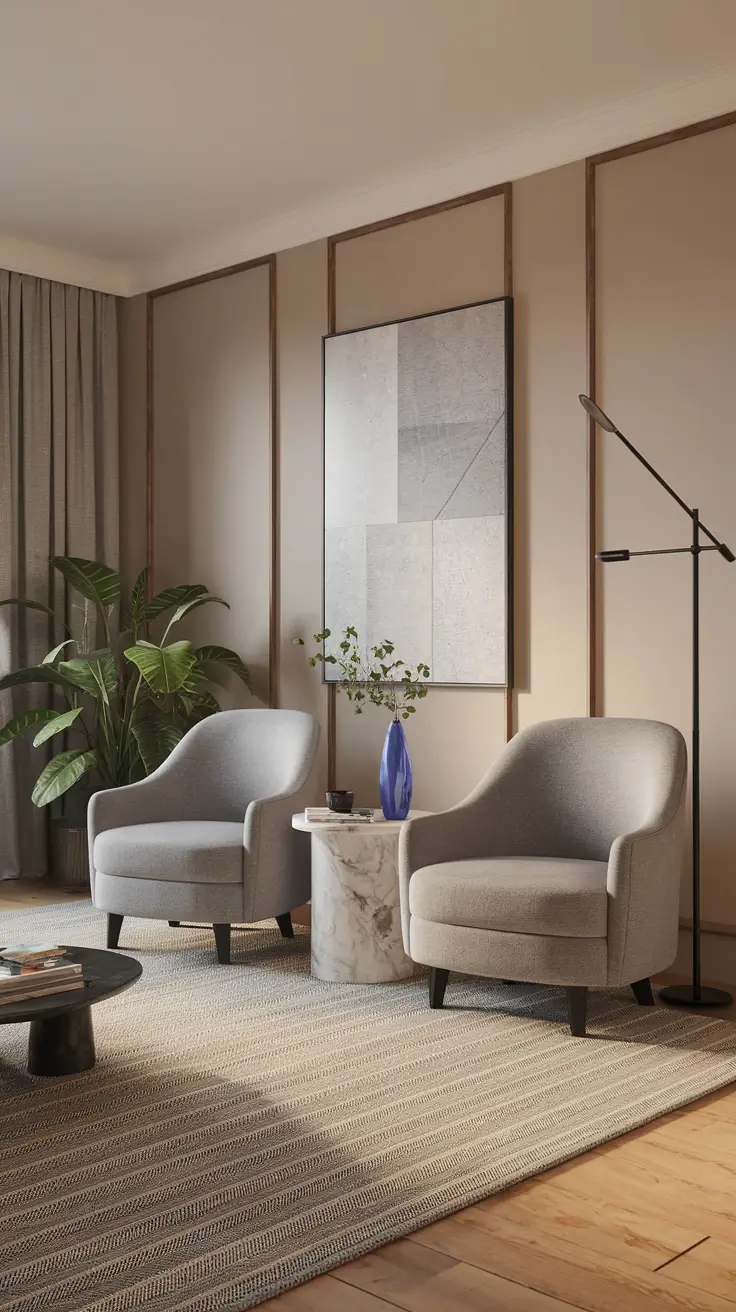
Grey fabrics shift dramatically with lighting, so I test samples near windows and in evening light. Patterns are kept small to medium for a tailored look. To avoid dullness, I introduce a high-contrast element like a blue vase or green plant. When uncertain, mixing two grey shades with one wood tone creates a classic, wearable palette.
Adding a fine herringbone throw brings subtle movement. Dimmable floor lamps keep grey fabrics looking lush at night. If the room feels chilly, natural oak side tables and linen shades warm the atmosphere. A large artwork with soft neutrals and dark accents anchors the space beautifully.
Armchairs Designed for Ultimate Comfort
Comfort starts with sturdy frames and well-balanced cushions. I evaluate seat depth, back angle, and arm height carefully. Medium-depth armchairs suit shared spaces, offering comfort without overwhelming smaller users. Barrel or high-back wing chairs create cozy reading nooks. In small modern rooms, armchairs with open legs maintain airiness. Slipcovered armchairs are ideal for farmhouse or coastal styles, allowing easy cleaning and seasonal updates.
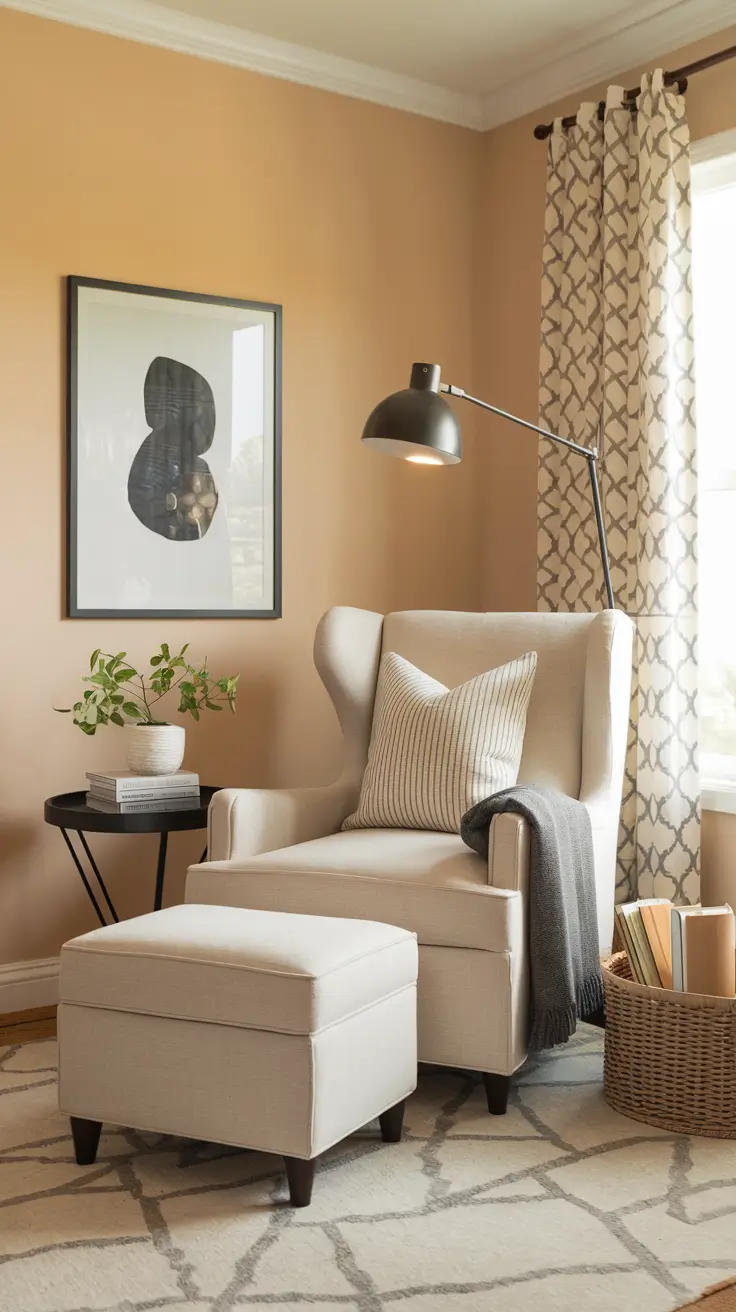
I prefer armchairs upholstered with lumbar pillows, paired with small ottomans and side tables at arm height. Pivoting head task floor lamps provide directed light without cluttering surfaces. Leather offers durability and timeless appeal, while performance fabrics resist daily wear. Matching details like wood leg tones or piping colors unify chairs with sofas. Soft rugs anchor the grouping, ensuring comfortable foot placement.
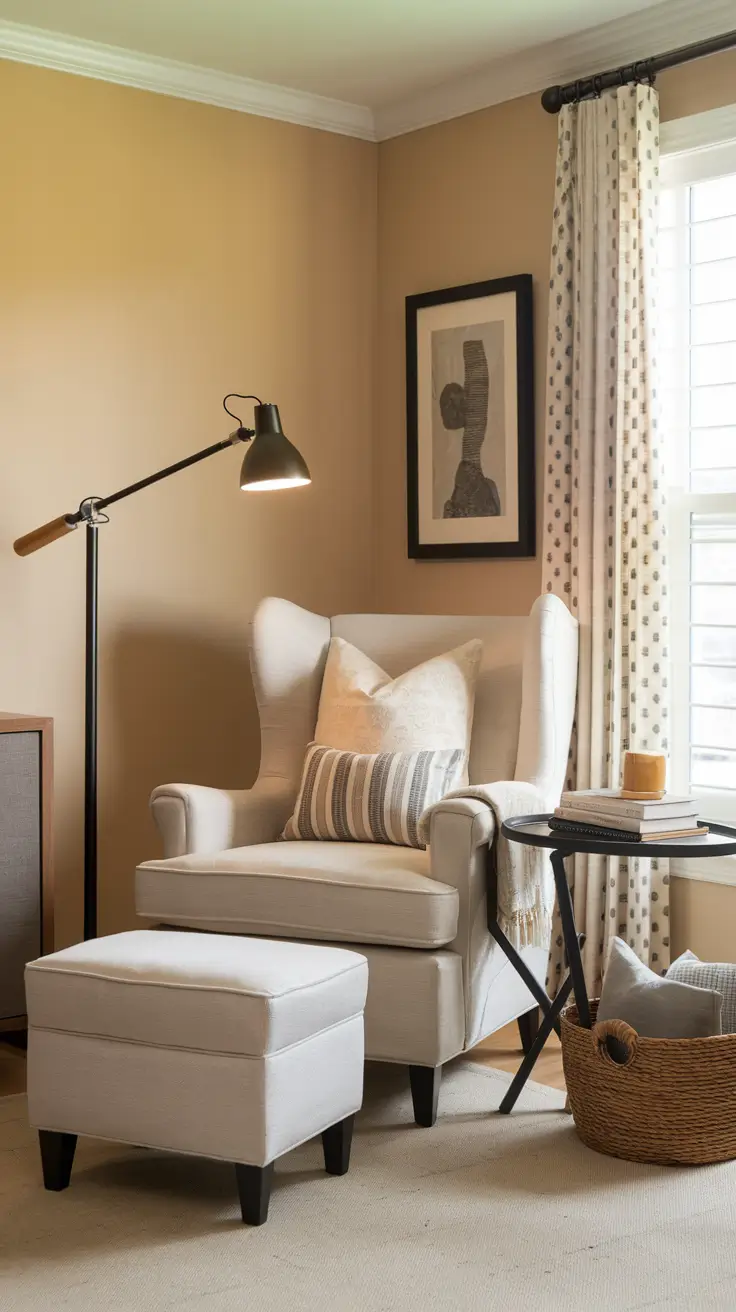
Seat heights are balanced within a small range to facilitate conversation. Slightly angling one armchair by ten degrees softens the setting. Breathable fabrics enhance long-term comfort, and structured cushions prevent sagging. In neutral schemes, a single accent color repeated in pillows or throws maintains cohesion.
Adding a small book basket and clip-on reading light enhances functionality. Ottomans with hidden storage keep throws out of sight. Swivel bases allow chairs to engage in conversations or TV viewing without moving the entire piece. A small artwork or framed photo at eye level personalizes the nook without clutter.
Small Space Living Room Chair Layouts for Maximum Impact
When tackling small rooms, I start by mapping traffic flow, as the best living room chairs layout ideas prioritize movement. Typically, I place a loveseat or slim sofa, then add two petite chairs forming a conversational triangle with clear pathways. In tight spaces, one chair is replaced with a swivel near a corner, allowing it to face the TV or sofa as needed. Armchairs with open legs reveal more rug and air, visually expanding the room. For small modern homes, I keep silhouettes sharp and colors neutral for a relaxed everyday feel.
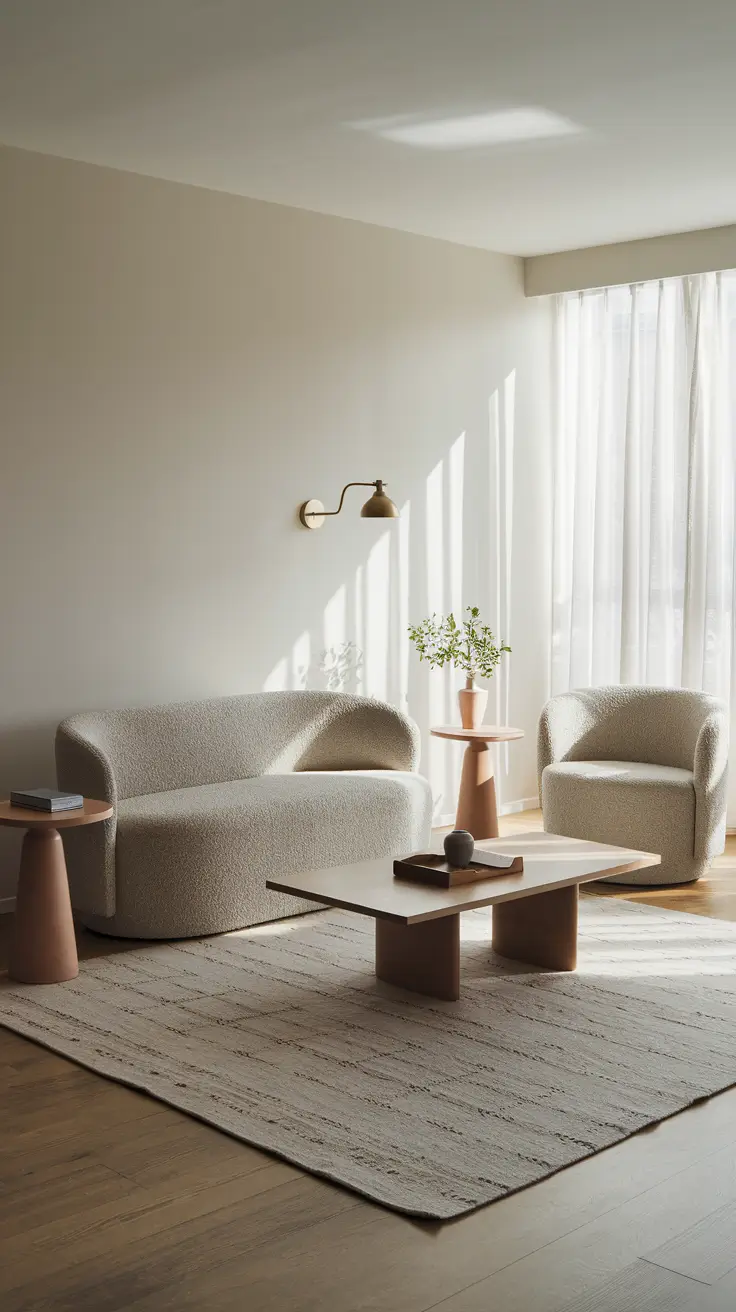
My preferred pieces include armless slipper chairs 26 to 28 inches wide, round side tables 18 to 20 inches across, and small floor lamps that eliminate the need for extra tables. Rectangular coffee tables fit sofas well, while small drum tables serve chairs without crowding. For deep sofa seats, tighter chairs encourage upright sitting and comfortable conversation. Repeating details like wood leg or piping colors knits the set together. A small pile rug sized to include all front legs balances proportions and prevents drift.
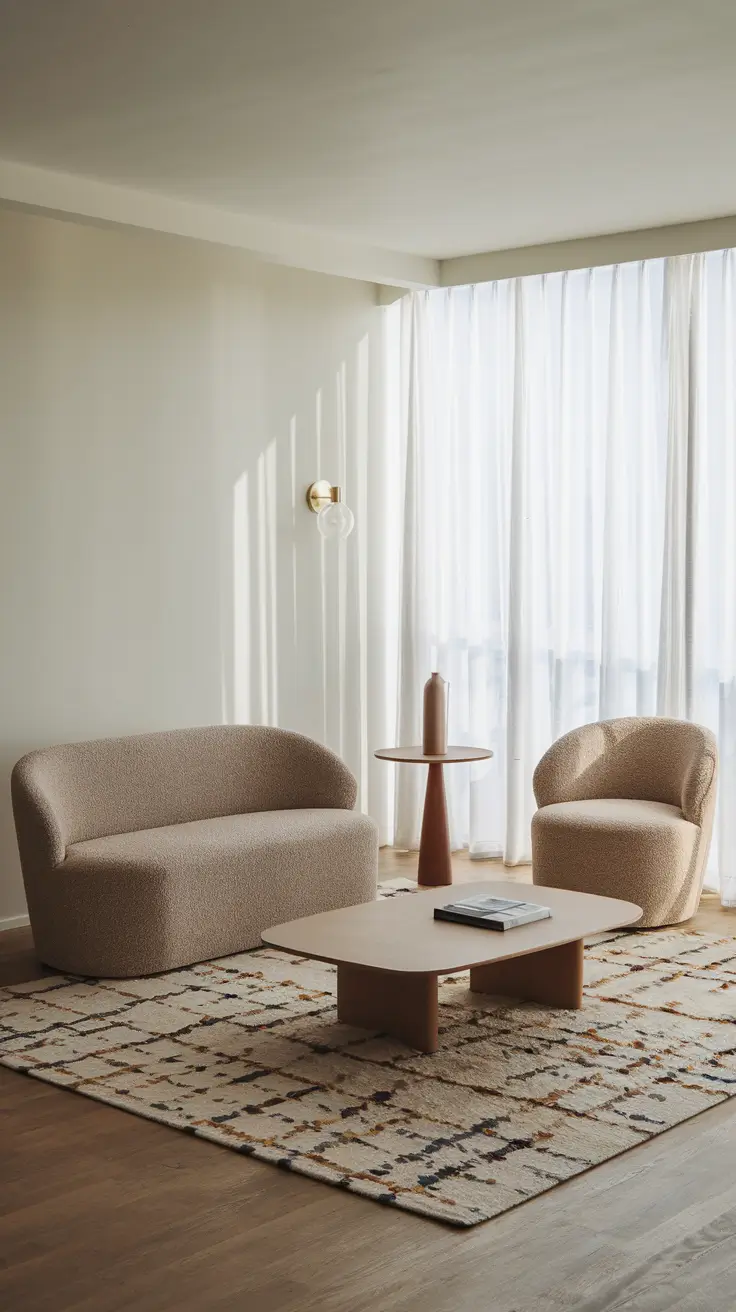
Experience shows that consistent reach zones and walkway widths are key. I maintain 16-18 inches between chair fronts and coffee tables for easy access, and 30-36 inches behind chairs for smooth passage. Folding one chair inward by about 10 degrees softens geometry without sacrificing space. Plug-in sconces above chairs free side tables and clear surfaces.
Felt pads under legs protect floors and rugs during movement. Swivels near windows or fireplaces add daily delight. Lidded ottomans serve as versatile tables and storage. Painter’s tape on floors before purchasing rugs ensures proper clearances and reduces returns.
Elegant Grey Chairs for Everyday Sophistication
Grey chairs are a reliable choice, blending effortlessly with warm woods and cool metals. I first determine if the grey leans warm (greige) or cool (steel), then select metals accordingly—brass and mid-tone oak for warm greige, blackened steel and pale ash for cool grey. Walls stay neutral, with blue or green accents repeated in small doses to balance the palette. This approach keeps rooms comfortable and easy to maintain year-round.
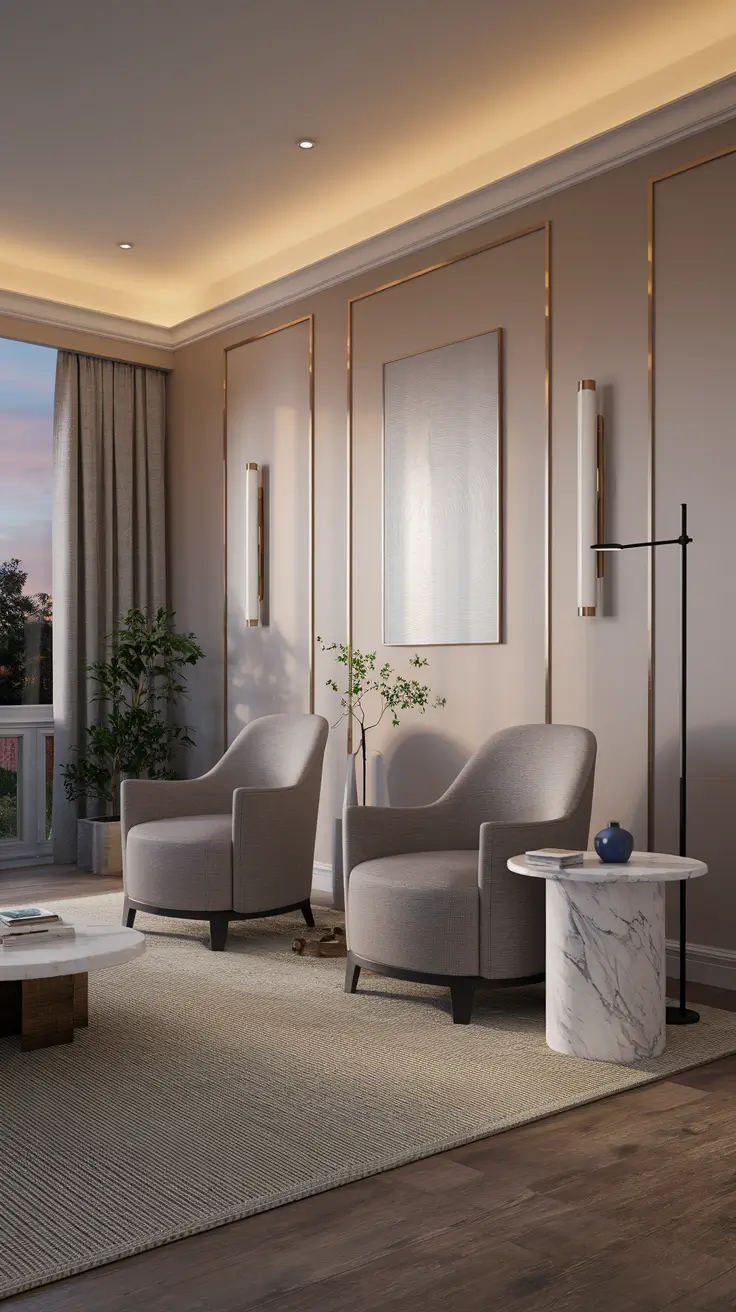
I prefer pairs of tight-back grey armchairs with tapered legs and lumbar pillows. Wool or wool-blend rugs soften noise in busy homes. Leather ottomans or trays add shine and durability. Marble or stone side tables offer wipeable surfaces contrasting fabric textures. Slender black floor lamps sharpen edges and provide focused reading light without bulk.
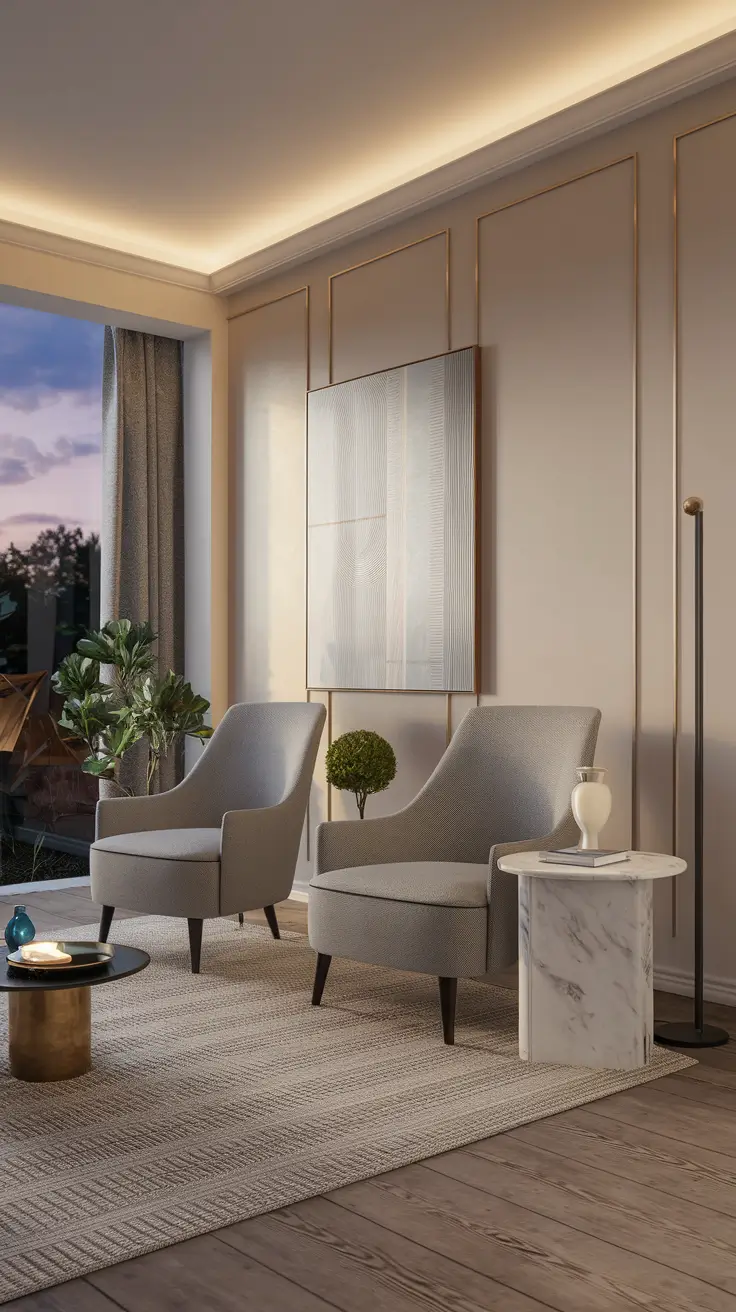
Grey fabrics vary with light, so I test samples near windows and in evening settings. Patterns remain small to medium for a tailored appearance. To enliven neutrals, I add a high-contrast piece like a cobalt vase or leafy plant. Repeating black finishes in lamps, frames, and chair legs ties the scheme together, effective in both modern and classic rooms.
Textured throws in fine herringbone add subtle movement. Dimmable floor lamps keep grey fabrics lush at night. Natural oak side tables warm cool palettes without replacing chairs. Large artworks with soft neutrals and dark accents anchor the space.
Farmhouse Chairs Tailored for Small Spaces
Designing farmhouse seating for small rooms balances comfort and lightness. Slipcovered armchairs maintain casual, washable looks, while spindle-back wooden chairs add historical charm without bulk. Woven fabrics and subtle checks introduce accessible patterns. Coastal-inspired stripes and linens enhance breezy rhythms. The goal is comfort, durability, and easy seasonal refreshes.
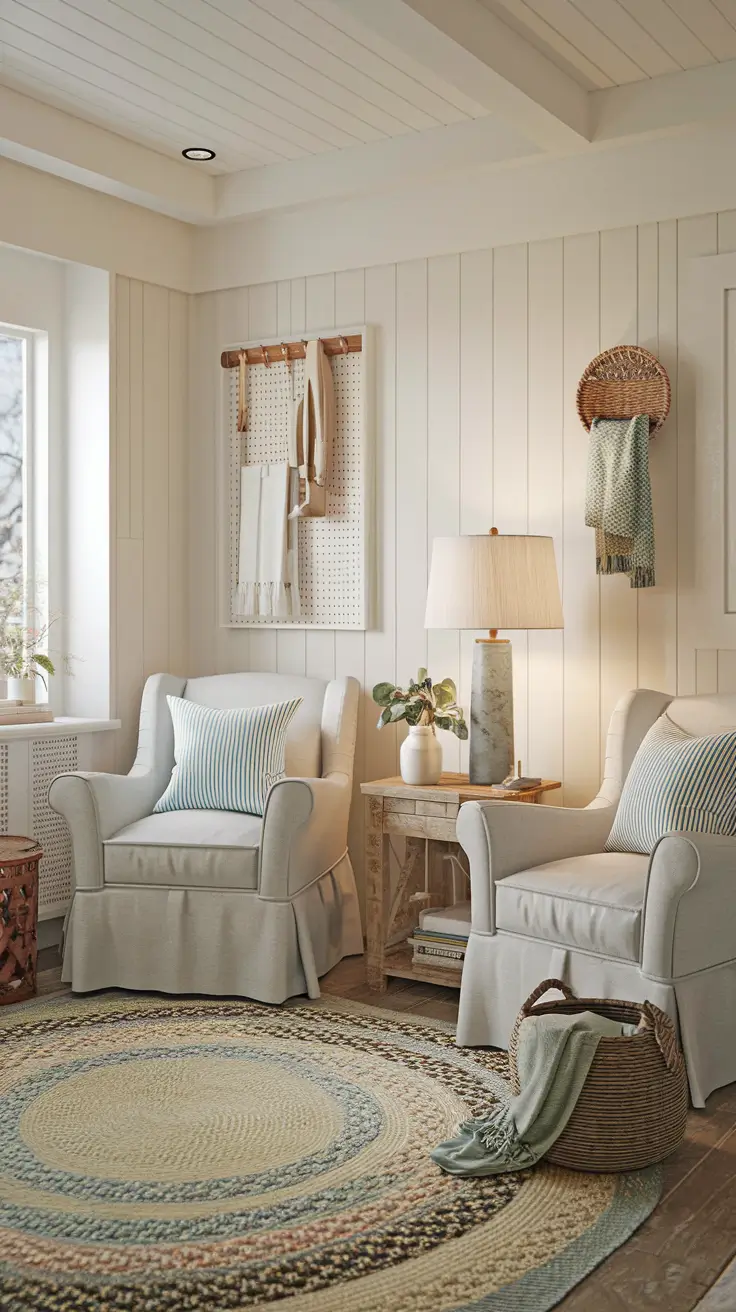
Two skirted armchairs, a reclaimed wood side table, and a compact floor lamp with a linen shade create warmth. Flatweave or braided rugs unify the grouping and cushion chair legs. Vintage touches like ladder-back chairs near hearths or milking stools as book perches add character. Neutral palettes with blue and sage accents keep rooms relaxed yet styled. Sofa undertones are echoed in chair materials for cohesion.
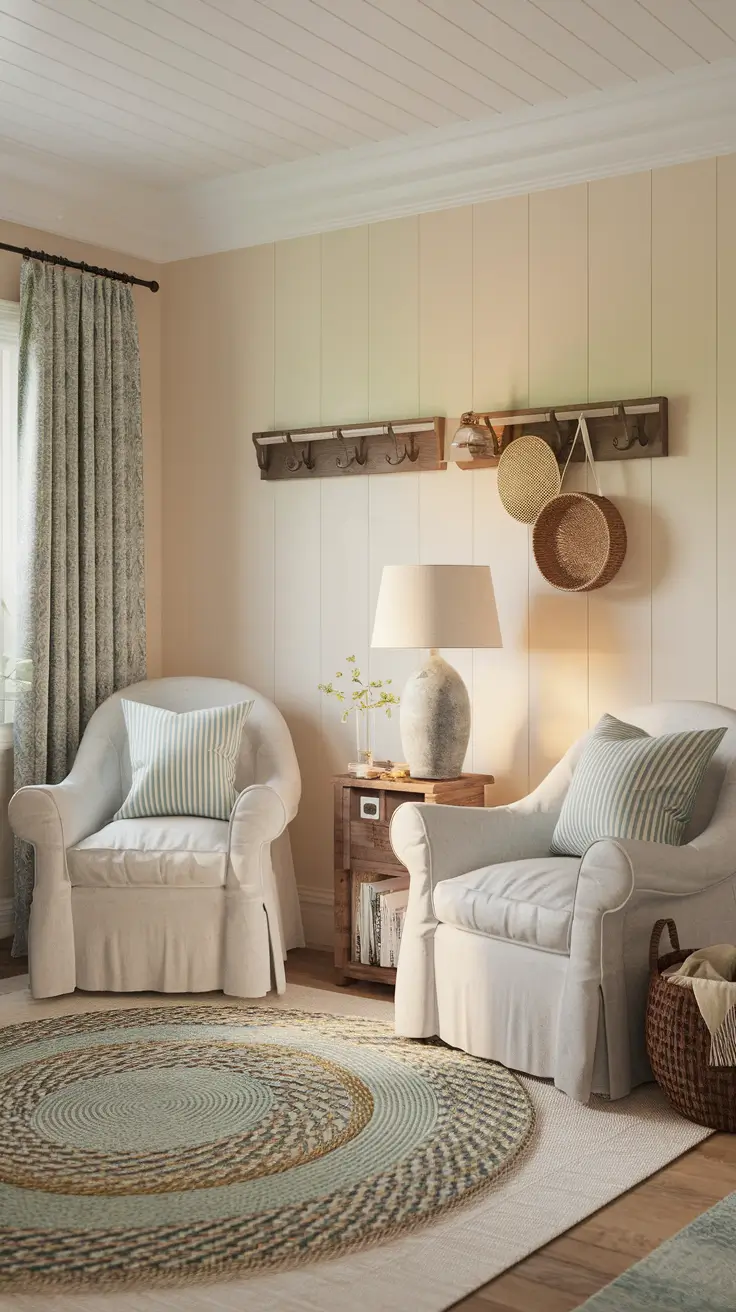
Successful farmhouse design balances worn and crisp elements, favors machine-washable fabrics, and keeps rolled arms modest for airiness. Bright lamps or pale woods lighten rustic rooms. Chairs are spaced at least 36 inches apart for traffic flow. Side tables with clipped branches add seasonal freshness.
Wall baskets or peg rails near chairs hold throws, reducing clutter and adding texture. Cool blue ceramics balance warm palettes. Lidded woven baskets under tables hide magazines and remotes. Repeating simple striped pillows ties the story without overcrowding.
Bold Black Chairs for Striking Interiors
Black chairs offer sculptural presence and structure, ideal for defined, minimalist, or modern rooms. Two black armchairs create a strong profile visible from entryways. Combining black with tactile materials softens the look. Against light sofas, black chairs provide contrast and calm. Dark walls call for charcoal finishes to maintain visibility in low light.
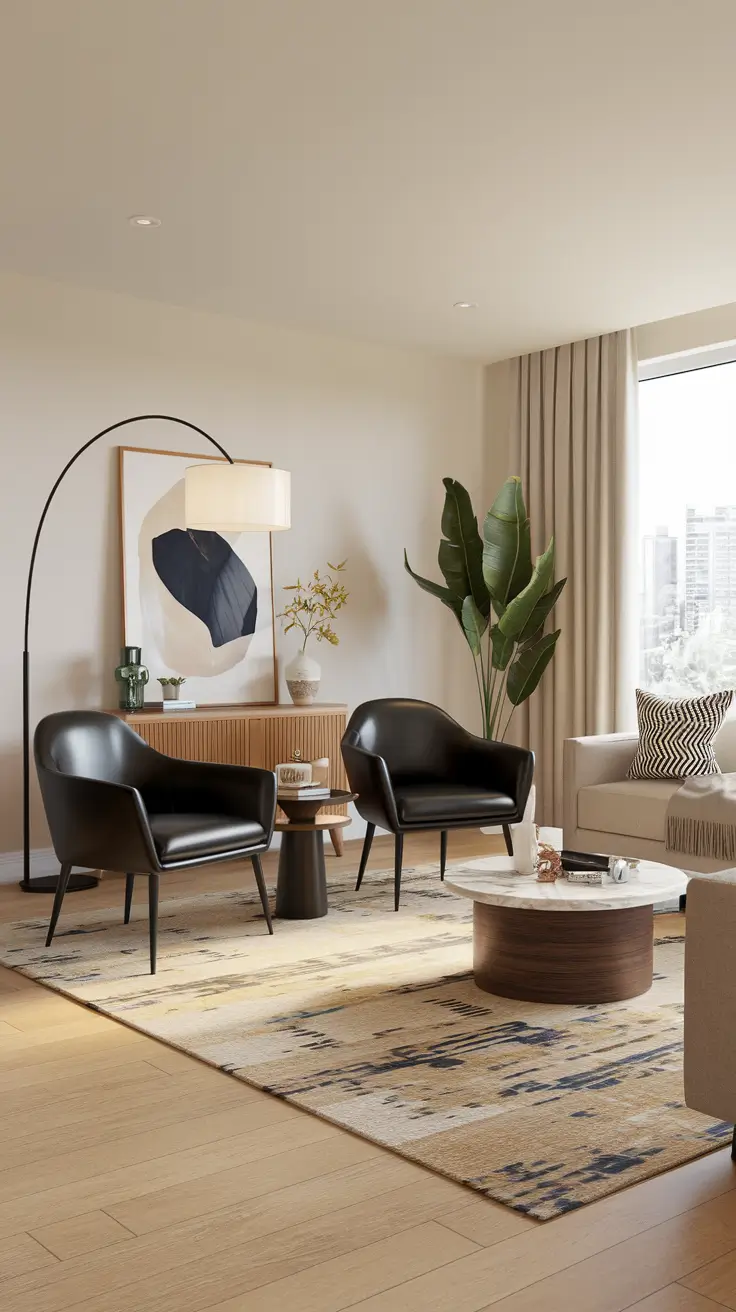
Leather lounge chairs on slender metal or wood legs, drum coffee tables, and marble side tables balance black’s weight. Black arc or tripod floor lamps illuminate seating. Accent textiles like Nigerian indigo pillows or patterned throws add personality. Warm wood legs or consoles prevent heaviness. A single large rug containing sofa and chairs stabilizes the bold contrast.
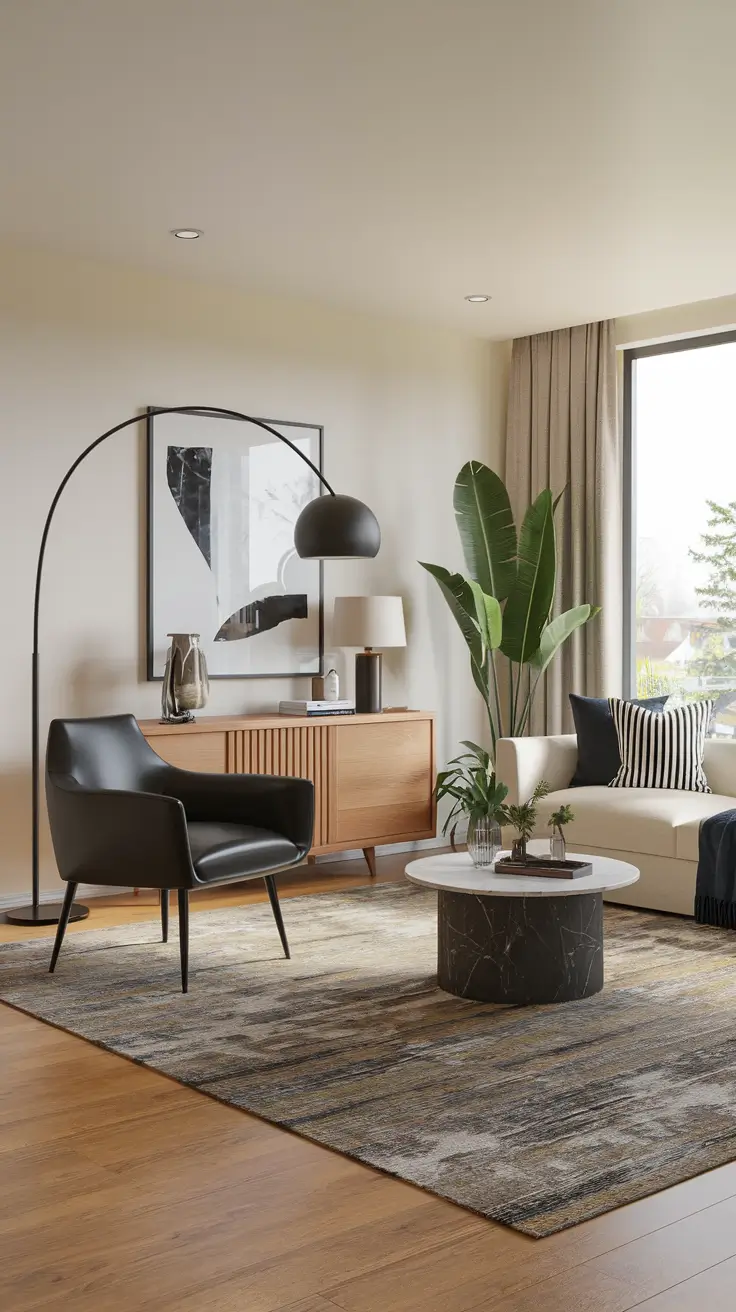
Matte or semi-matte finishes resist tarnish better than high gloss. Seat heights are kept 1-2 inches above sofas for conversational balance. Slightly angling one chair invites warmth. Swivels near L-shaped layouts optimize TV sightlines without moving furniture. Rounded-leaf plants soften geometry. Honed stone side tables reduce glare. Wool rugs absorb echoes and warm acoustics. Large artworks with light grounds and dark lines unify walls, sofas, and black chairs.
Minimalist Chair Concepts for Sleek Living Spaces
Minimalist rooms thrive on eliminating visual clutter, allowing a few strong forms to shine. I design modern living room chairs with clean lines, slender legs, and breathable fabrics. Neutral palettes with subtle repeated color notes create calm. I prefer fewer large pieces over many small ones to ease the eye and maintain circulation. Rounded chairs or curved ottomans soften straight lines when needed.
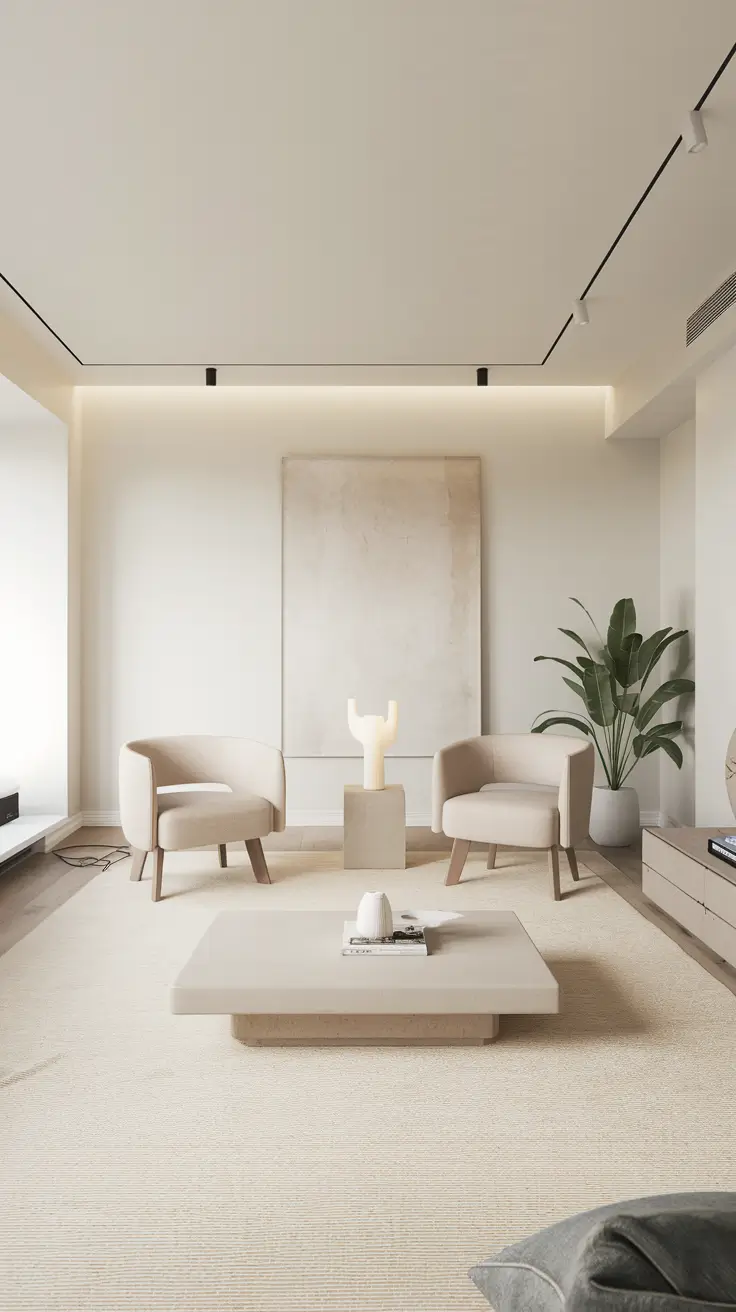
Typical setups include two tight-back armchairs, a low rectangular coffee table, and a sculptural floor lamp instead of multiple fixtures. One large rug anchors the group and reduces visual fragmentation. Tables with open bases read as air, not mass. Storage is hidden in slim media units or closed ottomans. Single large artworks replace gallery walls for focus.
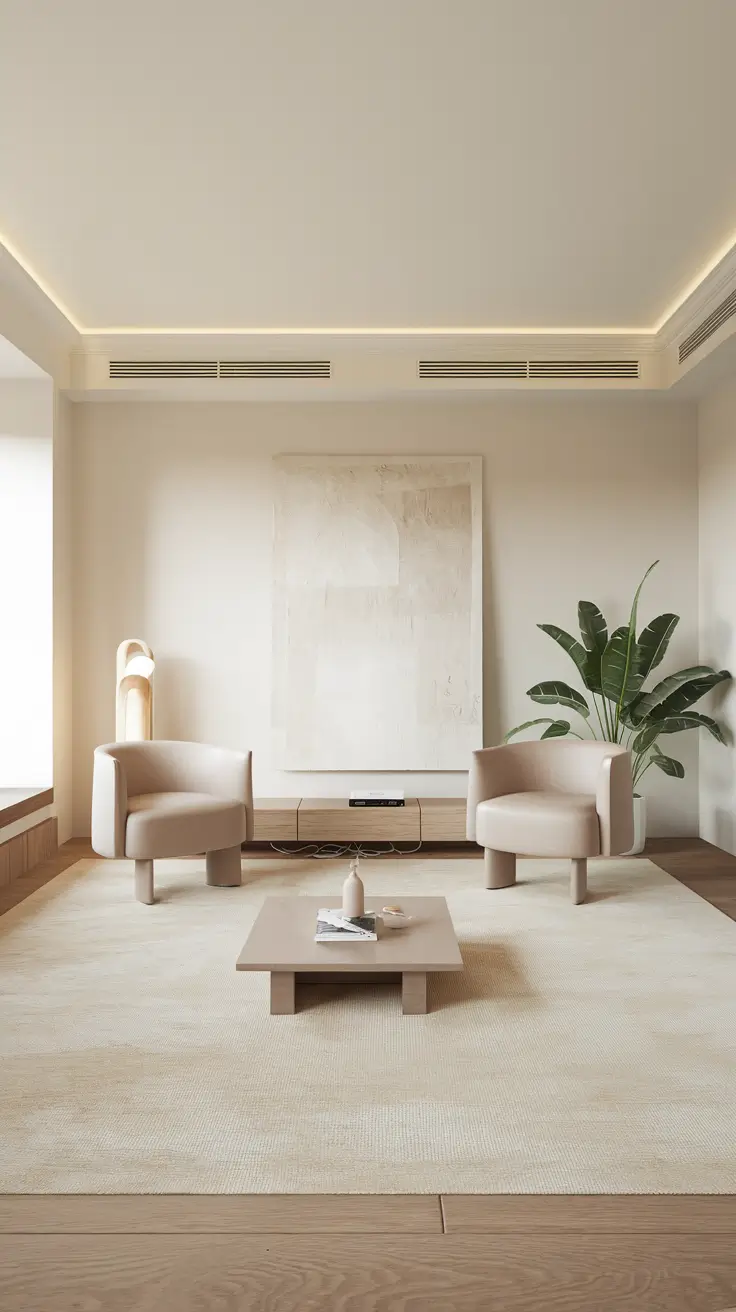
Editing without sacrificing comfort is key. Seat depths accommodate smaller sitters, and thin lumbar pillows complement chair geometry. Texture—nubby wool, soft linen, brushed metal—adds tactile interest without patterns. For minimalism that feels alive, I recommend plants with soft leaves and one or two blue or green accents repeated. Cable management keeps views clean. Wool rugs or cloth panels absorb sound without clutter. Swivel chairs with open legs maximize space without visual weight. Sightlines from entrances are carefully maintained by removing obstructive tables.
Bohemian Vibes in Compact Living Rooms
Bohemian styles thrive on layered textures and relaxed forms within small footprints, creating gathered yet uncluttered spaces. For small rooms, I mix a slim armchair with a petite slipper chair for effortless, asymmetrical balance. Low profiles preserve sightlines to art, plants, and windows, crucial in limited square footage. Consistent natural materials in baskets, stools, and frames unify eclectic pieces. Empty corners become informal reading nooks with small rattan chairs and cushions, maintaining flow.
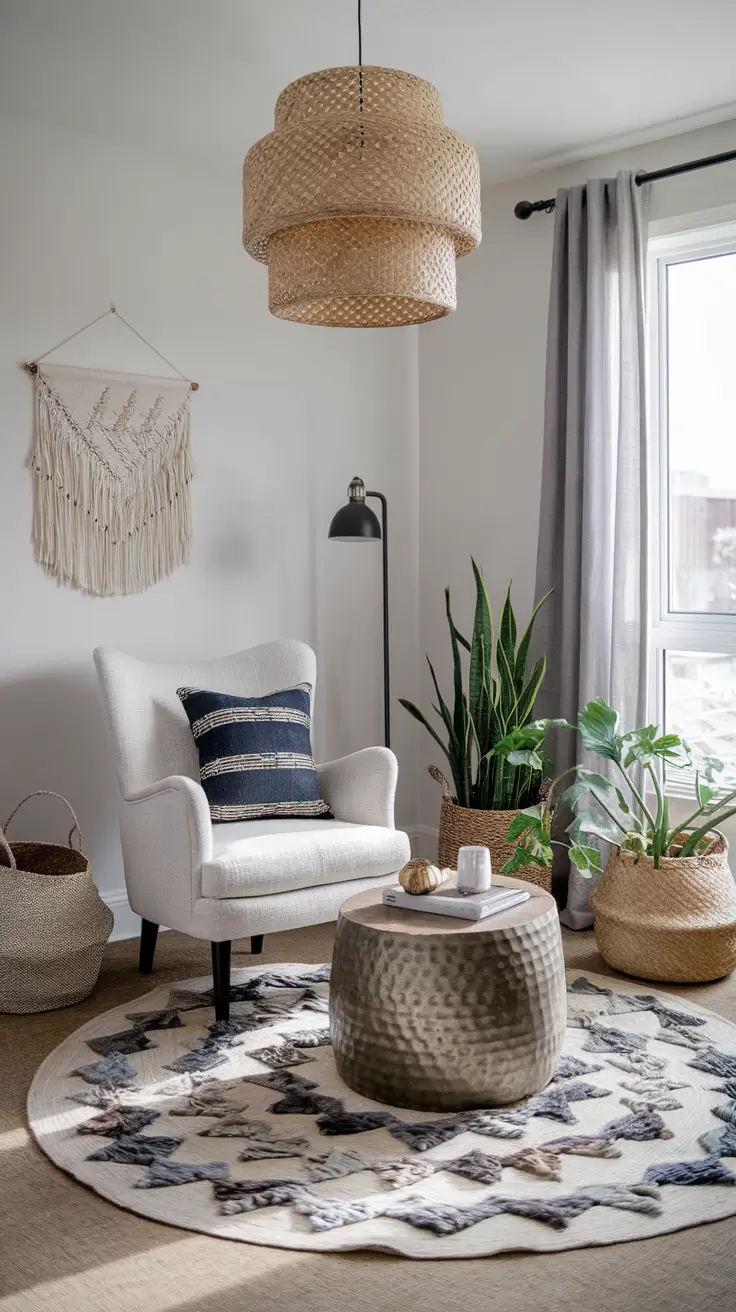
Preferred pieces include tight-back neutral linen armchairs paired with carved wood side chairs for contrast. Wooden or hammered metal drum tables soften edges and ease movement. Layered rugs—flatweave over patterned cotton—ground chairs comfortably. Woven pendants and slender arched floor lamps keep surfaces clear. Blue and green pillows, plus Nigerian indigo accents, provide carefree color pops beloved in bohemian rooms.
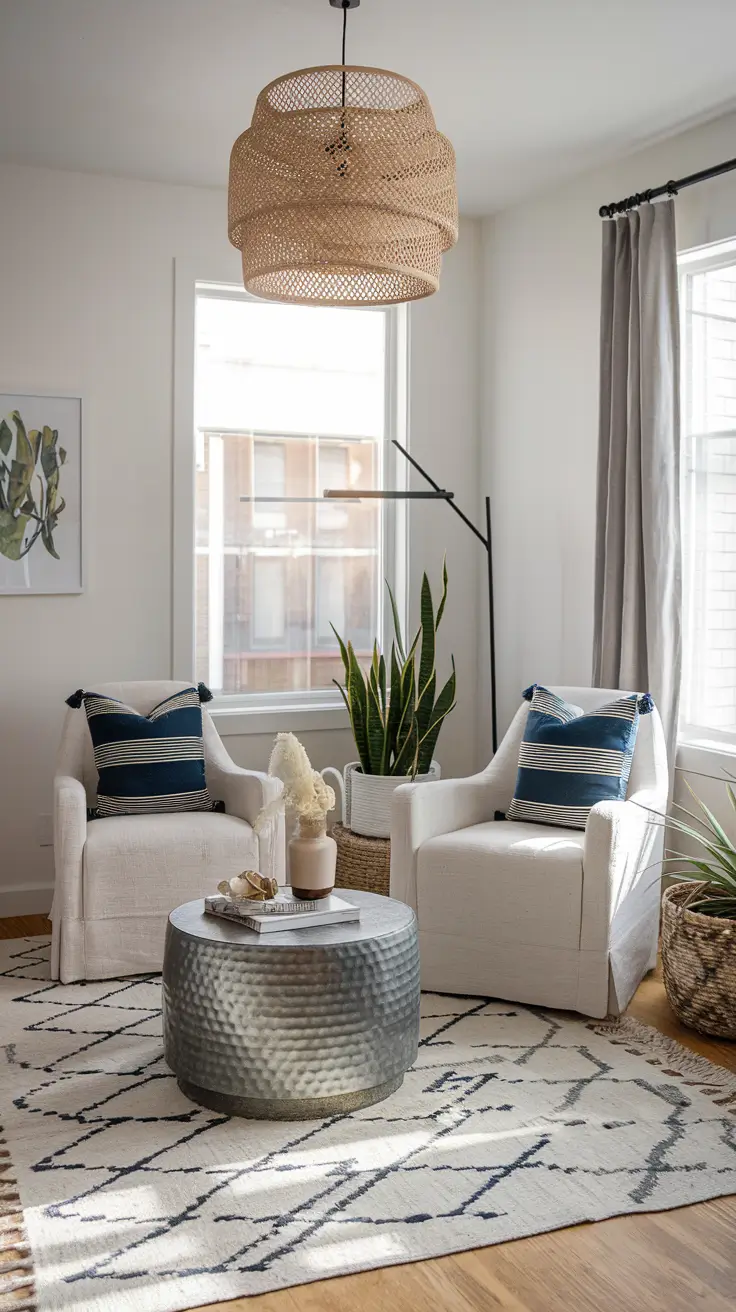
Success in small eclectic rooms comes from rhythm and breathing space. I maintain visual gaps between chair legs and table bottoms, favoring air over clutter. Angling slipper chairs by 10 degrees softens geometry and conversation flow. Limiting patterns to two scales and repeating one color thrice around the room keeps the look curated yet casual.
Wall-mounted shelves above armchairs hold books and plants, freeing floors. Solid gray cushions tone down busy patterns without losing character. Lidded baskets hide throws and remotes in low-storage areas. Small swivels near windows allow views, TV, and conversation without furniture rearrangement.
Streamlined Chairs for Clean, Simple Interiors
Simple rooms focus on essentials—comfort and clarity—by paring down shapes and finishes. For modern living room chairs, I choose clean-lined armchairs with open legs and neutral palettes to maximize light and relaxation. Avoiding heavy skirts and oversized arms prevents visual bulk and preserves sightlines. Consistency in one or two materials across chairs, tables, and lighting creates smooth flow. Compact barrel chairs add curves without cluttering corners.
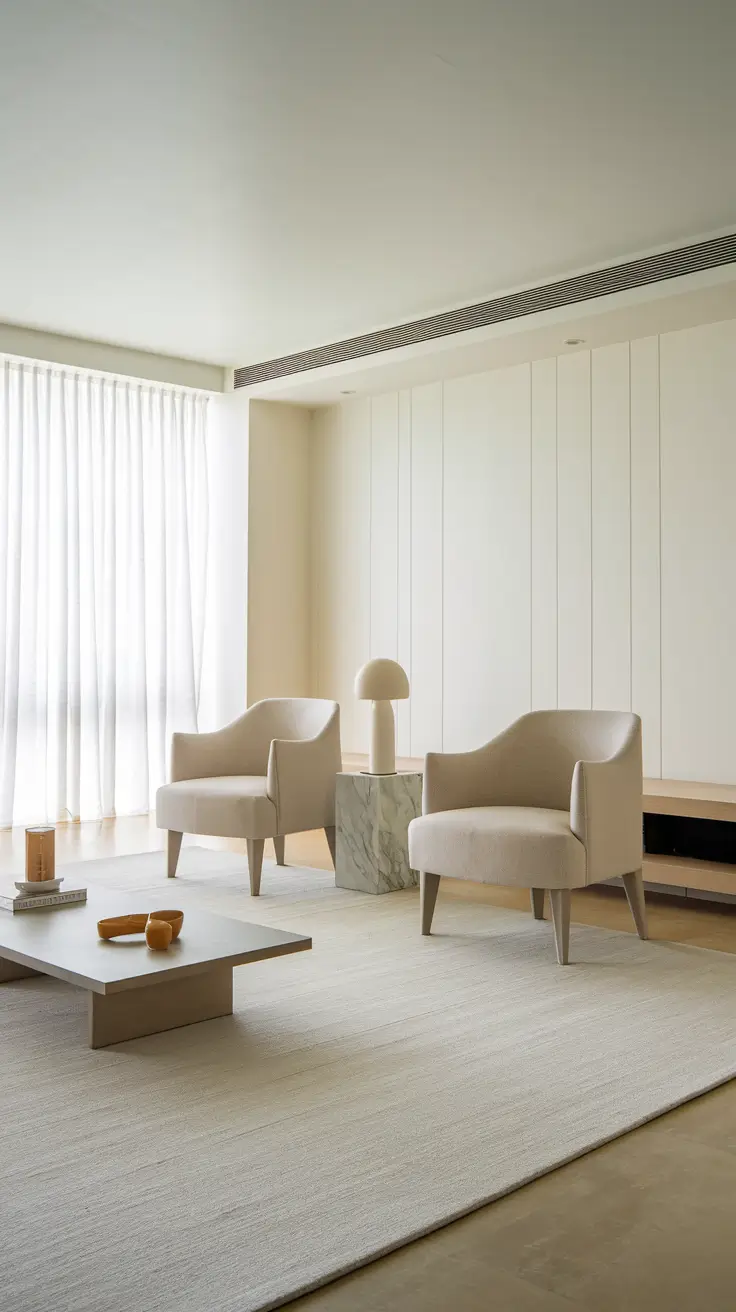
Typical elements include two tight-back armchairs, a low rectangular coffee table, and a sculptural floor lamp. One large rug prevents visual fragmentation and relates chairs to sofas. Wood finishes are chosen a shade lighter or darker than floors for natural harmony. Stone or marble side tables offer wipeable, low-maintenance surfaces. Blue or green accents in vases or pillows prevent sterility.
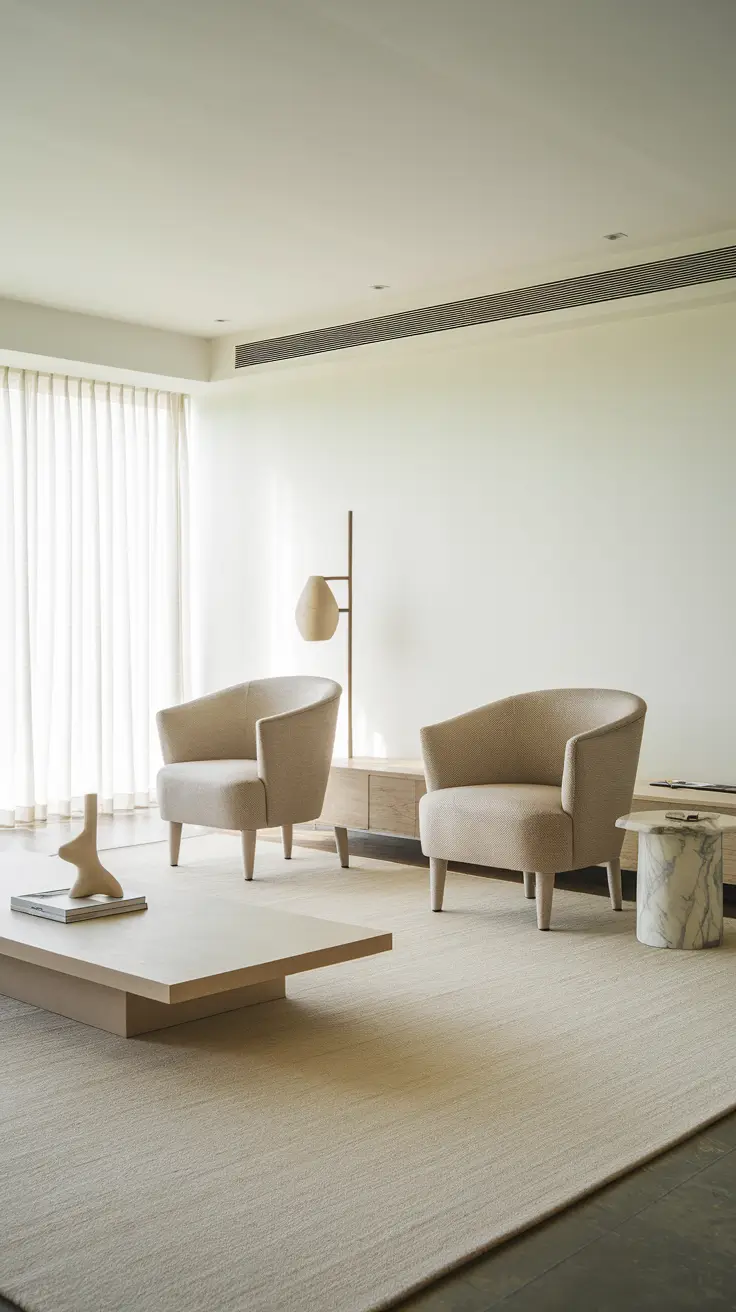
Proportion is the unsung hero of simple design. Seat heights are matched within one or two inches of sofas for balanced conversation. Maintaining 16 to 18 inches between chairs and tables allows natural reach and smooth traffic. Texture—nubby wool, brushed metal, boucle—adds richness without disrupting calm. Cable management keeps views clean. Wool-blend rugs absorb sound without clutter. Plug-in sconces above chairs free side tables. Large artworks over sofas maintain simple geometry.
Refreshing Blue Chairs for Vibrant Living Rooms
Blue chairs inject freshness and serve as clear anchors compatible with woods and metals. Navy or denim blues feel friendly beside gray sofas and crisp against warm oak. Light blues brighten small spaces, while darker shades bring order and tailored sophistication in modern settings. Careful attention to undertones prevents clashes with green plants or bronze accents, keeping palettes composed yet lively.
I favor pairs of blue tight-back armchairs with tapered wood legs and neutral wool rugs. Marble side tables and drum coffee tables soften edges and offer practical wipeability. Striped lumbar pillows pull blue tones toward sofas for cohesion. Slender black floor lamps provide reading light without bulk. Plants add color contrast, while pale oak consoles echo warm notes with cool chairs.
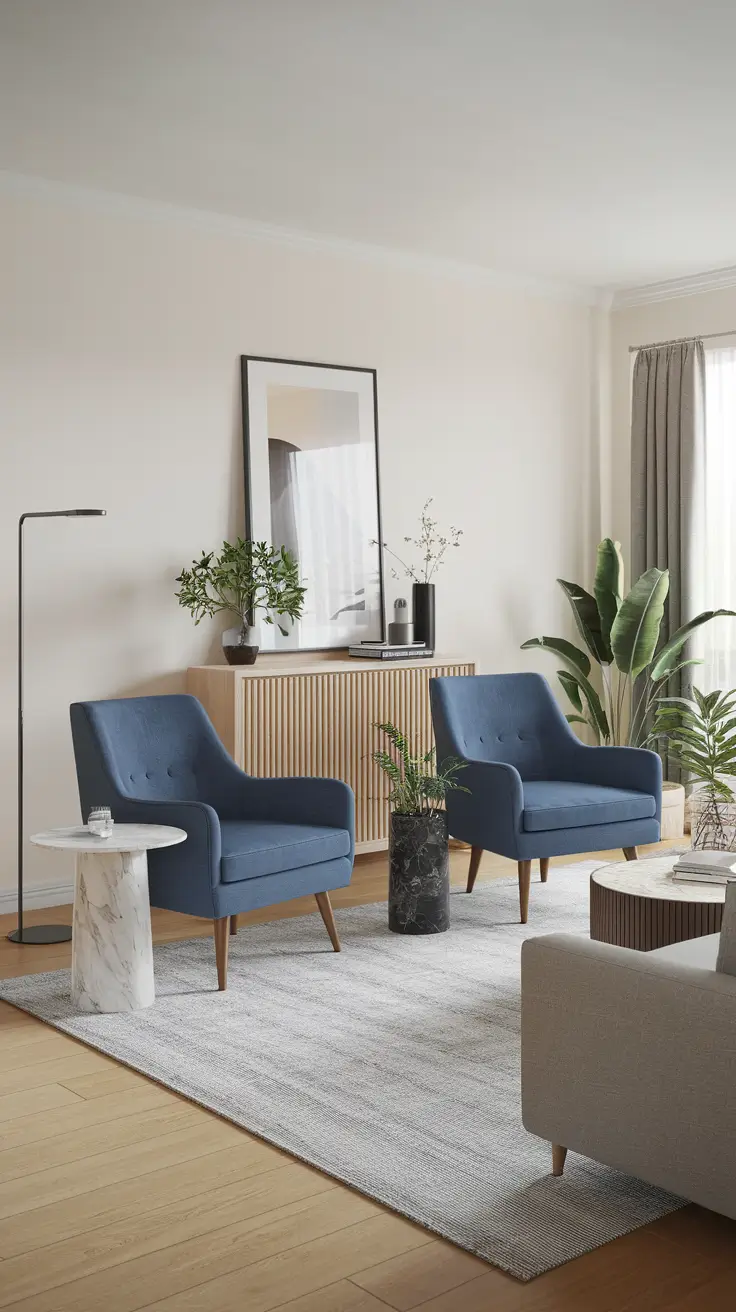
Blue fabrics are light-sensitive, so I test samples near windows and in lamplight before deciding. Patterns remain small to medium, letting chair color shine. In L-shaped layouts, placing a blue chair on the short leg balances visual weight. Matte fabric textures keep blues classic rather than flashy. Tonal throws add movement without extra color. Coordinating pillows soften abrupt sofa-chair contrasts. Light rugs on dark floors make blue chairs appear to float. Minor accessory tweaks integrate new blue accents seamlessly.
Nature-Inspired Green Chairs for Serene Spaces
Green chairs bridge indoor and outdoor vibes, adding calm natural touches to busy rooms. Moss or olive upholstery pairs beautifully with woven textures and oak or walnut legs. Coastal and farmhouse styles benefit from sage and eucalyptus hues, while deep forest greens bring elegance to modern interiors. Neutral surfaces let green serve as a soothing accent rather than a focal point. Plants echo green tones, making palettes feel intentional rather than thematic.
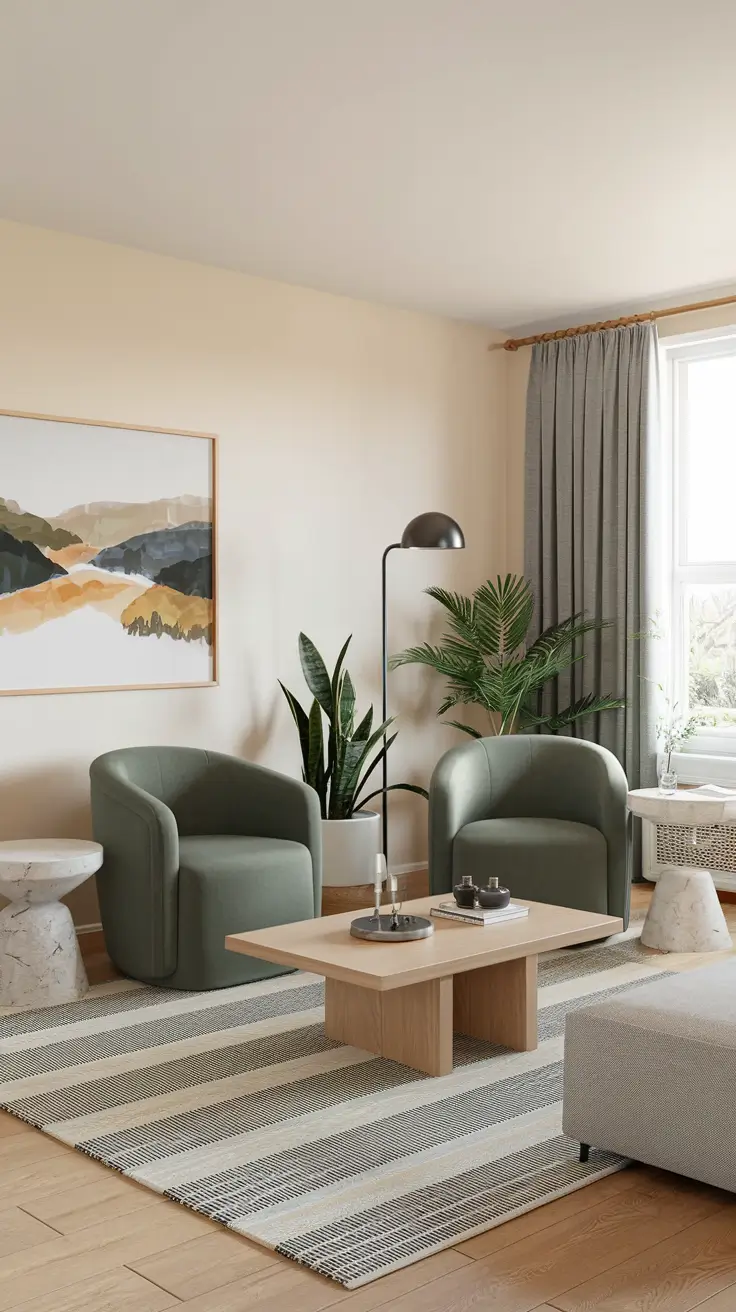
Compact green armchairs paired with light timber coffee tables and stone side tables create balanced contrasts. Flatweave rugs with subtle stripes stabilize groupings without drawing attention. Soft green tones warm gray sofas and prevent coldness under evening lighting. Brass or blackened steel lighting complements warm or cool green undertones. Landscape prints spanning the palette enhance nature connections.
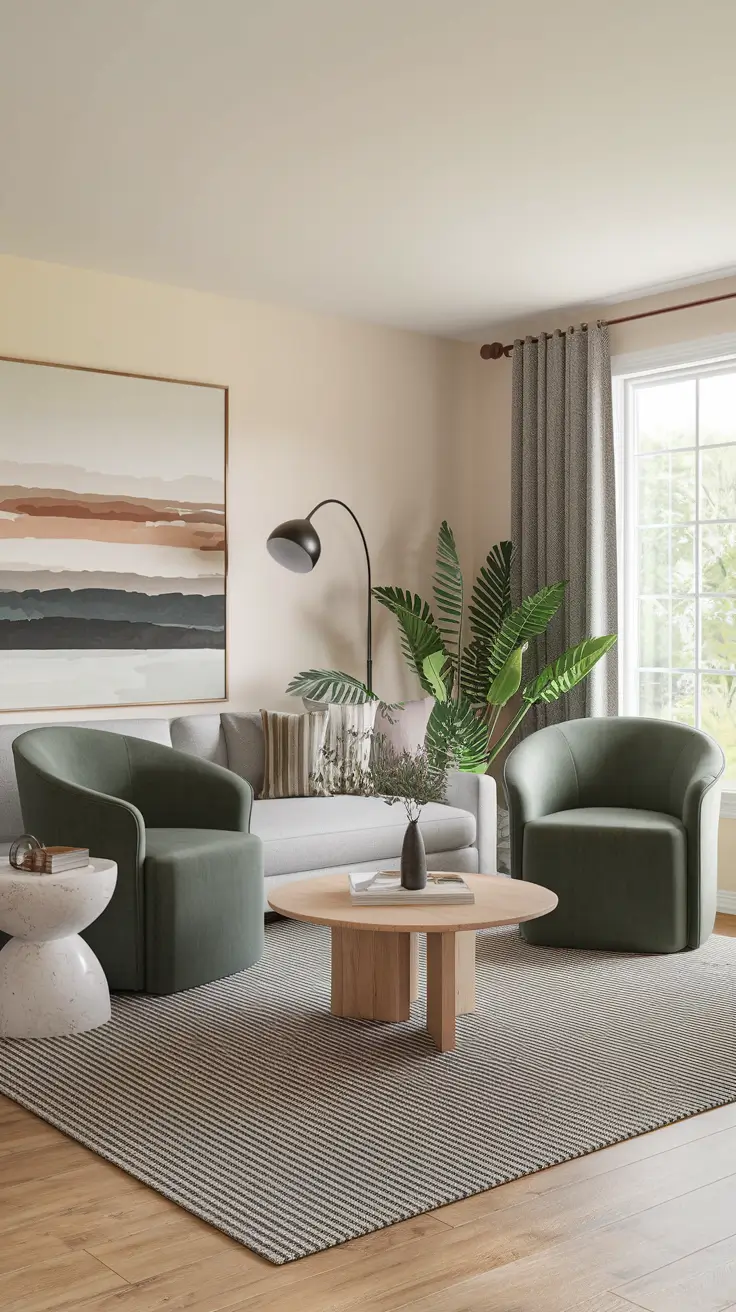
Green is forgiving but undertone accuracy matters; I compare samples with rugs and walls before ordering. Repeating green in ceramics or throws prevents chairs from feeling isolated. In L-shaped layouts, green swivels on short legs allow easy TV and conversation shifts. Mixing green with blue or terracotta at low saturation keeps energy fresh yet restful.
Linen-shaded floor lamps diffuse light through green fabrics, which can darken under cool bulbs. Black picture frames cool warm palettes. Open-leg chairs lighten green’s visual weight in tight spaces. Small herbs or ferns on side tables subtly reinforce the natural theme.
Luxurious Leather Chairs for Enduring Style
Leather chairs bring durability, patina, and understated luxury. Box-stitched or channel-tufted leather looks tailored yet wipes clean easily. Cognac tones warm neutral palettes, saddle hues complement gray stones, and black leather adds modern structure beside pale sofas. I prefer dull or semi-aniline finishes to avoid sunlight glare, keeping chairs lush without overpowering small rooms.
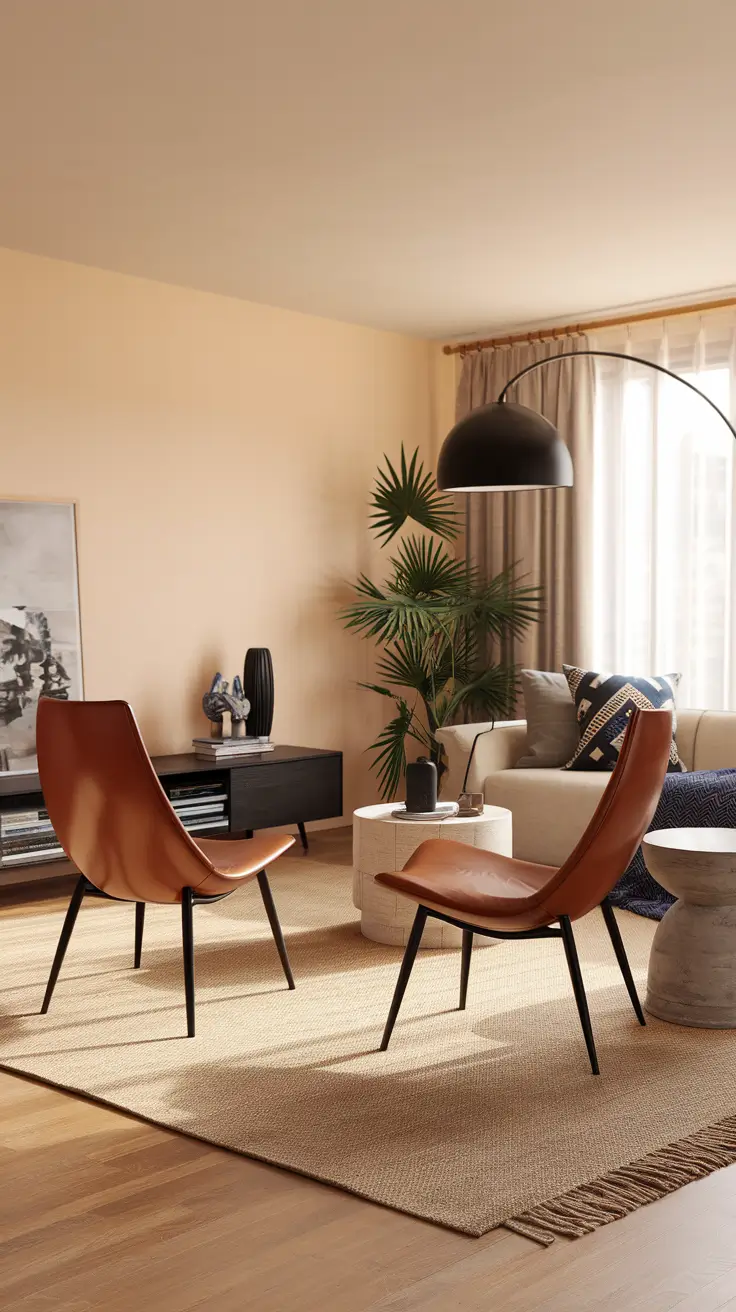
Two leather lounge chairs on thin wood or metal legs, wool rugs for acoustic comfort, and stone or wooden drum tables create balanced sets. Black arc floor lamps highlight cushions and echo sharp outlines. Textiles with personality—like Nigerian indigo pillows or handwoven throws—soften leather’s smoothness. Low media units on legs keep groupings floating. Rounded-leaf plants temper sharp lines.
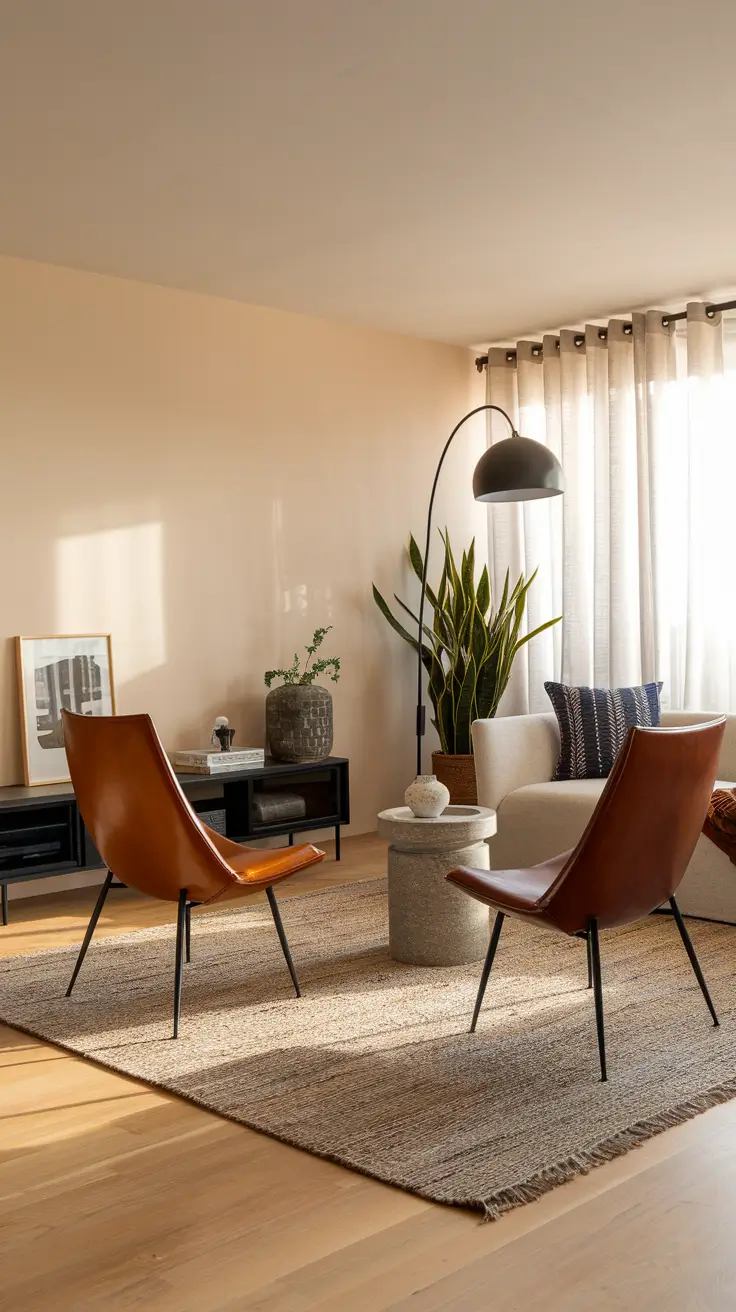
Leather pairs well with varied textures—wool, linen, wood—and seat heights within an inch or two of sofas. Slightly angling chairs inward invites warmth. Minimalist palettes call for counted accessories to let chairs tell the story. In L-shaped layouts, leather on short legs balances cloth sofas, creating refined, homey mixes.
Small ottomans double as tables with trays, expanding comfort without clutter. Honed stone side tables reduce glare near leather. Echoing leather tones in frames or trays subtly connects elements. Leather conditioners maintain softness and beautiful aging.
Timeless Vintage Chairs with Modern Flair
Vintage-inspired rooms layer character with relaxed, updated touches. Starting with mid-century or farmhouse-style vintage armchairs, I add modern finishes to avoid time capsule effects. Walnut or oak frames anchor palettes, while linen and wool keep textures breathable and neutral. Checked or ticking stripe pillows nod to tradition without theme overload. Thin silhouettes keep small spaces airy rather than crowded.
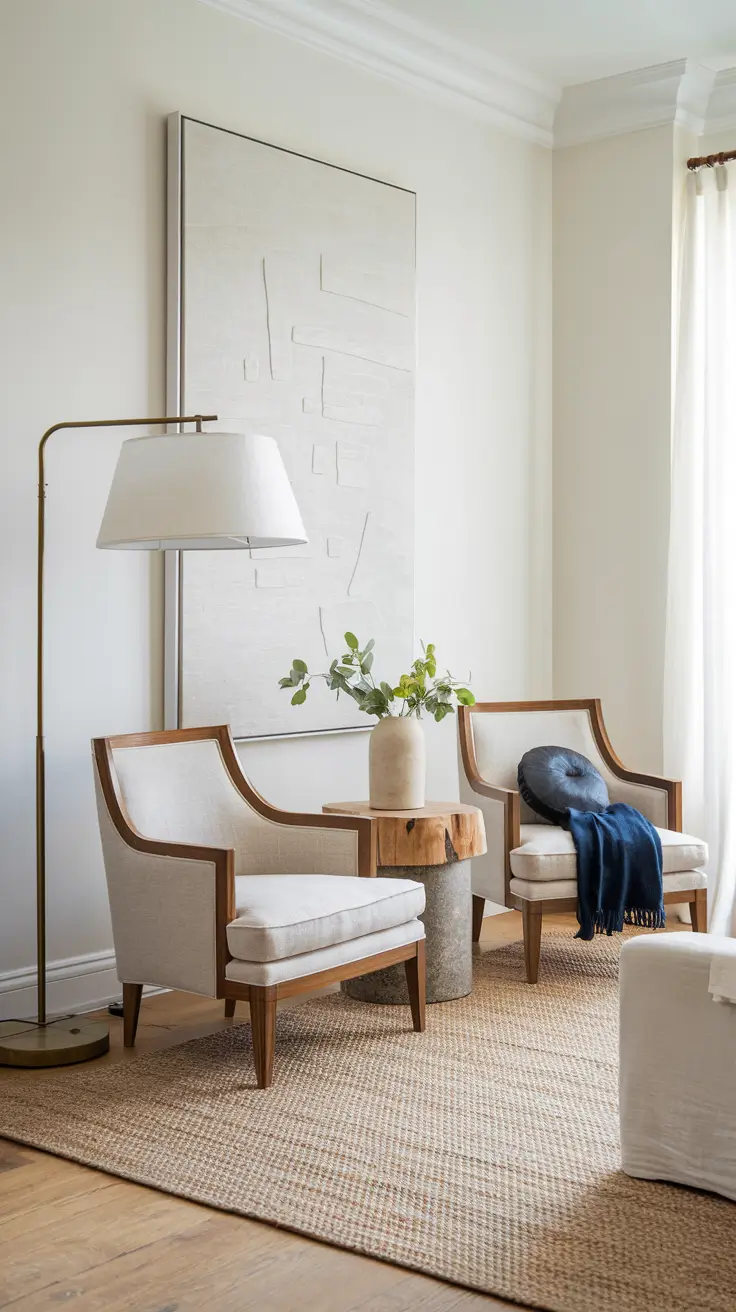
Preferred pieces include tight-back wing chairs and low spindle or scoop backs for varied heights. Antique wood side tables with polished stone tops add vintage charm and practical surfaces. Flatweave rugs anchor chair legs and highlight wood grains. Brass floor lamps with linen shades warm patinas and soften evening light. Modern sofas pair well with accent pillows repeating vintage colors in contemporary prints.
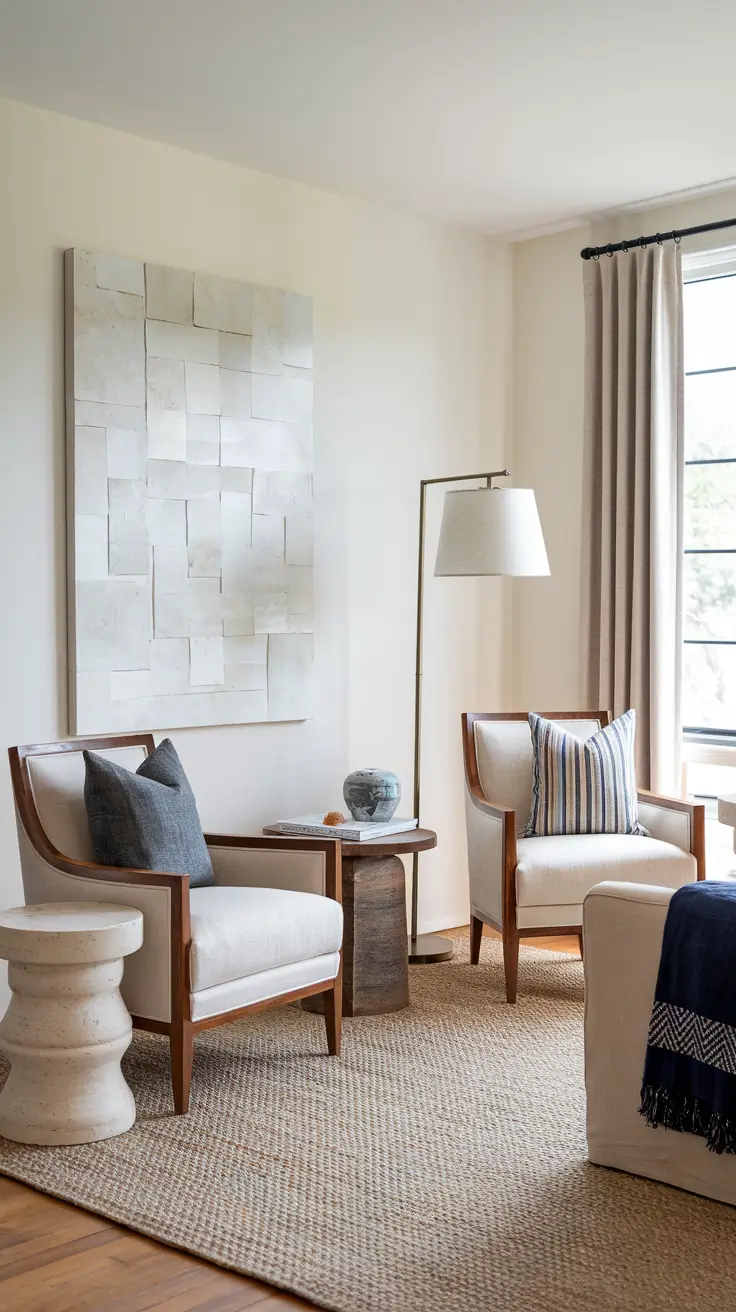
Comfort equals style in vintage rooms. Seat heights are kept 1-2 inches above sofas for natural conversation. Maintaining 16-18 inches reach to coffee tables is essential. Pattern scales are balanced with one small and one medium, leaving solids elsewhere to avoid noise. Nigerian indigo textiles add handmade texture while keeping looks modern. Felt pads protect floors during layout changes. Vintage lidded baskets hide throws without clutter. Warm white bulbs enhance wood and leather warmth. Large artworks with soft grounds and dark lines link vintage and modern elements seamlessly.
Creating Cozy Corners for Relaxed Living
Transform overlooked corners into inviting seating nooks by balancing scale, light, and texture—especially in small living rooms. I start with a small armchair that fits the body without bulk, positioned to capture nearby window light. In L-shaped sofa layouts, placing the chair at the open end accommodates TV viewing and conversation. Soft gray or warm gray fabrics create calm, while plants draw the eye upward and add life.
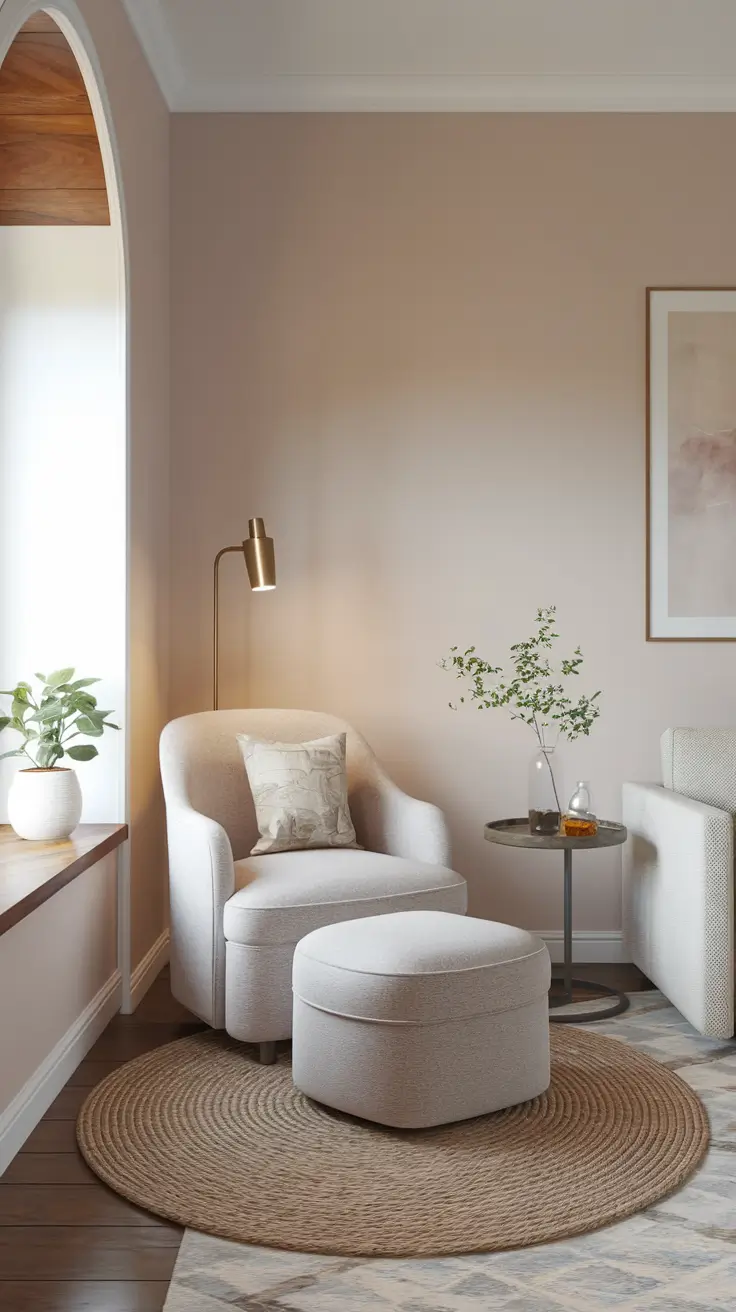
Key pieces include medium-depth upholstered armchairs, low ottomans convertible to tables, and slim floor lamps with pivot heads. Round side tables minimize space and avoid harsh corners. Leather ottomans or stitched trays add warmth and classic detail. Small bookshelves or wall-mounted ledges save floor space. Flatweave rugs define the nook within the larger room.
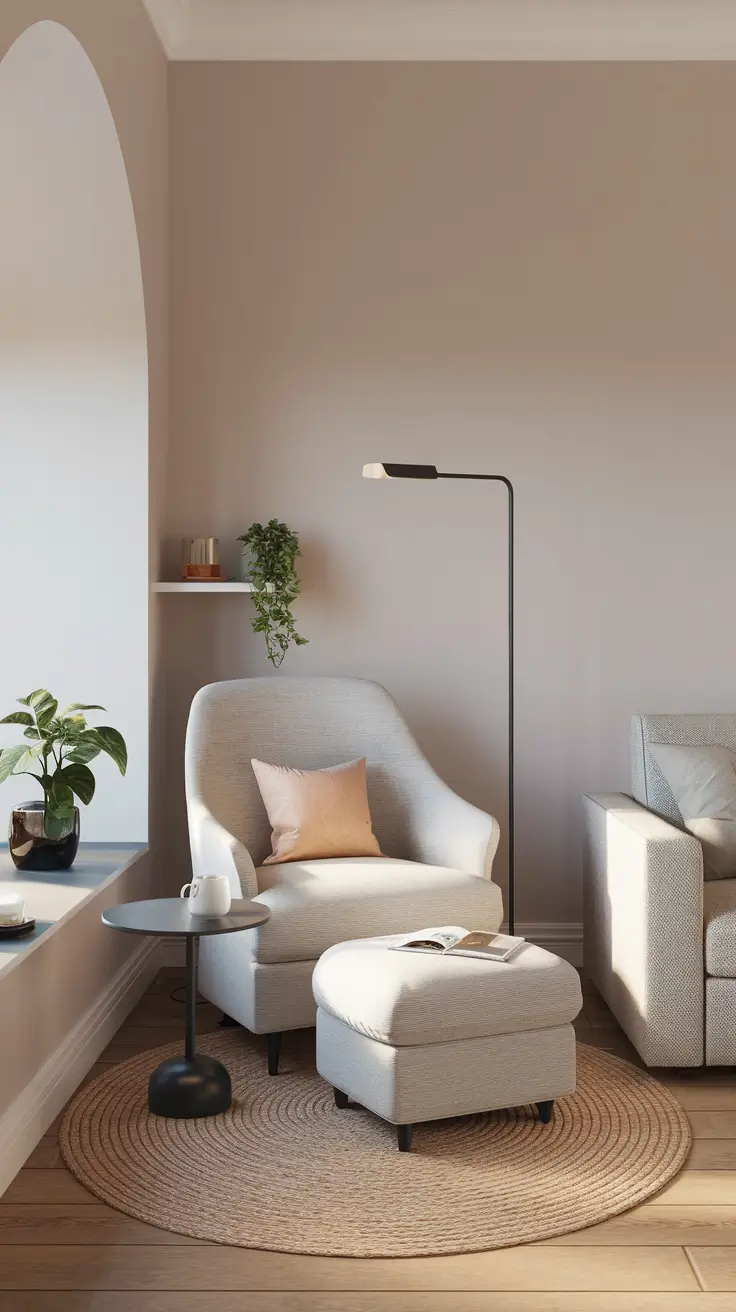
Comfort is a matter of proportion: chair back angles suit reading, and lamp heights ensure glare-free illumination. Repeating room colors in throws or pillows integrates the corner. Open legs and light colors keep traffic areas clear. Plug-in sconces free side tables. Coastal schemes benefit from pale blue stripes for brightness. Dimmable lamps add evening flexibility. Small plants or herbs subtly enhance the relaxed vibe.
With these insights, you now have a detailed roadmap to blend timeless charm with modern comfort, transforming quiet corners into the most inviting spots in your home. What color palette do you currently embrace, and where is your favorite nook? Share your challenges, and I’ll tailor the next set of ideas to your unique space.
As an Amazon Associate I earn from qualifying purchases.