Creative Pantry Organization Ideas for Every Home Style and Need
Imagine a pantry that remains calm, efficient, and visually appealing every day—not just after a deep clean. This comprehensive guide offers realistic pantry organization strategies tailored to your lifestyle and space. You’ll discover how to create distinct zones for easy access to essentials, implement clear labeling systems, and maintain order even during busy times. Whether you rent or own, have a spacious pantry or a cozy nook, prefer classic or eclectic decor, these ideas adapt to your needs. I’ll walk you through organizing categories like Baking supplies, Grains and pasta, Oils and condiments, and canned goods, ensuring each item has a designated spot. Plus, I’ll share tips on when to invest in quality and when to opt for budget-friendly solutions, all while keeping your pantry stylish and supportive of healthy, quick meal preparation.
Optimizing Pantry Storage with Custom Shelving
Begin by assessing your pantry’s wall space and designing adjustable shelving that maximizes every inch. For dry goods, I recommend long, continuous shelves that provide unobstructed views from top to bottom. Assign specific zones for Grains and pasta, Baking supplies, Oils and condiments, and dedicate risers for canned goods to keep labels visible. When aesthetics matter, a minimalist approach with uniform containers and clean shelf fronts creates a serene environment. Open shelving allows for quick inventory checks, while closed cabinets reduce visual clutter, balancing functionality and style.
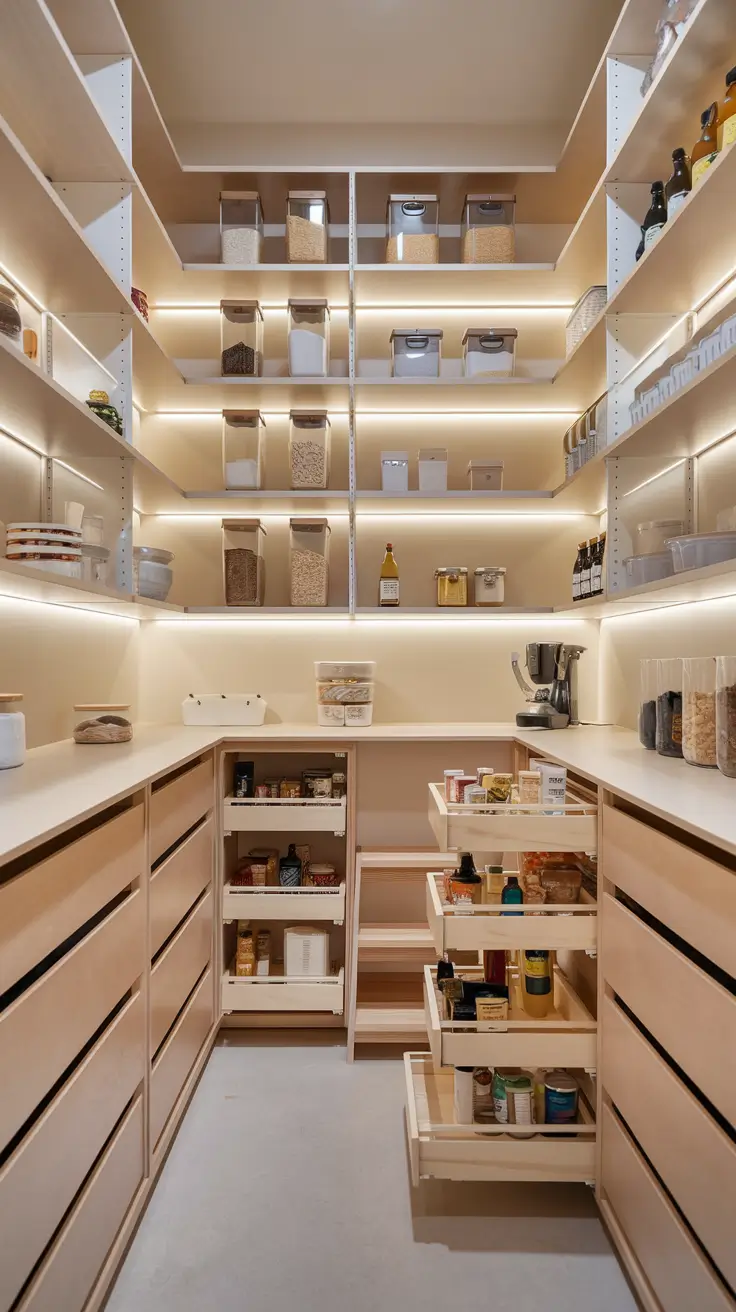
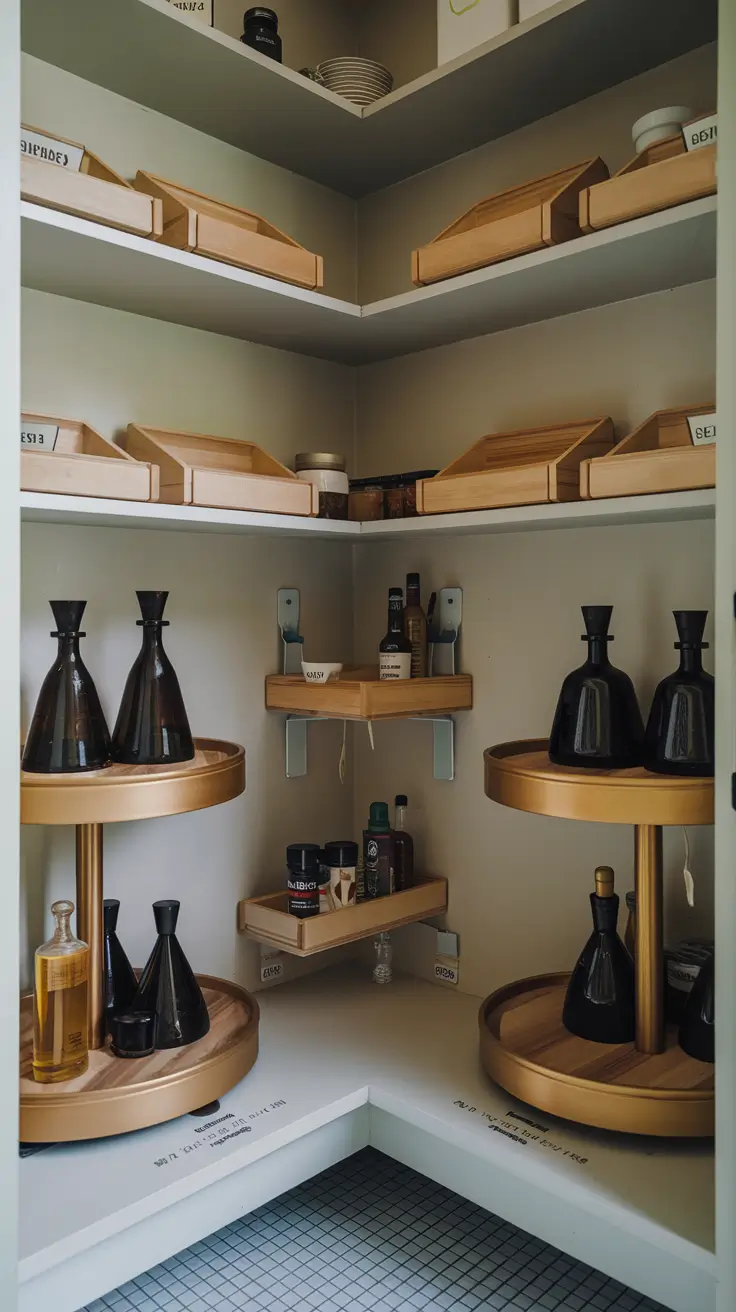
For furniture and fixtures, I use deep wooden shelves for bulk storage, medium-depth shelves for snacks, and narrow shelves at eye level for daily essentials. Accessories like can risers, lazy susans for oils, and tall bins for flour and sugar enhance usability. Transparent jars paired with bold labels simplify restocking and category recognition. Pull-out drawers near the floor house heavy appliances and extra supplies efficiently. Shelf dividers keep cutting boards and trays upright and accessible. Durable finishes and soft-close hardware ensure longevity under frequent use.
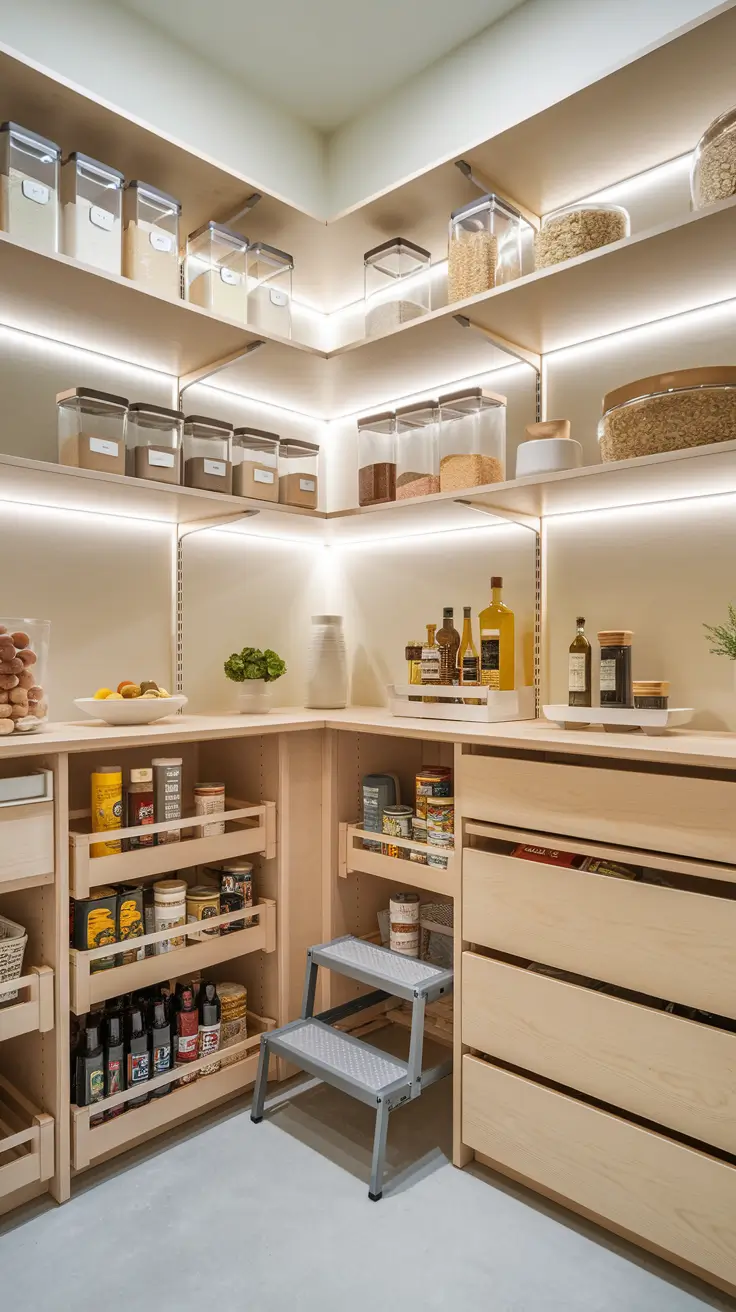
Visible categorization helps prevent overbuying and duplicate purchases. Professional organizers often advise decanting only weekly-use items and labeling with product names and purchase dates for freshness. I keep a notepad by the pantry door for quick shopping lists and follow a simple rule: no more than two open jars per category to avoid clutter. Weekly top-to-bottom cleanups take just minutes thanks to clearly defined zones.
To complete the setup, install soft LED strip lighting beneath shelves to highlight labels and keep a slim step stool tucked between cabinets. A shallow door rack is perfect for spices and tea, while an overflow bin stores party supplies out of daily sight. A printed zone map on the pantry door helps family members maintain the system long-term.
Flexible Wire Shelving Solutions for Pantries
Wire shelving is an excellent choice when ventilation, affordability, and adaptability are priorities, especially in compact kitchens. Freestanding wire units can span empty walls without overwhelming the space, allowing narrow pantries to feel open and airy. Adding shelf liners prevents jars from tipping and keeps small packets upright. Organize shelves by function—such as On-the-go snacks, Healthy grab-and-go items, and quick-cook essentials—to streamline meal prep. Adjustable shelves accommodate tall cereal boxes or bulky appliances, making this a budget-friendly yet high-capacity option.
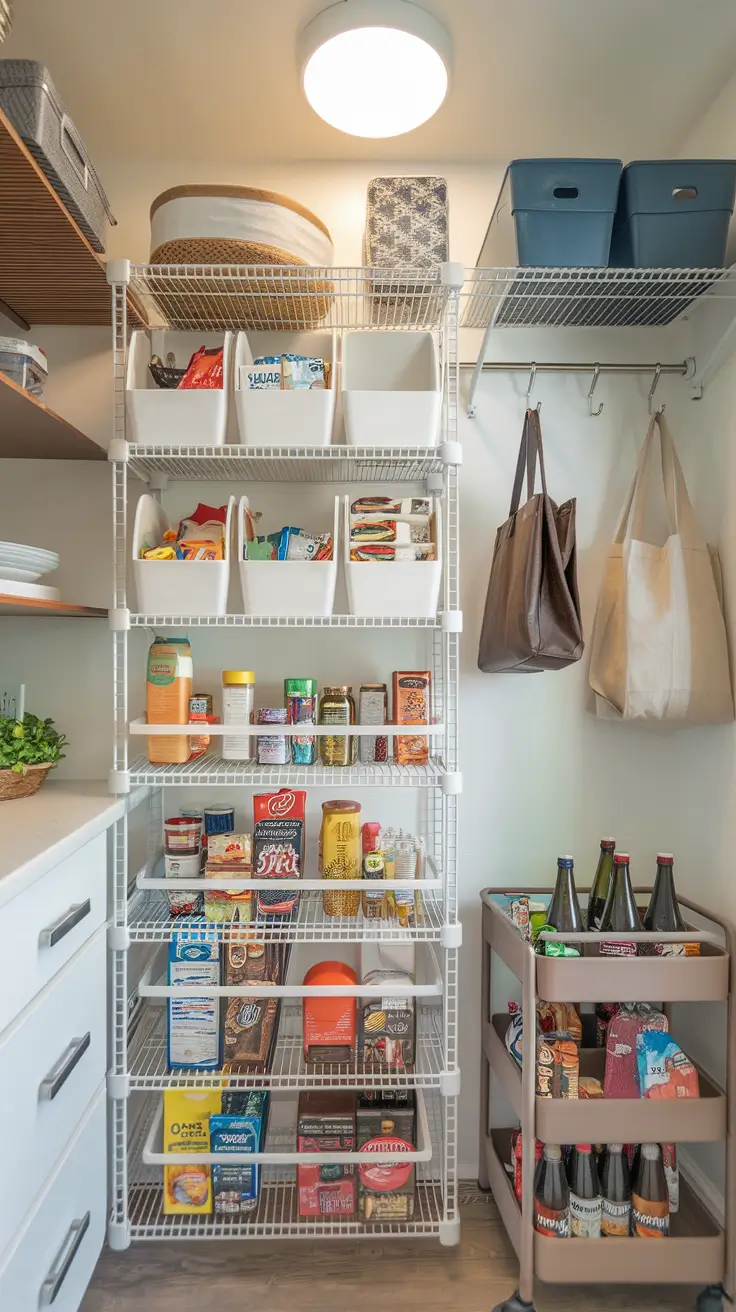
Enhance wire shelving with clip-on baskets, hanging drawers, and label holders for a neat, labeled pantry. Place bins at child-friendly heights for snacks, while higher shelves store dinner ingredients. Deep crates hold bulk pasta and rice, and turntables keep vinegars within easy reach. Hooks on side rails organize aprons and tote bags. A slim rolling cart fits between the shelf and wall to store beverages like soda or sparkling water.
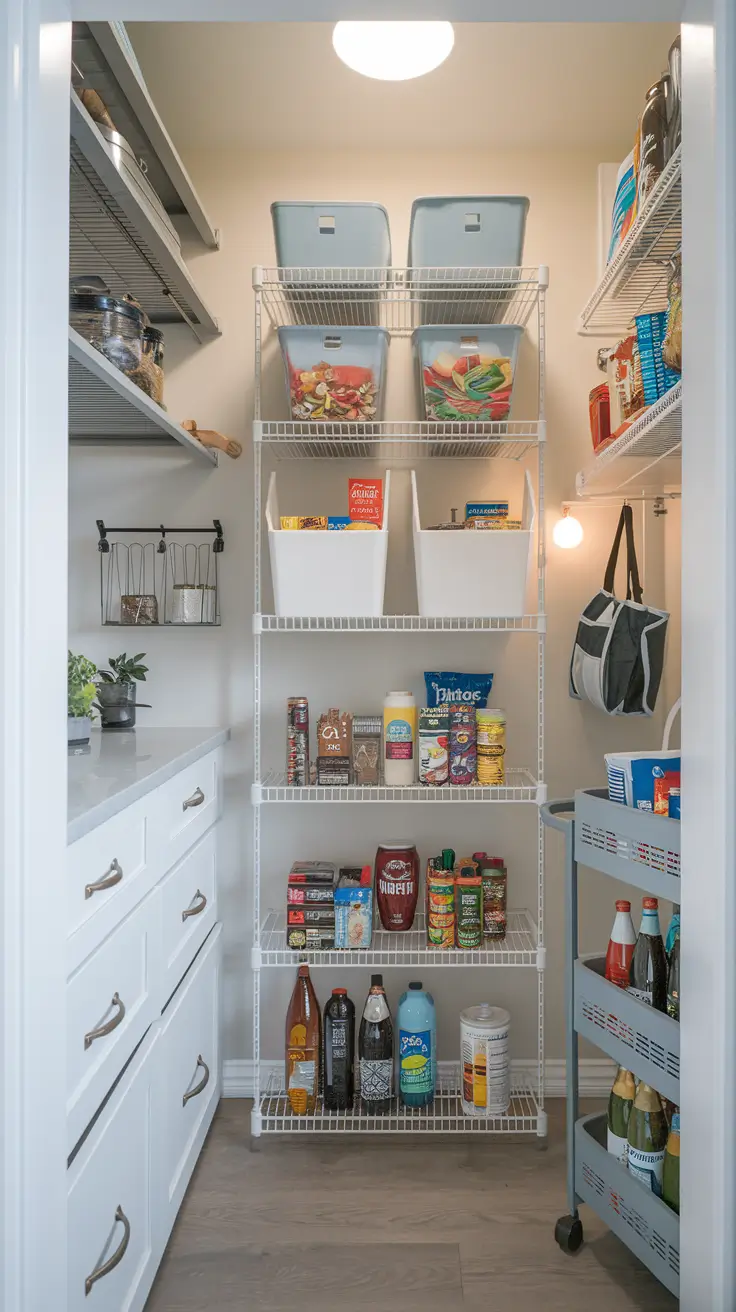
For busy households juggling multiple schedules, grouping items by task—such as lunch prep or smoothie ingredients—helps maintain consistency. Store back stock behind current items to ensure first-in, first-out rotation. A quick weekly reset to face labels forward and clear empties keeps the system fresh without perfectionism. Adding color-coded bin clips for dietary needs and a shallow tray for mail or keys near the pantry entrance enhances functionality. Motion-sensor puck lights under shelves improve visibility without complex wiring, and a compact floor mat protects surfaces during cleaning. These thoughtful touches make wire shelving feel custom and renter-friendly.
Walk-In Pantry Designs for Spacious Kitchens
In larger pantries, a U-shaped layout with wide aisles allows two people to work comfortably, creating a seamless extension of a farmhouse kitchen. One wall features broad wooden shelves supporting baskets and clear jars for staples, while an accent wall with patterned wallpaper or earthy paint adds rustic charm. A cozy corner with woven bins and vintage glassware introduces a bohemian flair. A central prep cart holds decanters and a tray for sampling teas and coffees, making the space inviting and functional. The final wall stores bulk paper goods and entertaining supplies, keeping daily zones uncluttered.
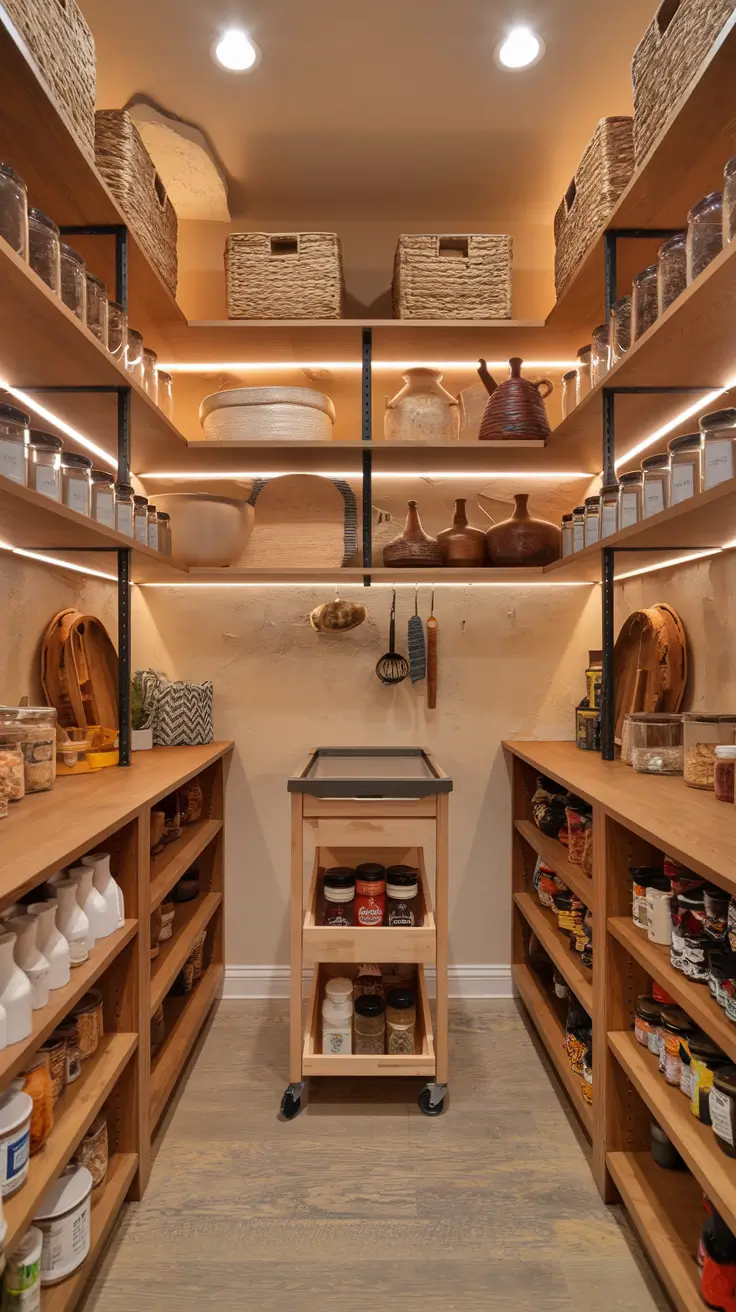
The left side is dedicated to cooking essentials like Grains and pasta, Oils and condiments, and a height-adjusted spice rack featuring blends for Indian cuisine. The right side houses Snacks, breakfast items, and Baking supplies, with deep pull-outs and a cookbook display shelf. A sliding ladder on a rail provides safe access to seasonal items. Baking tools are organized in drawer inserts, and open chip bags are clipped in trays. Potatoes and onions rest in breathable floor baskets near the door.
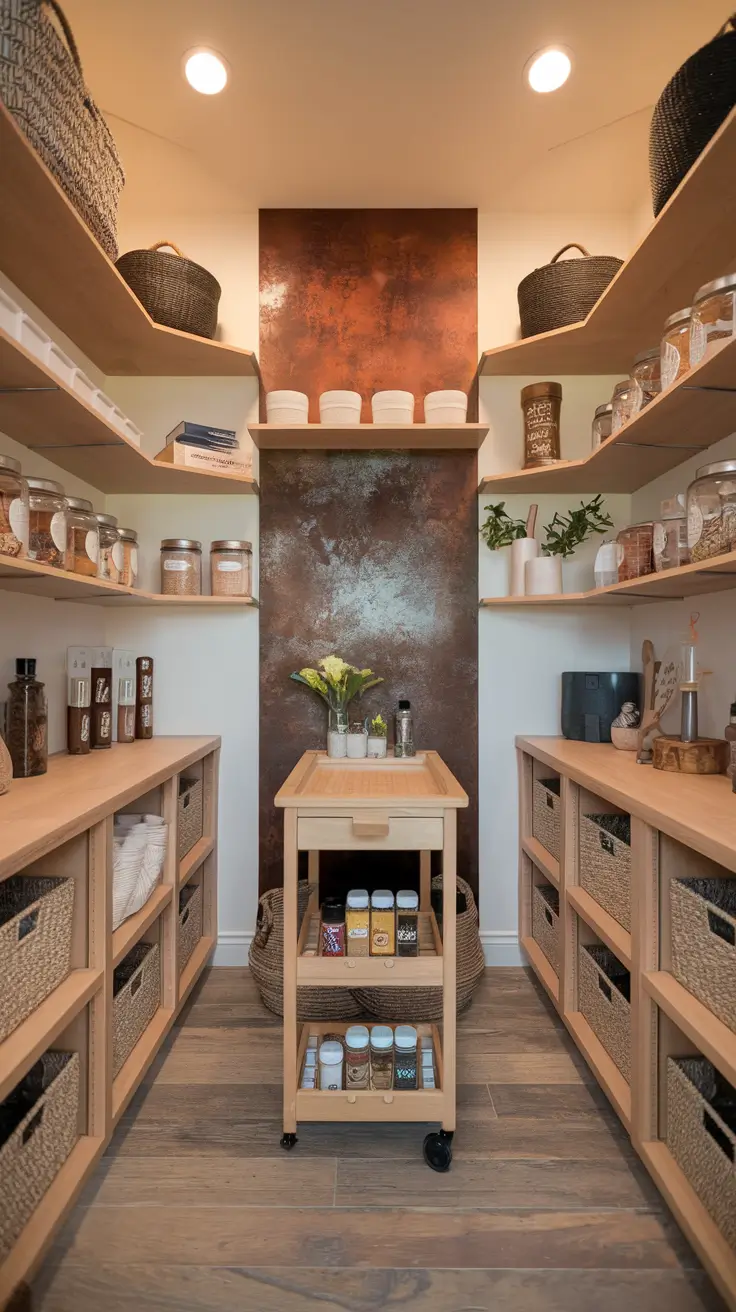
Personal zones for dietary restrictions empower family members to self-serve confidently, reducing mealtime friction. Consistent, clear labels on jars and shelves maintain a cohesive look and minimize questions. A crumb brush and spoons in the prep cart facilitate quick cleanups. Ambient features like a small speaker and dimmable lighting make evening cooking enjoyable. A welcoming atmosphere encourages everyone to keep the space tidy.
To enhance this setup, consider adding under-shelf task lighting for reading small print, a charging drawer for digital thermometers or scales, a wipeable weekly menu near the entrance to align pantry inventory with meal plans, and a narrow pull-out for trash and recycling. These details transform a walk-in pantry into a fully functional kitchen extension.
Transforming Small Closets into Efficient Pantries
Even compact closets can function as effective pantries by maximizing vertical space and smart planning. Start with narrow adjustable standards, a shallow toe-kick drawer, and a back-of-door organizer to triple storage capacity. Light-colored paint and uniform containers visually expand the space. A slim task light at the top eliminates shadows, making items easy to identify. With strategic zoning and labeling, even a small hallway closet can become a valuable pantry.
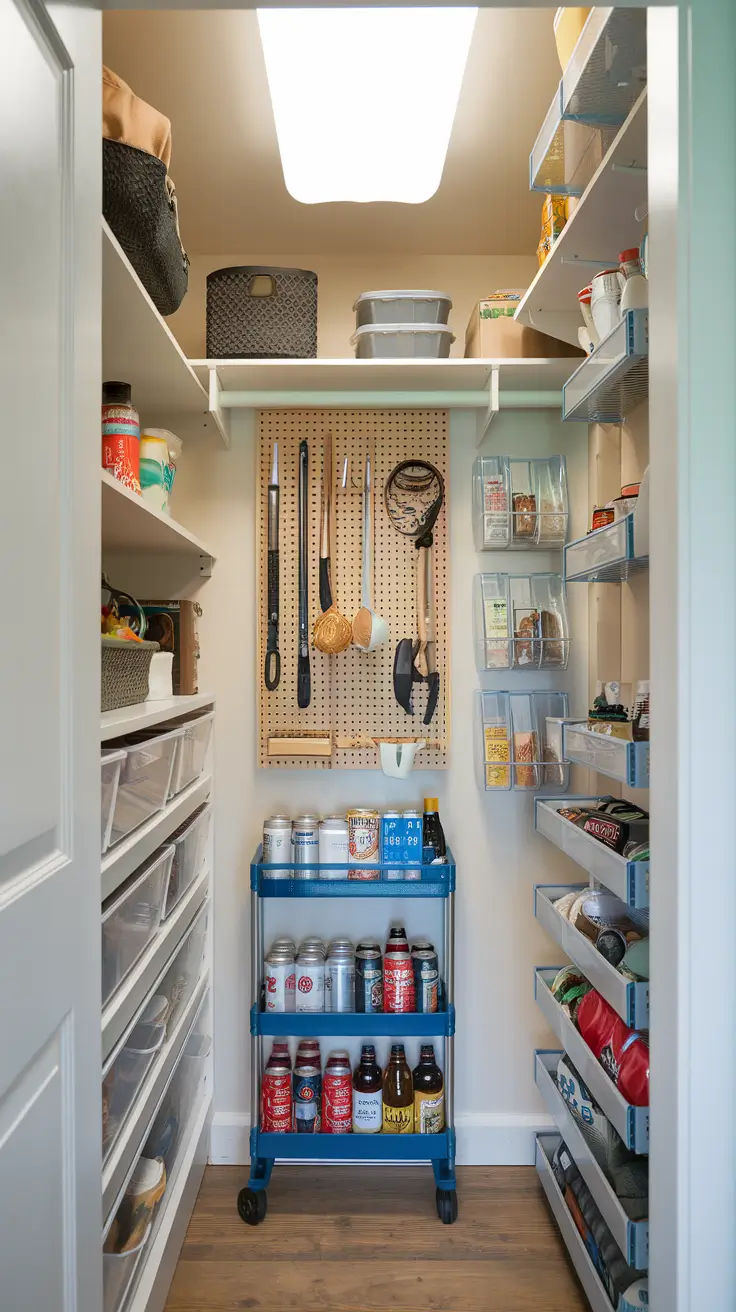
Use shallow shelves for jars, mid-height pull-outs for breakfast kits, and low bins for potatoes and onions. Store spices and wraps in an over-the-door rack, and keep beverages in a rolling caddy. A pegboard panel holds scissors, bag clips, and wraps, perfect for DIY enthusiasts. Consistent labeling maintains order, and lidded bins protect back stock from dust. Organizing by task and frequency saves steps, with everyday items placed between shoulder and knee height and seasonal baking stored higher.
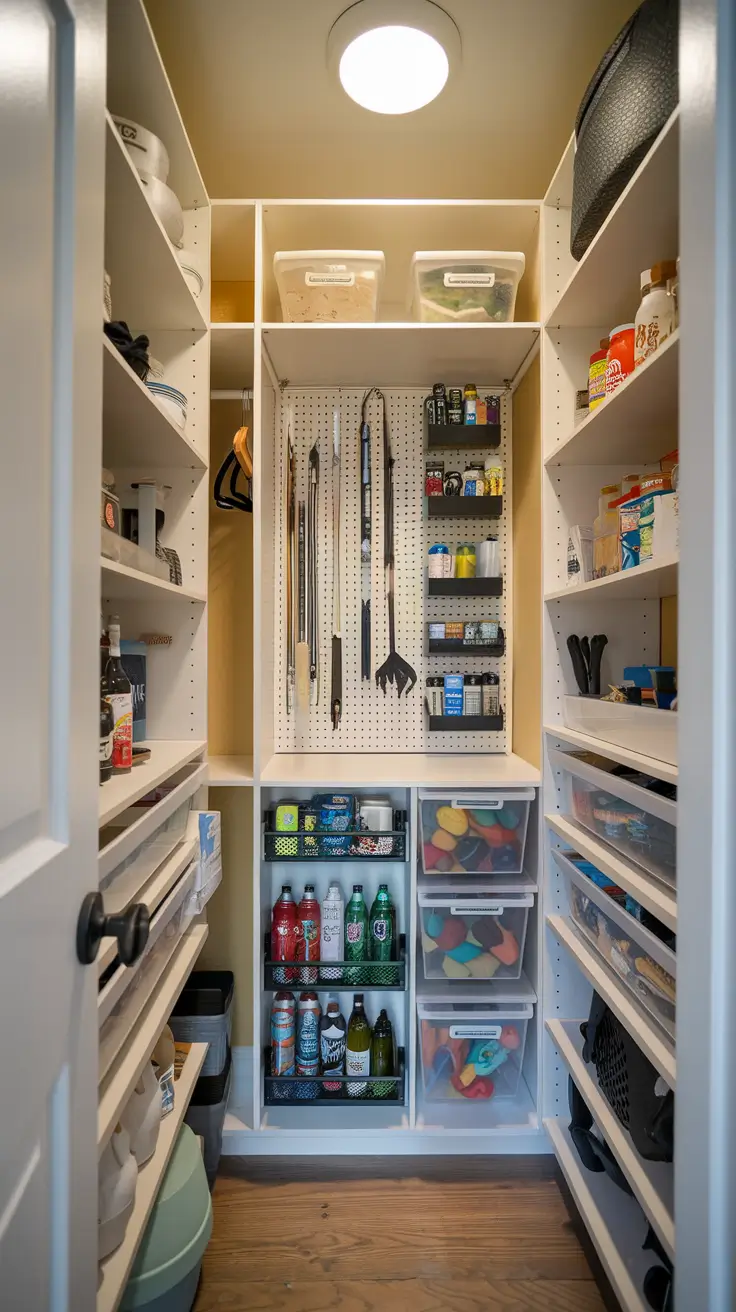
Clients with small kitchens appreciate how this setup frees cabinet space by handling overflow. The serene palette and matching baskets create a calm environment, while short weekly resets keep the system running smoothly. To finish, add acrylic shelf risers for canned goods, clip-on label holders, a magnetic strip for metal scoops, and hooks for cleaning tools. These small touches make a small closet feel like a spacious pantry.
Budget-Friendly Pantry Organization That Delivers
Creating an organized pantry on a budget is achievable by repurposing jars, baskets, and trays from around the home. Simple hacks like contact paper liners, printable tags, and uniform bins from dollar stores bring order quickly and affordably. Group items tightly and label containers clearly to maintain a neat appearance. Designate micro zones for On-the-go snacks and quick meal essentials to support fast cooking. These strategies work well in starter homes and rentals.
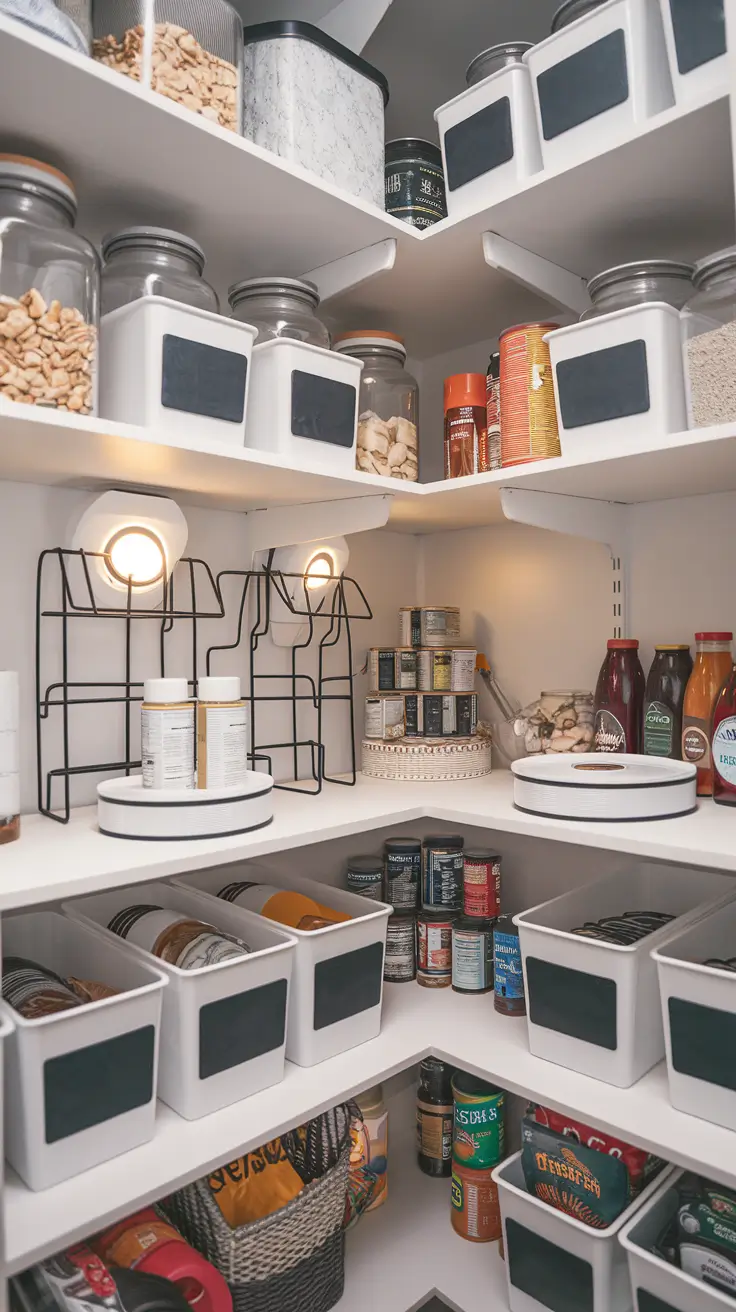
Use wire risers for canned goods, basic turntables for sauces, and clip-on label holders. Low-cost shelf dividers prevent bags from toppling, and clear shoe boxes serve as stackable bins for overflow. Chalk markers on labels allow for easy category changes. Battery-operated puck lights brighten dark corners without wiring. A tiered spice rack keeps small jars visible and accessible.
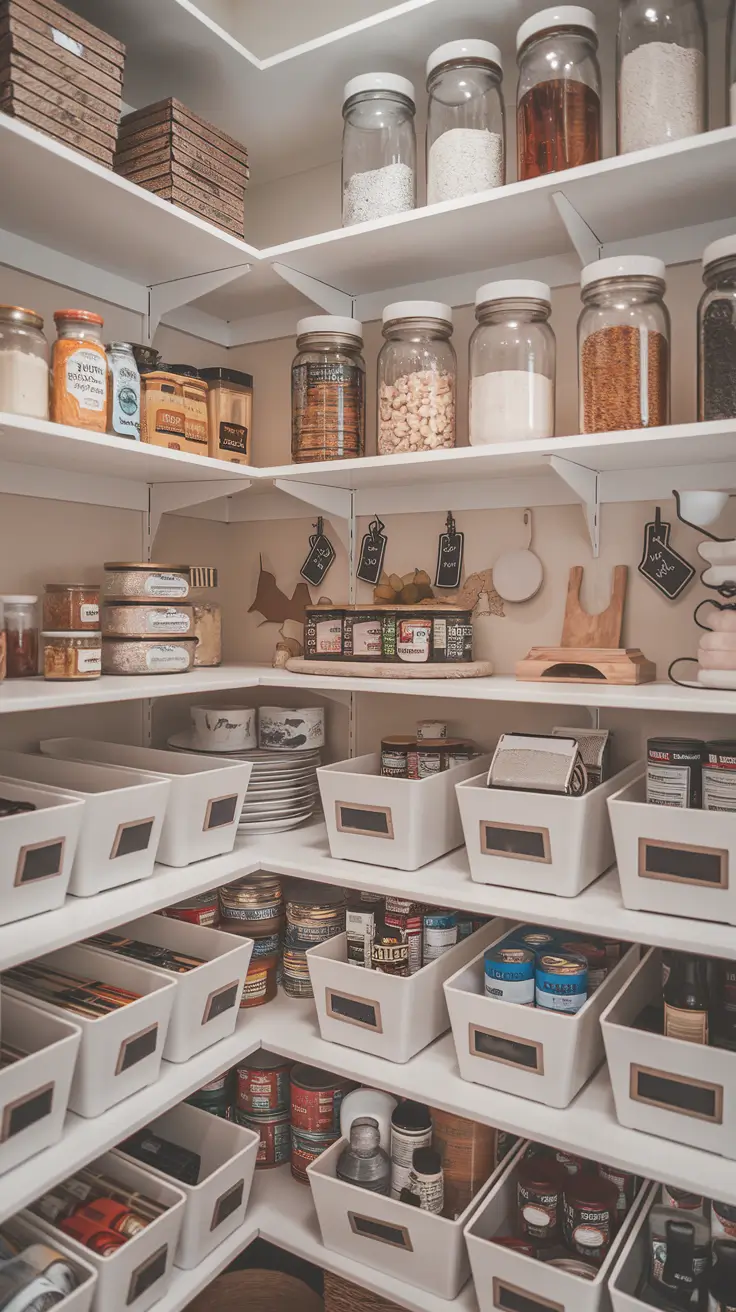
Invest where function matters most and save where style can be mimicked through uniformity. Matching bins from budget stores look elevated when consistent in color and size, lending authenticity to the system. Upgrade in phases, starting with glass jars for frequently used staples. Keep a small repair kit with spare clips and labels for quick fixes. To elevate the budget plan, add a printed zone map inside the door, a monthly purge routine, a basic shopping list tied to par levels, and a labeled party bin to corral gift snacks. These habits preserve order without overspending.
Smart Dollar Store Hacks for Pantry Organization
Stretching a tight budget while maintaining a polished look is possible with pantry organization ideas dollar stores. This approach suits small kitchens and spaces where every inch counts. Start by choosing a cohesive color palette so bins, baskets, and jars feel unified and elevated despite affordability. Group zones for On-the-go snacks, dinner starters, and baking to streamline meal prep. The result is a calm, organized pantry that supports everyday cooking and reduces waste.
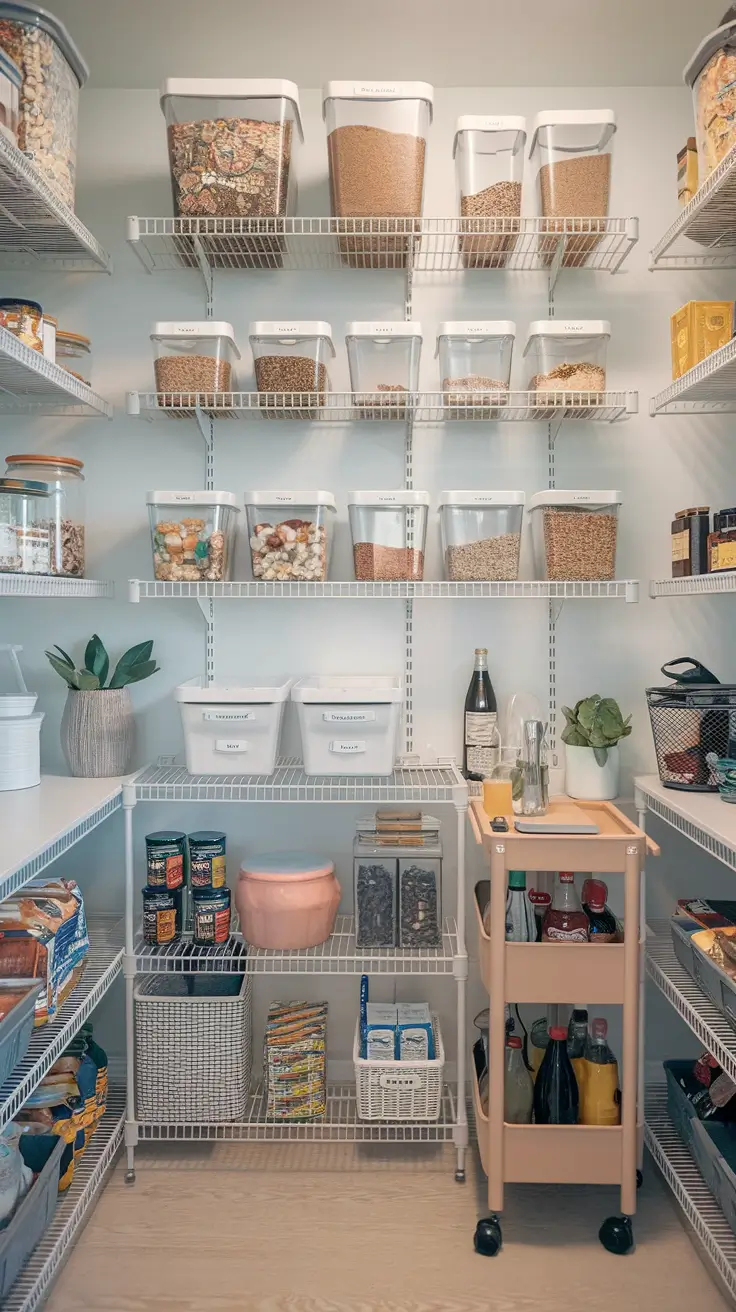
Utilize uniform plastic bins, clear canisters, small turntables, and clip-on labels from budget aisles. A slim wire shelf riser maximizes vertical space for sauces, while adhesive hooks organize scoops and measuring spoons. Stackable shoe-box containers serve as back-stock drawers for packets and seasonings. Over-the-door racks hold wraps and foils, and shallow baskets ventilate produce. A rolling cart stores beverages or bulky items. Repeating a few coherent items makes even a small closet feel intentional.
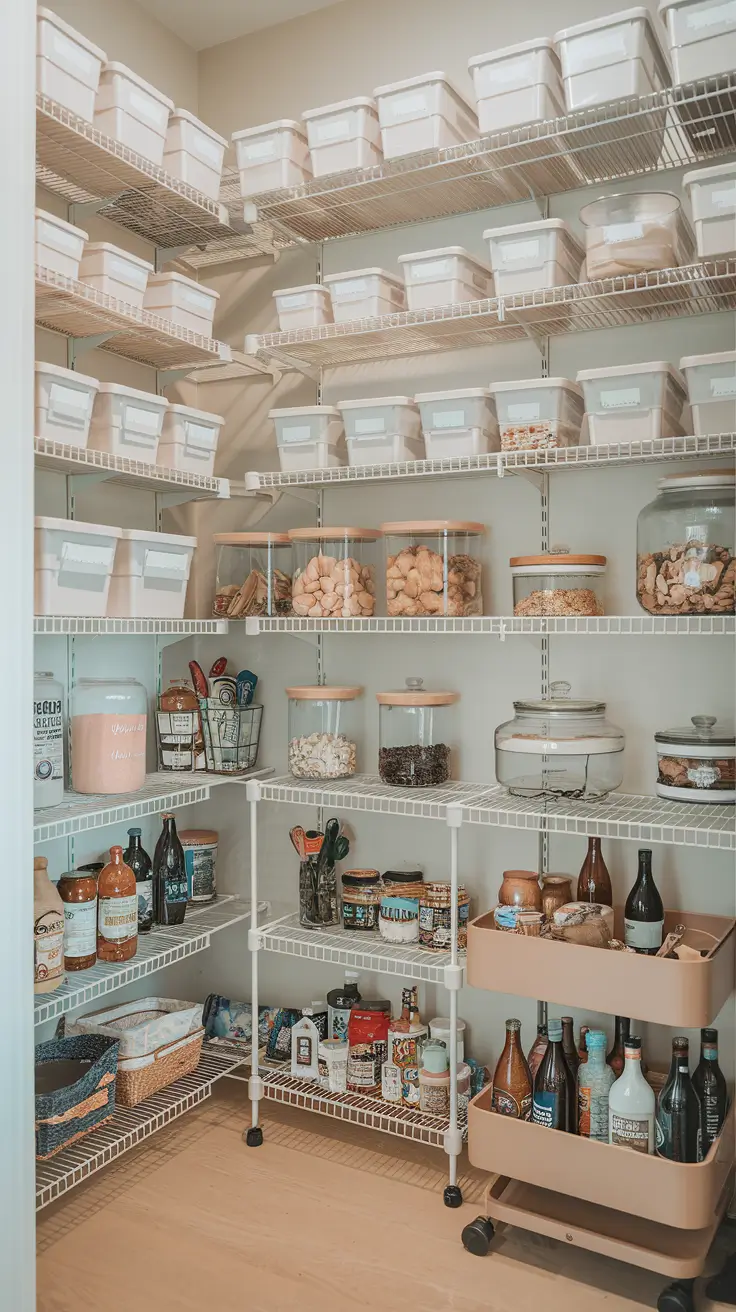
Quick wins come from repeating one bin style and labeling shelf edges as well as containers. Experts recommend decanting only high-use items and dating jars to maintain freshness. I keep an audit list inside the door to avoid duplicate purchases. For busy families and picky eaters, color-coded dots help everyone find what they need quickly. A nearby charging shelf holds a label maker and task light, making updates effortless. Adding wipeable shelf liners, a narrow step stool, and a mini command center with a weekly menu ties inventory to meals. For rustic kitchens, swap a few baskets for farmhouse charm; for eclectic styles, add a patterned bin for a bohemian touch. These details make dollar store finds feel custom.
Cabinet-Based Pantry Systems for Seamless Integration
When designing built-in pantries, I treat cabinets as modular frameworks that blend with adjacent rooms like farmhouse kitchens. Adjustable shelves paired with deep drawers maximize storage, placing heavy items low and everyday essentials at eye or hip level. Clean-lined fronts and light interiors enhance visibility and maintain a minimalist aesthetic. Zones for Grains and pasta, Baking supplies, and Oils and condiments are positioned near prep areas for efficiency. Tall pantry towers balance large rooms aesthetically and functionally, becoming silent partners in daily cooking.
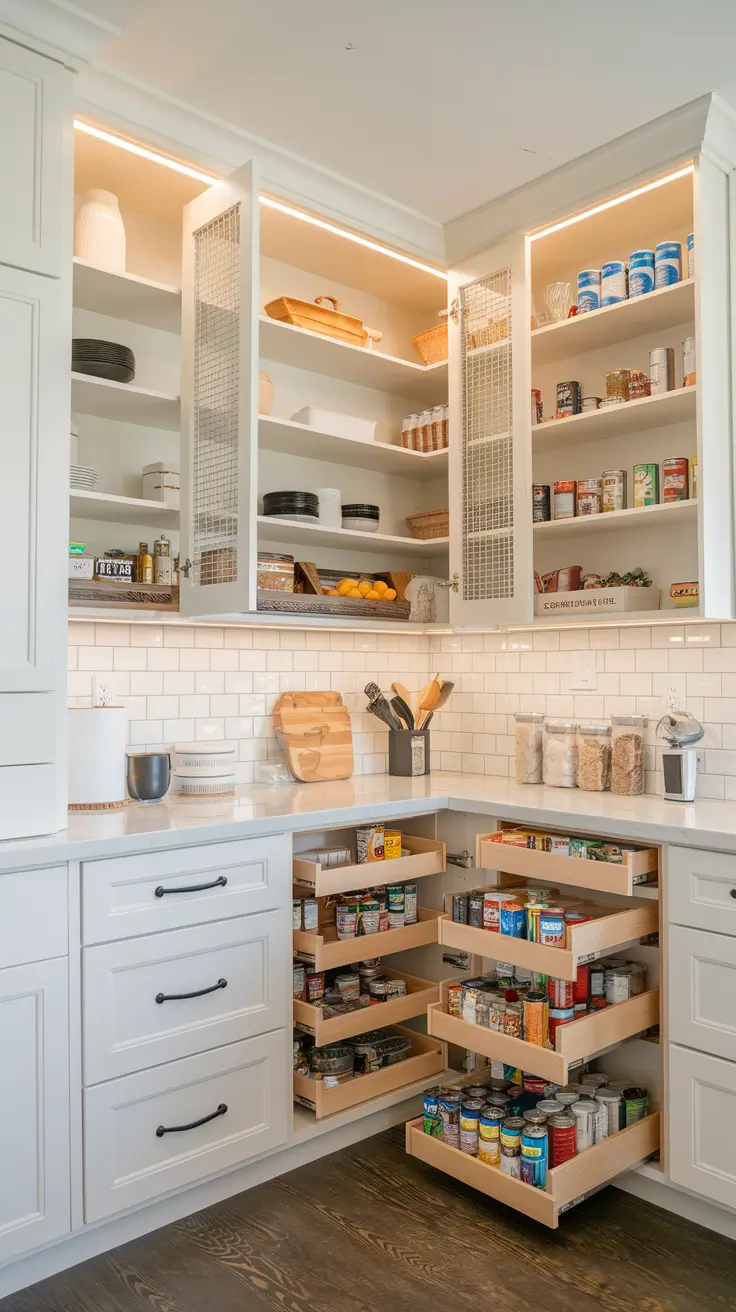
Hardware and inserts elevate the system: full-extension pull-outs prevent lost jars, vertical dividers organize cutting boards, and tiered spice drawers keep labels visible. Small appliance garages hide mixers while remaining accessible. Door racks manage wraps and teas, shallow drawers hold snacks, and deep drawers store bulk items. Can risers keep canned goods orderly. Soft-close glides and matte interiors combine durability with a premium feel. Shelf-edge labels create a shared language that keeps the pantry tidy.
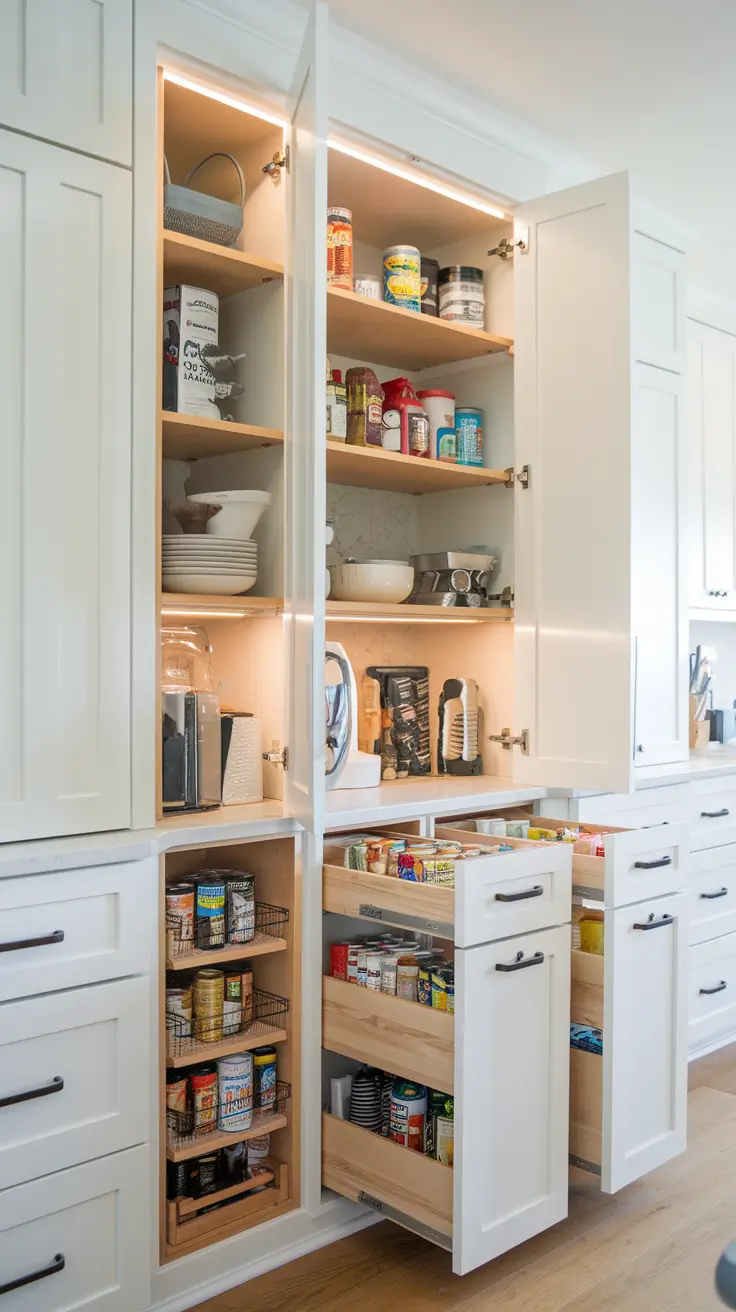
Durability is key since cabinetry must endure years of use. Experts recommend mapping kitchen tasks and assigning zones to reduce steps and save time. I place breakfast items near the fridge and dinner bases near the cooktop to streamline meal prep. For dietary restrictions, a clearly marked cabinet prevents mix-ups. Regular tune-ups are faster with labeled zones, making a noticeable difference on busy nights.
To finalize, add under-cabinet lighting for label visibility, a narrow pull-out for oils near the range, and a slim toe-kick drawer for wraps or baking mats. Warm wood accents suit farmhouse styles, while glass-front uppers complement contemporary kitchens. These choices tailor the system to your home’s character.
Labeling Strategies for Clear Pantry Systems
Effective labeling transforms any pantry into a self-sustaining system, especially in small kitchens. Labels act as signage, enabling everyone to find and return items without confusion. Start by defining master categories aligned with your habits, such as Grains and pasta, Baking supplies, Oils and condiments, Snacks and treats, and On-the-go kits. Use consistent wording on shelf-edge tags and container fronts to minimize errors. Uniform fonts and sizes create a clean, aesthetic look that supports quick meal prep by making essentials visible at a glance.
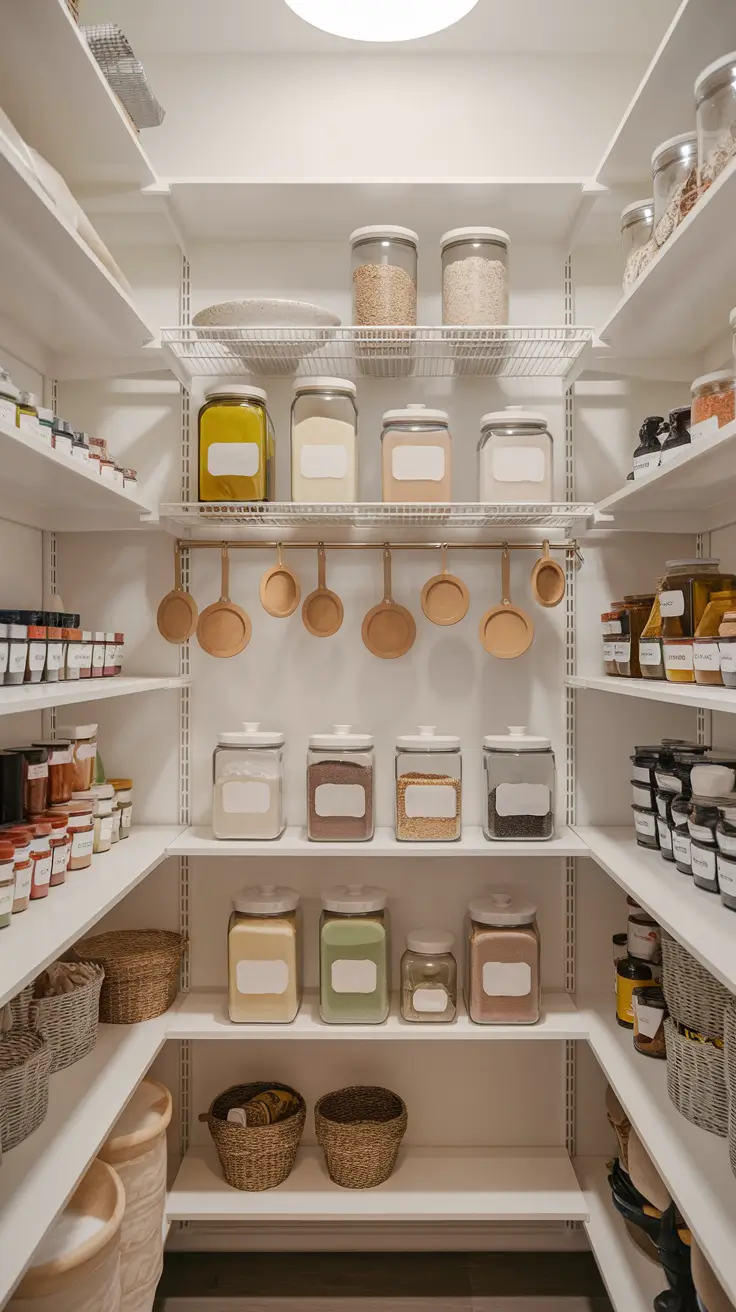
Use waterproof label tape on jars, clip-on metal holders on baskets, and printable inserts for deep bins. Color accents flag dietary restrictions, ensuring gluten-free or nut-free items remain separate. Spice drawers benefit from regional tags like Indian blends or BBQ rubs to match cooking styles. On wire shelves, hang label plates at the front of each tier for visibility across the room. Date dots on decanted goods maintain freshness. Consistency is the cornerstone of success.
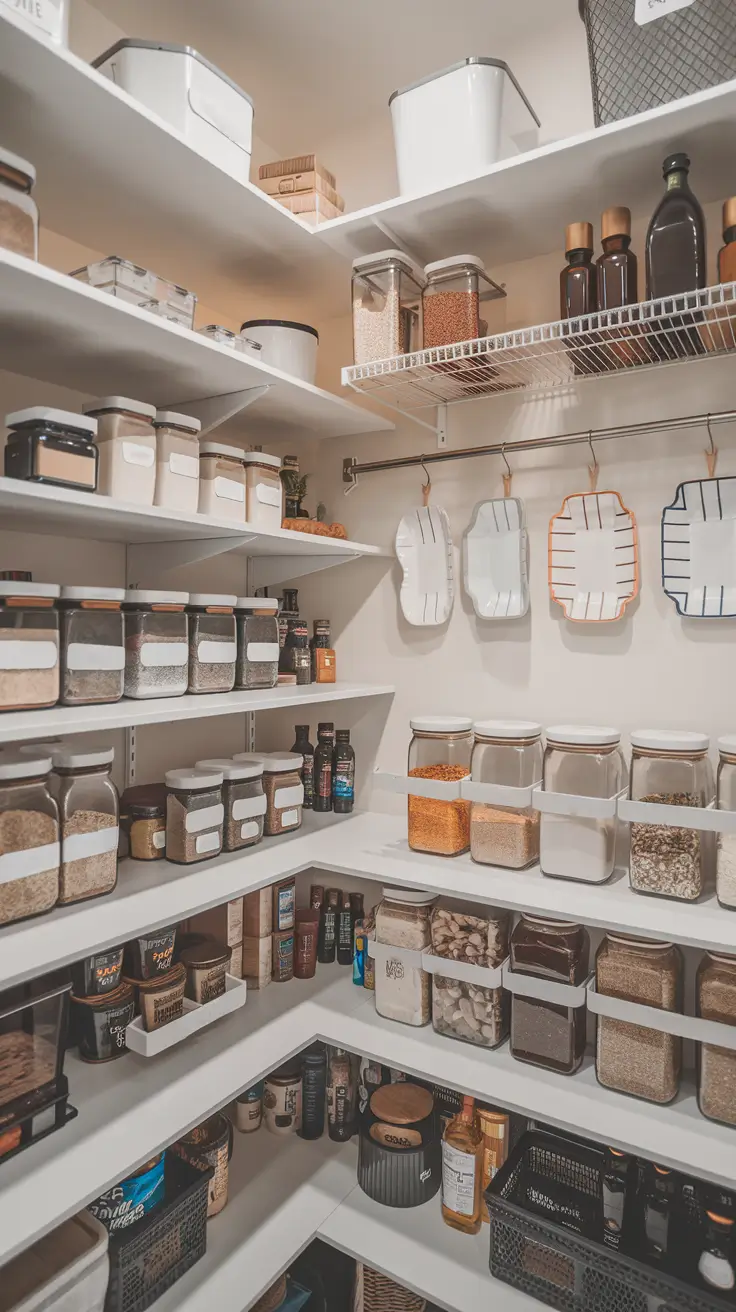
Labeling significantly reduces restocking time and keeps busy families coordinated. Experts suggest marking both the item’s location and its back stock to automate first-in, first-out rotation. A mini legend inside the door aids training, and keeping a label maker with extra cartridges inside the pantry makes updates effortless. Easy-to-change labels allow the system to evolve as children grow or habits shift, ensuring lasting order.
Include a style guide listing precise category names and abbreviations to maintain accuracy. A weekly checklist for relabeling and date-dot refreshes keeps the system current. For picky eaters, add icon stickers to assist non-readers. A small “Rehome” bin collects stray items until they can be properly labeled. These additions preserve the clarity you’ve established.
DIY Pantry Projects for Custom Spaces
For those who enjoy hands-on projects, DIY pantry organization offers tailored solutions for unique nooks and awkward corners. Begin by measuring your space and planning adjustable shelves to utilize every inch. Light satin-finish paint brightens interiors and resists scuffs, while an accent color adds personality. Pegboard or slatwall panels convert unused walls into storage for scoops, graters, and wrap cutters. Even small pantries can feel polished and cohesive with thoughtful proportions and spacing, delivering a satisfying transformation.
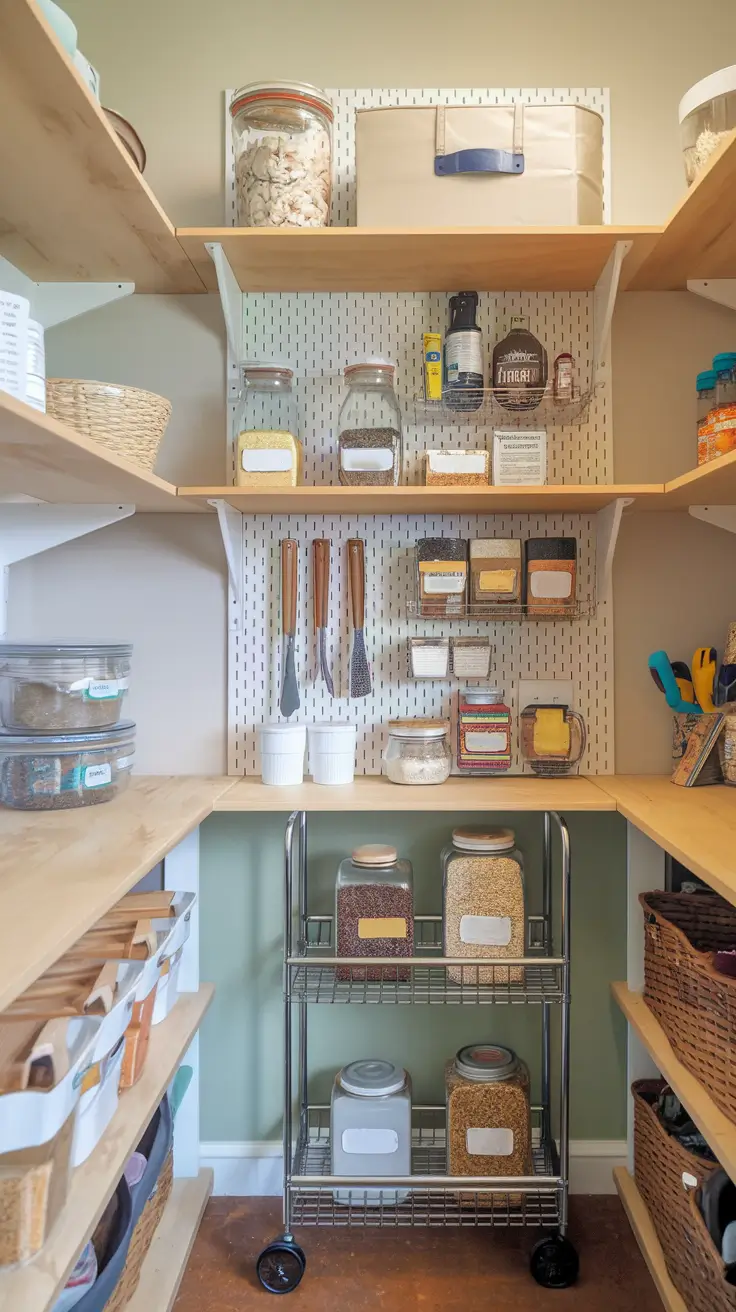
Materials often include 3/4 inch plywood shelves with iron standards and aluminum or wooden trim for clean edges. DIY tiered risers for canned goods are simple with scrap wood, and turntables can be crafted from discs and lazy Susan bearings. A narrow wire shelf cart on casters adds flexibility. Spice racks between studs and pull-outs for baking sheets with side-mount slides optimize space. Printable labels and clear coats protect decanted jars.
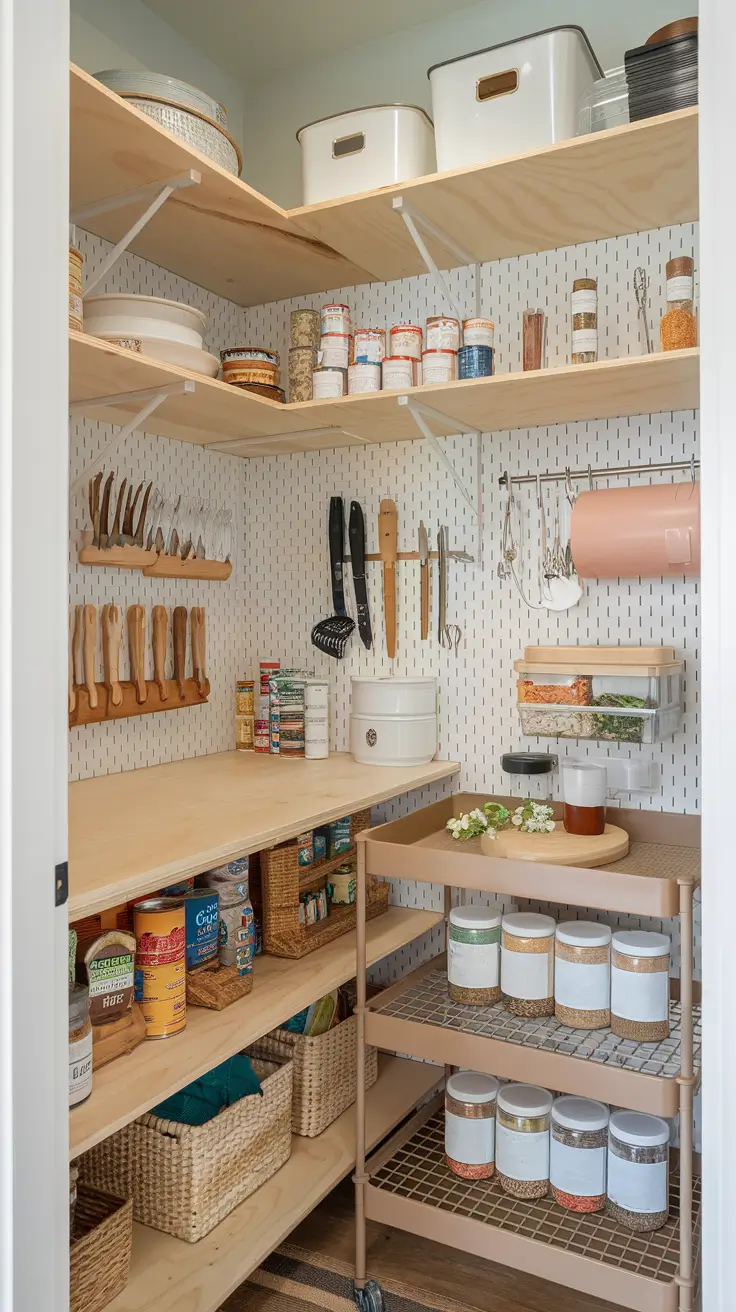
Safety and hygiene are paramount. Seal raw wood surfaces for easy cleaning and durability. Pre-drill and anchor shelves according to wall type, especially in older homes. Use electrical detectors to avoid wiring conflicts. The best DIY pantries are square, secure, and scaled to your storage needs—prioritizing function before finish.
Provide a cut list and jig for consistent shelf spacing to streamline installation. Paint-by-number zone diagrams reduce guesswork. A maintenance plan involving quarterly tightening and adjustments keeps the system reliable. Accent textures can add farmhouse warmth or bohemian flair, making your build feel truly bespoke.
Efficient Storage for Cans and Jars
Canned goods and jars require dedicated storage solutions that keep labels visible and access safe. Design shelves with stepped risers and pull-out drawers to keep weight low and visibility high. Standardize glass jars for neat rows and easy refills. FIFO-style tracks ensure proper rotation of soups and tomato products, maintaining freshness. Wire shelves or deep wooden drawers excel in small kitchens, making this zone a reliable hub for quick sauces and weeknight meals.
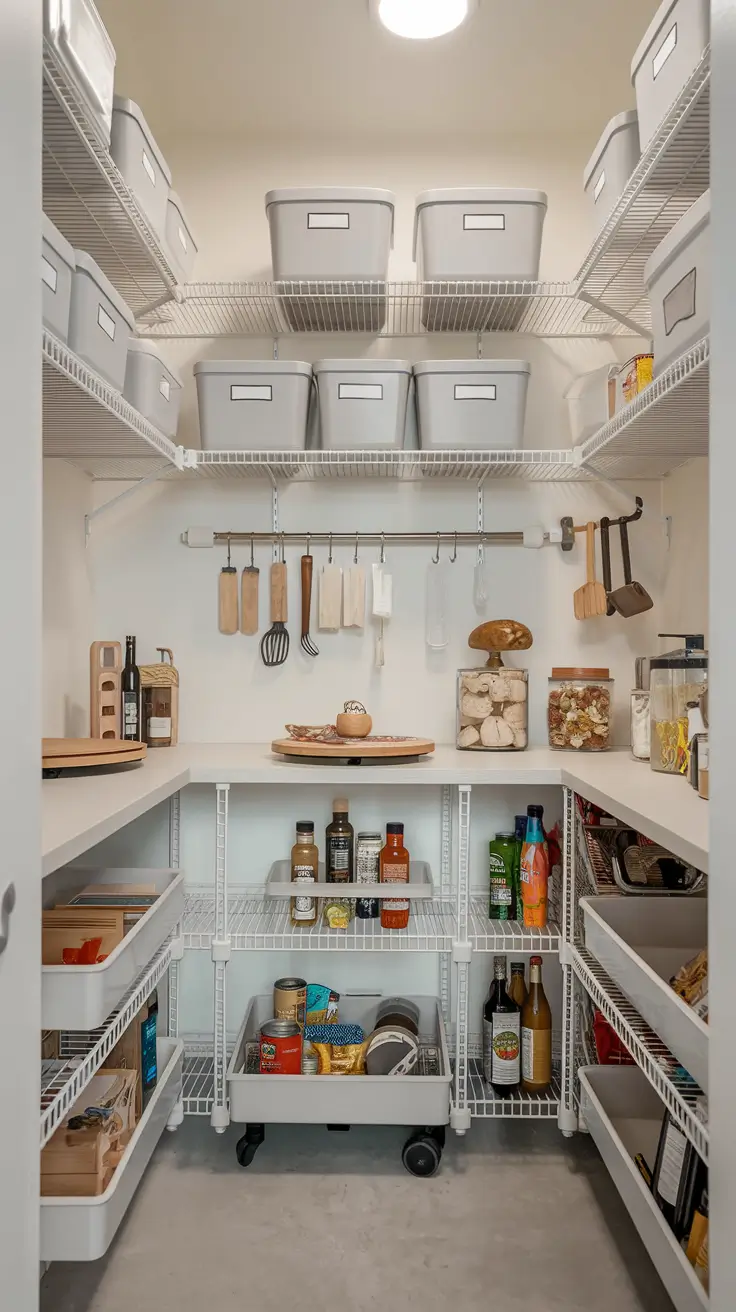
Keep can risers, drawer dividers, and silicone bumpers handy to prevent rattling. Use tall jars for Grains and pasta, medium jars for Baking supplies, and small jars for spices and masalas. A narrow bin collects lids to avoid clutter. Oils and condiments stay on turntables nearby for easy recipe assembly. Shelf-edge labels and date dots simplify inventory management.
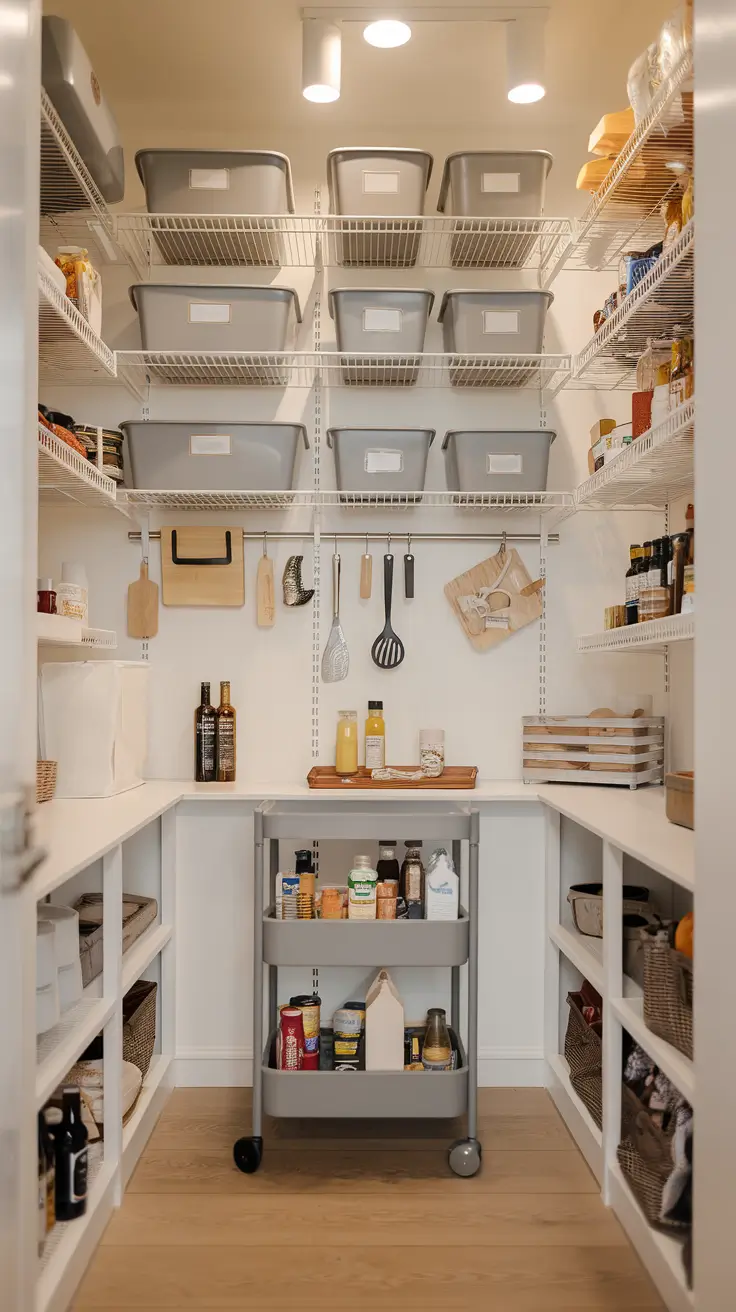
Keep canned goods grouped to prevent spillover into snack areas. Heavy items should be stored below shoulder height for safety. Group vinegars and tomato products together to avoid drips damaging shelves. For dietary restrictions, create clearly marked subsections for low-sodium or allergen-safe cans. This layout supports busy families and picky eaters with predictable favorites, creating a calm, high-capacity zone.
Enhance this area with anti-slip liners under risers and a shallow drip tray beneath oils. A pull-out dedicated to cans near the stove speeds dinner prep if space allows. Include a quarterly purge checklist and a par-level chart inside the door to maintain rotation and reliability. The payoff is faster cooking and peace of mind.
Space-Saving Wire Shelf Systems
Compact pantries benefit from flexible wire shelving that maximizes every inch. Wire shelf runs are affordable, bright, and easy to reconfigure, ideal for small kitchens. Clear sight lines and well-defined zones for weeknight prep, On-the-go snacks, and dinner staples keep traffic flowing smoothly. A low shelf dedicated to beverages ensures safe, quick access. The result is a crisp, modern look that supports real cooking.
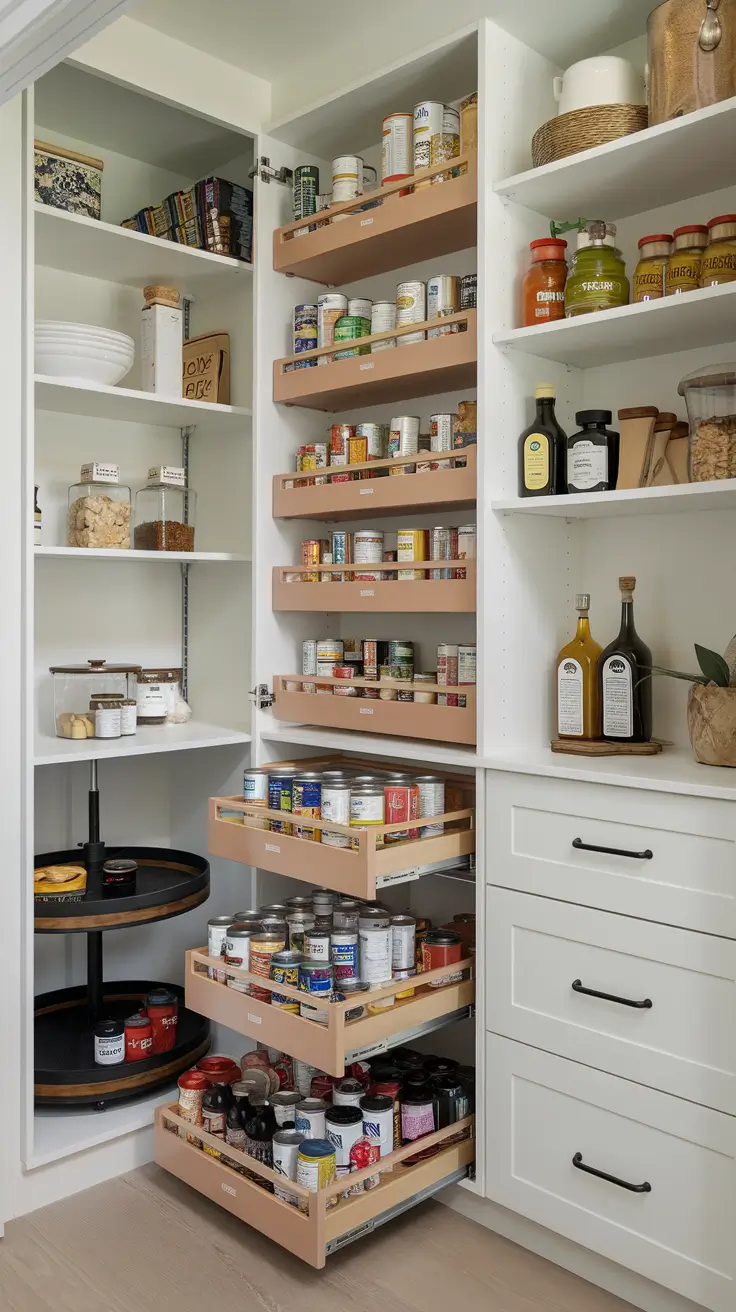
My essential kit includes adjustable posts, shelf liners for small packets, clip-on bins, and front-facing labels. Turntables corral sauces, risers increase canned goods visibility, and narrow carts slide under the lowest shelf for overflow. Over-the-door racks store wraps and foils, while side hooks hold aprons and tote bags. Clear canisters for Grains and pasta and lidded bins for Snacks and treats unify the look. A shallow spice shelf keeps Indian blends near oils and vinegars. Repeating materials create a designed feel even in small spaces.
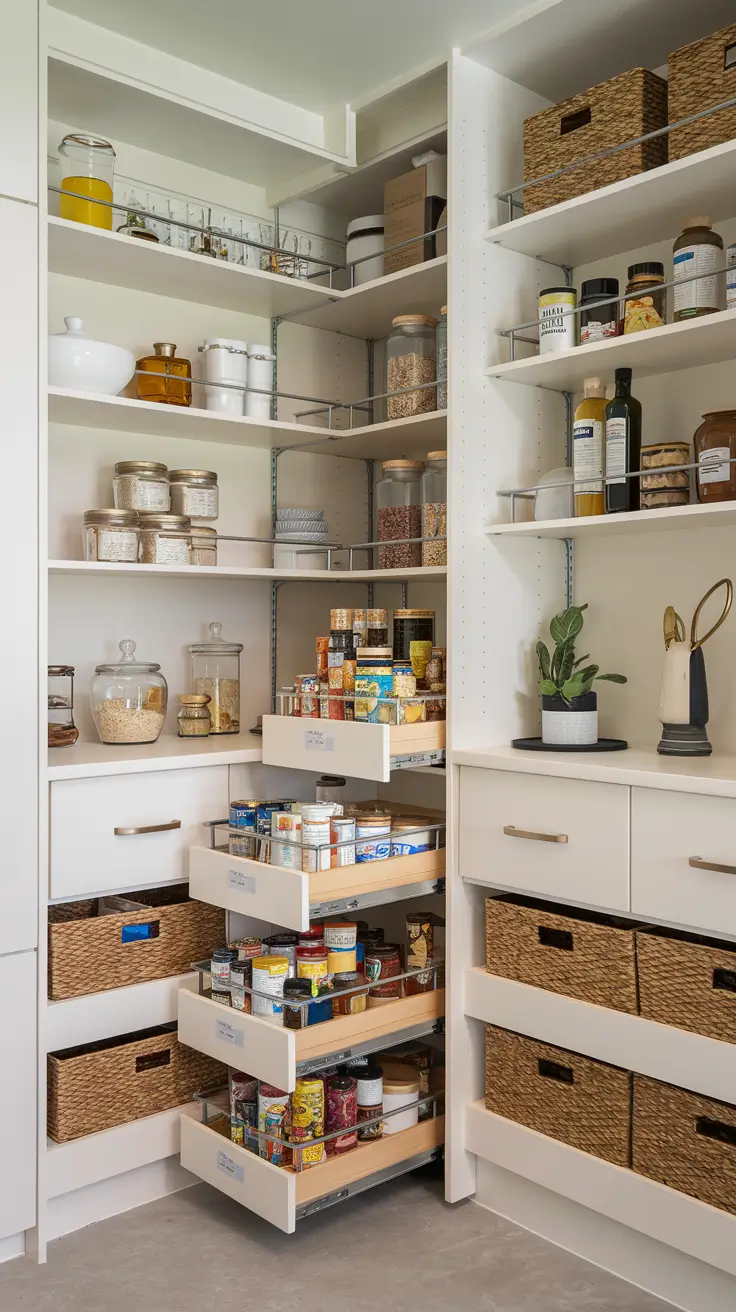
Simple rules maintain wire shelf order. Label both shelf edges and containers to keep things clear during busy times. Group items by task, such as smoothie kits or lunch fixings, for quick access. Color-code bin clips for dietary needs or picky eaters. A five-minute weekly reset with labels facing forward preserves a relaxed yet tidy appearance.
Add motion-activated puck lights under shelves and a narrow step stool stored beside the rack. Use removable drip trays under oils to protect liners. In small closets, swap a shelf for a shallow drawer to hold packets. For apartments, anchor only the upper bracket to balance stability and flexibility. These finishing touches transform a simple unit into a lasting solution.
Farmhouse Pantry Organization with Contemporary Flair
For a cozy farmhouse kitchen, combine wide wooden shelves with woven baskets and clear jars for a timeless, modern look. Creamy palettes and natural wood create warmth without heaviness. When space permits, a walk-in pantry adjacent to the cooking area keeps traffic flowing. Showcase attractive containers to blend storage and decor. Wood trim and simple hardware add rustic charm without clutter, supporting quick meal prep.
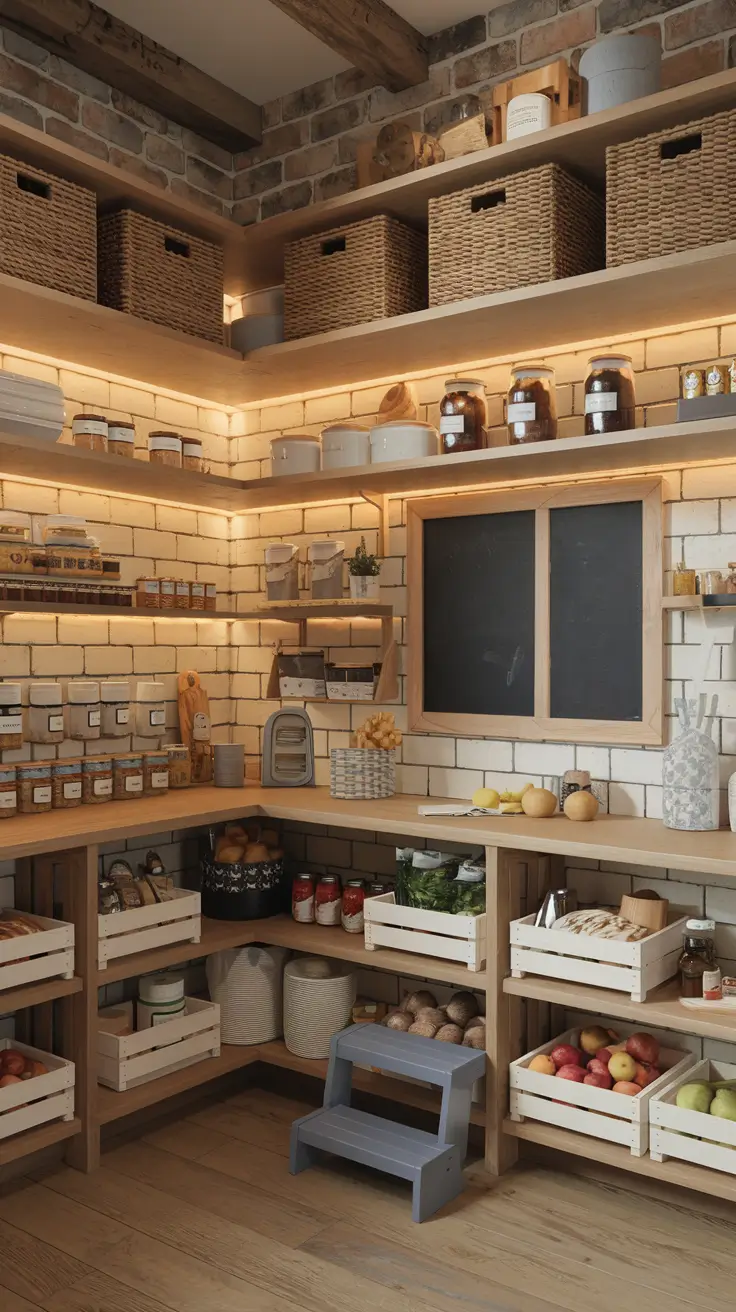
Deep lower shelves hold bulk flour and rice, mid-level shelves store cereals and snacks, and eye-level rails display spices and teas. Can risers keep canned goods facing forward, while mesh crates ventilate onions and potatoes. Concealed pull-outs hide small appliances, and a chalkboard panel tracks inventory. A narrow ladder or step stool provides safe access to upper shelves. Door racks keep wraps and parchment accessible yet discreet.
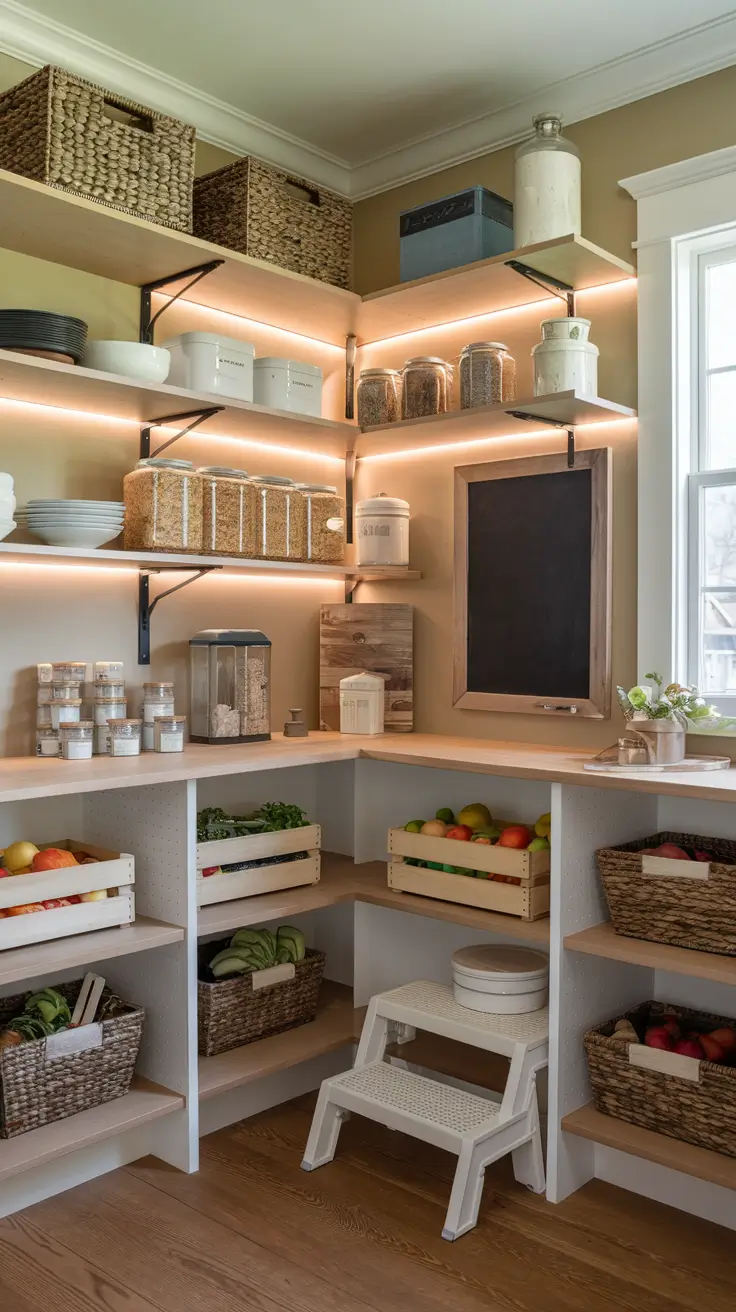
Arrange zones by task to minimize steps, placing breakfast foods near the fridge and dinner bases near the stove. For busy families and picky eaters, keep a visible but portion-controlled treat bin to balance indulgence and health. Clear zones for Baking supplies and Oils and condiments reduce search time. The design feels authentic and inviting daily.
Complete the look with warm under-shelf lighting, a thin pull-out for bottles near the cook zone, and a small rug to catch crumbs. For tight spaces, integrate concealed cabinet towers with deep drawers. Budget-conscious setups can incorporate dollar store finds as basket liners or dividers. These touches maintain style and practicality.
Bohemian-Inspired Pantry Organization
For a pantry with personality, layer patterns and textures to create a bohemian vibe while maintaining solid organization. Start with neutral walls and add color through baskets and liners to keep the space balanced. Slim shelving and a rolling wire cart maximize small spaces. Affordable pieces from dollar stores, repeated thoughtfully, look custom and cohesive. Clear category signage keeps the system user-friendly.
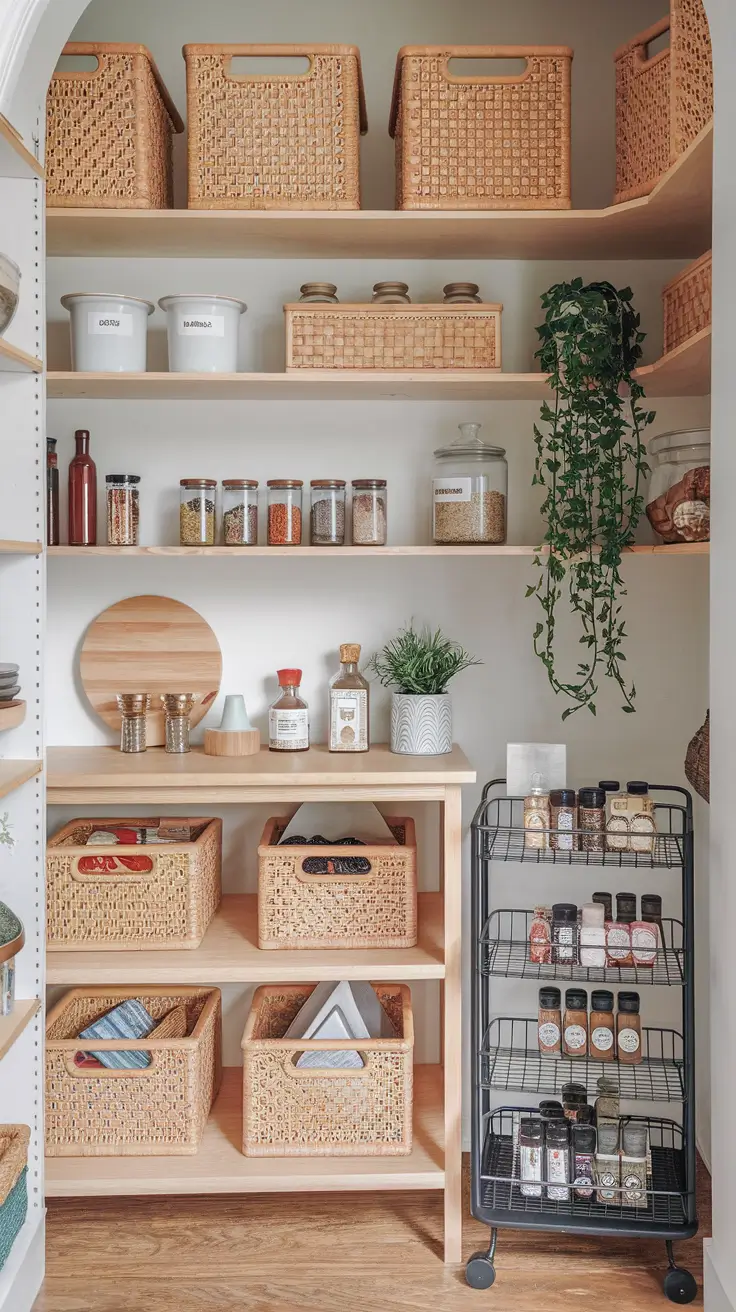
Light wood shelves, rattan bins, glass jars with bamboo lids, and patterned liners soften edges. Tiered risers display spices including Indian masalas, while turntables hold oils and condiments within reach. A low basket groups picnic gear and On-the-go snacks. Clip-on labels unify the eclectic mix. A narrow art shelf with plants adds life without sacrificing storage. Repeated textures make the design intentional.
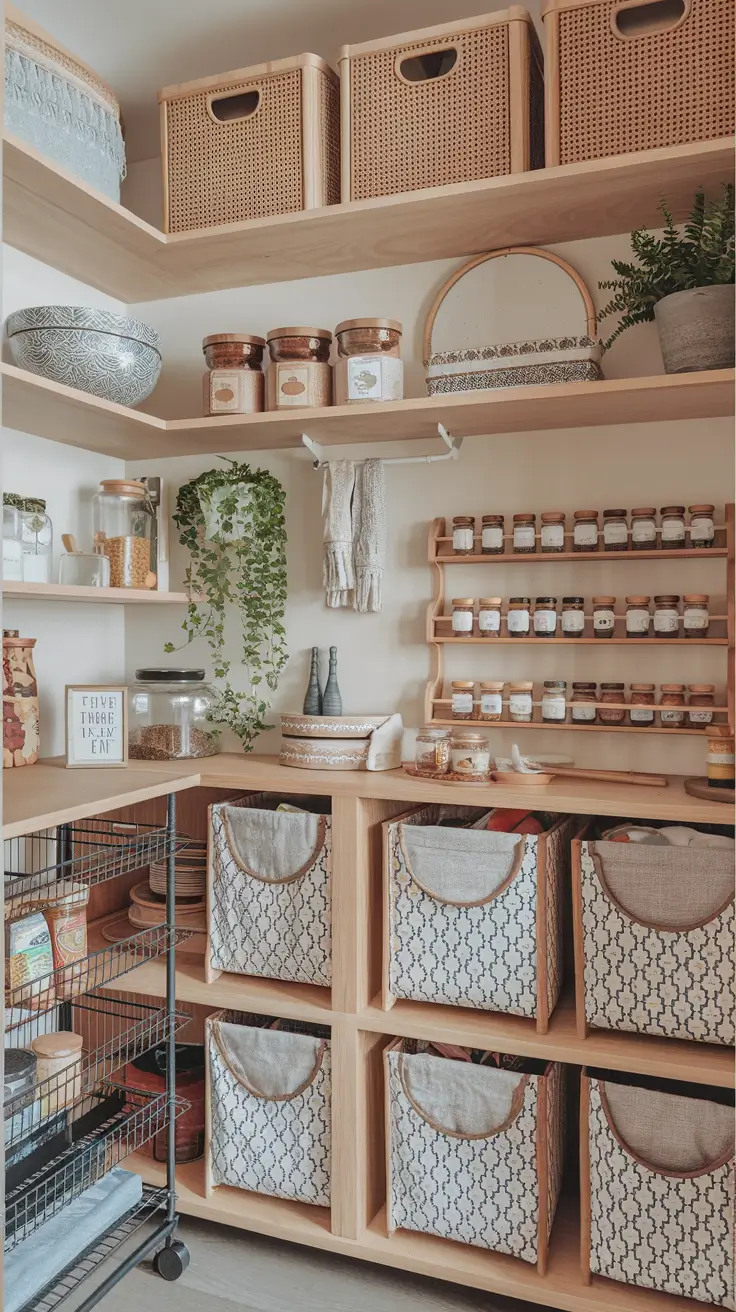
To avoid clutter, limit the color palette to three repeating tones. Decant only high-rotation items for freshness and easier resets. Use icon stickers alongside labels to assist guests and children with dietary restrictions. The space remains playful yet organized—a perfect balance.
Finish with a small ceiling fan or vent for freshness, a washable runner for floor stability, and a mini command board tracking par levels for staples. Use a hidden “Rehome” bin for overflow and add a slim DIY spice rack between studs. These details make the bohemian style effortless and functional.
Effective Baking Supplies Organization
Bakers benefit from dedicated zones with sturdy shelves for Baking supplies, enabling quick starts and clean finishes. Position this area near prep surfaces for efficient scooping and weighing. Matching airtight canisters prevent pests and maintain a clean look, supporting healthy storage. Leave space for sliding sheet pans and cooling racks. Even a single cabinet bay can function as a mini bake shop with the right inserts, facilitating weekend projects and quick dessert prep.
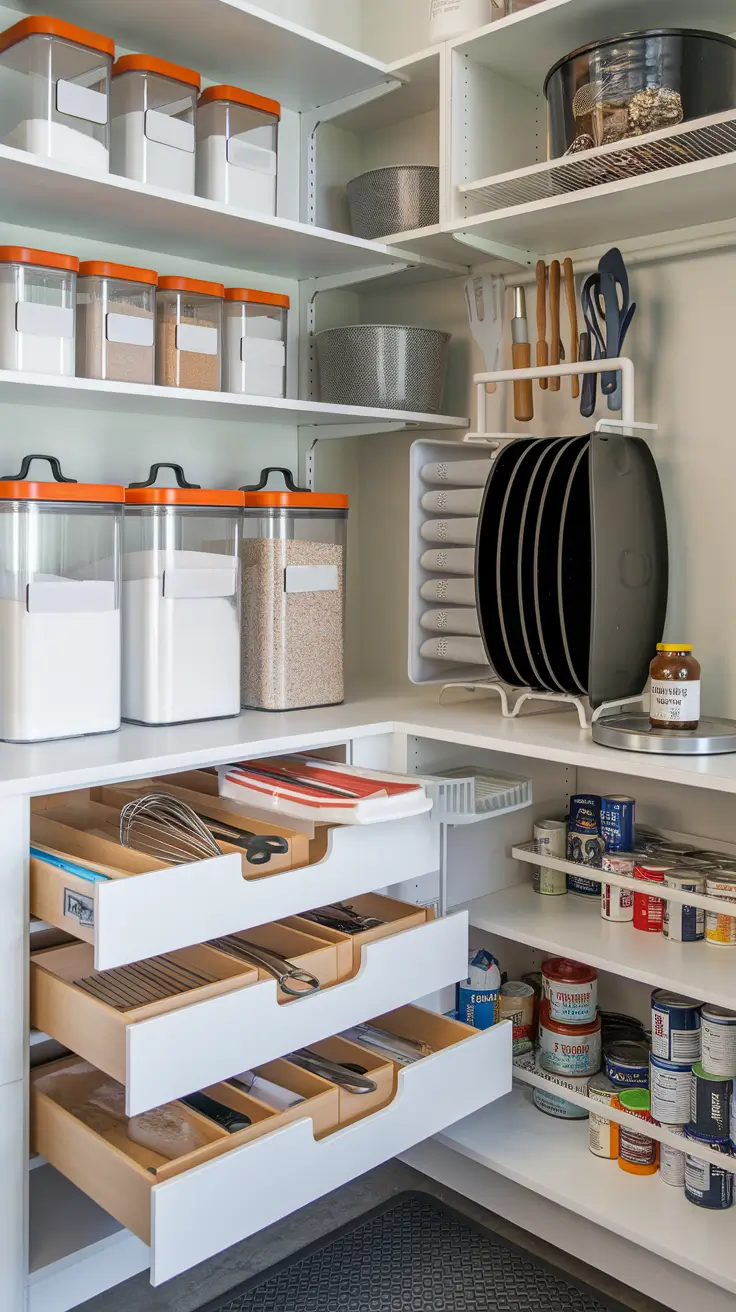
Include airtight containers for flour, sugar, and oats with clear labels and date dots. Organize measuring spoons and cups in drawer dividers, and keep extracts and flavor oils on turntables. Vertical dividers hold baking sheets and boards, while deep drawers store mixing bowls. Clear jars contain sprinkles and chips, and can risers manage canned pie fillings. Small bins hold piping tips and food coloring.
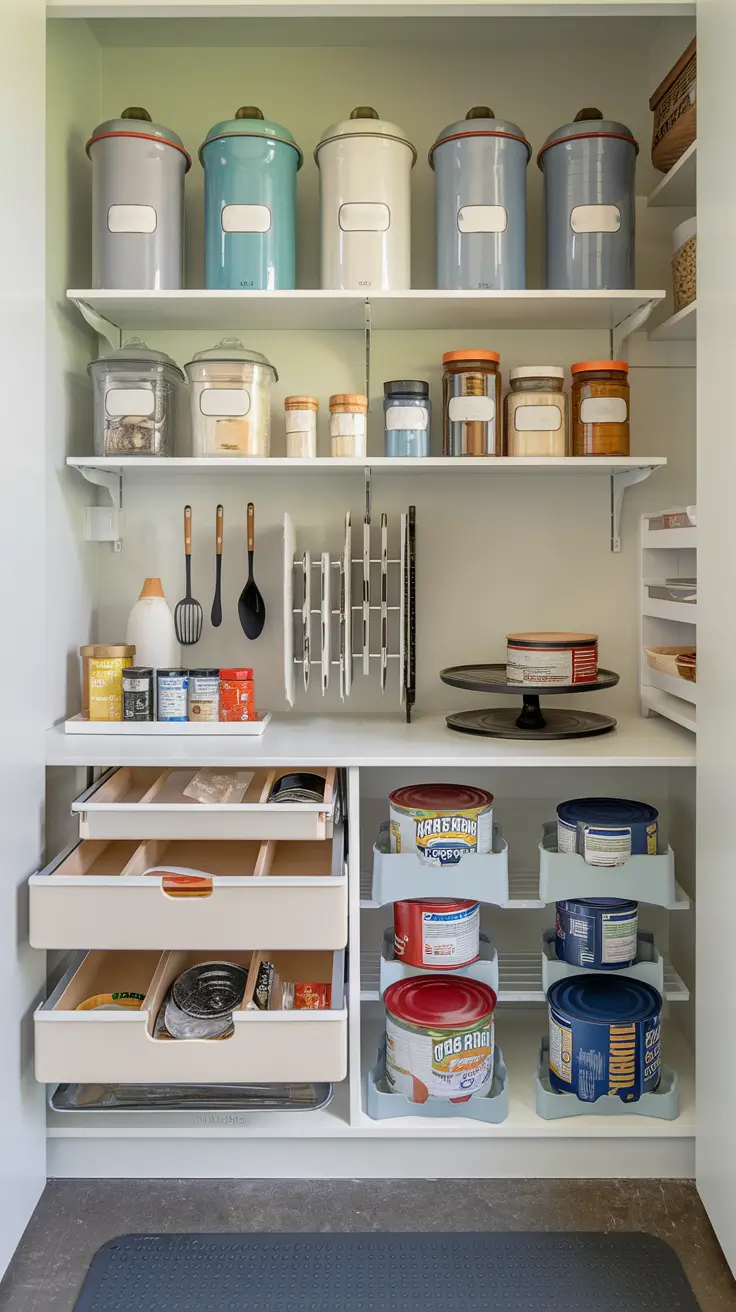
Store heavy items between knee and hip height to reduce strain. Weigh flour for precision and freshness, decanting only what fits in a container to avoid staleness. Pre-pack cookie mixes for grab-and-bake convenience. Add a wipeable mat under canisters and clip the most-used scoop for easy access. Use desiccant packs or gasketed lids in humid areas. A magnetic timer and recipe holder complete the station. DIY risers can expand shelf capacity and align with custom builds.
Neat Storage for Oils and Condiments
Flavorful cooking depends on well-organized Oils and condiments. Dedicate a bright, cool corner with clear signage and spill protection. Use low turntables on open shelves or inside cabinets to keep bottles stable and accessible. Wire shelves benefit from liners and back rails to prevent slipping. Keep this zone away from heat sources to prolong shelf life and ensure safety. Thoughtful grouping enhances efficiency.
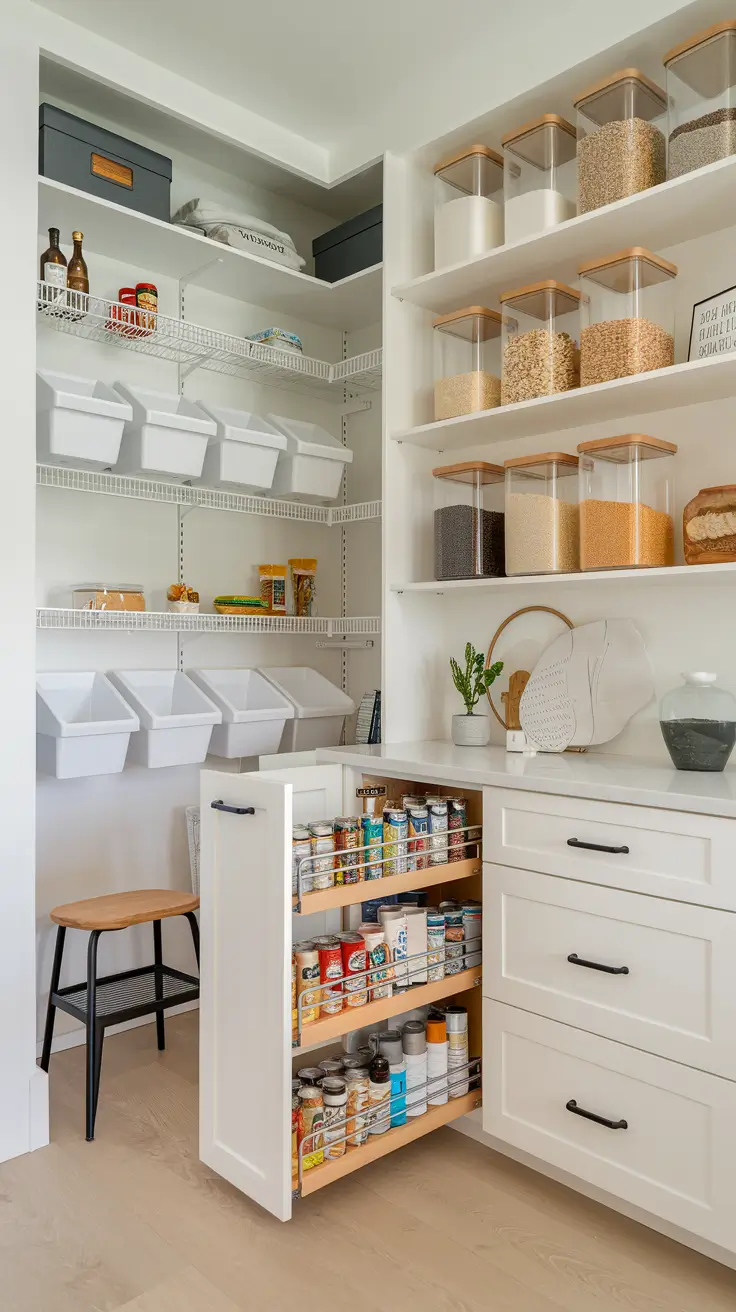
Organize by frequency of use: daily cooking oils, vinegars, hot sauces, and marinades each in separate trays. Store olive oil in dark glass decanters and neutral oils in clear squeeze bottles. A small caddy holds soy sauce, fish sauce, and mustard oil near spices. Use short risers for small jars and drip mats to protect wood surfaces. Shelf-edge labels facilitate inventory checks.
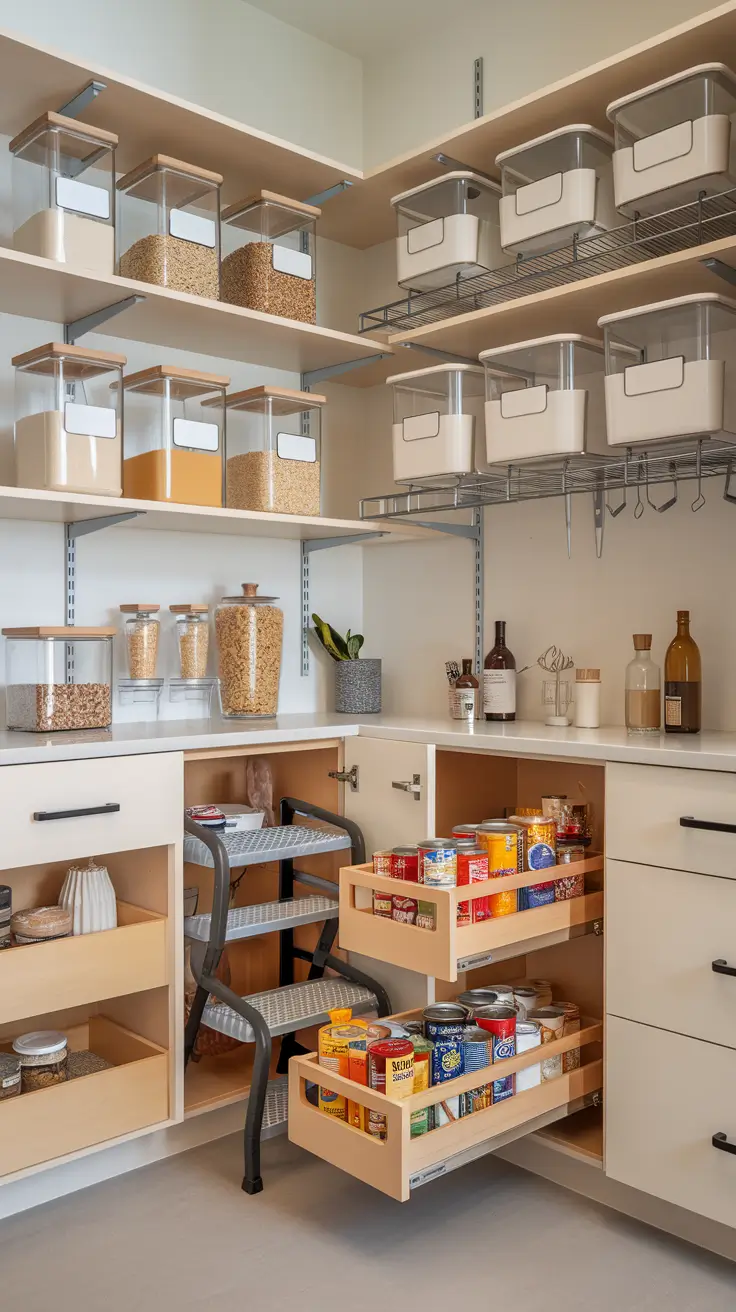
Keep dressings separate from cooking oils to avoid mess and save time. Store oils in cool, dark spots a few steps from the stove. For dietary needs, add clearly marked gluten-free or nut-free caddies. This setup supports busy families with predictable stations. Add a pull-out near the cooktop for weeknight essentials and a towel hook for quick cleanups. Door-mounted racks with bottle retainers work well in tight spaces. Two-tier turntables maximize function in small footprints.
Grains and Pasta Storage Made Simple
Organize Grains and pasta with adjustable shelves that keep everything visible and accessible. Use clear labels and a calm color scheme to create an affordable, aesthetic system. Dedicate a central wall for decanted staples and a secondary bay for overflow, ensuring quick meal prep. Extend shelves above toe space to top shelves reachable with a step stool, eliminating dead zones and simplifying inventory checks.
Use airtight glass or BPA-free containers for spaghetti, short pasta, rice, and lentils, each with scoops. A narrow pull-out stores canned tomatoes and broth supporting the same meals. Wire shelves accommodate gravity bins for bulk staples, paired with funnels and measuring scoops. Label wording matches shelf tags for easy maintenance. Dividers keep sheet trays upright near pasta for easy cooking. The overall look is minimalist and tidy.
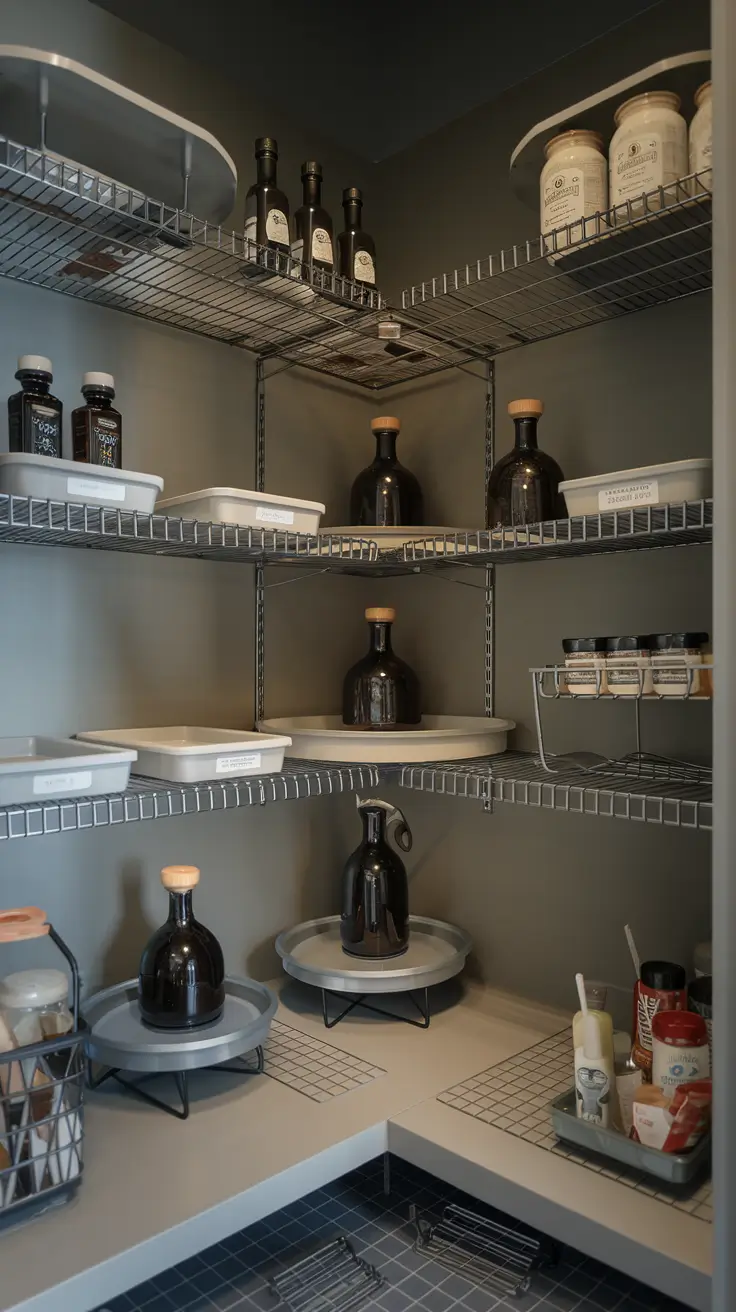
Store grains in cool, dark, sealed containers to preserve flavor and health. Follow FIFO rotation with back stock behind working jars and date-dot every refill. Keep a digital scale nearby for recipe accuracy and faster prep. Pre-sort quick-cook grains for speedy sides. This disciplined approach makes the system practical and real.
Complete the zone with a conversion chart inside the door, crumb trays under canisters, and a slim step stool between bays. Use tiered risers in small spaces to increase visibility without crowding. Budget-conscious households can start with repurposed jars and upgrade gradually. Include a ventilated bin for odd-shaped bags awaiting decanting. These small touches perfect the station.
On-the-Go Snack Stations for Busy Households
Design snack zones around On-the-go snacks and clearly labeled bins for Snacks and treats. Use pantry organization ideas with labels to help everyone find the right portions quickly, especially in small kitchens. The layout is affordable, easy to refresh weekly, and supports smooth traffic flow. The station is cheerful, practical, and camera-ready, aiding busy families effortlessly.
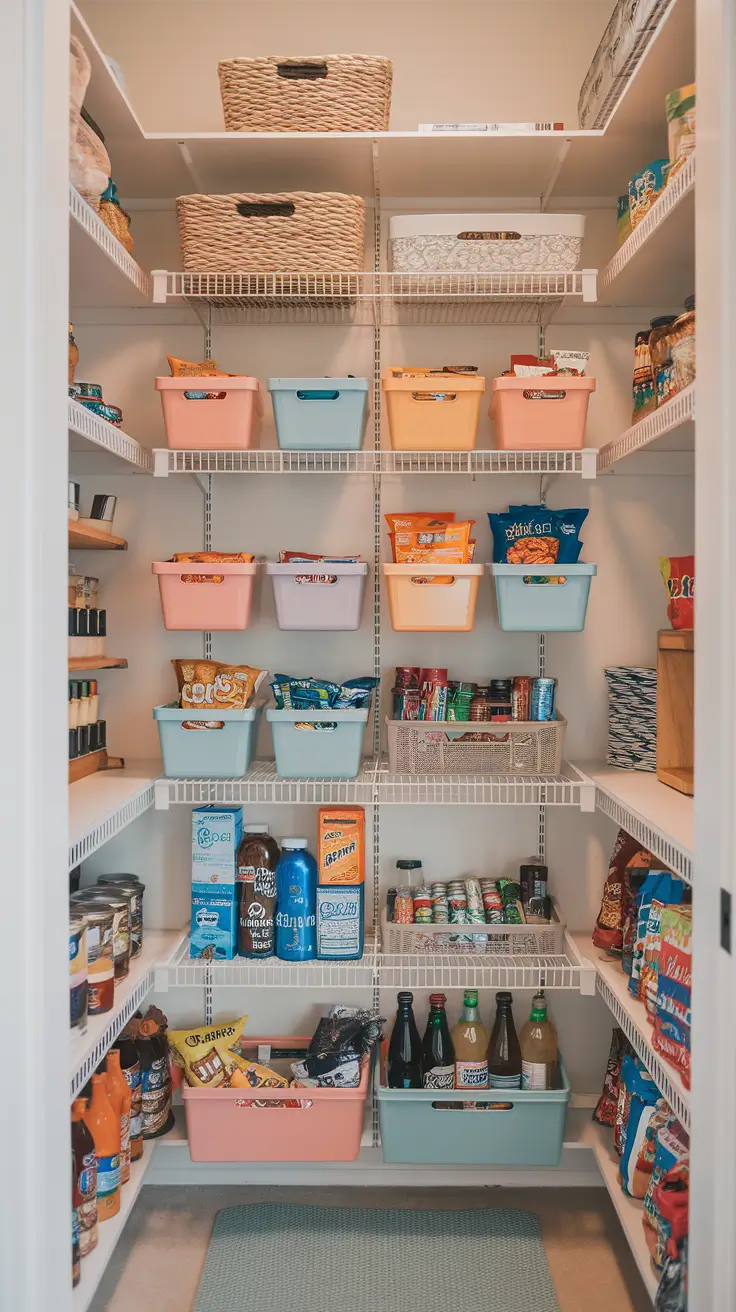
Use uniform bins with front windows, color-coded clips for picky eaters, and narrow risers for bars and pouches. Door racks hold napkins and refill packs; shallow drawers store sandwich bags and bento boxes. Wire shelf pockets hold fruit leather, and crates store sparkling water. Dollar store containers blend seamlessly when styles are repeated. Label bins with simple tags like school, sports, and late night to match routines, creating a calm aesthetic.
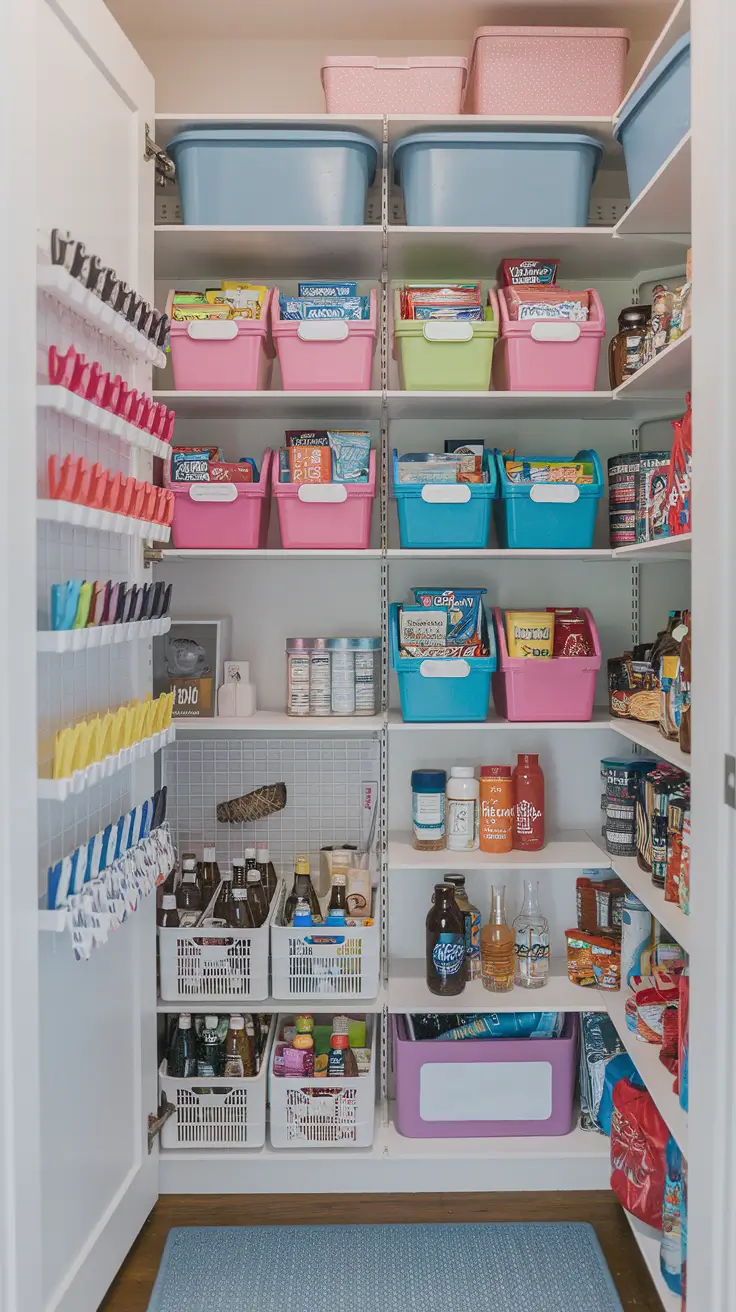
Portion bins reduce mess and negotiation. Nutrition experts recommend placing produce and protein-forward snacks at eye level to encourage healthy choices, which I implement with front-row fruit cups and nuts. Store sweets in lidded bins to keep them special but controlled. Weekly refills are quick due to fixed categories. A five-minute Sunday reset with labels facing forward maintains calm and order.
Finish with washable mats under kid-height bins, a timer rule for evening snacks, and a clipboard with par levels for efficient shopping. Use rolling carts in narrow pantries for portable snack bars. For weekend sports, pack a caddy on Sunday and return it to its zone. These details keep the system strong and user-friendly.
Specialized Pantry Zones for Indian Cooking Essentials
For lovers of regional flavors, create a dedicated zone for Indian staples with strong pantry organization ideas. Choose a cool, dim corner to keep spices, rices, flours, oils, and condiments fresh. Compact bays work in both spacious and small pantries. Clear labels make the system accessible to guests, teens, and partners. Wood textures add rustic warmth, while patterned liners introduce a bohemian touch. The result is intentional and hardworking.
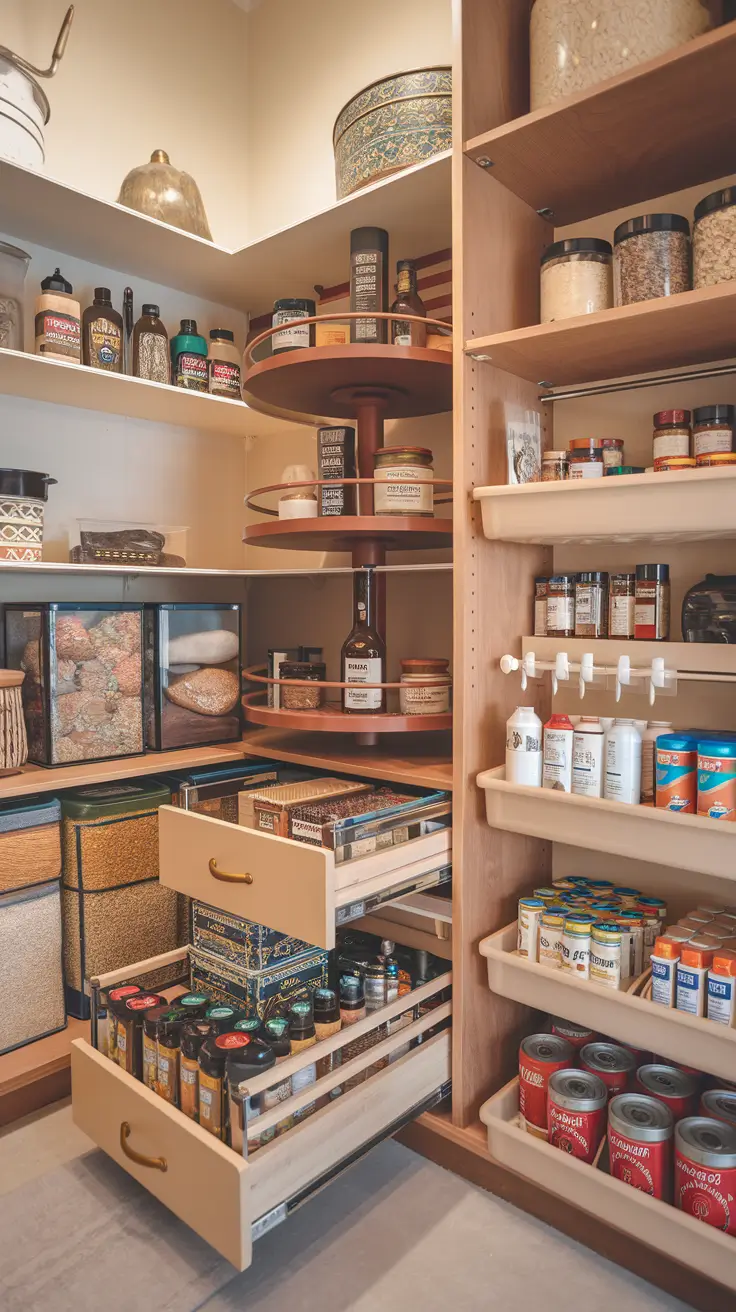
Store masalas, whole seeds, and blends in a shallow spice drawer and keep a round masala dabba for daily use. Bulk bins hold basmati, sona masoori, and atta; jaggery in gasketed jars; rava in lidded tubs. Turntables keep ghee, mustard oil, tamarind paste, and vinegars within reach. Use can caddies for coconut milk and tomatoes to speed curry prep. Heavy floor loads rest on sturdy wire shelf posts. Nearby cabinets store mortars, pressure cooker gaskets, and strainers.
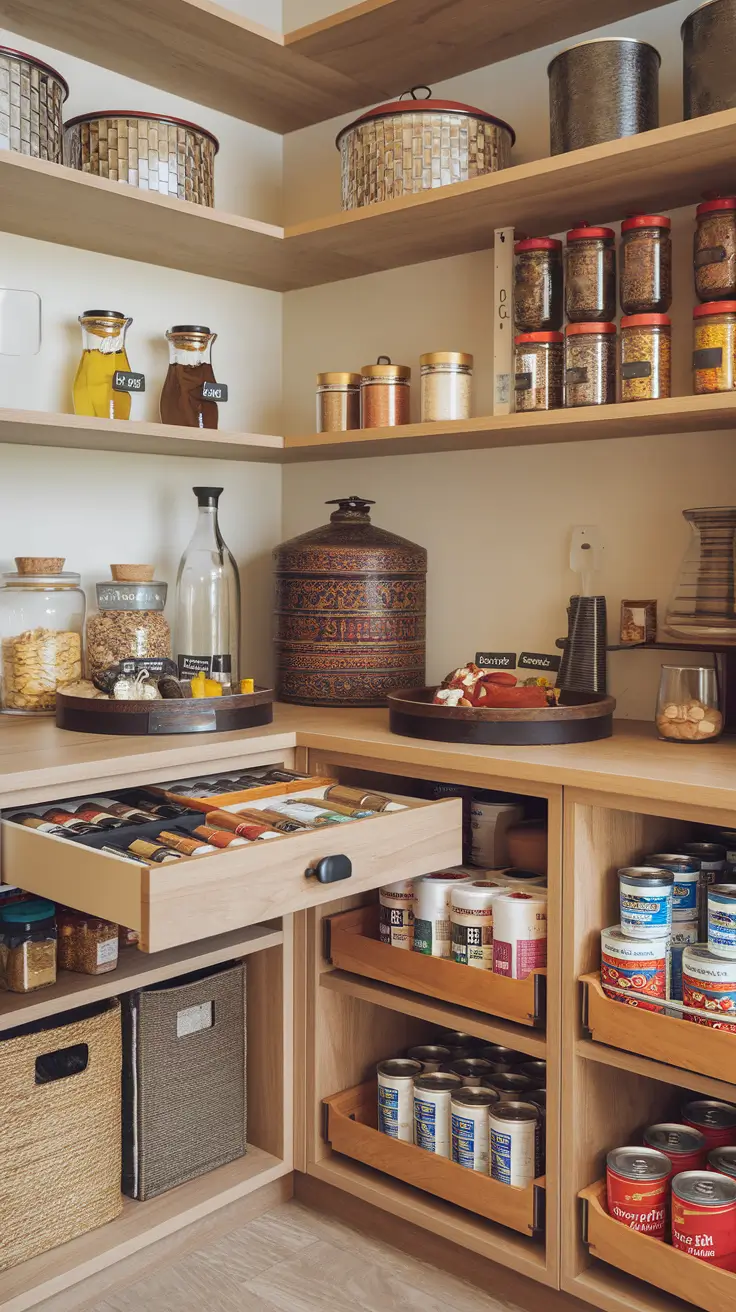
Keep spices away from light and heat; store fragrant blends in dark or opaque containers. Refresh ground spices every six to twelve months for optimal flavor. Rotate oils to the front for FIFO and quick meal prep. Pre-measured curry kits in small bins speed weeknight cooking. These habits honor tradition while supporting efficiency.
Complete the zone with a mortar and pestle pad, drip mats under oils, and ventilated crates for onions and potatoes. Add a tea shelf with chai leaves and strainers if space allows. DIY enthusiasts can build slim spice racks between studs. For larger pantries, a tasting cart adds luxury without wasting space. These finishing touches polish the station.
Designing Pantries for Dietary Restrictions
When managing dietary restrictions, create zones that make safe choices obvious and easy. Use clear labels, consistent containers, and strategic placement to transform a busy pantry into a predictable map, even in small kitchens. A minimalist palette signals safe shelves, creating a relaxed, efficient environment for multiple cooks. The design is equitable and reduces anxiety during hectic times.
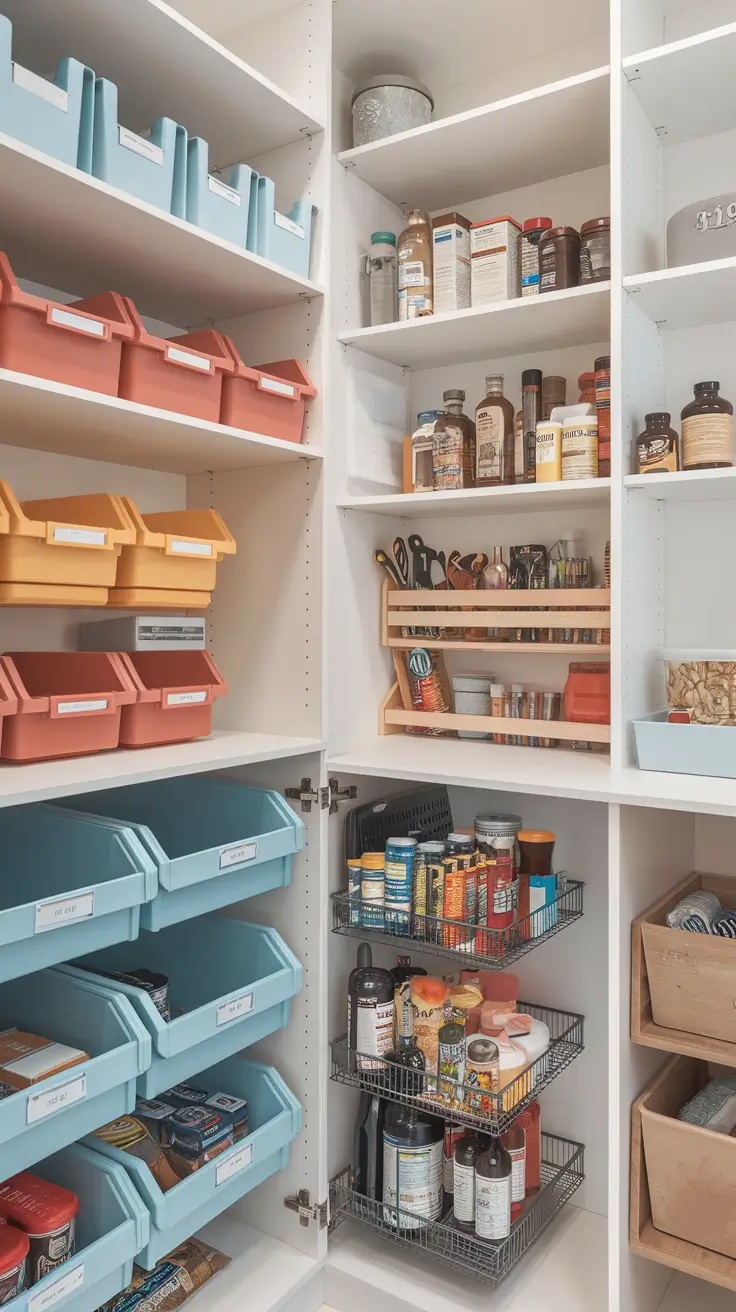
Use sealed bins for allergen-free flours, color-coded handles, and separate turntables for dressings and sauces. Dedicate a top-left cabinet for sensitive items and a mid-height snack bin for kids. A narrow shelf or wire cart serves as a gluten-free or nut-free station. Mirror shelf-edge wording with container labels for easy restocking. Separate scoops and tongs in a small caddy prevent cross-contact. The result is crisp and reassuring.
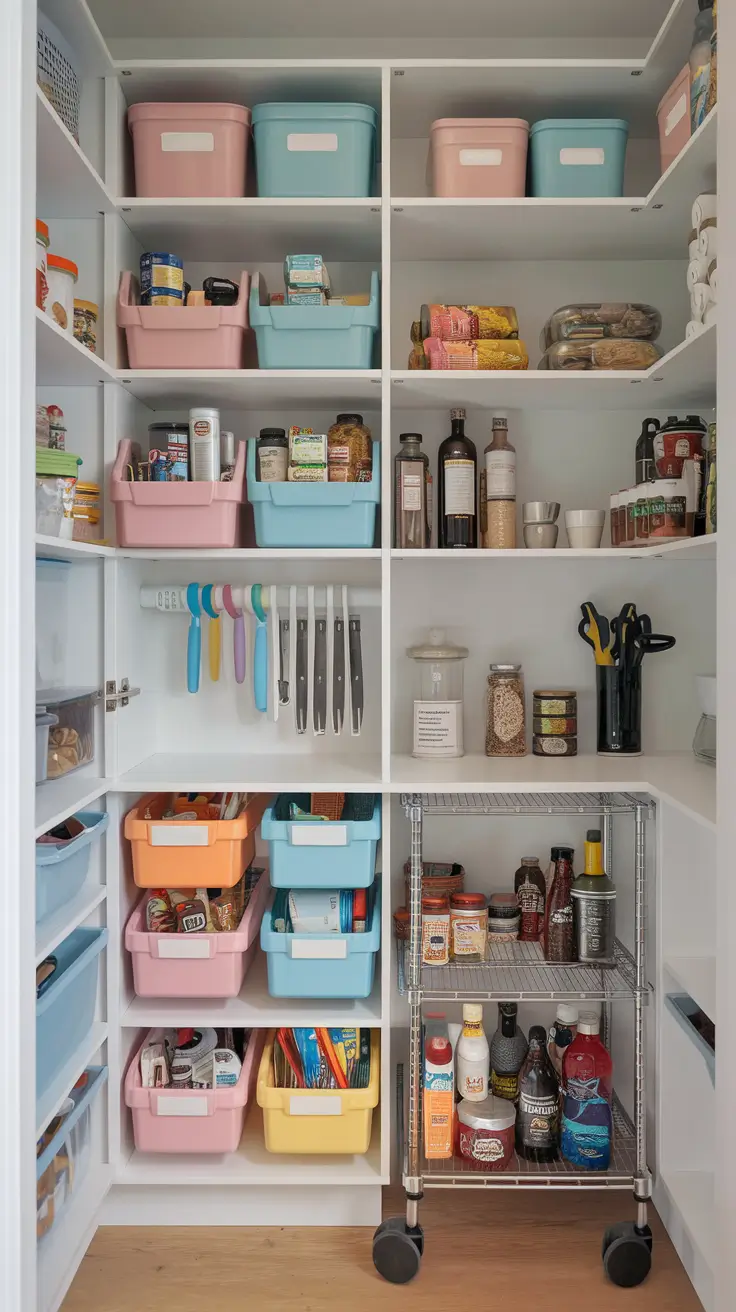
Separate prep tools as carefully as food. Keep cutting boards, knives, and measuring sets in the safe zone to avoid cross-contamination. Experts advise storing allergens low and safe items high, adjusting as needed. Weekly audits catch migration early. These routines fit real family patterns.
Enhance safety with a printed legend on the door and large stickers on safe bins. Use wipeable liners for easy cleanup. Budget-conscious setups can repeat a single bin style for clarity. In tight spaces, a labeled drawer divider can substitute for a full bay. These adjustments keep the system resilient.
Long-Lasting Pantry Organization Systems
Durable pantries rely on practical daily habits rather than Pinterest perfection. Build simple, minimalist systems with repeated containers for an aesthetic that endures. Choose affordable materials that scale with your household. Standardize shelf heights and categories for both small and large spaces. Place frequently used items on the first two shelves for quick refills. Ease of use is the guiding principle.
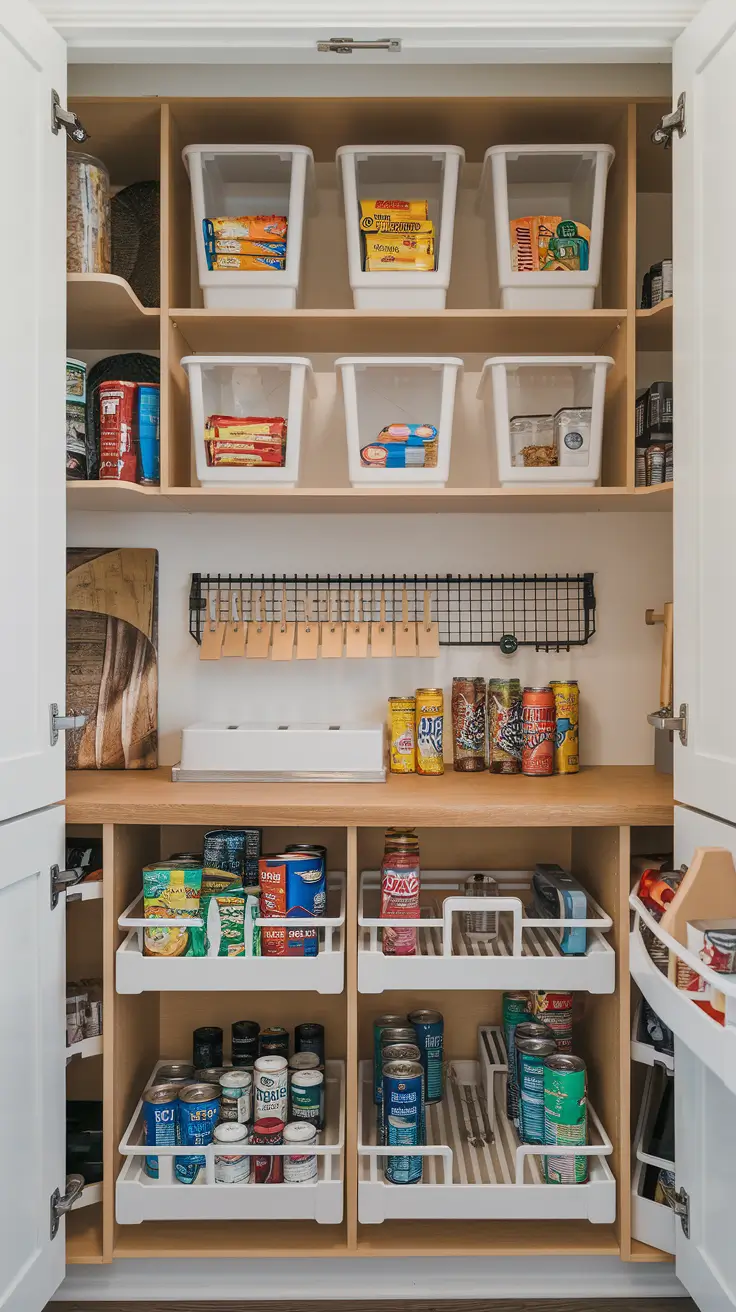
Combine wood and metal components to allow moving from a small closet pantry to a walk-in without starting over. Use strong risers for canned goods and adjustable posts for wire shelves. Uniform jars and clear labels maintain cohesion. Include a shallow drawer for tools like label makers, scissors, clips, and batteries. Pull-outs corral awkward appliances. The layout is calm and efficient.
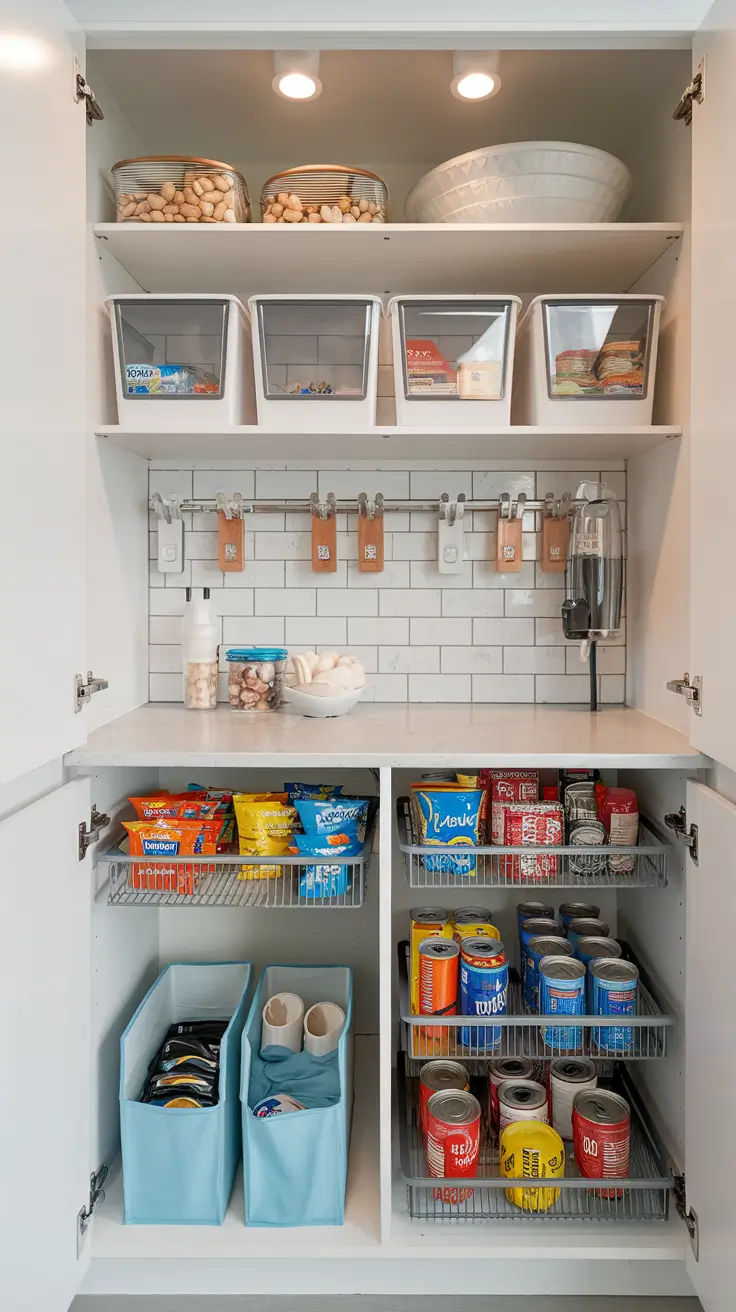
Maintain order with a small weekly routine: face labels forward, clear empties, and update a short list for quick meals. Seasonal edits shift baking supplies as needed. Style can flex from farmhouse warmth with baskets to crisp modern minimalism without changing the core. The system adapts to evolving tastes without waste, ensuring longevity by design.
Close the loop with a maintenance checklist, a “Rehome” bin for stray items, and a par-level chart inside the door. DIY additions like thin risers or door racks control costs. Add a few baskets for rustic texture or a single accent for color. The result is a system you’ll actually maintain.
Organizing Snacks and Treats with Style
Create snack zones with clear, simple pantry organization ideas so Snacks and treats feel inviting yet controlled. Divide shelves for On-the-go snacks, after-school bites, and evening nibbles to keep traffic flowing in small kitchens. Repeating containers create a coordinated, calm aesthetic even when busy. Place grab areas between shoulder and hip height for speed and safety, supporting busy families during rush hours. Choose affordable, replaceable pieces to maintain budget flexibility. The outcome is cheerful, neat, and easy to reset.
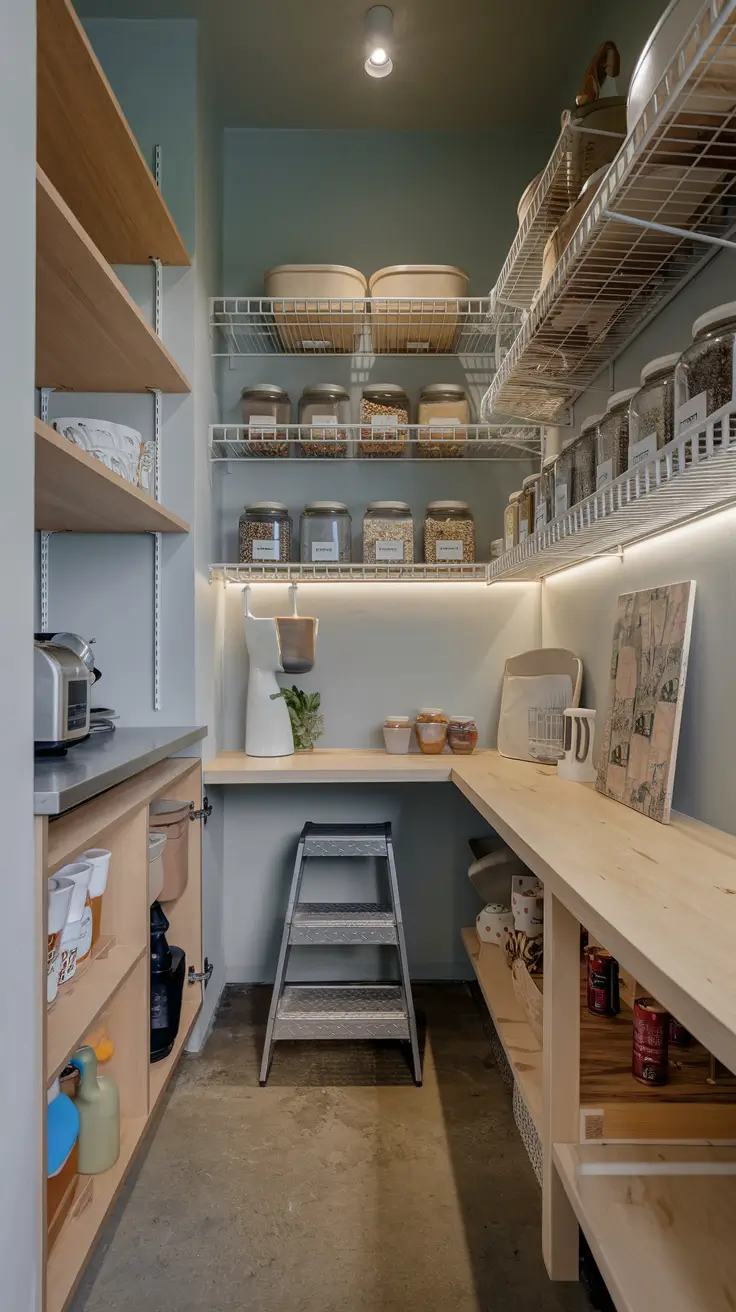
Use shallow bins with windows, low risers for pouches, and narrow caddies for refill packs labeled boldly. Wire shelf rails or baskets hold fruit leather and mini crackers; slim drawers keep napkins and bags handy. Add compact pull-outs for overflow to keep main shelves tidy. Clear jars store trail mix and pretzels; can caddies organize pudding cups. Label a “party” bin to separate treats from everyday snacks. Repetition makes the station look designed, not improvised.
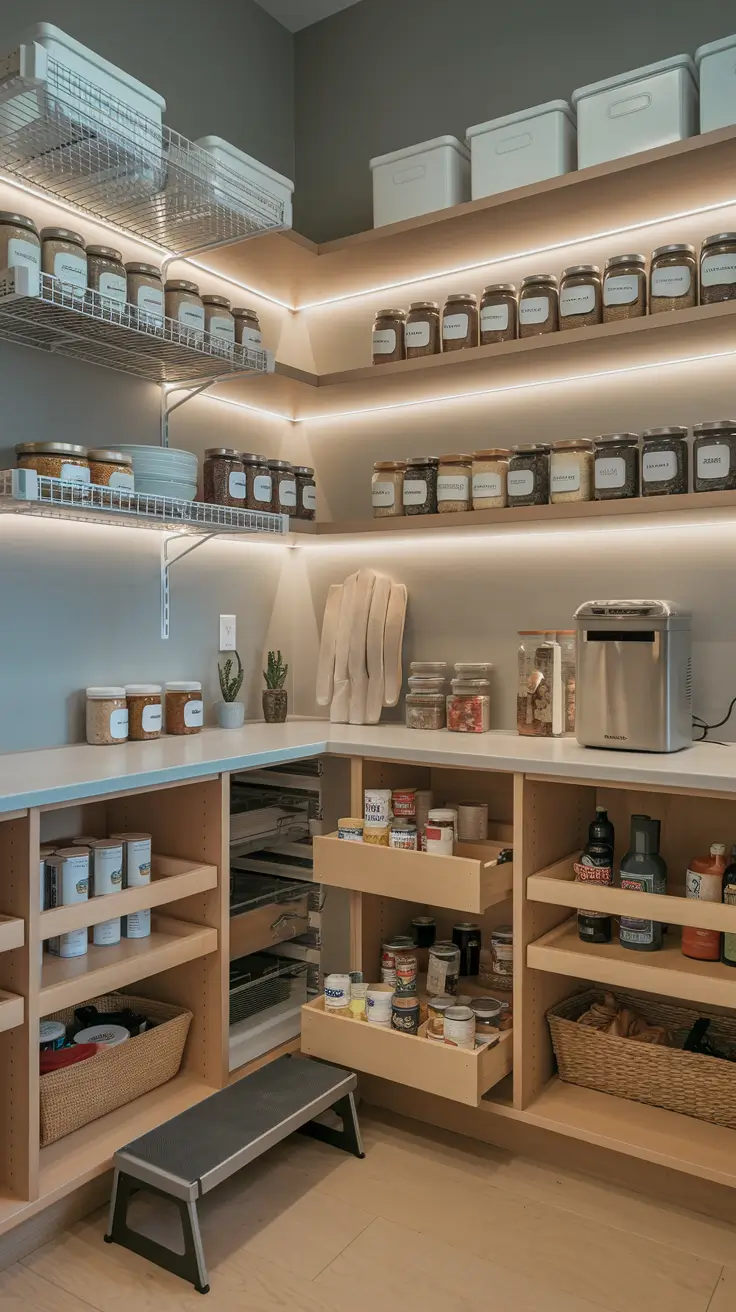
Portion bins reduce mess and negotiation with picky eaters. Nutrition experts recommend placing produce and protein-forward snacks at eye level to encourage healthy choices, implemented here with front-row fruit cups and nuts. Store sweets in closed bins to keep them special but controlled. Weekly refills are fast due to fixed categories. A five-minute Sunday reset with labels facing forward maintains calm and order.
Finish with washable mats under kid-height bins, clipboards with par levels for efficient shopping, rolling carts for narrow pantries, and motion-activated puck lights for nighttime visibility. These touches make snack time smooth and cleanup easier.
Farmhouse Pantries with Modern Efficiency
For a warm farmhouse kitchen, combine wide wooden shelves and woven baskets with modern inserts for performance. Use glass jars, soft paint, and iron accents with subtle hardware for speed. When space allows, a walk-in pantry feels like a working room that photographs beautifully. Position staples like Grains and pasta, Baking supplies, and Oils and condiments within easy reach. Keep the palette natural for a gentle rustic vibe without heaviness. The space is friendly and durable for daily cooking.
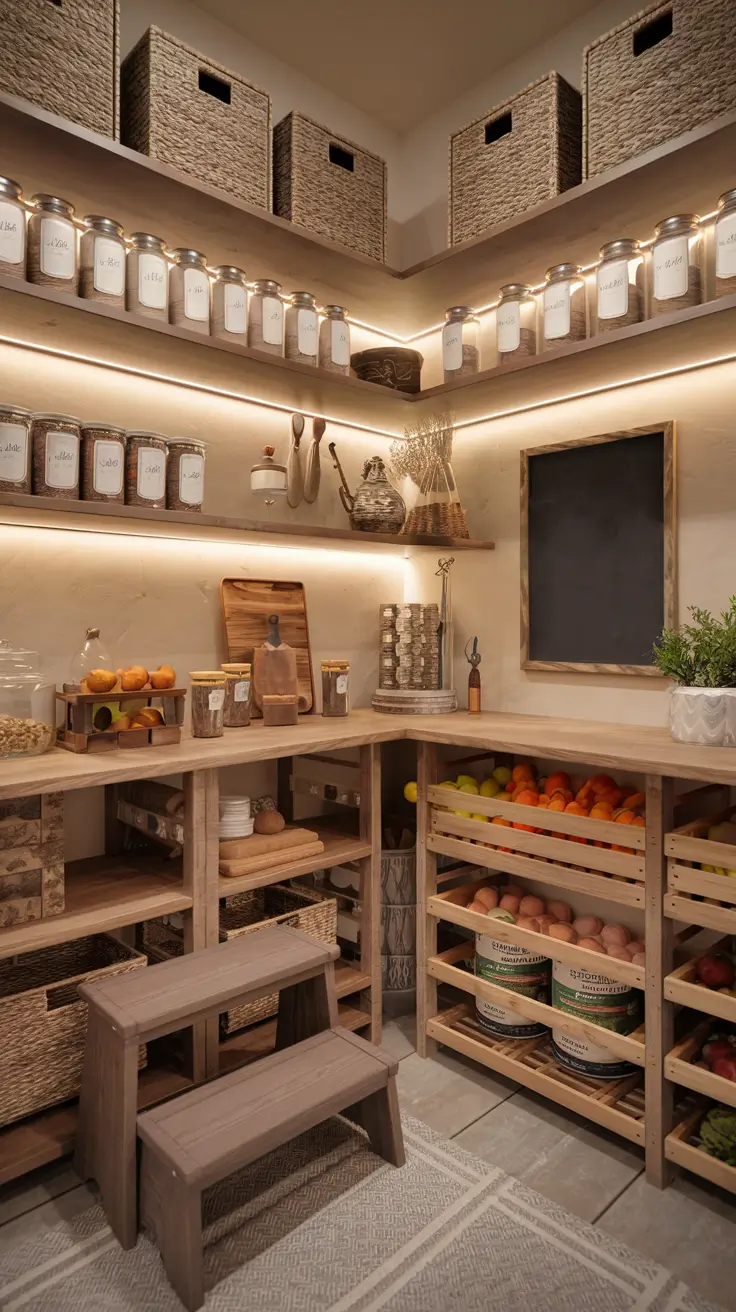
Deep lower shelves hold sacks and bowls; mid-level shelves store cereals and snacks; eye-level spice rails feature consistent labels. Can risers keep canned goods facing forward; mesh crates ventilate onions and potatoes. Concealed pull-outs hide small appliances, and chalkboard panels track inventory. Upper shelves are accessible with ladders or step stools. Bottle pull-outs away from heat protect oils. The design balances classic bones with modern function.
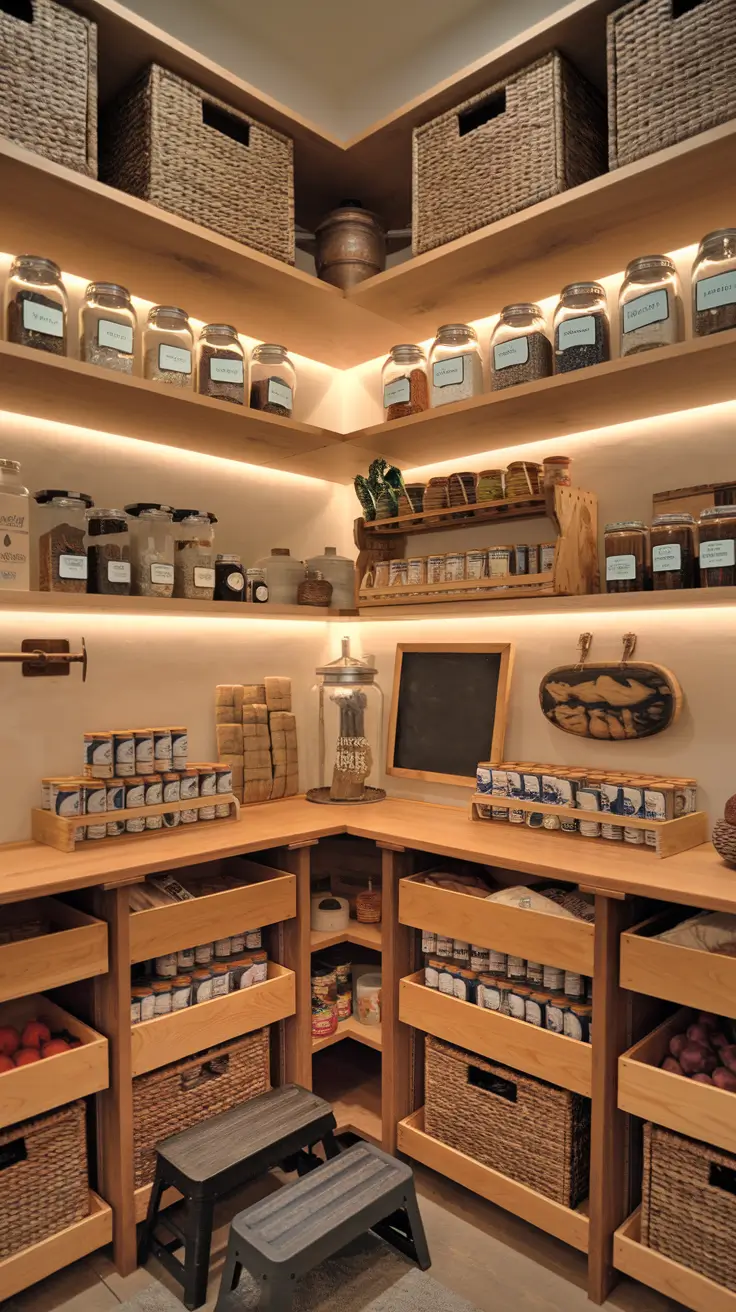
Map zones by task to reduce steps for quick meals. Place breakfast foods near the fridge and dinner bases near the stove. For busy families and picky eaters, keep a portioned treat bin to balance indulgence and health. A tasting tray adds a real, inviting touch. The mix feels timeless, not themed.
Complete with warm under-shelf lighting, washable runners, woven liners, matching jars from dollar stores, and a single patterned bin for a bohemian accent. Door racks hold wraps and parchment to free shelf space. These choices blend charm with function.
Minimalist Pantry Organization for Calm Efficiency
For homes favoring clean lines, build a minimalist pantry with repeated forms and simple organization. Neutral containers and light interiors open sight lines, making errors easy to spot and fix. Adjustable shelves allow the layout to evolve without waste. Readable labels and a subdued palette simplify maintenance. The vibe is serene, modern, and aesthetic, supporting fast, confident meal prep daily.
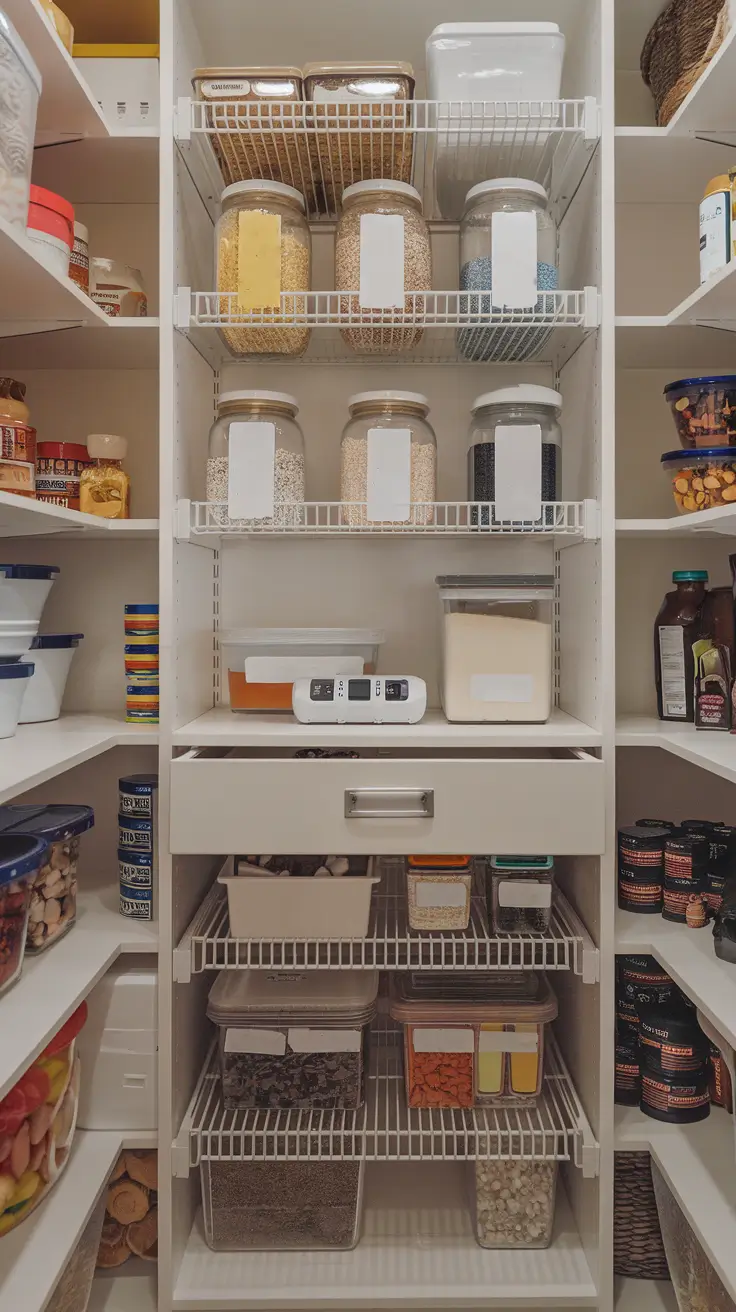
Use understated but durable hardware. Uniform jars with front labels anchor categories. Slim wire shelf bays provide flexible overflow. Concealed pull-outs hide odd-shaped appliances. Turntables keep oils and condiments accessible; narrow dividers organize sheet pans. Keep canned goods low for safety. Every piece serves a purpose; nothing is purely decorative.
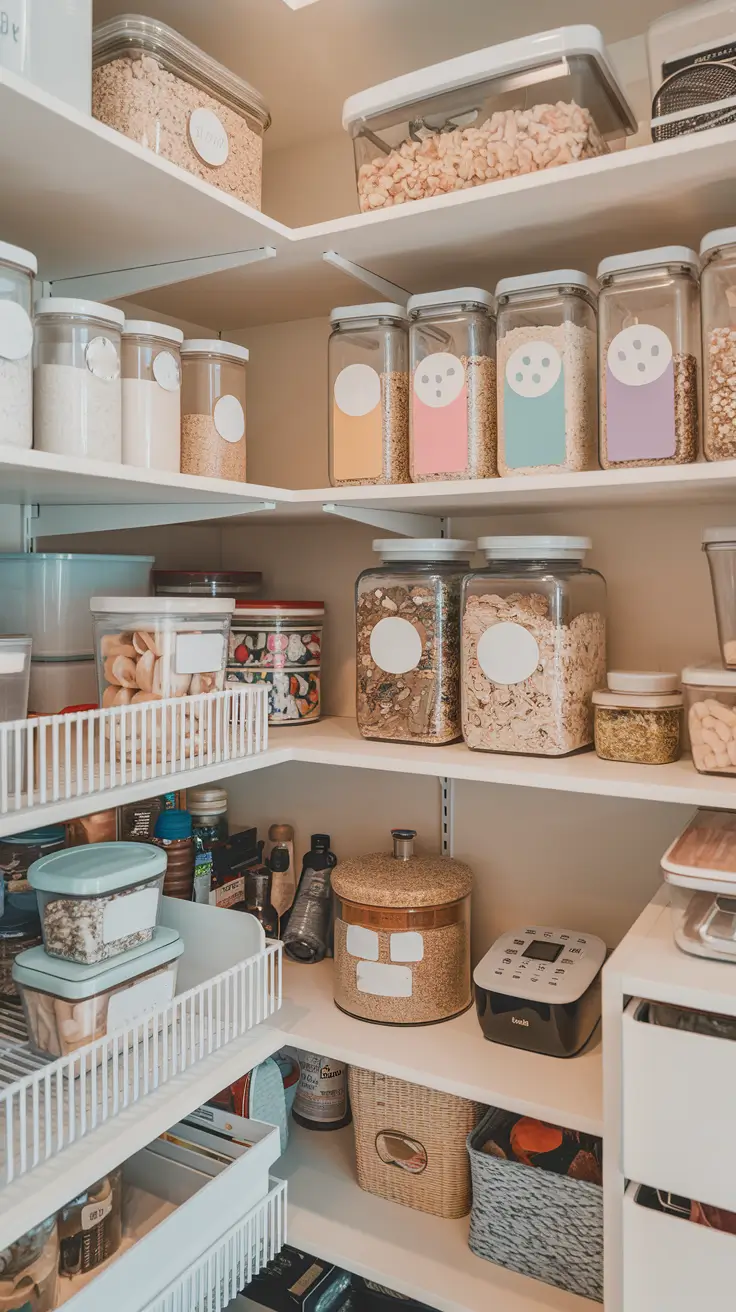
Minimalist systems fail when over-decanting or over-labeling occurs. Experts recommend decanting only high-rotation staples to keep food fresh and time investment reasonable. Weekly five-minute resets maintain order without overwhelming monthly overhauls. The form suits everyday life, not idealized weekends. The result is clarity without coldness—restraint with purpose.
Include a small maintenance caddy with cloths, label tape, and clips. Add a style guide inside the door with category names to stay current. In tight spaces, add a single-tier cart under the lowest shelf. DIY fans can add slim risers to align jar heights, complementing pantry organization ideas diy. Minimal parts, maximum stability.
Labels: The Key to Efficient Pantry Systems
Clear labels transform any pantry into a self-maintaining map, especially in small spaces. Treat labels like store signage so everyone can find and return items independently. Define master groups like Grains and pasta, Baking supplies, Oils and condiments, and Snacks and treats. Use consistent wording on shelf-edge tags and containers to reduce confusion. Color accents highlight dietary restrictions for quick identification. The system looks orderly and performs efficiently.
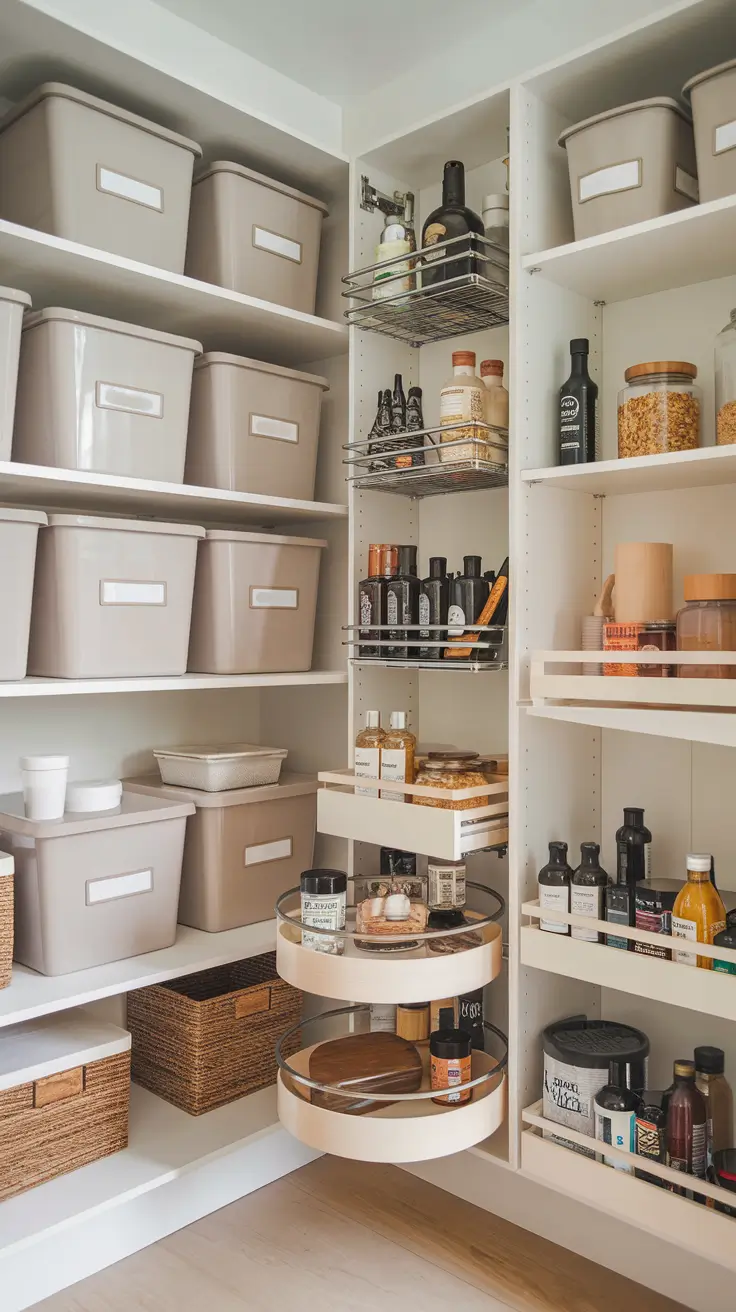
Use waterproof label tape, clip-on plates for baskets, and printable inserts for bins. Icon stickers assist non-readers and children, supporting busy families. Spice drawers benefit from regional tags like Indian blends. Wire shelves display label plates at the front of each tier for visibility. Date dots keep storage fresh and rotation honest. Simple tools and consistent application are essential.
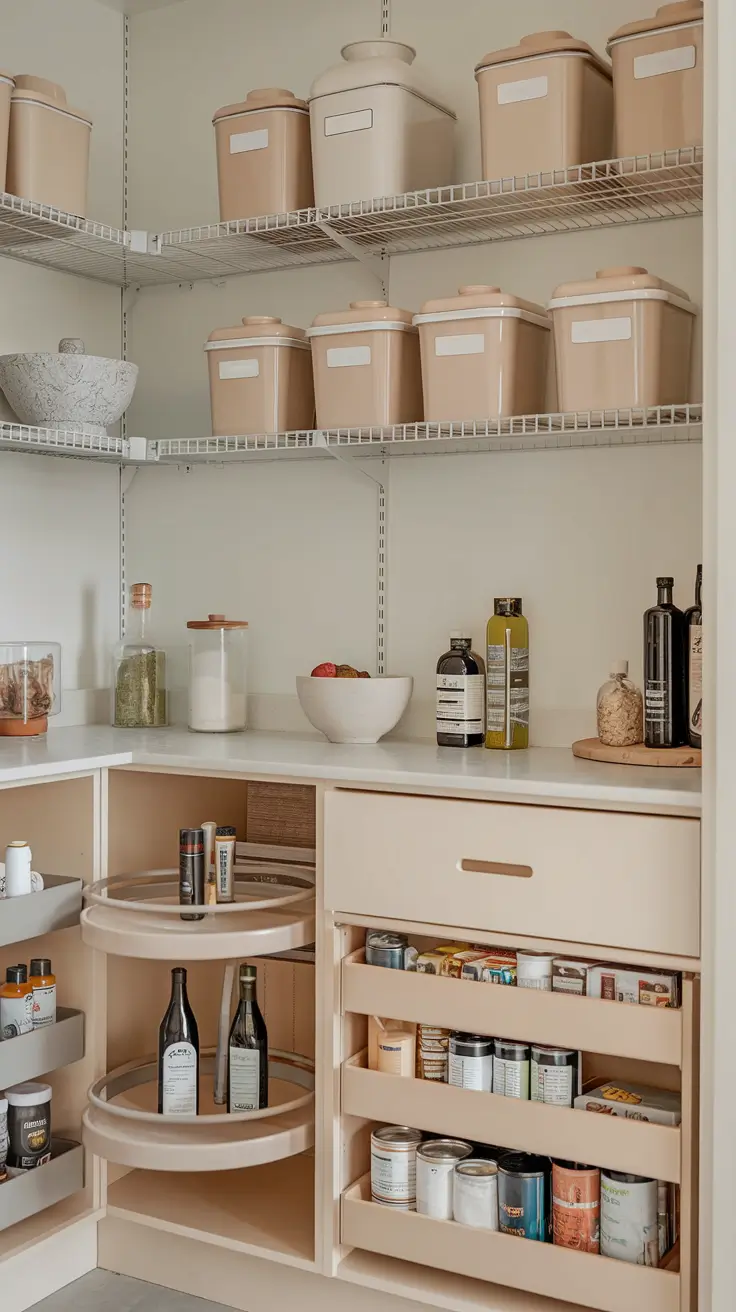
Labeling cuts restocking time nearly in half when shelf edges and containers are double-labeled. FIFO and clear par levels, displayed on cards behind bins, are recommended by experts. Keep a label maker and extra cartridges handy for quick updates. A five-minute weekly refresh fits busy schedules. Predictable words and placement ensure the system rarely fails.
Include a glossary of category names and abbreviations for clarity. Budget-conscious households can replicate the look with affordable bins from dollar stores. In tight spaces, a vertical column of shelves with firm labeling outperforms larger, vague setups. A “Rehome” bin collects stray items until relabeled. These add-ons protect your system’s order.
Healthy Pantry Organization for Better Living
Design pantries to encourage healthy habits by making nutritious choices easy to reach. Stage grains, beans, and nuts front and center to promote balanced meals and quick preparation. Transfer candy to a marked area to keep it accessible but controlled. Use affordable, washable containers that support consistent categories, helping families plan meals at a glance. The pantry becomes a daily nudge toward better eating.
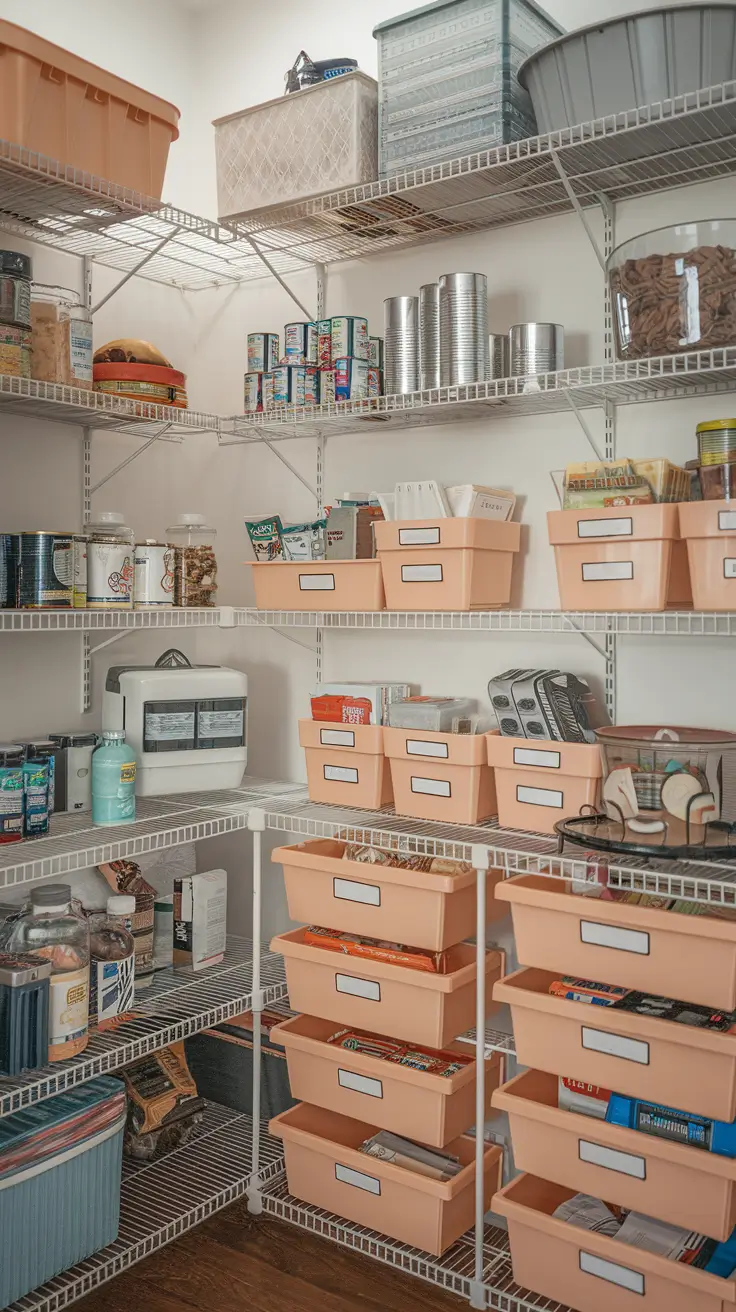
Match containers to tasks: clear jars for Grains and pasta, lidded bins for whole grains, and turntables for vinegars and oils. Store nut butters and seeds near cold storage for breakfast prep. Use low crates for seltzer and water. Compact caddies manage produce snacks for On-the-go needs. Keep canned goods low and visible with risers. Shelf-edge labels simplify inventory.
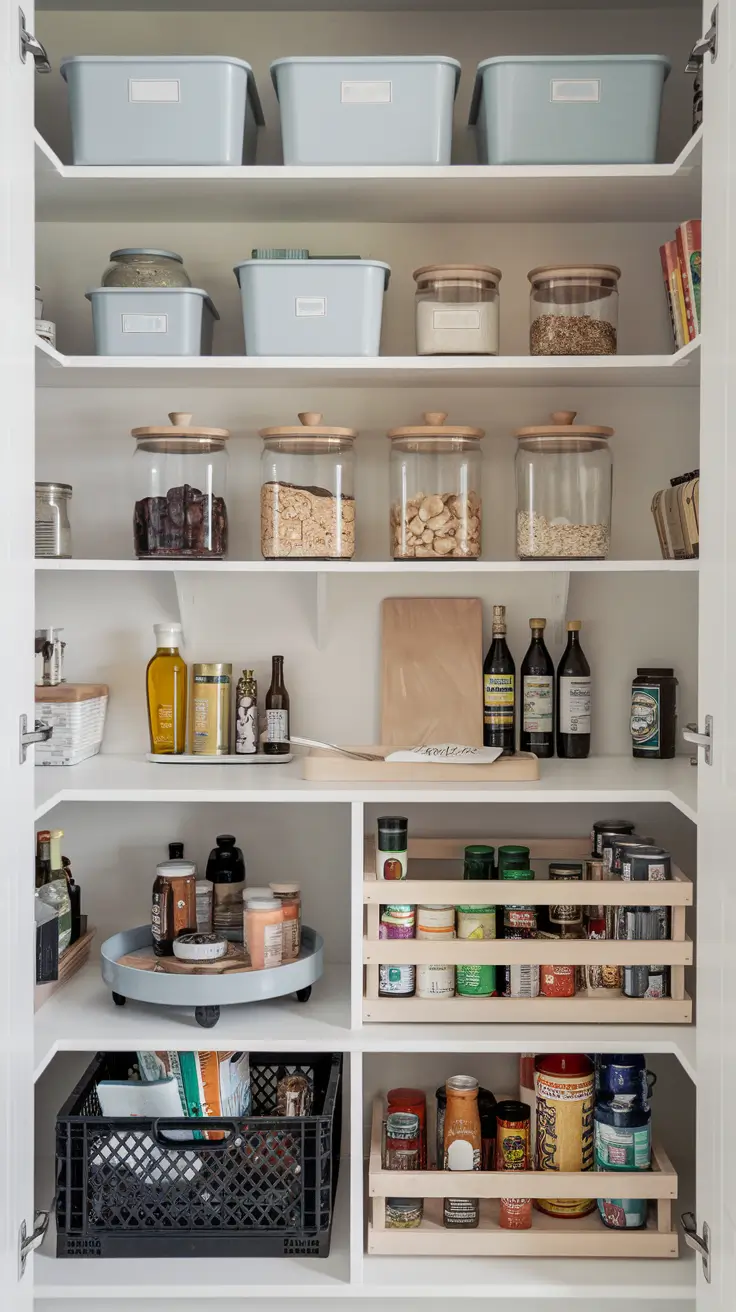
Visible, portioned options encourage picky eaters to try new flavors without pressure. Nutrition guides recommend placing cut fruit and easy proteins at eye level, complemented by a prep tray nearby for quick assembly. Dedicate a clearly marked safe zone for dietary restrictions to remove guesswork. These real habits align with natural reach patterns, gently guiding better choices over time.
Finish with a meal board, weekly refill reminders, and a narrow step stool for safe access. Mix repurposed jars with matching bins for budget-friendly coherence. Use wire shelf posts for heavy loads and DIY risers for added capacity. These final touches help good habits stick.
Small Kitchen Pantry Hacks for Maximum Efficiency
In tight kitchens, every inch counts. Use adjustable shelves and compact wire shelf bays to open sight lines and reduce visual clutter. Zone the pantry so daily cooking items, On-the-go snacks, and coffee are within easy reach, with backup supplies stored higher. Light finishes brighten the space, and clear labels enhance readability. A quiet palette maintains calm during busy times. The goal is speed without clutter.
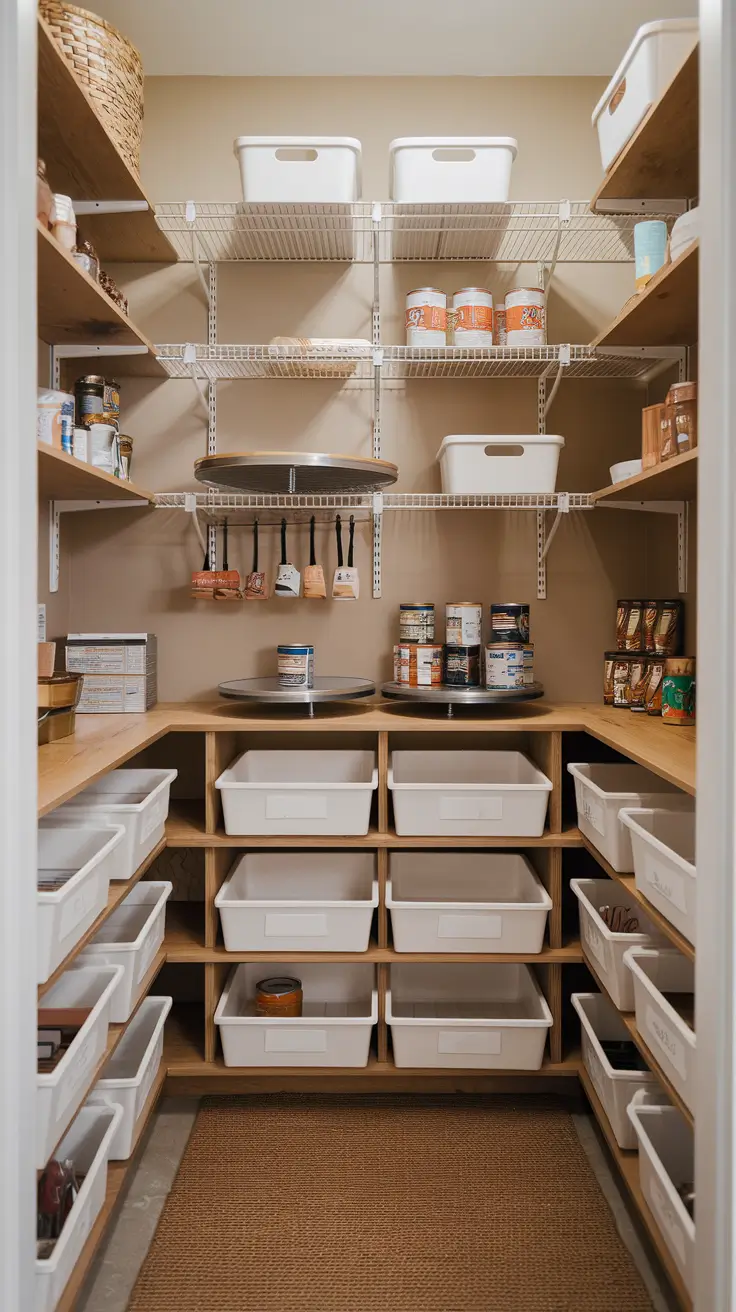
Minimal but effective hardware includes shallow turntables for oils and condiments, tiered risers for canned goods, slim door racks for wraps and foils, and rolling carts for beverages. Clear canisters with bold labels hold Grains and pasta. Narrow pull-outs hide odd-shaped tools. Repeating container styles unify the space.
Store by task rather than rigid categories. Place breakfast near the fridge and dinner starters near the stove to reduce steps. Decant only high-rotation items to keep food fresh and time investment reasonable. Weekly five-minute resets with labels facing forward maintain order. Small choices create big ease.
Complete with motion-activated puck lights, a narrow step stool, crumb trays under canisters, over-the-door racks, and shallow drawers for packets. Dollar store finds can replicate the look affordably. Add a plant or art print for warmth without sacrificing storage. These touches balance style and longevity.
Affordable Pantry Organization Without Sacrificing Style
Create polished, durable pantries on a budget by selecting two bin sizes and one jar style for scalability. Repeating materials from dollar stores create a custom look. Adjustable shelves accommodate growth without waste. The space feels calm, functional, and easy to clean—design that works for everyday life.
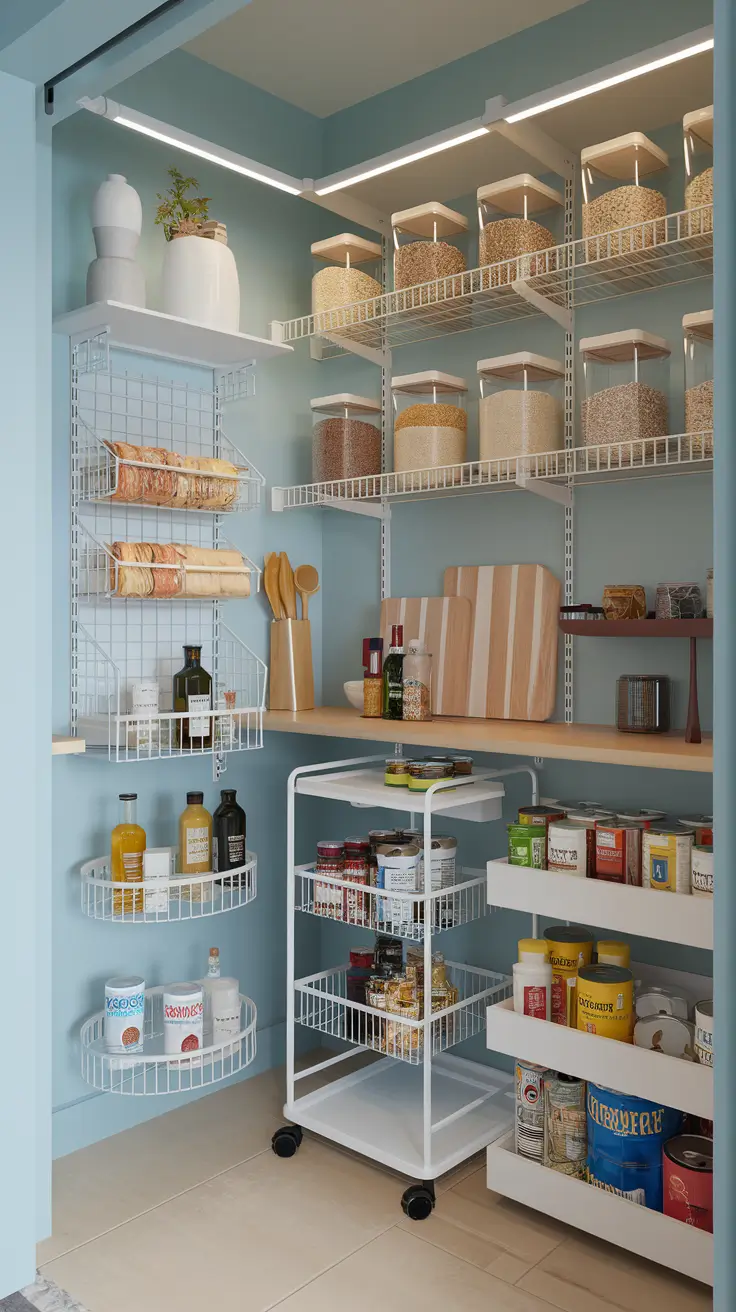
Use clip-on label plates, shelf liners to prevent tipping, stackable shoe-box bins for snacks and baking supplies, can risers for canned goods, and turntables for sauces. Drawer dividers organize scoops and clips. Every item serves a purpose; nothing is fussy.
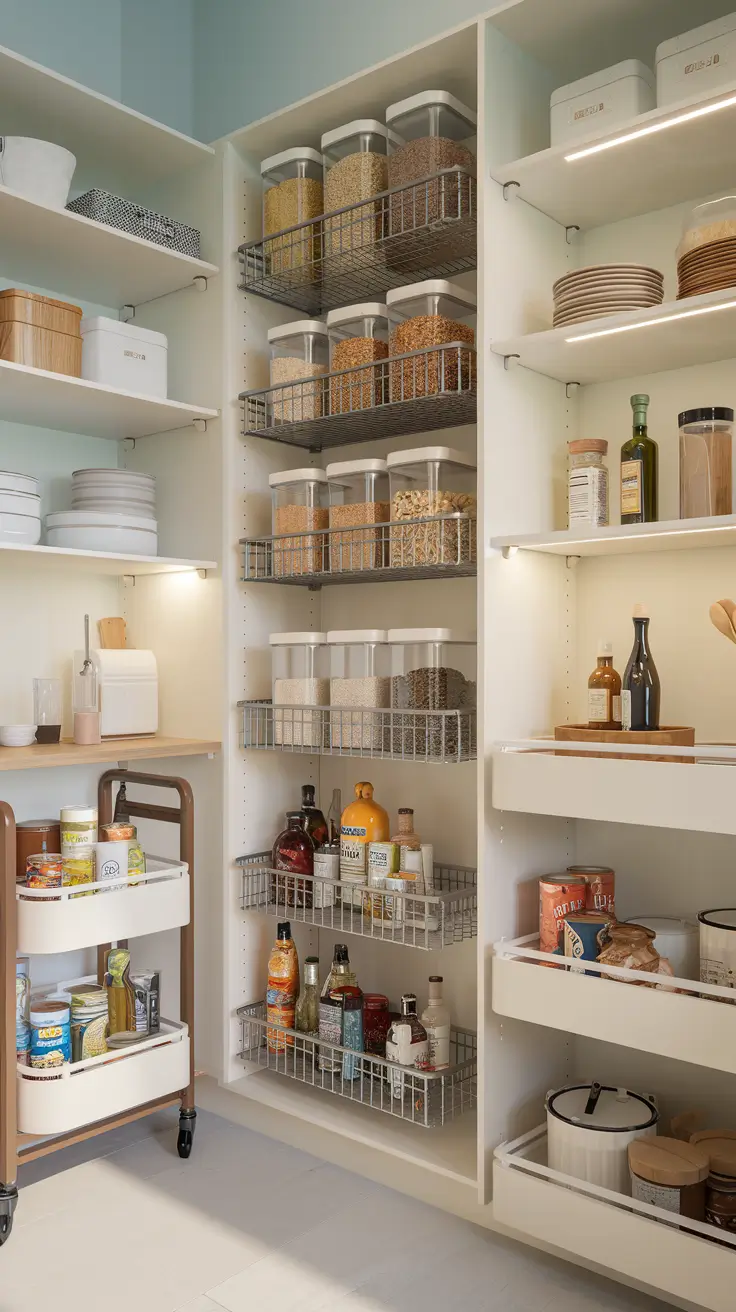
Consistency in color and size upgrades budget equipment instantly. Decant only what will be used within a month and date jars for freshness. Keep par levels on cards for quick refills. The result is real order that withstands daily use, offering efficiency without high costs.
Enhance with a wipeable weekly menu, a “Rehome” bin for stray items, and a single accent basket for character. Start with repurposed containers if glass jars aren’t feasible, upgrading later. Add narrow pull-outs for awkward items and a patterned liner for a bohemian touch. These upgrades balance cost and function.
Pantry Organization for Picky Eaters
Design friendly, clear maps to reduce friction and maintain balanced choices. Use clear labels and pictures to guide children to the right bins. Create a small On-the-go snack station to ease last-minute stress. Keep favorite Snacks and treats visible but contained in lidded bins. Place protein-forward options at eye level to encourage healthy choices. Maintain a cheerful yet simple palette. The system fosters independence and calm.
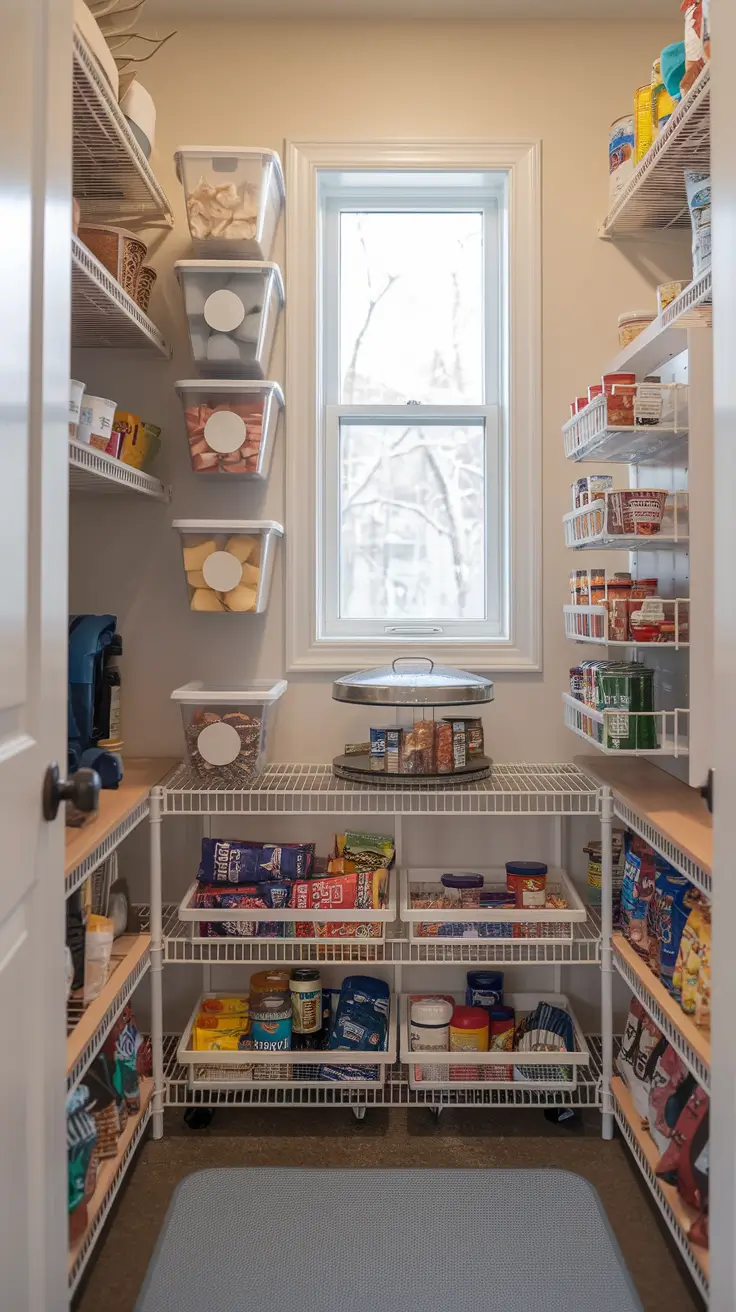
Use windowed bins for crackers, fruit cups, and trail mix; divided drawers for bars and pouches. Hold plates, napkins, and baggies in shallow caddies for self-service. Door racks store refill packs and lunch add-ons; turntables manage dips and small oils. Mini risers hold kid-safe canned goods. Wire baskets contain weekly favorites. The layout is clear and predictable.
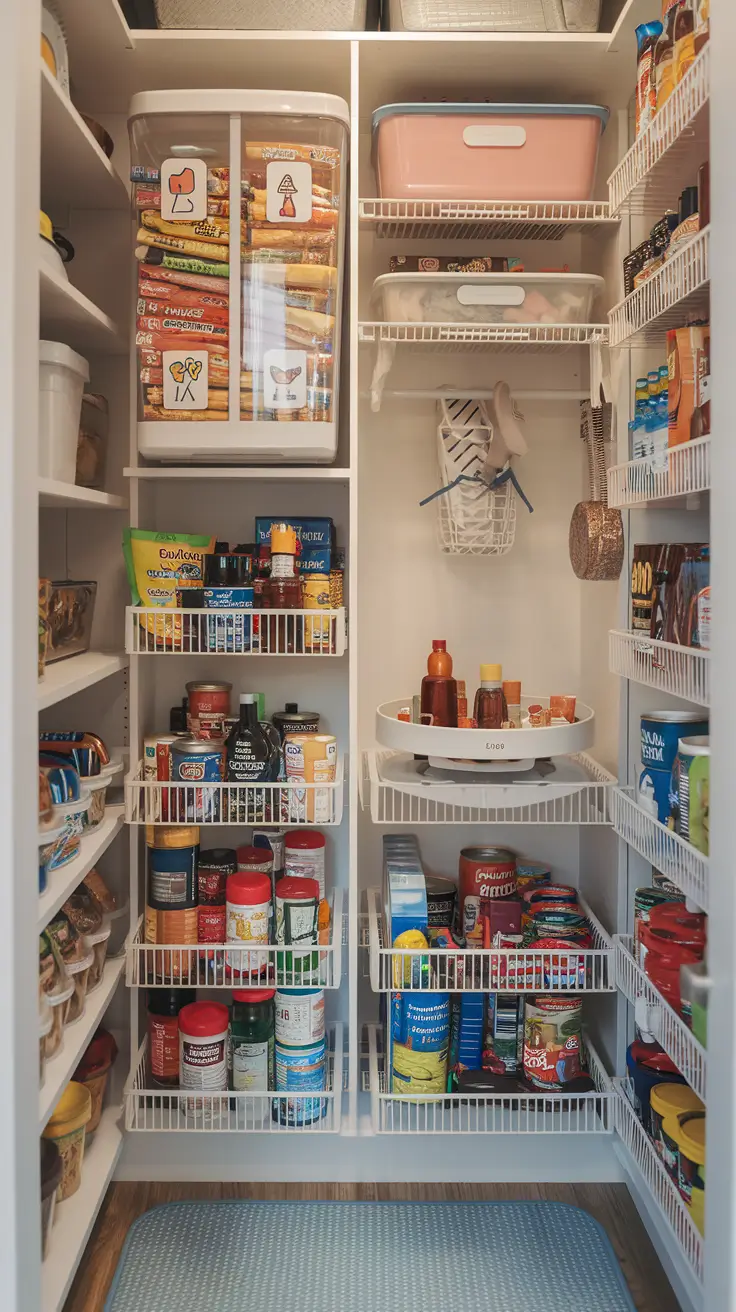
Involve kids in labeling to increase buy-in. Experts recommend offering two good choices rather than an open field, reflected here with bins labeled school and after practice. Color-code handles and dedicate safe shelves for dietary restrictions. These habits align with real routines, expanding variety without conflict.
Complete with washable mats under kid-height bins, timer rules for evening snacks, clipboards with par levels, and rolling carts for infrequent items. Rotate seasonal bins without changing core setup. The system remains stable and welcoming.
Pantry Tips for Busy Families
Organize pantries like well-marked stations anyone can navigate quickly. Group items by task, keep daily essentials between knee and shoulder height, and use large, legible labels. Place a compact bay near the cook zone for quick meals with pasta, sauces, and grains. Store back stock on high shelves to keep working rows clear. The space feels efficient and real during hectic days, reducing stress with clear zones.
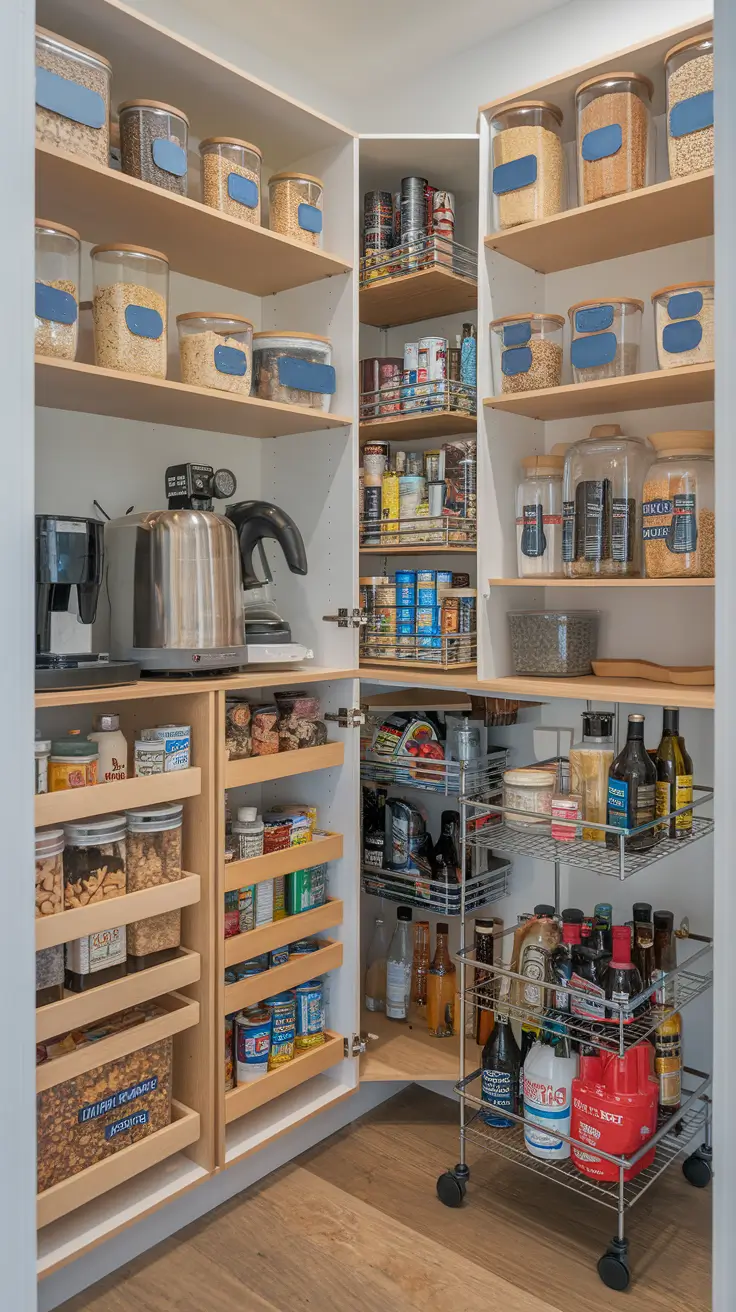
Use deep bins for lunch kits, turntables for oils and condiments, and low tiers for canned goods. A slim wire cart holds beverages and moves to the table for family meals. Clear jars store grains and pasta; vertical files organize cutting boards and trays. Drawer dividers keep openers, clips, and scoops together. Pull-outs hide appliances that slow traffic. Every inch has a purpose.
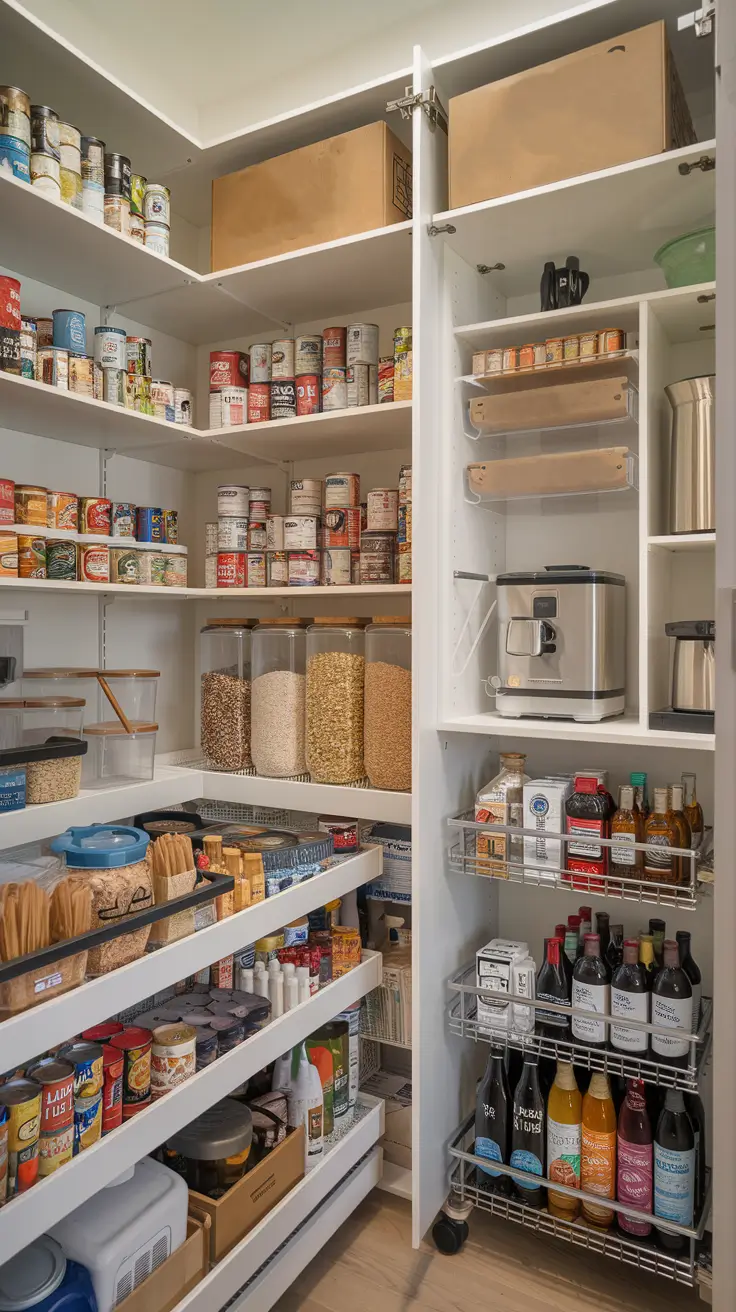
FIFO with back stock behind working items saves time. Weekly five-minute resets keep labels facing forward. Keep a shopping list inside the door to avoid duplicates. Mark safe caddies at eye level for dietary restrictions. The system is easy to teach and maintain, with repeatability as its strength.
Add motion lights, broom hooks, and laminated zone maps to assist guests and babysitters. A mail tray near mudrooms prevents clutter. Use accent baskets or wood handles for warmth without hindering upkeep. For regional cuisines like Indian, place spice drawers near oil stations to speed dinner prep. These details simplify long days.
Stylish Pantry Organization in Small Spaces
Small pantries can be both beautiful and functional with a quiet palette and repeated forms. Use slim shelves and compact wire runs to keep lines clean. Uniform jars, soft lighting, and tidy labels create a curated yet practical aesthetic. Add textures like rattan for rustic warmth or patterned liners for a bohemian touch. The look is serene and efficient—small spaces deserve style too.
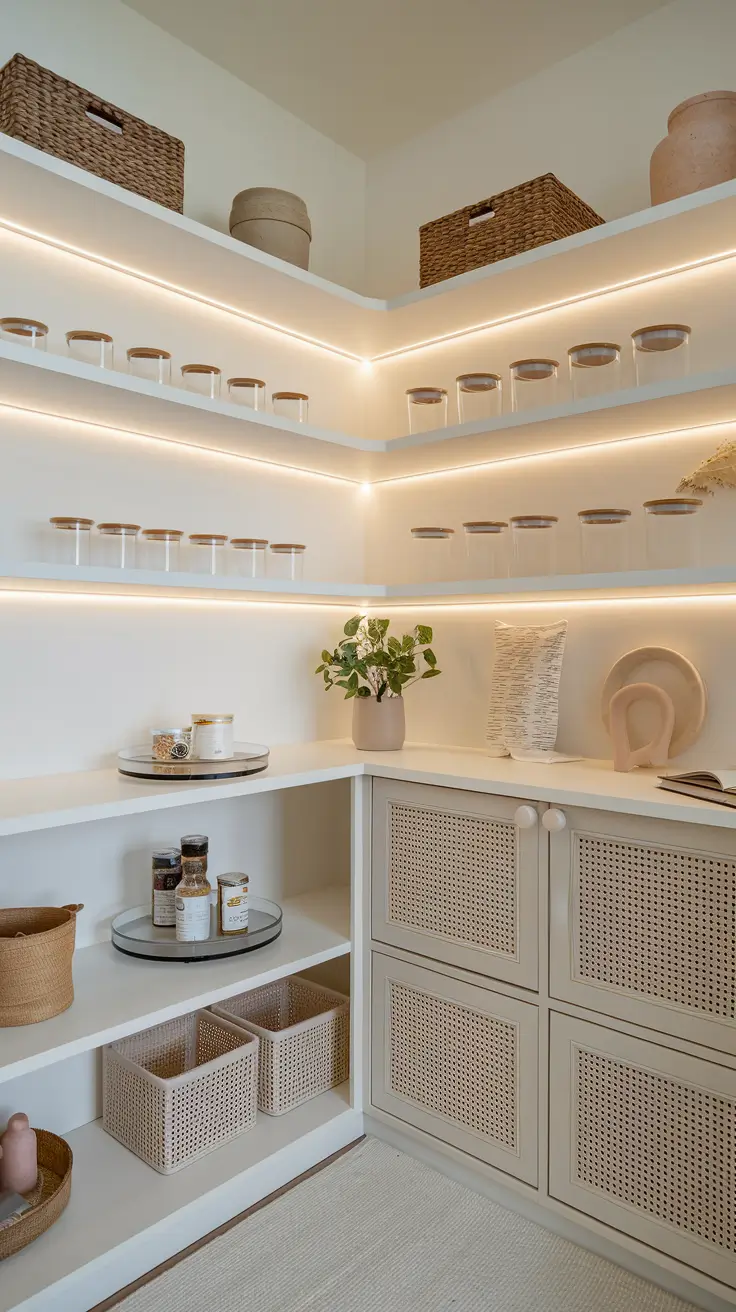
Use clear canisters for grains and pasta, stackable bins for baking supplies, and turntables for oils and condiments. Can risers organize canned goods without clutter. Concealed pull-outs catch awkward appliances. Small art prints and washable runners add life without sacrificing space. Limit the palette to three tones repeated across containers to reduce visual noise.
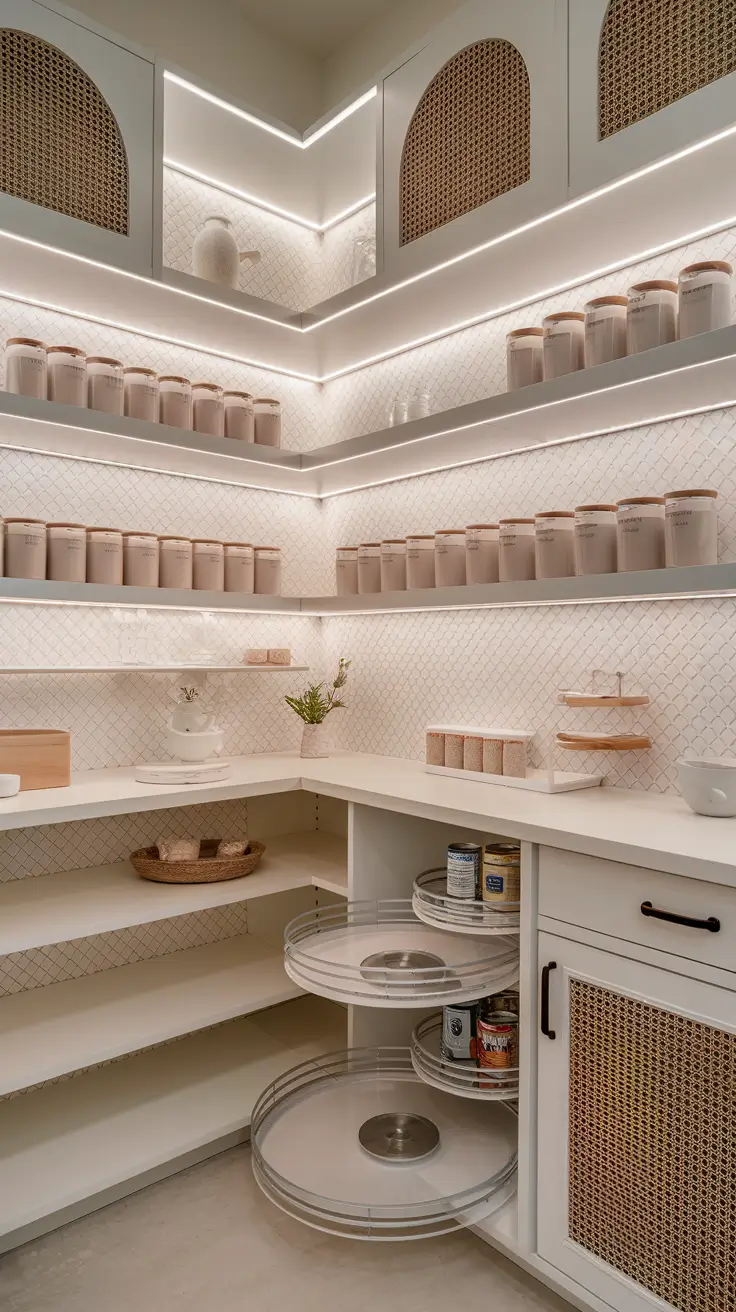
Match jar finishes and labels for cohesion. Echo farmhouse styles with wood lids and woven baskets; use matte black clips and frosted bins for modern looks. The result is polished and harmonious with your kitchen’s footprint. Add dimmable LED strips, a thin step stool, and a small plant to complete the space. In small closets, include over-the-door racks and acrylic risers. DIY risers align jar heights for easy upgrades. A discreet towel hook speeds cleanup. These finishing touches make small pantries feel special.
As an Amazon Associate I earn from qualifying purchases.