71″ Metal Armoire Wardrobe: How it fits your small space
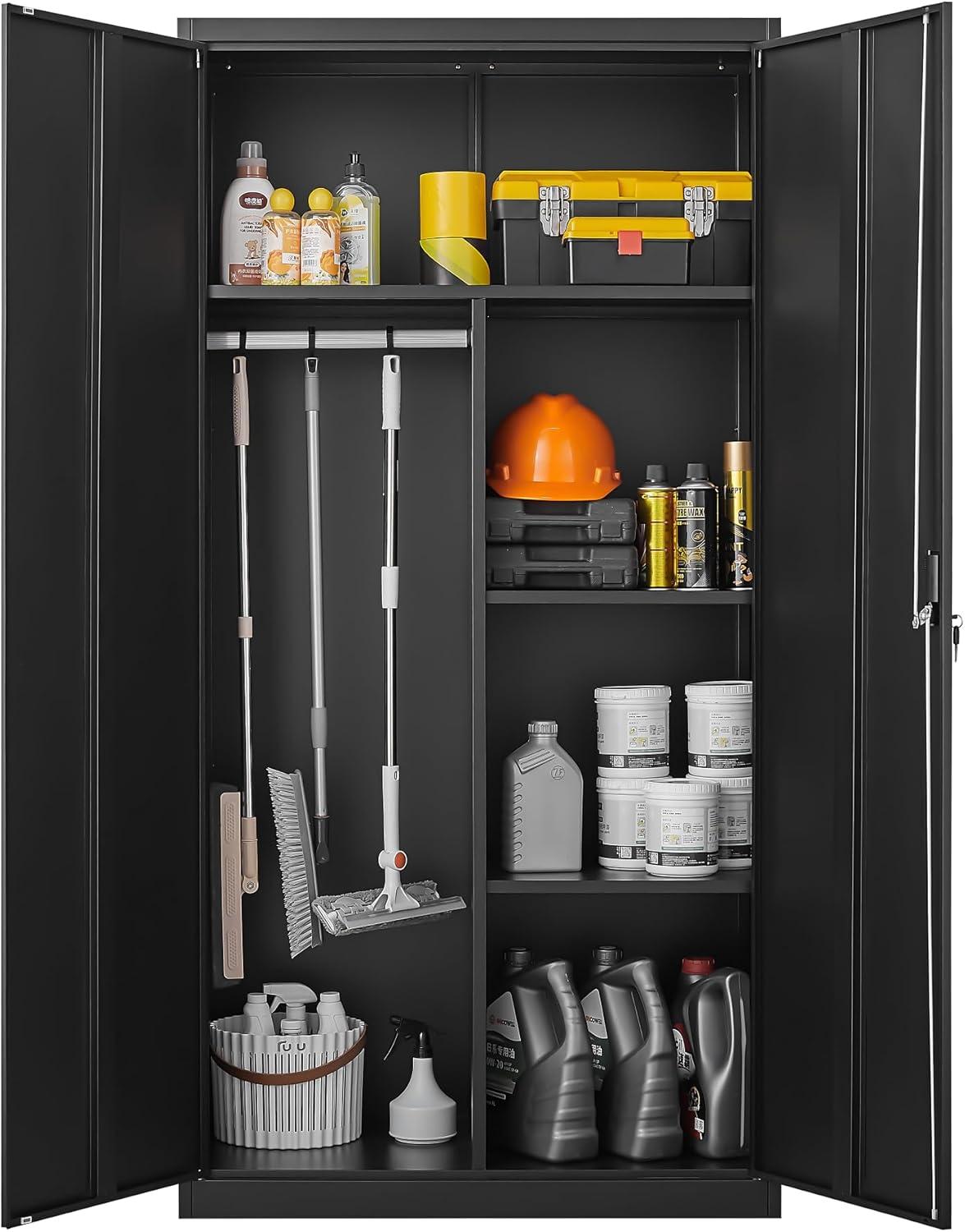
You notice the cabinet’s matte black skin first — powder-coated steel that feels cool under your palm and keeps fingerprints at bay. The unbranded “71” Metal Armoire Wardrobe has a vertical, closet-like presence: tall, narrow, and you feel its weight when the double doors close wiht a quiet magnetic pull. From across the room it reads as a compact wardrobe rather than a decorative piece; the small lock and keys are an unexpectedly domestic touch. The steel frame and subtle texture give it a grounded, no-nonsense presence in ordinary living space.
A first look at your tall metal armoire and everything included in the delivery
When you open the shipping carton the first thing you notice is how the components are packed: long metal panels lie flat, each wrapped in thin protective film and separated by foam blocks and corrugated cardboard. The doors and side panels usually arrive stacked together rather than preassembled,so you’re looking at a handful of flat parts rather than a single finished piece. Several clear plastic bags sit on top of the panels; each bag holds fasteners and small fittings and is typically labeled or stapled to an inventory sheet so you can match parts to the assembly steps.
Alongside the panels you’ll find the interior pieces and safety items grouped for easy spotting. the hanging rod and the adjustable shelf boards are packed flat or nested, with shelf clips or brackets packed in a separate bag. A small packet contains the lock hardware and two keys, and another contains the anti-tip anchor and its screws. The instruction booklet is folded on top—illustrations first, parts list near the front—and a simple parts checklist helps you confirm what’s present before you begin.
| Item | Typical quantity |
|---|---|
| Main panels (doors, sides, back, top/bottom) | Several flat pieces |
| Adjustable shelves | Multiple shelves (packed flat) |
| Hanging rod | 1 |
| Lock mechanism and keys | Lock + 2 keys |
| anti-tip kit | 1 kit (anchor + screws) |
| Assembly hardware (screws, bolts, washers, shelf clips) | One or more labeled bags |
| Instruction manual & parts list | 1 booklet |
Most of what you need to get started is in the box, though small protective elements—foam blocks, plastic film, and cardboard spacers—tend to shift during transit and may be taped to panels or tucked between parts. The bags of hardware are often grouped by step, which can make the first pass through the contents feel quicker than it looks on the packing list.
How it sits in your room and reads alongside your bed or desk
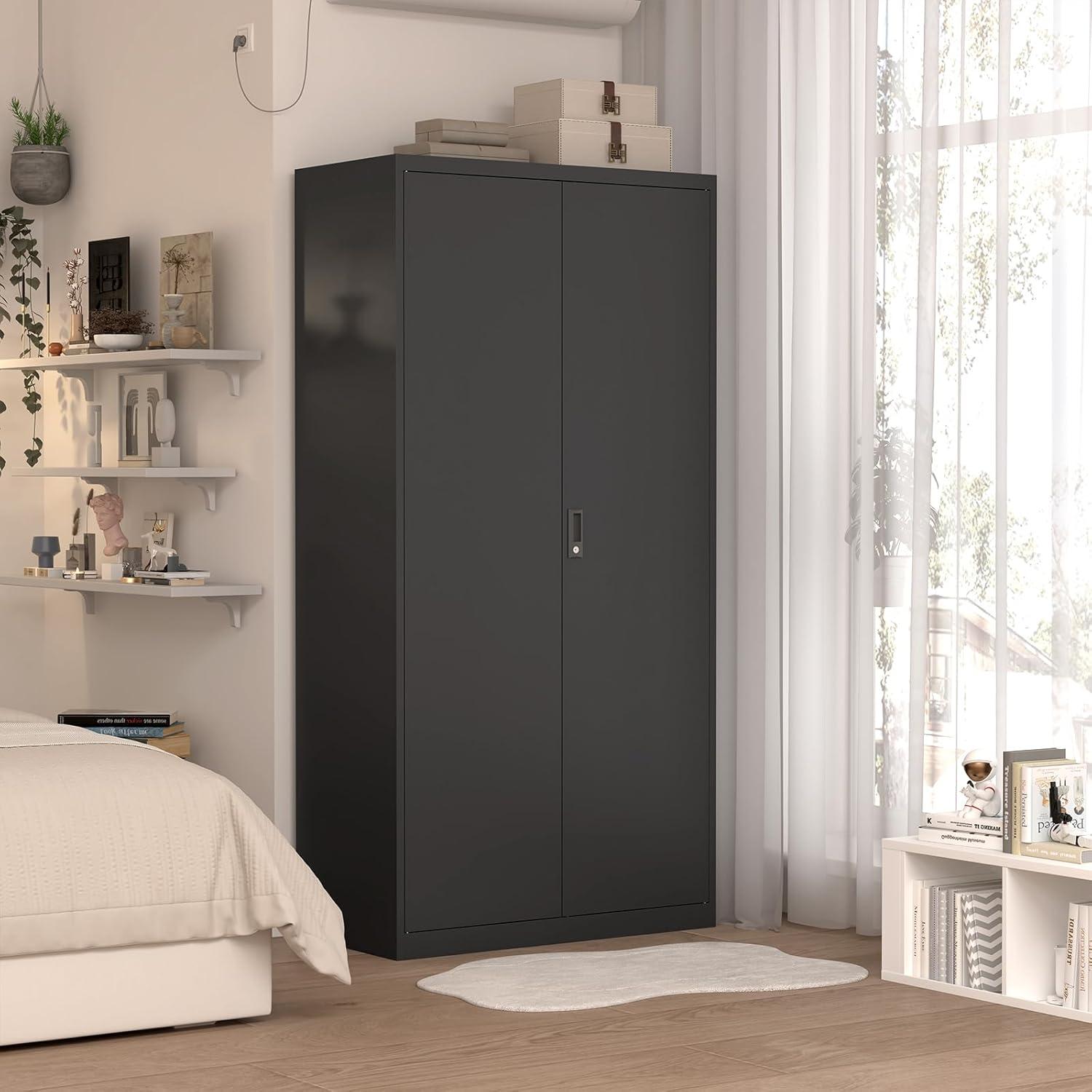
The cabinet reads as a vertical, utilitarian presence wherever it stands.From a bedside vantage it rises above low-profile furniture and creates a tall, flat surface parallel to the headboard; against a desk it registers as a side-storage column that continues the workspace upward. The doors sit flush when closed, so the piece often reads more like a simple block of storage than a decorative object — details such as the matte finish and straight edges become the defining visual notes rather than ornamentation.In everyday use the surface catches the eye first, while the interior only reveals itself when the doors swing open.
Practical interactions shape how it behaves in room layouts. Next to a bed the door swing can cross a narrow nightstand or fall into a walking path, and accessing items near the top tends to require a small reach or brief step up. Positioned beside a desk, lower door panels may meet the desk edge as they open, changing how much of the interior is immediately reachable from a seated position. The cabinet’s steadiness is apparent during routine movement — brushing past or shifting a pillow rarely makes it feel unsteady — and the locking mechanism and magnetic closure register as discreet functional elements rather than focal points.
| Beside Bed | Beside Desk | |
|---|---|---|
| Visual presence | Tall, block-like; continues vertical line of room | Acts as a vertical extension of the workspace |
| door interaction | Swing can intersect nightstand or walking space | Lower panels may meet desk surface when opened |
| Access patterns | Top shelves less immediately reachable without shifting posture | Seated access favors lower compartments; upper reach requires standing |
View full specifications and available color options on Amazon
What the steel panels, lockable doors, and powder coat finish tell you about its construction
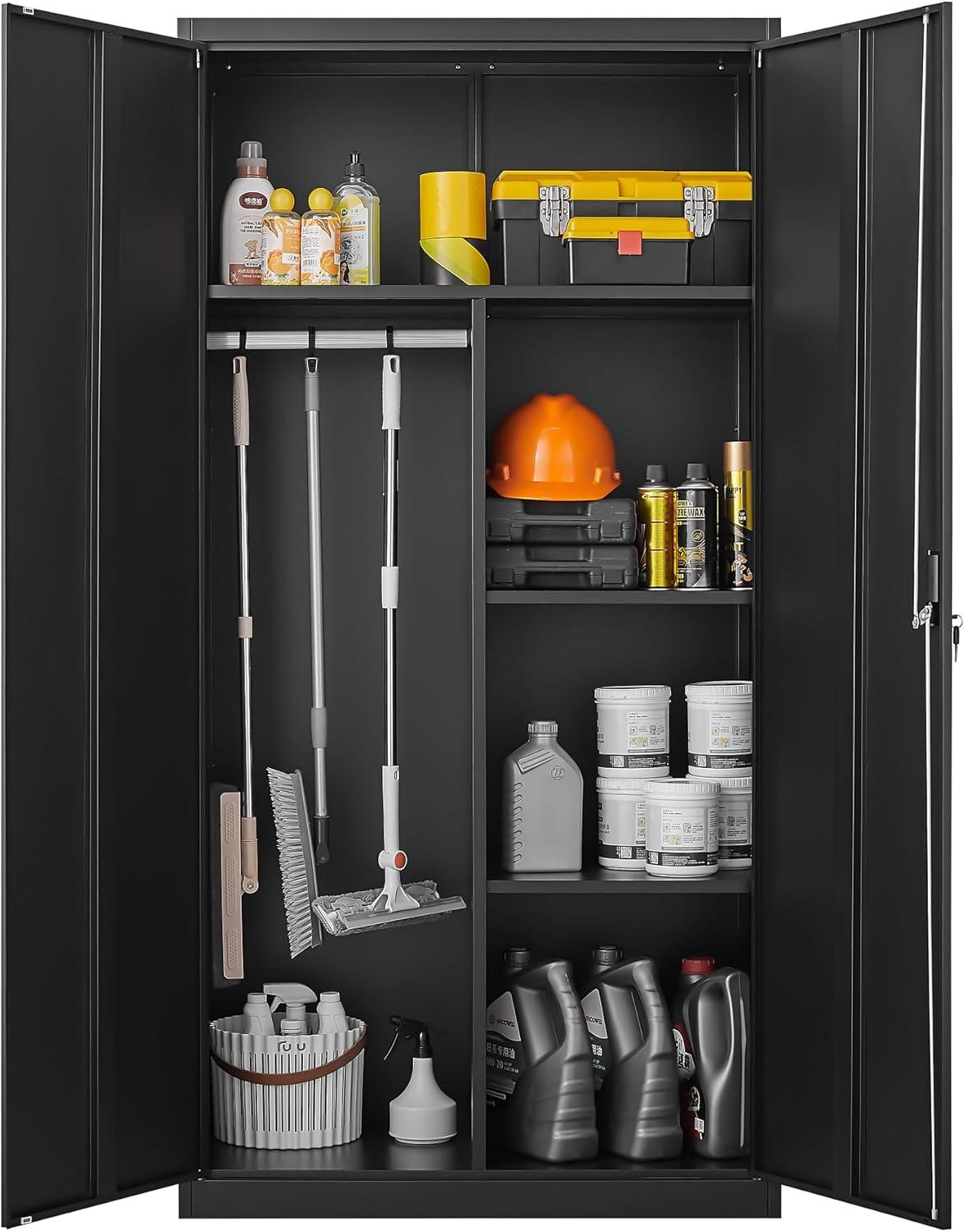
When you run a hand along the panels the first thing that registers is a cool, steady surface and a faint, low-frequency thud if you rap it with your knuckles — the panels don’t give much under pressure. Inside, the edges and corners reveal how those broad sheets are married to the frame: spot welds, corner brackets and rows of bolts where shelves and rails meet the cabinet. As you tighten a bolt or swivel a hinge during assembly, the construction feels utilitarian rather than delicate; small gaps at panel joins close up as the frame settles, and the doors track with only a little lateral play when nudged.
The lockable doors speak to a slightly different set of choices. The lock pocket sits in a reinforced zone, so turning the key produces a mechanical, immediate catch instead of a soft resistance. You can feel that reinforcement if you press on the door near the lock — the surrounding metal is backed and folded to accept the latch. Over days of use the keyed mechanism tends to develop a predictable rhythm: a firm turn, a subtle click and then the slight tension of a secured door.
The powder coat finish changes how you interact with the cabinet surface. It has a faint texture under your fingertips and a matte-to-semi-gloss look that masks fingerprints and light smudges; a swift swipe with a damp cloth typically restores the surface without streaking. At edges and high-contact spots — hinge joints, door perimeter, and where shelves meet the side panels — the coating can thin or scuff with repeated handling, making the underlying metal just a little more visible over time.Those gradual, localized changes are the sort you notice in everyday use rather than immediately out of the box.
| Feature | What you observe about construction |
|---|---|
| Steel panels | Rigid feel, minimal flex, visible welds/brackets at joins |
| Lockable doors | Reinforced lock area, mechanical catch, little lateral door play |
| Powder coat finish | Textured surface that hides marks; edge wear and scuffs appear with repeated contact |
What you can fit inside the cabinet from hanging coats to folded linens
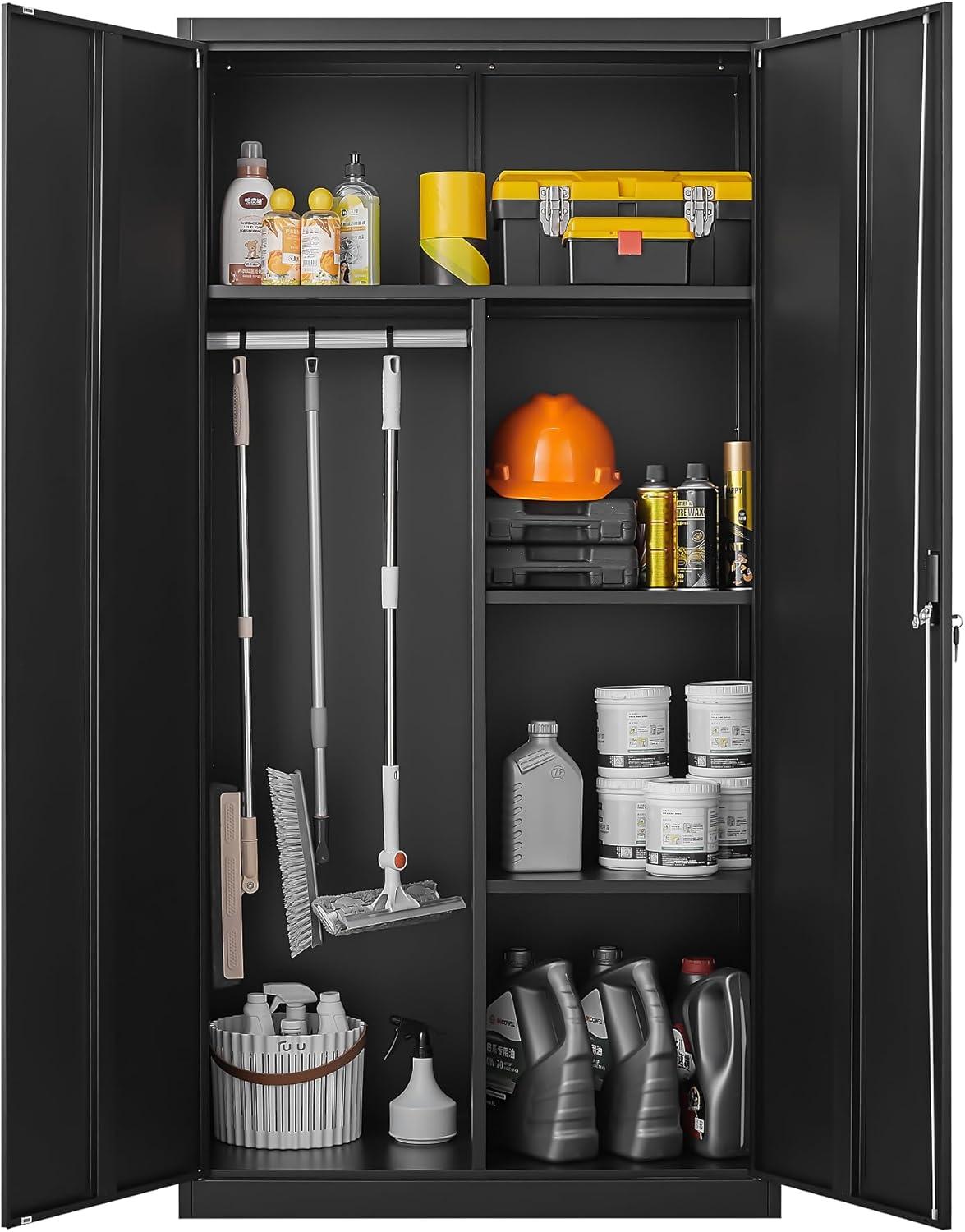
Open the doors and the first impression is vertical space put to work. When you slide shirts, blouses, or light jackets onto the rod they hang without bunching, and you’ll find yourself easing sleeves into place or nudging hangers to make room — small, habitual adjustments that keep garments visible. Heavier winter coats sit deeper in the cabinet and tend to push other items forward; long dresses or full-length coats will drape toward the lower zone and may require a quick tuck at the hem when you reach for something below.
The adjustable shelves take the rest of the load. Towels and sheets stack into neat piles that you instinctively smooth as you layer them,while folded sweaters and jeans form compact blocks that can be shifted sideways to squeeze in another item. Bins and small baskets live well on the shelves, corraling scarves, belts, or undergarments so they don’t tumble when you open the doors. On the floor of the cabinet there’s room for a laundry basket, a pair or two of shoes, or a storage box; heavier or bulkier bedding tends to sit low, where you’ll find yourself rearranging once or twice to balance the weight.
| Zone | Common contents (typical observed loads) |
|---|---|
| Hanging rod | 4–8 shirts or blouses, 2–4 jackets, or a couple of long dresses (items often shifted to prevent overlap) |
| Upper shelves | 2–4 folded bath towels per shelf, stacks of T‑shirts, small bins with accessories |
| Lower shelves / floor | Bulky blankets, a laundry hamper or a few shoe boxes; heavier linens tend to settle here |
How the doors, lock mechanism, hanging rod, and adjustable shelves operate during everyday handling
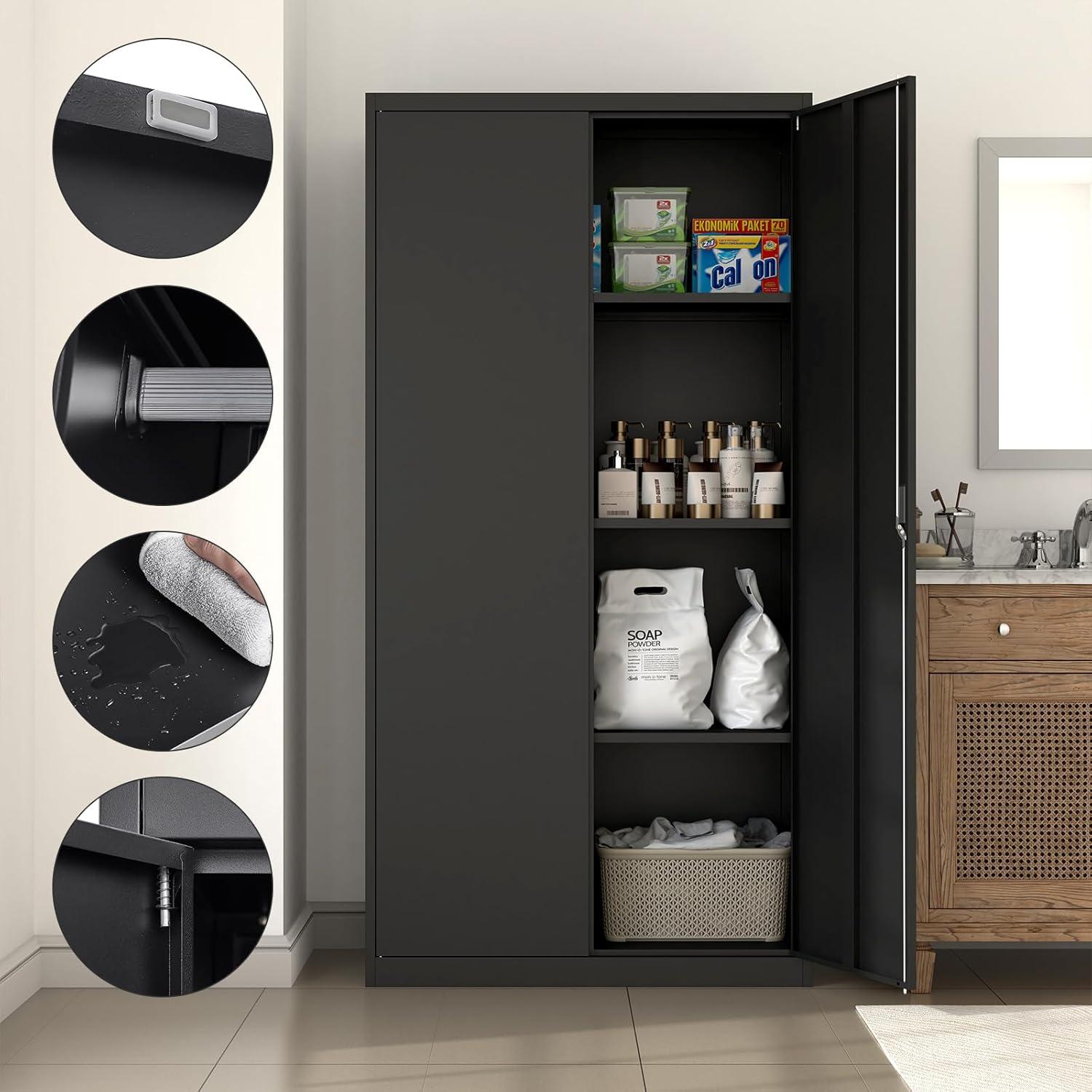
When you swing the doors open, they move with a steady, slightly weighted feel rather than a lose flap. A gentle push is usually enough to overcome the initial resistance; toward the end of the motion you’ll notice a soft magnetic pull as the edges meet when closing. Turning the key produces a definite tactile click and a short, smooth rotation; the lock feels compact in your hand and the mechanism latches without needing a heavy shove. If you close the doors without turning the key, the magnet holds them shut but the lock remains disengaged until you turn it.
The hanging rod behaves like a conventional closet bar while you work with clothes: hangers glide along it easily and you’ll tend to slide items into place with one hand while holding the door open with the other. Under a full load the rod can show a bit of downward give, so when you reach in to move several garments at once you may feel the bar flex slightly. Loading and removing longer items is best done with a steady hand as the doors frame the opening and sometimes you find yourself nudging fabric aside as you pull garments free.
Adjusting the shelves is a hands-on process: you lift each shelf slightly, disengage it from its pegs or slots, and reposition it into a new row of holes or rails. There’s usually an audible click or metallic clunk as the shelf seats into place, and once settled the shelf feels firm under casual handling. If a shelf isn’t fully seated it will rock when you press on it, so you’ll notice that small, telltale shimmy and naturally press down until it locks in. Over time you may develop the habit of checking each shelf with a quick nudge after rearranging.
| Action | What you feel or hear | Typical motion |
|---|---|---|
| Opening/closing doors | Steady weight, soft magnetic pull at the end | One-handed push or two-handed steady swing |
| Locking/unlocking | Definite click, short smooth turn of the key | Insert key, rotate until it stops |
| Using the hanging rod | Hangers glide; slight bar flex under heavy load | Slide hangers along; steady hand for bulkier items |
| Repositioning shelves | Metallic click when seated; possible rocking if not fully engaged | Lift, move to new slots, press down until it locks |
Observing suitability, expectations versus reality, and practical limitations you encounter
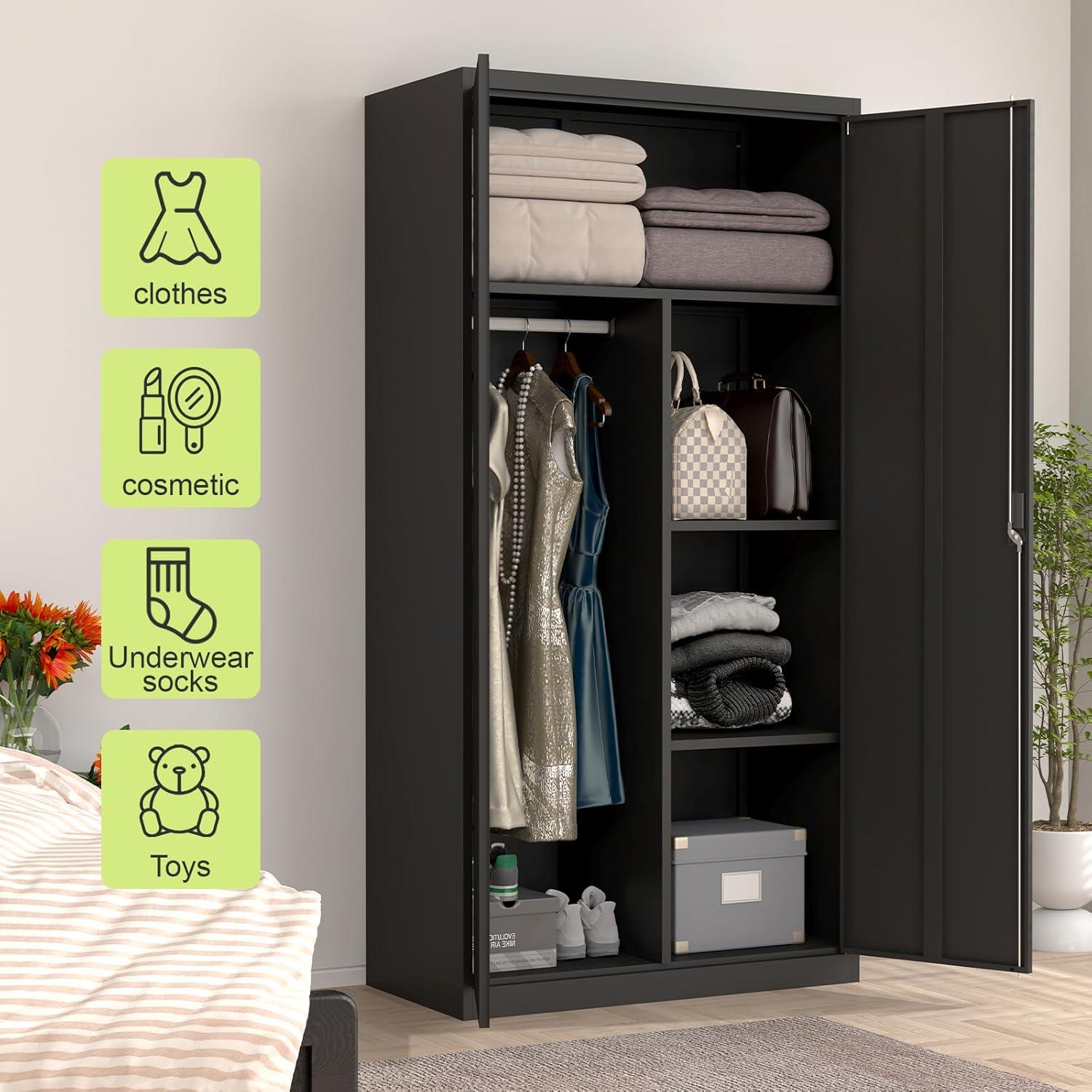
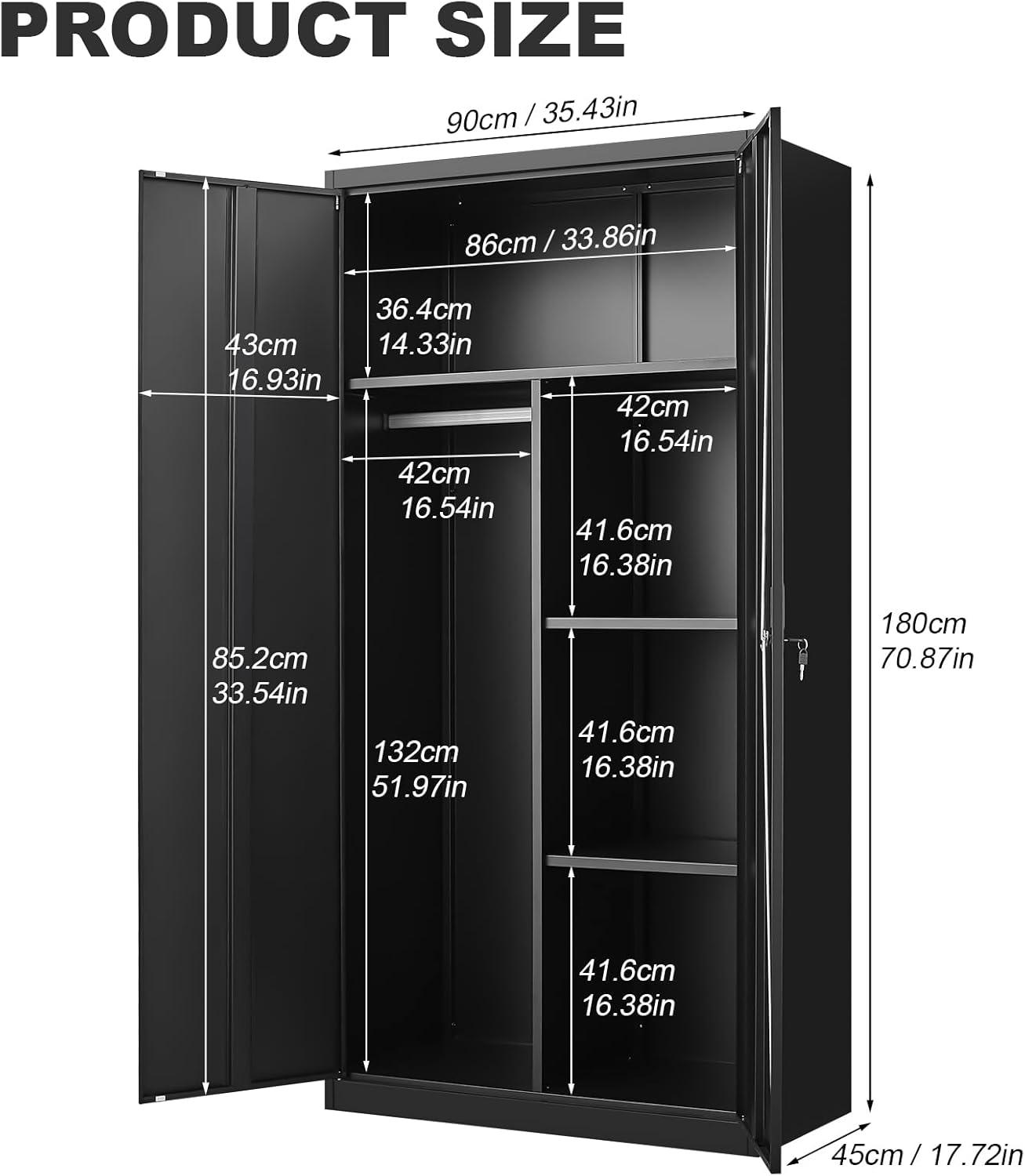
In everyday use, the cabinet presents as a utilitarian closet substitute that mostly performs as anticipated, though some small disparities between expectation and reality become apparent. When hung clothing is moved or brushed past, the rod can show slight flexing and garments tend to sit closer together than one might initially picture, so items with bulkier shoulders settle into a denser arrangement. Shelves that are advertised as adjustable do reposition reliably, but changing their layout typically calls for clearing the contents and lifting the shelf to the new slot; the peg spacing also means adjustments happen in noticeable jumps rather than micro-increments.The doors shut with a magnetic pull that feels smooth in most instances, though a fully loaded interior can press the frame just enough to require a firmer nudge to align the magnets perfectly. Keys turn cleanly but the lock mechanism can need a moment to engage if the doors are not precisely seated.
Practical limitations that show up during regular use tend to be matters of fit and handling rather than catastrophic failures. The relatively shallow interior depth reduces the usable profile for bulky items,so large tote bags or thick winter coats may protrude slightly or need to be shifted to lie flatter. Heavier stacks placed toward the middle of long shelves produce a subtle bow over time, so heavier bins are frequently enough moved nearer to shelf supports; that behavior is more noticeable after the unit has been in use for a few weeks. The anti-tip attachment settles into place once installed, though leveling on less even floors requires intermittent readjustment. Small habits emerge when interacting with the cabinet — smoothing hems when retrieving folded stacks, nudging hangers to clear the door, or checking the lock alignment before walking away — that reveal the everyday trade-offs between compact design and maximum capacity.
| Feature | Expectation | Observed |
|---|---|---|
| Hanging capacity | Closet-like spacing for garments | Tighter grouping; rod shows slight flex with heavier loads |
| Adjustable shelves | Quick reconfiguration at any height | Reliable repositioning,but requires emptying and has fixed increments |
| Door and lock operation | Smooth magnetic closure and immediate locking | Generally smooth; full loads can need extra nudge to align and engage lock |
| Interior depth | Accommodates bulky items comfortably | Shallower feel; bulkier items may need repositioning or lie slightly proud |
View full specifications and available options on Amazon
What assembly, placement, and routine upkeep look like in your home
Assembly tends to begin with a spread of panels and hardware across the floor, and many households report the process feeling methodical rather than quick. In typical homes the bulk of the time is spent aligning the side panels, attaching the back and base, and then getting the doors to hang evenly; this sequence often takes somewhere around an hour, sometimes longer when working alone. Assembly steps that involve standing the cabinet upright or lining up the doors are the moments when an extra pair of hands is helpful,and users commonly leave fasteners finger‑tight until everything is in place so hinge adjustments are easier.
Placement usually comes after the cabinet is mostly assembled.Observations show it is indeed most frequently enough positioned against a wall with a little clearance in front for the doors to open fully; in narrower hallways or between furniture a small shift can make the difference between a smooth swing and a scrape. Once positioned, the cabinet rarely gets moved frequently — households tend to treat it as semi-permanent furniture and adjust shelving and contents around that fixed spot rather than relocating the unit.
| Task | Typical time | Observed notes |
|---|---|---|
| Initial assembly | ~45–90 minutes | Panels laid out first; door alignment takes up extra time |
| Shelf adjustments | 5–15 minutes | Brackets reposition quickly once items are removed |
| Anchoring/anti‑tip | 10–20 minutes | Frequently enough done after the cabinet is filled and final placement decided |
| Routine cleaning | Minutes per session | Wiping surfaces and wiping door edges; frequency varies by room |
Routine upkeep in everyday use is low‑effort in most homes. Surfaces are typically wiped with a damp cloth every few weeks or more often in humid or laundry areas, and magnetic closures and door edges are noticed to collect dust or lint over time. The lock mechanism and keys are something households pay attention to after the first few uses — some report a slight stiffness initially that eases with normal use — and keys are commonly kept on a ring to avoid misplacement. As the cabinet is usually left in place, scuffs around the base are an occasional, situational detail that people tend to address with a felt pad or by repositioning slightly when the floor is cleaned.
View full specifications and options
A Note on Everyday Presence
Living alongside the “71” Metal armoire Wardrobe with Lockable Doors, you notice how it eases into the corner and, over time, becomes a quietly dependable neighbor in the room. In daily routines it takes on the practical work of holding things you reach for, its doors and shelves finding a familiar rhythm as the rest of the room moves around it. The steel surface picks up small scuffs and softens in the way it reflects light, and those marks begin to read like shorthand for ordinary use rather than anything dramatic. Without fanfare it stays.
As an Amazon Associate I earn from qualifying purchases.