Furologee Clothes Racks — your compact rolling wardrobe
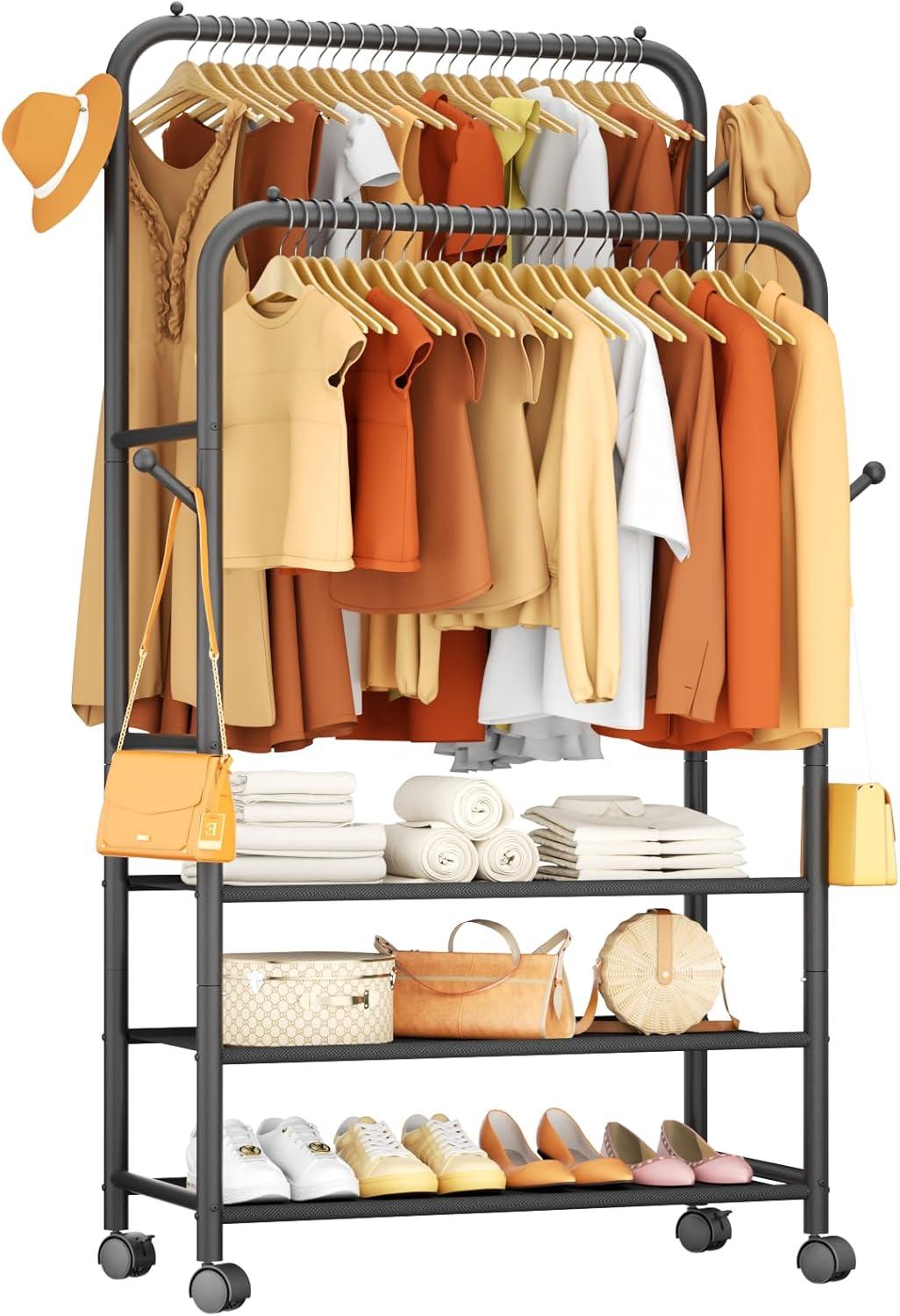
Morning light slips across the thin metal tubes and the rack casts a neat shadow on your floor. It reads taller then a chair and narrower than a wardrobe; the powder-coated bars feel cool and hollow under your palm, while the casters make a soft chatter when you nudge it. Three fabric shelves beneath the twin rods add a softer texture, and little hooks and side rails gather scarves and bags almost casually. This is the furologee Clothes Racks rolling garment rack — in the room it looks purposefully utilitarian, its visual weight and mobility shaping the space without shouting for attention.
A quick look at the Furologee rolling garment rack and how it fits into your room
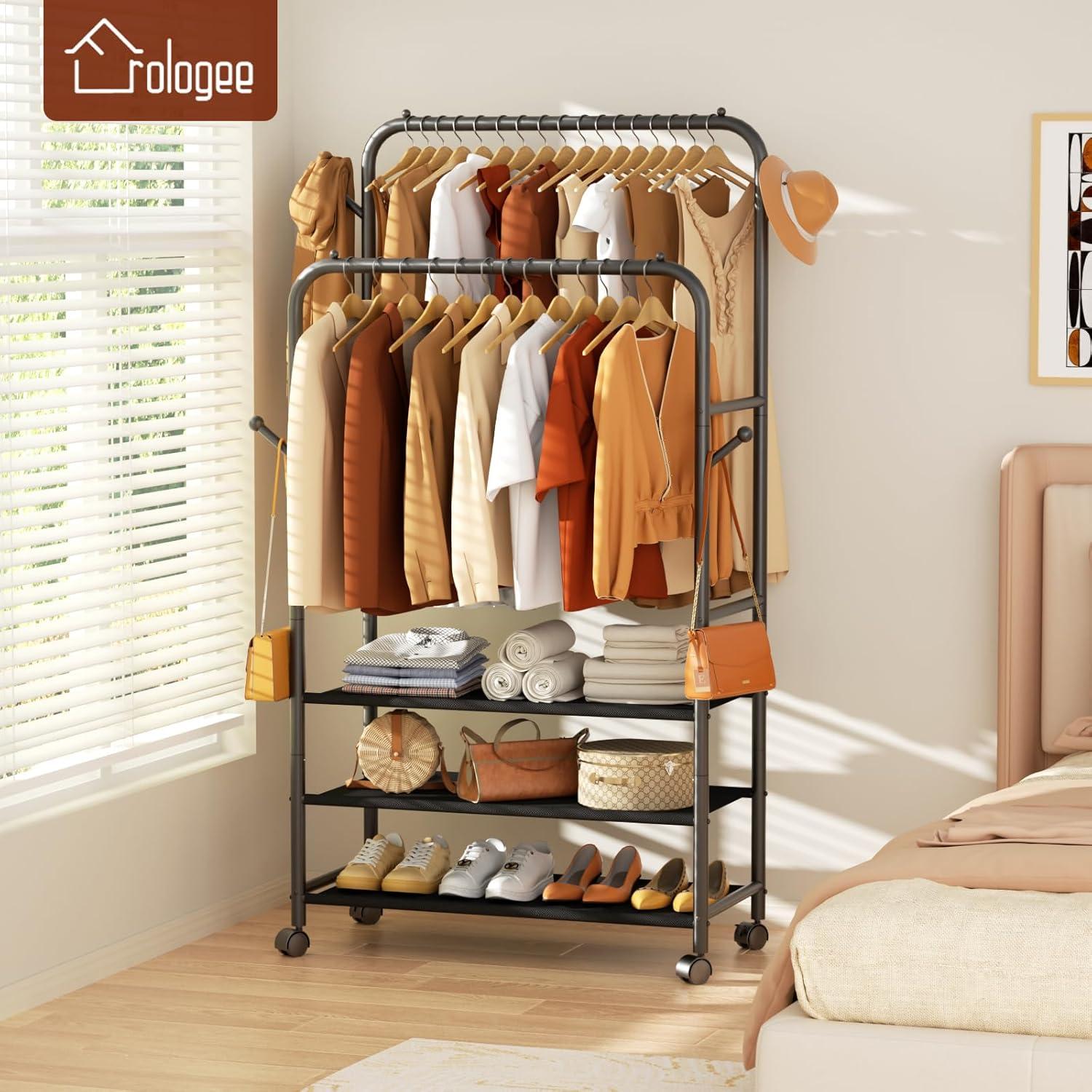
When you bring the rack into a room it reads as a compact, vertical piece of furniture more than a bulky storage unit. Parked against a wall or slipped into a narrow gap between bed and dresser, it leaves floor space largely free while giving a visible band of hanging garments at eye level. As you hang shirts and jackets, the two-tier layout presents itself as layers — items on the upper rod sit at shoulder height, those on the lower rod form a second band closer too the shoes and bins below. Moving the rack a few feet often prompts the small, habitual gestures people make around furniture: you steady a sleeve, nudge a hanger into line, or smooth a draped shirt after rolling it across the room; the wheels mean those adjustments are more about fine-tuning placement than lifting the whole unit.
Reports and common-use observations note a few consistent behaviors in real rooms. On softer surfaces the unit tends to feel steadier once clothes add weight; on smooth floors the casters make it easy to reposition but can also allow slight drift unless the locks are engaged. In tighter corners the density of hangers can make the middle of the rack look compressed, so garments sit closer together than they do on a built-in closet rod. the rack often functions as a semi-permanent, mobile wardrobe — it occupies vertical space and becomes part of everyday movement patterns rather than a decorative focal point.
| Placement | Typical behavior observed |
|---|---|
| Carpet or rug | Tends to sit more steadily; rolling requires a firmer push |
| Hardwood or tile | Rolls easily; wheels may need locking to prevent drift |
| Narrow gaps / between furniture | Fits into tight spaces but hangers can appear crowded |
View full specifications and available sizes and colors
How it sits in a bedroom or laundry corner the lines and placement you’ll notice
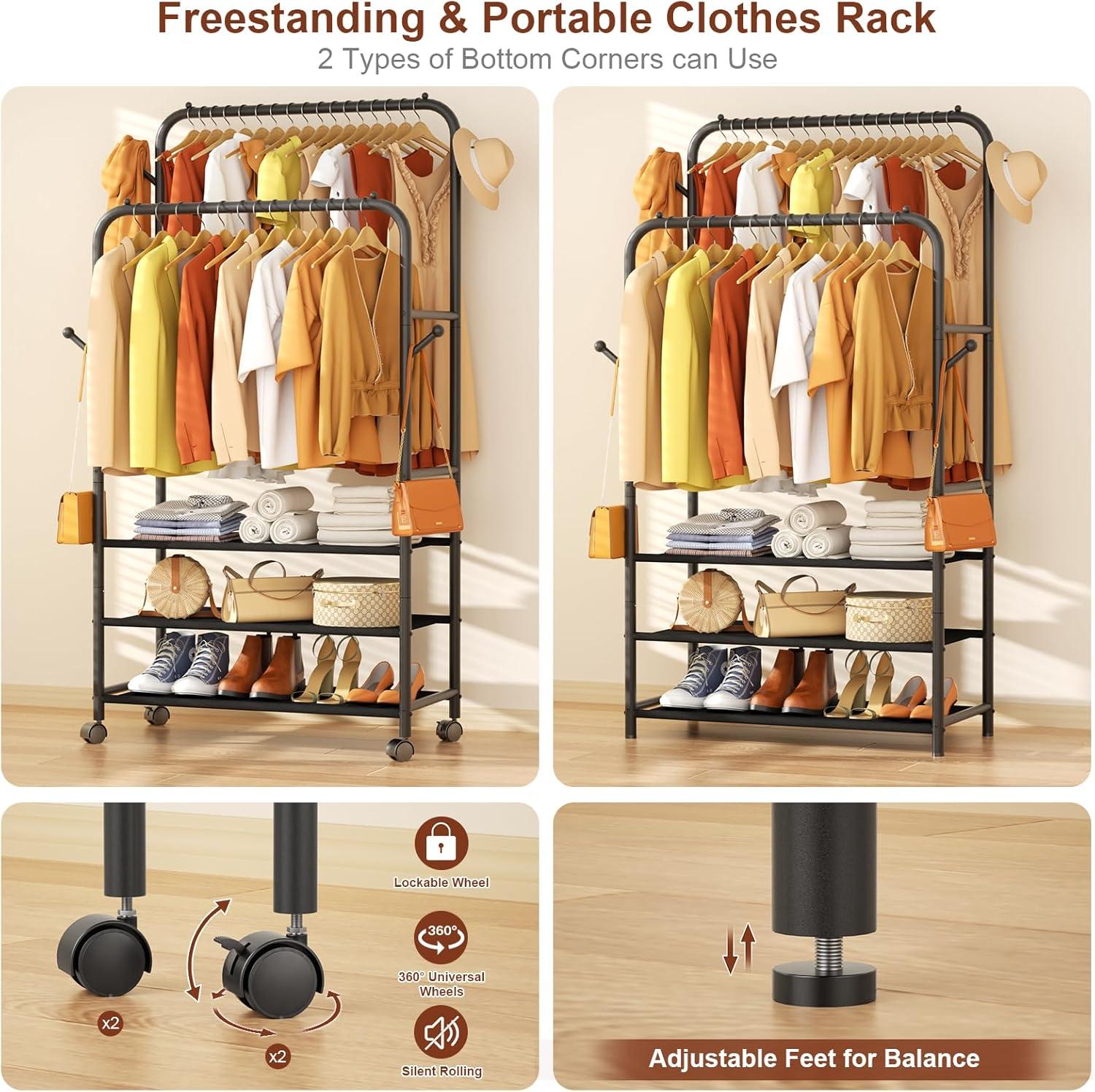
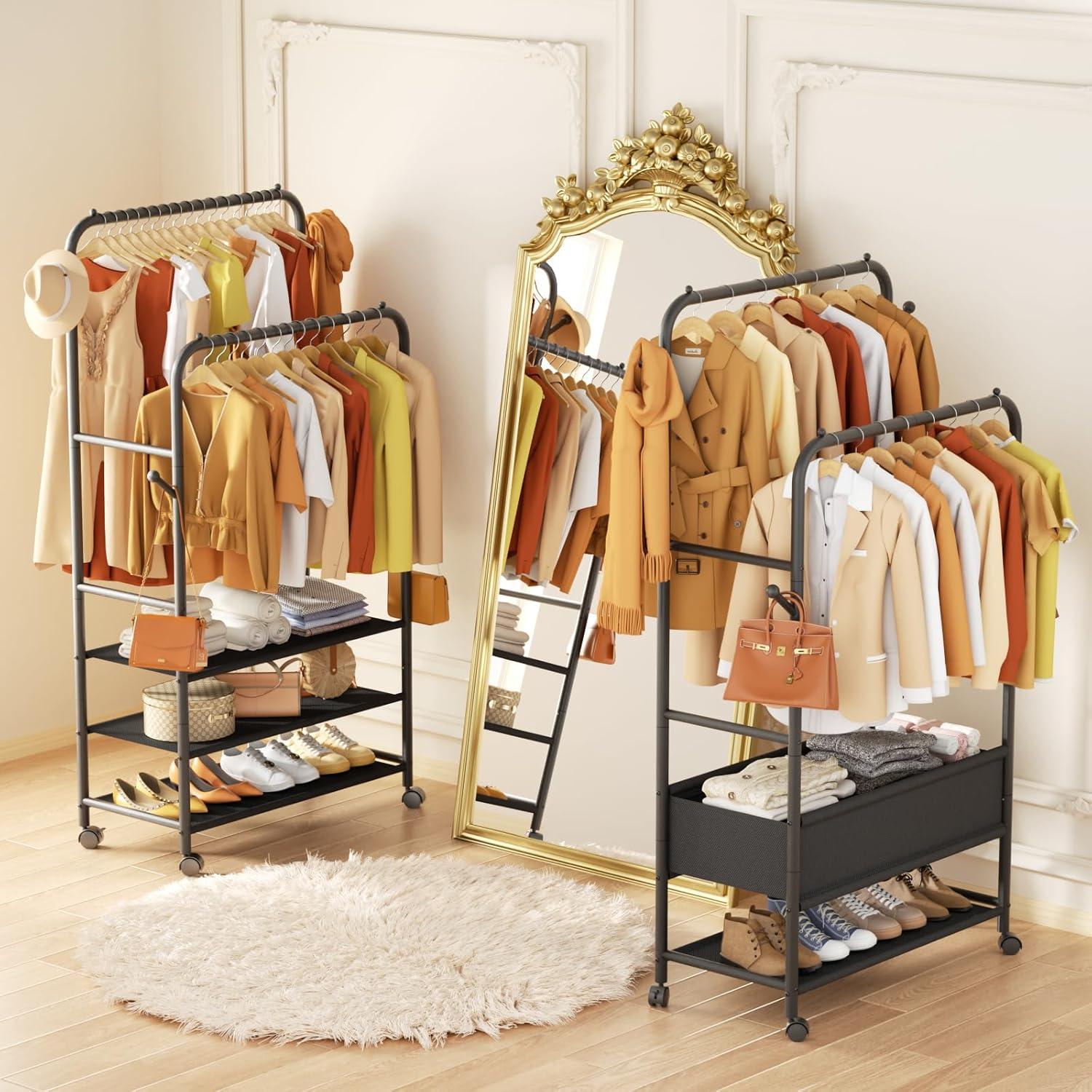
When you tuck the rack into a bedroom or laundry corner it reads more like a vertical gesture than a bulky piece of furniture. From the doorway you’ll notice the twin rods forming two clear vertical lines, the lower shelves cutting a shallow horizontal plane near the floor. The frame usually sits a couple of inches off the wall to give hangers room, so there’s a thin shadowed gap where fabric falls and softens the geometry. Hooks and side rods interrupt that vertical rhythm, creating small asymmetries depending on how you’ve arranged bags or scarves.
Up close, the placement becomes a series of small adjustments: you smooth a sleeve that’s caught on the edge, nudge the base so the wheels sit square, or angle a hanger so the line of garments reads neater from the bed. Over time you’ll see subtle shifts — the rack can settle a little forward if weight piles toward the front, and hangers sometimes tilt inward toward the corner. These are normal, everyday behaviors rather than fixed flaws; they make the rack feel like an active part of the room rather than a static object.
| Where you stand | What you tend to notice |
|---|---|
| From the doorway | Overall silhouette, how the double rods break vertical space |
| from the side or beside the bed | Gap from wall, depth of hanging clothes, slight lean or tilt of hangers |
| On hands-and-knees or lower viewpoint | How the bottom shelves align with other low furniture and floor coverings |
The metal frame, rods and wheels up close what the finish and fittings reveal to you
When you get close, the metal shows itself more as a working surface than a decorative one. The coating has a muted sheen and a faint texture that catches light where you run a fingertip along a tube; up close you can see the spray pattern at welded joints and the tiny ridges where the powder coat pools. During use, you’ll find fingerprints and the occasional scuff stand out more than you first expect, and the edges around connection points collect dust or lint if you don’t nudge them away when you’re reaching for a hanger.
The hanging rods reveal their purpose in small details. Each rod ends with a raised bead that interrupts a hanger sliding off, and when you load garments you can feel hangers settle against those beads; heavier items make the rods creak subtly at the connection points. The places where vertical posts meet crossbars are fastened with visible bolts and plastic collars — you’ll sometimes find yourself turning a screw or smoothing a collar as you shift weight around. Side hooks and the shelf brackets sit flush untill you add items,then their tiny catches and clips become easier to spot and,occasionally,realign.
The wheels look compact until you move the rack. On hardwood they roll with a quick, low rumble; on carpet they take a little more effort and the casters tend to skip or stick for a moment if the load is uneven. Two of the four casters have locking tabs you can click into place; the locks make a definite click and hold the frame still in most cases, while the adjustable plastic feet give you another point of contact when the floor isn’t level. As you shift the rack about, the way the fittings wear in is visible: small rubbed patches at stress points, a hairline of movement at some joints, and the occasional squeak where metal meets plastic.
| Component | What you’ll notice up close |
|---|---|
| Finish | Matte/powdered surface with subtle texture; weld marks and minor scuffs visible over time |
| Rods | Raised anti-slip beads at ends; bolt-and-collar joins; slight give where pieces meet |
| Fittings | Bolts, plastic collars, shelf clips and side hooks that sit flush when unloaded |
| Wheels | Four casters (two with locks); roll differently on hard floors vs carpet; locks click into place |
| Adjustable feet | Threaded plastic pads that raise or steady the rack on uneven surfaces |
Measurements and capacity how your coats shirts and linens arrange across the double rods
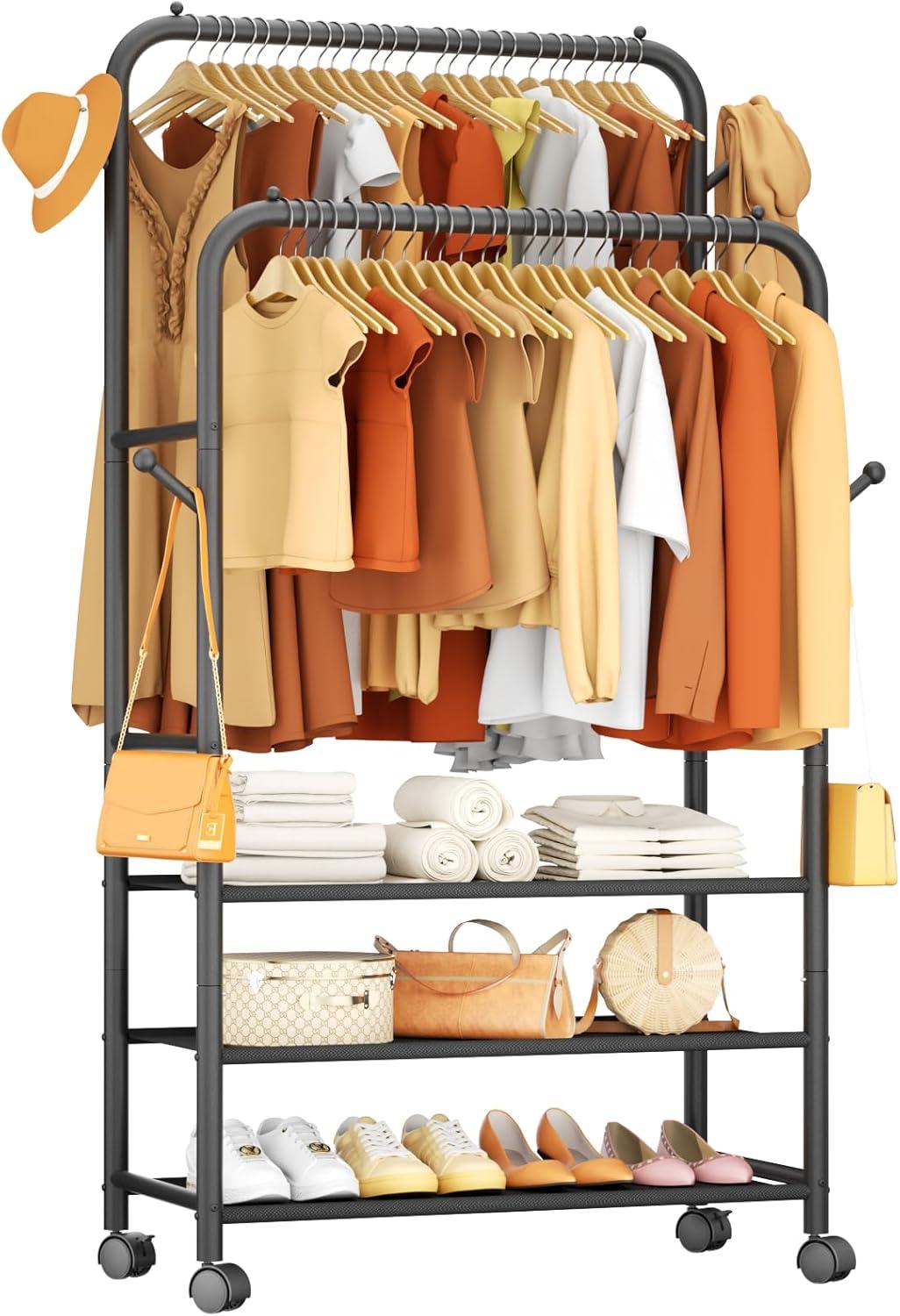
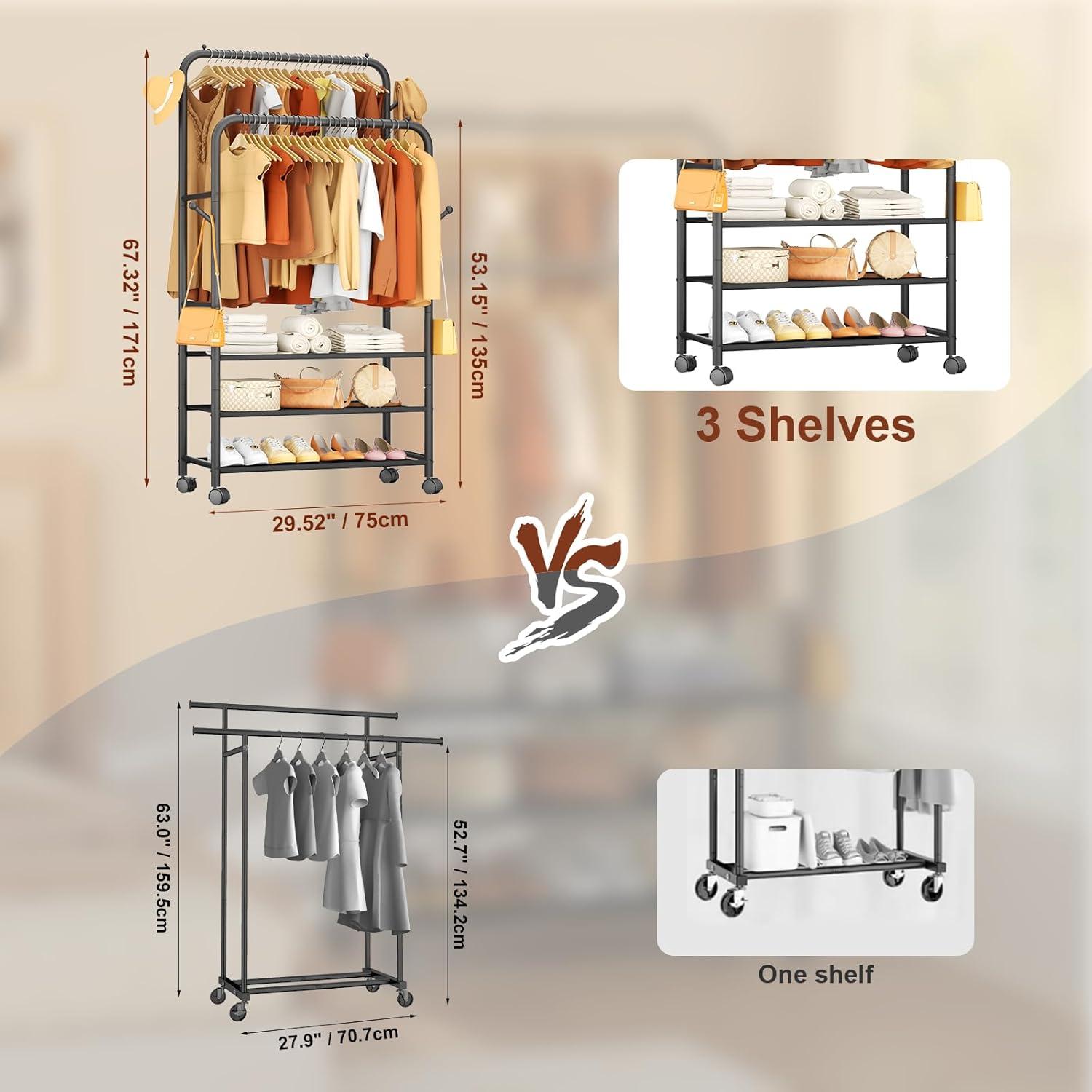
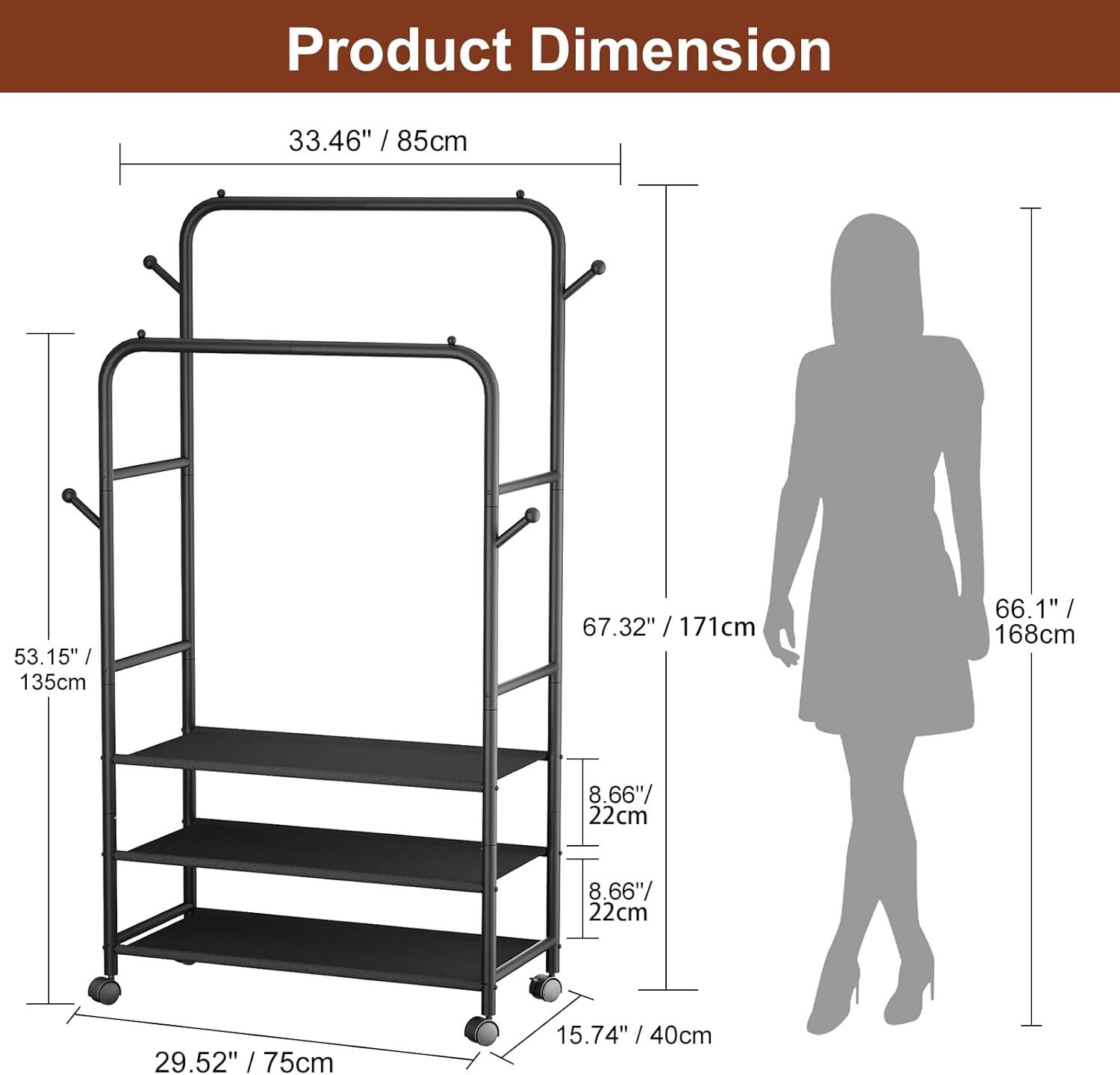
You’ll notice the two horizontal bars create distinct zones: the higher bar leaves room for long coats and dresses to hang without brushing the floor, while the lower bar catches shirts, shorter jackets, or items you rotate in and out more often. When you distribute pieces between them, heavier outerwear naturally takes up more linear space and can lean slightly, making adjacent hangers sit closer than they do with lighter shirts. Linens—towels or folded sheets draped over a hanger—lay flat across a short span but stack up quickly, so a few bulky towels can claim as much room as several shirts.
in regular use the rack’s capacity depends less on a stated number and more on how tightly you hang things and how bulky they are. The table below reflects common, observed arrangements and the rough counts you might expect when hangers are placed in ordinary sequence:
| Typical scenario | Upper rod (approx.) | Lower rod (approx.) |
|---|---|---|
| Light shirts/blouses | 15–25 pieces | 15–25 pieces |
| Mixed coats and jackets | 8–12 bulky items | 10–18 shirts or kids’ jackets |
| Linens/towels folded over hangers | 6–10 large towels | 8–12 smaller towels or sheets |
When both rods are filled in typical household patterns, hangers tend to press together and sleeves or hems touch; lightweight fabrics may cling or slide slightly. Over time and with movement—the rack being nudged or wheels rolling—garments can shift, so the visible spacing will change through everyday use rather than staying perfectly even.
Daily handling from assembly to wheeling it around your home
When you first unbox and put the pieces together, you’ll likely end up sitting on the floor with the packet of numbered screws and the instruction sheet. The parts come labeled, which makes the sequence feel straightforward; the little adhesive stickers that help you match pieces can be annoyingly persistent when you try to peel them off. As you tighten bolts and slide rods into place, the frame feels light under your hands and it’s common to re-check a connection after the first load of clothes — you’ll find yourself reaching for the screwdriver again when hangers start to shift. A few extra small pieces in the bag usually remain, and you may unconsciously smooth fabric or adjust hangers as you test balance during assembly.
Once it’s built, handling the rack becomes a matter of small, habitual moves. You’ll frequently enough steady it with one hand while you redirect hangers with the other; when it’s empty it can sway a bit as you push, but a typical load tends to settle the frame and change how it rolls. Two of the casters lock with a foot, and using those locks while you load or pause is a common pattern. The adjustable feet on the non-wheeled corners are handy to tweak if the floor near a washer or entryway is uneven — you’ll notice the difference between a rack that sits flat and one that tilts toward the doorframe. Moving it through a narrow hallway or around furniture usually requires angling the top rods slightly; about half the time you’ll lift briefly over a threshold rather than expect the wheels to take it smoothly.
| Surface | How it tends to roll |
|---|---|
| Hard wood / tile | Glides easily; minimal effort needed to steer |
| Low‑pile carpet | Rolls with gentle resistance; you may nudge to start motion |
| High‑pile rug / threshold | Can stall or require a short lift to get over bumps |
In everyday use you’ll develop small rituals: locking two wheels before arranging clothes, angling hangers to avoid crowding, and running a finger along the shelves to check that items haven’t drifted when you wheel it from room to room. The casters occasionally pick up lint or feel slightly gritty after moving across rugs, so you might pause to flick away debris. None of these moments are dramatic; they’re the quiet adjustments that crop up as you move the unit through laundry cycles,closet swaps,or quick cleanups around the house.
How the rack measures up to your expectations and the practical limits you may encounter
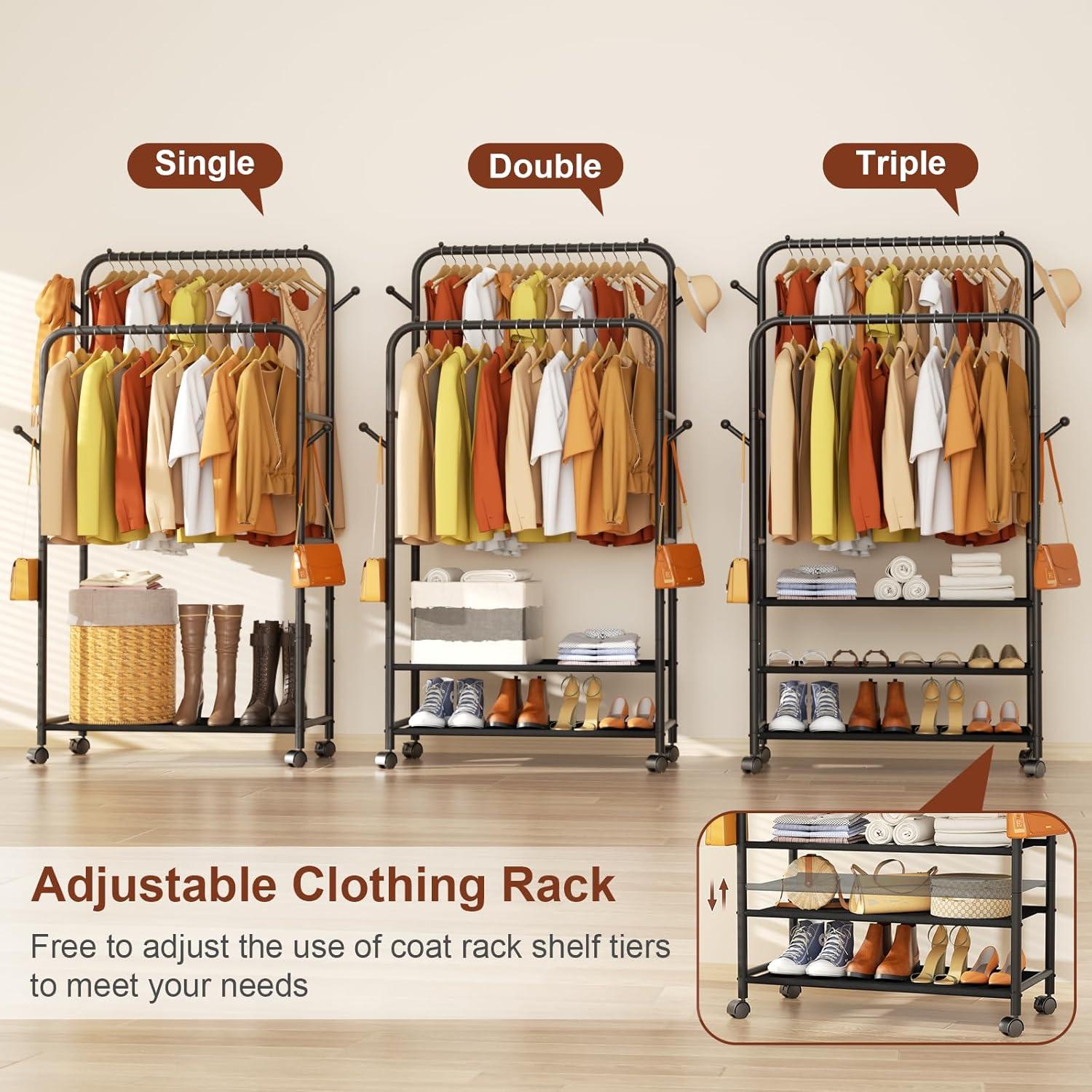
Measured against common expectations, the rack often delivers on obvious promises such as quick assembly and a noticeable increase in hanging and shelf space, but everyday use exposes a few practical limits. During setup, numbered parts and clear instructions usually speed the task; peeling the assembly stickers can take longer than expected. Once in place, the double-rod layout and three shelves make more items visible and reachable, though hangers frequently end up very close together so garments sit pressed against one another rather than neatly spaced.
Mobility and stability present a mixed picture in normal use. The casters typically allow the unit to roll across both hard floors and low-pile carpet, and the two locking wheels or adjustable feet help keep it in place, but pushing the rack while loaded can make it sway or shift if weight is unevenly distributed. the frame tends to feel lightweight when empty and steadier as clothes are added; conversely,heavy items clustered toward the front or on one side can change how the unit balances and how confidently it moves. Small features observed in daily use — the anti-slip beads on the rods and the side hooks — perform as intended, though anything that juts out from the sides contributes to an altered center of gravity.
| Expectation | Typical Real‑World Behavior |
|---|---|
| Easy assembly | Parts align and labeled pieces speed assembly; stickers may be stubborn to remove |
| More hanging space | Holds many garments, but hangers sit tightly together and can compress clothing |
| Mobility and stability | Rolls on most floors and locks in place, yet can sway or tip if loads are uneven or the rack is pushed while full |
Observed patterns tend to reflect typical household use rather than extreme conditions; in most cases the rack performs as expected, while occasional wobble or crowding becomes apparent during daily handling or when rearranging many items at once.
View full specifications and available size and color options on the product page
What you find in the box and the visible steps as you unpack
You’ll first notice the instruction sheet sitting on top when you open the corrugated box, with a plastic-wrapped bundle of long metal tubes beneath it. The tubes are grouped by length and often carry small numbered stickers; some pieces have thin protective film that peels away with a bit of fingernail tugging. Folded shelves or fabric-lined trays lie flat near one end, and smaller items — wheels, hooks, and a few end caps — are tucked in clear plastic bags that rattle when you lift them. The overall impression is a compact stack of parts rather than a single large piece, so you’ll likely slide pieces out one group at a time to avoid knocking anything loose.
spread the contents on the floor and you’ll find several small hardware packs: screws, washers, and an Allen wrench in resealable bags, plus a packet with spare fasteners.The casters are separate and show their brake tabs; the hooks are clipped together on a small cardboard strip; and the adjustable feet are wrapped to protect the threads.A few of the metal parts arrive with adhesive labels that cling stubbornly to the finish,and there’s usually an extra little bag of parts labelled “extra” or “spare.” Below is a simple view of the main items as they appear while unpacked.
| Item (typical) | how it appears unpacked |
|---|---|
| Long metal rods (upper/lower) | Bundled, numbered stickers, thin protective film |
| Shelves (3 tiers) | Folded or flat, fabric/mesh wrapped, stacked |
| Wheels / casters (4) | In a small bag, show brake tabs, separate from frame |
| Hardware packs | Multiple resealable bags with screws, washers, Allen wrench |
| Hooks and side accessories | Clipped together on a card or in a tiny bag |
A Note on everyday Presence
You get used to how the Furologee Clothes Racks for Hanging Clothes, Portable Rolling garment Rack, Sturdy Metal Freestanding Cloths Racks with Wheels, Double Rods wardrobe Rack for Bedroom Laundry Living Room sits near a doorway, catching the light and the occasional loose hanger as the days go by. Over time you notice how its place changes the way the room is used — a strip of garments becomes a soft barrier, a landing spot in your daily routines, and its height and wheels shape small movements rather than loud statements. The metal takes faint marks from being lived with and the rods gather the quiet imprints of shirts and coats, so comfort shows up as habit and familiarity as the room is used. In your daily view it stays.
As an Amazon Associate I earn from qualifying purchases.