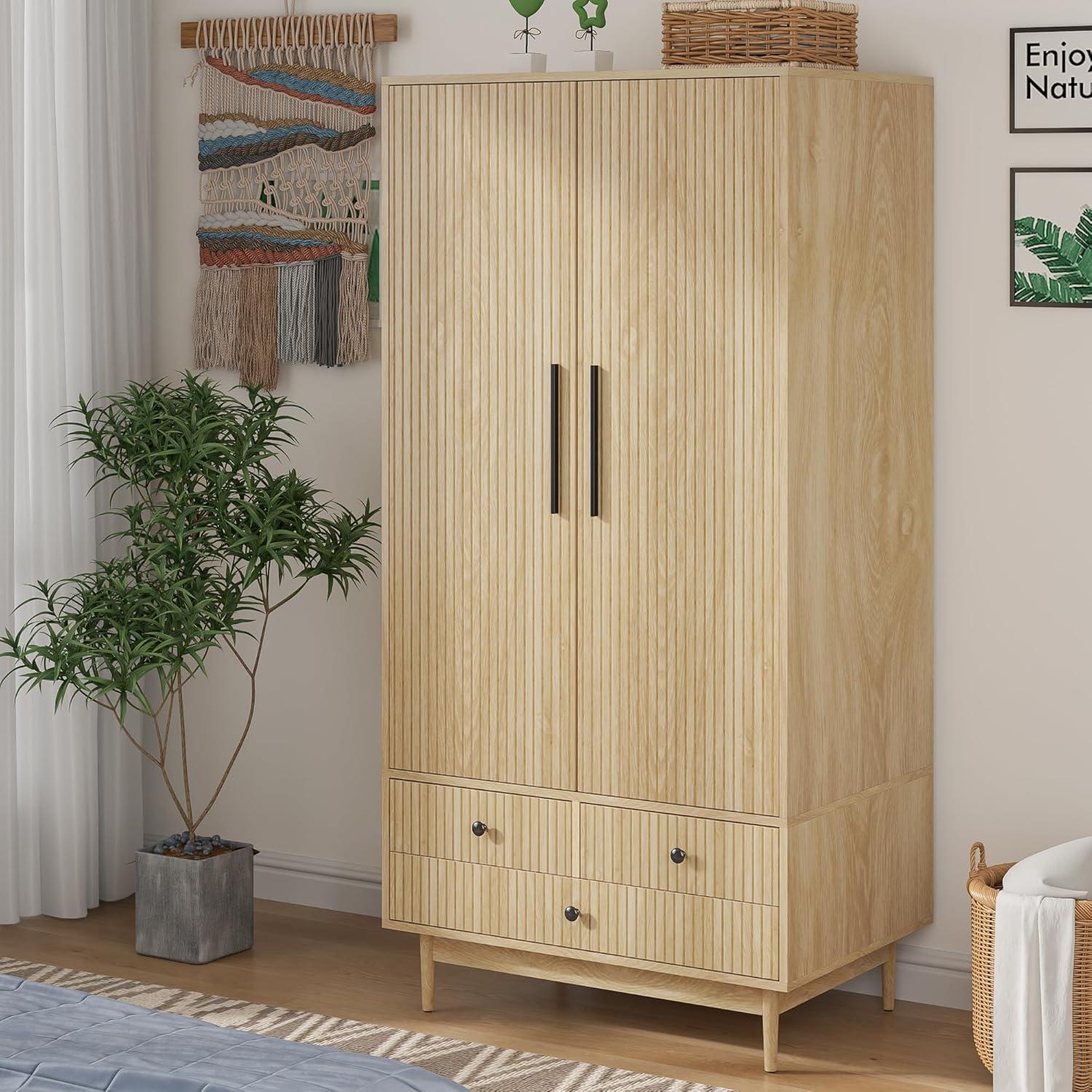
Armoire Wardrobe Closet 64.96″, fits your narrow bedroom
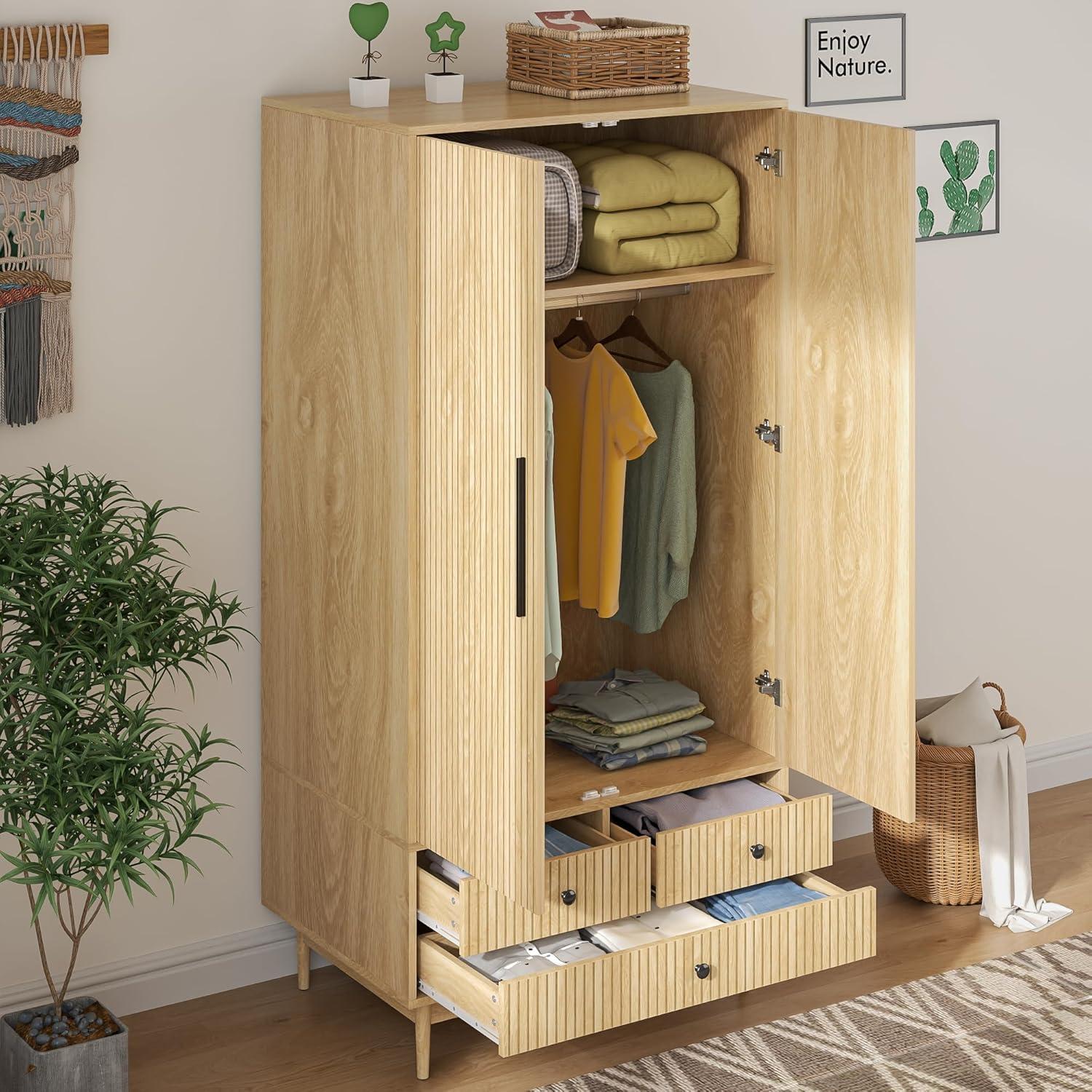
Late afternoon light catches the fluted doors of the Armoire Wardrobe Closet with 2 Fluted Doors (Natural) and throws a soft, uneven grain across its face. Up close your hand notices the subtle give of engineered wood beneath a smooth, scratch-resistant finish, and the four solid wood legs lend a quiet firmness to its tall, narrow stance. At roughly 65 inches high it reads more like a vertical piece of furniture than a box; it settles into the room with a modest visual weight. Open a door and the hanging rod and tidy partitions appear—practical details that confirm the textured, lived-in impression you first had.
When you first bring the natural wood wardrobe into your room
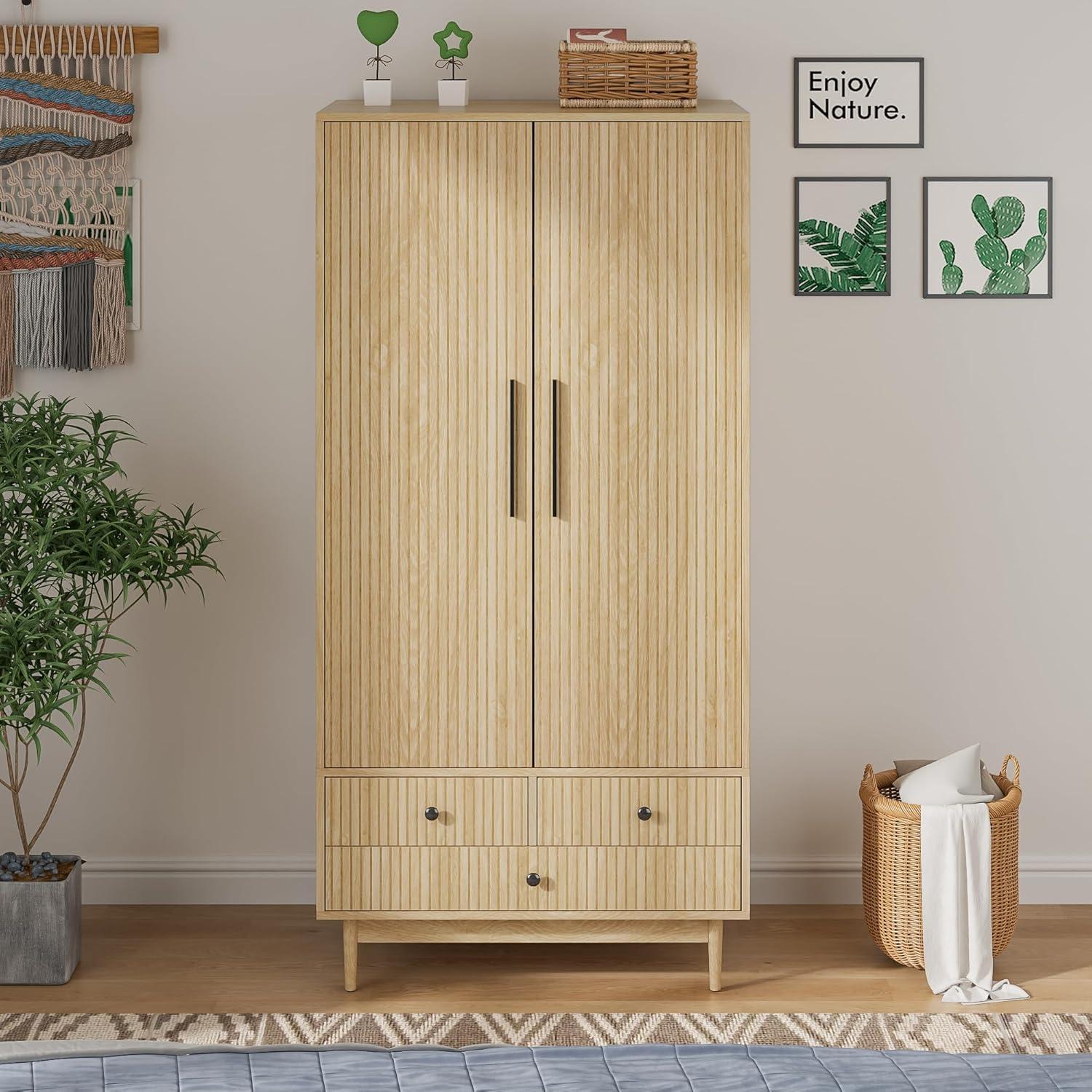
When you first bring the wardrobe into your room, the immediate impressions are tactile and spatial. The packed unit is compact but solid; as you slide the panels from the box and set the pieces down you’ll notice the wood-grain finish catches the light differently from angle to angle, and the fluted doors create thin shadow lines that stand out more in a softly lit corner than under direct light.There’s often a faint factory scent that fades after a day or two, and a little dust in crevices that you tend to wipe away with the back of your hand while you position it.
Setting it in place involves a few little rituals: you shift it a fraction this way and that to align with the skirting, kneel to check the leg contact with the floor, and smooth a fingertip along the drawer fronts to feel how they run. When the doors open for the first time they swing with a modest resistance and the grooves line up visually; pulling the drawers reveals their slides and the built-in partitions and rod appear where the instructions showed them.The hardware pack usually contains the anti-tipping strap and labeled parts, so you’ll find the strap among the screws as you prepare to finish assembly. In most cases the wardrobe settles quickly into the room’s rhythm, but you might adjust its placement again after you hang a few garments or slide the drawers a couple of times.
| First checks | What you’ll likely observe |
|---|---|
| Finish and graining | Visible wood grain and shadowed grooves that vary with lighting |
| Hardware and parts | Small labeled bags, anti-tipping strap included, basic fasteners |
| Operation | Doors open with slight resistance; drawers pull smoothly once aligned |
How the fluted doors and grain pattern shape the look and light in your space
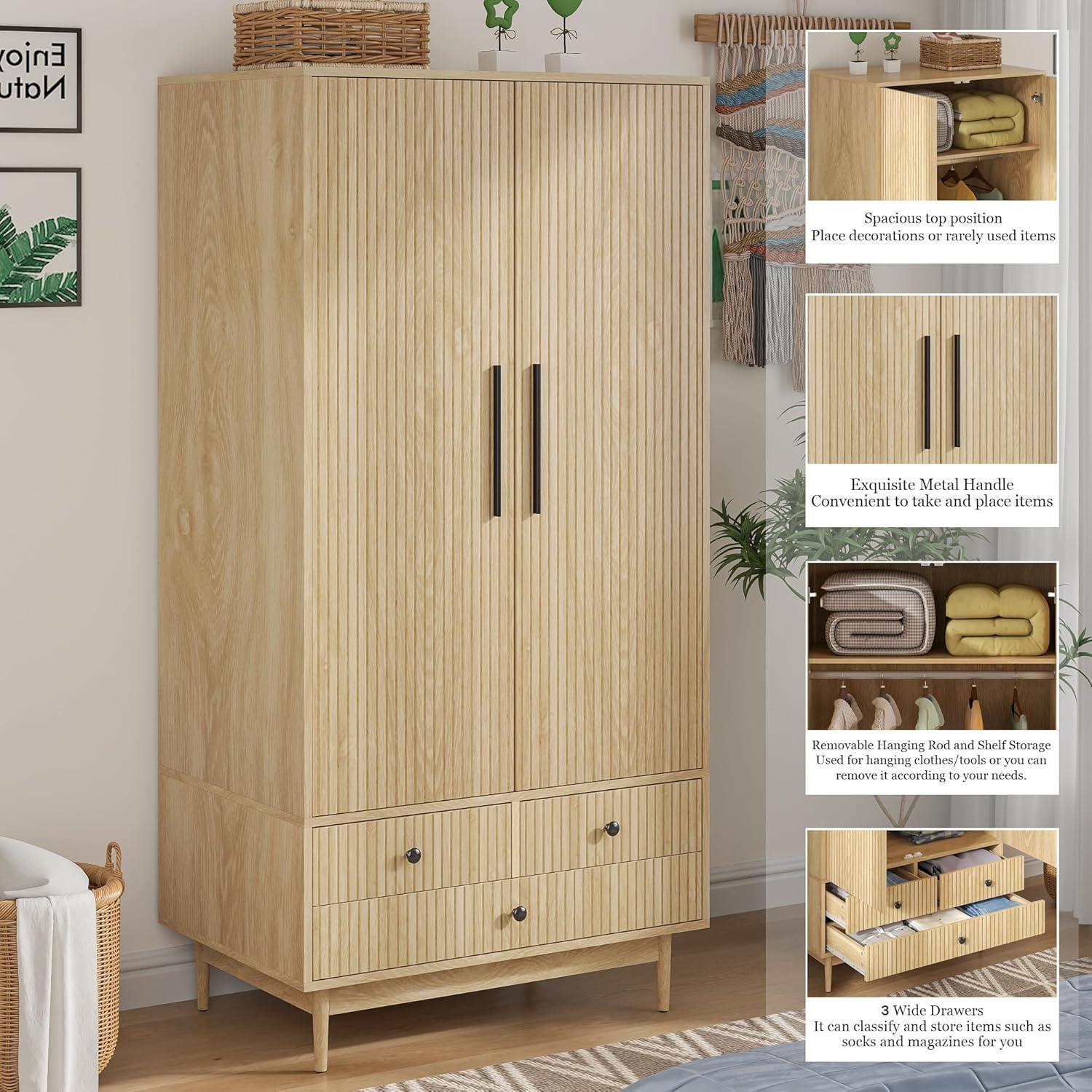
When light meets the fluted doors it fragments across the surface instead of reflecting back as a single plane. The vertical grooves catch highlights at different depths, so as you walk past or the sun moves across the room thin bands of light and shadow sweep along the panels. Opening and closing the doors accentuates that effect: the ridges throw tiny,shifting highlights on adjacent walls and on the floor,and under artificial light the grooves can read as a series of soft stripes rather than a flat face. In casual use this makes the cabinet feel to change its texture with movement—dust and fingerprints frequently enough settle in the channels and appear more or less visible depending on the angle of the light.
The wood grain works alongside the fluting to direct the eye. From certain viewpoints the grain runs quietly beneath the grooves, giving a warm, streaked backdrop; from others the contrast within the grain becomes more pronounced and the surface reads as busier and more tactile. Strong, direct light tends to deepen the grain’s shadows and make knots and streaks pop, while diffuse or evening light mutes those contrasts and lets the doors read as a more continuous plane. You’ll notice that the combination of grooves and grain can both mask small scuffs—breaking them up visually—and draw attention to variations in finish when light is strong, so the wardrobe’s presence in the room subtly shifts with time of day and how you move around it.
What you find inside the cabinet,including the hanging rod,shelf spacing,and measured clearances
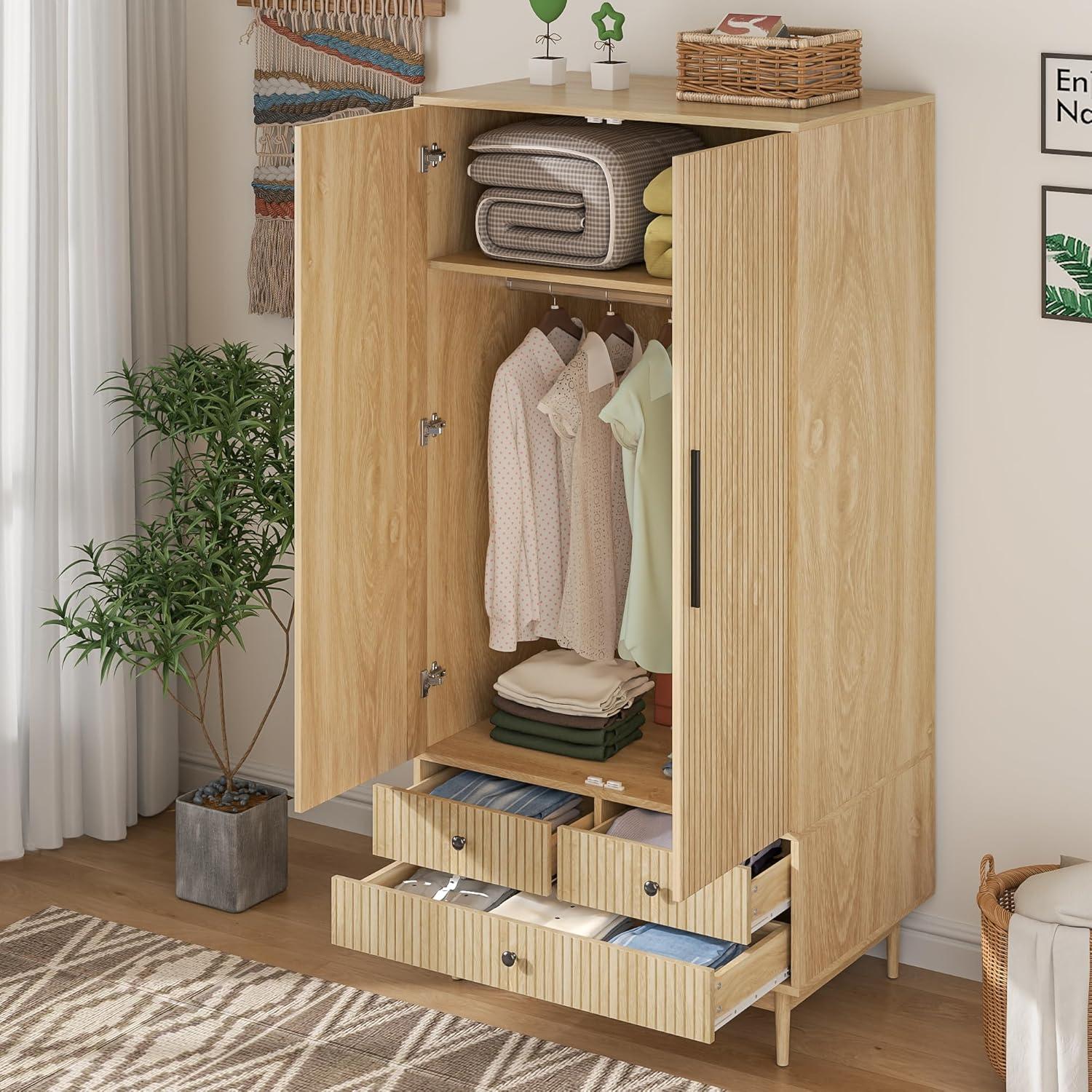
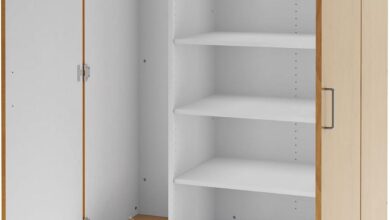
When you open the doors, the interior reads as a straightforward storage bay: a single metal hanging rod runs nearly the full width, seated on fixed brackets, with a shallow shelf above it. The rod has a slight give when you nudge it and the hangers line up without crowding the door panels; you’ll find yourself smoothing sleeves or nudging jackets back into place as you organize. The shelf above the rod sits close to the top interior, forming a shallow cubby for folded items or boxes rather than tall stacks.
Measured clearances are best described as modest rather than generous. the cabinet’s usable front-to-back depth inside tends to be slightly less than the external depth,so hangers sit roughly an inch or so from the doors when garments are hanging. The shelf depth leaves only a little over a hand’s width in front of the back panel, and the vertical distance from the rod down to the lower compartment creates a clear hanging run that works for shirts, blouses and many mid-length jackets; longer coats or maxi dresses will come closer to the lower section. As you slide a garment across the rod, the spacing between shelf and rod, and the rod-to-floor clearance, make themselves obvious in how the hems fall and how much you need to adjust hung items to avoid brushing the lower area.
| Measured point | approximate measurement |
|---|---|
| Interior depth (front-to-back) | about 19–19.5 inches |
| Hanging rod diameter | about 5/8–3/4 inch |
| Clearance from rod to lower compartment (usable hanging height) | about 37–40 inches |
| Shelf depth (top shelf above rod) | about 18–18.5 inches |
| vertical gap from top interior to top shelf | about 9–11 inches |
Those numbers carry a little give depending on how the unit settles and how tightly you pack it; you may find yourself nudging hangers or shifting folded piles as you use the space day to day. The built-in partitioning and bracket placements are fixed,so the impressions you get when you first hang a few pieces—how close sleeves sit to the doors,where hems land—are usually the ones that persist.
How your shirts, dresses, and folded sweaters hang and rest on the rod and shelf
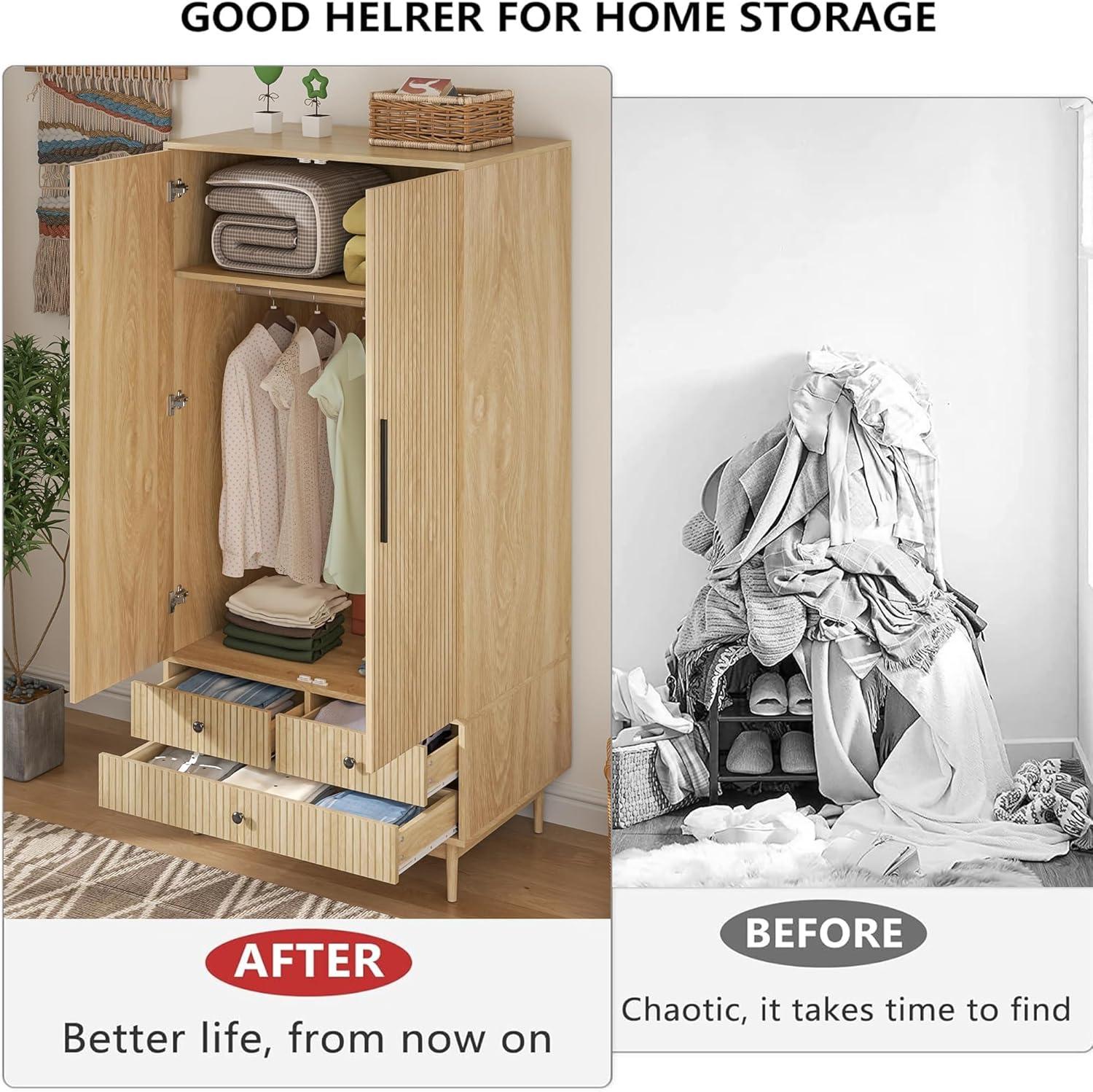
When you pull the doors open, shirts generally settle on the rod with their shoulders aligning along a narrow plane. Button‑downs often hang with the collar and chest area sitting away from the back wall while lighter tees and blouses tend to drape more closely to neighboring garments, so sleeves and hems can overlap or tuck slightly behind the adjacent piece. As you slide a shirt sideways or reach in, seams will shift and you’ll find yourself smoothing collars or re‑centering shoulders out of habit; over a few days those areas can relax into a softer fold.
Dresses show their length and weight more clearly. Stiff fabrics keep a straighter silhouette and the hem usually clears the shelf below, while softer, bias‑cut or gathered skirts curve inward and may brush the shelf edge when you pull something from the front. Dresses with heavier skirts pull the rod a little more taut, creating a subtle forward lean in the surrounding garments when they settle back into place.When the doors are closed, long pieces can sway a touch and then come to rest with slight creases at folds or where the hanger meets the neckline.
folded sweaters on the shelf form low stacks that compress under their own weight; bulkier knits flatten the layer beneath and thinner sweaters slide a bit as you lift an item from the middle. You’ll often smooth the top of a pile after taking one out, and edges can spill forward toward the door if the shelf is near capacity. Over time, wool and cotton knits can slump into a gentler mound rather than keeping a perfectly squared fold, and reaching in tends to nudge the whole stack forward a little.
| Garment | How it rests | Typical change with handling |
|---|---|---|
| Shirts | shoulders aligned on the rod; collars visible | Seams shift, collars relax, sleeves tuck or overlap |
| Dresses | Lengthed down from the rod; hem clearance varies by fabric | Hems can brush shelf; softer skirts curve and sway |
| Folded sweaters | Low stacks on the shelf; compressed layers | Stacks lean or spill forward; knits slump over time |
Where you might place this cabinet in common room layouts and the floor space it occupies
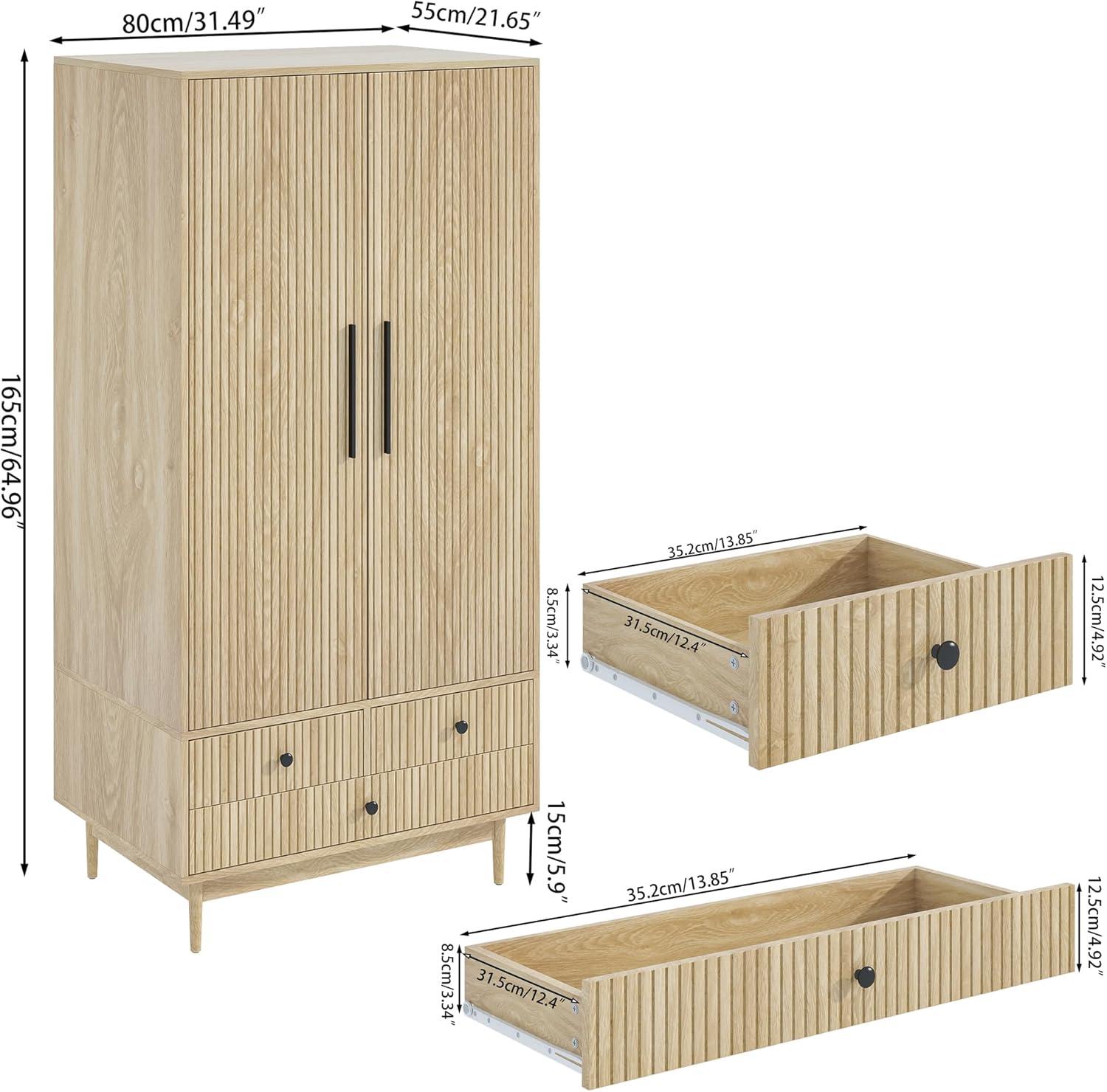
The cabinet takes up a modest rectangular footprint on the floor—just over 31″ across and about 21.5″ deep—so you can expect it to sit where a narrow chest or bookcase would without pushing far into the room. When it’s in use you tend to think less about its height and more about the space immediately in front of it: the doors swing and the lower drawers slide out, so allow room for that movement when you set it down.
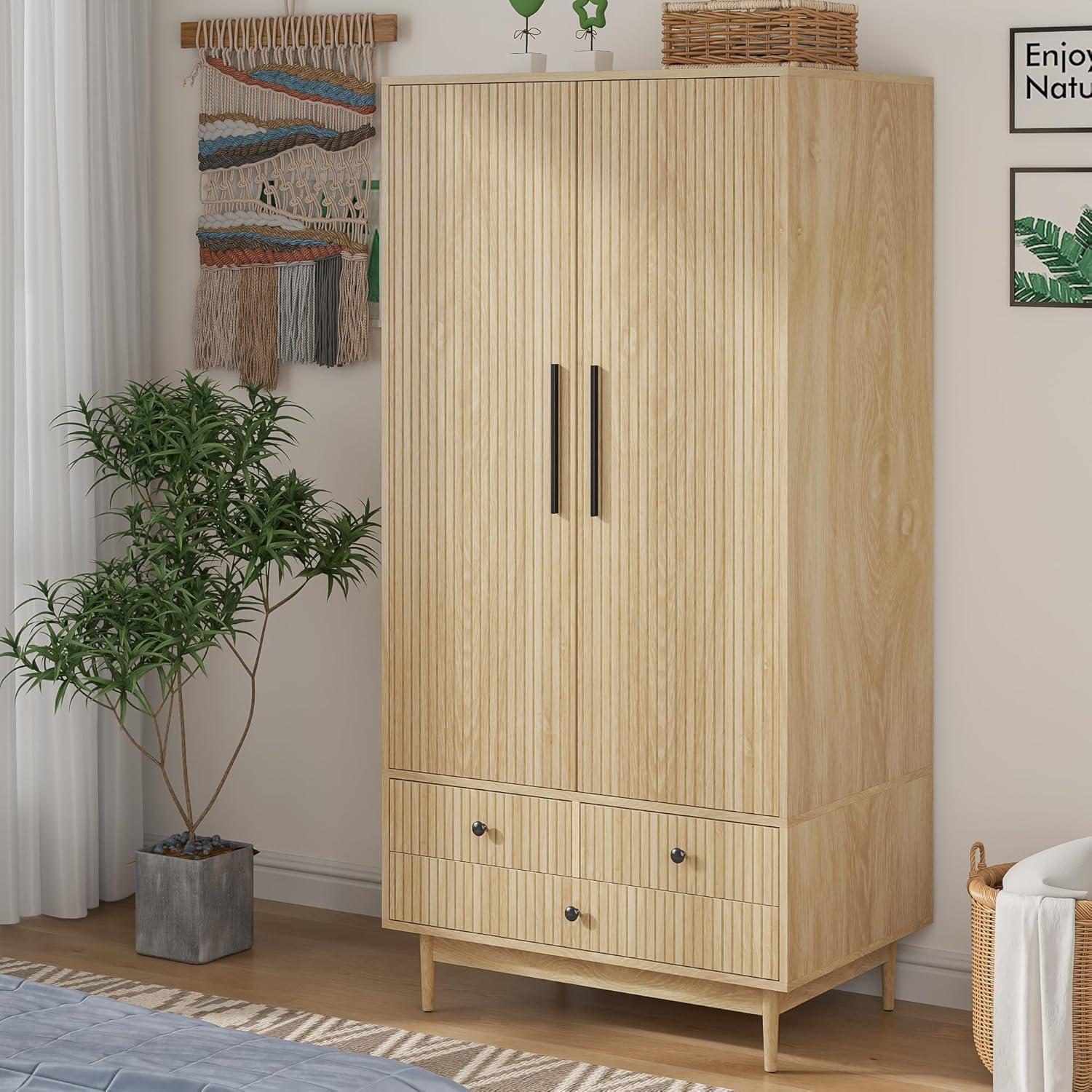
In many room layouts it effectively works as a freestanding piece tucked against a wall or in a corner.Placing it between a doorway and a window frequently enough leaves a few inches on either side, while setting it beside other storage pieces can create a small run of furniture that reads as a single block on the floor. In tighter passageways the 21.5″ depth can make the walking line feel narrower; in open-plan living areas it occupies a clear vertical presence without claiming a large amount of walking space. You’ll also notice the habit of nudging nearby cushions or rugs when you open drawers, and the occasional step back to give the doors room to swing fully.
| Footprint | 31.49″ W × 21.65″ D |
|---|---|
| Typical front clearance observed | roughly 20″–24″ to open drawers and doors comfortably |
| Common placement patterns | against walls, tucked into corners, between other storage pieces, or along quieter walls in living spaces |
How this armoire stacks up against your storage needs and the practical limits you might encounter
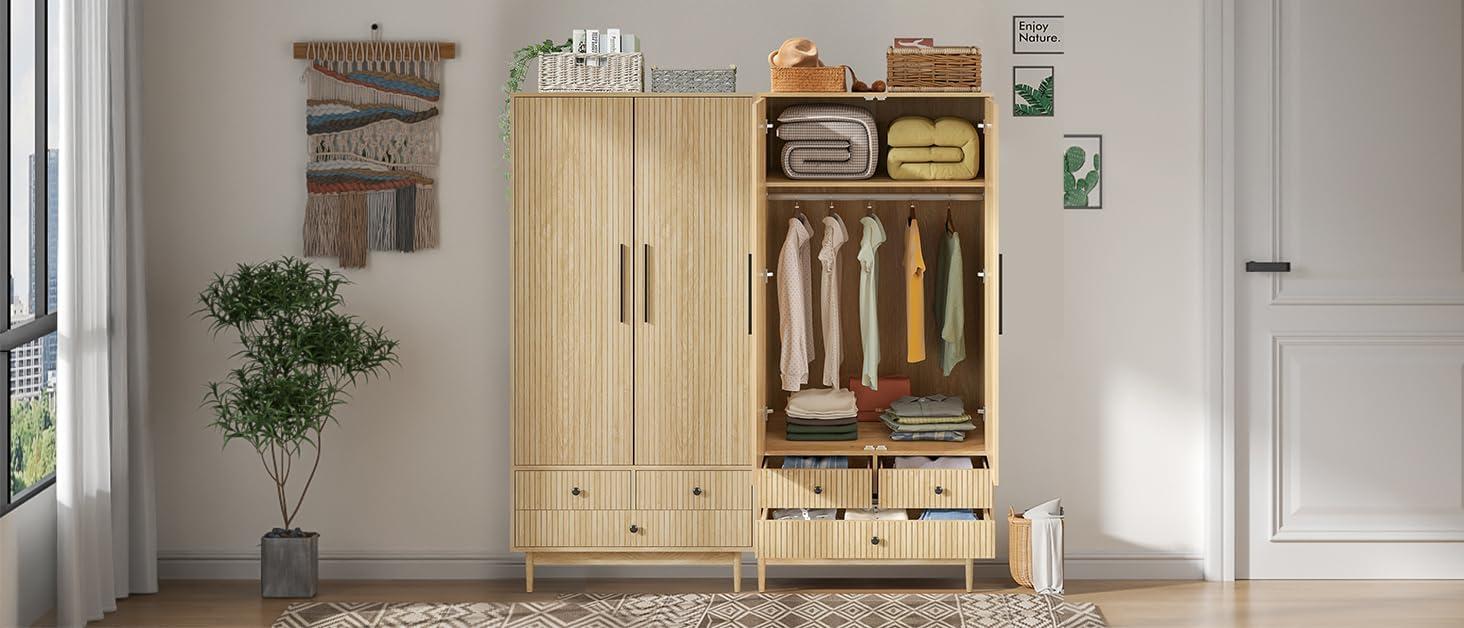
Seen in regular use, the piece tends to function like a compact closet: hanging garments sit close to the doors and generally clear one another, folded layers stack in the drawers but can compress after a few days of wear, and the partitioned shelf creates fast visual order while restricting taller items. Doors need a little breathing room to open fully, so placement near a wall or in a tight corridor changes how easily clothes are accessed. Drawers slide smoothly when lightly loaded; they can feel snug and slower to close when filled with bulkier knits or stashed boxes.
Practical limits show up in everyday moments. The interior depth makes for tidy rows of shirts more often than long coats; heavier items add tension to the slides and the overall frame can feel steadier once anchored. As the cabinet is freestanding, shifting it even slightly when loaded will alter how doors align and how the drawers track — a minor repeat adjustment is not uncommon after moving or during seasonal rearranging. Ventilation is modest, so garments stored long-term tend to retain room scents unless aired periodically, and the built surface can pick up scuffs from repeated handling at the edges.
| Storage mode | Typical in-use behavior | Observed constraint |
|---|---|---|
| Hanging rail | Clothes hang with minimal bunching | Limited vertical clearance for full-length coats |
| Drawers | Good for folded layers and smaller items | Bulky stacks reduce smoothness and closing ease |
| Shelves/partitions | Straightforward for boxes or shoes laid flat | Partitions limit storage of taller or irregular items |
View full specifications and available size or color options
What you’ll unpack and how the parts and hardware are arranged in the box
When you lift the outer flaps, the first thing you notice is the instruction sheet laid flat on top — it’s the thing you’ll see before any panels. Underneath, parts are stacked in layers: larger MDF panels lie flat, doors are generally sandwiched between protective cardboard, and smaller pieces and hardware are tucked into corners or in a shallow tray so they don’t shift around during transit. Most surfaces are wrapped in thin foam or paper, and there’s a faint scent of wood and glue that comes free when the packing comes apart.
The hardware is separated into several clearly labeled bags that correspond to steps in the manual. Drawer components and slide rails are usually grouped together; legs and their bolts come in a small packet, and the hanging rod and shelves sit alongside the top and bottom panels. You’ll often find the anti‑tipping strap and its screws in a distinct bag; occasionally those smaller packets are taped to an inner panel or slipped into a drawer cavity. Parts carry stickers or stamped letters that match the diagrams, so you pick up a piece and can check the manual without hunting.
| Item | Typical Quantity |
|---|---|
| Fluted doors | 2 |
| Side/top/bottom panels | 3–4 large panels |
| Back panel | 1 |
| Shelves | 1–2 |
| Hanging rod | 1 |
| Drawer boxes/fronts | 3 |
| Legs | 4 |
| Hardware bags (screws, cams, dowels) | 2–4 labeled bags |
| Anti‑tipping strap | 1 |
| Assembly manual | 1 |
As you move pieces out, you’ll find that the heavier panels tend to sit at the bottom and the lighter parts on top, so plan to slide rather than lift in tight spaces. Small discrepancies in how items are tucked into the box can happen from batch to batch, but in most cases the labeled parts and grouped hardware make it straightforward to lay everything out before you start following the steps.
How It Lives in the Space
After a few weeks you notice how the Armoire Wardrobe Closet with 2 Fluted Doors settles into the corner, taking on the room’s light and hush rather than announcing itself. It finds its place in daily routines—clothes slid in, hands resting on the edge, the occasional scuff that becomes part of its face—and the surfaces soften with wear. As the room is used, it changes the way you move through mornings and evenings, a familiar pause and a dependable spot where things land. It stays, part of the room.
As an Amazon Associate I earn from qualifying purchases.