HWB Arched Mirror Jewelry Cabinet: Keeps your jewelry tidy
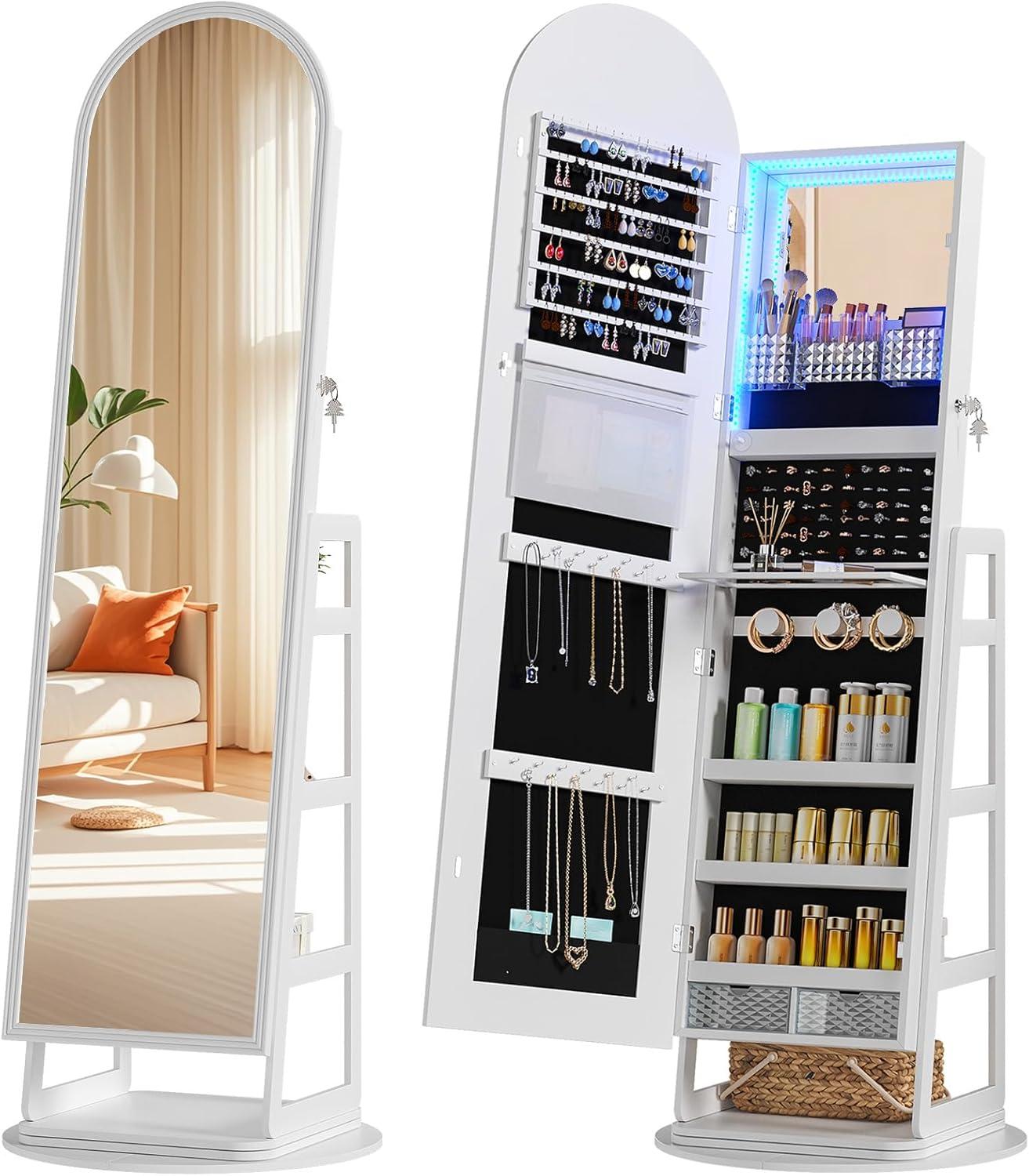
You notice the arch before the details: a tall, mirror-faced piece that changes how light falls in the room and invites a pause.Up close—the HWB Arched Mirror Jewelry Cabinet—its white painted surface is cool under your hand and the door swings on a smooth hinge to reveal velvet-lined rows and small hooks that hush the clink of metal. It perches on a rounded base that lets the whole unit rotate with a gentle nudge, and a soft LED wash inside makes the interior read differently at dusk than it does in noon light. From across the bedroom it reads more like furniture than a box of storage; up close it’s quietly busy, a mix of painted wood, plush lining and practical movement.
At a glance what this arched mirror jewelry cabinet brings into your room
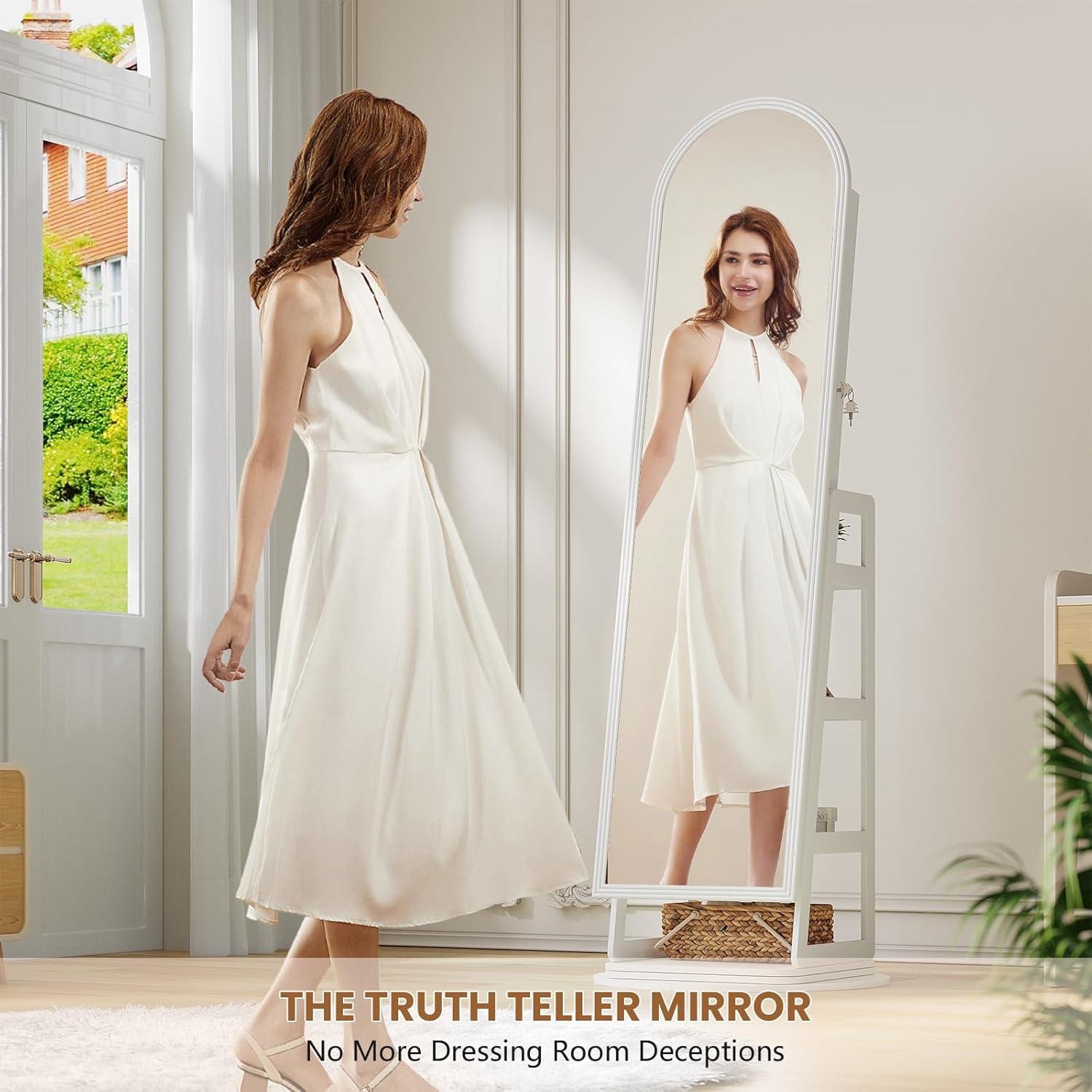
You’ll notice it almost promptly when you enter the room: the arched silhouette draws the eye upward and the light finish catches ambient daylight, so a corner that felt closed off can read a bit taller and brighter. when you step back to check an outfit, the mirror gives a steady, head‑to‑toe view that makes quick visual checks feel natural rather than staged. At different times of day the door’s interior lighting changes how colors read on your skin and accessories, so the same necklace can look subtly different under morning, afternoon, or evening tones.
Opening the door reveals a quiet, compartmentalized nook where pieces rest without clinking; the velvet lining softens sound and keeps things from shifting when you turn the unit. You’ll find the swivel base useful on busy mornings—rotating the cabinet brings rear shelves and hooks into reach without moving other furniture. The cabinet also asserts a vertical presence in the room, which can simplify a cluttered dresser area but calls for a bit of clearance so the door swings and the unit turns freely in everyday use.
The arch and finish up close the materials you can see and touch
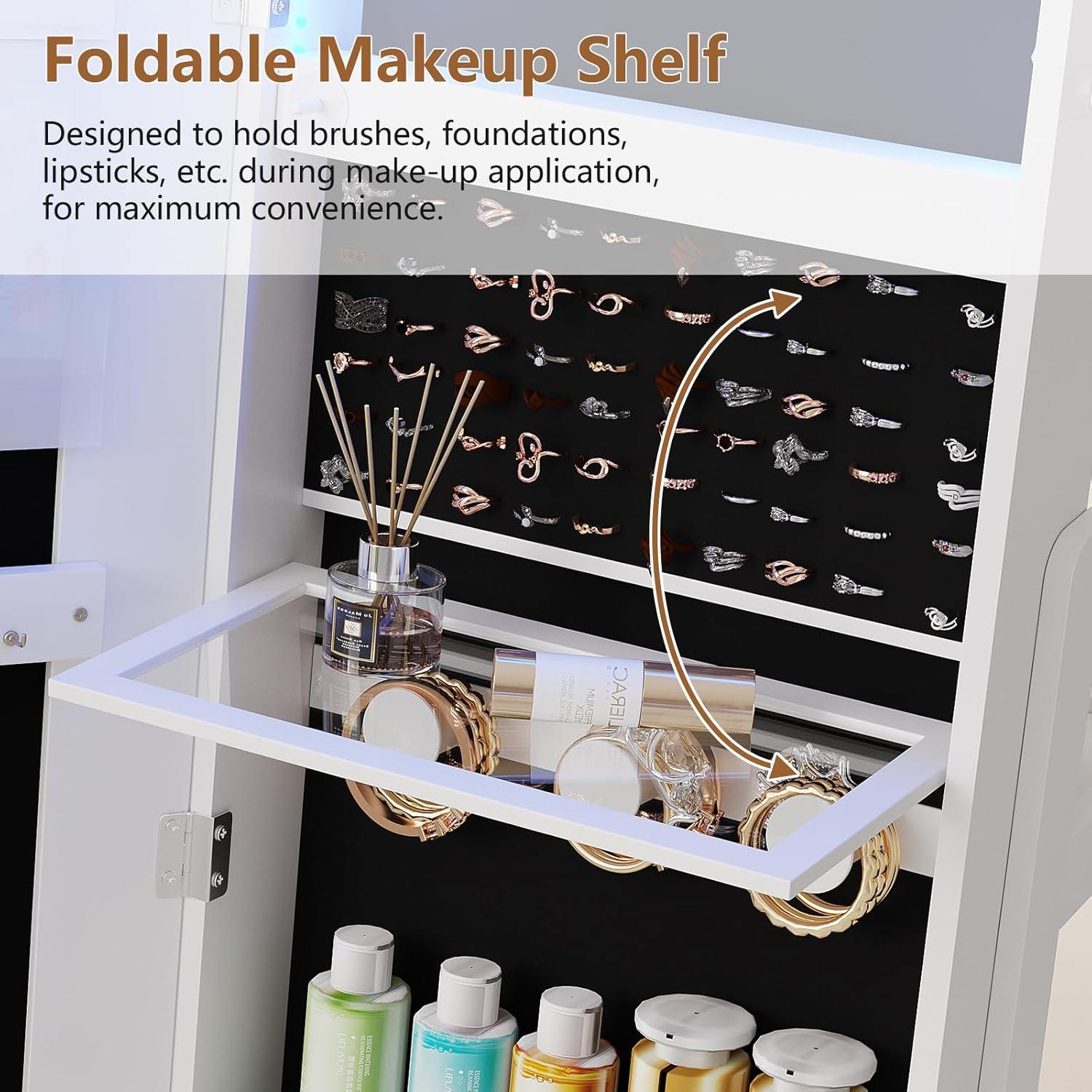
You notice the arch before anything else: a softened curve that guides your hand up and over the door. The exterior is finished in a white coating that feels smooth and a little cool to the touch; run your palm across it and you’ll find a mostly even surface with the occasional faint seam where panels meet. The curve itself is continuous under your fingertips, though there’s a narrow reveal at the very top you can feel if you trace the joint—small enough to require a light nudge when you’re aligning the door during assembly. Edges are rounded rather than sharp,and the mirror sits flush against the frame so you don’t catch on any exposed trim as you open and close it.
Inside, the materials shift to softer textures. The lining has a short velvet nap that yields under a fingertip and tends to collect lint if you brush it; smoothing it with your hand flattens the rows briefly before they spring back. The necklace hooks and small hardware pieces are metal with a slightly cool, solid feel; drawers slide on simple runners that can feel a touch plasticky at the start of their travel and then settle into a smoother glide. You’ll also notice fasteners and assembly seams when you crouch to check the back shelves—screw heads and butt joints are visible and can be felt if you run your fingers along them. Opening, closing, and adjusting the door is a tactile routine: a little resistance at the hinges, a small click from the lock cylinder, and the rounded base’s movement—when you turn the unit—comes through as a muted, functional rotation rather than a whisper-smooth spin.
| Material | where you touch it | How it feels |
|---|---|---|
| White painted/laminate exterior | Door face and arch | Smooth, slightly cool; shows fingerprints |
| Short velvet lining | Interior walls and ring rows | Soft nap; yields under pressure, catches lint |
| Metal hooks & lock | Rear hooks, lock cylinder | Cool, solid, tactile click or resistance |
| Composite shelves & drawer runners | Back shelves and drawers | Light, slightly plasticky initially; functional glide |
Opening the door how your necklaces rings and bracelets find their places
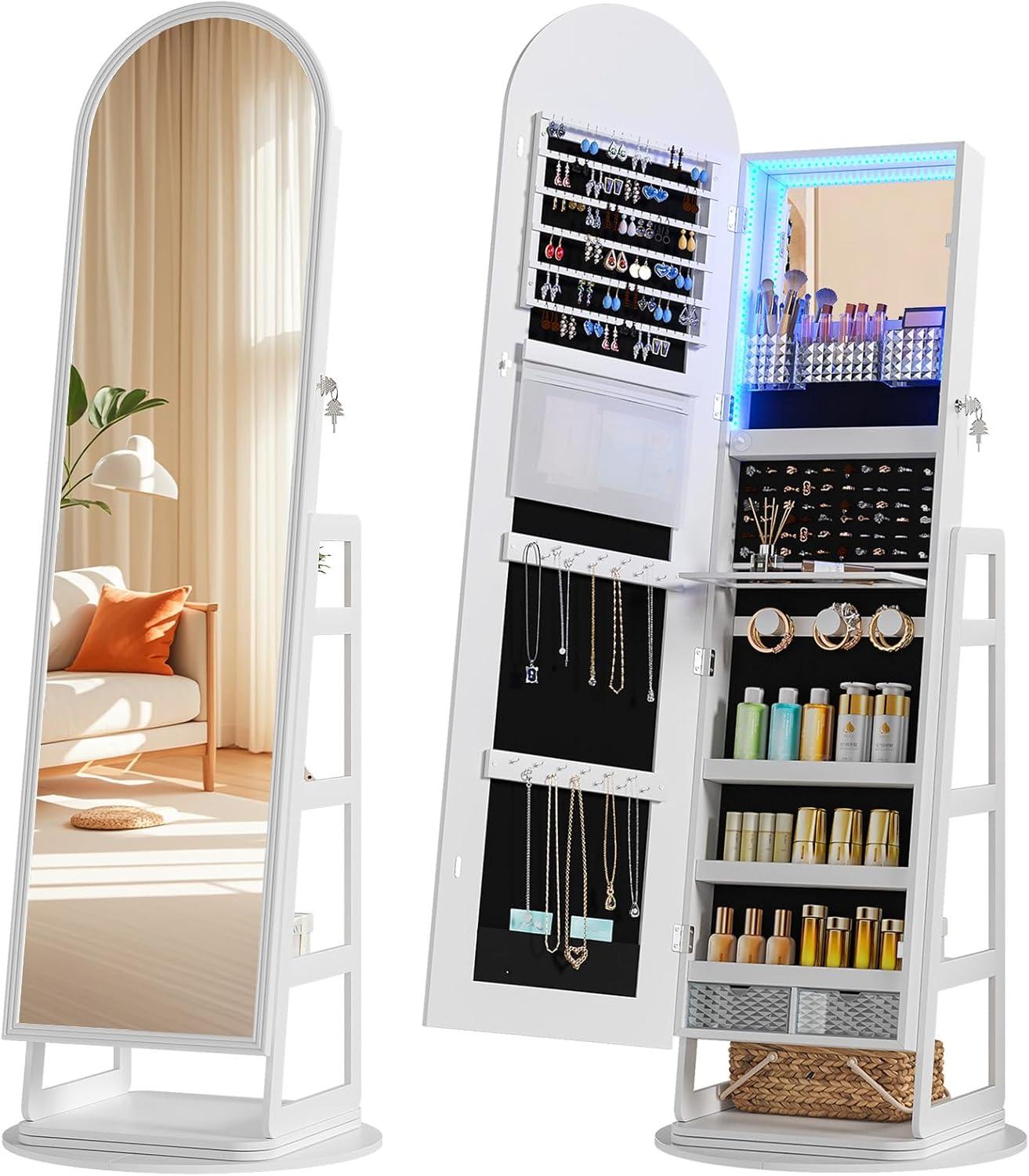
Opening the door gives a quick,almost ritual view of how your pieces settle into place. You swing it and necklaces hang down in neat lines from the row of hooks, pendants falling to eye level while chains loop straight instead of pooling. Rings press into soft, horizontal rolls so bands sink in and sit upright; when you slide your fingers along them you can feel the grooves that guide each ring into its notch. Bracelets usually rest on short ledges or in shallow compartments, some lying flat, some stacked, and small studs or hoops live in tiny divided cubbies where they don’t roll away as you reach.
The motion of opening and the habit of reaching inside shapes how things end up. You find yourself nudging a tangled chain loose, tapping a cushion so a ring drops fully home, or shifting a bracelet forward with the back of your hand. Dense groups of pieces can rub against one another when the door moves, so heavier necklaces sometimes pull at lighter ones and a few links might cross; generally speaking items stay put unless the door is swung hard. Over time you notice patterns — the pieces you use every morning sit within easy reach, while bulkier or occasional items migrate deeper into the cabinet — and the simple act of opening the door becomes the way you quickly assess what’s ready to wear.
Scale and space how the cabinet occupies your floor and sightlines
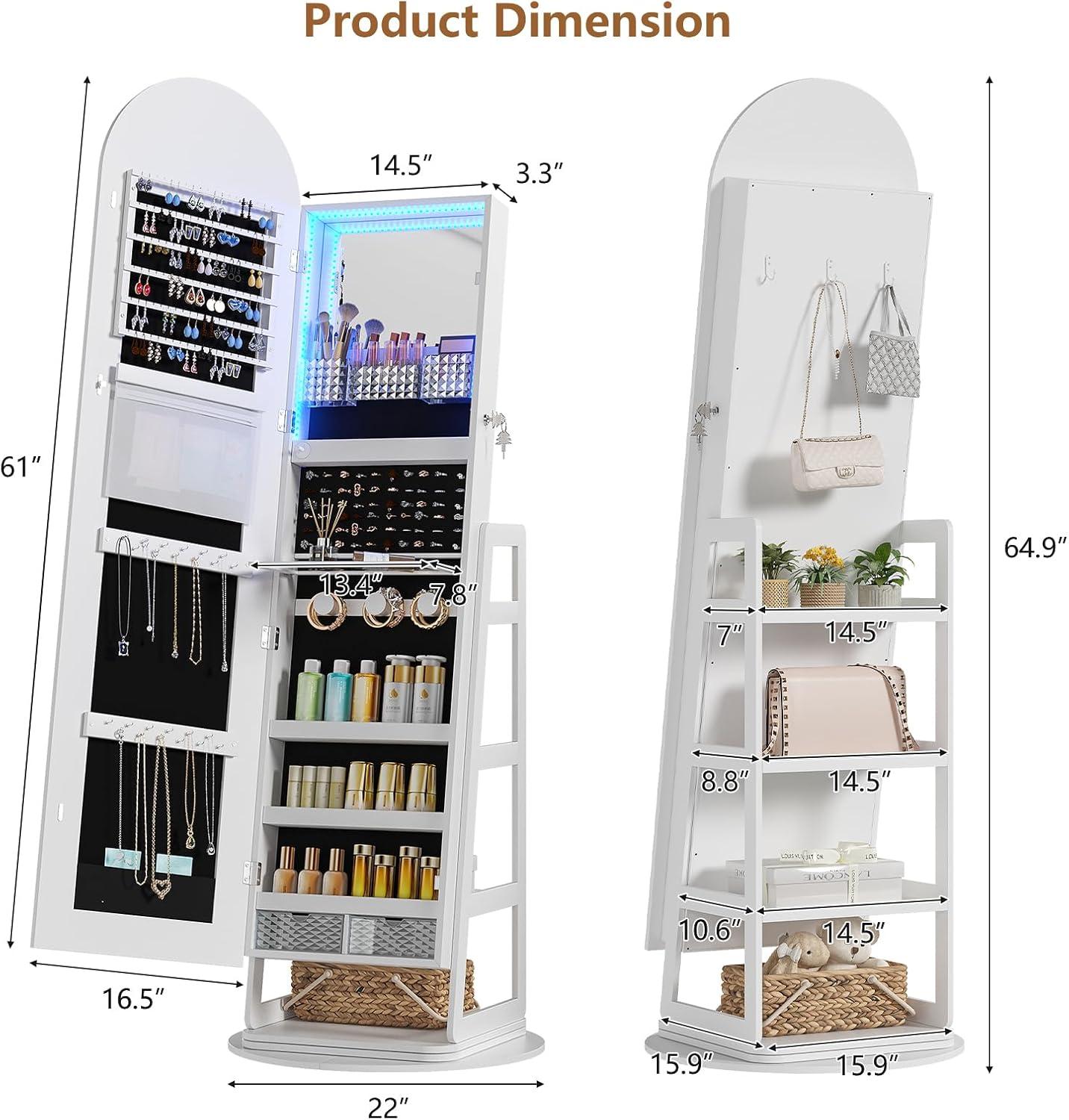
When you set the cabinet on the floor it reads more like a vertical anchor than a low piece of furniture — your eye is drawn up the full-length surface before you notice the base. Because the footprint is relatively narrow, you’ll tend to place it close to a wall or at the end of a walkway rather than in the middle of a room; in practice, this means you often rotate the cabinet to change what’s visible instead of moving yourself around it. Small, almost unconscious nudges happen as you align the mirror with a doorway or window so the reflection lines up with where you stand to check an outfit.
The arched top shifts sightlines slightly: from a few steps back the curve softens the reflection and can make the piece read as taller than a flat-top mirror would. From oblique angles the cabinet’s depth becomes more apparent — the rear shelves and hooks show when you swivel it, briefly interrupting a clean silhouette and adding visual weight. Over time you’ll notice the tendency to adjust nearby objects (a rug corner, a lamp) to keep sightlines unobstructed; this is a gradual, situational habit rather than a deliberate installation chore.
| Where you place it | Typical effect on sightlines |
|---|---|
| Against a wall | Reads as a vertical visual anchor; reflection aligns with standing eye level |
| Freestanding or at room end | Commands attention across the room; rotating it often reveals the rear storage and changes perceived bulk |
How this cabinet meets your expectations and where real life introduces constraints for you
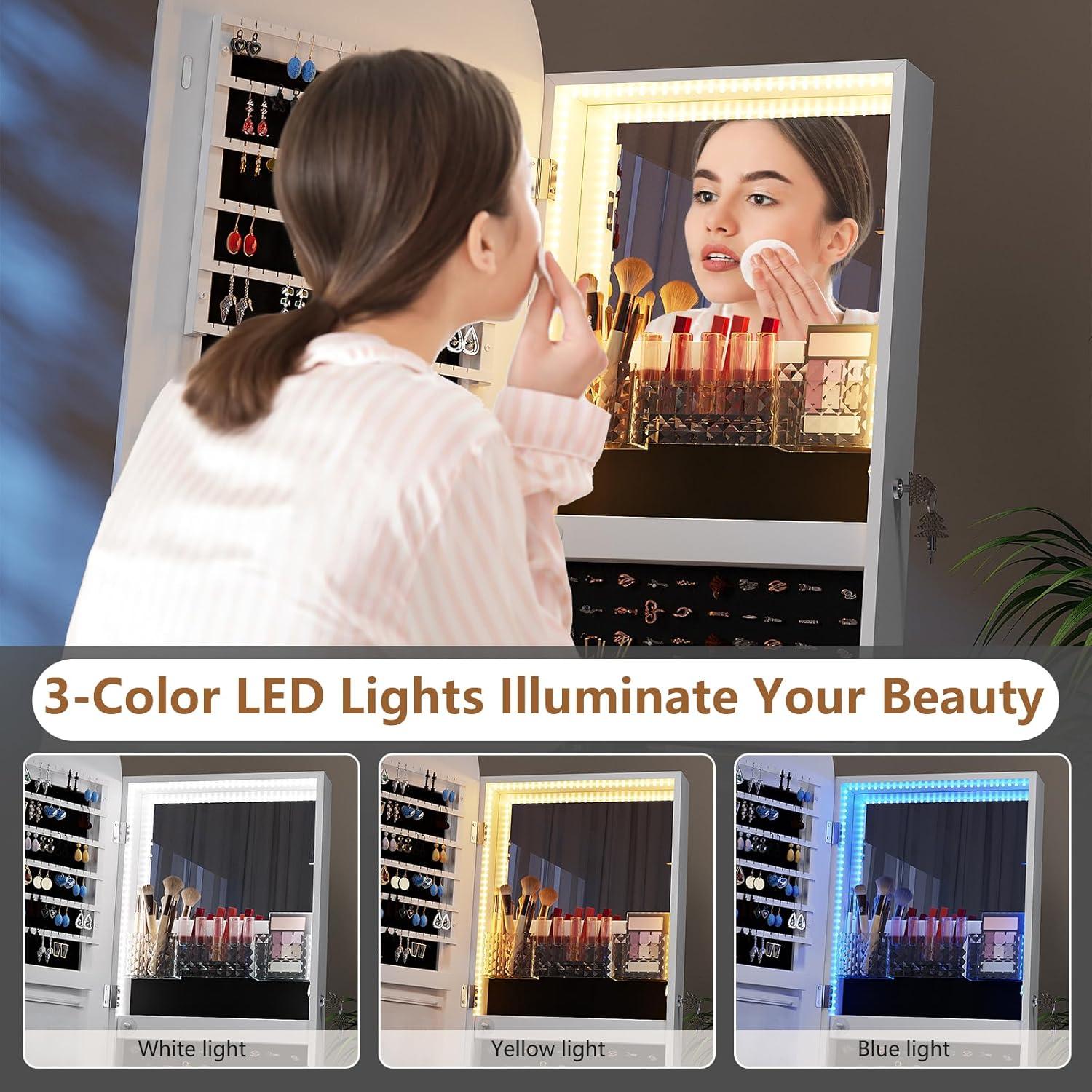
Users often expect the cabinet to behave like a single, polished piece of furniture the moment it arrives. In everyday use,it mostly does: the mirror gives a clear,full-length reflection and the interior lights illuminate drawers and hooks well enough to pick out pieces in dim rooms. At the same time,small,practical things show up with repeated use—hinges may need a minor realignment after the first few swings,the velvet lining collects dust where necklaces rest,and heavier items can make the door feel a touch bottom‑heavy when it’s opened quickly. These are not sudden failures but rather daily habits that emerge: nudging the unit to rotate a full turn, smoothing the lining before placing delicate studs, or swapping batteries after several months of frequent LED use.
Expectations around capacity and build follow a similar pattern. Internally,the layout generally holds a lot more than a single tray would,and the rotating base makes reaching rear shelves convenient. In practice, the fit of certain items can feel snug (charm bracelets tucked into ring rows, small studs shifting in slots) and drawers with shallow depths invite occasional reorganization. Opinions about sturdiness tend to split in real‑world accounts—some cabinets remain rock‑steady through daily handling, while others show a slight wobble that becomes noticeable when the unit is turned with a heavier load.These behaviors tend to emerge over weeks rather than instantly,and they shape how the cabinet is used: items get redistributed,frequent pieces are kept within easier reach,and the door is opened with a gentler motion.
| Expectation | Observed everyday behavior |
|---|---|
| Instantly tidy, turn-and-grab access | Mostly true; rotation helps, but heavier loads require steadier handling |
| LED lighting stays reliably luminous | Bright with varied color temps; batteries need replacing after frequent use |
| Everything fits into labeled compartments | High capacity overall; some items still require creative placement or rearranging |
For full specifications, available colors, and documented details, view the product page on Amazon: View full specifications and color options on Amazon
Everyday mechanics the LED lighting lock and full swivel you use in your routine
When you reach for accessories, the LED lighting, lock, and swivel act like small daily rituals rather than abstract specs. The LED strip above the interior mirror wakes with a tap; one press cycles through the three color temperatures and the next press brings the light back to off. In practice you find yourself tapping twice out of habit if the first color isn’t what you expect, and the light reads differently at different times of day — it can feel bright and crisp when the room is dim, but a little muted in strong daylight. The power source lives behind a small panel, so changing batteries becomes an occasional momentary pause in your routine rather than a technical task.
The lock sits near the side edge; unlocking is a two-handed motion more frequently enough than not — one hand steadies the door while the other turns the key — and the small key tends to get tucked into the same pocket or dish you always use. When you lock it, there’s a reassuring click that ends the action; over time you might notice the key needs a firmer twist to seat fully. The cabinet’s 360° swivel is the other gesture you repeat: a gentle push rotates the whole unit so you can bring rear shelves and hooks into view without shifting the piece. Loaded shelves add momentum and sometimes a faint wobble,so you tend to nudge it into position and let it settle rather than spin it quickly.
| LED mode | Observed moment in your routine |
|---|---|
| Warm | Late-evening touch-ups or softer lighting before bed |
| Neutral | Quick checks and general jewelry selection |
| Cool | Brighter tasks like final makeup checks in dim rooms |
How It Lives in the Space
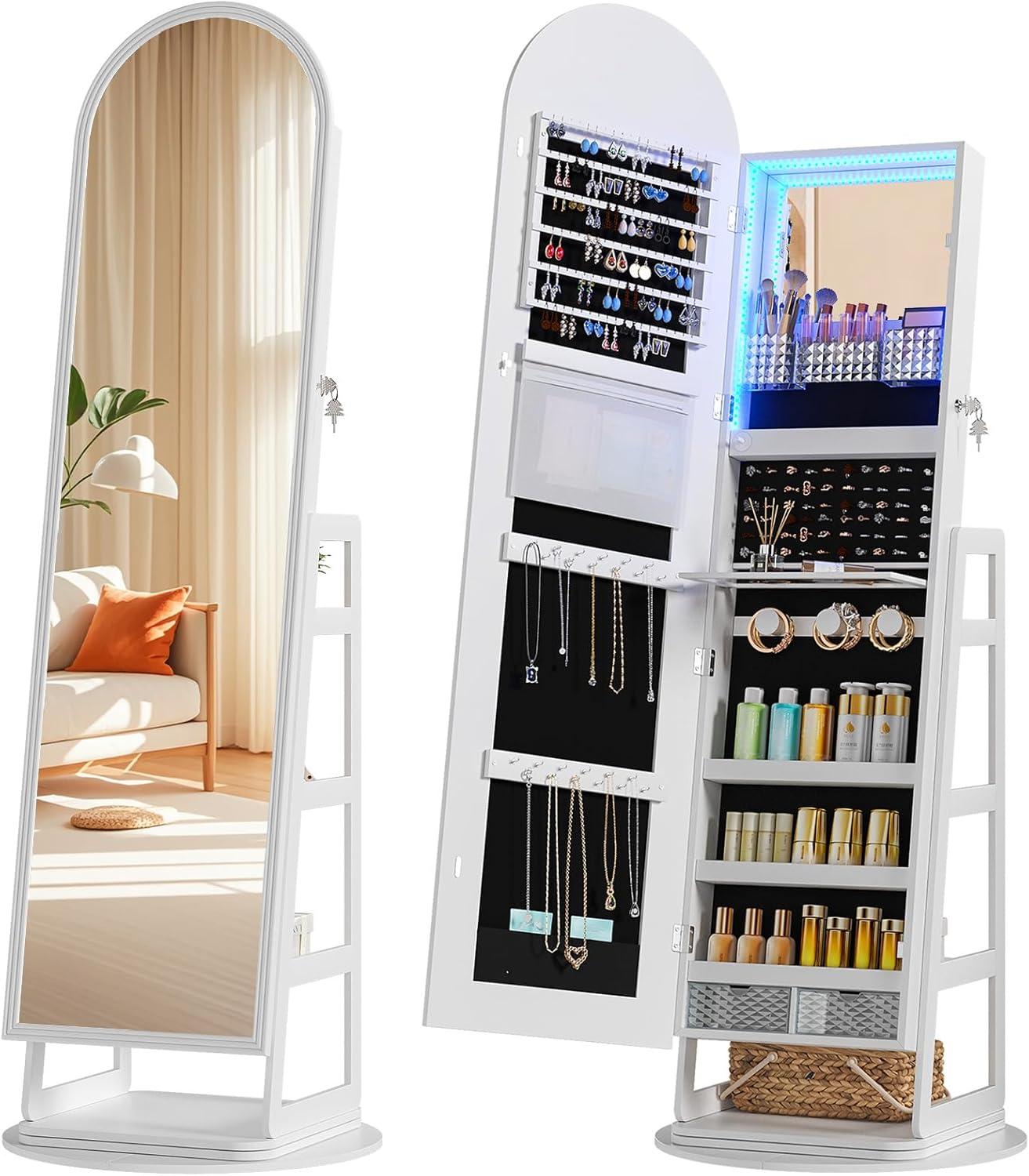
Living with the HWB Arched Mirror jewelry Cabinet with Storage, LED Jewelry Armoire w/Full Length Mirror & 360° Swivel, Standing Jewelry Holder Organizer with Rear Storage Shelves & Hooks, Lockable – White over time, you notice it ease into a corner and catch the morning light a little differently each day. In daily routines it becomes part of how the room is used — people brush past it, scarves and bags find their temporary places nearby, and the door’s swivel takes on the familiar rhythm of reach and return. The surface gathers small scuffs and fingerprints, quiet traces of use that mark its everyday presence in regular household rhythms you hardly remark on anymore. Over time it simply rests.
As an Amazon Associate I earn from qualifying purchases.