Quarte Modern 3-Door Wardrobe: how it serves your space
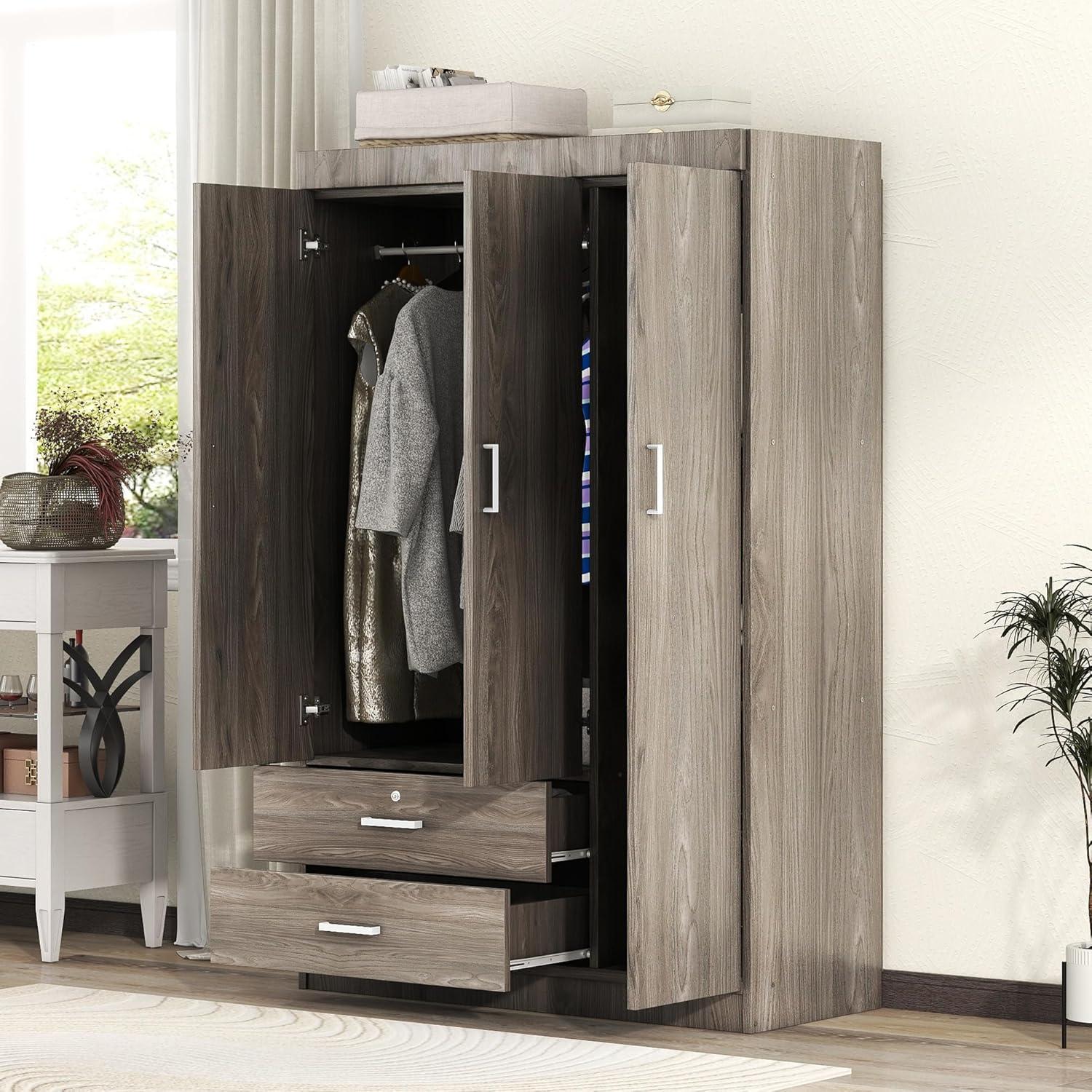
you notice the Quarte modern 3-Door Wardrobe as soon as you walk in — its gray, wood-grain face keeps a calm presence without shouting for attention. At about shoulder height and slimmer in depth than a built-in closet, it reads like a freestanding armoire that still holds its own in the room. Up close the MDF feels smooth with a faint texture under your palm, and the long satin-silver handles catch the light in a way that looks deliberate rather than flashy. Opening a door reveals a compact, organized interior and drawers that move with a quiet, mechanical give; the little top-drawer lock registers as an unexpected, solid detail. From across the room it anchors the corner; beside it you find yourself noting scale and surface more than anything else.
A quick introduction to the Quarte Modern three door wardrobe and what it brings to your room
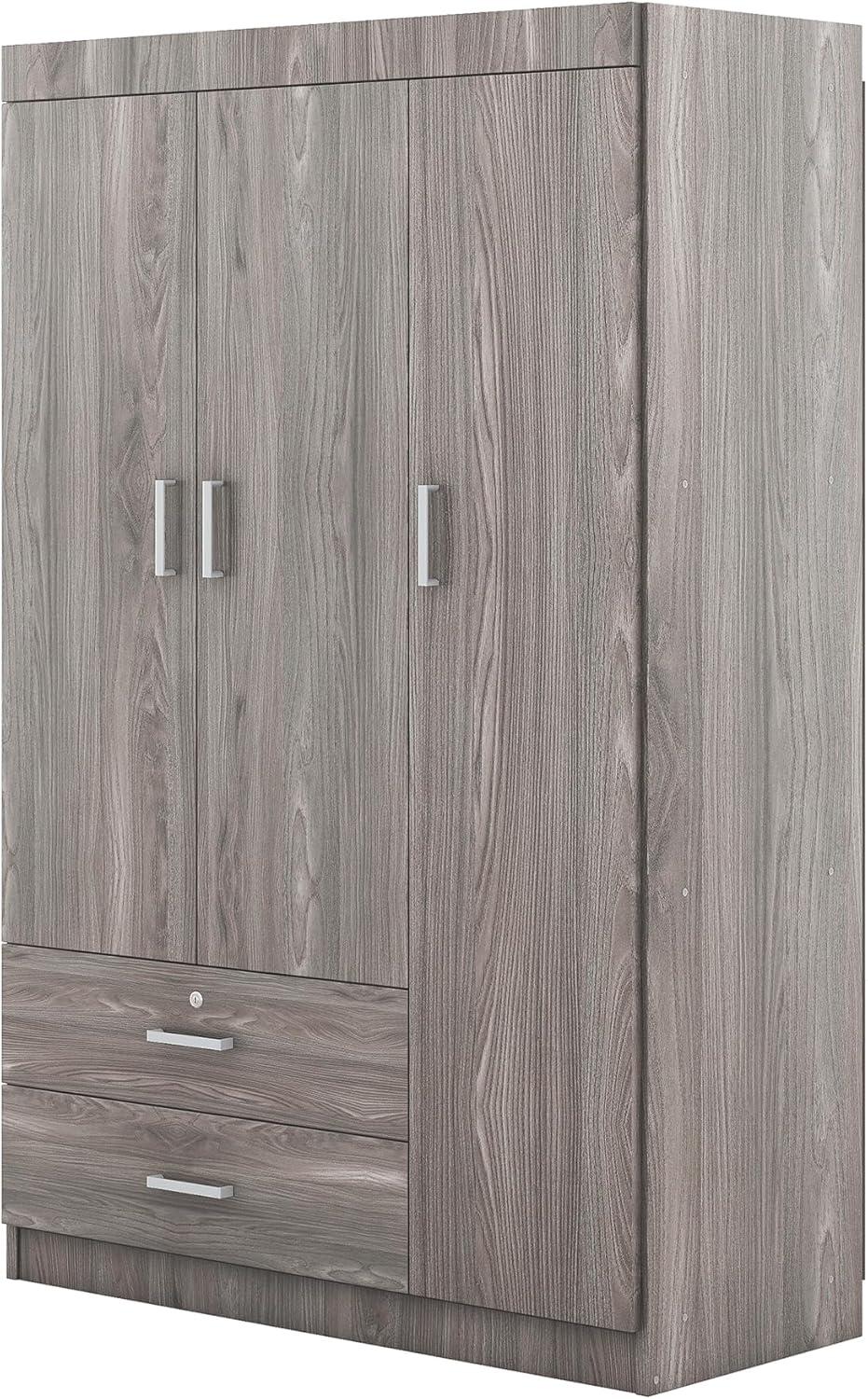
When you bring the three-door wardrobe into your room it reads first as a solid, modern presence — a clean silhouette that anchors a wall without drawing attention to itself. Up close the gray, wood-grain finish and long satin‑silver handles catch the light differently as you pass by; the doors and drawer fronts line up into a quiet, layered face that changes with the angle of the room and the time of day.
open a door and the interior becomes part of how the room functions: shirts slide along the rail and hangers brush the top shelf, folded piles settle into cubbies, and the drawers glide out on runners so you can reach socks or folded tees without shifting other items. The top drawer includes a lock, which appears as a small, practical detail on the front rather than a feature in plain view. In daily use the piece tends to occupy its corner firmly yet unobtrusively — you find yourself smoothing seams, nudging drawers back into alignment, or closing the doors to tidy the room in a single motion. Some surfaces show dust or light marks more readily and hardware can feel like it needs a small tweak after a few adjustments, but overall it settles into a room as a steady, utilitarian element that organizes visible and hidden storage alike.
The look and build you’ll notice: finishes,panels and hardware up close
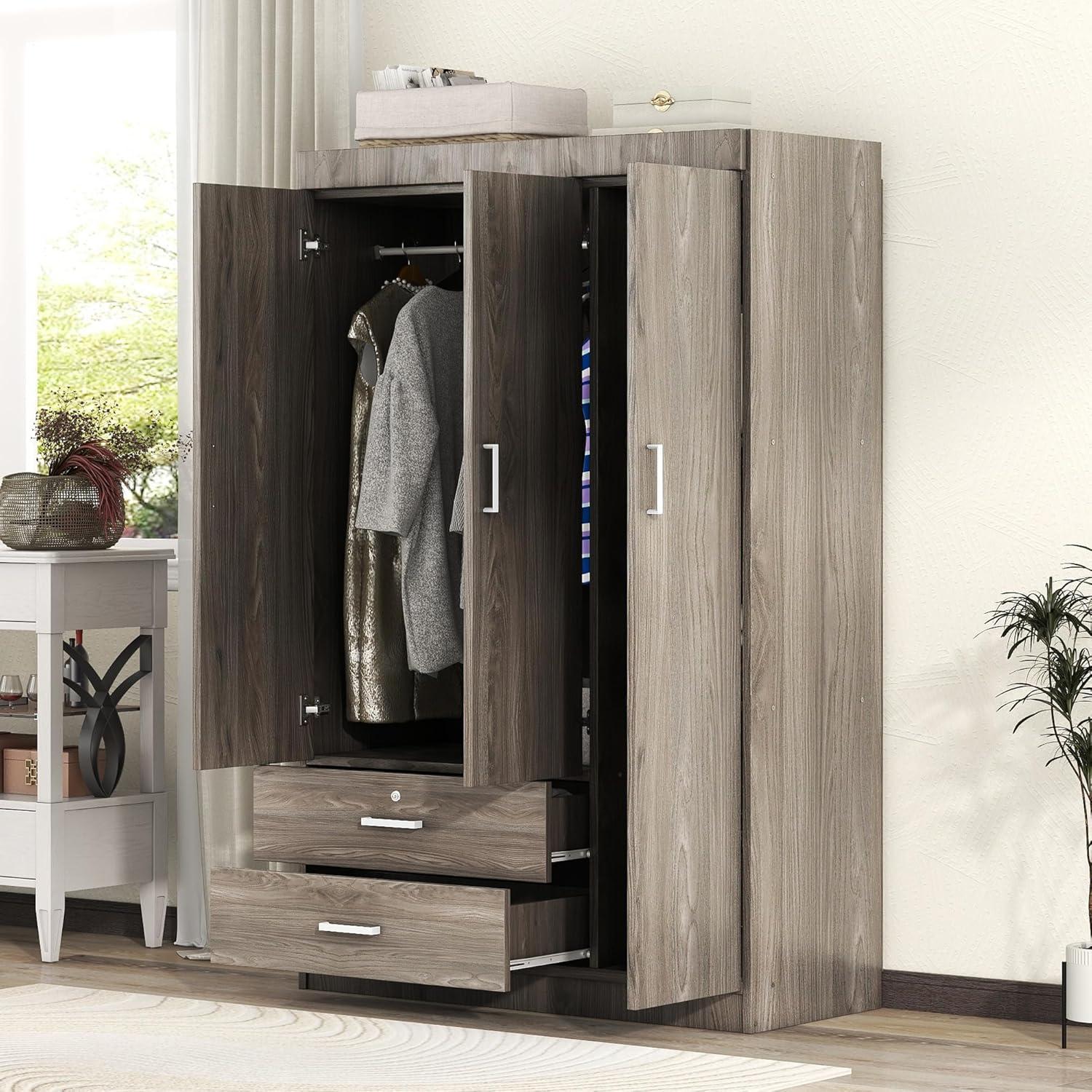
Up close, the gray wood-grain face reads as a printed texture under a low-sheen coating — not glossy, but with a faint reflective catch when light skims across it.If you run your hand along a door you’ll feel the faint ridges of the grain pattern and the smoothness of the finish; from a few inches back the surface looks continuous, but at arm’s length the joins where panels meet and the thin edge banding become more obvious. Small fingerprints show up in some spots and tend to blend back into the finish over a day or two, so the surface can look different depending on how recently you’ve handled it.
Opening a door or drawer alters that close-up picture: the gaps between panels are narrow and fairly consistent, and the doors sit with a slight reveal rather than flush to the frame. When you nudge a door it settles into place without a loud clank; the hinge action feels predictable, and you’ll notice the panel edges line up again when you close them. The top drawer’s lock is a small presence — you see and feel the key mechanism rather than it being tucked away — and the drawer fronts keep a steady horizontal line when you slide them in and out.
The hardware reads as simple and utilitarian. The long handles have a satin-metal look and feel cool to the touch; thay give you a confident grip without sharp edges. Drawers glide on metal runners that offer a bit of resistance near the ends,so they don’t slam back in by themselves. Screws and fastenings are visible if you crouch to inspect them, and the magnetic or catch points that keep doors closed pop into place with a soft click.
| Element | Close-up observation |
|---|---|
| Finish | low-sheen gray with printed wood grain; subtle texture under a smooth coating |
| Panel edges | Thin edge banding visible at arm’s length; narrow, consistent gaps between doors |
| Hardware | long satin-metal handles, visible lock on the top drawer, metal runners with light end resistance |
Inside the doors what your clothes will meet: shelves, hanging rail and drawer layout
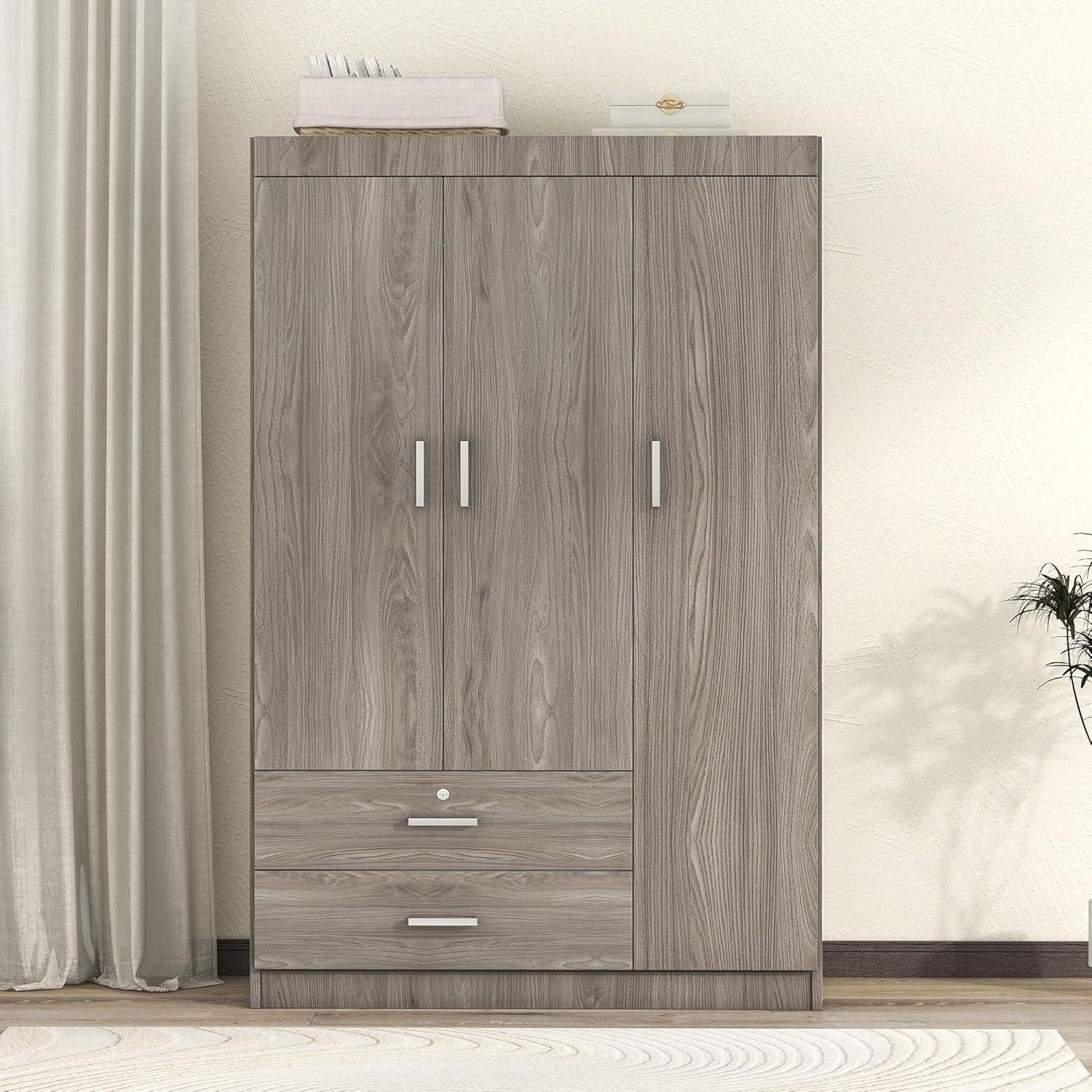
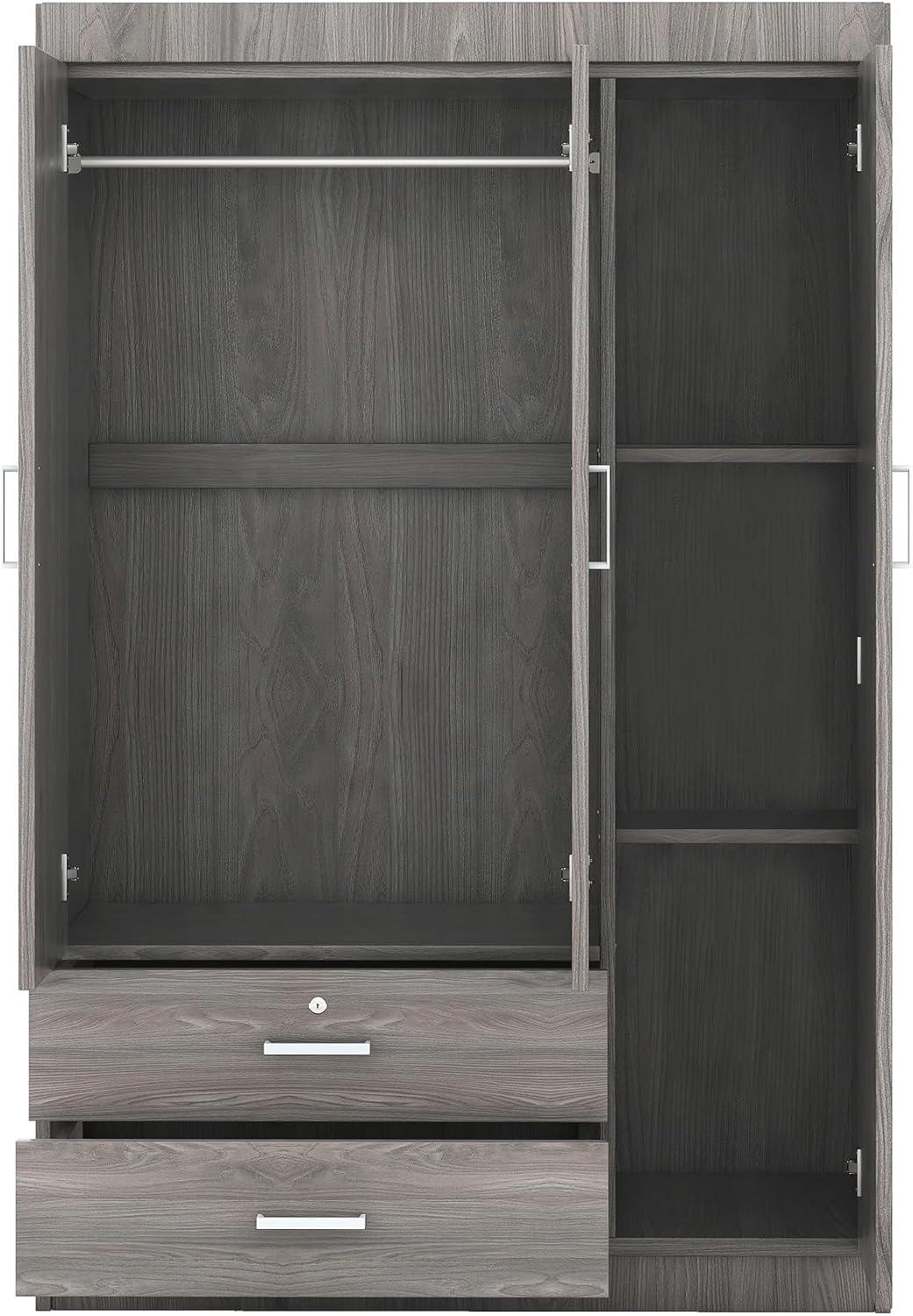
When you open the doors, your clothes meet a straightforward interior: a horizontal hanging rail stretches across one compartment so shirts and jackets hang in a continuous run, while adjacent bays provide flat surfaces where folded items stack. Low down, two drawers sit beneath those bays; the top drawer is fitted with a lock and the drawers slide on runners so they pull out and settle back with a steady, guided motion. As you place garments inside, heavier stacks flatten slightly against the shelf fronts and hangers naturally line up along the rail.
In everyday use, longer pieces tend to fall close to the base of the wardrobe and shorter items sit well clear of the drawers; folded knitwear and tees compress into the shelf depths rather than spreading out. The locked top drawer keeps small personal items separate from the main storage, and the rail’s span allows for an uninterrupted row of hanging clothes until the compartment fills.
| Interior element | Manufacturer-listed capacity |
|---|---|
| Shelves | 25 |
| Hanging rail | 45 |
| drawers | 25 |
Size and fit for your layout: measuring the footprint and visual scale in your space
The piece occupies a modest footprint relative to many three-door closets: about 41.3″ long by 18.5″ deep, rising to roughly 68.2″ tall. Placed against a wall, the depth keeps the profile fairly close to the surface, while the width gives it enough presence to read as an anchor without spanning a large wall. When drawers are pulled or doors are opened, the front plane projects into the room and briefly increases the required clear floor area.
| Measurement | Inches | Centimetres (approx.) |
|---|---|---|
| Width (left to right) | 41.3″ | 105 cm |
| Depth (front to back) | 18.5″ | 47 cm |
| Height | 68.2″ | 173 cm |
In most rooms with standard ceiling heights the unit stops well short of the ceiling and can feel proportionate next to lower dressers or bedside tables. The flat-pack delivery and panelized components mean the item often arrives in pieces; the larger panels are easier to maneuver through doorways before assembly, while the assembled cabinet tends to be less forgiving in narrow corridors. During setup and later adjustments, it’s common to nudge the cabinet slightly to align doors and to shift items on shelves so fronts sit even — these small movements change how much floor space it commands from moment to moment.
View full specifications and size options on the product page
Daily handling and access you’ll experience: how doors glide, drawers run and knobs feel
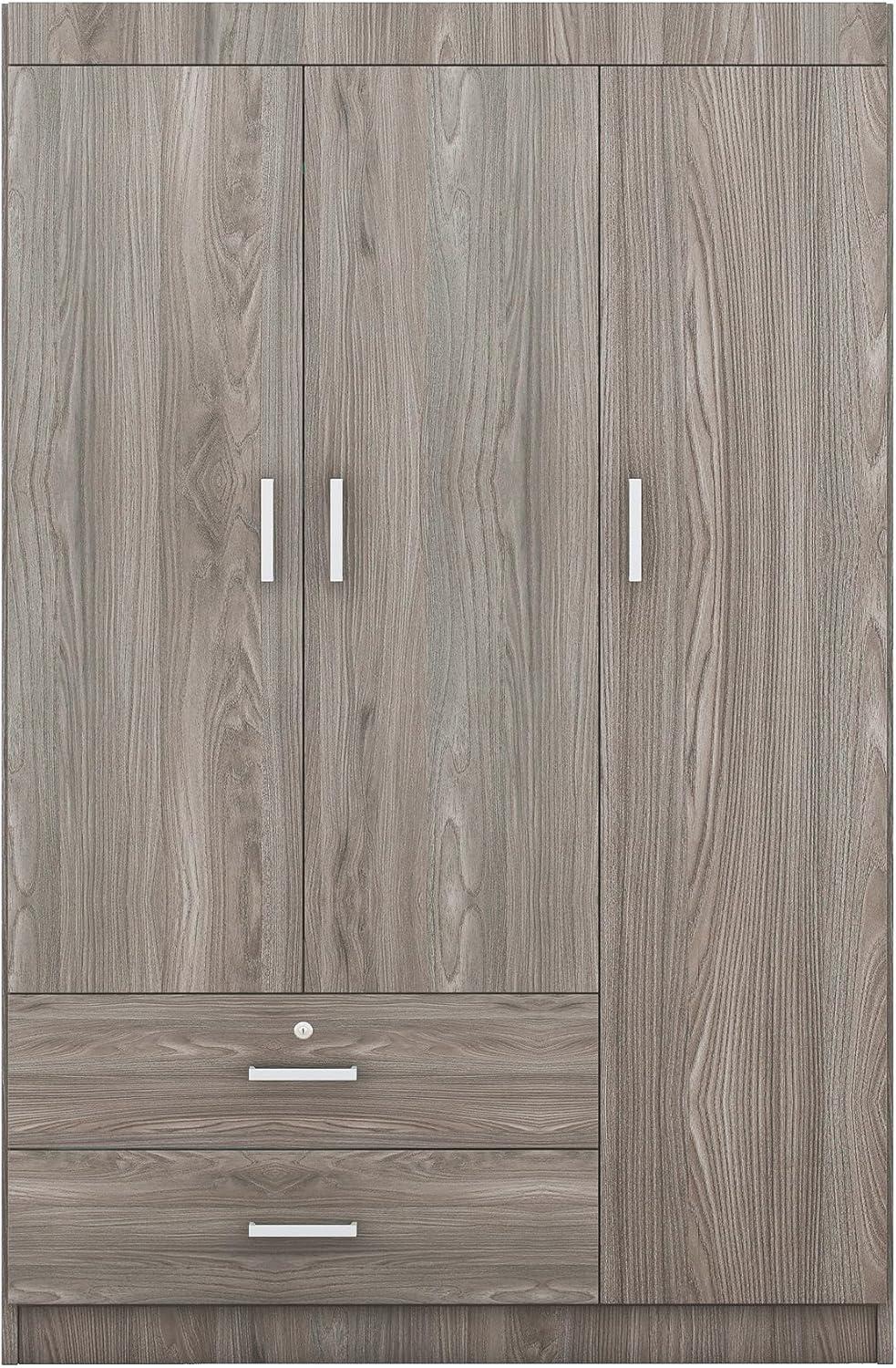
Opening either of the three doors feels deliberate rather than loose. The hinges give a measured resistance at the start of the swing,then the panel moves with a steady,low-pitched motion and settles against the frame without a sharp clack. When a door is nudged closed from a slight angle, the catch and edge alignment tend to guide it into place; small readjustments of the hinge screws after the first few days of use are common as the parts bed in.
The drawers run on simple runners that let them slide in and out with a noticeable, even drag; they don’t glide like soft-close hardware but they also don’t stick abruptly. Fully extended, a slight wobble can be felt if the load shifts, and the top drawer’s lock mechanism makes a discrete, audible click when engaged which also adds a touch of stiffness to the pull. The long satin-silver handles feel cool and smooth under the hand, their length providing leverage so a light tug opens a loaded drawer or door.
| Component | Typical feel in daily use |
|---|---|
| Doors | Measured swing, low sound on close, guided alignment |
| Drawers | Even sliding with slight drag, minor play when fully extended |
| Handles/knobs | Cool, smooth metal feel; good leverage for pulling |
Small settling noises and tiny adjustments to screws or runner plates can appear during the first weeks of normal use, a pattern that tends to quiet down as parts seat themselves. For full specifications and to check size or color options, view the product details here.
How the wardrobe matches your expectations and where its practical limits appear
In everyday use the piece largely aligns with expectations set by its description: drawers run on their runners and close with a consistent feel, the top drawer’s lock operates as described, and the hanging rail supports a typical mix of shirts and jackets without immediate sag. Shelves hold folded items in a way that makes access straightforward; opening a door and reaching for frequently worn garments becomes a small, repeatable routine. Small habits—tucking a shirt back onto the rail, nudging a drawer to sit flush—are part of interacting with it and tend to go unnoticed once the unit is settled in place.
where practical limits appear is in more loaded, everyday scenarios. When shelves approach their rated loads they can show a slight bow under weight, and a densely packed rail feels less forgiving than when sparsely hung. Drawers travel smoothly until heavier items are stacked toward their fronts, at which point movement can feel tighter. After assembly and with repeated handling, the unit can register minor misalignments in door gaps or drawer seating; these are gradual, situational effects rather than sudden failures. The finish and surfaces also reveal fingerprints and smudges more readily during frequent use, so the look softens as the wardrobe is lived with.
| Component | Stated capacity (kg) | Observed behavior in typical use |
|---|---|---|
| Shelves | 25 | Hold folded items well; slight sagging noticeable near full load |
| Hanging rail | 45 | Supports shirts and jackets comfortably; becomes less flexible when densely packed |
| Drawers | 25 | Slide smoothly on runners; heavier front-loaded drawers feel tighter |
View full specifications and available color options
Assembly and placement notes for your setup: tools, steps and clearances to plan
Ensure loads on shelves, hanging rail, and drawers do not exceed stated weight capacities. before you start, clear a flat work area roughly the size of the wardrobe laid on its back; you’ll find it easier to sort panels and fittings on a carpet or blanket so scratches are less likely. A basic set of tools — Phillips screwdriver, flat screwdriver, hammer or mallet, adjustable wrench, a tape measure and a level — will cover most tasks. The flat-pack usually includes several of the small fasteners and a simple allen key,but you may want a cordless drill for pilot holes and a second pair of hands when it’s time to stand the unit upright.
Begin by checking the package contents against the parts list, then loosely fit door and drawer components before tightening every screw. The hanging rail and shelves tend to sit more true once the back panel is secured,so attach that early in the sequence. When inserting drawers, slide them a few times to feel the runners seat and settle; slight rubbing or tightness can relax after the first few uses, and you’ll find yourself nudging a drawer a fraction to line it up. If there are adjustable feet or small wedges, use a level after the wardrobe is upright — rooms aren’t perfectly flat and a tiny adjustment keeps doors from drifting open or rubbing.
Plan the route and clearances before moving the assembled cabinet into place. The unit’s footprint and the need to open all three doors and pull drawers mean you’ll want unobstructed space in front and a little breathing room at the sides. Below is a simple reference to help visualize clearances and load points; treat the numbers as practical targets rather than absolute rules, since floors and hinges can vary.
| Reference | Typical measurement to plan |
|---|---|
| External footprint (L × W × H) | 41.3″ × 18.5″ × 68.2″ (allow extra for wrapping and handle protrusion) |
| Front clearance for full drawer access | about 24″ (less may work if you only open partially) |
| Door swing / side clearance | leave ~2–4″ at each side so doors and handles don’t hit adjacent walls or furniture |
| Ceiling and doorway planning | measure doorways and stairs before assembly; some rooms require assembling upright in place |
| Load points | Shelves: 25 lbs each; Hanging rail: 45 lbs; Drawers: 25 lbs each |
When shifting the assembled piece, lift rather than drag; the cabinet can feel heavier once drawers and fittings are in place, and handles or trims might catch. Small habits — angling the unit slightly to clear a frame, smoothing the backing panel while tightening screws — often make the final positioning smoother. For some households,a final check after a day or two finds a few fasteners eased or a shelf nudged; that’s normal as the unit settles into use.
How the Set Settles Into the Room
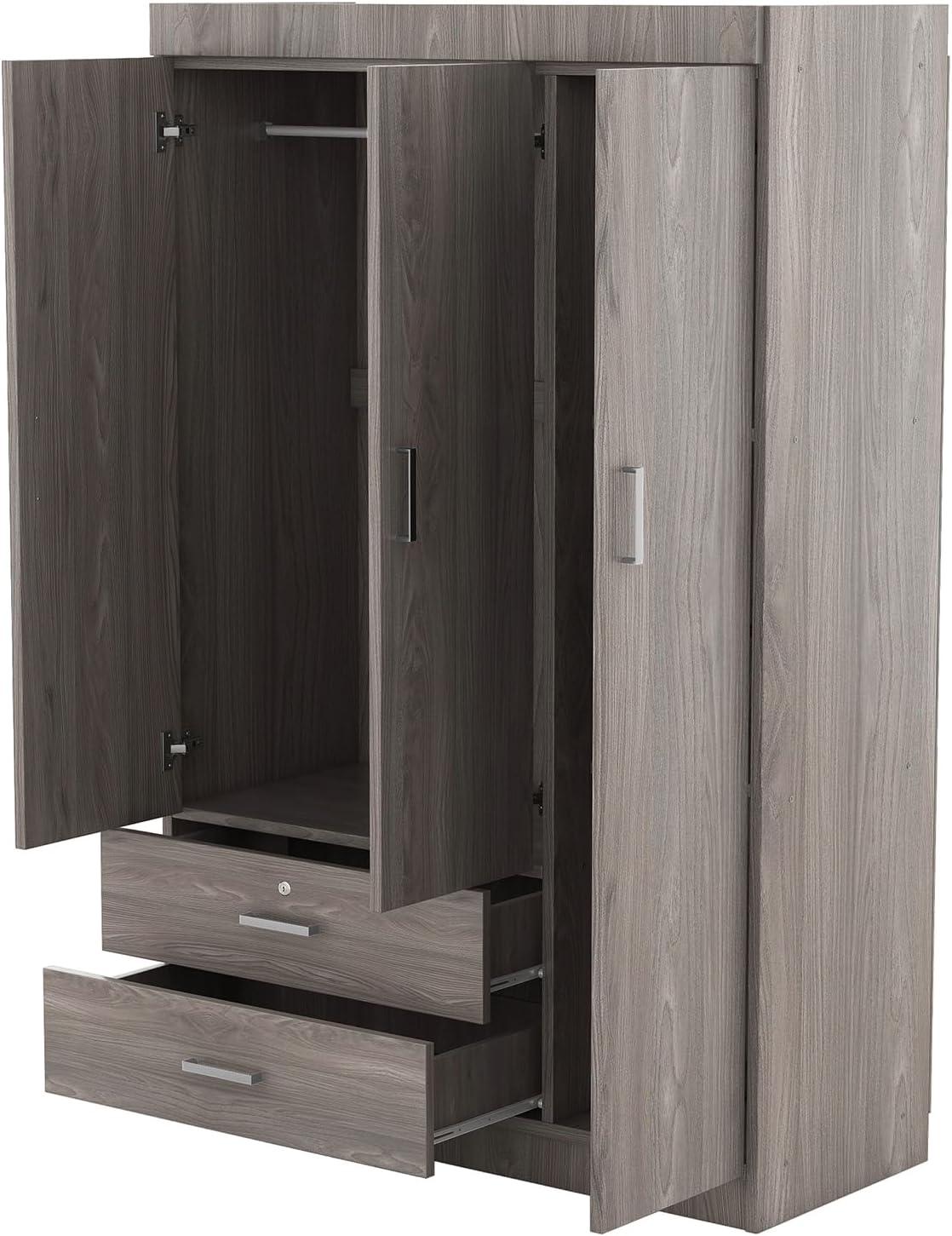
Over time you notice the Quarte Modern 3-Door Wardrobe with 2 Drawers, Shelves and Hanging Rail, Freestanding Armoire wardrobe Closet, clothes Storage Cabinet Organizer (Gray/) folding into the background of mornings and evenings. In daily routines its doors open and close with a familiar weight, and the drawers and shelving take on a quiet, functional comfort as the room is used. Surface scuffs and the soft dulling of finish, small and ordinary, begin to mark regular household rhythms and make it feel lived-in. After a while it becomes part of the room.
As an Amazon Associate I earn from qualifying purchases.