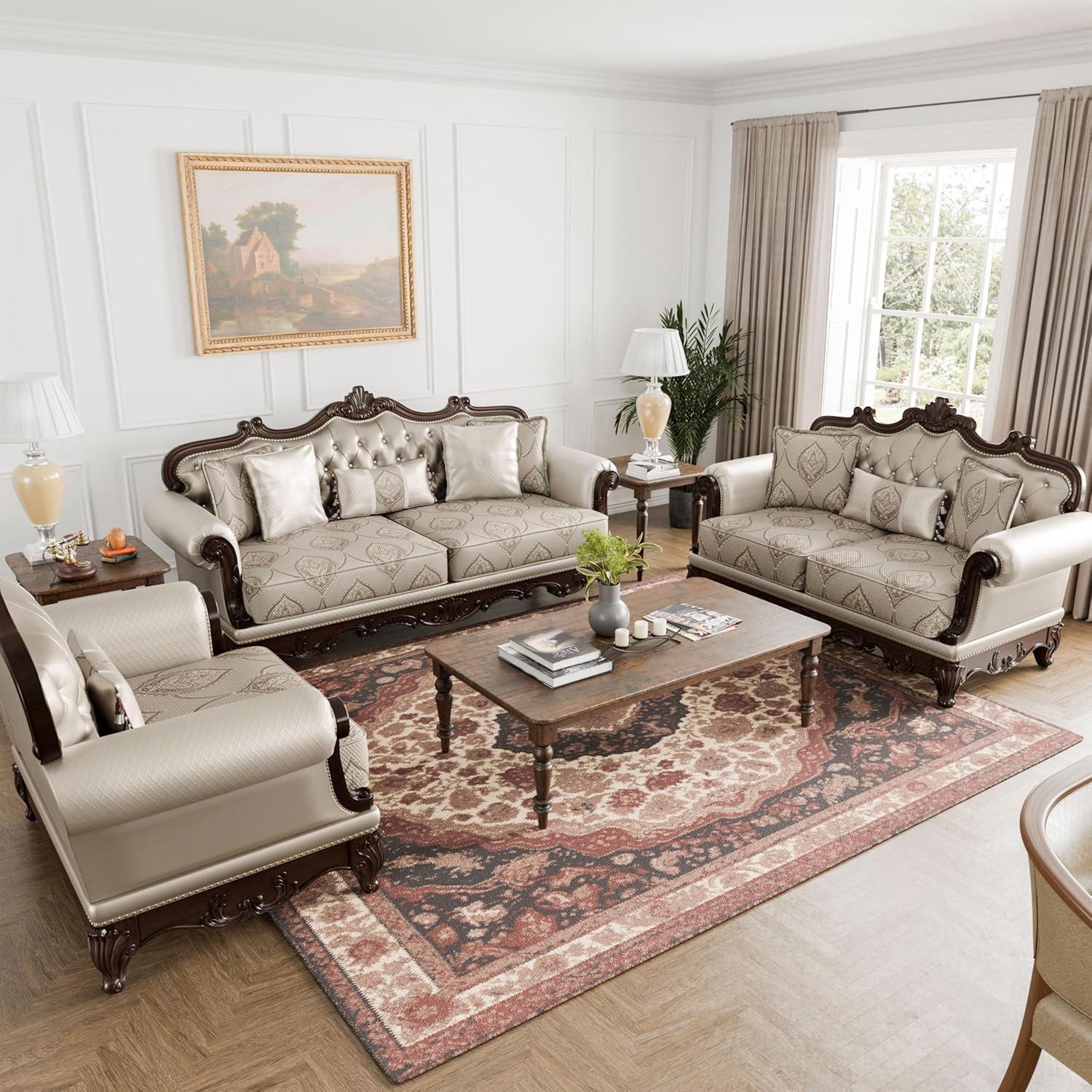
Furniture of America Adelaide – how it fits your living room
You notice the Adelaide set from Furniture of America the moment you enter — dark-cherry trim giving the beige upholstery a steady, grounded silhouette that changes the room’s scale. Up close the jacquard weave has a faint raised texture and the button-tufted backs catch the light; the rolled arms and carved faux-wood details feel deliberate rather than fussy.you sink into the cushions briefly and feel a soft,even give; the cabriole legs and nailhead trim add a formal rhythm to the overall presence. It sits in the living space like something that’s been lived with, its visual weight and textures quietly directing how the rest of the room reads.
When you first see the Adelaide three piece in your living room or office
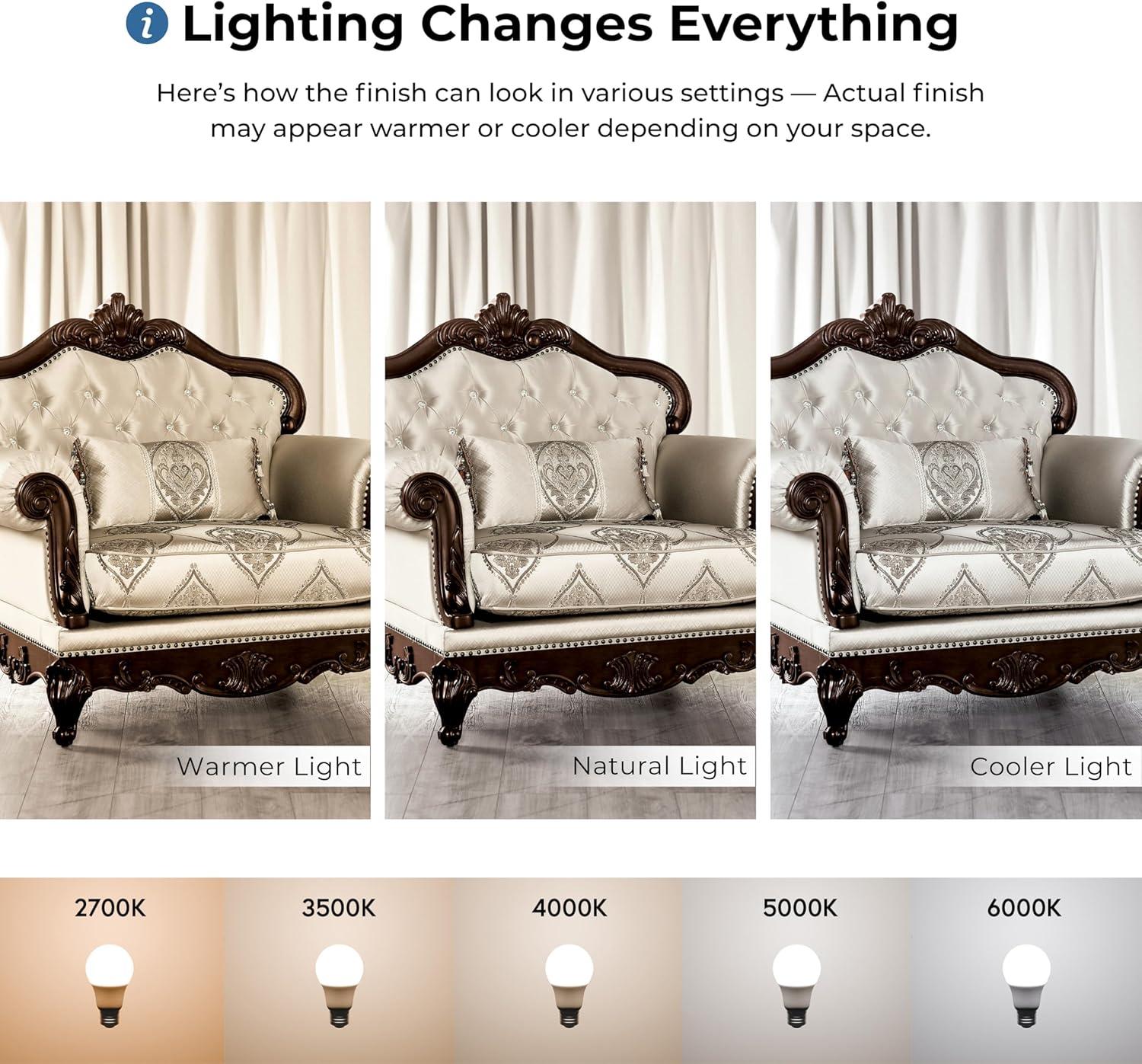
At first glance, the set reads like a single, deliberate element in the room: the rolled arms and carved wood edges cut a clear silhouette against whatever wall or floor surrounds them. You notice the contrast between the darker wood tones of the frame and the lighter upholstery from across the room, and as you move closer the button-tufting and jacquard texture become more apparent — little catches of light on the crystalline buttons, the patterned weave visible where the cushions crease. The cabriole legs lift the pieces just enough to let the floor show through,which changes how the set sits in the space depending on rugs or shadows nearby.
Up close,the sofa behaves like furniture that has presence and habit: the seat cushions give under your weight and then settle,the accent pillows sink into folds that you absentmindedly smooth,and seams shift when you scoot over for a conversation. nailhead trim and faux-wood scrollwork pick up dust or reflections in different ways throughout the day, and the carved arm details occupy some of the arm’s surface so the top edge feels narrower when you rest an elbow. Small adjustments — plumping a cushion, aligning a welt — are part of the first interactions, and those movements reveal how the set both anchors the room visually and responds to the everyday rhythms of use.
What draws your eye about the rolled armrests, dark cherry trim and beige upholstery
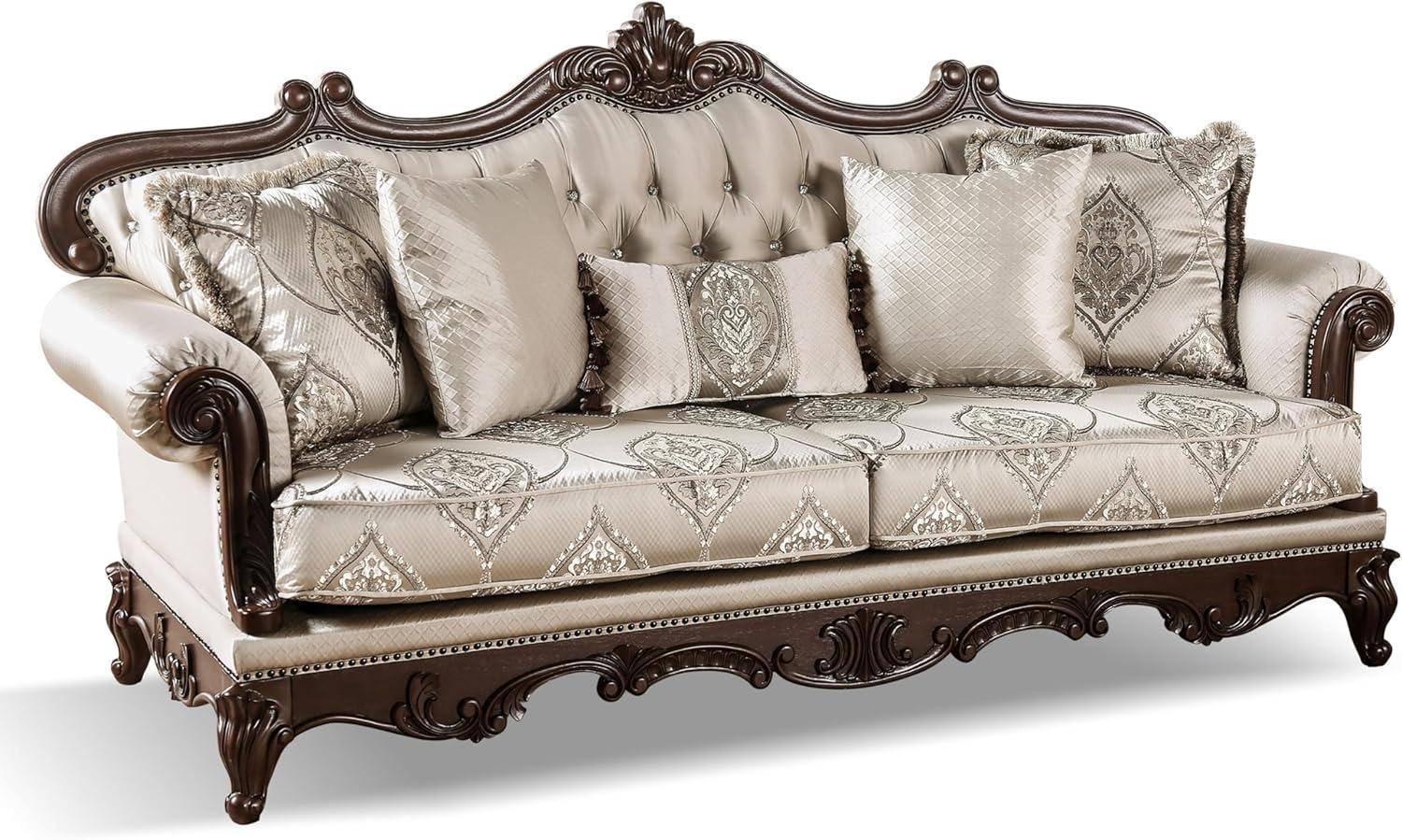
When you first look, the rolled armrests give the seating a soft, continuous silhouette — a series of curves that break up the straight lines of a room. Light pools and fades along those curves, so the arms read as a sequence of gentle shadows rather than a single flat plane. As you settle in, your hand unconsciously finds the outer seam; smoothing the fabric or adjusting a cushion makes those curves shift subtly, the upholstery folding and relaxing where your weight meets the roll.
The dark cherry trim acts like a fine outline: from some angles it reads almost glossy, picking up narrow highlights along carved edges, while from others it settles into a warm, deeper hue that anchors the piece. Against the beige upholstery that contrast becomes more apparent — the neutral cloth softens the wood’s brightness and lets the trim define the sofa’s profile. Over time and normal use you notice small,lived-in changes: the beige can show faint shadowing where you regularly rest an arm,seams relax a touch,and the cherry can retain the faint trace of a hand or the soft sheen from repeated smoothing. These are the kinds of details your eye and fingers keep returning to during ordinary moments of sitting, shifting, and tidying.
What the frame, fabric and finish tell you when you touch and inspect them
When you run a hand along the arms and edges, the carved wood accents feel cool and finished rather than raw; the painted dark-cherry surface gives a faint gloss and the shallow grooves from the carving are perceptible under your fingertips. Pressing gently under the base or against a leg reveals a firm backbone—there’s little spring in the frame itself—and lifting a cushion to peek at the underside shows a finished, covered structure instead of exposed timbers. The nailhead trim registers as a hard, metallic note when you brush it; the studs sit flush enough that your palm slides across them, but your fingers can still catch the tiny gaps beside each tack.
Across the seating surfaces, the jacquard weave reads clearly to the touch: the pattern is slightly raised, so smoothing a cushion or running your thumb over a seam makes the texture obvious. The button-tufted back creates discrete dimples you instinctively press or pat, and the fabric pulls and relaxes around those buttons—seams move a little when you resettle a pillow or shift a cushion. When you sink into a seat and then stand, the cushions push back with a measured rebound; they don’t snap instantly, and you’ll often find yourself tamping them down or smoothing the welt where stitching tucks the cover to the frame.
| Where you touch | What you feel |
|---|---|
| Arm carving / faux-wood trim | Cool, smooth finish with shallow carved ridges under your fingers |
| Nailhead trim | Hard, metallic points that are mostly flush but detectable by touch |
| jacquard seat and back | Raised patterning and a slightly textured weave that responds when smoothed |
| Cushion give | Measured compression with a gentle rebound; seams and welt shift when you resettle |
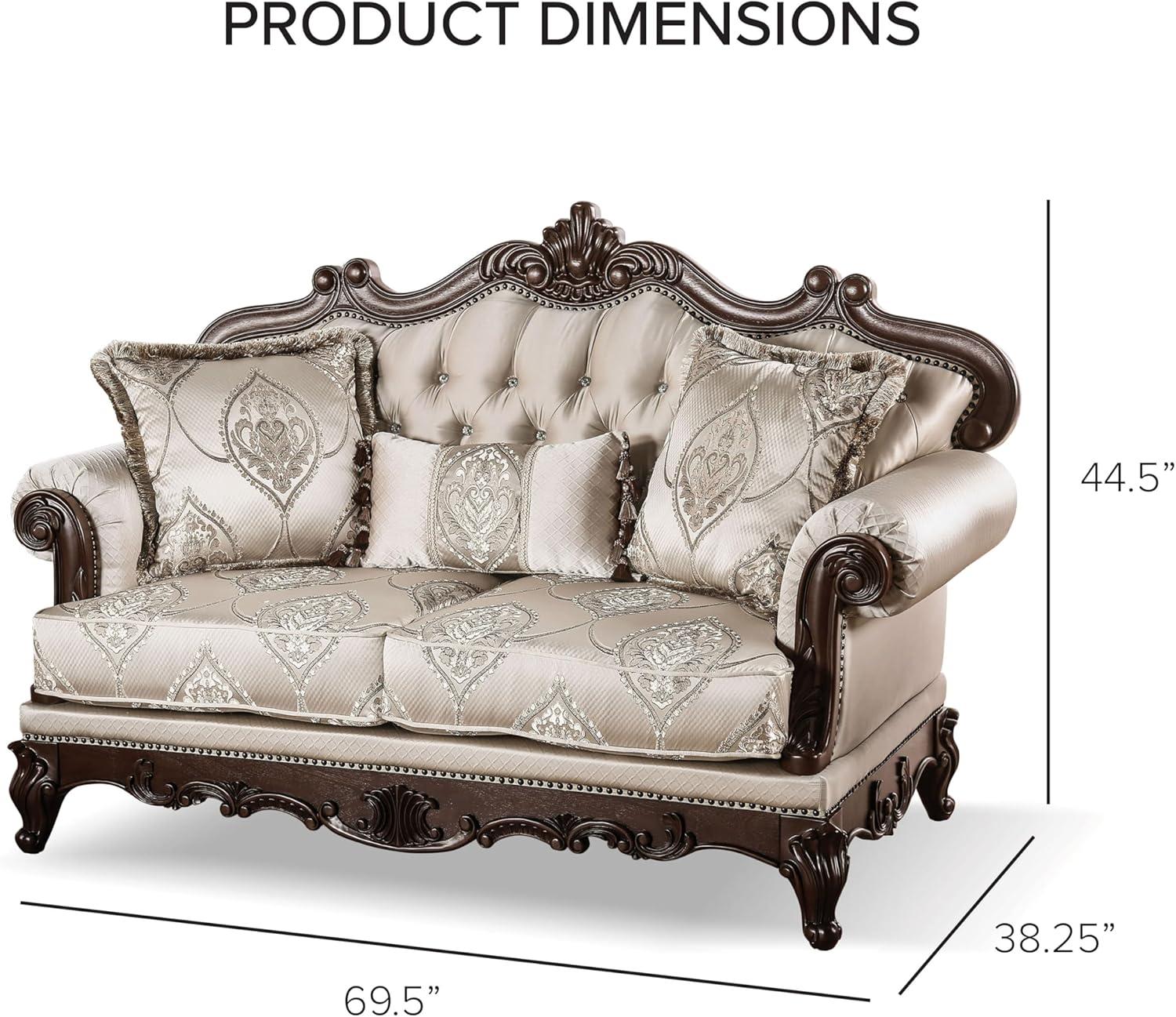
Seat proportions, back height and cushion give presented with measurements for your room

The seating dimensions and the way the cushions compress in use give a practical sense of how the pieces occupy space. Measured from typical points of contact, the seat depths fall in the low-20-inch range, with seat heights just under 20 inches from the floor; the tufted backs add another foot and a half to a bit more above the seat line. The cushions start about 6–7 inches thick when resting, and they tend to compress by roughly 2–3 inches under a normal sitting load. Over days of use the cushions settle slightly and require occasional smoothing; seams shift a little as the foam and upholstery conform to repeated movement.
| Piece | seat width (approx.) | Seat depth | Seat height (floor to top) | Back height (floor to top) | Cushion thickness (rest / typical give) |
|---|---|---|---|---|---|
| Sofa (3‑seat) | 68–72 in | 22–24 in | 19–20 in | 36–38 in | 6–7 in / compresses ~2–3 in |
| Loveseat (2‑seat) | 48–52 in | 22–24 in | 19–20 in | 36–38 in | 6–7 in / compresses ~2–3 in |
| Arm Chair | 26–30 in | 20–22 in | 19–20 in | 36–38 in | 6 in / compresses ~2–3 in |
In everyday use the rolled arms and sewn welts create small pinch points where cushions are nudged during shifting, so cushions often need a speedy pat to restore a uniform surface. The button‑tufted backs present a firmer face at first touch but give slightly with repeated leaning, which alters the perceived back height by an inch or so over time. These tendencies are subtle; measurements above are approximate and reflect the pieces as inhabited rather than as brand-new showroom items.
View full specifications and size options
Living with the set day to day in a family room or office and the wear markers you’ll notice
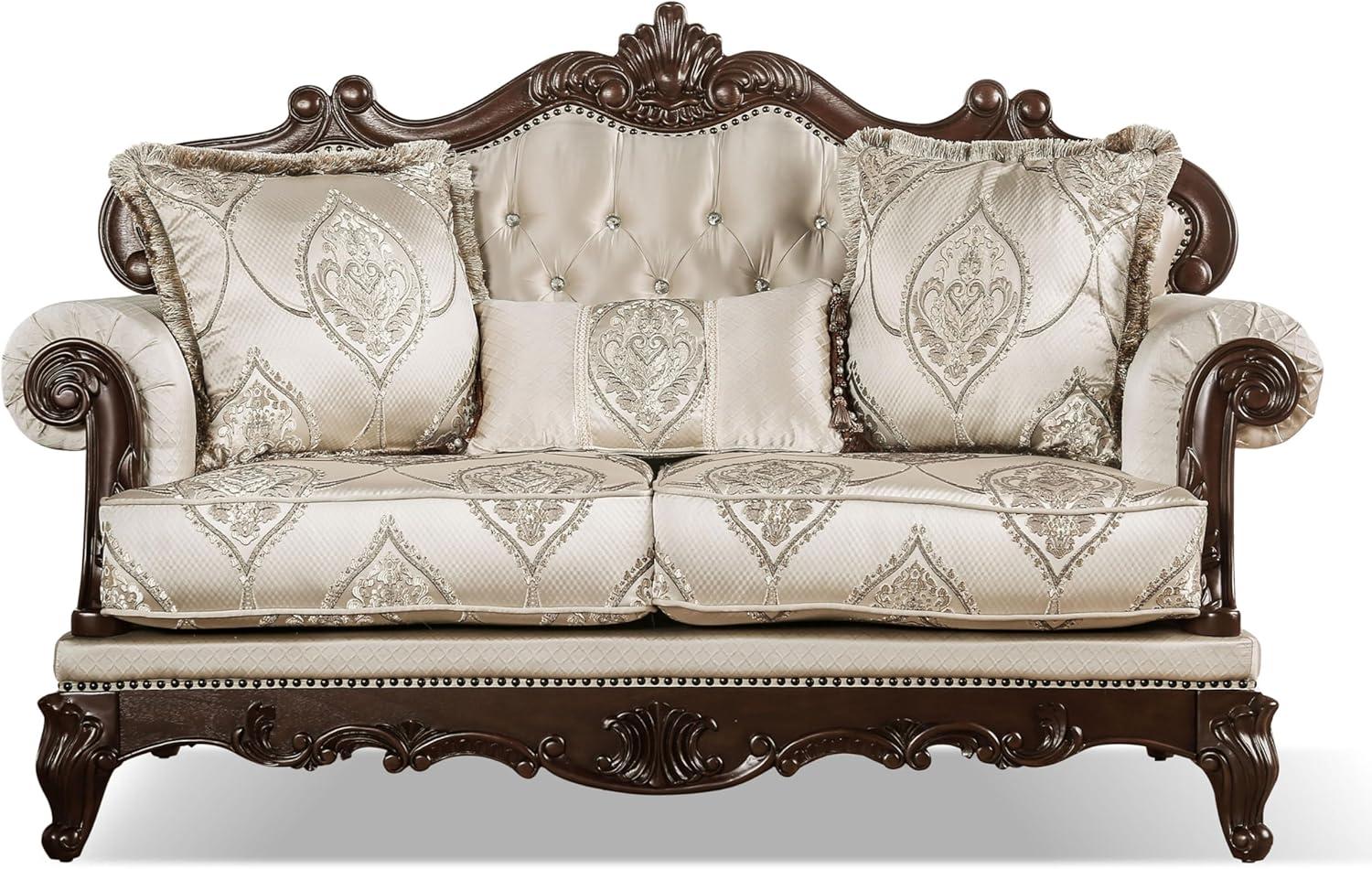
Over weeks and months of everyday use the upholstery develops the kind of small, familiar signs that mark a lived-in set. Seat cushions tend to show shallow hollows in the spots most frequented; the box cushions may compress slightly at the front edge and feel a touch less springy after repeated sitting. The button-tufted backs pick up gentle creasing where shoulders and arms rest, and the crystalline buttons catch dust and the occasional dulling from friction so they stop gleaming as they did when new. Armrests, with their rolled shape and faux-wood trim, collect the most visible contact: the fabric on top can smooth and brighten a bit from continuous hand placement, while the faux wood shows hairline scuffs where bags or belts brush it.
Daily habits influence how those markers appear. In a family room with active use, cushion tossing and smoothing become a near-automatic routine, and accent pillows flatten and need regular plumping. In an office setting with a single regular user, wear concentrates in a narrower zone—seat depth may feel different between the center and the sides, and nailhead trim along the arms can develop tiny surface abrasions from brief knocks.Seams near high-contact areas sometimes relax and require occasional straightening, and the cabriole legs pick up dust and small scuffs at the feet over time. For some households the beige upholstery shows subtle darkening in high-contact zones faster than in less-used rooms; in others, the change is slower and mainly noticeable at close range.
| Area | Wear markers | When they typically appear |
|---|---|---|
| Seat cushions | Shallow hollows, softer feel | Weeks to months of daily use |
| Button-tufted back | Gentle creasing, less shine on buttons | Noticeable after regular leaning |
| Armrests & faux-wood trim | Fabric smoothing, minor scuffs on trim | Early and ongoing with frequent contact |
| Accent pillows & cushions | Loss of loft, flattened corners | After repeated use and plumping |
Small habits—smoothing a cushion before sitting, shifting to avoid a seam—become part of everyday interaction with the set, and those gestures are also where many of the visible changes start. The overall silhouette and carved details remain identifiable while surface-level signs accumulate, and how quickly they show depends largely on traffic patterns and routines in the room.
see full specifications and available color options on the product page.
How the Adelaide set matches your needs and where it reaches its limits in everyday use
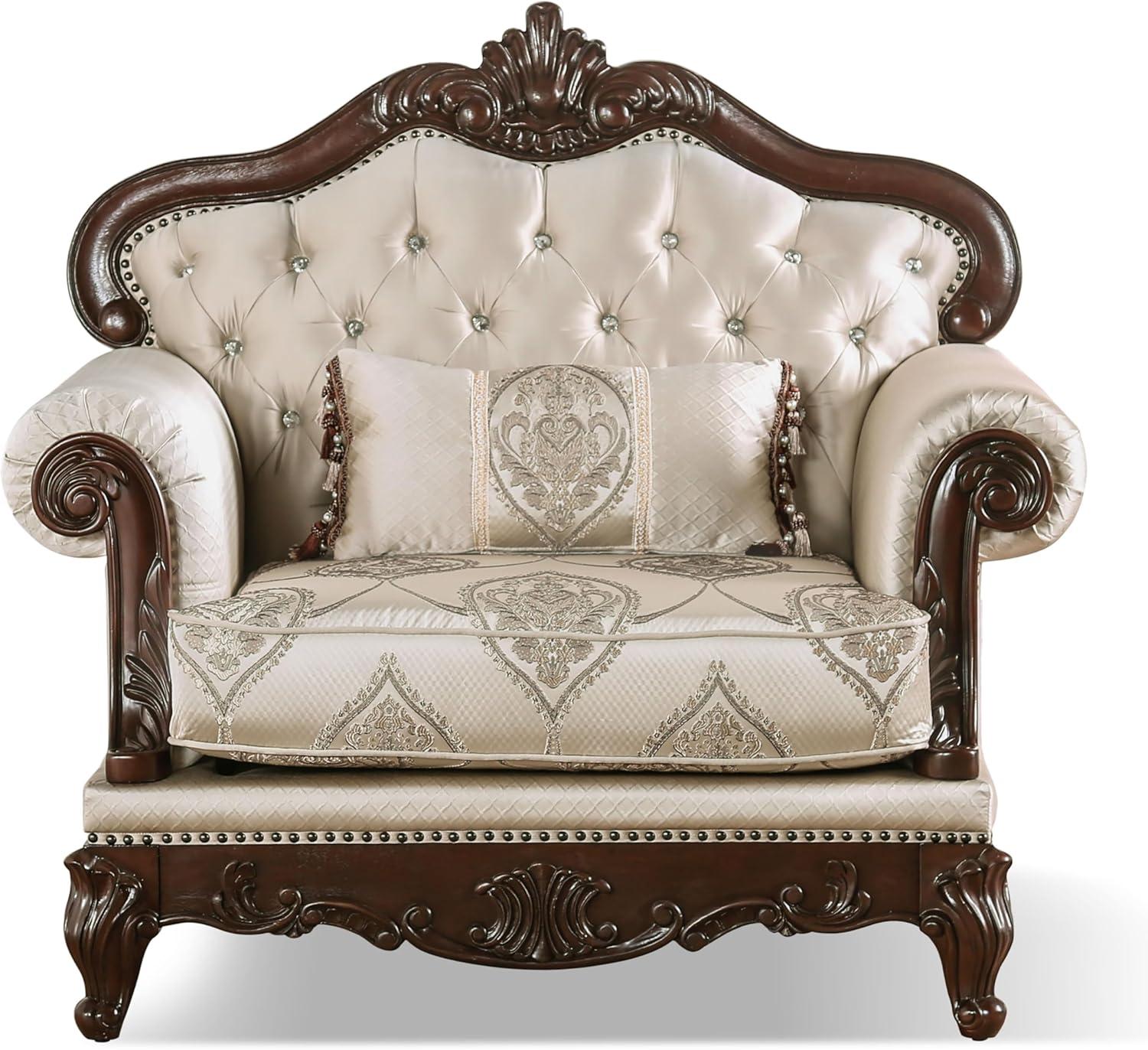
Daily use reveals a set that settles into familiar rhythms. Seat cushions soften with regular sitting and the tufted backs keep most of their shape while showing the occasional dip where people tend to lean most. The rolled arms double as brief headrests during short naps and as convenient places to rest an elbow while reaching for a remote; over time the fabric along those contact points can develop a faint sheen from repeated smoothing and shifting. The wooden trim and carved details retain a solid feel, though dust and small crumbs collect in the crevices and require more than a quick brush to clear.
Certain limits become apparent through repeated habits and heavier use.Extended stretching-out sessions can make the seating feel a bit confining,and cushion rebound tends to slow after weeks of daily use,encouraging people to shift or rotate cushions more often than they might expect.The decorative buttons and nailhead trim attract attention during close contact — catching on delicate fabrics or needing a gentle tuck if pillows are adjusted frequently.Moving the pieces around a room is awkward, since the weight and carved legs demand two hands and a careful grip; the accent pillows flatten after several days of use and are often smoothed or plumped before guests arrive.
| Everyday moment | Observed behavior over time |
|---|---|
| Short, daily lounging | Cushions relax into a comfortable, upright posture; backs stay relatively firm with localized softening. |
| Longer reclining sessions | Seat depth can feel limited and cushions rebound more slowly, prompting frequent shifts in position. |
| Routine upkeep | Dust collects in carved details; pillows need regular fluffing and cushions occasional rotation to maintain even wear. |
View full specifications, size and color options
Delivery, assembly and routine care you will handle for the three piece set
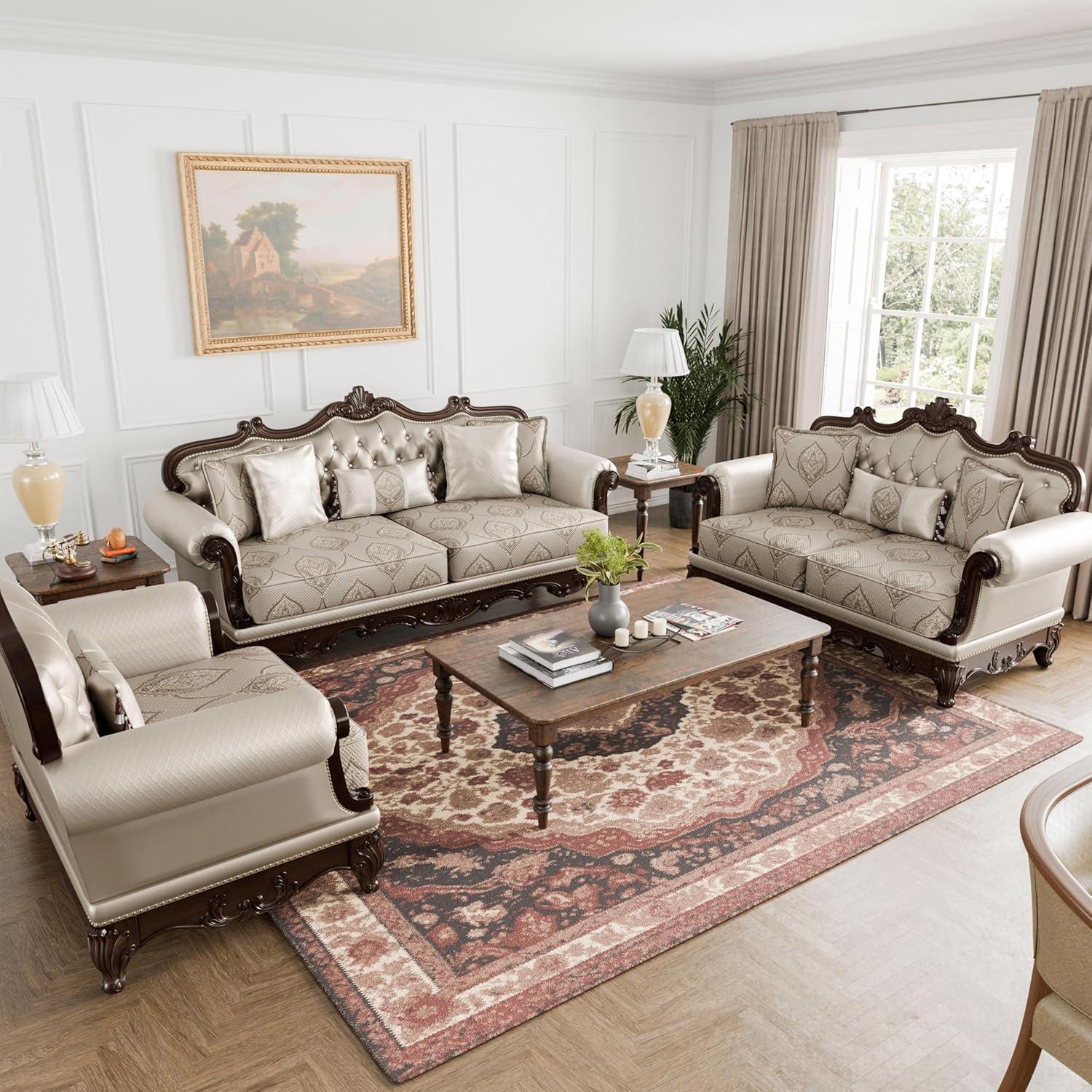
When the set arrives, it typically comes in separate cartons so you’ll be unpacking more than one box. The cushions often feel compressed at first and the carved wood pieces are wrapped rather than loose, so you’ll find foam corners and plastic sheeting to peel away. Bringing the cartons inside tends to involve short bursts of lifting and nudging furniture into place; onc unwrapped you may notice a faint new-fabric scent and a bit of give in the tufting that settles after a few hours of air.
Assembly mostly consists of small, hands-on tasks you’ll complete at the couch. You’ll be screwing on the cabriole legs, aligning and slotting any bracketed pieces together, and popping seat and back cushions into place. A basic tool like the included hex key or a common screwdriver usually does the job, and the work moves along if you set cushions down as you go and smooth the upholstery after each connection.In everyday use you’ll find yourself readjusting cushions and straightening welted seams; those little nudges are part of making the pieces sit and look right in your room.
Your routine care will be practical and intermittent rather than constant. You’ll tend to fluff the accent pillows and rotate or shift the box seat cushions when they begin to show everyday impressions, and a quick run of a soft brush or vacuum nozzle along creases will remove crumbs and dust from the tufting. The carved faux-wood trim and legs collect dust in different ways than the fabric, so you’ll frequently enough follow a dry-cloth pass for the wood details and a damp cloth for small fabric spots; spills usually draw immediate attention and get dabbed, while general refreshing happens on a looser schedule.
| Stage | What you’ll handle | Typical time or frequency |
|---|---|---|
| Delivery | Unpacking separate cartons, removing protective foam and plastic | One visit; unpacking 15–30 minutes |
| Assembly | Attaching legs, aligning brackets, placing cushions and pillows | Approximately 30–60 minutes total, spread across pieces |
| Routine care | Fluffing/rotating cushions, vacuuming creases, wiping wood trim | Light attention weekly; spot care as needed |
How the Set Settles Into the Room
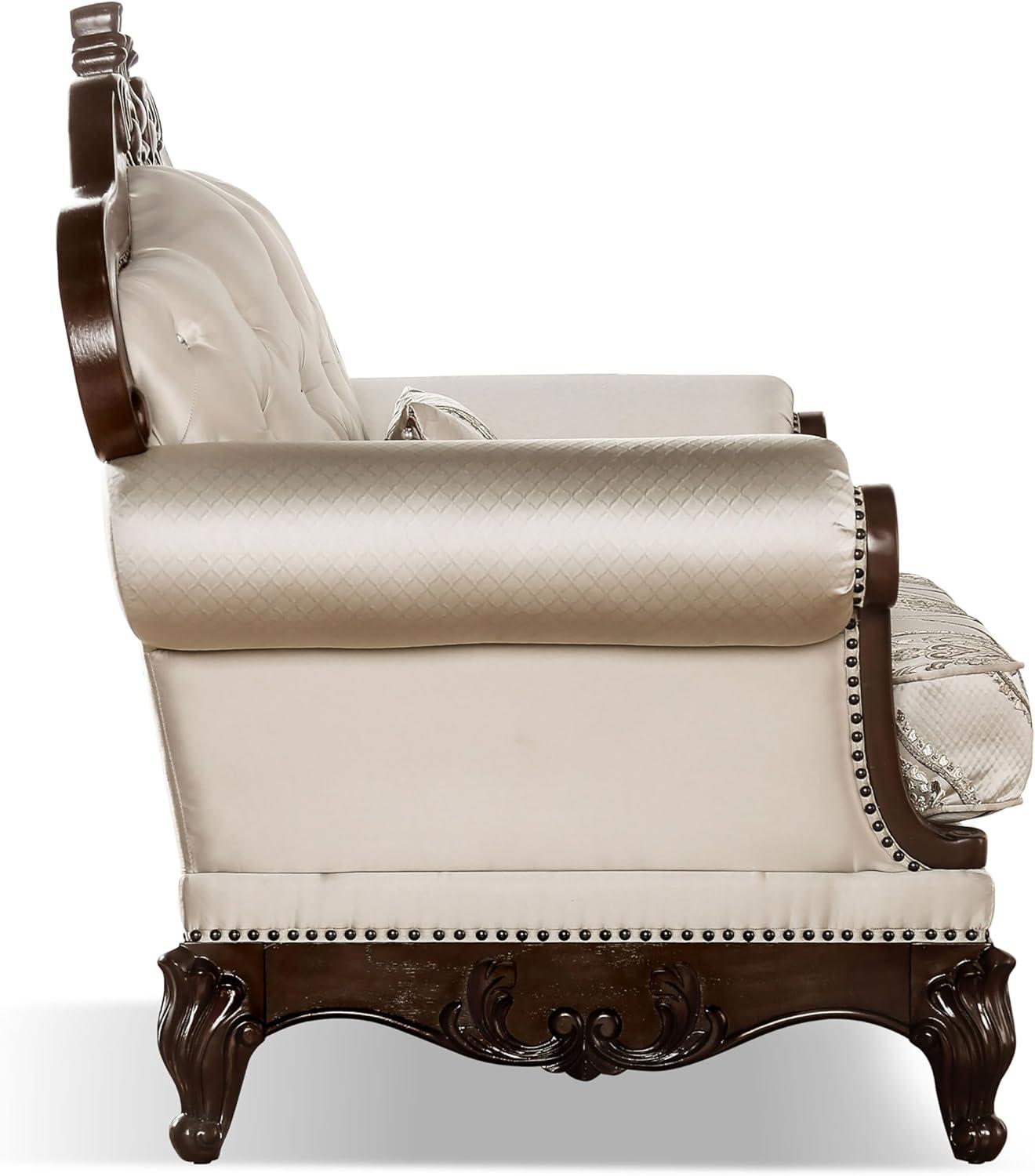
Living with the Furniture of America Adelaide Customary Upholstered Sofa Set with Rolled Armrests,Arm Chair,Wooden Loveseat and Comfortable Couch for Living Room,Office,3-piece Set,Dark Cherry/Beige feels less like an event and more like a slow familiarization over time. You watch how it quietly rearranges the ways the room is used — where you drop a book, which cushions deepen with daily use, the small changes in surface sheen from palms and light — all part of its comfort behavior in daily routines. In regular household rhythms it becomes the backdrop for mornings, pauses between tasks, and evenings that stretch into low conversation, taking on the marks of habit rather than declaration.After a while it simply rests.
As an Amazon Associate I earn from qualifying purchases.