Linon Koffee Pewter Metal Swivel: how it fits your counter
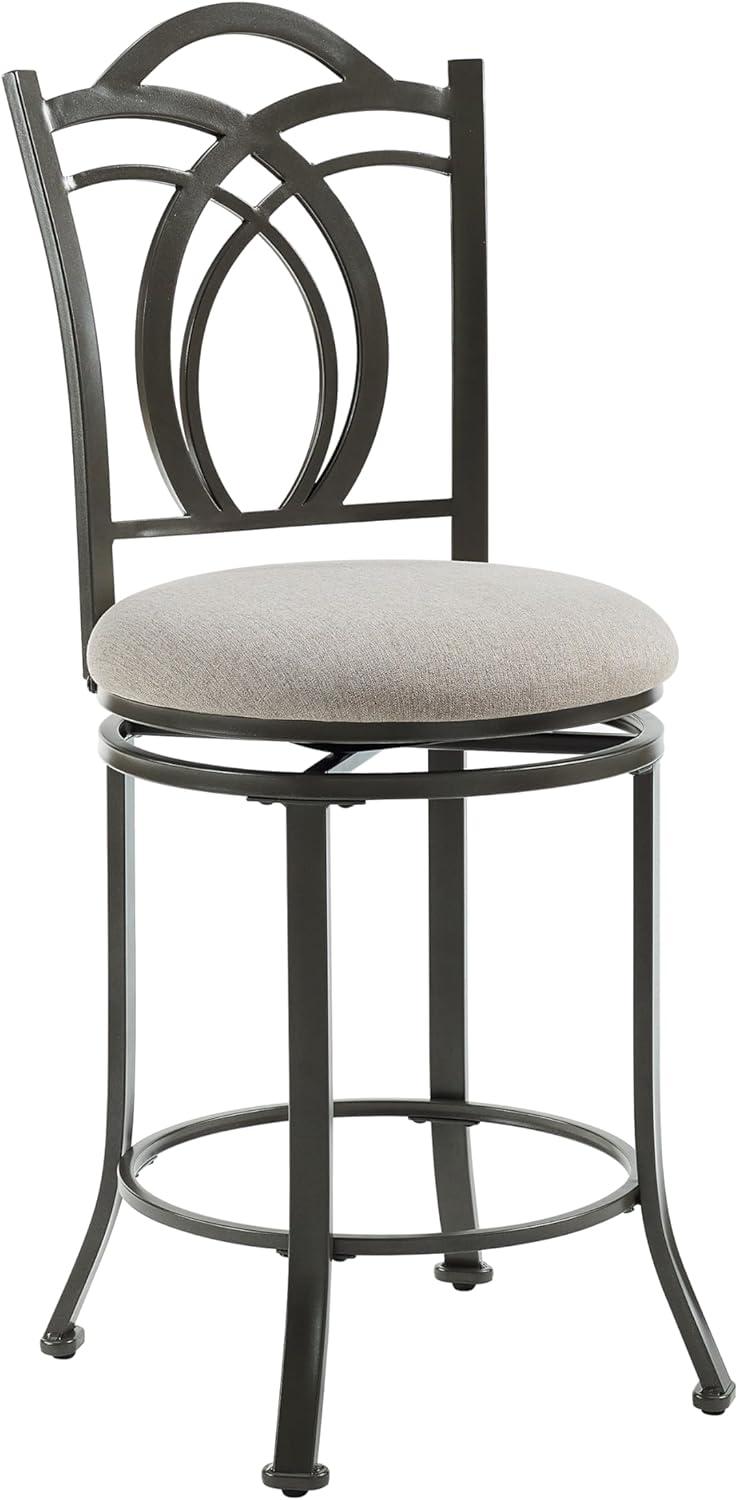
Sunlight catches the pewter frame first, giving the metal a soft, timeworn gleam that makes the piece feel like it’s been part of the kitchen for years. The Linon Koffee Pewter counter stool sat at my island with that swooping, ornamental backrest that draws yoru eye before the seat does. When you press the beige cushion it yields with a quiet plushness—ther’s a low nap to the fabric that feels muted under your palm and springs back without fuss. Swinging the seat is effortless, the swivel turning smooth while the circular footrest gives your feet a steady place to settle. In the room it reads with a modest visual weight: not overbearing, but unmistakably present.
What you notice first when the Linon Koffee Pewter stool arrives at your door
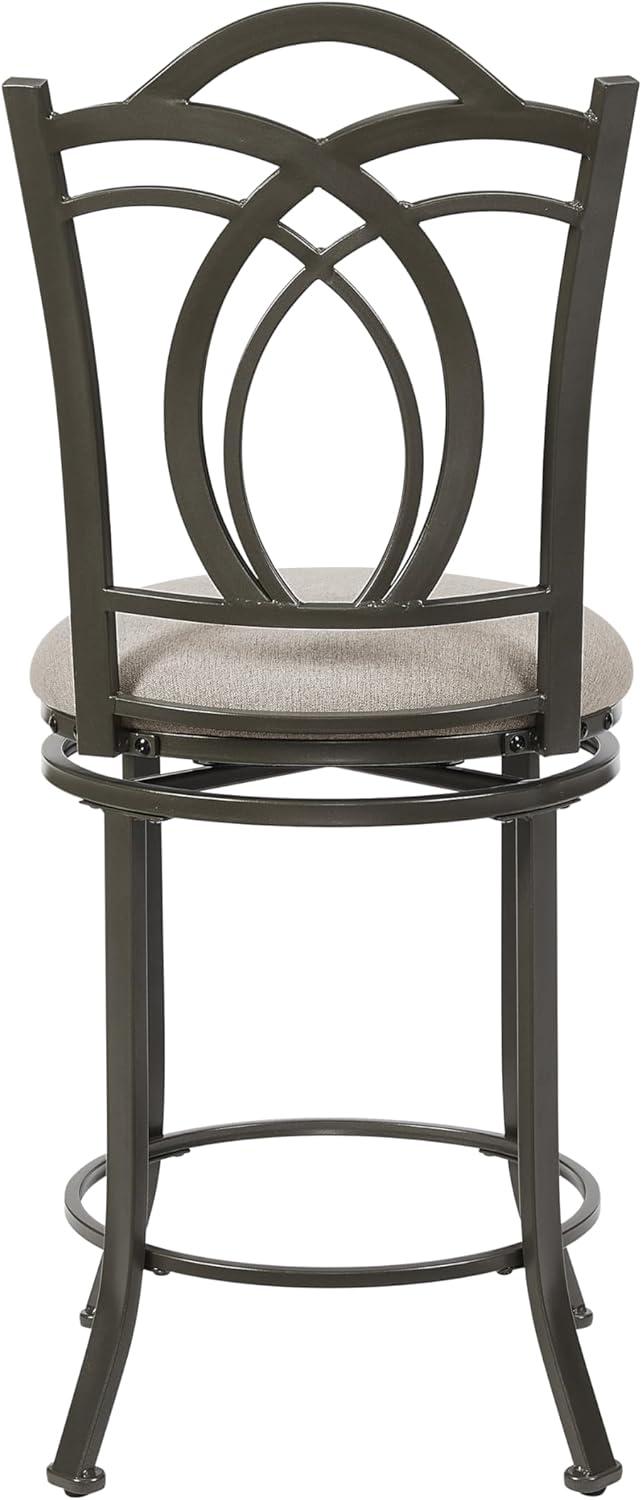
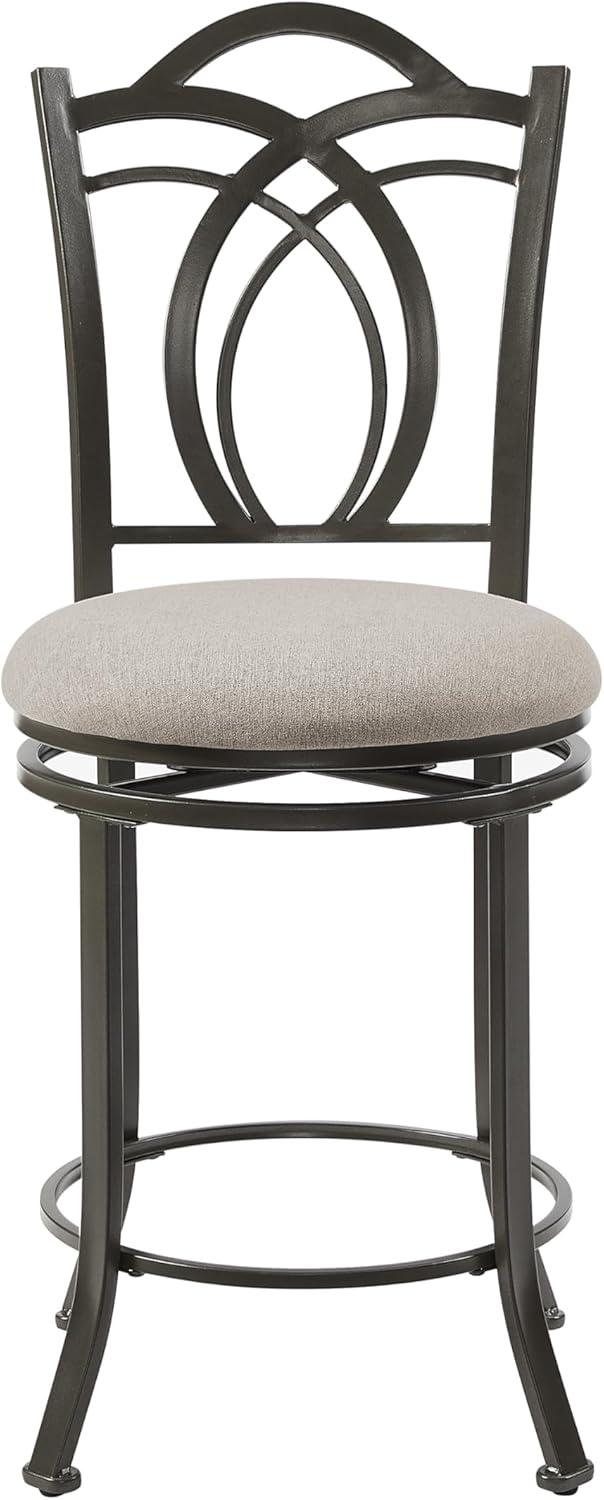
The first thing you notice is the silhouette — the swooping backrest and the circular footrest read clearly even before you drag the box into the room. Once unwrapped, your eye follows the curved metal lines; the pewter coating catches the light in a way that looks gently aged rather than glossy new. The beige cushion sits slightly proud of the frame, its surface showing a soft nap and the faint texture of the weave when you run a fingertip across it.
As you set the stool down and make small adjustments — smoothing the cushion, nudging the backrest into line, shifting your hand along the seam — the piece feels like a compact, composed object. The seat gives a modest amount under pressure and returns without drama; the metal feels cool where your palm meets it. Small details stand out up close: neat stitching along the upholstery, a barely noticeable weld at the frame junction, and the way the curves align from different angles when you step back and look across the counter.
How the pewter frame and beige upholstered seat look in your kitchen or counter nook
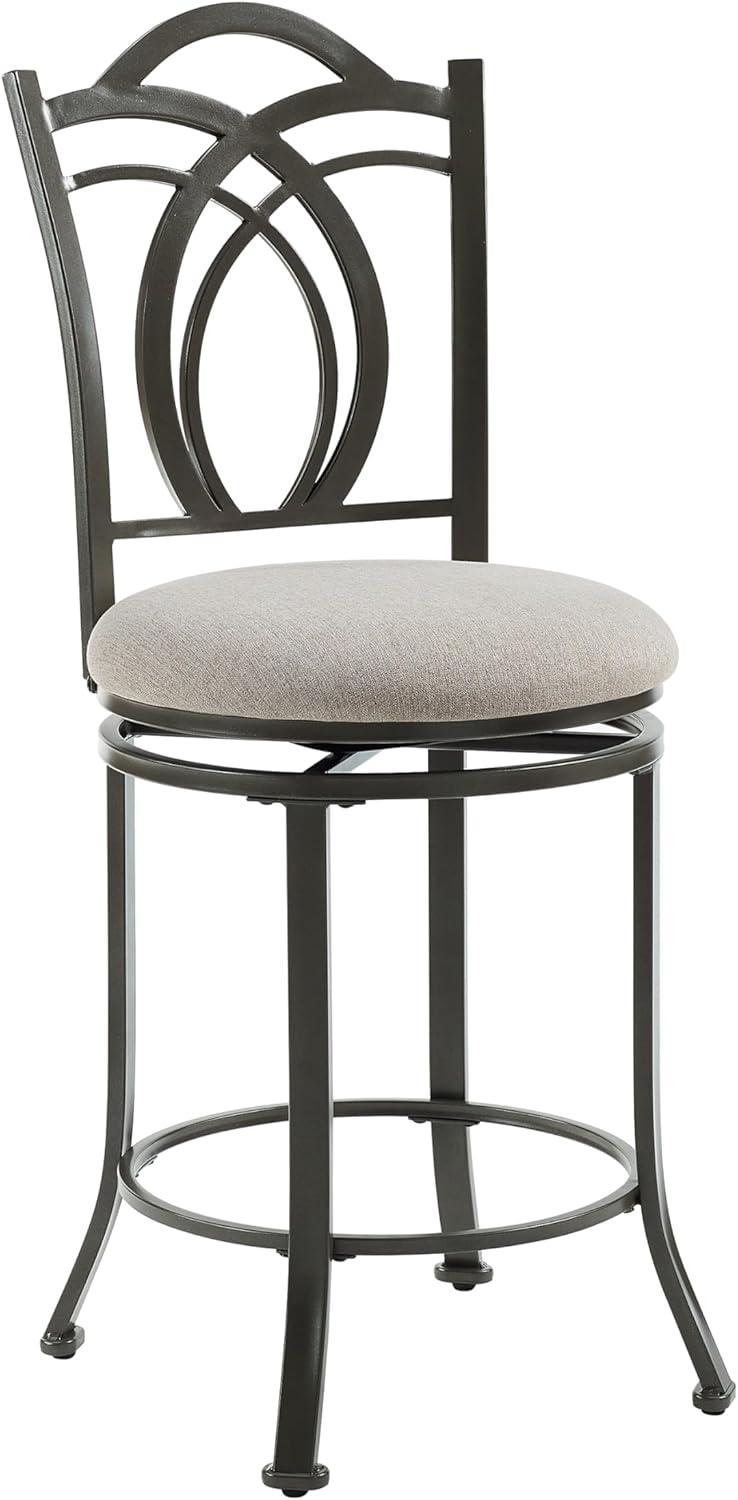
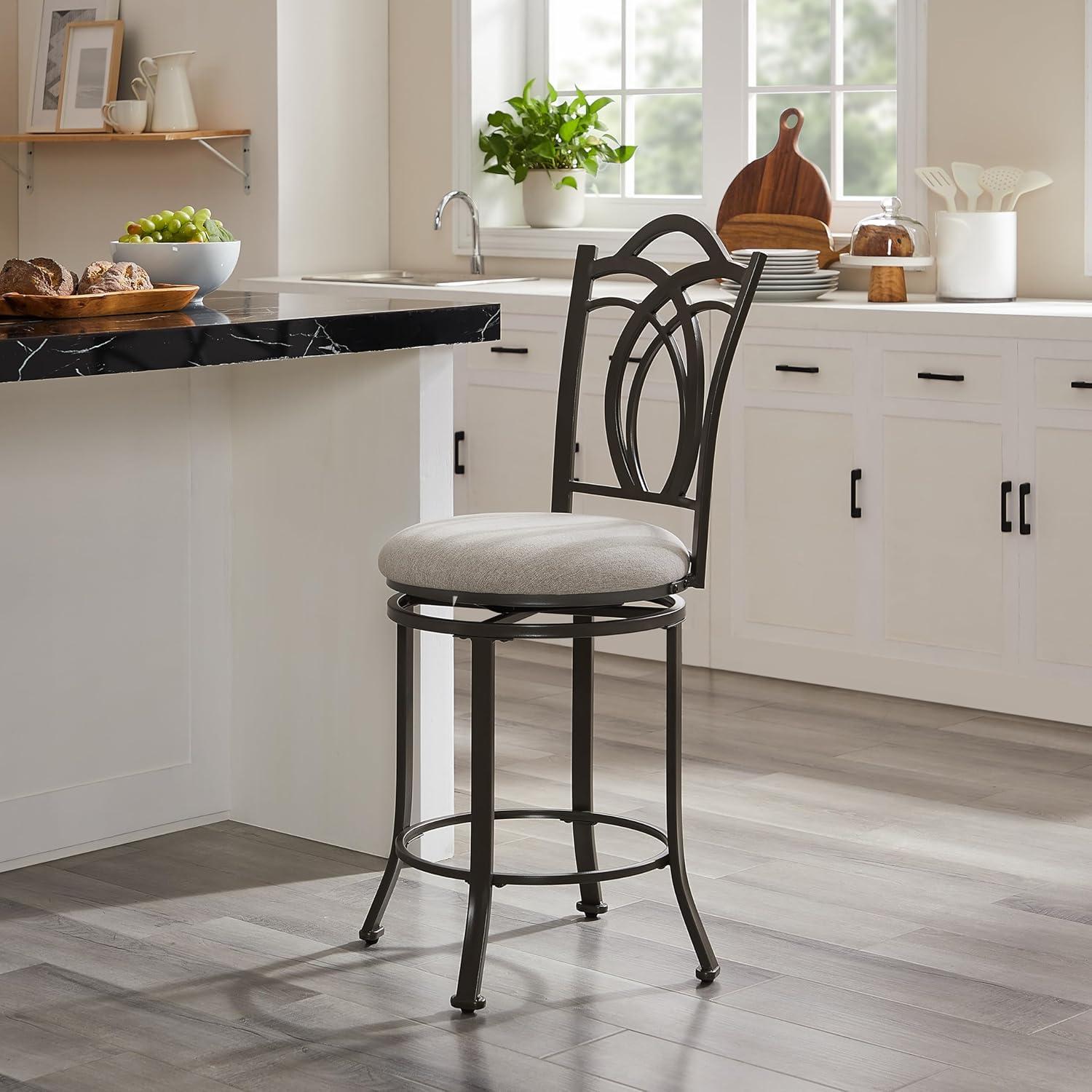
When you tuck one into your kitchen or counter nook, the pewter frame reads as a restrained metallic presence rather than a luminous chrome flash. From some angles the curved backrest picks up soft highlights where overhead light grazes the metal; from others it settles into a muted gray that lets backsplash tiles or countertop edges take visual priority. as you shift or turn, the finish catches brief gleams along the frame’s curves and footrest, and a few small smudges or specks of dust become more obvious under direct light—an effect that tends to soften with everyday movement and occasional wiping.
The beige upholstered seat sits as a quiet, warm plane against that metal outline. Up close you can see the weave and the way the top cushion flattens slightly when you ease back into it, a little smoothing of the fabric that you instinctively fix with a speedy hand. seams and edges may crease where you slide on and off, and in normal use the tone can register differently depending on room light—warmer in low incandescent bulbs, cooler in bright daylight. it tends to blend into many counter nooks without calling attention, while still showing the small signs of use that come with being pulled into daily routines.
The metals, padding, and stitching you can inspect up close on the stool
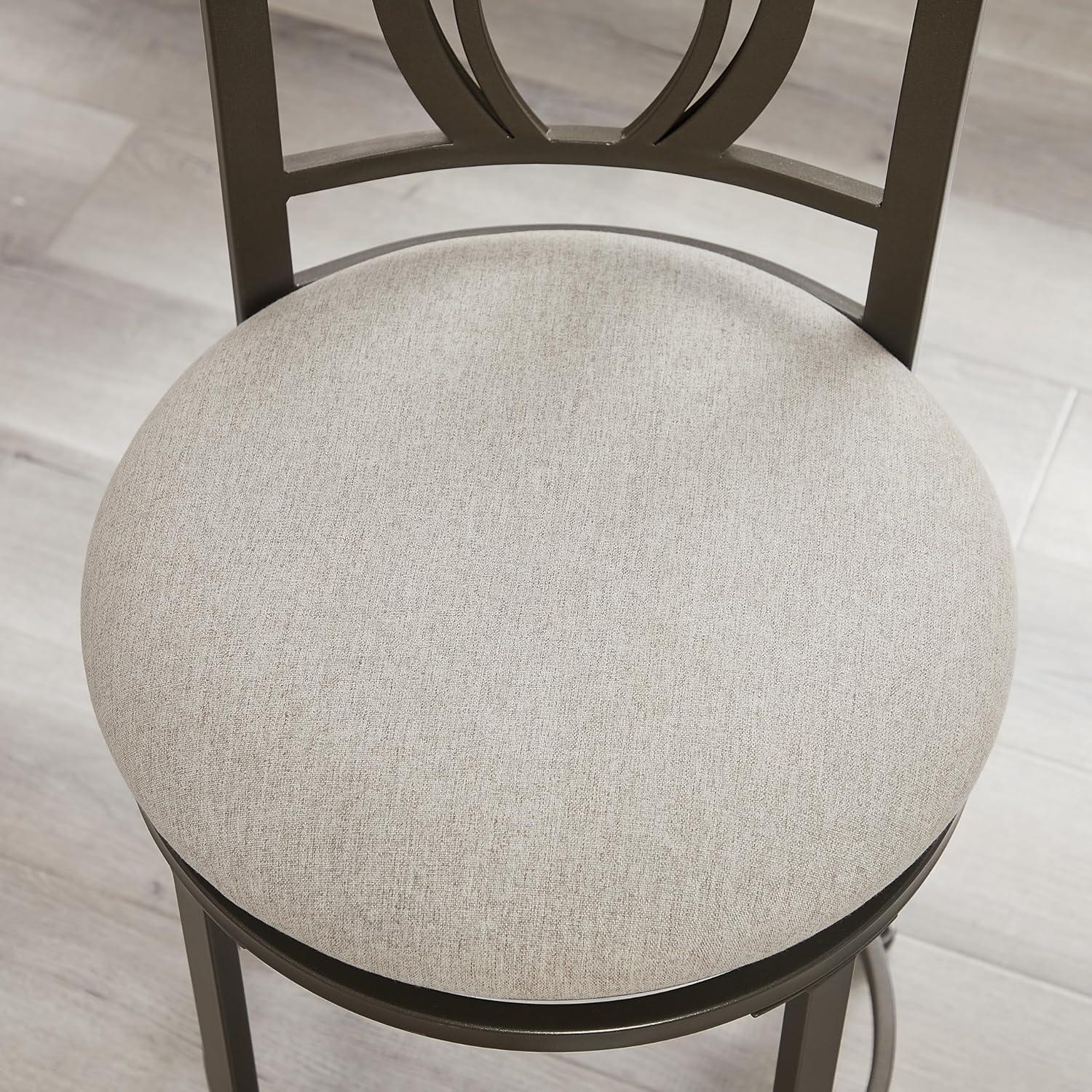
When you run your hand over the metal parts, the pewter coating reads as a cool, slightly matte surface rather than a mirror shine. Close up you can see where the frame tubing meets the circular footrest: welds are visible as low, rounded beads and the finish pools a hair darker around them. The circular footrest and where it joins the legs show the most contact wear after repeated swivels and foot placement, and the underside of the swivel plate reveals the stamped metal disc, exposed screws, and a thin film of factory lubricant that can look a little uneven if you lift the seat to inspect it.
Sitting down exposes how the padding behaves in real use. The top cushion gives under your weight, compressing by a noticeable amount and rebounding when you stand, though not instantly — it tends to recover over a few seconds. If you press along the seat edge you’ll feel a layered construction: a softer quilted layer over a denser core, with a faint outline of a support pad beneath the cover. habitually smoothing the fabric or shifting in your seat nudges the cover and occasionally leaves a short-lived ripple where the foam meets the frame.
stitching follows the lines you trace with your fingers: a double topstitch trims the seat perimeter and a single stitch follows the backrest’s swooping curves. Most seams sit flat, but the curves force tiny, regular gathers where the material wraps around the frame — you notice these when you tug the backrest after sitting.Flip the stool and the underside tells part of the construction story: a tucked dust cover with visible staples, cross-stitched seams at attachment points, and reinforcement stitches near brackets where the seat connects to the swivel mechanism.
| Component | What you can inspect up close |
|---|---|
| Metal frame & finish | Matte pewter coating, visible weld beads at joints, slight darkening where finish pools |
| Footrest & swivel plate | Circular footrest welds, stamped swivel plate, exposed screws, traces of lubricant |
| Seat padding | Compressible top layer over denser core, gradual rebound when unloaded |
| Upholstery stitching | Double topstitch around seat edge, single stitches along curves, small gathers at tight turns |
Measurements and clearances to check for a 24.5 inch seat height in your space
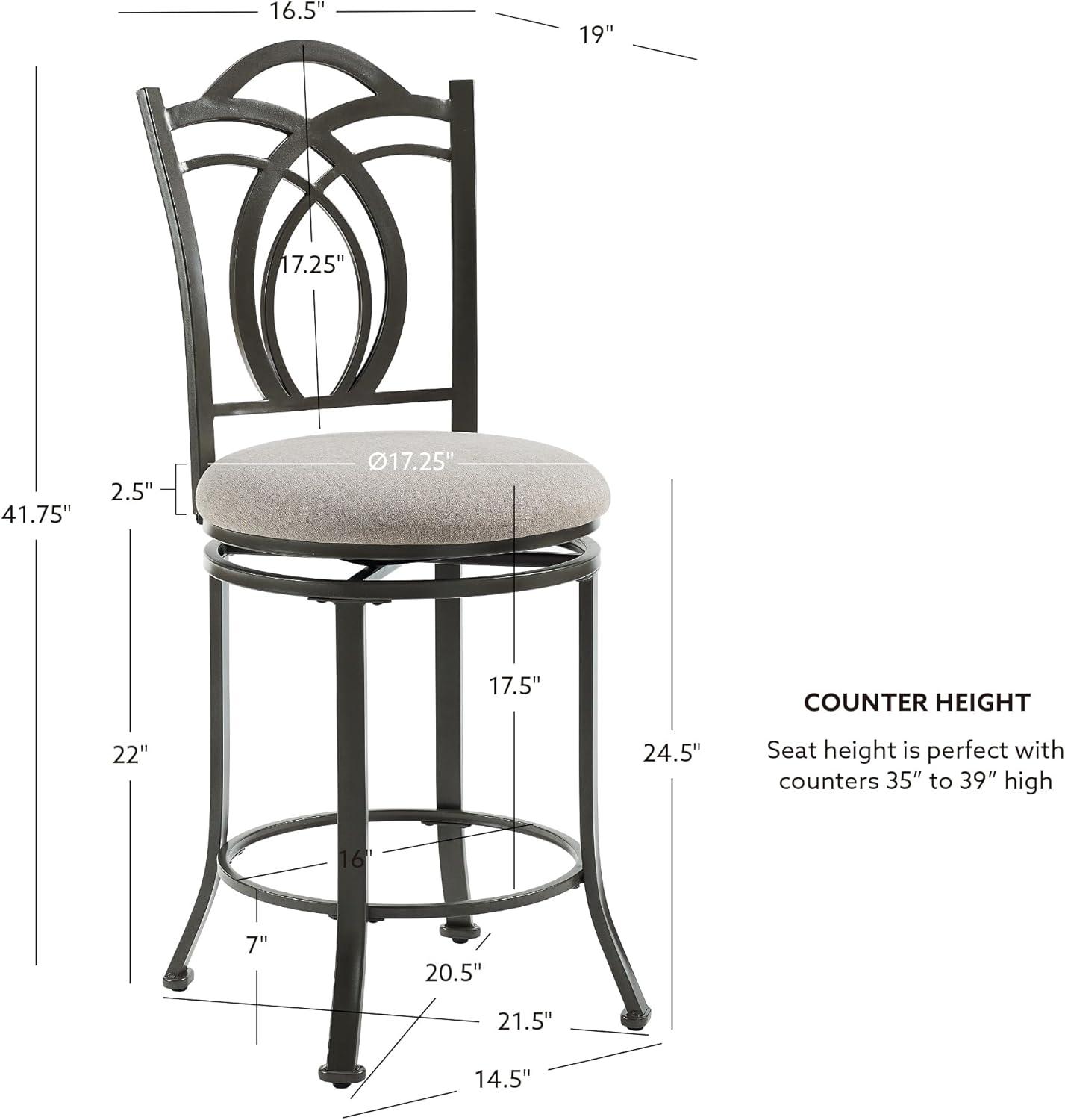
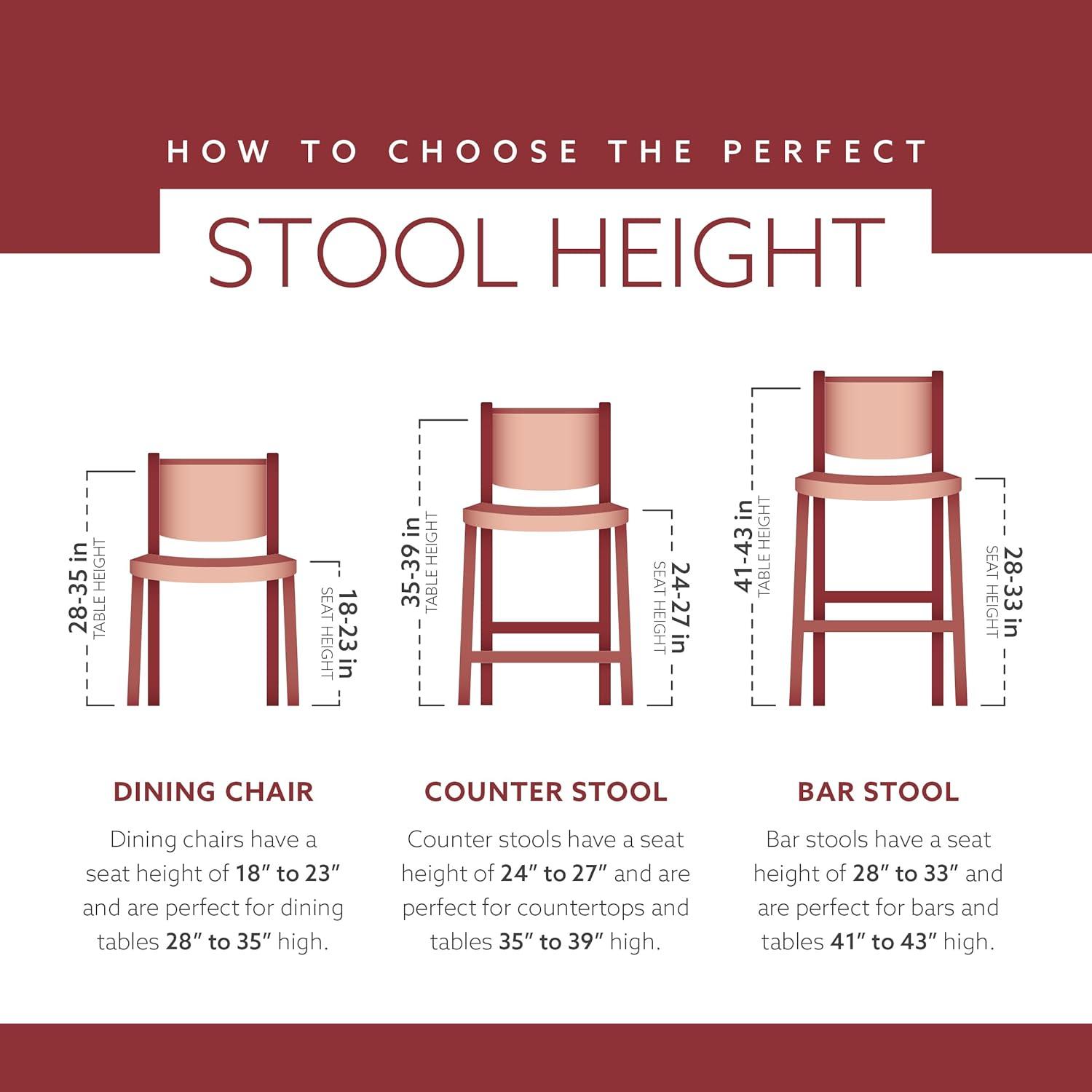
Start by taking the same basic measurements you’d use for any counter seating: the finished counter height from floor to countertop underside, the depth of the countertop overhang, and the vertical clearance under the counter (apron or cabinet bottom to floor). For a seat that sits about 24.5″ off the floor, note the distance between the top of the seat and the underside of the counter—most people notice whether there’s roughly a hand’s-width of room or if their knees press into the apron when seated.
| What to measure | Typical target | Why it matters in use |
|---|---|---|
| Counter height (floor → underside) | About 35″–39″ | Determines how much legroom remains above the seat while seated. |
| Seat-to-counter gap (underside minus 24.5″) | Roughly 9″–14″ | Affects knee clearance and whether you’ll tuck legs comfortably under the counter. |
| Counter overhang (front edge → cabinet face) | 10″ or more is common | Ensures the seat clears the overhang so the stool can be pulled under without bumping knees. |
| Side-to-side spacing per stool | About 30″ center-to-center | Prevents elbows or backs from overlapping when multiple stools are in use. |
| Clearance behind the stool (if swivel or backing moves) | Allow several inches (6″–12″) | Leaves room for swivel motion and for someone to push the stool back slightly when standing up. |
Measure with the cushion compressed a little,as people tend to settle in and sink the seat slightly over time; that small give can reduce the apparent gap to the counter by an inch or two. If the counter has an apron or trim, check vertical clearance where knees would sit rather than at the deepest point of the overhang—many users slide forward a touch to rest lower legs on a footring or to reach the countertop, and that forward position changes where the knees meet the cabinet face. Also walk the line between stools while seated: a quick rotate and a small scoot show whether adjacent seats crowd the elbows or whether the swivel rotates freely without catching a wall or another chair.
How the swivel action and seat cushioning feel during a quick sit or a longer linger
When you drop into the stool for a quick sit, the 360‑degree motion responds with modest resistance: a light, steady turn rather than a free spin, so you can pivot to reach across the counter without having to twist your torso. The first impression from the cushion is immediate — a soft give under your weight that settles within a second, then firms slightly as your weight redistributes. You may find yourself smoothing the fabric or nudging the seam with a finger out of habit; small readjustments happen almost unconsciously when you stand up again, the seat offering a gentle rebound rather than snapping back.
During a longer linger the cushion compresses more noticeably and then behaves predictably: the top layer cushions but the core provides a firmer feel after some time seated, so you shift position occasionally to relieve pressure. The swivel continues to move smoothly for casual turns, though slow, repeated rotations can reveal a faint mechanical hum or increased resistance compared with the initial, quick pivots. Your feet will likely settle onto the circular footrest, and little movements — sliding forward an inch, angling a knee — become part of keeping comfortable; when you finally rise the cushion shows a shallow impression that fades over minutes. These are typical, lived behaviors rather than abrupt changes, and they shape how the stool feels across short and extended uses.
How this stool matches your counter height expectations and where everyday limits appear
At the counter heights noted for this stool, the seating plane generally lands so knees tuck beneath the countertop with a few inches of clearance and the circular footrest comes into play almost immediately. In everyday use that translates to a posture that leans slightly forward when working at the surface, and the 360° swivel tends to be used frequently—turning to pass plates or reach across an island is effortless, though the motion sometimes prompts a quick smoothing of the cushion or a nudge to realign the upholstery seam. Over the course of an evening the cushion compresses a bit, which can make the seat feel marginally lower than on first sit.
Everyday limits begin to show in certain moments. Without height adjustment, the stool’s fixed plane means leaning back against the curved backrest can bring the top of the backrest closer to an overhanging counter or bar ledge; in tight kitchen aisles a full swivel might potentially be interrupted by nearby cabinets or another chair. The footrest sits in a position that works for restful feet during short meals, yet prolonged sitting sometimes prompts a shift—feet sliding on and off the bar ring, or occasional scuffing of shoe soles against the metal. The swivel mechanism itself collects crumbs and little spills in normal use, and seams will occasionally be smoothed down after shifting during conversation.
| Counter height (typical) | Common seating relationship / everyday note |
|---|---|
| ~35″ (lower end) | Seat feels slightly higher in relation to the work surface; leaning forward is common for tabletop tasks. |
| ~36–38″ (mid range) | Balanced clearance at knees and convenient footrest use; swivel most often used to converse or pass items. |
| ~39″ (upper end) | Seat can feel a touch low for reaching tall counters; torso inclination increases during food prep or writing. |
View full specifications and available size or color options
What the unboxing, assembly, and routine care will require from you
When the box arrives you’re handling one stool at a time; the carton tends to be compact but a bit dense when you lift it. Inside you’ll find the main components wrapped in thin protective cardboard and plastic, plus a small hardware bag and a folded instruction sheet. The hardware and tool packet is easy to miss if it’s tucked beneath padding, so you’ll likely sort parts out on the floor before you begin.
| Item | what you can expect |
|---|---|
| Seat and back components | Packaged separately, require alignment during assembly |
| Base/legs and footrest pieces | Bolted connections; some parts nest inside for packing |
| Hardware pack | Bolts, washers, and an allen wrench or similar; small parts in a bag |
| Instruction sheet | Illustrated steps; tends to assume a basic toolkit |
Putting the pieces together usually unfolds as a handful of familiar motions: you’ll line holes up, start bolts by hand to avoid cross-threading, and then snug them down with the included tool. expect to check alignment as you go—cushion covers and seams sometimes shift a little during tightening,and you’ll smooth fabric or nudge padding into place once the frame is secure. The whole process commonly takes under an hour if you work steadily, though you’ll probably pause to re-read a diagram or hunt for a stray washer.
Keeping the stool looking and functioning requires a few occasional chores. You’ll blot spills and smooth the cushion fabric after use, vacuum seams when dust collects, and wipe the metal frame with a damp cloth to clear fingerprints or dust. Over time you’ll notice fasteners loosen slightly with normal use; tightening a few bolts every so frequently enough and evening out the cushion by hand are typical maintenance moves. Small, repeated adjustments—smoothing the seat edge, shifting a cushion corner back into place, checking that the swivel moves freely—are part of living with the piece rather than one-time tasks.
How It Lives in the Space
Over time, as the room is used, you notice the Linon Koffee Pewter Metal Swivel 24.5 Inch Seat Height Counter Stool with Beige Upholstered Seat easing into household rhythms — pulled up for a quick breakfast,nudged aside for a spill,left at the counter while evening unwinds. The upholstery softens where you sit most, small scuffs mark the metal where feet brush, and the swivel settles into the angles you keep returning to so comfort becomes part of habit. In daily routines it quietly holds a mug, a bag, or a place in conversation, familiar without calling attention to itself. After a while it simply stays.
As an Amazon Associate I earn from qualifying purchases.