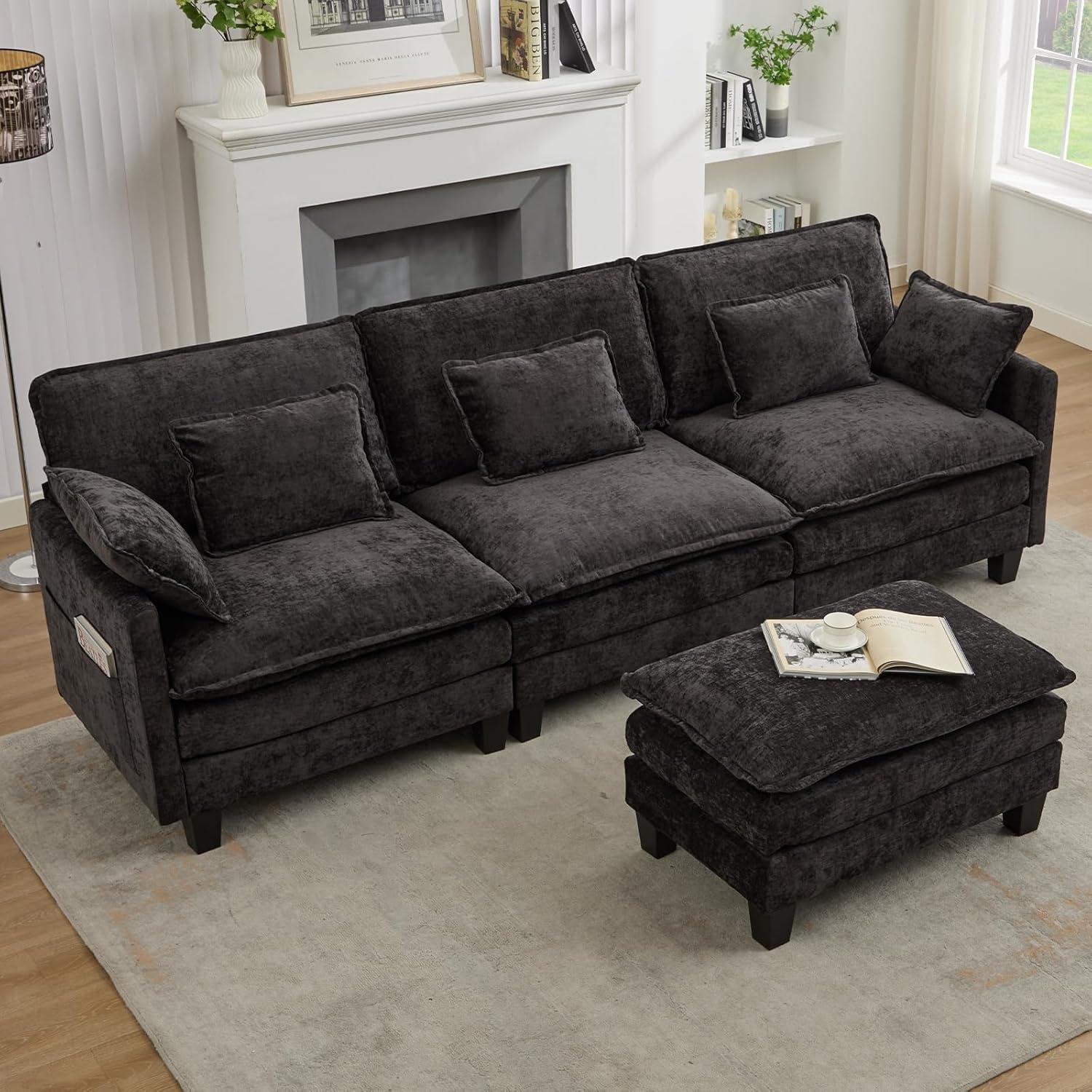
SAMERY 113 L-shaped chenille sectional framing a living area
The chenille fabric of the SAMERY 113 L‑shaped modular sectional first catches your eye — a soft, matte surface that soaks up light and begs for a touch. Sit down and the deep seats give a slow, buoyant sink; the cushions stack into a gentle cradle while the arm pillows slump with a familiar, lived-in softness. it occupies the room with a broad, low silhouette, and the movable ottoman simply slides out to extend a chaise or tuck back against the sofa with little ceremony. Under your hand the nap of the fabric is slightly textured, seams are tidy, and the whole piece feels solid enough to stay put when you lean back and exhale.
Your first look at the SAMERY sectional when you open the box and set it in your room
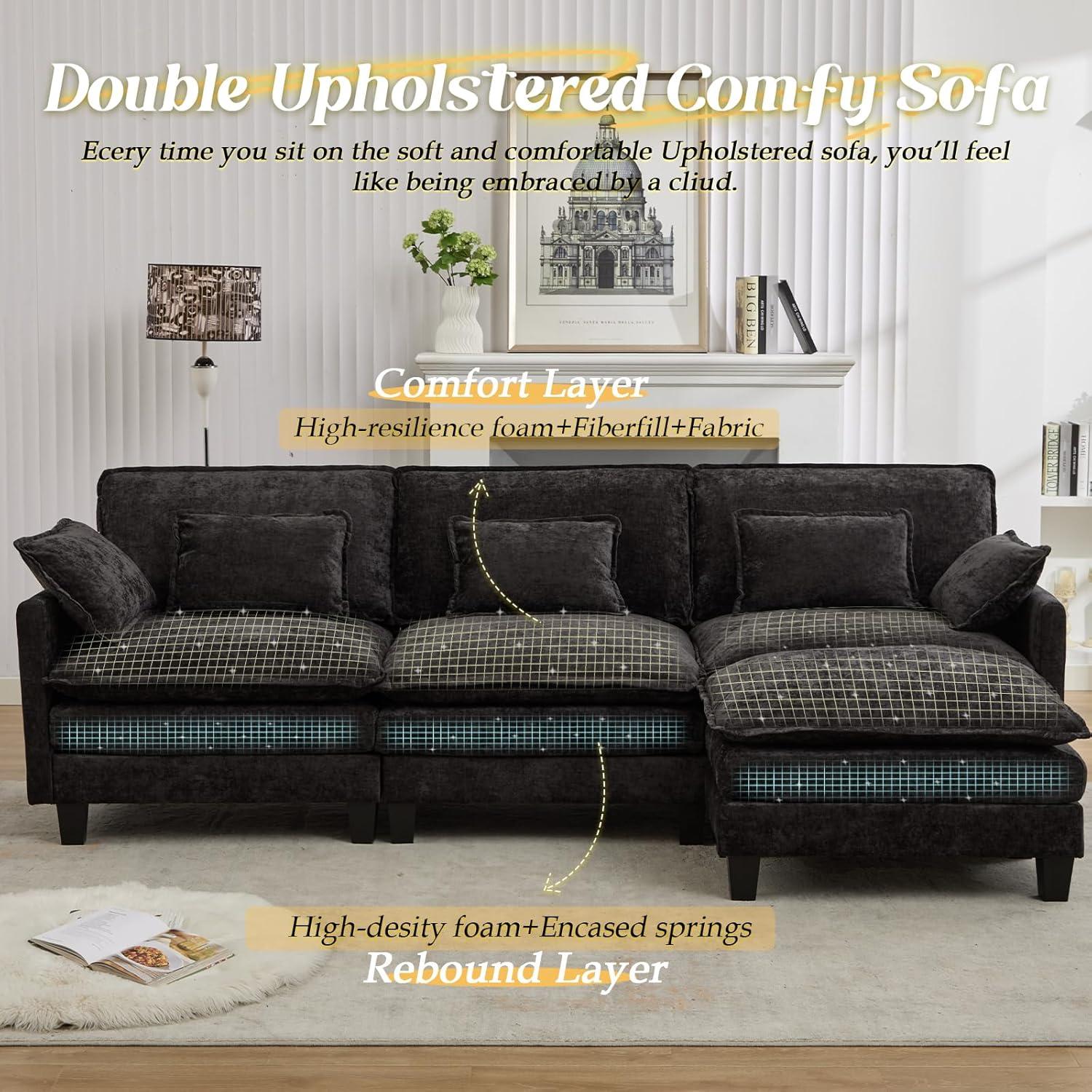
When you cut through the packaging and lift the first piece into the room,the sectional arrives as a handful of compact,well-wrapped modules. The fabric is slightly compressed from being boxed, so the seat cushions take a few minutes to round out after you lay them in place. You’ll find the pieces easy to move across most floors—there’s a faint scuff from the plastic wrap the first time you slide a section into position—and the ottoman sits separate until you nudge it snug against a corner. Tiny creases in the chenille smooth out as you pat and settle the cushions; seams and zipper lines are visible but sit mostly flat once the covers shift back to their resting position.
Under room light the color can look a touch different than the online photos, showing a soft sheen when you change viewing angles. A low, new-foam scent is present for a short while, and small bits of packing lint may cling to the fabric until you brush them off. As you step back and take it in, the sectional reads as a coherent block of seating—legs and attachment points peek out beneath, components line up with a little nudging, and the ottoman’s mobility becomes obvious the moment you slide it away or push it flush. Your hands naturally go to smoothing cushions and tucking corners; the sofa settles into the room gradually rather than instantly.
How the shape and proportions read in your living area and how the modules arrange around your space
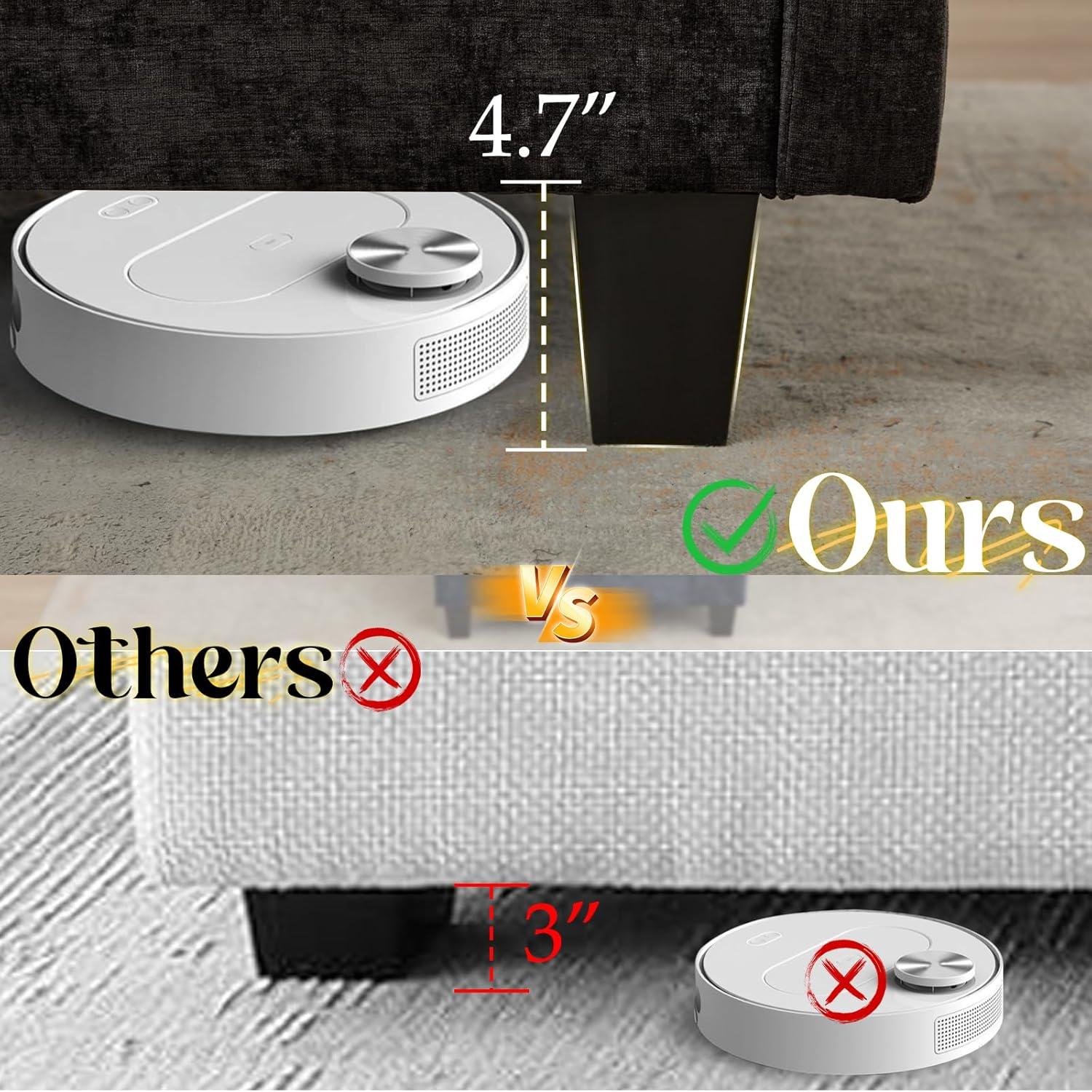
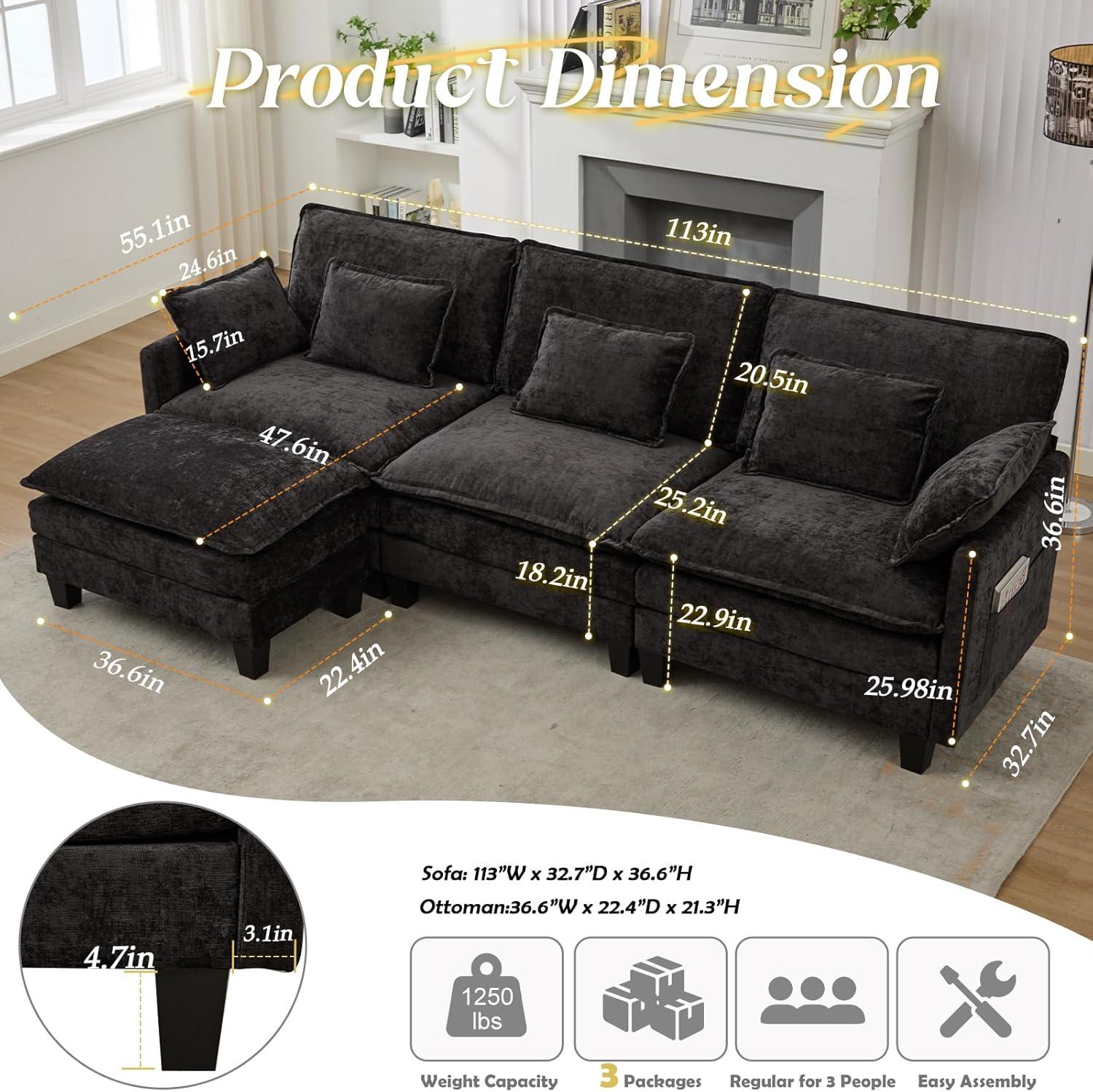
The sectional reads as a low, spread-out anchor in most living areas. Its long run and generous seat depth tend to flatten the room’s vertical rhythm: when placed against a wall the backline becomes a calm horizontal band, and when floated away from the wall it immediately defines a conversation zone. Cushions compress and seams soften with normal use, which slightly shortens the visual height and makes the overall silhouette feel more relaxed than rigid.The movable ottoman repeatedly alters that silhouette — shifted to form a chaise it elongates one side, set apart it punctuates the floor with a separate seat, and tucked close it closes the sectional into a more compact block.
Module arrangements influence sightlines and traffic in predictable ways. Pulling the assembly into an L against a corner keeps walkways clear but concentrates mass along two axes; floating the longer module out into the room opens sightlines behind it but also draws attention to the sofa as a central object. Small, habitual actions — nudging the ottoman a few inches, smoothing the chenille after someone gets up, or nudging cushions back into alignment — change how wide or narrow the sectional appears from moment to moment. Over time the pieces can shift slightly relative to one another,creating small gaps or overlaps that subtly alter the intended geometry.
| Arrangement | Observed spatial effect |
|---|---|
| Corner L | Defines a grounded edge, keeps circulation open on adjacent sides |
| Chaise extension (ottoman attached) | Lengthens the profile and directs attention along the extended axis |
| Separated ottoman | Creates a floating secondary seat or footrest, breaking the sectional’s mass |
Observed trade-offs tend to be practical rather than dramatic: as modules are reconfigured, the balance between openness and enclosure shifts, and the way light catches the fabric changes with small adjustments. These are normal behaviors that affect how the sofa reads in daily life and how often its layout is tinkered with.
View full specifications and available color and size options
What the chenille upholstery and frame reveal when you handle the cushions and inspect the seams
When you pick up or shift a cushion, the chenille greets your hand with a soft, slightly nap‑like texture that holds the direction of your strokes — brush one way and the color reads a touch darker, brush the other and it looks lighter.As you smooth a seat,the fabric creates a gentle resistance against your fingers rather than sliding freely,and the surface shows the outlines of where you pressed for a few moments before the pile settles back. The cushions compress and spring back under your palms; the cover slips and tucks at the corners in ways that reveal the underlying shaping, and you’ll find yourself nudging a seam or two into place the way people do without thinking.
Run your fingertips along the stitching and you notice the thread color is matched and the stitch lines sit close to the edge.The seams tend to lie flat in the middle panels but can pull into faint ripples near high‑stress joins or where the cushion meets the frame, particularly after you’ve shifted the pieces around. Small loose fibers show at stress points from handling, and lint or hair can cling to the nap when you lift the cushions — it comes away with a quick brush, though the impression of your touch lingers for a bit.As you lift a cushion to look underneath, the fabric will gather and fold where it’s fastened, giving you a clear view of how much give there is between the cover and the padding beneath; that interaction is what determines the soft creases and the way seams settle during normal use.
What sitting and lounging feel like for you on the deep seats and movable ottoman
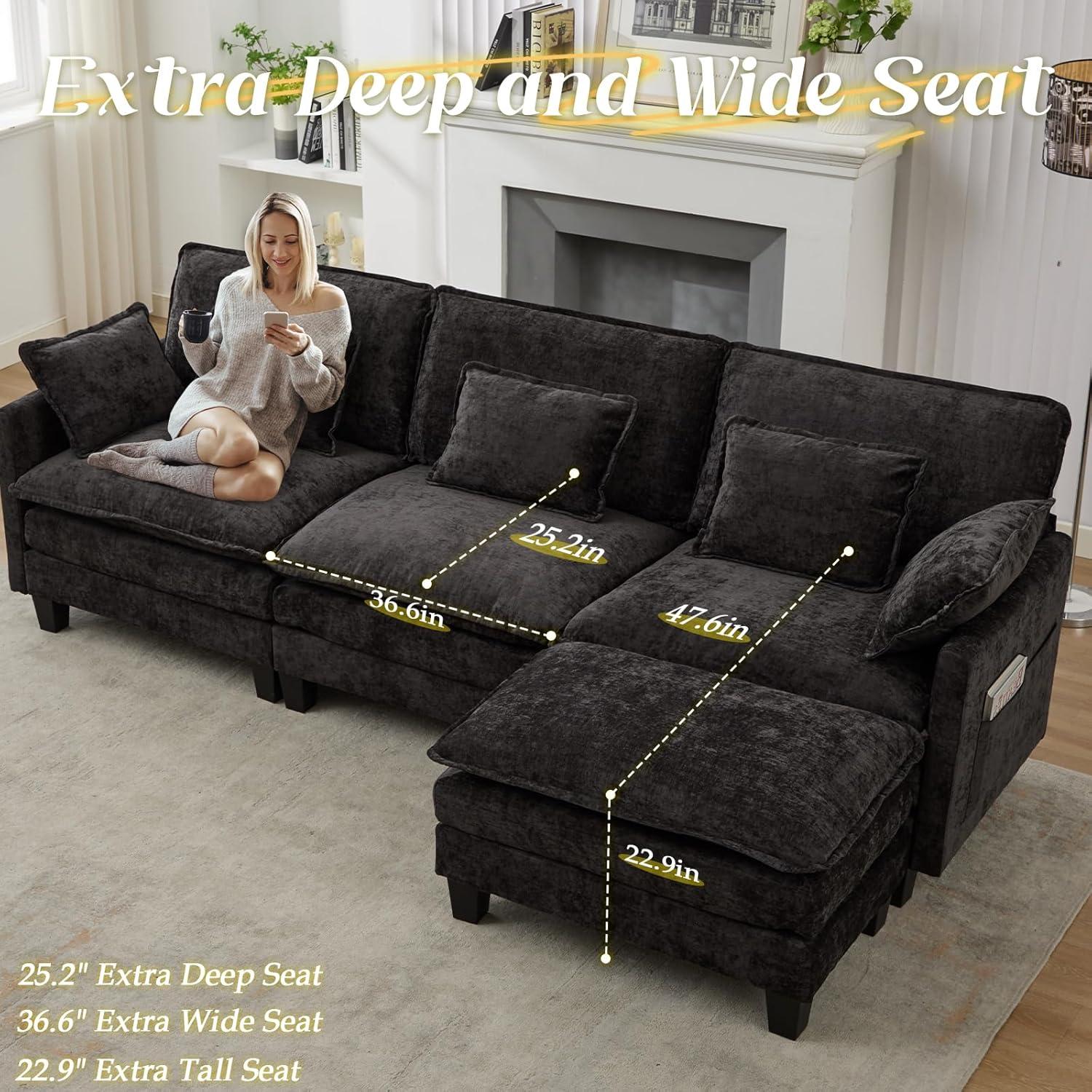
When you first sit down the depth invites you to settle in rather than perch; your knees tend to tuck up or your legs can stretch out without hitting the front edge. The top of the seat compresses under your weight with a noticeable initial give, then a firmer support comes through as you shift positions. Over a few minutes the cushions conspire to cradle you — you might find yourself smoothing the fabric and nudging seams back into place as you get agreeable. Sitting upright feels like you’re set back slightly from the armrests, so you naturally scoot forward or recline against the back pillows to find a resting point for your shoulders and head.
With the movable ottoman in play the lounging options change in small, familiar ways: pulled flush it becomes an extension that lets you lounge on your side with an almost continuous surface; used as a footrest it raises your legs to a level that relaxes your lower back. If you treat it as an extra seat you notice a slightly different cushion response under shorter contact,and when you slide it around you might feel a soft seam where sections meet. After longer use the cushions settle into the posture you favor, so reaching for a throw or adjusting the ottoman position becomes part of the routine of getting truly comfortable.
How the sectional occupies corners and narrow rooms when you try it in an apartment or bedroom
When placed into a corner of an apartment or bedroom,the sectional tends to anchor the space visually and physically. The chaise extension or moved ottoman fills the angle between two walls so the seat backs press closer to the paint and baseboards; armrests often sit a finger-width from the wall unless the pieces are pulled slightly forward. fabric rubs and softens where cushions meet the wall, and occupants will find themselves habitually nudging cushions and smoothing seams after sliding the units into place.
In a narrow room the seating runs along the length rather than across it, creating a clear circulation path that shifts depending on how the ottoman is used. With the ottoman tucked flush it shortens the walking aisle; with it offset as a chaise, the aisle widens on the opposite side but the lounge area projects further into the room. These movements can cause the sectional to settle unevenly against the floor so that legs or the base sometimes need a quick push to realign — a minor, recurring adjustment in most rooms where space is limited.
How suitable the SAMERY sectional is for your needs and how it measures up to your expectations while showing constraints in everyday life
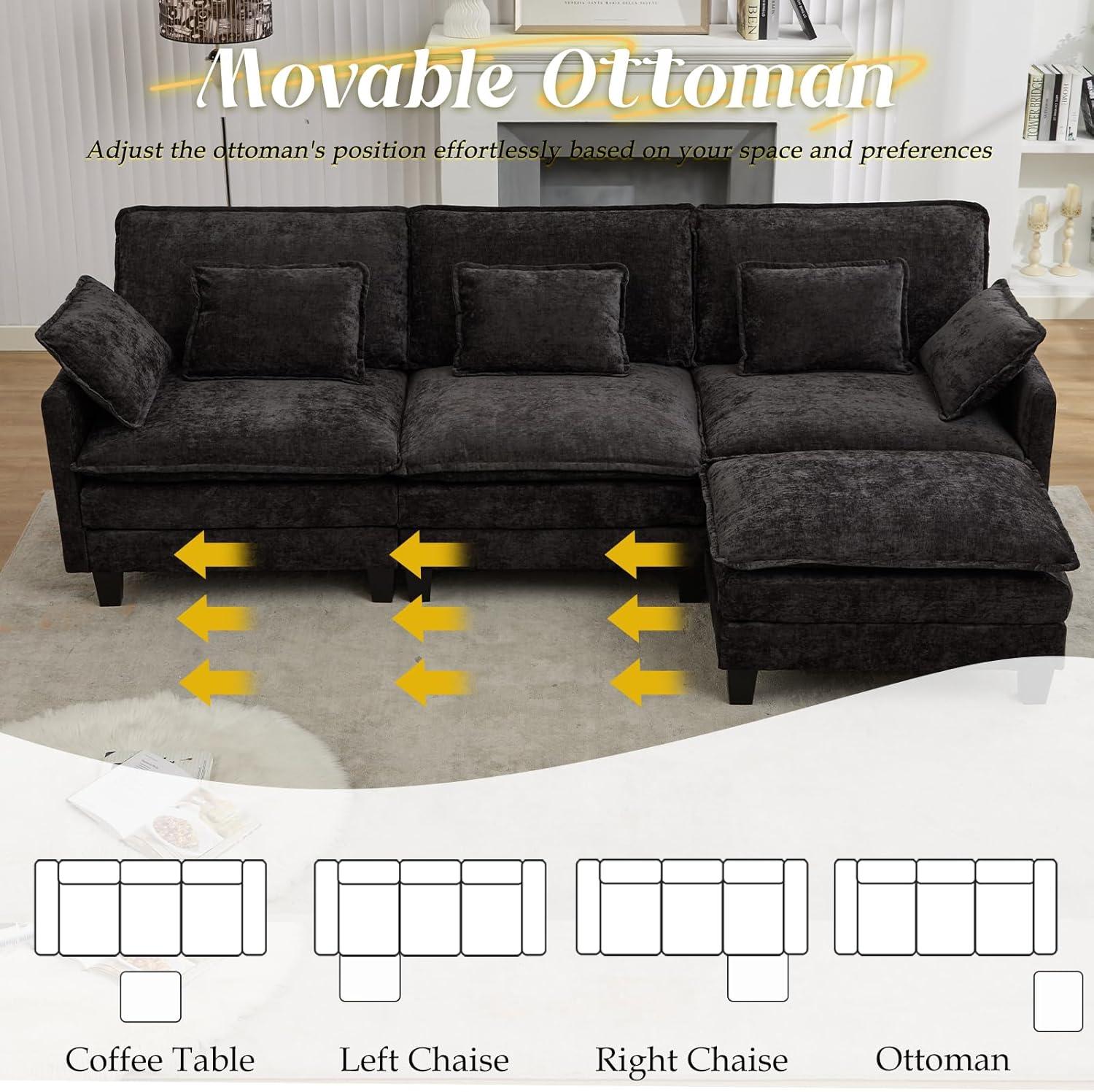
In everyday use, the sectional often behaves like a quietly adaptable presence. The ottoman gets moved around without ceremony—pulled out as a footrest, pushed aside to open floor space, or nudged against the main unit to extend a chaise. Cushions settle where they’re sat most, and the two-layer seating tends to feel plush at first, then compresses into familiar hollows that invite quieter, more relaxed sitting patterns. Arm pillows lose some loft after repeated naps, and seams show small creases where people shift position; these are the kinds of minor adjustments that occur naturally as the piece becomes lived-in.
Routine constraints show up in ordinary moments. The sectional’s low, deep seat encourages reclining, so tasks that require an upright posture can feel slightly awkward for sustained periods. Modular joints and the ottoman’s mobility make reconfiguration straightforward, yet the ottoman can drift on smooth floors and sometimes needs a quick nudge to sit flush. Over weeks of regular use the cushions tend to require occasional reshaping, and textured upholstery collects pet hair and dust in predictable patches that are most visible on darker fabrics. The overall footprint and the way the pieces sit together also mean traffic flow around the sofa influences how it’s used day to day—arrangements that look neat at first can be altered by routine comings and goings.
View full specifications and color options on Amazon
What assembly, module rearranging, and day to day care look like when you live with it
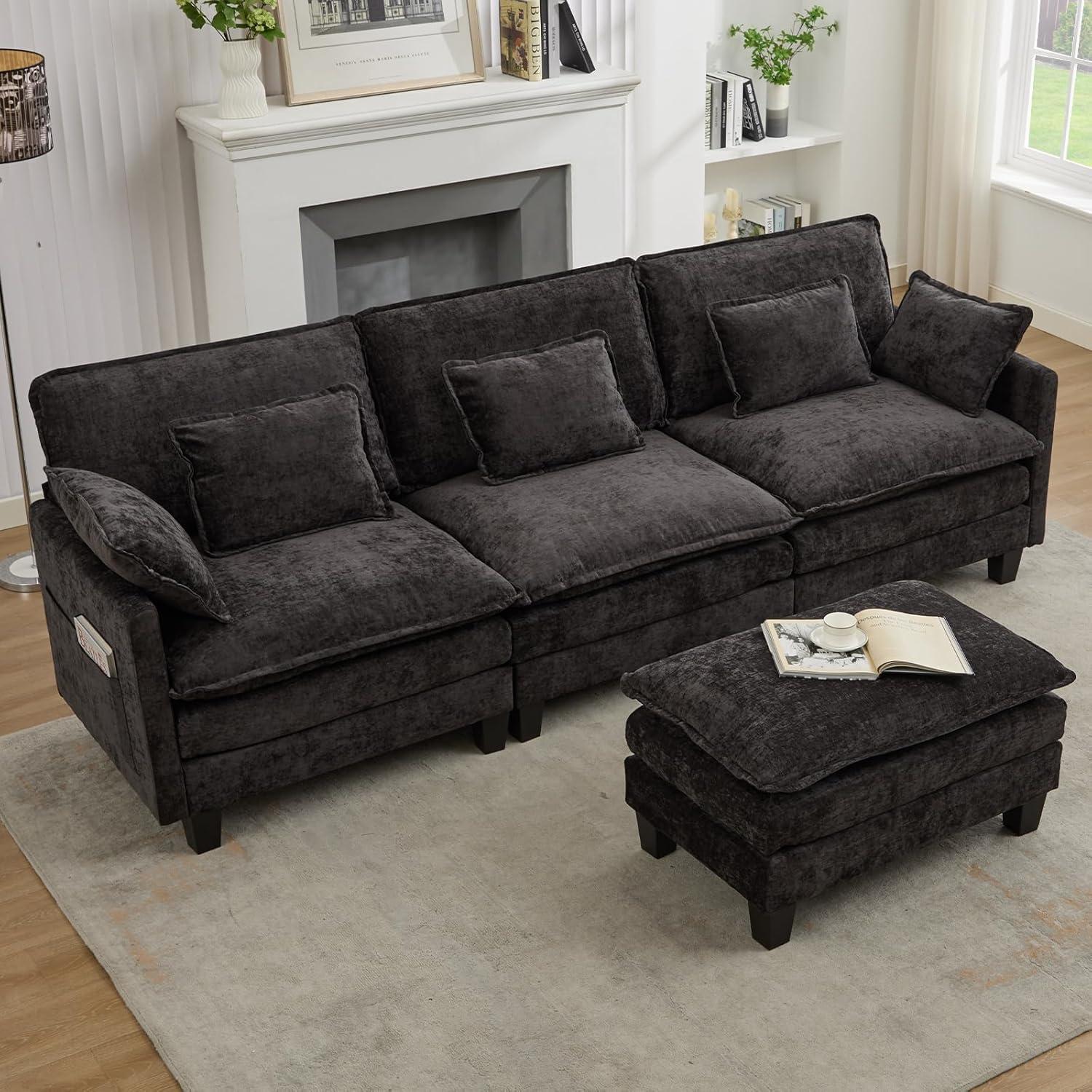
When the boxes arrive you’ll find the practical parts of coming-to-life happen in the details.With a partner you line up the modules, feel the clips or brackets engage, and tighten a few legs; some connectors click easily, others need a little nudging. After the initial fit you spend a few minutes smoothing seams, nudging cushions into place, and plumping the arm pillows — habits that stick around. Over the first week you notice tiny shifts where pieces meet and end up giving the joins another firm push now and then.
Reconfiguring the pieces is mostly a matter of small, repeatable motions. The ottoman slides and lifts without heavy effort on hard floors and takes a little more work on thick carpet, so you tend to slide it where you need it and lift only when you have space. When you convert it into a chaise or a loveseat you get used to a quick rearrange: detach, rotate, shove the seat close enough to close the small gap, and then press cushions back into position. Gaps and shifted seams are the most common annoyances; smoothing fabric and tucking cushions becomes an almost unconscious part of settling in.
Daily upkeep is unobtrusive and situational. You’ll blot spills immediately and sweep crumbs out of the creases instead of dragging anything off for a full wash; a lint roller and a handheld vacuum get used more often than heavy cleaning tools. The chenille nap shows footprints and pet hair, so you brush or rub fabric in the direction of the pile to even it out; cushions get plumped after long sits and arm pillows migrated several times each evening. Over weeks the seat layers compress a little where you favor them,so rotating the ottoman or nudging modules slightly feels like routine maintenance rather than a repair.
| Task | Typical frequency | Time it usually takes |
|---|---|---|
| Quick smoothing / plumping | Daily | 1–3 minutes |
| Vacuum / lint-rolling | Weekly or as needed | 5–15 minutes |
| Reconfiguring modules (ottoman moves) | Daily to weekly | 2–10 minutes |
| Spot-cleaning spills | As needed | 5–20 minutes |
How the Set Settles Into the Room
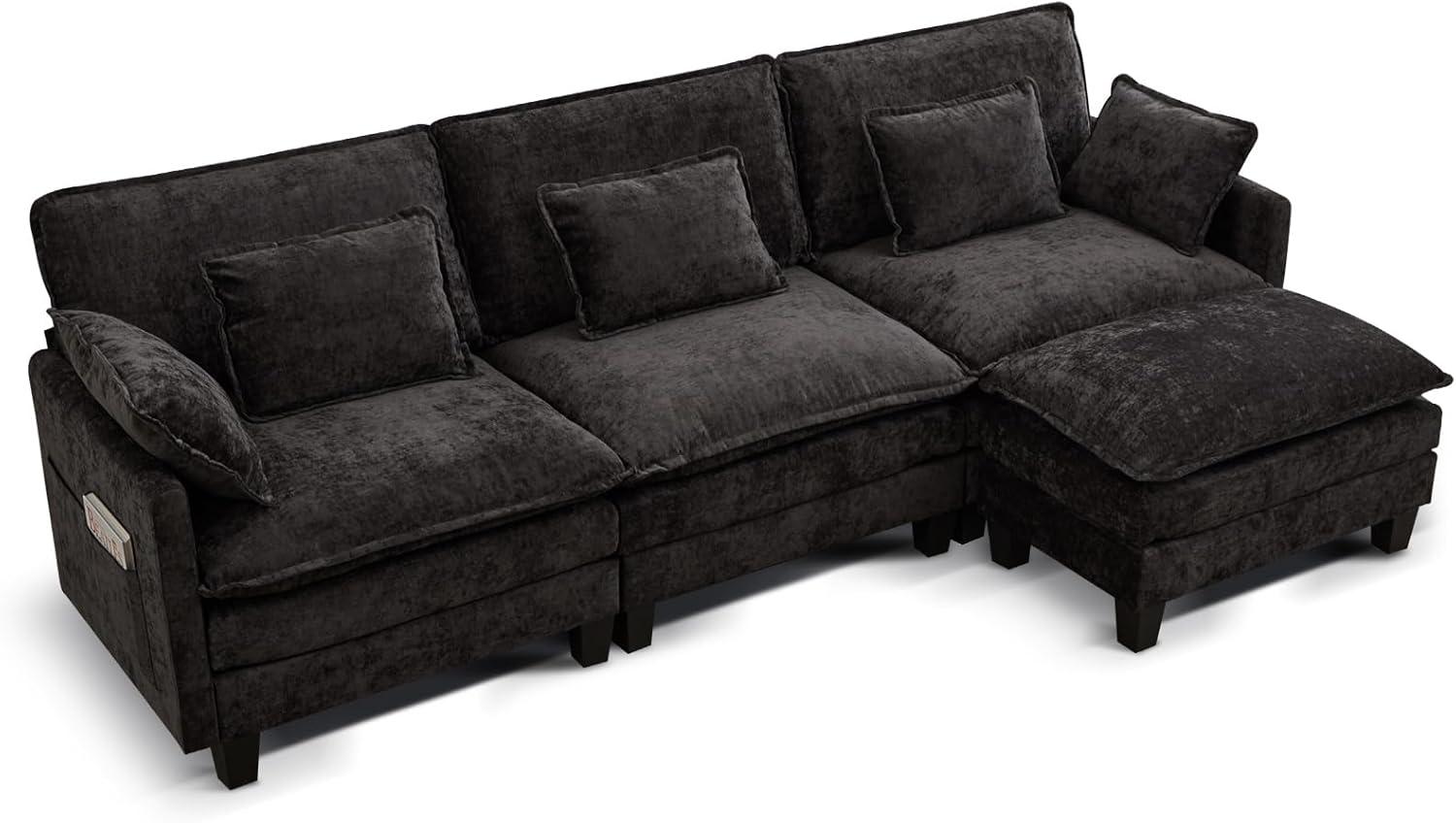
you watch it ease into daily routines over time, folding itself into afternoons, homework pauses, and the quiet of late evenings rather than announcing itself on day one. Living with the SAMERY 113 L Shaped Couch Modular Sectional Sofa, you notice the deep seats learn the familiar ways people sit and sigh, and the ottoman drifts to the spot where feet most often come to rest. the chenille surface keeps a soft record of those rhythms — a light stretch here, a slight flattening there — and as the room is used its presence becomes less an object and more a habitual part of the space. It stays.
As an Amazon Associate I earn from qualifying purchases.