Stylish Sofas for Your Living Room: Modern Layouts, Colors, and Creative Design Ideas
When arranging sofas in a living room, my initial focus is on how people will navigate, sit, and interact within the space, prioritizing functional flow over mere aesthetics. I keep a curated collection of sofa designs that emphasize comfort, appropriate spacing, and durability to ensure the room remains timeless and stylish. I assess which walls can accommodate the largest sofa, decide between symmetrical or more relaxed layouts, and determine the main seating’s orientation relative to focal points like the fireplace or television. Additionally, I consider lighting levels, sound pathways, and views to position seating that encourages conversation without distractions from screens or external elements. Early testing of color schemes and textures is crucial since upholstery choices influence rugs, tables, and lighting, setting the overall ambiance. I also plan for convenient power access for lamps and device charging to avoid cable clutter. Once these essentials are in place, I explore more daring ideas such as curved shapes, mixed materials, and layered accent chairs.
Achieving Harmony: Innovative Sofa Layouts for Living Rooms
Identifying focal points is my starting point, as most rooms have multiple areas of interest that sofas must balance. For compact living rooms featuring both a fireplace and TV, an L-shaped sectional that floats can prevent traffic obstruction while uniting the space. In wider, shallower rooms, placing two sofas facing each other fosters conversation and preserves clear sightlines to artwork or windows. For elongated, narrow rooms, corner sofas create cozy reading nooks and mitigate tunnel-like effects. When soft traffic flow around a coffee table is needed, curved sofas offer a graceful solution.
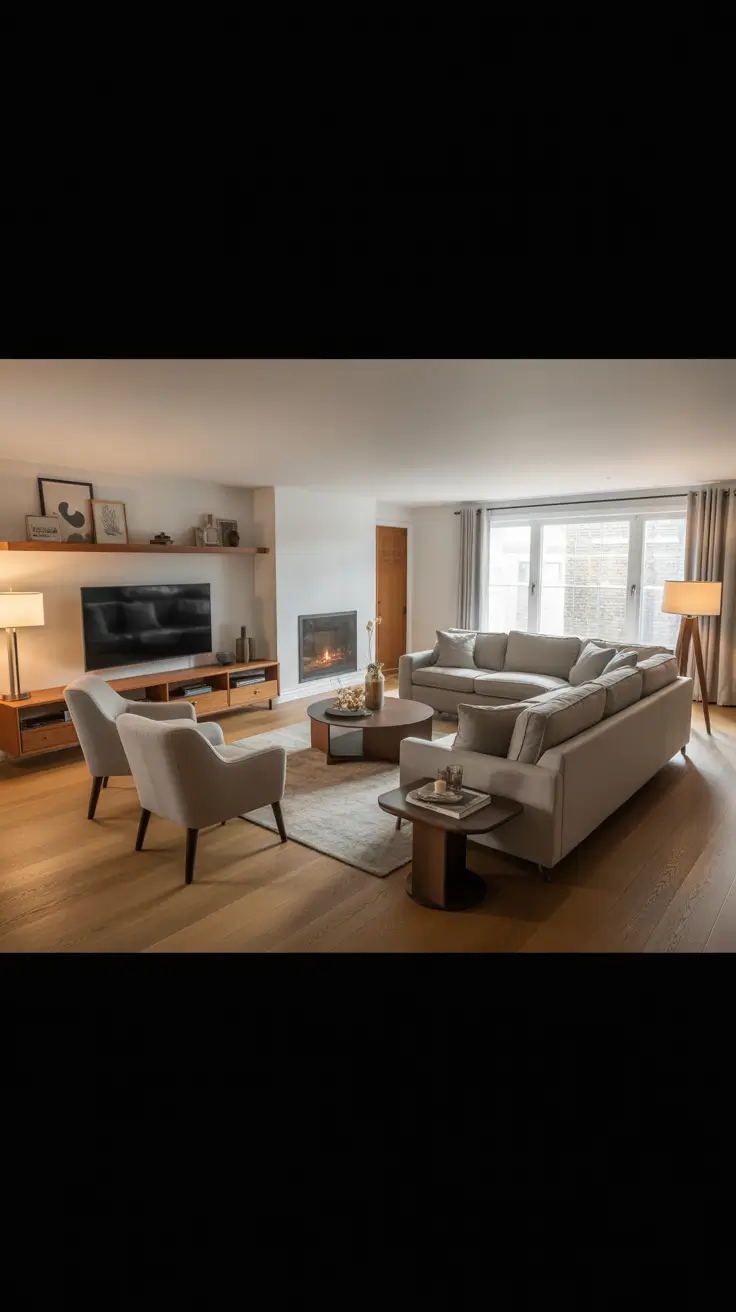
To ground the design, I select a sectional or two sofas measuring between 84 and 90 inches to establish the layout grid. A 6×9 or 8×10 rug defines the seating zone without overwhelming the floor. I add a small rectangular coffee table for games and serving trays, complemented by two lightweight chairs instead of a bulky recliner, allowing flexible orientation toward the TV or fireplace. Durable surfaces like wooden tops or stone sides on tables enhance longevity, while lamp heights are set slightly above shoulder level for optimal lighting. In rooms with multiple doorways, I maintain at least 90 centimeters of clearance to avoid cramped furniture arrangements.
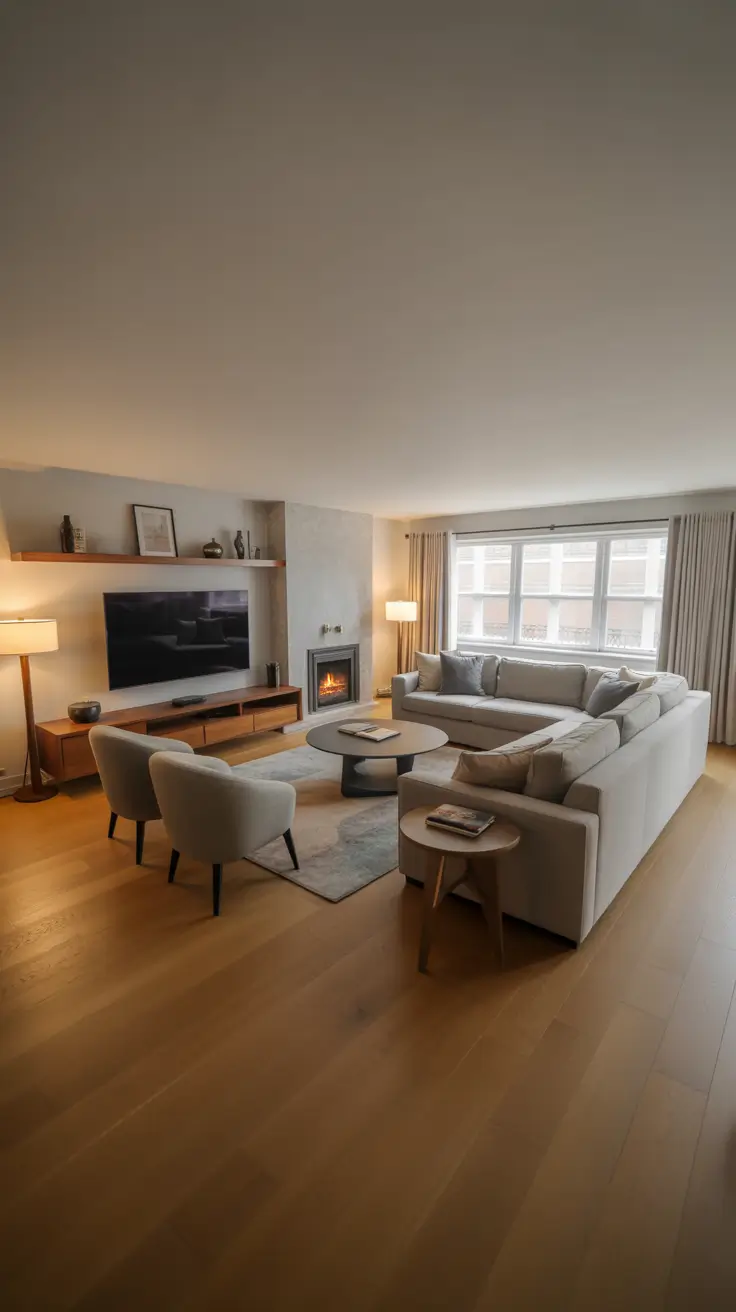
Television placement and glare management often make or break a layout. I prefer positioning the TV centrally on the shorter wall, with seating arranged so the middle cushion faces the screen directly rather than an end. The classic 60-30-10 color rule guides me in balancing upholstery, walls, and accent pieces harmoniously. Coffee tables are ideally placed about two-thirds the length of the sofa away and stand 35 to 45 centimeters high for easy reach. When incorporating curved sofas, I balance them with rectangular tables to maintain spatial stability.
Vertical storage solutions like shelves above low media cabinets add visual interest and functionality. In cooler rooms, runners behind sofas soften footsteps in traffic lanes. For homes with pets or children, I opt for performance fabrics on high-touch surfaces to preserve the design’s clean look. Finally, dimmable lighting on either side of the main sofa ensures comfortable reading and conversation during evening hours.
Contemporary Sofa Styles for Modern Living Spaces
Modern living rooms embrace clean lines, authentic materials, and layered, muted color palettes. Brown and cream sofas provide a versatile foundation, harmonizing effortlessly with wood and stone elements without overwhelming the space. A caramel-hued sofa adds warmth that reads as modern rather than rustic, especially against pale plaster walls. Deep green velvet or textured boucle upholstery offers an elegant contrast while remaining cozy in soft evening light. Minimal ornamentation is key, with style conveyed through tailored seams and subtle leg details.
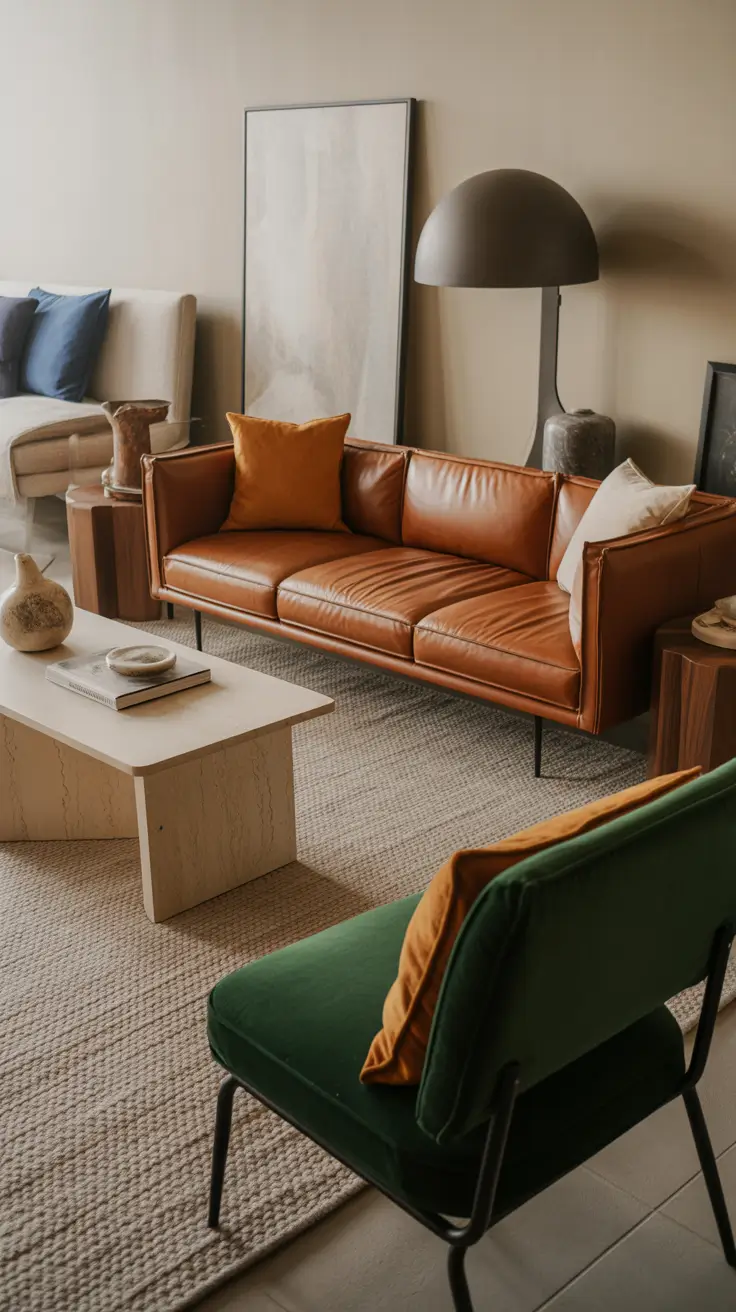
Books are intentionally selected to complement the palette. Leather sofas, especially in mid-brown or black aniline, offer timeless appeal and pair well with grey wool blend accent chairs for tactile contrast. Wooden side tables, slim metal floor lamps, and woven rugs complete the look without clutter. When walls are white or stone, I introduce orange or blue accents through pillows to warm or cool the space subtly. Rounded table edges echo curved sofa lines, enhancing the contemporary vibe.
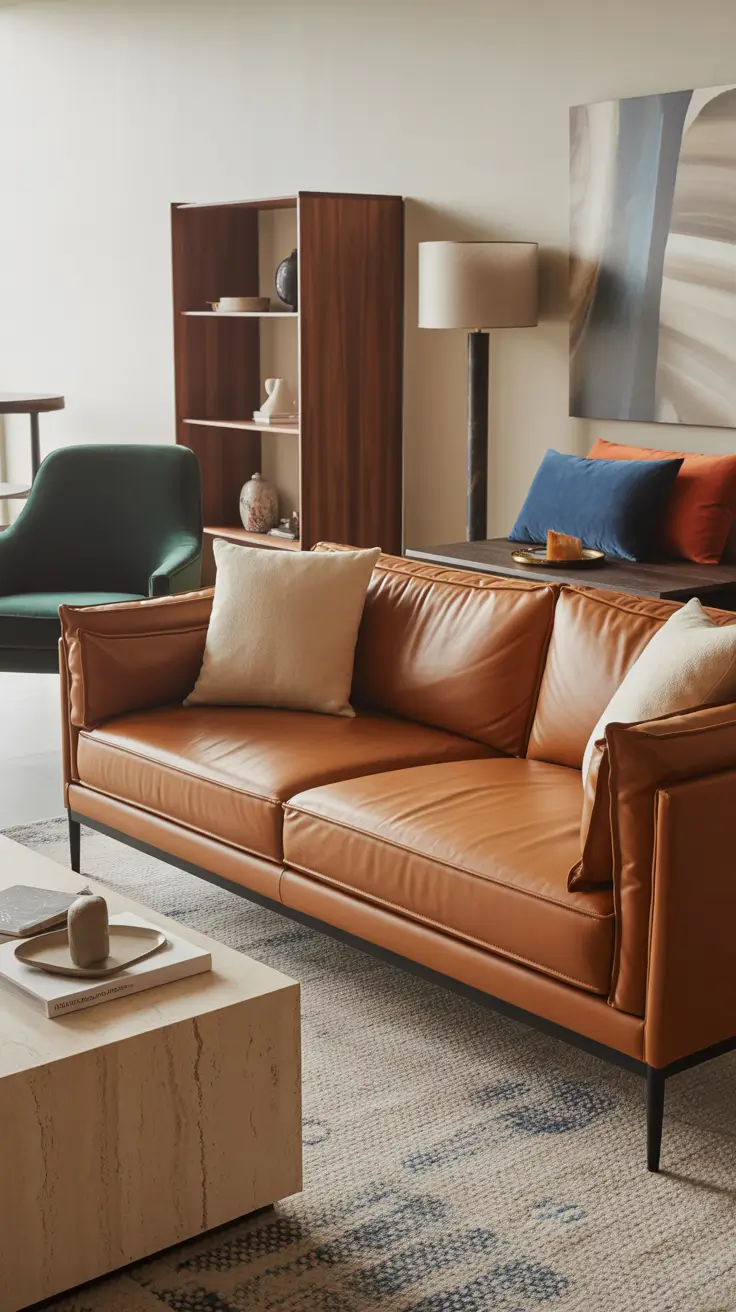
Modern design doesn’t mean starkness. I favor low-profile sofas with broad arms that invite lounging, and performance fabrics allow for lighter colors without worry. Caramel leather ages beautifully, developing a unique patina unlike synthetic materials. Black upholstery is balanced with brass lighting and pale oak to keep the atmosphere inviting. My guiding principle is to feature one statement texture at sofa scale, then soften the rest of the room with subtler textures.
Where space allows, a slim console behind the sofa provides uplighting and display space for art books, enhancing the lived-in feel. Tall plants soften high ceilings and draw the eye upward. In rooms with challenging acoustics, heavy drapes or layered rugs absorb echoes without compromising style. All seating is designed to be drink-friendly, combining elegance with practicality.
Mixing Sofas and Seating for Dynamic Living Areas
When pairing a sofa with another seating piece, I consider proportions, arm styles, and leg heights to ensure visual harmony. Combining two sofas in different colors can look sophisticated if one acts as the anchor and the other as a complement. For instance, a deep blue three-seater pairs well with a soft grey loveseat, provided seat heights differ by no more than two centimeters. In smaller rooms, mixing a curved loveseat with a linear sofa adds visual interest and encourages movement. When seating needs are extensive, chairs can replace a second sofa to avoid overcrowding.
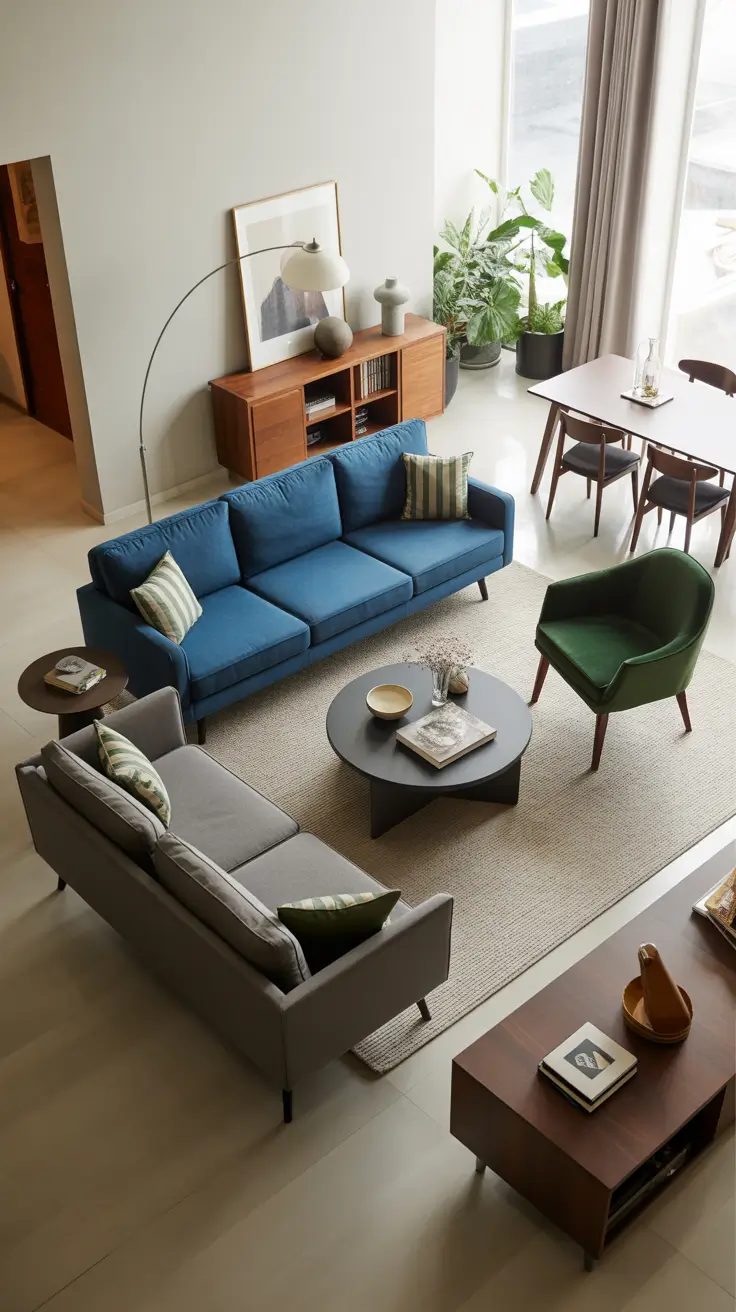
Each piece should feel purposeful rather than superfluous. A 90-inch sofa anchors the main wall, with a 72-inch couch angled opposite, separated by a round coffee table that facilitates flow. A deep green accent chair near a window balances color, while a wooden side table bridges finishes. Textiles are coordinated by repeating small patterns on pillows across both sofas. A curved lounge lamp arcs over the coffee table, providing reading light without interrupting conversation lines.
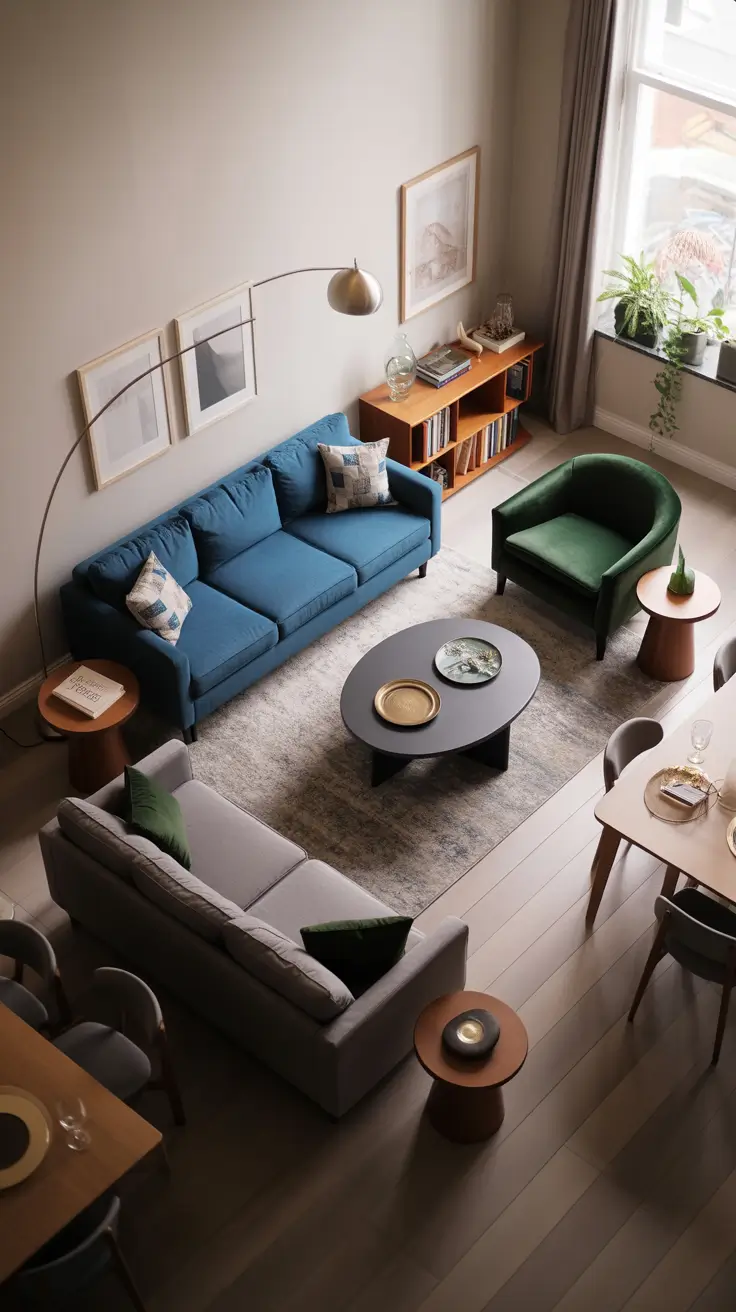
Successful mixing relies on a unifying element, such as matching matte black metal legs or repeated piping details. I often keep one sofa neutral brown or cream, allowing the other to introduce playful blues or greens. Using the same rug under both seating areas prevents the space from feeling divided. When uncertain, matching seat depths provide visual consistency.
Accent tables are arranged hierarchically: a central coffee table flanked by smaller side tables for versatility. If the room doubles as a dining or game area, a small dining table nearby can serve multiple purposes. A slim bench can be floated for extra seating during gatherings. Early planning for cable routing ensures convenient lamp placement between sofas.
Emerging Trends in Living Room Sofas
Current trends emphasize curved silhouettes, modular adaptability, and richer color palettes. Sectionals are designed low to the ground with adjustable backs, encouraging lounging and easy reconfiguration for movie nights or social events. Soft light blues paired with sand, walnut, and charcoal create fresh, inviting combinations. Deep greens and blues are gaining popularity, balanced by warm neutrals to anchor spaces. Dark metal accents in lamps and frames add definition without harshness.
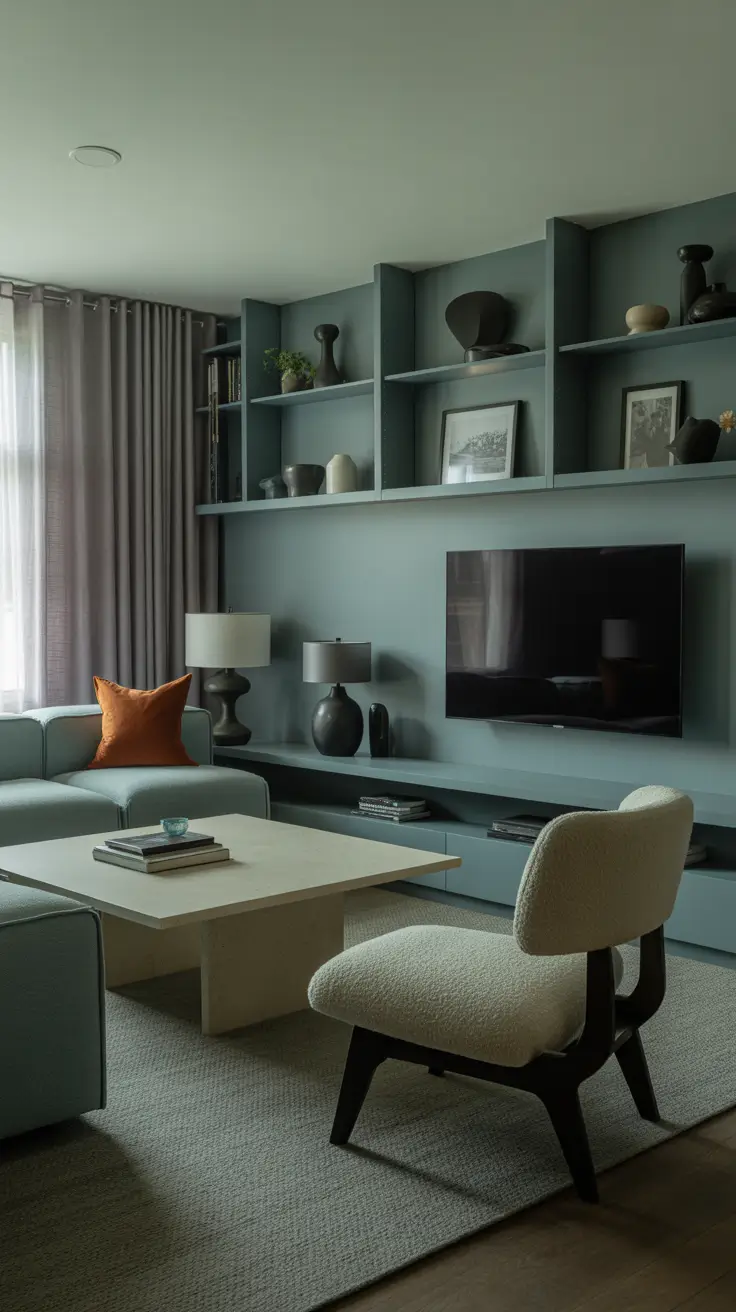
Modular sofas with three-piece sectionals offer flexibility, transforming from chaise lounges to U-shaped configurations to suit various household needs. Coffee tables crafted from travertine or honed limestone introduce understated luxury, complemented by boucle lounge chairs. Vertical shelving above low media units provides rhythm and storage, while plush grey wool rugs unify the palette and soften acoustics.
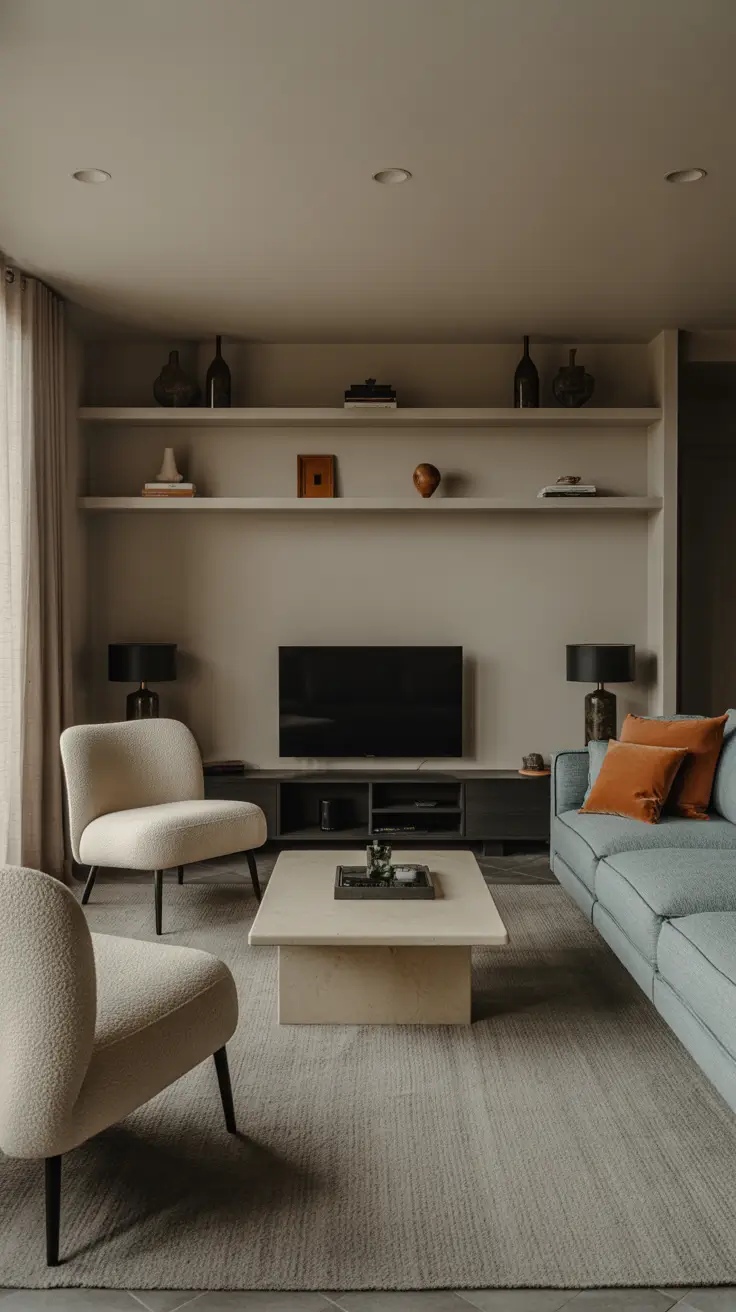
Trends are best embraced through practical lenses. While bright orange cushions add vibrancy, I prefer foundational pieces in timeless hues. Testing fabric swatches at different times of day is essential, as colors like light blue can shift from icy to calming. Black accents are staggered in height to guide the eye, and modularity allows families to add or remove pieces as needs evolve.
Technological integration is subtle but impactful: built-in charging ports, stain-resistant yet fabric-friendly upholstery, and cordless lighting maintain a clean aesthetic. In compact spaces, concealed storage in side tables maximizes utility. Layered curtains enhance softness and privacy, while art lighting ensures seating areas glow harmoniously with wall washes after sunset.
Versatile Sofas Tailored to Interior Styles
Customizing sofas to suit various design languages while maintaining comfort is key. Scandinavian interiors favor light wood frames and soft blue fabrics, while Japandi blends wooden structures with linen cushions and muted tones. Industrial spaces benefit from black metal legs and leather upholstery, balanced with cozy elements to avoid coldness. Traditional rooms embrace brown and cream fabrics with classic turned legs or skirted bases, updated with streamlined silhouettes. Coastal and bohemian styles welcome mixed patterns and tactile weaves to evoke relaxed energy.
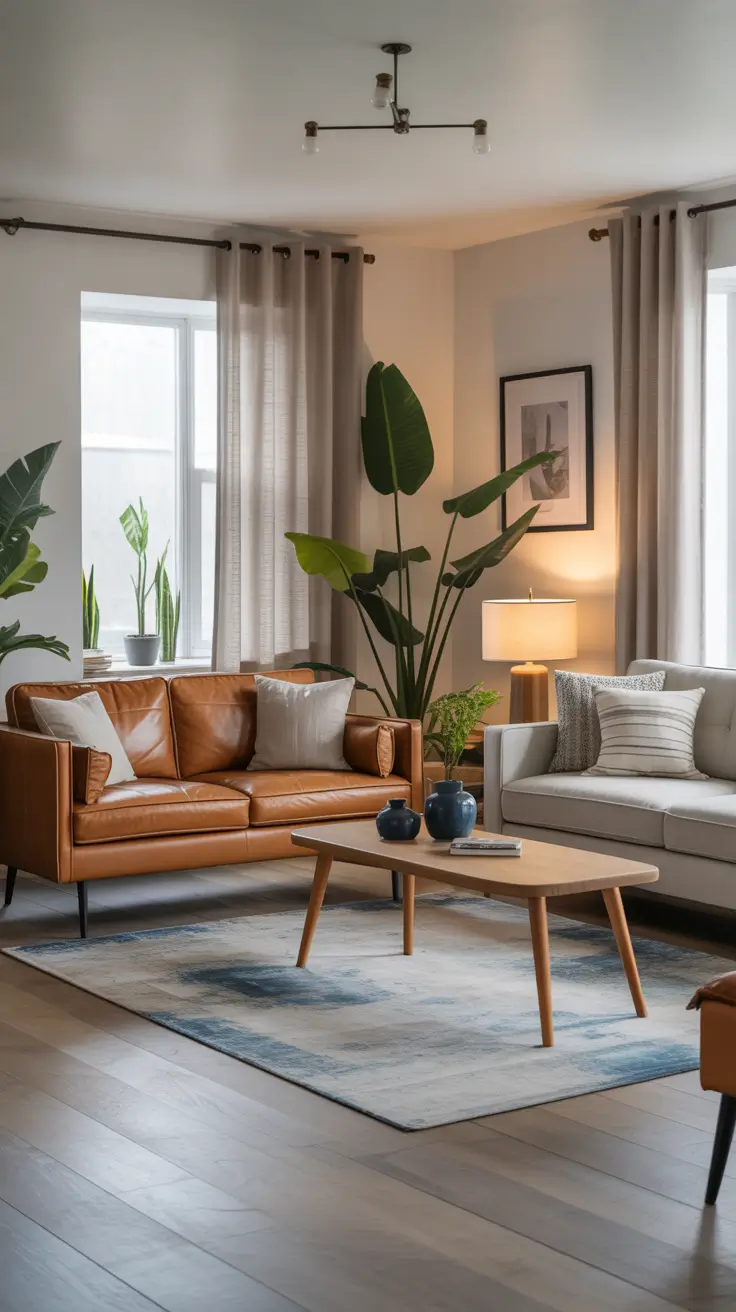
I establish style markers deliberately to ensure cohesion. For Scandinavian rooms, a thin-armed light grey sofa with oak legs pairs with a nubby wool rug and circular oak table. Japandi spaces feature bench-seat sofas in natural linen, low ash tables, and paper lantern lighting. Industrial designs incorporate black leather sofas, reclaimed wood tables, and articulating metal floor lamps. Coastal mixes balance caramel leather loveseats with white slipcovered sofas.
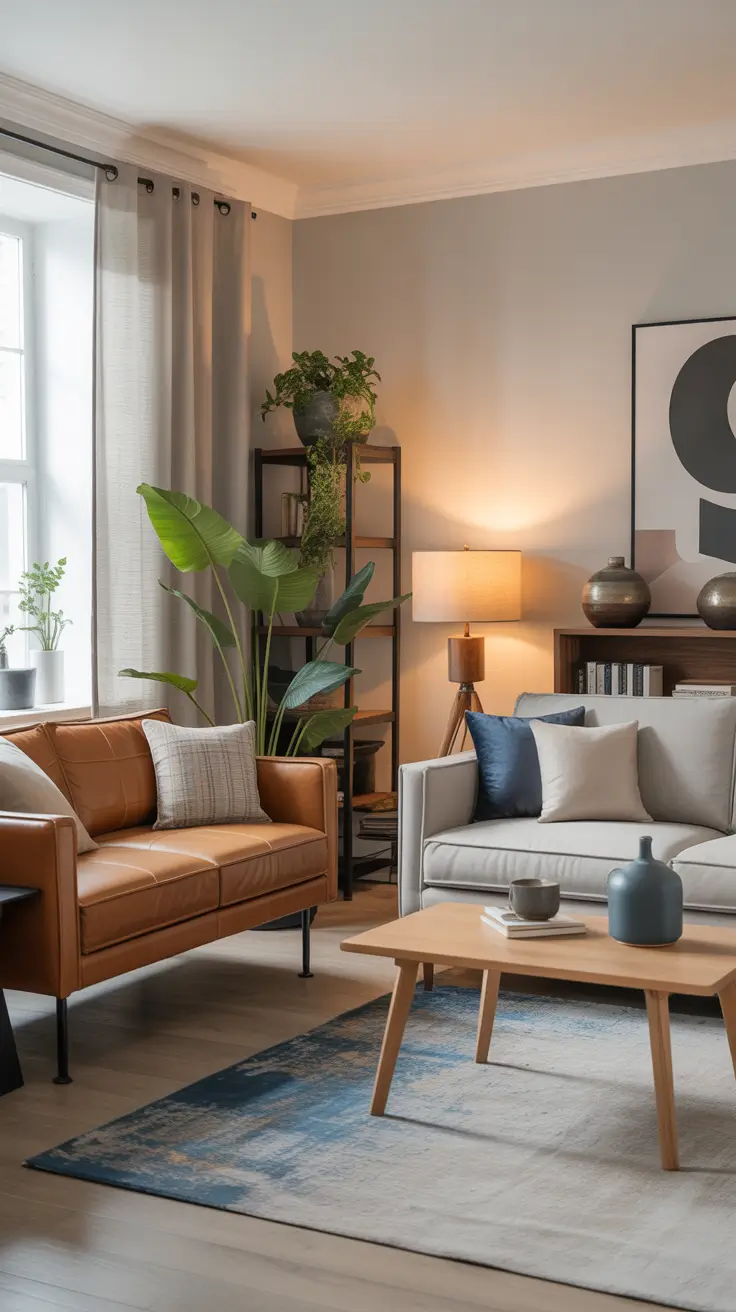
Simplicity in palette fosters creativity: two primary colors and one accent prevent visual chaos. Green plants and blue ceramics add natural warmth without clutter. Curved forms soften rigid industrial lines, while straight edges bring balance to eclectic rooms. I always include at least one chair facing the best window view to avoid cramped setups.
Intentional rhythm is vital. Repeating wood tones thrice or echoing an orange stripe in textiles unifies the space. Slightly angling coffee tables can ease stiffness, and dimmer switches allow mood adjustments from reading to entertaining without rearranging furniture.
Symmetrical Living Rooms with Dual Sofas
For balanced, symmetrical living rooms, I start by drawing a centerline and mirroring furniture placement to create relaxed, intentional sightlines. Two sofas facing each other around a coffee table foster conversation and balance, especially when a fireplace or media wall anchors the long axis. In larger rooms, adding a narrow console or dining table at the far end extends visual rhythm without overcrowding, minimizing dead zones and maintaining a cohesive color story.
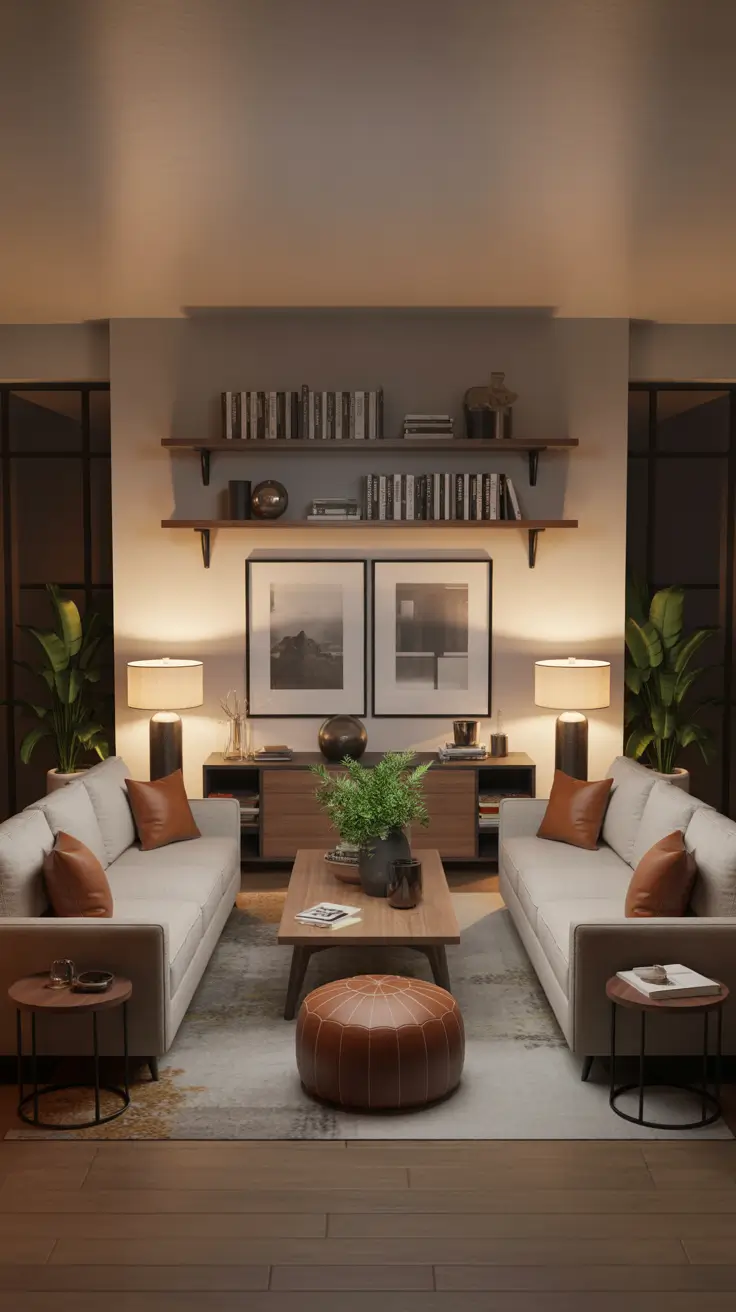
I typically select two matching sofas in neutral performance fabric, differentiating with accent furniture to avoid a showroom feel. A wooden coffee table anchors the set, with leather ottomans adding texture and extra seating. Paired table lamps, a low-pile rug sized to the seating group, and shelves above one sofa displaying books or art sharpen the symmetry. Warmth is introduced through caramel sofas or deep green and blue pillows on greige backgrounds, while black metal side tables and an orange ceramic vase provide subtle color pops.
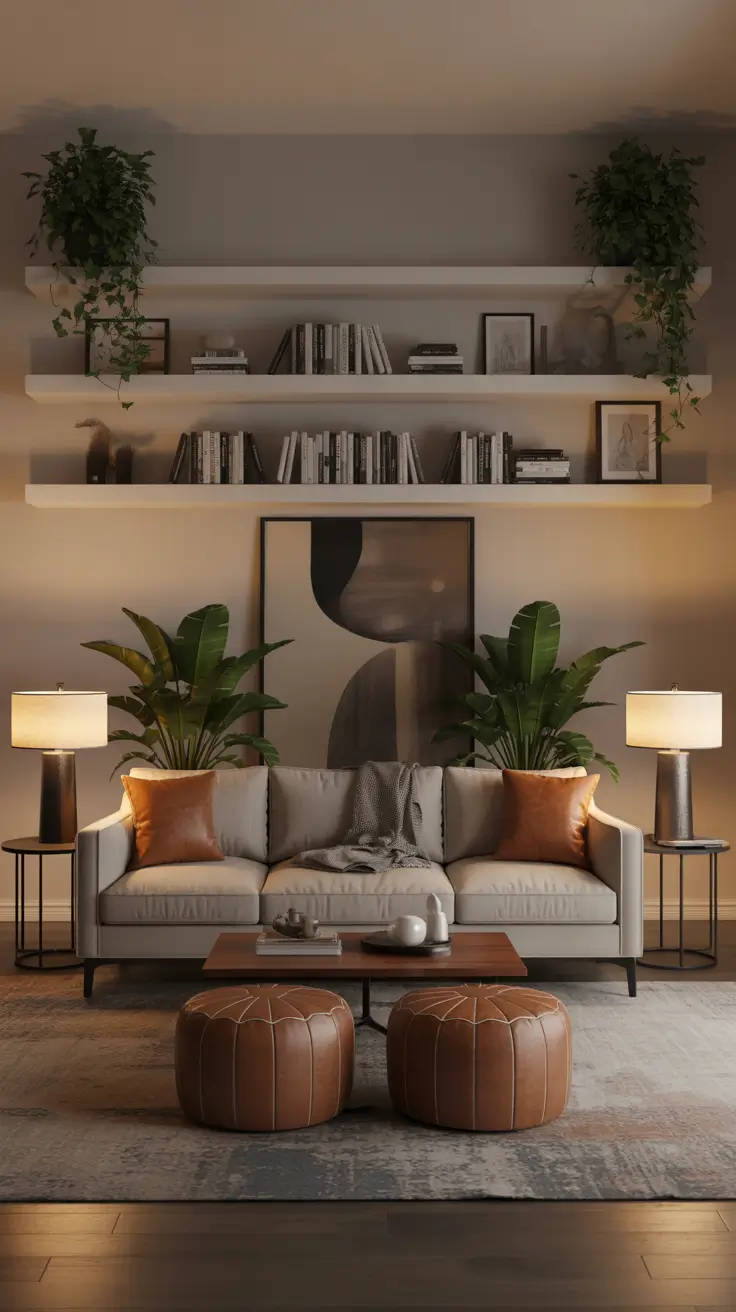
Symmetry is most effective when sofa arm heights match, and spacing between sofas and coffee tables is equal, forming a neat rectangle on the rug. Paired lighting creates clean, balanced compositions and reduces TV glare. Seating should center on the fireplace or media wall, not off-center windows. To enhance the area, I add slender benches or stools at coffee table edges for gatherings, large artwork above sofas for visual balance, low-hanging chandeliers in high-ceiling rooms, and patterned rugs that echo sofa colors.
Grey Sofas: Versatile Foundations for Living Rooms
Grey sofas are my go-to anchors, offering flexibility to shift color schemes seasonally without replacing major pieces. When planning grey couch living room color schemes, I first choose warm or cool grey tones, then build the palette accordingly. Warm greys pair well with browns and creams, while cool greys complement blues, blacks, and crisp whites. Medium grey sofas suit small spaces by concealing wear while maintaining a light visual weight. I keep layouts open to ensure smooth circulation, especially when sofas face the TV or fireplace.
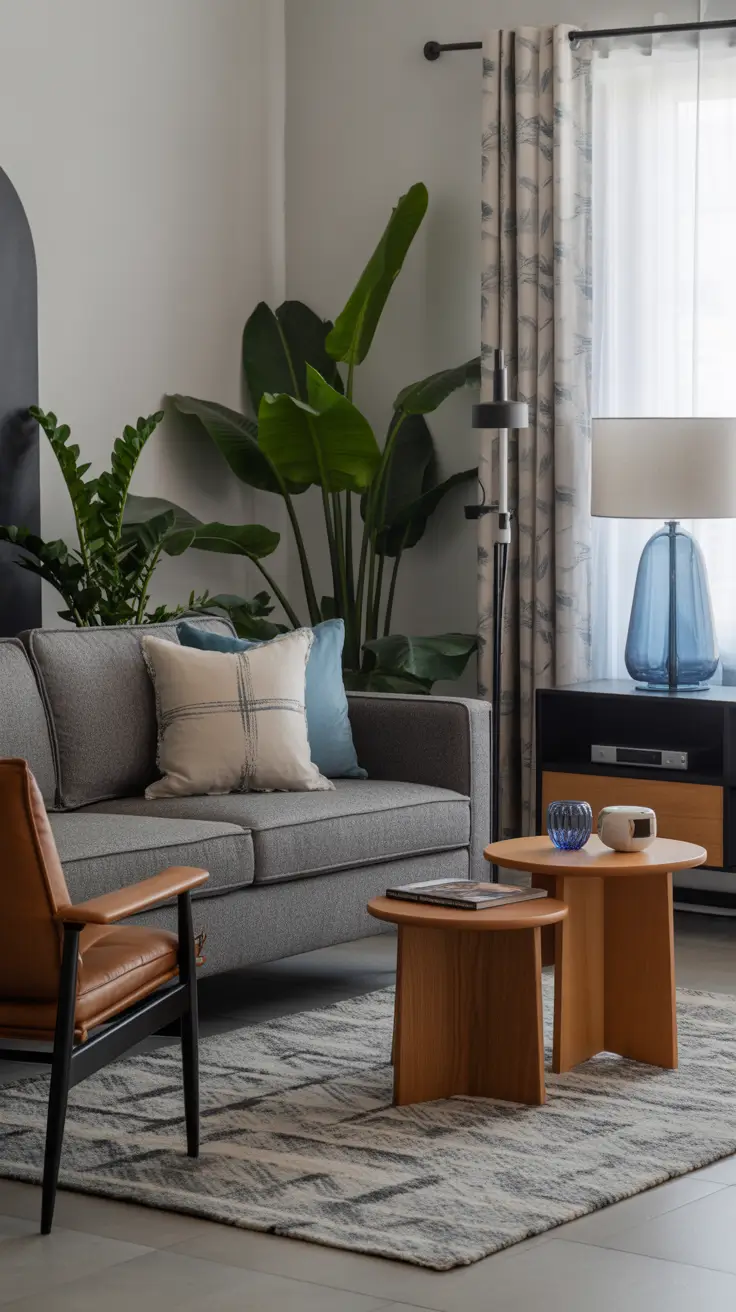
To add depth, I incorporate wooden side tables, textured wool rugs, and leather accent chairs. Light blue linen pillows, cream throws, and blue glass lamps cool the atmosphere without making it feel icy. For bolder energy, small orange accents in pots or abstract art and black floor lamps create graphic interest. Deep green plants in clay pots soften edges and enliven the palette. A slim shelf behind the sofa stores remotes and books, reducing clutter.
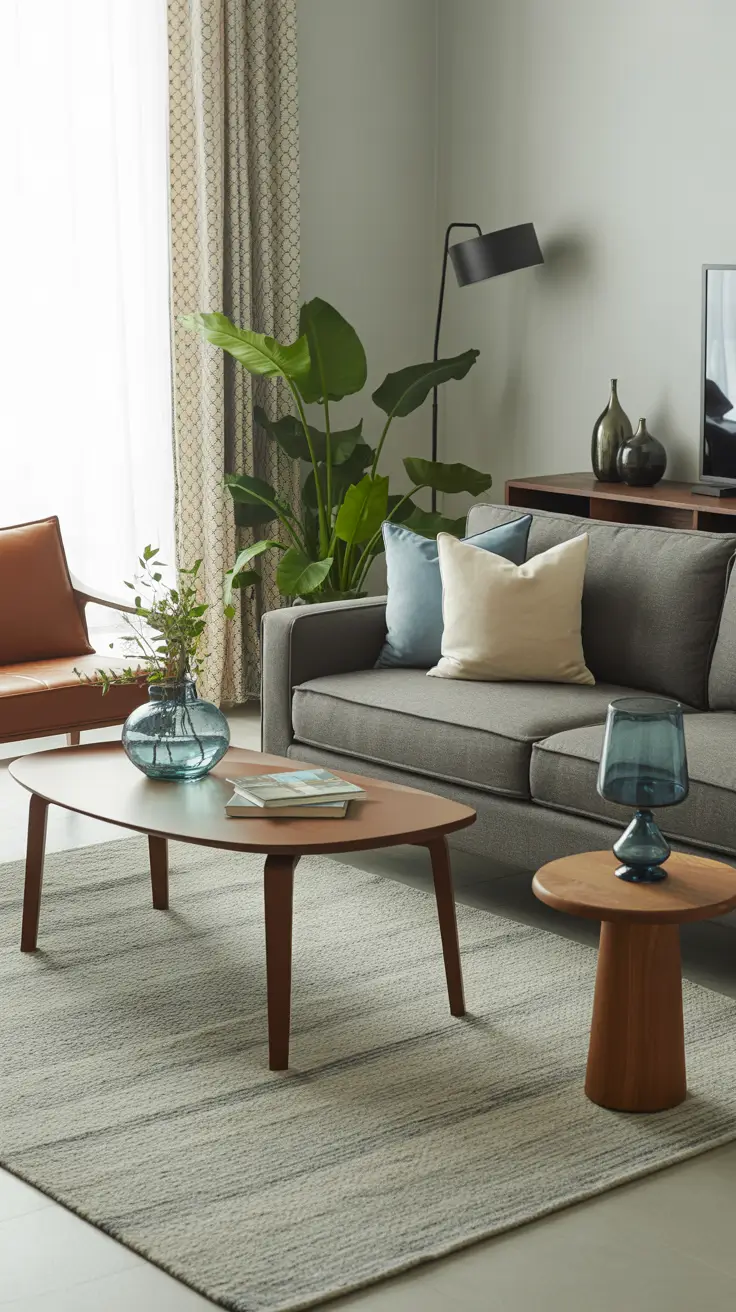
Clients who start with grey sofas often find satisfaction due to their adaptability. Designers recommend layering at least three textures—such as boucle pillows, flatweave rugs, and matte metal lighting—to avoid flatness. In cooler rooms, caramel leather pillows and brown wooden frames warm the space, balancing the palette. Patterned curtains echo light blue and deep green accents without overwhelming the eye. Modular shelving above media consoles offers storage and display without clutter. Replacing one table lamp with a swing-arm sconce can free up space and enhance lighting.
Compact Living Rooms: Sectionals with Fireplace and TV
In smaller spaces requiring both a fireplace and TV, sectional sofas efficiently consolidate seating. I position the sectional along the focal wall, angling a small accent chair to include everyone in conversation. The sectional is set slightly away from the wall to allow curtain movement and heat circulation around the fireplace. A low-profile media console preserves the view of the flames, while a rug defines the seating area without encroaching on walkways. This approach maintains flow in narrow rooms with multiple functions.
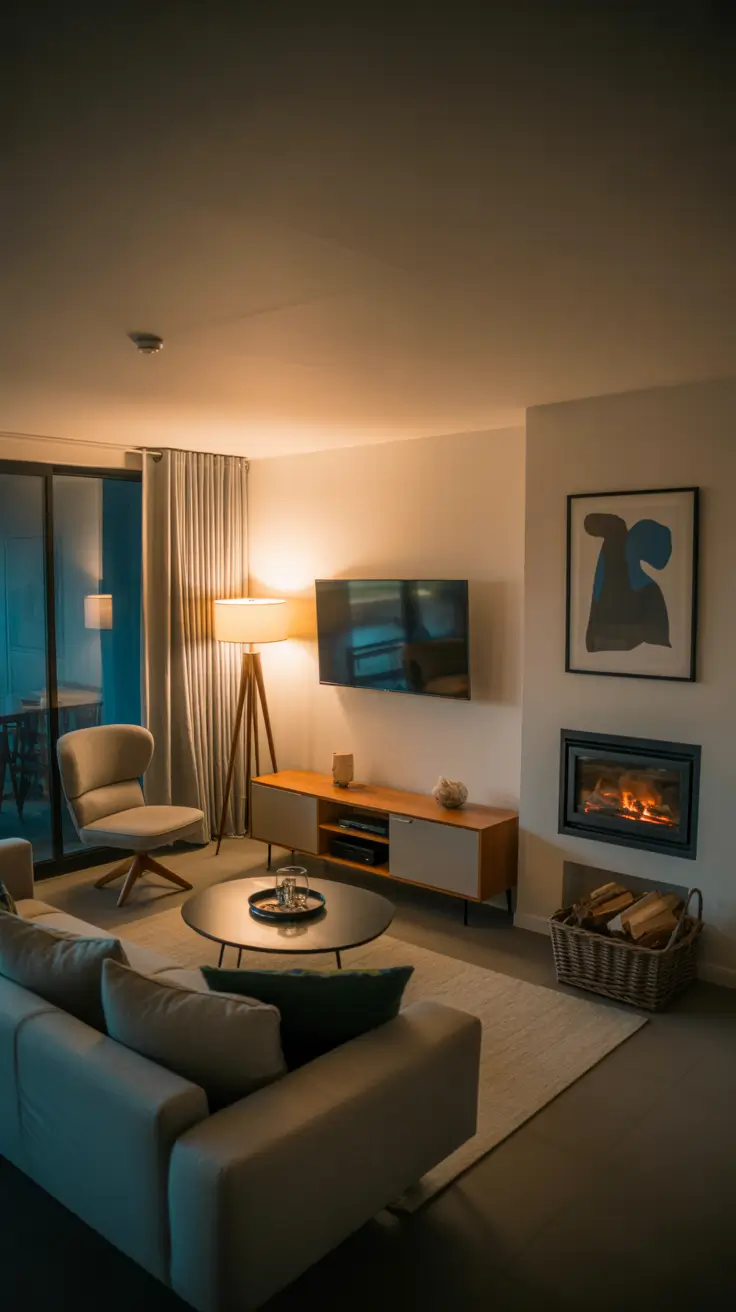
Key elements include a tuftless chaise sectional, a narrow coffee table with rounded edges, and a visually light leather sling chair. Swivel chairs enhance flexibility, allowing viewers to face the TV or fireplace without moving furniture. Neutral backgrounds with blue and deep green pillows keep the space calm, while an orange throw adds warmth for movie nights. Black picture frames above the mantel echo the TV frame, creating a cohesive wall. Shelves above the console provide storage if chimney clearance allows.
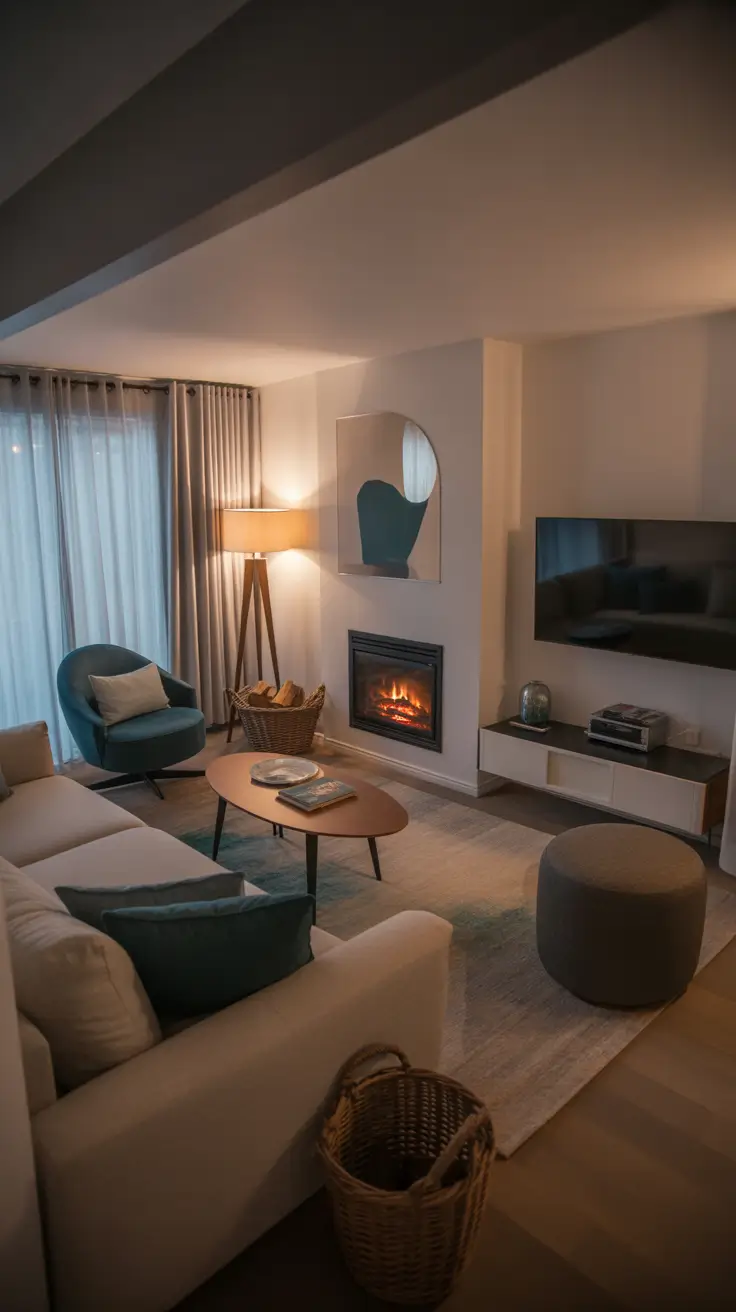
Success comes from maintaining clearances around the fireplace and positioning the TV at comfortable eye level to reduce neck strain. Placing screens slightly lower than artwork minimizes glare in evening light. Stylists often recommend fewer, larger pieces in small rooms to create visual calm and the illusion of spaciousness. Performance fabrics withstand daily use and fireplace heat. Nesting tables or tuck-away ottomans extend seating without occupying extra floor space.
Layered lighting—ceiling fixtures, dimmable floor lamps near the chaise, and subtle step lights by the fireplace—enhances ambiance. A fireproof basket keeps wood or media tidy. If storage is limited, a low bench with concealed compartments under a window holds blankets and games.
Cozy Corners: Corner Sofas for Intimate Living Spaces
Corner sofas excel in creating intimate, acoustically pleasant nooks for reading or deep conversations. I often place a small L-shaped sofa snugly in a corner with a round table positioned to avoid knee bumps. This transforms neglected corners into inviting spots while keeping the rest of the room open for dining or work areas. Rounded edges on furniture facilitate smooth traffic flow and prevent injuries. Leggy sofas maintain sightlines and ease vacuuming in rooms with low ceilings.
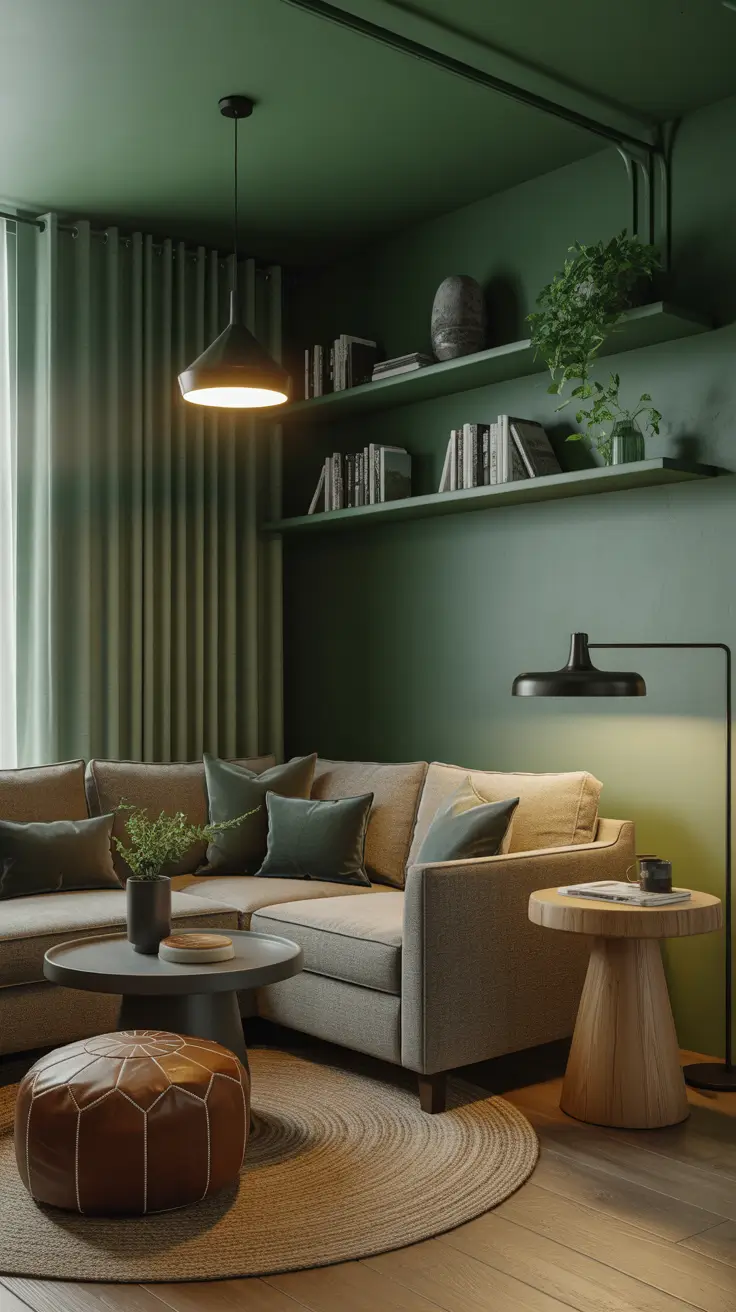
Material combinations might include textured fabric sofas paired with leather poufs, wooden pedestal side tables, and low drum coffee tables aligned with the sofa angle. Dual-headed corner lamps provide even lighting, while wall art arranged in soft gradients visually widens the space. Deep green cushions and blue throws cool the palette, balanced by caramel accents and brown trims. Black reading lamps add contrast against pale walls. Shelves above corners display plants and books, creating a curated collection.
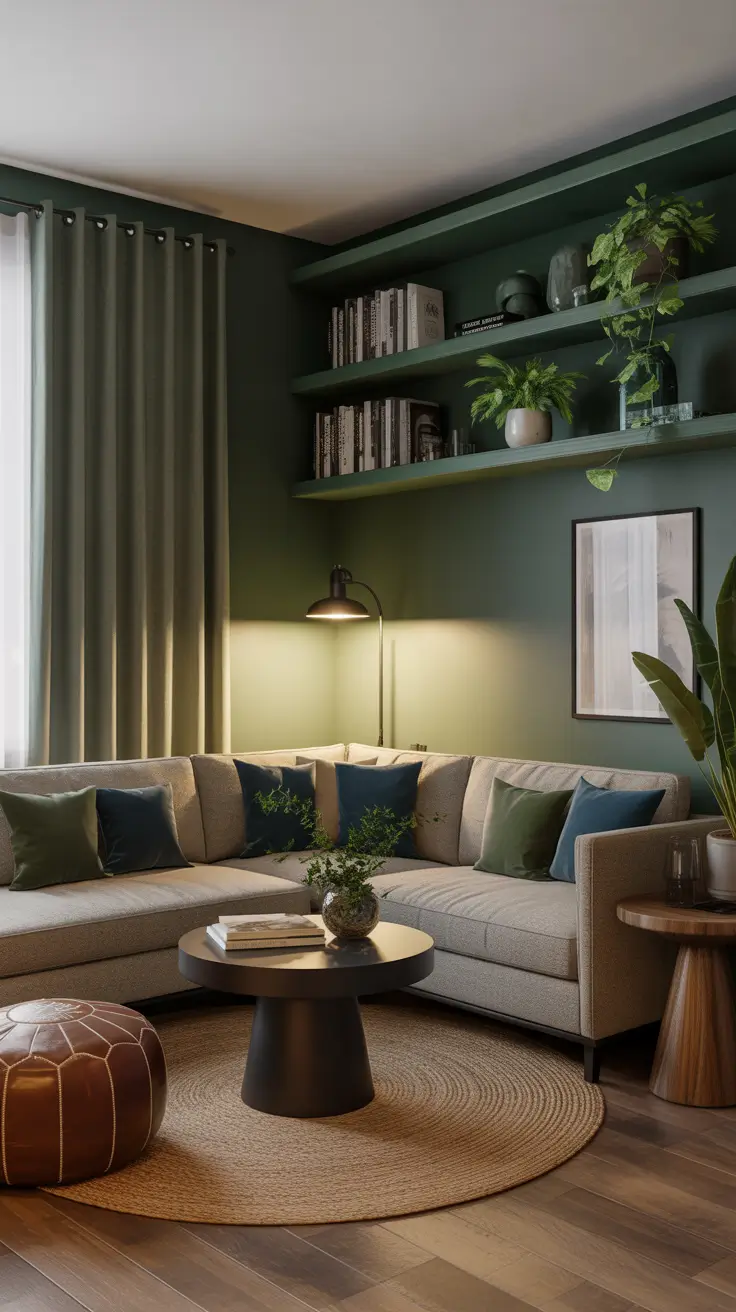
Comfort is enhanced when sofa backs and arms are accommodating, and table heights match sofa seats for easy reach. Avoiding overstuffed arms prevents narrow openings from feeling cramped, and small-scale patterns keep corners uncluttered. Round rugs and tables soften angular spaces effectively. Indirect-light-loving plants thrive in corners, adding humidity and life. Layered, tightly stacked window treatments provide valuable extra seating inches.
Additional touches include small wheeled ottomans for lounging, wall-mounted plug-in sconces to save space, heavy wool carpets and lined curtains to soften acoustics, and low bookshelves for beverages and remote storage.
Living Rooms with Contrasting Sofas for Bold Statements
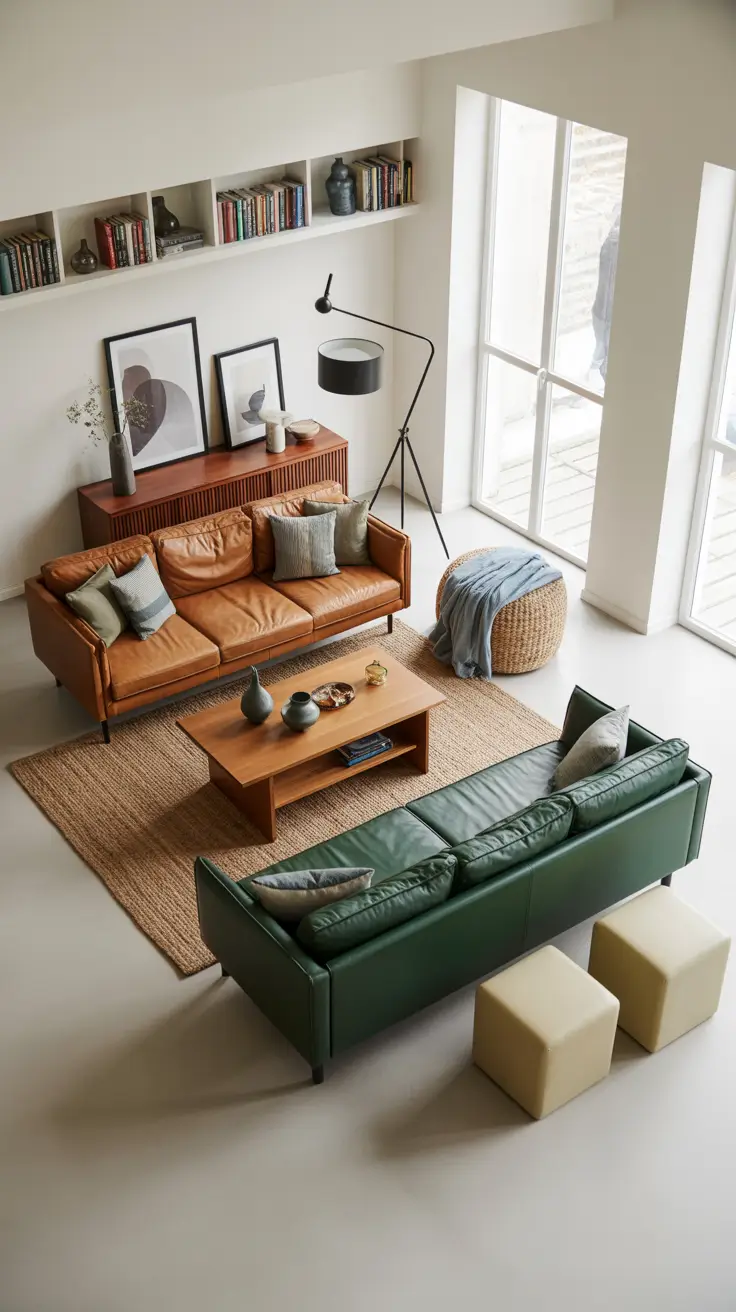
For clients seeking vibrant energy, pairing sofas in contrasting colors creates dynamic, framed spaces. Two distinct sofas—such as deep green velvet and caramel leather or brown tweed—offer layered, intentional looks. Symmetry remains effective even with different colors, maintaining focus in formal architecture. Art and rugs unify the palette, balancing personality with order.
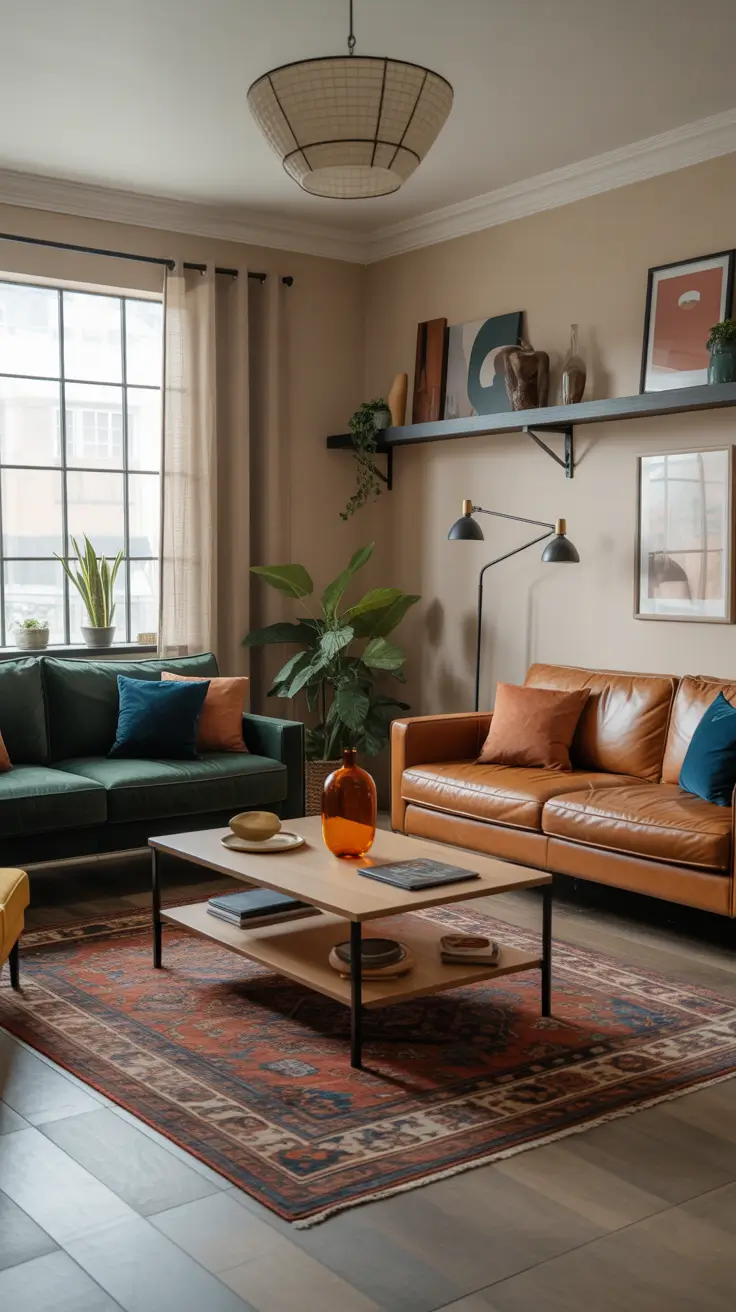
Furniture shapes are coordinated to maintain visual integrity despite color differences. A shared wooden coffee table, black metal lamps, and a rug incorporating green, blue, and brown threads tie the sofas together. Pillows echo each other’s colors, and a single orange accent adds a lively jolt, softened by grey walls or rugs. Bookshelves above the longer sofa reflect the color scheme through alternating spine colors.
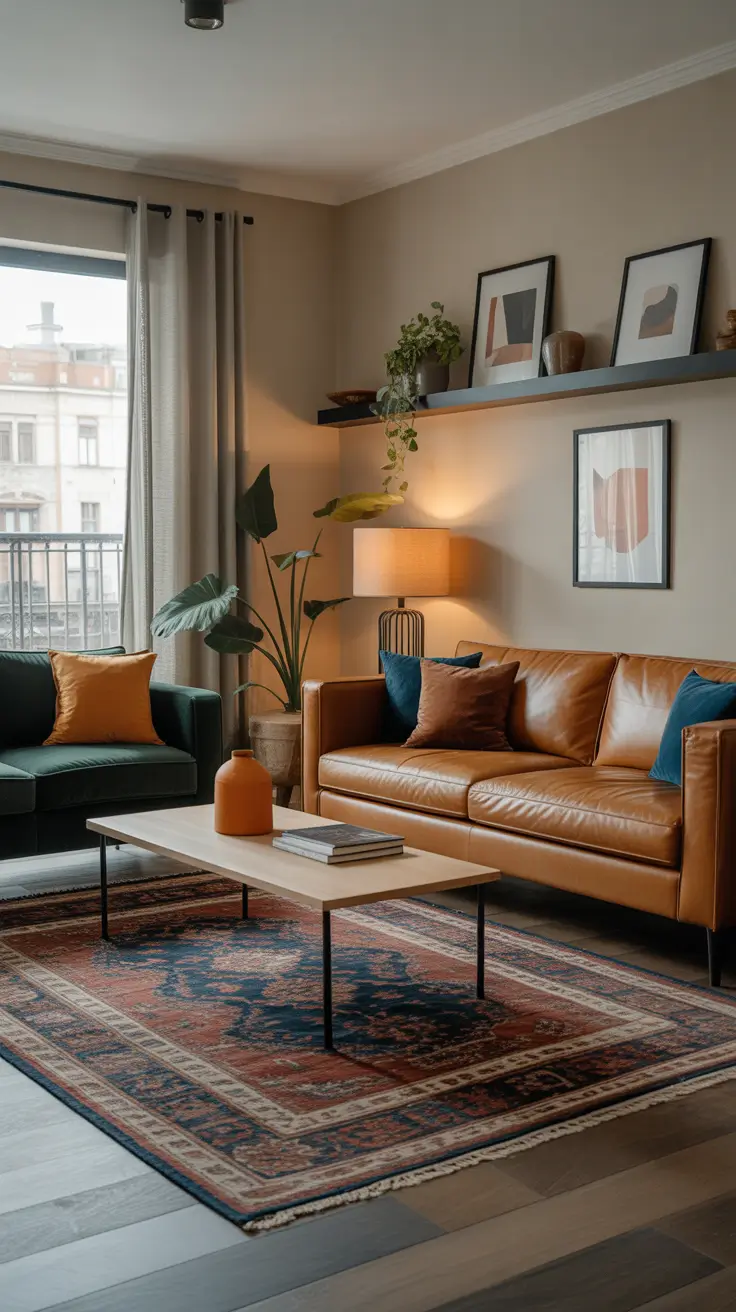
Effective bold pairings balance value and saturation rather than exact matches. Fabric swatches tested in different lighting ensure no sofa dominates. Designers recommend repeating each color at least twice in the room; I echo green in plants and art, brown in frames and baskets. For cautious clients, starting with one neutral and one colored sofa, then experimenting with pillows and throws, offers a low-commitment way to refresh the look.
To refine the concept, patterned curtains incorporating sofa colors and neutrals provide breathing space. When space is limited, club chairs replace a second sofa, maintaining color repetition. Dimmers adjust lighting to warm contrasts in the evening and sharpen them during the day.
Warmth and Versatility: Carmel-Colored Sofas in Living Rooms
Caramel-toned sofas bring natural warmth and grounding to nearly any palette without heaviness. I position the sofa facing a low media console, ensuring traffic flows smoothly around it. Rugs are sized so the front legs rest on them for stability. Wooden side tables, black floor lamps, and deep green plants add contrast and texture. To avoid rustic vibes, I incorporate sleek metal details and light blue ceramics, demonstrating harmonious color mixing. Slim shelves above long walls display books and art while keeping floors open.
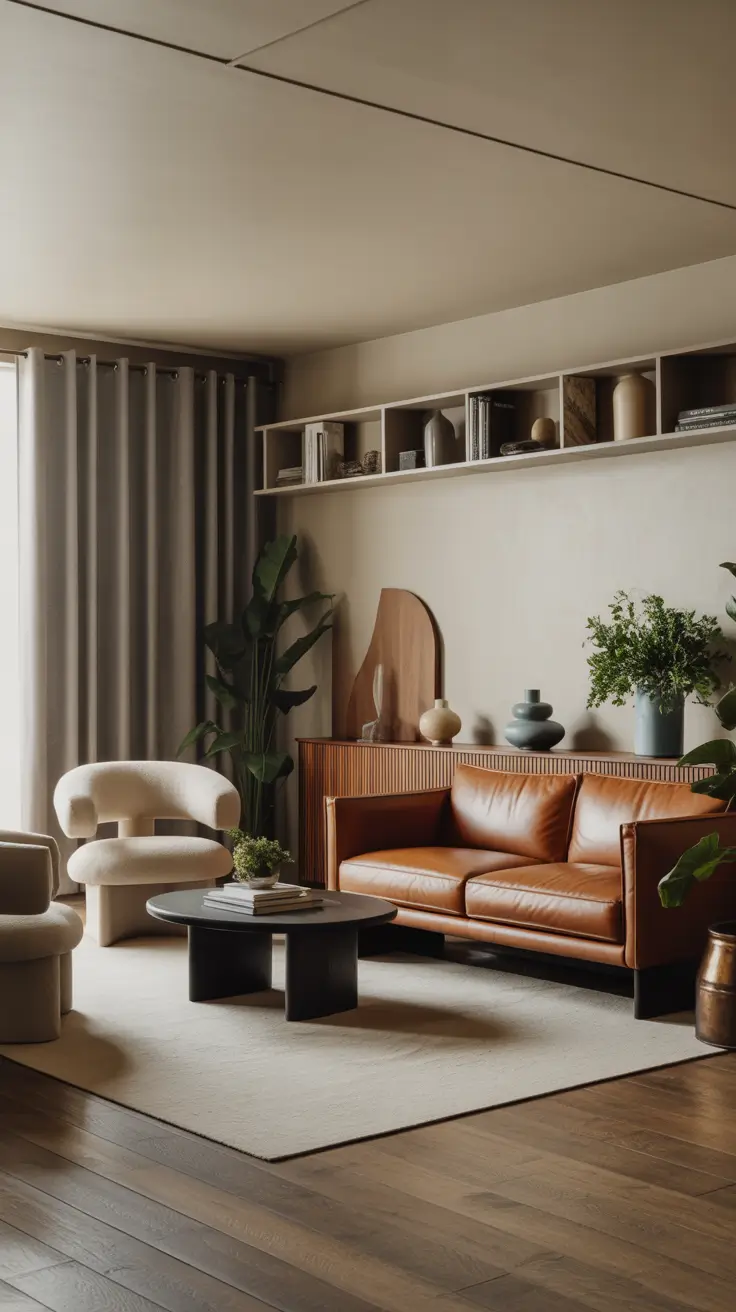
The caramel sofa pairs beautifully with textured cream wool carpets, grey linen curtains, and black round coffee tables with soft geometry. Curved accent chairs echo sofa shapes, facilitating face-to-face conversation. Behind the sofa, a wooden console hides cords and provides display space. Slim black frames on the wall create a steady visual rhythm, while brass accents on storage add warmth without matching too closely.
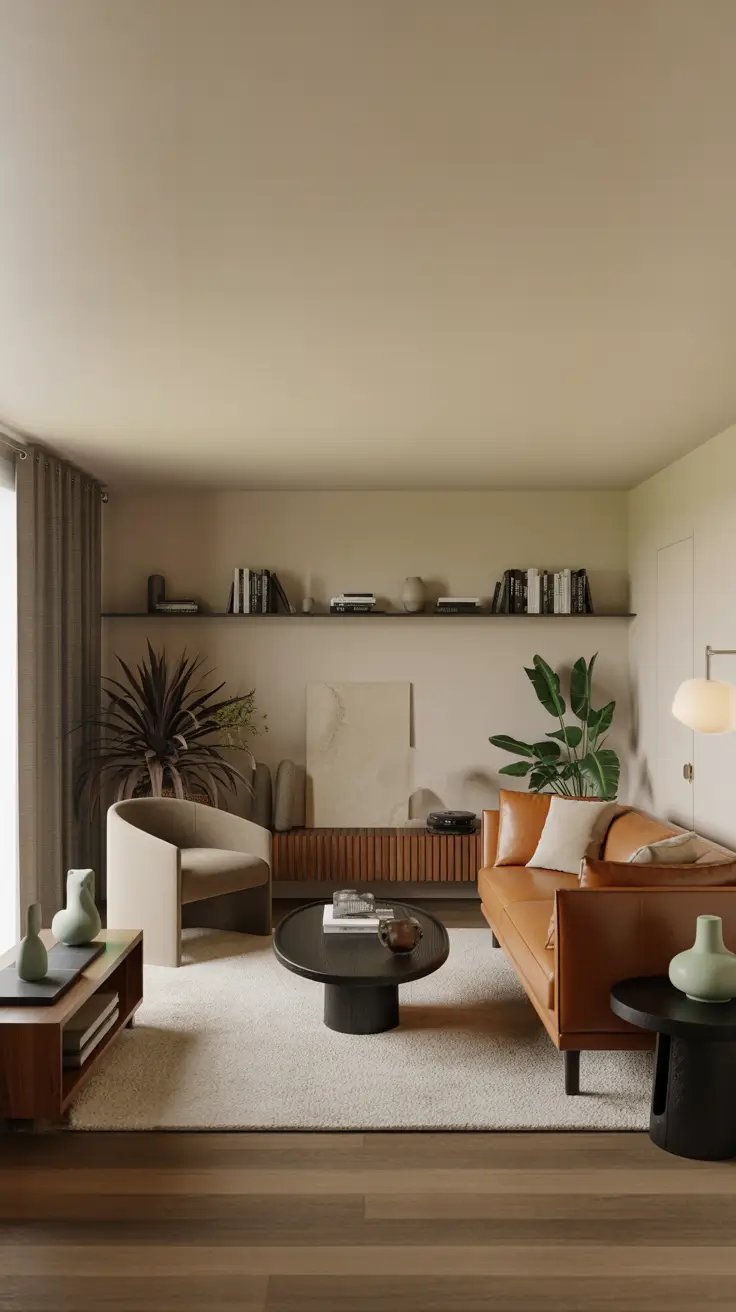
Caramel sofas age gracefully, with minor scratches blending into the patina, earning them the reputation of a “forever neutral.” Layered neutrals with a single warm floor tone and two subtle color accents add depth and dimension. Deep green velvet cushions and blue glazed pots balance the palette, while thin orange stripes in throws add warmth in cooler rooms. The overall effect is layered and collected rather than themed.
Additional seating options like stools under the coffee table and task lighting on consoles enhance functionality. A bench by the window offers a quiet reading spot, and diptych art above shelves draws the eye downward. Experimenting with grey sofa accent pillows shows how grey and caramel can coexist beautifully.
Classic Brown and Cream Living Rooms with Timeless Sofas
Brown and cream palettes evoke traditional serenity with understated elegance. Cream walls and carpets prevent brown sofas from feeling heavy or anchoring the room too strongly. Sofas face the main light source to avoid flatness, supplemented by lamps for warm evening ambiance. Both tight-back and brown leather sofas mature beautifully, inviting layered textures. Black accents in frames or lamps add refined lines.
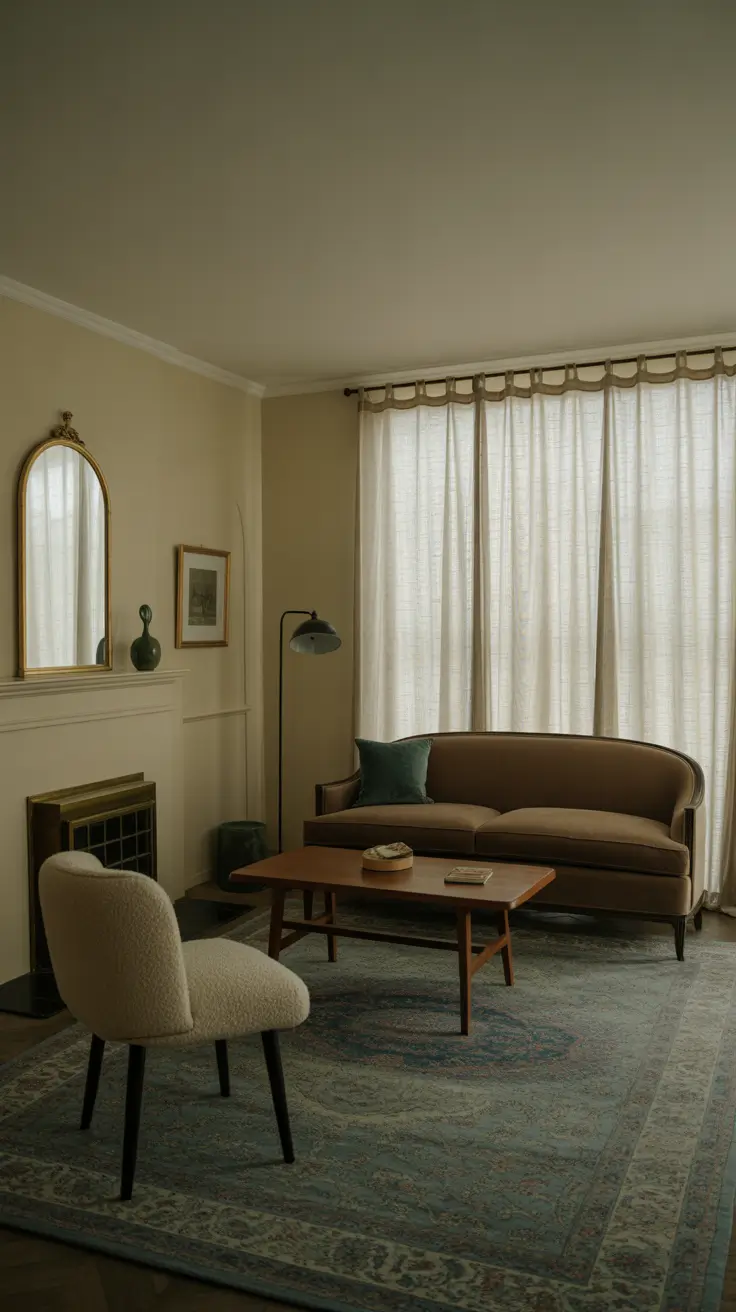
A cream flat-weave carpet grounds the furniture, while a wooden coffee table with visible grain connects sofa and floor. Warm off-white linen panels soften windows, and cream boucle accent chairs complement brown ceramic lamps, echoing the main colors in varied materials. An old brass mirror above the mantel adds subtle glamour without clashing.
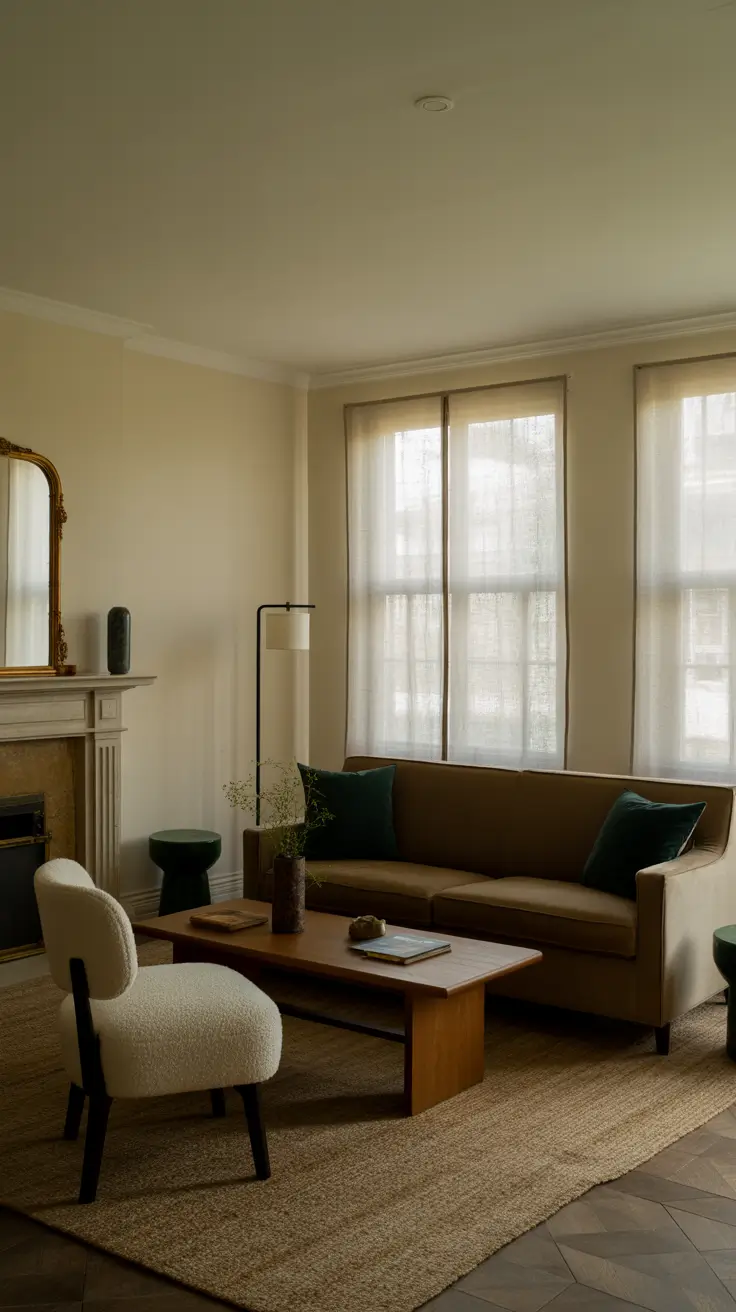
This scheme thrives on proportion and texture rather than bold color. In small living rooms with fireplaces and TVs, low sectionals and minimal mantels keep the brown and cream story clear. Designers recommend at least three textures—linen, leather, wood—to add depth. Deep green pillows and blue throws introduce subtle tension without starkness. Smaller upholstery pieces prevent the sofa from feeling too formal.
To enhance the space, I add a small round dining table by the window for casual meals or work, paired with chairs for easy movement. Dimmers on lamps create cozy evening lighting. A black grid glass cabinet showcases books and ceramics, adding a custom touch. Art is curated to avoid mixing frame finishes randomly.
Living Rooms for Large Families: Multiple Sofas and Flexible Layouts
In homes with many occupants, multiple sofas ensure ample seating for conversation and TV viewing without overcrowding. Two sofas facing each other over a large rug anchor the room and keep pathways open. For irregular layouts, I mix sofas in related fabrics to create intentional cohesion and meet diverse comfort needs. In rooms with corner fireplaces or diagonal walls, combining a small sectional with a standard sofa addresses spatial challenges while allowing easy transitions from homework to movie nights.
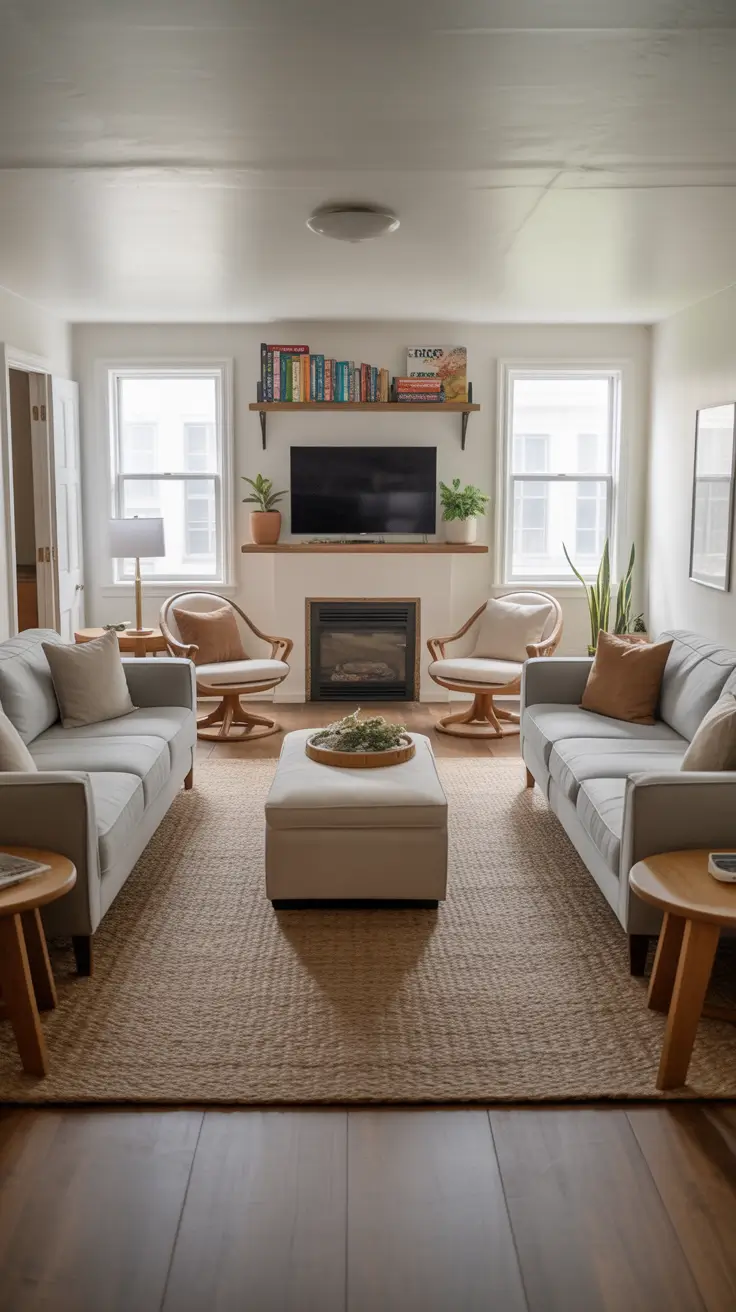
I select one deep-seated lounger sofa and one upright sofa, placing a storage ottoman between them. Contrasting colors like caramel and grey balance light and dark tones. When TV and fireplace are adjacent, furniture is positioned slightly forward to align sightlines and maintain neck comfort. Large flat-woven rugs unify the space, while tabletops with drawers keep remotes and chargers out of sight.
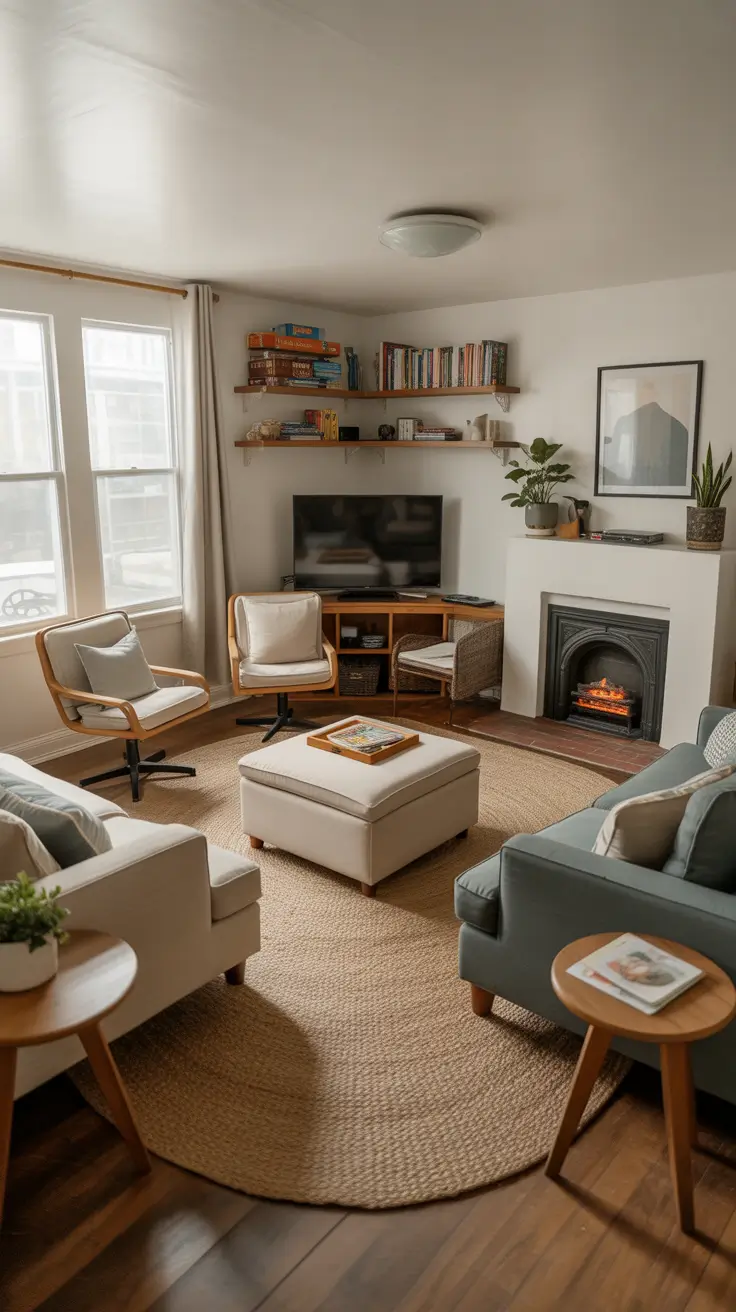
Maintaining 16-18 inches between coffee table and sofa edges ensures easy access to snacks. In small living rooms, swivel chairs may replace a second sofa for better traffic flow. Mixing materials like wood tables, metal lamps, and linen shades prevents visual bulk. Heavy curtains and cushioned walls reduce echo. The result is a family room that feels designed yet livable.
To complete the space, I add a console behind a sofa with task lamps for reading, thin-profile shelves for games and photos, and color pops like blue striped rugs and dark green vases. A low bench under a window offers seating for children, and a second dimmer zone allows movie lighting without affecting adjacent areas.
Warm Brown Sofas: Creating Inviting Living Rooms
Brown sofas serve as the warm heart of a room when paired with complementary warm tones. I start with white walls and soft accents, adding terracotta pots, rust-colored pillows, and caramel plaid throws to enliven the palette. Light blue accents introduce freshness and balance. Large surfaces remain neutral to let smaller warm details set the mood, while black metal lamps or frames add sophistication.
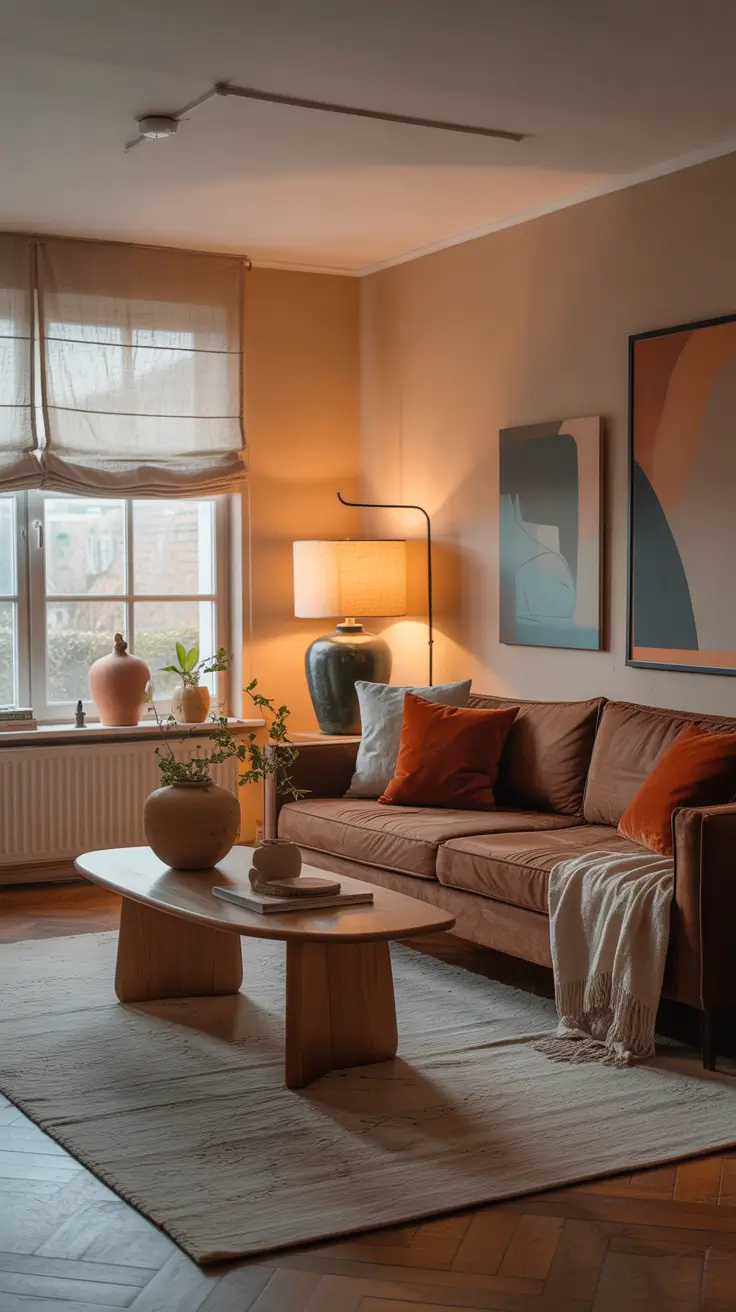
Wooden coffee tables with rounded edges echo sofa shapes, while cream or grey wool rugs lighten the floor. Abstract wall art in warm ochres, blues, and black lines repeats the color story vertically. Heavy green ceramic lamps counterbalance earthy tones and complement flora. Natural linen curtains filter light and add texture.
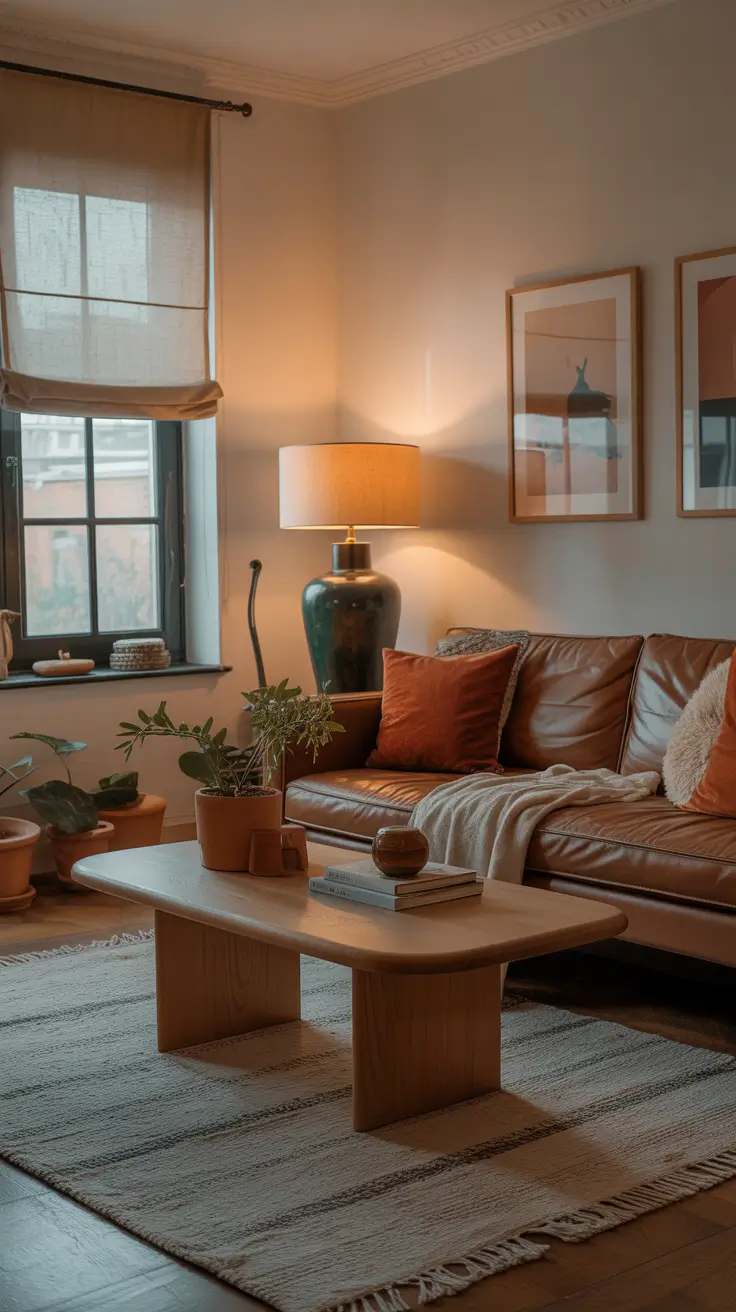
Brown pairs well with most accents when saturation is balanced. For more energy, bold orange velvet cushions and blue enamel trays create intentional contrast. Light wood coffee tables and minimal artwork keep the space cozy and easy to update seasonally. Narrow picture ledges allow rotating art without new holes. Curved side chairs add shape variation, and bright rugs prevent dark floors from overwhelming. Black linen lampshades add evening drama, and furniture placement ensures smooth traffic flow.
Elegant Leather Sofas for Timeless Comfort
Leather sofas offer a sophisticated yet durable option, improving with age and easy to maintain. Medium brown or deep cognac leather with custom cushions suits modern classic interiors. I position the sofa facing the main view or fireplace, with a swivel chair opposite to balance conversation and TV viewing. Curved leather sofas soften corners and maintain flow around coffee tables. Layered fabrics prevent the room from feeling cold.
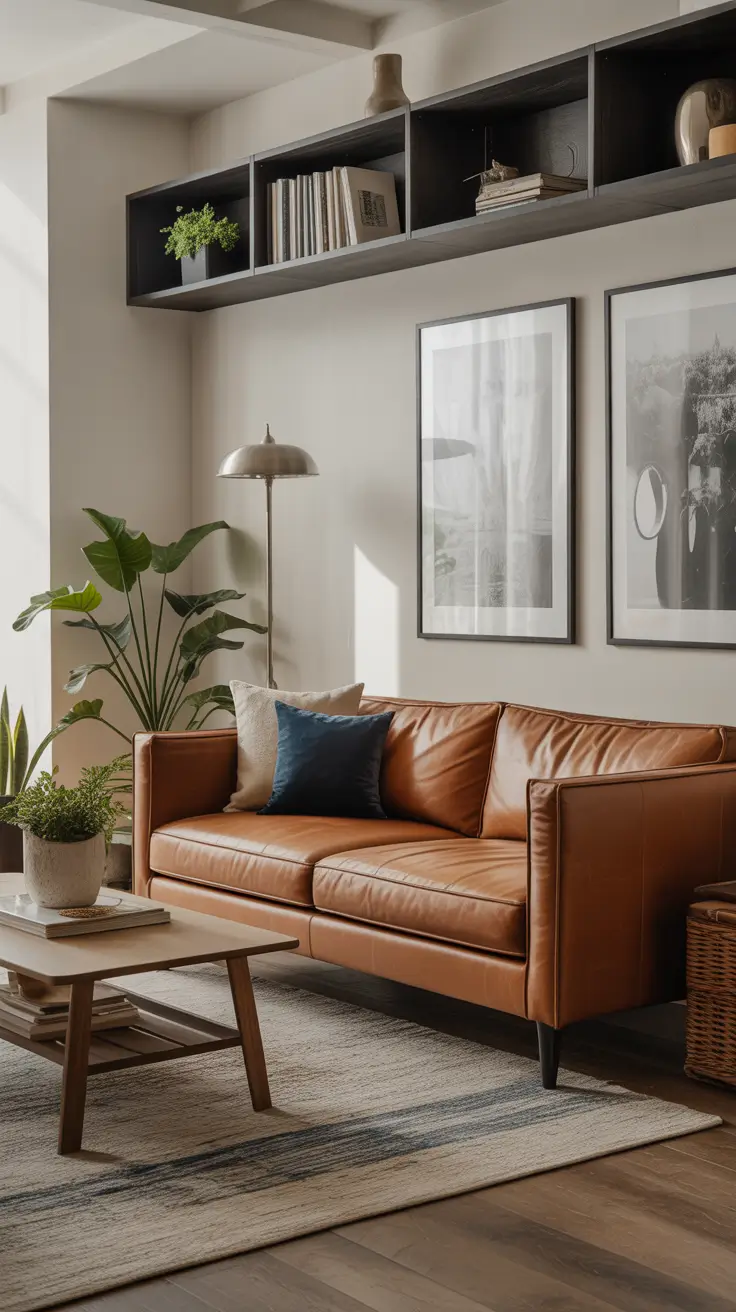
Complement leather with wool or cotton rugs, wooden coffee tables, and metal floor lamps for a balanced look. In larger rooms, add linen or velvet armchairs for texture variety without overwhelming color. Green plants, dark green cushions, and blue accents soften leather’s intensity. Black frames and reading lamps add definition without bulk. Shelves above the sofa display curated books and ceramics, keeping leather as the focal point.
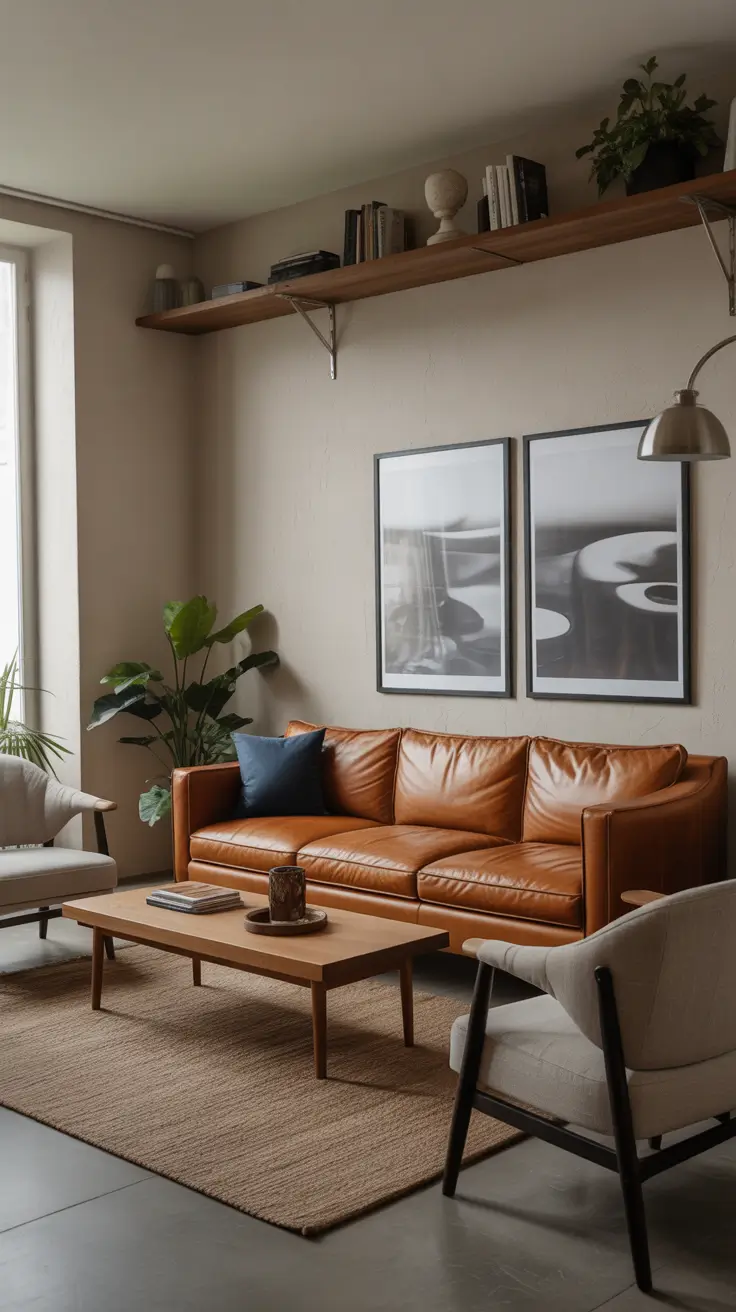
Leather requires seasonal care and protection from direct sunlight to develop an even patina. Chairs often replace second sofas to improve space and traffic flow. Marble side tables add sparkle, complementing wood and metal. Textured throws prevent slipping and add tactile contrast. Blue striped or grey herringbone pillows introduce subtle movement. Rounded coffee table edges enhance safety in homes with children. Small ottoman groups provide flexible seating. Black picture lights create cozy evening ambiance.
Chairs as Alternatives to Sofas for Distinctive Arrangements
In narrow rooms or spaces with challenging entryways, pairs or quartets of lounge chairs create intimate, balanced seating clusters. A large rug anchors four chairs arranged to face focal points like fireplaces or TVs, facilitating conversation and clear sightlines. This setup suits rooms with dining areas requiring clear aisles. Typically, two chairs face the focal point while the other two are angled to soften corners, reducing echo and enhancing flexibility. Chairs free up perimeter space for storage or shelves, keeping the room light and inviting.
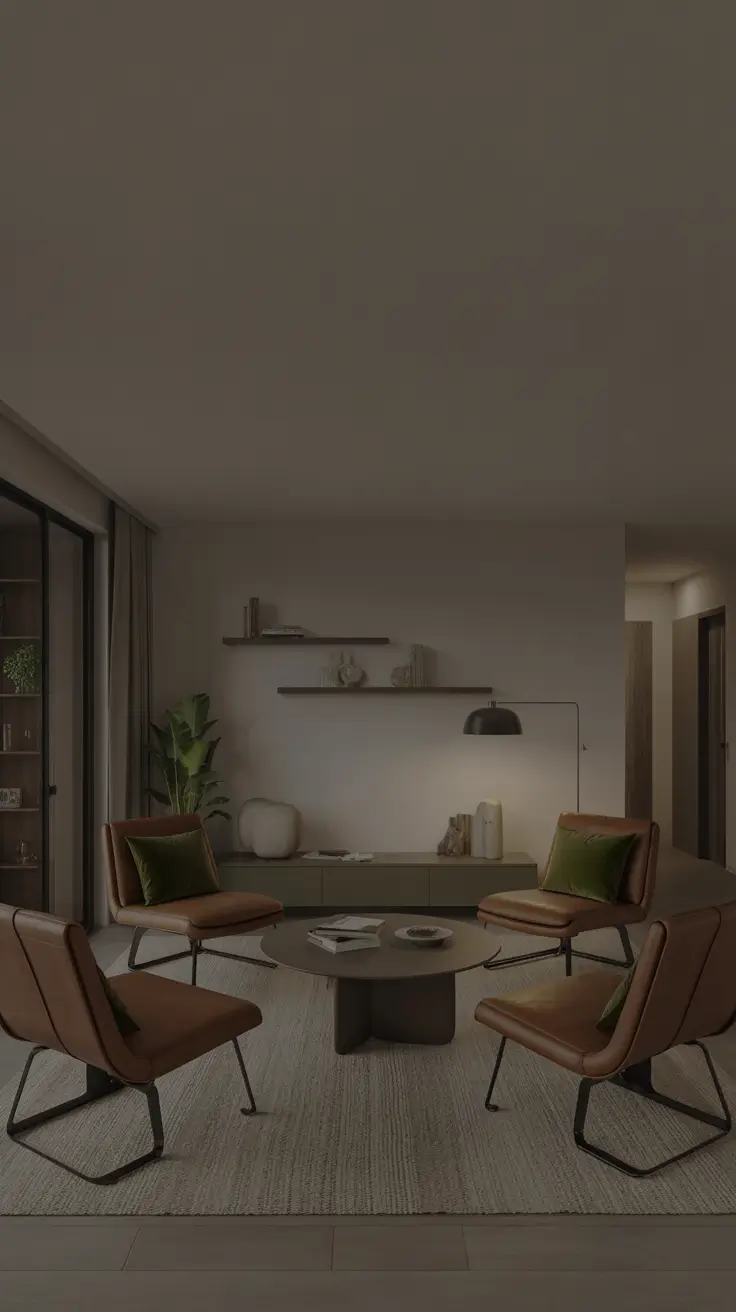
My preferred components include swivel lounge chairs with medium arms, low round coffee tables, and two small pedestal side tables for drinks. An 8×10 rug anchors the group and insulates against cold floors. Woven baskets store throws, while slim black media units or art lights complement consoles. Mixing leather and textured fabric chairs introduces varied tactile notes. Green plants at both ends add height and soften acoustics. Wall lighting and floor lamps behind chairs provide comfortable reading light.
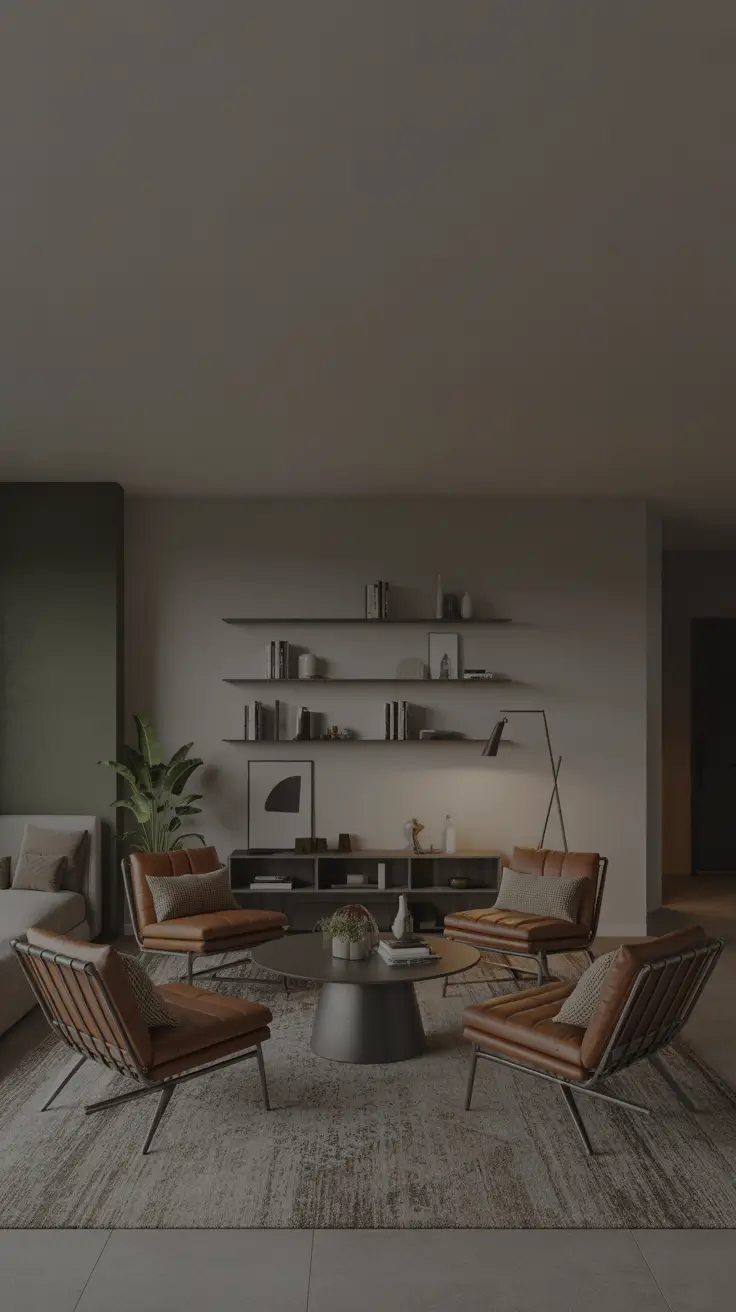
Spacing is crucial: 16-18 inches between seat edges and coffee tables, and 30-36 inches for main walkways ensure smooth movement. Designers recommend taping floor outlines before purchasing to verify scale. Chairs should recline slightly with supportive cushions for comfortable TV viewing. Swivels allow guests to face kitchens or dining areas without moving furniture. Sound-damping panels, ottomans, and heavy curtains reduce echo. Deep green throws and warm wood side tables add color and warmth. Repeating finishes like leather or wood unify the look. Slim shelves above consoles display books and decor without clutter.
Defining Living Spaces with Sofa Shapes
Sofa shapes strategically zone open areas and address awkward corners. L-shaped sectionals define conversation zones while leaving one side open to kitchens or dining rooms. U-shaped arrangements suit wide rooms, orienting seating toward fireplaces or media walls and encompassing rugs for lounge effects. In small rooms with fireplaces and TVs, chaise sectionals positioned off the hearth line control heat and screen glare. Corner sofas work well where two walls have windows, providing ample seating depth. Modular furniture offers adaptability for parties or space constraints.
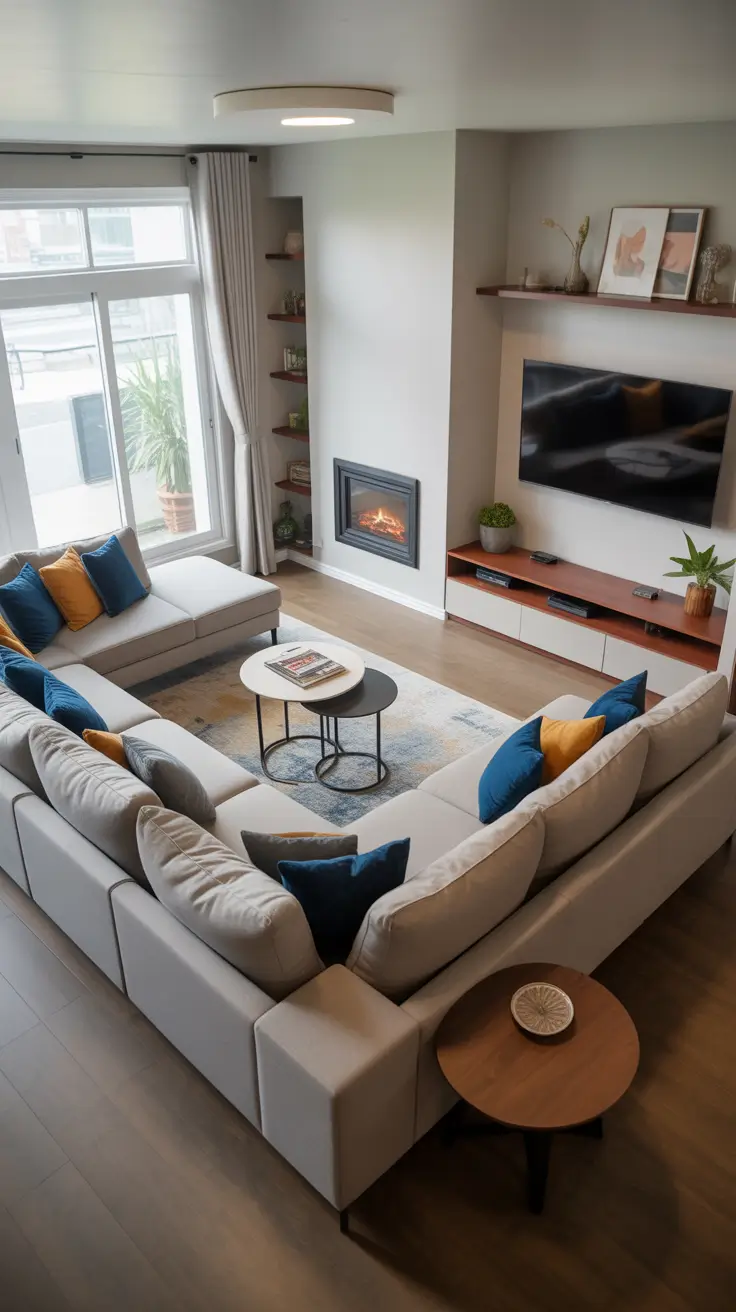
My silhouette choices prioritize circulation, back height, and arm profile. Low track arms broaden rooms visually, while high rounded arms suit tall spaces. Nesting and sliding coffee tables accommodate games, and slim consoles behind sofas hide cables and elevate lamps. Window chaises provide natural light for reading, complemented by pivot floor lamps for evening tasks. Lift-top coffee tables or upholstered benches store blankets and games. Rugs extend 8-10 inches beyond sofa feet for a relaxed composition.
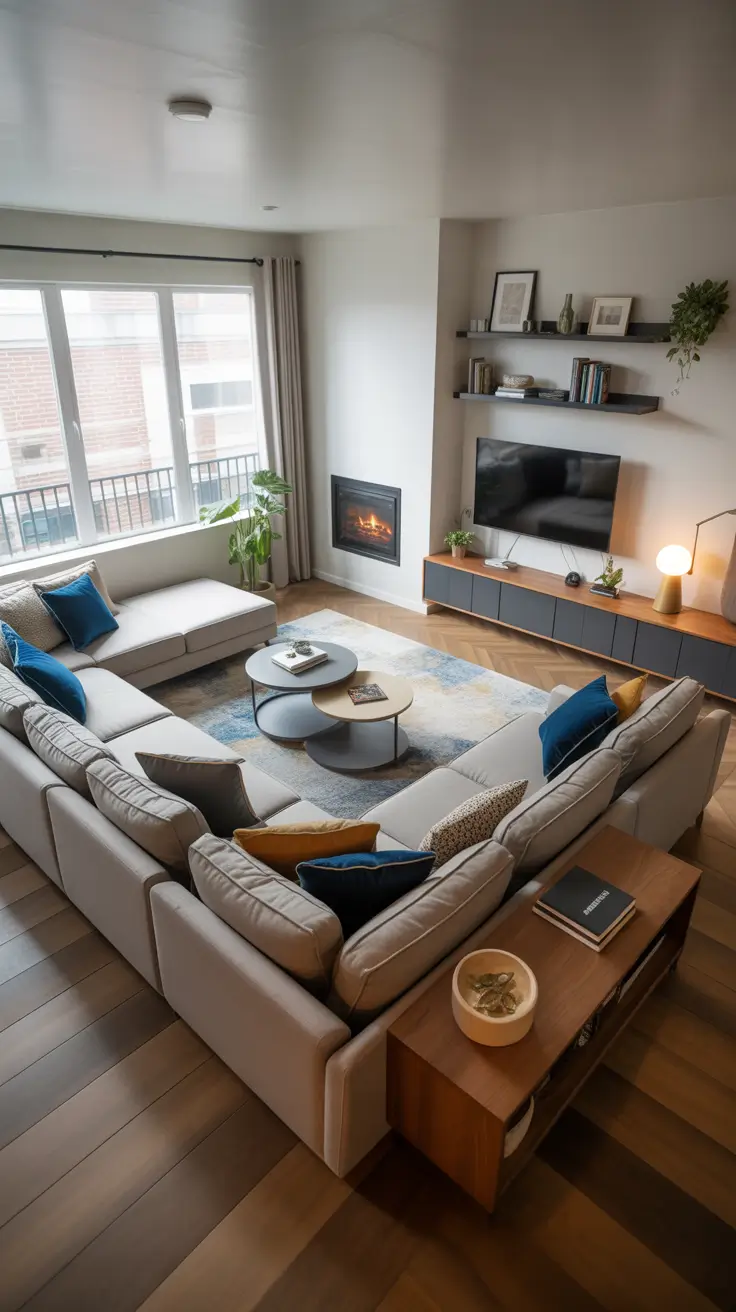
Color mixing around sectionals follows the 60-30-10 rule: 60% dominant neutral, 30% supporting tone, 10% accent. TV placement on the long arm of an L-shaped sofa ensures comfort, with speakers positioned to avoid clutter. Maintain 12-16 inches between sectional and coffee table, and 36 inches behind walking routes. When two doors open in the same room, align the sofa’s open side with the stronger axis for smooth movement. Vertical rhythm through shelving adds interest without heavy storage. Blue or deep green cushions energize flat palettes. Accent stools provide flexible seating. Softer corner sections prevent rug pinching and improve airflow.
Curved Sofas: Elegant and Contemporary Statements
Curved sofas break the monotony of straight walls, introducing fluidity and luxury. Placing a curved sofa on an oval or round rug ensures intentional geometry. Curves aid traffic flow by replacing sharp corners with soft edges, ideal for tight apartments. High ceilings complement vertical lines, making rooms feel cozier. In large spaces, pairing curved sofas with swivels creates inviting semicircles and supports multiple seating zones. Combining materials enhances timeless modernity.
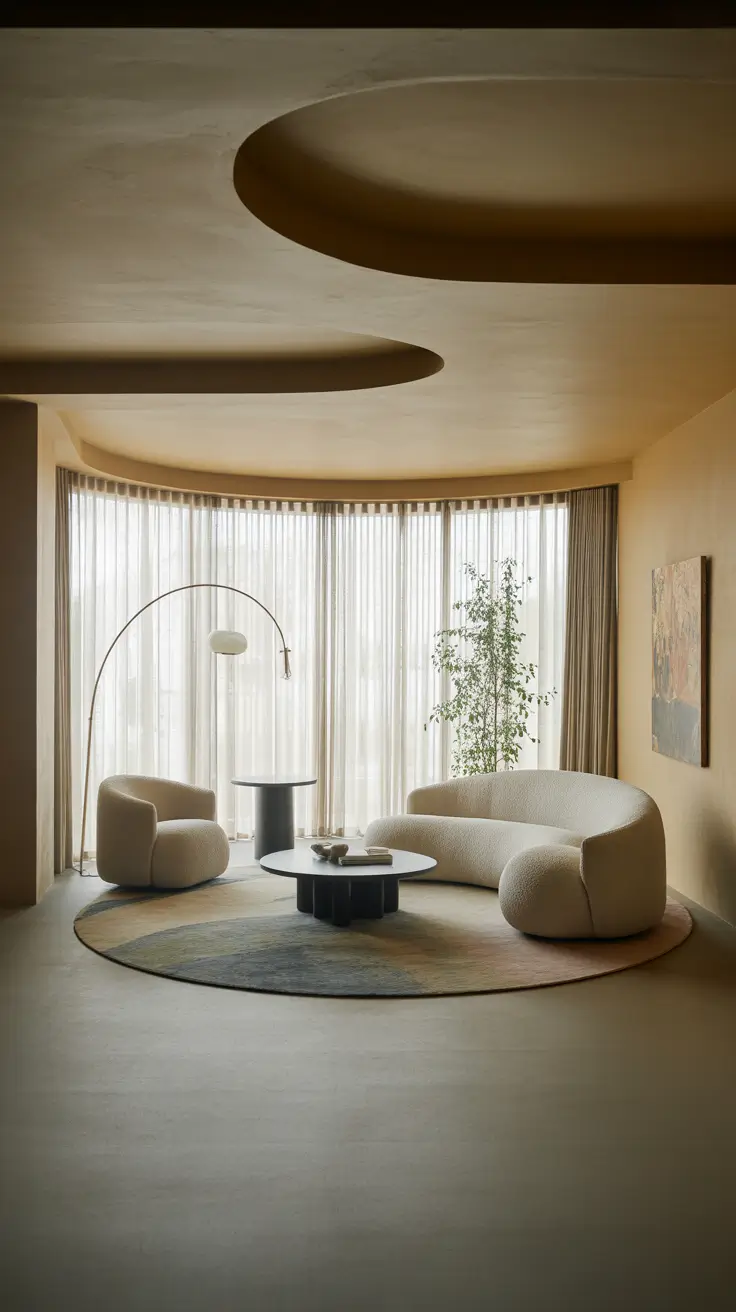
I favor low-back curved sofas with medium depth for comfortable lounging that integrates with rugs. Large round coffee tables free knee space, while thin arc floor lamps complement walls. Sculptural stone or metal side tables ground the arrangement, with black accents unifying the composition. Ripple-fold curtains and textured plaster or limewash walls add subtle sophistication. Tall green plants beyond the arc occupy negative space beautifully.
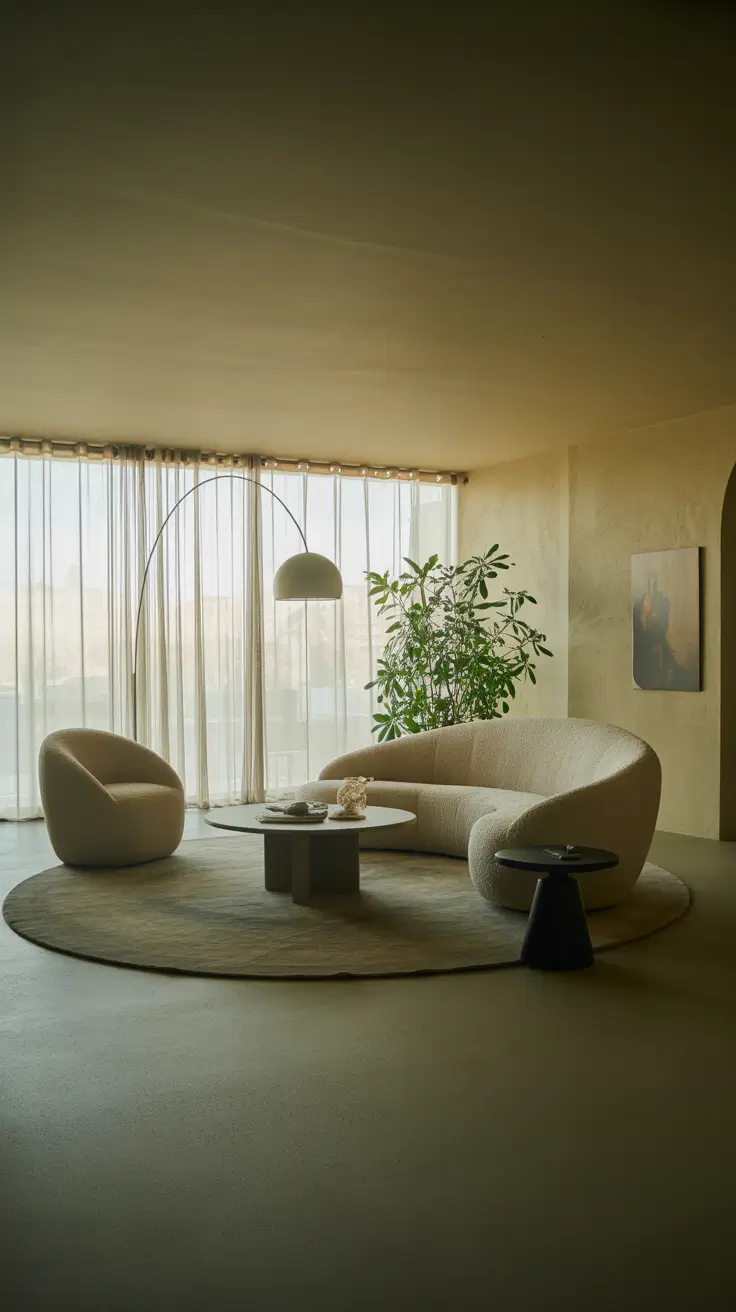
Curved sofas are set 3-4 inches from walls to showcase profiles. Conversation angles ensure all seats face focal points and each other, facilitating social gatherings. Mixing leather ottomans with fabric sofas adds warmth and patina. Layered ceiling lighting on dimmers shapes arcs in darkness. Large, softly moving canvases complement curves better than competing small artworks, making the sofa the star.
Additional seating includes swivel chairs that turn toward windows or sofas, maintaining sightlines. Low shelves behind curved sofas provide display without breaking lines. Duller grey rugs temper warm palettes, while deep green throws recall nature. When TV placement is tricky, tilting screens ensures central seats face the display comfortably.
Light Blue Sofas: Soothing Color Pairings
Light blue sofas evoke calmness and pair beautifully with warm woods, tans, and crisp whites. For grey couch living room color schemes, pale grey walls and warm linen curtains keep blue fresh rather than cold. Caramel or cognac accents stabilize the palette, making caramel-colored accent chairs a natural fit. Small black details on frames or lamp bases sharpen edges. Repeating blue in art or cushions across open plans unifies zones, creating a carefree, coastal-inspired vibe without clichés.
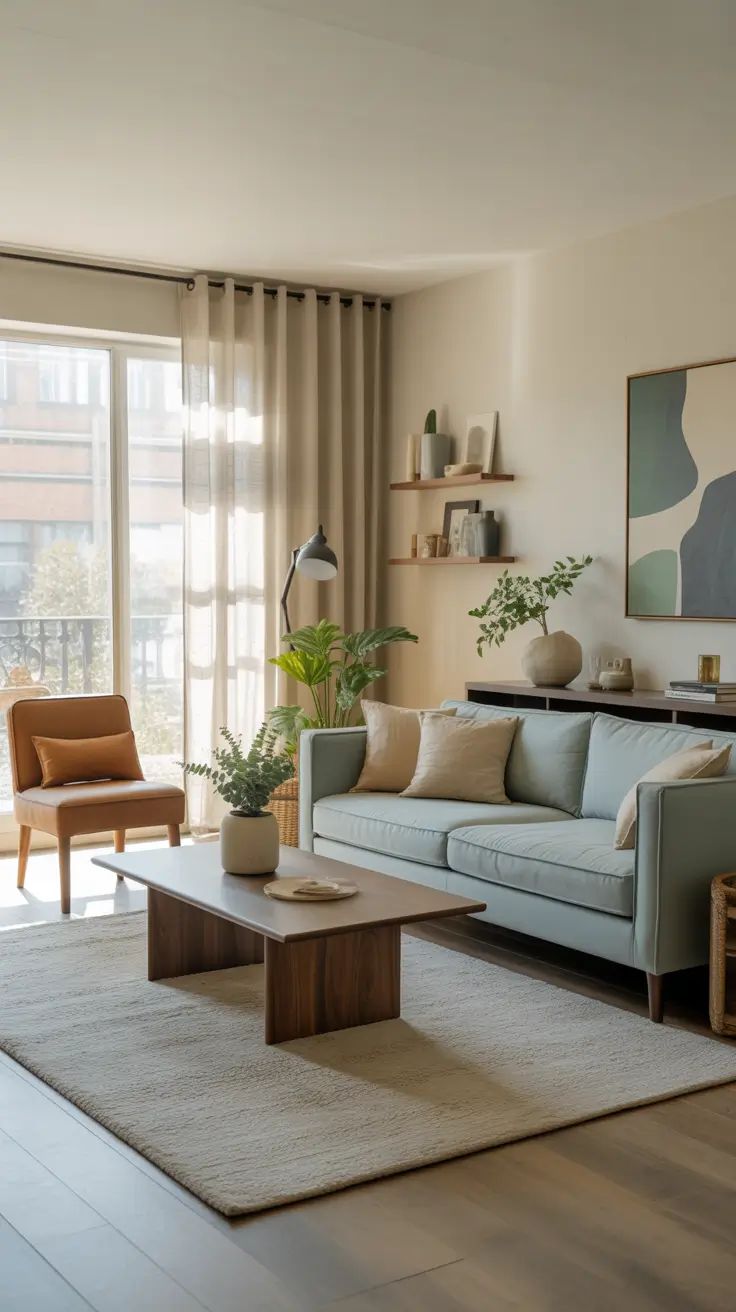
Furniture choices include light blue three-seaters with slim wood legs, cream wool rugs, and walnut coffee tables for warmth. Oatmeal, soft grey, and deep green cushions layer like a cake, while brass or old bronze lamps add warm light unmatched by chrome. Small-scale striped curtains ground windows, and natural textures like tall plants and woven baskets create conscious color transitions. Blue and green accents in artwork subtly tie the room together.
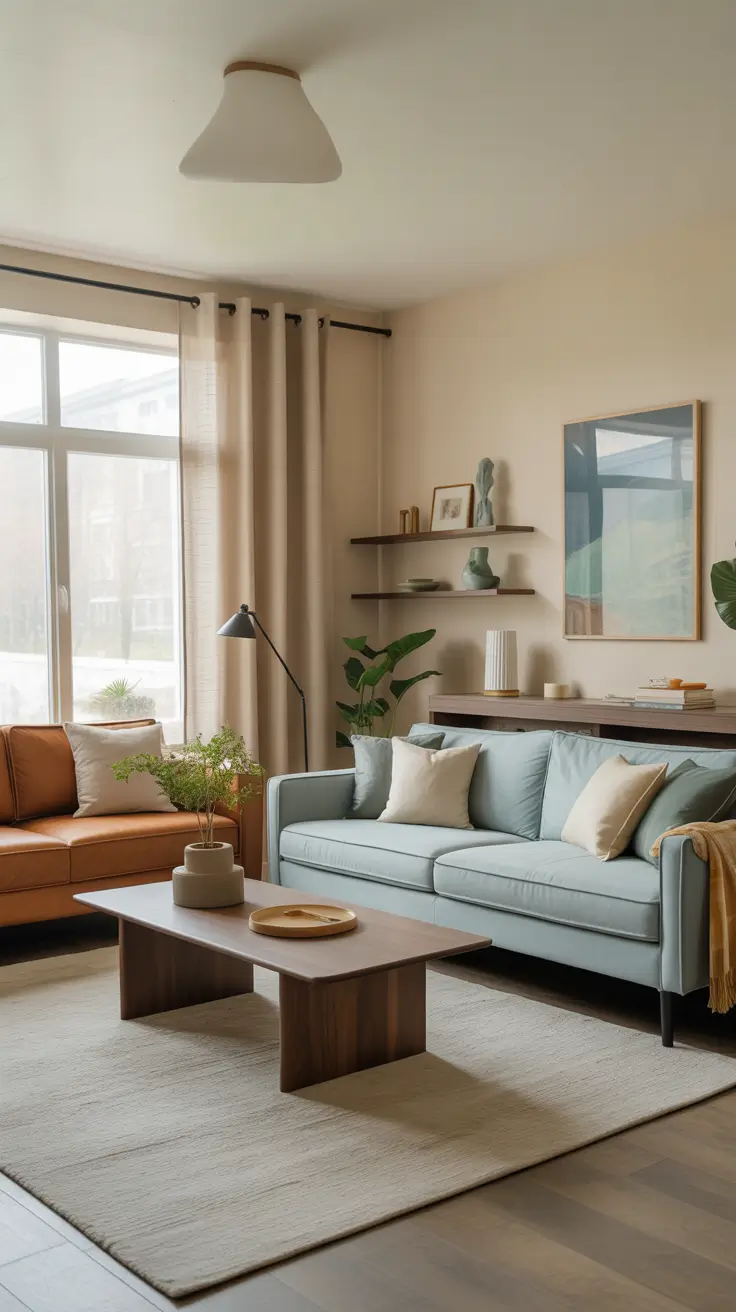
Applying the 60-30-10 rule, 60% neutral, 30% warm wood and leather, and 10% accent blue, keeps mixing balanced. Testing paint samples in morning and evening accounts for light direction effects. When pairing two sofas, I keep one neutral and let the light blue set the mood to avoid clashes. Seasonal updates come from swapping cushion covers, a low-maintenance and eco-friendly approach.
Repeating walnut in coffee tables, picture frames, and trays unifies the story. Deep green velvet pillows and black reading lamps add contrast. Cream and blue ceramics on shelves reflect sofa colors gently. Textured throws over arms enhance comfort and add soft color layers.
Wood-Framed Sofas: Natural Elegance for Living Rooms
Wood-framed sofas introduce architectural lines and artisanal warmth, fitting modern rustic, mid-century, and Japandi styles. Visible wood grain adds rhythm and balances grey or white-heavy rooms. These lightweight frames open small spaces visually. Combining wood frames with linen cushions creates relaxed yet informal looks. Matching dining tables in similar wood tones unify open plans without feeling forced, offering lasting comfort that matures gracefully.
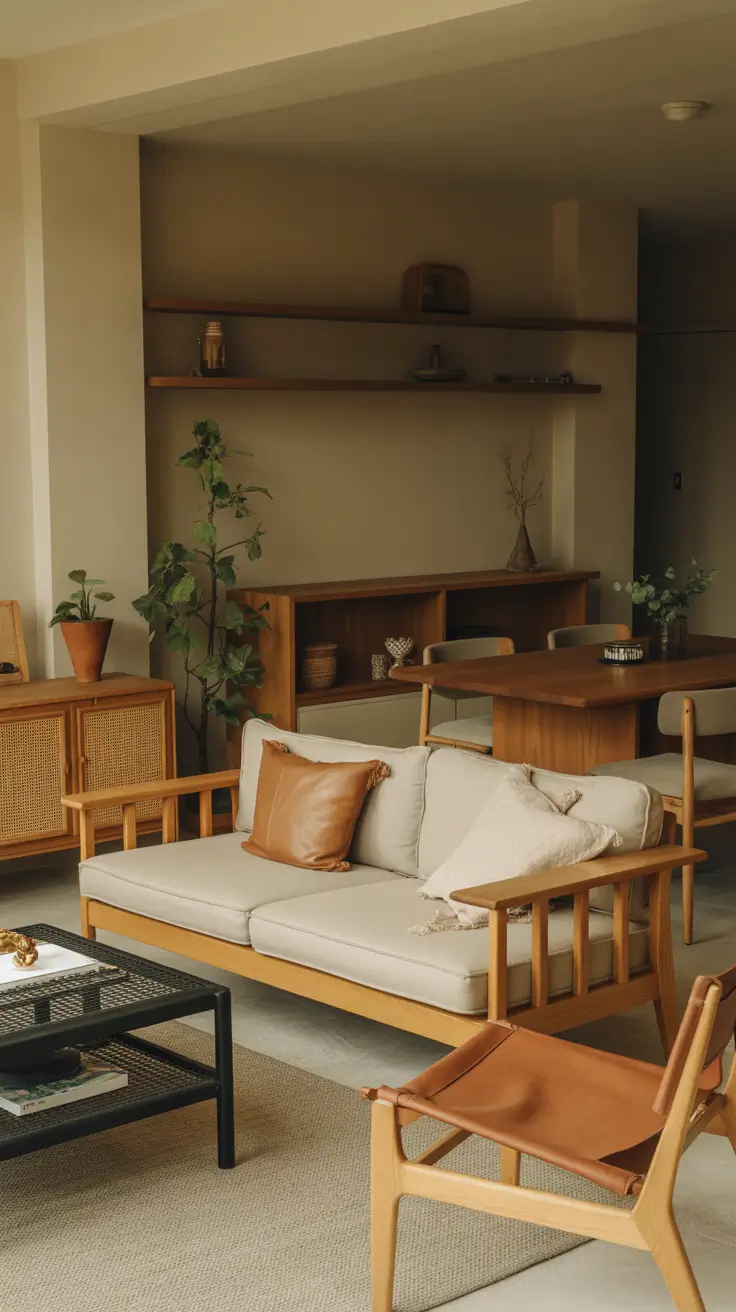
My preferred setup includes performance fabric cushions on solid oak or walnut frames, paired with leather slipper chairs as accents. Easy-to-clean surfaces and cane-front media consoles add texture variety. Black metal on coffee tables or floor lamps provides crisp lines balanced by warm browns. Green plants in terracotta or stone planters draw the eye upward, enlivening the palette. Storage benches with drawers and shelves discreetly house books, baskets, and speakers.
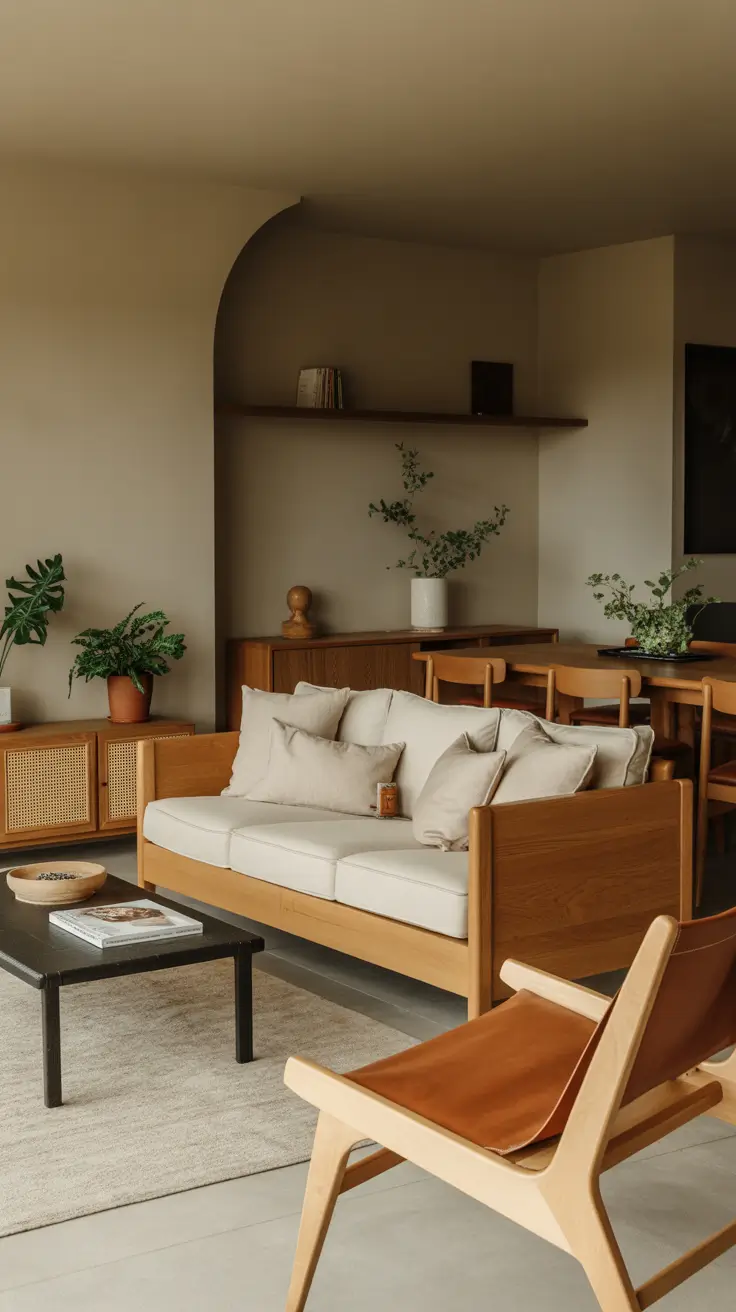
I limit wood tones to two or three per room for a curated look, matching cooler walnut with charcoal textiles and warmer oak with caramel leather or cream wool. Designers recommend repeating main wood tones at least twice, a principle I extend to frames and small surfaces. Medium-density foam with feather-blend back cushions offers supportive yet soft seating. Linen blends resist wrinkling and wear well in family homes, creating robust, sophisticated daytime spaces.
Warm wall colors prevent wood from appearing orange. Deep green accent pillows complement soft greige or stone backgrounds without overwhelming. Curved side tables or lamp necks soften linear frames. Sofa placement faces focal points with at least 36 inches clearance from doors and windows.
Vibrant Orange Sofas for Energetic Living Rooms
Orange sofas inject warmth and character, especially in rooms needing a lively focal point. I balance bold hues with natural textures and wooden accents to ground the palette. Positioning sofas to maximize natural light lets orange uplift moods without clashing with architecture. Complementary blues and soft greys maintain sophistication. Orange sofas are excellent for those seeking fresh, mature living room ideas.
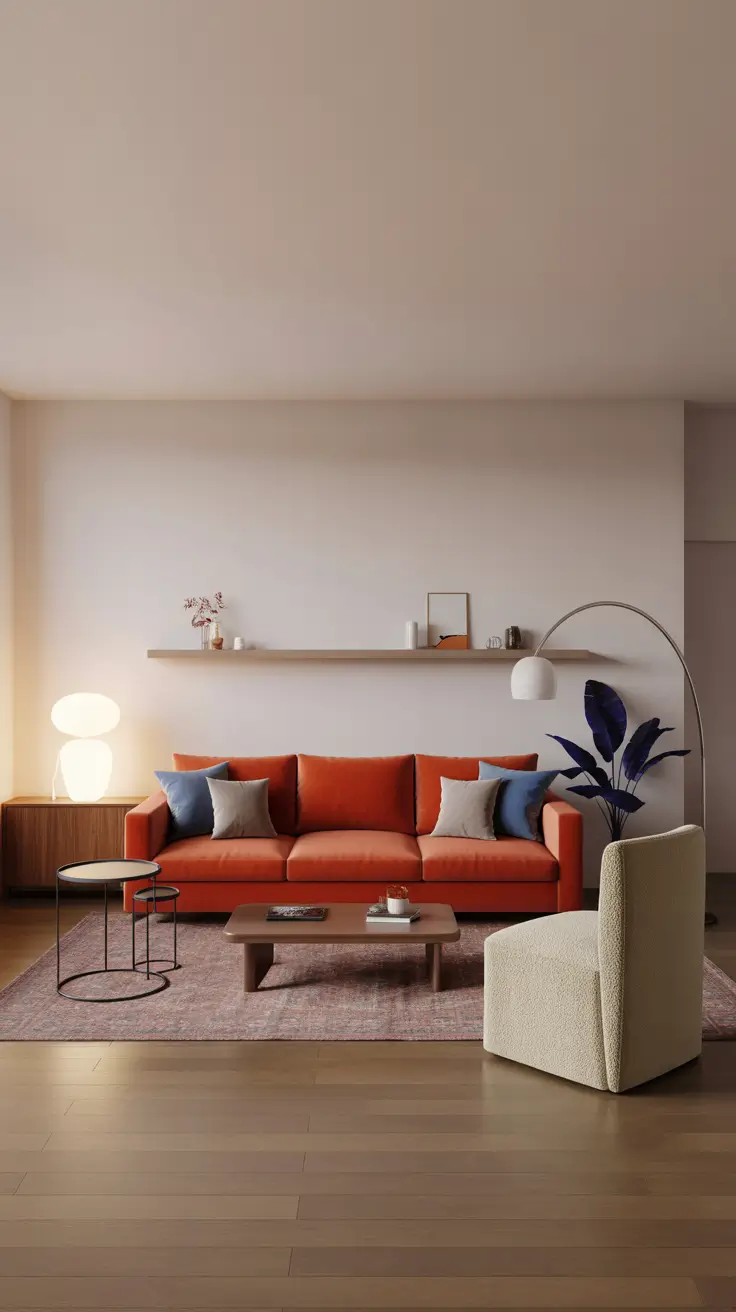
Furniture includes medium-pile rugs with subtle patterns, low rectangular coffee tables, and small metal side tables for contrast. Linen or boucle accent chairs in brown or cream prevent the sofa from feeling isolated. Curved floor lamps echo soft shapes, preserving openness. Wooden media consoles connect to the sofa’s warm tones. Artwork blends black-and-white photography with color blocks to complement upholstery without overwhelming visuals. This approach creates functional, unified living room sofas.
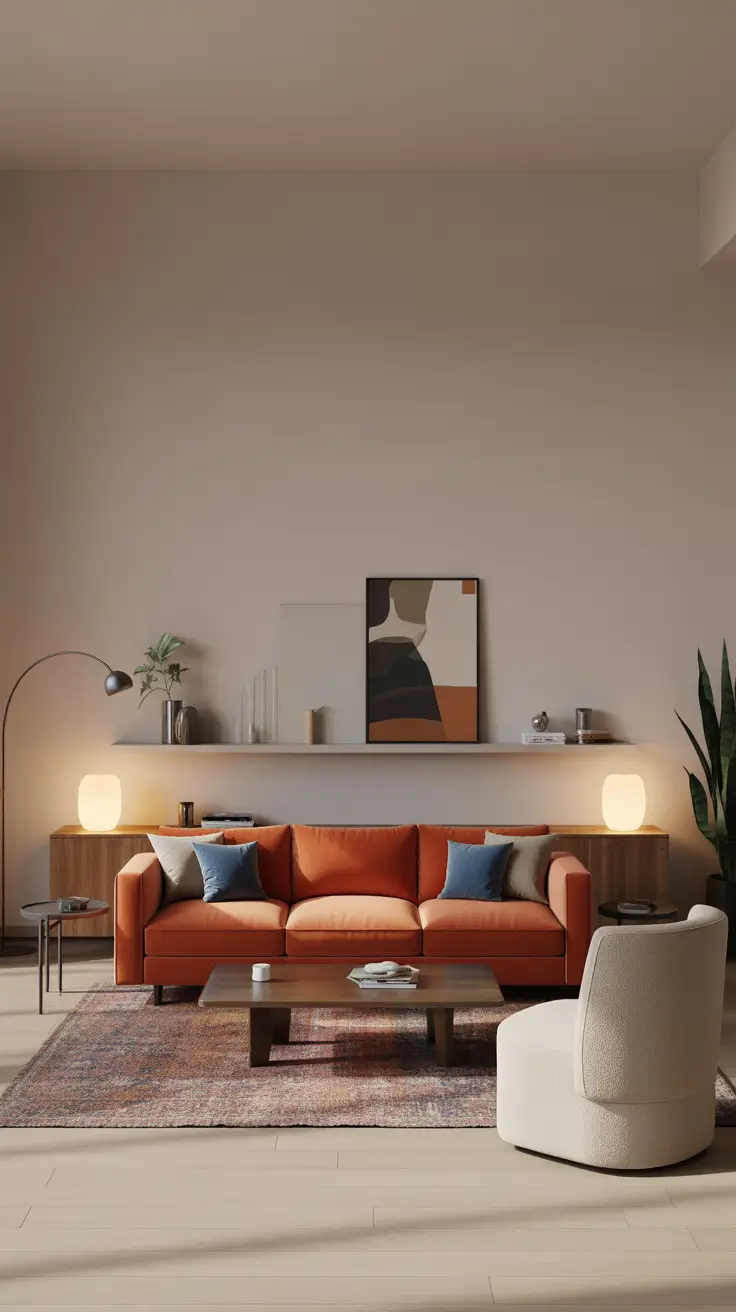
Maintaining orange’s elegance involves repeating the shade sparingly and strategically. Following design media advice, I anchor bold upholstery with neutral walls, layered surfaces, and controlled contrast for purposeful rooms. Coffee table clearance of 16-18 inches and rugs extending beneath sofa legs stabilize groupings. Black accents like matte side tables sharpen the palette. Small details make the color story precise.
Additional touches include shelves above sofas for restrained decor, patterned cushions with blue threads, deep green plants for natural balance, and orange runners linking dining zones. Warm white bulbs ensure sofa colors remain rich and inviting at night.
Coordinated Color Schemes for Dual Sofas
When planning two sofas, I start with the desired mood and assign palettes that unify rather than match. Sofas in different colors but similar undertones harmonize well. Brown and cream combinations balance depth and light, adaptable to seasonal accessories. Cool palettes feature light blue, natural grey, and silvery green for tranquility. Warm palettes mix caramel with midnight blue for contrast.
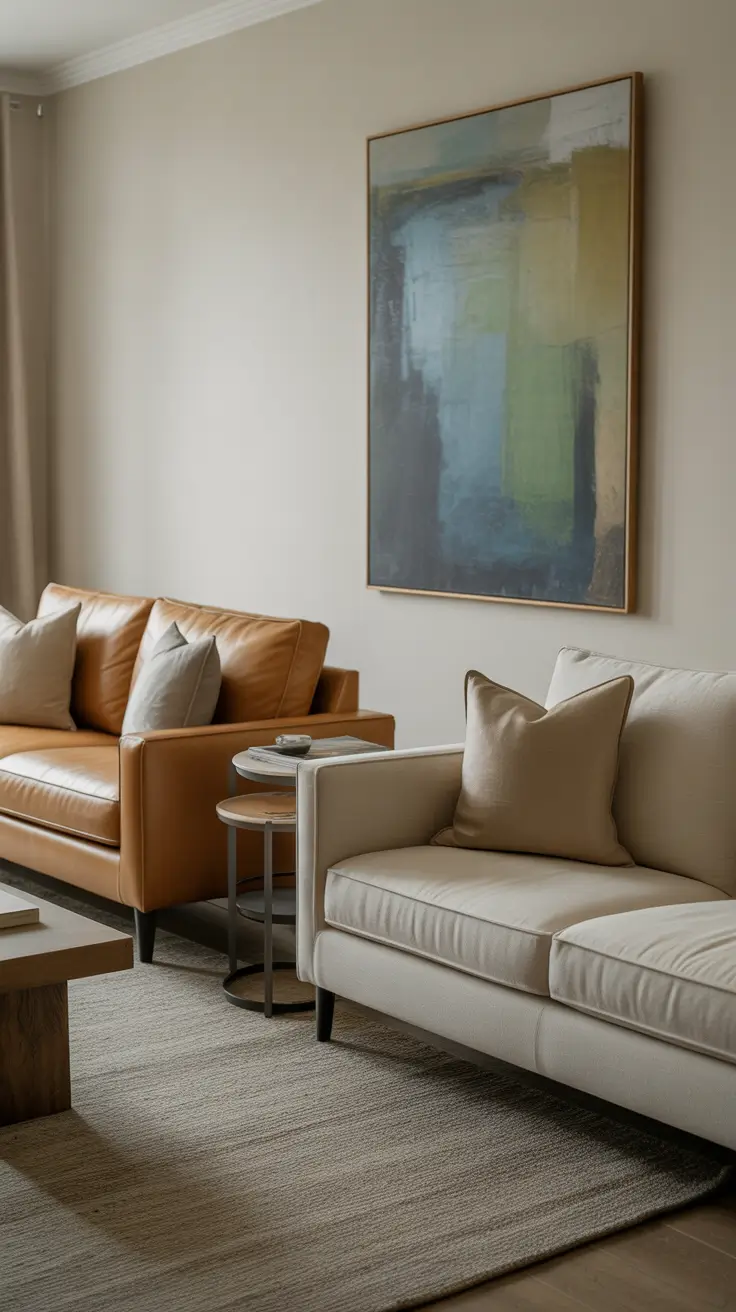
Texture variation prevents flatness, combining leather caramel sofas with pale cream linen sofas and wool rugs to bridge tones. Side tables in metal and wood finishes add collectedness. Blue, green, and grey appear in pillows and small patterns to tie sofas together. Large artwork fuses the color family.
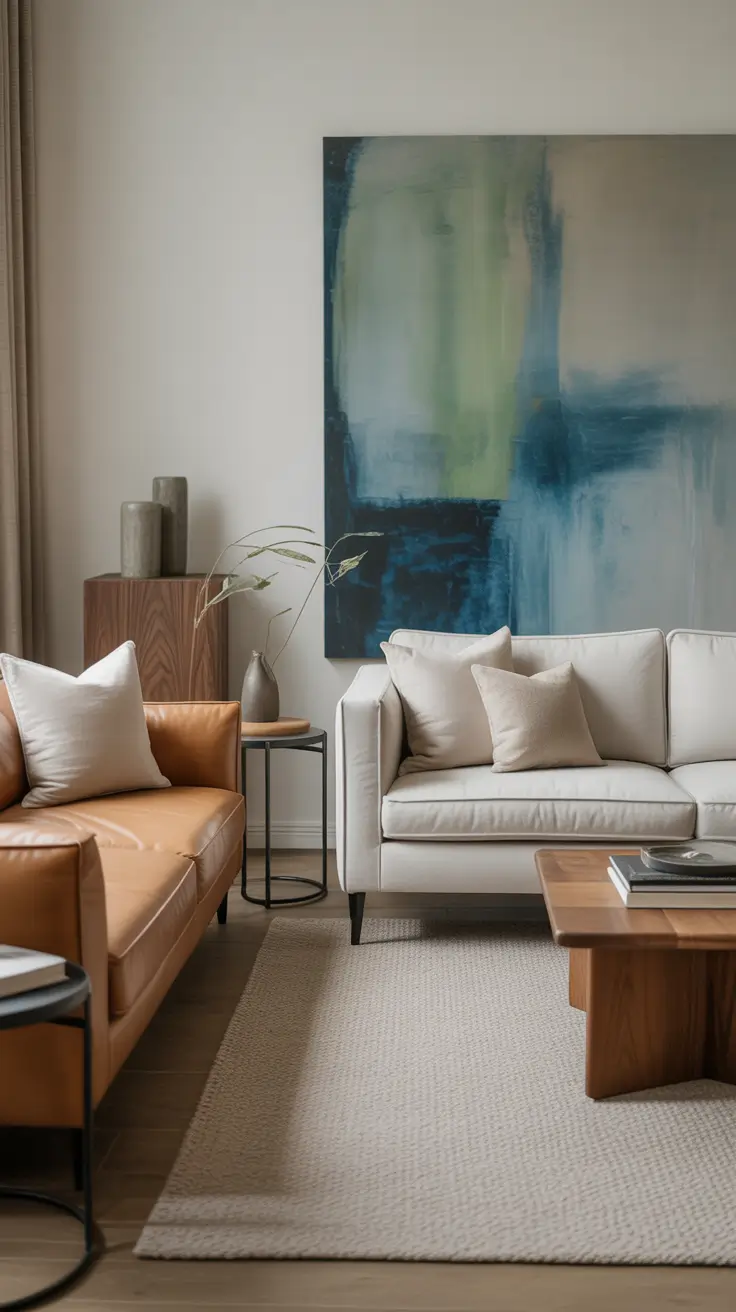
Grey sofas ground most duets, with designers recommending texture layering—boucle, velvet, washed wood—to avoid flatness. Sightlines are respected by allowing negative space around sofas. Strong colors are balanced by lighter rugs and curtains, creating peaceful order.
Unifying furniture like long benches, shared coffee tables, or large floor lamps enhance cohesion. Artwork incorporates at least three room colors, and modular shelving above media consoles echoes wood tones. Thin curtain stripes reference sofa colors, completing the look.
Deep Green Sofas: Luxurious and Serene
Deep green upholstery offers immediate calm and personalization, thriving in both sunlit and cozy spaces. I pair green sofas with walnut or oak, brushed brass, and textured neutrals to avoid heaviness. Repeating green accents near dining areas connects open plans. This style suits living rooms aiming for tranquility and sophistication.
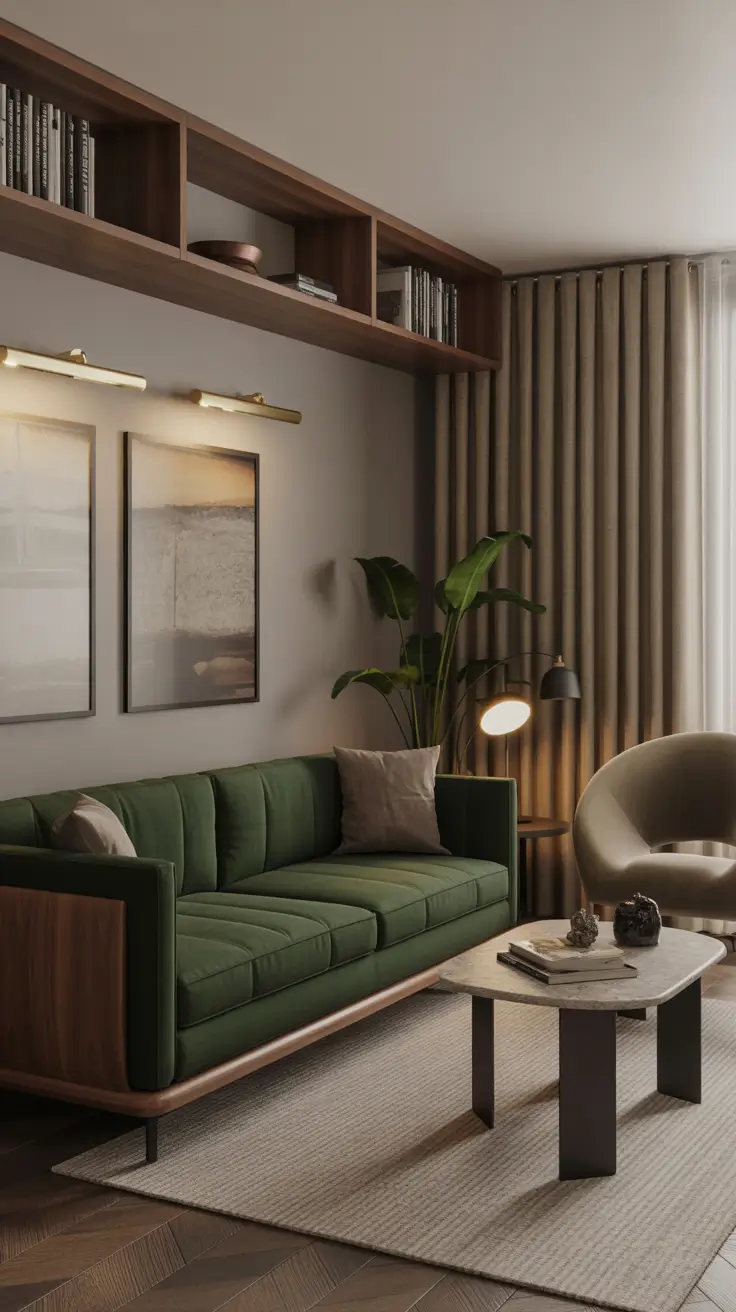
Furnishings include ribbed wool rugs, stone-top coffee tables, and slender black metal side tables with modern lines. Rounded lounge chairs soften corners and add shape variety. Shelves above sofas hold books and curated objects, with picture lights breaking wall monotony. Warm grey linen window treatments maintain brightness. These choices keep sofas pristine and inviting.
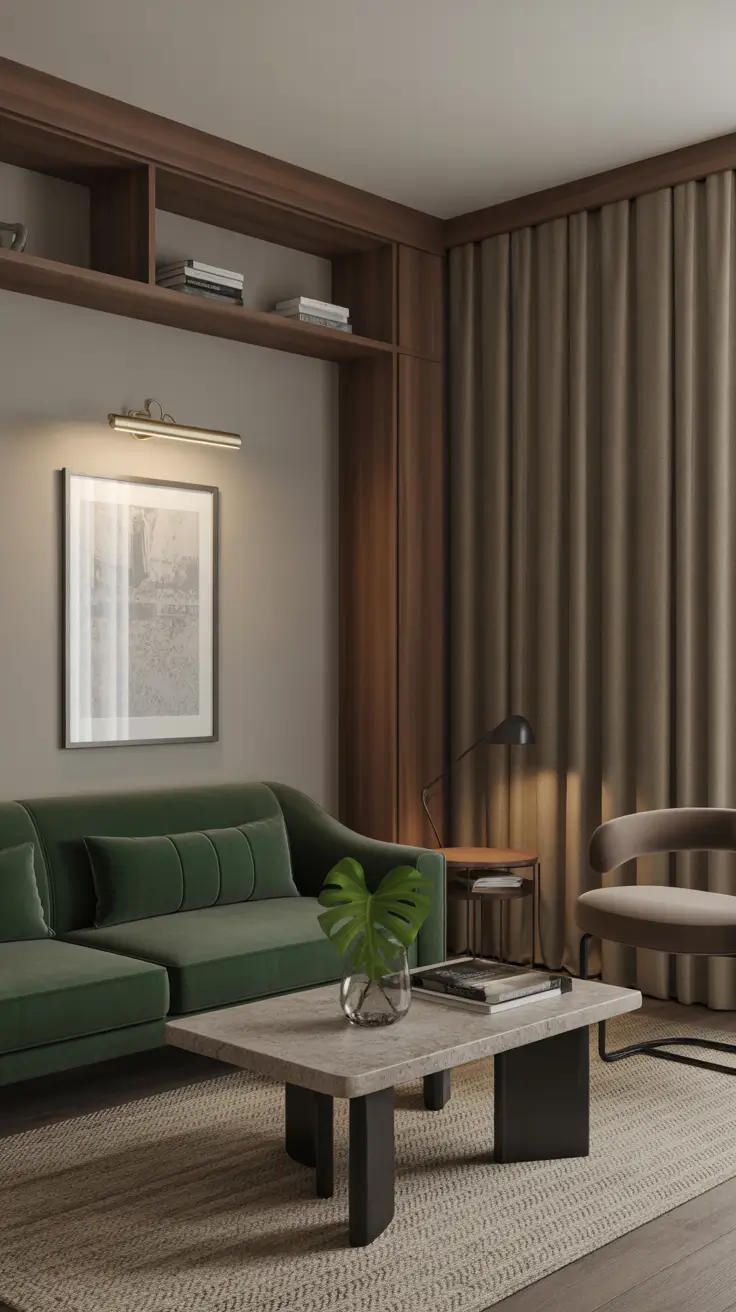
Deep green acts as a neutral alongside natural materials. Repeating green hues in artwork, pillows, and throws unifies the palette. Maintaining 16-18 inches clearance on coffee tables and 30-36 inches for walkways ensures comfort. Matte black reading lamps add definition without distraction. The result is a quiet, luxurious space.
To balance darkness, I add pale taupe or cream secondary seating and warm textured rugs. Wood-framed armchairs and blue art provide soft contrast. Glossy-leafed plants enliven corners with texture and life.
Black Sofas: Sleek and Modern
Black sofas highlight architectural features and custom design. Balancing light with reflective surfaces and layered lamps prevents heaviness. Raised legs reveal more floor, lightening small rooms. Curved sectionals soften bold colors in larger spaces, creating gallery-like sophistication.
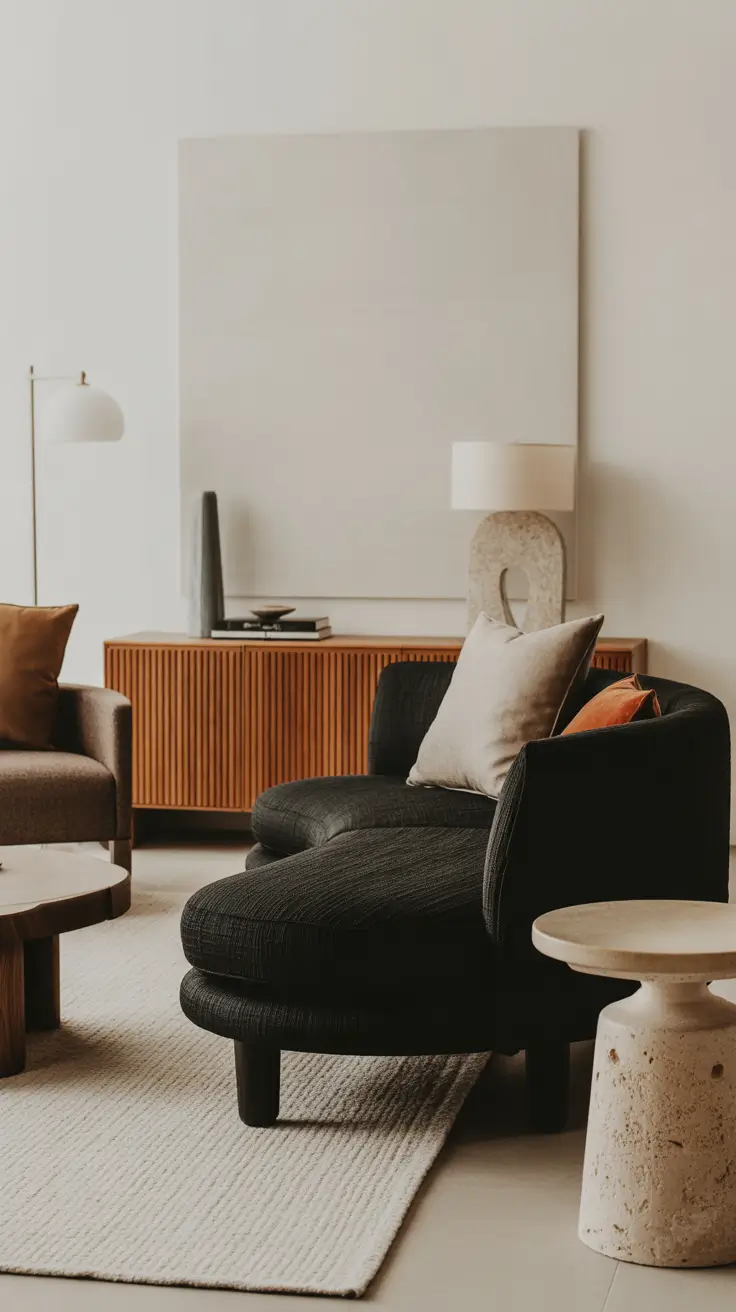
Materials include leather or performance fabrics, balanced with wooden coffee tables and textured rugs. Multiple metal finishes—brushed steel, antiqued brass—add dynamism. Pillows in grey, cream, and blue lift the palette, complemented by stone side tables. Straight-line wall lights keep seating areas uncluttered, making black sofas solid anchors.
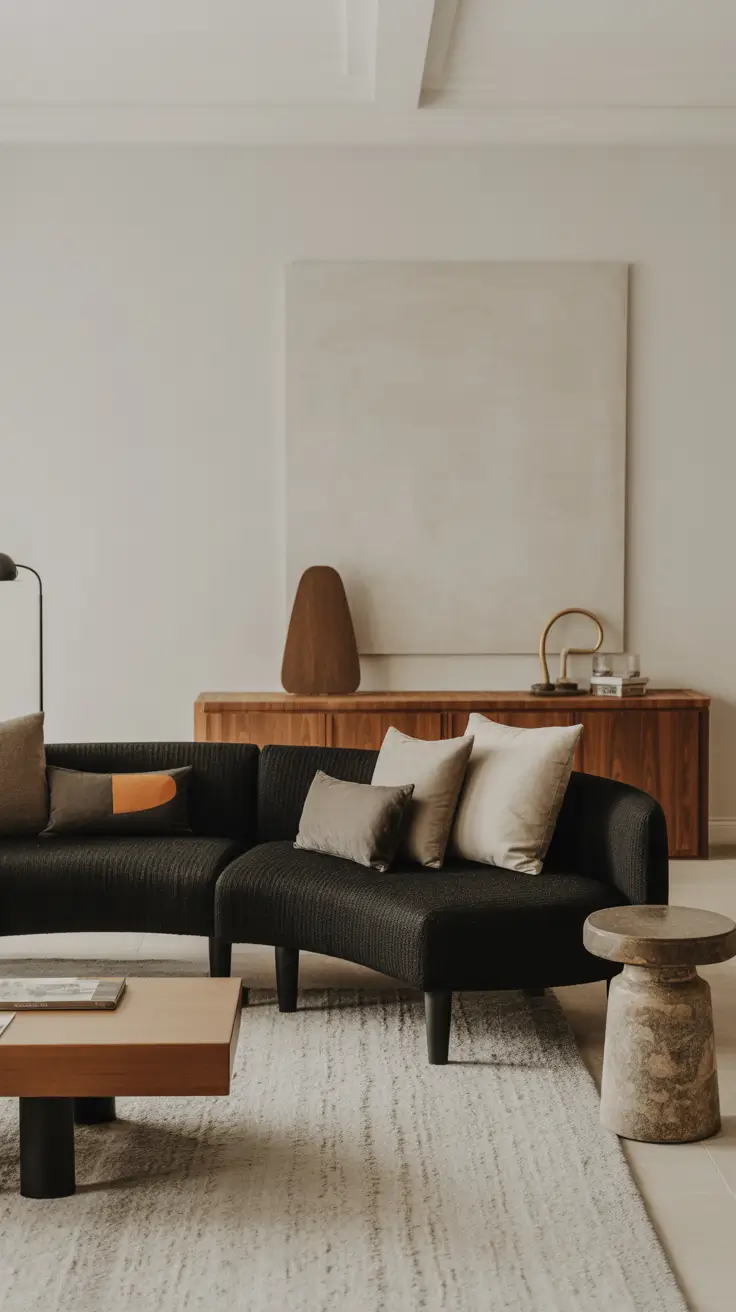
Black sofas work best with balanced contrast and softness. Designers recommend layering textures like boucle throws, ribbed rugs, and warm wood to create welcoming spaces. Coffee tables are kept low for accessibility. Accent colors like orange or deep green are applied sparingly for personality. Warm wood storage pieces prevent coldness. Large light-background artwork allows breathing space. Curved side chairs and dimmable floor lamps complete the setting.
Conversation-Centric Layouts: Sofas Facing Each Other
For symmetrical, conversation-friendly rooms, sofas facing each other create balanced seating with a central surface for serving and play. Fireplaces anchor arrangements, with TVs on adjacent walls for easy viewing. Small rooms may replace one sofa with a sectional to optimize flow. This layout suits corner sofa concepts where walls and openings dictate placement.
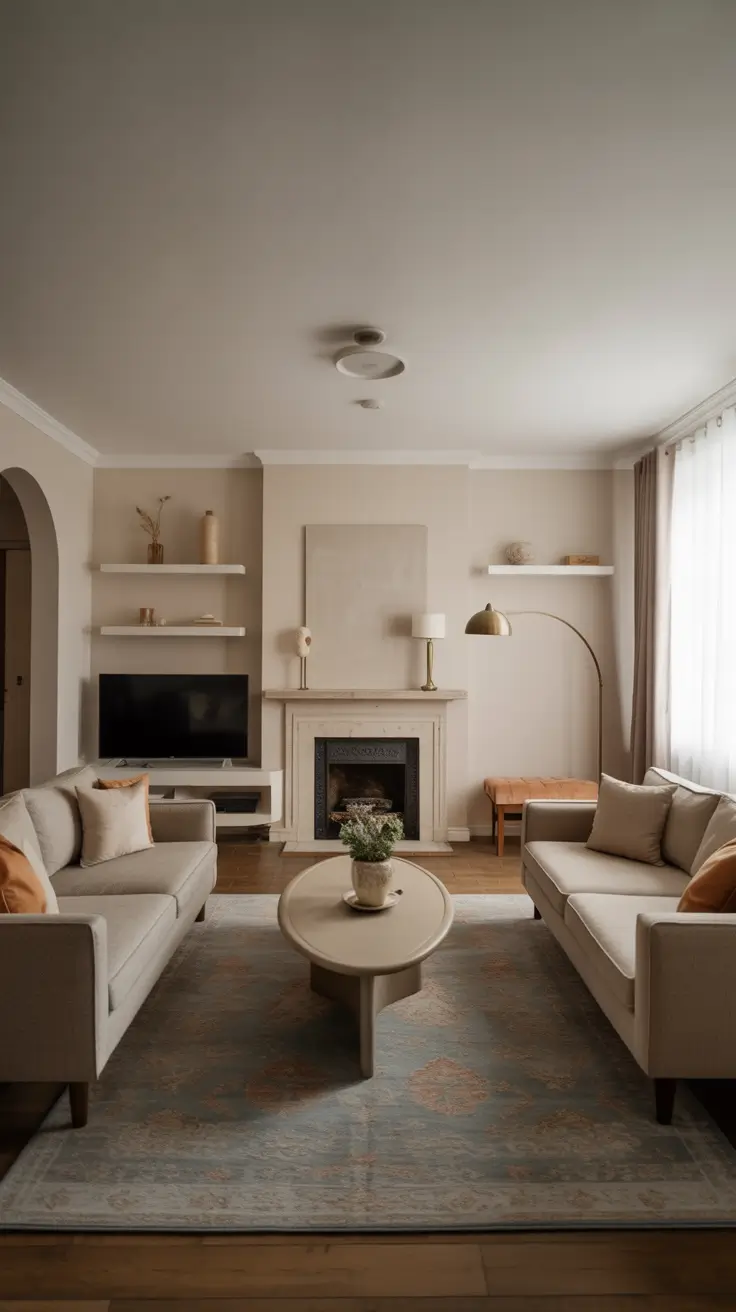
Matching scale sofas with complementary materials create collected looks. Oval or rectangular coffee tables accommodate pathways. Maintain 16-18 inches from sofas to tables and 30-36 inches around groups. Chairs can replace sofas in tight spaces while preserving facing arrangements. Low media consoles and overhead shelves provide visual balance.
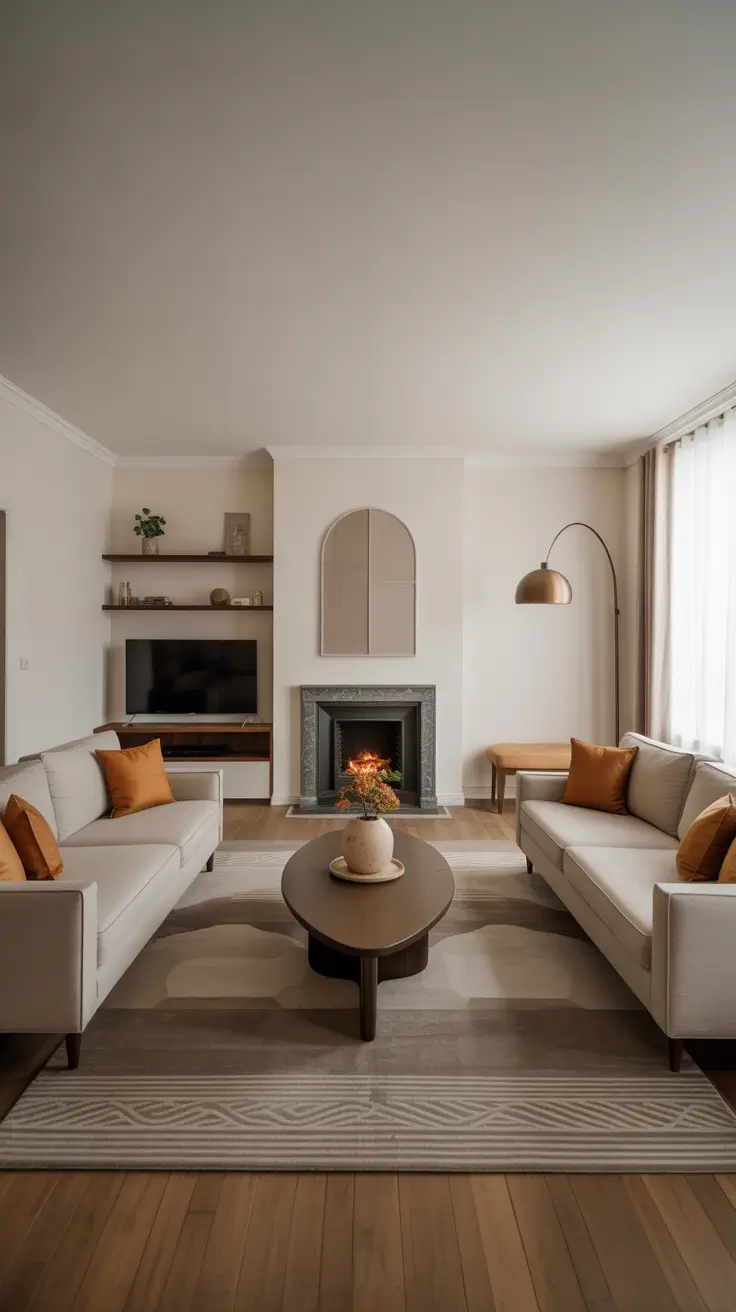
Proportions and clearances ensure leniency in this format. A simple triad of colors—key neutral, supportive neutral, and accent—maintains harmony. For variety, I apply advice from living room two sofas and grey couch ideas to balance colors and materials. Shared rugs or side tables unify compositions, resulting in conversational, balanced spaces.
Grounding elements include black or bronze floor lamps. Dining areas benefit from repeating upholstery colors in dining cushions for continuity. Small benches near windows provide overflow seating. Thin shelves behind sofas conceal cables and offer display without clutter.
Explore More Living Room Sofa Options
Discover a wide range of living room sofas to find styles that suit your space and lifestyle. From modular sectionals to elegant leather options, the right sofa can transform your living area into a comfortable and stylish retreat.
As an Amazon Associate I earn from qualifying purchases.