Creative Narrow Walk-In Pantry Ideas: Smart Layouts, Shelving, and Design Tips
Seeking innovative ideas for narrow walk-in pantries that truly optimize space and usability? Balancing efficiency with practicality in a confined pantry layout can often feel like a challenge. Over time, through extensive experience in remodeling compact areas, I’ve discovered that a strategic approach—combining smart storage solutions with thoughtful spacing—strikes the perfect harmony between order and accessibility. Let’s explore how clever layouts can transform narrow walk-in pantries into highly functional, organized hubs.
Compact Yet Chic: Narrow Walk-In Pantry Designs for Small Spaces
When designing narrow walk-in pantries, I envision them as compact workstations that must deliver functionality instantly. The goal is to harmonize smooth movement with dense storage, ensuring the space feels serene rather than cramped. I start with a straightforward layout that respects essential clearances and door mechanics, then enhance it with layered lighting, customizable shelving, and clearly labeled storage bins. Choosing the right pantry door is crucial—opting for space-saving options like sliding or pocket doors can prevent wasted floor area caused by swinging doors.
Adjustable shelving with depths between 12 and 14 inches along the longer walls works well, paired with a shallow landing shelf around 36 inches high for unloading groceries. Closed base cabinets are reserved for appliances or bulk storage. Utilizing clear containers, woven baskets, lazy Susans, and tiered can risers helps maintain open sightlines, while slim vertical dividers keep sheet pans neatly organized. For hardware, matte nickel pulls offer a sleek, modern touch that complements most pantry styles.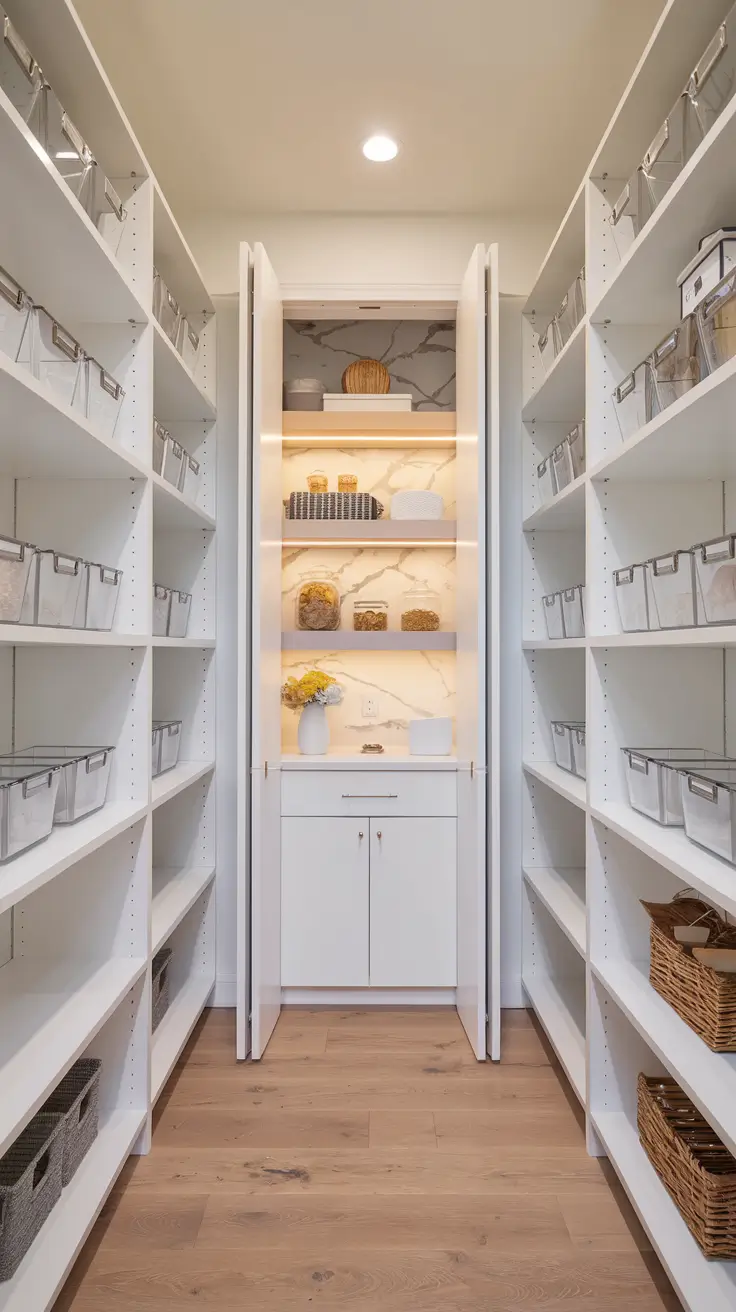
This approach suits both urban apartments and compact homes. Leading designers emphasize appropriately sized storage zones, so I recommend separating snacks, baking ingredients, and cleaning supplies into distinct sections. Including power outlets for charging stations or cordless vacuum docks anticipates everyday needs, making the pantry a true multitasking space.
For practical guidance, consider door types and aisle width minimums, along with lighting recommendations such as lumen output, color temperature, and switch placement to keep the pantry user-friendly.
Maximizing Every Inch: Smart Layouts for Narrow Walk-In Pantries
In tight quarters, the layout must carry the load. I begin by mapping traffic flow, then position storage based on usage frequency. Ideally, the central aisle should be at least 36 inches wide to allow comfortable movement. Shelves near the floor and above eye level accommodate less frequently used items and small appliances, respectively. When space is extremely limited, I use narrower shelves—10 inches on one side and 12 inches on the other—to maintain clearance.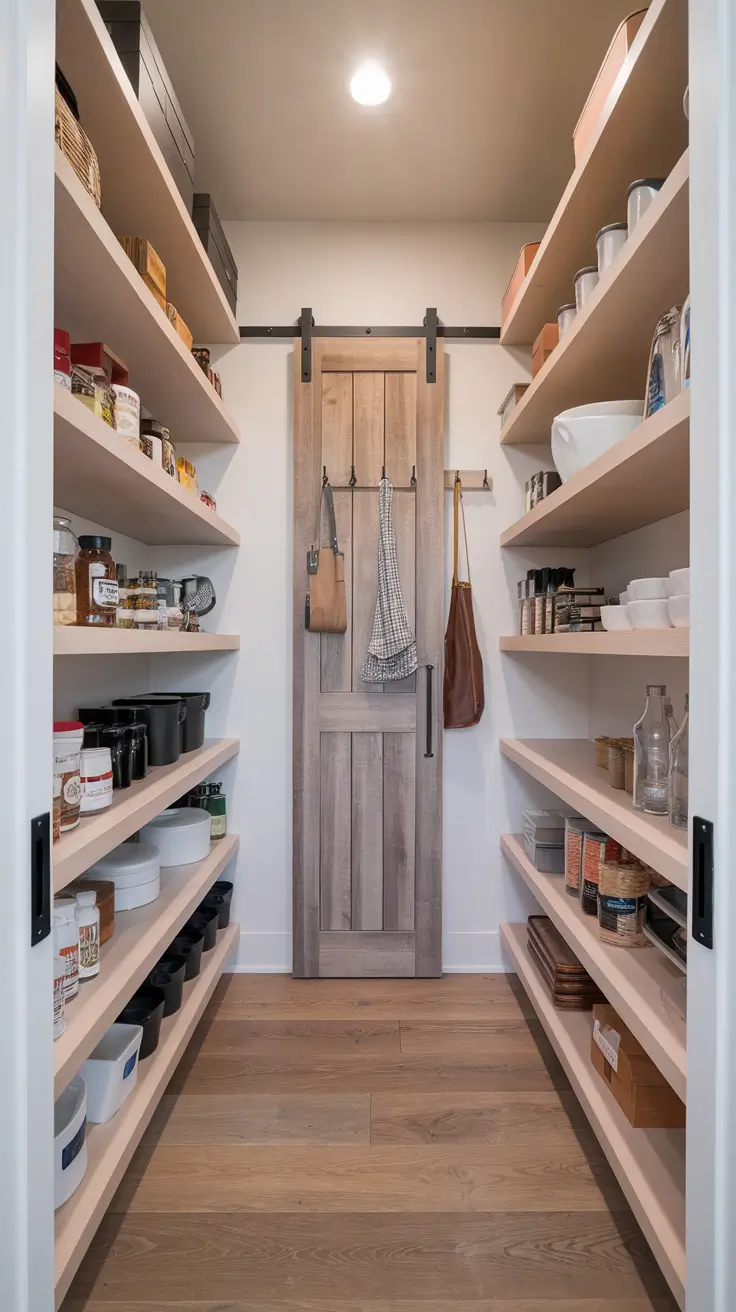
Incorporating pull-out spice racks, vertical bottle holders on end caps, and a dedicated baking zone with slots for sheet pans optimizes organization. Hooks for aprons and a slim broom closet panel provide utility storage without sacrificing shelf space. Motion-activated LED strips under shelves eliminate shadows, which is vital in narrow pantries. Pocket or barn-style doors keep the aisle unobstructed.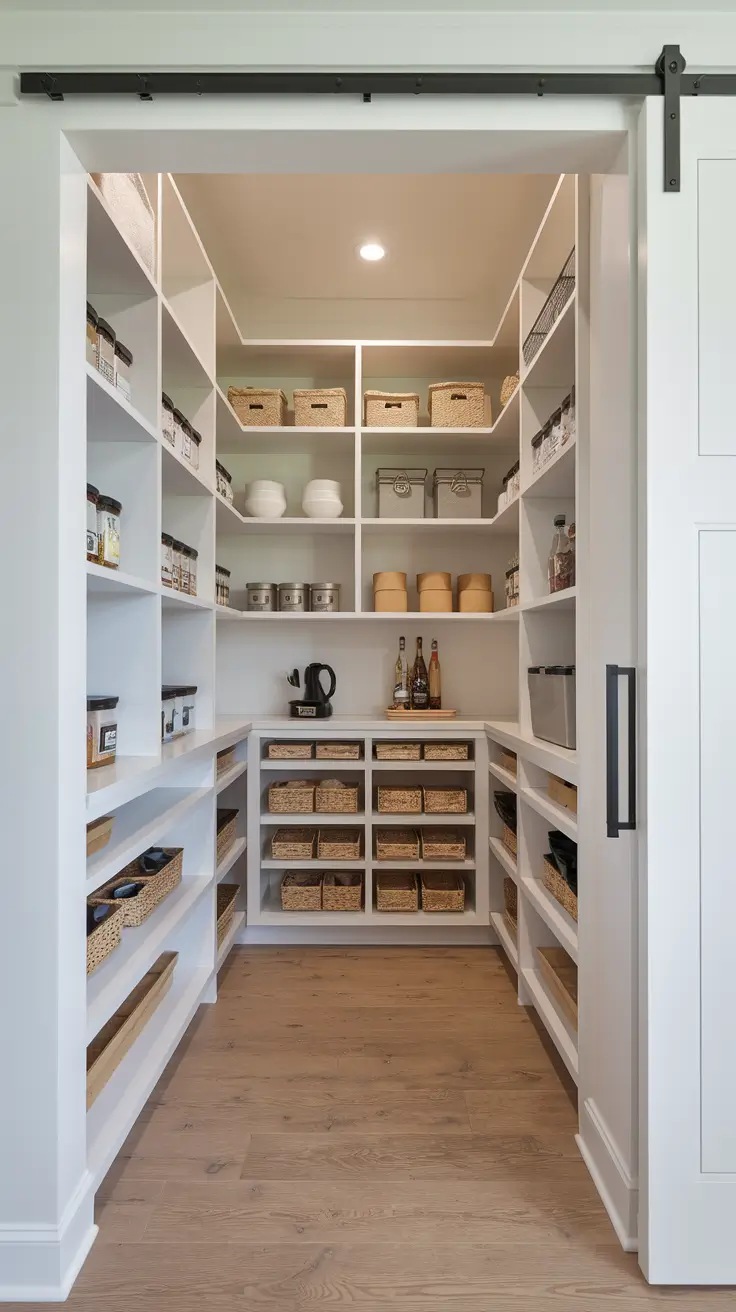
Labeling shelf edges simplifies upkeep, and using sturdy, no-sag shelving standards allows for seasonal reconfiguration—ideal for accommodating holiday bulk storage or special items.
Including reference dimensions for common pantry items like cereal boxes, mixers, and bottles helps ensure everything fits perfectly before installation.
Streamlined Long and Narrow Pantry Designs for Compact Homes
Designing a long, narrow pantry requires rhythm and repetition. I create balanced zones that repeat along the length, maintaining consistent shelf heights to create a calm visual flow. This results in a sleek corridor where the eye perceives continuous lines rather than clutter. To avoid a tunnel effect, I brighten the back wall with a satin finish and add a central task strip for visual interest.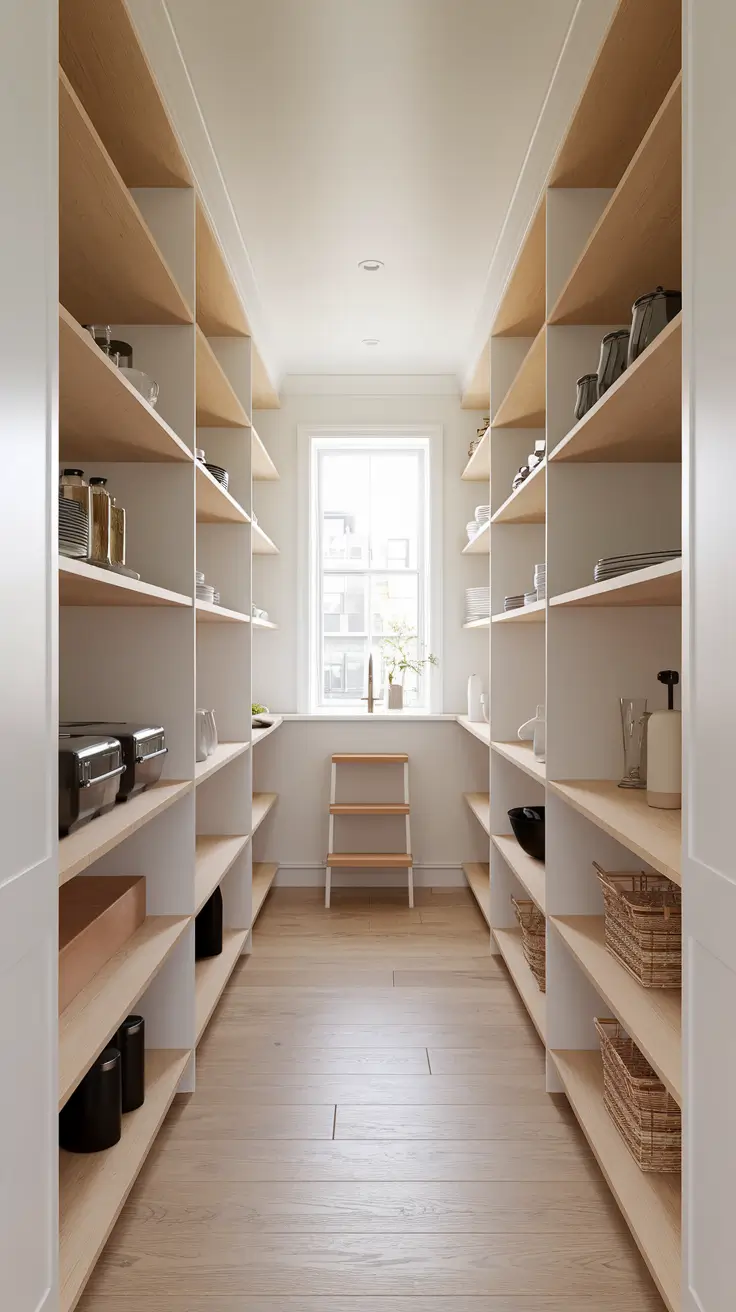
Shelving depths vary from 11 to 12 inches for dry goods and 16 inches for lower shelves housing appliances. A slim ladder or step stool with a wall mount supports access to upper shelves. When space permits, a 20-inch-wide butcher block work niche creates a micro-prep area within the pantry.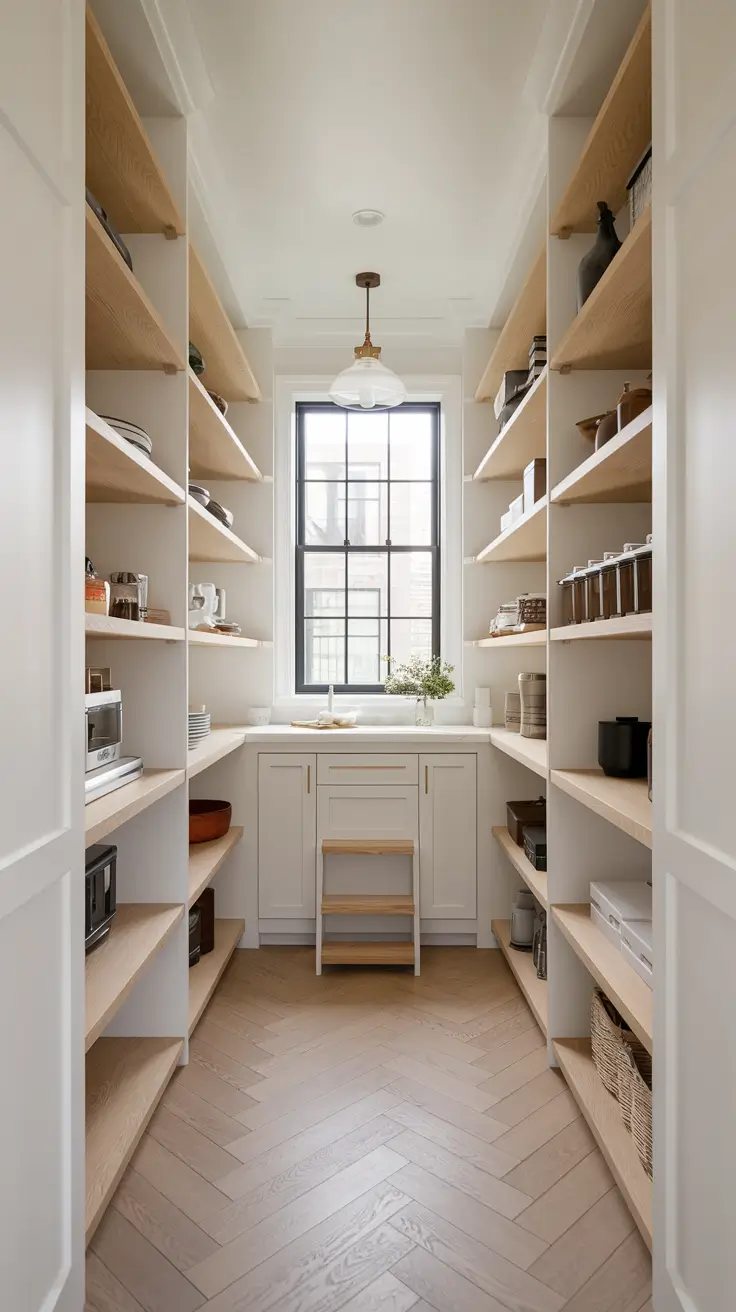
To break monotony, I add features like peg rails or shallow glass-front cabinets at the ends for displaying attractive items. This aligns with expert advice to incorporate display points without compromising storage, keeping motivation high for maintaining order.
Consider using durable, scuff-resistant materials for long corridors and installing soft-close hardware to reduce noise in echo-prone narrow spaces.
Compact Elegance: The Modern Butler’s Pantry in Narrow Spaces
The modern butler’s pantry, even within a narrow footprint, serves as a discreet utility and catering support area. I include undercounter refrigeration, a small sink if plumbing allows, and concealed cabinetry to hide countertop appliances. Finishes combine durability with sophistication—soft matte fronts paired with easy-to-clean quartz surfaces. Despite limited width, careful workflow design and consistent surfaces create a luxurious feel.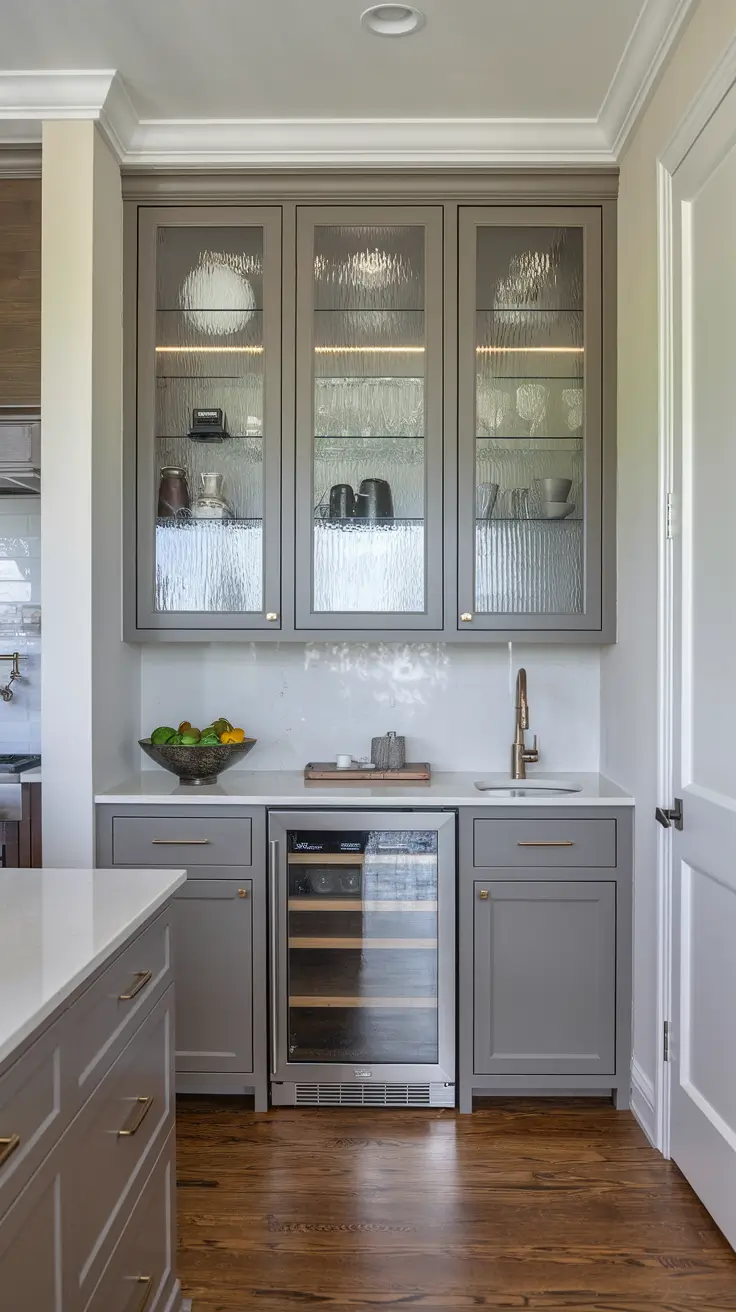
I often specify an undercounter ice maker for frequent entertaining, a slim dishwasher drawer if space permits, and a 24-inch undercounter fridge to keep beverages separate from the main kitchen. Open shelving above the sink for glassware is appealing, but I prefer reeded or clear doors to minimize dust. Accent lighting on dimmers sets the mood, while pocket doors maintain clear passage.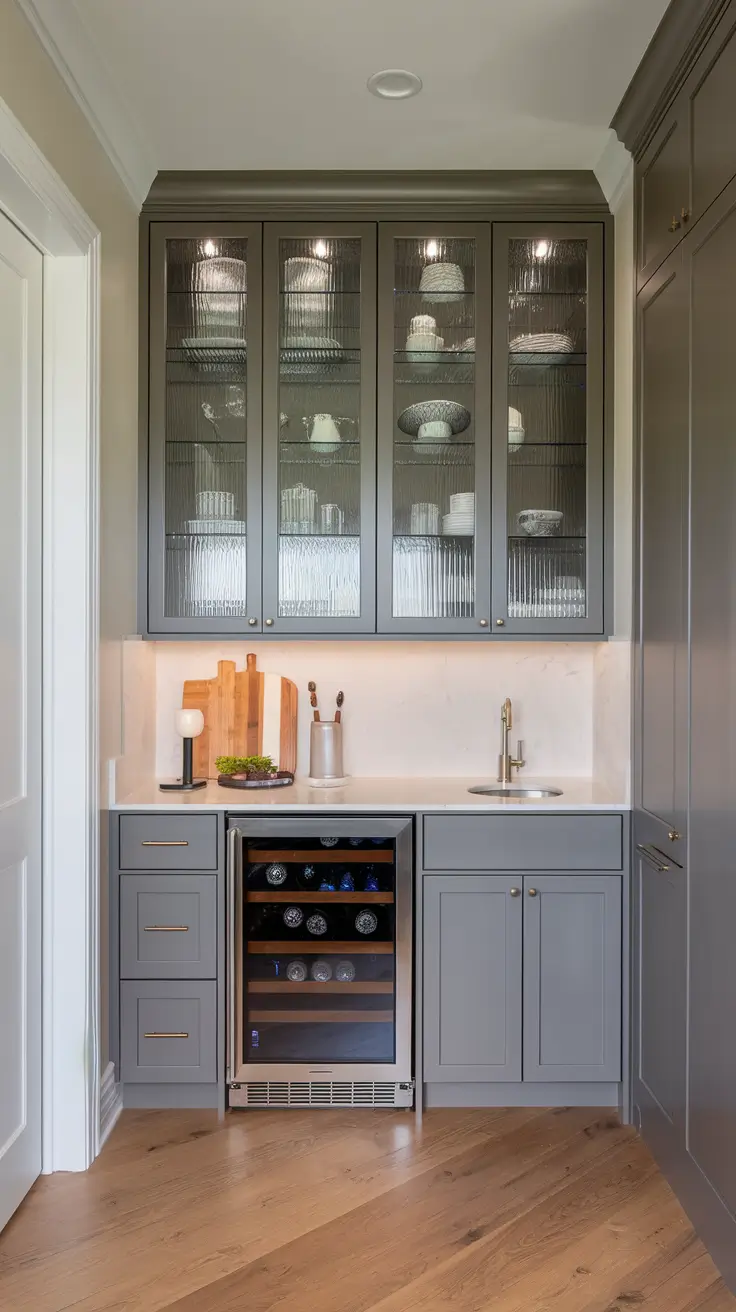
Successful butler’s pantries often fit within a 48-inch span, with stacked storage for barware, platters, and linens—separating plating and traffic to keep the main kitchen uncluttered.
Don’t forget to plan for ventilation, noise control, and strategically placed outlets for small appliances in these compact spaces.
Innovative Shelving Strategies to Double Storage in Narrow Pantries
Shelving is the backbone of efficient small-space storage. I use adjustable standards set at 2-inch increments to accommodate containers of varying heights. Since deep shelves can lead to wasted space, I avoid stacking by varying shelf depths: 10 inches near head height, 12 inches at eye level, and 14 inches around waist height, reserving deeper bays for appliances.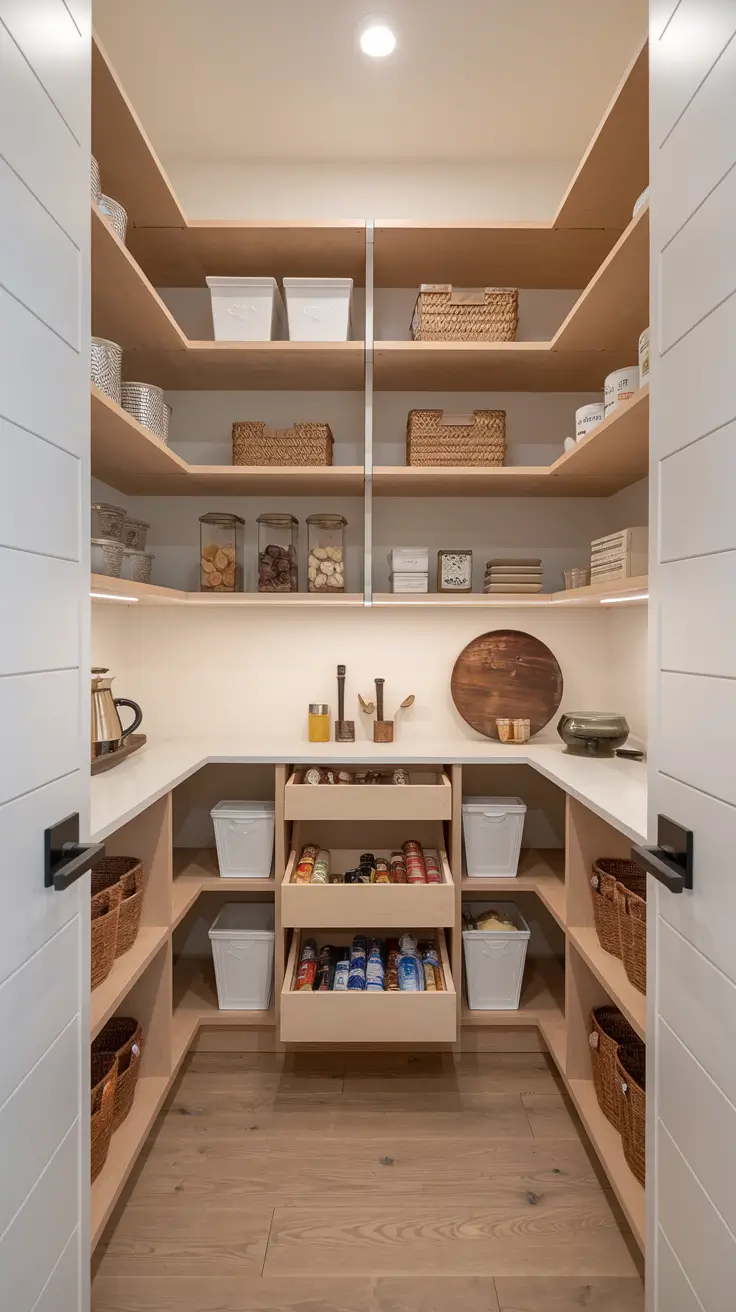
I combine fixed and adjustable shelves, roll-out trays for snacks, and tiered organizers for cans. Wire or perforated metal shelves enhance light flow, but solid shelves are better for small items and spill control. Bookend dividers prevent toppling, while clear bins and front labels streamline restocking.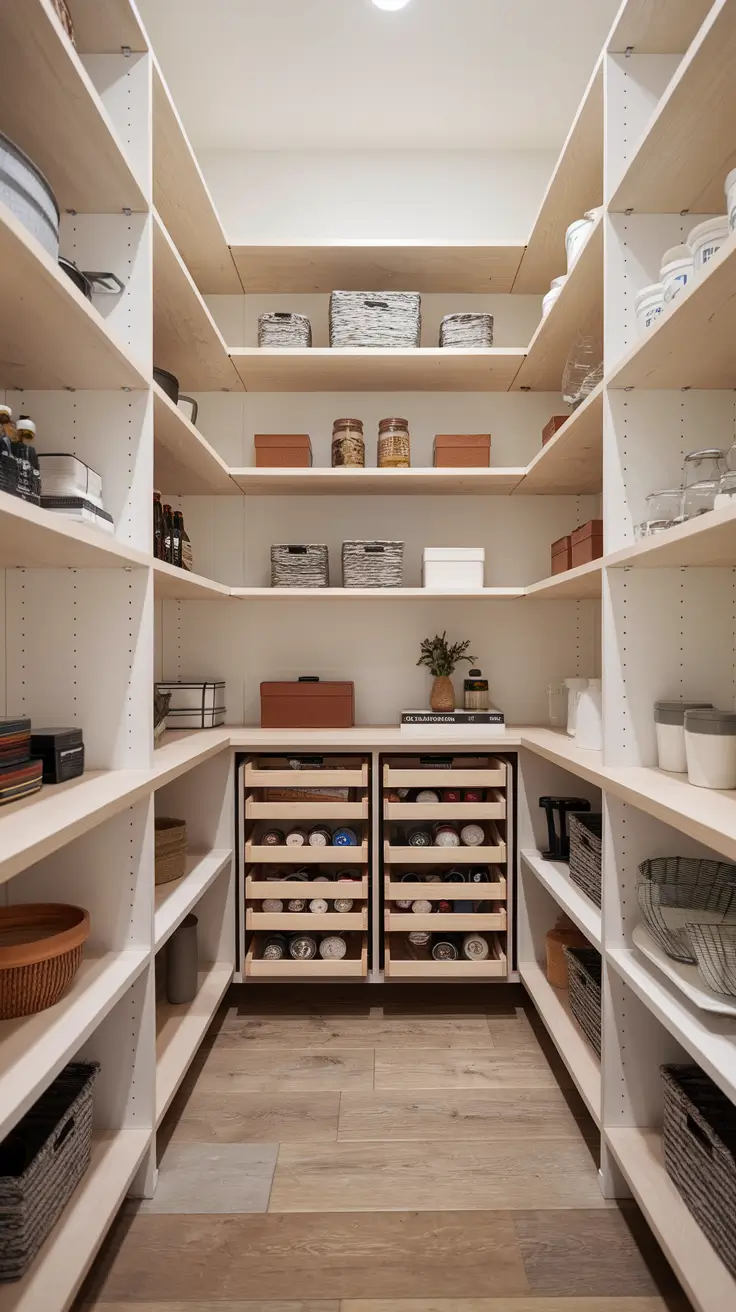
Investing in shelf lighting and consistent labeling pays off by reducing duplicate purchases and making inventory management effortless. Uniform containers tailored to shelf dimensions create visual harmony and maximize space.
Including a labeling guide and a shelf height map can help readers customize their pantry layouts confidently.
Transforming Closets into Functional Narrow Walk-In Pantries
Many homes have underutilized closets or utility niches perfect for pantry conversion. Enhancing lighting, adding dedicated power outlets, and replacing traditional doors with space-saving options like pocket or bifold doors can turn these spaces into efficient pantries.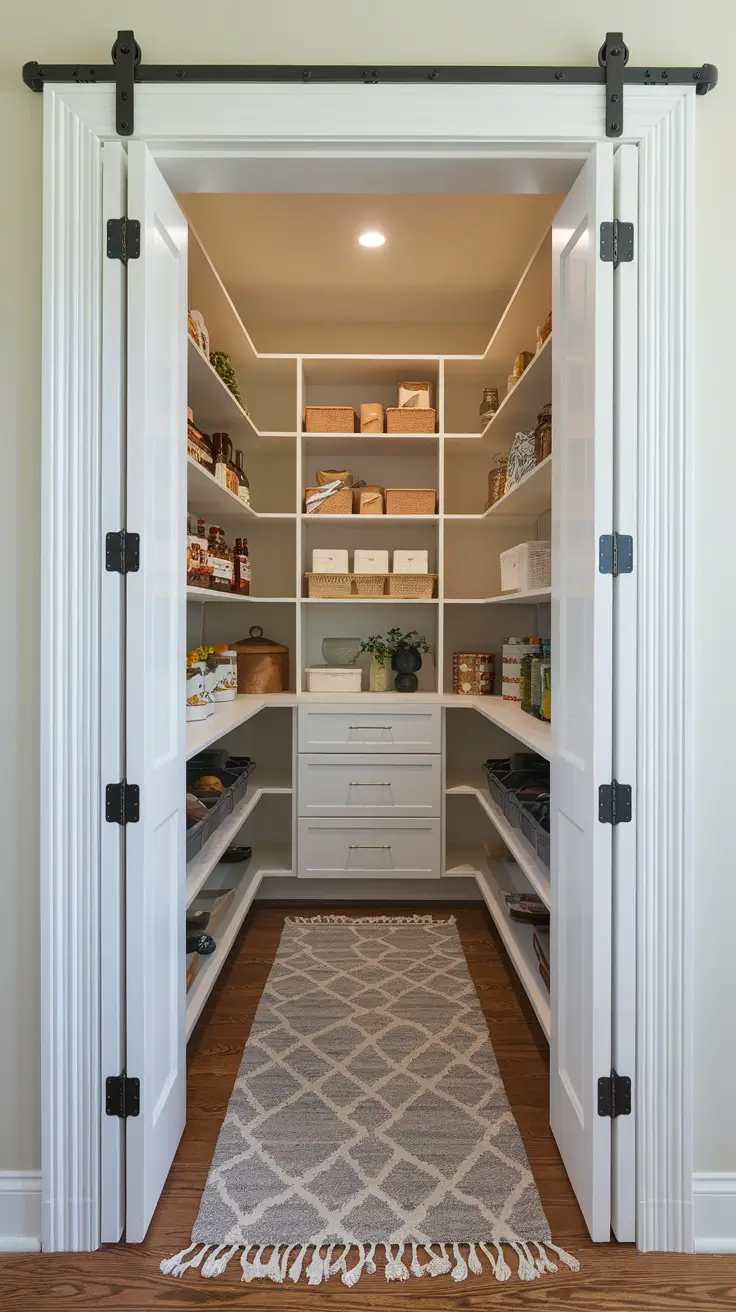
I install wall-to-wall shelving, slim pull-outs for spices, and vertical organizers for trays. When depth is limited, shelves are capped at 10 to 12 inches, and over-the-door racks provide extra storage for lightweight items. A thin floor runner minimizes noise and wear. Including a charging shelf for small appliances adds convenience.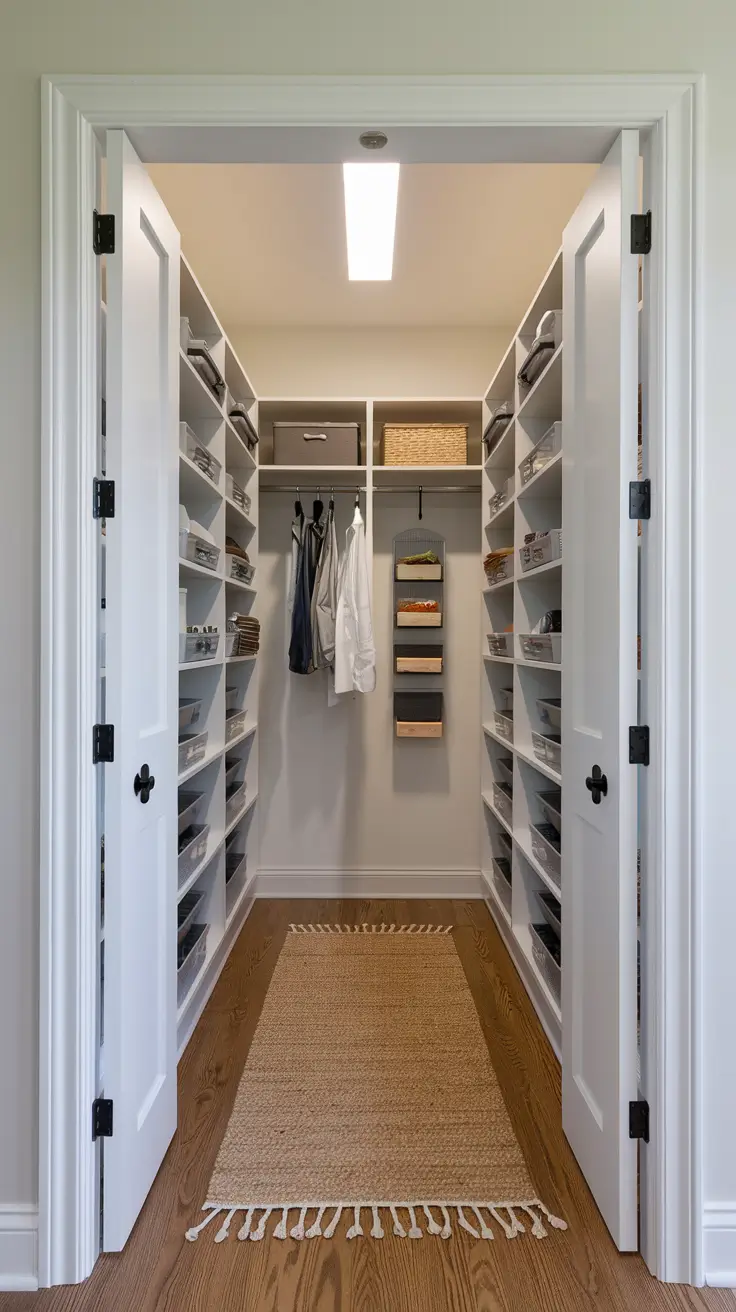
Success hinges on respecting pantry dimensions and clearances before installation. Planning for future flexibility ensures the pantry adapts to changing storage needs.
Adding a brief note on permits and a checklist for upgrading to brighter, motion-controlled lighting can help make the converted pantry feel like a seamless kitchen extension.
Optimizing Flow and Accessibility in Narrow Walk-In Pantry Layouts
Effective pantry design starts with access points and maneuvering space. I position the door for the shortest route from the main prep area, avoiding dead ends. If the aisle narrows, pocket or sliding barn doors free up floor space. Frequently used items are placed between eye and elbow height, with heavier goods stored mid-chest level.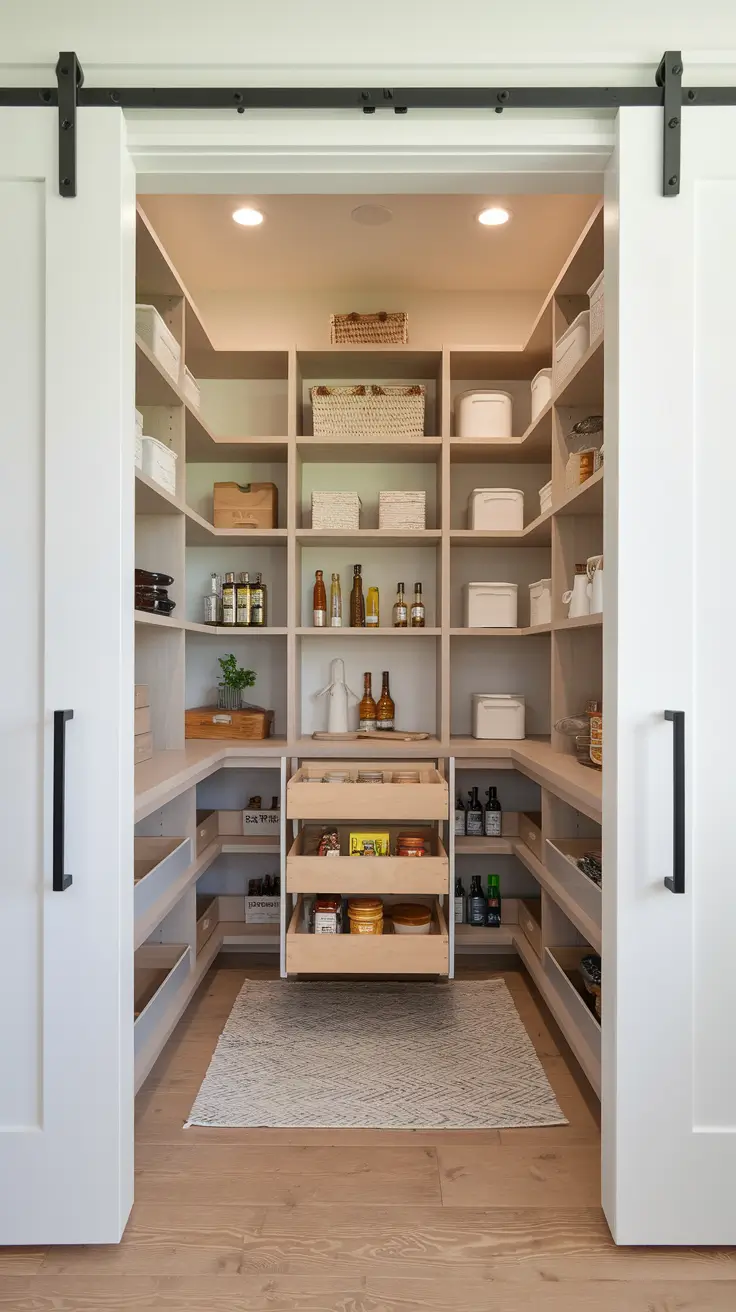
Adjustable shelves, tiered risers, and glide-out trays for bulk items enhance usability. A slim pull-out caddy near the entrance holds oils and condiments for quick access. Clear labeling and dedicated zones keep clutter in check, making the pantry intuitive.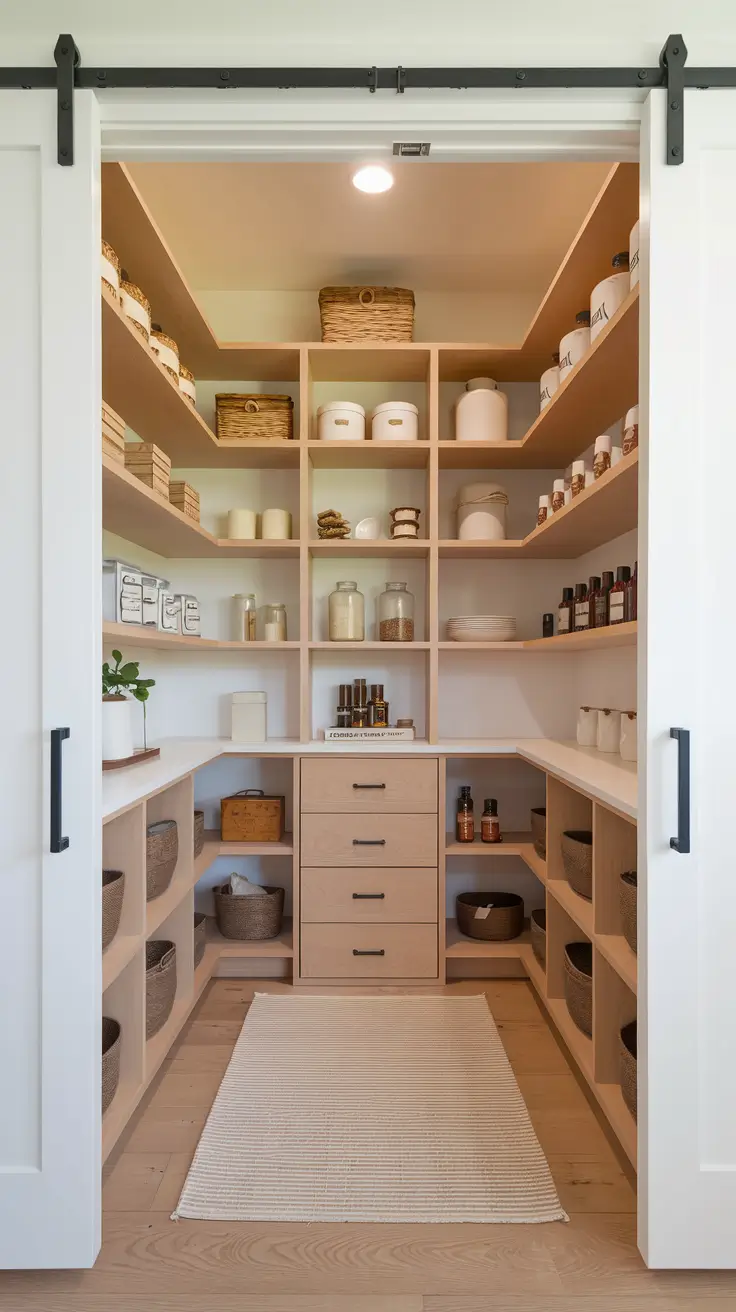
I recommend biannual resets involving auditing and donating to maintain peak efficiency and support the kitchen’s overall function.
Including a mini guide pairing product categories with shelf heights and a reminder to verify pantry dimensions against container sizes helps avoid costly mistakes.
Inspired Narrow Walk-In Pantry Concepts Reflecting Current Trends
Creative pantry designs blend texture, hidden technology, and flexible layouts to make small spaces feel personalized rather than cramped. I prioritize quick-grab items within the first two feet, reserving deeper shelves for display and less frequently used goods. Thoughtful layouts animate long walls without clutter.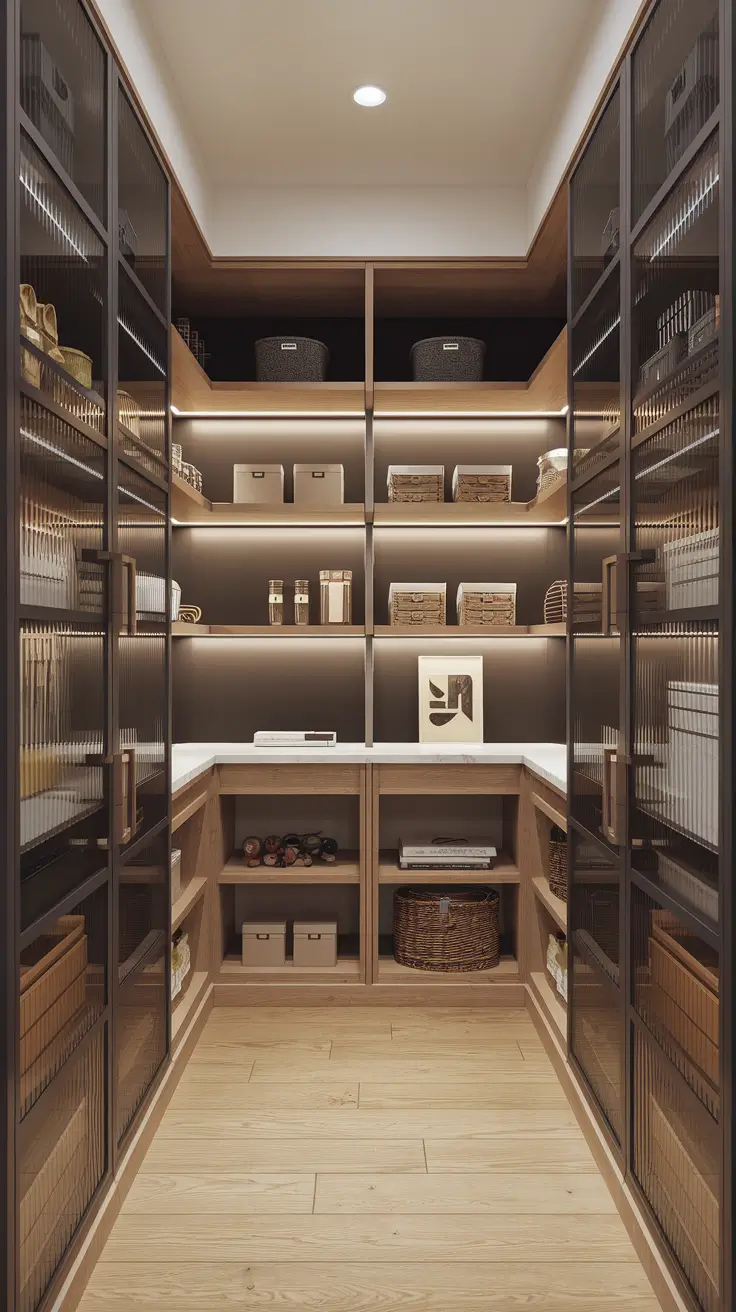
I incorporate ribbed glass cabinet fronts over shallow shelves for occasional glassware, magnetic spice rails on end panels, and a tall, narrow charging shelf for tablets and smart speakers. Motion-activated LED lighting under shelves brightens the space, while pocket or bifold doors improve flow. Matte hardware reduces glare.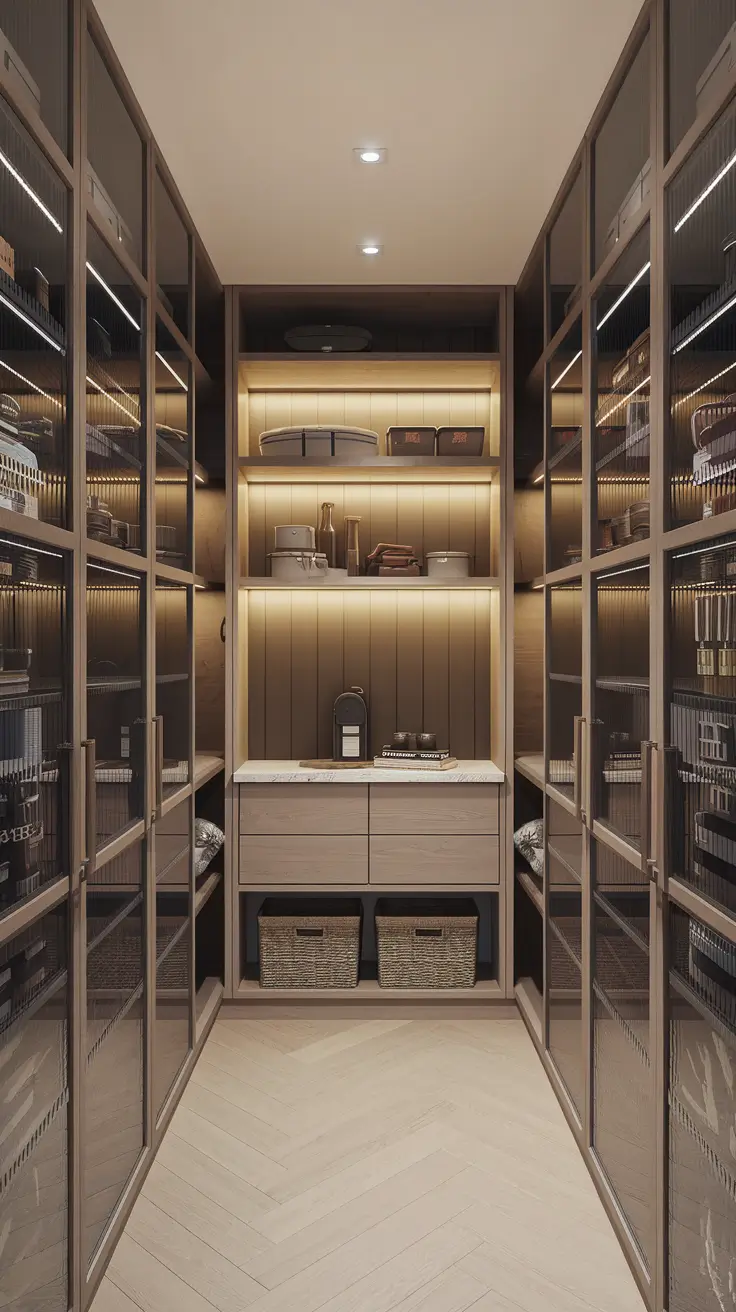
A single accent wall—such as a colored back panel or geometric tile—adds personality without overwhelming the space, aligning with expert advice to minimize visual noise in small rooms.
Adding a materials list featuring scuff-resistant paint, wipeable tile, and anti-glare laminates, along with notes on pantry dimensions and under-shelf lighting, ensures a practical and stylish design.
Mastering Narrow Walk-In Pantry Dimensions for a Tailored Fit
Accurate measurements are the foundation of any successful narrow walk-in pantry. I verify aisle widths, shelf depths, and door swings before finalizing layouts. A comfortable passageway paired with appropriately sized shelving prevents wasted space and awkward corners.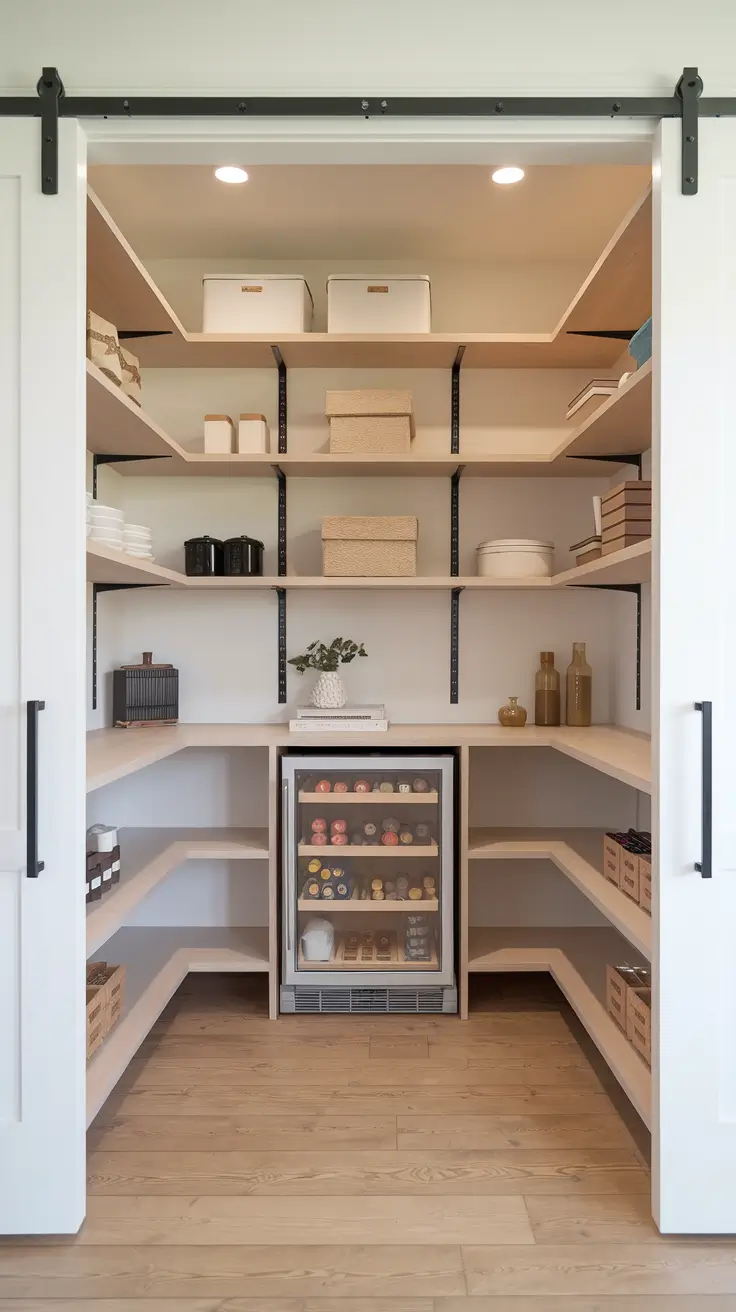
Shelf depths are typically 10 to 12 inches for dry goods, 14 inches for small appliances, and 16 inches for bulky items, used sparingly. Heavy storage is best placed at chest height (54 to 60 inches). When integrating refrigerators or freezers, I carefully check appliance specifications, ventilation needs, and hinge clearances. Sliding doors help conserve space in tight layouts.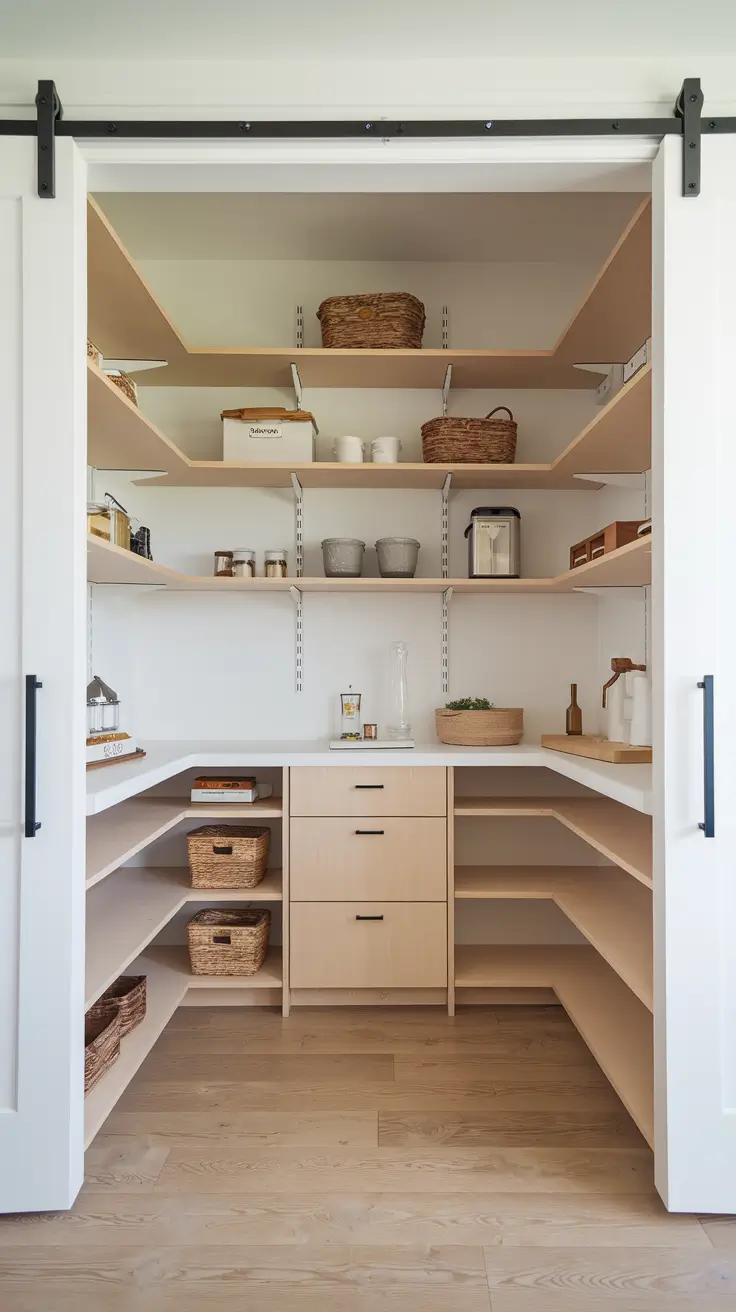
Measuring common items like cereal boxes, oil bottles, and small appliances beforehand ensures a custom-fit system. Professional organizers emphasize this practice to maximize functionality.
Including a printable grid for mapping items and a reminder to check stud locations for heavy shelving installations supports a durable, well-planned pantry.
Bringing Natural Light into Narrow Walk-In Pantries with Windows
Incorporating a window in a narrow pantry can make the space feel larger and fresher, provided glare and heat are controlled. I position shelving to avoid direct sunlight washing out labels, leaving the sill free for a small landing shelf. Proper layout allows natural light to enhance mood and visibility without relying solely on artificial lighting.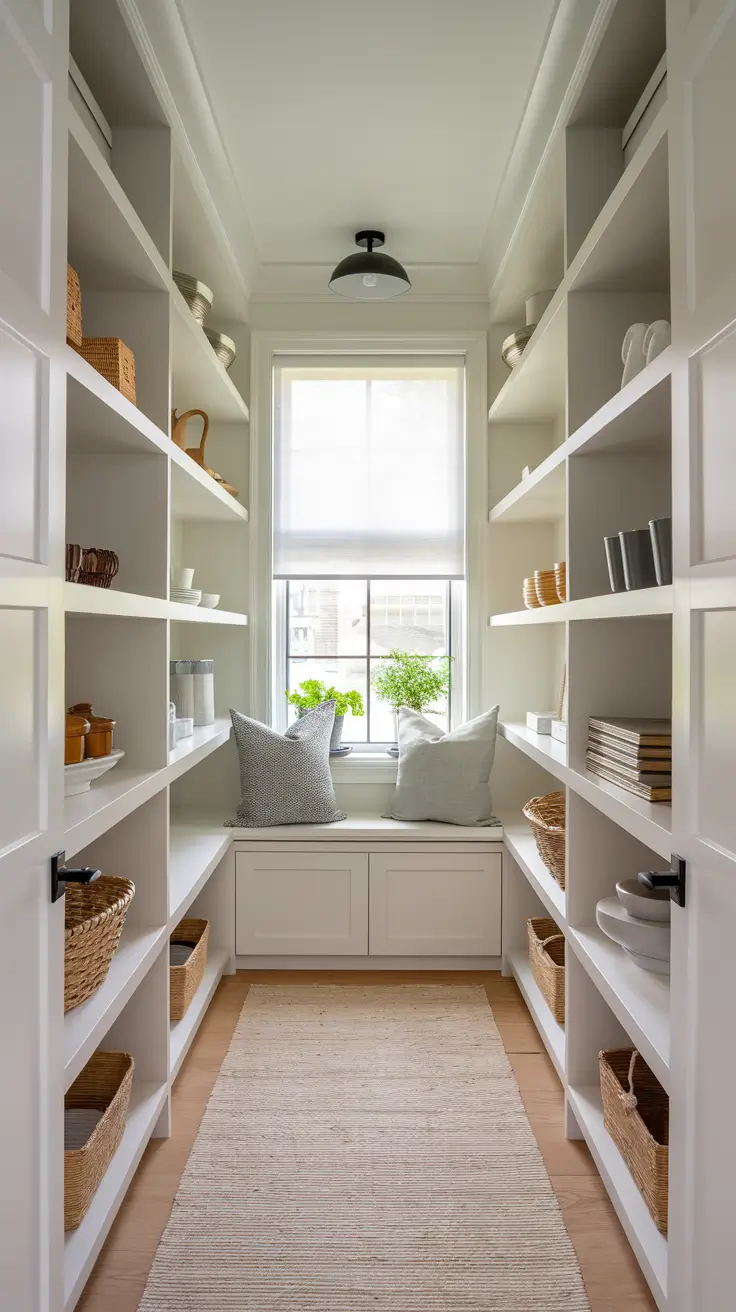
I recommend UV-filtering roller shades, moisture-resistant paints, and sealed shelf edges to protect goods. Shallow shelving flanking the window reduces shadowed areas. If space allows, a small wall-mounted plant or herb station near the light adds freshness. A pocket door helps maintain airflow without sacrificing space.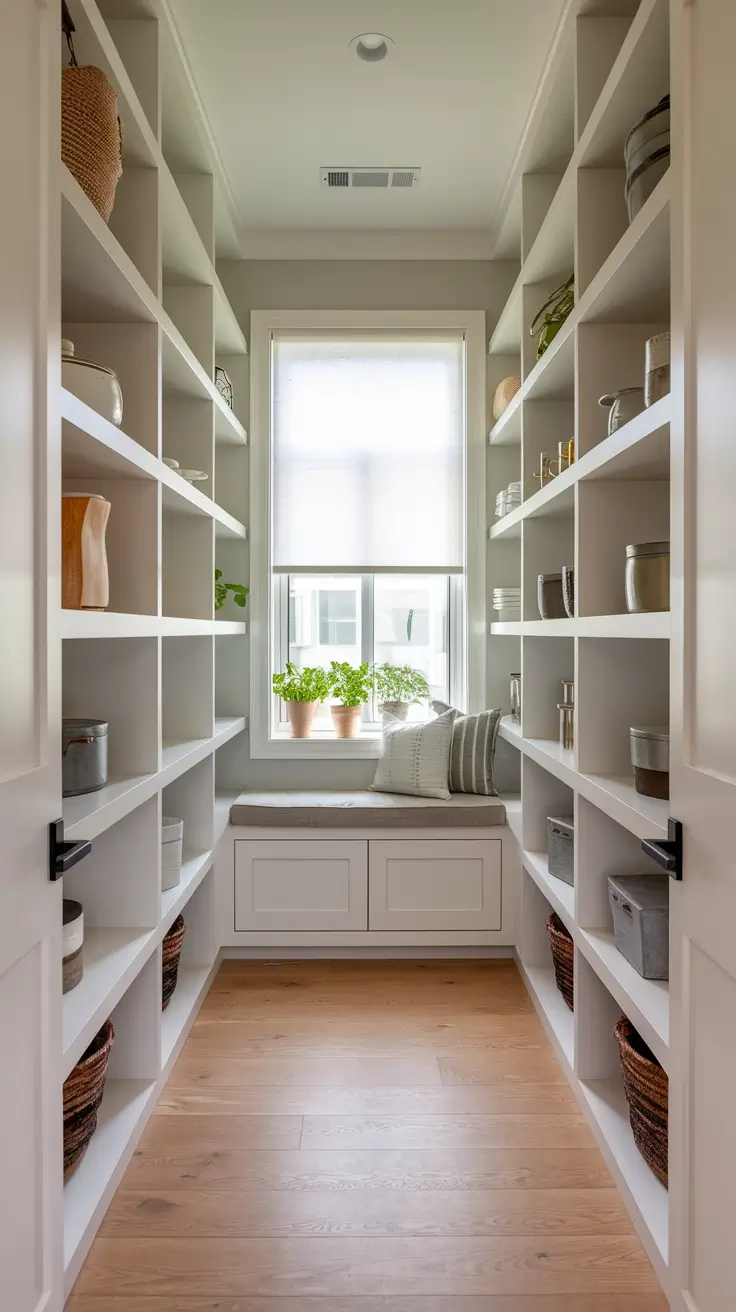
Glass surfaces work best as functional ledges for decorative items rather than fragile focal points. Diffused daylight minimizes harsh contrasts and glare, ideal for small utility rooms.
Adding instructions for privacy films, shade bracket clearances, and ensuring window trim complements shelving enhances the overall aesthetic and function.
Transformative Shelving Ideas for Narrow Walk-In Pantries
Shelving is where a narrow pantry truly comes to life. I arrange shelf heights and depths so frequently used items sit comfortably between eye and elbow level, selecting wipe-clean finishes for durability. Combining fixed lower shelves for stability with adjustable upper shelves accommodates cereals, baking bins, and snacks. Slim roll-out trays keep loose packets contained, while tiered can risers prevent stacking. End panels host spice rails and pan dividers. Clear bins with consistent labels simplify restocking and inventory management.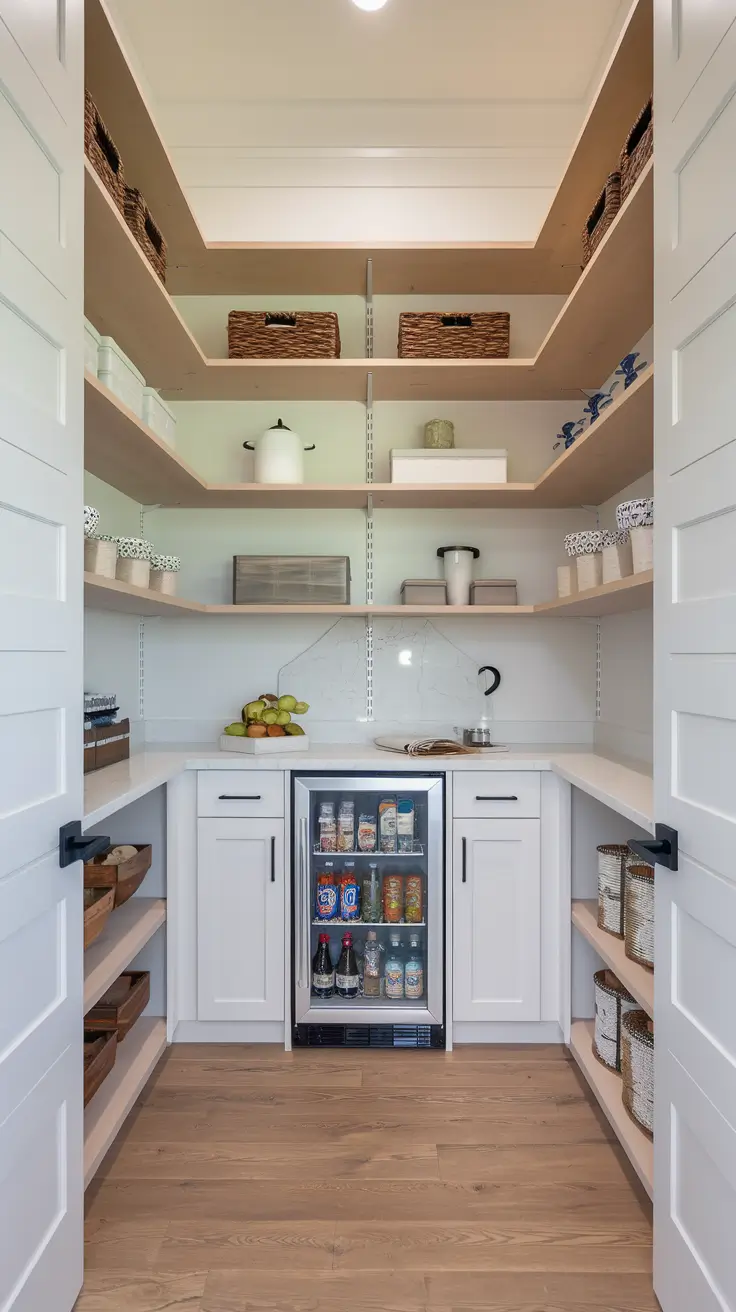
Uniform containers sized to shelf depths create visual calm and optimize space. Decanting staples not only clarifies inventory but also aids in pest control, especially effective in narrow pantry designs.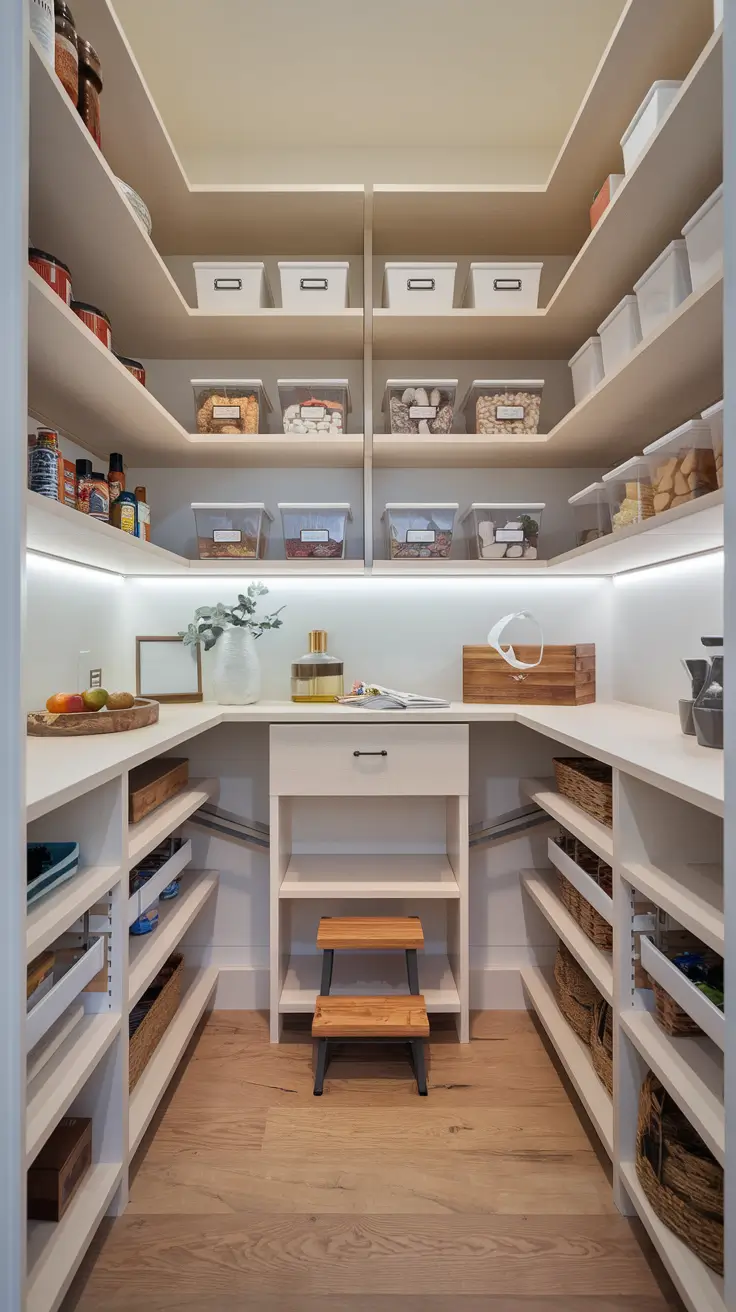
I suggest a label style guide and a seasonal reset schedule to prevent clutter from creeping in.
Integrating Refrigeration into Narrow Walk-In Pantries Without Sacrificing Space
Adding refrigeration can elevate pantry functionality if carefully planned. I typically place 24-inch undercounter or column-style, counter-depth units at either end of the pantry to avoid door swings blocking the aisle. This setup relocates beverages and backup dairy away from the main kitchen while maintaining a practical layout.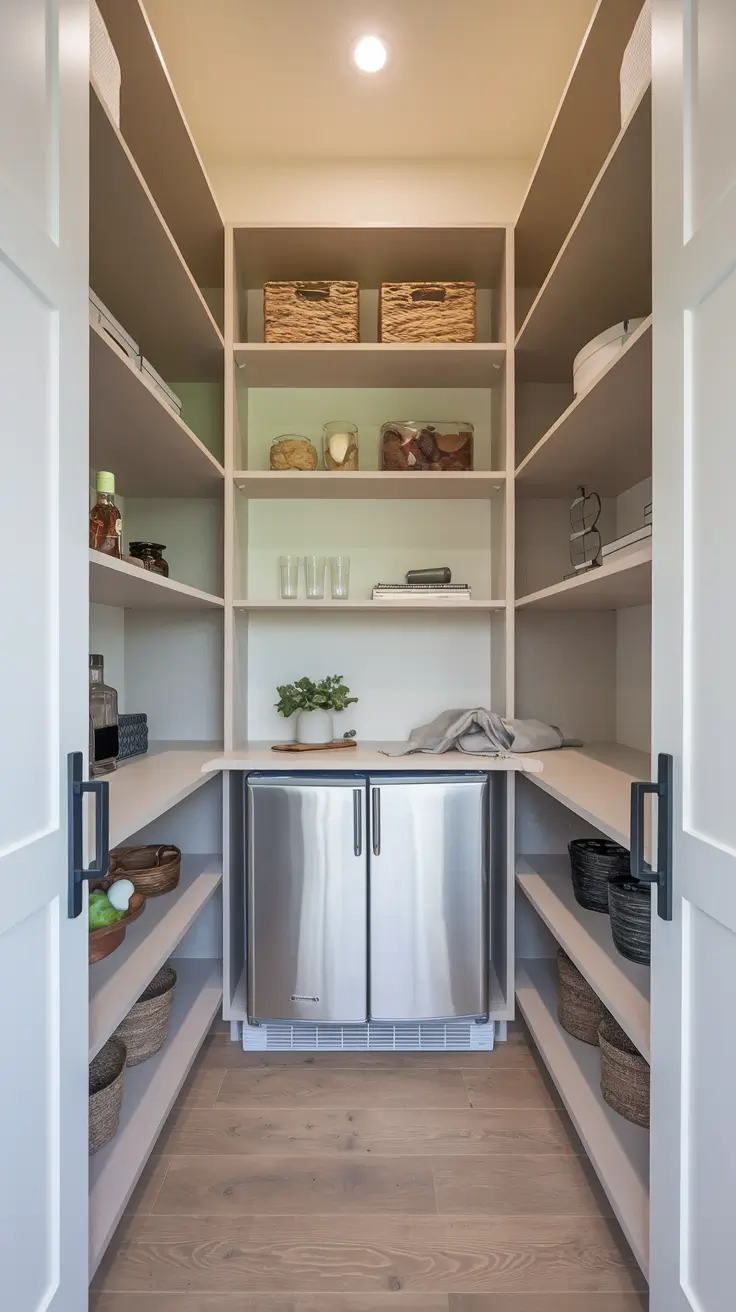
I ensure proper ventilation with vent gaps and finished toe kicks for airflow. For combined fridge and freezer setups, stacked drawers or split columns keep openings manageable. Coordinating door panels with cabinetry creates a seamless, built-in look.
Designating a beverage and snack zone near the entrance helps manage traffic flow and minimizes door open times. Appliance manufacturers stress the importance of ventilation and hinge clearance, which I consider essential in narrow layouts.
Including a checklist for power requirements, dedicated circuits, condensation management, and noise levels ensures a smooth integration.
Streamlined Layout Tips for Efficient Narrow Walk-In Pantries
Efficiency in narrow pantries comes from logical sequencing. I place grab-and-go items closest to the door, followed by baking supplies, appliances, and cleaning products at the far end for safety. This one-way flow reduces congestion.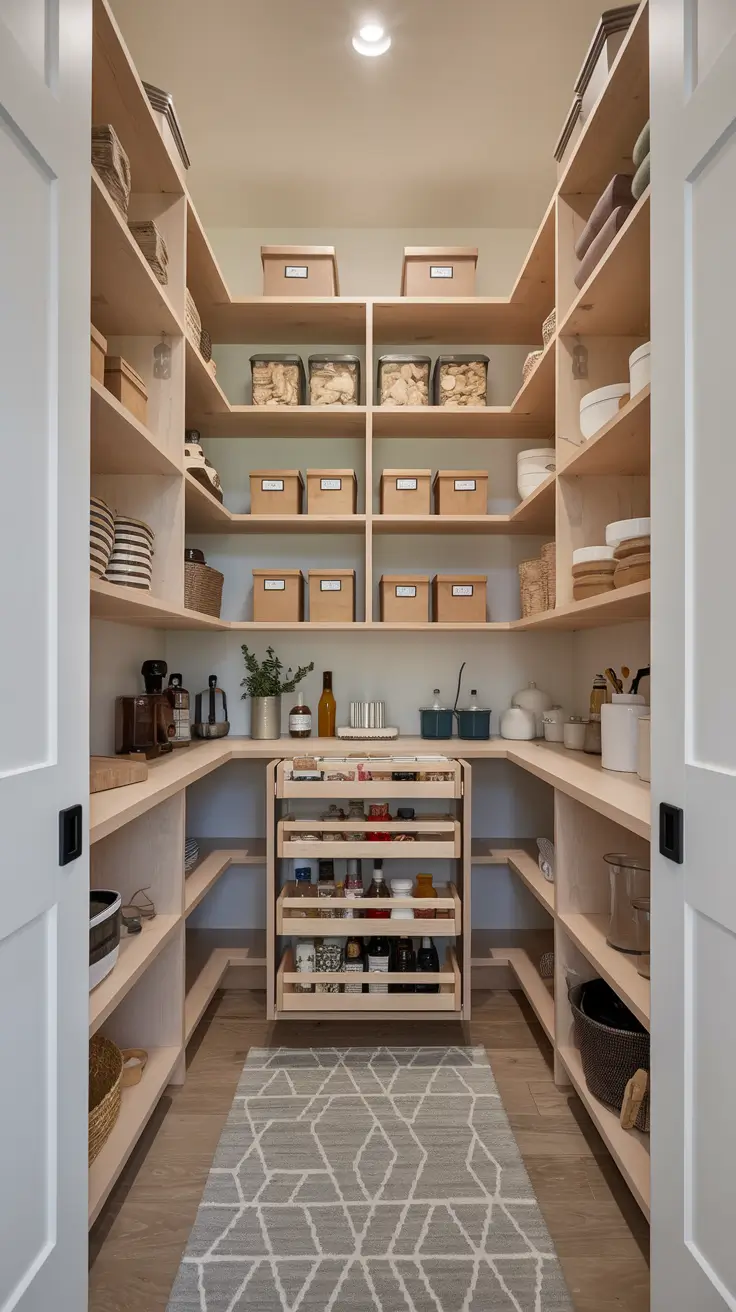
Adjustable shelving, a slim pull-out caddy for oils, hooks for linens, and a wall-mounted step stool enhance usability. Pocket or barn doors prevent door swing conflicts. Labels, decanted staples, and biannual audits keep the pantry organized.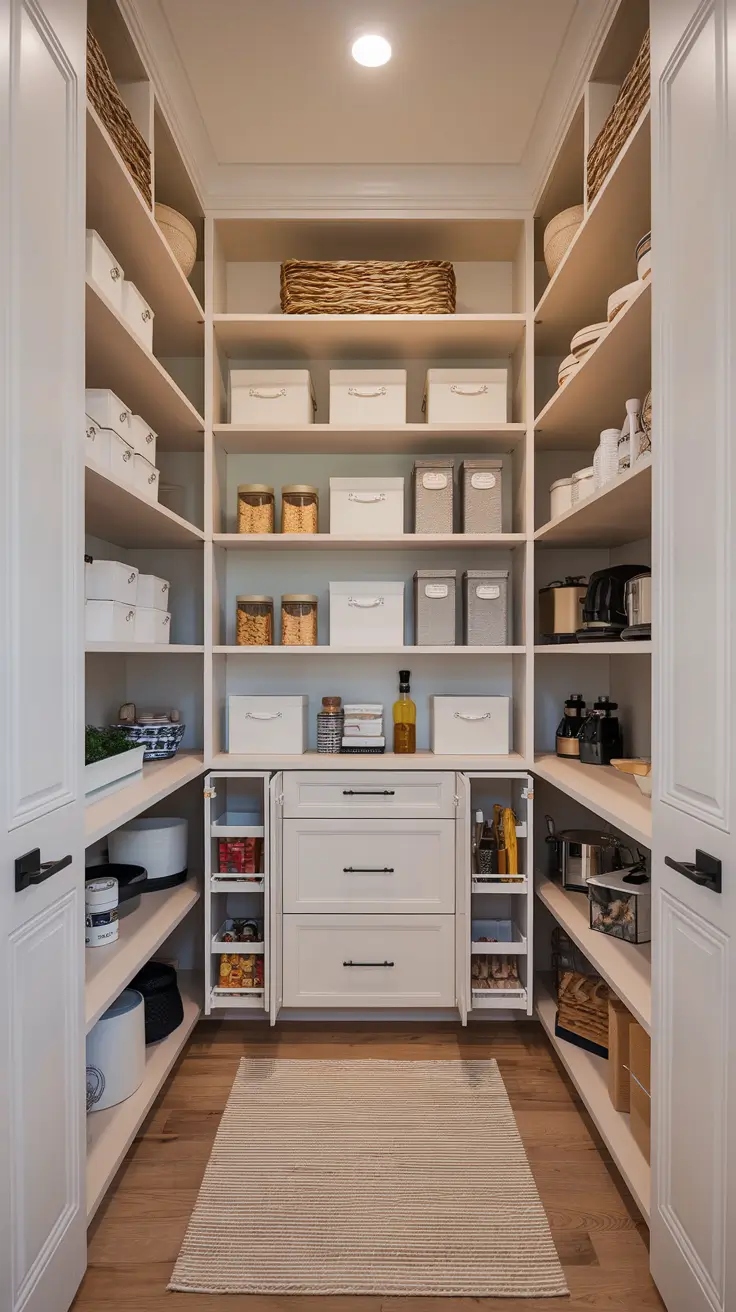
Small habits like returning items to designated spots and keeping the floor clear multiply maintenance effectiveness, a principle echoed by home organization experts.
Adding a weekly five-minute reset and a printable item map helps all family members maintain order effortlessly.
The Definitive Guide to Narrow Walk-In Pantry Design
This comprehensive guide combines precise measurements, adaptable shelving, quiet hardware, and intelligent lighting. I start with verified pantry dimensions, select door styles that maximize floor space, and establish clear storage zones. The result is a system that seamlessly integrates into daily life.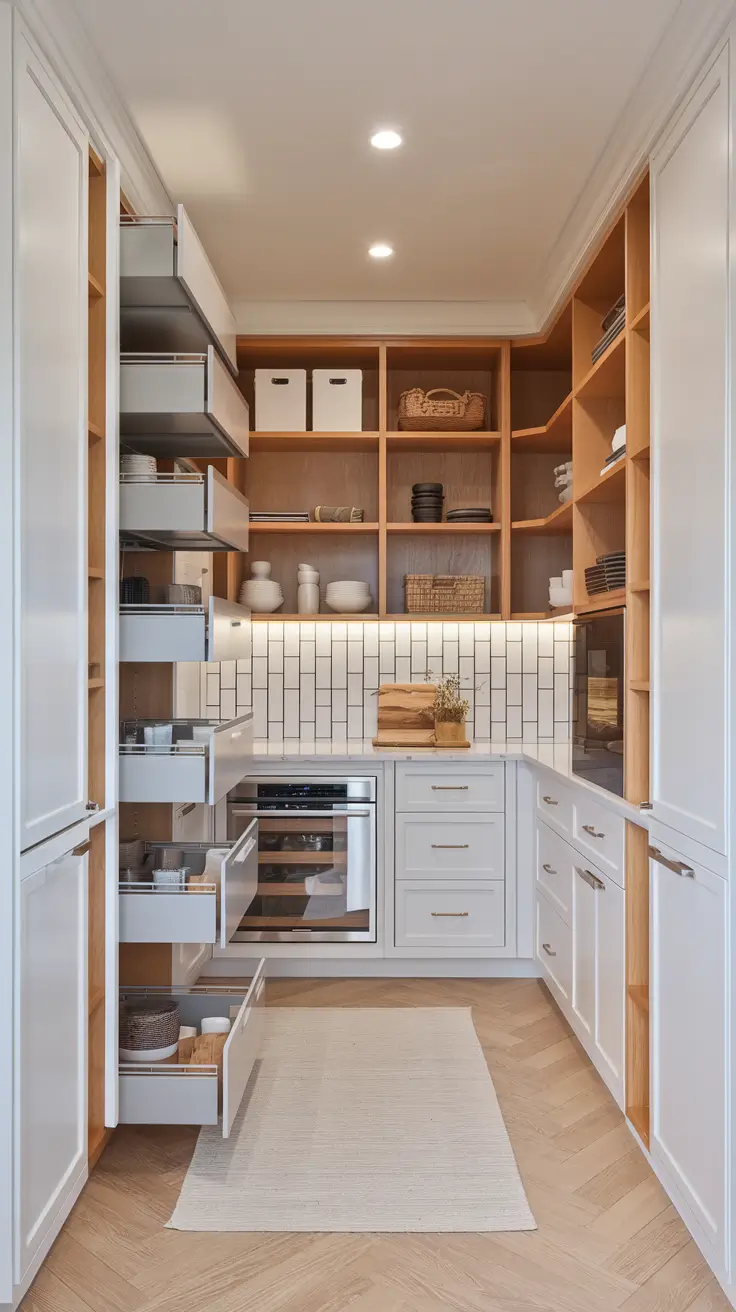
My essential kit includes adjustable standards, tiered risers, roll-out trays, vertical dividers, motion-activated LEDs, and a small landing shelf. Where possible, I incorporate a window for natural light and a compact undercounter beverage unit. The color palette favors matte, wipeable finishes for durability.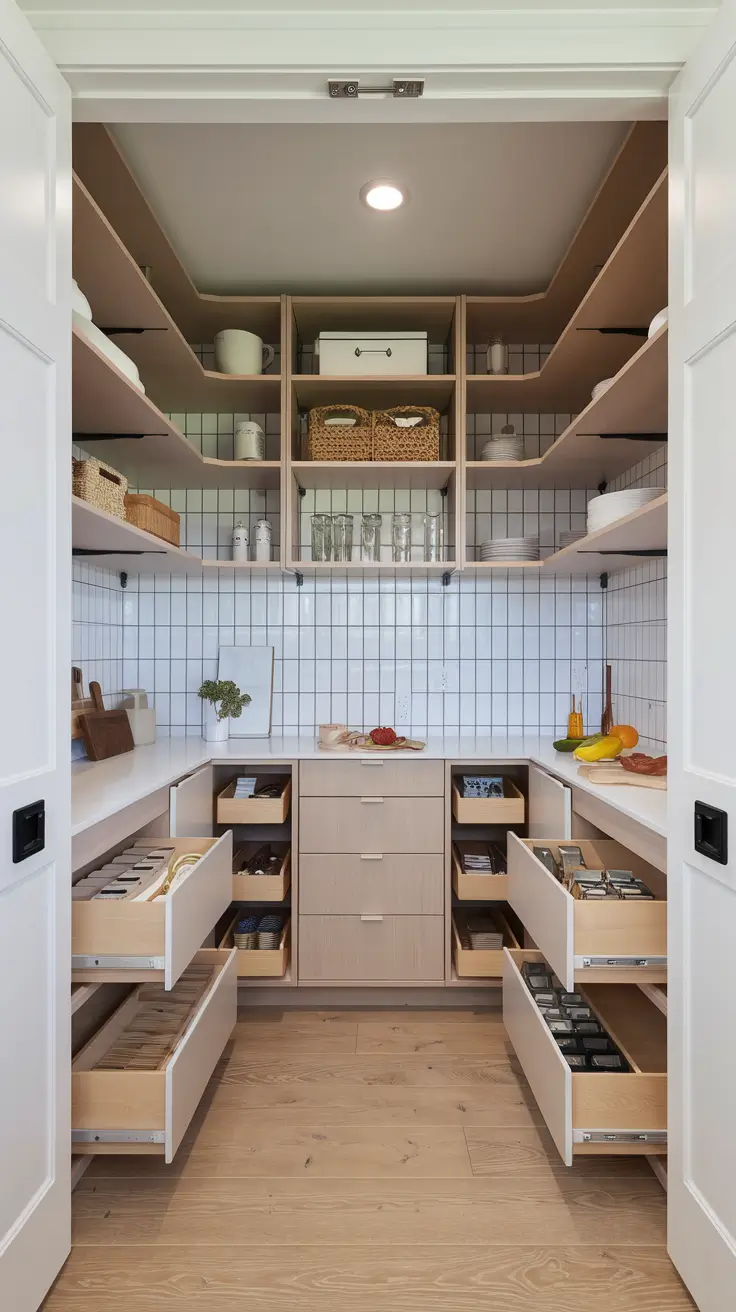
My philosophy is simple: design once, adjust forever. Treating the pantry as a living system allows seasonal and habit-based modifications without major overhauls, distinguishing a one-time makeover from a lasting solution.
Including a master checklist covering tools, brackets, spacing, power, and labeling templates empowers readers to implement and adapt their pantries confidently.
Selecting the Ideal Door for Your Narrow Walk-In Pantry
Door choice can make or break a narrow pantry design due to swing clearance. Full-swing doors often waste circulation space, so I prefer pocket or bypass doors to preserve aisle width. Panel doors matching cabinetry integrate closet-style pantries seamlessly into kitchen furniture. Glass doors open sightlines, especially when paired with light-colored interiors.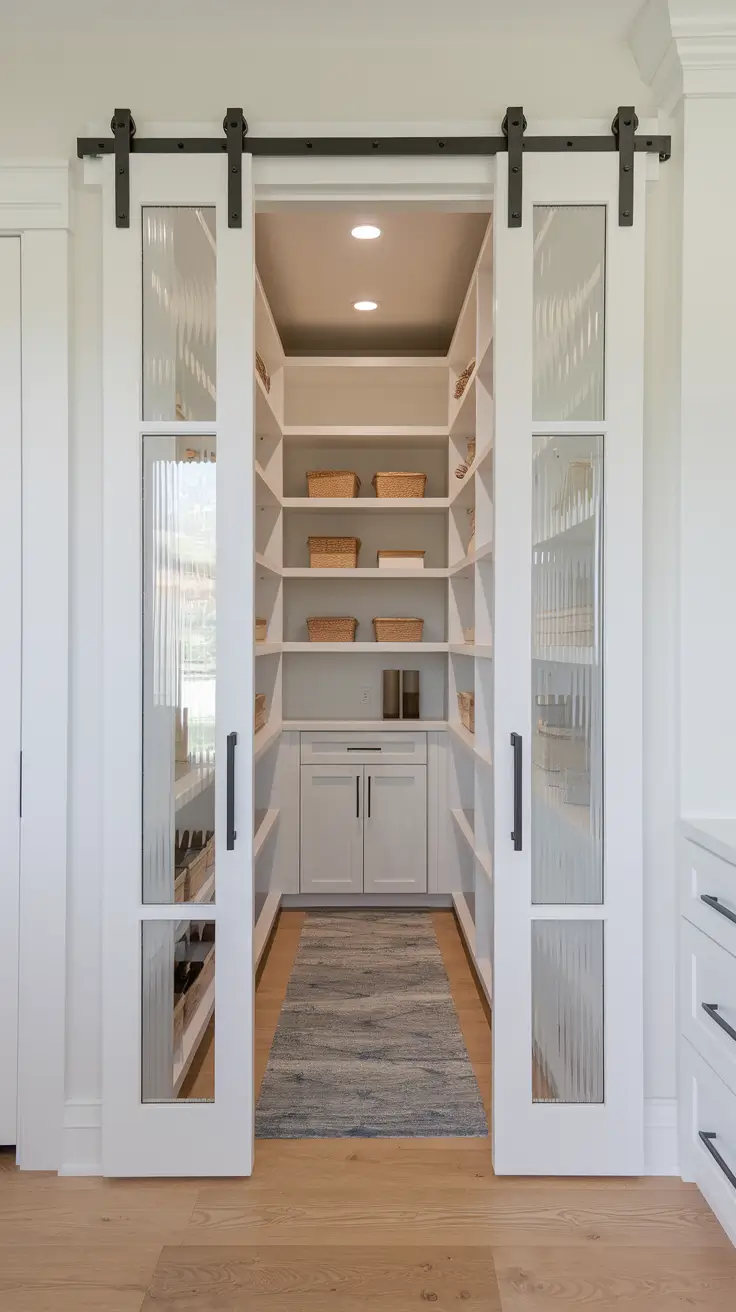
Options range from pocket doors that eliminate swing to single-light glass panels that brighten windowless pantries. Integrated pulls maintain clean lines. For families, soft-close pocket hardware ensures quiet privacy, and elbow-operable latches facilitate hands-free access.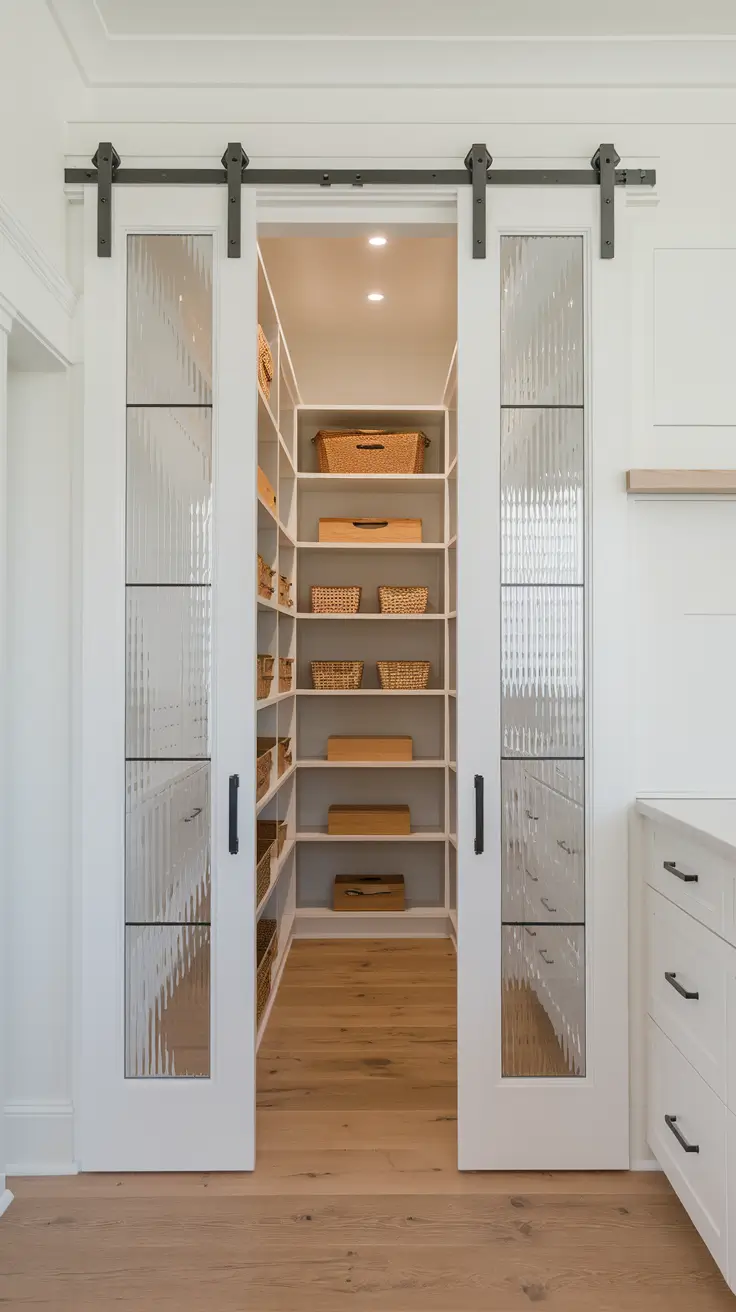
Glass doors work best when the interior is well-organized, as they reflect light while obscuring clutter with reeded or fluted textures. Painted pocket doors matching wall colors help the pantry blend into corridors. Door height also matters; full-height doors can visually reduce ceiling height.
Adding door stop plans and jamb protection, such as durable paint or metal edging, preserves door and wall integrity in high-traffic narrow aisles.
Smart Organization Hacks for Small and Narrow Pantries
For basic layouts, I prioritize traffic flow and reserve prime shelf space between shoulder and knee height for everyday items. Keeping the center aisle clear prevents a cramped feel, while bulk or seasonal goods are stored high or low. Clear labeling and uniform containers reduce visual clutter, essential for a calm pantry environment.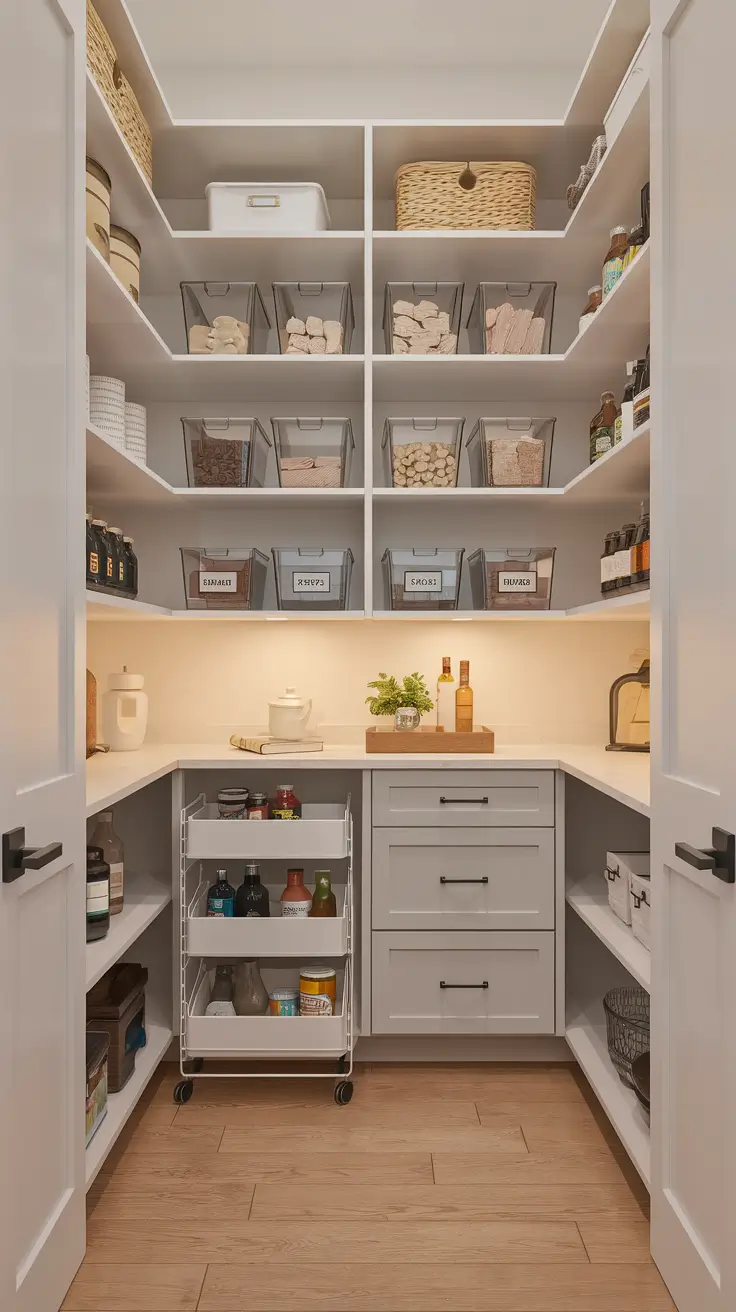
I rely on shallow adjustable shelves (10 to 12 inches deep) for cans and dry goods, plus one deeper shelf for appliances. Slim rolling carts extend from the aisle end, and pull-out wire baskets contain snacks. Tiered can risers, lazy Susans for oils, and under-shelf baskets boost capacity without overcrowding. Utilizing back-of-door racks maximizes every inch in tight spaces.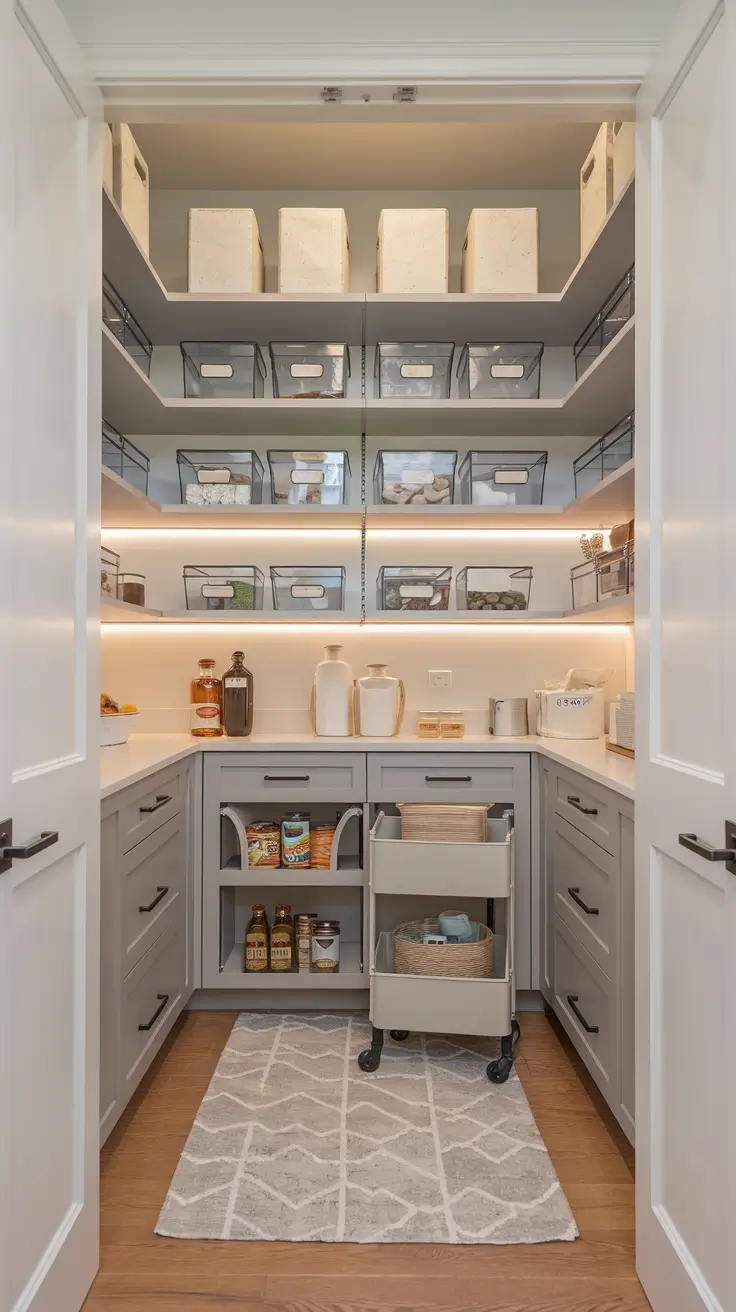
Decanting frequently used items reduces maintenance fatigue. I advise clients to create a landing zone near the entry for groceries to avoid aisle blockage. Small rechargeable motion lights inside bins improve visibility on deep shelves.
Encouraging a quarterly reset ritual involving a quick sweep to discard expired items and reorganize categories sustains long-term order.
Incorporating a Freezer into Your Narrow Walk-In Pantry: Essential Considerations
When adding a freezer, I first assess electrical capacity, ventilation, and door swing. Counter-depth column or undercounter drawer freezers work best in narrow aisles to maintain safe walking space. Positioning cold storage at the end wall or recessed niches prevents obstruction.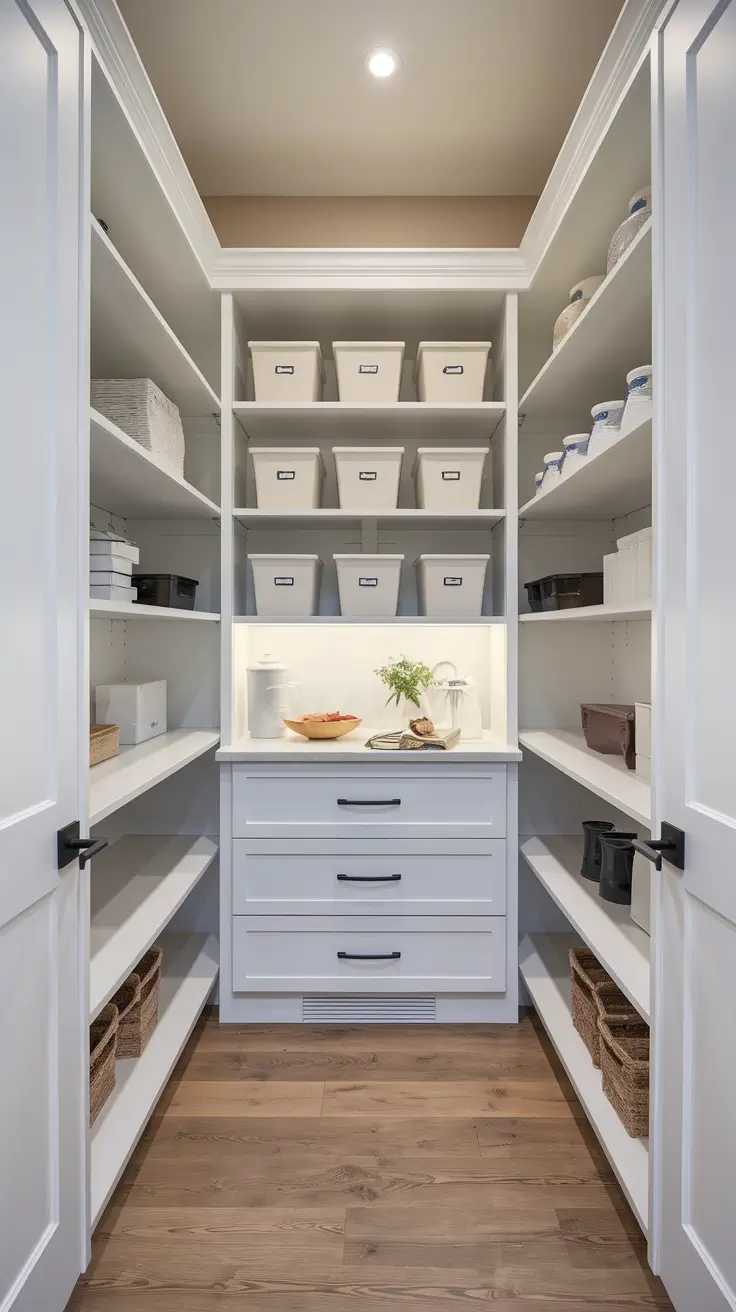
I pair freezers with heat-resistant finishes and manufacturer-recommended vent gaps. Between refrigeration units, tall shelving stores baking tools and bulk items. Safety features like drain pans, anti-tip brackets, and dedicated circuits are mandatory. For combined fridge-freezer setups, split columns or drawer combinations balance mass and maintain aisle comfort.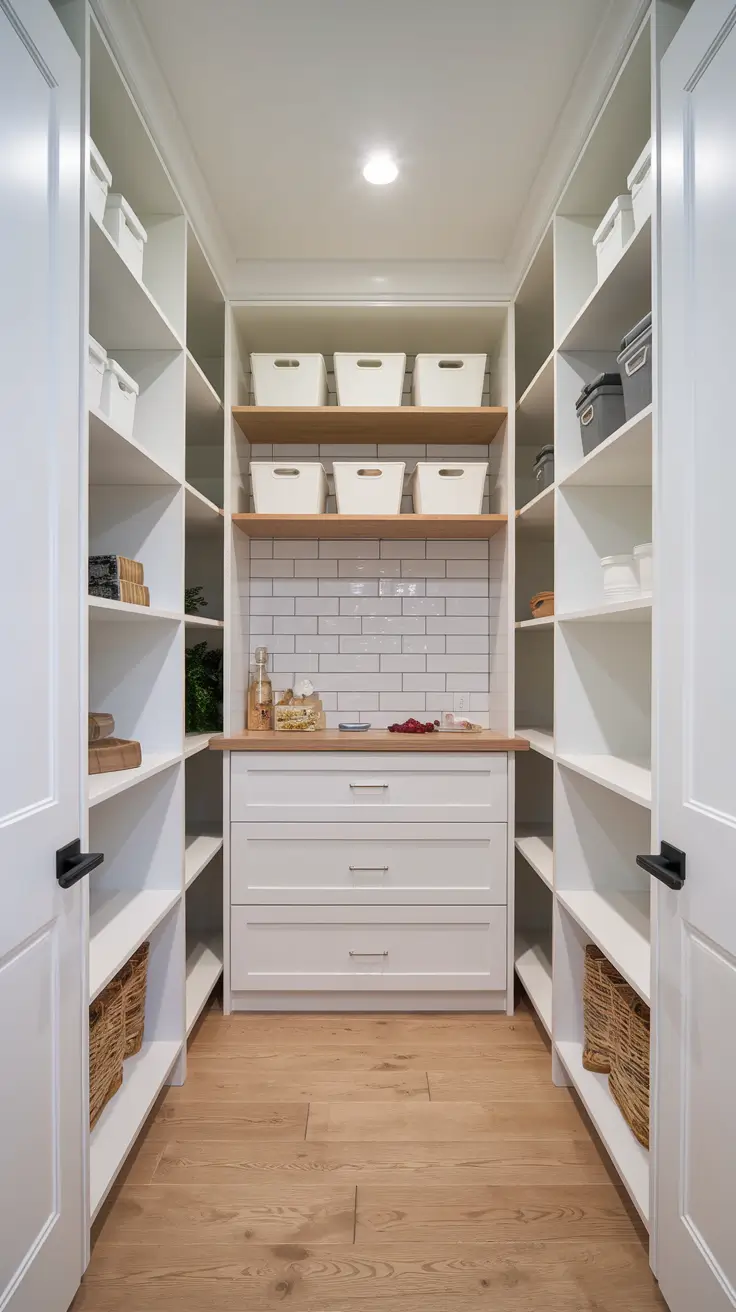
Drawers offer quick access without blocking aisles, ideal for families. Adding a shallow countertop above undercounter units provides staging space. Quiet, energy-efficient models are preferable near living areas.
Including a thermal management plan and specifying shading or low-e glazing for windows exposed to direct sunlight protects appliance performance and energy efficiency.
As an Amazon Associate I earn from qualifying purchases.