Folding Clothes Closet 150cm(B): Where it fits in your room
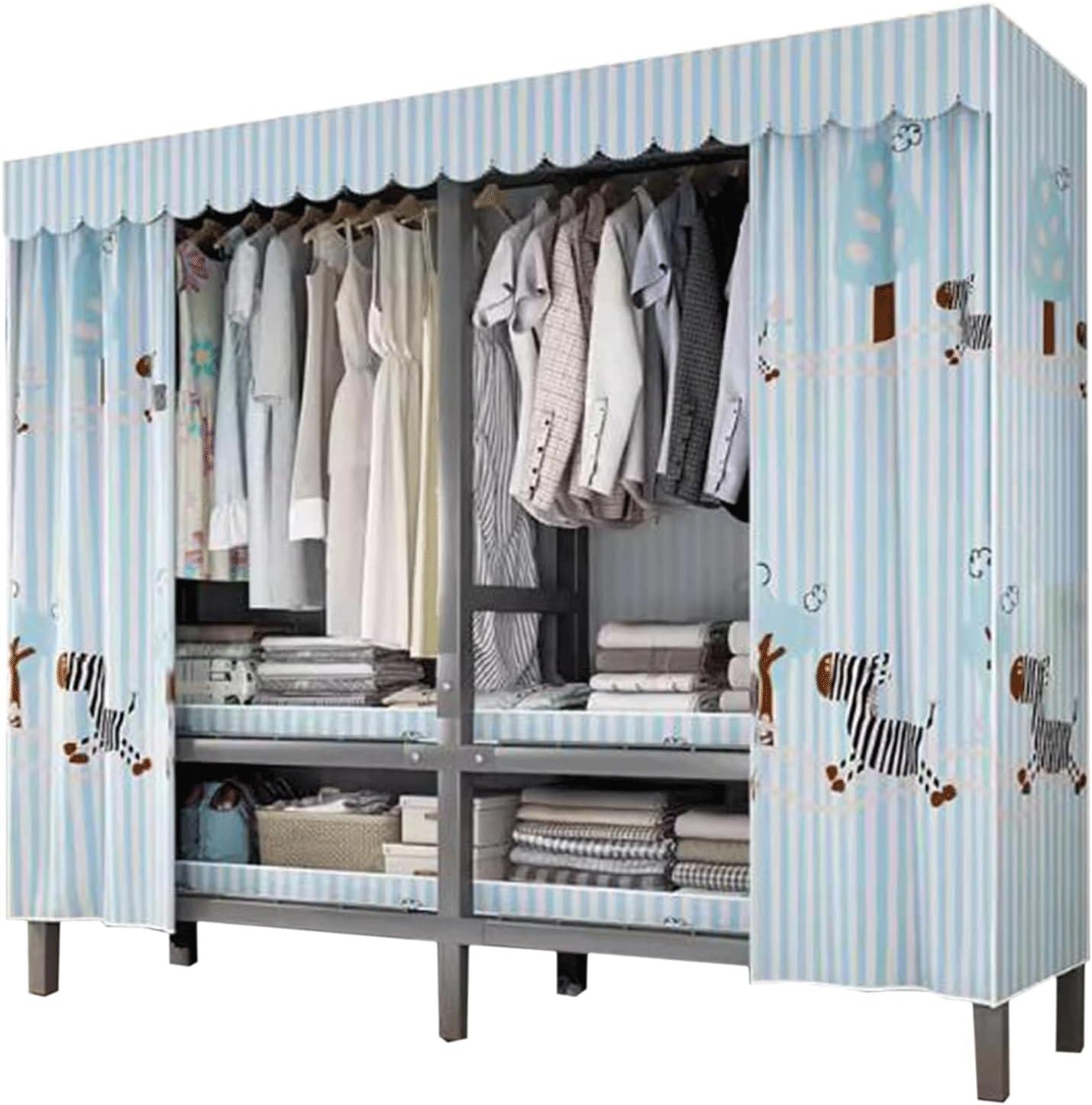
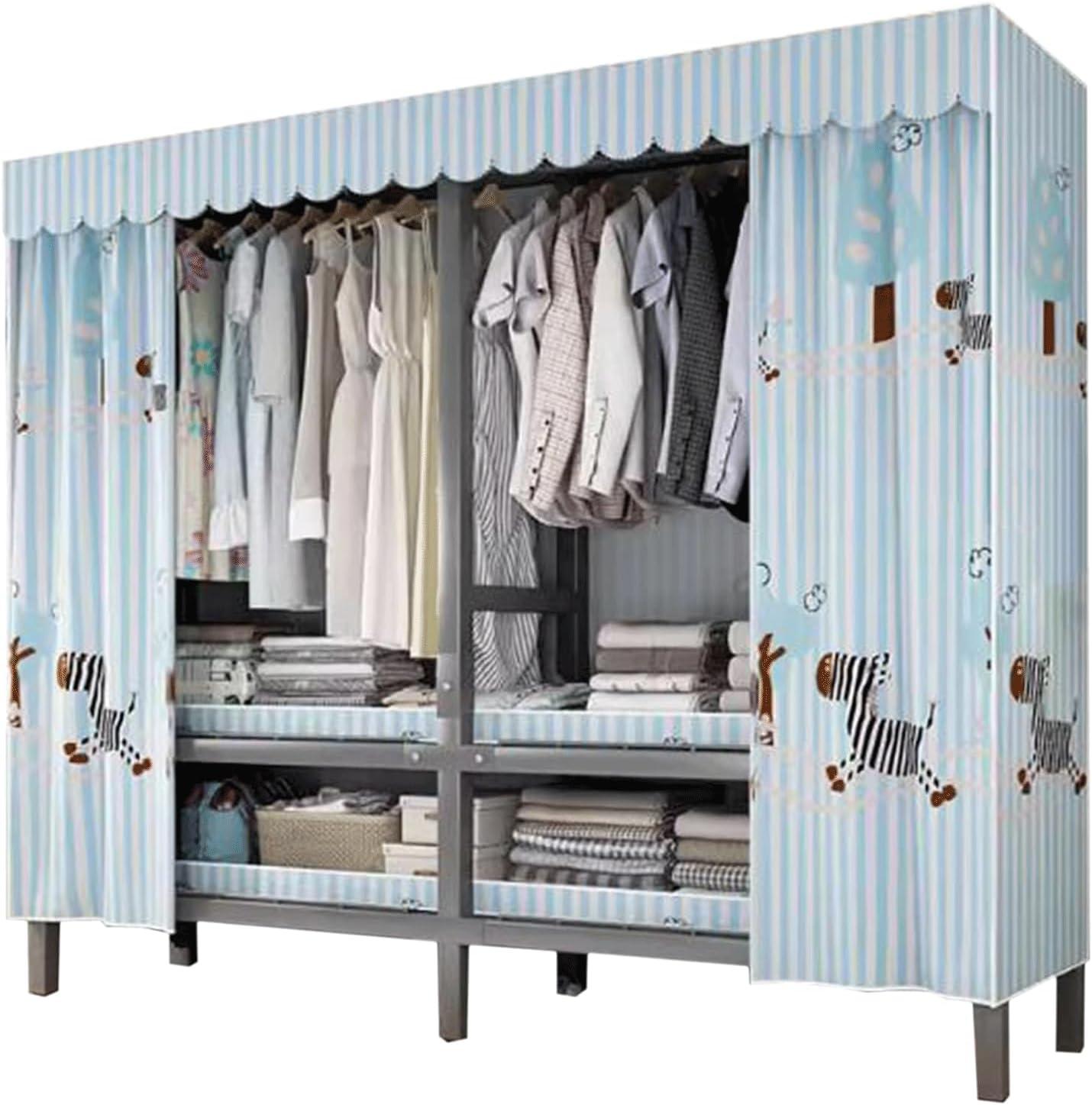
You notice it more than see it: a soft, boxy presence that reads like fabric from across the room and reveals metal at the seams. The Folding Clothes Closet 150cm (model B) — a friendlier name than the full listing — stands roughly shoulder‑high and gives the corner a modest visual weight.slide your hand over the cover and the printed cloth has a faint,fibrous texture; peel back the curtain and the frosted iron tubing feels cool and unexpectedly solid beneath your palm. During setup you observe a couple of tool marks, yet the frame clicks into place and the curtain glides with a low, practical swoosh. In everyday light it changes the room’s rhythm: not ornate, just quietly present.
A first look at the folding metal wardrobe and what you notice when you open your box
You lift the lid and the first thing you notice is how compact everything has been folded to fit the box. A wrapped bundle of fabric sits on top, the printed surface creased from packaging; when you unfold a corner you can see the pattern and feel the cloth is thicker than a thin sheet, a little stiff where it was folded. Under that, metal tubes are bundled together, their frosted finish catching the light through the plastic. Ther’s a faint metallic tang in the air, mixed with a textile smell from the cover. Small protective caps on the pipe ends and lengths of tape holding groups of pieces together are easy to spot if you shuffle things around a bit.
You spread the contents out and the parts begin to read like a simple puzzle: curved or straight pipes stacked together, several flat panels or slats wrapped in paper, a curtained cover with a zipper or curtain opening, and a small sealed bag of connectors and screws. The manual lies on top with basic diagrams; flipping it open shows the order of steps more than detailed instructions. As you handle pieces you find yourself smoothing the fabric, checking how smoothly the curtain tracks move, and fitting a connector to a pipe to see how snugly things slot together.Some creases in the fabric relax after a few tugs, and a couple of plastic connectors have a faint smell of molding. Overall the unboxing feels like laying out the components for a rapid, hands-on assembly.
| Item | What you typically find |
|---|---|
| Fabric cover | Folded, printed, slightly creased |
| metal tubes / frame pieces | bundled, frosted finish, with protective caps |
| Flat panels / shelves | Wrapped, stacked flat |
| Connectors & hardware | Small sealed bag, screws and plastic joints |
| Manual | Simple diagram-style instructions |
How the frame, connectors and cover pieces come together when you start assembling it
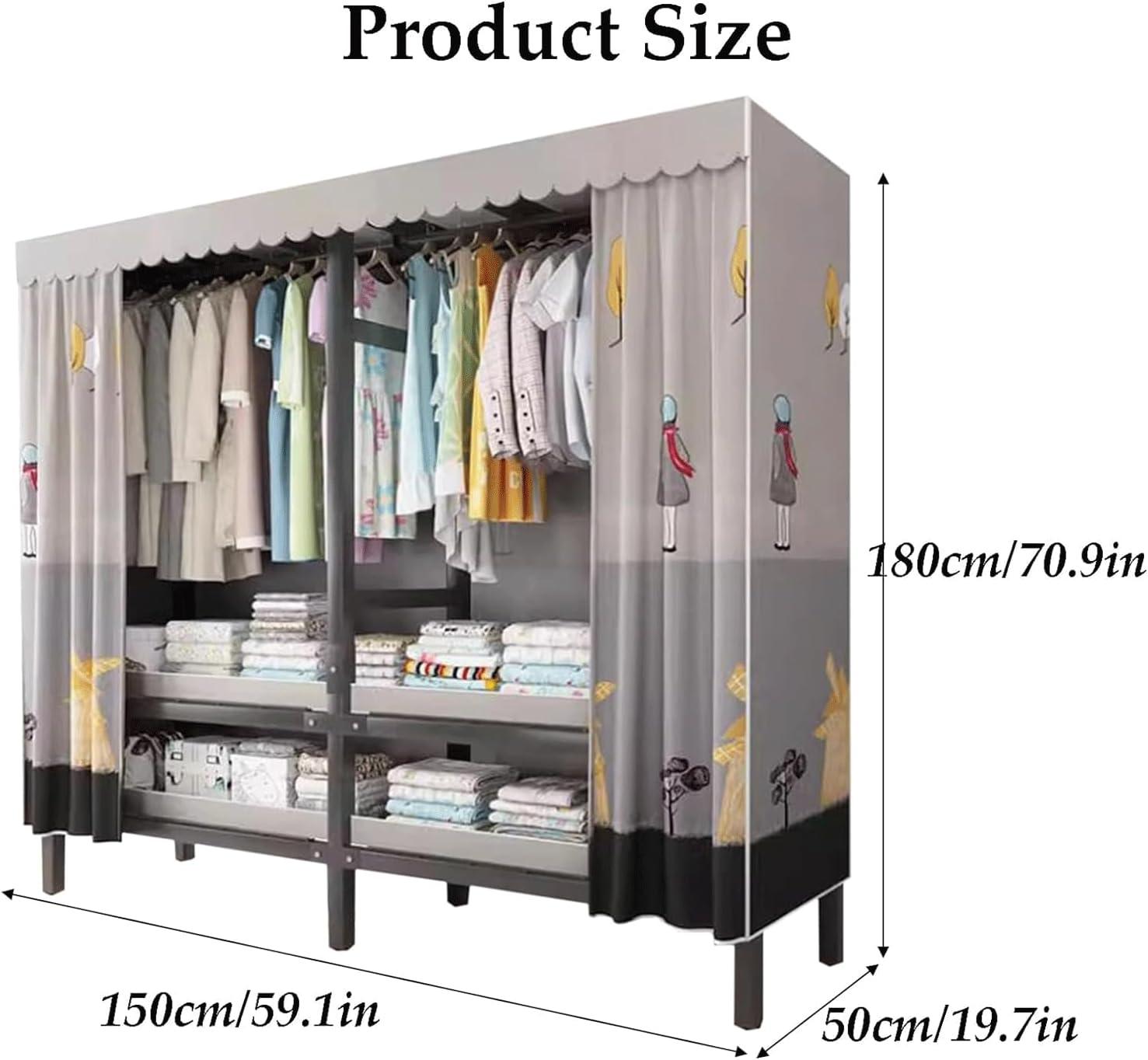
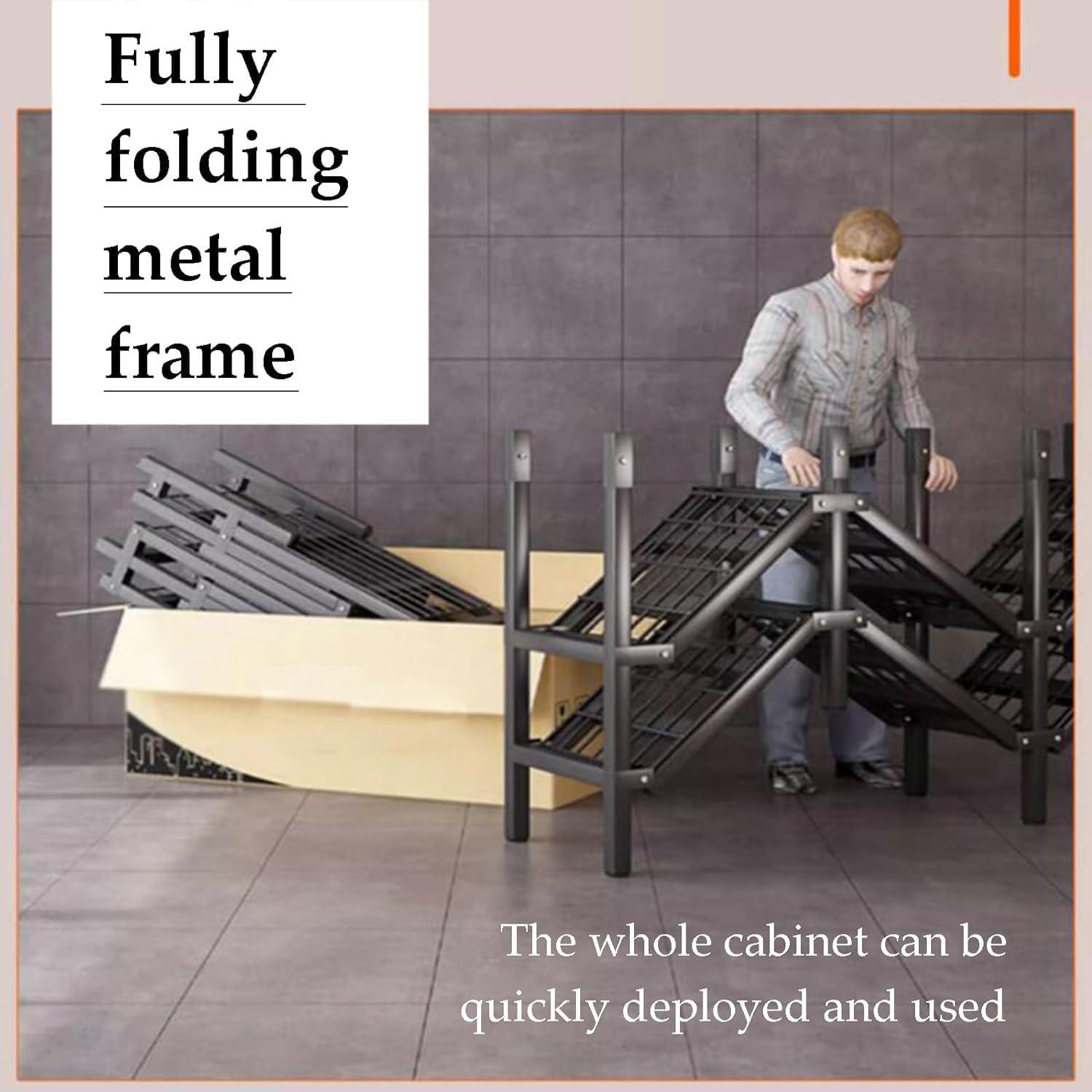
When you start putting the pieces together, the metal tubes feel surprisingly rigid and cool to the touch; as you slide a horizontal bar into a plastic connector it tends to seat with a soft snap or a slight resistance before giving. The connectors accept multiple tubes at once, so the frame gradually takes shape in small stages — a rectangle here, a vertical post there — and the structure will wobble a little at first until the remaining crossbars are pushed fully home. You’ll find yourself nudging and rotating pipes to coax pins into their holes; for some joints the alignment needs a brief second look before everything locks in place.
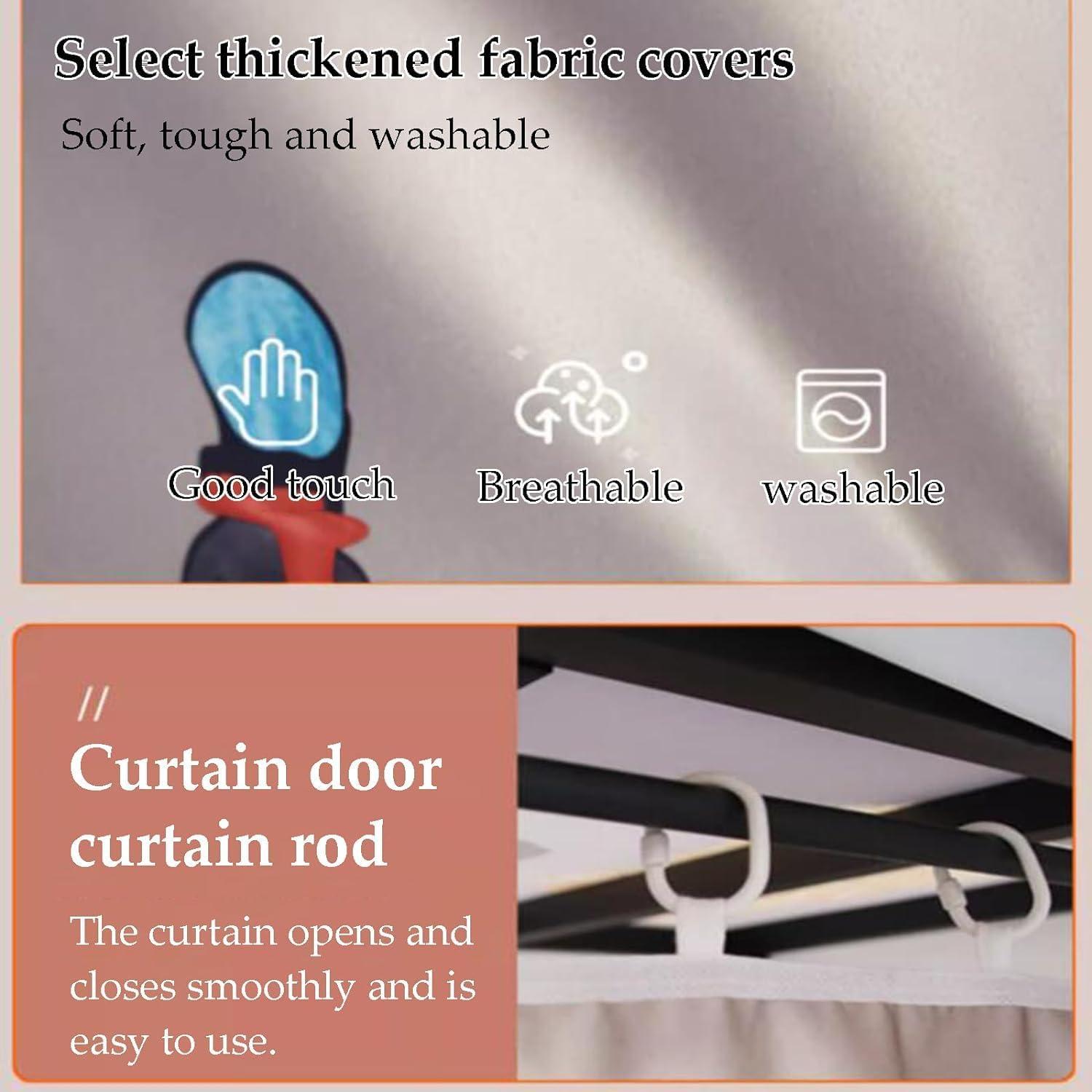
The cover comes into play once the skeleton stands.It slips over the assembled frame more like a loose sack than a tailored jacket, and you’ll notice the printed fabric bunching at corners until you smooth it down and guide the seams over the top and base. Curtain-type openings slide along the rod and the hanging rail drops into place, often producing a small change in tension that pulls the fabric taut across the front. Velcro tabs or fabric flaps tuck around connectors and edges; as you press them closed the whole unit firms up and the initial looseness tends to disappear. Small adjustments — shifting a seam, smoothing a fold, nudging a connector — are common while things settle into their final positions, and the cover may show faint creases that relax after a few hours of use.
What the metal, joints and zips feel like as you handle the parts
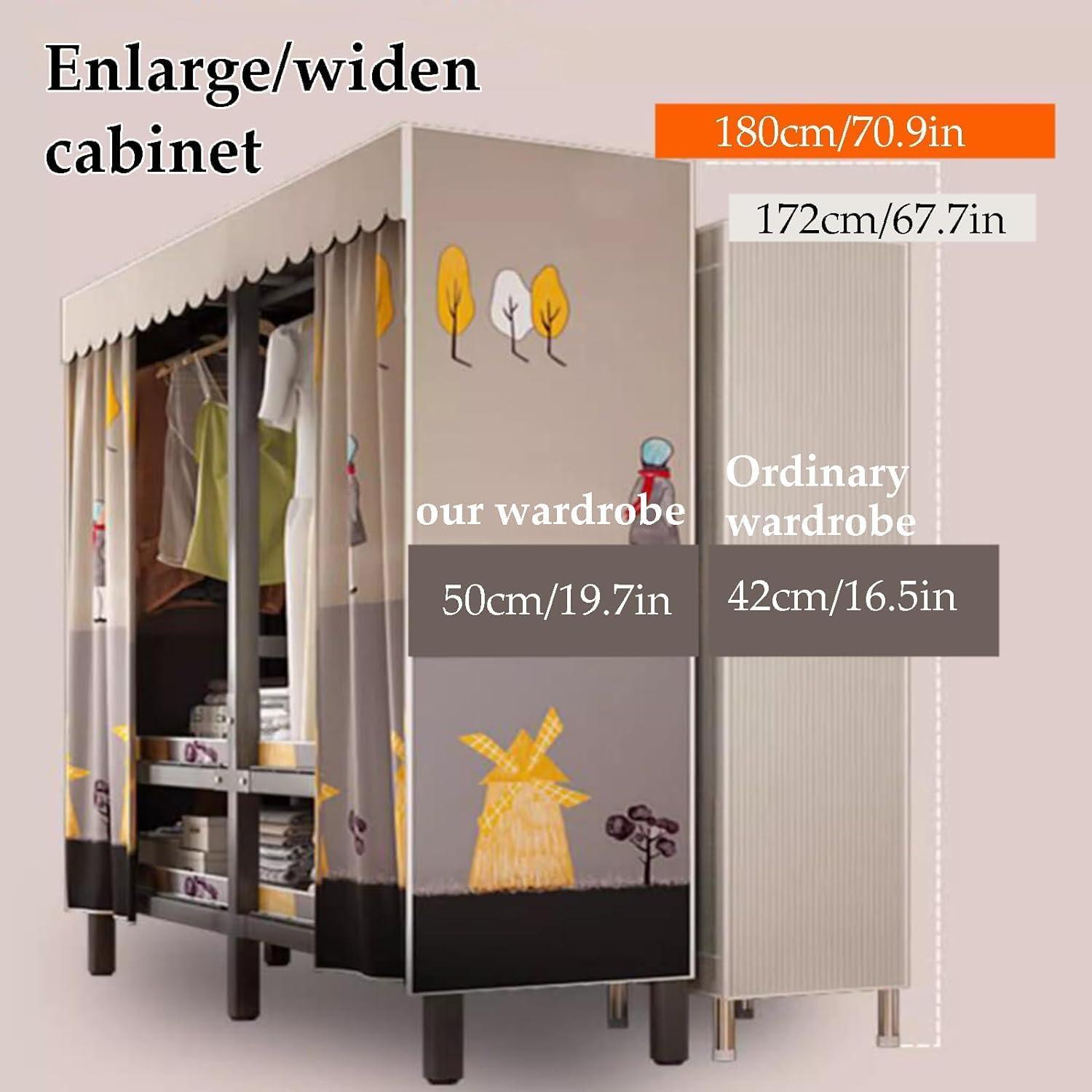
When you lift a frame piece, the metal comes across as cool against your palms, with a slightly frosted texture that keeps it from feeling glassy or slippery. Sliding one pole into another tends to require a decisive push; there’s a faint give as the parts seat together and an audible click on the final engagement. The ends and joins feel rounded rather than sharp, and you’ll sometimes catch your fingertips on tiny seams or paint ridges as you line things up — the sort of small friction that invites a quick re-grip or a gentle nudge to settle a post fully home.
The joints themselves have a plastic-into-metal feel when you handle them: a firm resistance at first, then a softer click as tabs snap into place. Once connected, some of the connector points allow a little lateral play when you wiggle the assembled frame, which you notice as a light movement under your hands. The zips on the cover glide with a measured smoothness; the slider pulls easily but can pause briefly if the fabric bunches against the teeth, so you find yourself smoothing the cloth with your thumb before closing. handling the parts is tactile and a bit hands-on — precise when parts align, slightly fussy when fabric or seams interfere.
| Part | How it feels as you handle it |
|---|---|
| Metal tubes | Cool, slightly textured, needs a firm push to mate; rounded edges with occasional seam catch |
| Joints/connectors | Initial stiffness then a soft snap; some lateral play once engaged |
| Zippers and sliders | Generally smooth pull, can snag if fabric bunches; tape is flexible and a bit bulky at stops |
Measured dimensions and how many garments and hangers you can fit along the rail
Measure the rail as you use it rather than only reading the external length: the hanging bar runs nearly the full width of the wardrobe, but the frame fittings and end caps take up a small amount of space. For the 150 cm model you’ll typically have about 144–148 cm of straight, usable rail when the poles are slotted and the fabric cover is in place; shorter and longer variants follow the same pattern (a few centimetres lost to the frame at each end).
The number of garments you can actually hang depends more on hanger thickness and the bulk of each item than on the external dimensions. Thin, slimline hangers let you squeeze in a lot more pieces, while wooden or padded hangers and winter coats take up several times the space. You’ll also notice that shirts and blouses slide closer together over time, so the practical capacity can feel different after a few days of moving items around.
| Model length (external) | Approx. usable rail | Slim hangers (~1.5 cm each) | Standard plastic hangers (~2.5 cm each) | Bulkier coats/wooden hangers (~4 cm each) |
|---|---|---|---|---|
| 107 cm | ~103 cm | ~68 hangers | ~41 hangers | ~25 garments |
| 126 cm | ~122 cm | ~81 hangers | ~48 hangers | ~30 garments |
| 150 cm | ~146 cm | ~97 hangers | ~58 hangers | ~36 garments |
| 170 cm | ~166 cm | ~110 hangers | ~66 hangers | ~41 garments |
| 203 cm | ~199 cm | ~132 hangers | ~79 hangers | ~49 garments |
Those figures are approximate and assume the rail is used along its straight length with hangers placed shoulder-to-shoulder. Accessories such as trouser clips, cascading hangers or multiple garments per hanger will change the counts quickly, and the curtain overlap at the front can make the outer few centimetres less convenient to reach. In everyday use you’ll find yourself nudging items to balance space between frequently worn pieces and those kept for occasional use.
Where you might position it in your bedroom, hallway or laundry and how it occupies the room
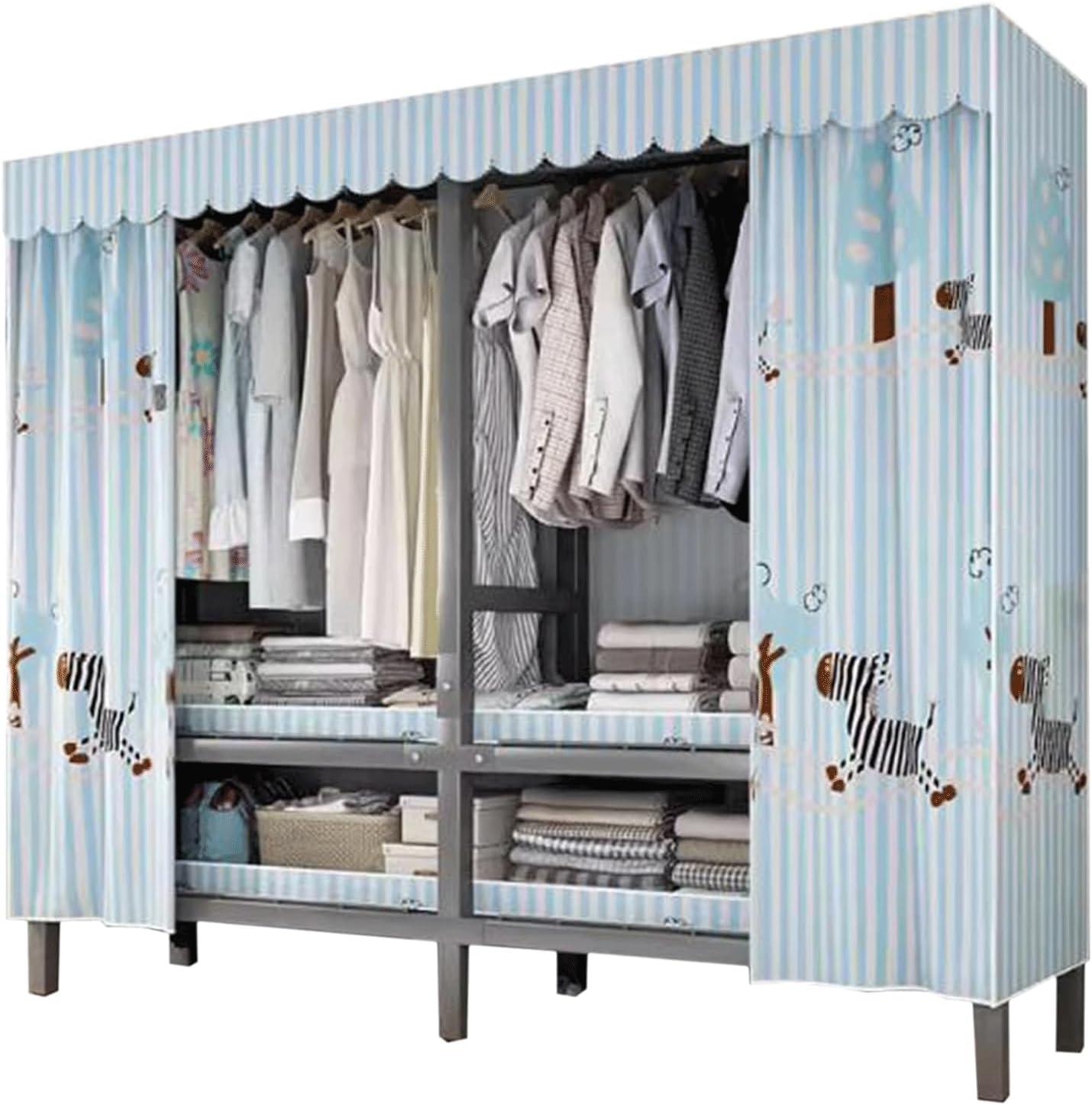
In a bedroom it commonly stands against a free wall or tucks into a corner, reading as a vertical block rather than taking over floor space. When hung with clothes and a couple of items on the top shelf, the outer fabric shifts with movement and the curtain tends to billow slightly when opened; users often smooth the cover or tug the curtain back during daily use.placed beside a dresser or at the foot of a bed, it carves out a dedicated storage lane that makes other surfaces feel more open while visually anchoring that side of the room.
Set in a hallway, the unit occupies lateral flow more than headroom — it usually hugs the wall and becomes an informal cloak area. The printed fabric can catch the eye as people pass, and the curtain opening and closing creates a small, recurrent motion in the corridor. Because the frame is relatively light, it’s moved a few inches now and then to clear doorways or create a bit more walking space; that shifting can leave faint impressions where the feet sit against the floor or where the cover brushes baseboards.
In a laundry space it often functions as a staging zone: hanging damp garments, holding folded items on the top, or buffering the work surface from clutter. When loaded with heavier textiles the fabric cover and hanging rod show subtle sagging and the whole unit can settle a little, which prompts repositioning or a quick adjustment of the curtain. Overall it occupies the room vertically, freeing floor area for baskets and sorting, while the outer cover and seams pick up the small, habitual tugs that come with daily laundry routines.
| Room | How it typically occupies the room |
|---|---|
| bedroom | Creates a vertical storage lane against a wall or in a corner; curtain movement and fabric smoothing are part of daily use. |
| hallway | Edges the passage as a cloak/drip area; requires slight clearance for flow and is occasionally nudged to clear doors. |
| Laundry | Acts as a staging and drying spot; vertical profile preserves floor space but may show slight settling under heavier loads. |
How this folding closet measures up against your everyday expectations and space constraints

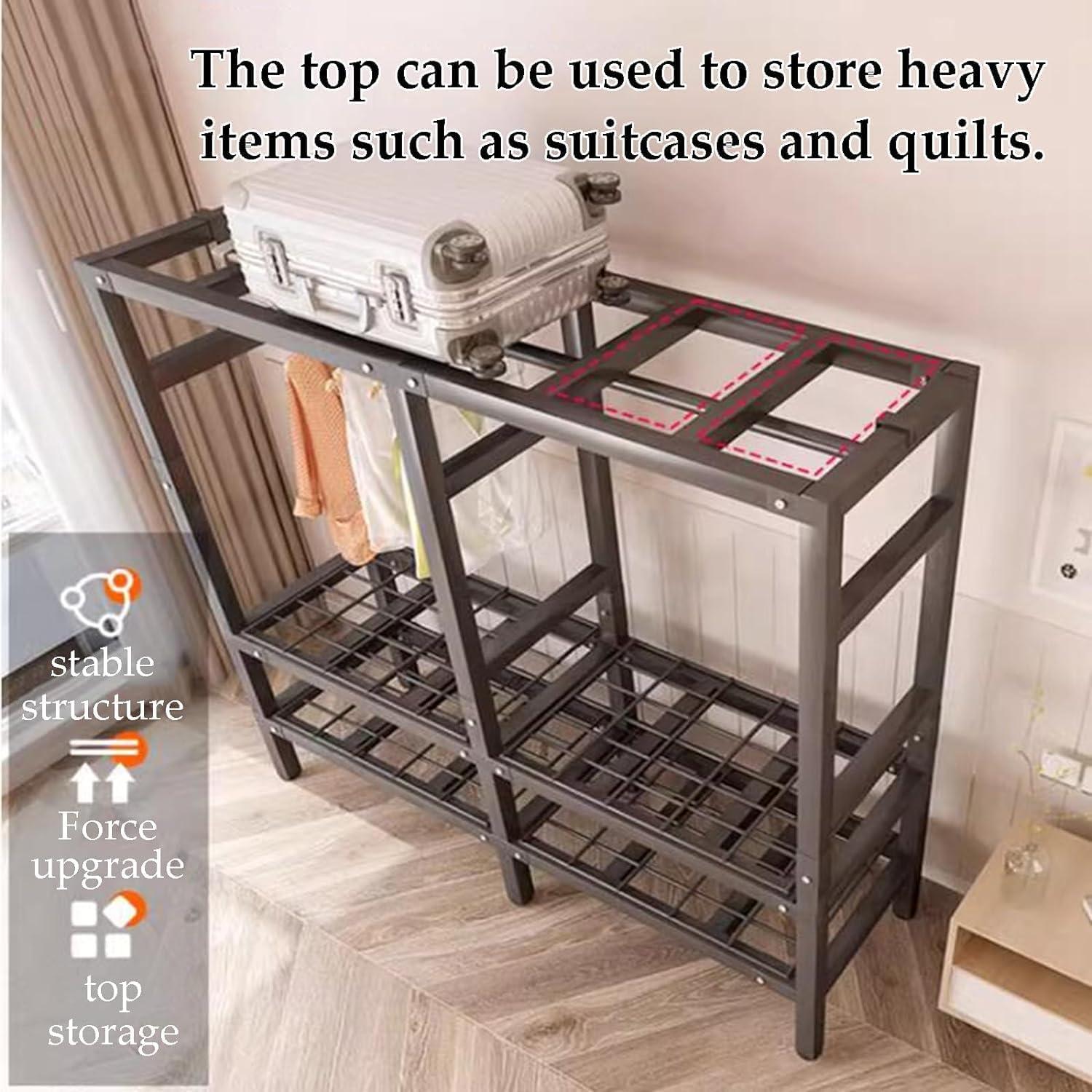
Seen in daily use,the closet tends to behave like a compact freestanding unit that finds its place against a wall or in a narrow corner without demanding constant rearranging. Unfolding and settling into position usually takes a moment; once upright, the frame stays put but will show small shifts if bumped during busy mornings. The curtain glides open and closed in a way that feels familiar — soft folds appear where garments are moved around, and the surface can crease slightly when the shelves are loaded or the door is swept past in haste.Placing bulky items on the top often works, though the whole assembly can feel a touch more compact when those items are in place.
Daily interactions sketch out a few trade-offs that occur with common use patterns.When lightly loaded, the unit moves around with minimal effort and slips into tighter gaps; as hanging space fills and shelves take on more items, the profile becomes visibly fuller and the cover may billow a little where seams meet. during quick adjustments — shifting a sleeve back into place, smoothing a curtain, nudging a suitcase — the piece behaves predictably rather than rigidly: it settles after the small corrections and keeps functioning without requiring repeated fiddling.
| Typical state | Observed behavior |
|---|---|
| Lightly loaded | Easy to reposition; maintains a slim presence |
| heavily loaded | Appears fuller; cover shows creasing where items press against it |
View full specifications, sizes, and color options
How you can care for the cover and pack the frame when you move or store it
Before you pack,take a moment with the fabric cover: unzip or roll back the curtain and give the whole thing a quick shake to loosen dust and any wayward hanger scraps. If there are visible spots, blot with a damp cloth and let the cover air out completely — folding damp fabric tends to trap moisture and can leave a stale smell for a while. When you fold, follow the existing seams and carrier creases rather than forcing new folds; rolling the curtain portion loosely can reduce hard creases, while tucking the printed side inward helps protect the pattern from scuffs. Small habits matter here: smoothing the fabric with your hands as you fold,tucking loose ties or zippers inside,and leaving a corner open to ventilate during storage all make the cover settle more neatly.
the metal frame packs differently. Empty the unit and remove any removable shelves or rods so you can collapse the frame without catching fabric. Line up the tubes and folding joints as they sit when folded down; a light strap or cable tie keeps them from opening and stops them from rattling in transit. Place any small plastic connectors, caps or screws into a labelled bag and fasten that bag to a leg or inside the folded cover so pieces don’t wander off. When you load the folded frame into a box or against a wall, add a thin layer of padding between metal and fabric to prevent abrasion — that padding can be a towel or folded piece of the cover material. Expect the frame to shift a little in transit and for the cover to develop a few soft creases; in most cases a quick shake and a little smoothing when you re‑erect it brings things back into place.
| Component | Packing tip |
|---|---|
| Cover | Air out, spot-clean, roll or fold along seams, tuck ties inside, store in breathable bag or box |
| Frame | Collapse with joints aligned, strap or tie closed, pad between metal and fabric |
| Small parts | Collect in a sealed bag, label, and attach to the frame or put inside the cover pocket |
how it Lives in the space
Over time you notice it settling into a corner, its presence measured more by daily routines than by first impressions; the folding clothes Closet Metal Iron Wardrobe Closet Portable Closets for Hanging Clothes Easy to Assemble Saves Space Closet, 150cm(B) becomes part of the roomS quiet backdrop. As the room is used, small habits form around it — where you tend to hang a shirt, the slight shuffle when you reach the rail — and its place in the flow of movement reshapes the little edges of the space. Surface wear shows up as tiny scuffs and a softening of the finish where hands touch, and the way garments sit on the rail becomes an ordinary, familiar part of daily routines. In regular household rhythms it blends in and stays.
As an Amazon Associate I earn from qualifying purchases.