Grand patio 5-Piece Set, 4-seat swivel set for your patio
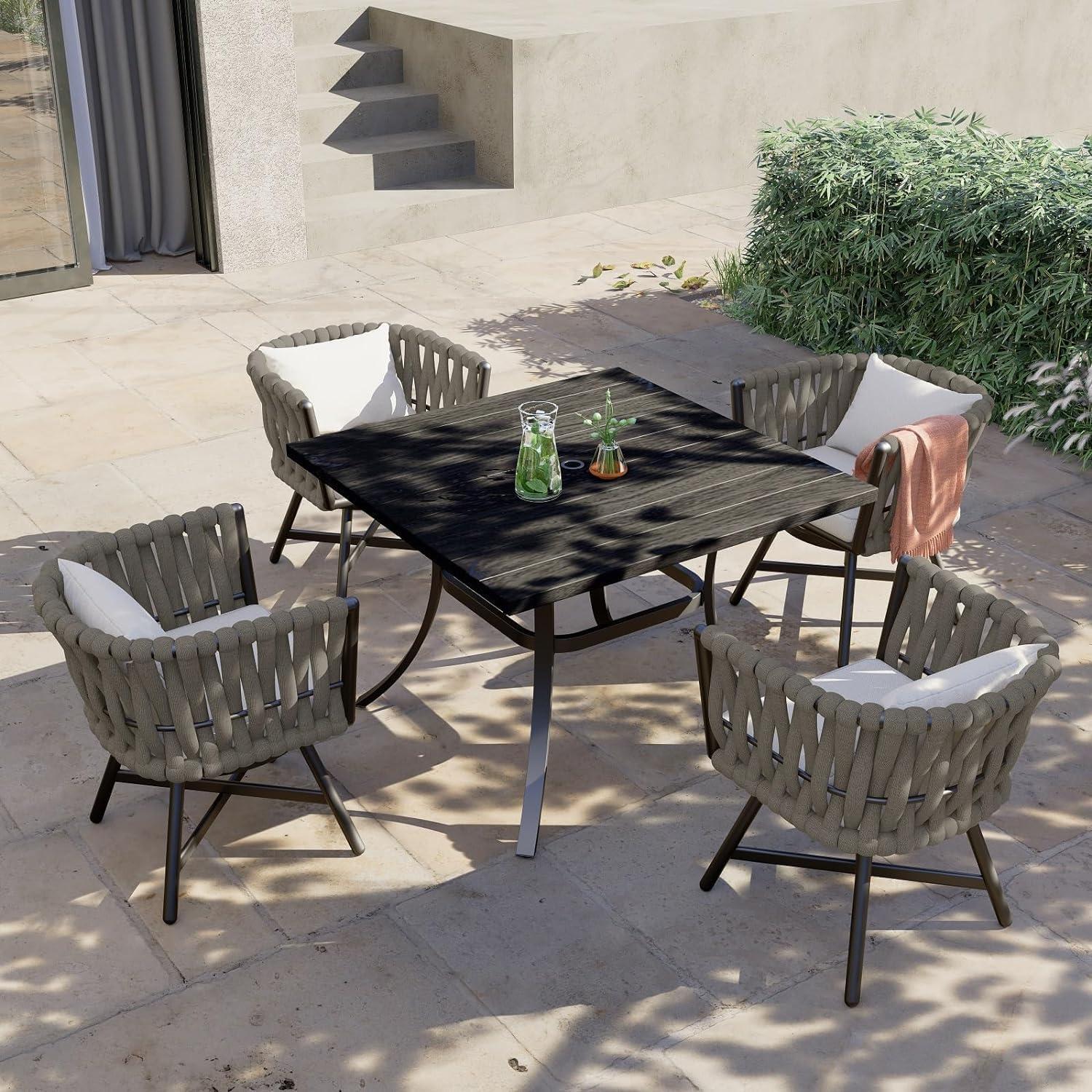
You notice the Grand patio 5-Piece Outdoor Dining Set the moment you step outside — a square faux-wood table catching late-afternoon light,surrounded by four rope-wrapped swivel chairs. Up close the open-weave jumbo rope feels slightly textured under your palm and the cushions give a dense,springy welcome; the tabletop’s hand-brushed grain settles into a low,natural sheen.The powder-coated legs lend visual weight, so the group reads as grounded rather than floaty, and when you swivel a seat the rotation is smooth and effortless. At this scale the set feels like an everyday dining cluster—unassuming, tactile, and quietly present in the room.
A quick look at what you get in the Grand patio five piece outdoor dining set for your patio
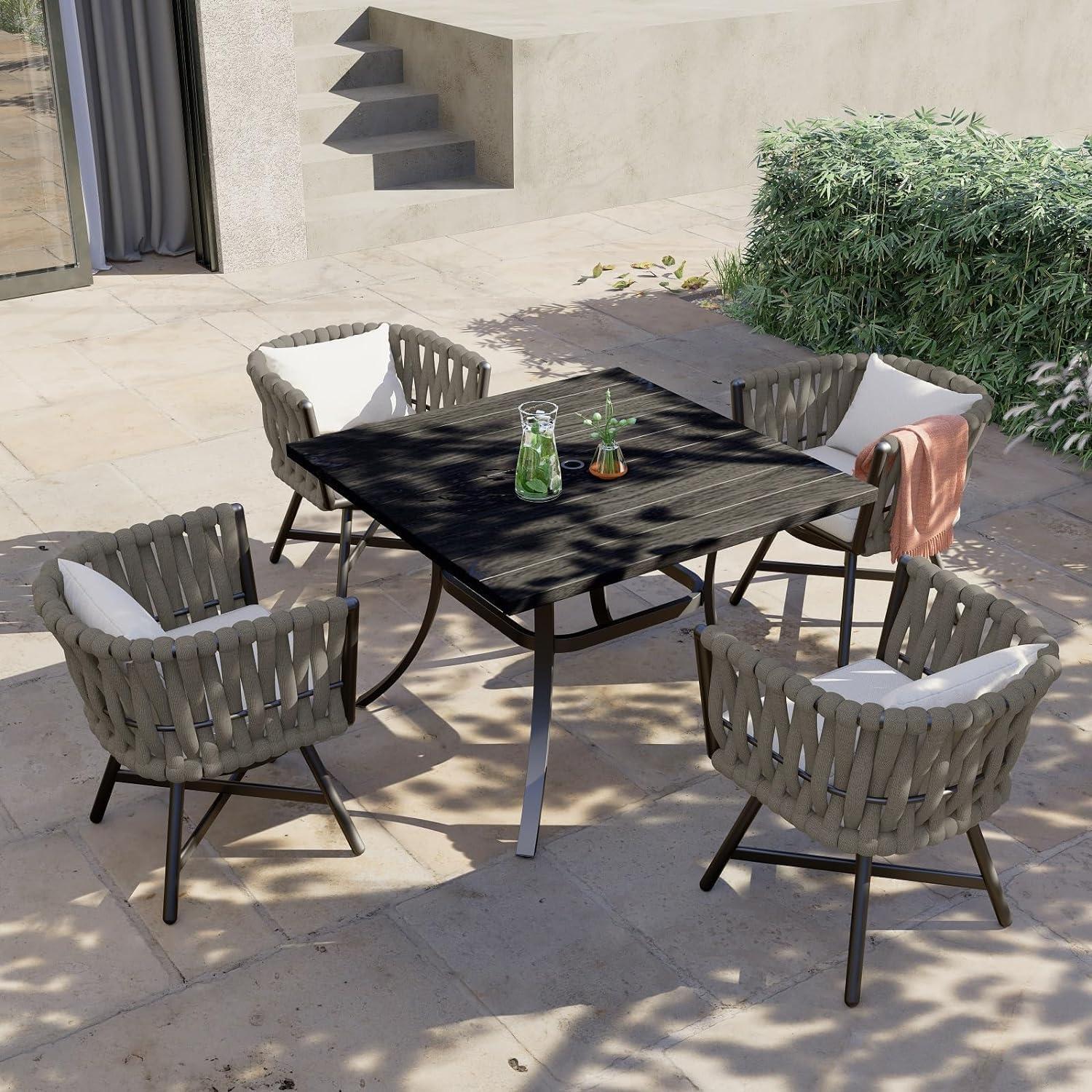
When you open the boxes, what you actually handle is immediate: four rope-woven swivel chairs with seat cushions and a square dining table with a faux woodgrain top and an umbrella hole. The chairs arrive mostly assembled; the rope weave drapes around the frame and the cushions sit snugly against the back — you tend to smooth them out and zip the covers closed as part of settling them in. Each seat turns a full circle, so you can pivot to reach for plates or chat across the table, though the motion calls for a steadier stance than a fixed chair. The table top shows the hand-brushed texture of the faux woodgrain when you run your hand across it, and the center hole takes a standard umbrella pole without much fuss.
| Item | Count |
|---|---|
| Swivel rope-woven chairs (with cushions) | 4 |
| Square dining table (faux woodgrain top,umbrella hole) | 1 |
| Hardware,tools,and instructions | Included |
| Shipping boxes | 3 (may arrive separately) |
As you assemble and use the set,you’ll notice small,everyday adjustments — zipping cushion covers back on after a wash,nudging a chair into place,or centering an umbrella pole — that define what “getting” the set really looks like in your outdoor routine. Also, handle the swivel motion with care to avoid a tip-over, and keep the pieces away from unsupervised children.
How the light gray brown rope and faux woodgrain table read on your terrace
On a terrace the light gray brown rope reads as a quiet,mid-tone presence rather than a strict gray or a warm brown.In direct sun the open-weave rope catches highlights along the raised strands, so the chair edges can look almost silvery against the shadowed recesses; under softer, overcast light the same weave pulls closer to a muted taupe. You’ll find yourself smoothing cushions and brushing fingers along the rope without thinking much about it—the texture invites small adjustments and those gestures change how the light plays across the seats.
| Light | How it reads |
|---|---|
| Morning/Low sun | Warmer undertones come thru; rope appears softer and slightly brownish |
| Midday/Bright sun | Brighter highlights on the rope; faux woodgrain shows more grain contrast |
| Overcast/Evening | more uniform, cooler gray tone; textures blend with slate or concrete flooring |
The faux woodgrain tabletop reads as a restrained, worked surface—seen up close the hand-brushed pattern suggests warmth, but from a few steps back it flattens into a gentle wood look with a light sheen. When an umbrella is raised, the table’s grain tends to mute and align visually with other shaded furniture; without shade the tabletop can pick up reflections from planters and glass, wich changes the perceived warmth over the course of a day. against stone, pale tiles, or lush green plantings the set frequently enough oscillates between blending in and providing a subtle contrast, depending on where you place it and how you move the chairs around.
What the frame, wicker rope and tabletop material tell you about how it’s built
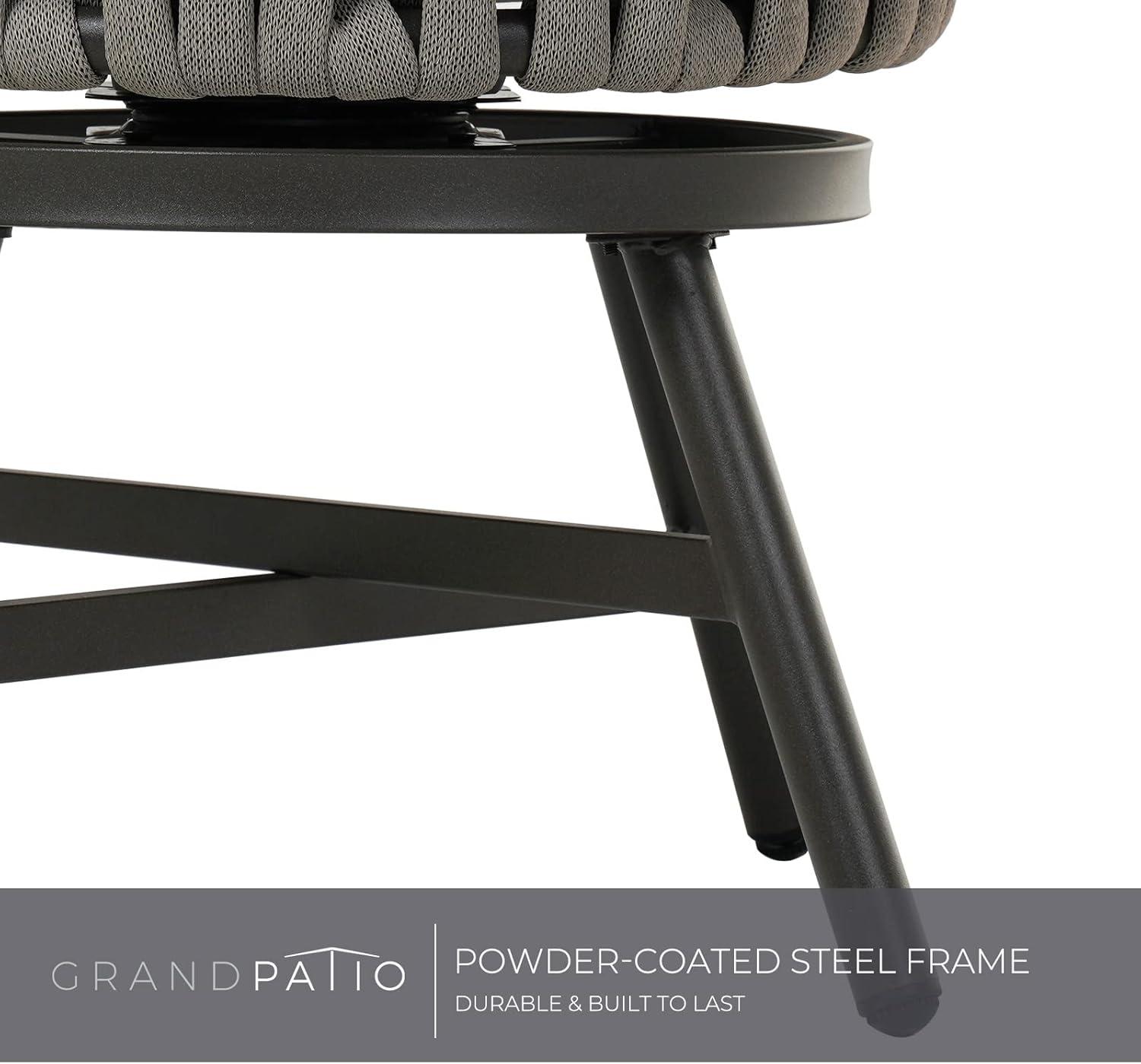
When you pick up or shift a chair, the metal frame becomes immediately obvious: there’s a compact, obvious backbone under the wicker that holds the shape and carries most of the weight. The finish on that metal reads like a protective coating rather than bare steel — you’ll notice faint seams at welds and bolt clusters where parts meet,and those connection points are where the structure feels most concentrated when you tilt or carry a piece. As you settle, your subtle habit of scooting back or straightening the cushion highlights how the frame keeps the seat rim taut; the rope is woven around that rim, so the frame dictates the overall silhouette more than the rope does.
The wicker rope itself is open and chunky enough that you feel a little give when you press into it, a springiness that comes from the weave and the way it’s anchored to the frame. Up close you can see the rope tucked and tied at key intersections, and when you run a hand along the arm or back the pattern alternates between tighter and looser loops—those shifts reveal where the rope is doing most of the comfort work versus where it’s mainly decorative. The tabletop’s faux woodgrain finish reads like a thin, worked surface rather than solid timber: when you set plates down you notice a subtle texture and a non‑porous surface, and the edge treatment and the way it sits on the support frame make it clear the top is routed to mate with the base rather than being one monolithic slab. Small details — a seam where two pieces meet, a sleeve around the umbrella opening, the way the top slightly rocks if pushed at a corner — point to a construction that combines lighter surfaced materials with a load-bearing understructure.
| Component | What you feel or see while using it | What that implies about construction |
|---|---|---|
| Frame | Concentrated rigidity at joints, visible welds/bolts, overall backbone feel | Load carried by a metal skeleton; connections concentrate stress and transfer loads to legs |
| Wicker rope | Noticeable give in the weave, tucked ends and knot points, alternating tight/loose loops | Comfort and shape come from tensioned weaving anchored to the frame rather than a solid shell |
| Tabletop | Textured, hand‑brushed surface appearance, edges and seams where it meets supports | Surface treatment over a lighter core; top is designed to mate to the frame rather than act as a heavy structural member |
How the swivel chairs feel when you sit: cushions, arm reach and movement
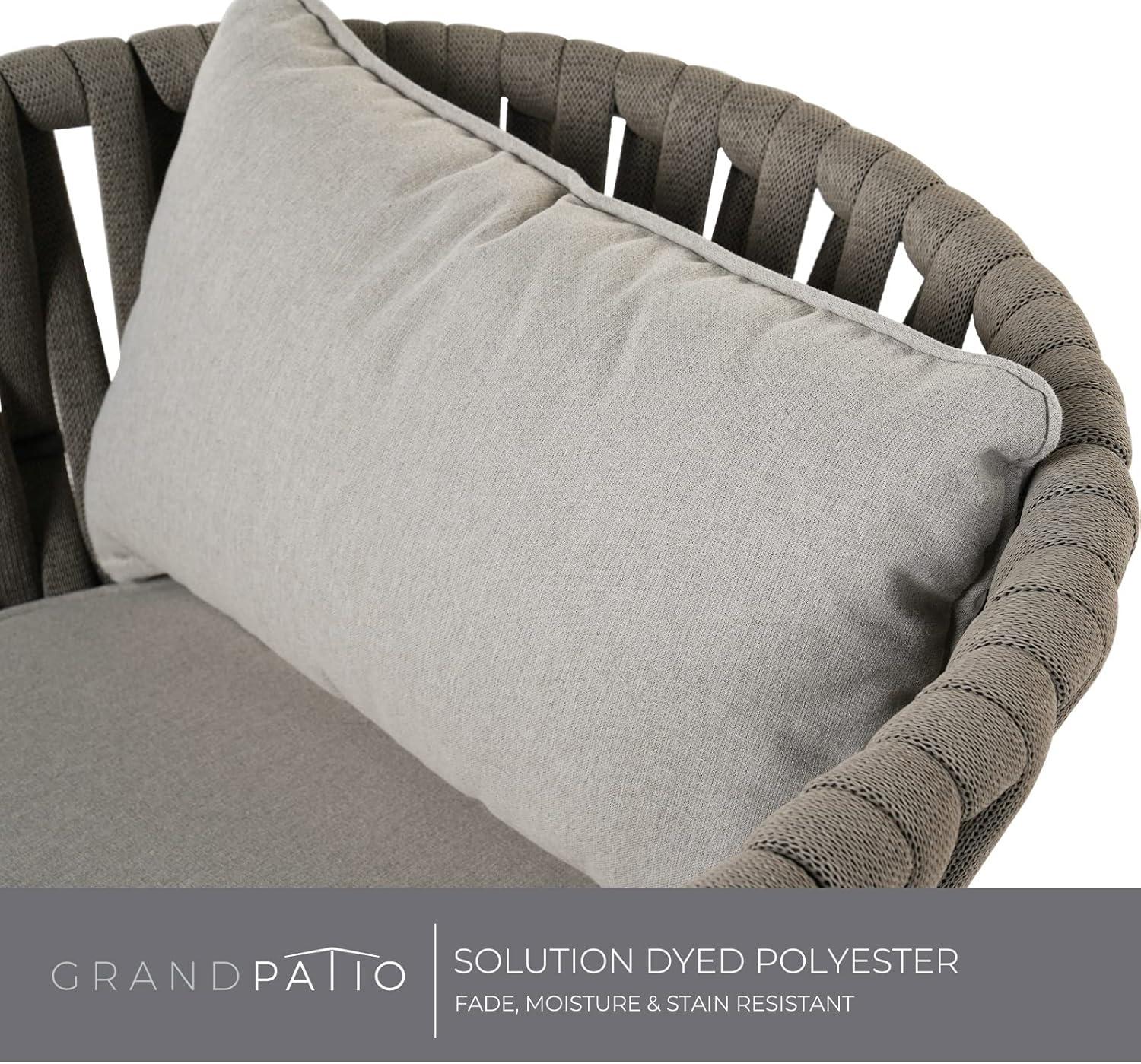
When you settle into one of the chairs the frist thing you notice is the initial give of the seat — it yields under your weight but doesn’t flatten out instantly. The cushion compresses enough to let you sink a little, then pushes back as you shift; over the first few minutes you’ll find yourself smoothing the cover or tucking a seam that has moved. The back cushion supports across the lower spine rather than enveloping you, so you end up sliding slightly forward or reclining a touch when you want more contact. The cover has a subtle texture beneath your palm, and the seat edge offers enough padding that your thighs rest on a soft surface without an abrupt hard edge beneath.
Your arms land naturally on the woven armrests and, from a sitting position, you can pivot your torso without having to stand. The rotation is steady and allows you to turn toward a companion or reach toward the table with only a small shift of your hips. There’s a modest resistance to the swivel so the motion feels controlled rather than loose; as you rotate you’ll frequently enough shift your feet or nudge the cushion back into place. If the chair sits close to the table you may notice the table surface moving into your reach as you lean, and small adjustments — angling your shoulders, sliding the cushion slightly — become part of the usual routine.
Where the table and four chairs will sit in your space: actual dimensions and clearance as you arrange them

The assembled group sits compactly: the square table measures 37″ on each side and, with the chairs tucked in, the overall footprint commonly reads close to that same 37″ × 37″ area. Because the rope-backed chairs slide partway under the tabletop, the outer edges of the woven arms and cushions often stick out a few inches beyond the table edge when pushed in, so the tightest possible footprint can vary by a couple of inches depending on how the cushions settle.
When the set is actually used for dining the spatial picture changes. Typical seating arrangements involve pulling each chair back for access and knee room; in many layouts that increases the occupied depth behind the table by roughly 20–30″ per chair. The chairs’ 360° swivel motion also needs clear space around each seat: rotation tends to stay within the chair’s own width but the rounded arm-and-weave silhouette can swing into nearby objects if there’s less than several inches of clearance.Observations over normal use show the cushions compress and seams shift slightly as people sit and turn, so clearances that look adequate while everything is static can feel tighter in practice.
| Condition | approximate footprint / clearance |
|---|---|
| Table alone (assembled) | 37″ × 37″ |
| Chairs tucked in | Close to 37″ × 37″, with 1–4″ overhangs where cushions or arms extend |
| Chairs pulled for seating (typical) | Add roughly 20–30″ behind each chair for knee/foot space |
| Clearance for swivel movement | Rotation generally contained within chair footprint but benefits from several inches of side clearance; occasional wider sweep when turning quickly |
The product instructions note care when swiveling to prevent tip-over and state the set is not intended for use by children. These are commonly observed considerations when arranging the group near railings, planters, or tight walkways, since movement and cushion settling change how the pieces occupy the surrounding space.
View full specifications and size details
How this set measures up to your expectations and space limitations

In everyday use the group tends to read as a compact four-place arrangement: the square table anchors the seating while the swivel chairs create small clear zones that rotate into and out of the circulation path. In most mid-size patios the chairs turn freely with a short sweep behind them; in tighter spaces the rotation can feel constrained, so occupants frequently enough angle the seats slightly or take a step back before turning. Cushions are smoothed and re-zipped after settling, and seams or rope weave shift a little when chairs are nudged into position.
| Typical setting | Observed behaviour |
|---|---|
| Compact balcony | Seating footprint fills much of the usable floor; swivels require deliberate movement |
| Average patio | Chairs rotate with room to spare; table remains the focal point without crowding |
| Larger outdoor dining area | Motion feels unrestrained and cushions are left relatively undisturbed after use |
Over time normal habits—shifting seats slightly to pass plates, smoothing cushions after sitting, or angling a chair to make room for passing traffic—become part of how the set occupies a space. These small adaptations tend to define the real-world fit more than static measurements, and they can change day to day as the outdoor layout or umbrella position shifts.
View full specifications, sizes, and colour options
Everyday handling on your patio: assembly steps, umbrella use, cleaning and seasonal storage
When you set the pieces out on the patio, you’ll find the work follows a familiar rhythm rather than a strict checklist. Start by unfolding boxes and laying hardware into small groups so you don’t paw through packets mid-build. The chairs assemble into place with a few bolts and the table top meets its base with hand-tightened fasteners; as you tighten, small nudges and adjustments are normal — seams settle, rope weave shifts a hair, cushions get nudged off-center and then straightened again. You’ll habitually sit in a chair once or twice during assembly to test rotation and alignment, and you tend to swivel carefully at first to feel the motion and avoid that tiny, sudden tip a chair can make if leaned into too abruptly.
Fitting an umbrella is a simple, on-patio moment: slide the pole through the tabletop opening, steady the pole with a base or by bracing it under the table, and then open the canopy. once it’s up, the umbrella changes how you use the set — you’ll rotate toward shaded spots, nudge cushions out of direct sun, or close the canopy briefly if a gust makes the table wobble. In most cases you’ll find the umbrella sits snugly but not immovably; on breezy days you notice how the whole arrangement asks for small adjustments, like shifting the base or temporarily closing the umbrella until wind eases.
Cleaning and seasonal stowage become part of the weekend routine more than a one-off project. Daily upkeep tends to be a quick wipe-down: sweeping crumbs from the tabletop, brushing off dry pollen, or giving the faux-wood surface a soft cloth and a mild rinse after a spill. The cushion covers unzip and come off with the small, habitual tug you do without thinking — you shake them out, spot-clean the removable covers, and let them air before zipping back on. By season’s end you’ll move from casual tidying to a short checklist of actions that keep the set ready for next use:
| When | typical action |
|---|---|
| After each use | Brush crumbs, fold cushions inward, smooth seams, and store small items |
| weekly in active season | Wipe tabletop, rinse frames if dusty, unzip and air cushion covers as needed |
| End of season / prolonged bad weather | Remove and store cushions indoors or in a dry box, close umbrella and stow or secure base, stack or cover chairs |
Over time you adopt small habits — smoothing cushion corners before guests arrive, tucking the umbrella pole a fraction off-center to balance shade, or easing bolts a touch if something feels stiff — that keep daily handling smooth. These routines make the set live with you on the patio rather than remain an object you only notice during heavy maintenance.

How the Set Settles Into the Room
Over time, with the Grand patio 5-Piece Outdoor Dining Set for 4, Patio Dining Furniture Set for 4 Swivel Rope Wicker Chairs & 1 Square Dining Faux Woodgrain Table with Umbrella Hole, Light Gray Brown quietly on the patio, you notice it slipping into the background of daily life rather than demanding attention. It anchors small rituals — your morning coffee left at the corner of the table, chairs tilted to catch conversations — and the cushions soften to the shapes people favor as the room is used. Surface marks and the soft fray at the edges read like lived-in notes, simple traces of everyday presence in regular household rhythms. After a while, in the quiet of routine, it stays.
As an Amazon Associate I earn from qualifying purchases.