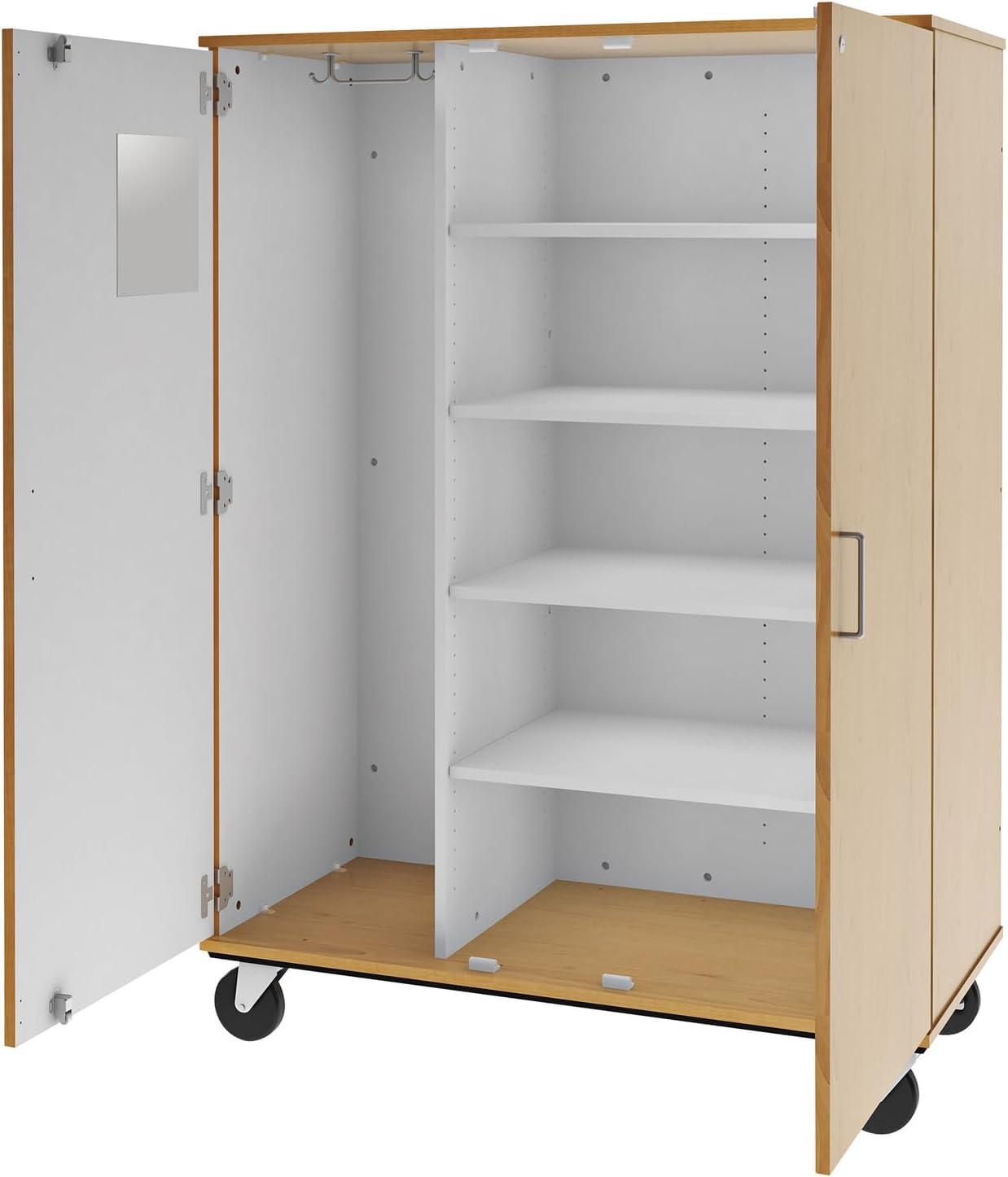
HomeStock Mobile Closet Organizer: your clothes on the move
Your hand finds the door first—the laminate feels cool and just textured enough to catch a fingertip. It’s the HomeStock Mobile Closet Organizer, a compact rolling wardrobe that reads taller than a bedside table but lighter than a full armoire. From across the room its narrow silhouette softens the wall; open the door and the mirror bounces a slice of daylight back into the space. The casters are low and quiet; a gentle push slides the unit without the jerky thumps you sometimes get from mobile furniture. Inside, the shelves sit true and give a modest, reassuring resistance when you press down, and the whole piece settles into the room with an unassuming, lived-in presence.
Your first look what comes in the box and the organizer’s overall presence
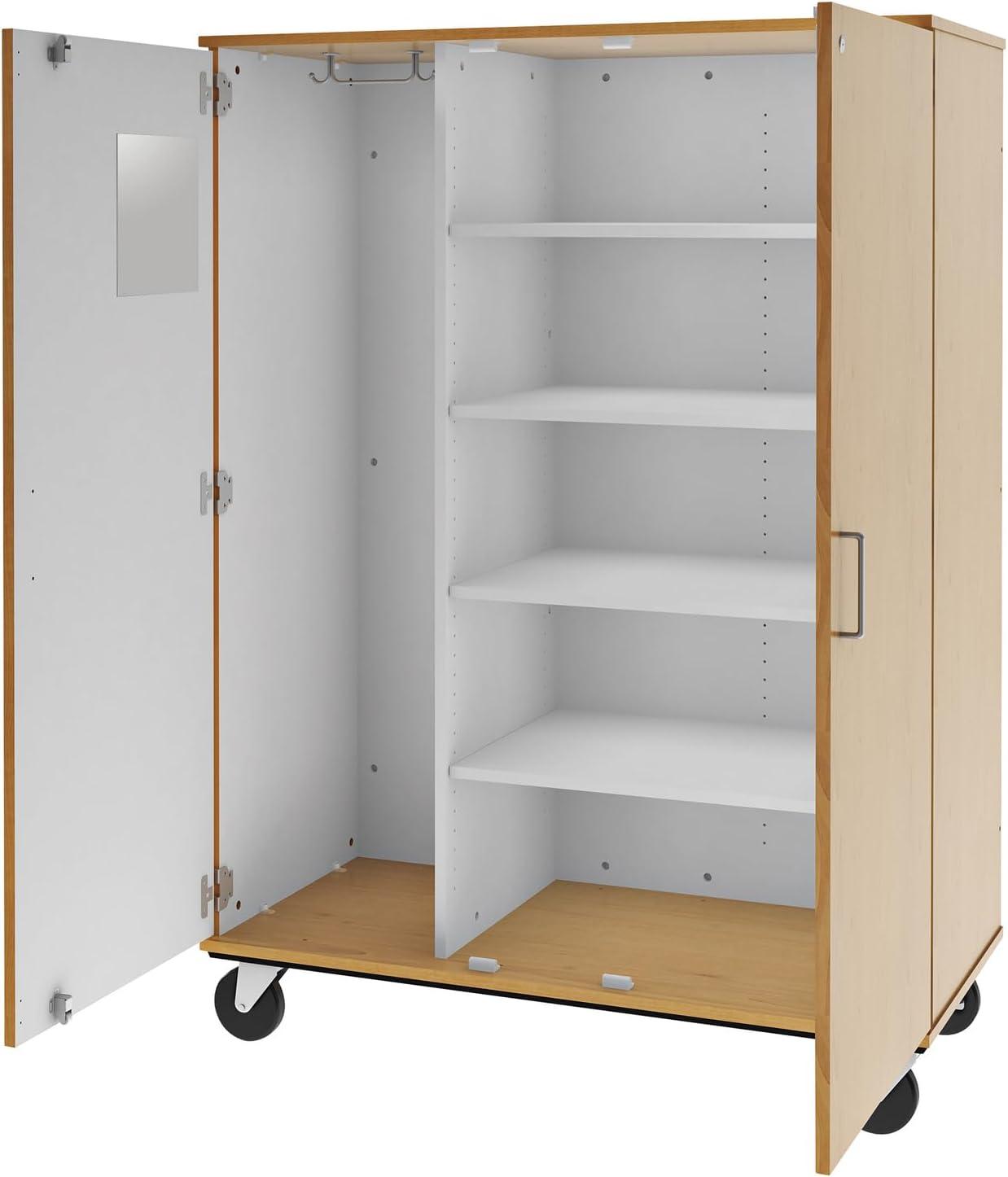
When you open the box, the first thing you notice is the methodical layering: flat panels wrapped in thin plastic, a door panel cushioned in bubble wrap with the mirror-facing inward, and a few smaller cartons or bags tucked into a corner. Clear plastic packets hold the screws, cam locks, dowels and small metal fittings; many are labeled or stamped with letters that match the diagrams on the folded instruction sheet. There’s a slight cardboard smell and the main pieces feel surprisingly dense to lift one at a time — you’ll find yourself shifting grips and smoothing the protective film off edges as you pull items free. An extra packet of fasteners is often included, and the mirror arrives mounted to the door so you don’t have to handle a loose glass panel during the first few steps.
After you roll the assembled unit into place, its presence reads as a compact, vertical fixture rather than a bulky cabinet. The mirror on the inner face catches light and fragments the room’s reflections, which makes the unit seem taller and more visually active than a plain door would. Horizontal shelves break the facade into regular bands when you glance with the door open; when loaded, clothes and boxes create soft irregularities against those lines. The casters sit low and let you nudge the piece around with a foot; once parked, the whole thing can still shift a little if you brush a sleeve against the lower edge. Small habits—adjusting a hanging shirt,smoothing a folded sweater on a shelf,nudging a door to re-seat a magnet—become part of the first moments you live with it,revealing how it occupies both floor space and everyday movements in the room.
The build and materials you can see framed fabric, mirror, and shelf construction
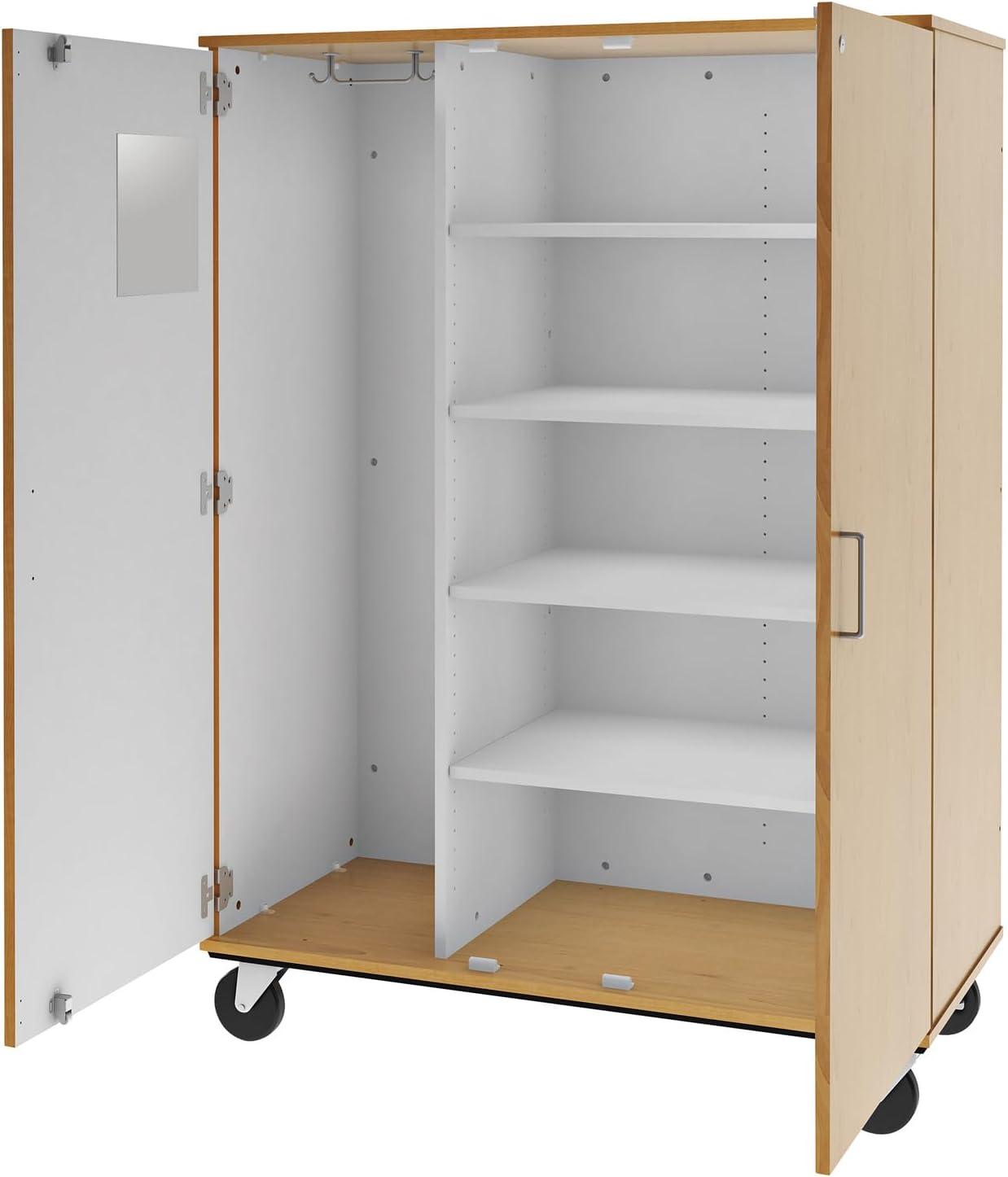
When you unzip and pull the door open, the first thing you notice is how the fabric is stretched across a rectangular frame — seams run along the corners and the zipper track sits flush where the fabric meets the frame.The frame’s joints are visible at the top and back edges; your hand naturally brushes those spots when you steady a box or nudge the unit into place. The fabric surface gives a little under your palm and tends to smooth out when you rub it, so you catch yourself smoothing it without thinking.
The mirror is mounted on the inside of the door and takes up a tall vertical portion of the panel.When you step in close for a quick check, you see a clean reflection framed by a slim border where the mirror meets the door surface.the door holds its shape as you lean in, and small movements of the wardrobe — rolling it a few inches — don’t noticeably distort the glass in most cases.
Inside, the shelves slot into the side panels and sit on visible supports. As you slide a shelf into place you can hear or feel it settle into position; once loaded with folded items the shelves present a mostly flat surface, though heavier stacks can cause a slight give over time.When you move garments on and off the shelves you’ll notice the edges are easy to find by touch, which helps when you’re organizing in low light or with the door partly closed.
| Component | What you see | In-use behaviour |
|---|---|---|
| Framed fabric | Seamed panels, zipper track, frame joints visible at corners | Gives slightly when smoothed; tends to wrinkle and then settle back with a few rubs |
| Interior mirror | Tall vertical mirror set into the door panel with a narrow border | Provides a clear reflection up close; door remains steady during routine use |
| Shelves | Flat shelf panels resting on side supports or notches | Seat into place with a perceptible click; can show slight compression under heavier loads |
Space, shelving and hanging layout with dimensions and how garments sit inside
When you open the door, the interior reads as a compact, vertical wardrobe: a hanging rod occupies the upper third while four adjustable shelves stack below it, creating five horizontal compartments.The cavity feels shallow compared with a walk-in closet, so hangers line up almost edge to edge and garments hang close to the back panel; long dresses or trench coats will generally brush the lowest shelf unless you move the top shelf higher. As you slide a shirt or light jacket onto the rod,the sleeves tend to sit slightly forward toward the door,and you find yourself nudging hangers to keep collars aligned.
The shelves are removable and can be repositioned in roughly 1–2 inch increments. In practice you’ll frequently enough leave one shelf a bit higher to clear hanger bottoms or nudge folded knits forward after taking something out—the stacks compress slightly under their own weight.Smaller items and soft accessories sit flush on a shelf, while thicker folded sweaters need more headroom and can slouch at the front edge, requiring a quick reshuffle now and then.
| Section | Approx.internal dimension | How garments sit inside |
|---|---|---|
| Hanging area (rod) | Width ~24″,Height above rod ~28″–36″ | Shirts and blazers hang close to the back; longer items often touch the top shelf or lowest shelf unless adjusted |
| Top shelf (above rod or adjustable) | Depth ~14″–16″,Height variable | Light sweaters and boxes sit stacked; stacks can lean slightly when you pull items forward |
| Middle shelves (two) | Depth ~14″–16″,Height each ~7″–10″ | Folded tees and accessories sit in neat piles but compress over time; you may slide items back to avoid overhang |
| Bottom shelf / floor area | Depth ~14″–16″,Height from floor ~8″–12″ | Bulky shoes or storage bins rest here; taller shoes can touch the shelf above unless rearranged |
Moving the unit around on its wheels changes the way clothes settle; momentum can shift lightweight stacks and you’ll catch yourself smoothing folded edges after relocating it. Overall the layout favors vertical organization: hanging pieces occupy the top band and folded items live on shallow horizontal shelves, and you’ll often tweak shelf positions to keep longer garments from bunching at the bottom.
Reach, mirror placement, and daily comfort as the pieces line up with your routine
When the door swings open and compartments are put to daily use, reaching feels like a series of small adjustments rather than one smooth motion. Items stored on the middle shelves sit comfortably within arm’s sweep; pulling out a folded sweater or a bin usually calls for a single, casual reach and a brief smoothing of fabric. The top shelf, by contrast, often prompts a slight forward lean or a raised forearm; users tend to angle the torso or shift their feet instead of lifting with the shoulders alone. Movements are intermittent — a quick tug on a hanger, a gentle pat to settle a crease — and the unit’s mobility is used more as a positional aid than a constant fix-it tool.
The mirror mounted on the inner face of the door changes how people orient themselves during the routine. When opened fully it presents a near, mid-length reflection that invites close checks of collars and hair, while a full view typically requires a small backward step. in many cases the mirror sits close enough that one smooths seams or adjusts accessories with the arm partially extended; at other moments, the user moves the whole unit or takes a step to improve sightlines or lighting. Natural habits — shifting weight, rotating the body, or brushing down a shoulder — are part of the cadence of getting dressed with the pieces aligned inside.
| Common action | Typical posture or movement |
|---|---|
| Grabbing items from middle shelves | Arm at chest level, brief reach and smoothing motion |
| Retrieving from top shelf | Forward lean or slight tiptoe, arm raised above shoulder height |
| Quick mirror check | Close stance, head tilt; often a step back for full view |
Small limitations show up as behavior rather than flaws: people move the unit, step back, or reorient to make the mirror and storage work together. Such trade-offs are part of the everyday flow — the quick fixes and micro-adjustments that settle into a routine over time.
View full specifications and options
Practical realities what lives up to expectations and the limitations you’ll encounter
In everyday use,the unit generally behaves as promised: it moves when nudged,compartments rearrange,and the interior mirror gets used for quick checks. On hard floors the casters tend to glide easily; on softer surfaces small hesitations are common and occasional back-and-forth shifting happens before it settles. When loaded,shelves can creep a little during relocation,so items sometimes need a quiet readjustment afterward. the interior mirror picks up smudges from brief handling and is often wiped before a mirror check, rather than being ignored.
Over time the frame keeps its shape in most cases, though repeated repositioning reveals minor settling — a hairline wobble or a screw that benefits from a retighten. Reconfiguring compartments usually requires both hands and a quick habit of nudging shelf supports into place; unevenly distributed weight encourages sagging or subtle leaning until things are balanced again. These are not dramatic failures, but rather the small, everyday trade-offs that appear as the unit is lived with and moved around.
| Expectation | Observed behavior |
|---|---|
| Smooth mobility | Glides well on hard floors; tends to slow or catch on low-pile surfaces |
| Stable shelving when loaded | Shelves hold folded items but can shift slightly during movement and may need readjustment |
| Mirror usability | handy for quick checks; shows fingerprints and is often cleaned before use |
View full specifications and available options
Living with it day to day where it sits in a bedroom, hallway, or studio and how accessories are organised
where you place it — against a bedroom wall, tucked into a hallway alcove or parked in a studio corner — quickly shapes how you use it each day.In the morning you pull the door open, catch a glance in the interior mirror and reach for the garment you left hanging the night before; at night you often drop a scarf or a tote on a middle shelf and smooth a sleeve before closing the door.The unit mostly stays put,though you will nudge it a few inches to vacuum or to make space when guests arrive; those small moves displace a basket now and then and leave faint scuff marks on the floor that you rub away. the mirror collects fingerprints and the inside of the door becomes a habitual quick-check spot rather than a full-length dressing station.
Accessories develop their own habits inside the compartments. Small items end up in shallow trays or boxes, scarves get draped over a rail and belts looped where they’re handy, while heavier shoes and bins settle toward the bottom.Every so often you reach in and reorganize — shifting a stack,straightening folded edges,relocating a catch-all bowl that has quietly become the repository for keys. The shelves can feel like little neighborhoods: some stay orderly for a week, others drift into a single pile by midweek.
| Typical spot | What you usually find there |
|---|---|
| Top shelf | Seasonal items, folded linens or boxes with seldom-used accessories |
| Middle shelves | Everyday tops, a shallow tray with jewelry, sunglasses or loose change |
| Bottom area | Shoes, heavier bags, and storage bins that shift when the unit is moved |
its Place in Everyday Living
You notice, over time, how the Mobile Closet Organizer – rolling Wardrobe with Shelves & Mirror – Storage Unit for Clothes & Accessories settles into a corner and takes on the quieter work of holding the small rhythms of your day. Its presence reshapes how space is used in daily routines, and the ease of rolling and the little hesitations when you pull a hanger become part of the room’s movement. The surface gathers tiny scuffs and a soft dulling where hands and bags meet it, which reads like a ledger of ordinary evenings and hurried mornings. It settles in, keeps things near at hand, and simply stays.
As an Amazon Associate I earn from qualifying purchases.