Hooshion Rustic 2-Tier Bookshelf for your office nook
Late afternoon light catches the top plank and brings the wood grain into sharp relief against the matte black frame. You notice the Hooshion Rustic Bookshelf — a low, two-tier real-wood shelf with a simple metal skeleton — more as an object in the room than a piece of furniture. Up close the planks feel slightly weathered under your hand, with sanded edges and tiny saw marks that break the surface sheen. From across the room its visual weight is calm: compact in footprint but with enough presence to hold a few books and a lamp without disappearing. In a lived-in corner it reads honest and workmanlike, the contrast of warm wood and cool metal setting the tone more than any particular ornament.
A first look at what the Hooshion rustic bookshelf brings into your room
Walk into the room and the piece registers as a vertical frame more than a block of furniture. the dark metal edges trace thin, regular lines that catch the light differently through the day, while the wooden planks break that rhythm with warmer, textured planes. When you set things on it — books, a small plant, a stack of papers — the arrangement reads as a sequence of shallow stages; spines and objects lean against the back and each othre, casting narrow shadows onto the wood beneath. From a few steps away it alters the room’s visual rhythm,creating a narrow band of storage that sits between taller furniture and the wall rather than spanning an entire wall surface.
In everyday use you notice small, lived details: the shelf gives a soft thud when a book is dropped into place, and you’ll find yourself nudging items to keep rows tidy or balancing a heavier stack toward the center. Dust gathers in the frame’s joins and the wood’s surface blooms with faint fingerprints after handling, so the finish changes slightly with use. Over time the shelves can settle a bit under continuous weight, producing a subtle give you feel when you press on them. These are the kinds of quiet, situational behaviors that become part of how the piece fits into your routine rather than grand claims about its character.
Unboxing and the first minutes with assembly, hardware, and how it feels in your hands
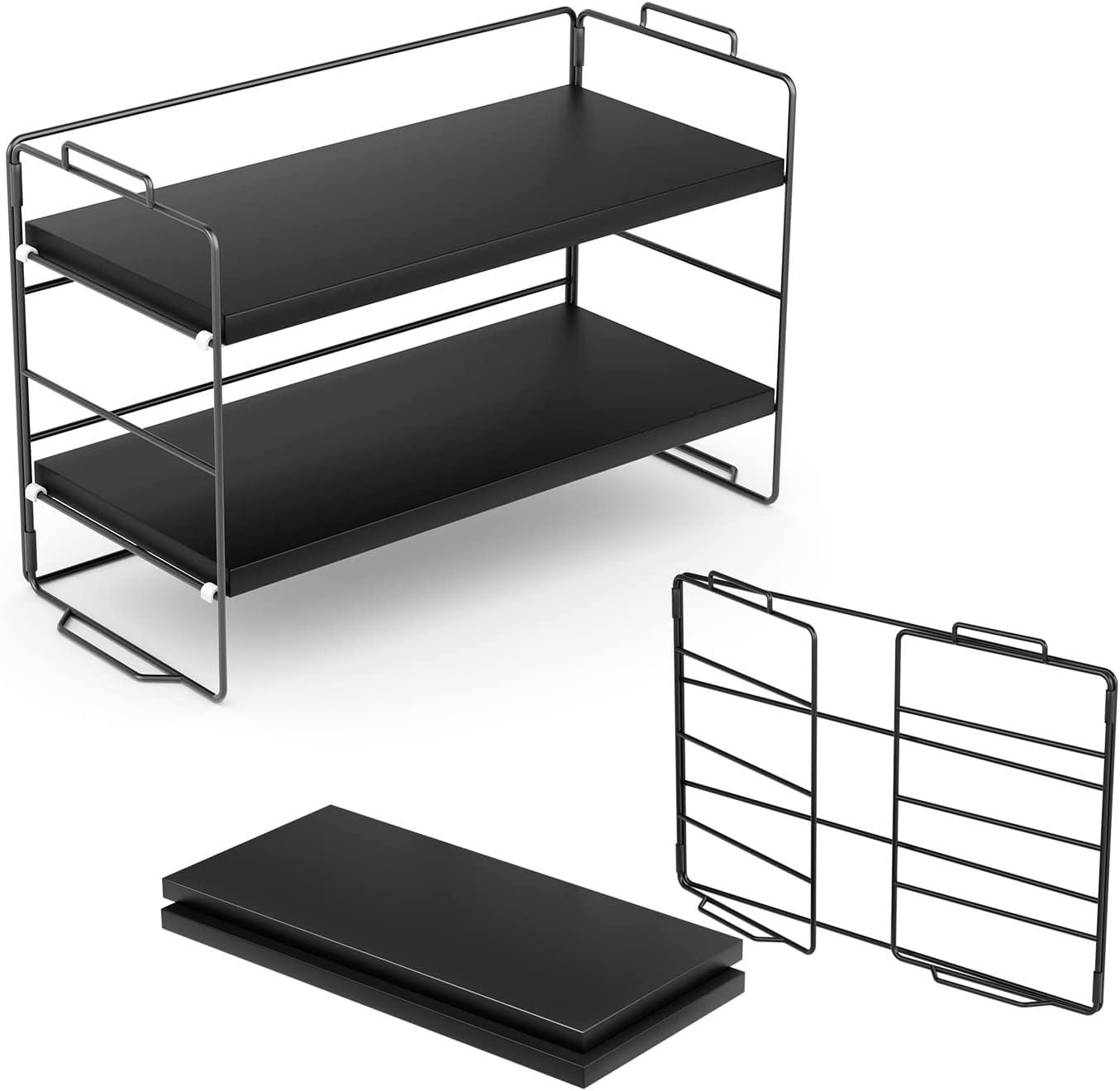
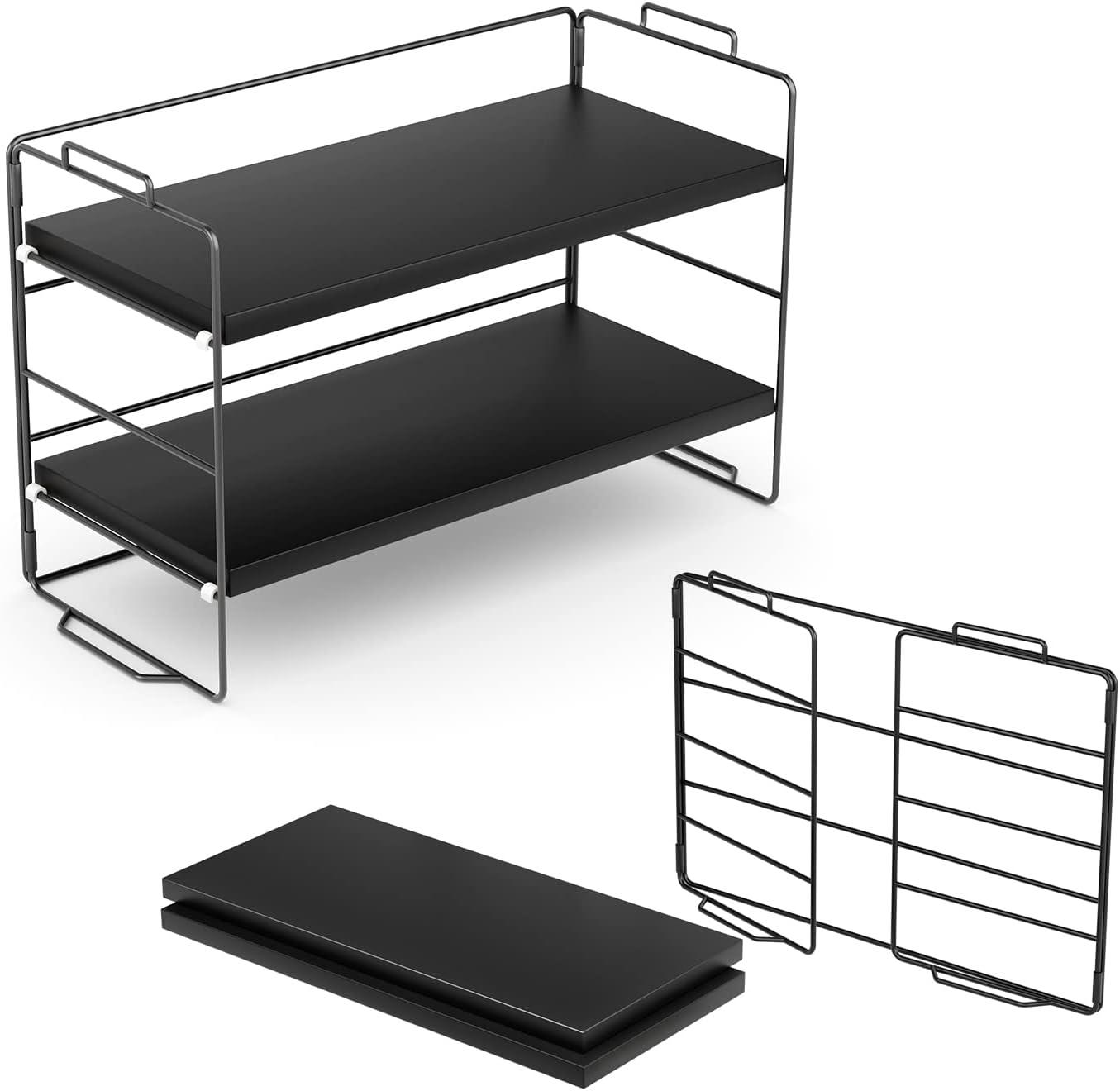
When you cut the tape and peel back the cardboard, the parts are arranged in a compact stack: two wooden planks wrapped in thin foam, a folded metal frame wrapped in kraft paper, and a small clear bag of fasteners tucked into a corner. The wood gives off a faint kiln-dried scent as you lift a panel, and the metal feels cool and lightly oiled where it was packed.The instruction sheet sits on top; the diagrams are simple enough that you can glance at them while you spread the parts across the floor.
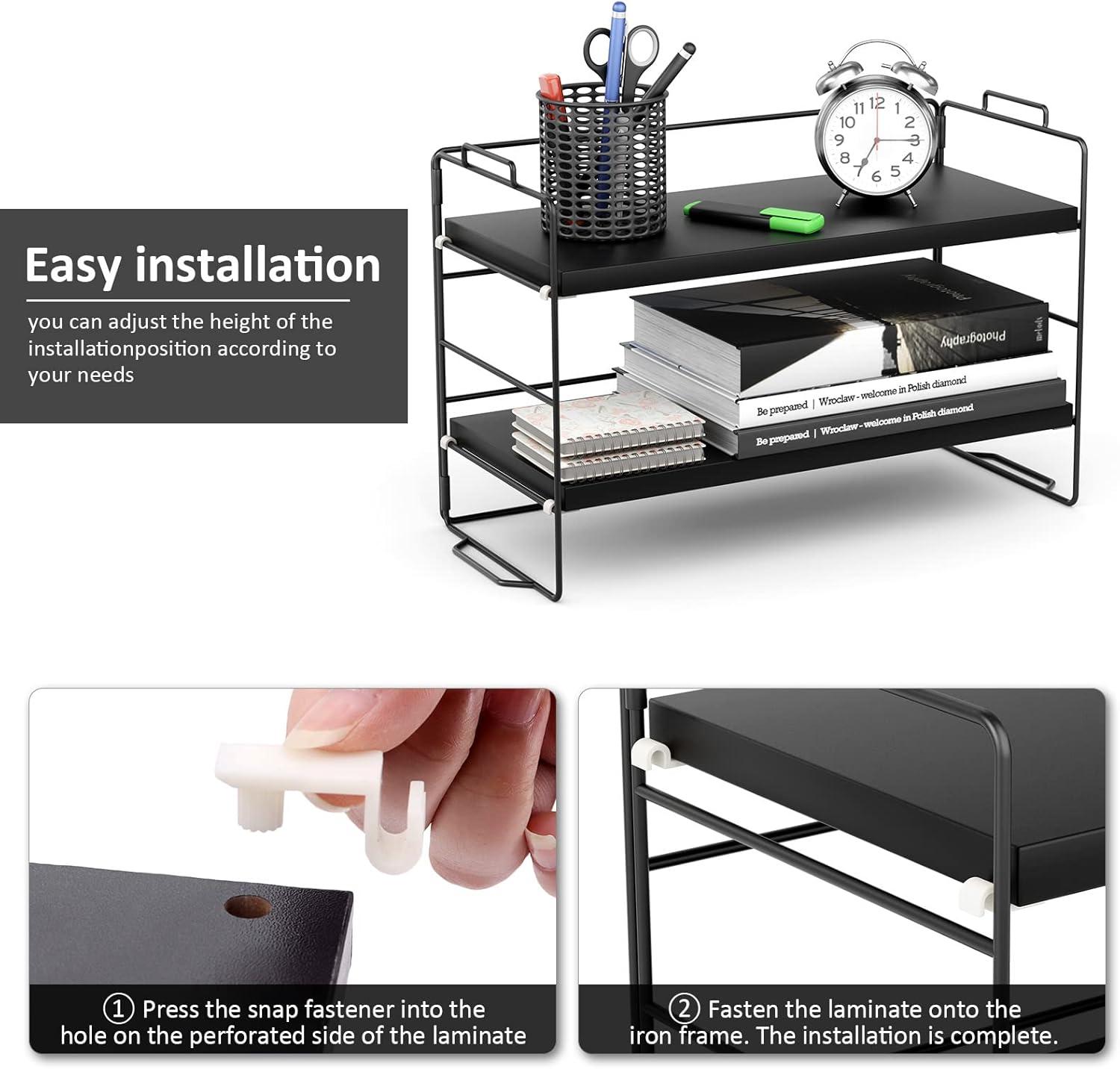
Opening the hardware bag reveals several small packets with screws, washers and an Allen key. As you begin to fit pieces together, the pre-drilled holes line up with only occasional nudging — one bolt will want to enter at a slight angle until you hold the frame steady. Hand-threading the screws gets things held in place, and the included hex key turns snugly in the bolt heads. The metal uprights resist a bit at first and then seat flat against the underside of the shelf; when you apply final turns with the hex key there’s a low metallic click as the joint tightens and the pieces stop shifting.
Handling the components during those first minutes gives a clear sense of balance and texture. The planks are pleasantly ample in your hands: not perfectly smooth, but sanded enough that you instinctively run a thumb along the edge to settle a tiny rough patch. The frame feels rigid when you lift a corner of the partly assembled unit; holding it under the center of a shelf shows a slight give before it feels fully supported. Small felt pads and end caps are easy to pop into place with a fingertip, and the whole construction becomes noticeably steadier as you work through the final screws.The process tends to move quickly once the first alignment is done — for most people the initial unpack-and-start phase takes under twenty minutes.
Included hardware (as found in the box)
| Item | Approx. count |
|---|---|
| Short bolts with washers | 8 |
| Locking nuts | 8 |
| Allen key | 1 |
| Felt pads / end caps | 4 |
The wood grain, black metal, and the finishing details that catch your eye in your space
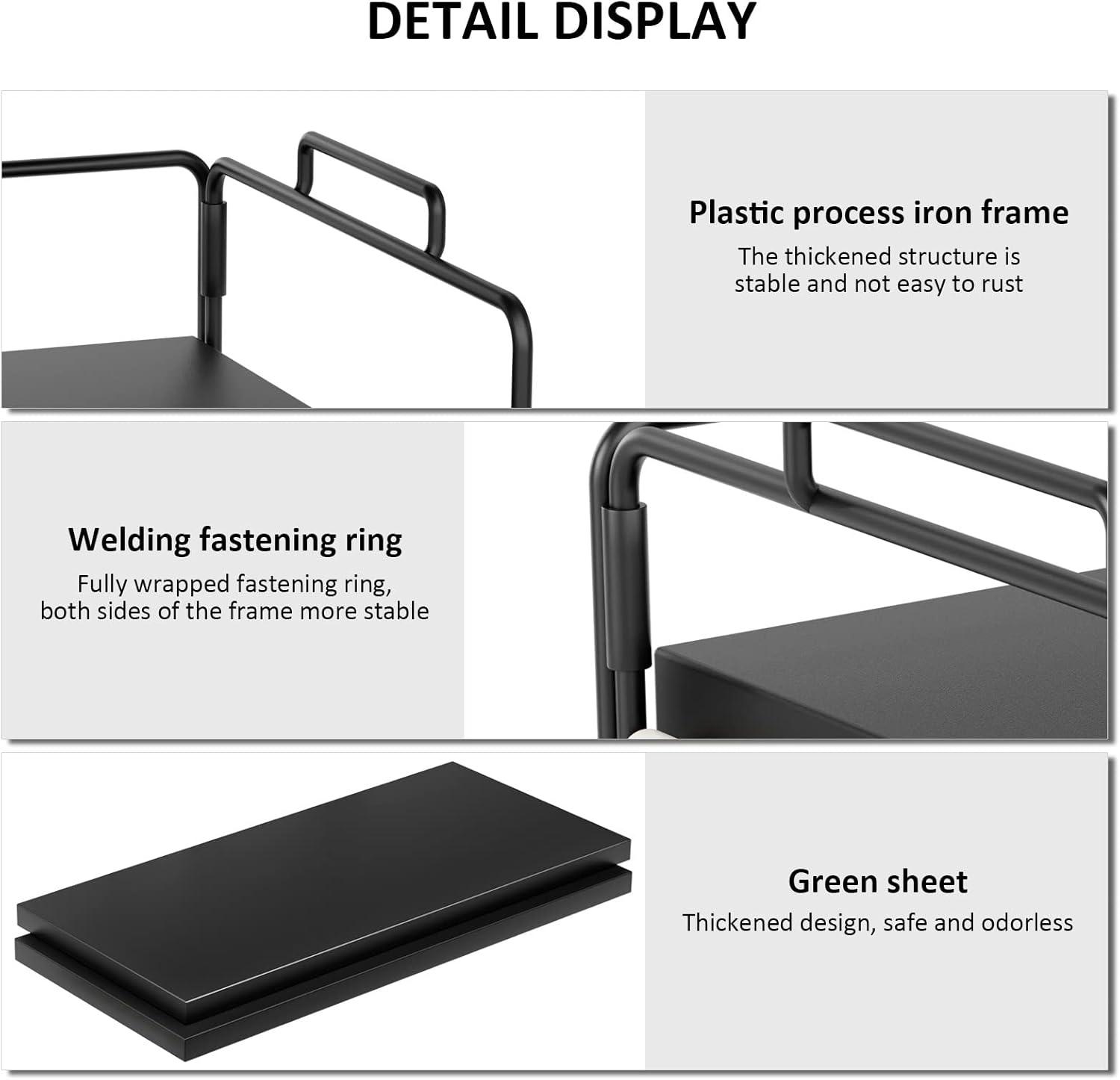
When you glance across the room the first thing that often stops you is the contrast between the warm, irregular streaks of the wood and the clean lines of the black frame. Up close the wood grain reads like a map — small knots, faint sap lines and variations in color that catch light differently as you move. From a few steps away those details soften into broad bands of tone, and the metal becomes the outline that holds them together.
You’ll notice the black metal in short bursts: a soft sheen along the uprights where light grazes it, a matte shadow where it sits against the wall. Tiny finishing details show in use — faint sanding marks at shelf edges, the slight step where a bracket meets the wood, a hairline gap that you only see when you crouch.You find yourself smoothing a coaster or nudging a leaning paperback and, in that small motion, the interplay of grain and steel becomes more apparent: fingerprints on the metal, a warm patch where a cup sat on the wood, and the way dust collects in the corner seams.
| Where you stand | what you tend to notice |
|---|---|
| Close up | Wood texture, knots, small tool marks, metal surface finish |
| Across the room | Overall contrast, silhouette of shelves, how the finish reads with room light |
Practical dimensions and the way it sits against your wall or on a narrow landing
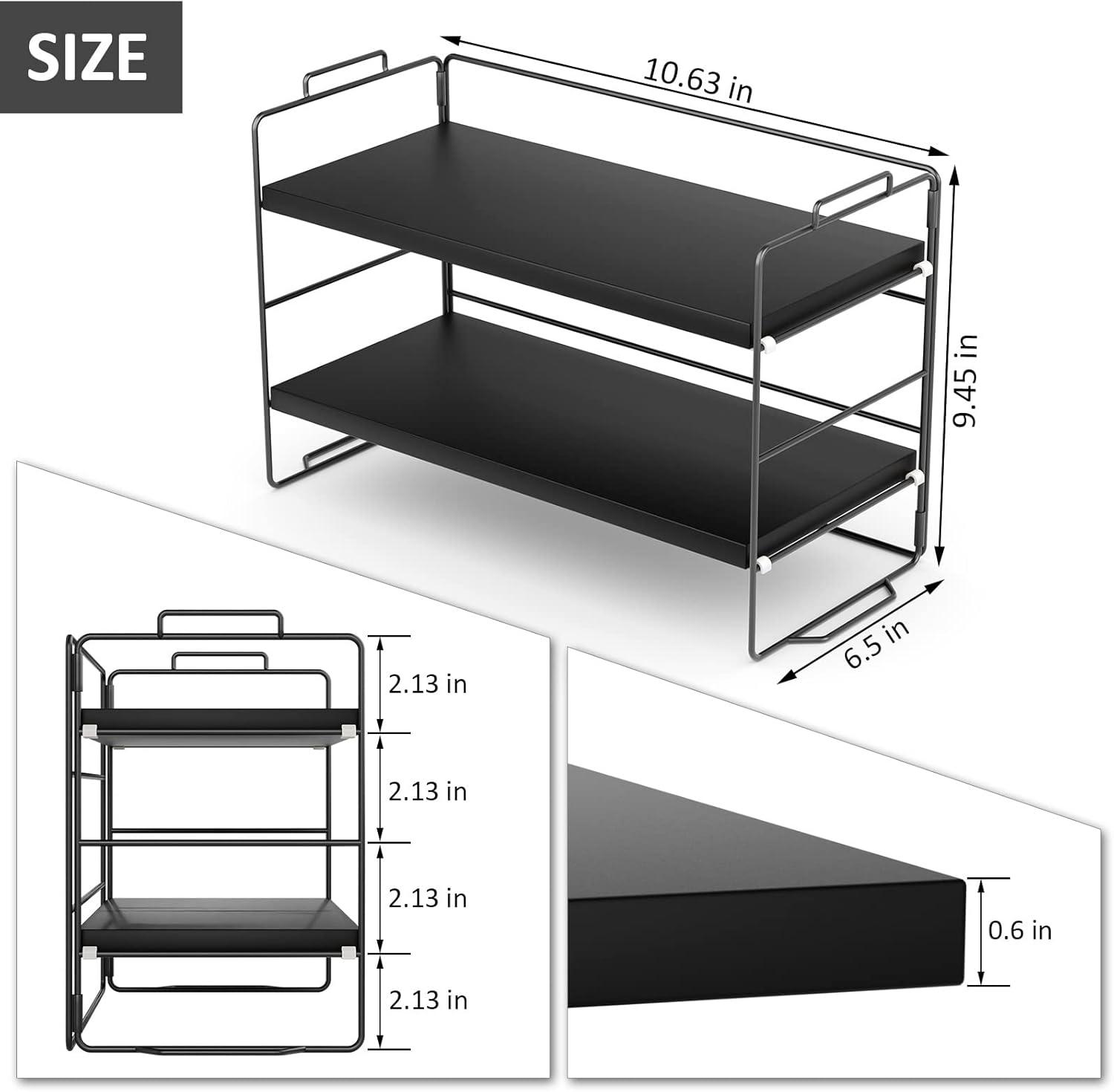
The unit presents a modest, shallow profile that keeps most of its volume close to the wall; from eye level it reads as a thin vertical element rather than a bulky cabinet. When set flush against a flat wall the metal frame and wooden tiers usually leave a slim gap where the rear crossbars meet baseboard moulding, so the face of the shelves appears slightly forward of the wall plane. On uneven floors the whole assembly can rock very slightly until weight is distributed across the tiers, and the metal legs will follow the line of the floor rather than disguising low spots.
Placed on a narrow landing, the bookshelf occupies a clear strip of floor without projecting much into the walk path, though the visual width of the unit is more noticeable than its actual depth as of the open-frame sides. Objects on the lower tier tend to sit partly behind the front edge when viewed from an angle, which changes the perceived clearance as someone passes by. In most cases the unit’s footprint and frame geometry let it tuck beside a railing or door trim,but small offsets—floor camber,trim thickness,threshold height—can make it sit with a slight cant or a barely visible gap against the wall.
| Placement | Observed behavior |
|---|---|
| Against a flat wall | Close to wall with a slim rear gap; minimal forward projection |
| Narrow landing | Occupies a narrow strip; visual width more pronounced; placement can feel tighter when angled |
Over time the way the unit settles depends on load distribution and the underlying floor; small shifts and slight changes in how it hugs the wall are common as books and objects are moved about.
View full specifications and size options
Daily use around your home, from office shelving to hallway styling and staged displays
Around the house you’ll notice the shelves acting like an everyday backdrop more than a centerpiece. In the hall it becomes the place you set down keys and a shuffled stack of mail; in a home office it sits beside your desk with a mix of binders and a mug that gets moved from shelf to desk throughout the day. Items tend to sit flat on the plank surfaces, and you’ll find yourself straightening frames or nudging books back into alignment as part of routine movement—small, almost unconscious adjustments that happen when people pass by or reach for something.
In practice, the unit tends to hold typical daily loads—paperbacks, a few technical manuals, storage boxes and ornaments—without obvious sagging, though heavier objects sometimes shift slightly toward the middle over time. Staged displays settle into predictable sightlines across the two tiers, and frequent rearrangement can leave faint scuffs on lower surfaces during handling; periodic tightening of fasteners shows up as a normal maintenance habit. The metal frame catches the light differently from the wood, so displays read a little more layered when you walk past, and casual use often reveals small changes—a leaning stack, a rotated spine—rather than abrupt failure.
view full specifications and available options on Amazon
How the shelf stacks up for your daily needs and what limits you might encounter
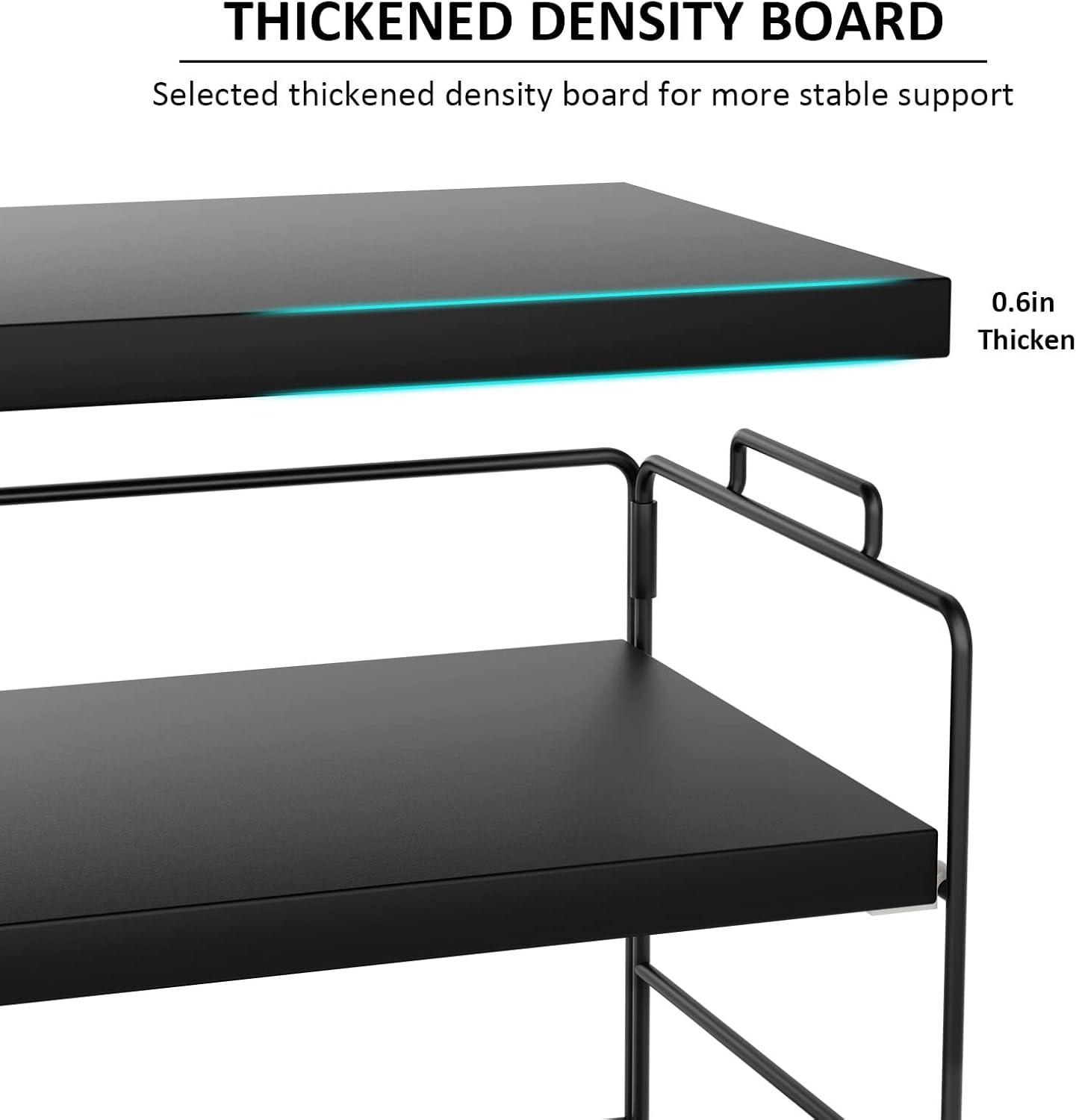
In everyday use the unit functions as a straightforward open-storage surface: frequently reached-for books and binders sit where spines are easy to grab, and smaller objects tend to live on the front edge so they can be taken without shifting the rest. Retrieving items from behind others often requires a fast reshuffle; over the course of a week that habit of nudging things forward becomes part of routine. The open frame leaves surfaces exposed,so dusting and occasional rearrangement are part of keeping the shelves looking orderly,and sliding a box or stack across the boards can produce a faint creak as load settles.
Some practical limits show up in typical moments of use.The two-tier layout leaves little room for stacking tall items without creating an unstable pile, and when heavier volumes are pulled from a middle position the frame can wobble slightly until weight is redistributed. Moving the unit while loaded tends to mean taking items off first rather than relying on a quick lift; pushing into a tight spot often requires readjusting what’s on the lower shelf so the balance feels even. Small daily annoyances—having to shuffle a paperback to reach a notebook, repositioning a decorative object after grabbing something else—are common and tend to shape how the piece is used over time.
| Daily task | Typical behavior |
|---|---|
| Grabbing a frequently read book | Spine-first pulls are straightforward; items tucked behind require minor rearrangement |
| Replacing heavier items | Frame can feel slightly springy until weight is balanced across the tiers |
| Cleaning and dusting | Open surfaces collect dust; wiping is quick but regular |
View full specifications and available sizes/colors
Quick measurements, mounting points, and the corners in your home it will occupy
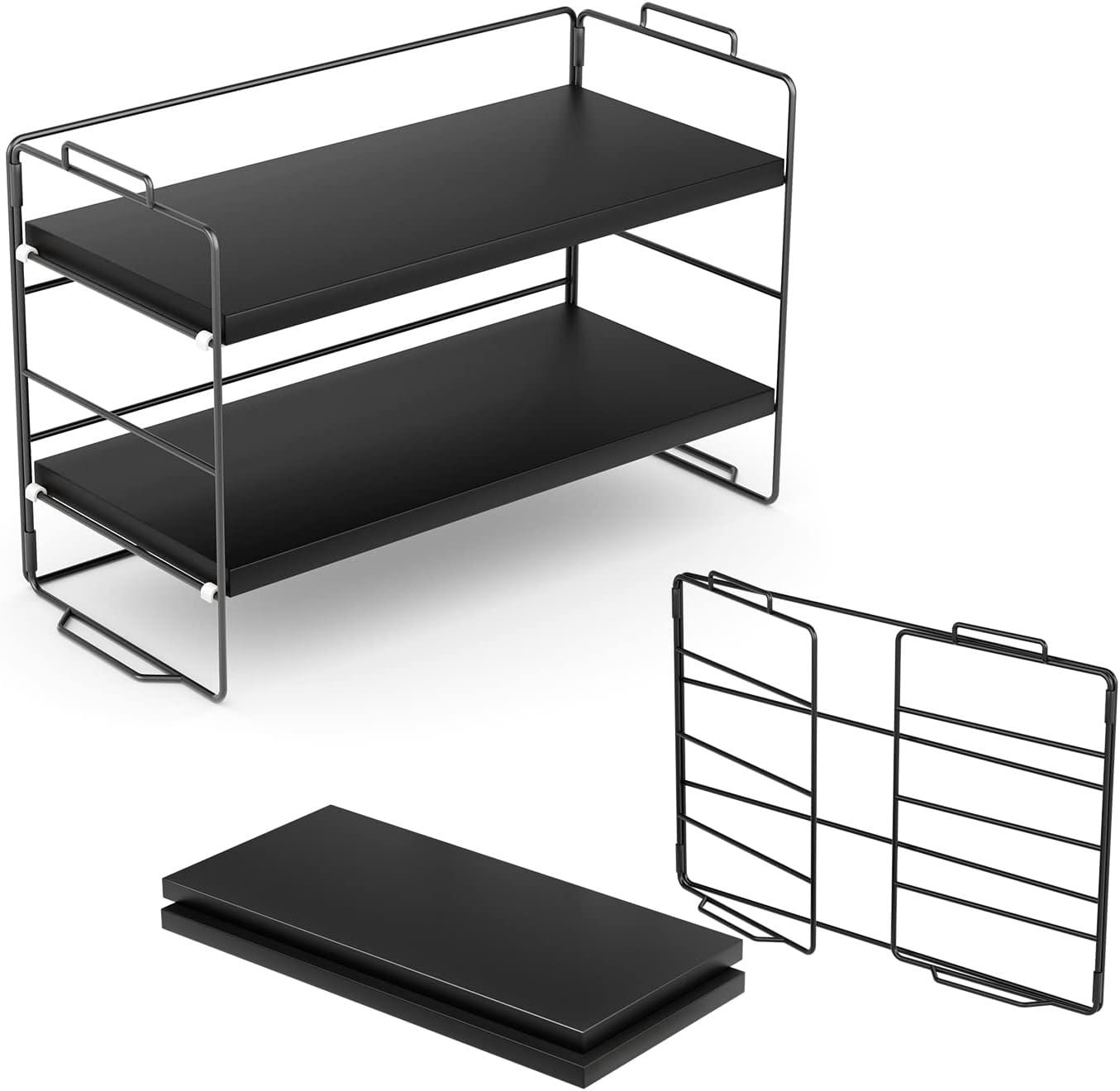
Hooshion Rustic Bookshelf, 2 Tier Real Wood Bookshelf, metal Book Shelf for Storage, Bookcase for Office Organization and Storage, Black
“isProductSummaryAvailable”:false,”device”:”desktop” Hooshion Rustic Bookshelf, 2 Tier Real Wood Bookshelf, Metal Book Shelf for Storage, Bookcase for office Organization and Storage, Black › See more product details
Before you bring the unit into a corner, take a quick mental checklist: the assembled piece occupies a modest rectangular footprint and the shelves project into the room more than a flat wall-mounted surface would. In practice you’ll notice the front edge sits where small objects or a wandering foot might meet it, and the top of the unit usually lines up somewhere between waist and chest height, depending on the ceiling and floor beneath it. The middle shelf tends to split the vertical space roughly in half, so measure for whatever height items you plan to slide in and out without having to tilt them.
Look at the back for attachment points as soon as it’s upright. There are typically a couple of metal slots or holes on the frame intended for wall anchors or anti-tip straps; the center-to-center spacing of those points can feel a bit narrower than standard stud spacing, so many people find they need anchors rather than hanging directly on studs. If you plan to fix it to the wall, measure from the floor up to each bracket and from one bracket center to the other before drilling—those two numbers are the ones you’ll use when marking your wall.
| Quick reference (approx.) | Typical measurement |
|---|---|
| Assembled height | roughly waist-to-chest height (varies by a few inches) |
| Overall width | small-to-medium bookcase width; plan for a narrow footprint rather than a broad run |
| Depth (front-to-back) | enough to project noticeably from the wall — measure clearance for walking lanes |
| Shelf clearance (between tiers) | about half the unit height; measure tall items against the middle shelf |
| Mounting point spacing | can feel tighter than stud spacing; check center-to-center on the assembled back |
when you hold the unit up to a corner, account for trim, outlet plates, and door swings. baseboards and window sills reduce usable depth by an inch or two; an outlet sitting behind the lower shelf can make the back sit slightly proud of the wall. In everyday placement you’ll likely shift it a finger’s width away from a wall or nudge it forward to align with nearby furniture — small adjustments that change how the corners around it read at a glance.
How It Lives in the Space
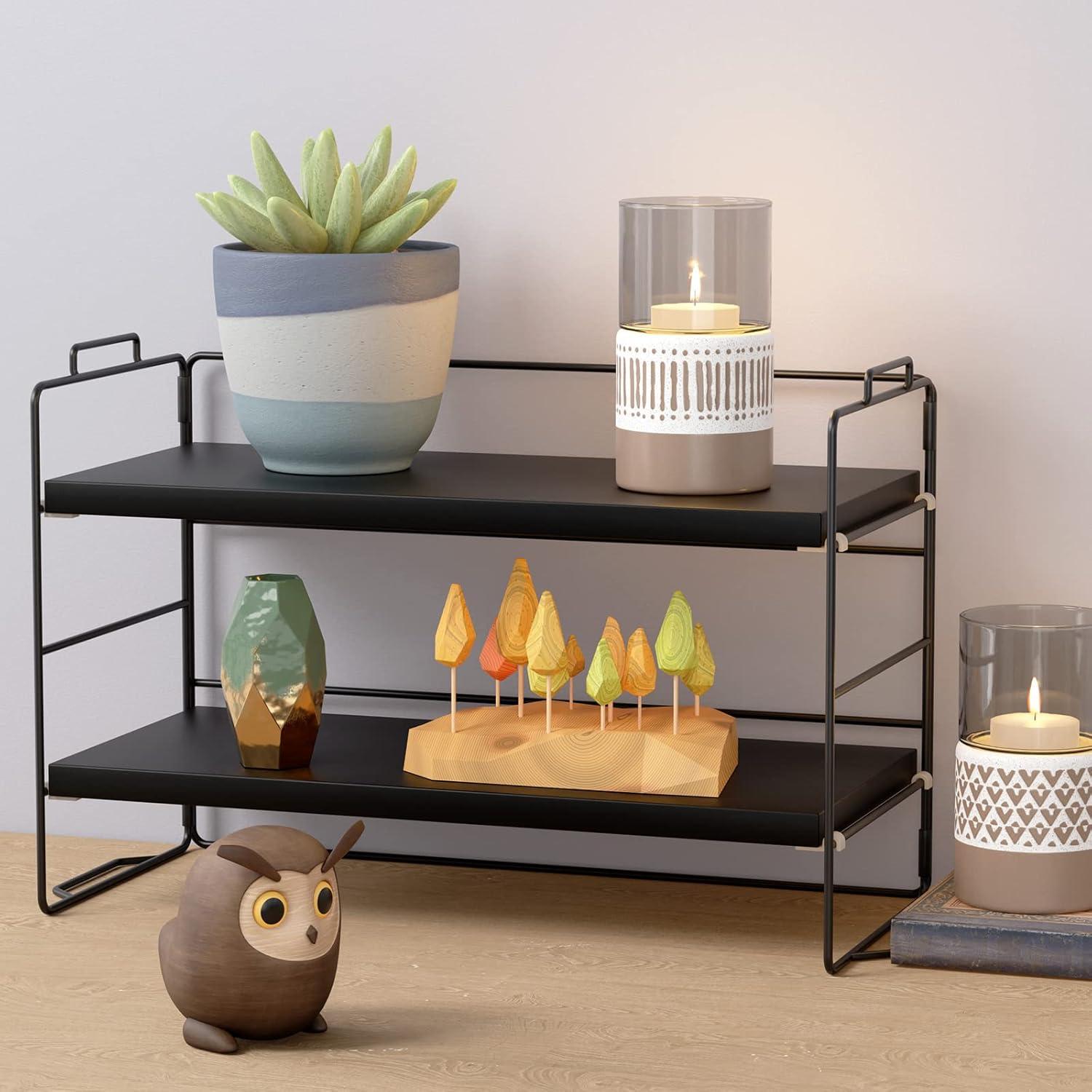
Living with the hooshion Rustic Bookshelf, 2 Tier Real Wood Bookshelf, Metal Book Shelf for Storage, Bookcase for Office Organization and Storage, Black, you notice how it eases into a corner and quietly defines a small area of the room rather than shouting for attention.over time its surfaces pick up faint smudges and the soft scratches of use, and the act of reaching for a book or a notebook becomes, oddly, a little comforting in daily routines. It settles into the flow of regular household rhythms — a place the mail lands,a short pause for a cup,something you pass as the room is used. months on, it simply blends into everyday rhythms.
As an Amazon Associate I earn from qualifying purchases.