Ihanherry Sofa 70 Inch Loveseat — how it suits your space
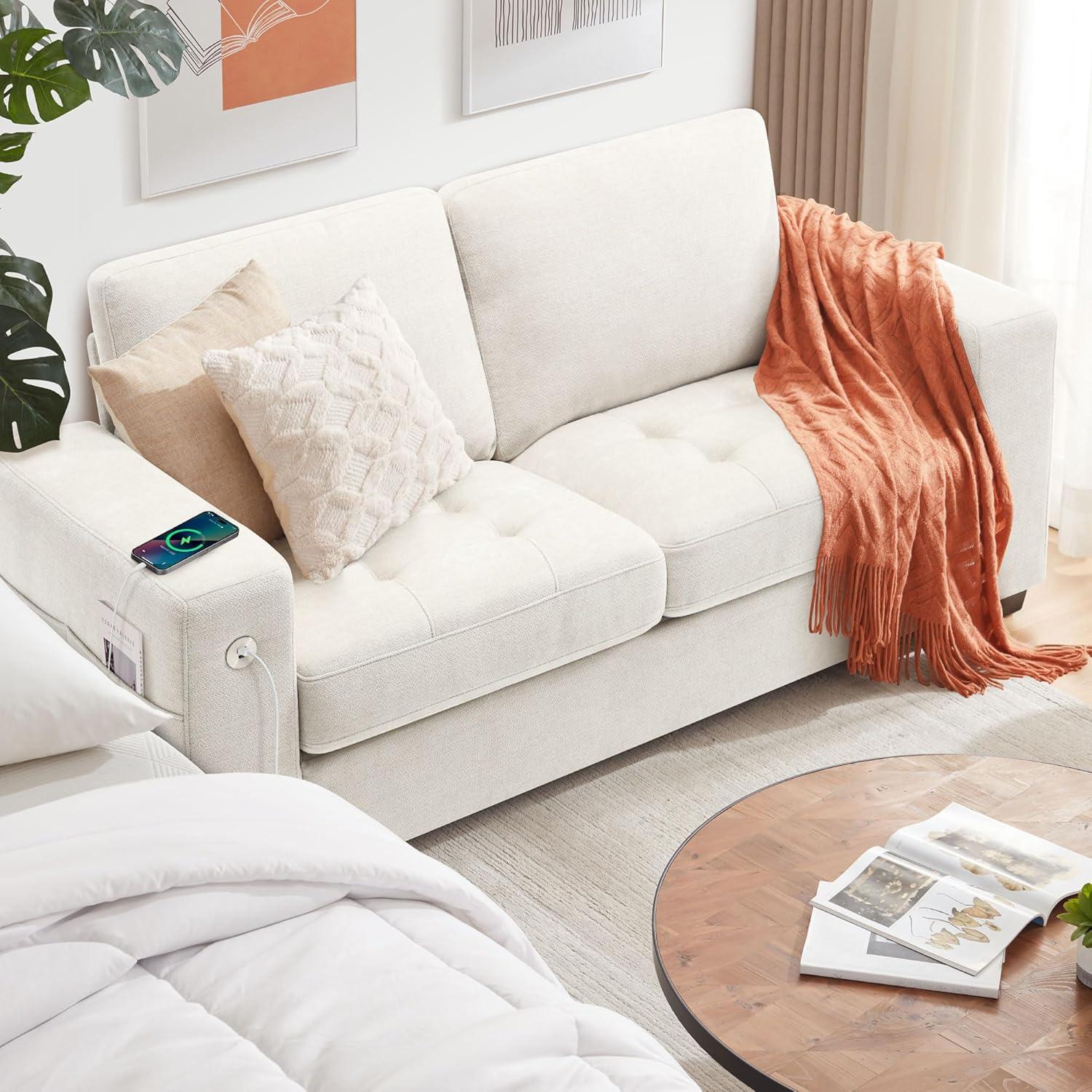
Sunlight picks out a soft, short nap on the beige chenille and you notice the tag: Ihanherry Sofa 70 Inch Loveseat. Up close the fabric feels breathable under your palm and the cushions give a measured, medium-firm resistance when you press—enough to settle into, not to sink. The solid wood armrests lend a quiet visual weight, while a flush USB-C port in the armrest and a deep side pocket read like small, practical touches rather than design flourishes. From where you stand it looks like an honest two-seater: compact in width but present, its removable covers and visible seams whispering of everyday use.
Unboxing your Ihanherry 70 inch loveseat and a quick look at what’s inside the box
When the delivery arrives you’ll likely have two cardboard boxes to work with; they can come together or one at a time. Open the larger box first and you’ll uncover the bulk of the frame and upholstery components,each wrapped in thin protective foam or plastic. The seat cushions come vacuum-compressed and folded; when you cut the packaging you’ll see them spring back slowly — a few pats and a little time usually help them regain shape. Smaller parts are bundled separately in a clear plastic bag: bolts, washers, an Allen wrench and a packet with the assembly instructions. A set of solid wood feet and the armrest pieces sit flat in their own spaces, and the armrest that houses the charging ports is obvious once the foam is removed, with the port faceplate and cable tucked alongside.
| Typical box contents | what you’ll notice on first glance |
|---|---|
| Vacuum-packed seat cushions | Compressed, then expand gradually after unpacking |
| Backrest/frame pieces | Wrapped in foam, seams and stitch lines visible where covers meet |
| Armrests (one with ports) | Port faceplate pre-installed; cable routed with the piece |
| Solid wood feet | Finished wood, packed separately to avoid scuffs |
| Hardware bag + instructions | Small parts sorted together; manual folded in the packet |
As you lift parts out you’ll find the upholstery covers already fitted over some frame elements, so you’re more likely to be smoothing fabric, nudging cushions into place and aligning seams than wrestling with loose cloth. The cover zippers are accessible if you want to check the cushion filling; the small hardware pieces tend to sit at the bottom of the box, so it’s easy to miss them unless you tip the carton carefully. In most cases assembly begins with attaching the feet and slotting the backrest into the base,but at the unpacking stage the practical things that take attention are making space for the expanding cushions,laying out the hardware,and giving the fabric a quick run of the hand to settle any packing creases.
The beige chenille, visible seams and the frame details you can inspect up close

Get close enough and the beige chenille stops being a flat color and becomes a surface that shifts as you move your hand across it. The short pile has a soft nap that catches light differently depending on the angle; when you brush along the seat or armrest you can see faint striations where the fibers lie one way or the other. Tiny irregularities in the yarn show up as subtle flecks and threads; they’re most noticeable along areas you touch often, where the nap can lie flatter or stand up a little. As you smooth the cushions after sitting, the fabric briefly looks two-toned until the pile settles back.
The seams are visible in everyday use rather than hidden details. You’ll spot neat topstitching tracing the cushion edges and the back panels,seams forming a raised ridge at each join and small folds at the corners where panels meet. When you shift or plump a cushion, those ridges move and sometimes pull the fabric slightly taut across a corner, revealing zipper tracks or the edge of the cover. Move a cushion aside and the frame comes into view: the junctions where solid wood arm pieces meet the upholstered body, the recessed heads of screws or bolts at the leg mounts, and the metal crossbar or bracket of the backrest tucked behind the backing fabric. A dust flap or lining keeps most fastenings out of sight until you lift the cushion, but when you do, you’ll notice the webbing or slats that support the seat and the way the upholstery is stapled or folded at inner seams.
| Visible detail | Where you’ll see it |
|---|---|
| Chenille nap and subtle sheen | Seat surface,armrests,and back panels when you run your hand across |
| Topstitching and seam ridges | Cushion edges,back seams,and corners where panels meet |
| Frame joints,fasteners and support webbing | under cushions,behind the lower back panel, and at the leg/arm attachment points |
How the removable medium firm cushions respond when you sit and shift

When you settle into the seat, the removable cushions give a measured amount of sink — enough that you feel your weight distribute rather than hit a hard plane. The foam compresses under your hips and then holds its shape rather than rebounding quickly; leaning back,the back cushion compresses and cradles the shoulder blade area before easing into a more stable press. You’ll notice the perimeter feels a touch firmer, so sliding toward an armrest produces a different, slightly shallower give than sitting in the center.
As you shift around—scooting forward, twisting to reach for something, or changing your leg position—the cushions respond in short, incremental adjustments. The seat top compresses where pressure is applied and slowly slows its return once you move,so the surface can feel like it keeps the last position for a few seconds. The removable covers move a little over the foam: seams can drift,the fabric may wrinkle where you press,and you’ll find yourself smoothing or nudging a cushion back into place out of habit. Small, quiet settling noises sometimes accompany bigger shifts, while lighter movements mostly translate into a soft, controlled change in support.
| Action | Observed cushion response |
|---|---|
| Initial sit | Noticeable, even compression with modest rebound; edges firmer than center |
| Lean back | Back cushion compresses and then holds a gentle contour |
| Shift sideways or scoot | Seat compresses where pressure moves; covers may wrinkle and need smoothing |
| Stand up after sitting | Cushion slowly regains shape, not an immediate spring-back |
Where this two seat sofa fits in your living room or bedroom and the measurements to check
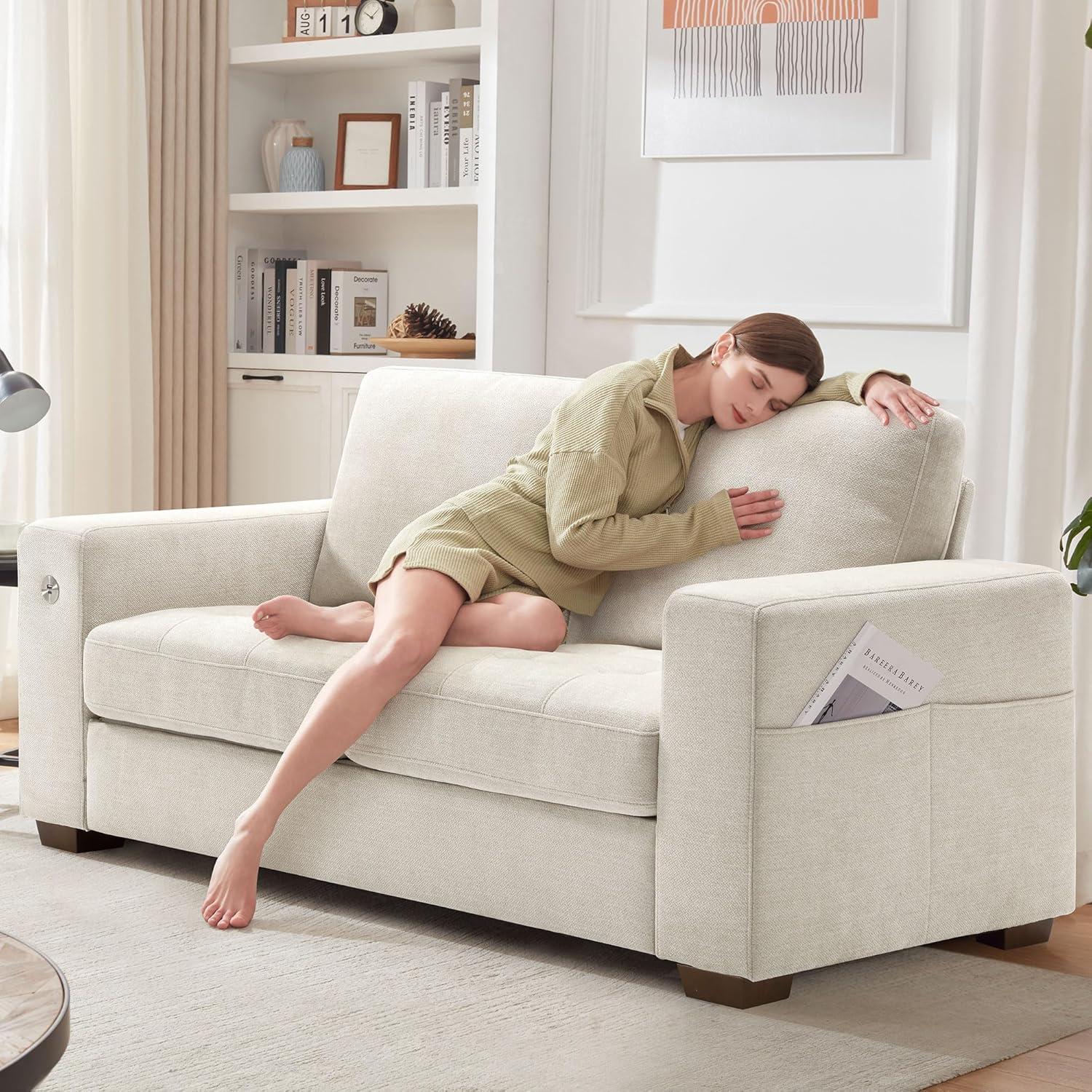
Common arrangements place the two-seat sofa along a shorter wall, tucked into an apartment living area, or inside a bedroom where it functions as secondary seating. With a 70-inch span across the front, the piece defines a clear horizontal footprint; the seat cushions compress slightly under use, which can make the sitting area feel a couple of inches shallower than the stated seat depth. When occupied, seams and cushion covers are often smoothed or nudged into place, and the armrests settle into their supporting position, so the apparent silhouette can shift a little after a day or two of normal use.
| Dimension to check | Listed measurement | What that typically affects |
|---|---|---|
| Overall width | 70″ (W) | How it fits across a wall or between other pieces; clearance for walking paths on either side |
| Overall depth | 35.4″ (D) | Distance it projects into the room; sight lines from doorways and across the room |
| Overall height | 35″ (H) | Relationship to windowsills, radiators, and the backs of adjacent furniture |
| Seat height | 18.1″ | Ease of sitting down and standing up; visual scale compared with beds or dining chairs |
| Seat depth | 22.8″ | How much room the cushion offers before compression; legroom when placed near a coffee table |
| Back cushion height | 18.5″ | Support profile relative to window sills or headboards |
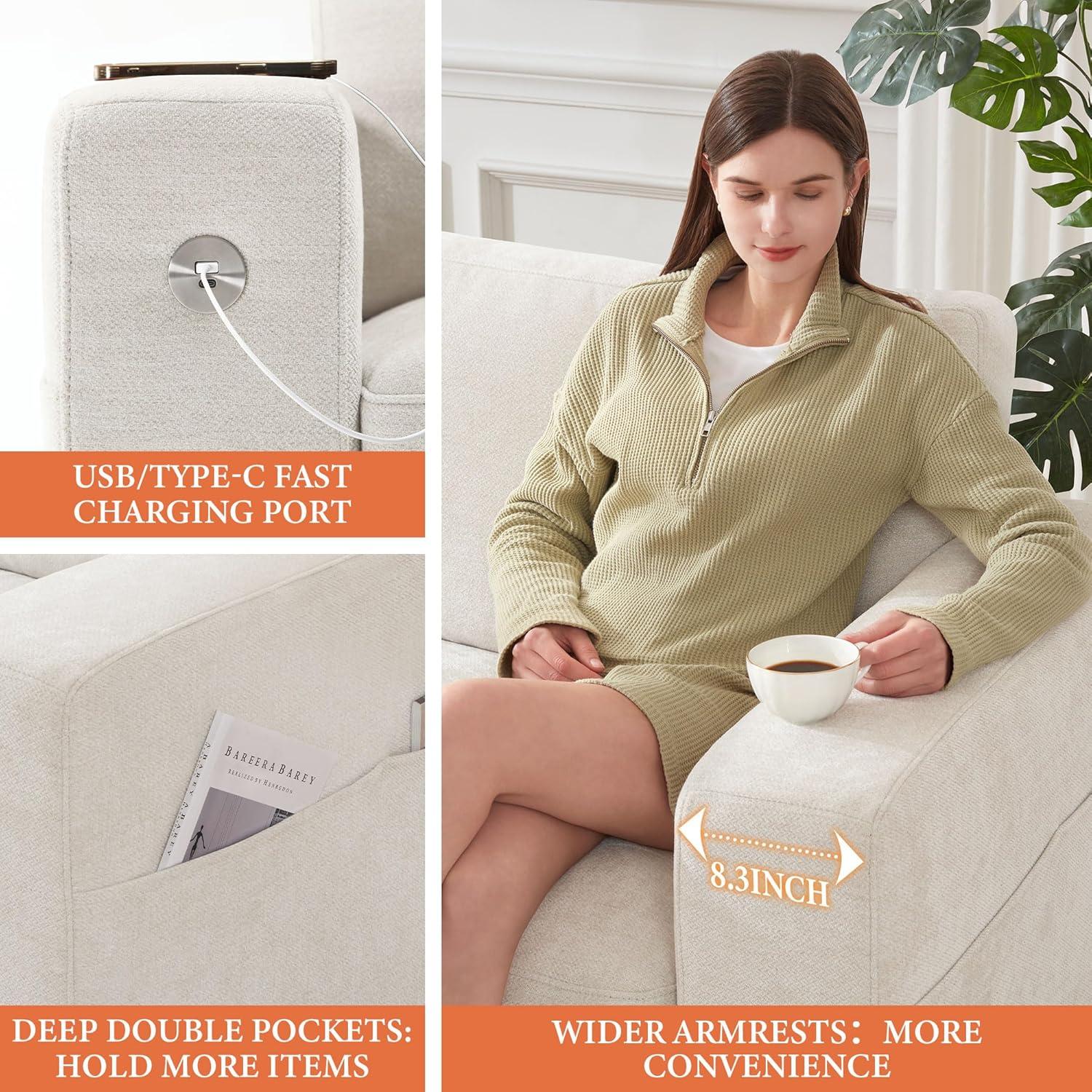
Practical observations from typical setups note that the armrest—where the charging ports sit—often ends up oriented toward a side table or power source, which affects cord routing and how the piece is approached in daily use. Moving the sofa through tight hallways or stairwells sometimes requires minor disassembly or slight cushion adjustment; once in place, cushions are usually patted and smoothed to restore the expected seat depth and appearance.
View full specifications and size options
everyday features in action: how you use the USB Type C port, side pocket and small practicalities
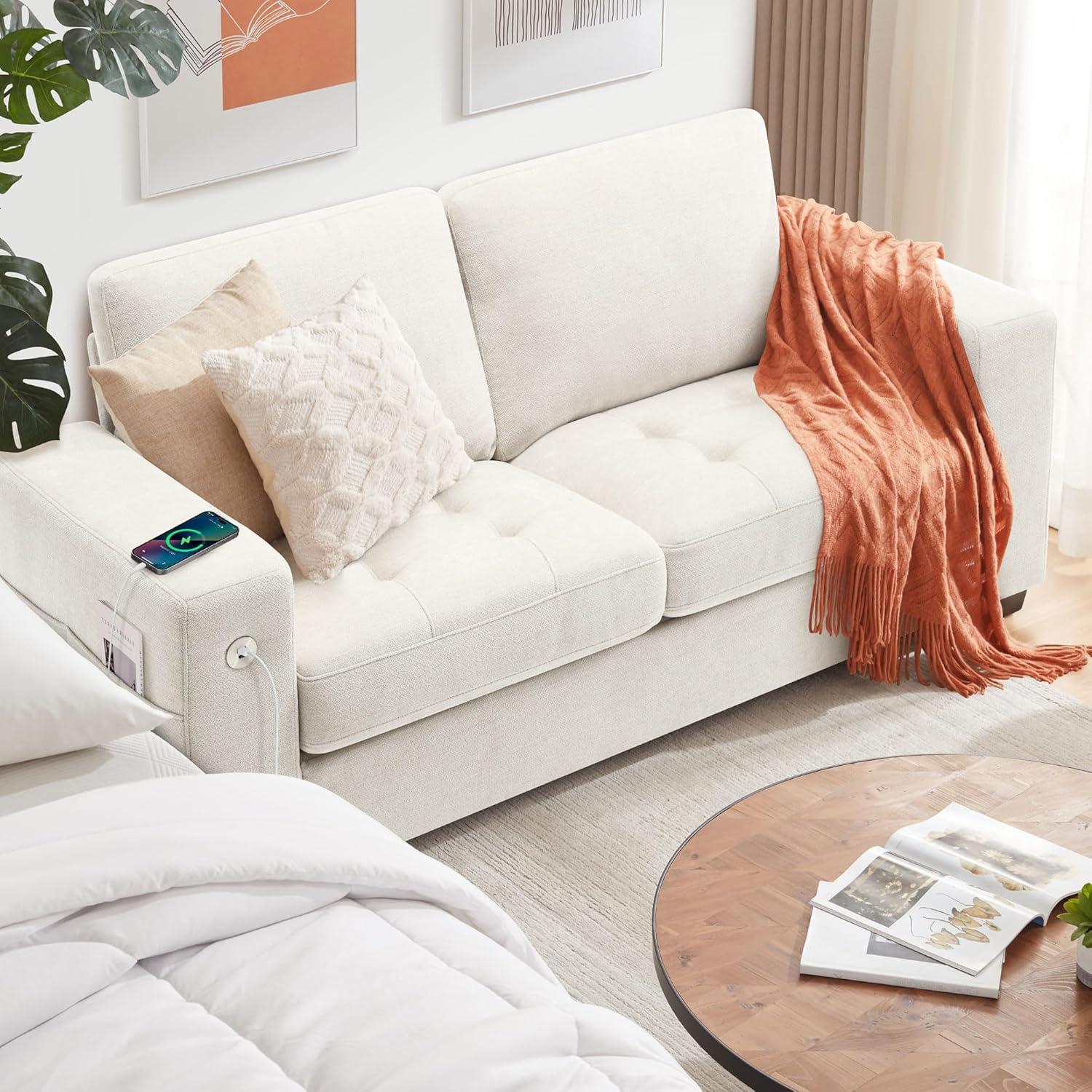
When you sit down, the armrest port quickly becomes part of the routine: you plug your phone in, drape the cable across your thigh and tuck the device into the nearby pocket or onto the cushion. The port’s placement keeps the cord out of the way for short stretches, though when you shift positions the cable sometimes pulls taut and you smooth the fabric or adjust your phone a little. You’ll notice you don’t need to lean toward a wall outlet as frequently enough; charging from the armrest tends to keep a device within easy reach during scrolling or brief video calls.
The side pocket gets used in small, repeatable ways. You slide a remote into it between episodes, slip a paperback in when you start reading, or stand a narrow water bottle in the bottom so it leans against the fabric. Bulky items sit lower in the pocket and can push the armrest fabric outward, so you often tuck the edge back with a fingertip. Small habits form around the pocket: you expect the phone to be there when you stand up, you sweep crumbs away from the opening, and you sometimes fish out a charger cable that’s tangled with a magazine.
| Item | Typical fit / behavior |
|---|---|
| Smartphone | Fits upright or laid flat in pocket while plugged in; cable crosses lap at times |
| Remote | Slides in easily and stays accessible |
| Magazine / Paperback | Fits lengthwise; can cause a shallow bulge when full |
| Water bottle | can stand but may lean; condensation occasionally dampens fabric if unprotected |
Minor practicalities show up in the small movements you make: patting a cushion back into place after pulling the phone free, smoothing a seam where the pocket has stretched, or angling a cable to avoid catching it on a footrest. These are the everyday rhythms you settle into around the armrest port and pocket, rather than dramatic adjustments.
How this loveseat measures up to your expectations and the practical limits you might notice

initial impressions often align with the description, yet everyday use surfaces small, practical realities. Cushions tend to feel supportive at first and then require occasional patting or repositioning as the foam settles; users commonly reach to smooth seams or tuck a corner back into place after shifting. The armrests and pockets tuck items out of sight, though reaching for things can mean leaning forward or sliding across the seat to get a better angle. The fabric invites contact but also shows light surface dust and hair in routine use, so brief brushing or a vacuum run becomes a casual habit.
Over days and weeks, movement patterns reveal trade-offs that are neither surprising nor extreme. Sitting and standing repeatedly highlights the loveseat’s stable frame,while small positional adjustments show where the seat gives most under weight; cushions compress subtly where people sit most. Power-access convenience is clear in use,but cable routing and charger bulk can crowd an armrest area when a device is plugged in. Small parts like zippers and seams are handled frequently, and they tend to show their presence through quick tugs or smoothing actions rather than failure.
| Expectation | typical observation |
|---|---|
| Immediate, even plumpness | Cushions settle with use and benefit from periodic fluffing |
| Accessories readily at hand | Items stay hidden in pockets but sometimes require a shift to retrieve |
| Fabric remains pristine | Surface lint and crumbs collect in daily life and respond to light cleaning |
How to maintain your sofa: cushion removal, cover care and simple upkeep steps
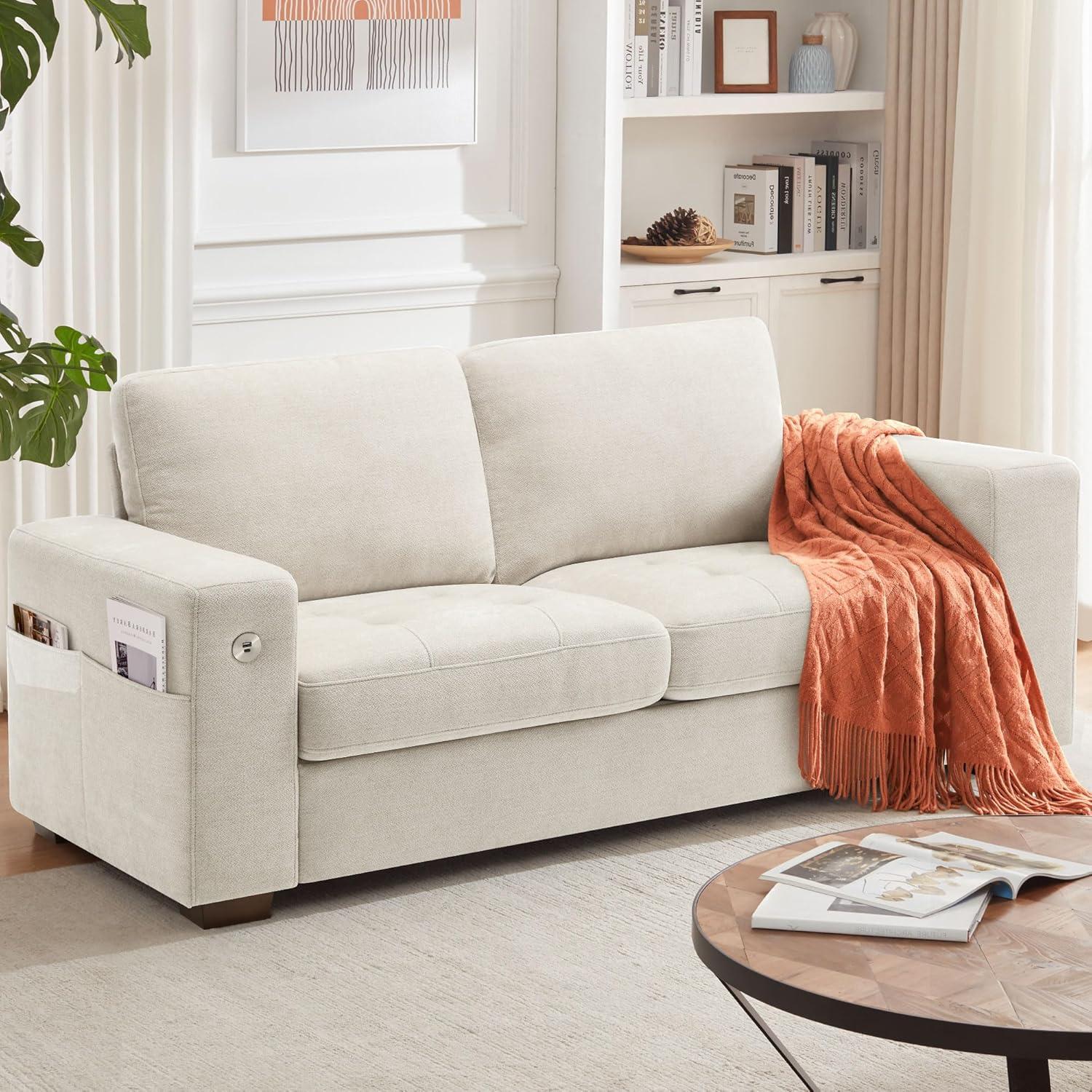
When you take cushions off, they usually come away at the back seam and sit a little fuller than they look on the couch—give them a few minutes to relax if they arrive compressed. You’ll find the foam insert is tucked fairly snugly inside the cover; as you slide it back in, you tend to smooth the fabric and coax corners into place rather than forcing the cover over the foam. Before removing anything, check the side pockets and around the armrests for remotes, charging cables or other small items so they don’t stay trapped in a wash.
Spot cleaning is the first response for most accidental spills: dab gently with a mild detergent solution and a clean cloth, avoiding aggressive rubbing that can shift the nap. If you ever take the covers to the washer, the fabric usually tolerates a gentle cycle and low-heat drying in most household machines, though letting them air-dry until just damp makes it easier to refit and reduces tugging at seams. When the covers are back on, you’ll often find a few small wrinkles or seam shifts; smoothing from the center outward and adjusting the zip or fastener helps the upholstery sit evenly again.
| Task | Typical timing | What you’ll notice |
|---|---|---|
| Vacuuming between cushions | weekly or as needed | Lifts dust and crumbs; pockets frequently enough hold stray items |
| Spot cleaning spills | Promptly after spill | Blotting prevents spread; fabric nap stays more even |
| Machine washing covers | Occasionally, when covers look soiled | Damp smoothing helps re-fit; seams may need realigning |
| Fluffing cushions | After unpacking or periodically | Padding regains shape after a few pats or hours at rest |
Small, habitual actions—vacuuming shallow creases, patting the cushions back into shape, emptying pockets—tend to keep the sofa behaving and looking more consistent over time, even if the fabric shows minor movement as you sit and shift.
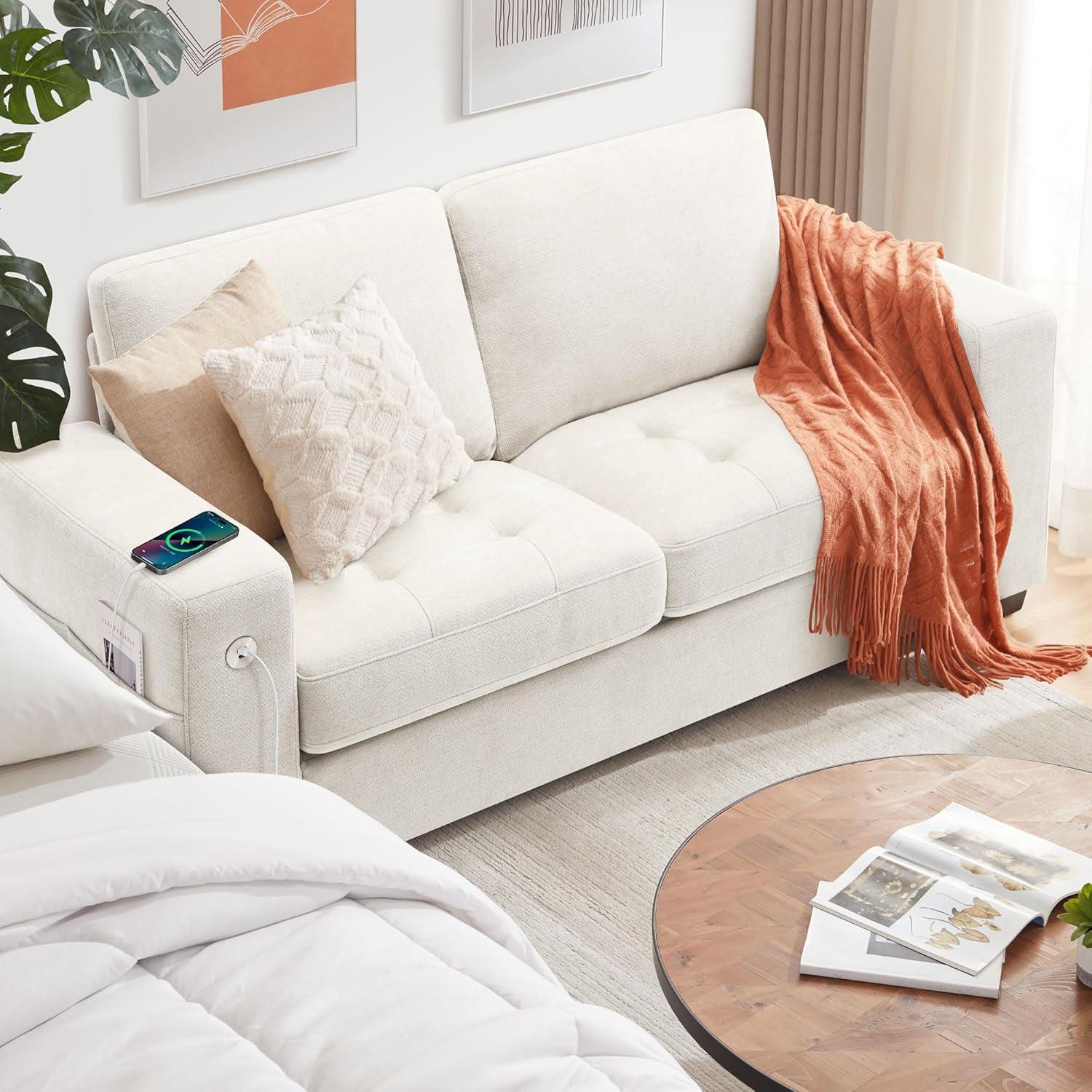
How the Set Settles Into the Room
In daily routines you watch how a sofa loosens its edges and simply finds its place as the room is used, a surface that gathers small motions rather than demands attention.living with the Ihanherry Sofa 70 Inch Loveseat with USB/Type-C Charging Port & Side Pocket, Comfy Modern 2-Seats sofa for Living Room & Bedroom, Removable Medium Firm Sofa Cushion, Breathable chenille fabric, Beige, you notice the cushions soften in the evenings and small conveniences fold into ordinary habit. Over time you see faint lines appear where people rest and the cushions develop the quiet map of regular household rhythms, subtle traces of use rather than statements. It stays.
As an Amazon Associate I earn from qualifying purchases.