Inspiring Green Kitchen Ideas: Modern, Farmhouse, and Nature-Inspired Designs
Innovative Green Kitchen Designs: Blending Style, Function, and Nature
Green kitchens are becoming a sought-after trend, blending timeless charm with contemporary flair. Whether you’re exploring modern green kitchen decor or aiming for a cozy farmhouse vibe, selecting the right shades, textures, and layouts is essential. This comprehensive guide explores how to harmonize colors, finishes, and spatial arrangements to create a unified and inviting kitchen environment. From wall treatments to island designs, and from small apartment layouts to luxurious modern kitchens, discover practical ideas that suit your space, budget, and personal style.
Refreshing Green Kitchen Decor: Crafting a Balanced Palette
Starting with a color scheme that complements natural materials and daylight is crucial for a green kitchen that feels fresh and inviting. Combining wood and stone elements with subtle sea glass accents creates a serene foundation. Incorporate shades like bottle green, sage, and moss sparingly to avoid overwhelming the space. Introducing black and white patterns in small touches—such as a runner rug or framed artwork—adds crisp contrast without stealing focus. For a cohesive look, apply one dominant green on larger surfaces like cabinetry or walls, and reserve a secondary green for accessories and smaller details.
When considering green kitchen wall colors, test paint samples on different surfaces and observe how natural light shifts throughout the day to adjust saturation accordingly. For cabinetry, simple shaker or sleek slab doors paired with hardware matching faucet and lighting finishes create harmony. Open shelving in oak or ash, complemented by reed baskets and ceramic containers, adds texture and warmth. A backsplash featuring white and mint tiles brightens work areas, while grey and oak stools prevent the space from feeling too uniform. Accent lighting in black and brass, along with black and white terrazzo trays, can punctuate prep zones elegantly. Seasonal swaps with teal glassware, moss linen towels, and a bottle green kettle keep the design dynamic.
Contemporary Green Kitchens: Sleek and Streamlined
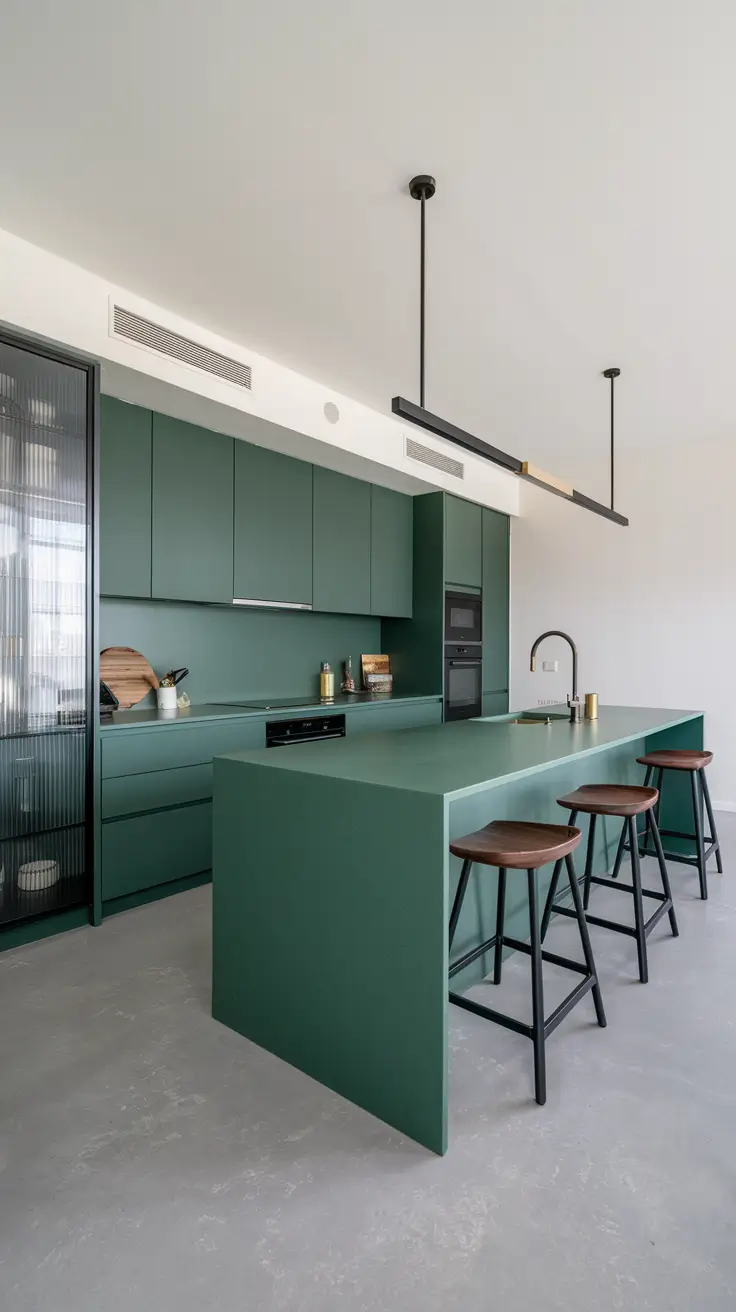
For a modern green kitchen, the goal is to achieve clean lines, integrated storage, and a muted color palette that remains inviting. Flat-panel cabinetry in emerald green paired with a thin porcelain backsplash offers a crisp, sophisticated backdrop. Adding teal accents on niches or shelves introduces depth without disrupting balance. A linear layout with a strong central axis ensures functionality and visual clarity. Luxury touches like fluted glass, seamless toe kicks, and precise reveals elevate the design without complicating upkeep.
Handleless doors with built-in pulls, quartz countertops with refined finishes, and minimalist hoods that blend into the walls emphasize simplicity. A bottle green waterfall island with seating on one side and concealed drawers on the other maximizes utility and style. Black and walnut stools echo the black and brass pendant lighting, while narrow track lighting ensures well-lit workspaces. Grounding the palette with warm grey floors and repeating black and bronze accents in accessories ties the scheme together. Crisp styling with white and mint ceramics, glass vases, and reed diffusers completes the look.
Rustic Farmhouse Green Kitchens: Embracing Warmth and Texture
Farmhouse-inspired green kitchens combine color with tactile elements like beadboard, shiplap, and hand-glazed tiles to create a welcoming atmosphere. Sage and moss greens pair beautifully with natural pine and aged brass hardware. Painting lower cabinets in bottle or forest green while keeping upper cabinets light prevents the room from feeling heavy. Classic farmhouse features such as vintage-style sinks, bridge faucets, and wall sconces add timeless character. Exposed beams and warm off-white walls allow the greens to shine.
Shaker doors with visible wood grain, unlacquered brass hardware, and durable butcher block or light quartz countertops are practical and charming. Black and white checkerboard flooring anchors the space without overpowering it, while beige and flax Roman shades soften windows. Open shelves for everyday dishes, plate racks, and freestanding islands with turned legs in soft sage enhance the rustic appeal. Layered neutrals in linens, stools, and ceramics add depth without competing. A reclaimed wood and iron pot rack above the prep area introduces personality and authenticity.
Choosing the Perfect Green Paint: Transform Your Kitchen
Selecting the right green paint involves understanding both the science of color and the mood you want to evoke. Consider the light reflectance value (LRV) of your chosen shades and test them on walls and cabinetry samples. Softer greens like sage, little sage, and reed green soothe busy spaces and complement natural materials. For a bolder statement, emerald, forest, and bottle green add richness, especially when paired with white or mint tiles and light countertops. Remember that paint sheen affects color perception—matte finishes offer subtlety, while satin reflects more light and appears brighter.
For cabinetry, high-quality satin or semi-gloss enamel provides a durable, wipeable surface, while walls benefit from washable matte finishes that conceal imperfections. Pairing grey or warm-toned floors with black and aged brass hardware grounds the palette. Simple subway or hand-cut tile backsplashes add texture, and black and white patterned runners introduce graphic interest. Keeping ceilings light in narrow spaces visually expands the room, and repeating cabinet colors on islands or open shelves strengthens the overall scheme. Displaying teal or moss glassware adds effortless pops of color.
Maximizing Small Green Kitchens: Space-Savvy Solutions
In compact kitchens, strategic use of color can define zones and visually enlarge the space. Opt for lighter greens like small sage or mint on primary cabinetry, reserving deeper greens for accents. Efficient layouts with slim countertops, built-in appliances, and full-height storage optimize every inch. Glass cabinet doors or open shelving near windows maintain openness, while mirrors, glossy tiles, and well-placed pendant lights amplify natural light.
Space-saving appliances such as counter-depth refrigerators, slide-in ranges, and single-bowl sinks with integrated cutting boards enhance functionality. Fold-down wall tables painted in white and mint serve as versatile prep or dining areas, paired with simple stools. Minimal hardware and consistent black and stainless finishes on small appliances keep the palette calm. Beige and oatmeal runners soften floors, and small forest plants add life without crowding. For a warm contrast, incorporate orange or terracotta ceramics.
Statement Green Walls: Making a Bold Impression
When walls take center stage, select one dominant green and a complementary secondary tone to create a purposeful atmosphere. Rich hues like emerald, bottle, and forest green make striking feature walls, while softer shades such as small sage, mint, and reed green soften corners. Satin finishes offer durability and light reflection, and keeping ceilings light prevents the space from feeling closed in. Black and white artwork with simple metal frames adds clean lines without competing with the paint. Wood and stone accents ground the room, and repeating teal or moss in fabrics connects adjacent areas.
Incorporate materials thoughtfully—use tile or paneling in splash zones and paint in areas needing visual calm. White and mint zellige backsplashes, sage beadboard wainscoting, and plastered hoods in lighter shades add depth without clutter. Picture ledges allow seasonal art rotation, while beige linens, black and bronze sconces, and reeded glass cabinet doors layer texture. Testing paint samples under various lighting conditions ensures undertones complement your finishes. Adding brass rails for utensils, sea glass bottles, and botanical prints with purple and green hues enhances the palette’s richness.
Wood and Green: A Timeless Combination for Cozy Kitchens
Pairing green with wood and natural textures creates a warm, grounded kitchen aesthetic. Shades like sage, moss, and small sage on cabinets, repeated on islands or pantry doors, unify the space. Light walls balance deeper forest or reed greens used sparingly on stools or fabrics to avoid darkening the room. Grey and stone flooring warms the palette, making the green feel inviting rather than cool. This approach suits both small kitchens and open layouts, adaptable to rustic or modern styles.
Choose shaker or slim slab doors in oak or ash, matte quartz or sealed butcher block countertops, and backsplashes that tie wood grain to paint colors. Beige and flax runners soften hard surfaces, while reeded glass doors add sparkle without visual noise. Black and bronze lighting fixtures break up the composition, and white and mint dishes on open shelves keep the look fresh. Accessories like pegged wooden rails, woven baskets, and moss linen towels introduce texture. Painting islands slightly darker than perimeter cabinets helps them read as furniture.
Coastal-Inspired Green Kitchens: Serenity by the Sea
For a tranquil, seaside feel, use a palette of teal, reed green, and pale mint to evoke gentle horizons. Keep surfaces light and reflective to bounce daylight, incorporating white and mint tiles and brushed metals that resist fingerprints. Pale walls with colored cabinets and alternating sage and blue-green accents prevent the space from feeling cold. This style works well in apartments with limited natural light and complements modern kitchens with clean lines.
Flat-panel doors with built-in pulls, porcelain backsplashes with subtle ripples, and quartz counters reflecting sea foam hues create a cohesive look. Glass-front cabinets near windows maintain openness, while sandy oak stools and brushed nickel or soft black lighting reduce glare. Pink and coral ceramics add warmth in moderation, and bowls of citrus fruit introduce natural pops of orange. A small framed seascape ties the palette together elegantly.
Minimalist Green Kitchens: Simplicity Meets Function
Minimalist green kitchens emphasize clean lines, concealed storage, and carefully curated color placement. Flat-panel cabinetry and integrated appliances create an architectural feel, with green featured on one or two planes—often an island or accent wall—while the rest remains light and neutral. Accents in teal or emerald provide focal points against soft, chalky backgrounds. This restrained approach ensures easy maintenance and a calm cooking environment.
Specifications include handleless doors, thin porcelain backsplashes, and pale composite countertops resistant to stains. Minimal hardware and focused lighting with narrow tracks and spotlights illuminate work areas without visual clutter. Wood and black accessories add structure, and black-and-white art introduces graphic interest. Limited open shelving with white and mint ceramics keeps the space fresh. Drawer organizers and appliance garages maintain clutter-free counters, essential for minimalist kitchens.
Vibrant Orange and Green Kitchens: Energizing Yet Balanced
Combining orange and green creates a lively kitchen atmosphere without overwhelming the senses. Use green cabinetry in shades like sage or emerald, reserving orange for textiles, stools, artwork, or accent tiles. Light walls keep the palette clean, while black and warm nickel metals provide cohesion. In smaller spaces, limit orange accents to a few well-placed items to maintain balance. Graphic runners or black-and-white frames add order to the energetic mix.
Choose pale countertops and simple tile fields with subtle terracotta stripes. Stools with wooden seats and soft orange cushions complement the scheme, while beige and sand rugs conceal wear. Teal glassware bridges the color wheel, and lighting in dome or globe shapes softens edges. A bottle or forest green island grounds the vibrant palette. Accessories like utensil rails, reed baskets, and dimmers help transition the mood from bright mornings to cozy evenings.
Teal and Green Kitchens: Dynamic Yet Harmonious
Teal brings energy to kitchens without overwhelming the space, especially when paired with complementary greens like sage or small sage. A teal island contrasted with lighter perimeter cabinets creates a striking focal point, while pale walls maintain openness. In compact kitchens, limit teal to a single plane and repeat it subtly in fabrics to avoid visual clutter. White and mint tiles or porcelain slabs keep prep areas bright and balanced.
Flat-panel or slim shaker doors with uniform reveals allow color to shine. Softly varied tile backsplashes add texture and prevent flatness under task lighting. Wooden stools with black bases echo pendant finishes, and quartz counters maintain a crisp profile. Reeded glass pantry doors add light-reflecting texture without busy patterns. Grey and sand runners ground the floor, and utensil rails, sea glass bowls, and herb troughs add practical charm. Dimmers on pendants enable mood shifts from bright prep to relaxed evenings.
Practical Green Kitchens: Durable and Comfortable for Daily Use
Practical green kitchens prioritize durability and ease of maintenance while maintaining aesthetic appeal. Mid-tone greens like sage, small sage, or moss on cabinets paired with light walls and creamy counters create a welcoming environment. Open shelving with white and mint dishes adds freshness without extra upkeep. Wood textures warm the space, and traffic paths remain open for smooth daily routines.
Use satin enamel or conversion varnish on cabinets, high-performance quartz or porcelain counters, and simple, easy-to-clean tile patterns. Comfortable pulls in black or warm nickel reduce fingerprints, while grey and natural flooring conceals crumbs. Layered lighting balances bright task areas with cozy ambient zones. Small rail systems and pull-out recycling bins keep counters clutter-free. Repeating cabinet colors on pantry doors or bench bases ensures a purposeful palette. Testing paint under actual lighting prevents unpleasant color shifts.
Bright and Airy Green Kitchens: Enhancing Light and Space
To create a light and spacious feel, apply green in areas that don’t block natural light, using reflective surfaces to amplify brightness. Cabinets in small sage or mint paired with creamy upper runs and darker accents on islands or toe kicks maintain openness. Glossy tiles, satin wall paints, slim shelves, mirrors, and reeded glass near windows preserve sightlines, essential in small kitchens. Sea-inspired accents like teal glass and pale blue bowls keep the palette fresh without feeling cold.
Specify thin porcelain backsplashes with subtle texture, pale composite counters, and handleless or low-profile pulls to minimize shadows. Neutral white under-cabinet lighting ensures true color rendering. Wood and black bases add quiet structure, while beige and oatmeal runners warm floors visually. Counter-depth appliances improve circulation, and slightly warmer ceiling tones prevent sterility. Replacing some upper cabinets with open shelves near windows breaks up views and facilitates styling. Repeating similar cabinet shades side by side highlights subtle differences in natural light.
Emerald Green Kitchens: Sophisticated Drama
Emerald green offers a dramatic yet refined look when paired with pale counters, precise lighting, and clean lines. Use emerald on islands or tall cabinet walls, balancing with light surrounding surfaces to avoid heaviness. Black and white accents add graphic interest, while walnut or ash wood tones introduce warmth. This approach suits both modern and luxury kitchen styles, scaling well in apartments by limiting emerald to a single feature.
Choose high-grade enamel or lacquer cabinetry, porcelain slab backsplashes with gentle movement, and pale stone or composite counters that reflect light. Black and satin nickel pendants act as elegant focal points, and thin toe-kick reveals lighten the visual mass. Reeded glass doors reflect light subtly, breaking up solid color expanses. Wide plank grey flooring grounds the palette without competing. Layered lighting and limited metal finishes maintain harmony. Adding purple and green abstract art or sea landscapes softens intensity and adds cultural depth.
Enhance Your Green Kitchen with Thoughtful Accessories
To complete your green kitchen design, consider practical and decorative elements that enhance both function and style. Incorporate under-cabinet lighting with neutral white bulbs to keep colors true, and use dimmers to adjust ambiance from bright prep to relaxed dining. Add utensil rails, magnetic knife strips, and pull-out recycling bins to maintain clutter-free counters. Display seasonal glassware in teal or moss tones, and introduce plants like small ferns or forest-hued greenery to bring life and soften edges. Use textured elements such as reed baskets, woven runners, and reeded glass doors to add depth without overwhelming the space.
For kitchen islands, opt for waterfall edges or rounded corners to improve flow and safety, especially in homes with children. Include ample overhangs for seating, built-in electrical outlets for convenience, and hidden storage solutions like drawers for pots and trays. Balance bold island colors with lighter surrounding cabinetry and floors to maintain visual harmony.
Explore a curated selection of green kitchen decor, kitchen island storage, and kitchen lighting fixtures to find pieces that complement your design vision.
As an Amazon Associate I earn from qualifying purchases.