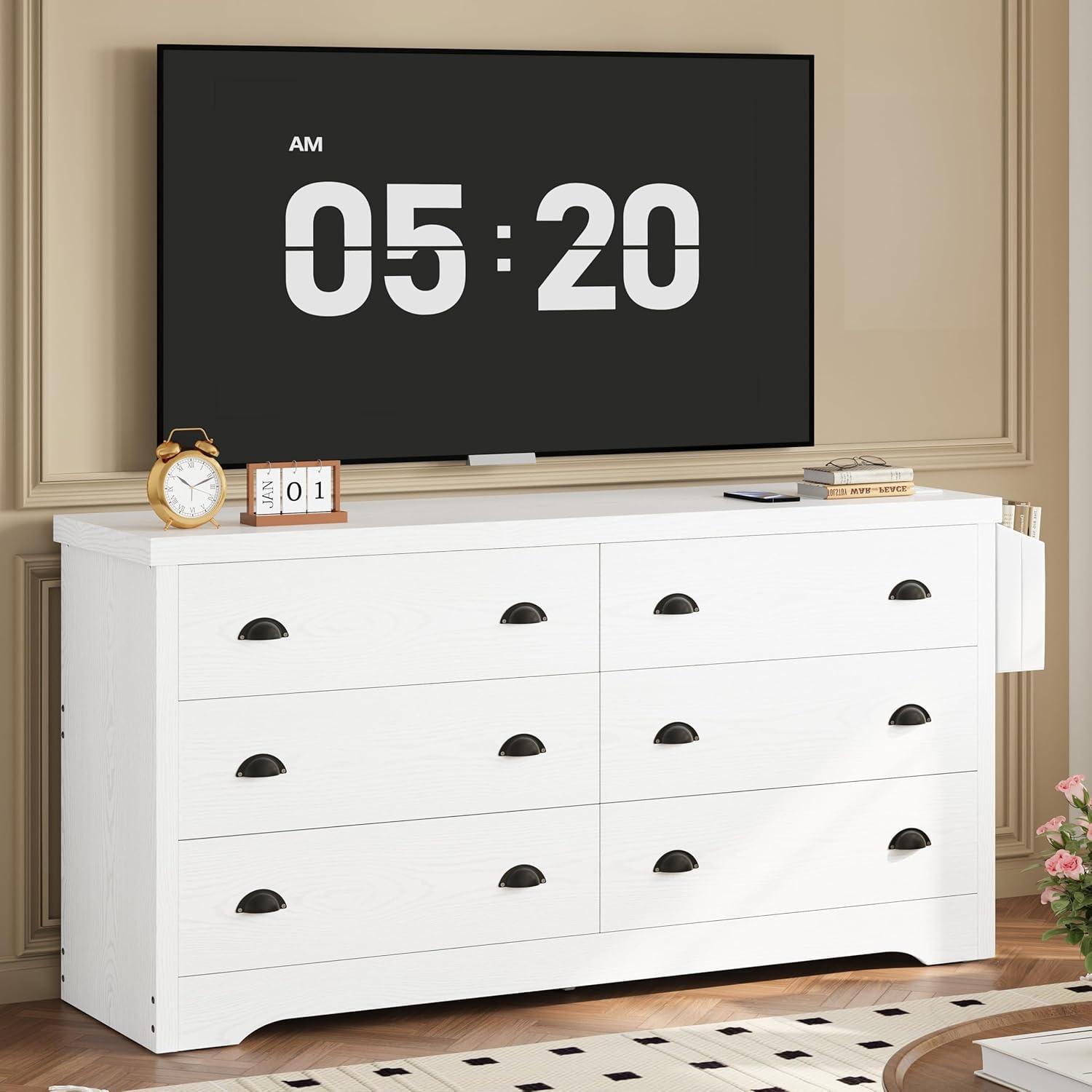
LIKIMIO 59in 6-Drawer Dresser – holds your TV and chargers
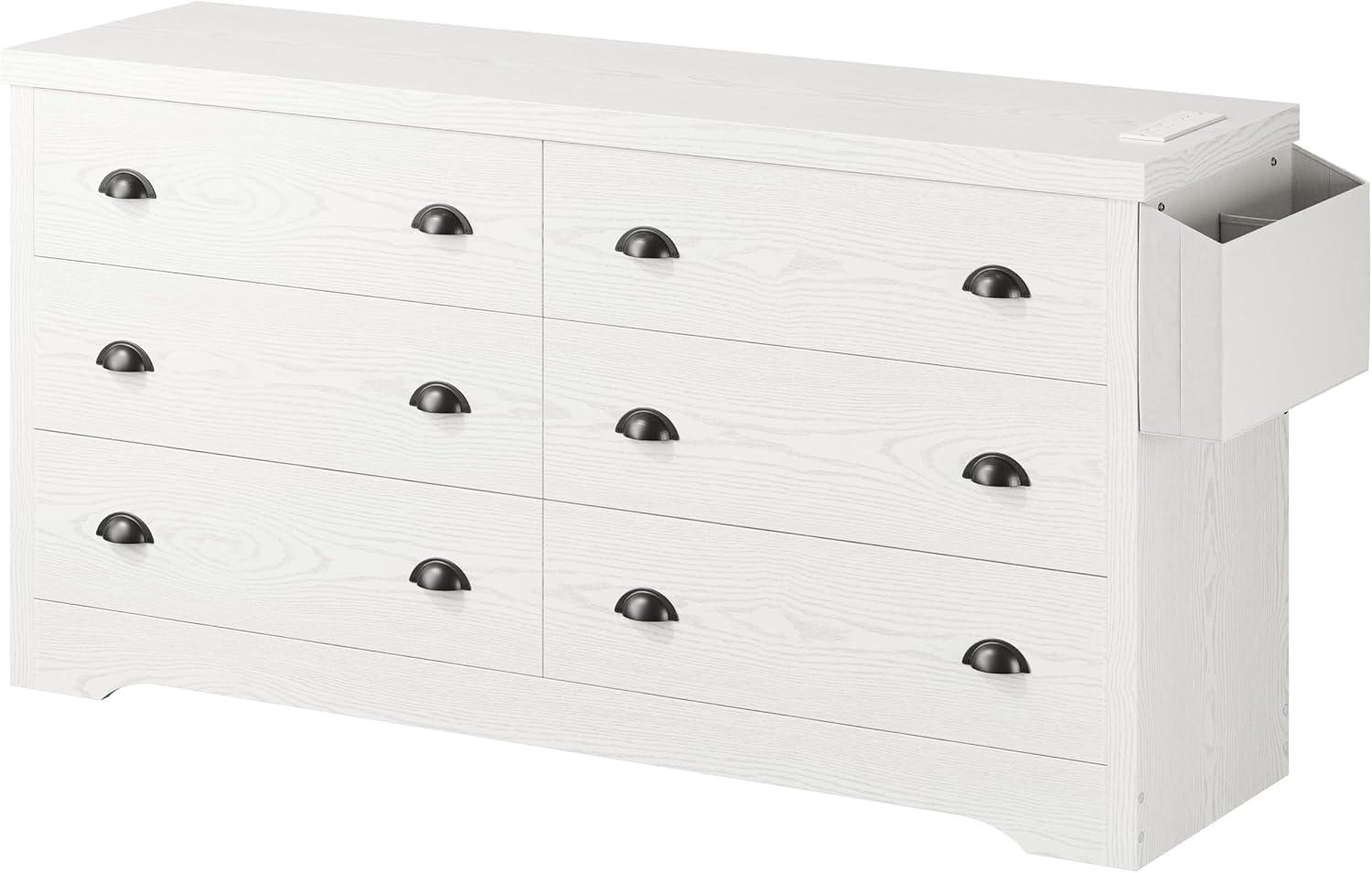
you first notice the scale — LIKIMIO’s 59-inch six-drawer dresser with a charging station stretches nearly five feet across and gives the room an immediate horizontal line. up close the white MDF has a cool, smooth feel under your palm and the metal handles click with a quiet, utilitarian note. Pull a drawer and the slides move steadily; the interiors read a bit shallow and the fronts don’t travel all the way out, so you end up leaning in to reach the back. On top it holds a TV and a small cluster of chargers without looking crowded, its visual weight steady and undeniably practical in everyday light.
What greets you out of the box: the dresser’s scale, finish, and included parts
Unboxing greets you with a lot of flatness and a few small bags. You lift open the top flaps and see the large white panels laying stacked and protected by foam sheets and cardboard; the top panel in particular feels long against your forearms as you slide it free, while the drawer fronts sit slightly askew in their foam sleeves. The finish shows itself instantly — a smooth white surface with a soft sheen rather than a high gloss, and the edge banding meets the face panels with visible seams where the tape has been applied. Running your hand along a corner reveals a slightly synthetic texture typical of painted MDF rather than raw wood grain.
Parts are bundled with the kind of organization that invites you to sort them out before you begin. Hardware comes in multiple small plastic bags, each labeled or numbered, and the instruction booklet is tucked on top so it’s the first thing you pick up. The charging module and its wiring are already boxed apart from the panels, and the metal drawer slides, handles, and cam-lock pieces are laid out in separate packets. You’ll also find a thin back panel, rubber feet, and a small strip of the type of felt or plastic pads meant for floor contact; these arrive loose rather than attached.
| Item seen first | How it appears in the box |
|---|---|
| Top and side panels | Stacked flat, foam between pieces, long and somewhat cumbersome to lift alone |
| Drawer fronts and boxes | Wrapped in protective sleeves, fronts visible with predrilled holes for handles |
| Hardware packets | Multiple small labeled bags containing screws, cams, handles, and slides |
| Charging unit | Separate boxed module with cord tucked in foam |
| Instruction manual | Stapled booklet on top of the pile, with parts list you’ll likely reference first |
Taken together, the first encounter is practical rather than decorative: you find enough protective packaging to keep the panels unmarred, a clearly visible finish ready for a final wipe, and a small collection of hardware that will dictate how much sorting you do before assembly. small scuffs are possible if pieces sit against one another in transit, and some seams where edge tape meets panel face catch the light, but most of what greets you is ready to be unpacked and arranged for the build.
How the white silhouette sits in your room and reads beside a bed or entryway
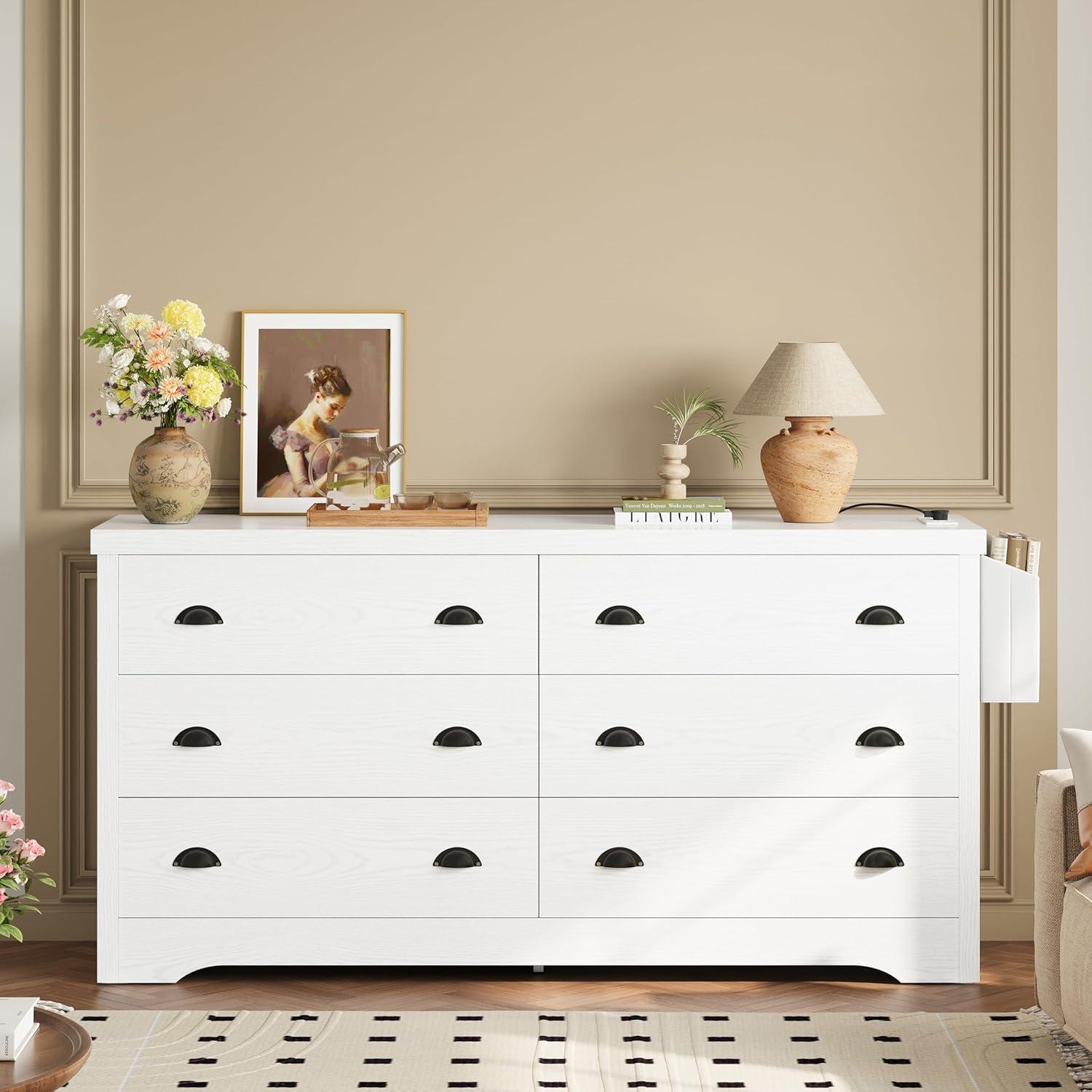
The white silhouette sits low and horizontal beside your bed or just inside the entryway, its clean top edge cutting a steady line against the wall. In daylight the finish reflects a soft, even light so the piece reads as a pale plane; after dusk a bedside lamp or hallway bulb rounds the corners and the dresser takes on a warmer presence. You catch it out of the corner of your eye when you enter the room, and when you stand beside it to drop something off you notice how its shadow pools along the floorboard. Habitual gestures emerge: you smooth a stray napkin on the surface, tuck a charging cable back behind a lamp, or absentmindedly run a hand along a drawer face as you pass.
Placed in an entryway it tends to anchor a short run of wall, filling space horizontally and altering how you move through the threshold; in tighter passages you find yourself angling to get by, while in a bedroom it reads as an extension of the bed’s low profile. The dresser shifts subtly when bumped—sometimes a fraction on hardwood,sometimes not at all on carpet—so you’ll notice small,situational adjustments as you live around it.For some rooms it can feel like a calm backdrop, for others it claims more of the room’s visual weight; either way, it settles into everyday routines and becomes one of those pieces you interact with without thinking about it.
How the materials feel to your touch and the way the drawers move
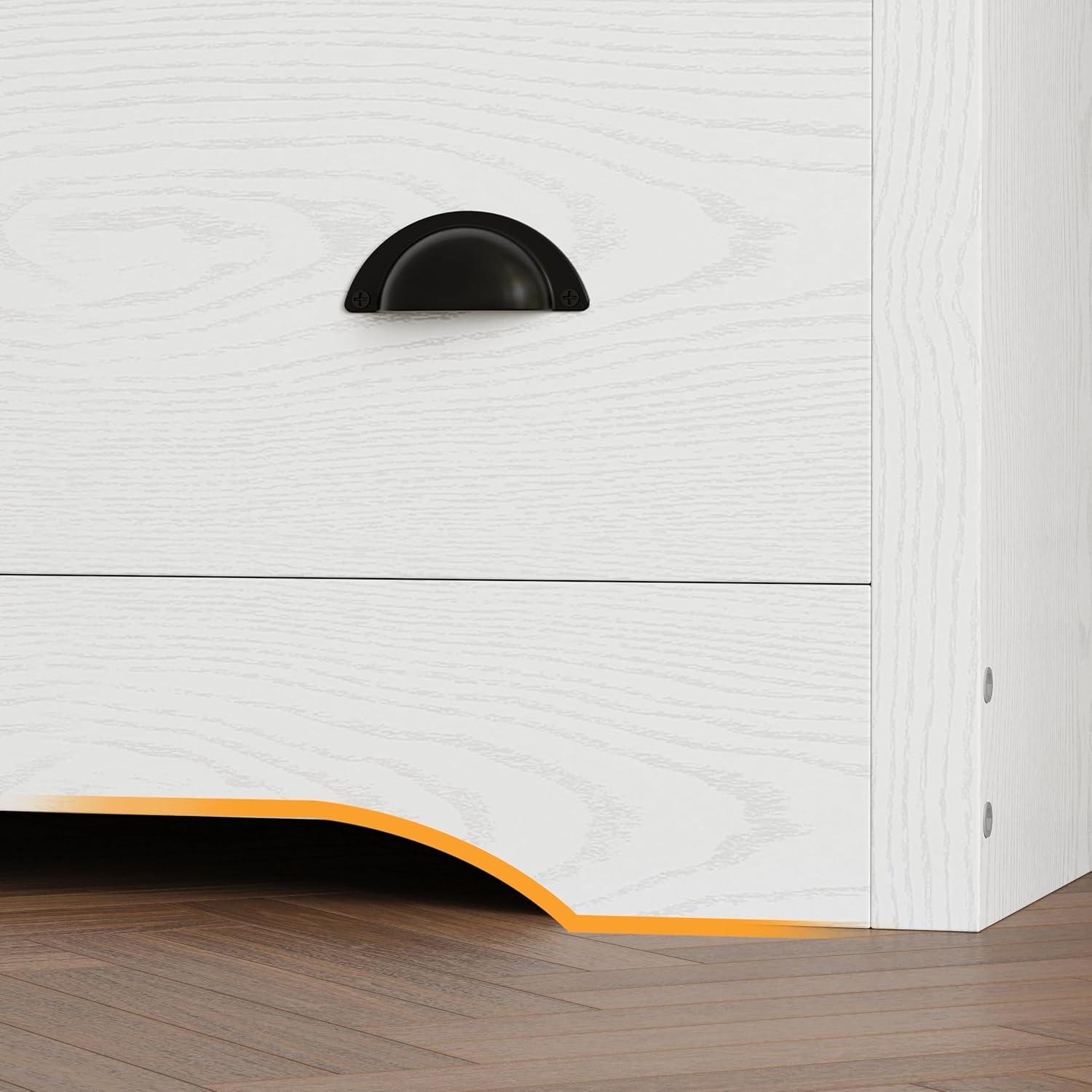
When you run your hand across the dresser,the painted MDF feels uniformly smooth and a little cool to the touch; fingerprints show up briefly and you’ll often find yourself wiping a streak away without thinking. The metal pulls have that quick, cold contact that steadies your grip before you tug. At the joins and panel seams you can feel the edges change—nothing sharp, just a distinct transition that makes you adjust your hand placement as you open each drawer. The top surface gives under pressure like a solid board, not upholstery, and the small rubber feet at the base add a faint, slightly grippy texture when you kneel down to check alignment or slide the unit a small distance.
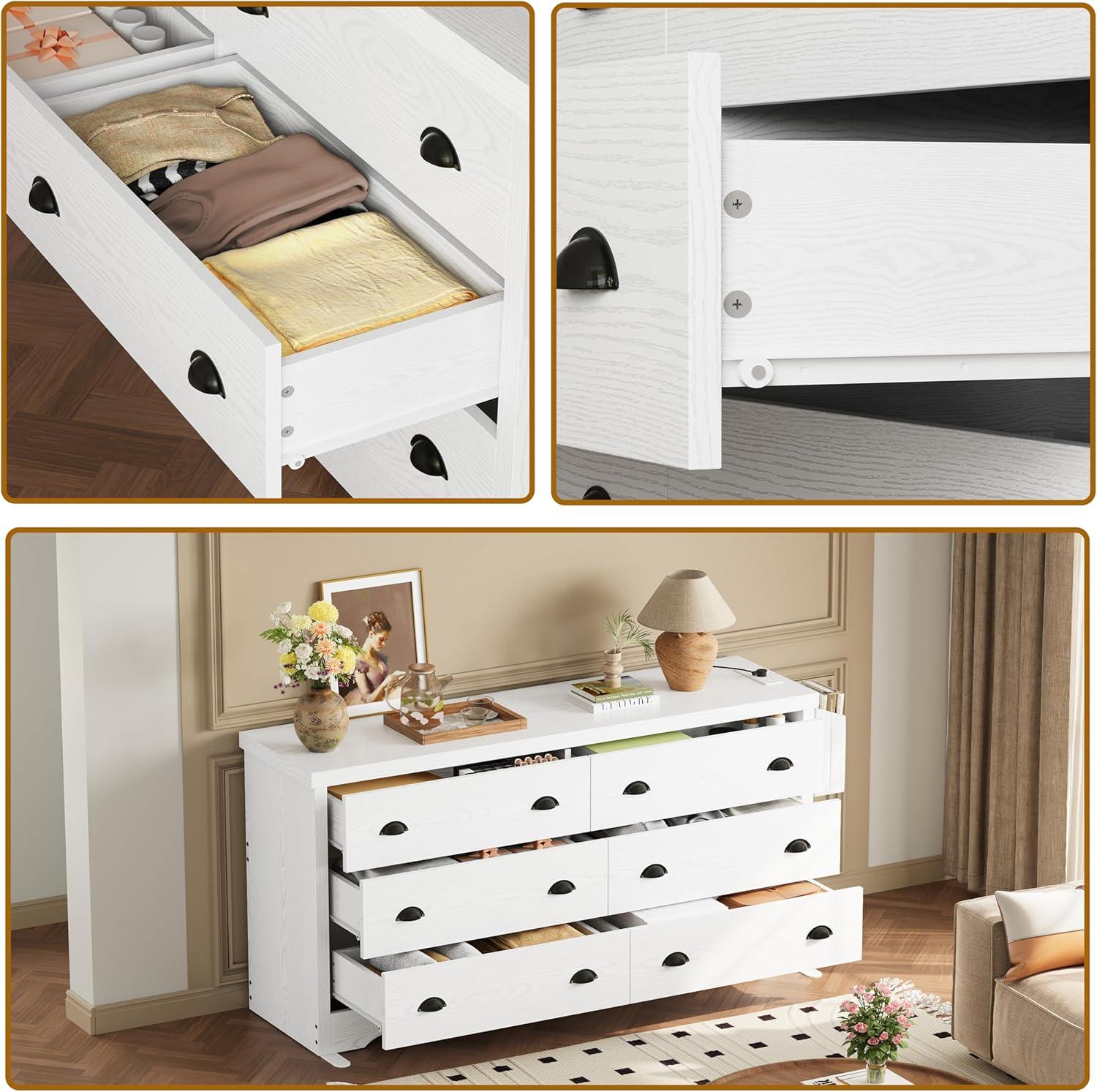
When you open and close the drawers you notice a mix of behaviors. Most pulls start smoothly,then develop a light resistance partway through; in many everyday uses the drawers extend only about halfway,so reaching to the back sometimes means angling the drawer or moving its contents forward.With a few tugs the runners tend to settle into a quieter, steadier glide, though an initial catch or soft scrape can happen—particularly when the drawers are filled and you habitually tug a little harder. In short, the contact points (handles, fronts, tracks) feel functional and familiar, and the movement patterns change subtly with how you load and handle the drawers.
| Contact point | How it feels in use |
|---|---|
| Painted surfaces | Smooth, slightly cool; shows fingerprints briefly |
| Metal handles | Cool, solid grip before pulling |
| Drawer slides | Generally smooth with occasional initial resistance; often extend about halfway |
Where it fits in your space: footprint, TV staging, and wall clearance
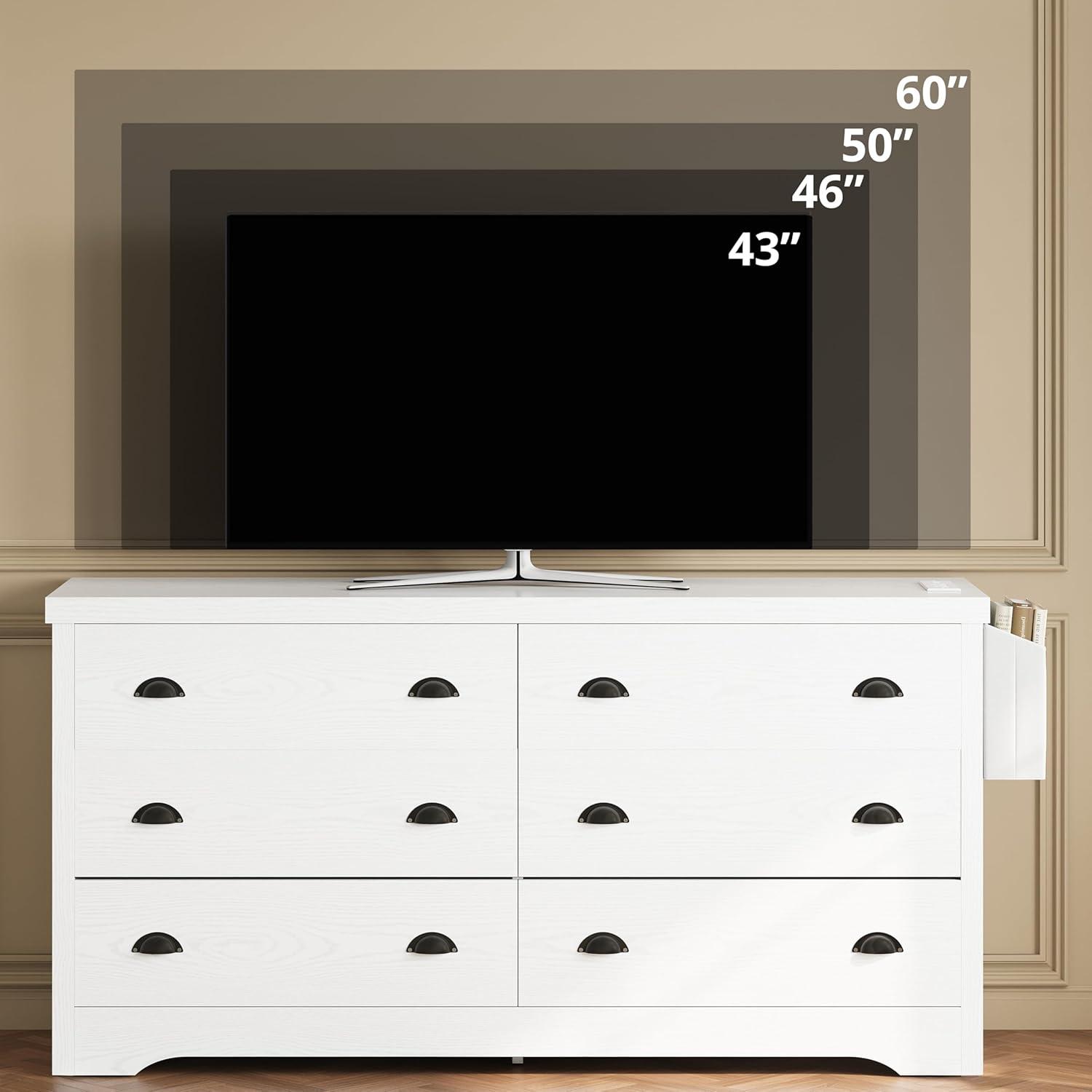
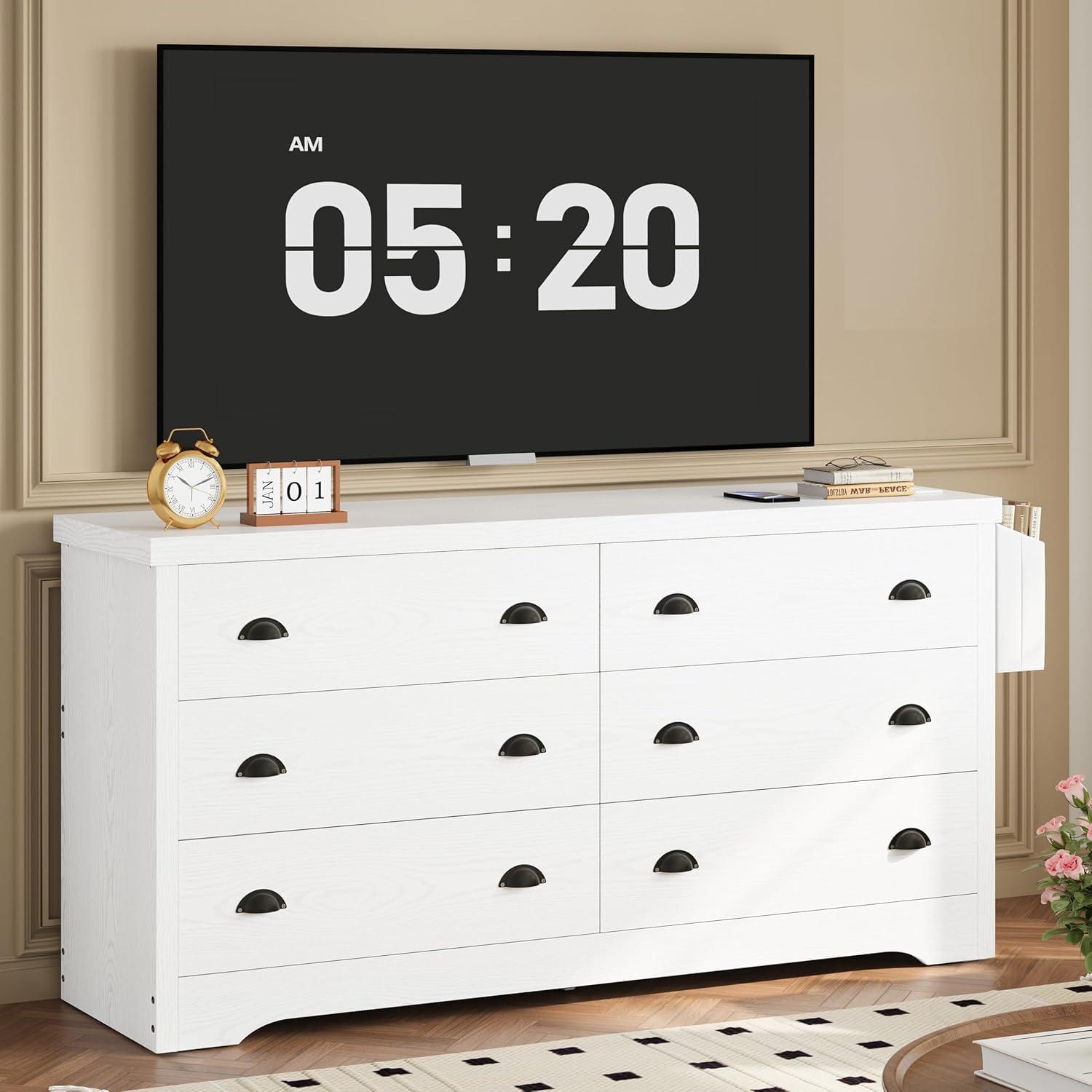
Where it sits in your room becomes obvious the moment you step back after assembly: it reads as a long, low rectangle that runs along the wall and immediately defines how much horizontal real estate you have left. When you slide it into place you’ll notice the rubber feet make small adjustments possible on hardwood, but once set it feels heavy and reluctant to move — shifting it later usually means two peopel. The top surface settles into use as a staging area; items placed there tend to be arranged around a central screen and the outlets on the back edge, so the back edge rarely sits flush against the wall in everyday use.
In observed setups, the top surface often carries a television plus one or two peripherals without appearing crowded. Reports indicate a television and a game console or soundbar can share the surface while leaving a narrow strip at the back for cable runs. Reviewers also note that the dresser’s rear edge is commonly pulled a few inches away from the wall to access the built-in charging station and route power cords, and that the piece can be slid forward an inch or two to reach plugs if needed.
| Aspect | Typical in-room behavior |
|---|---|
| Footprint along the wall | Tends to read as a long, low anchor—takes up continuous horizontal space and limits nearby furniture placement |
| TV staging | Top surface commonly supports a mid-to-large TV plus a small console; devices and cables are usually arranged toward the back edge |
| Wall clearance | Often left a few inches from the wall for cord access and the charging station; moving it later is effortful once assembled |
Drawers in regular use change the clearance dynamics: when opened, they don’t always extend fully in some setups, so the needed front clearance can feel less than expected but also means reaching into shallow drawers is part of the daily routine. For households that keep cables plugged into the top outlets, the piece rarely sits flush for long — cords and chargers nudge it forward a little, and that small gap becomes an accepted part of the arrangement rather than an occasional adjustment.
View full specifications and size options
How you use it day to day: the charging station,storage rhythm,and hardware
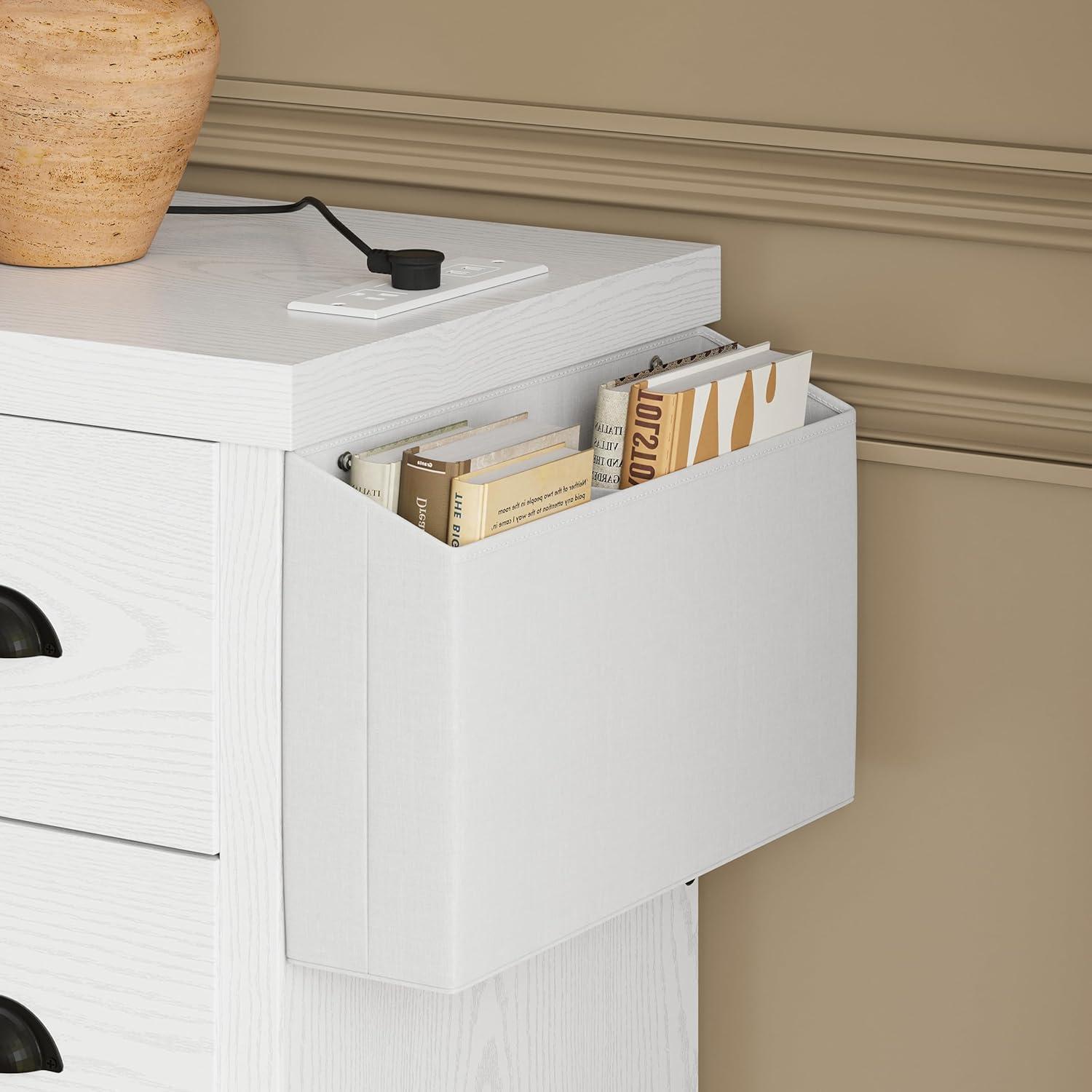
Most mornings and nights the dresser becomes a functional landing strip. You plug a phone or two into the built‑in outlet and USB ports on the top, set a tablet beside the lamp, and the top surface quickly reads as “charging zone.” Cords tend to drape toward the back and you find yourself nudging them into the gap behind the dresser so they don’t snag when you open a drawer. Overnight charging is routine: devices sit upright or lie flat across the top,sometimes nudging one another when you reach for an alarm. The side storage pocket often collects a remote or a stray charging cable, and it can sag a little when fuller items are tucked in; you still reach for it almost automatically when you want a controller or lightweight accessory within arm’s reach.
Your daily storage rhythm is tactile and repetitive. You slide a drawer open to the same notch each time — usually about half to three‑quarters of the way — and the metal handles give a cool, quick grip as you pull. Drawers glide with a light scrape rather than a clunk, and you’ll sometimes use two hands to straighten a stack of tees or smooth out socks before closing. The top drawers tend to hold small, frequently used items so they’re opened more often; lower drawers get folded laundry and are visited less, which means you only notice minor misalignments when you haul something larger out. The dresser’s feet cushion the piece against the floor so it doesn’t scoot when you lean on it,and after a few days you adopt small habits — angling the charger so it doesn’t rest on a drawer face,or pressing the drawer fronts once to make sure they sit flush.
| Location | Typical daily items | Observed behavior |
|---|---|---|
| top surface | Phone, tablet, lamp, charging cables | Becomes a charging hub; cords routed to the back to avoid snagging |
| Side pocket | Remote, small cables | Picked up frequently; can sag when overloaded |
| Upper drawers | Underwear, socks, daily tees | opened most frequently enough; contents adjusted and smoothed multiple times a week |
| Lower drawers | Bulkier folded items | Accessed less; stacks shifted when you pull items out |
How this dresser lines up with your expectations and the practical limits you face
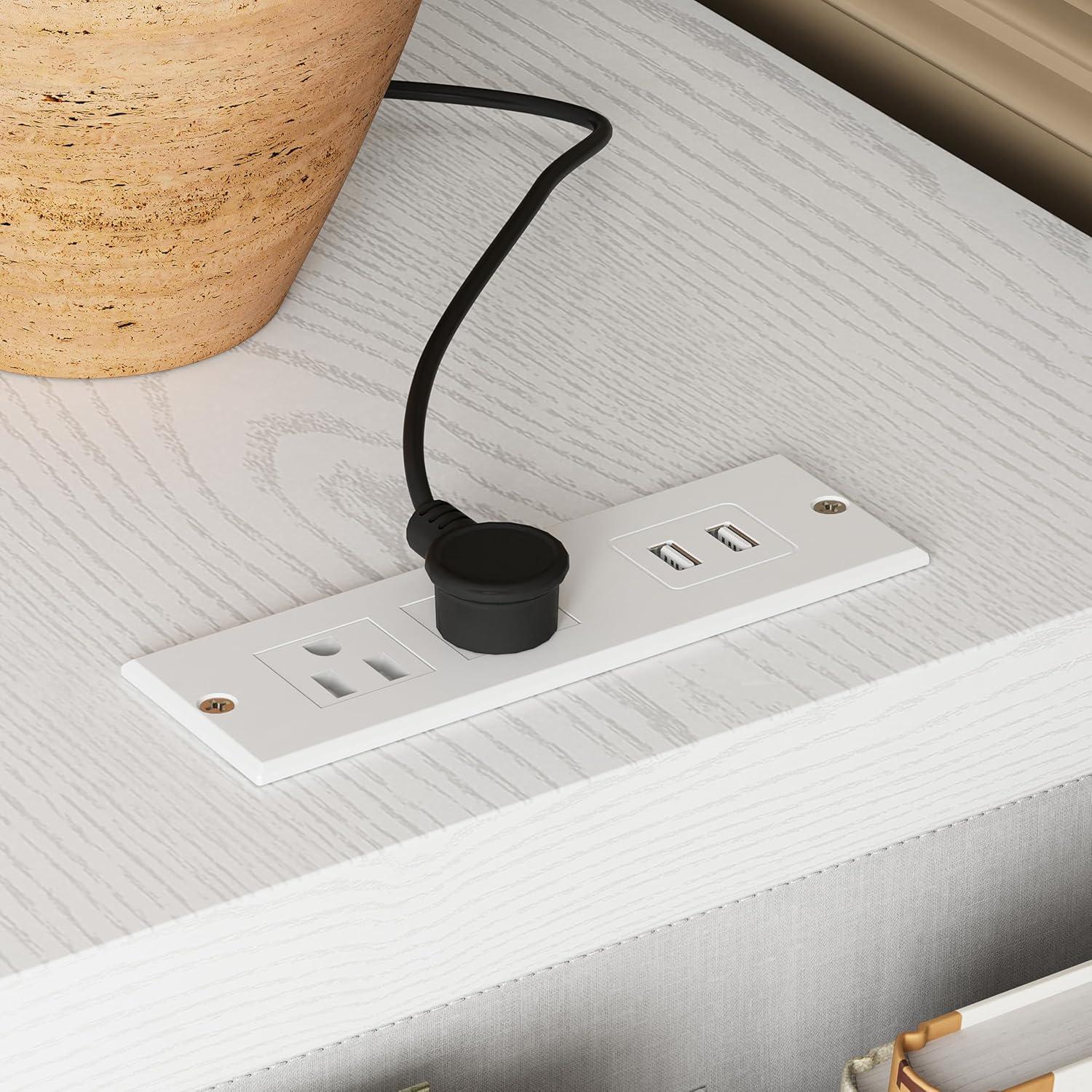
Placed in a room and used over days, the dresser mostly behaves like the mental image formed before buying: it presents a clean, solid surface for a TV and a handy spot for nightly chargers, and it settles into daily routines where devices and remotes are routinely dropped on top. The built-in charging area tends to shorten the ritual of hunting for an outlet, while the side pocket often becomes the default landing spot for small items. Those small daily movements — nudging the dresser to clear a path, shifting a stack of laundry between drawers, or sliding a device closer to the charging ports — reveal how the piece fits into living habits more than its spec sheet ever would.
Practical limits show up in use rather than in description. Assembly can stretch into an afternoon for one person, which nudges most households to pick a final spot before the piece is fully assembled; once together it can feel heavy enough to discourage frequent relocation. The drawers open and close smoothly,though limited extension and relatively shallow interiors tend to change how clothing is folded or stored,and reaching items toward the back becomes a routine adjustment. because the dresser takes up a noticeable footprint, vacuuming and moving around it become minor, recurring inconveniences, but the unit rarely wobbles during day-to-day handling and the rubber feet ease small shifts without scuffing floors.
| Expectation | How it plays out in use |
|---|---|
| Quick assembly and easy repositioning | Assembly frequently enough takes longer solo; once assembled it usually stays put |
| Generous drawer access | Drawers slide smoothly but don’t extend fully, so storage habits adapt |
| Top surface convenient for devices | Charging station simplifies nightly routines, though cords still need occasional wrangling |
View full specifications and available options on Amazon
What assembly looks like for you and how to care for the surface over time
Assembly, step by step as you’ll experience it
You’ll start by opening a lot of flat-packed pieces and a bag of numbered hardware, then spend a little while sorting parts across the floor so you can see what goes where. The instructions use matching numbers and diagrams, so the early work is mostly lining up panels, inserting dowels and cam locks, and pre-attaching the metal drawer slides to the drawer boxes. Screwing the top and sides together takes the most patience — the panels sit flush but demand careful alignment, and you’ll tighten fasteners gradually rather than all at once. Some steps require holding pieces steady while another person fastens them; working alone tends to take longer, and once the dresser is built it feels noticeably heavier to move.
Putting the drawers together looks like a repeat of small tasks: slide the runners into place, set the drawer bottom, nudge the faceplate on and secure the handles. The charging outlet and cable tuck into a small channel at the back, so you’ll route that wire before closing the back panel. After everything’s assembled you’ll likely go back through and re-tighten a few screws — joints can settle after the first day of use and the drawers sometimes need a small nudge to run smoothly.
| Cleaning task | Typical rhythm |
|---|---|
| Dusting with a soft cloth or microfiber | Weekly or whenever dust builds up |
| Wiping spills with a damp cloth and mild soap | As needed — wipe promptly |
| Abrasive cleaners, scourers, strong solvents | Avoid — they tend to dull or scratch the finish |
How the surface behaves over time
The white finish tends to show everyday traces: fingerprints near the top where you rest small devices, faint scuffs where objects slide, and the occasional ring from something warm or wet left too long.You’ll find that light cleaning keeps the surface looking uniform; most stains lift with a damp cloth and a touch of mild detergent. Abrasive pads or bleach can leave cloudy patches, and over months you may notice very fine scratches from keys or chargers being dragged across the top. Dust collects around the ports of the charging area, so you’ll see more detail there if you don’t sweep it out from time to time.
Small habits change what the dresser looks like after a few months: placing a charger in the same spot tends to wear the finish subtly, and sliding laundry baskets across the front can create micro-marks along the edges. For routine upkeep you’ll probably alternate quick dusting with the occasional wet wipe; for occasional deeper cleaning, a non-abrasive cleanser for painted or laminated surfaces can restore shine without attacking the finish. Over the long run you’ll notice the finish mellow rather than transform — light marks and the need to re-tighten hardware show themselves first, while larger structural issues, if they occur, tend to appear only after heavy use or repeated movement.
A Note on Everyday Presence
With the LIKIMIO Dresser for Bedroom 6 Drawer with Charging Station,TV Stand Storage Chest of Drawers for Living Room Hallway entryway,MDF Board,59 Inches white in place,you notice how it settles into a quieter beat over time. In daily routines it picks up the small claims of living — a coffee mug’s ring, a loose charger, the soft wear along an edge — and those traces begin to map how the space is used. It feels comfortable in ordinary gestures, holding out surfaces and drawers that answer regular household rhythms without fuss. In time it stays.
As an Amazon Associate I earn from qualifying purchases.