Stylish Living Room Chair Ideas: Modern, Cozy, and Perfect for Small Spaces
Exploring effective living room chair ideas for compact spaces reveals practical solutions that truly enhance functionality, while contemporary chair designs continue to feel fresh and inviting. Blending rustic farmhouse charm with current trends requires a delicate balance to avoid overwhelming the room with a single theme. This guide delves into spatial arrangements, material choices, and styling tips to seamlessly integrate chairs with sofas, optimize traffic flow, and select chair shapes that align with your daily needs. Drawing from professional design experience, the focus is on functionality, proportion, and thoughtful placement.
Optimizing Living Room Chairs for Compact Areas
In limited spaces, prioritizing scale and streamlined forms is essential. Chairs with armless designs, such as slipper or petite barrel chairs featuring slim backs, help maintain an open and airy atmosphere. Positioning two chairs angled toward a small sofa creates an intimate conversation zone without consuming excessive floor area. Choosing upholstery in light hues paired with finely grained wood frames encourages visual continuity throughout the room.
Slipper chairs with slender profiles are ideal for this setup.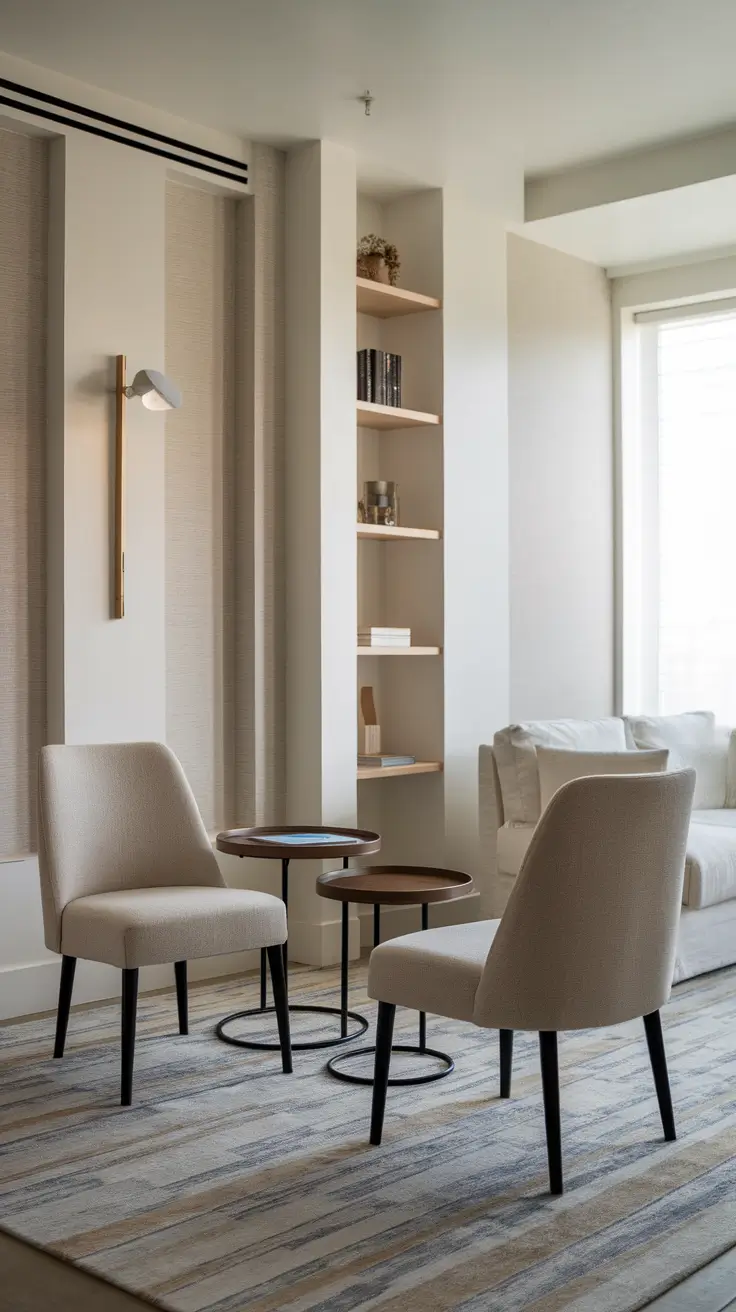
I ensure at least 30 inches of clear walkway and maintain 16 to 18 inches between chairs and coffee tables for comfortable movement. Nesting tables serve dual purposes as side surfaces and extra seating when guests arrive. Instead of bulky floor lamps, I prefer wall-mounted sconces or slim torchiere lamps tucked behind chairs to save space.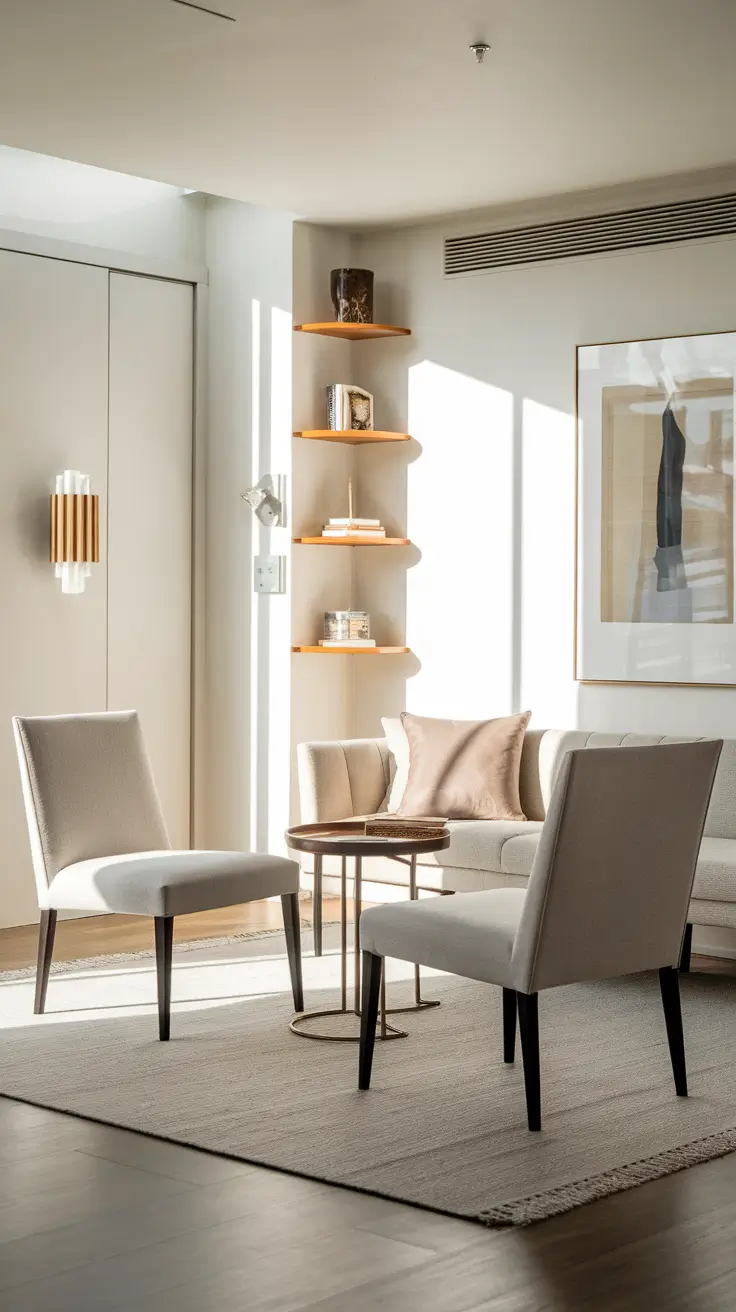
For urban apartments, multifunctional furniture is invaluable. Swivel chairs offer flexibility to face either the television or a window without rearranging the room. I often select subtly patterned fabrics in muted tones to disguise everyday wear while maintaining a serene color scheme.
Vertical storage is often overlooked in small rooms. Installing a shallow wall shelf above chair height provides space for books and small artworks, freeing floor space and visually elongating the room.
Contemporary Living Room Chair Concepts
Modern living spaces emphasize sleek lines, subtle tonal layering, and organic textures. Pairing a streamlined sofa with two accent chairs featuring slender metal frames and plush cushions creates a sophisticated yet cozy environment. A monochromatic palette of greys and charcoals gains interest when punctuated by a single vibrant chair in moss green or deep petrol blue.
Modern accent chairs with metal frames complement this aesthetic.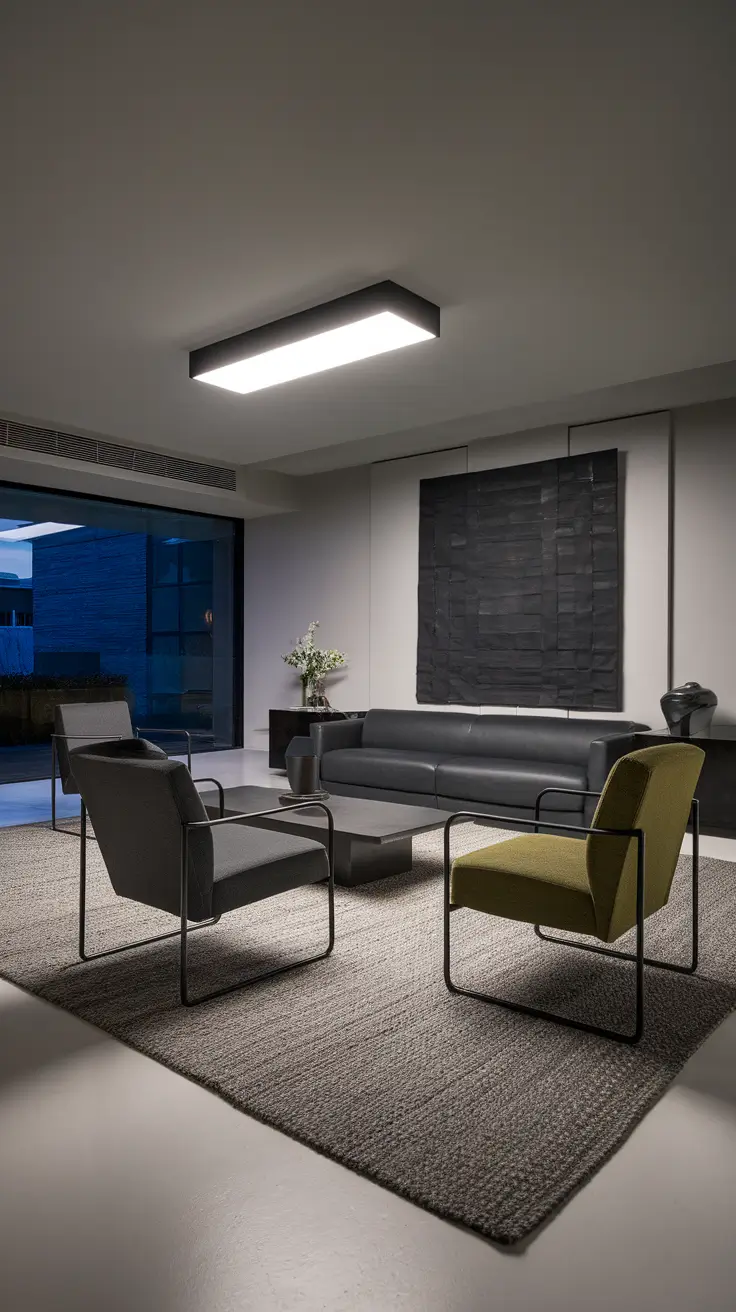
I prioritize ergonomic design, powder-coated frames, and stain-resistant upholstery for durability. Coffee tables with rectilinear shapes softened by rounded edges maintain a clean yet safe flow. A large artwork above the sofa balances the visual weight of the chairs.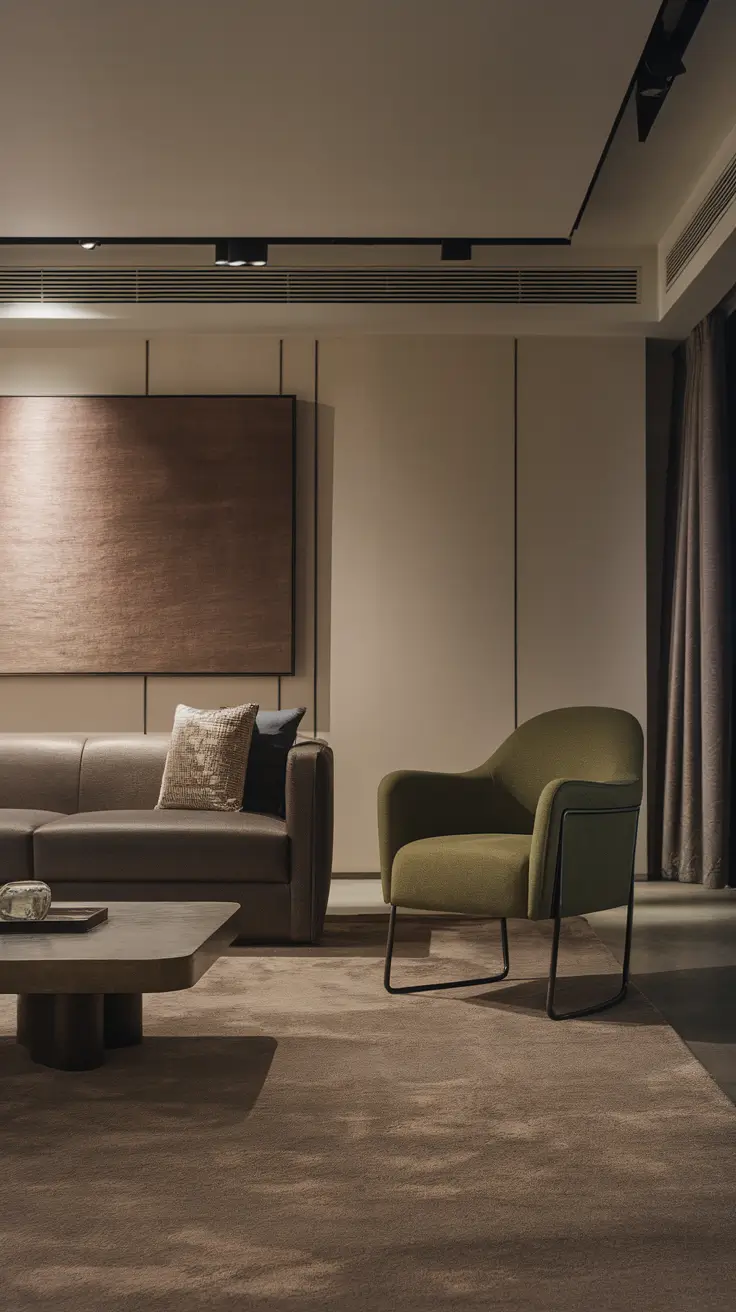
To soften the geometric lines, I incorporate a low-pile wool rug, linen curtains, and a wooden tray on the coffee table. This blend tempers the sharpness and introduces warmth to the space.
Completing the setup with dimmable track or monopoint ceiling lights above each chair enhances comfort and highlights the contemporary forms.
Farmhouse-Inspired Living Room Chair Designs
Modern farmhouse style embraces simplicity and comfort. I favor two armchairs with turned or tapered wooden legs, upholstered in natural linen or cotton, mixing stripes and solids for subtle interest. Slipcovered chairs add a relaxed vibe and practicality, as covers can be washed. Incorporating woven materials like jute or rush introduces texture without veering into rustic territory.
Farmhouse armchairs with natural upholstery fit perfectly here.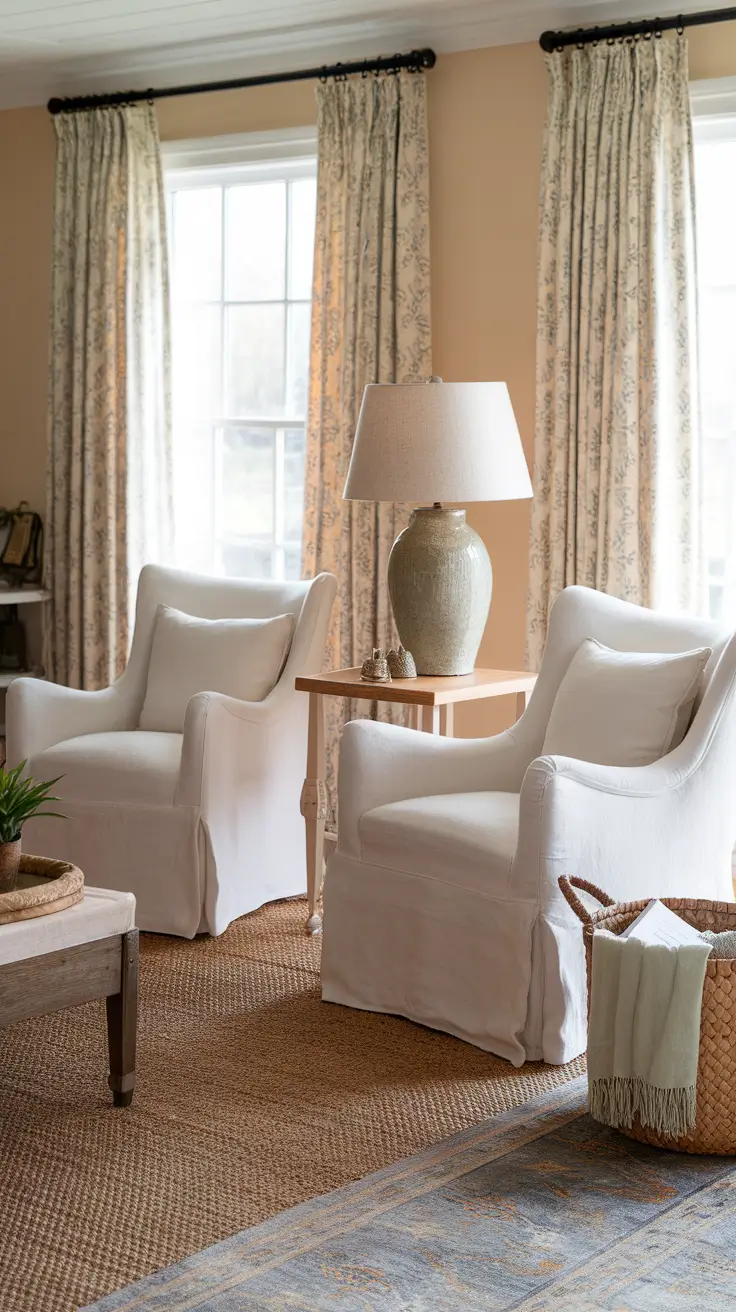
The color scheme revolves around warm whites, soft greys, and accents of sage or denim blue. Complementary elements like solid oak side tables, ceramic lamps with linen shades, and vintage rugs unify the look. Chairs with cushioned backs and gently curved arms invite long, leisurely moments.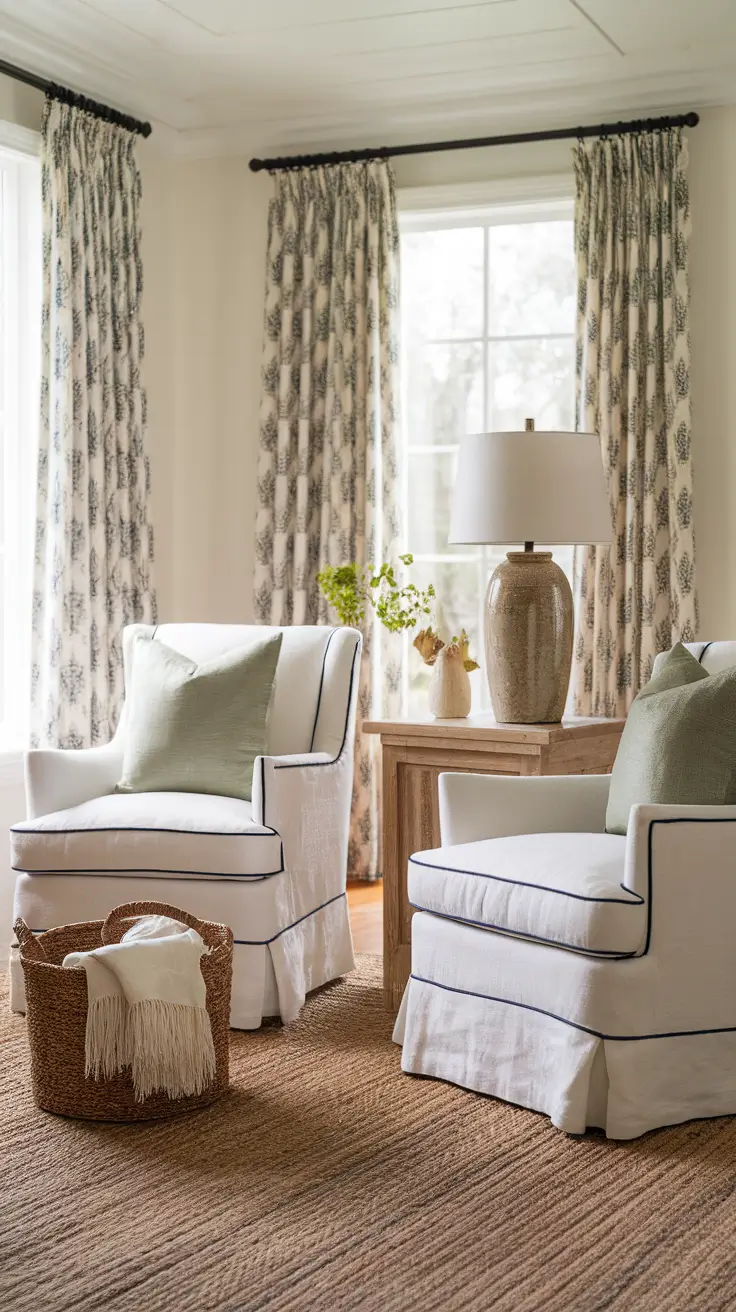
Small details like a wooden ladder for throws and a basket for magazines enhance the cozy, curated feel.
To keep the style current, I introduce metal accents in finishes like oil-rubbed bronze or antique brass through lamps or framed artwork, preventing the space from feeling flat.
Refreshing 2024-Inspired Living Room Chair Trends
Many leading designs build upon popular ideas from recent years, evolving textures and forms. Curved chairs and streamlined sofas remain favorites, but with updated materials such as compact textured weaves replacing bulky boucle, and wooden bases adding warmth.
Curved chairs with wooden bases exemplify this trend.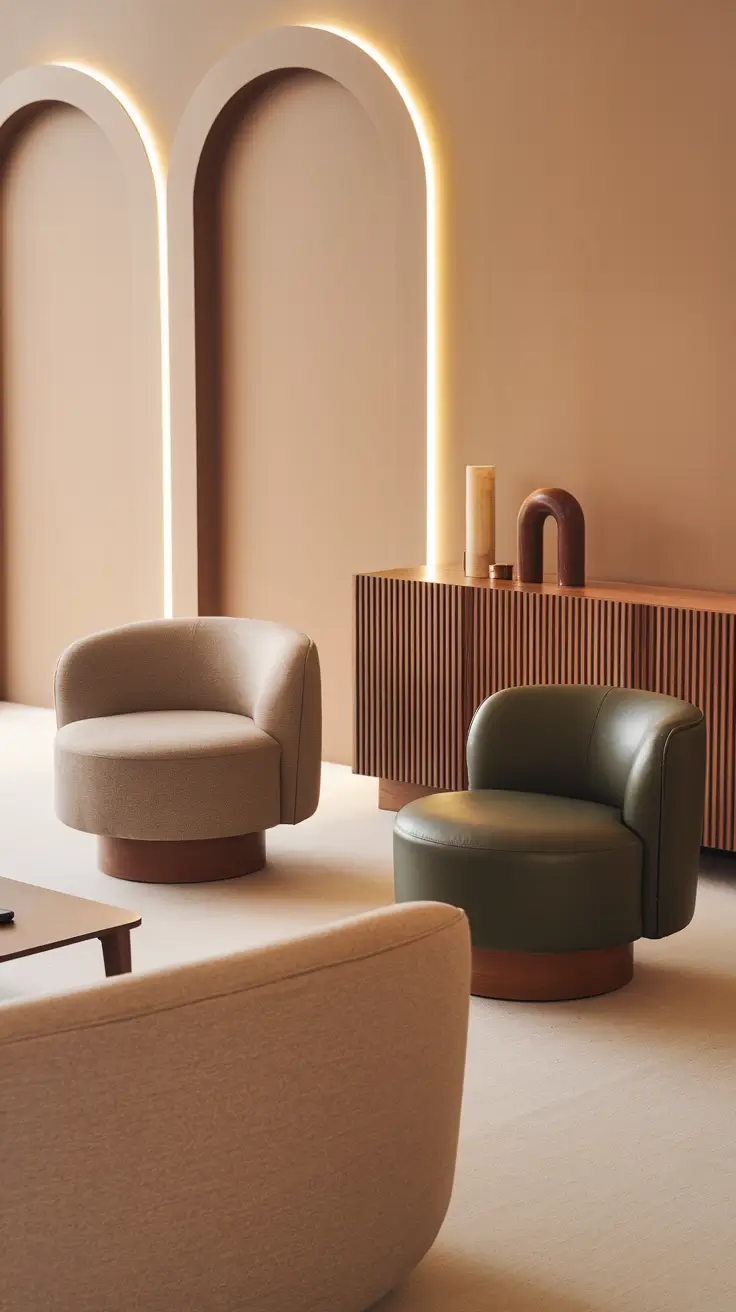
Introducing linear contrasts, such as a ribbed wood sideboard and a slim rectangular coffee table, balances the sculptural curves. To avoid a beige monotone, a bold green leather chair adds vibrancy. Durable performance fabrics remain essential for high-traffic areas.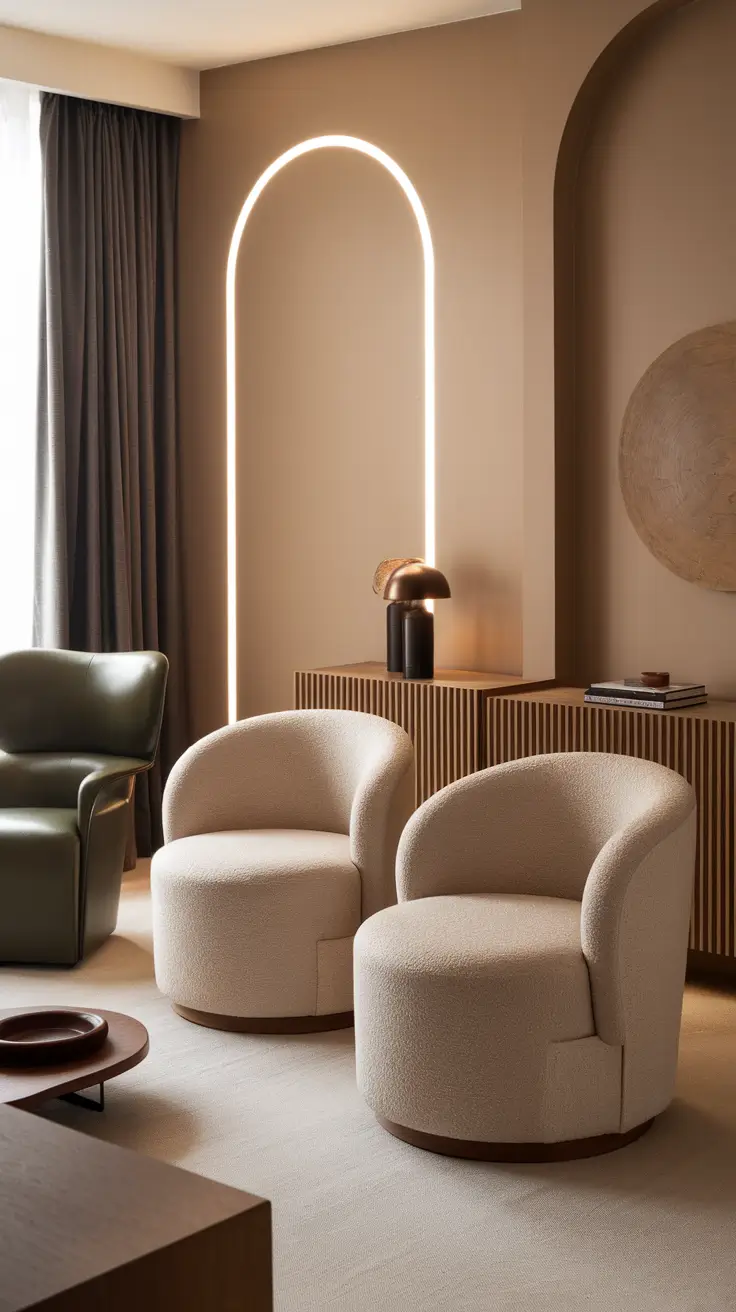
Updating existing furniture by reupholstering in stain-resistant fabrics and swapping legs for lighter wood tones can refresh a room without a full redesign.
Adjusting lighting with warm white bulbs (2700 to 3000 K) enhances neutral palettes and integrates older pieces seamlessly into the updated decor.
DIY Living Room Chair Makeovers
Personalizing chairs through DIY projects is a cost-effective way to extend their life and tailor them to your style. Starting with sturdy thrifted wooden frames, I lightly sand and apply a matte water-based varnish for a natural finish. Replacing foam and webbing improves comfort, while neutral or classic striped fabrics maintain timeless appeal.
Upholstery fabric options are plentiful for such projects.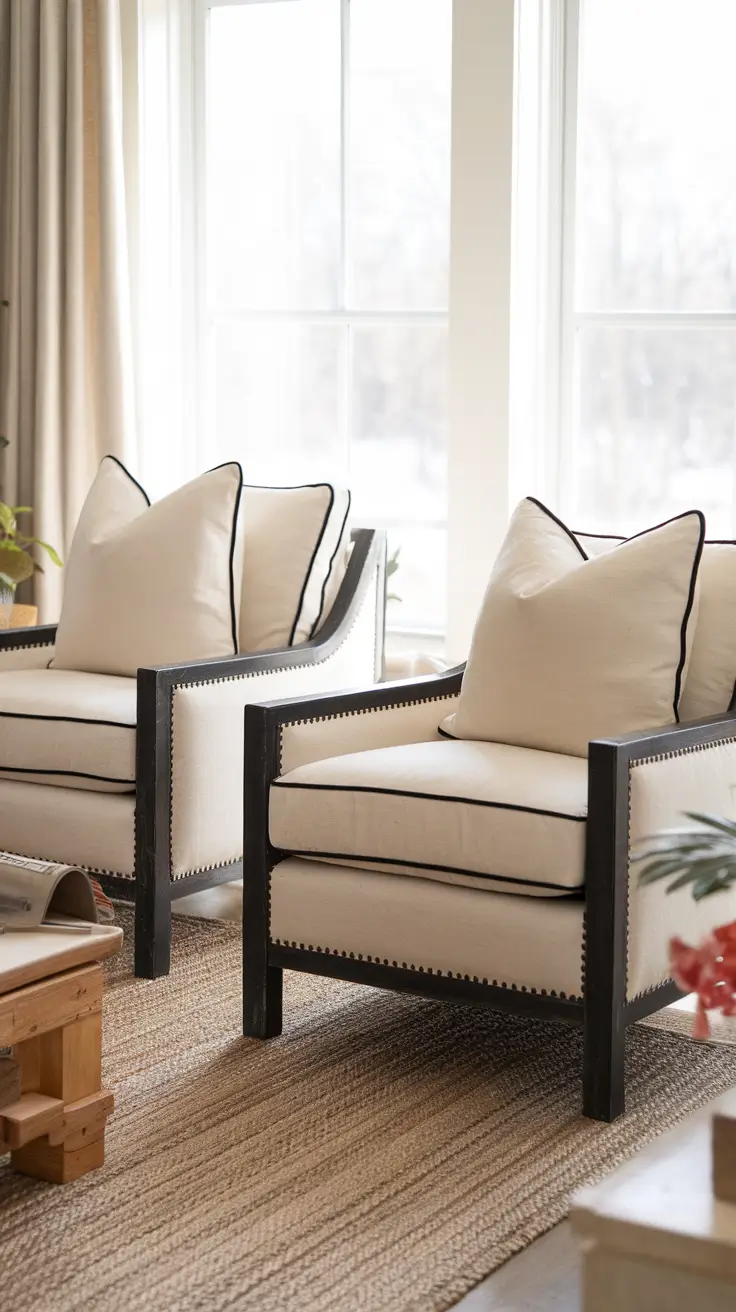
Adding details like double piping or flange edges elevates the look. Updating hardware such as casters and adding felt pads protects floors. Small lumbar pillows in contrasting textures provide affordable comfort upgrades.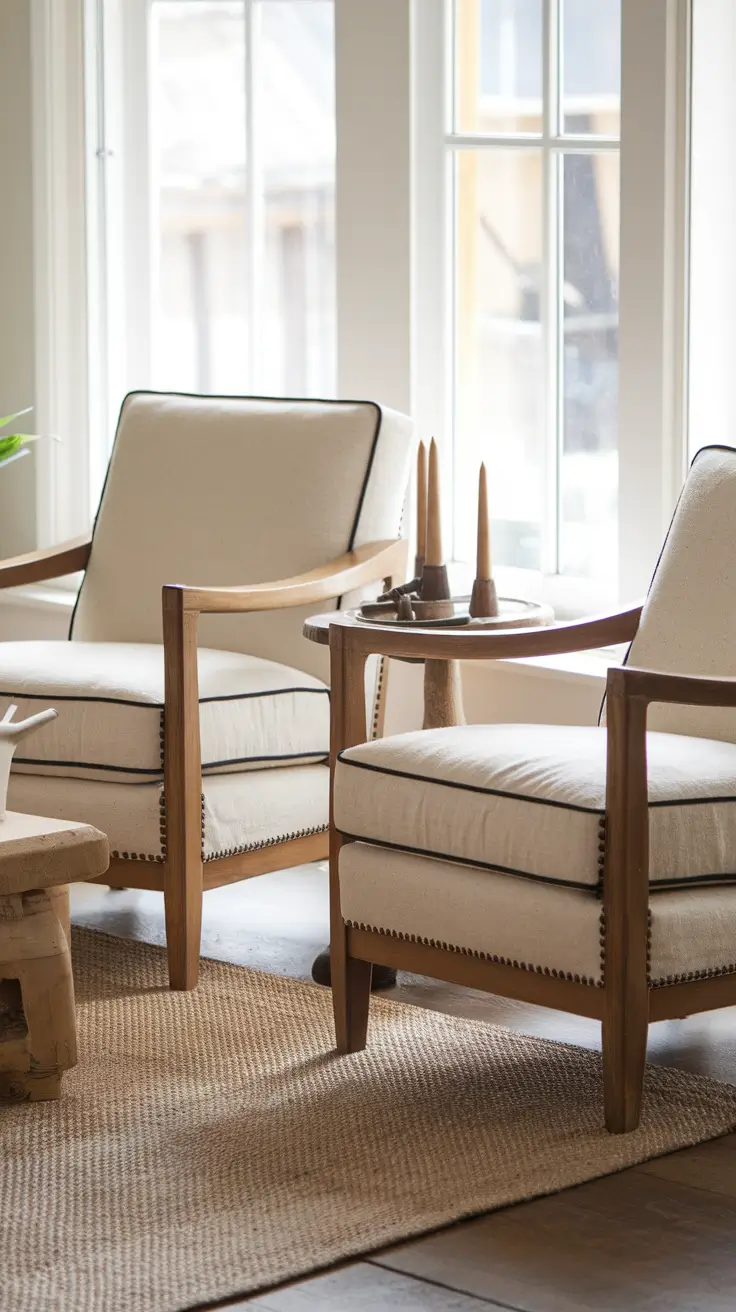
Painting frames in soft satin black or deep olive to match upholstery creates a cohesive, airy feel suitable for both modern and farmhouse interiors. DIY also allows precise customization of seat cushions for individual comfort.
Essential tools include a staple remover, pneumatic stapler if available, dust mask, and a test board for finishes to avoid surprises.
Arranging Chairs in an L-Shaped Living Room
The L-shaped seating arrangement excels for socializing and media viewing. I position a sofa and one chair to form the L, then place a second chair opposite to create a cozy grouping that avoids a rigid square. This layout maintains clear pathways and encourages eye contact.
Round coffee tables soften angles and improve flow.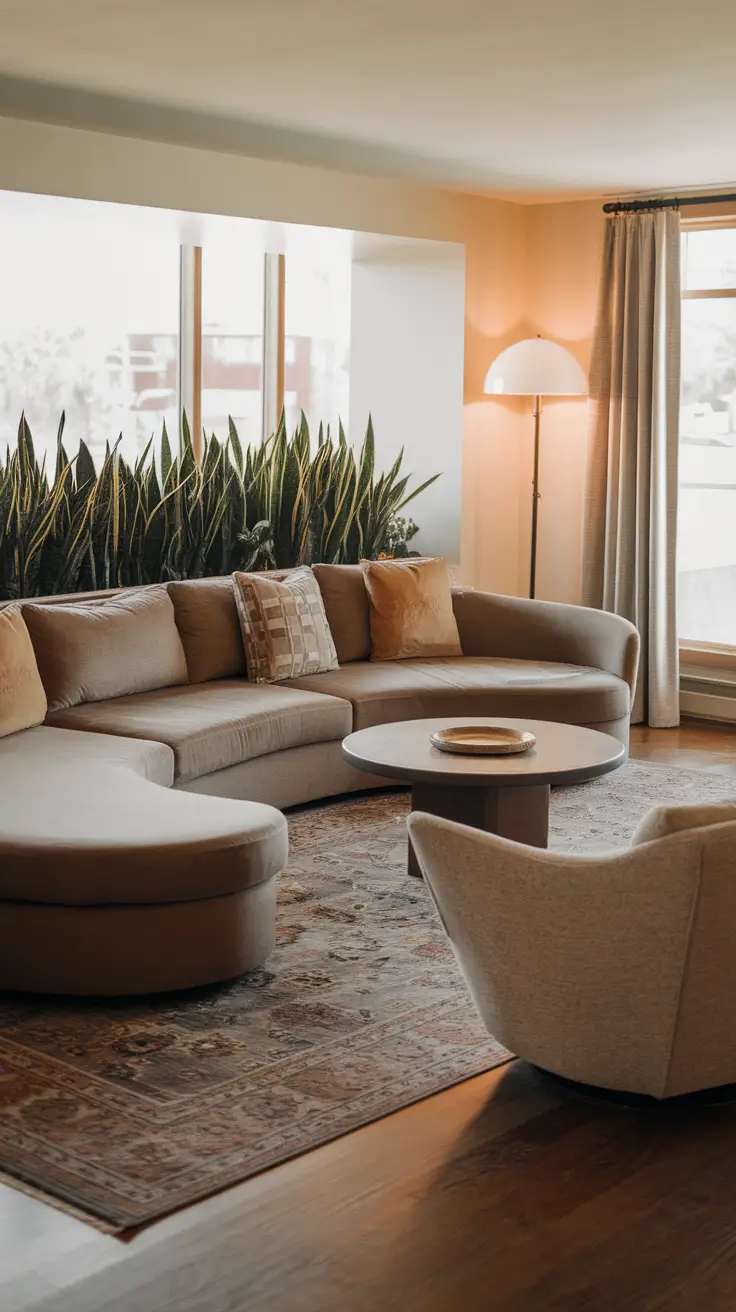
For the shorter leg of the L, I select a visually lighter chair, often a swivel, to prevent the corner from feeling blocked. A floor lamp behind the corner and a small side table next to the lighter chair add symmetry and function.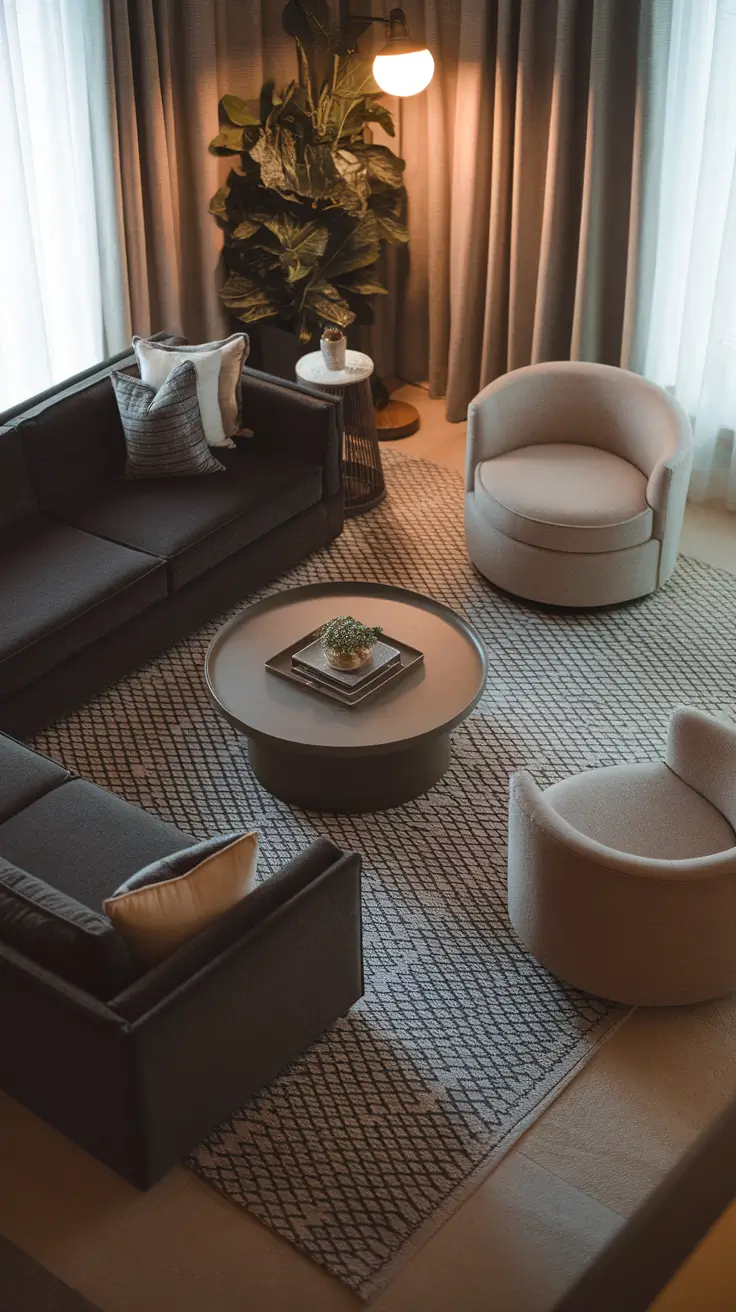
Matching seat heights within an inch ensures balanced conversation. A patterned rug encompassing the coffee table anchors the group visually.
Wall art along the long sofa wall and a tall plant at the open end of the L provide vertical balance, making the arrangement feel intentional and harmonious.
Incorporating Wooden Chairs in Living Rooms
Wood-framed chairs bring warmth, texture, and resilience to living spaces, grounding the design without heaviness. I prefer slim-profiled oak, ash, or walnut frames with gently curved arms that evoke a modern organic aesthetic. In smaller rooms, open-frame wood chairs maintain uncluttered lines and visually expand the space while offering support.
Wood framed chairs are timeless additions.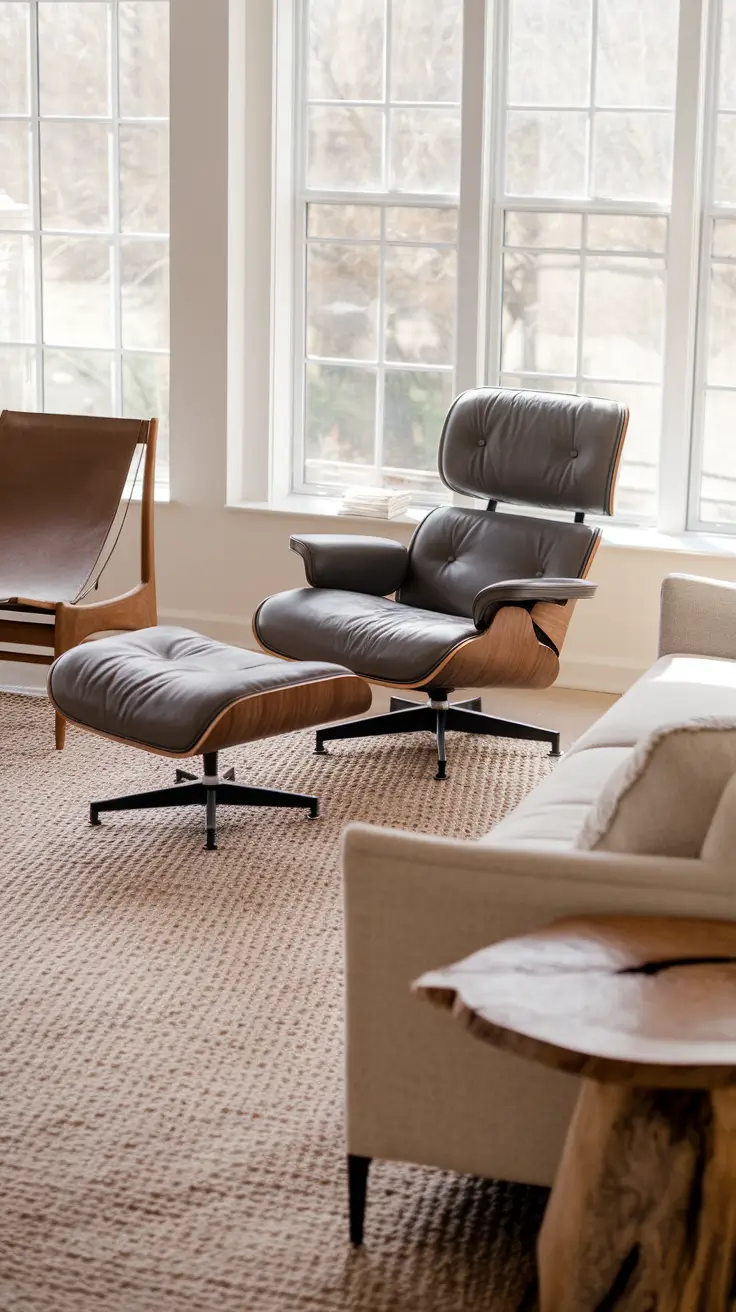
I pair medium-toned wood frames with performance linen or tightly woven chenille cushions for durability and comfort. A wood lounge chair with a matching ottoman near a window, balanced by a wood sling chair opposite the sofa, creates equilibrium. A wool flatweave rug and round wood side table echo the materials and unify the palette.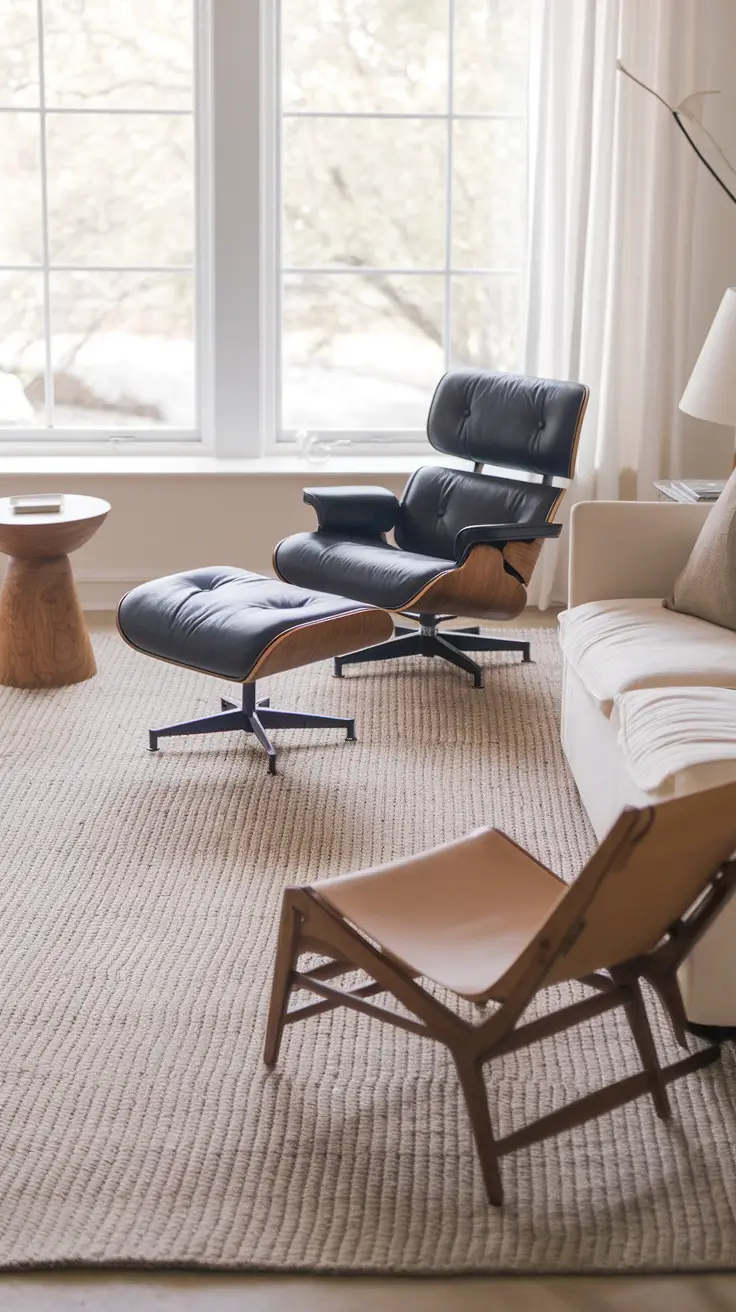
Repeating the wood tone in coffee tables or media consoles reinforces cohesion. Matte or satin finishes reduce glare and highlight wood grain. A walnut chair adds warmth to a cool gray sofa.
Maintenance tips include using felt pads under legs, applying water-based varnish with low VOCs for leather sling chairs, and scheduling regular oiling or spot cleaning to preserve wood beauty.
Coordinating Chairs with Sofas
Chairs should complement rather than compete with sofas. Matching scale and seat height ensures comfort and visual harmony. If the sofa has a solid base or skirt, chairs with exposed legs break up the mass. For sectionals, combining one swivel and one stationary chair allows flexible conversation without rearranging furniture.
Sectional chairs enhance versatility.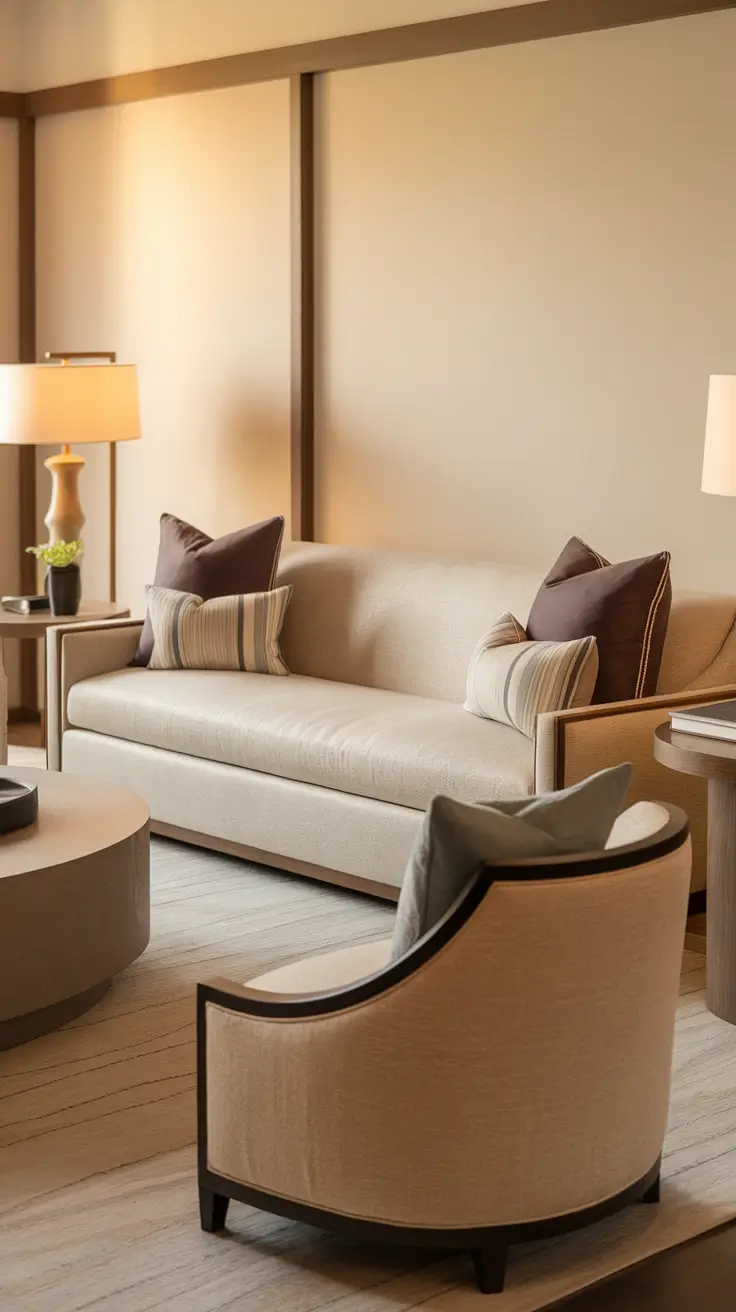
Maintaining 16 to 18 inches between coffee tables and chair fronts facilitates ease of movement. Side tables within arm’s reach add convenience. Introducing colored chairs in green or blue adds depth, balanced by matching pillows on the sofa. Floor lamps behind chairs balance lighting across the room.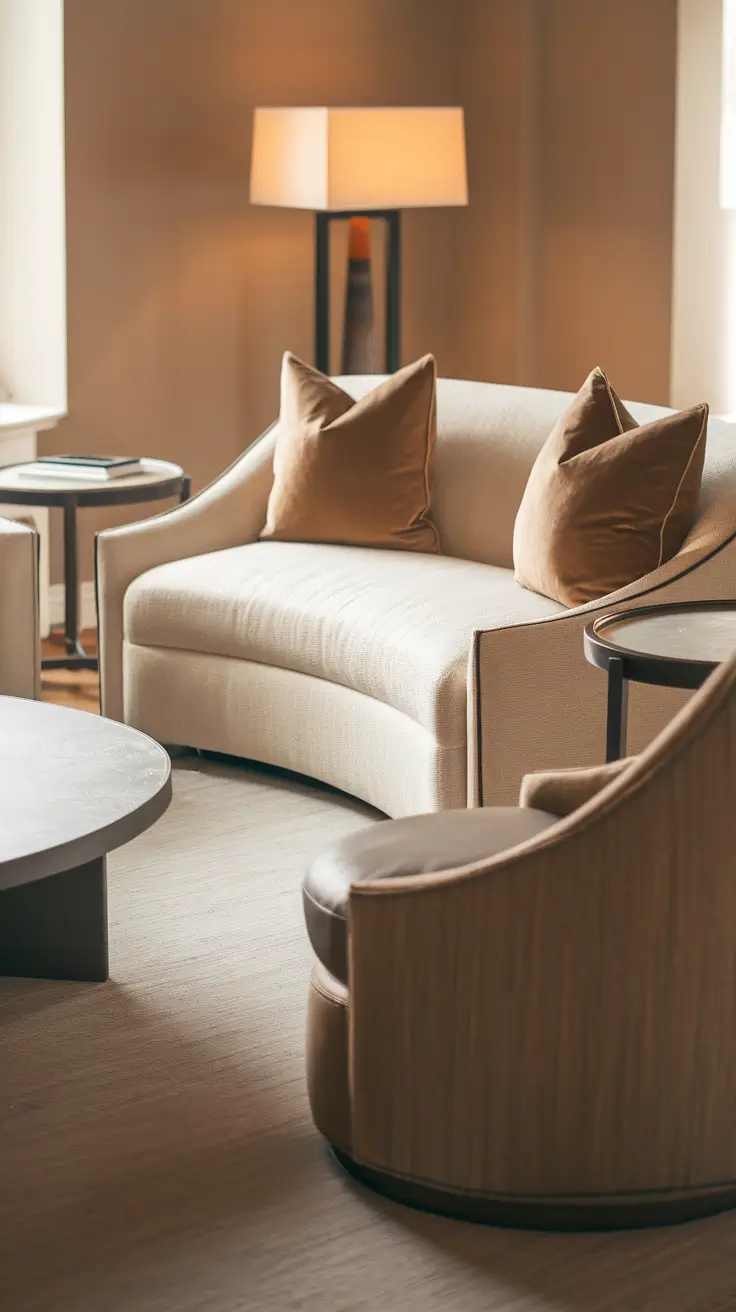
My preferred arrangement is one sofa, two chairs, and one loveseat. Ottomans serve as extra seating or footrests, and simple patterns on chair fabrics prevent visual competition with the sofa.
Adding textural contrast, such as nubby chair fabrics and ribbed wood sideboards, creates layered interest that is both photogenic and comfortable.
Effective Living Room Chair Layouts
Furniture placement influences comfort, flow, and daily usability. I start by mapping traffic paths, then arrange sofas and chairs to form conversational triangles and maintain clear sightlines to focal points like TVs. In smaller rooms, angling two chairs slightly toward the sofa softens corners and invites interaction.
Round coffee tables facilitate smooth movement.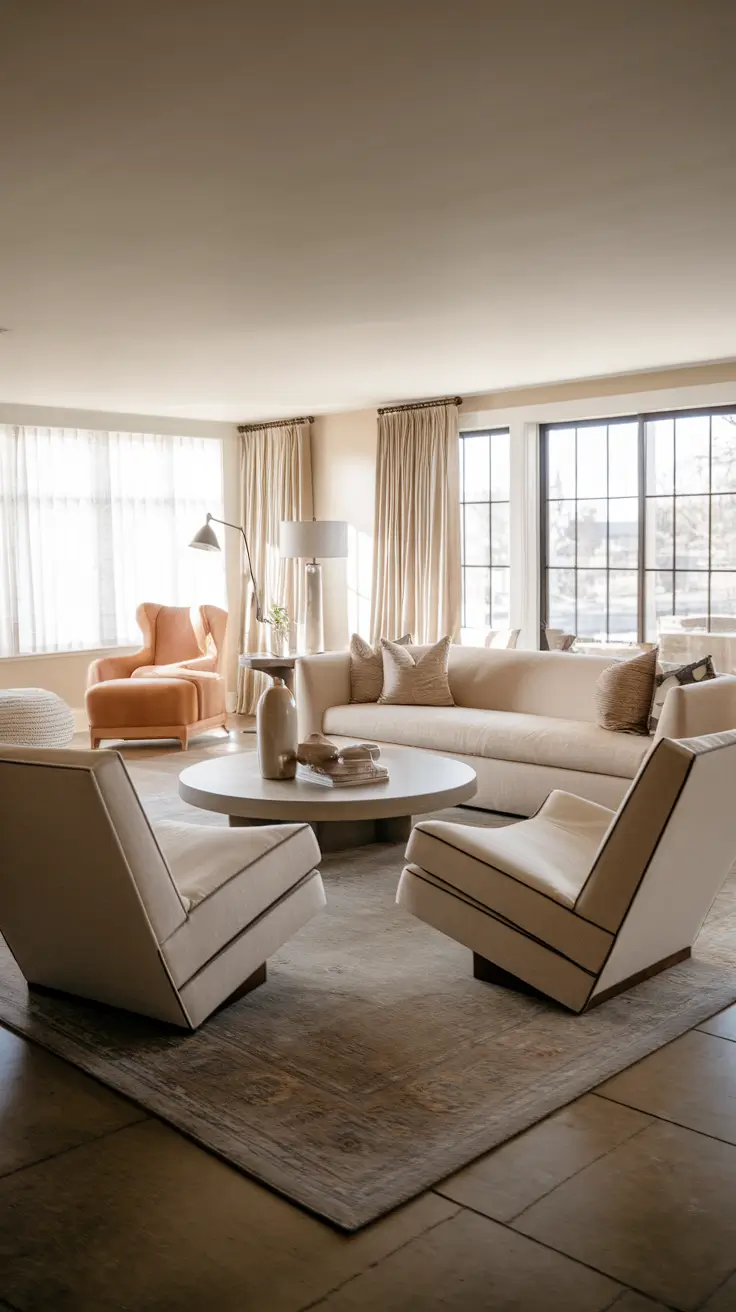
A corner reading nook includes a deep chair, a small table for beverages, and a floor lamp with an adjustable head. Larger rooms benefit from dual seating areas separated visually by back-to-back chair pairs.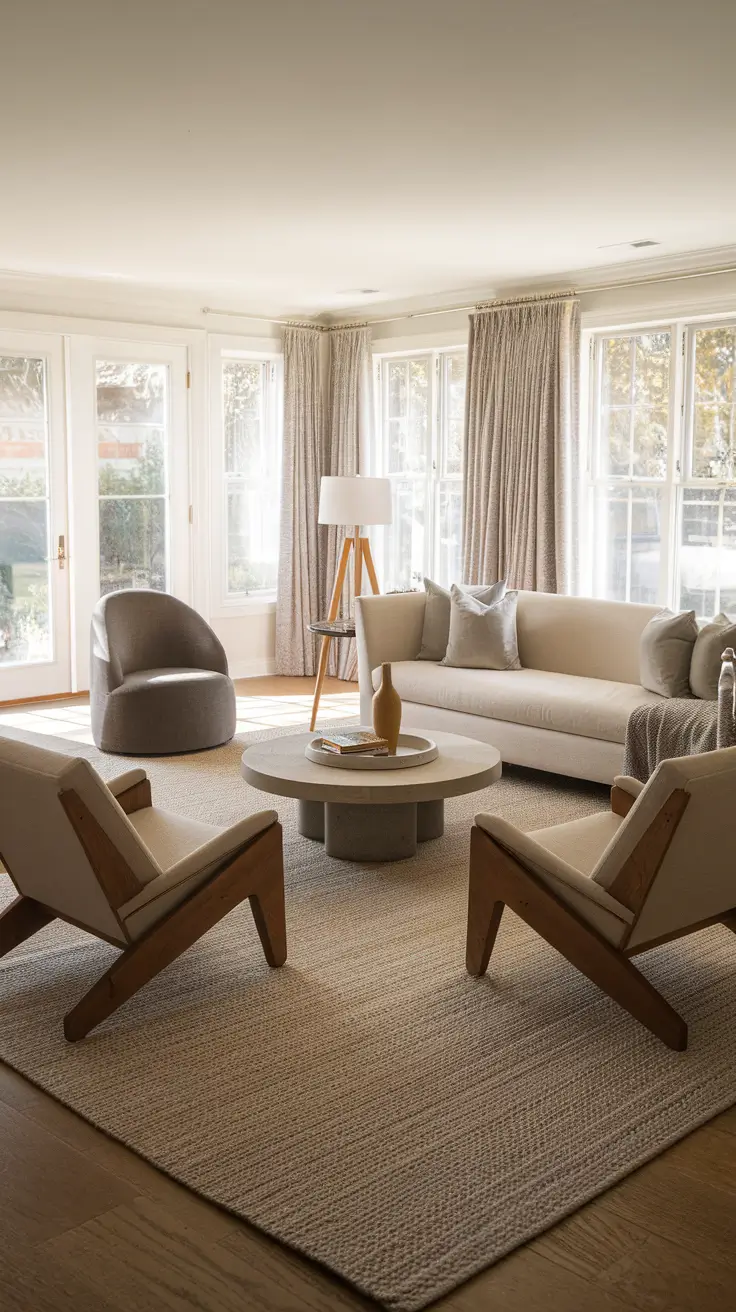
While symmetry is calming, perfect mirroring can feel rigid. I balance a fuller chair on one side with a lighter one on the other, connected by matching finishes like black metal or walnut.
Using a rug that accommodates the front legs of sofas and chairs grounds the grouping and prevents it from appearing disconnected.
Versatile Grey Chairs for Living Rooms
Grey chairs offer a flexible foundation suitable for bright lofts or dimmer apartments. Two medium-grey armchairs flanking a neutral sofa soften contrasts and maintain tranquility. Texture layering with boucle, wool, and linen prevents flatness, making this approach ideal for grey-themed living rooms, coordinating with couches and wooden elements.
Grey armchairs are a stylish choice.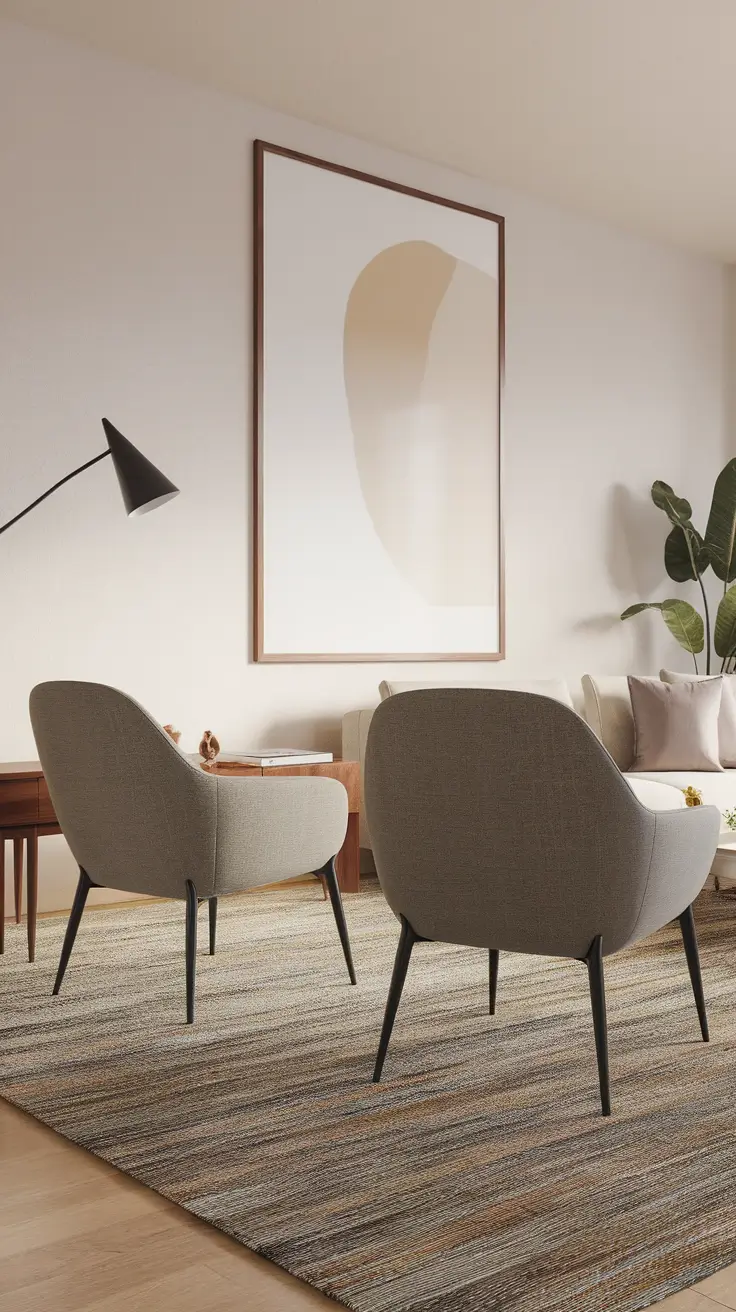
I select chairs with slim black metal legs, a walnut side table for warmth, and a low-pile rug with subtle patterns. A floor lamp with a cone shade provides reading light, and large artwork spanning sofa and chairs anchors the space. Wood accents prevent the grey from feeling cold.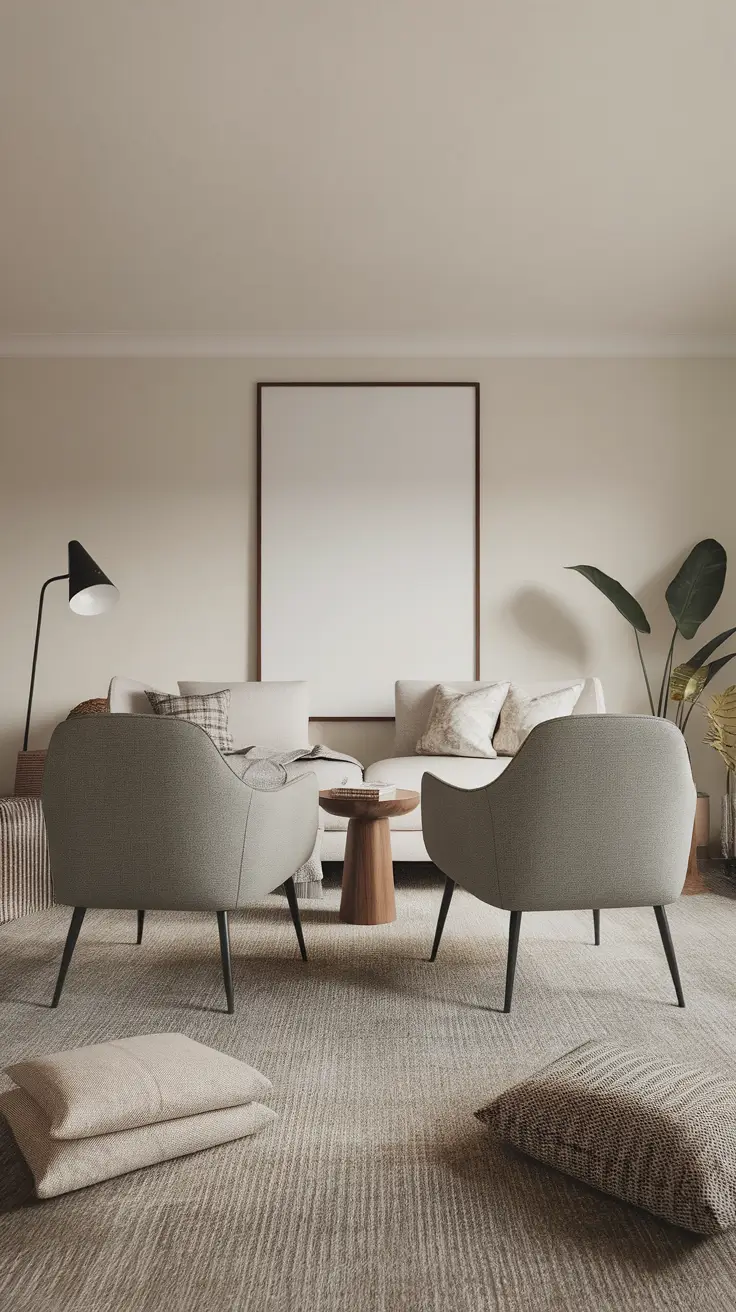
Testing grey undertones under various lighting conditions ensures the palette feels intentional. Suspending chairs about 18 inches from rug edges opens pathways and enhances conversation zones.
Adding a tufted ottoman breaks up grey monotony and offers extra seating. A leafy green plant introduces a natural accent that complements the restrained palette.
Armchair Selections for Living Rooms
When choosing armchairs, I consider comfort, posture, and visual impact. Balanced pairs frame conversation areas and support sofa seating. Curved forms like barrel, slipper, or modern wing chairs soften architectural lines and make smaller rooms inviting.
Armchairs with supportive backs and narrow arms maximize seating without crowding.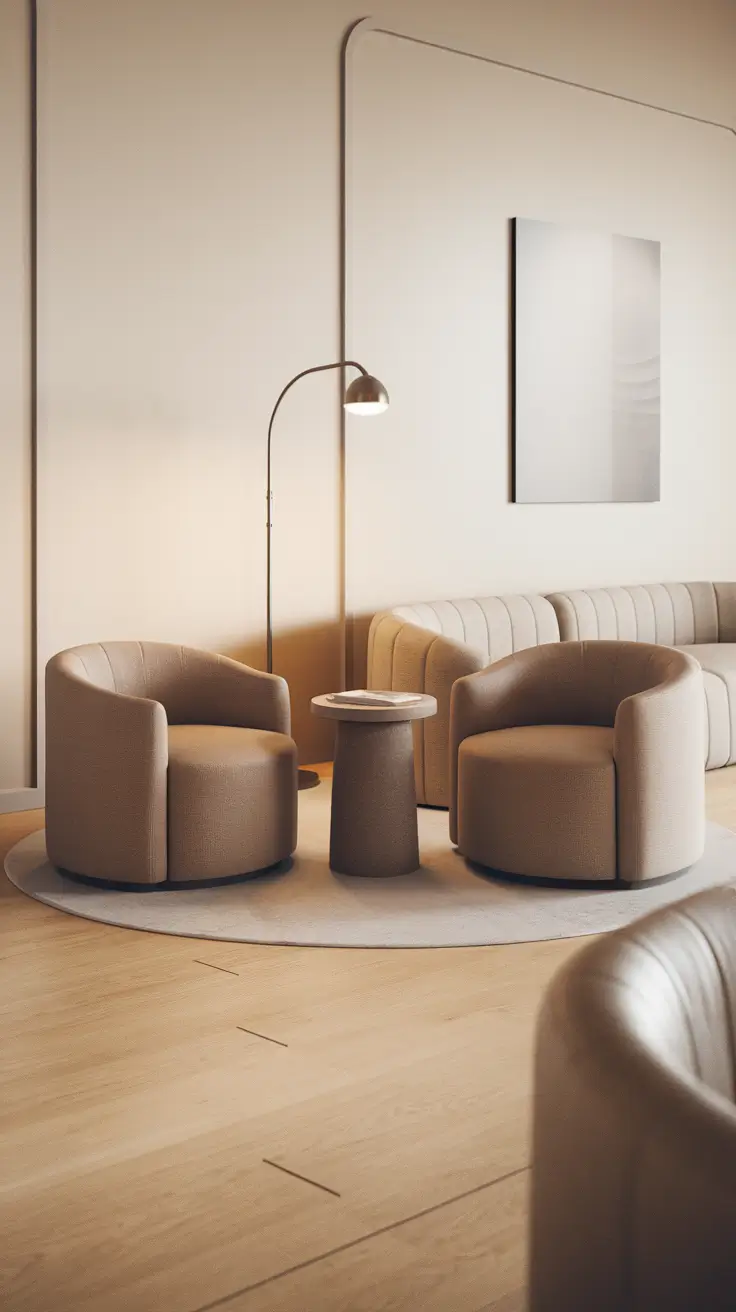
Ideal armchairs have seat heights of 17 to 18 inches, supportive backs, and narrow arms. Swivel bases enhance versatility by allowing rotation toward TVs, fireplaces, or windows without moving the chair.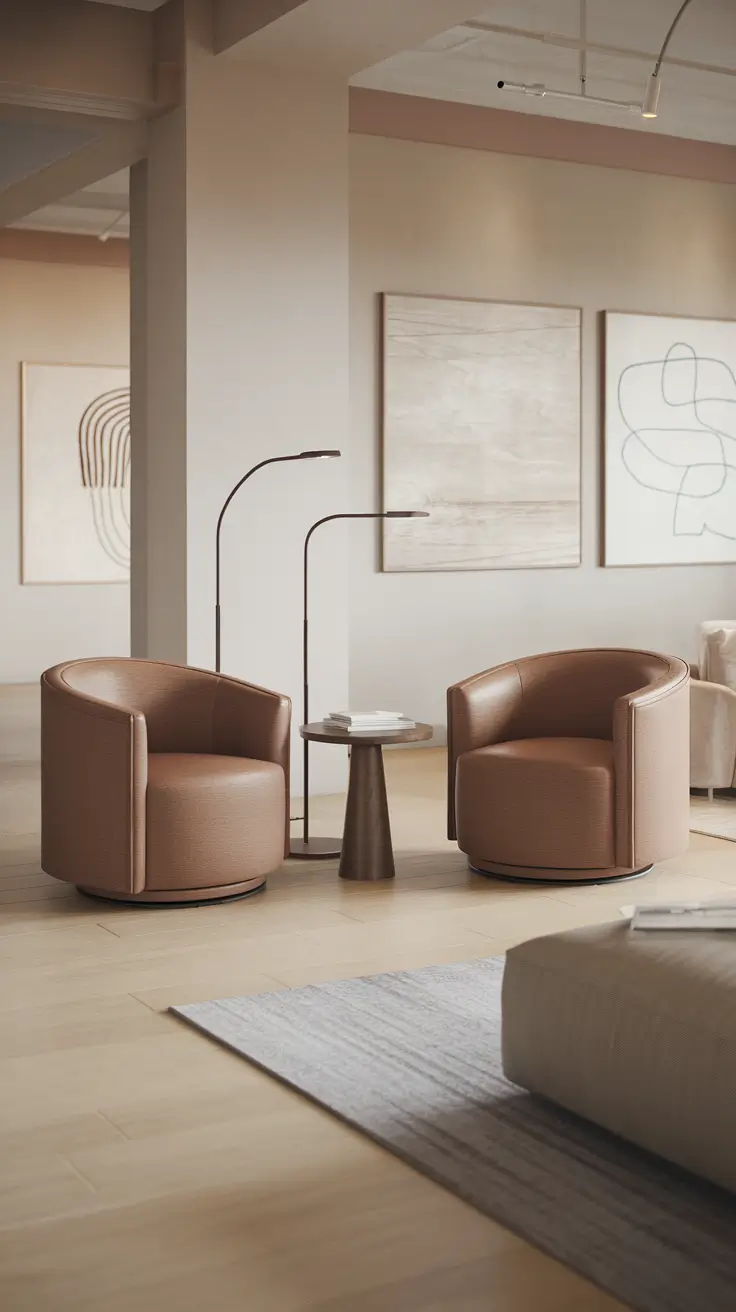
Scale is crucial; pairing heavier, lower sofas with slightly taller, slimmer chairs creates visual interest. Patterned lumbar pillows add subtle character and support, while small leather valet trays on side tables keep remotes organized.
Classic Sofa and Two Chairs Arrangement for Small Living Rooms
The timeless setup of a sofa flanked by two chairs suits compact urban apartments perfectly. Arranging chairs at angles between 90 and 110 degrees relative to sofa corners facilitates natural conversation without overcrowding.
Apartment sofas sized 72 to 80 inches work well here.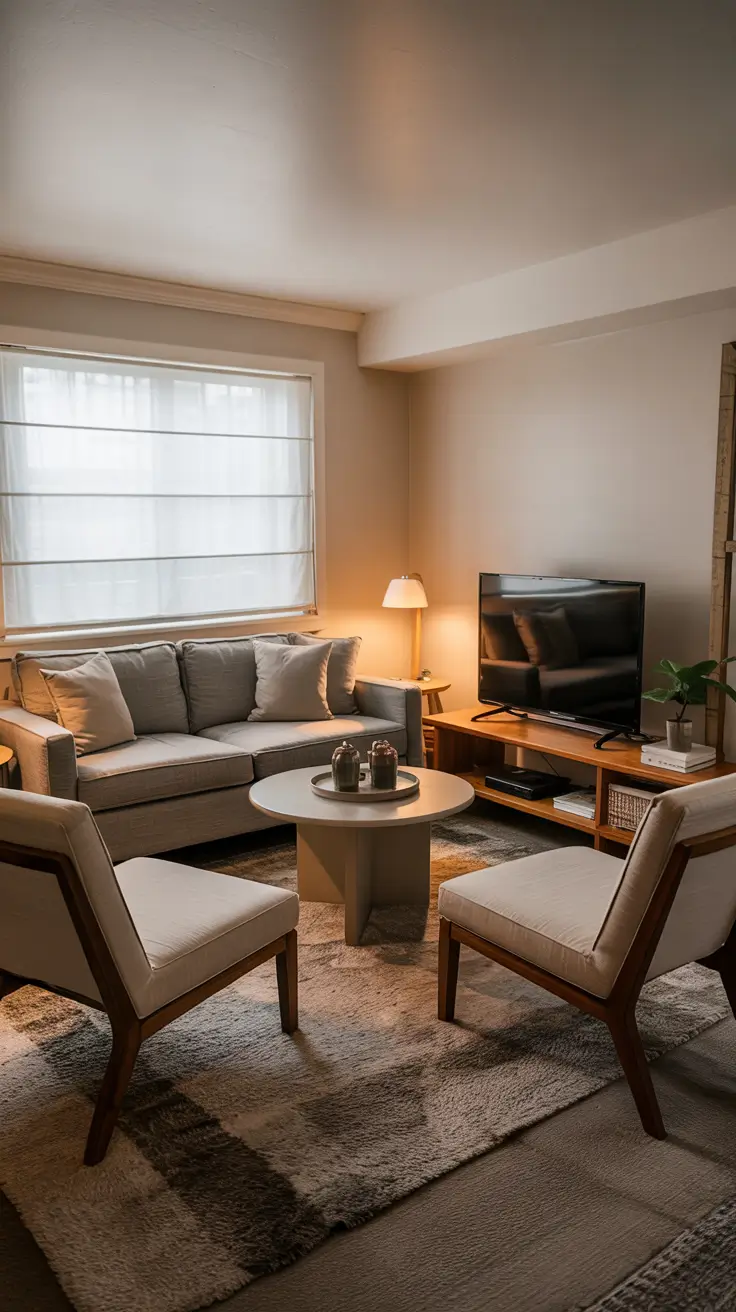
I recommend narrow or armless chairs paired with a round coffee table (30 to 34 inches) for better legroom, and a 5×8 or 6×9 area rug to unify the group. One chair can pivot slightly toward the TV, and tall decor is kept out of sightlines. Angling a chair into a corner softens the space instead of forcing a sectional.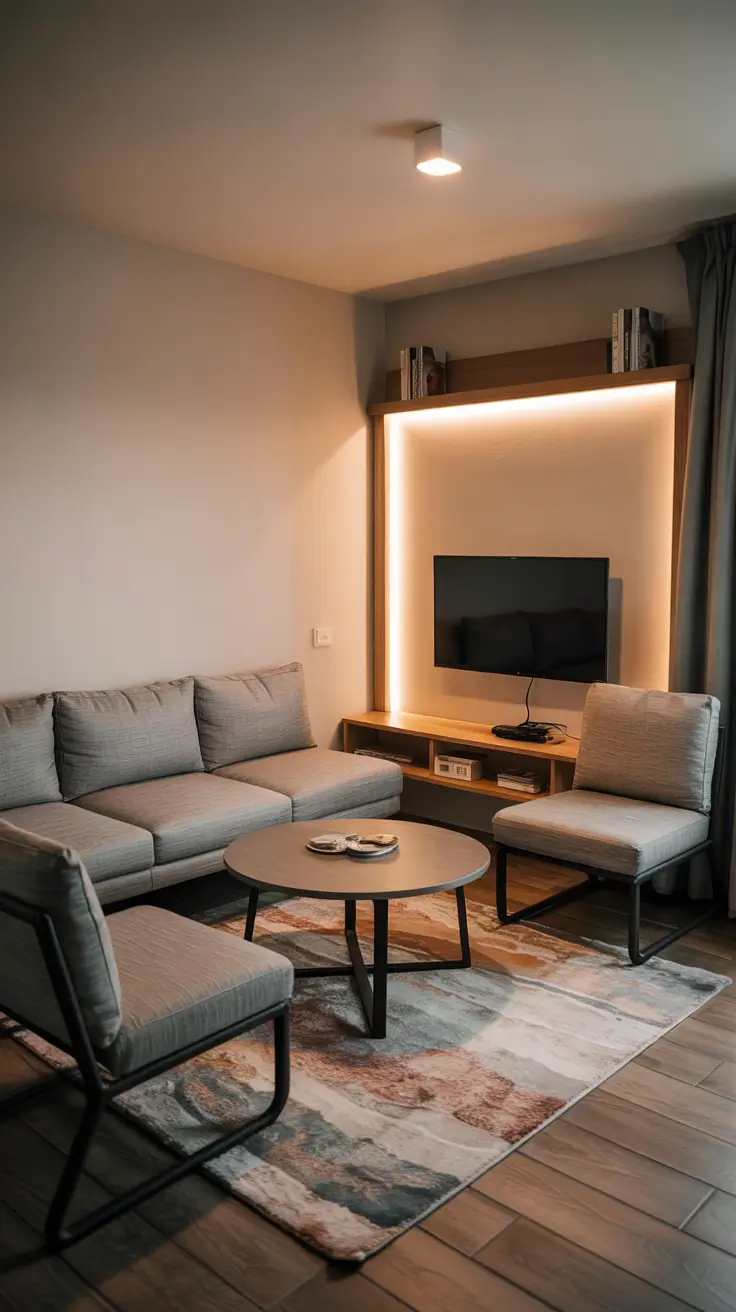
Small, portable side tables like nesting sets maximize flexibility. Wall-mounted swing-arm lamps free floor space, and narrow consoles behind sofas conceal charging stations without clutter.
Living Room Chairs Tailored for Small Spaces
In tight quarters, chairs must justify their footprint. I favor designs with exposed legs, lightweight frames, and compact seats that maintain visual openness without sacrificing comfort.
Slender chairs with rattan or cane backs enhance airiness.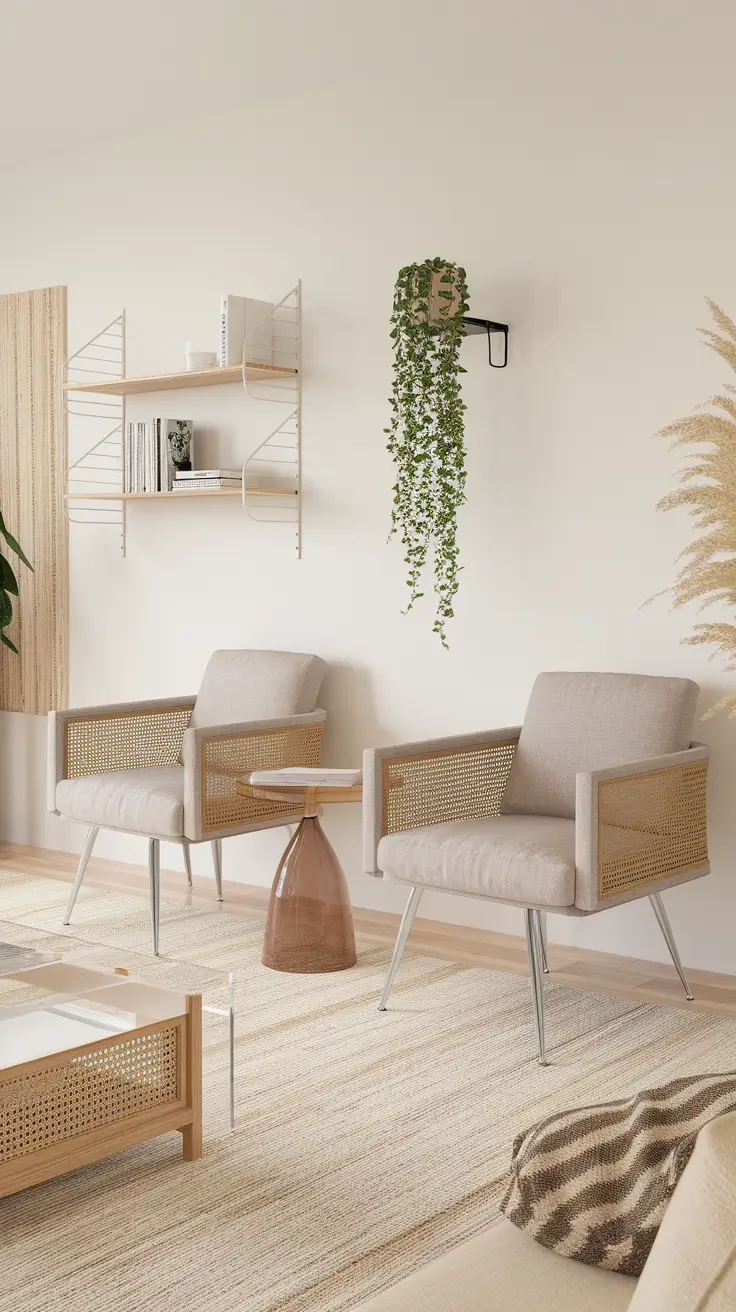
A favorite setup includes two slipper chairs under 28 inches wide, a small pedestal side table, and a wall-mounted display shelf. Materials like rattan, acrylic, and light oak or ash frames contribute to a light, airy feel. For DIY upgrades, replacing heavy chair glides with felt sliders eases movement on rugs.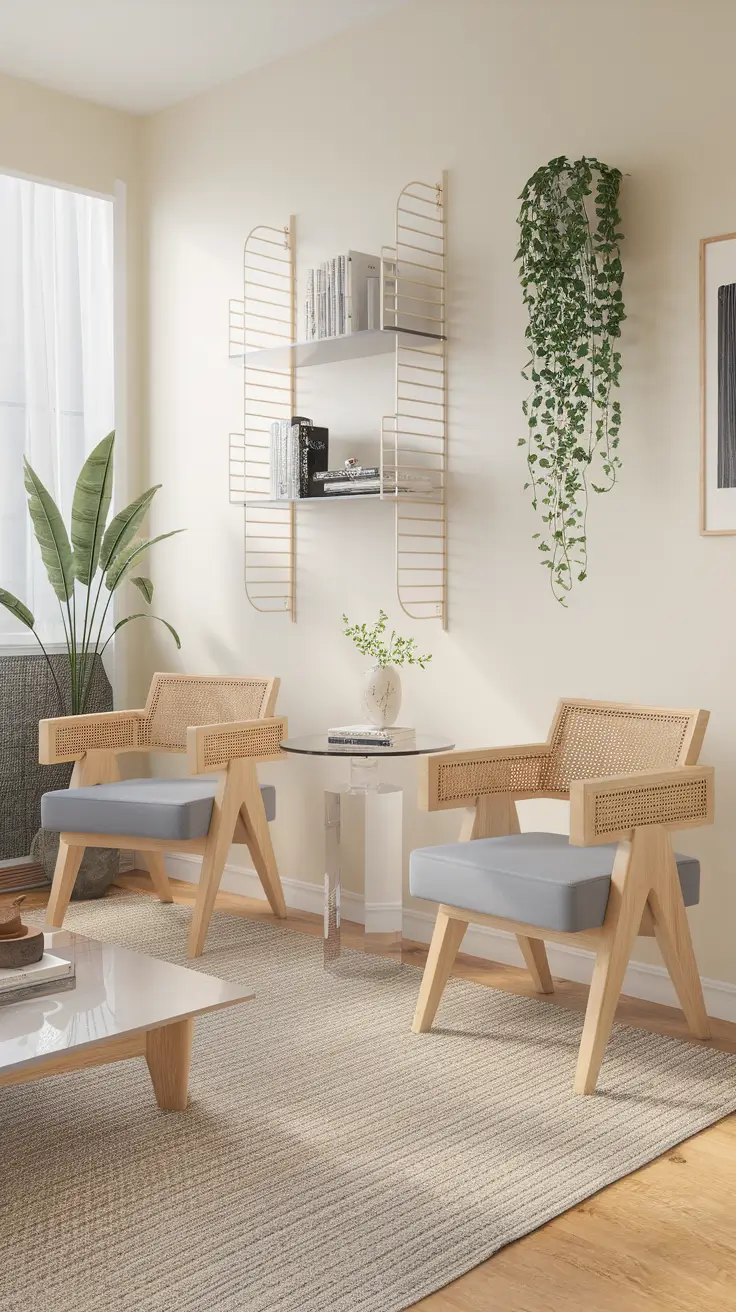
Using the same fabric on both chairs visually enlarges the space, while varied pillow and throw textures add interest. Vertical elements like tall plants or narrow bookcases draw the eye upward, enhancing the perception of height.
A slim storage coffee table tucked under the main table offers space for blankets and games. Pairing these chairs with a track-arm sofa keeps the overall look light and balanced.
Embracing Modern Living Room Chair Styles
Contemporary chairs favored today combine sculptural forms with soft comfort. Low-profile designs with curved backs, matte metal accents, and natural textiles that age gracefully are highly sought after.
Modern lounge chairs fit this description.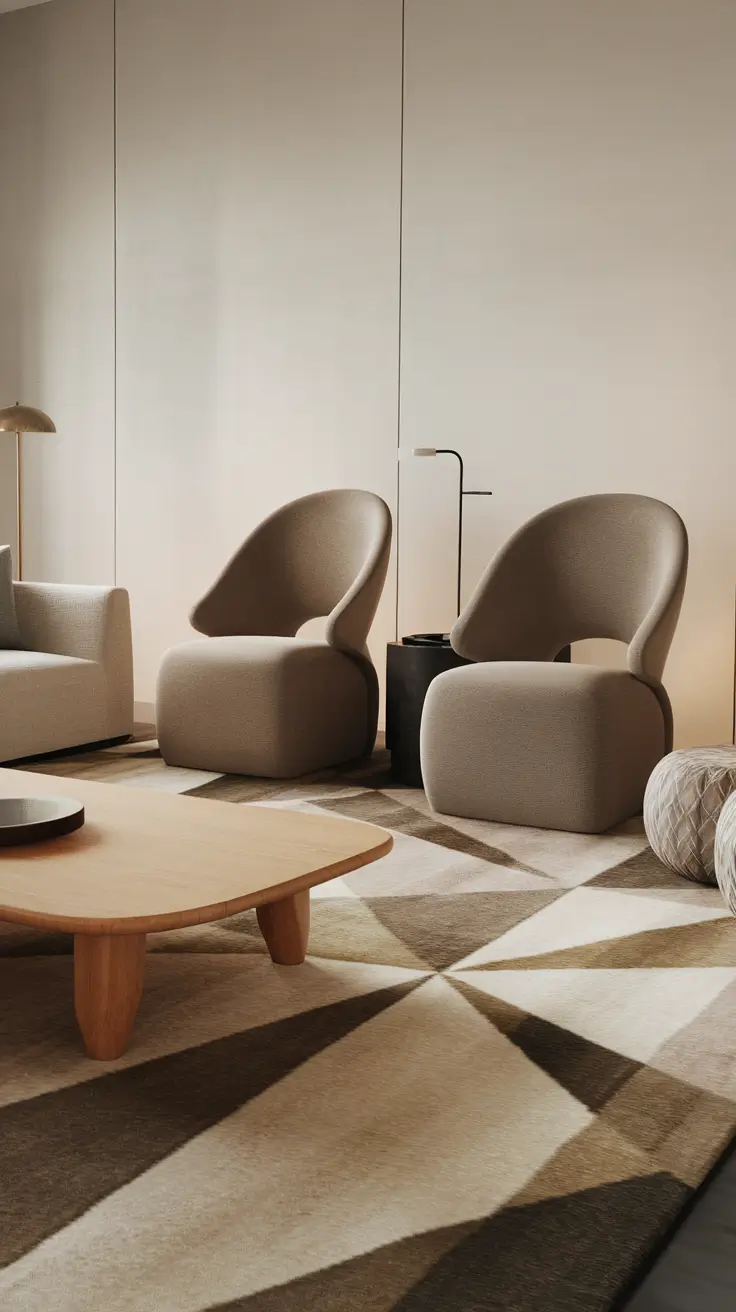
Pairs of molded wood or metal-framed lounge chairs with upholstered seats, geometric wool rugs, and rectilinear coffee tables with rounded corners create a grounded, cohesive look. Neutral tones unify the palette, with black accents in lamp bases or side tables adding contrast. Leather chairs in tan or gray offer durability without harshness.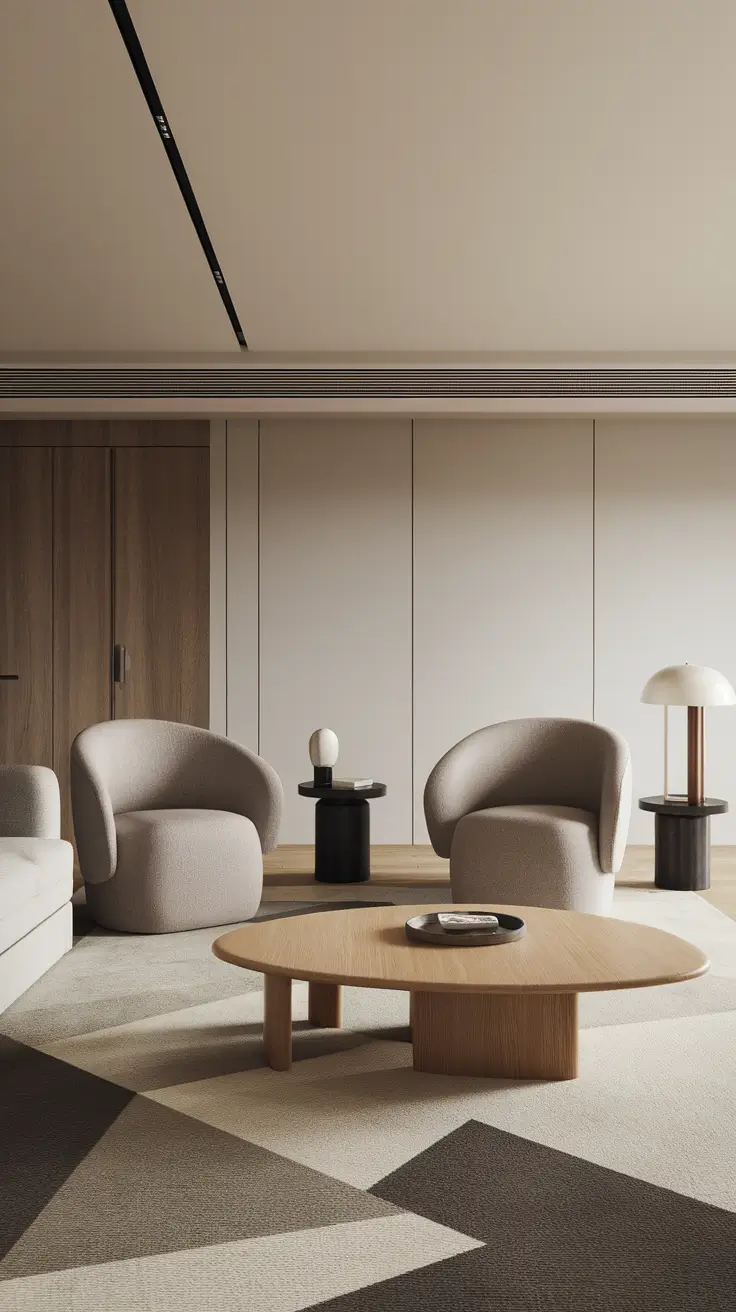
Minimal clutter and embracing negative space are key. A standout chair can serve as a sculptural focal point, elevating the room’s design.
Dimmable lighting and low-gloss wall finishes create soft shadows that enhance the three-dimensional quality of modern chairs.
Creating Cozy Living Room Chair Corners
Comfort-driven designs emphasize tactile elements. Layering plush textiles, warm wood tones, and rounded edges transforms chairs into inviting retreats. This approach suits cozy living room chair ideas while respecting modern aesthetics.
Cozy armchairs with soft upholstery are perfect.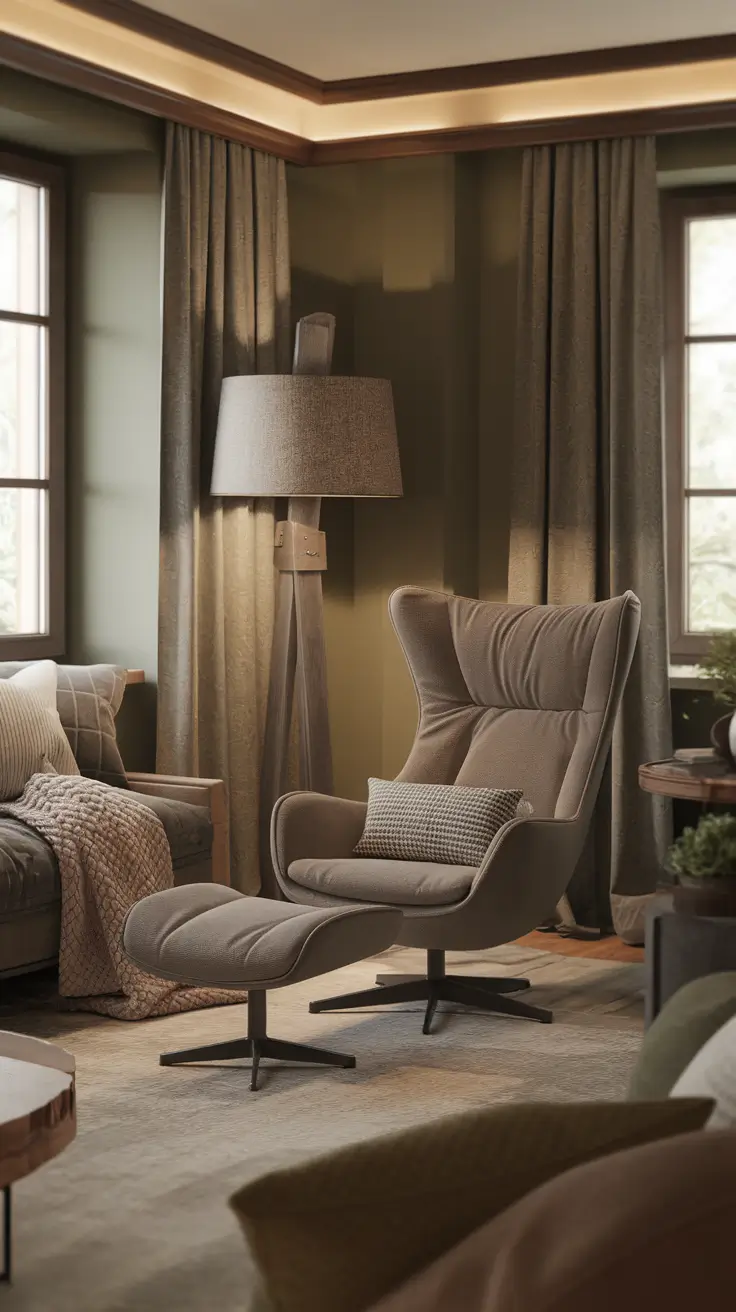
A high-back reading chair paired with a lounge chair for guests, complemented by a footstool, thick wool or cotton throws, and shaded floor lamps, creates a warm nook. Earthy neutrals or muted greens soothe, while blue accent pillows add freshness.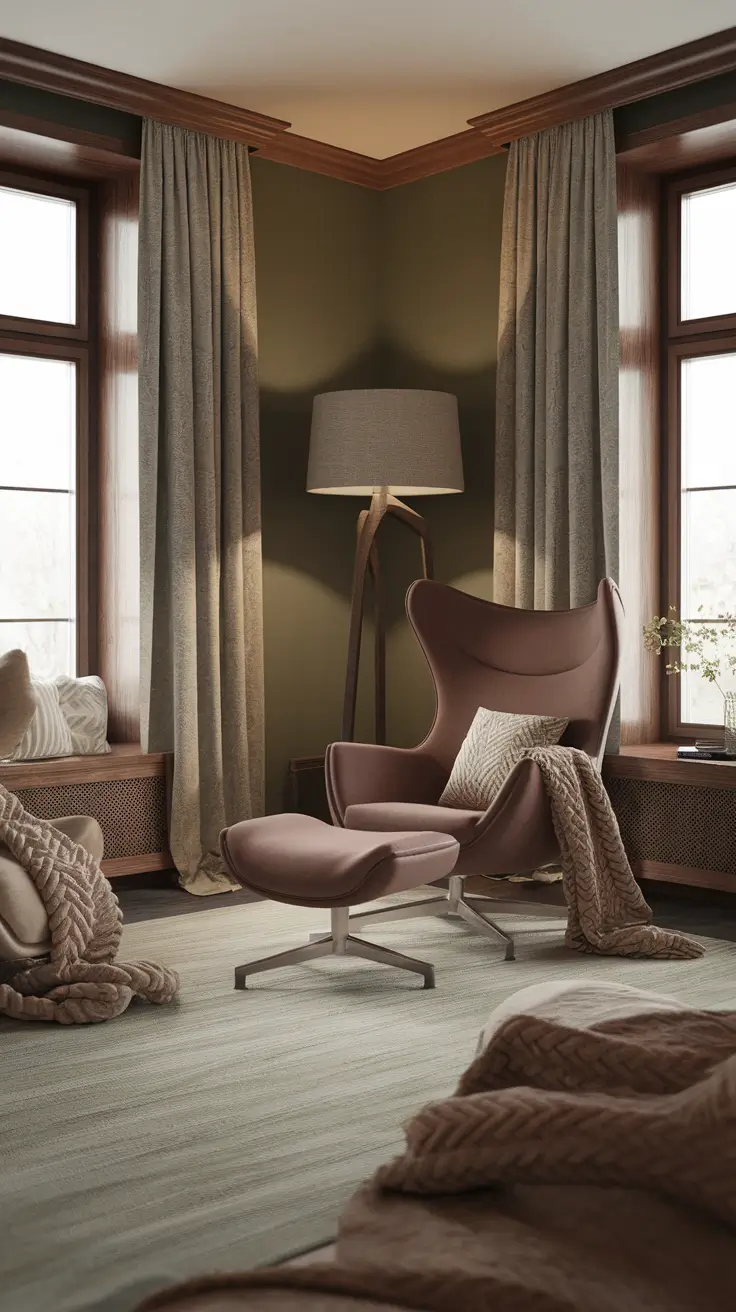
Placing the most comfortable chair near natural light with a side shelf for books and mugs enhances usability. Each seat benefits from dedicated lighting, with layered illumination fostering intimacy.
Adding acoustic elements like lined curtains or cork-backed panels softens sound, making conversations more pleasant without sacrificing style.
Accent Chairs for Small Living Rooms
In compact rooms, accent chairs should make a statement without overwhelming the space. I focus on one standout feature—be it color, pattern, or shape—while keeping other elements subdued. This strategy supports flexible, modern small-space designs.
Accent chairs in bold hues add personality.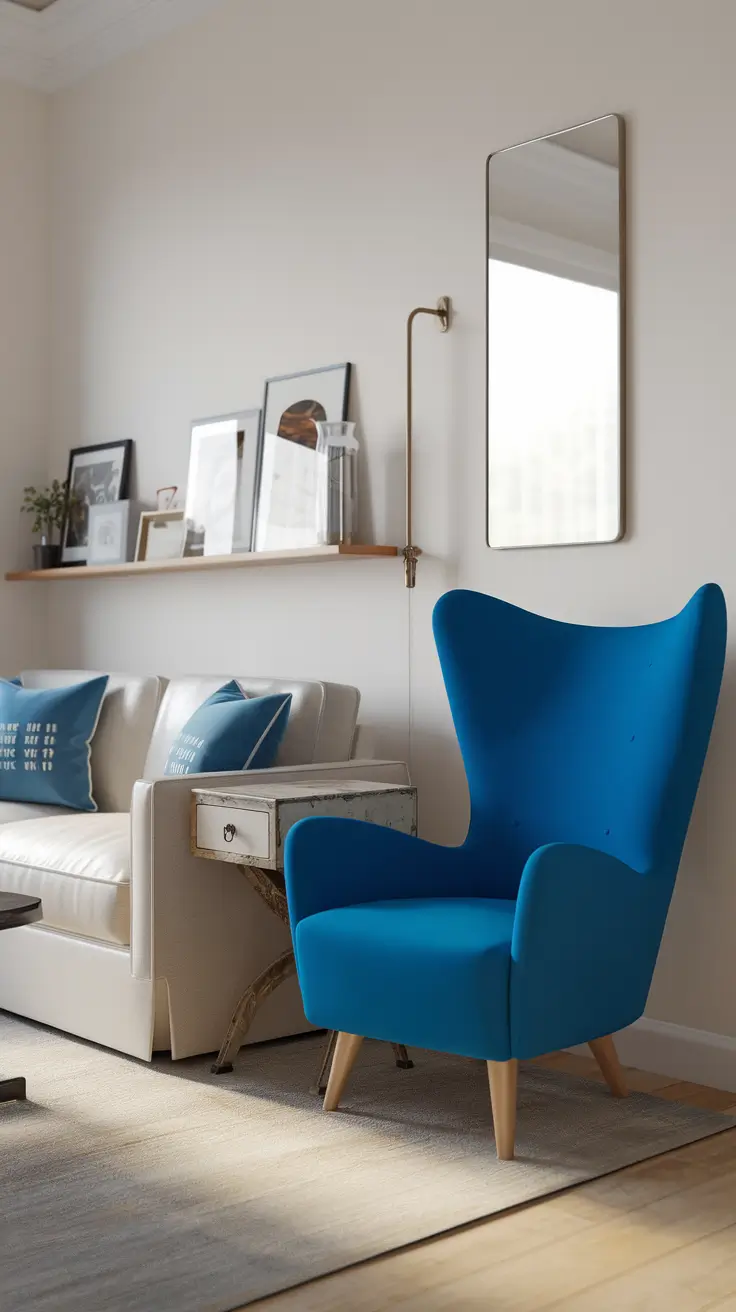
A vibrant chair in blue, gray, or green paired with a lighter companion chair in a woven fabric creates balance. An antique side table with storage and a narrow picture ledge above display art without bulky furniture. Incorporating global patterns, such as Nigerian textiles on pillows or ottomans, adds character with minimal spatial impact.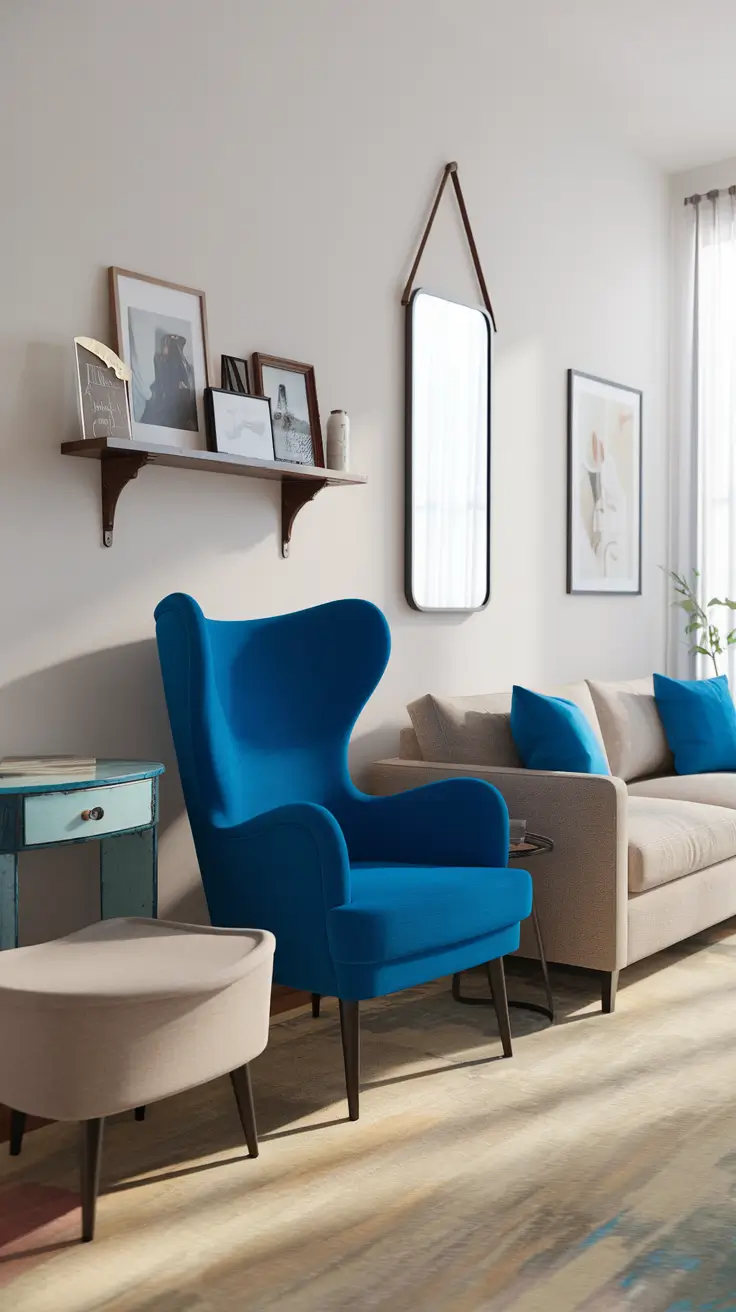
Repeating accent colors in pillows or artwork ensures cohesion. Designers often recommend this approach to maintain intentionality in bold color use.
Placing a wall mirror opposite the accent chair amplifies light and space, while a plug-in sconce above frees floor area from additional lamps.
Small Space Modern Chair Solutions
For compact rooms, I favor modern chairs with clean lines and open designs. Keeping the palette light with one or two contrasting accents ensures chairs appear crisp rather than cluttered. Two low-profile lounge chairs facing a window or focal point opposite a streamlined sofa maintain open sightlines.
Modern lounge chairs with narrow frames suit this style.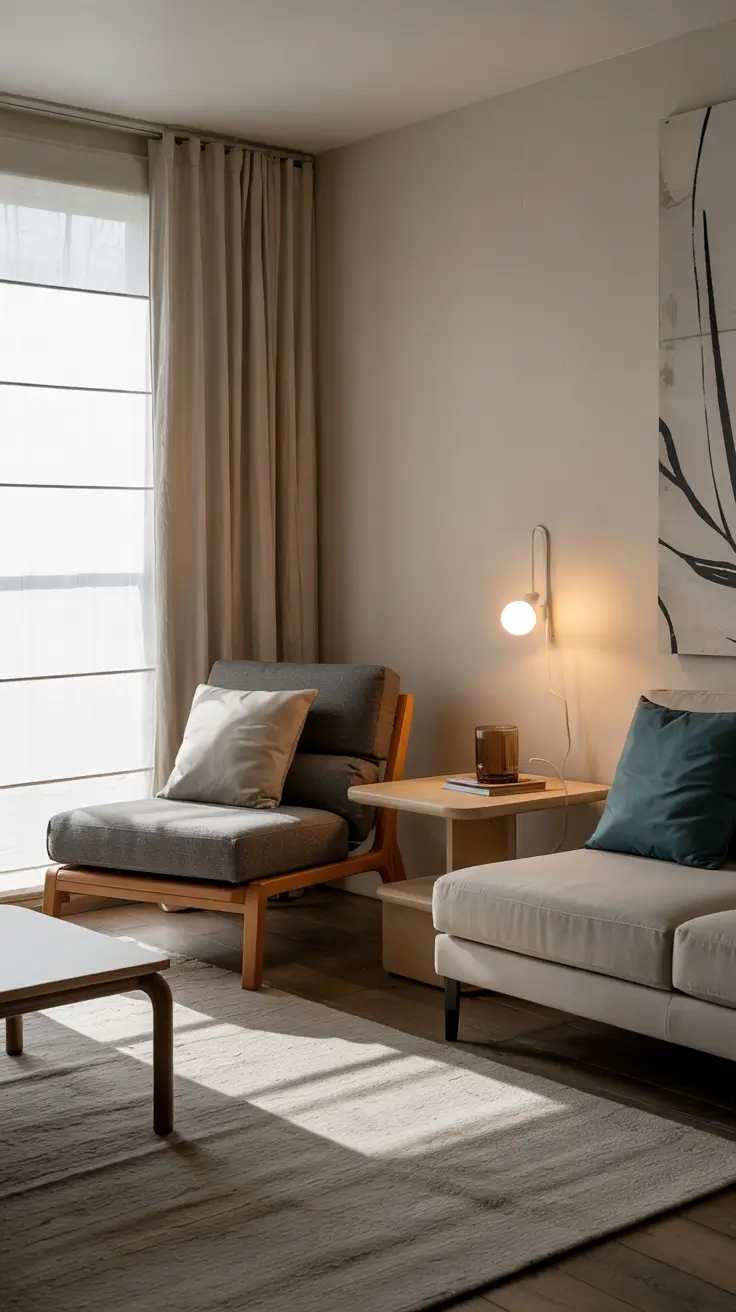
Chairs under 30 inches wide with slim metal or light wood legs, fitted seats, and slightly angled backs avoid bulk while offering comfort. Slim rectangular coffee tables with rounded corners improve flow, and slender wool rugs define seating zones. Wall-mounted sconces or track lighting replace floor lamps, and wall shelves serve as minimal side tables. Taller, tapered wood legs elongate proportions visually.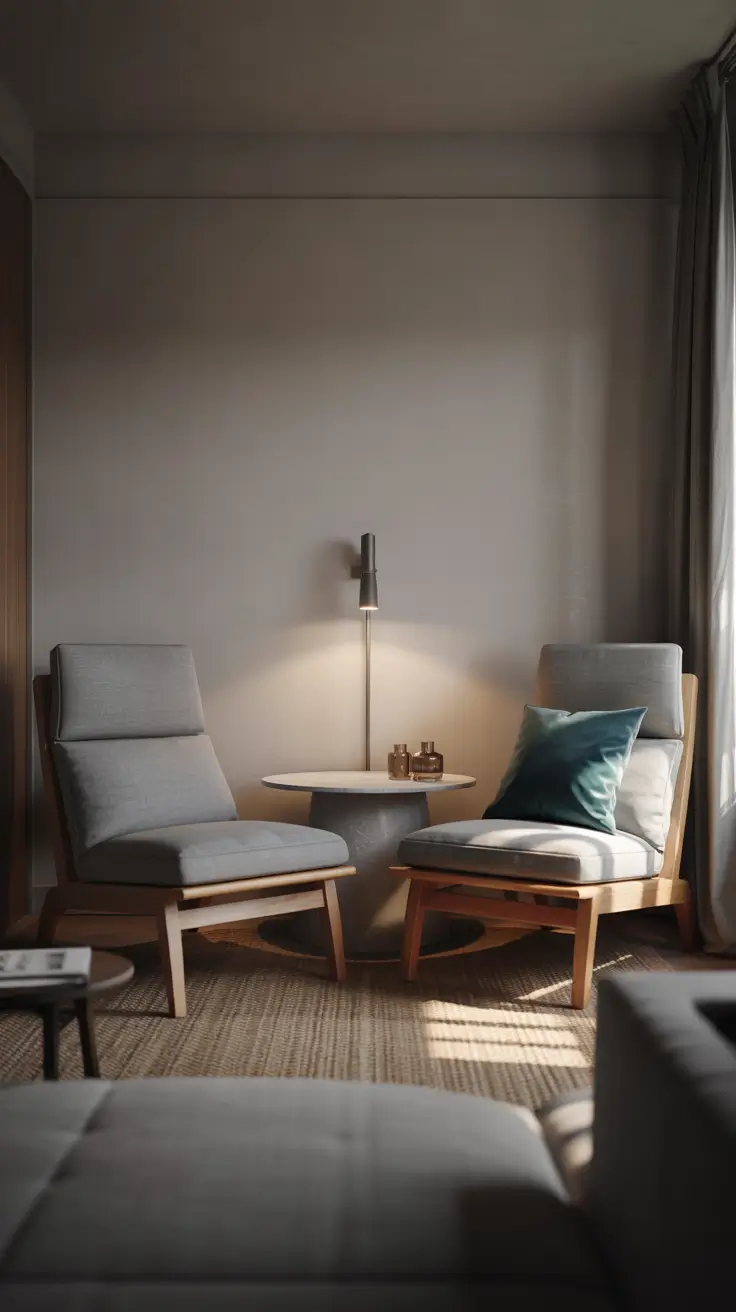
Repeating materials like matte black metal in chairs and tables unifies the vignette without overwhelming color. Negative space is a powerful design tool in small rooms, so I maintain at least 6 inches between chair arms and coffee table edges.
Adding a bold artwork echoing chair accent colors and a small ottoman tucked under the coffee table enhances functionality. Warm wood accents or woven baskets counterbalance modern metal elements in cooler rooms.
Utilizing Corners with Living Room Chairs
Corners offer excellent opportunities for reading nooks, extra seating, or versatile swivel chairs that face multiple focal points. Treating a corner as a dedicated zone with seating, lighting, and storage creates a mini stage.
Swivel chairs maximize corner functionality.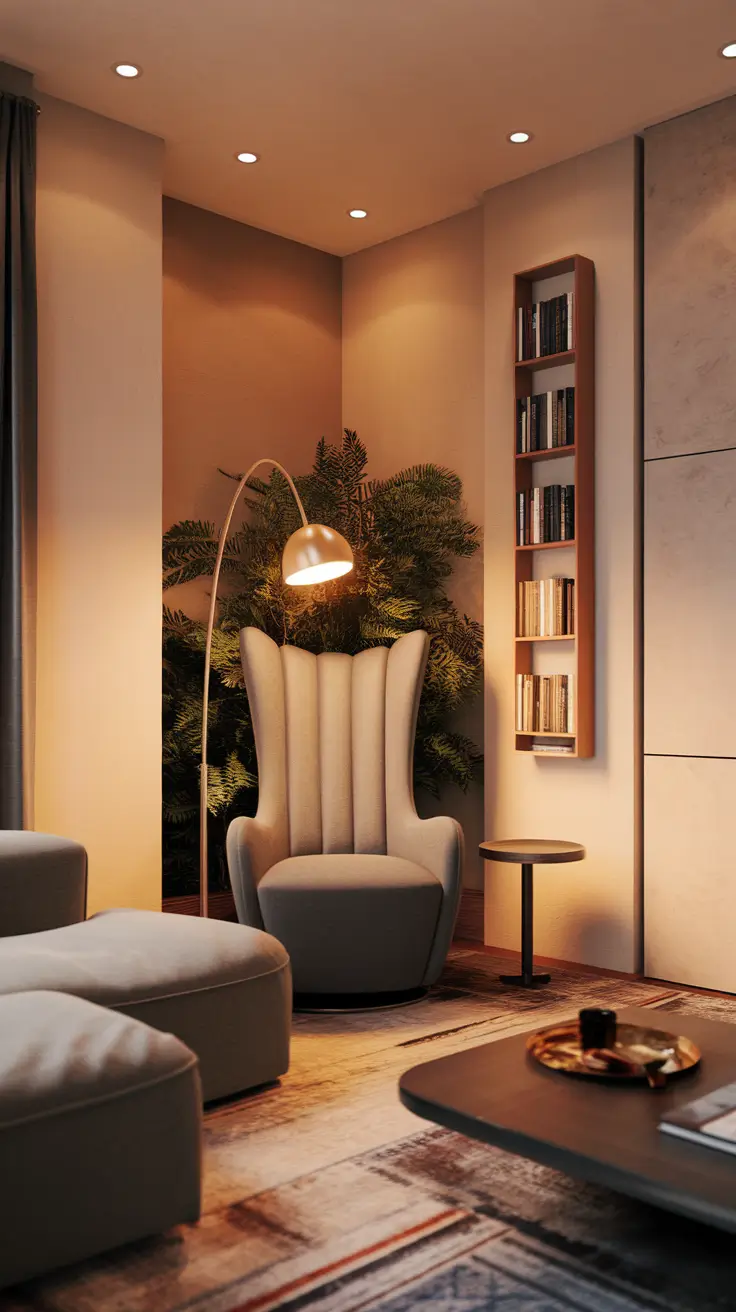
A statement chair with a tall back anchors the corner, paired with an arc floor lamp and a triangular or round side table fitting the space. If adjacent to an L-shaped sofa, angling the chair slightly keeps it engaged in conversation. Narrow bookcases or wall-mounted cabinets utilize vertical space without crowding floors.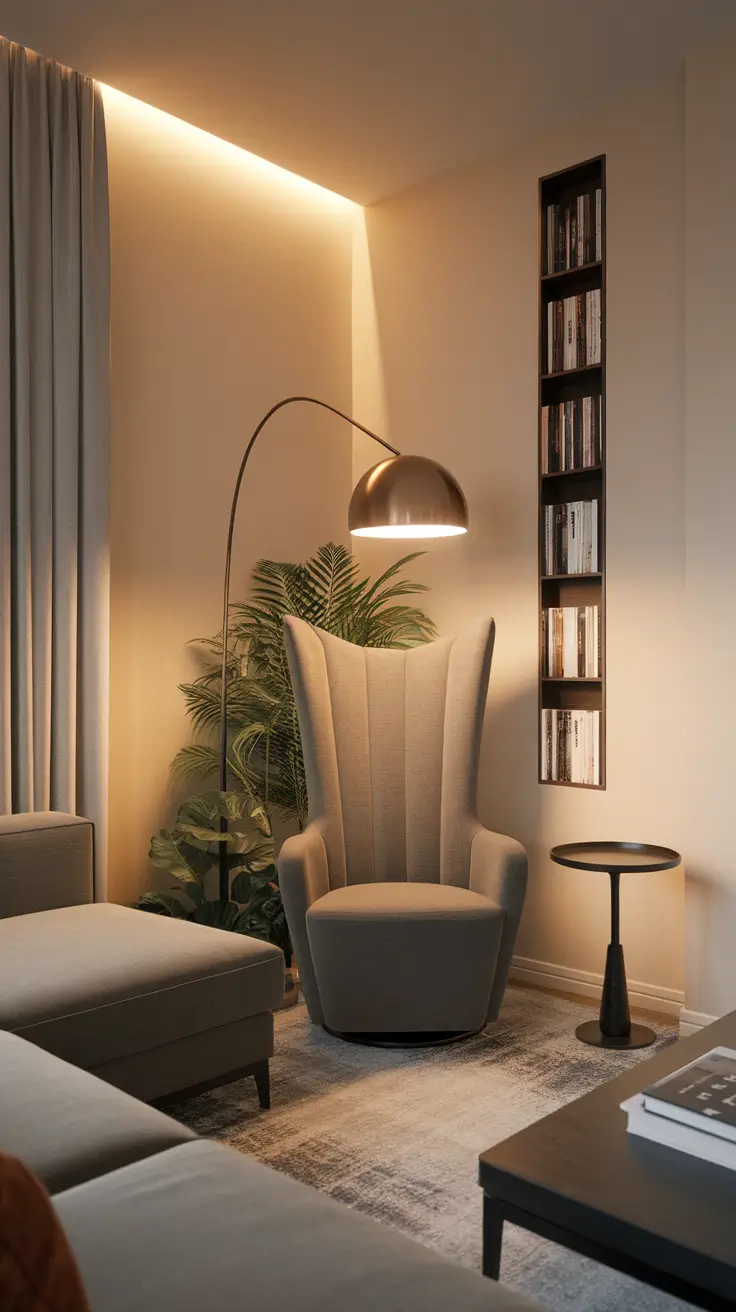
Purposeful lighting with warm LED bulbs and light-colored shades reflects light onto walls and ceilings, brightening corners. Swivel bases add versatility for multi-use rooms.
Adding vertically stacked artwork and textured footstools enhances height perception, while plants soften angles and bring life to the space.
Designing Small Spaces with Chairs
When furnishing small rooms, I prioritize circulation by establishing a clear path from entry to sofa and window, then positioning chairs to form natural conversation triangles. This approach suits studio apartments and compact family rooms.
Area rugs help define seating zones.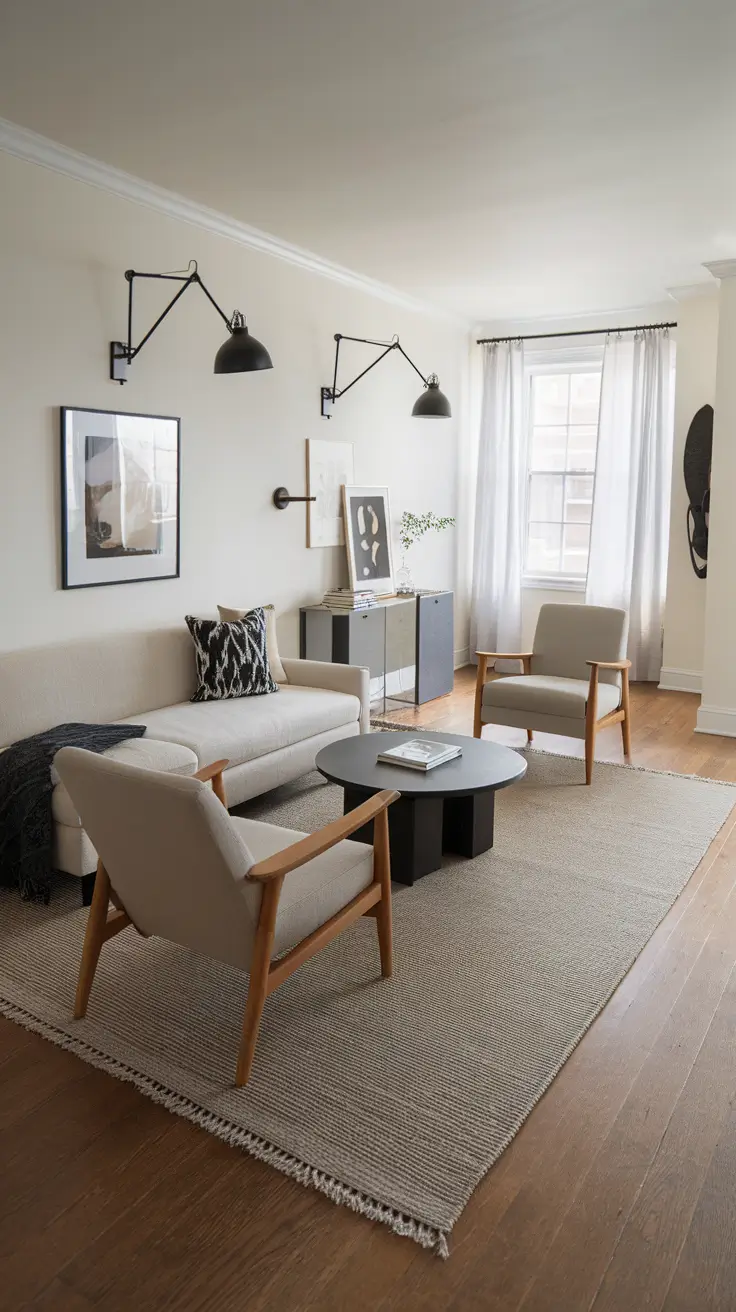
A 5×8 rug anchors the area, paired with a 28 to 32-inch round coffee table for ample legroom. Two chairs with differing silhouettes—one low with wooden legs, one sling-back in neutral weave—add depth. Black accents repeated in side tables or lamps unify the palette. Thin consoles behind sofas conceal electronics.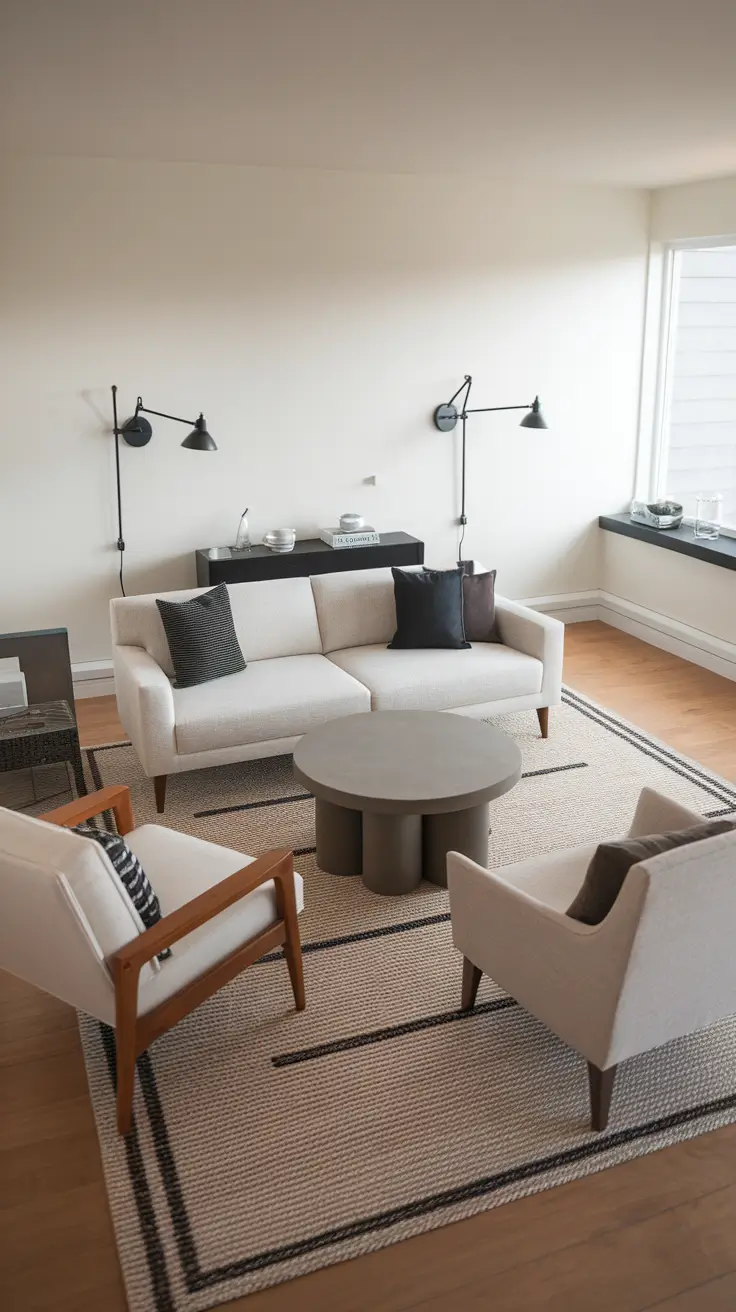
Floating furniture 3 to 6 inches from walls creates a deliberate, uncluttered feel. Maintaining 30 to 36 inches for main walkways and 18 inches between chairs and coffee tables ensures comfort in tight spaces.
Wall-mounted swing-arm lamps reclaim floor space, and narrow benches under windows provide extra seating. Updating pillowcases to match chair colors integrates older furniture into refreshed designs.
Farmhouse Chairs for Small Living Rooms
Compact farmhouse style requires thoughtful planning to avoid overcrowding. I keep palettes neutral and warm, adding texture through woven materials and weathered wood. A two-chair plus loveseat setup fosters cozy conversation without blocking views. Small stools tucked under consoles offer additional seating while preserving floor space.
Farmhouse chairs with slipcovers and spindle backs are ideal.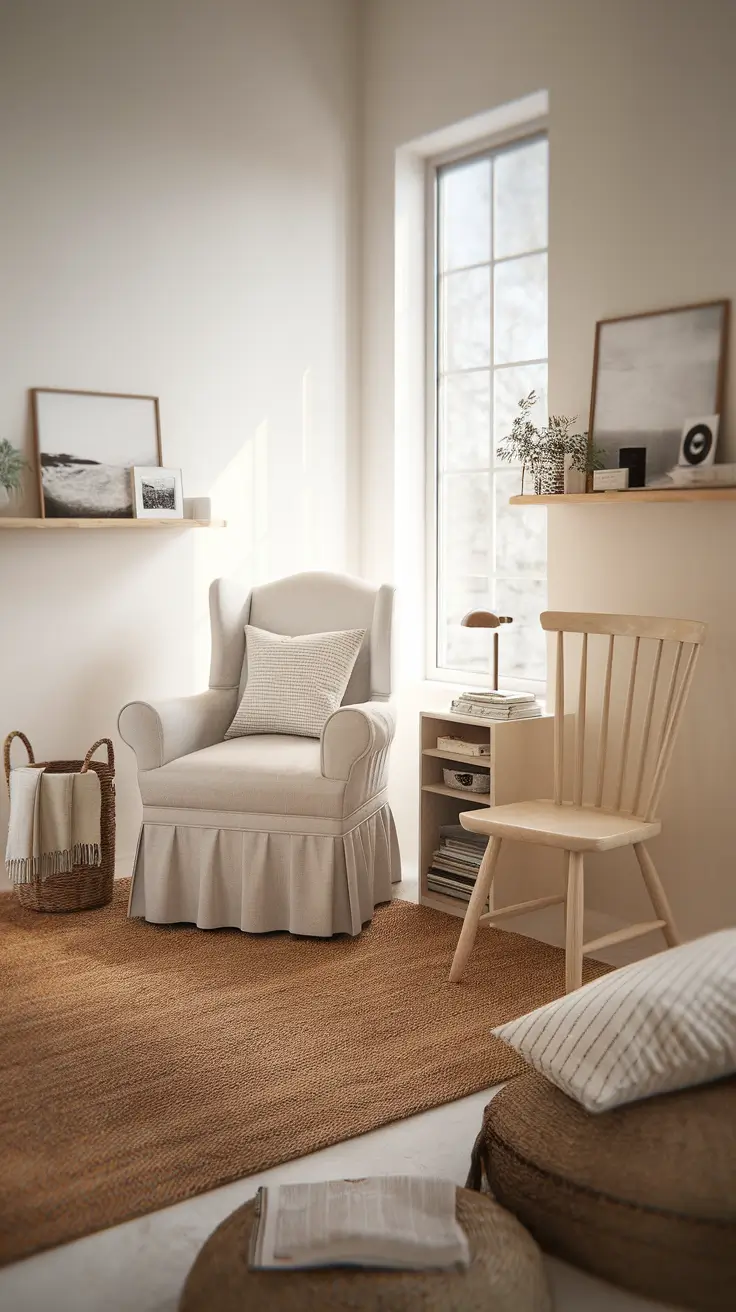
I select one armless slipcovered chair and one light spindle-back accent chair in natural wood. Narrow side tables hold remotes and lamps, while jute rugs add warmth. Shallow wall units replace bulky bookcases to save space. Chairs are angled slightly for TV viewing without crowding.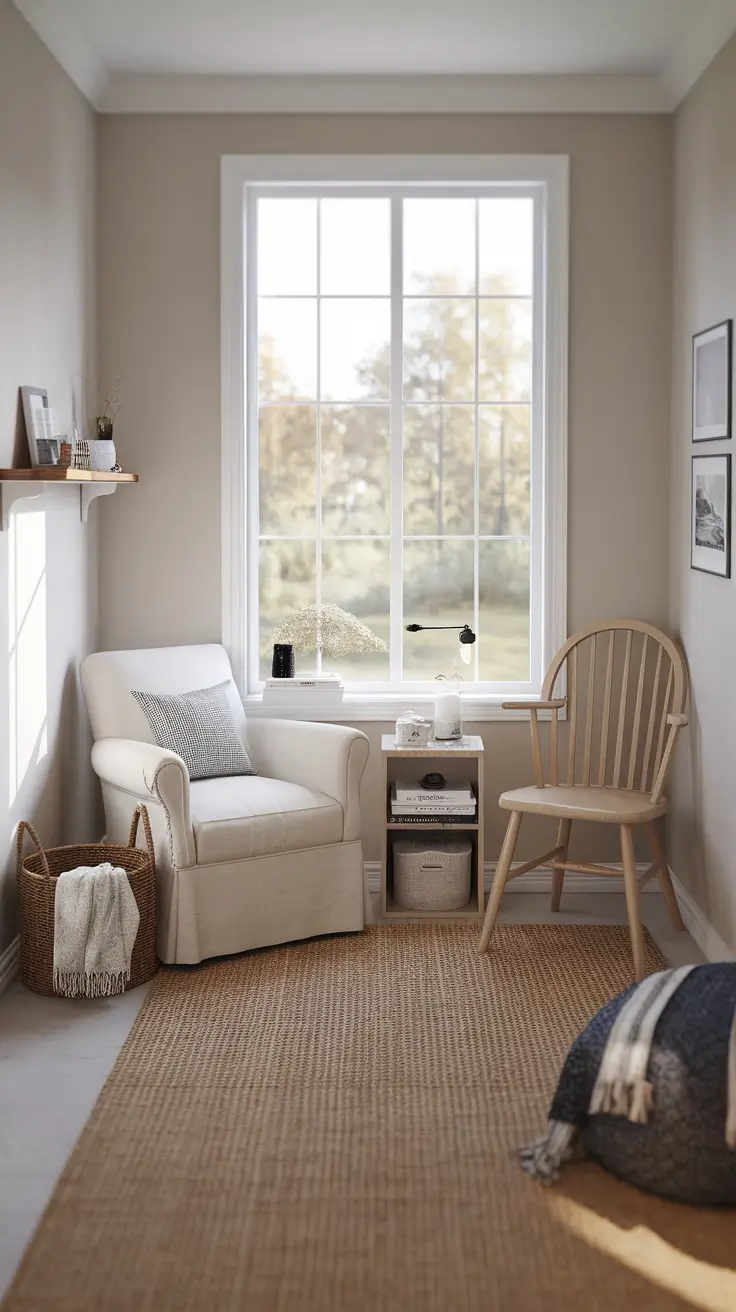
Short arms and close-back cushions optimize space. Avoid oversized roll arms and deep tufting in tight rooms. Using a single subtle pattern, like ticking stripes, keeps the look cohesive. Maintaining 16 to 18 inches between chairs and coffee tables ensures ease of movement.
Adding washable slipcovers and narrow picture ledges for rotating art enhances practicality and style in small farmhouse spaces.
Grey Chairs: A Versatile Living Room Choice
Grey chairs offer adaptability, pairing well with oak floors, white walls, and moody paints. Combining light grey bouclé swivels with charcoal wood-frame lounge chairs adds depth. Grey complements sectional sofas, especially L-shaped ones, maintaining neutrality from all angles.
Grey chairs are a staple.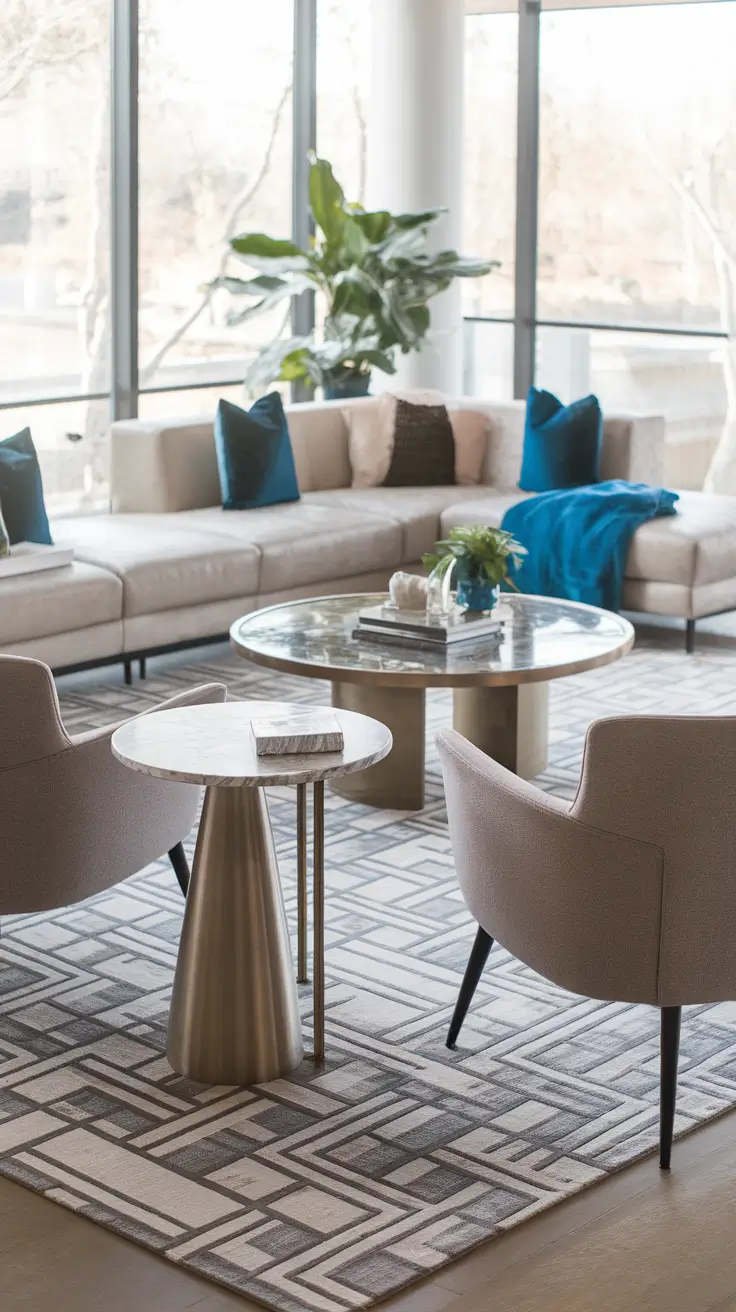
Furniture legs in matte black or brushed nickel coordinate with room metals. Medium-pile grey and ivory rugs ground the area, while marble-top side tables add lightness. Positioning grey swivels opposite chaise lounges completes conversational triangles.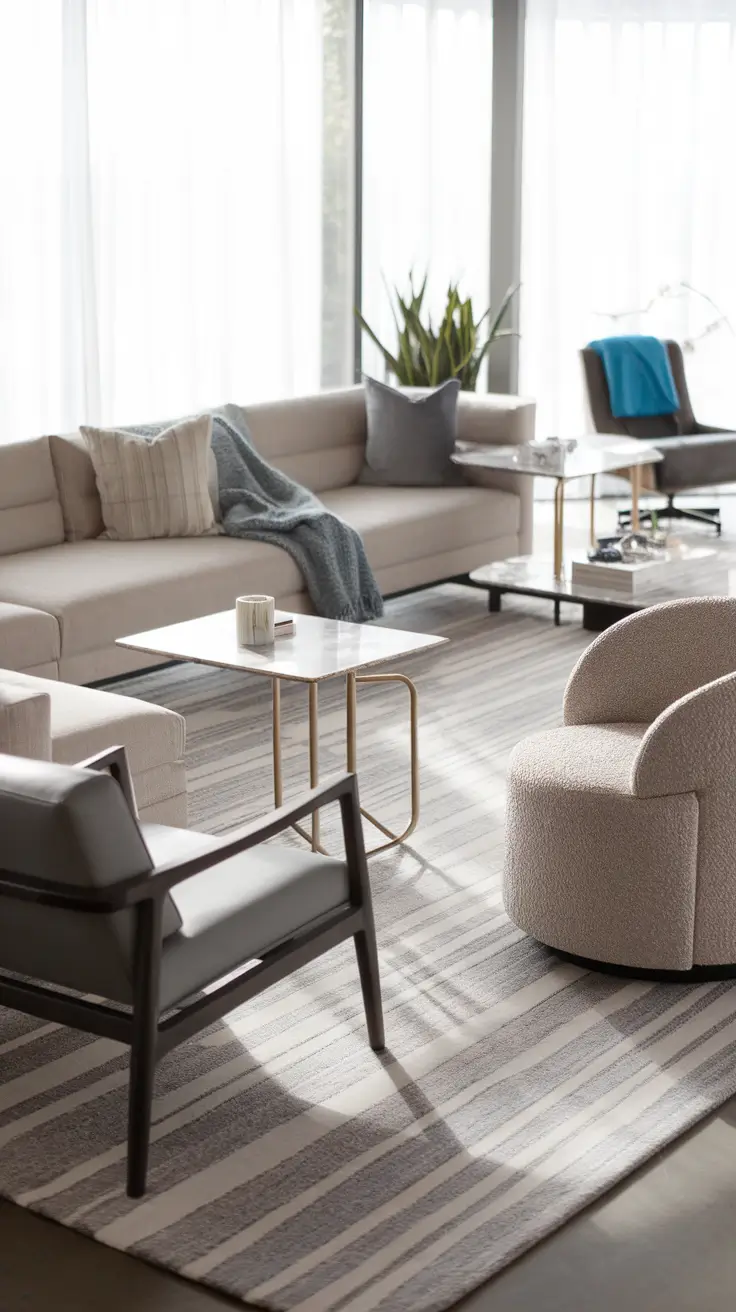
Grey upholstery withstands wear better than light beige and feels airy. Adding soft blue throws or green plants prevents monotony. Warm grey undertones suit north-facing rooms to avoid coldness. Open spindle or airy designs allow light penetration and maintain modernity.
Introducing accent colors through pillows or artwork ensures the grey scheme feels intentional. Incorporating wood elements in chair legs connects to natural textures.
Bold Black Chairs for Impact
Black chairs make a striking, modern statement. Two black leather sling chairs paired with a light sofa create contrast in bright rooms. In well-lit apartments, black adds photographic depth and elevates simple designs. Placing them near windows highlights their silhouette.
Black leather chairs are both stylish and practical.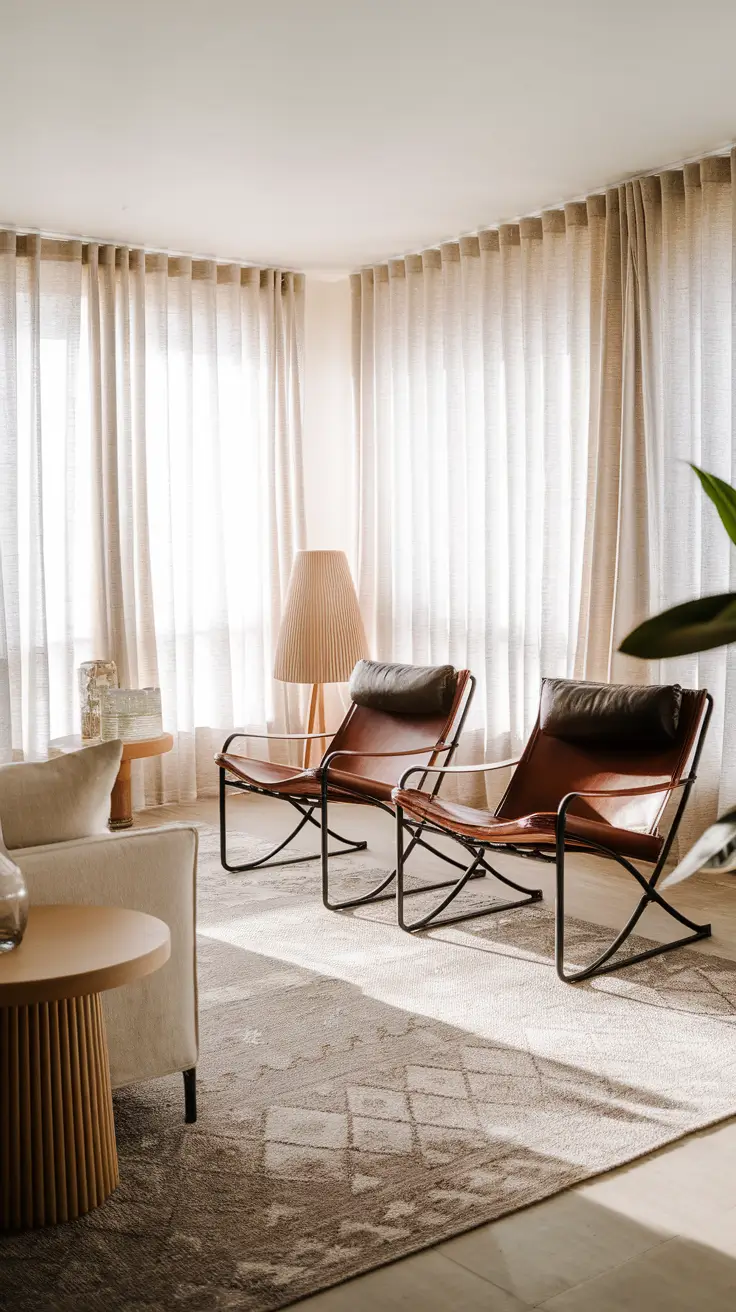
Materials include top-grain leather, powder-coated steel, and black-stained oak. Low arm contours reduce visual weight, and snug seats keep lines clean. Wool rugs with subtle patterns soften the dark tones, complemented by round wood side tables for warmth.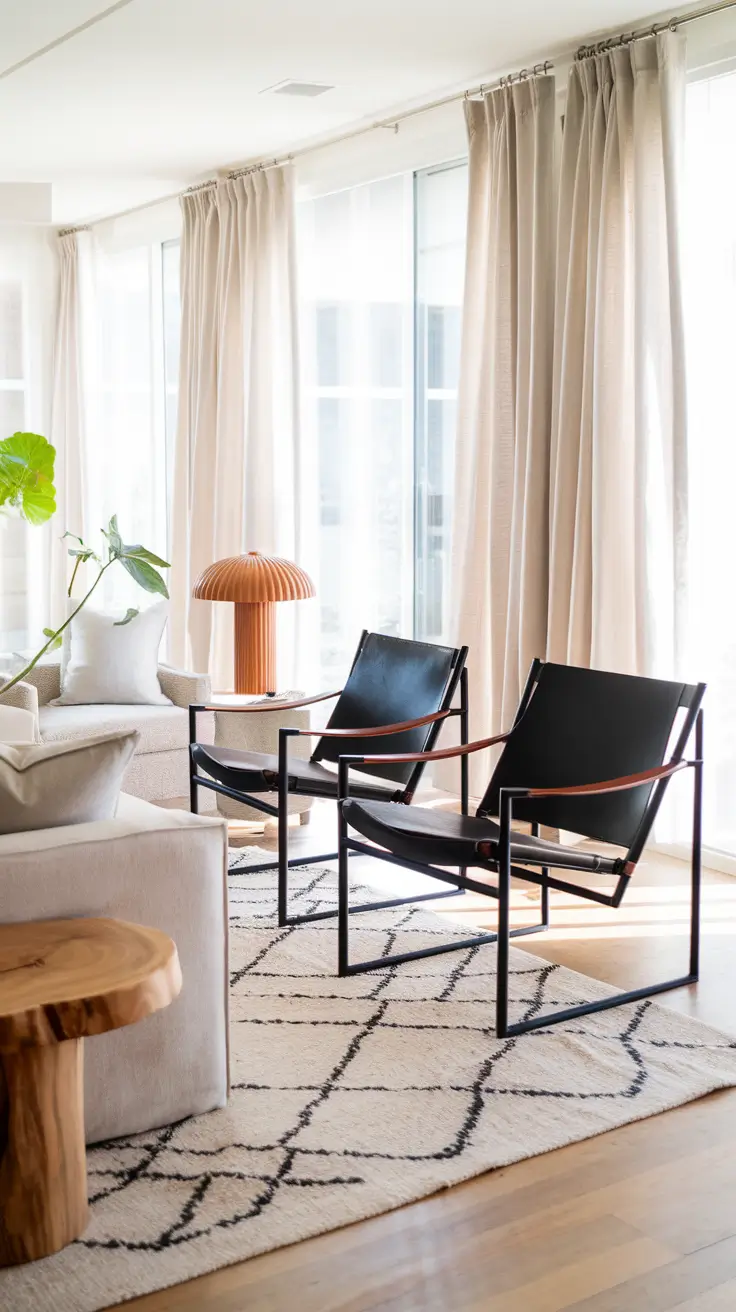
Texture-rich elements like linen curtains, chunky throws, and ribbed ceramic lamps balance the starkness. Black chairs suit modern and minimalist interiors, offering durability and stain resistance, ideal for urban living.
Soft accents like light ottomans nearby prevent harshness. In L-shaped layouts, orient black chairs toward open sides and add greenery to soften the palette.
Streamlined Living Room Chair Styles
Minimalism doesn’t equate to dullness. Focusing on clean lines and familiar shapes creates functional, family-friendly spaces. Two identical armchairs, a simple sofa, and a light rectangular coffee table facilitate easy flow for work or leisure.
Simple armchairs with straight arms and wood legs fit well.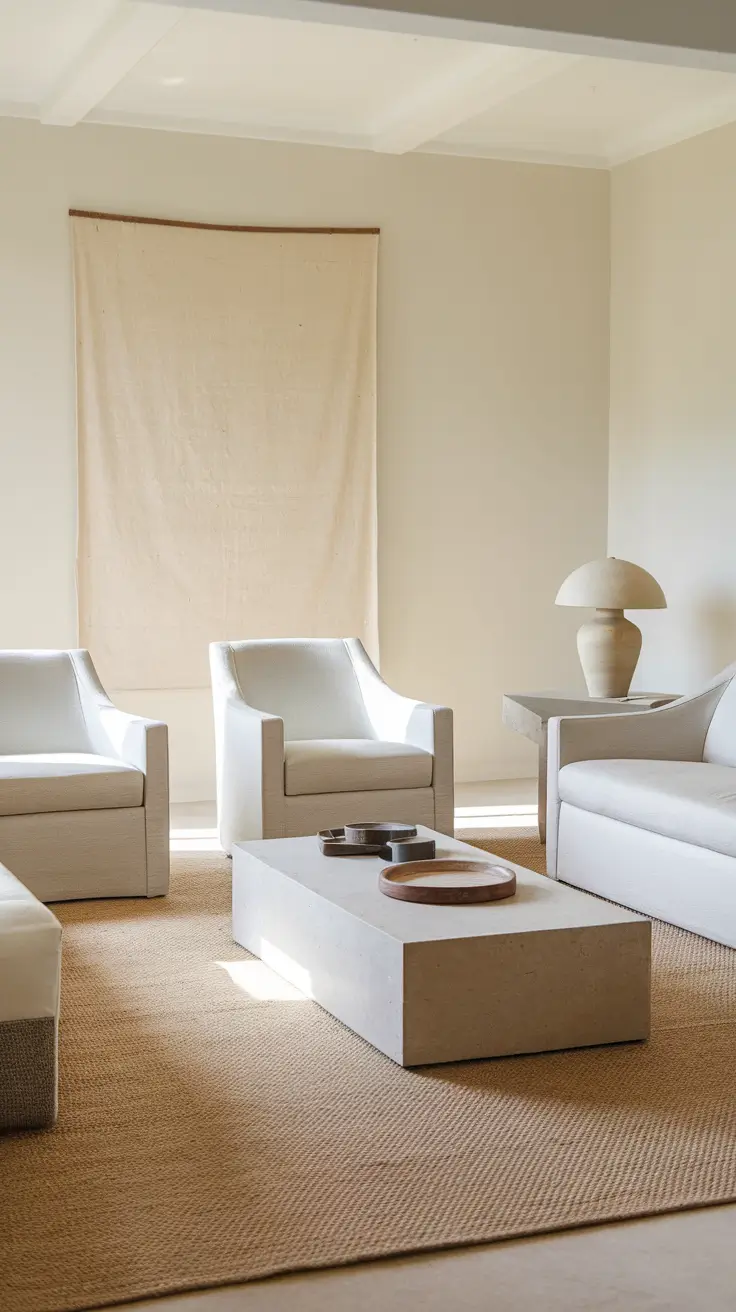
Chairs with medium seat depth and neutral performance fabrics maintain casual elegance. Minimal art and closed storage keep clutter at bay.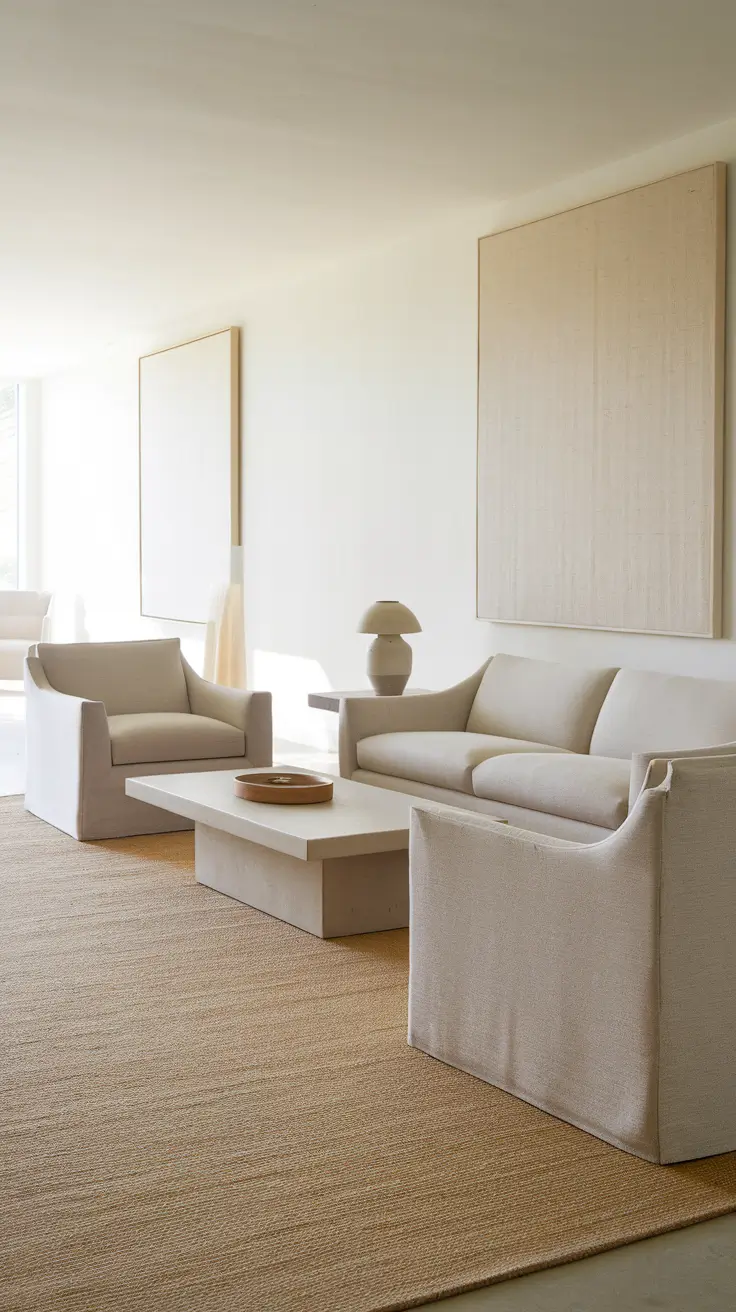
Neutral tones like oatmeal, warm grey, and soft white dominate, with a single accent pillow adding pattern. This approach suits living room corners by assigning clear functions to each element.
Adding a small bookshelf or plant stand introduces vertical interest. A floor lamp and chair in a dead corner create a cozy reading spot.
Invigorating Green Chairs for Living Rooms
Green chairs breathe life into interiors, bridging wood tones and cool wall colors. Olive or moss chairs paired with neutral sofas create soothing, organic palettes that remain fresh year-round.
Green armchairs add natural vibrancy.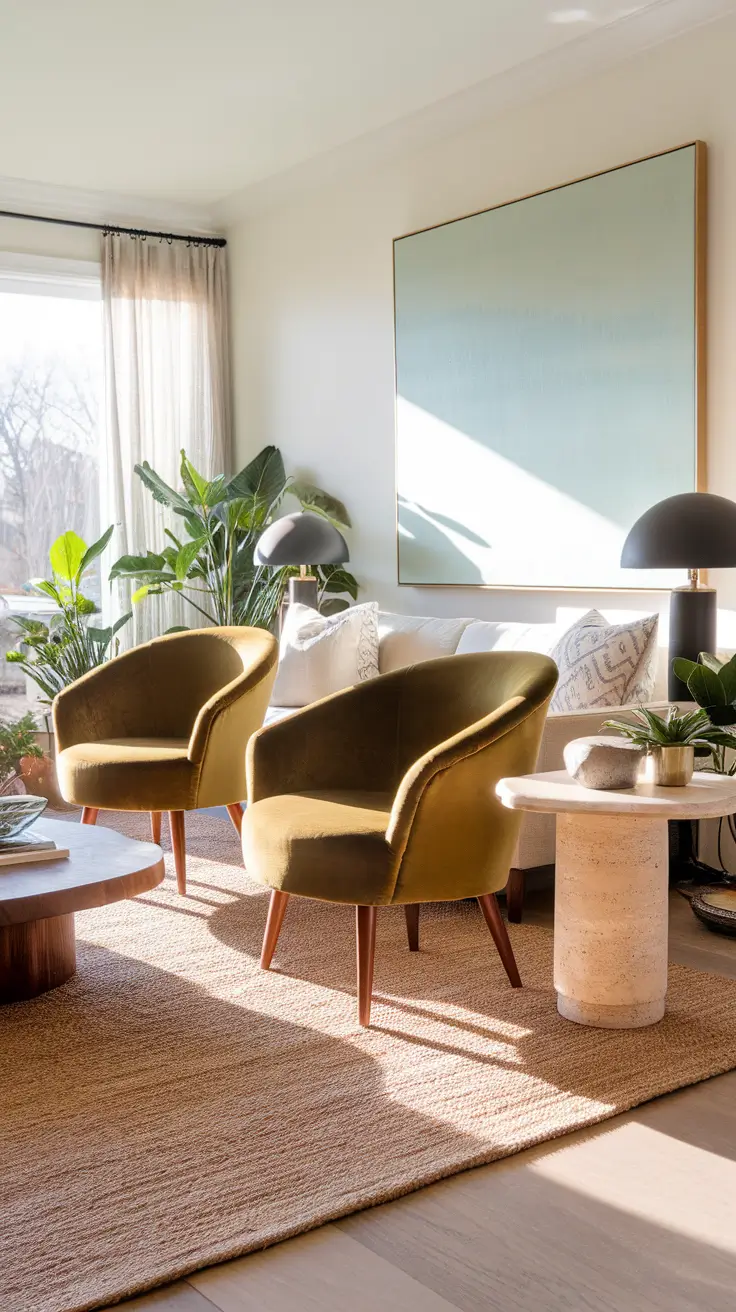
Velvet offers depth, twill durability, and boucle softness. Deep forest green contrasts beautifully with black accents. Sisal or jute rugs, travertine side tables, and matte black lamps balance the scheme. Green complements blue artwork or coastal themes without competing.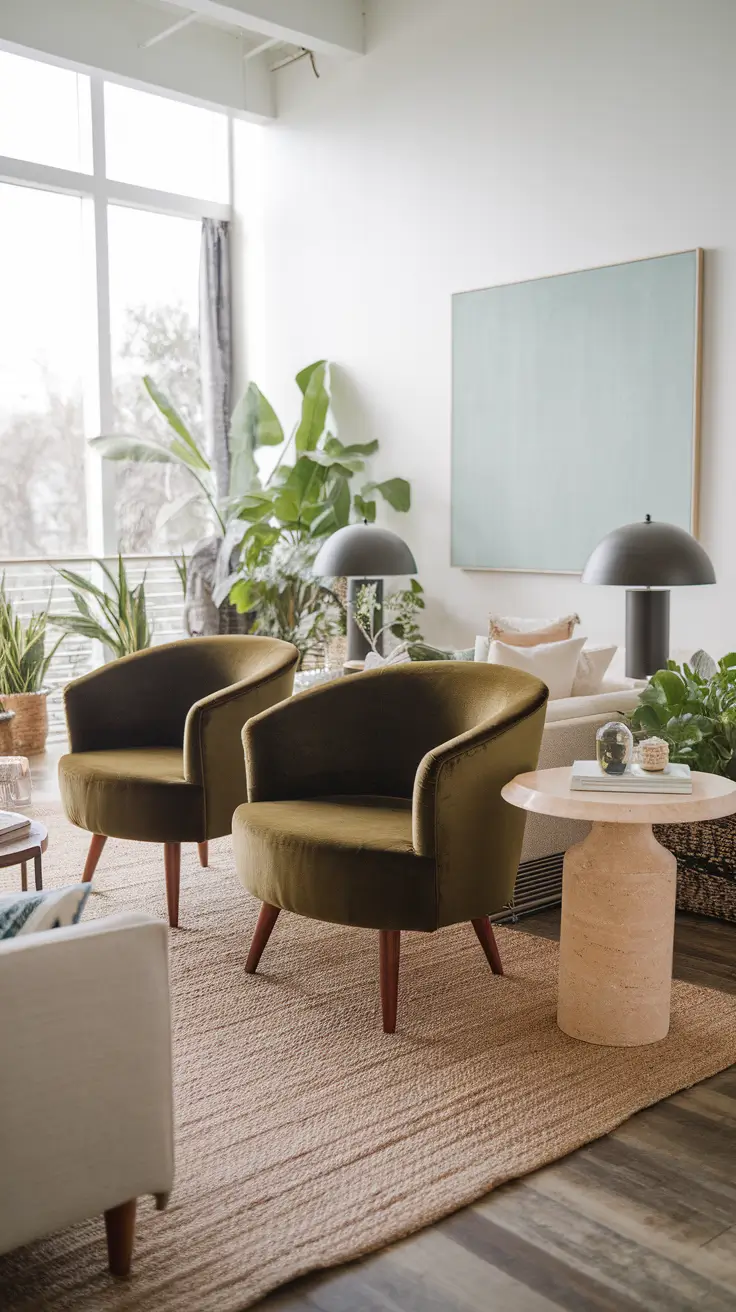
Green is a versatile, long-lasting color. Starting with sage tones eases color-shy clients into bolder greens. Mimicking leaf shapes in chair designs ties the room to nature.
Incorporating wood elements like walnut legs or stools reinforces natural connections. Adding ribbed throws or cane-front cabinets prevents green from appearing flat.
Inviting Farmhouse Living Room Chairs
Farmhouse seating feels welcoming when chairs appear collected rather than overly matched. Combining a slipcovered chair with a wood-framed armchair adds texture and structure. Striped rugs anchor the space, and large coffee tables accommodate games and books.
Farmhouse living room chairs embody this style.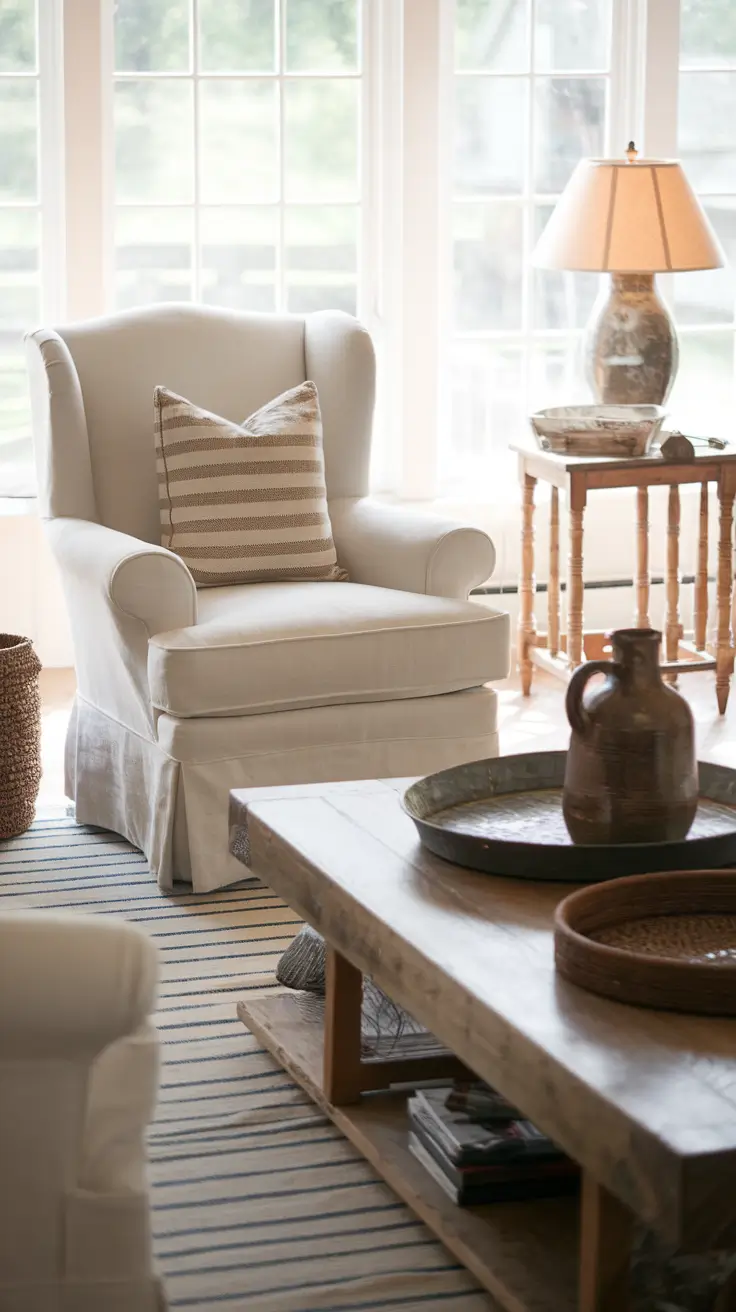
Performance cotton slipcovers and oak or maple frames with spindle or ladder-back details define the style. Accessories like hammered metal trays, ceramic vases, and woven baskets add charm. Table lamps with fabric shades create warm evening ambiance.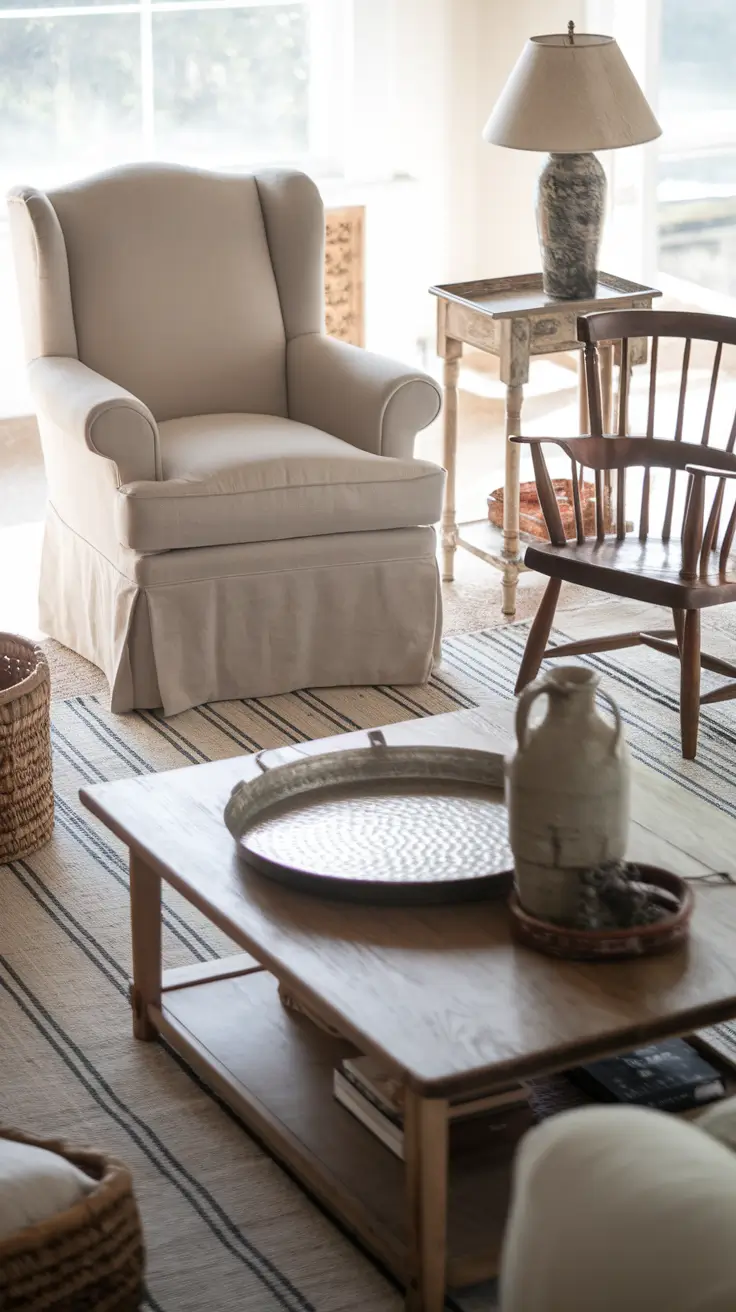
Careful attention to arm thickness and chair width avoids bulkiness. Keeping patterns subtle allows wood to shine, ensuring timelessness over trendiness. Differentiating chair fabrics from sofas prevents a “set” look.
Washable rugs and extra slipcovers are practical for households with children or pets. Adding a fireplace mirror brightens and visually expands the room.
Minimalist Living Room Chair Concepts
Minimalist interiors thrive when every piece serves a purpose. I maintain a tight palette, use negative space intentionally, and select chairs with thin arms and exposed legs. Typical layouts include low sofas, two lightweight armchairs, and round coffee tables to soften geometry.
Minimalist chairs with metal or wood frames fit well.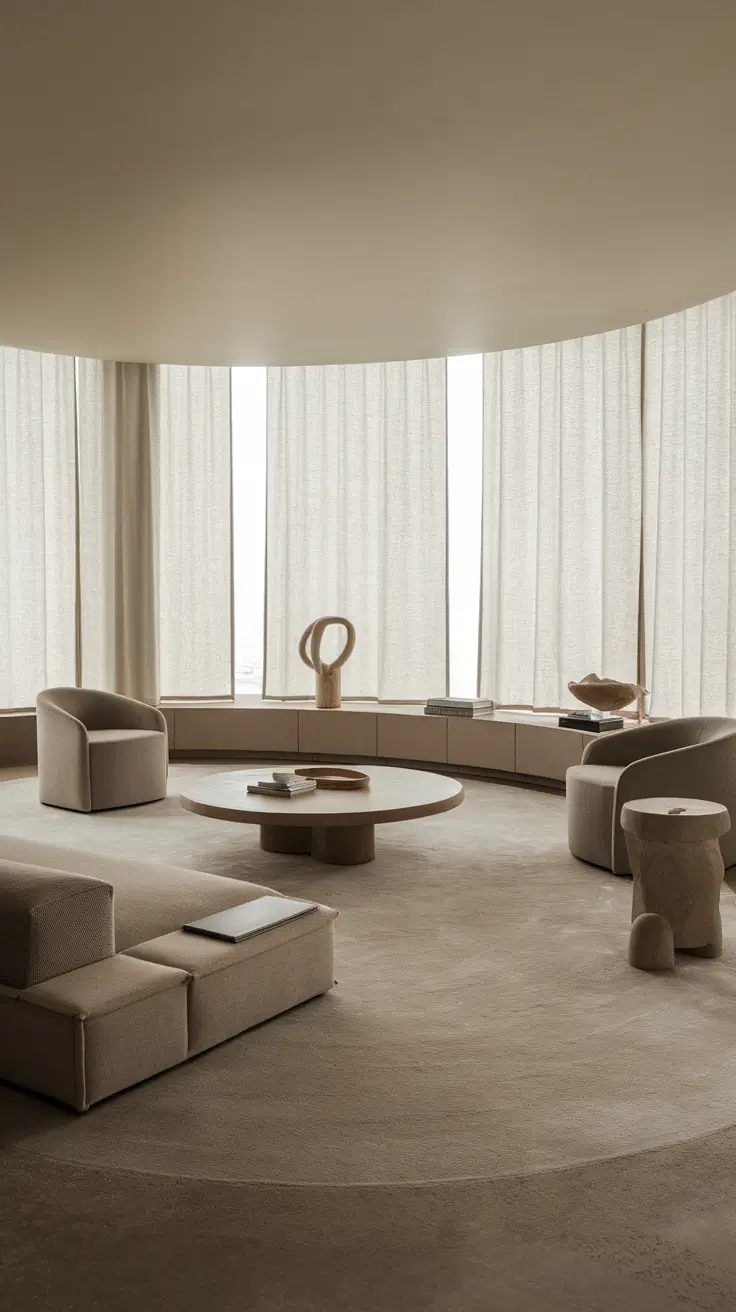
Firm seating in warm stone or charcoal fabrics keeps the eye calm. Storage is hidden in low credenzas, and sculptural floor lamps double as art. Window treatments are simple, such as linen panels or solar shades.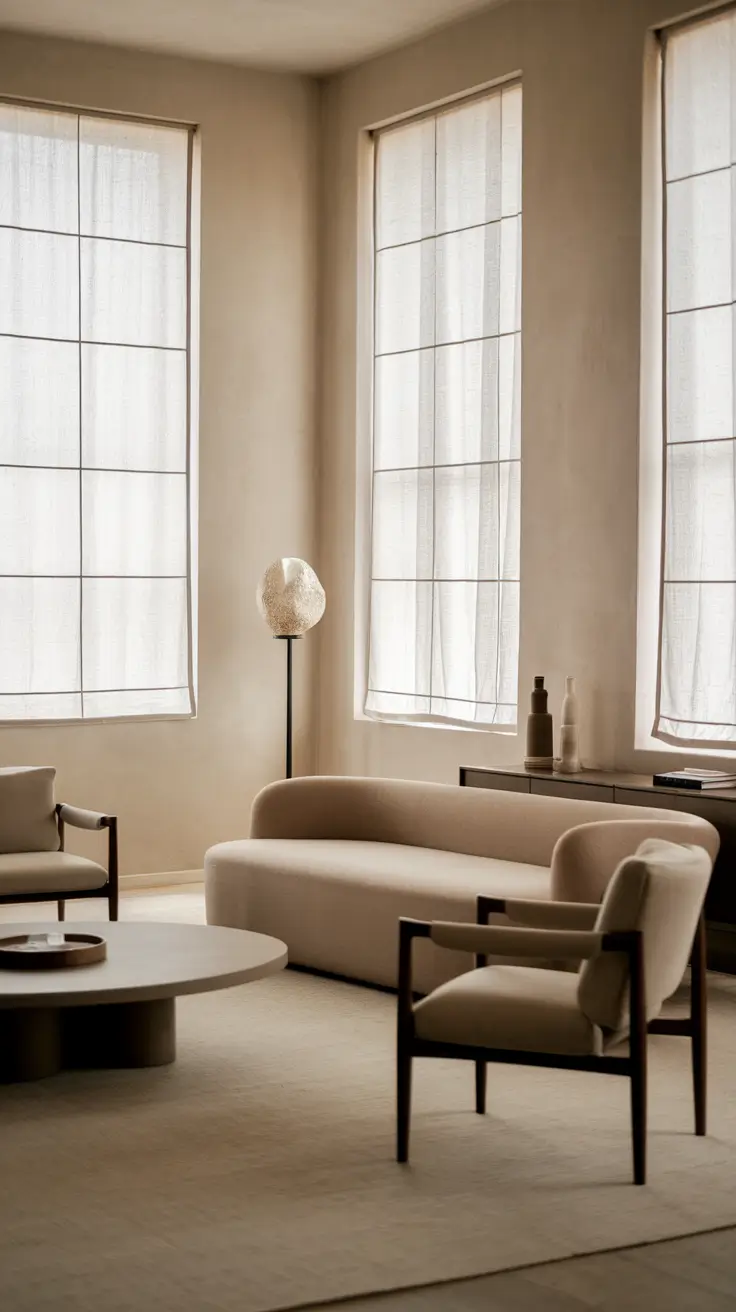
Minimalist designs share much with modern styles but emphasize function over decoration. Adding soft throws and rounded backs introduces coziness without clutter.
Small accents like a green plant or a stack of blue books add warmth and personality. Wool rugs reduce echo and enhance comfort in sunlit areas.
Bohemian Style Chairs for Small Spaces
Boho interiors in small rooms benefit from lightweight, movable chairs that introduce pattern without dominating. Neutral walls allow textiles to shine, anchored by low-profile coffee tables that preserve sightlines. The vibe is relaxed and creative, ideal for renters and studios.
Bohemian chairs with kilim prints and natural textures are popular.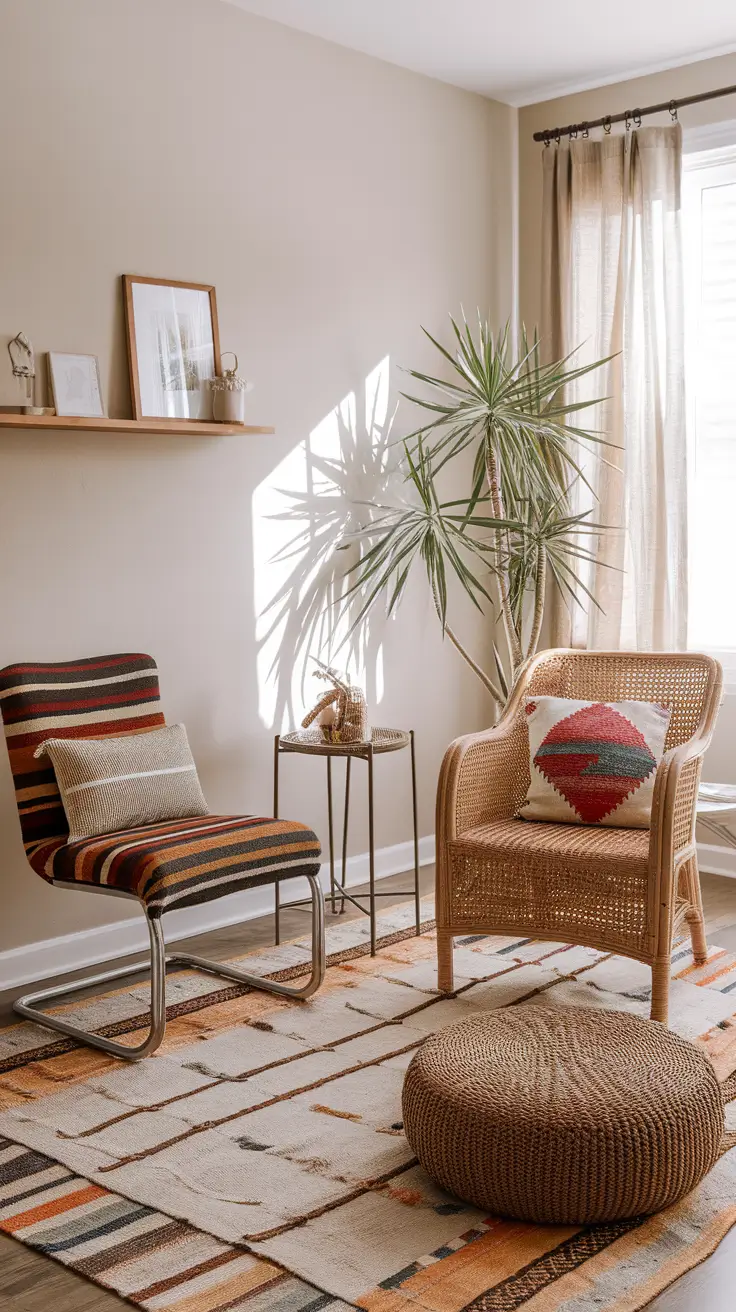
A slipcovered slipper chair in washable kilim fabric paired with a rattan or cane chair adds texture. A small floating pouf fits neatly in corners, and narrow iron side tables hold essentials. Flatwoven rugs and tall plants complete the look.
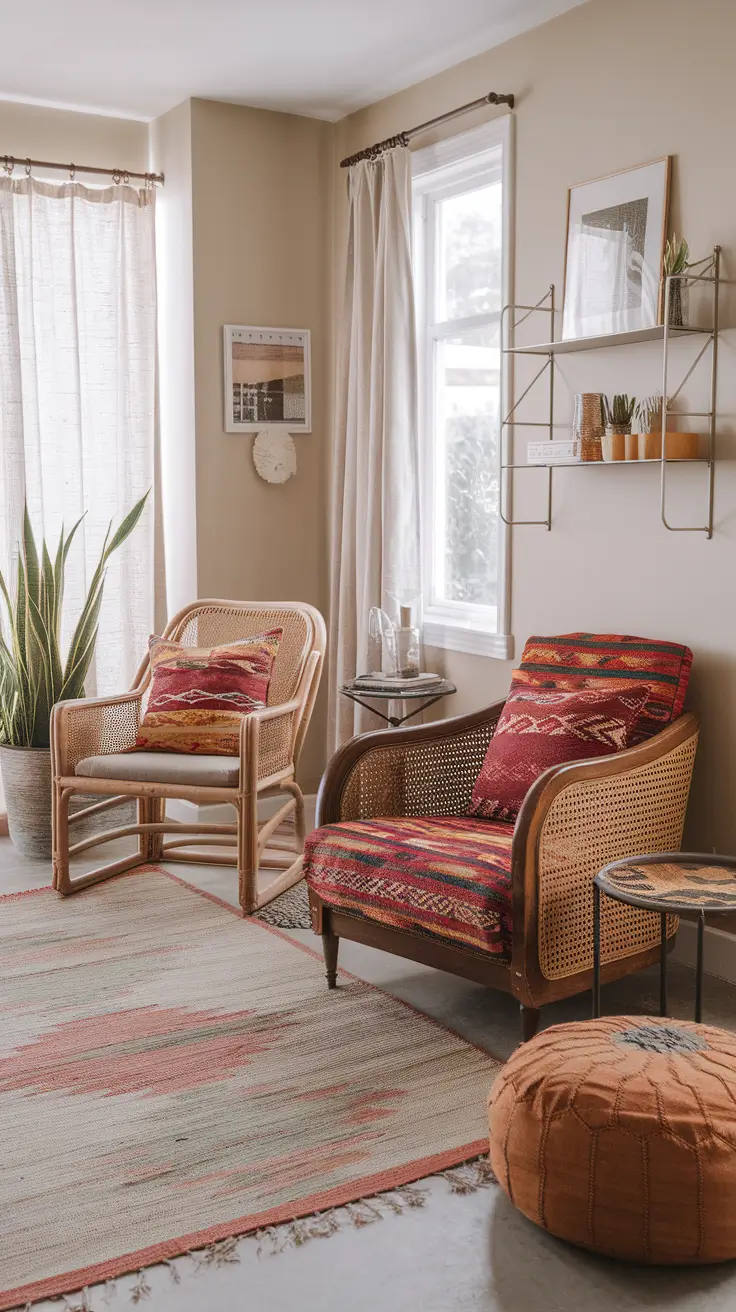
Bohemian style thrives when curated and edited. Two globally inspired pillows and a cotton throw suffice. Keeping furniture scaled down and surfaces clear maintains balance.
Adding wall shelves for rotating art and lidded baskets for tidy storage enhances functionality. Swapping regular chair legs for tapered wood legs lifts the look without reupholstery.
Coastal-Inspired Living Room Chairs
Coastal designs combine light fabrics and colors reminiscent of sky and sand, creating bright, airy spaces year-round. Slim arms and relaxed silhouettes keep chairs feeling spacious, ideal for small living rooms.
Coastal chairs with slipcovers and rope details fit well.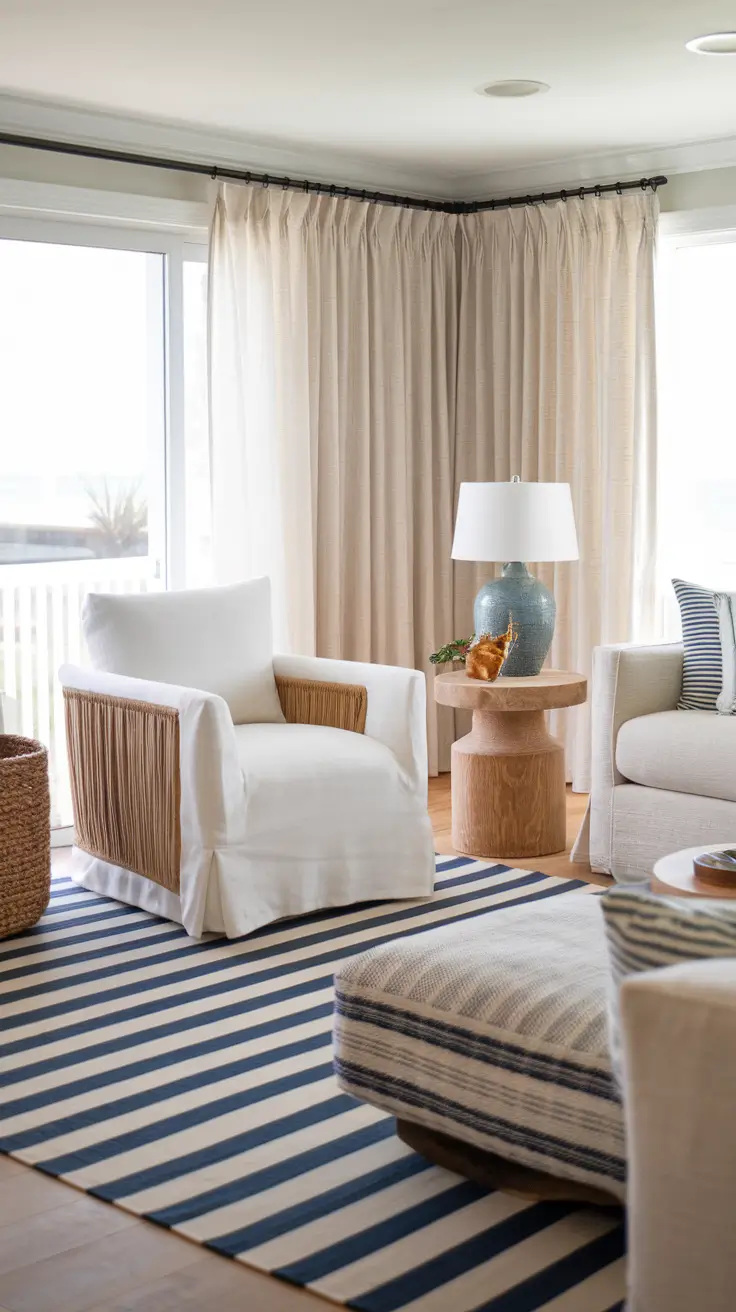
An oyster white slipcovered armchair paired with a wood-framed lounge chair featuring cane sides evokes driftwood and nautical themes. Striped cotton rugs and round oak side tables soften edges, while linen curtains filter bright light. In L-shaped sectionals, orient one chair toward water views and float the other to complete conversation circles.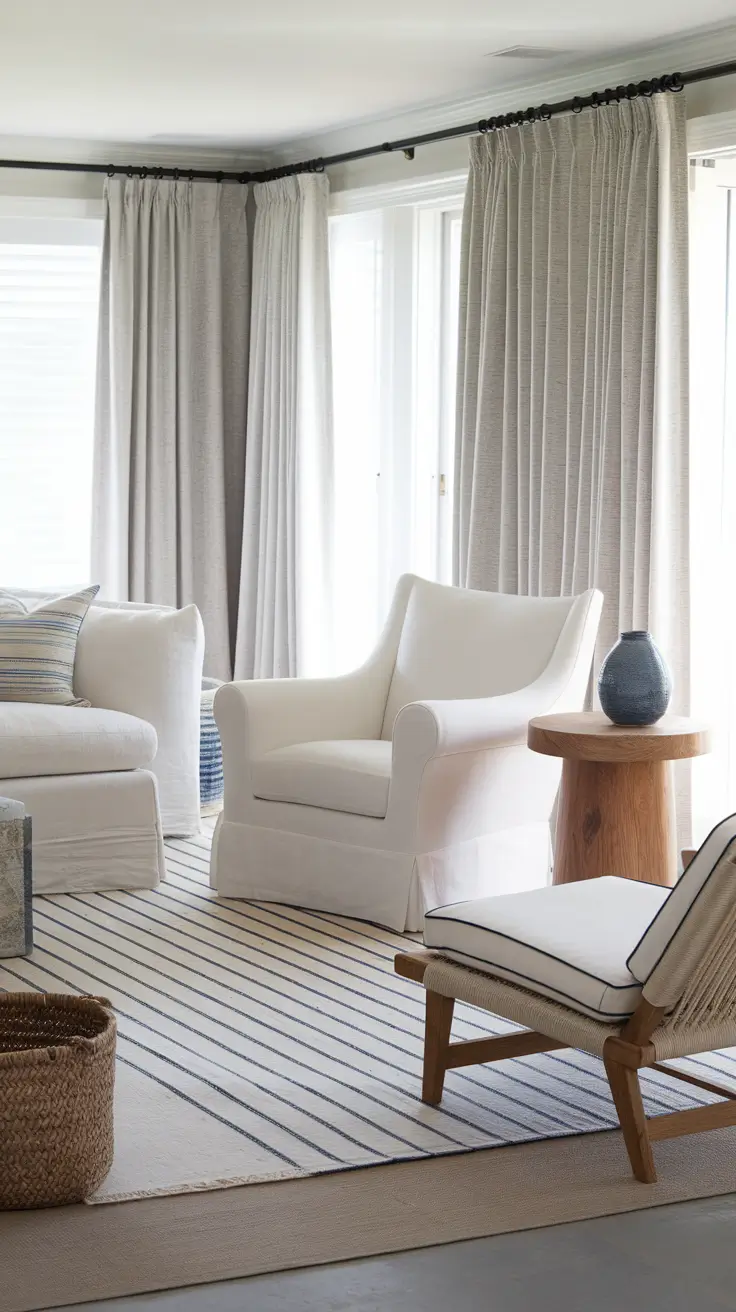
This palette suits busy family rooms, combining linen and rope textures for depth. Warm wood accents unify the scheme.
Blue ceramic lamps and seagrass baskets add texture, while narrow consoles behind sofas provide storage without clutter.
Blue Chairs: Timeless and Bold
Blue chairs introduce color with lasting appeal. Pairing deep navy club chairs with lighter denim swivels adds dimension. Blue complements grey walls and walnut furniture, making coordinated living room setups feel intentional.
Blue armchairs are a striking choice.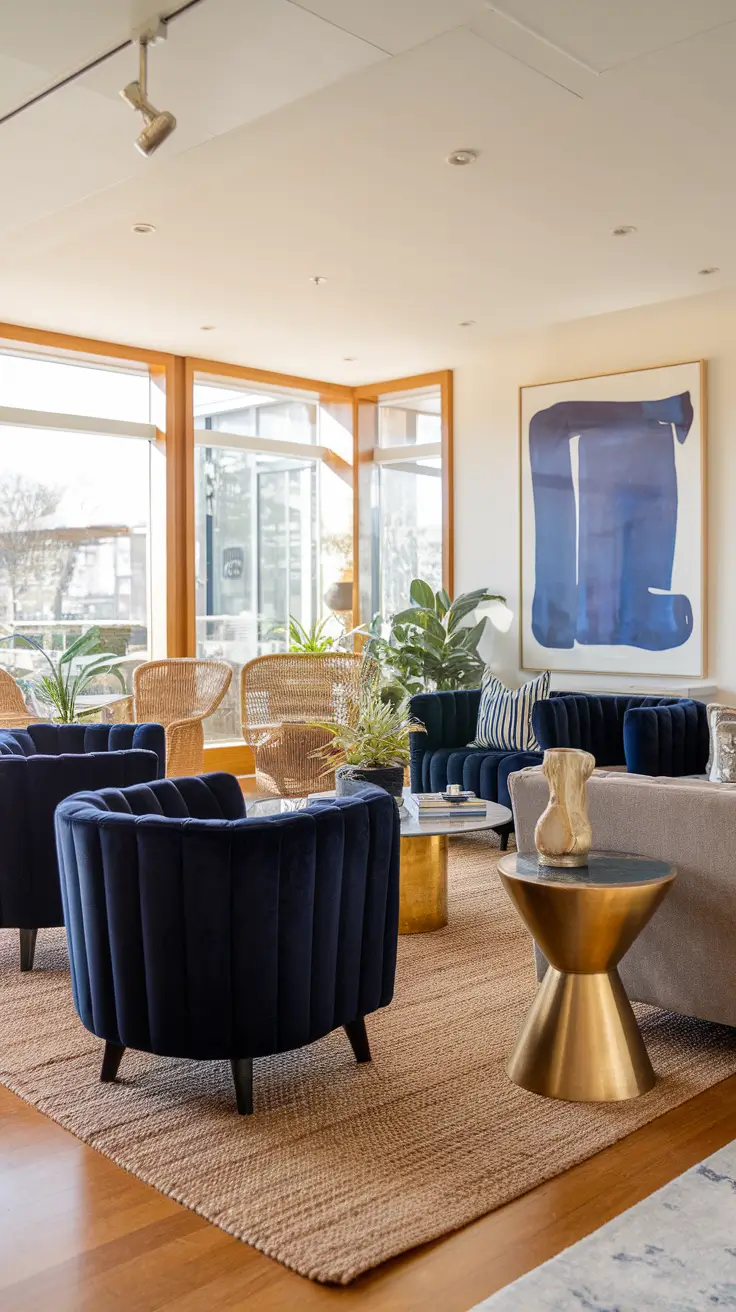
Performance velvet maintains appearance, while twill and cotton sustain casual vibes. Navy chairs positioned for optimal TV viewing and swivels tucked into L-shaped corners form perfect conversational triangles. Brass or matte black side tables and natural jute rugs ground the palette.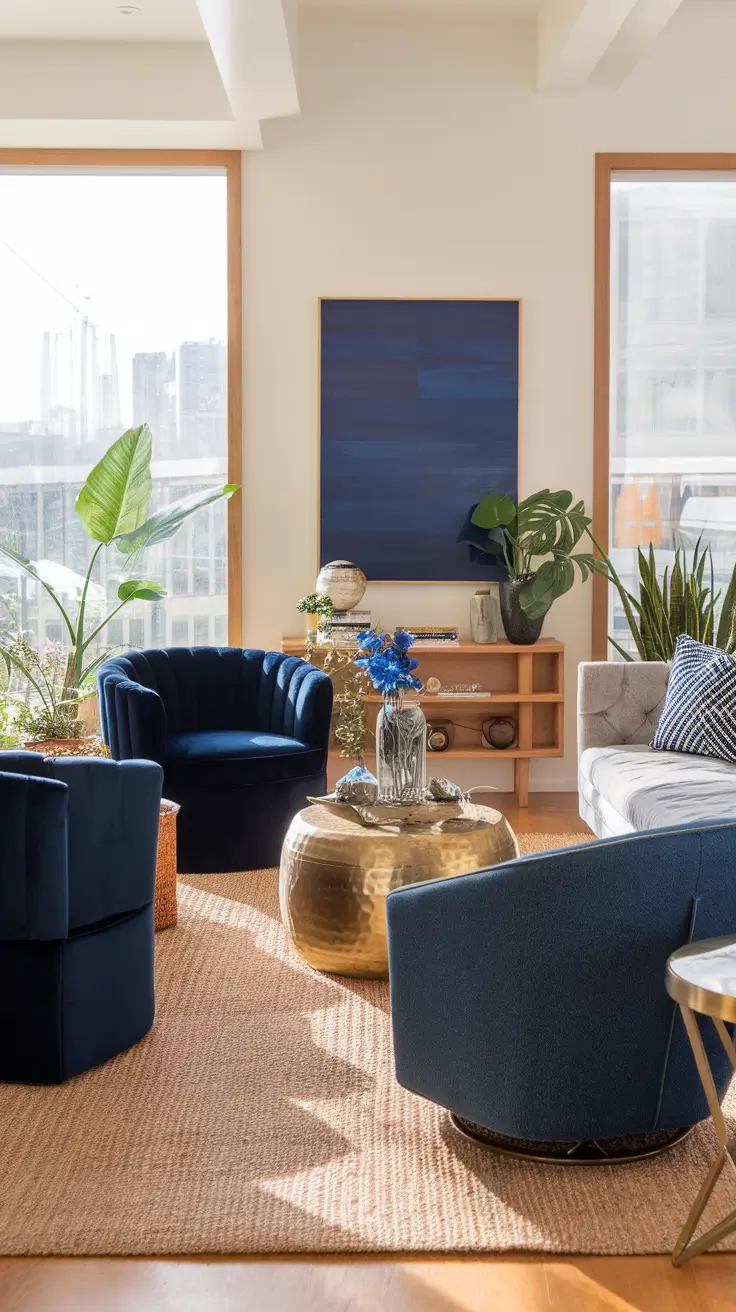
Blue is photogenic and warms cool grey interiors. Denim swivels and striped pillows soften formal looks.
Neutral patterned pillows and warm wood accents break solid blue expanses. Abstract art with blue tones ties the room together.
Neutral Chair Styles for Versatile Living Rooms
Neutral schemes are my go-to for adaptable rooms that evolve with seasons. Warm whites, stone, and oat tones layered with wood and black accents allow form and texture to shine.
Neutral armchairs blend effortlessly.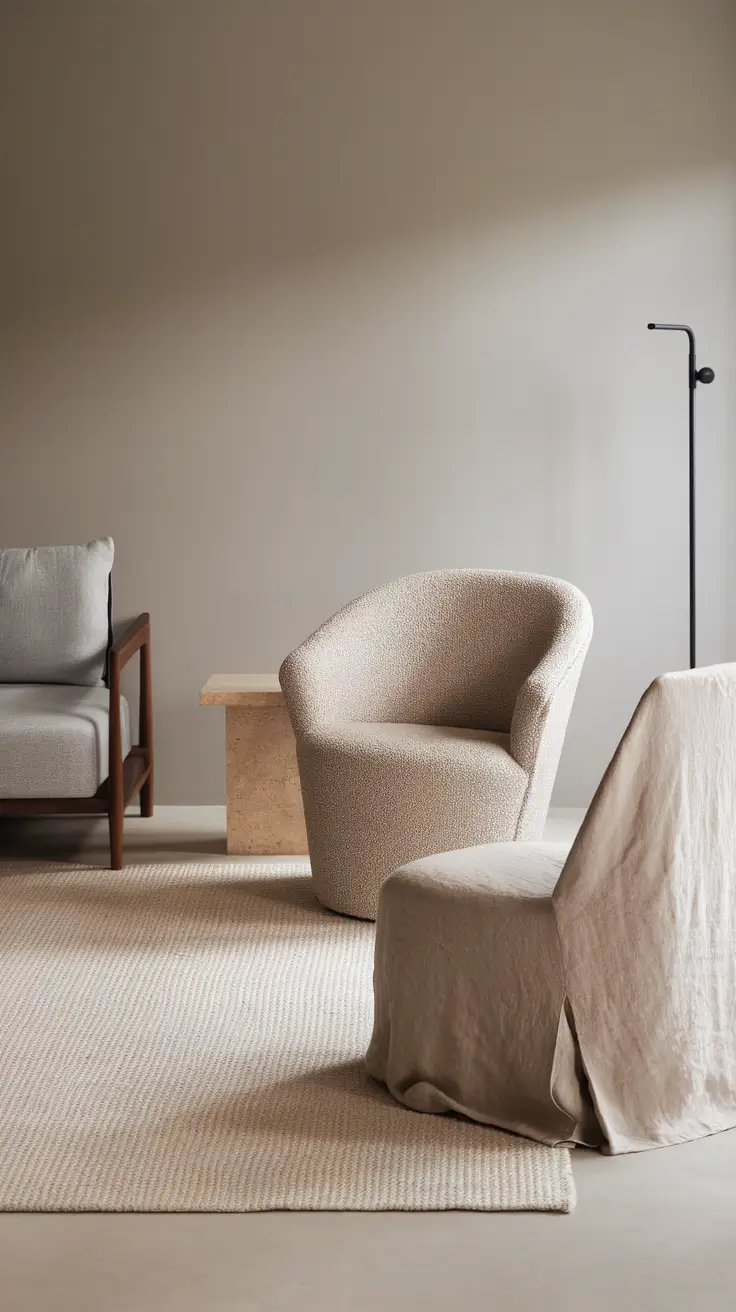
I mix related neutrals like warm stone boucle and flax linen with varied leg finishes to avoid uniformity. Pale wool rugs soften floors, and travertine or marble side tables add subtle luxury. Exposed wood legs on chairs prevent coldness in grey sofas.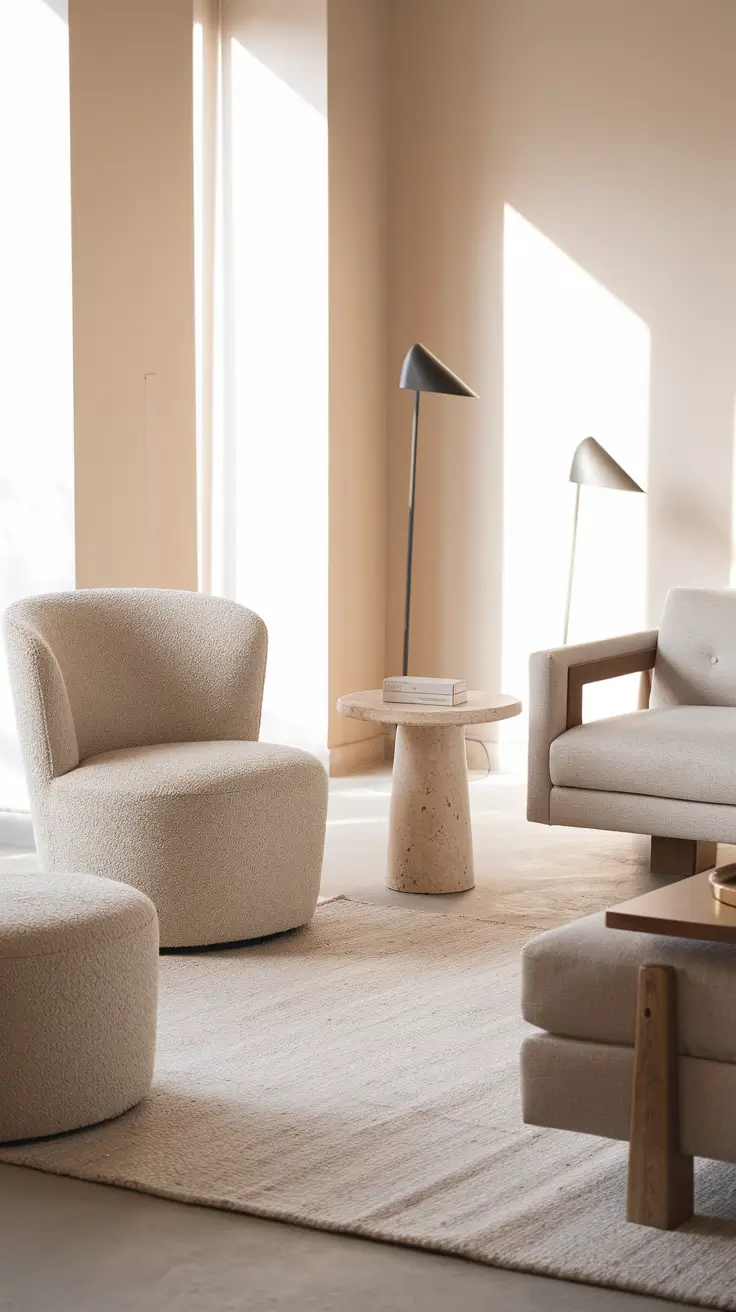
Texture elevates neutral rooms—ribbed ceramics, nubby throws, and woven shades add interest. Negative space is crucial for a high-end feel, even in small sofa and chair groupings.
Introducing a contrasting accent like a dark wood stool or black floor lamp prevents flatness. Warmer upholstery undertones suit low-light rooms.
Vintage Chairs with Character
Vintage chairs bring soul and history to living rooms. A restored mid-century lounge chair paired with a thrifted wingback creates height and balance when combined with modern sofas. This mix suits apartments and family homes, aligning with sustainable DIY reupholstery practices.
Vintage chairs add timeless charm.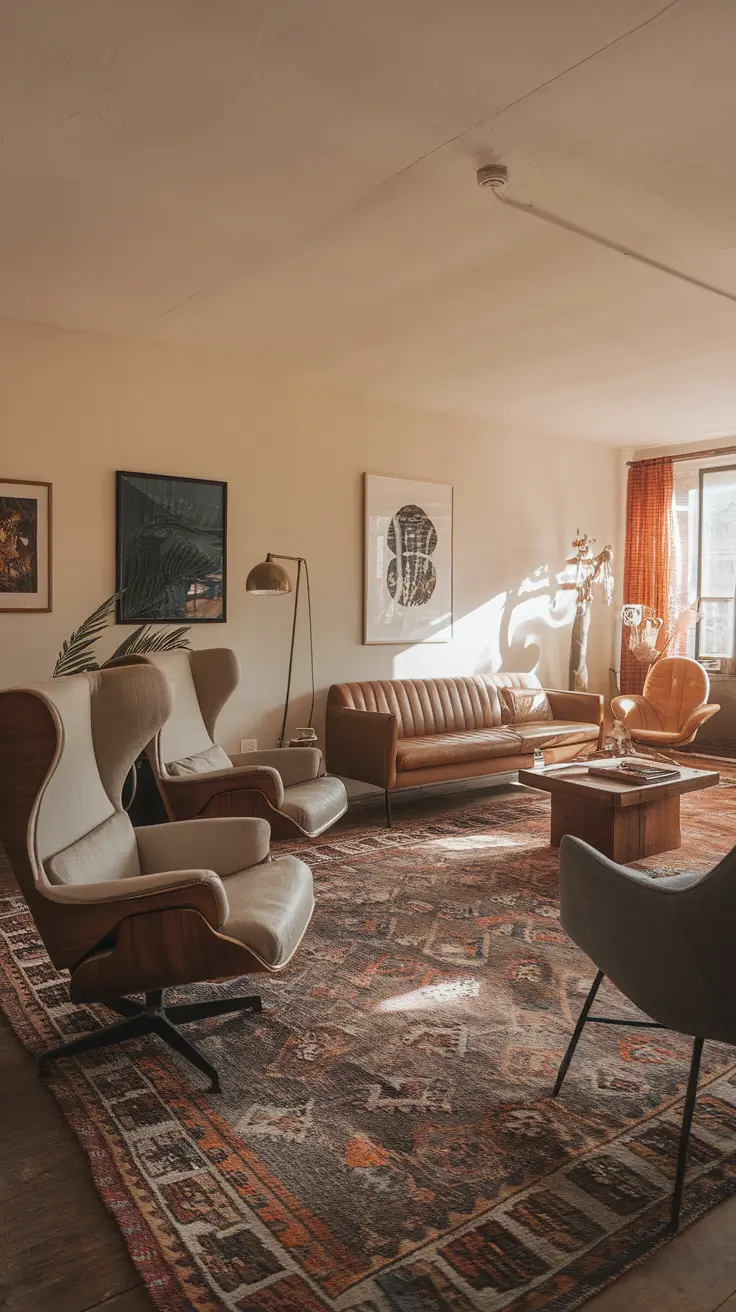
I seek solid wood frames, original joinery, and retied springs. Period-appropriate performance fabrics in olive, rust, or oatmeal maintain silhouettes while modernizing durability. Vintage rugs ground seating, and simple metal pharmacy lamps provide functional lighting.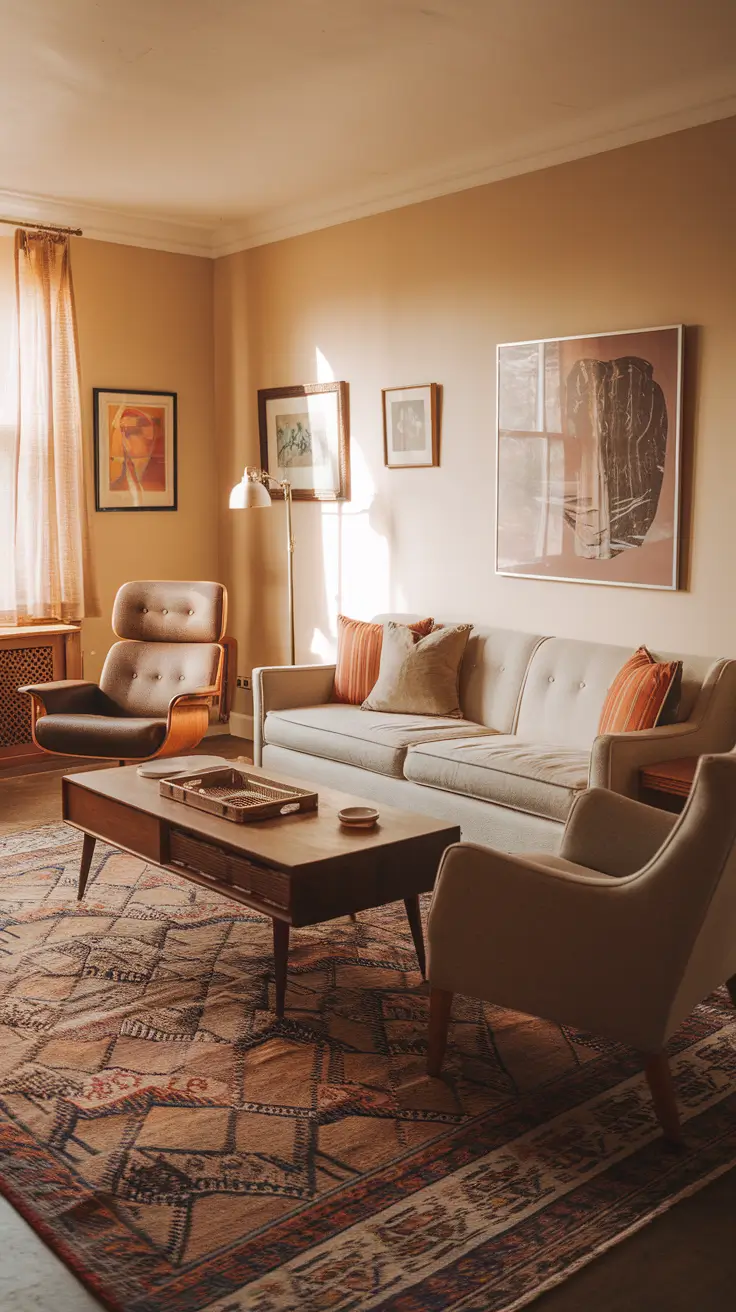
I enjoy sourcing vintage pieces globally, from US markets to Nigerian design centers, integrating global elements thoughtfully. Matching finishes ensure intentionality without randomness.
Adding glide pads protects floors, and labeling reupholstery dates aids future maintenance. Photographing original fabrics preserves the story and personality of heirloom pieces.
As an Amazon Associate I earn from qualifying purchases.