Modern Armoire Island: how it fits into your closet
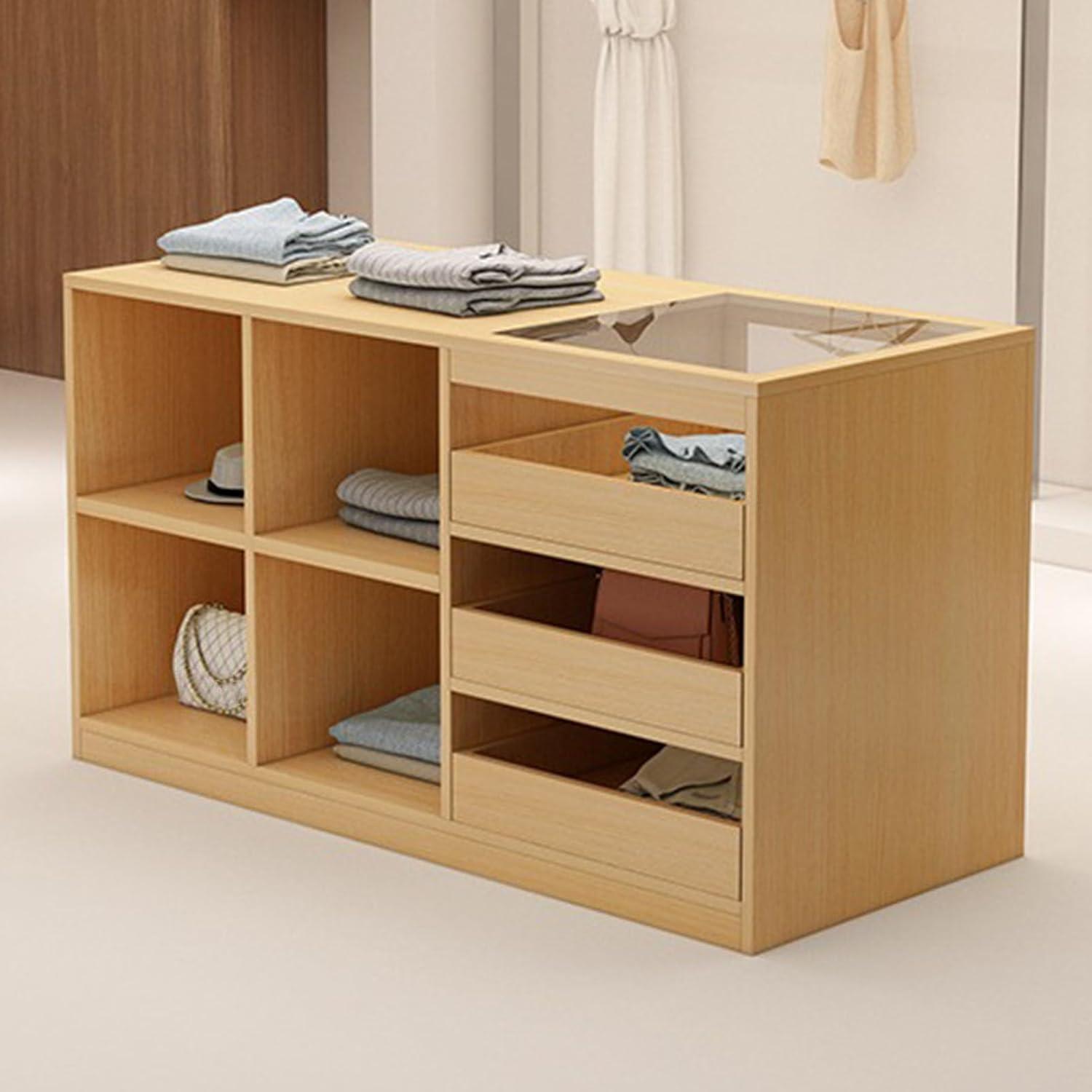
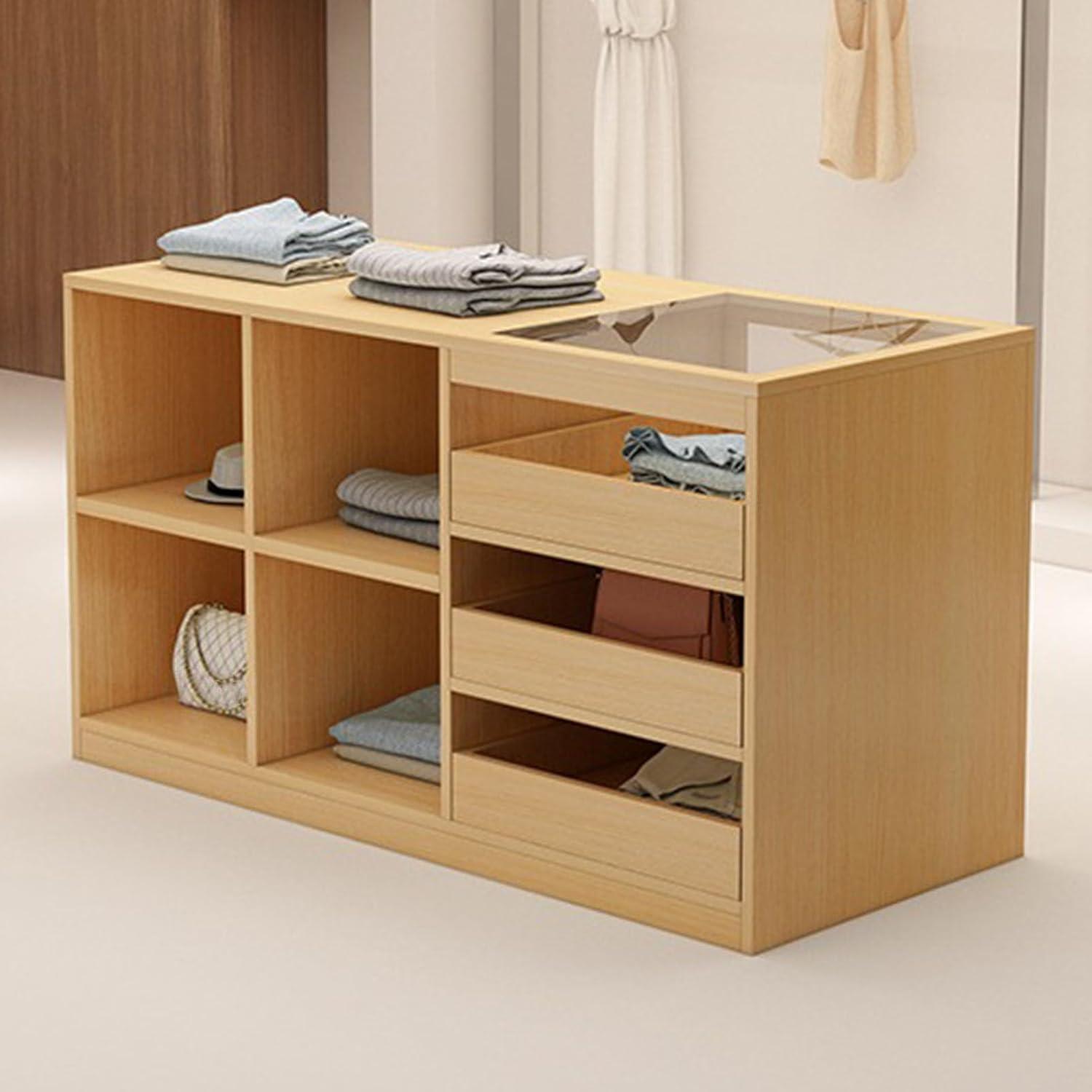
You notice the low, rectangular silhouette before you run a hand across the cool glass: this piece — sold under the listing name “Modern Armoire Island wiht Drawers and Glass Top” (hereafter the Modern Armoire Island) — sits with the quiet confidence of something built to be used. Its 120 cm span gives it a measured presence in the room, ample enough to anchor a dressing area but not so heavy it feels like furniture you can’t move. The white wood surface is smooth and slightly matte under your palm, while the thick glass top carries a pleasing, stable weight and picks up the soft overhead light. Open cubbies and shallow drawers interrupt the mass just enough that items look reachable rather then hidden, and from a short distance the combination of wood grain and clarity reads as both display and everyday work surface.
A first look at your modern armoire island in a closet or shop
On first glance, the island reads as a small stage in the middle of the room. You notice the glass top catching the overhead light, turning whatever you set there — a folded scarf, a pair of sunglasses, a watch — into a little focal point. The row of drawers and the open cubbies create a steady rhythm at waist height; when you pass by, your hand naturally comes to rest on a drawer edge or slides across the glass to steady a pile of items.in a shop, customers slow down to peer into the transparent surfaces; in a walk-in closet, it becomes a place where you set out an outfit and then keep rearranging it until it feels right.
Interaction happens easily but not always neatly. You tend to open a drawer with one hand while juggling something in the other, and fingerprints on the glass appear quickly where you touch it. Small things collect on the top — receipts, a phone, an accessory — and you’ll find yourself nudging them into a neat line or sweeping them off with the back of your hand. The open shelves invite swift reaches; the glass-fronted compartments make contents visible at a glance, which changes how you load them and how often you reorder. These are the little, everyday behaviors that become part of how the island settles into the room’s routine.
how it sits in the room, the presence, proportions, and styling cues you’ll notice
you’ll first register it as a grounded, rectangular presence — more island than accent piece. From a few paces away your eye follows the long axis, which organizes sightlines and subtly defines a circulation path; from closer up the shallow height and horizontal planes make it feel table-like rather than tall or tower-like. The run of drawers and the open cubbies create a steady visual rhythm, and that rhythm is what gives the unit its sense of proportion in most rooms.
Light and reflection change how it reads as the day goes on. The glass top catches ceiling fixtures and daylight, making contents and surface clutter more visible; fingerprints and small smudges appear with normal use, and you’ll find yourself smoothing the top or straightening a stack without thinking about it. The clean edges and minimal hardware echo modern lines, so the island tends to read as a purposefully simple anchor; simultaneously occurring the see-through top and open shelves introduce moments of transparency that break up the mass.
| Viewpoint | Styling cue you’ll notice |
|---|---|
| from the doorway | reads as a central anchor; long silhouette defines the space |
| From the side/walkway | Drawer fronts line up into a rhythmic plane; movement around it is apparent |
| from above/mirror | Glass top emphasizes contents and reflections; surface becomes a focal point |
What the wood, glass top, and hardware reveal about its construction
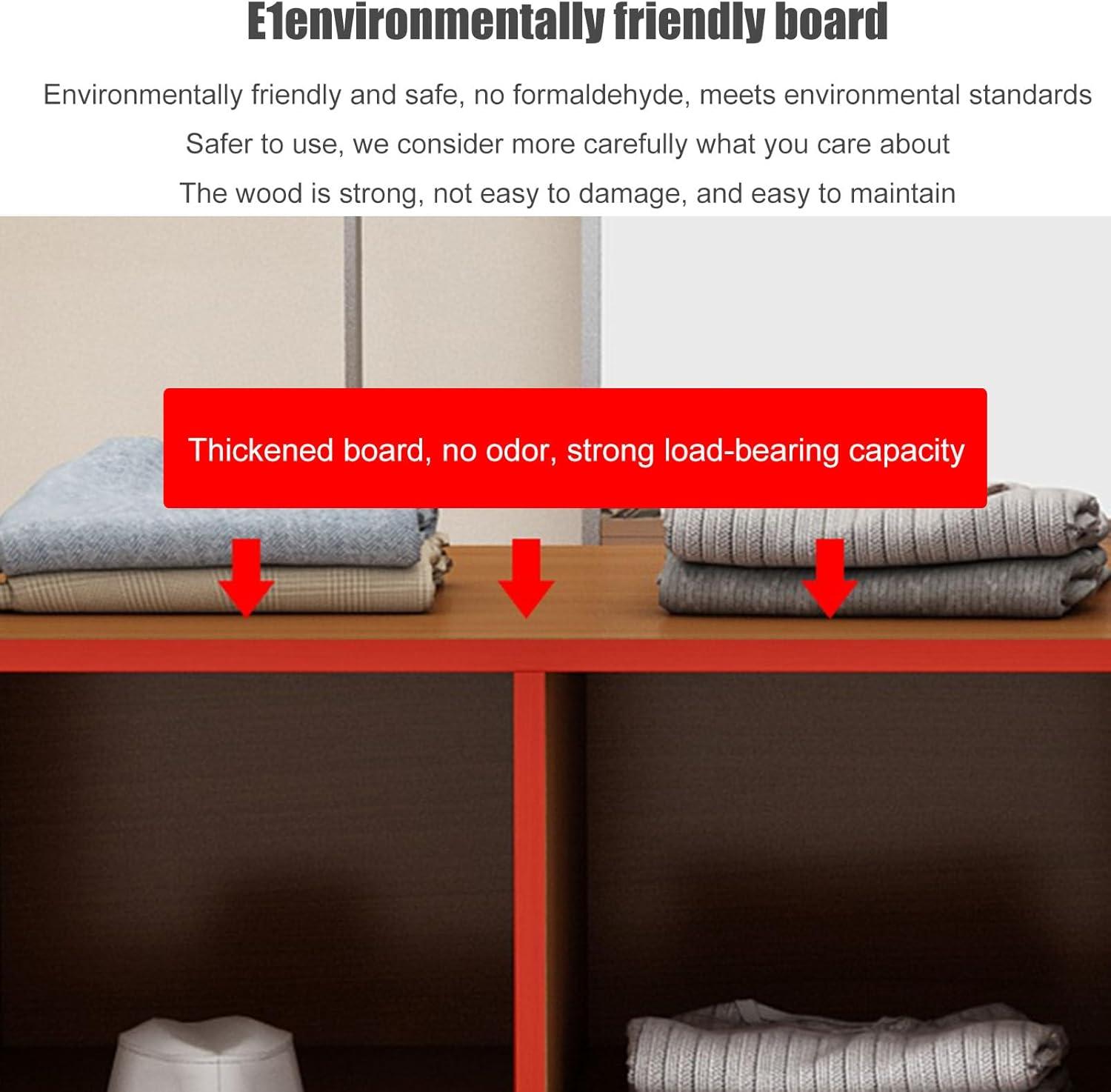
When you run a hand along the island, the board’s finished surface and the way panels meet tell a lot about how it was put together. the faces feel smooth under your palm, while the joints at corners reveal the presence of edge banding and mechanical fasteners rather than solid-plank joinery. As you press lightly on the top, there’s a subtle give that suggests a composite core sitting behind the laminate; that same give becomes more obvious if you lean on an open drawer front or set a heavier object on the edge.
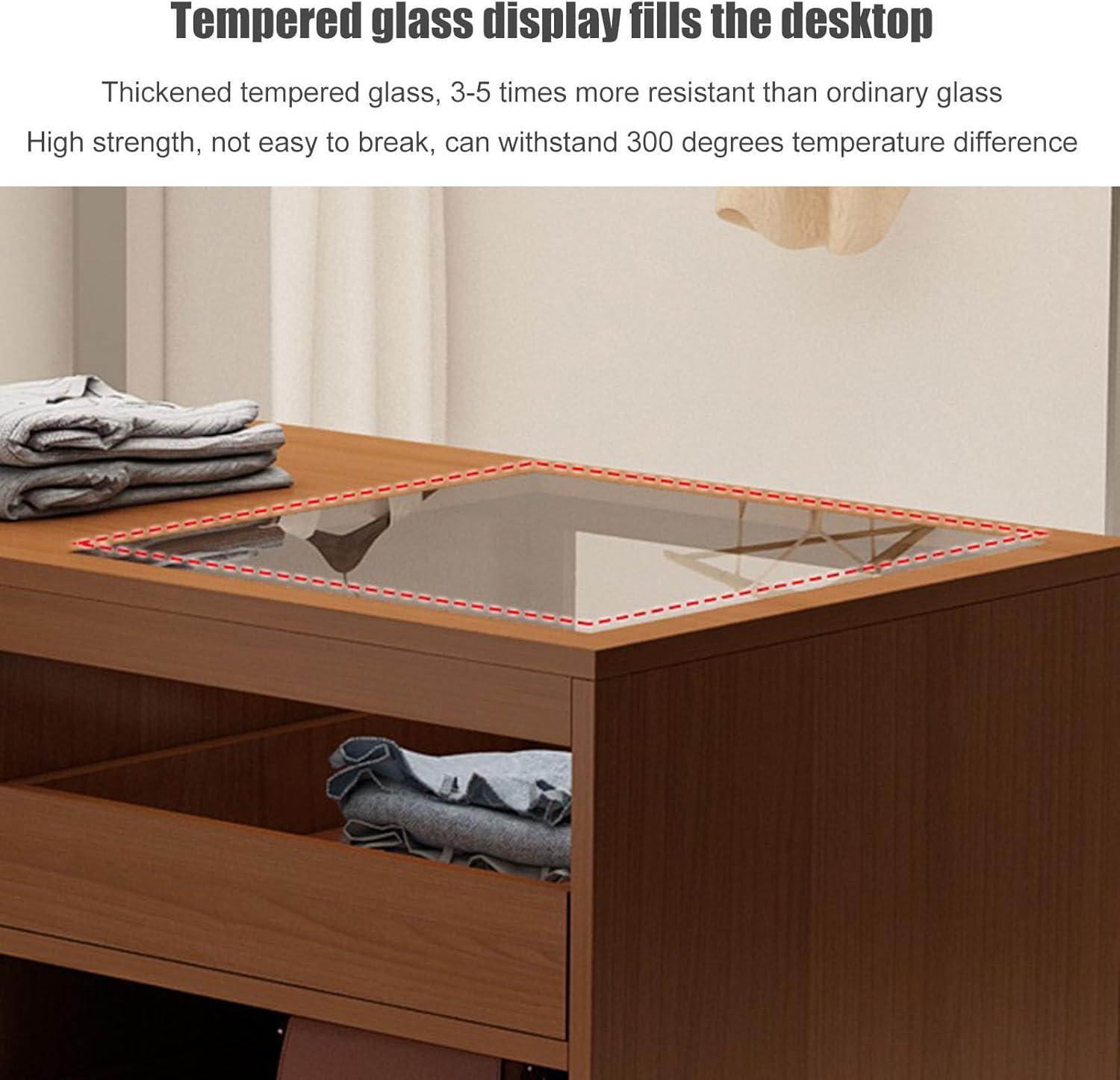
The glass top reads differently in use. Set an item on it and the top sits flat and level, but when you tap the surface you hear a clearer, brighter note than from the wood areas — a clue to a thicker, tempered sheet resting on a frame. Fingerprints and dust show up more readily on the glass; when you slide the drawer under it you can feel the tiny micro-vibrations transfer through the top, which is consistent with a glass panel seated in a recessed channel rather than bonded directly to the wood.
hardware routines reveal the assembly logic. When you open and close the drawers, the metal slides produce a soft, mechanical rhythm and the front edges line up within a narrow tolerance; tightening a loose screw or nudging a drawer back into its track changes that rhythm right away. Hinges and cam locks are visible from the inside as you work the compartments, and the alignment of those parts explains why some doors settle flush while others leave a hairline gap. Small adjustments—re-seating a dowel or re-tightening a bracket—tend to make a noticeable difference in how everything moves together.
| Component | What it reveals in use |
|---|---|
| Finished wood panels | Edge banding and fastener seams; some panel flex under load indicating composite construction |
| Glass top | Clear acoustic response and visible dust/fingerprints; sits in a frame, transmitting vibrations |
| Drawer/door hardware | Adjustability and small tolerances; play in slides and hinges exposes the influence of screw tension and track alignment |
Used together, these cues explain how the island’s parts interact over time: the wooden panels provide the structural outline, the glass creates a rigid, visible plane on top, and the hardware defines the motion and fit. As you handle it day to day, those interactions become the practical story of its construction rather than a list of materials.
Footprint and clearances, the dimensions you’ll measure for placement in a walk in or dressing area
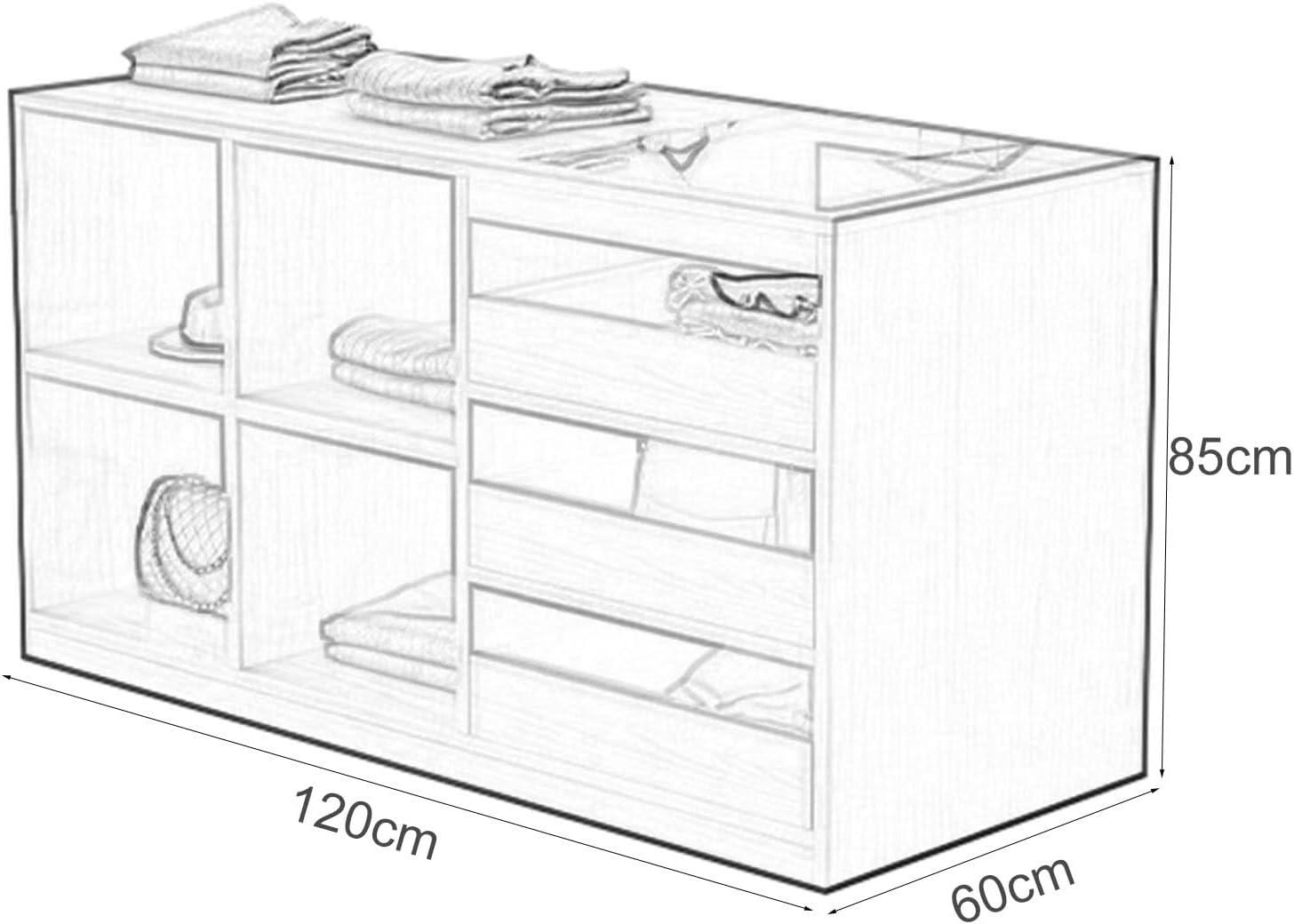
When you picture the island in your walk-in or dressing area,start with the actual footprint on the floor and the vertical height where the glass top meets eye and elbow level. The unit occupies roughly a rectangular base about 120 × 60 cm (47.2 × 23.6 in) and rises to around 85 cm (33.4 in), so you’ll notice how it breaks up sightlines and divides traffic when you move around the closet.
Beyond the raw box dimensions, pay attention to clearances that appear only once the piece is in use: the space needed to fully open drawers and to reach into the open shelves, the gap between the island and surrounding hanging garments, and the walking aisle left on either side. These are the measurements that tell you whether a drawer will swing out into a pathway, whether a door or sliding panel will clear adjacent built-ins, and whether you can pause at the island to sort items without brushing racks or knocking into walls.
| Dimension to measure | What to note |
|---|---|
| Floor footprint | Actual length and width of the base on the floor (about 120 × 60 cm). |
| Height | Top height (≈85 cm) for reach and visual alignment with shelving or mirrors. |
| Drawer and shelf reach | Depth needed when drawers slide out and when you lean over the glass top—typically less than the unit depth but variable depending on contents. |
| Aisle/turning clearance | Space around the island where you stand and move; common checks are a agreeable path of 60–90 cm on active sides. |
| access route | Doorways, assembly access, and delivery path to the intended spot; boxes and panels may arrive separately and need room to maneuver. |
in practice, you’ll find yourself shifting hangers or nudging a rug as the island settles into daily use — those small adjustments reveal the real clearances more clearly than a tape measure alone. Take the measurements in the state you use the space (full hangers, open doors, lighting on) so the numbers reflect how the island will actually sit in the room.
Drawers, displays, and reach, what handling inventory and daily use feel like
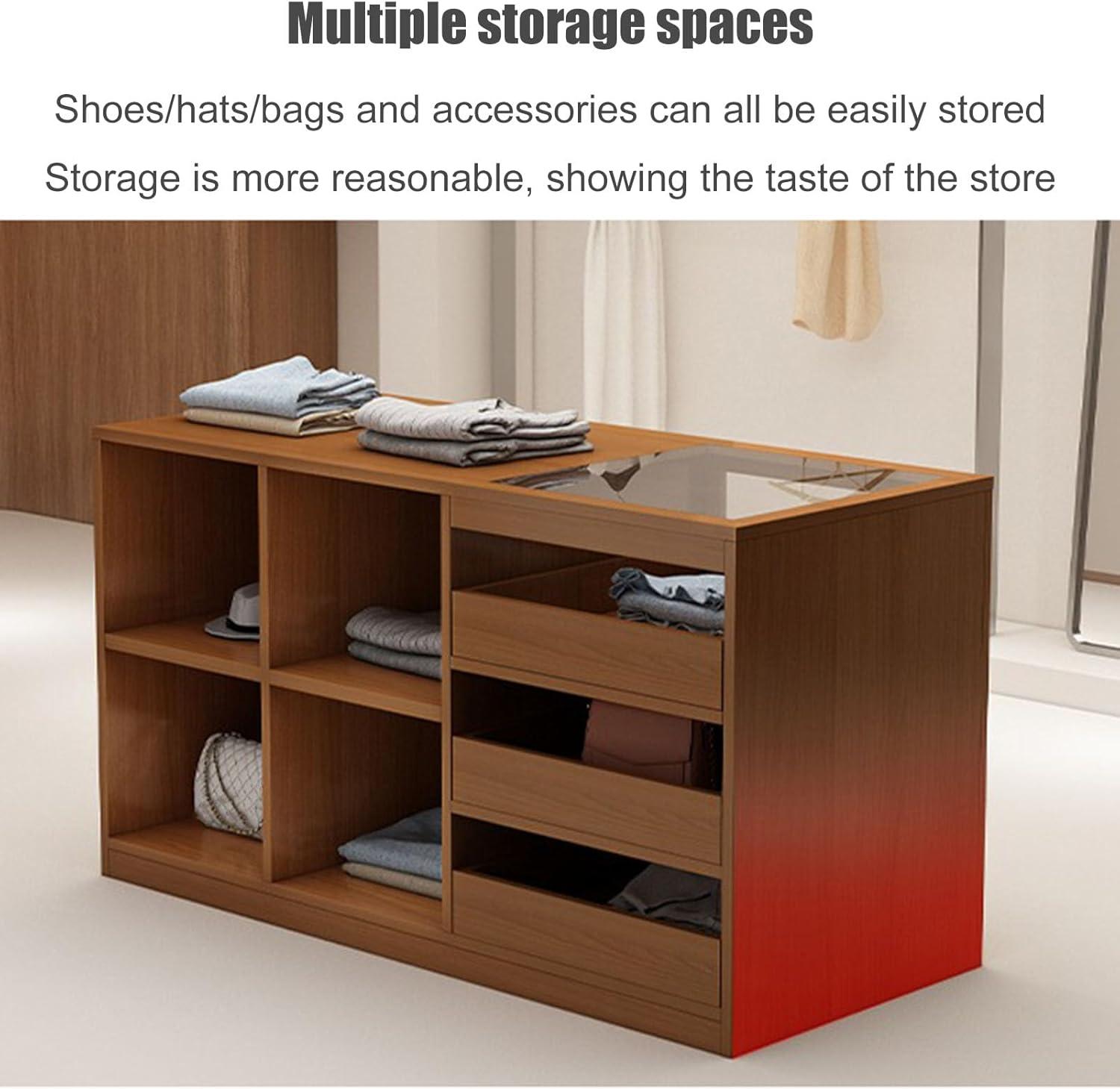
You open a drawer to fetch a belt and the motion feels familiar: a short give, then the drawer travels the rest of the way. The fronts are transparent enough that what’s inside is visible at a glance, so mornings often start with a quick scan rather than rummaging. Reaching for small items in the top display is a different habit — you tend to lift your wrist slightly to peer through the glass before sliding something toward the edge, which makes necklaces and watches easy to inspect without removing them entirely.
Users tend to notice that heavier items change how the drawers behave; a stack of folded sweaters can make a pull feel firmer at first, while lighter accessories glide more readily. Owners may find dust shows up more easily on the glass surfaces, prompting a brief wipe-down when handling jewelry or cosmetics. The open shelves invite quick stashes — you’ll drop a scarf there and return for it without altering posture much — whereas lower cubbies require a small bend or knee‑shift to retrieve shoes or larger boxes.
| Common item | How it handles in daily use |
|---|---|
| Jewelry and small accessories | Remain visible under the glass; typically inspected before being lifted out |
| Folded shirts or sweaters | Occupy depth of drawers and add initial resistance when pulling |
| Bags and larger items | Placed on open shelves; retrieval frequently enough done from the side or by tilting |
| Shoes | Stored low; require a brief crouch or forward lean to extract |
Daily routines develop around what sits where: frequently used items migrate to the top display or upper drawers, and less‑reached things drift down. Small adjustments — sliding objects to the front of a shelf, shifting a drawer stop with two fingers, or pausing to clear a smudge — become part of handling inventory and keeping the surface usable.
View full specifications and documented details
How the island aligns with your expectations, space constraints, and real life limitations
The island’s presence in a room tends to register instantly: the 120 × 60 cm footprint and 85 cm height create a low, central plane that gets used as much for temporary staging as for long-term display. In everyday use the glass top commonly becomes a place to lay out an outfit or set down a handbag while reaching into the drawers, and the open shelves are accessed with a slight forward lean rather than a full step in. Items are nudged into place, fingerprints and dust appear on the glass between quick wipes, and the whole piece sits solidly without shifting once loaded.
Space constraints show up not in abstract numbers but as routines. When drawers are pulled or when multiple people pass in a narrow dressing area, circulation narrows and some movement patterns change — such as, garments are more frequently enough retrieved from the top shelves or open cubbies than from the lowest compartments. Packing or unpacking stages sometimes stretch over a few days if parts arrive separately, so partial use while assembly is incomplete is a common occurrence. Weight on the top surface tends to be temporary and shifted around, while heavier items are generally kept low; over time that behavior shapes how the island is actually used in a room.
| Measured attribute | Product spec / observed |
|---|---|
| Footprint on floor | 120 × 60 cm — occupies a clear central block in most layouts |
| height | 85 cm — frequently enough used as a mid‑torso staging surface |
| Drawer access (common experience) | Observed frontal clearance often around 50–70 cm to open drawers and stand in front comfortably |
expectations about visibility and daily handling tend to align with what people actually do around the piece: it functions as a working surface and display at once, and small practical limits — circulation, the need to wipe the glass, and staged use during assembly — shape how it fits into real life.
What you’ll see during unpacking, assembly, and routine upkeep in a retail or home setting
When you open the cartons, the first thing you’ll notice is that parts are grouped and labeled rather than dumped together. Panels lie flat with foam or cardboard between them; the glass top is double-wrapped and tucked into a thicker cradle so it doesn’t slide during transit. Small plastic bags hold screws, cam locks and the odd Allen key, and there’s usually a folded instruction sheet with exploded diagrams. For some shipments the boxes arrive at different times, so you’ll sometimes find the hardware or a single panel showing up later than the larger crates.
As you begin assembly, you’ll spread pieces across the floor and match labels to the diagrams. Dowels slide into predrilled holes and cam locks turn with a crisp click when aligned; screws will draw panels snugly together,and a second pair of hands makes lifting and positioning the glass top noticeably easier. Drawer runners slip into their slots and the drawers slide in and out as you test them; you may spend a few moments nudging drawer fronts so they sit flush and track evenly. The glass top feels heavier and colder to the touch than the wood panels, and handling it slowly reduces the chance of smudges or hairline fingerprints while you fit it into place.
| Typical box contents | What you’ll notice |
|---|---|
| Wood panels and shelves | Labeled edges, protective film or paper, some surface dust from packing |
| glass top | Heavier than it looks, wrapped in foam, handled separately |
| Hardware bags | Sorted screws, cams, small fittings; often taped to a panel |
| Instructions | Exploded diagrams, parts list; a note about multiple-box deliveries |
once the island is in use, routine upkeep becomes a series of short, familiar actions. The glass surface collects fingerprints and faint streaks, so you’ll wipe it more often than the wooden faces; a quick pass with a soft cloth restores the sparkle. Open shelves and the tops of drawers gather dust and lint from garments, and you’ll find yourself rotating or lifting items to clean underneath—an absent or overlooked object will sometimes reveal a faint ring where it sat. Drawer tracks can pick up dust and threads; over time you’ll notice a slight change in the smoothness of a slide and may tighten a mounting screw or clear debris from the channel to restore travel.
You’ll also encounter small, everyday marks: a fine hairline scratch may appear on the glass if abrasive items are dragged across it, and tiny scuffs can show up on painted or laminated edges after moving things around. These tend to be superficial and often blend in once surfaces are wiped down.The finish on the wooden panels takes a damp cloth well,and in regular use you’ll find that keeping the cabinet balanced—occasionally nudging it back into level or redistributing heavy items—prevents drawer misalignment more than anything else.
How It Lives in the Space
Over time, the retail Stores Modern Armoire Island with Drawers and Glass Top becomes part of your daily rhythms, more a working surface than a thing to show off as the room is used.It quietly reshapes how you use the space — a place to set a handbag, a low edge where shoes end up, and a glass top that slowly collects the small scuffs and fingerprints that come with daily routines. You notice comfort in its steady availability, the habits that form around it, and how those little marks begin to feel like ordinary life. It rests.
As an Amazon Associate I earn from qualifying purchases.