Nouhaus +Posture Ergonomic Chair — how it fits your day
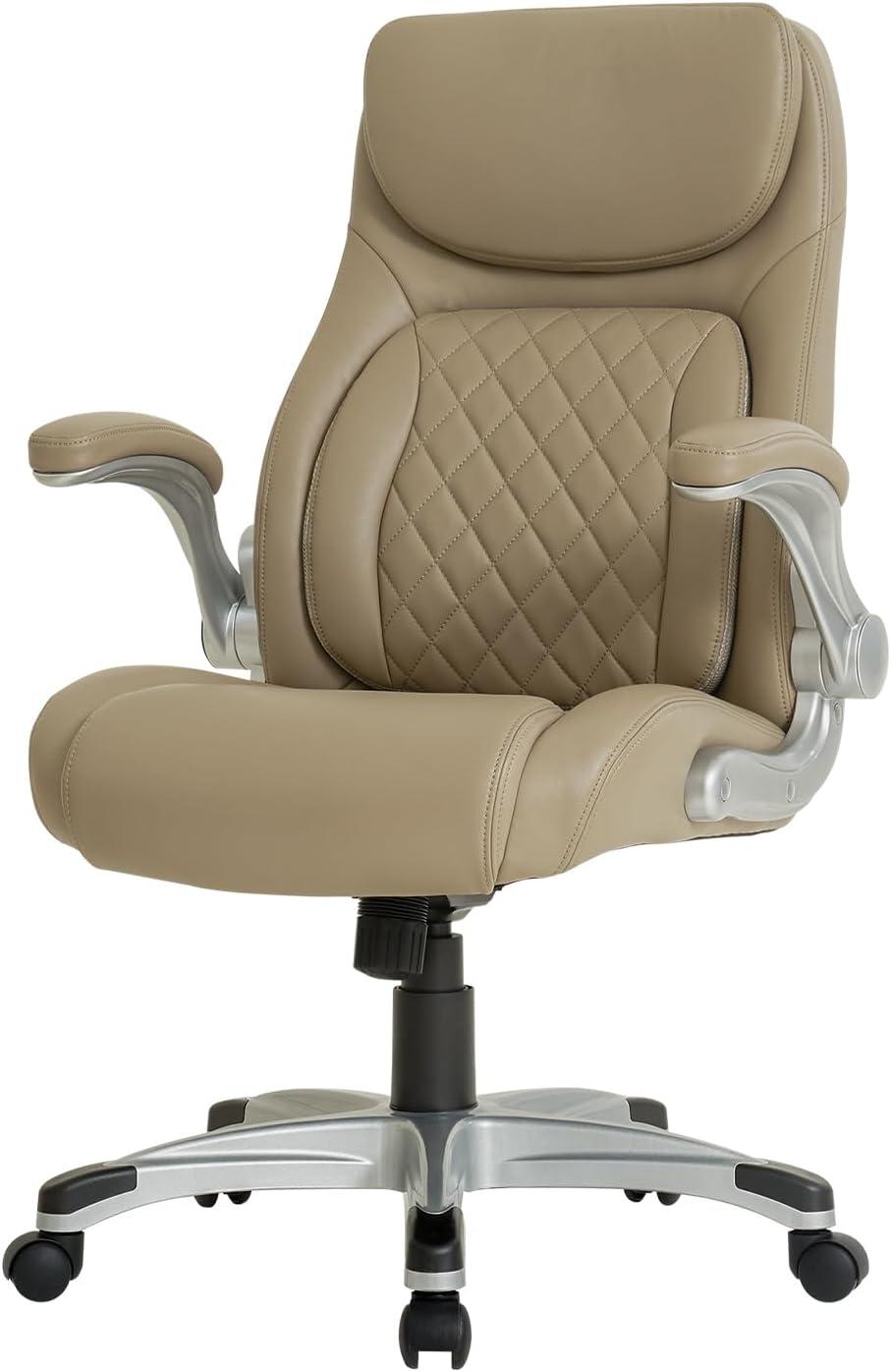
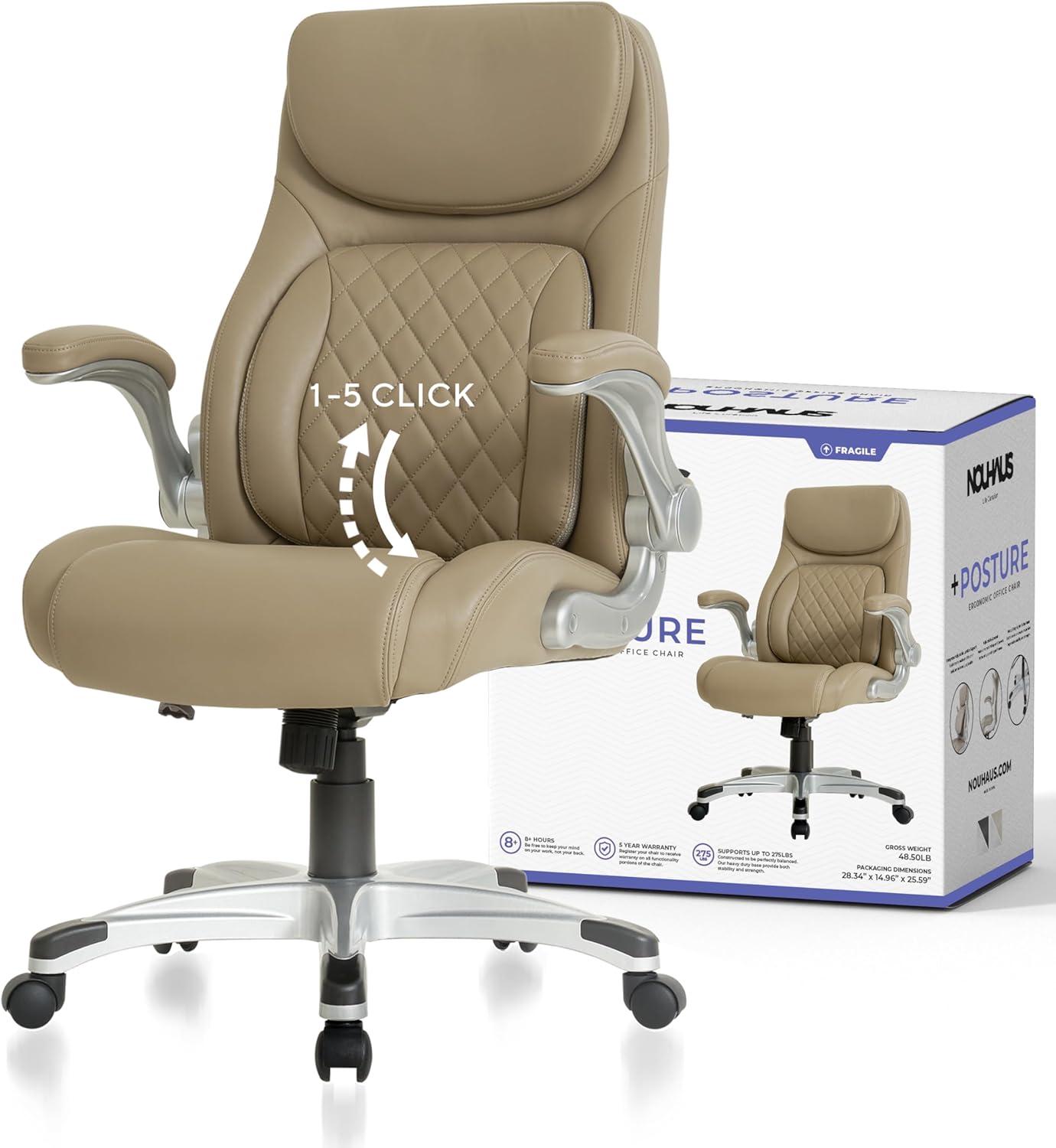
You first notice its visual weight—a compact executive silhouette in muted taupe that softens the room without disappearing. Up close, the Nouhaus +Posture Ergonomic PU Leather Office Chair shows smooth, slightly glossy PU under your palm and a dense seat cushion that resists sinking. Flip the armrests up and it opens the work area; leave them down and the curved pads catch your forearms in a quiet, close-in way.The five-stage lumbar clicks into a steady series of stops and the tilt gives a restrained,almost intentional rocking when you shift. Plywood-backed where it matters and set on a low-profile nylon base, it feels like a practical, lived-in piece rather then a showpiece.
A first look at the Nouhaus Posture PU leather executive chair and what you’ll notice right away
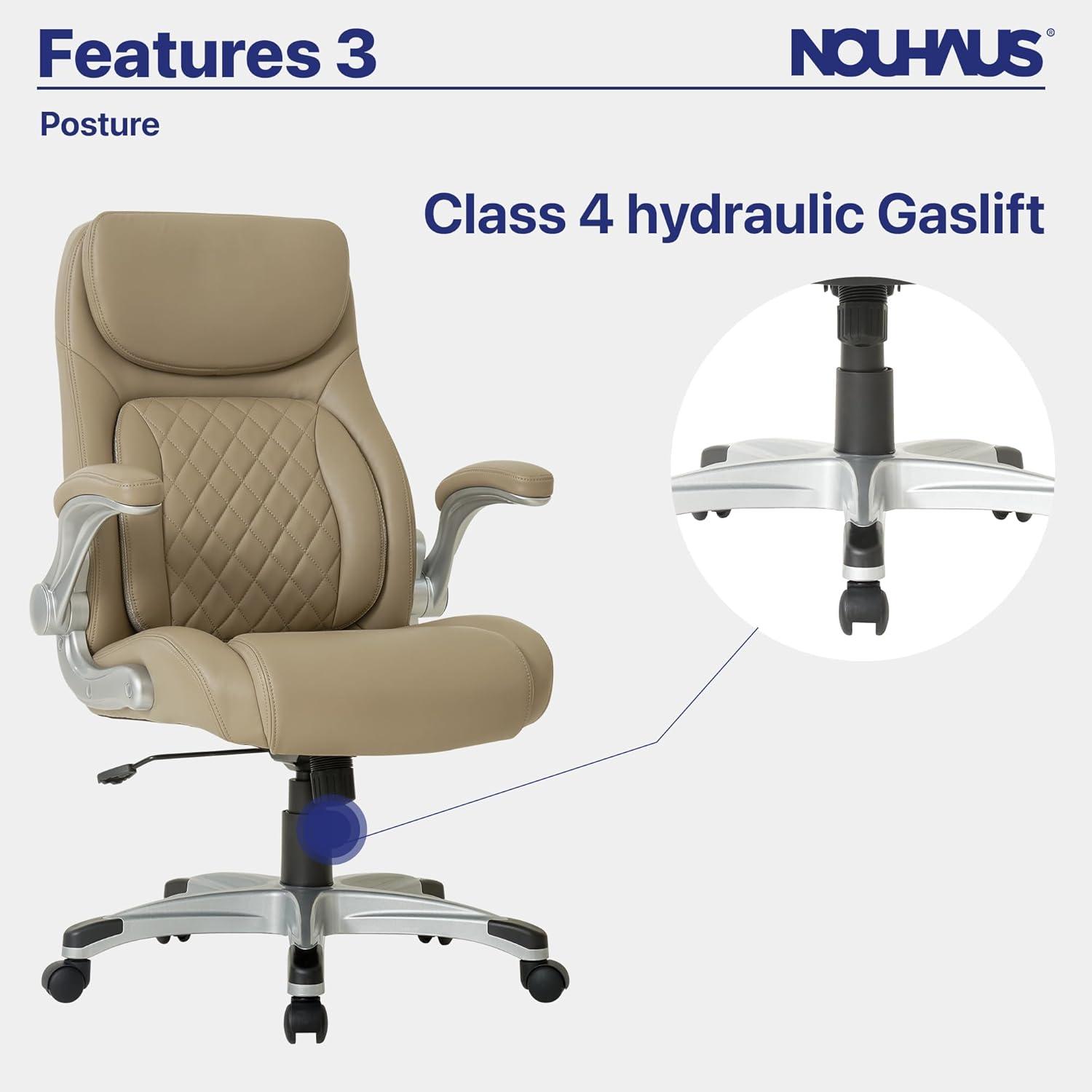
When you first approach the chair you notice the silhouette more than anything else — a tapered backrest and a seat that looks densely filled rather than flat. The taupe surface has a muted sheen that catches light along the seams, and the stitching creates faint ridges you naturally palm as you settle in. At a glance the armrests read as part of the frame; flip one up and the profile narrows promptly, flip it down and the chair takes on a more anchored, work-ready shape.
Sitting down reveals a subtle give to the seat; your weight compresses the foam and then the surface springs back slowly. The backrest presents a low, inward curve where your lower back meets the chair — you’ll notice a faint, mechanical click as you cycle through the lumbar positions, and the action is tactile enough to find by feel. The tilt produces a gentle rocking sensation rather than a dramatic drop, and the base and casters move with a quiet, steady roll underfoot. Small habits show up quickly: you smooth the seat, adjust the armrests by instinct, and run a hand along the seam where the upholstery meets the frame.
| At a glance | What you’ll notice right away |
|---|---|
| color and finish | Soft, low-gloss sheen with visible stitching lines |
| Seat and padding | Immediate compress-and-rebound feel; edges that catch the hands |
| Back and lumbar | Subtle inward curve; audible/tactile clicks when changing positions |
| Armrests and base | Flip-up hinge is quick to operate; casters roll quietly and steadily |
How the taupe finish and clean silhouette settle into your room
When you first set the chair in place, the taupe finish reads as a quiet, mid-tone neutral that shifts with the room. Under warmer bulbs it can feel slightly creamy; in midday daylight it tips toward a muted, cool beige. The low sheen of the PU leather catches light along seams and the rounded edges, so small movements—leaning back, smoothing the seat—send soft highlights across the surface. From across the room the silhouette reads clean and pared-down: the backrest and seat form a single, uncluttered plane that reduces visual noise when the chair is still, and when you tuck it beneath a desk it becomes less of a focal point.
As you use it, the chair’s lines soften in familiar ways.The seat shows brief imprints where you settle; the finish stretches into shallow creases along habitual pressure points and then relaxes again when you stand. Light scuffs and dust appear differently depending on the surrounding materials—they’re more noticeable against very dark floors,less so on mid-tone wood or carpet. Rolling the chair shifts how the base contrasts with flooring and casts changing shadows, so the overall presence of the piece is as much about motion and light as about color.
| Lighting | How the taupe appears | typical visual effect |
|---|---|---|
| Warm indoor light | Leans creamy, subtle glow | softens edges, blends with warm woods |
| Daylight / cool light | More neutral-to-cool beige | Reads cleaner, contrasts with warm tones |
| Low light / evening | flattens slightly, low sheen visible | Silhouette becomes primary visual cue |
The materials and build up close and how they feel under your hand
When you run a hand across the main surfaces, the cover feels like a thin, slightly plasticky skin with a muted sheen — smooth to the fingertips but not glassy. The top layer gives a little under pressure; your fingers sink a short way into the cushion and the foam bounces back, so you end up smoothing the area with your palm out of habit. Stitch lines and seams interrupt that smoothness in predictable spots: you can feel a raised ridge where panels meet and you tend to trace those seams with a fingertip without thinking about it.
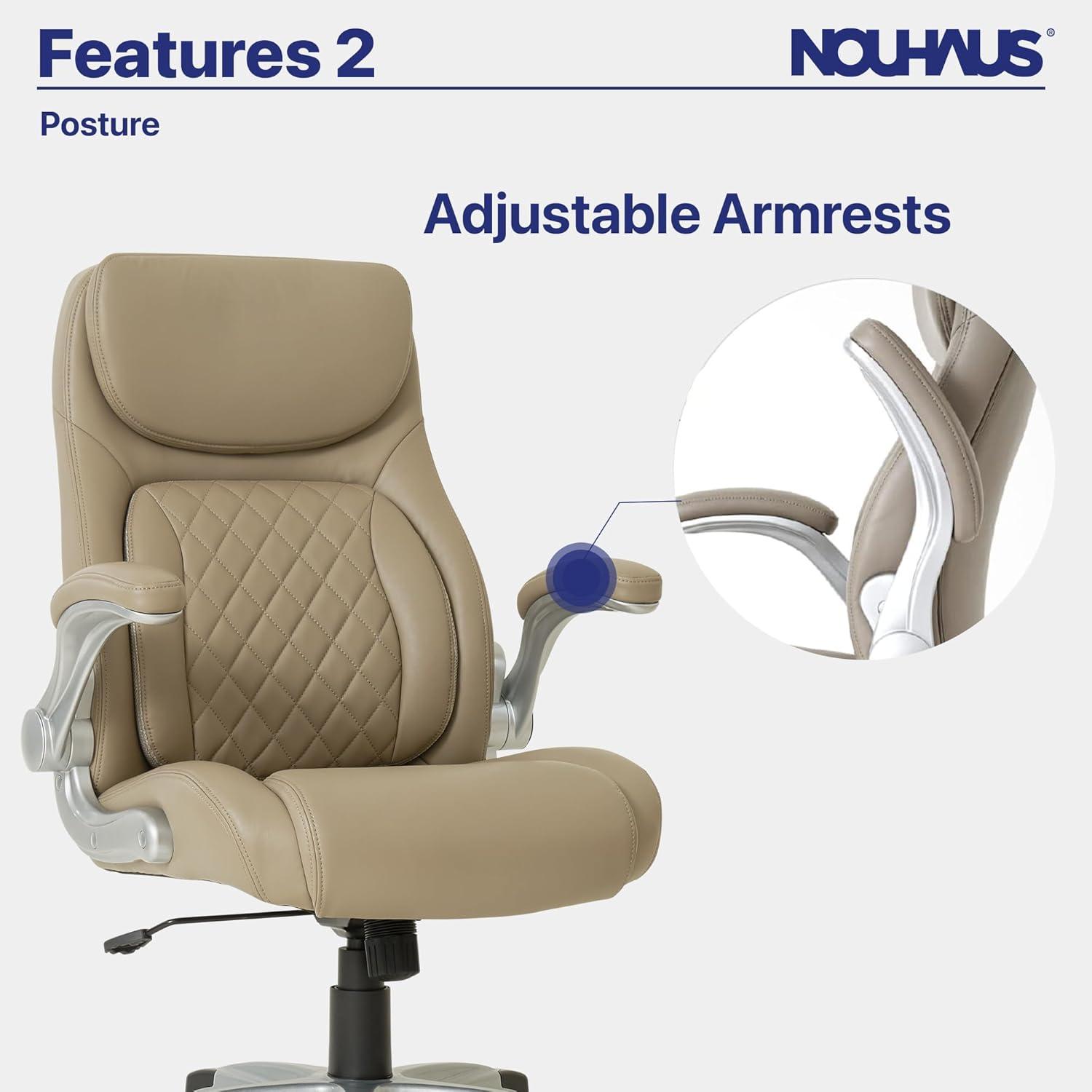
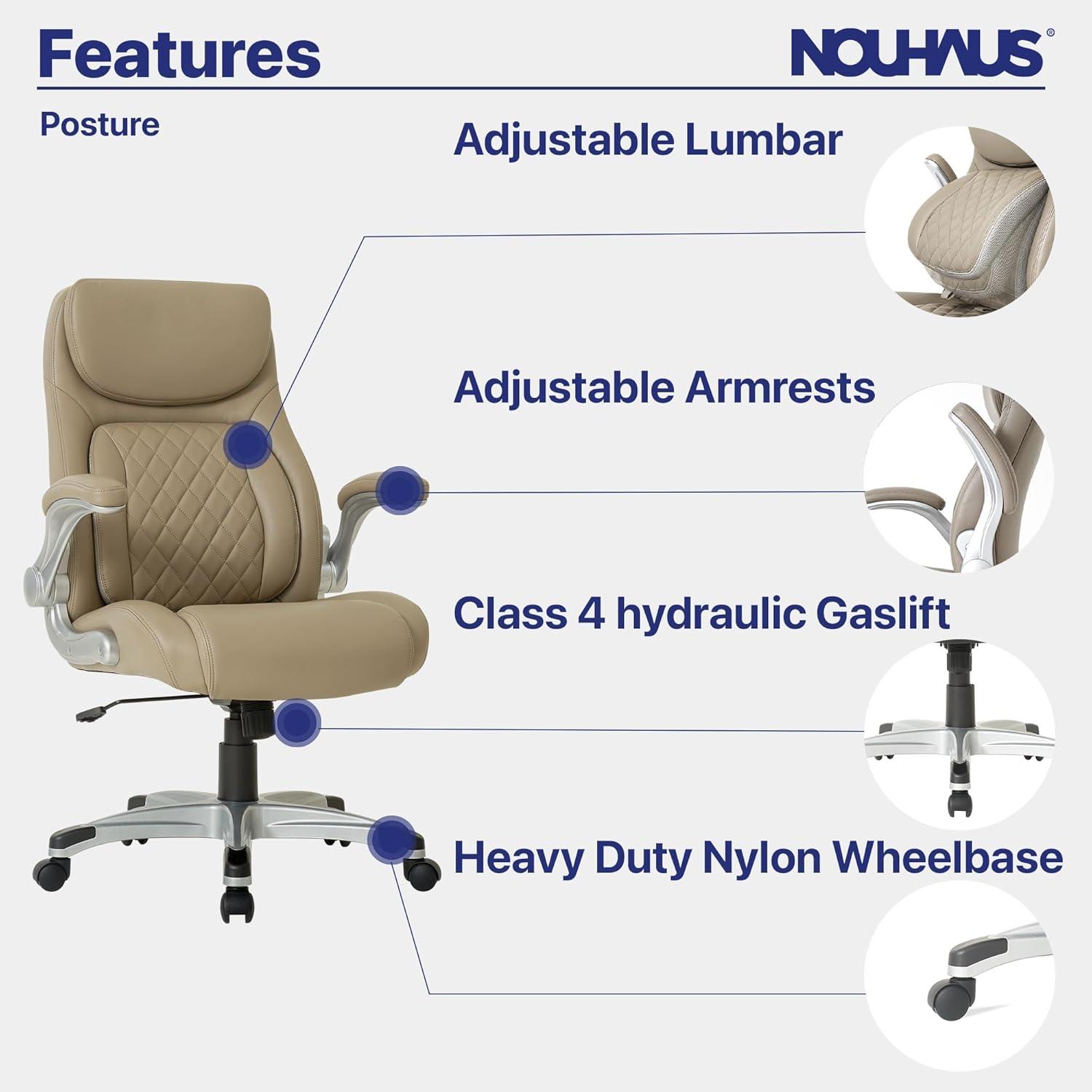
The armrests present a contrast when you flip them up or down. The padded tops are wrapped in the same material as the seat and feel springy and warm after a few minutes of contact, while the exposed hinge and underside are cool, firm plastic that has a slight texture to it. Adjustment levers and the tilt handle feel solid in your grip — hard, matte plastic with a little give where they articulate — and the gas lift and metal components feel cool and smooth if you brush them while adjusting the height.Running your hand along the base and casters, the nylon has a faint grain and a utilitarian, slightly gritty finish compared with the softer areas above.
| Area | How it feels under your hand |
|---|---|
| Seat / backrest surface | Smooth, slightly plasticky skin; short, resilient foam give; seams noticeable |
| Armrest padding | Curved and springy; warms with contact; hinge is cool, hard plastic |
| Adjustment mechanisms & base | Cool metal and matte plastic; firm textures and a faint grain on the nylon base |
Size, footprint, and dimensions to help you map it into your desk area
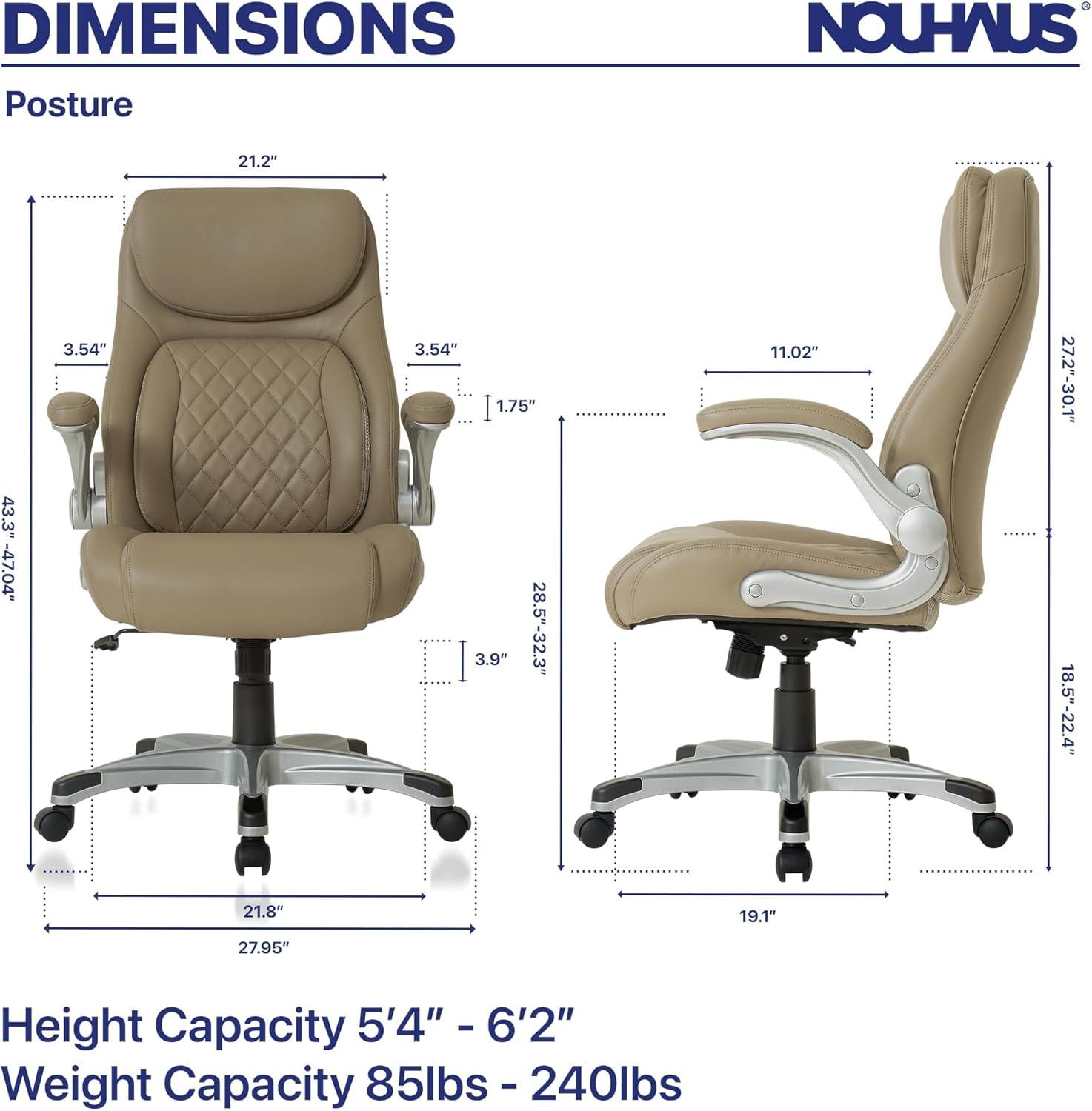
When in use the chair’s five-star nylon base and casters establish the main floor footprint: the rolling spread tends to occupy roughly the same ground as a medium office chair, and it shifts a few inches in any direction when someone tilts or rocks. The seat height sits in a documented range of about 18.7–22.4 inches, which means the visible seat plane moves noticeably between its lowest and highest positions and changes how much knee- and leg-space appears beneath a desk. Flipping the armrests up narrows the lateral profile enough that the backrest and seat can be drawn closer to a tabletop; with the armrests down, the overall width increases and the chair’s sides extend past the seat cushion, which is evident when maneuvering into tight alcoves.
The tilt mechanism also alters depth while in use: reclining or rocking pushes the rear of the chair back a few inches compared with an upright posture, so the clearance behind the desk matters if a chair is tucked in when not used. At roughly 40–41 pounds assembled, the chair rolls easily on hard floors and low-pile carpet but tends to stay put once someone sits and shifts their weight, rather than sliding freely on its own.
| Measured/Listed Dimension | approximate value (observed) |
|---|---|
| Seat height (min–max) | 18.7 – 22.4 in |
| Assembled weight | About 40.8 lbs |
| Rolling/base footprint (turning circle) | Roughly 26–28 in across (varies with caster angle) |
| Depth change when reclining | Typically shifts rearward a few inches |
View full specifications and size options
Comfort and adjustability as you sit through a typical work session
When you settle in for a typical few-hour stretch, the first adjustments become part of the routine. You set the seat height with the lever and the chair drops into place; once at desk level your forearms meet the work surface more naturally and you rarely have to fidget with the base again. The seat foam gives a steady, slightly springy feel—firm at first, then a touch softer as you shift weight—so you find yourself sliding back a hair or smoothing the PU top with a hand every so often. The leather-like surface stays smooth under normal movement but does warm to your skin over time, and small seam lines along the edge are sometiems felt when you change posture.
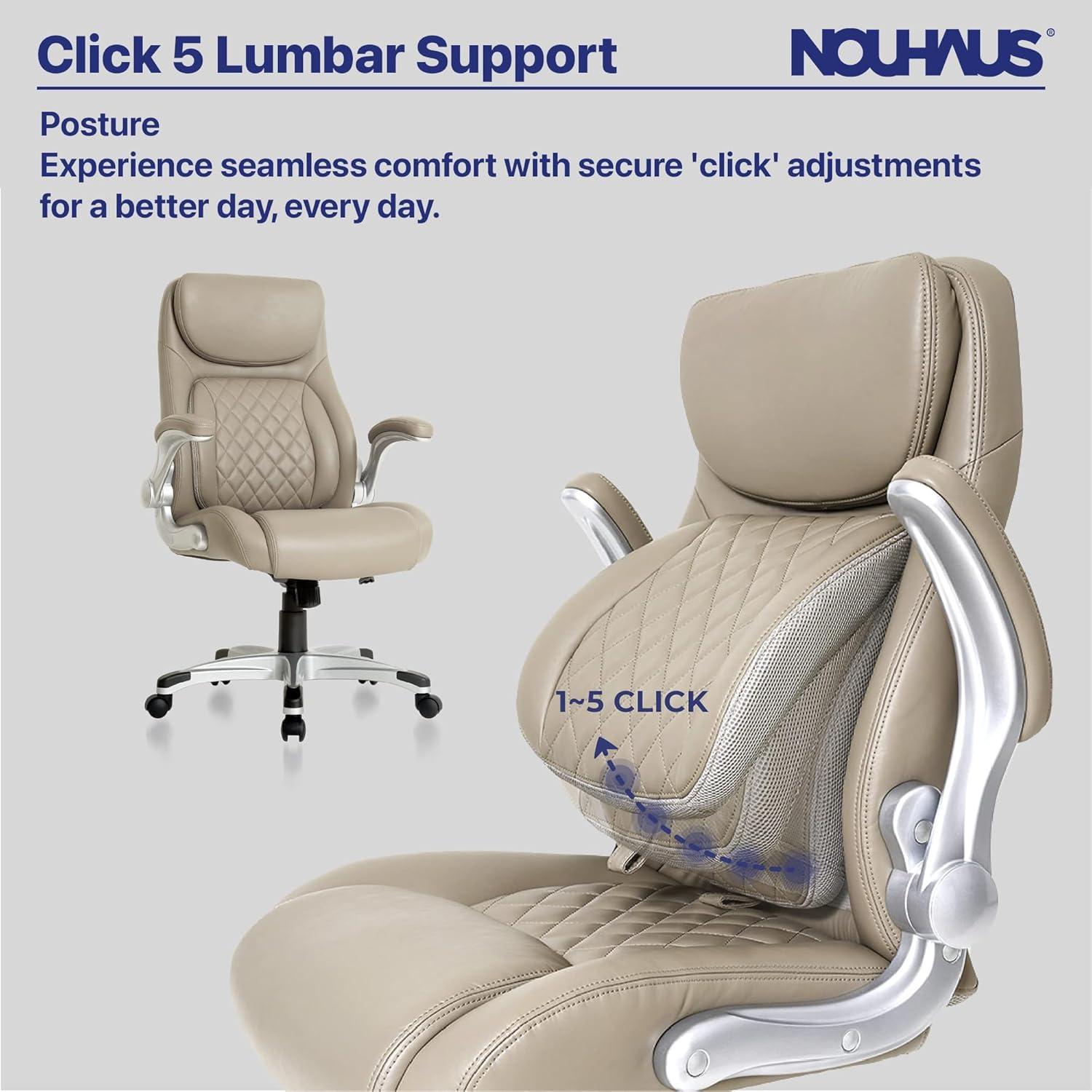
The lumbar control is one of the adjustments you reach for mid-session: switching between levels produces a distinct click and subtly changes where your lower back meets the backrest,so slouching tends to be interrupted by the urge to re-click to a different notch. The flip-up armrests fold away smoothly if you need more desk clearance,and when down they provide a soft,curved rest for your elbows while typing; you can feel the pad give a little under pressure. Leaning back engages a gentle rocking motion and the tilt lock lets you stop that motion at an upright angle when focus is needed.Small, habitual tweaks—tiny recline taps, sliding forward a few inches, flipping an armrest up to reach a file—happen often enough that adjustability becomes part of how you get work done rather than an occasional setup task.
| Adjustment | How it changes the sitting feel |
|---|---|
| Seat height | Alters knee and desk alignment; once set you tend not to readjust frequently |
| Lumbar levels | Shifts lower-back contact point; clicks encourage small posture corrections |
| Armrests (flip) | Provides or removes forearm support, affecting shoulder tension while typing |
| Tilt / tilt lock | Controls gentle rocking versus a locked upright position during focused tasks |
Suitability for different users, expectation versus reality, and the limitations you might notice
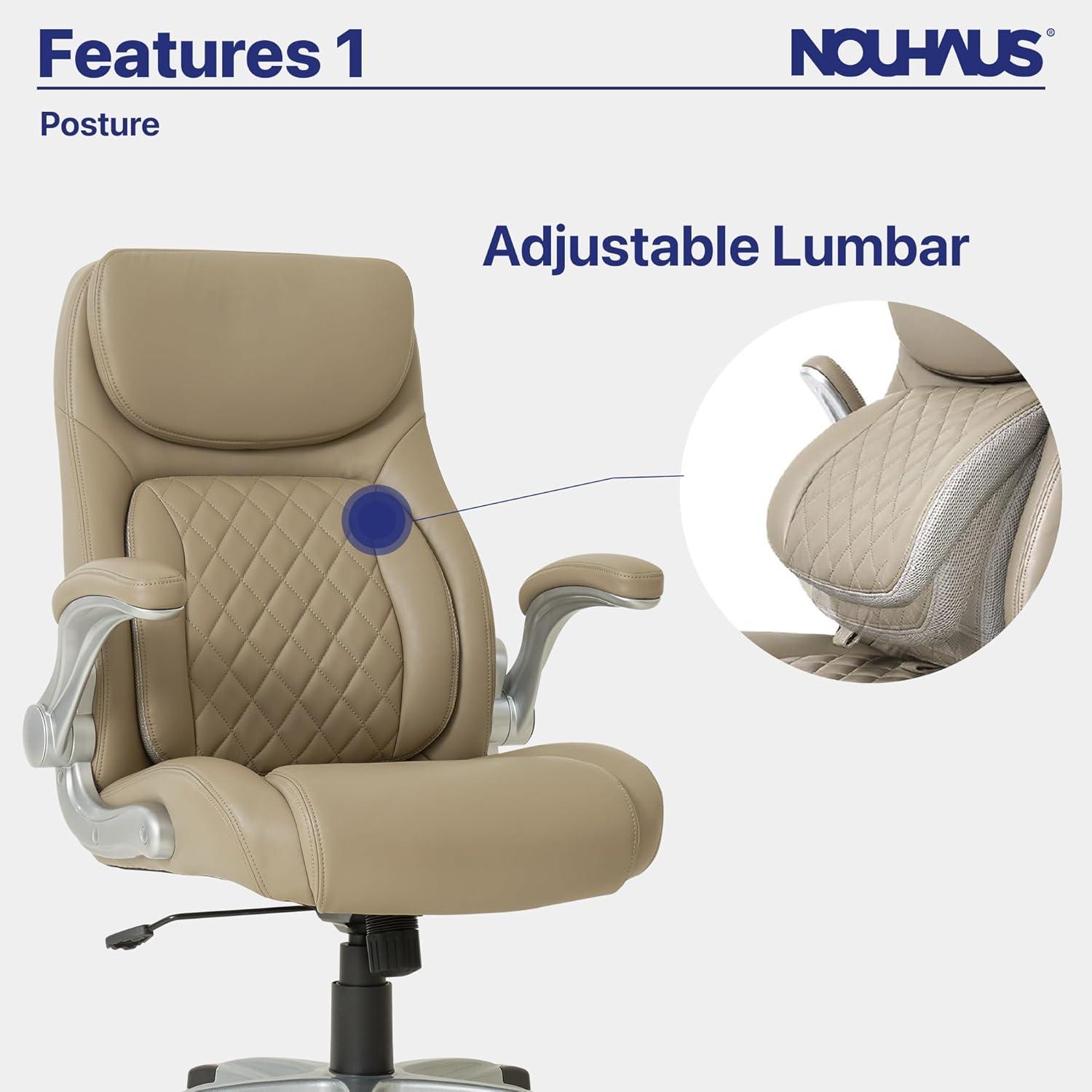
Many buyers expect immediate, unchanging performance from the adjustable features; in everyday use, those features feel more negotiable. The Click5 lumbar doesn’t lock a single posture in place so much as offer a series of tactile steps that get adjusted while sitting — callers, typing sessions and brief breaks frequently enough prompt a quick re-click as the lower back settles. The flip-up armrests fold away cleanly but will sometimes need a light push to re-seat into their locked position, and the tilt mechanism provides a noticeable shift in recline that users tend to engage and disengage throughout a work session rather than set once and forget.
| Expectation | Observed in use |
|---|---|
| Instant, steady lumbar support | incremental adjustment that users revisit as posture changes |
| Perpetually plush seat | Molded foam compresses over time and the seat can sit slightly lower after extended use |
| Silent, frictionless movement | Casters and mechanisms roll smoothly at first; occasional creaks or lateral drift on soft flooring appear after weeks |
Over longer stretches of daily use, a few modest limitations tend to show up.The PU surface takes on light impressions where the body rests and can feel warmer during prolonged sitting, so posture shifts and smoothing the material become small, repeated habits. The base and gas lift deliver reliable height changes, though the travel range can feel narrow to those who repeatedly adjust between very low and very high desk positions. Wheels move easily on hard floors but may track differently on thinner carpet, producing slight side-to-side movement that users notice when reaching or swiveling.
View full specifications and color options on Amazon
Assembly, care, and the small practical details you’ll deal with daily
When you unpack and put the pieces together, the steps tend to feel straightforward: the base and casters slide into the gas cylinder, the seat plate lines up with a few screws, and the back panel seats against the frame. while tightening bolts you’ll notice some parts want a little coaxing to sit flush — it’s common to flip the chair upright, sit, then feel for a micro-tilt and return to a screw or two. The flip-up armrests operate with a small, deliberate motion; you’ll find yourself switching them without thinking when moving between desk work and reading on the couch.
Daily upkeep usually lives in small, almost unconscious habits. A quick run of a dry microfiber across the PU surface tends to erase dust and light marks, and when crumbs collect around the seam or under the seat you’ll be using your hand or a narrow nozzle to scoop them out. The casters pick up hair and lint on softer floors, so you’ll occasionally pull a pellet of fuzz off a wheel before it starts to scuff. The lumbar control clicks into place while you’re seated and you’ll reach behind to find the setting that settles in most naturally for that moment; the tilt lever under the seat is similarly tactile and easy to operate without standing up.
| Small task | What you’ll likely notice | Typical cadence |
|---|---|---|
| Wiping the surface | Sudden sheen change where spills sat; seams smooth back down | As needed after spills or once a week |
| Clearing caster debris | Hair or fuzz wrapped around the axle; slight drag when full | Every few weeks in high-use rooms |
| Checking fasteners | Squeaks or tiny shifts after daily use | After the first few days, then occasionally |
Over time the seat surface can develop mild creasing where you habitually sit and the padded armrests compress where you rest your elbows; these are the sorts of things you smooth down without thinking.Small noises — a soft pop when you adjust height or a faint creak the first few times you use the tilt — tend to settle in after a few days. In regular use you’ll find most of the maintenance fits into brief moments between tasks rather than requiring lengthy care sessions.
How It Lives in the Space
Over time the nouhaus +Posture Ergonomic PU Leather Office Chair, Click5 Lumbar Support with FlipAdjust Armrests, Modern Executive Chair and Computer Desk Chair (Taupe) stops announcing itself and simply becomes another presence in the room, its taupe surface softening and the armrests showing the quiet marks of regular use. You notice how the way the space is used shifts in daily routines — a favoured corner for a laptop, a place where bags are draped, the chair folding into the rhythm of coming and going. Comfort turns into expectation rather than comment, and the finish takes on the soft wear of ordinary days. It stays.
As an Amazon Associate I earn from qualifying purchases.