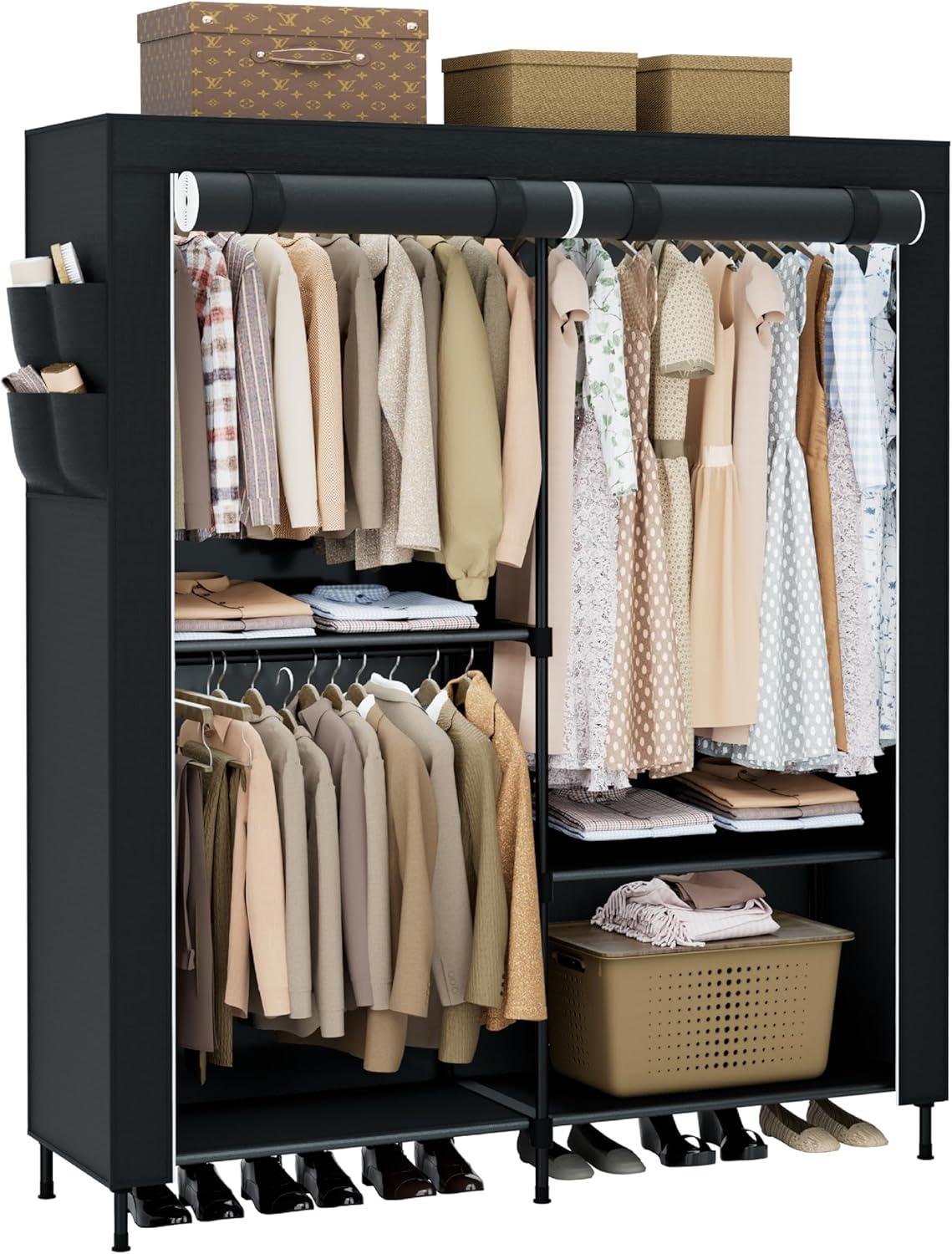
PCT122B01 Clothes Rack — how your closet gains space
You notice the PCT122B01 portable closet before you think about its function — a tall,slightly utilitarian form that quietly asserts itself in the room. Up close, the black non-woven cover feels papery under your fingertips while the steel tubing feels cool and hollow; the connectors give a faint, reassuring click as you test a shelf. It occupies a lot of vertical space without looking heavy, and the three hanging rods and layered shelves show through in subtle bulges and seams rather than shouting their capacity. The overall impression is of something practical and lived-in, more workshop solution than showroom piece.
When you first bring it home: a room-ready overview of this large portable closet
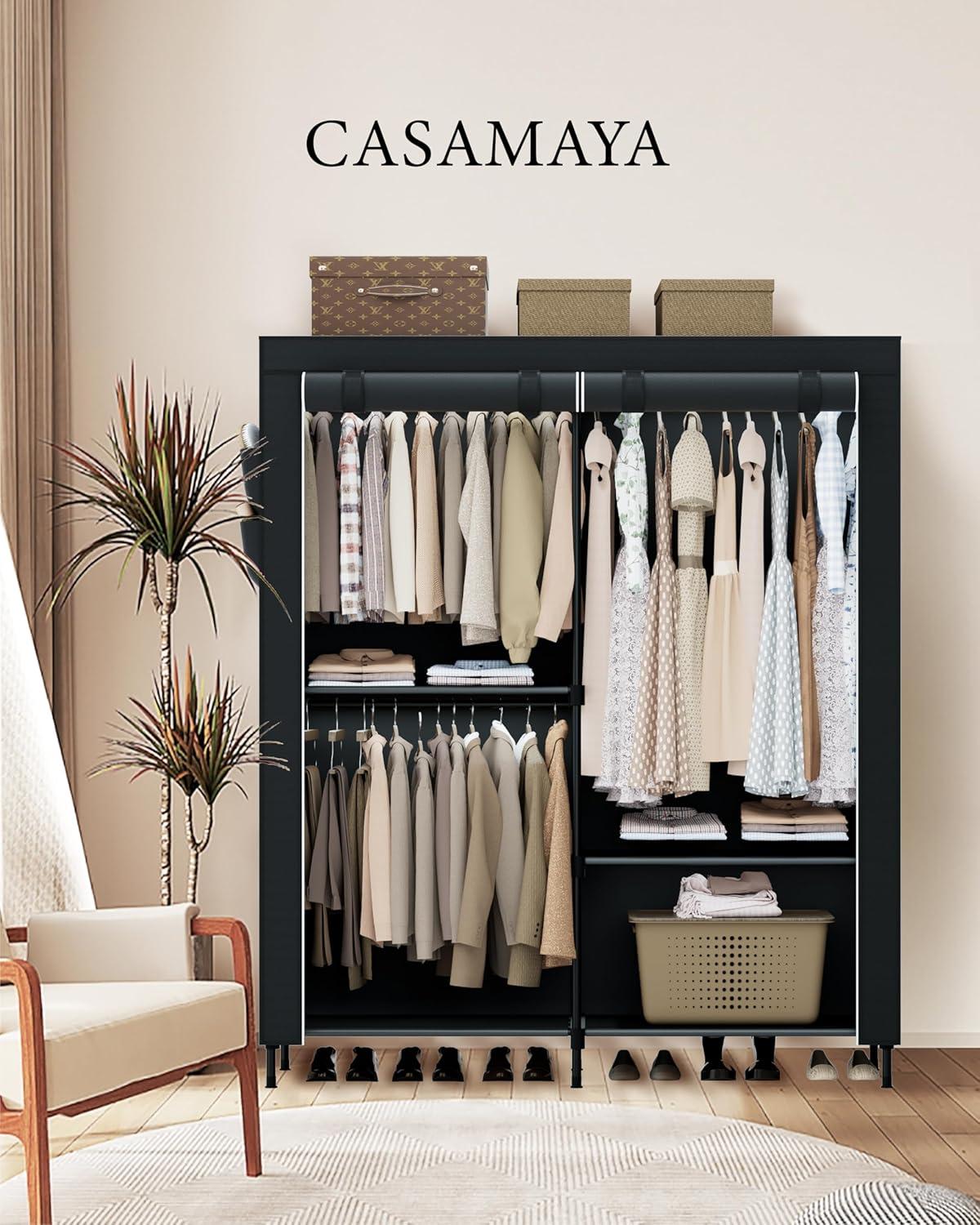
When you wheel it into the room, the closet reads as a tall, narrow block rather than a piece of furniture that demands attention. The black fabric skin softens the frame; from a few feet away it looks like a smooth, matte curtain stretched over a rectangular column. Up close you notice the zipper track and the way the fabric drapes at the seams—you’ll find yourself smoothing a loose edge or shifting a connector cover out of sight without thinking about it. It doesn’t take up a lot of depth, so it sits neatly against a wall or inside an alcove, but its height makes the top shelf feel just out of easy reach unless you step up on a small stool.
Unzipped, the interior arranges itself into clear zones: short-hang rails, a longer hang bay, and stacked fabric shelves. When you put clothes on the rods the fabric cover settles against the garments and the frame gives a faint, steady tension; heavier items make the front silhouette bulge slightly. Folded stacks on the shelves compress over time and the shelf fabric can sag a little in the middle, so you may find yourself nudging boxes or shoes into corners to keep lines tidy. Opening and closing the cover produces a soft rustle rather than a drawer-like clunk, and if you grab a loaded hanger the whole unit can shift a touch before settling—an everyday motion, not a dramatic one.
The look and the build: how the black frame, fabric cover, and shelves present themselves in your space

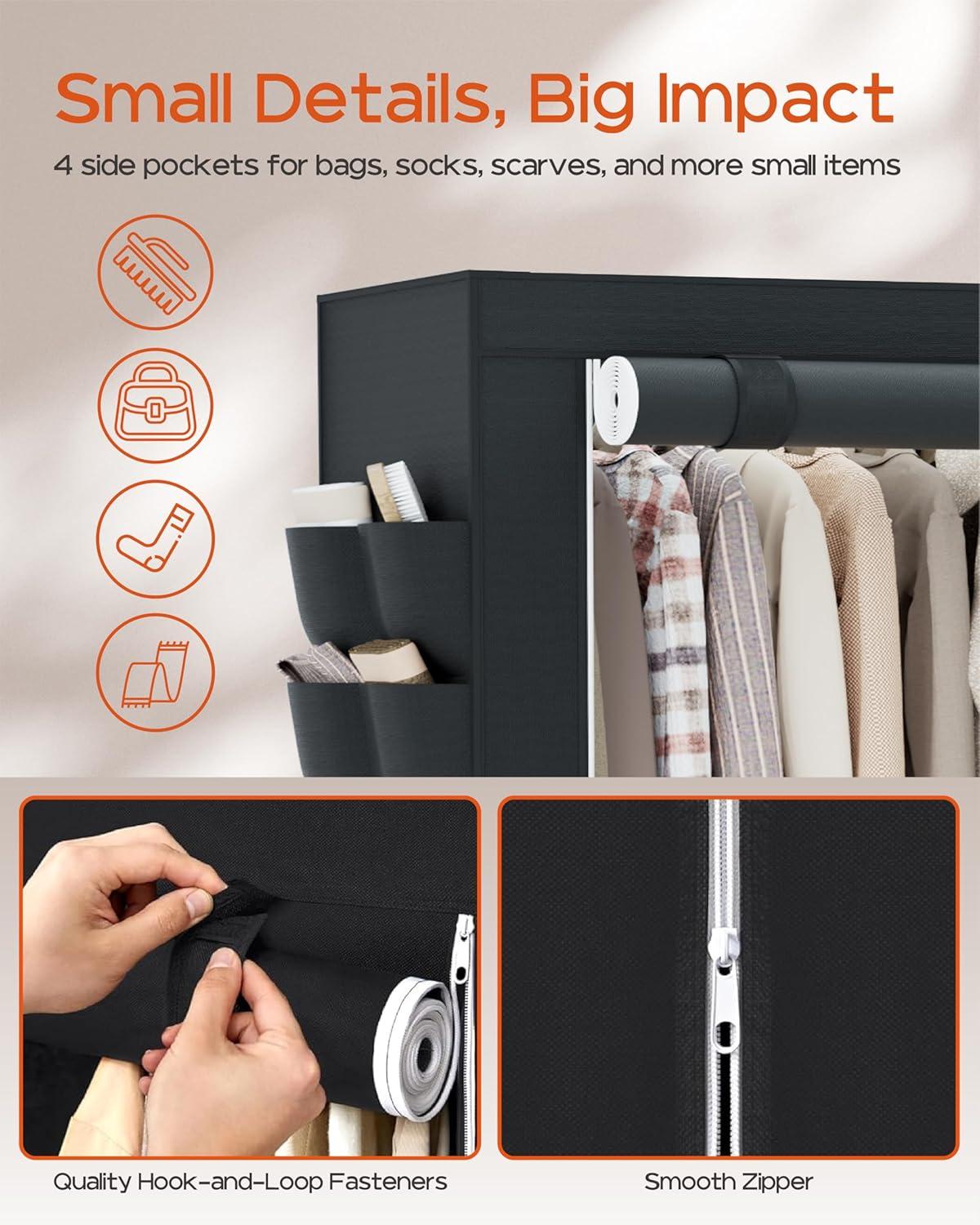
Placed against a wall, the black frame reads as a series of thin, dark lines that define the wardrobe’s silhouette more than its mass; from a few steps away it looks graphic and orderly, up close the metal tubes and plastic connectors give a faint industrial rhythm that the fabric cover softens.The cover hangs with a slight drape where it meets the frame, and when you unzip the front panel it folds back in a casual, slightly uneven curtain — you find yourself smoothing the edges or tucking excess fabric before reaching inside. Light from a nearby window outlines the frame through the fabric at certain angles, so the structure becomes part of the room’s play of shadow rather than a solid block.
The shelves present themselves as horizontal planes that can shift subtly with use: empty they sit flat and taut,and as you load them they may bow a little in the middle or show small puckers along the sewn seams. The fabric’s texture catches dust and marks more easily than a hard shelf would, and you’ll sometimes brush at small creases after pulling clothes out. Zippers and seams are visible details when you’re interacting with the wardrobe — the zipper track sits along the front, the connector points peek through at the corners, and when you reach for a garment the whole unit can move a fraction before settling, which makes the act of loading or reorganizing feel slightly hands-on rather than mechanical.
| Element | How it shows up in the room |
|---|---|
| Black frame | Creates a linear outline; reads as structure rather than bulk |
| Fabric cover | Drapes and folds at the front; reveals seams and zipper when opened |
| Shelves | Appear flat until loaded, then may sag slightly and show seam tension |
Unpacking and putting it together: what assembly looks like and how the parts slot for you
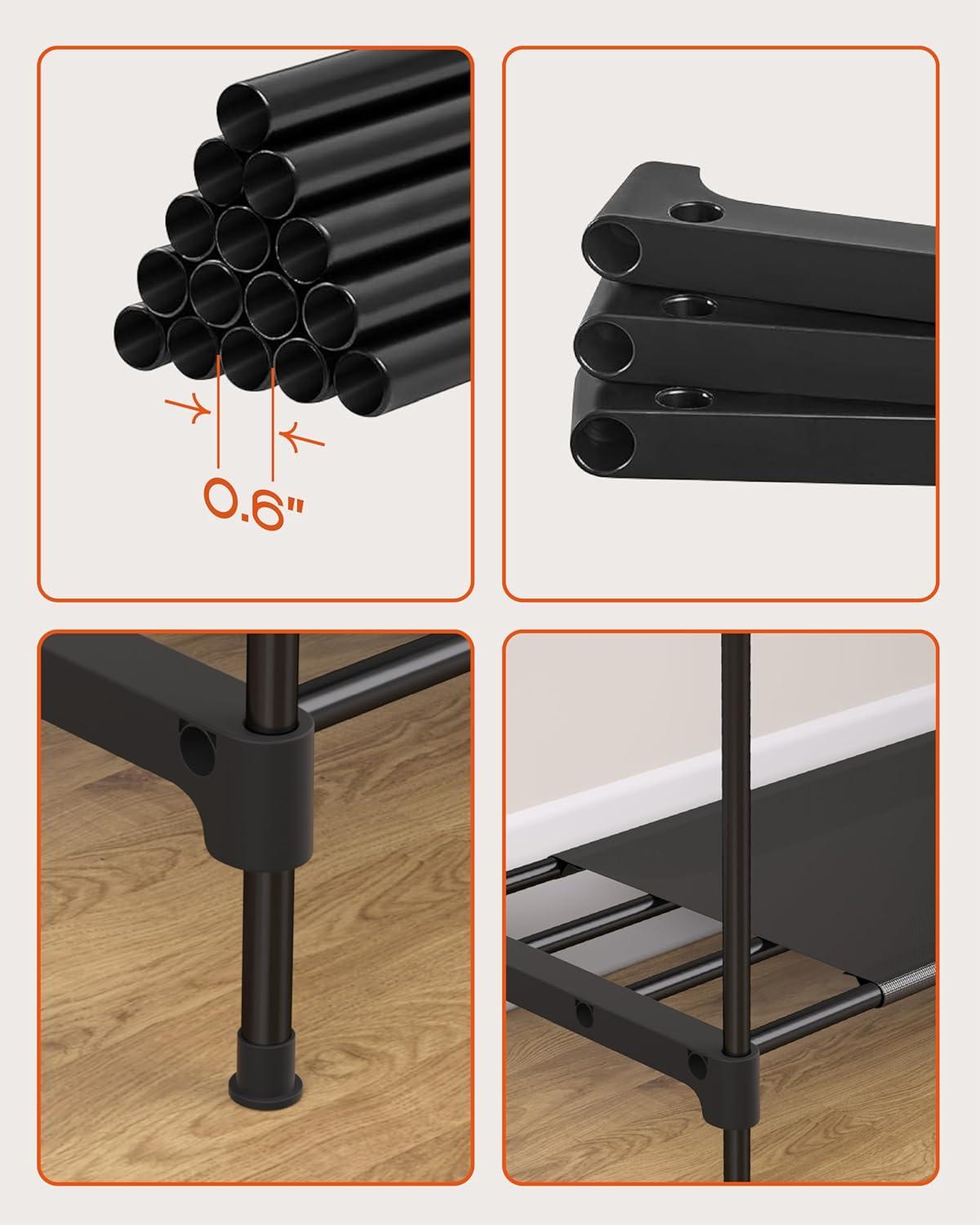
When you open the box,parts tend to arrive in a few neat bundles: long metal tubes wrapped together,several plastic connector pieces in a pouch,the folded fabric cover and shelf panels,plus a small bag with the anti-tip strap and a couple of fasteners. The instruction sheet is pictorial; you will likely find it easiest to spread everything out on the floor and match shapes before you start. Some pieces sit snug in their packing and need a little tug; others are already loose and ready to slot together.
| Part | How it looks | How it slots |
|---|---|---|
| Metal tubes | Long, hollow cylinders with end notches | Push into the connector sockets; a slight twist helps the ends seat fully |
| Plastic connectors | Multi-socket blocks with visible holes | Orient so the keyed faces match the tubes, then press/tap until they click |
| Hanging rods | Thinner tubes, usually finished the same as the frame | Lay into the horizontal slots of the connectors and let them rest across the frame |
| fabric cover | folded with sewn pockets and a zipper | Drape over the assembled frame, pull pockets over the shelves/rods, then zip closed |
| Shelf panels | Flat panels that slide over horizontal tubes | Slip them onto the crossbars and smooth so the fabric pockets hold them in place |
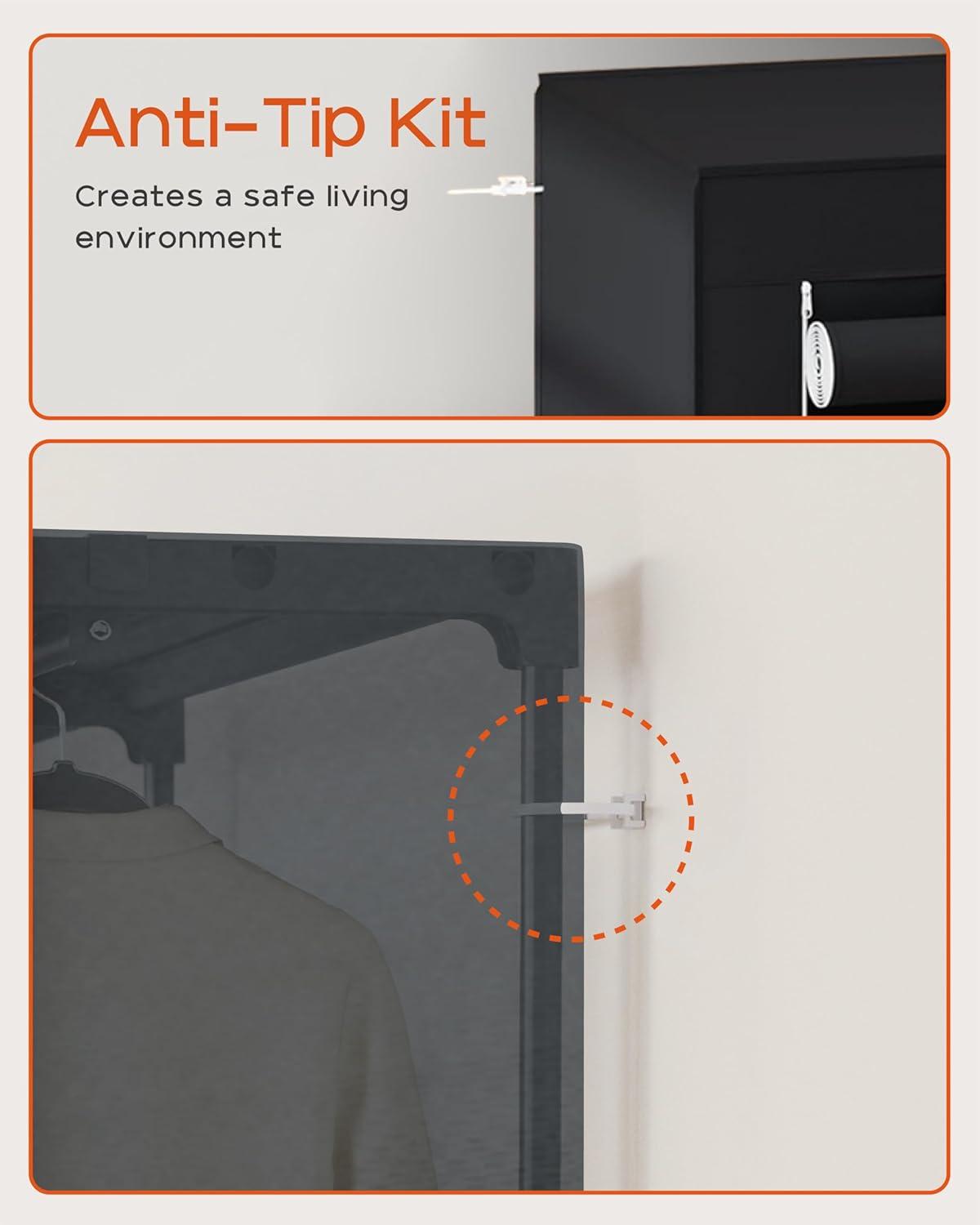
| Anti-tip kit & small fasteners | strap, bracket, and a couple of screws in a small bag | Included separately in the hardware pouch for attachment to the back of the frame |
The assembly itself unfolds in a few repeating motions. You usually build the base first, clicking the lower connectors onto the uprights, then add the horizontals. As you work, the plastic connectors tend to guide the tubes into the right angle; sometimes you’ll nudge a tube a few millimetres to line up the next piece. Sliding the shelf panels into their fabric pockets feels a bit like tucking a blanket over a frame — fingers smooth the fabric, seams shift, and you’ll tuck the edges until things sit flat.
Once the rods are seated in their brackets and the fabric cover is draped on, zipping can pull the whole piece into place and reduce any wobble between parts. There are moments where a connector wants a firmer press or where a seam needs smoothing so the cover hangs even; those small adjustments are part of getting the pieces to slot together. The strap and tiny fasteners that come in the hardware pouch sit aside until the end, visible but separate from the main frame work.
What the size means for your layout and how it occupies wall and floor space in your rooms

the unit presents itself as a tall, narrow block against a wall rather than a shallow row of shelves.Placed flush to a vertical surface, it occupies a strip of floor space that frequently enough defines traffic flow in a smaller room: when clothes hang on the rods, sleeves and hems can lightly brush the fabric cover as peopel pass, and reaching into the upper area requires a small step back to avoid intruding on the walking path. The fabric front and zipper also add a small soft plane that moves with use; when the cover is opened or zipped, it changes the perceived clearance in front of the closet by a few inches.
Vertically, the organizer uses most of the room’s wall height, creating distinct visual bands: lower shoe space, mid-level short-hang sections, and a taller zone for long garments. Filled with layered coats or oversize storage boxes on top, the piece can feel heavier against the wall and the anti-tip attachment becomes more apparent in daily routines; the habit of adjusting the cover or smoothing folded items on the shelves is common. In many setups,the depth means adjacent furniture—desks,dressers,or doors—will need a modest offset so drawers or doors open without brushing the fabric.
| Spatial element | Typical observation |
|---|---|
| Floor footprint | Commands a narrow rectangular patch that often sits between other furniture or along an unused wall |
| Front clearance | Requires a few inches of breathing room for accessing hanging clothes and zipping the cover |
| Vertical impact | Creates stacked storage zones that draw the eye upward and can reduce perceived ceiling height nearby |
View full specifications and size options on Amazon.
How your clothes sit inside it: three hanging rods,stacked shelves,and the way garments drape

When you hang clothes on the three hanging rods, they settle into distinct layers rather than one flat plane. Shirts and blouses tend to form a neat line on the upper and middle bars, shoulders following the hangers’ curve and sleeves brushing lightly against neighboring garments when packed. Longer pieces hang from the lower rod in a single plane, their hems often hovering above whatever sits on the bottom shelf; when you pull a dress or coat toward the front to inspect it, the heavier fabrics can sway and catch on nearby hangers, so you find yourself nudging items back into place or smoothing creases along seams.
The stacked shelves produce a different rhythm. folded tees and sweaters compress slightly as you add things, so stacks lean a touch over time and you catch yourself straightening corners or easing a bulging pile back into alignment. Boxes and bags on the top shelf sit out of the way, while the space under the lowest shelf becomes a predictable zone for shoes or bins; reaching in can lift nearby garments slightly, especially if the hanging rods are closely loaded. Open and close the cover and the whole arrangement moves in small, familiar ways — fabrics shift, hangers rotate, and hems settle — creating a lived-in balance between hanging lines and stacked surfaces.
How the rack matches your storage needs and where it reveals real-life limits compared with your expectations
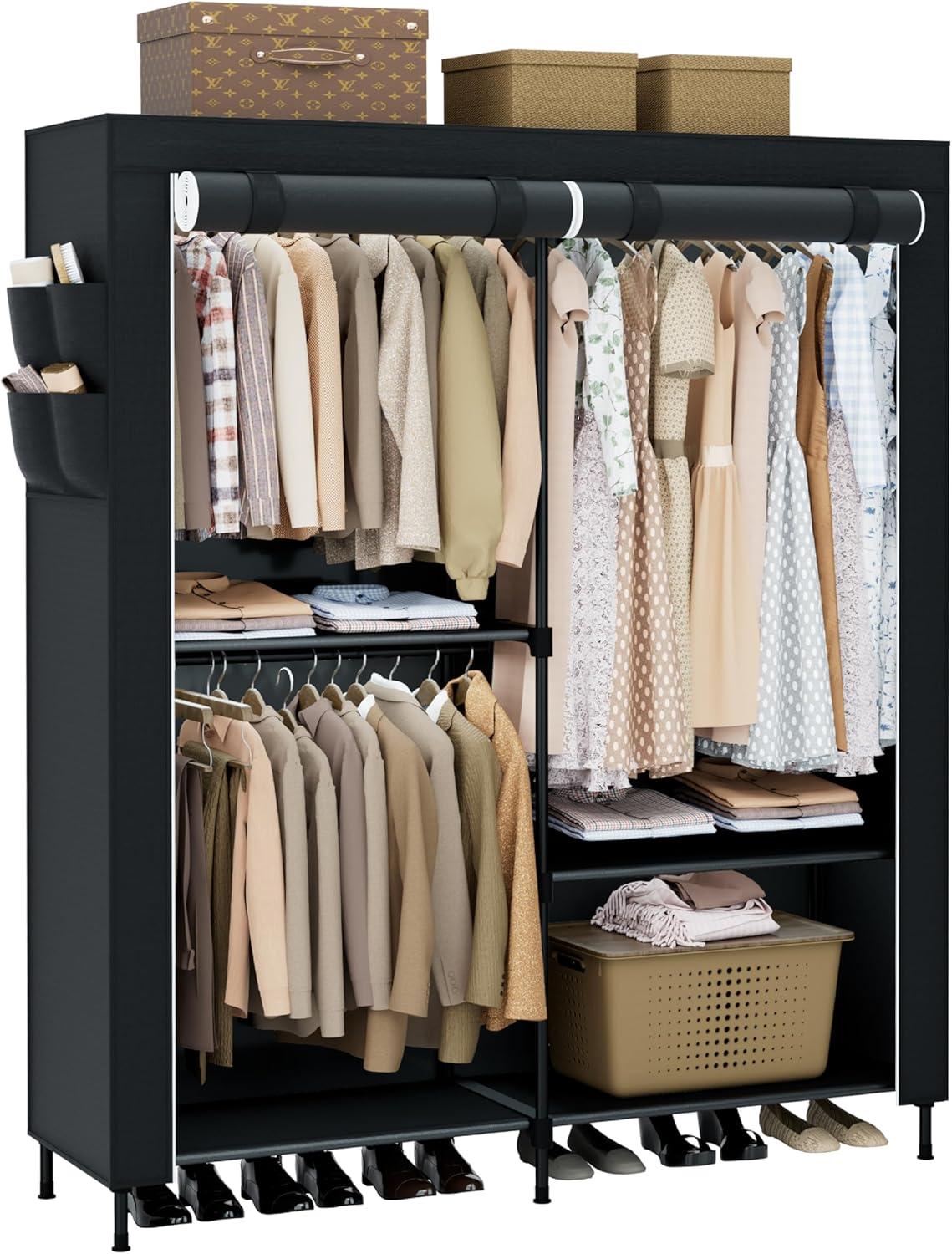
In practice, the rack’s arrangement of multiple hanging zones and stacked shelves maps to common daily routines: shirts and blouses tend to occupy the shorter sections, longer outerwear falls into the taller bay, and folded items stack on the fabric shelves. Items slide into place without fuss, but crowding becomes apparent once hangers press shoulder-to-shoulder; when packed tight, garments can sit closer together than expected and need a little reshuffling to avoid creasing. The top shelf accepts boxes and soft goods, though taller containers can feel slightly pinched by the cover, and shoes stored beneath the bottom shelf fit more comfortably when arranged in low-profile pairs rather than boots.
| Area | observed typical load |
|---|---|
| Short hanging sections | About a dozen thin-hanger shirts, or fewer bulkier items |
| Long hanging section | Several coats or dresses with room to hang without bunching in most cases |
| Shelves | Two to three folded sweaters per shelf; low boxes and accessories on the top |
| Under bottom shelf | Two to three pairs of shoes when arranged side-by-side |
Loaded evenly, the structure holds everyday assortments with only minor settling; loaded unevenly or when shelves and rods are filled to the brim, the frame can feel a touch flexible and benefits from occasional adjustment. The overall pattern is one of usable efficiency with predictable trade-offs: maximized hanging capacity reduces shelf space, and bulky footwear or oversized storage boxes will require a rethink of placement. For some households the balance feels about right, while for others the need to shuffle items to prevent crowding becomes part of the routine.
See full specifications and options
Moving it, caring for the cover, and the everyday handling you can expect as you use the organizer
When you move the organizer around the room, you’ll notice a difference between shifting it empty and with clothes inside. Pushed a few feet on hardwood or tile, it glides awkwardly rather than rolls — the frame can catch on thresholds or carpet edges. Lifted, the frame feels light but a bit floppy where the connectors meet; two hands at opposite ends stop shelves from swaying and garments from shifting. If you slide the unit while it’s loaded, hanging items tend to sway and folded stacks may settle unevenly, so expect to smooth things out after repositioning.
Care of the cover mostly happens in small moments. Dust settles along seams and the front opening where you unzip; a rapid run with a lint brush or a damp cloth takes off surface dirt. The fabric can crease or bunch where it folds around corners, and you’ll find yourself tugging the cover back into place now and then to keep the zipper running smoothly. For deeper cleaning, the cover comes off in pieces rather than as one rigid shell, so you can spot-clean panels and let them air-dry before rehanging; panels may sit slightly different after washing and will need a light readjustment to lie evenly.
Everyday handling is built around repetition: unzipping, reaching inside, nudging a hanger back into place. The zipper and the front panel attract most of your attention — they can snag on loose threads or hangers if you’re hurried. Over time connectors and fabric edges can settle; you’ll sometimes press a shelf or shift a pole to realign things, a small, almost unconscious motion like smoothing a cushion. Occasional re-tensioning of the cover and a quick check that vertical poles sit fully home keeps the unit behaving predictably.
| Action | What to expect |
|---|---|
| Moving empty | Easier to lift; frame feels light but connectors can flex |
| Moving loaded | Hanging items sway; folded items may shift and need smoothing |
| Removing cover for cleaning | Panels come off in sections; expect minor readjustment when rehanging |
| Daily access (zipping/unzipping) | Zipper runs smoothly if kept free of loose threads; front panel may need occasional smoothing |
How the set Settles Into the Room
Since it arrived, the Clothes Rack, Portable Closet, 54.7 Inch Large Capacity Wardrobe Closet with cover, Clothes storage Organizer with Shelves and 3 Hanging Rods, Easy to Assembly, Black PCT122B01 has quietly settled into a corner, folding into your daily view rather than demanding attention. Over time, as the room is used, you notice the cover softens, the shelves take on the familiar traces of regular household rhythms, and small surface marks appear where hands and hangers meet. In daily routines it behaves more like a steady presence—holding the clothes you reach for, making quick outfit changes feel ordinary, easing into the background of your comfort. You find it stays.
As an Amazon Associate I earn from qualifying purchases.