Stylish Kitchen Cabinet Ideas: Modern Designs and Smart Small Space Solutions
There’s a remarkable evolution underway in how we approach storage, color schemes, and movement within kitchen cabinetry. Today’s most innovative kitchen cabinet designs blend aesthetic appeal with seamless functionality. Whether you’re selecting finishes, exploring color palettes, or planning layouts for compact kitchens or limited spaces, this comprehensive guide reveals what truly performs well in everyday homes and the reasoning behind these choices.
Innovative Kitchen Cabinet Designs: Merging Style with Practicality
In my approach, kitchens function as dynamic ecosystems. I prioritize integrated storage solutions, durable hardware, and versatile spaces. Micro-zoning is key—separating upper and lower pantry areas, incorporating tall pantry units, and customizing interior fittings for drawers and under-sink compartments. The trend leans toward tactile materials, combining warm wood tones with stone-inspired quartz surfaces. Hardware is scaled up to complement larger drawer fronts, while a balance of concealed storage and selective open shelving maintains a clean, airy visual flow without overwhelming the space.
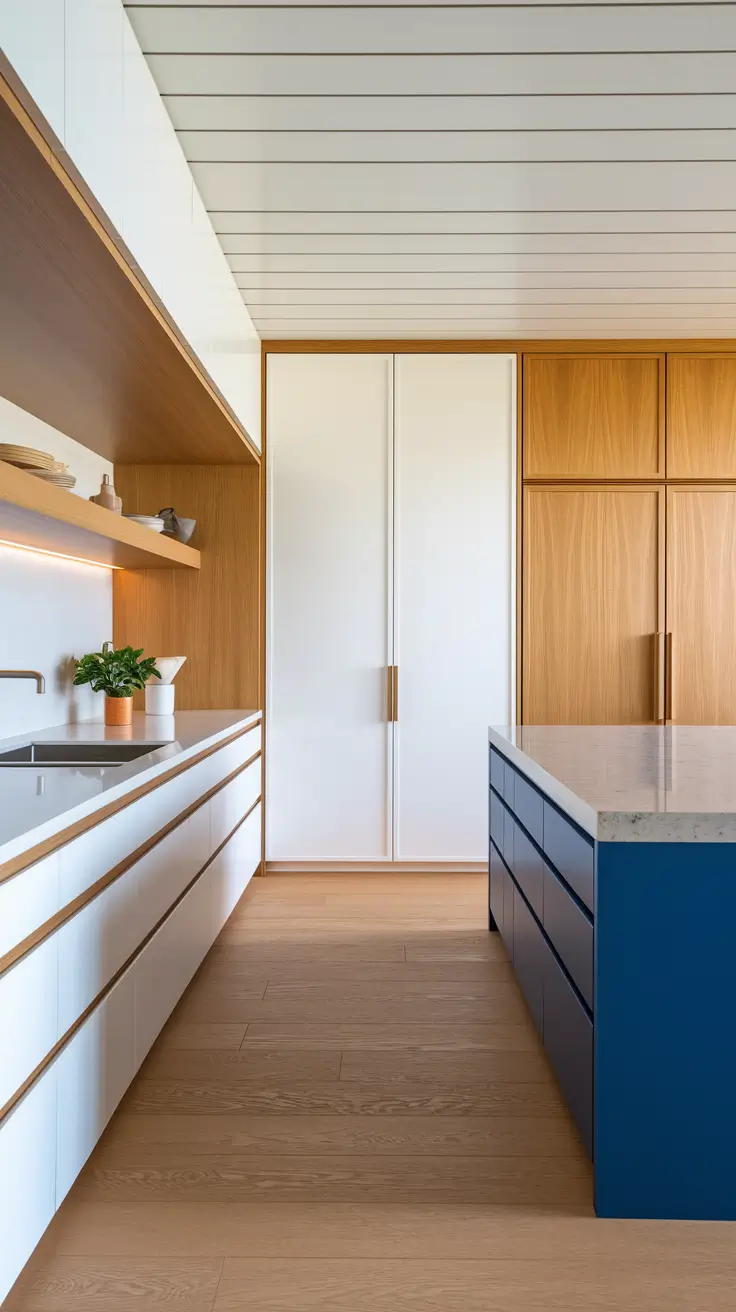
Rather than designing cabinetry strictly by wall placement, I organize it around kitchen activities. For example, wide drawers near the sink facilitate prep work, bottom corner units utilize solutions like LeMans or blind-corner pullouts for cookware, and vertical tray dividers are positioned adjacent to ovens. I favor a mix of tall pantries, deep lower drawers, and slim upper cabinets to keep countertops uncluttered. A soft grey oak paired with white, black, or blue lacquer creates a serene two-tone effect that feels modern yet full of character. In areas with low ceilings, narrow soffits or finished panels add decorative touches without collecting dust.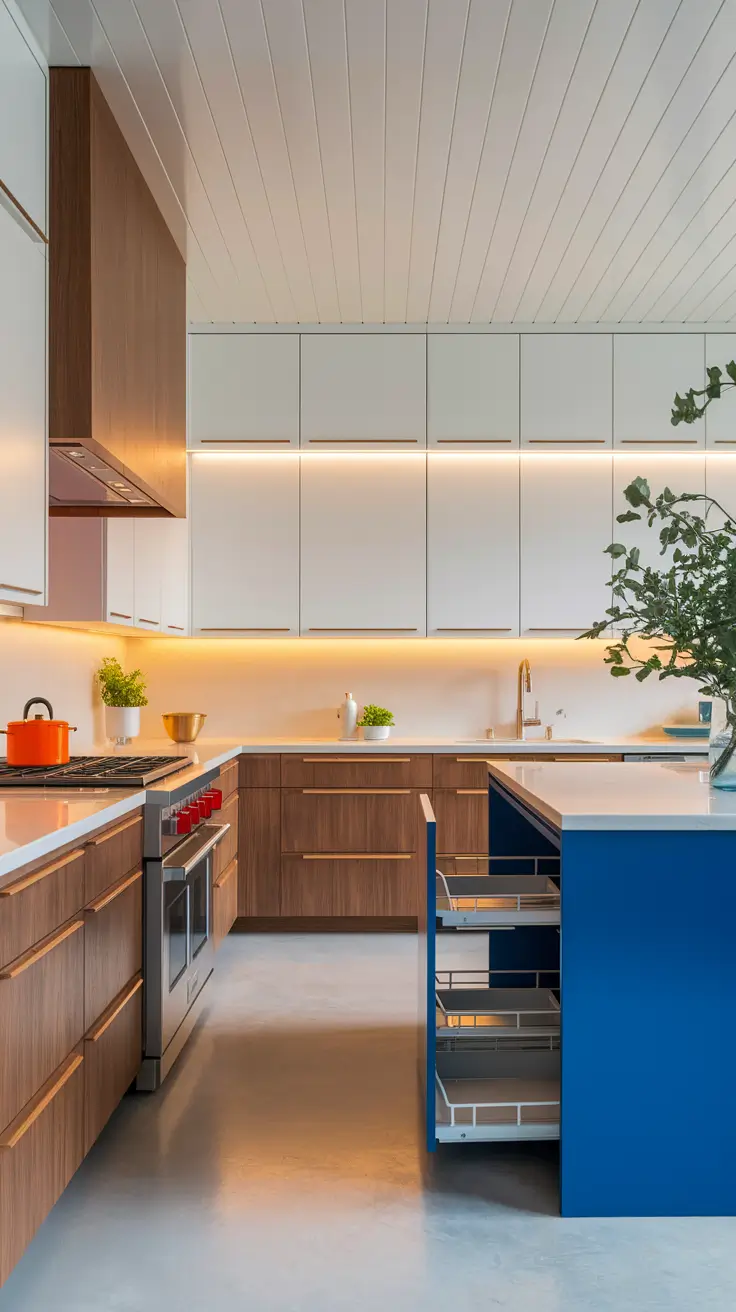
From a professional standpoint, the most effective kitchens borrow principles from light commercial design: hard-wearing laminates, anti-fingerprint lacquers, and steel-reinforced drawers. I often prototype modular concepts—similar to Ikea systems—before committing to bespoke layouts, allowing clients to test storage density and flow. Functionality is enhanced by limiting full-height glass to core prep zones, while secondary areas feature glass to maintain brightness throughout.
Additionally, I recommend planning for seasonal use and outdoor integration. For instance, having a weather-resistant pantry near the garden door with pull-out crates for party essentials streamlines outdoor entertaining and future-proofs your investment.
Color Trends in Kitchen Cabinets: Sophistication Meets Subtlety
The palette for contemporary kitchens embraces refined neutrals accented by a bold hue. Think cabinetry in shades like sand, mushroom, and muted taupe, contrasted with deep blacks, crisp whites, soft greys, or desaturated blues. Warm wood tones such as honeyed oak or rift-cut ash complement these colors without introducing red undertones. The secret lies in using complementary colors with subtle contrasts, crafting a two-tone narrative that feels cohesive and timeless.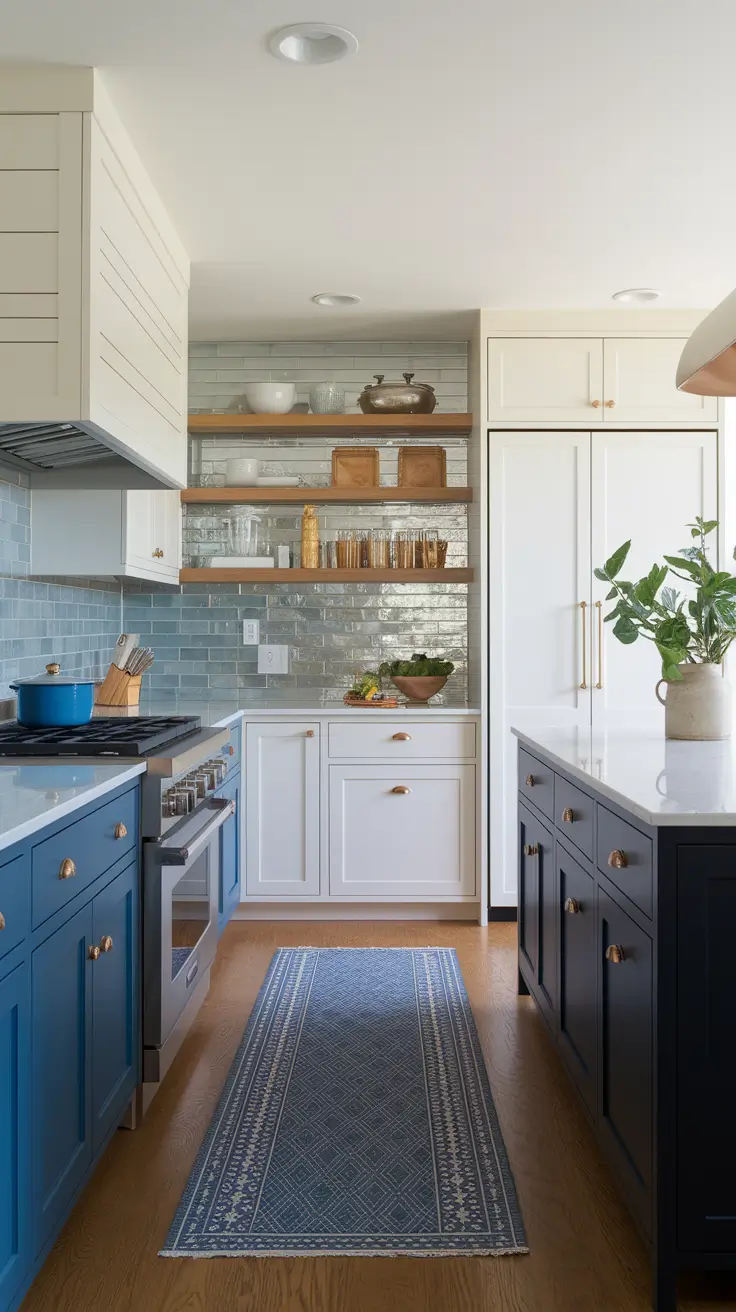
Practicality also guides color placement: darker, scuff-resistant finishes on lower drawers in high-traffic zones, lighter reflective finishes on upper cabinets to amplify light in narrow kitchens, and a saturated island color to unify the design. For example, a client favoring white cabinetry can warm the space with natural wood accents and brushed nickel hardware, or experiment with smoky blue or green-grey on lower units balanced by stone or enamel tones on the range.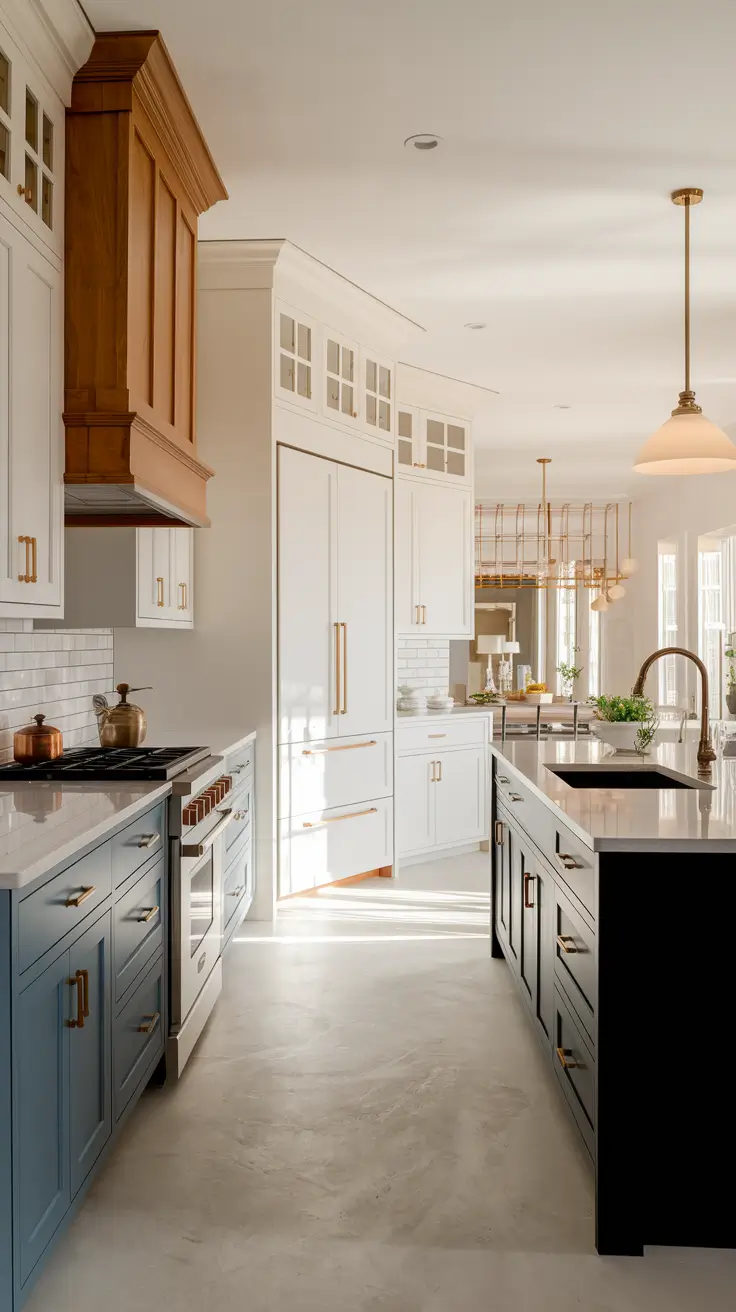
Low-sheen painted lacquers outperform glossy finishes in hiding fingerprints. Many color palettes from recent years remain relevant, provided contrasts are softened and undertones carefully matched. Always test colors alongside your actual flooring and countertops, as undertones can reveal themselves only in context.
Including a lighting sample board is essential. Evaluate your chosen palette under task, ambient, and accent lighting to ensure the colors perform well throughout the day. LED lighting can significantly affect color perception, so thorough testing guarantees satisfaction with the final result.
Maximizing Efficiency in Compact Kitchens
In tight spaces, every millimeter counts. I replace narrow doors with full-extension drawers, incorporate toe-kick drawers for trays, and emphasize vertical dividers within cabinetry. Tall, slim pull-out pantries provide unexpected storage capacity, while a few carefully curated open shelves lighten the visual load. Shallow upper cabinets help make counters appear more expansive, especially in narrow galley layouts.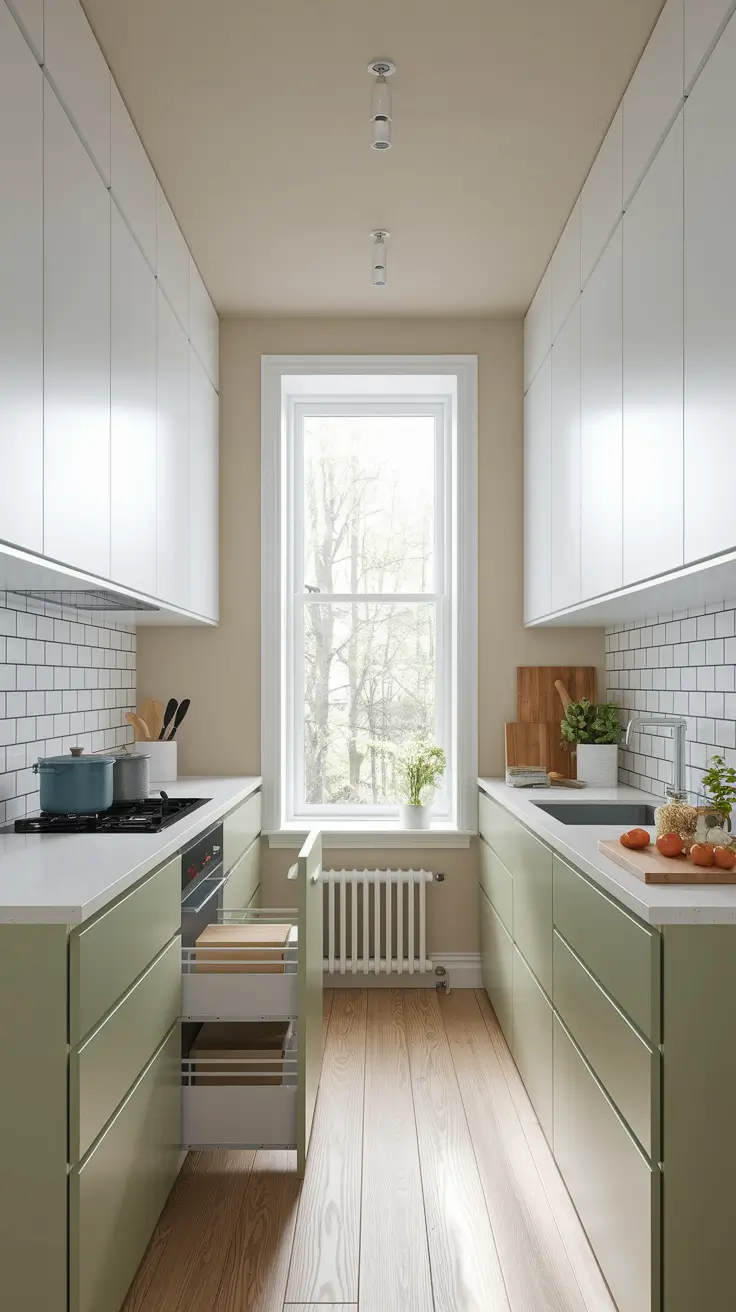
Cabinet fronts are often handle-free with integrated pulls to reduce visual clutter. Waste sorting units are ideally placed away from the sink base. Smart corner solutions, such as bottom corner mechanisms, optimize awkward spaces. Where building codes permit, microwaves are relocated to tall units beside the fridge to free up counter space. Finishes typically feature a light two-tone scheme with pale uppers and mid-tone lowers.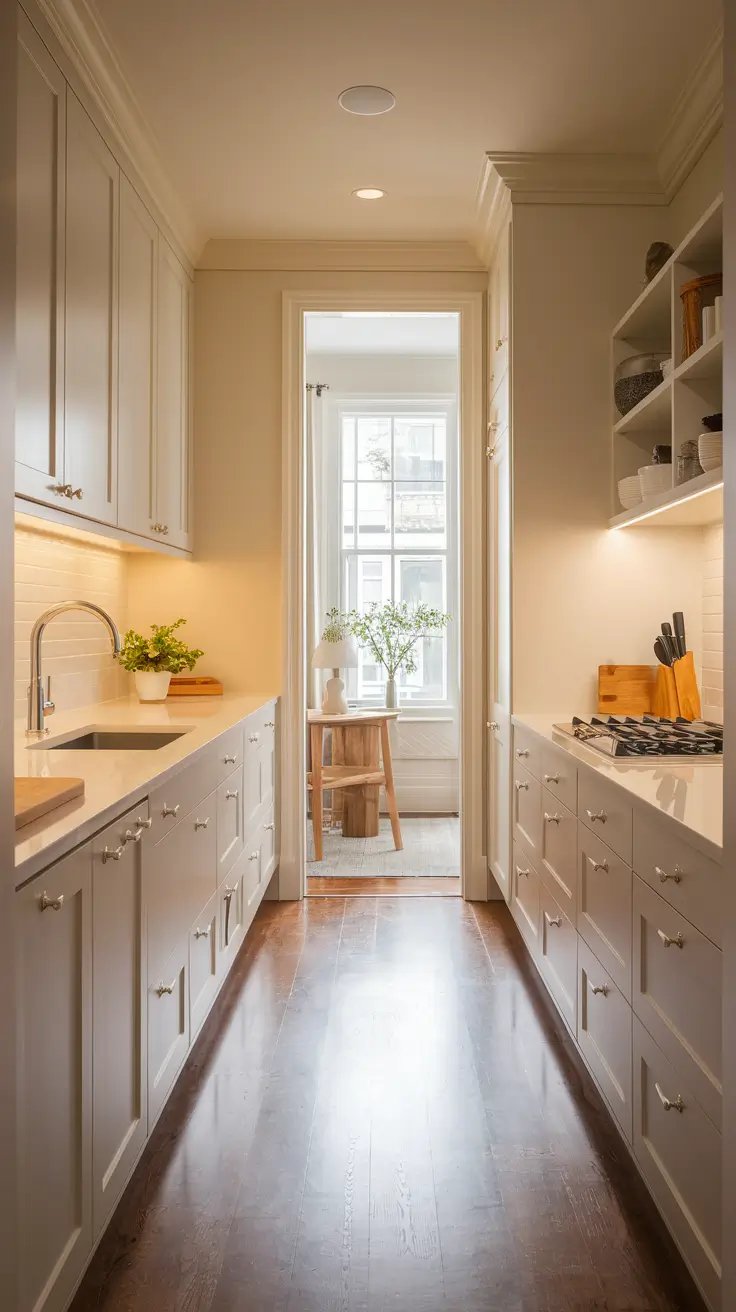
Significant improvements often come from thoughtful editing—removing an overhead cabinet to create a continuous shelf and taller backsplash, reclaiming storage with deeper drawers, and installing compact induction cooktops paired with recirculating hoods to simplify ventilation and save cabinet space.
Additional enhancements include motion-activated lighting and custom drawer organizers tailored to your cookware. Pre-planning storage for knives, lids, and spices elevates kitchen efficiency in subtle but impactful ways.
Current Design Trends in Kitchen Cabinetry
Today’s kitchen design language blends modern craftsmanship with durability. Fluted panels are making a comeback, albeit sparingly, while shaker-style rails are becoming wider. Built-in ribs add shadow play without collecting dust. Mixed-metal hardware—combining blackened steel, warm nickel, and glass—reappears in ribbed or reeded inlays on select upper doors. The emphasis is on simple shapes and rich textures.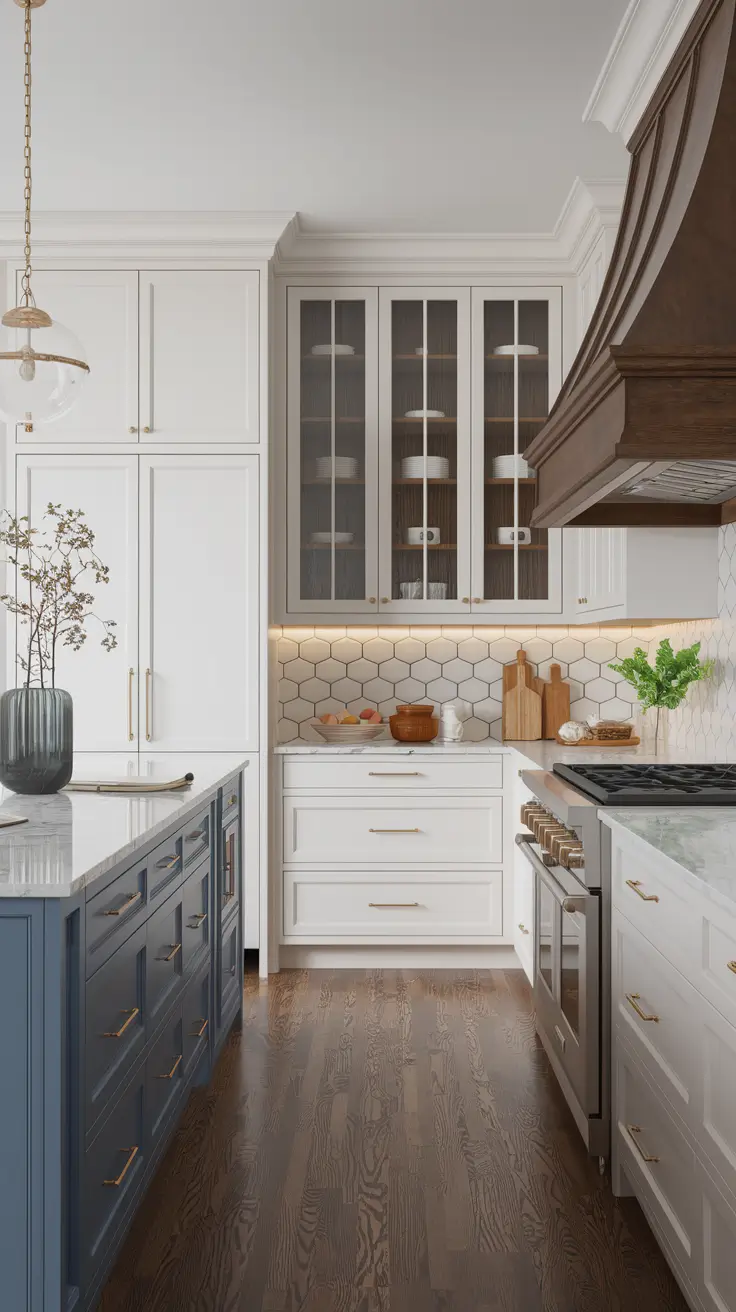
Material choices prioritize maintenance and tactile experience: anti-fingerprint laminates on lower drawers, oiled oak accents, and solid quartz backsplashes behind cooktops. Open shelving is reserved for frequently used items, while charging stations are discreetly housed within tall message centers. The two-tone wood and lacquer combination remains a classic, adding depth without feeling trendy.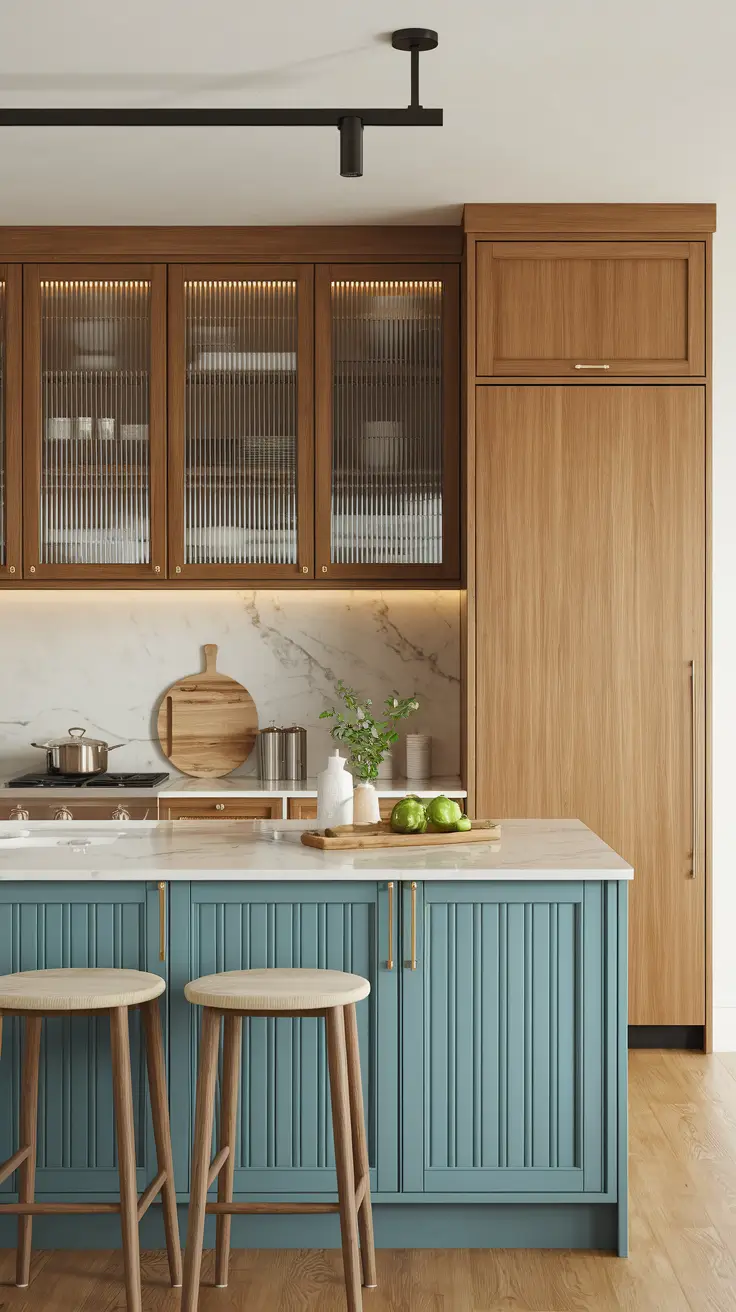
Trends endure when they solve real problems: fluting conceals micro-scratches, reeded glass obscures contents elegantly, and oversized drawers reduce bending. Incorporating natural wood elements softens the look and adds timeless appeal.
Including a maintenance plan is crucial—detailing lacquer repairs, wood oiling schedules, and cleaning instructions ensures your kitchen retains its charm over time.
Optimizing Kitchen Layouts for Smooth Workflow
Kitchen layout is akin to choreography. I position prep areas facing the sink and cooktop, place the dishwasher adjacent to the sink for easy unloading, and situate the fridge to minimize traffic through work zones. In narrow rooms, a peninsula often works better than an island, while islands with rounded corners facilitate safe family movement. Adjusting cabinet depths subtly aligns sightlines and prevents dark overhangs.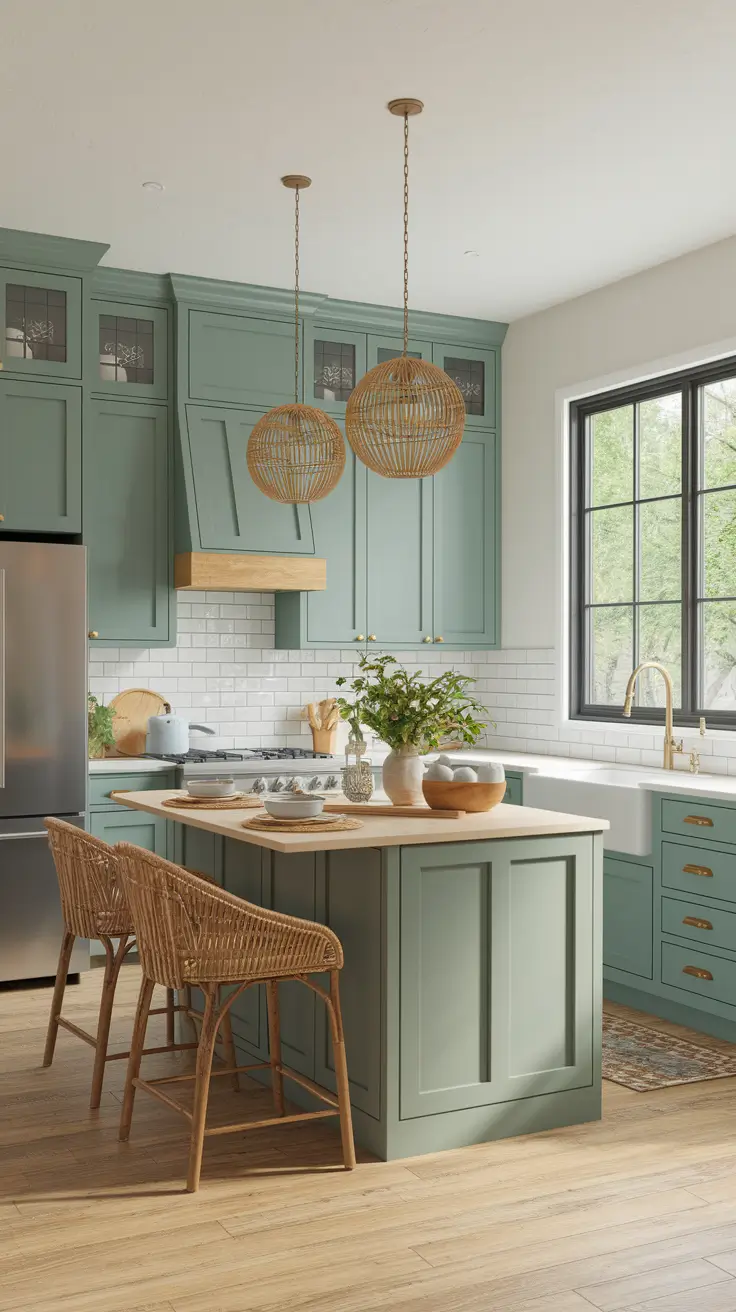
Cutlery and bowls are stored near the dishwasher, oils and spices in pull-outs beside the range, sheet pans in vertical dividers, and small appliances in lift-up bases or tall pantries. Upper cabinets above windows stop short of the ceiling to maximize light, with clean paneling finishing the tops to avoid dust traps. Swing-out trays replace lazy susans in awkward corners.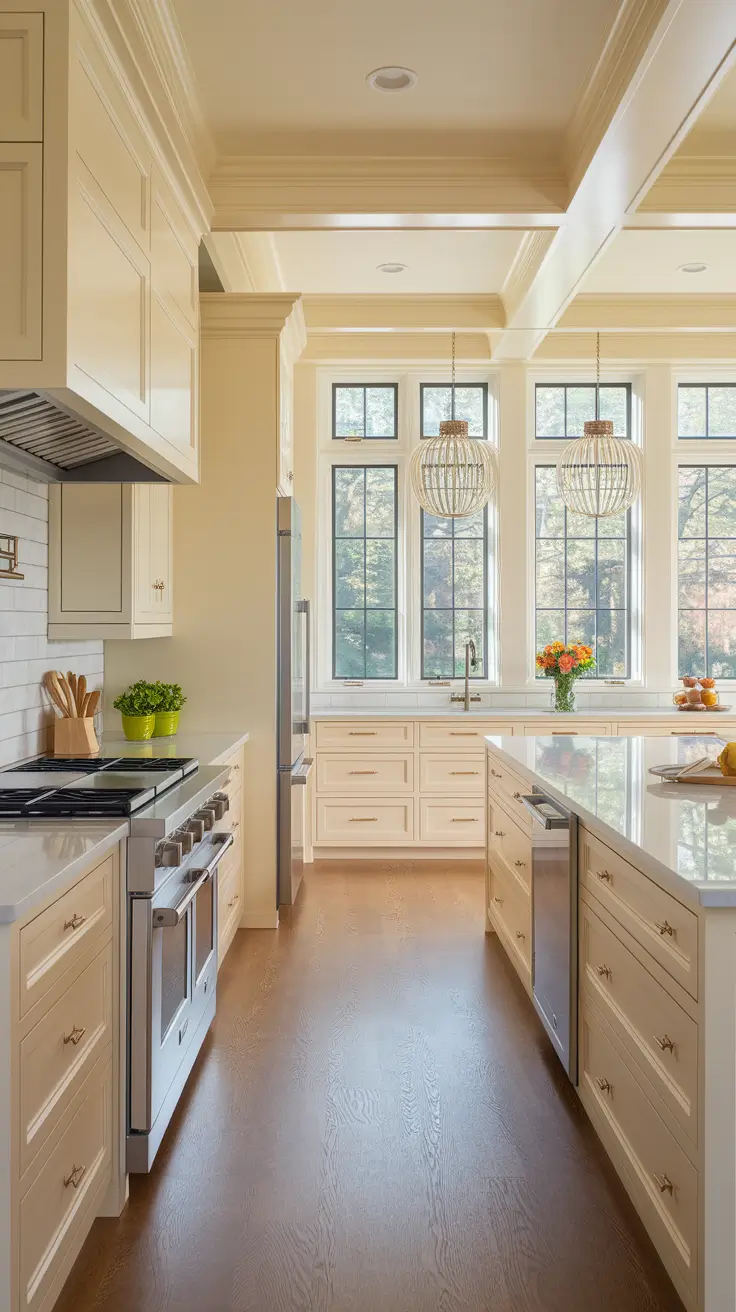
A well-designed layout eliminates friction—door swings, handle clearance, and walkway widths are carefully considered. Simple mock-ups using painter’s tape can save significant daily frustration.
For entertaining, I recommend adding a beverage drawer or narrow hutch, allowing guests to serve themselves without interrupting the cooking flow.
Modern Kitchen Cabinet Inspirations: Warmth Meets Minimalism
Modern kitchens today are warm and refined. Flat-panel fronts with precise reveals and natural wood soften geometric lines, creating a gallery-like calm. Storage is mostly concealed, allowing materials like stone, wood, and metal to take center stage.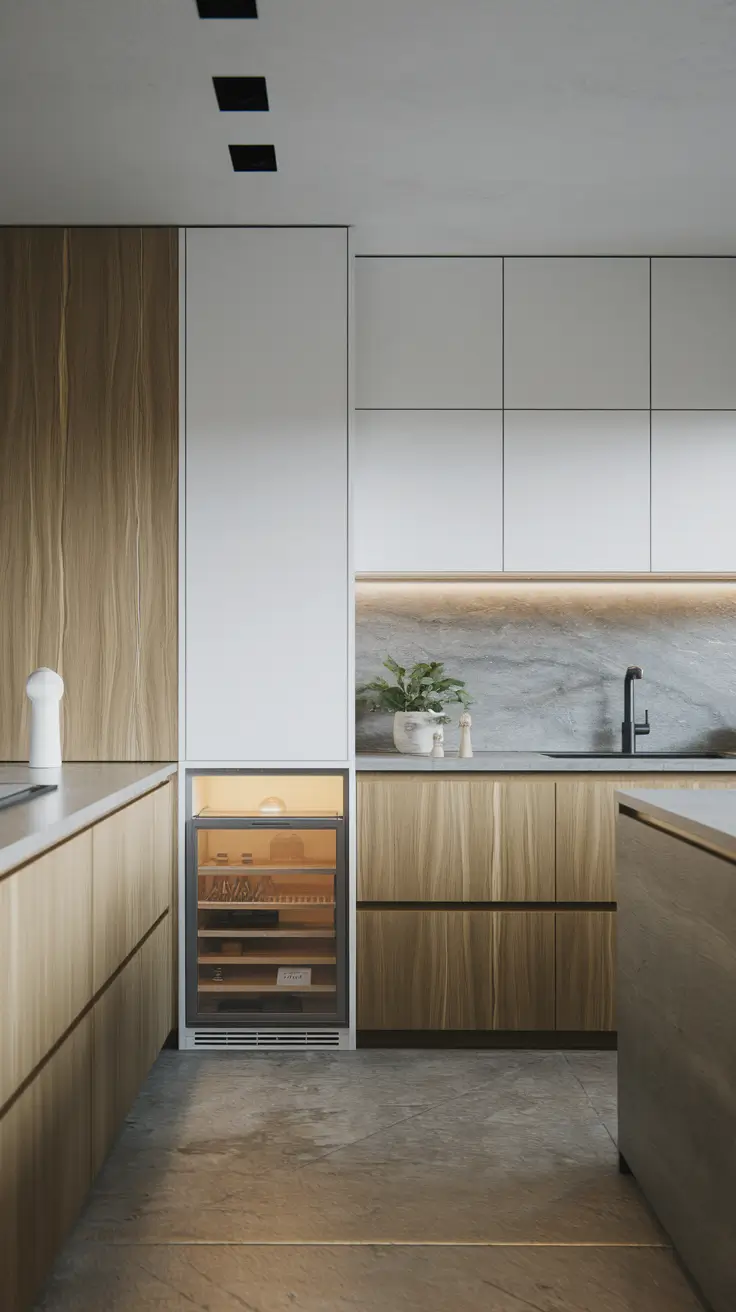
I specify rift-cut oak in light two-tone combinations with matte white or soft grey lacquer. Handleless rails and pocket-door appliance garages within tall runs keep counters open. A single sculptural shelf suffices for display, complemented by shallow placemat and charger storage near seating.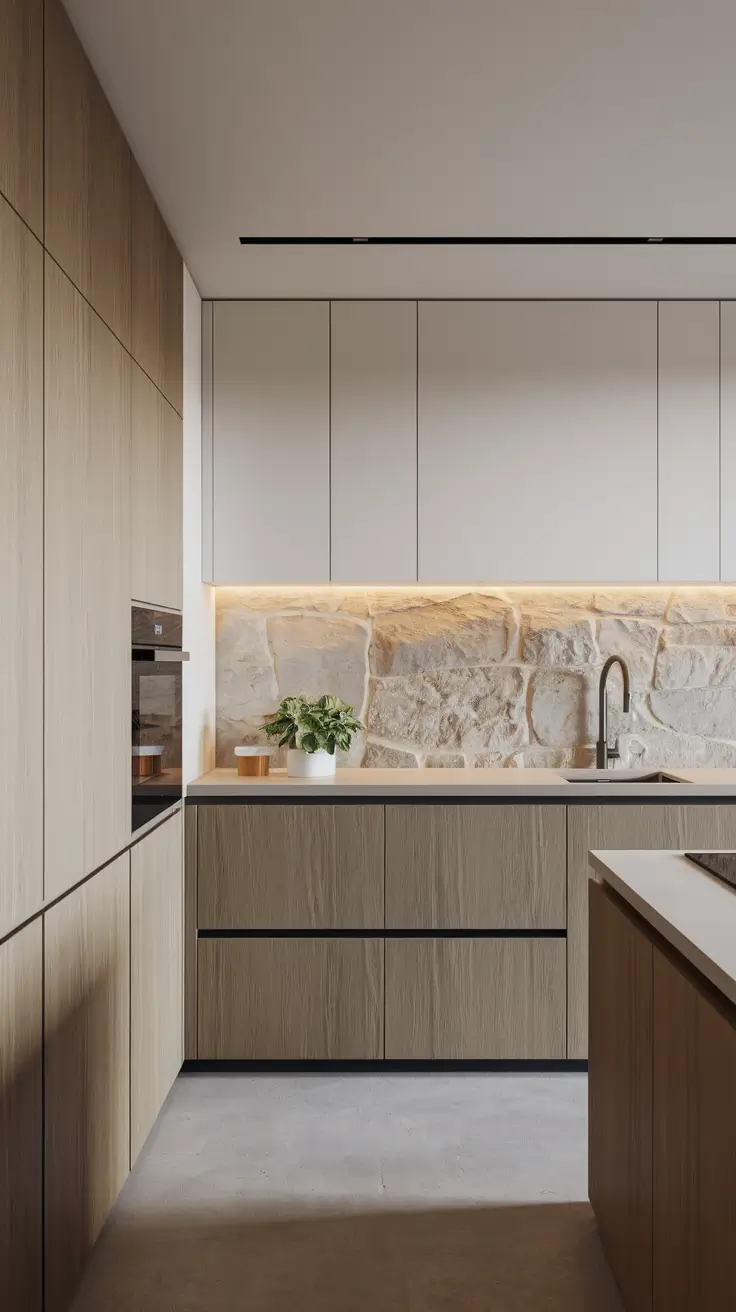
Acoustic considerations enhance comfort: soft-close hardware, felt-lined drawers, and sound-absorbing ceilings prevent a clinical feel. Touchable surfaces are essential to acclimate to the modern aesthetic.
Layered, dimmable lighting—task strips under uppers, toe-kick night lights, and backsplash washes—transforms simplicity into a cozy, inviting atmosphere.
Simple Yet Elegant Kitchen Cabinet Concepts
Simplicity doesn’t mean starkness; it means thoughtful restraint. I limit door styles and hardware variety, relying on proportion and tone to create impact. A muted palette of wood and a single color exudes quality when executed with aligned reveals, finished end panels, and clean shadow lines. Limited open shelving reduces visual noise while allowing personality to shine.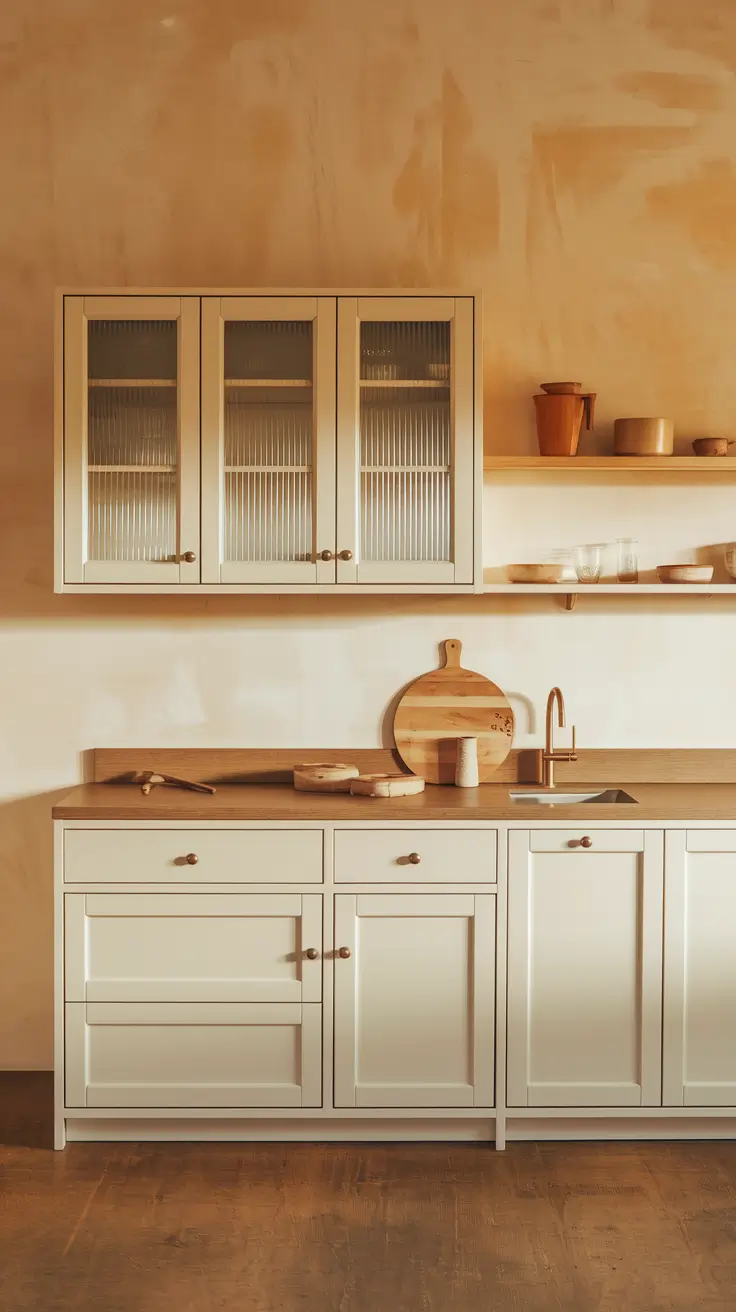
I favor drawer systems with internal organizers, tall pantries with full-height pull-outs, and compact recycling bins under sinks. Timeless shaker styles with slimmer rails or quiet slab fronts paired with tactile counters and forgiving backsplashes are my go-to. For tight budgets, Ikea boxes serve as prototypes with custom fronts and panels.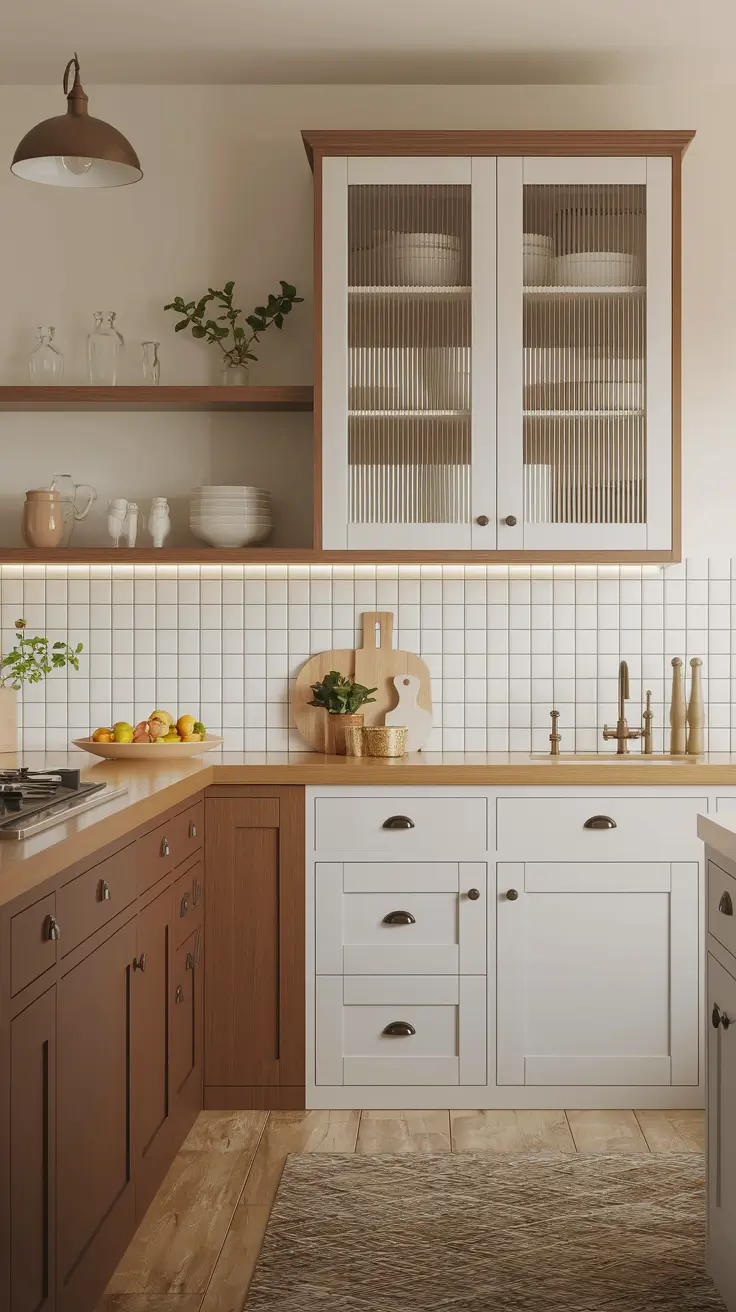
Sustainability aligns with simplicity: fewer components mean fewer failures, less cleaning, and a look that endures beyond fleeting trends. A subtle focal point—like reeded glass on an island toe or furniture piece—adds interest without clutter.
Creative DIY Kitchen Cabinet Upgrades
Mass-market cabinetry can be personalized affordably through self-install enhancements. Refreshing paint with durable enamel, adding new hardware with backplates, installing end panels for a built-in look, swapping some doors for open shelves or plate racks, and incorporating toe-kick drawers and roll-outs can transform your kitchen without altering its footprint.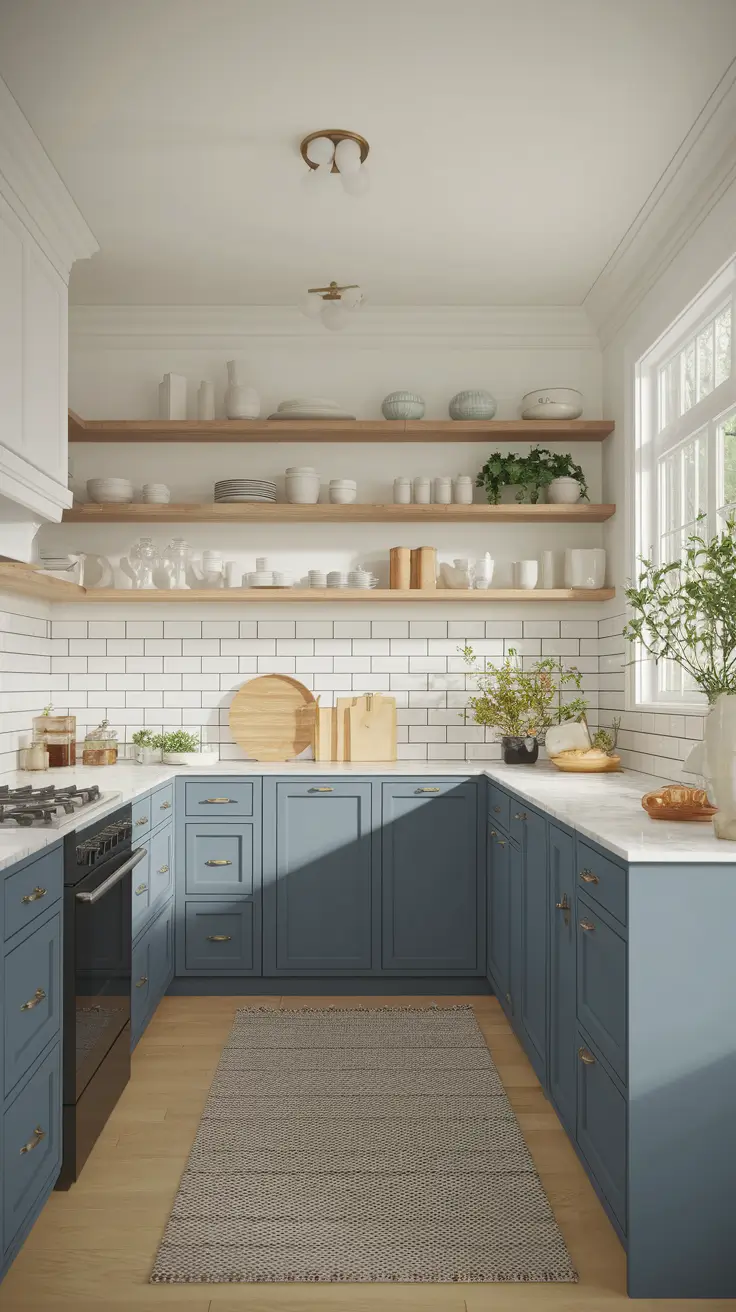
Key project choices include soft-close hinges, bottom corner pull-out trays beside the range, spice pull-outs, and LED strips under upper cabinets. Combining Ikea frames with new fronts and panels in a light two-tone finish—white on top with blue or grey below—makes a striking difference. Proper surface prep and curing are essential for a professional finish.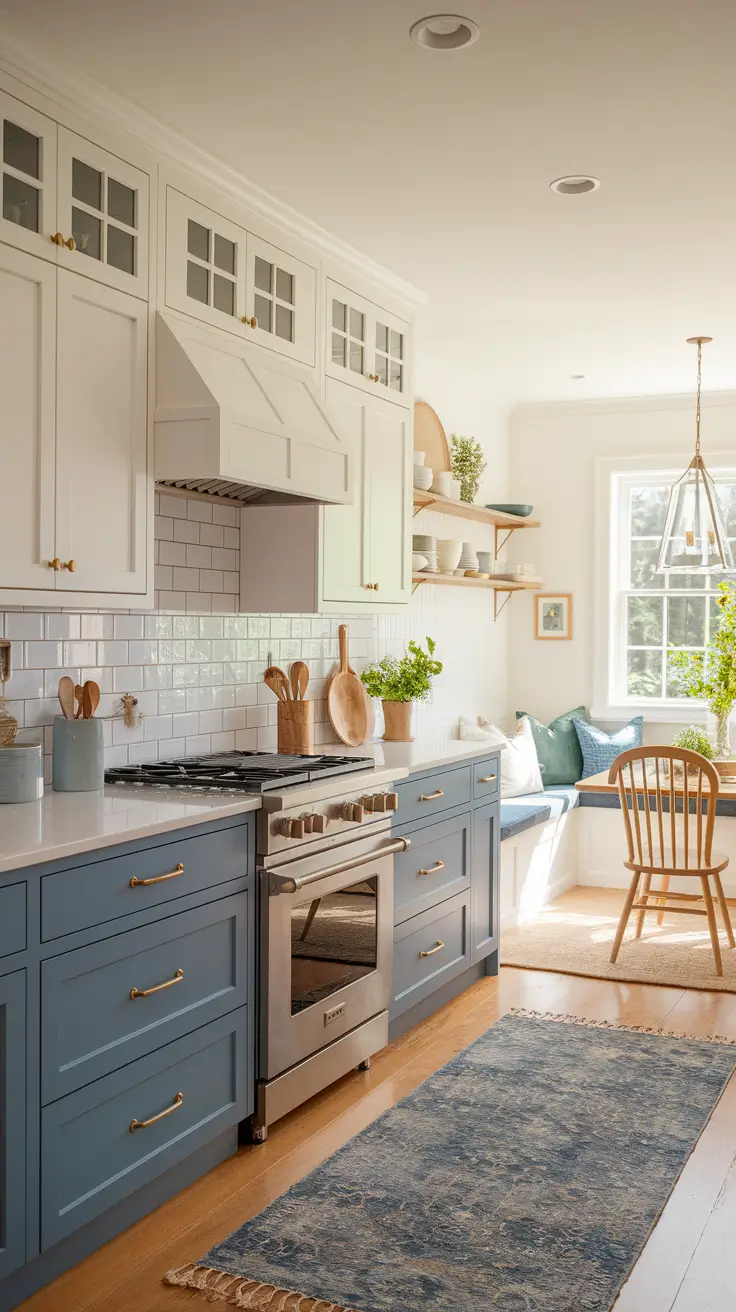
Interior drawer organization is the most impactful DIY upgrade—knife blocks, peg systems, and lid files streamline daily kitchen operations. For those drawn to simple or modern kitchen cabinet styles, DIY detailing offers a cost-effective path to transformation.
Plan your timeline realistically, allowing for prep, priming, painting, curing, and reassembly. Rushing or neglecting surface preparation is the fastest route to disappointment.
Enduring Kitchen Cabinet Inspirations
Many design principles from recent years remain relevant, offering proven functionality. Soft-textured neutral fronts, two-tone upper and lower cabinetry, and smart layouts focused on prep zones continue to be reliable choices. In small kitchens, maintaining open sightlines with light upper bands and moodier base units works well. Color trends have shifted slightly warmer, but the emphasis on calm, durable surfaces remains.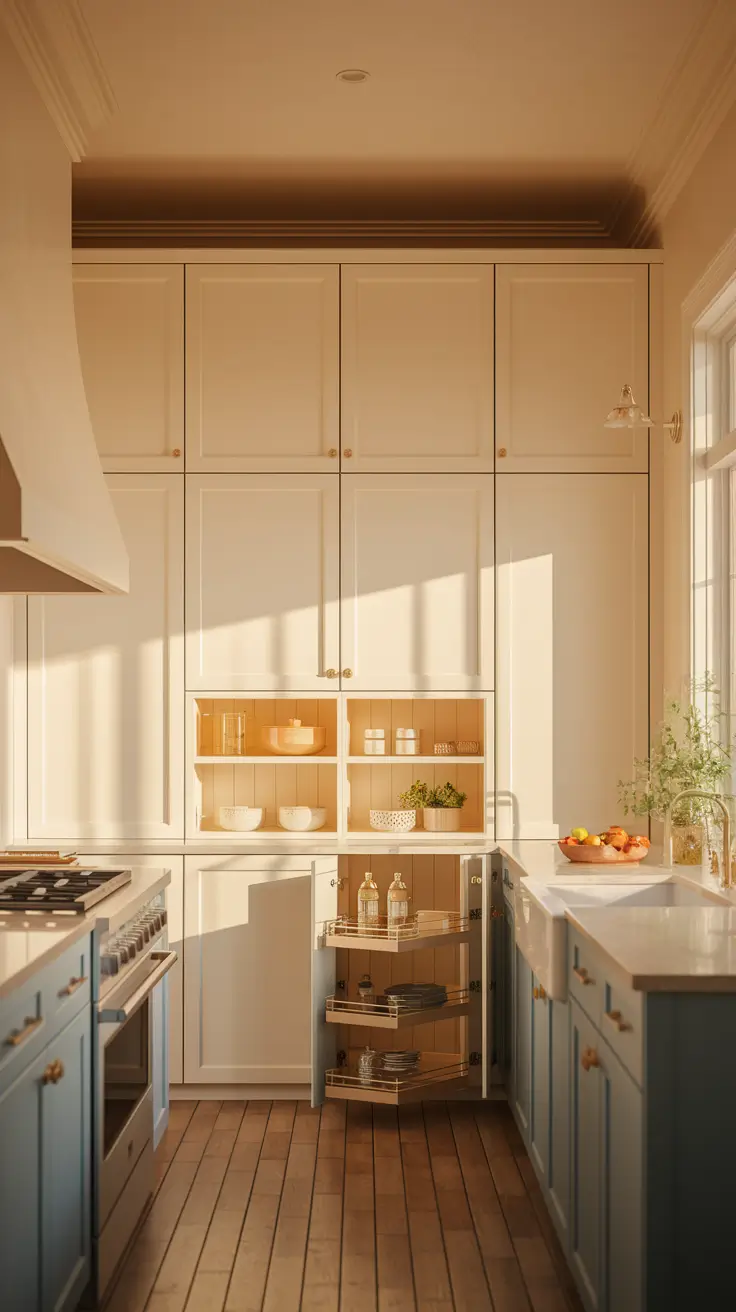
Deep lower drawers, tall pantries with full-height pull-outs, and selective open shelving for daily mugs are staples. Vertical tray dividers beside ovens and task lighting under uppers enhance usability. Knife blocks and peg systems adapt storage as cookware evolves. Budget-conscious clients benefit from Ikea boxes with custom fronts and upgraded hardware, allowing experimentation without full commitment.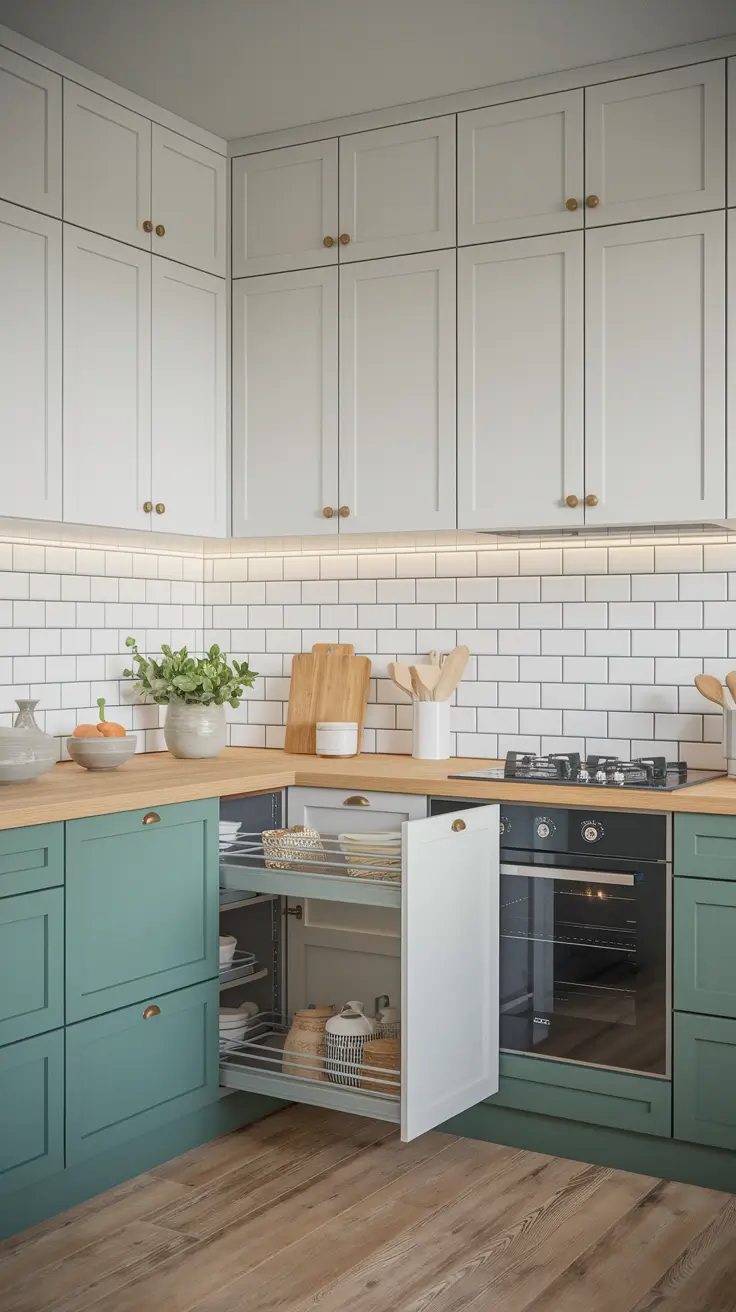
Editing wall cabinets to increase light and reclaim storage for base drawers is a major win, especially in narrow kitchens. This approach widens the space visually and reduces maintenance by eliminating eye-level door slamming.
Including a refresh kit with touch-up paint, spare pulls, and shelf pins makes minor repairs straightforward, keeping your kitchen looking fresh for years to come.
Cutting-Edge Innovations in Kitchen Cabinetry
Innovation today focuses on smarter interiors and quieter surfaces rather than gimmicks. Anti-fingerprint lacquers, durable laminates with natural grains, and compact induction cooktops free up storage. Sleek, handleless fronts with integrated rails enhance comfort and safety, complemented by layered lighting in toe-kicks and under cabinets.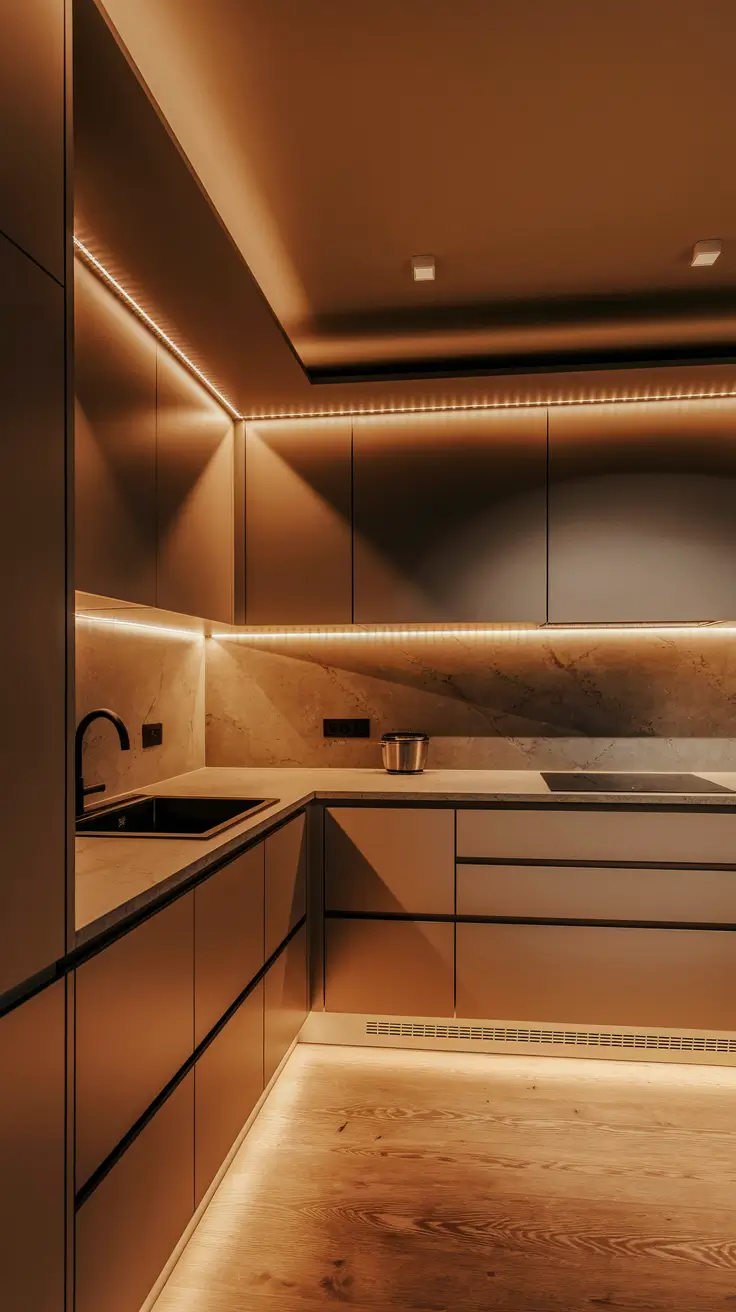
Hidden features include drawer-based charging stations, pocket-door appliance garages in tall runs, and modular bins beneath sinks. Sheet pan dividers beside ranges and swing-out trays in bottom corners optimize accessibility. Outdoor kitchens benefit from matching finishes to seamlessly extend the living space.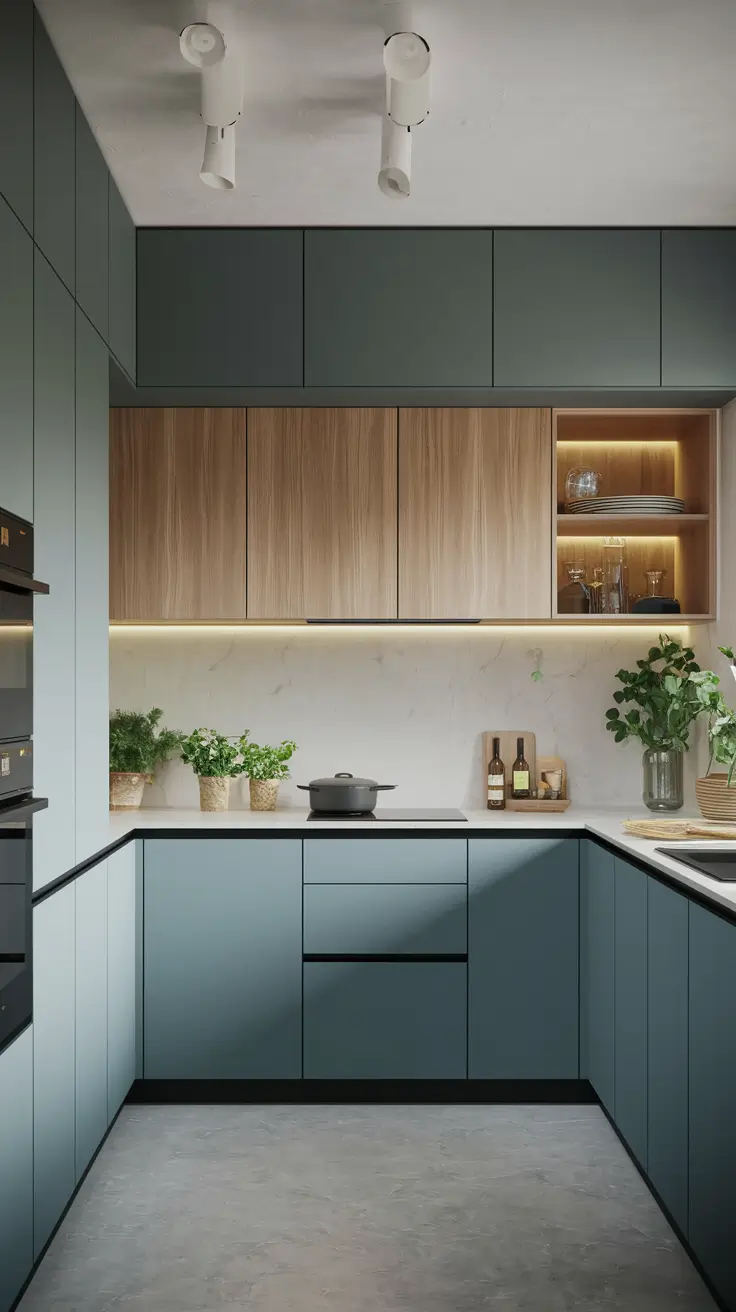
These innovations reduce visual noise and simplify maintenance. A commissioning checklist ensures all pull-outs, dampers, and lighting are perfectly aligned before move-in, providing long-term benefits.
Space-Saving Solutions for Compact Kitchens
In very small kitchens, I focus on a tight work triangle, clear sightlines, and vertical storage rather than wide runs. Galley or single-wall layouts with built-in appliances and shallow counters create openness. Visual weight is minimized with shallow uppers, narrow pull-outs, and under-cabinet lighting. Simple, frameless fronts with satin finishes maximize light reflection—crucial in small spaces.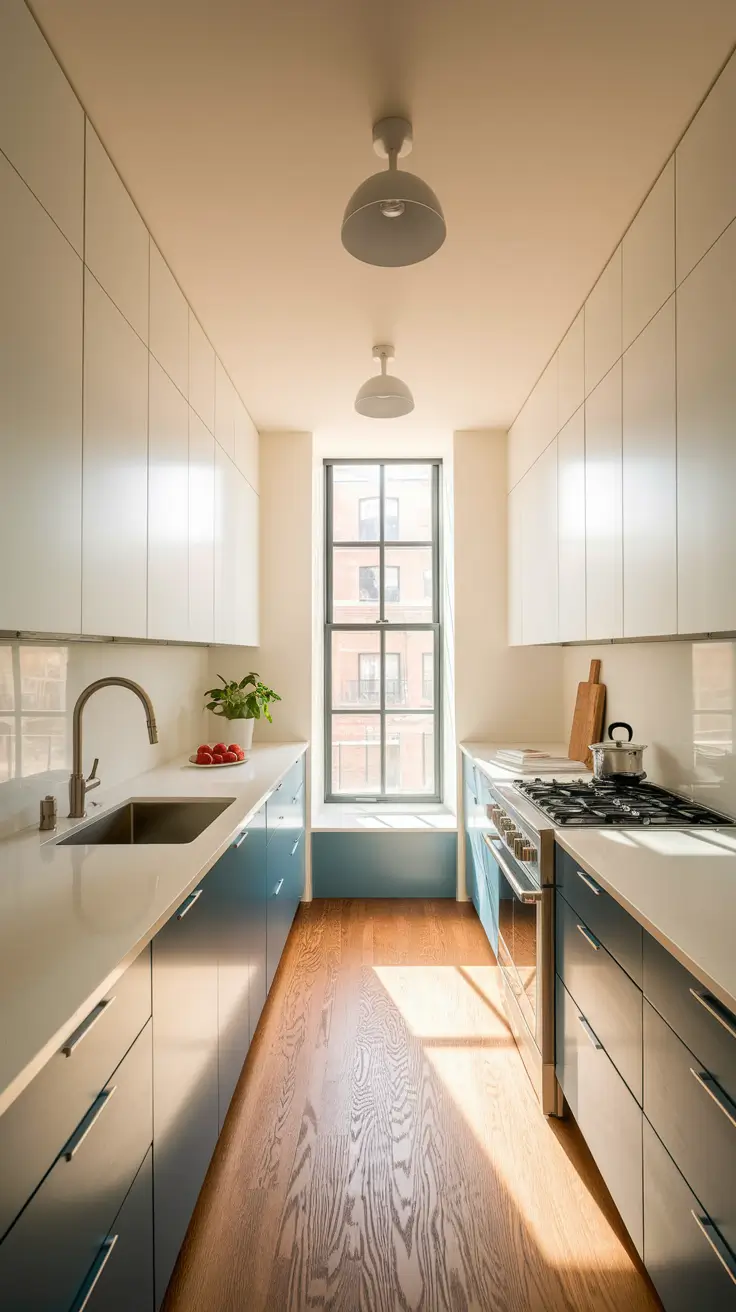
Frameless boxes with full-overlay doors maximize interior width. Spice pull-outs, pantry pull-outs, and diagonal corner cabinets with super-susans optimize storage. Tiered cutlery trays, baking sheet dividers, and under-sink caddies keep essentials organized. For budget builds, Ikea boxes with third-party shaker or slab fronts are reliable, and toe-kick drawers add discreet storage.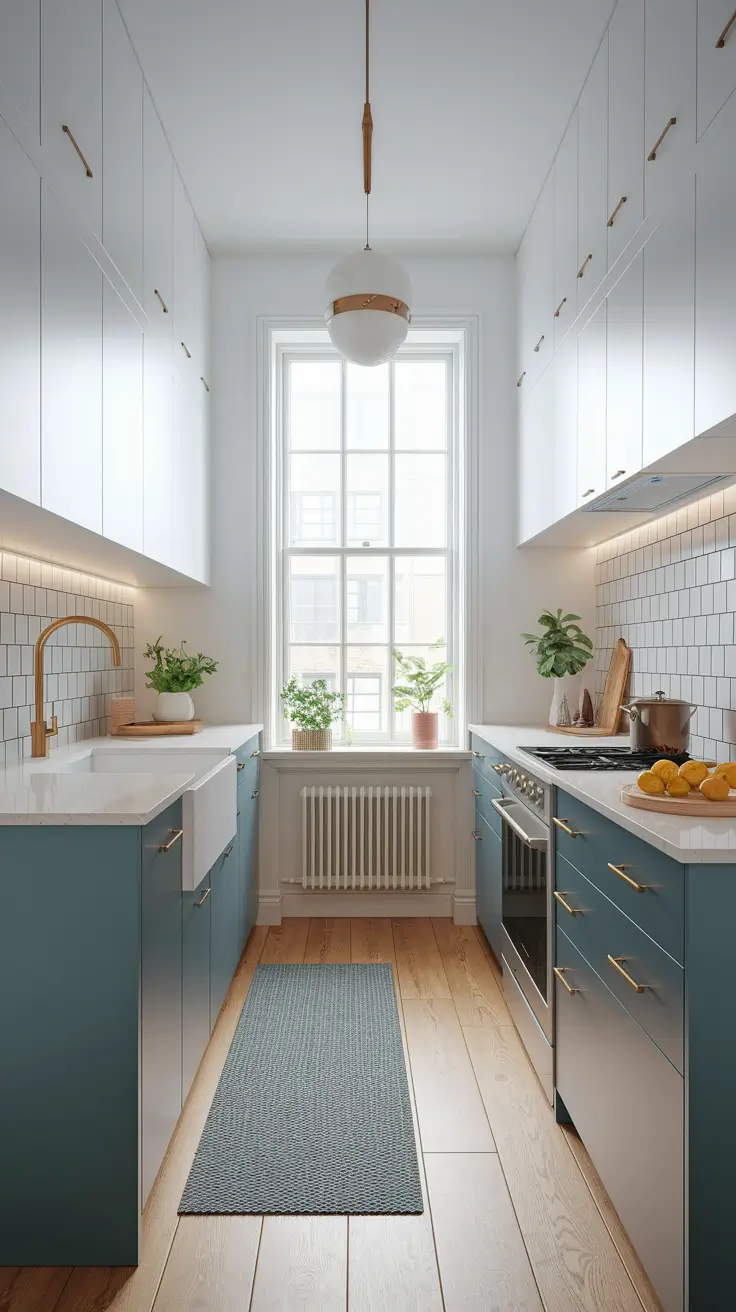
Ceiling-height uppers in soft white or pale grey paired with contrasting muted blue or oak lowers are the best value upgrades, creating two-tone depth without crowding. Induction cooktops and counter-depth refrigerators widen aisles. When natural light is limited, shorter upper runs and window-adjacent shelving maintain openness.
Clutter control is vital: charging drawers, mail cubbies, and narrow broom closets with door hooks keep essentials tidy. Panel-ready appliances and matching toe-kicks create a seamless, floating effect.
Elegant White Kitchen Cabinet Designs
Creating a white-centric kitchen involves layering tones rather than flat whites. Warm white enamel cabinets paired with softly veined white quartz countertops and matte nickel or unlacquered brass hardware add subtle shine. Varying sheen levels between upper and lower cabinets prevents sterility.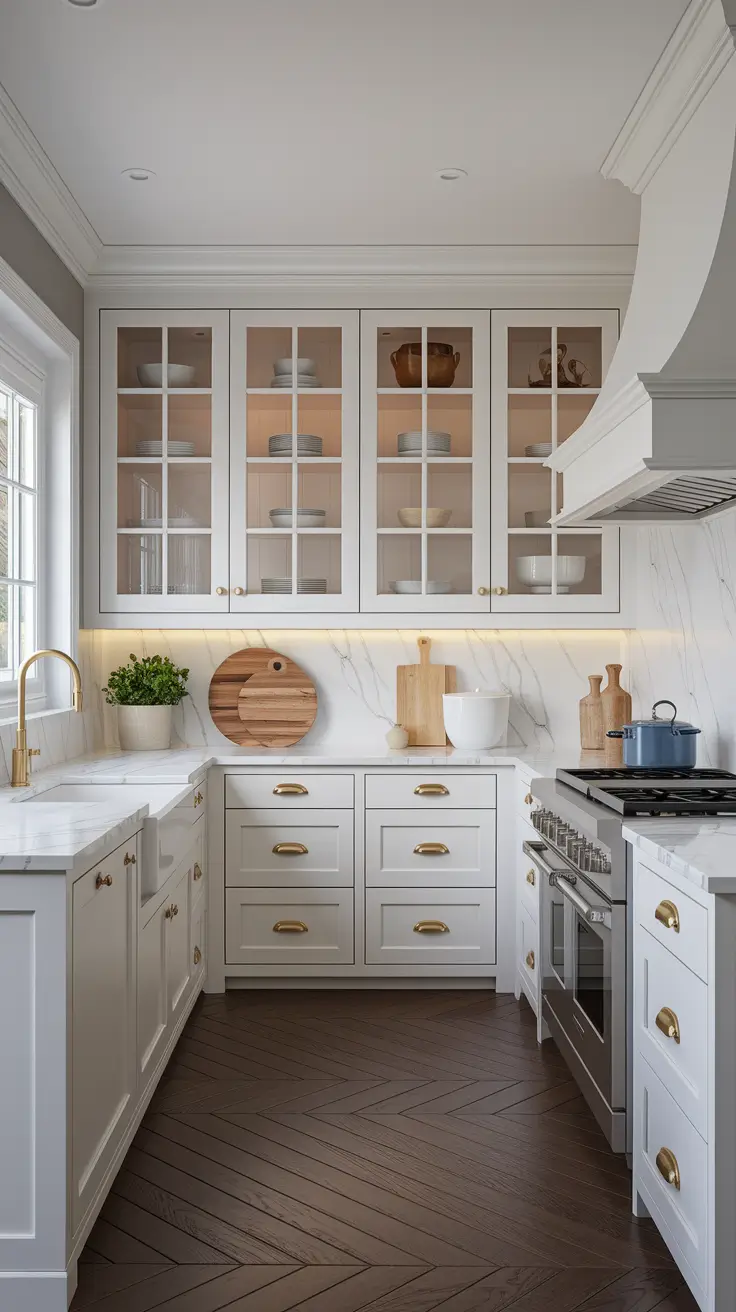
Shaker or thin-rail shaker uppers combined with clean slab lowers introduce a modern twist. Glass-front uppers on the range wall reduce visual mass, while white range hoods with gentle curves, pale oak flooring, and warm LED under-cabinet lighting highlight backsplash textures.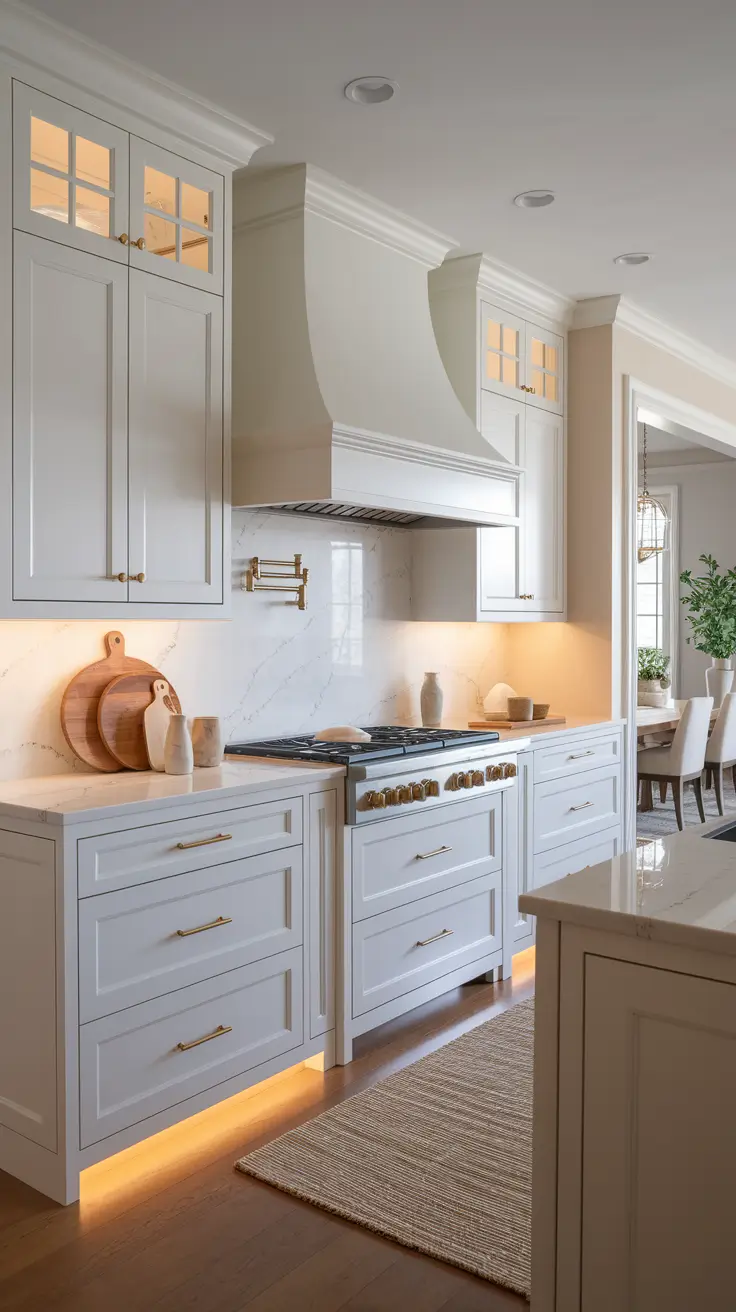
Details matter: high-mounted backsplashes, embedded racks for knives and forks, and wipeable satin enamel finishes make cleaning manageable. Wood accents in floating shelves, stools, or appliance garages warm the space and prevent coldness. Micro-textured white laminates on high-contact surfaces reduce visible fingerprints.
Layered lighting control with task strips, puck lights, and adjustable central fixtures enhances ambiance. Keeping touch-up paint and marked samples of your white finish ensures easy future maintenance.
Bold Black Kitchen Cabinet Ideas
Black cabinetry can be surprisingly luminous when balanced with contrast and reflective surfaces. Matte black or charcoal lowers paired with white or open uppers prevent heaviness. High-reflective backsplashes like zellige or glazed subway tiles, combined with ample under-cabinet lighting, keep prep areas bright. Picture windows or fluted glass pantry doors add light and texture.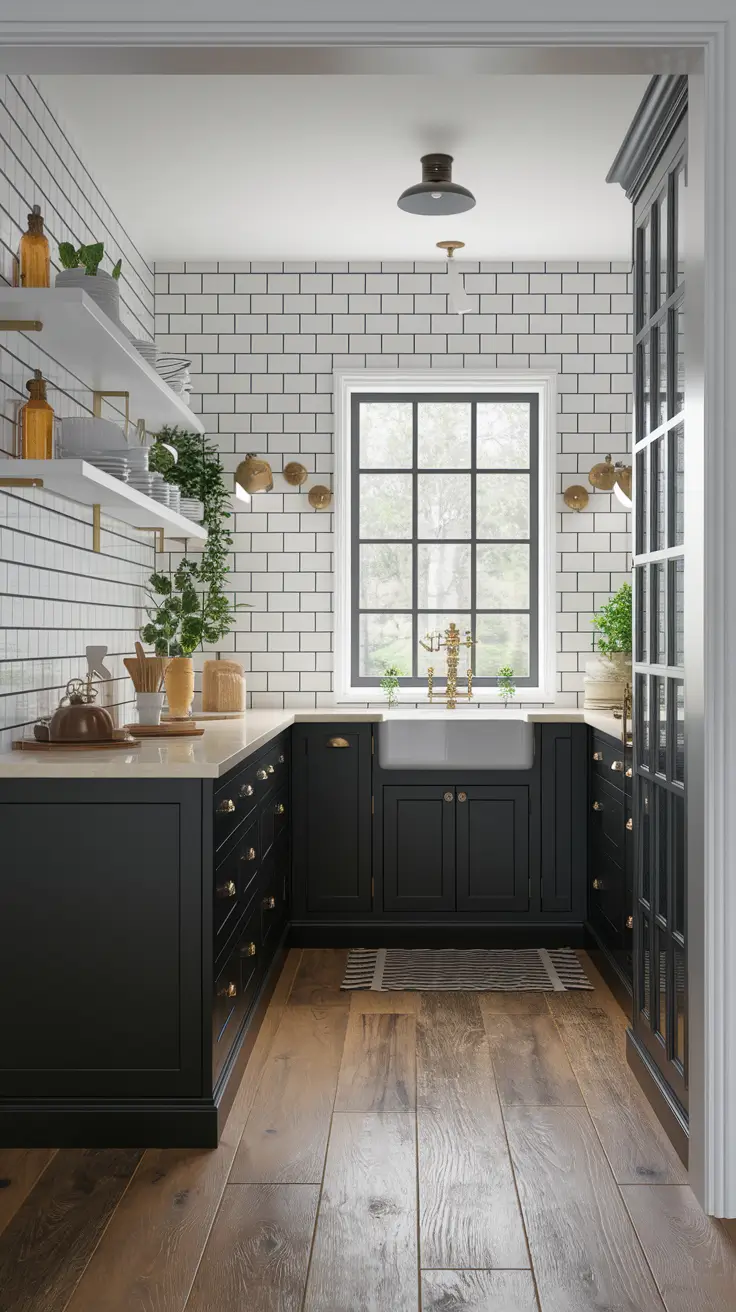
Materials include super-matte laminates or soft-touch, fingerprint-resistant lacquers. Brushed stainless or aged brass hardware adds intentional contrast. Black pairs beautifully with warm countertops like creamy quartz, soapstone-look quartz, or light terrazzo, anchored by oak floors or woven runners. Inside glass cabinets, white ceramics and pale wood soften the look.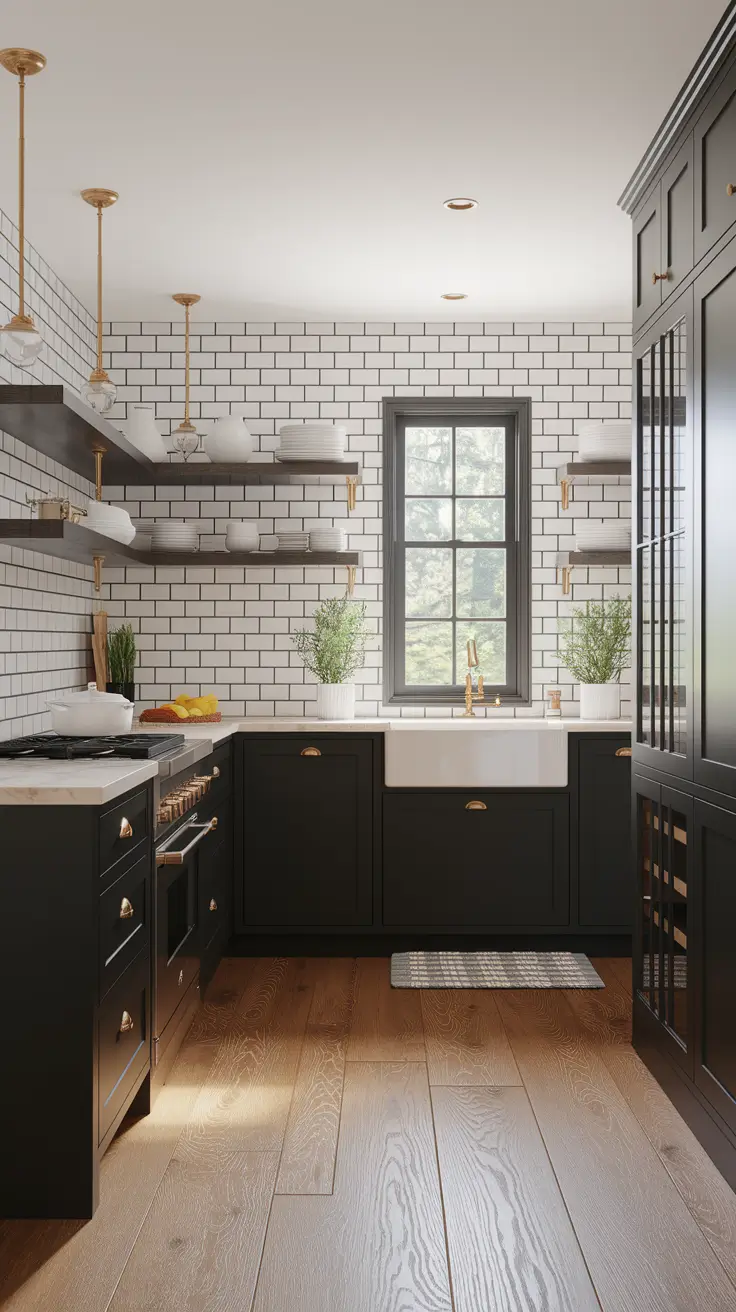
Black lowers effectively conceal scuffs in busy households and create a focal point without overwhelming the room. Adding black tall cabinets flanking the fridge with open shelving niches breaks up the run and showcases everyday items. For renters or DIYers, painting only the lower cabinets black is a safe, impactful choice.
Maintenance involves microfiber cleaning kits and wiping-friendly edge profiles. Metallic accents in range hoods or pendant lighting reflect light and maintain ambiance in low-light conditions.
Timeless White Kitchen Cabinet Concepts
Classic white kitchens rely on balanced proportions and subtle detailing rather than trends. Upper, lower, and tall cabinets are scaled to guide the eye smoothly. Door styles feature restrained profiles. Islands with furniture-style toe-kicks and panel-ready dishwashers maintain serenity, while polished nickel bridge faucets and modest crown moldings hint at tradition.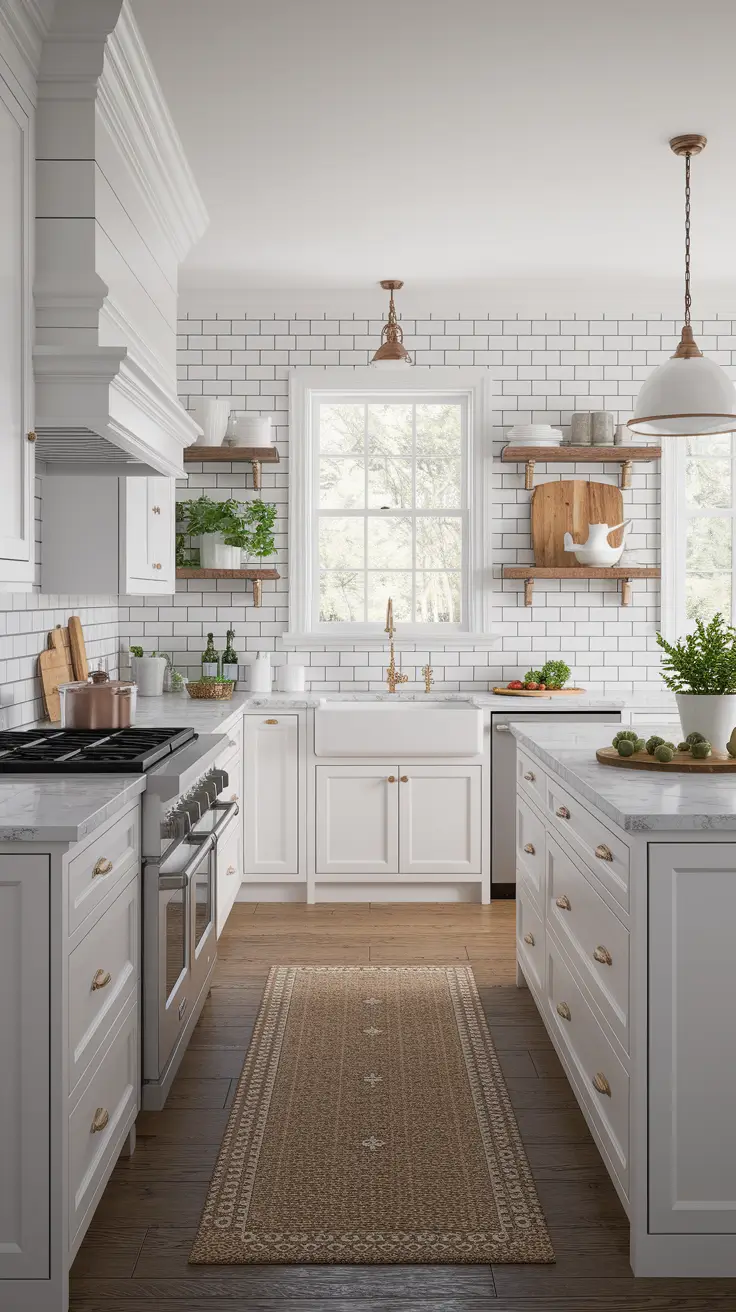
Inset or beaded inset doors are preferred when budget allows; otherwise, clean full-overlay doors with quality hinges and soft-close mechanisms suffice. Medium-vein countertops with eased edges and solid-slab backsplashes behind ranges simplify cleaning. Classic cup pulls and simple knobs complete the look.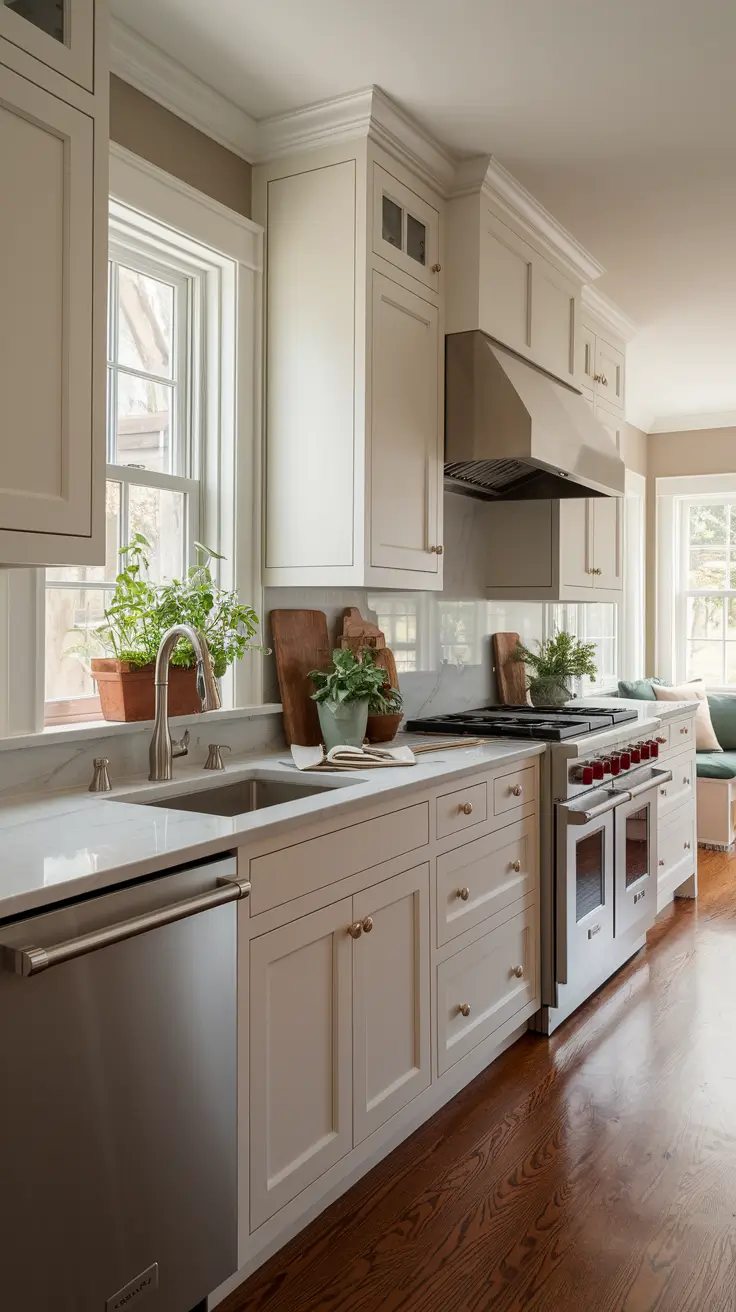
Warm lighting (2700–3000K) with dimmers and non-green/blue under-cabinet strips enhances the warmth. Decoration is functional—wooden boards, linen towels, and small herb planters add personality without clutter.
Maintaining a repair kit and detailed specification sheet for paint, hardware, and hinges ensures easy upkeep and longevity.
Open Shelving Ideas for Airy Kitchen Interiors
Open storage works best when curated and strategic. Heavy-duty storage remains in closed lowers, while select uppers near windows or coffee stations feature open shelves to reduce visual bulk and enlarge the space. Fully open shelving is avoided in busy households, favoring a balanced mix.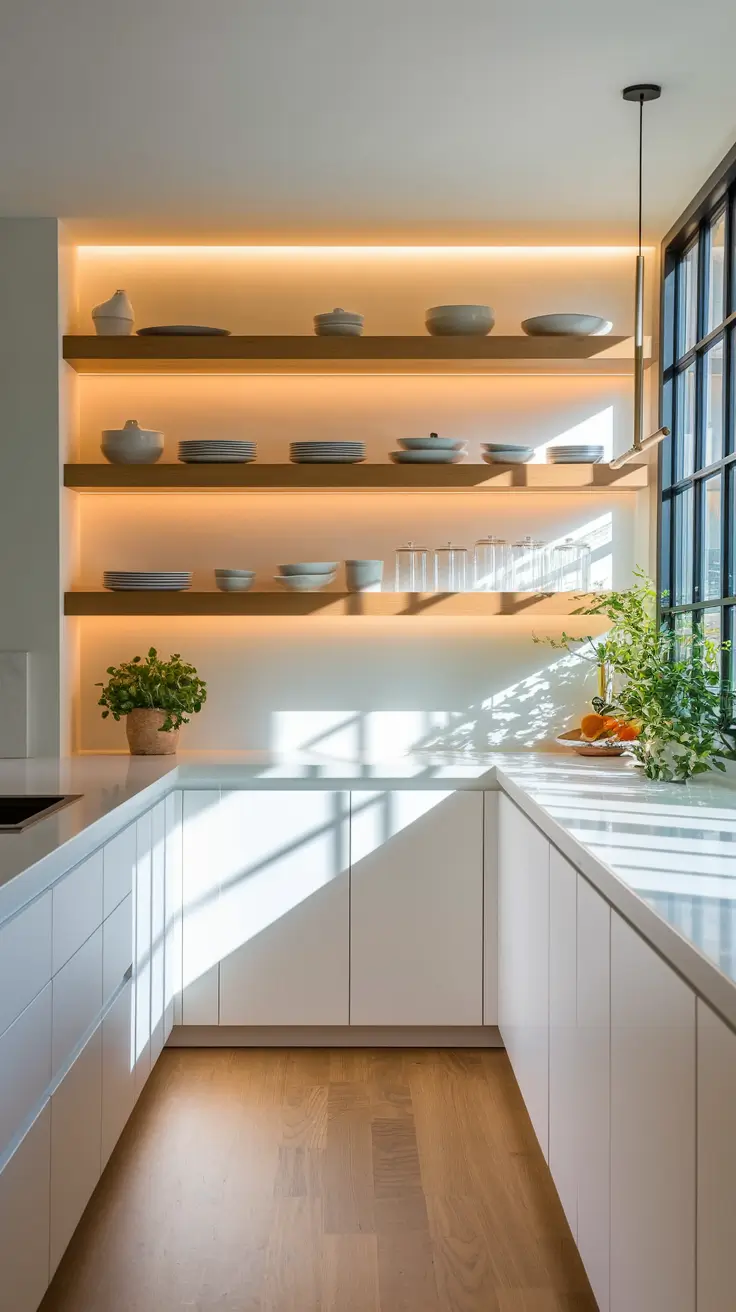
Shelves are typically white oak or painted with embedded LED channels underneath for task lighting. Minimal or hidden brackets maintain sleek lines. Styling includes daily dishes, layered bowls, clear canisters for dry goods, and greenery. Tall cabinets on adjacent walls close off less attractive items.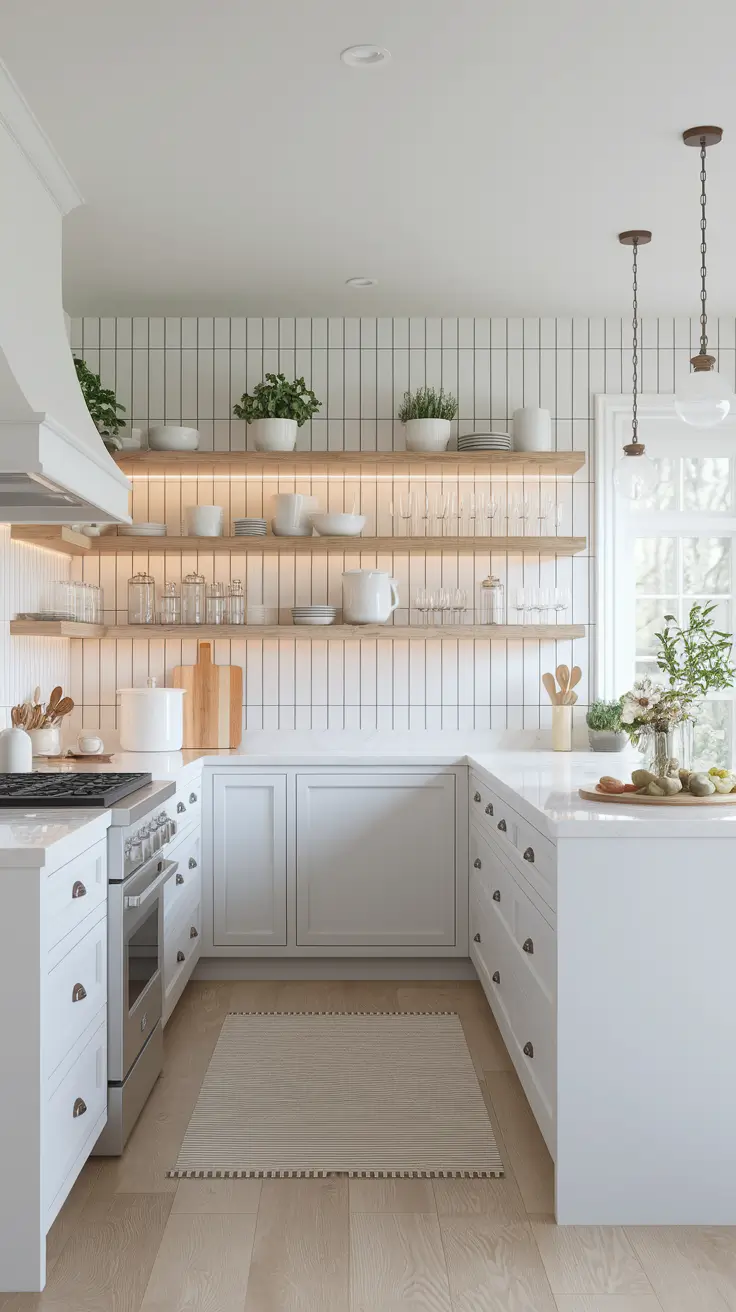
Consistency is key: balanced plates and a cohesive palette create serenity, while color clashes feel chaotic. Closed uppers near ranges protect oils and spices from heat and grease.
Washable finishes like semi-gloss paint and sealed backsplash grout simplify cleaning. In very narrow kitchens, shallower 10-inch open shelves keep aisles comfortable.
Maximizing Storage with Tall Kitchen Cabinets
Full-height storage is foundational for kitchen organization. At least one bank of tall cabinets reaching the ceiling stores pantry items, cleaning supplies, and small appliances. Ceiling-height units draw the eye upward, especially effective with 8–9 foot ceilings, creating a custom-built appearance even with modular boxes.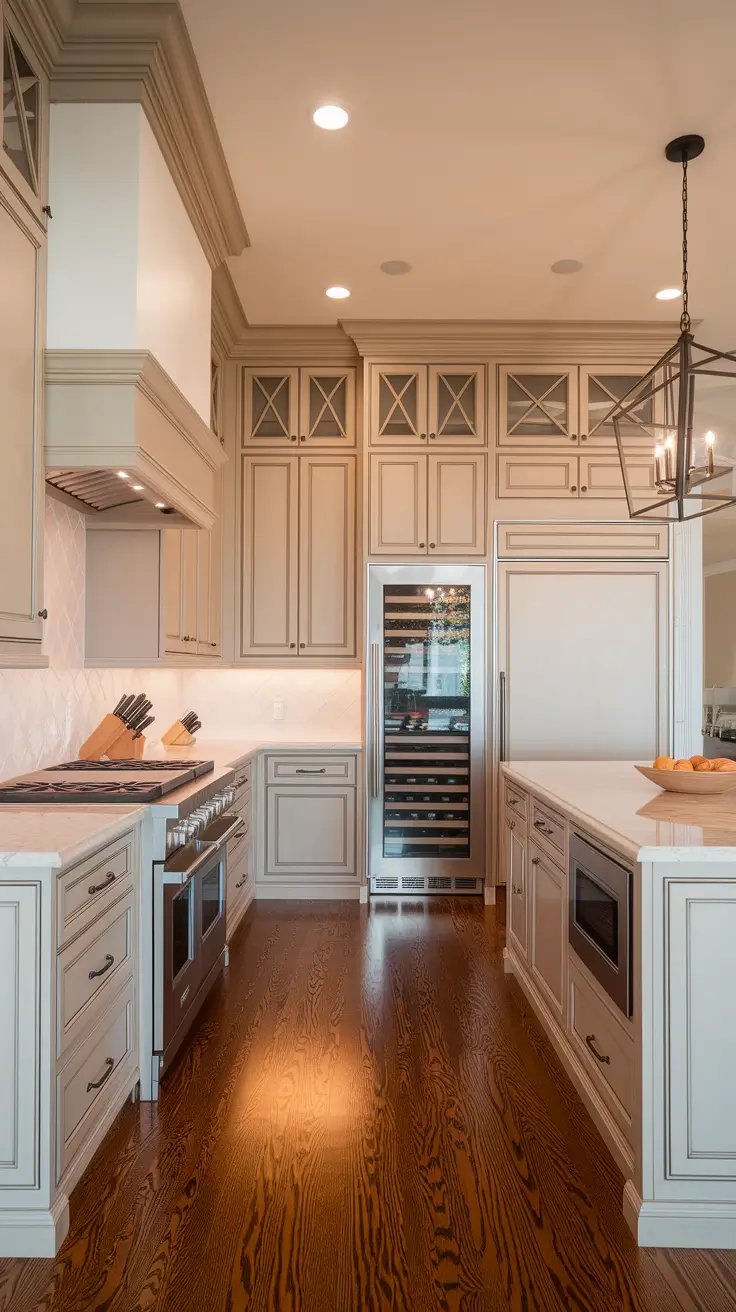
Inside tall units, I customize roll-outs, vertical tray separators, and appliance garages with power outlets. Utility cabinets house brooms and vacuums with docking stations. Door breaks align with appliances for a clean elevation.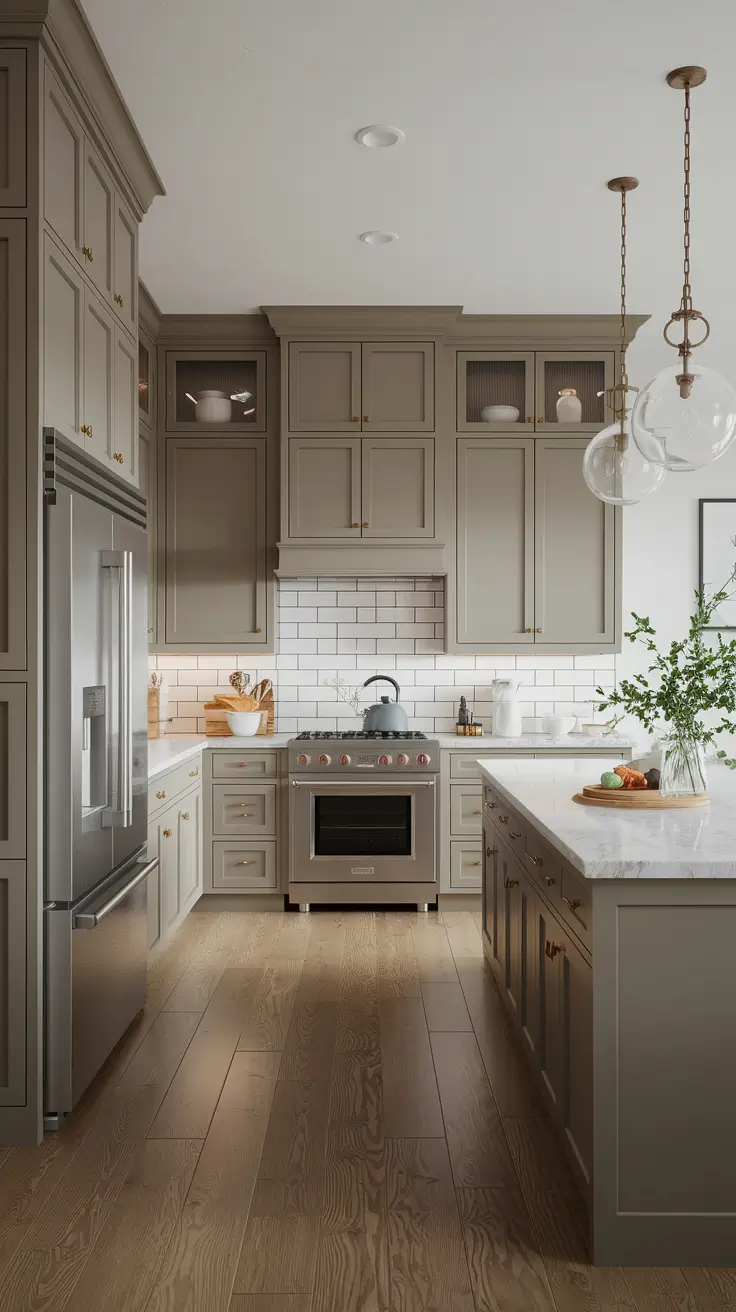
Tall cabinets visually slim rooms when paired with lighter uppers and darker lowers or two-tone schemes. Omitting crown molding and finishing with a plain scribe at the ceiling creates a modern line; small crowns soften transitions for farmhouse or classic styles.
Ventilation and lighting notes are essential. Reflective backsplashes and under-cabinet lighting balance the mass of tall runs. For high ceilings, ladder hooks or discreet step stool niches improve accessibility.
Stylish Decorating Above Kitchen Cabinets
When cabinets don’t reach the ceiling, the gap can be a design feature rather than a dust trap. Curated displays with fewer, larger items create a polished look. Low-maintenance vignettes echo kitchen colors, unifying the space.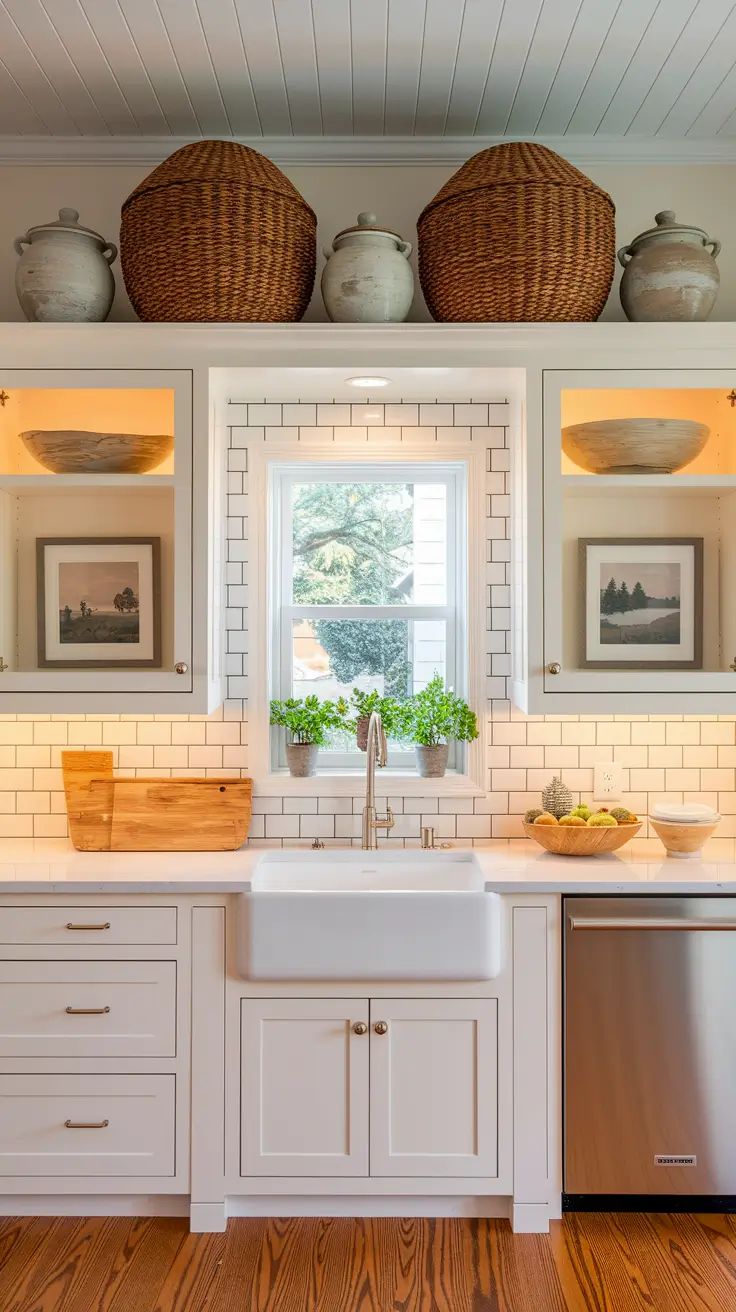
Woven baskets for seasonal items, large framed art leaned in corners, or rows of ceramic crocks add texture. Dimmer-controlled LED uplights enhance ceiling height and ambiance. Preserved greenery or quality faux stems provide low-cost, low-maintenance natural elements.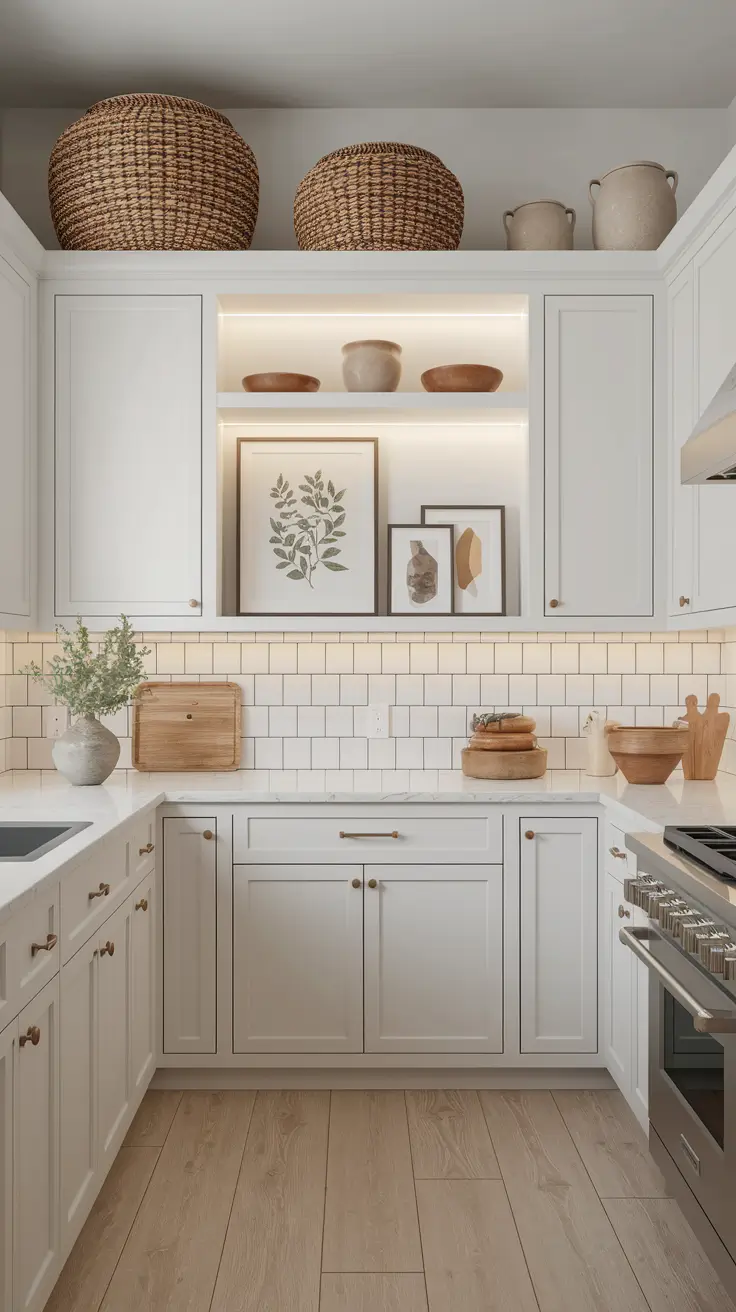
Functionality guides placement—keeping decor away from cooking zones and using safer areas like above the fridge. For gaps over 18 inches, drywall soffits or additional cabinetry provide dust-free storage.
Safety measures include museum putty for securing heavy items and maintaining spacing from recessed lighting. Store seasonal decor in labeled bins for easy rotation.
Incorporating Blue for Personality in Kitchen Cabinets
Blue adds calm and character when used thoughtfully. I treat it as a focal color balanced by light countertops and pale walls to avoid a closed-in feel. Dark navy or slate lowers paired with white uppers create a balanced two-tone rhythm suitable for small kitchens.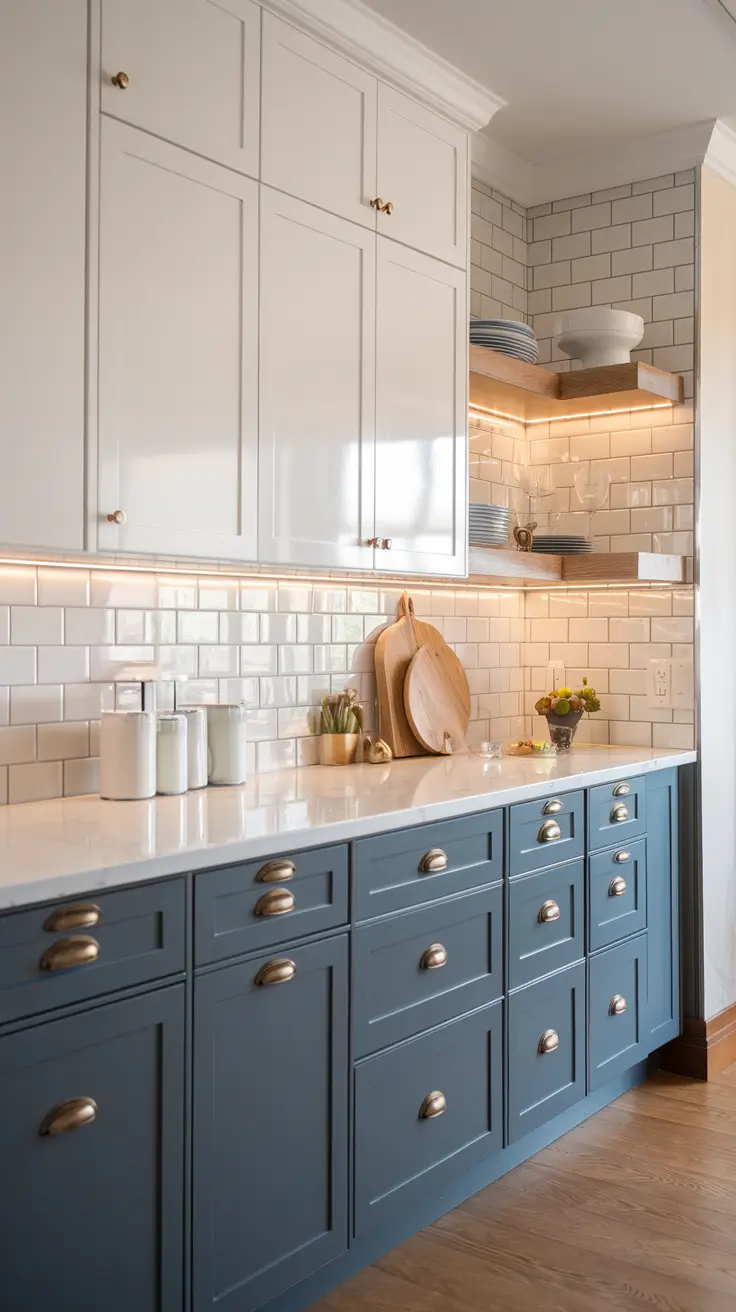
Preferred door styles include slab or thin-rail shaker in soft matte enamel, complemented by satin nickel or unlacquered brass hardware and quiet white quartz with subtle veining. White oak accents in floating shelves or butcher-block prep carts warm cooler palettes. Tray dividers, cutlery layers, and under-sink pull-outs maximize space.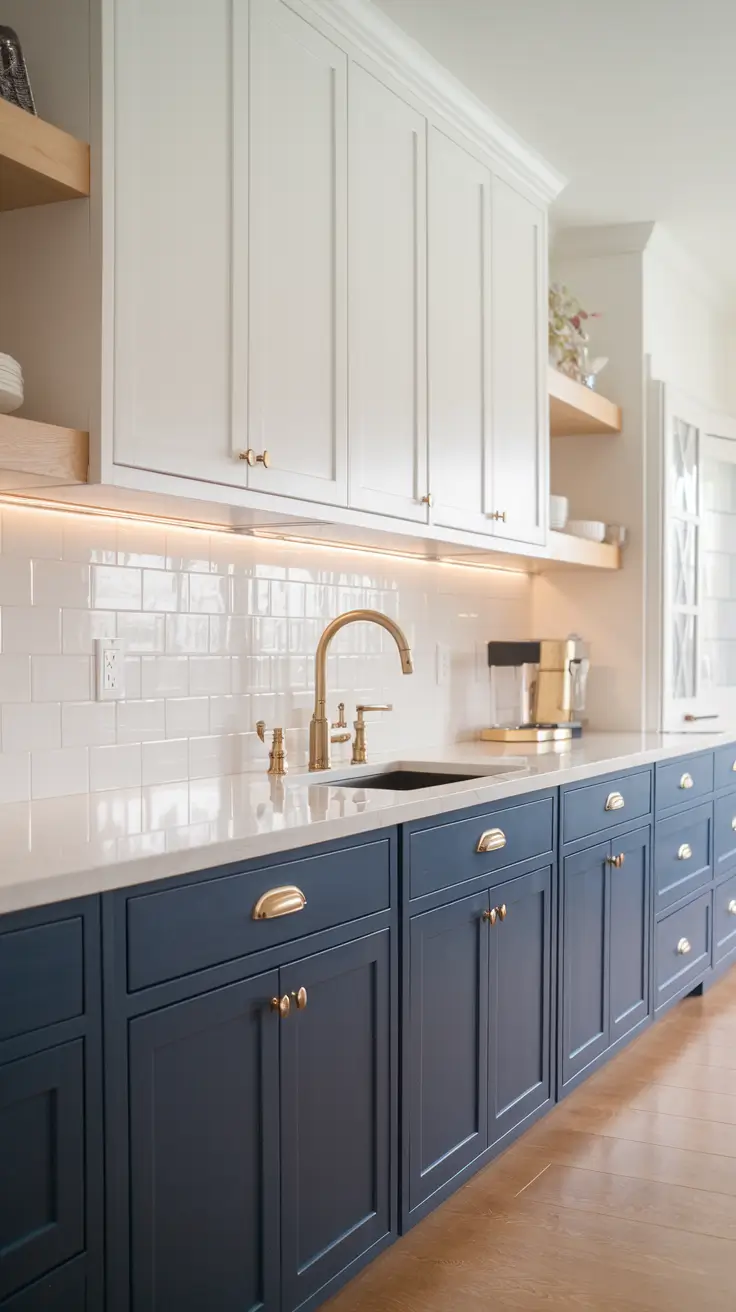
Undersaturated blues paired with natural materials brighten spaces. Testing paint samples in different lighting conditions is crucial. Textured backsplashes like soft-gloss subway tiles or zellige prevent monotony. Navy is widely regarded as a neutral, pairing well with stainless or paneled appliances.
Include a finish plan and sample board documenting paint codes, sheens, primers, hardware finishes, and grout colors. A maintenance kit with touch-up paint, mild enamel cleaner, and felt pads for stools protects your investment.
Utilizing Cabinet Sides for Concealed Storage
Cabinet ends and island sides are prime spots for hidden storage, especially in narrow or busy kitchens. Slim solutions mounted on cabinet sides keep aisles clear while expanding capacity.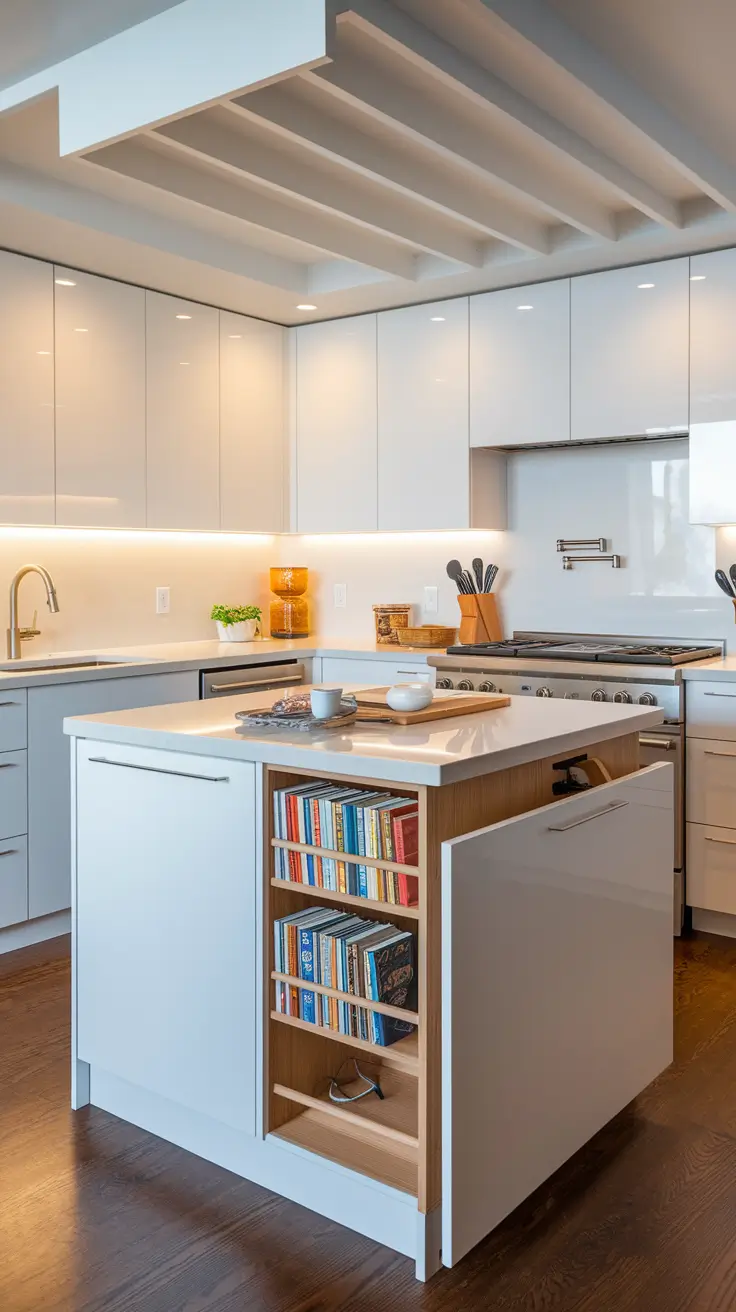
Examples include shallow 3–4 inch shelves near but not at the range, recessed knife strips with removable liners, flip-up charging cubbies on island sides, and magnetic message rails or pegboards for family organization. Small pull-outs fill filler gaps, and concealed bag hooks under island overhangs add convenience. Most solutions integrate well with modular systems like Ikea.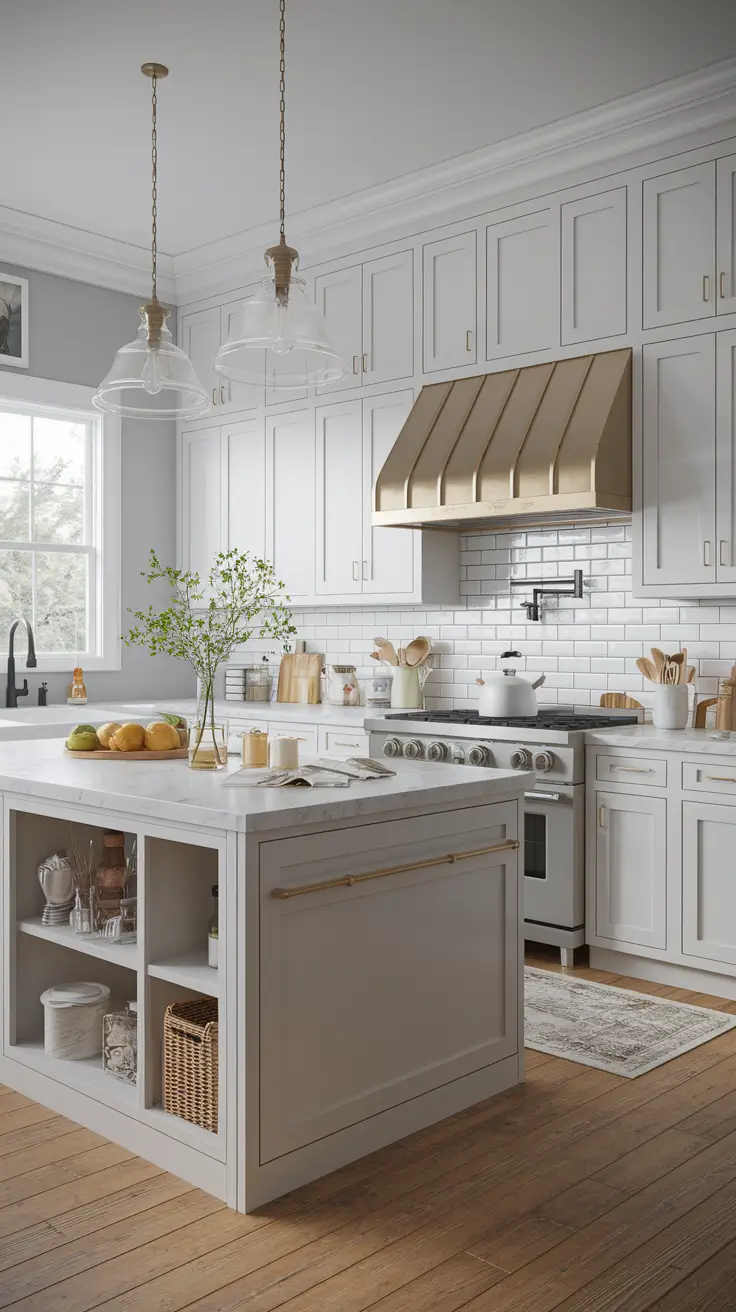
Edges are softened for comfort, and side elements align with door rails for visual calm. Heat- or splash-sensitive items are placed away from cooking zones. Soft-close hardware and magnetic latches enhance safety in homes with children.
Electrical planning includes GFCI outlets in charging areas, clearance for flammable materials, and sealed wood inside recesses for durability. A maintenance checklist taped inside a door simplifies upkeep.
Modern Farmhouse Kitchen Cabinet Ideas
Modern farmhouse kitchens blend minimalism with warmth. Painted inset or thin-rail shaker doors in warm white or cream on uppers paired with natural or lightly stained oak lowers create subtle two-tone effects. Generous sink walls and centered ranges emphasize the room’s structure.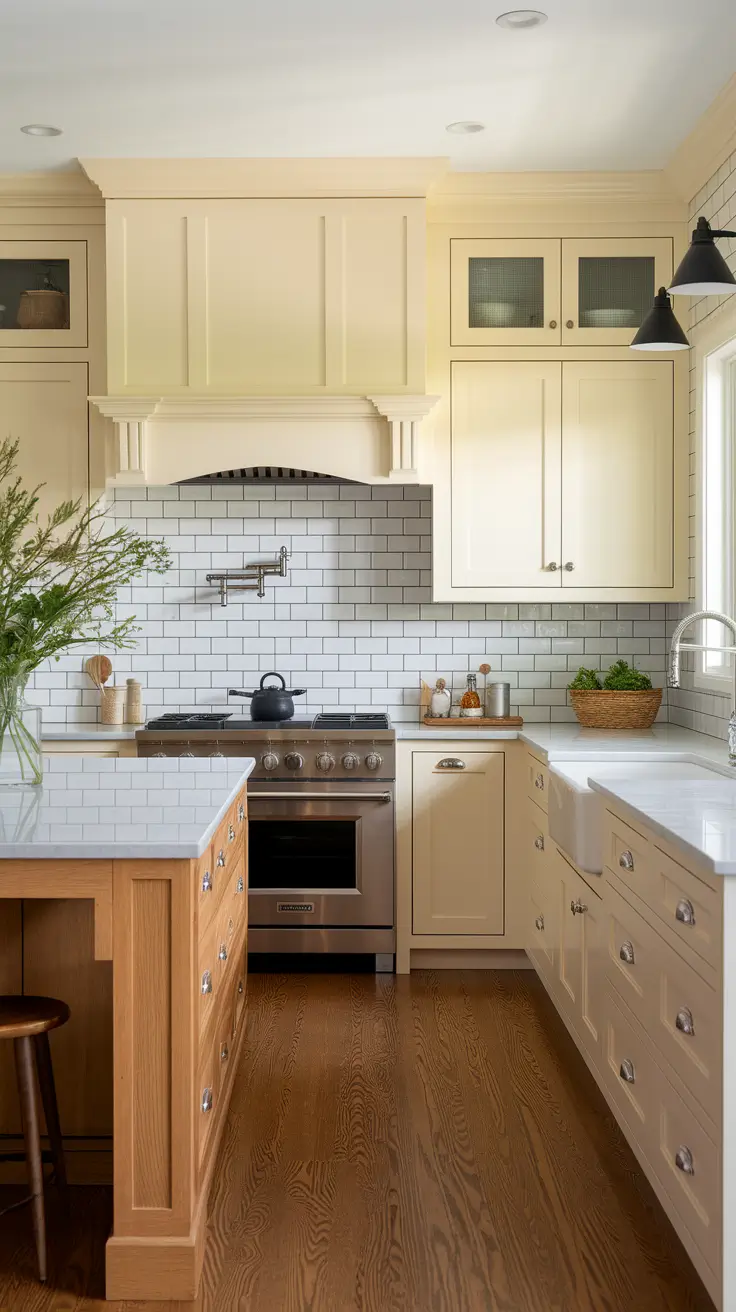
Signature elements include apron-front sinks, bridge or high-arc faucets in polished nickel or aged brass, cup-pull drawers, and vintage-style latches. Beadboard or V-groove panels behind islands add texture. Honed quartz counters paired with handcrafted tiles or simple slab backsplashes complement the look, with black accents on sconces or range hoods for contrast. Open shelving is limited to daily plates to maintain storage efficiency.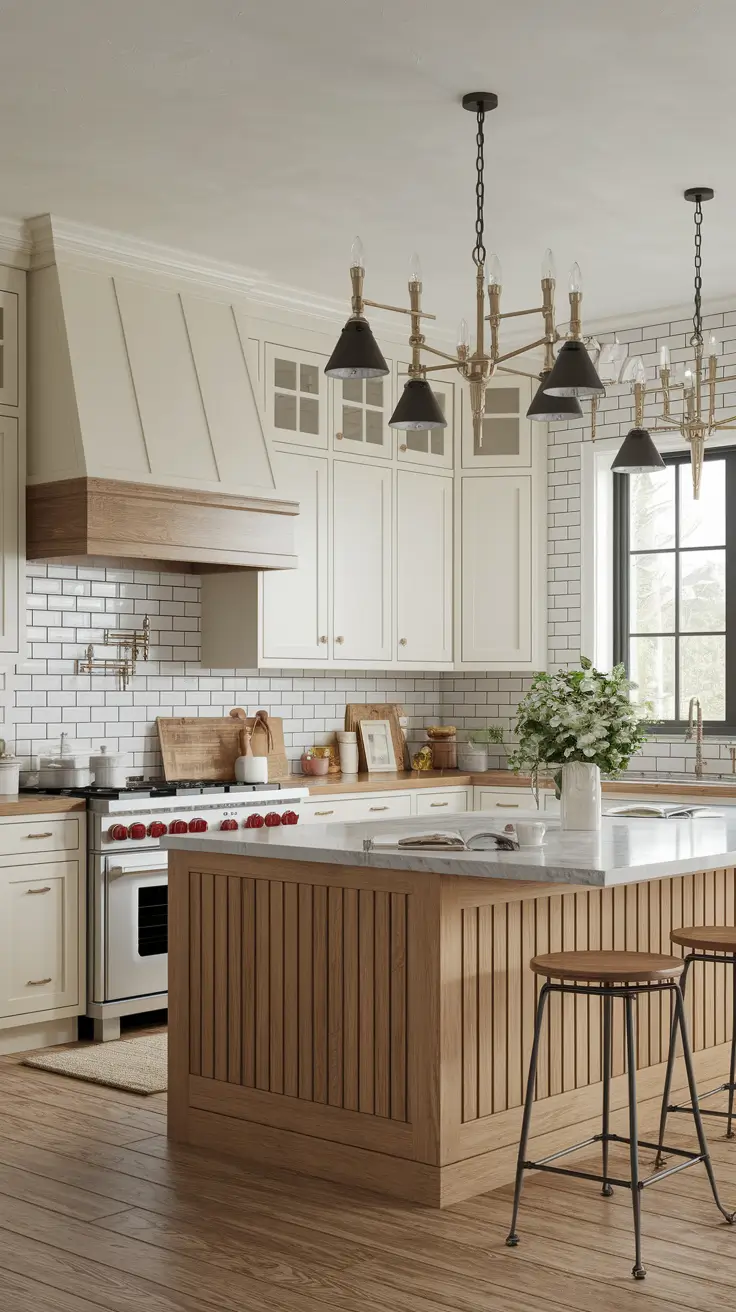
Balancing authentic materials with modern function creates the best farmhouse kitchens. Reclaimed wood is beautiful when used sparingly and properly sealed. Many designers recommend pairing white and wood with dark blue or grey accents for grounding.
Durability plans include moisture-resistant cabinet boxes near sinks, broad door rails to accommodate wood movement, and care cards for natural wood finishes. Budget-friendly options include painted Ikea boxes with custom shaker fronts and upgraded hardware.
Space-Savvy Narrow Kitchen Cabinet Solutions
In narrow galley kitchens, I emphasize efficient layouts that allow circulation without wasted space. Shallow base units, slim tall pantries, and integrated handles maintain a modern, serene look. Reflective finishes and soft white or grey palettes enhance light, complemented by under-cabinet lighting.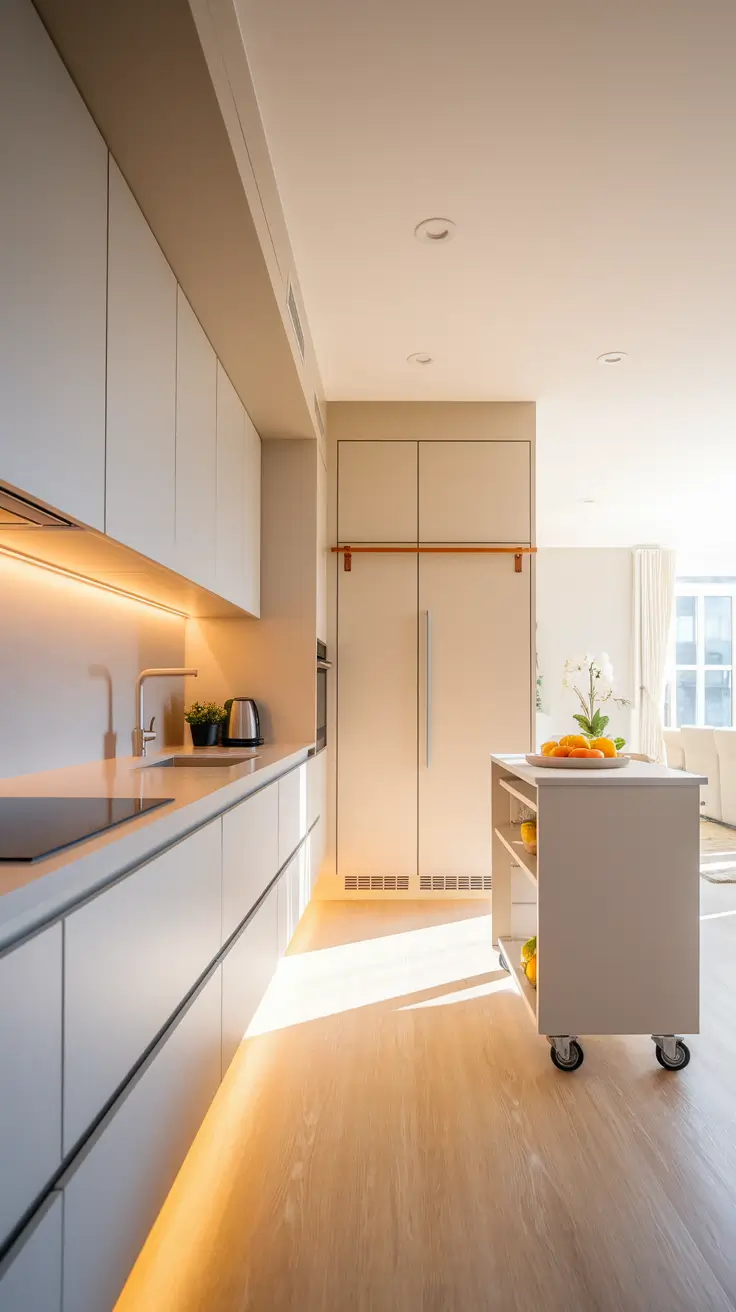
Pull-out pantries, toe-kick drawers, and slim recycling stations keep aisles clear. Appliance garages with sliding or pocket doors prevent collisions. Continuous counters with flush-mount cooktops streamline work zones. Rail systems on cabinet sides organize utensils.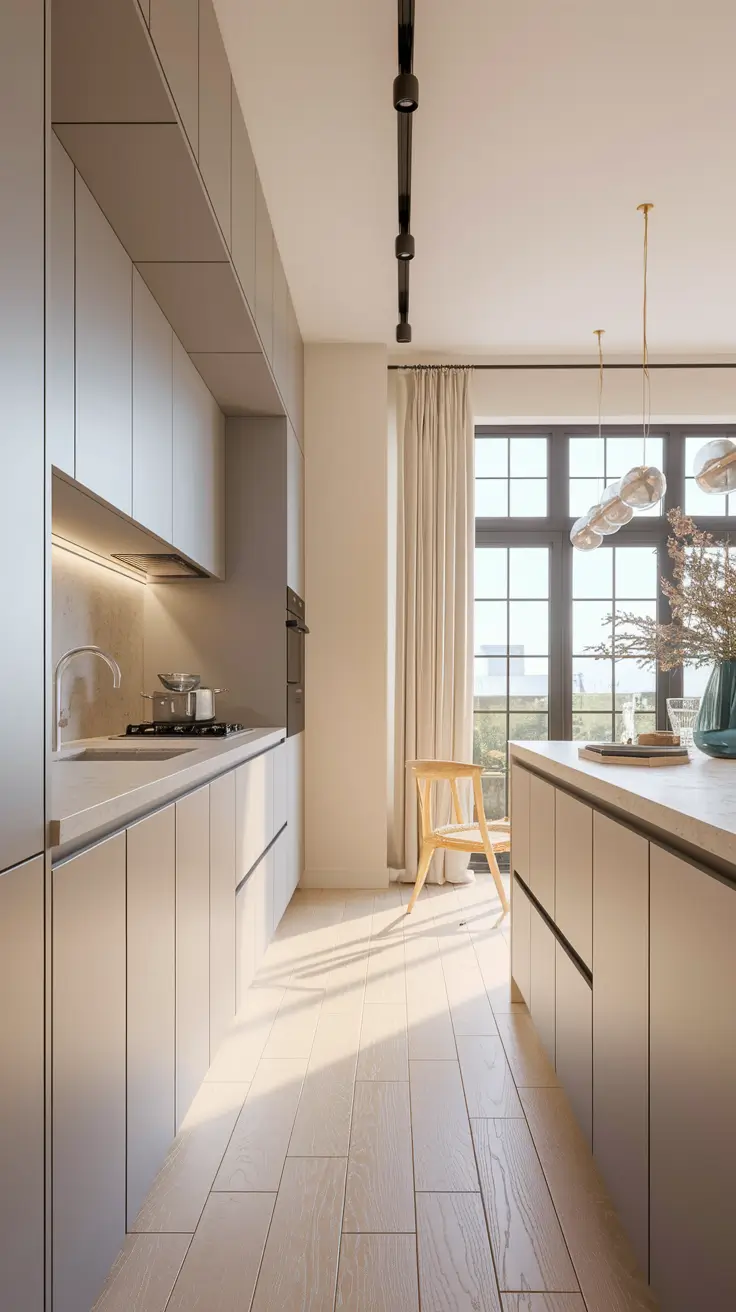
A lighter upper and slightly darker lower palette visually lifts the space without bulk. Minimal trims and limited colors avoid clutter. Warmth can be introduced with thin oak edges or a single blue accent panel.
Adding a narrow, mobile island on casters and slim plug-in LED strips with dimmers enhances flexibility. Magnetic knife strips on tall panels open up drawer space.
Modern Grey Kitchen Cabinet Ideas
Grey serves as a versatile neutral, with texture and lighting setting the mood. Soft greige lowers paired with pale uppers and matte black hardware create a warm, inviting modern kitchen. Industrial styles benefit from concrete-look doors offset by warm oak shelves.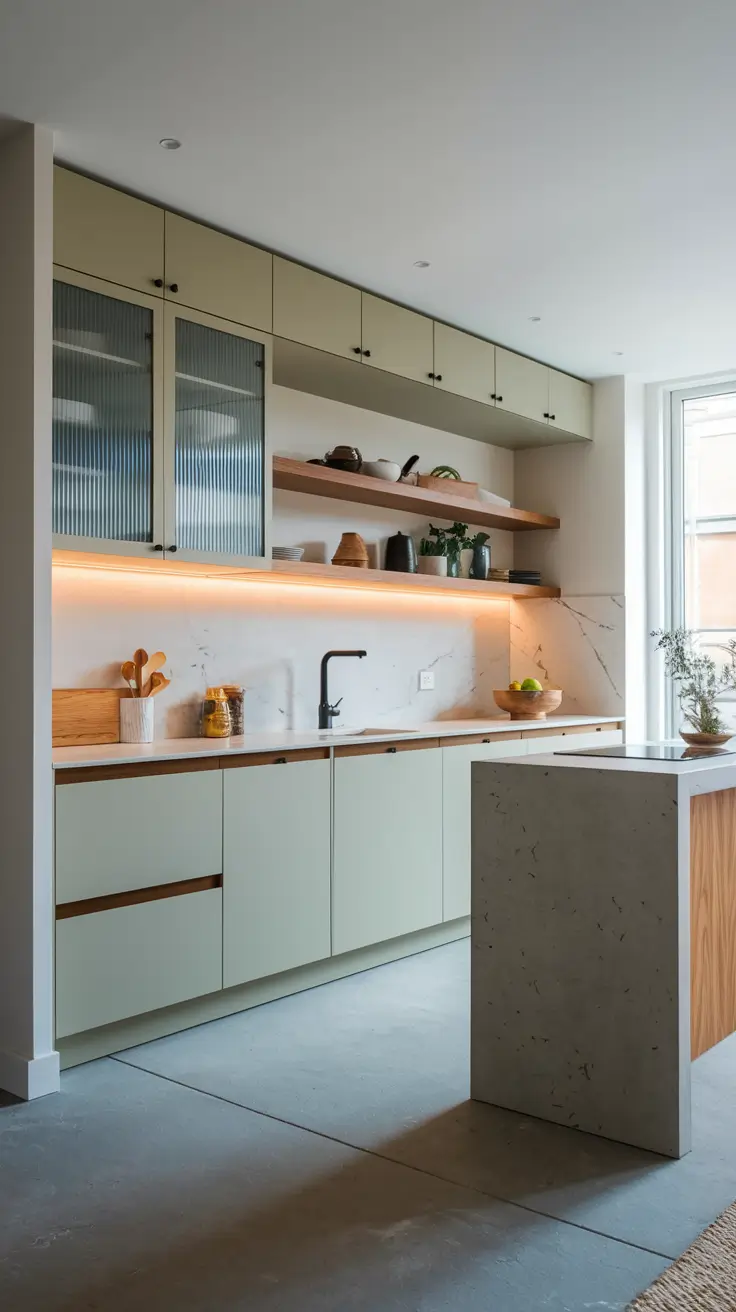
Hardware details include thin stainless or satin brass pulls and dull lacquer fronts to reduce glare. Quartz countertops unify the grey palette. Ribbed glass doors add sparkle, while warm white under-cabinet lighting softens the overall feel.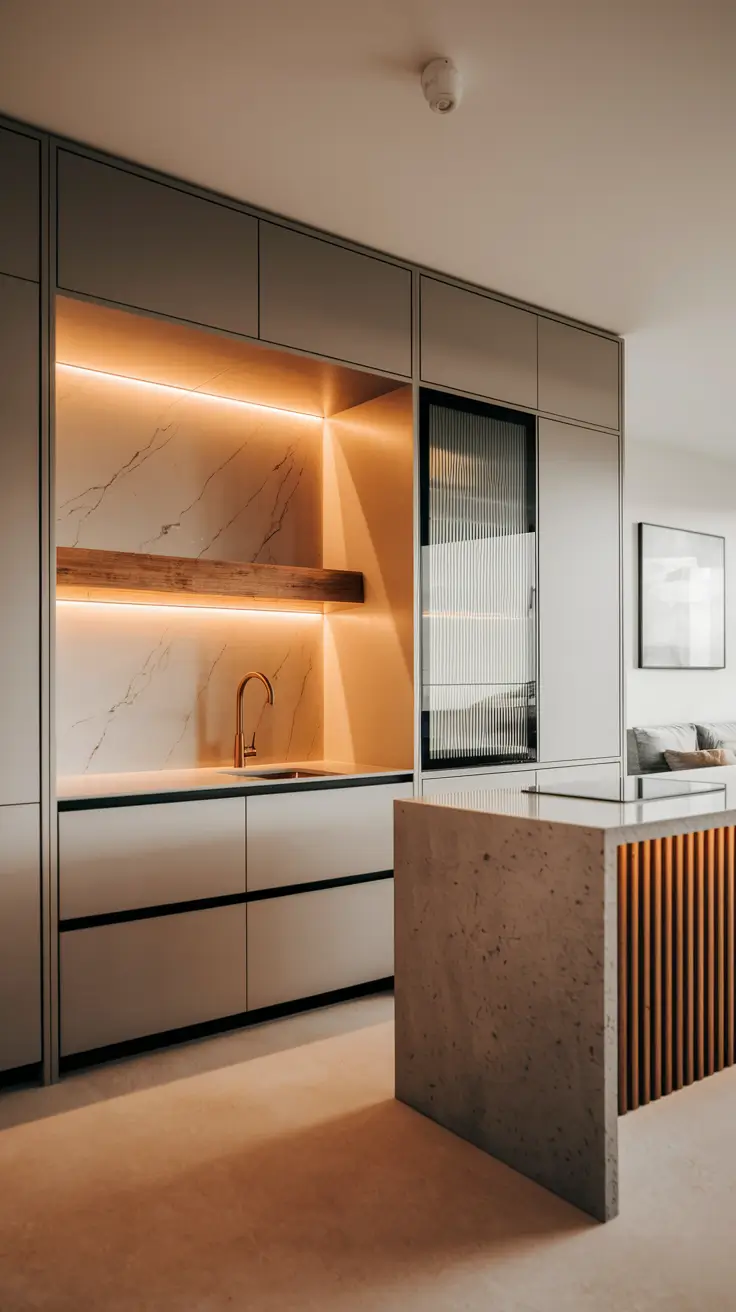
Grey’s forgiving nature suits apartments and small spaces. Tone-on-tone schemes combining three similar greys create calming environments that resist trend fatigue.
Adding statement pieces like blue stools, sculptural black faucets, or narrow picture ledges with cookbooks and herbs injects life and color.
Color Choices to Suit Every Kitchen Mood
Warm, nature-inspired colors dominate contemporary kitchens, balanced with modern sensibilities. White remains a timeless choice for uppers, while forest green, navy blue, and mushroom neutrals enrich lower cabinets. Black accents on hardware and frames add crispness, with tone-on-tone paint on walls and doors unifying the space. These palettes suit everything from large family kitchens to compact spaces and outdoor kitchens with pergolas.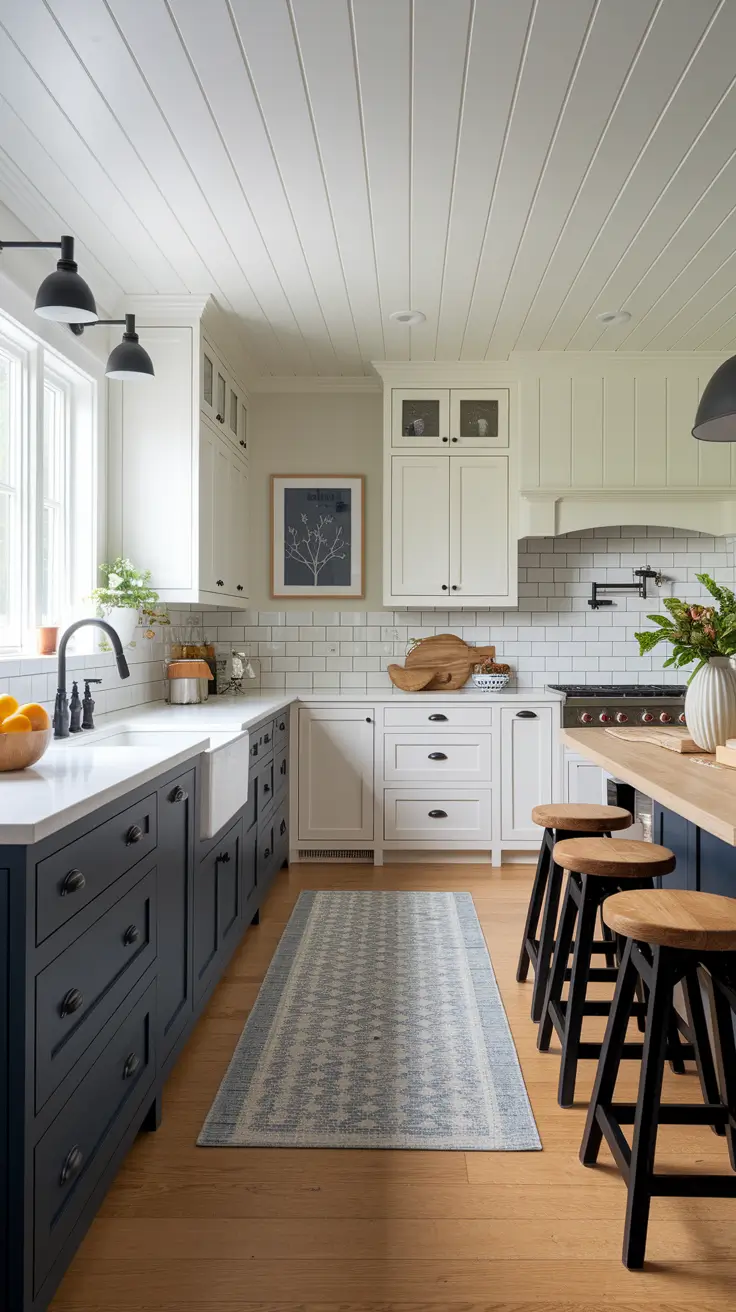
Palettes are built around fixed elements like flooring. Walnut floors pair well with sultry blues or greys on lowers and white or cream uppers. In darker spaces, lighter cabinetry with colorful islands reverses the effect. Two-tone schemes add depth, often echoed in small decor items for cohesion.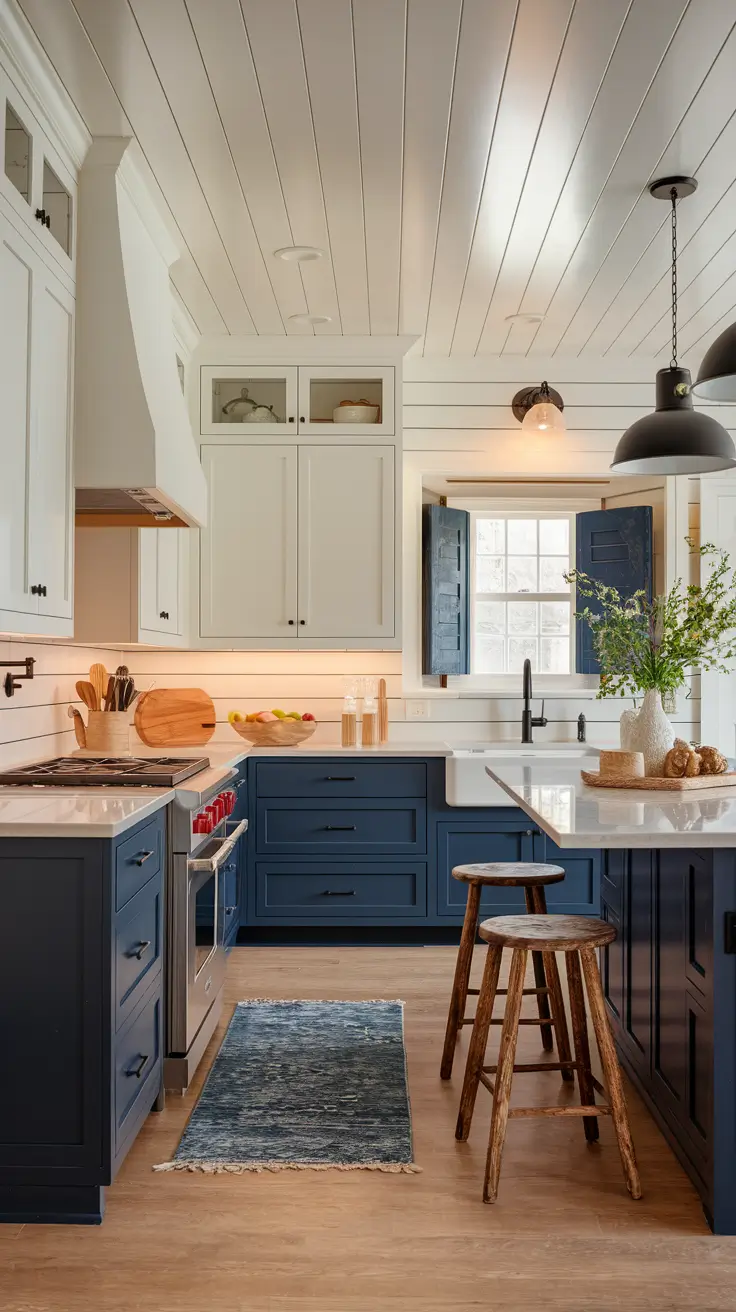
Rich, saturated colors in satin or matte finishes appear elegant rather than shiny. For those hesitant about commitment, starting with interior cabinet colors or painting only the island offers flexibility.
A quick home test board with large sample panels viewed at different times and lighting conditions helps finalize choices. Farmhouse styles lean toward lighter putty or cream with blue tints, while city modern favors clean white with black accents and a bright blue door.
Under-Cabinet Ideas for Lighting and Storage
Under-cabinet space is prime real estate for both lighting and storage. Continuous LED strips eliminate shadows on counters, while puck lights create soft glows in coffee zones. In small kitchens, hidden plug strips reduce backsplash clutter and keep cords organized.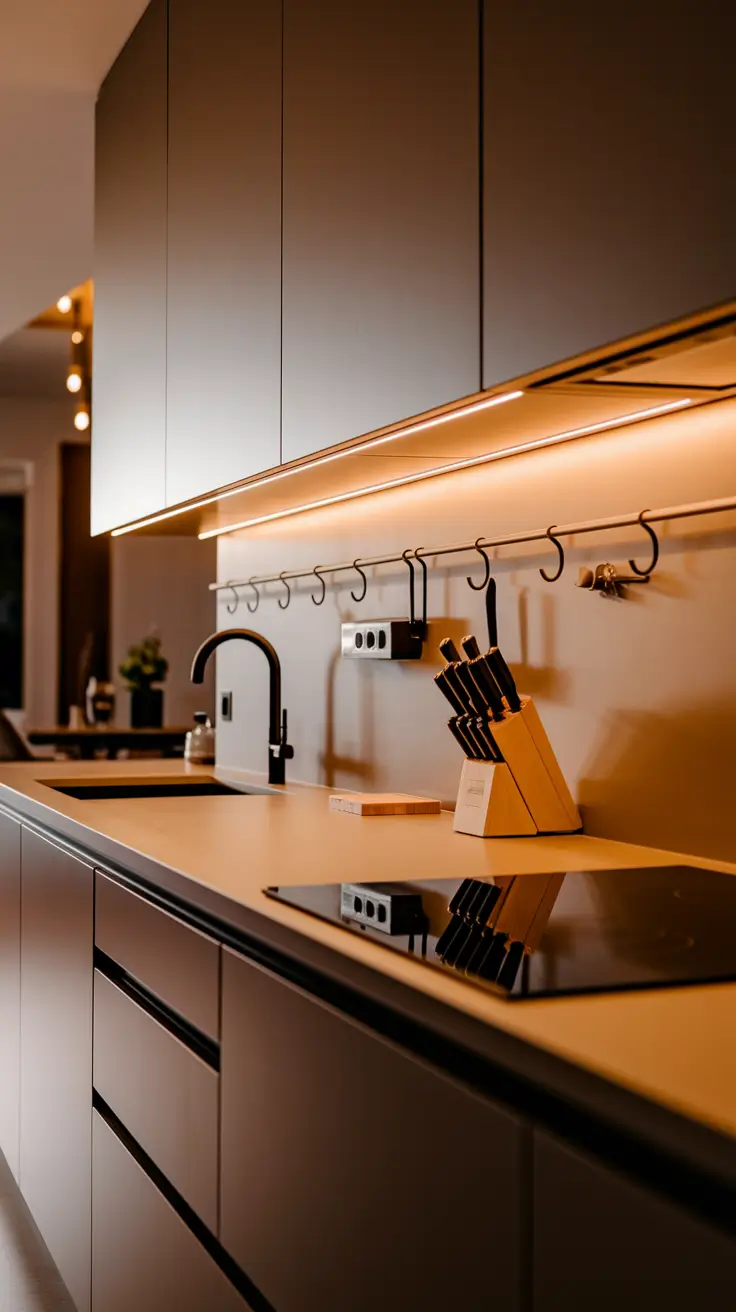
Storage solutions include magnetic knife rails, paper towel holders, spice shelves, and narrow backsplash rails for utensils, freeing drawers for larger items. Toe-kick drawers catch trays and baking sheets, while slide-out crumb trays keep counters tidy.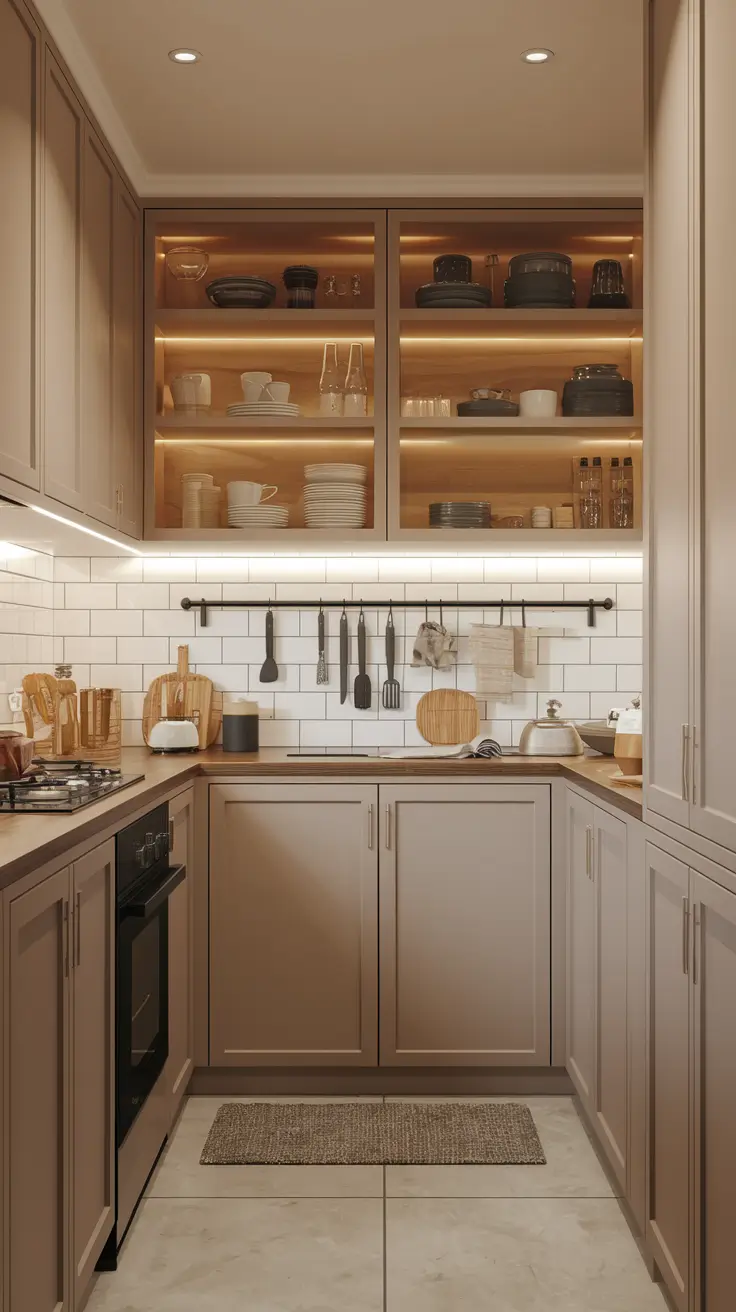
Successful under-cabinet setups are carefully planned, with mount heights, cable routes, and dimmer placements designed for permanence.
Smart features include wireless dimmers, motion-sensor night lights near sinks, and wireless charging shelves for phones, enhancing convenience during meal prep.
Two-Tone Cabinetry: Depth Without Bulk
Two-tone kitchens remain popular for adding dimension without heavy construction. Upper cabinets are typically light—white or pale grey—while lowers feature richer hues like blue, charcoal, or stained oak. This balances visual weight and makes ceilings appear taller, especially beneficial in small kitchens.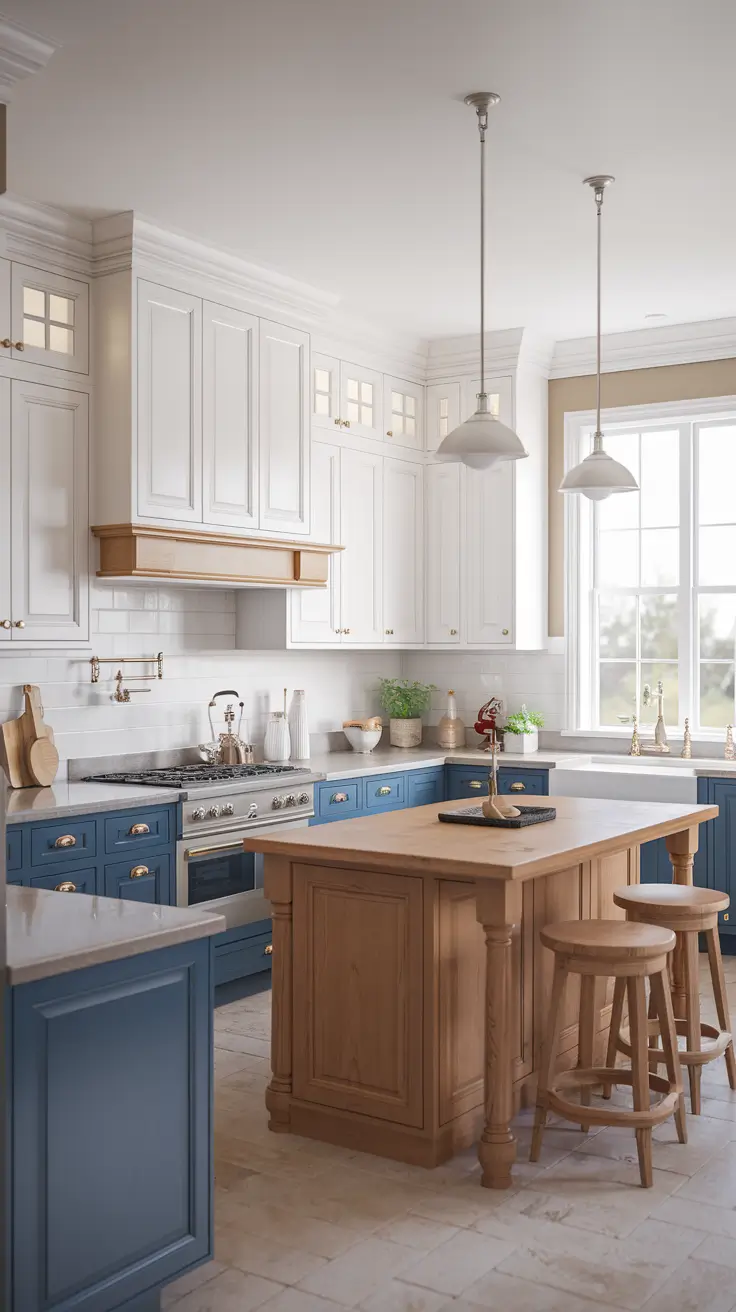
Details unify the look: matching door styles with colors, consistent metal finishes on pulls, lighting, and faucets create cohesion. Warm floors pair well with cooler blue or grey lowers, while wood islands add warmth. Budget-friendly two-tone options include custom doors on Ikea frames.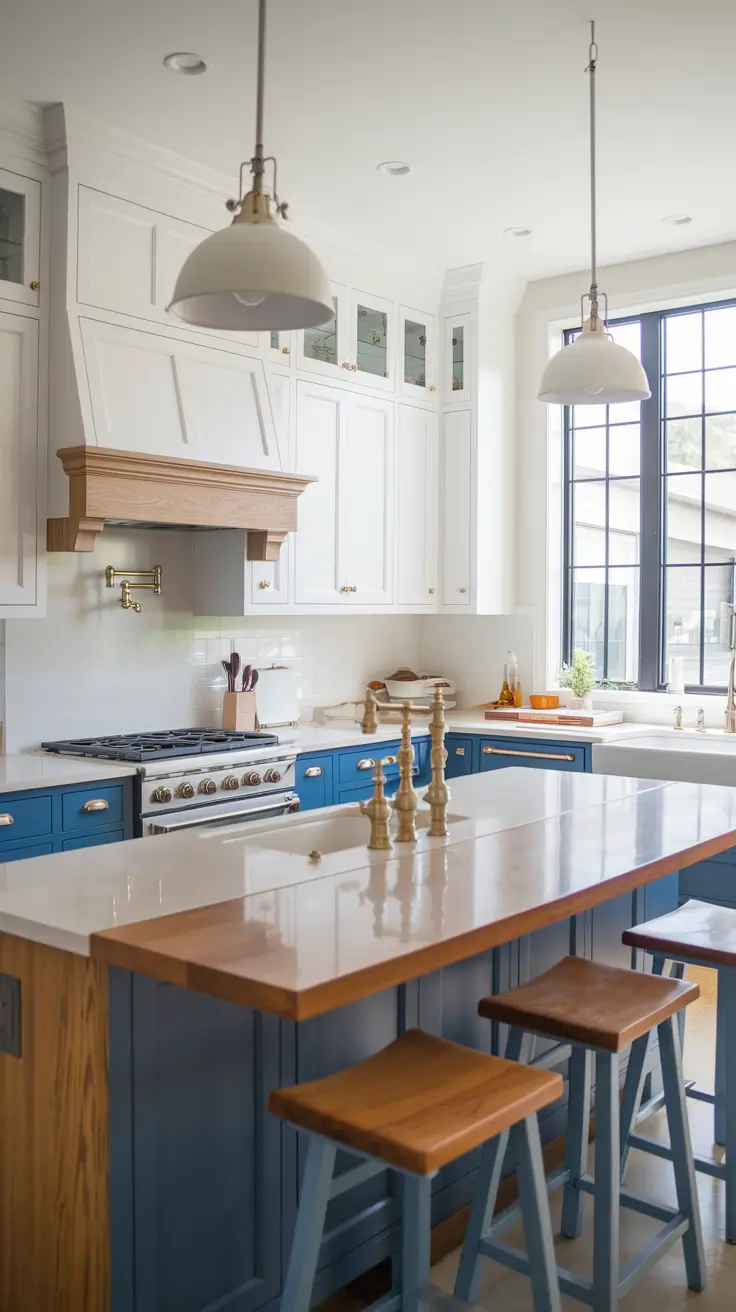
I prefer subtle two-tone variations with similar tones for a sophisticated look. For bolder clients, black lowers with white uppers paired with natural stools and linen accents create striking contrast.
Including color echoes in the room—like cushions or artwork matching cabinetry—and testing sheen levels to ensure consistent reflectance helps the colors coexist harmoniously.
Organized Interiors: Inside Kitchen Cabinet Ideas
Effective cabinetry excels both inside and out. Full-extension drawers, tray dividers, spice pull-outs near cooktops, and deep drawers for heavy pots reduce effort. Pantries benefit from narrow pull-outs that roll forward for easy access.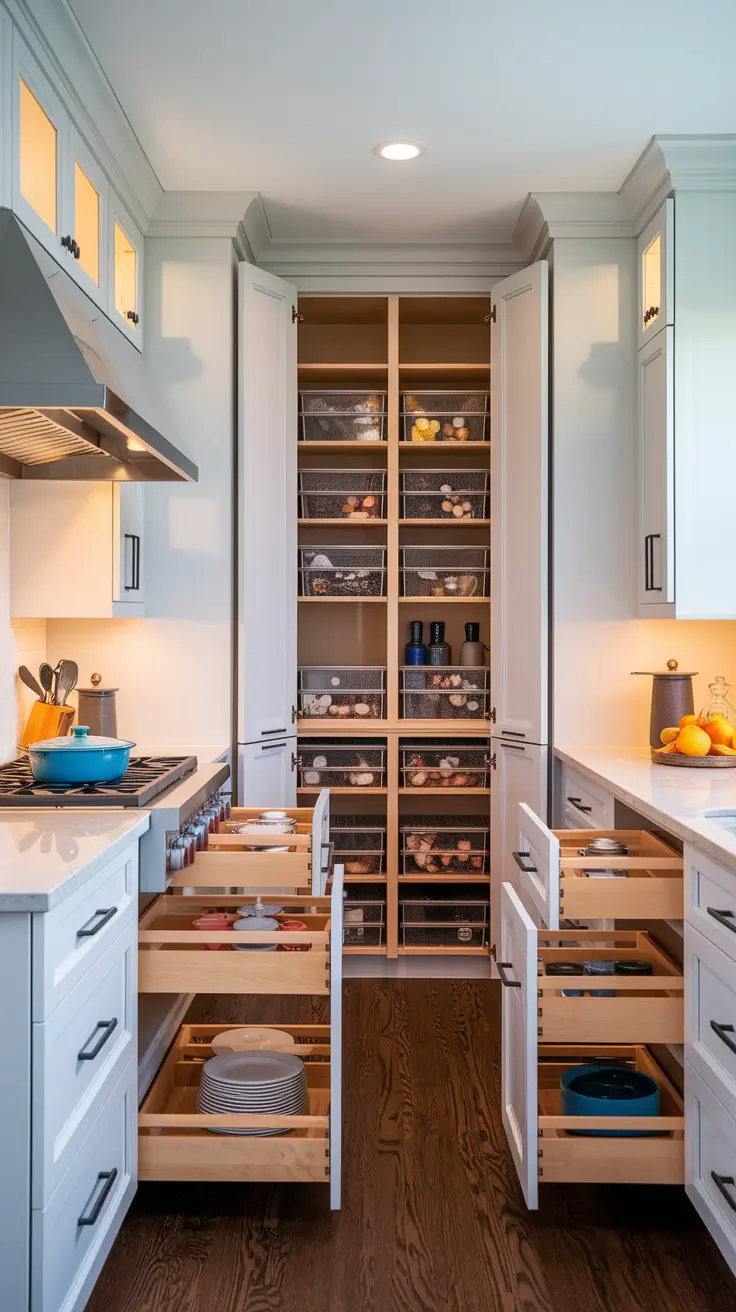
Drawers feature removable wood dividers, tiered cutlery bins, and labeled containers for quick inventory checks. Vertical sheet pan slots near ovens save space, and hidden compost caddies keep counters clutter-free. Smart corner solutions include carousels or diagonal drawers optimized for tight spaces.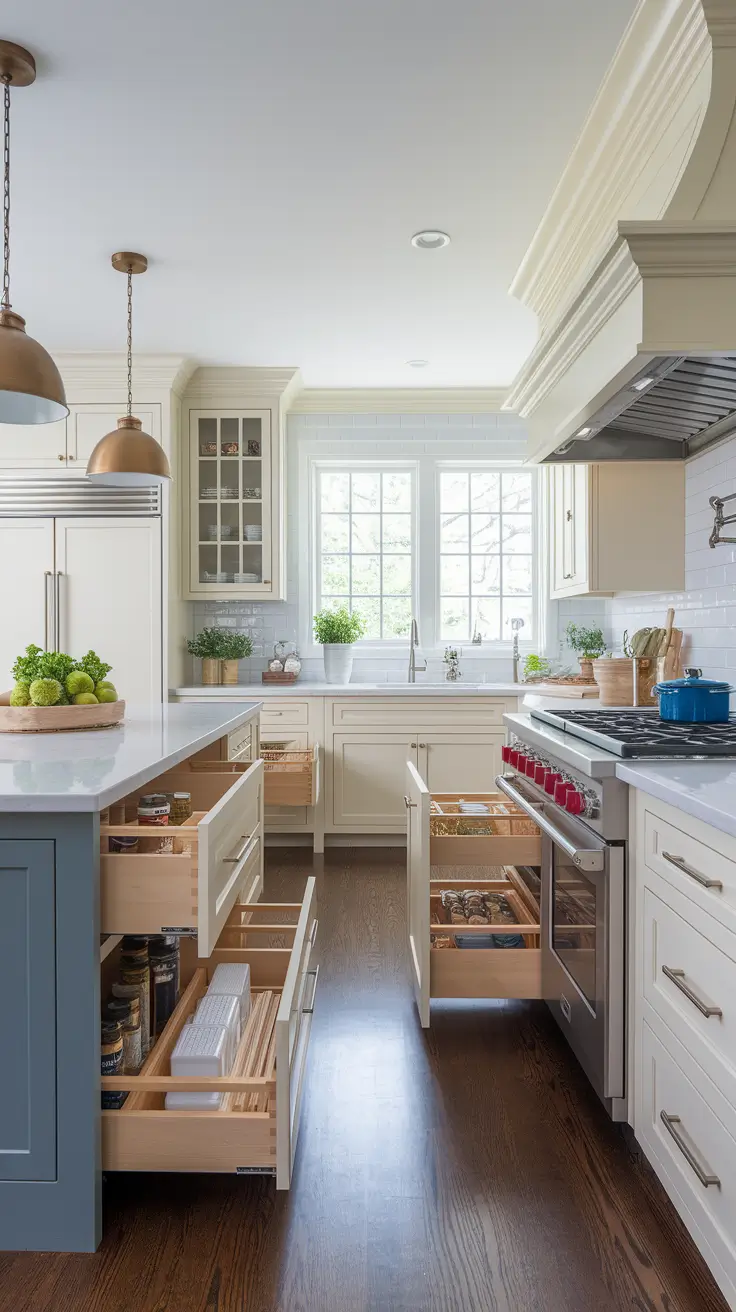
Organization thrives when categories are visible and accessible within task zones. Even basic DIY inserts can transform storage without footprint changes, especially valuable in small kitchens.
New trends include low-glare strip lighting inside pantries and shelf-front labels. Regularly clearing expired items and donating extras keeps storage lean and functional.
Upper Cabinets with Distinctive Character
Upper cabinets set the room’s rhythm, so I introduce them thoughtfully. In small kitchens, I mix solid doors with glass fronts to reflect light and reduce heaviness. In rooms with high ceilings, uppers extend to the ceiling or are replaced with open shelves for a lighter feel over busy prep areas.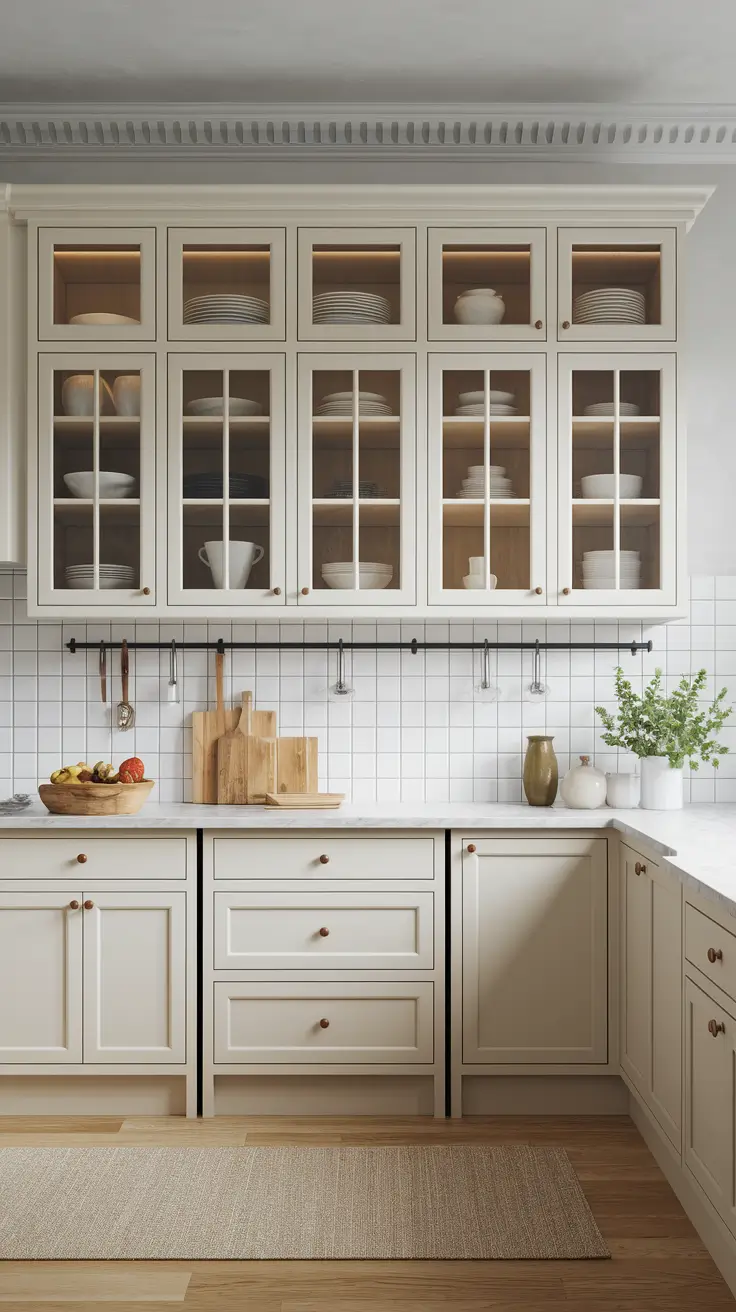
I prefer slender crowns or clean top lines depending on architecture. Gaps to the ceiling serve as display shelves with curated baskets, pottery, or a single plant instead of clutter. Complete end panels and clean cabinet sides create a bespoke feel.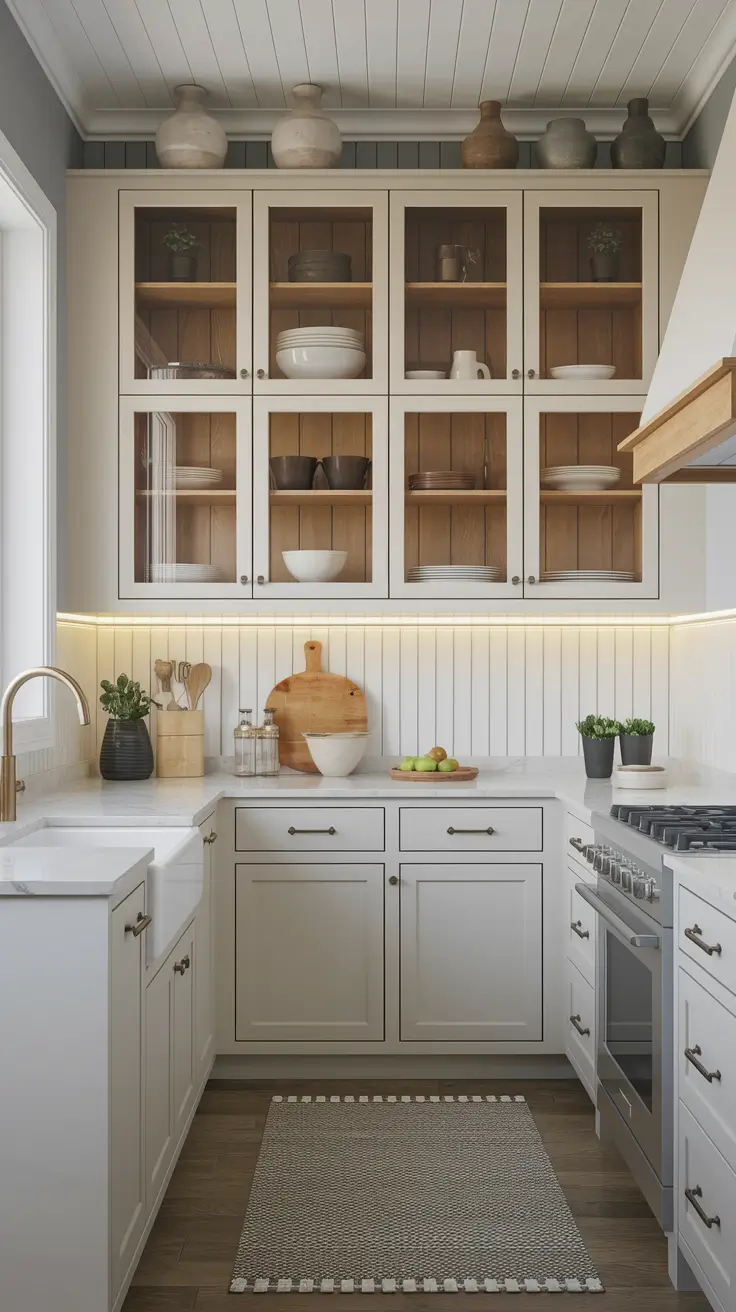
Slightly ribbed glass with warm interior lighting adds evening ambiance without glare. For clients unsure about open shelving, starting with a short run near windows balances storage and relaxed style.
Adding puck lights inside glass cabinets and under-shelf hooks for mugs near coffee stations enhances functionality. Limit open shelves to daily essentials to minimize dust and maintain freshness.
Lower Cabinets: Grounding and Balance
Lower cabinets anchor the kitchen visually, balancing tall windows and appliances. Continuous base runs with minimal breaks create clean horizontal lines. Deeper toe kicks and standard plinths make small spaces feel larger. Richer colors on lowers allow lighter uppers to recede, with two-tone schemes linking colors without overwhelming small kitchens.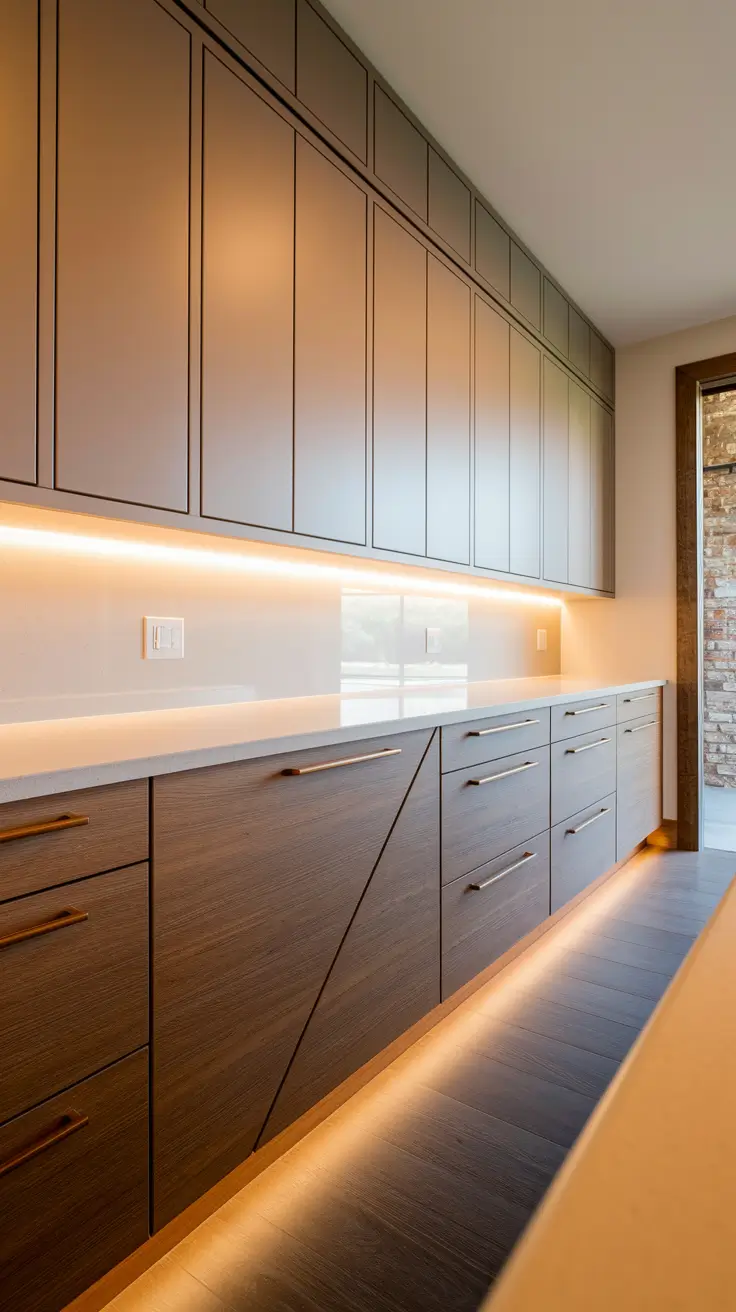
Furniture-grade looks come from wide, full-extension pot and pan drawers, built-in recycling, and hidden cutlery compartments. Corner drawers or diagonal sink bases rescue awkward spaces. Preferred slab or slim shaker fronts feature soft-close guides. Matching lower cabinet and island panels unify design.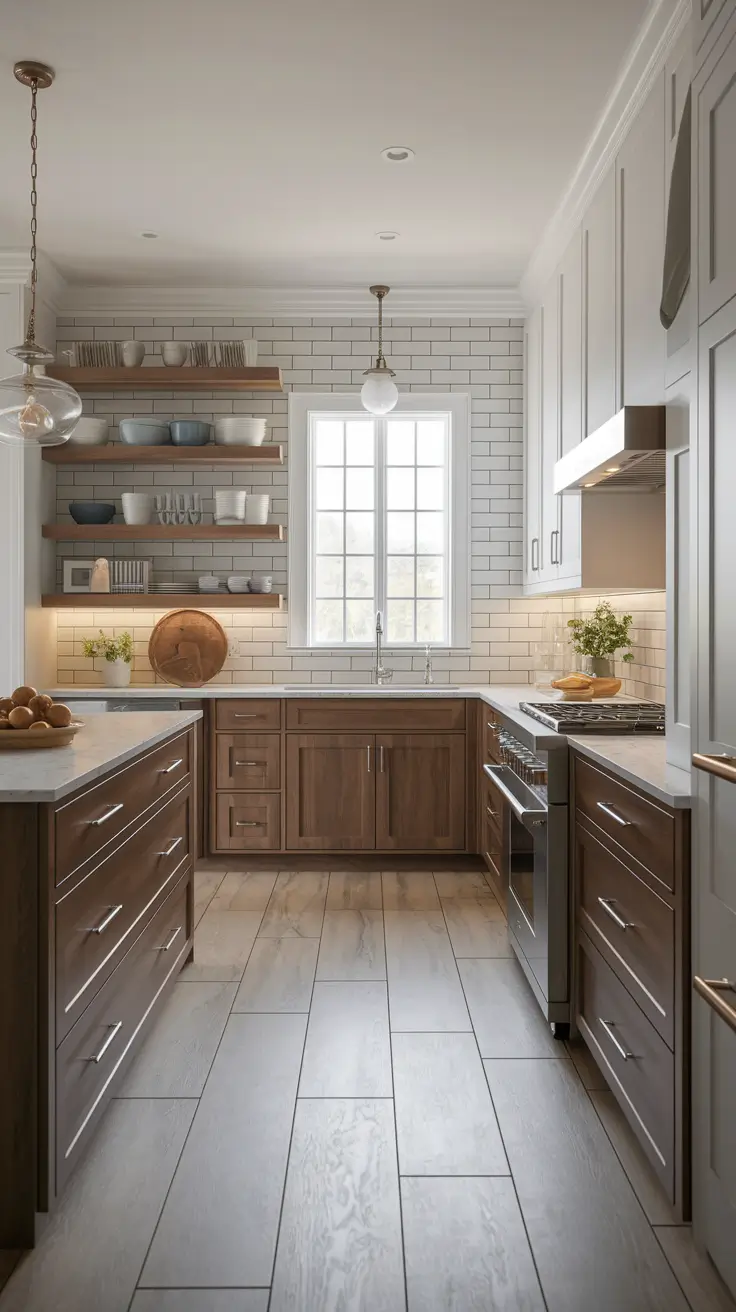
Lower storage bears heavy loads, keeping walls lighter and airier. Matte finishes and low-shine quartz quiet the base run. Daily-use items near cooktops facilitate smooth prep workflows.
Additional features include pull-outs for oils and spices beside ranges, built-in drawer lighting, and small towel rails on panels near dishwashers.
Optimizing Bottom Corner Cabinet Storage
Bottom corners often hide valuable storage. I prioritize these in layouts, favoring solutions that bring contents forward to avoid crouching and reaching. Refined interiors and matching finishes create cohesive spaces.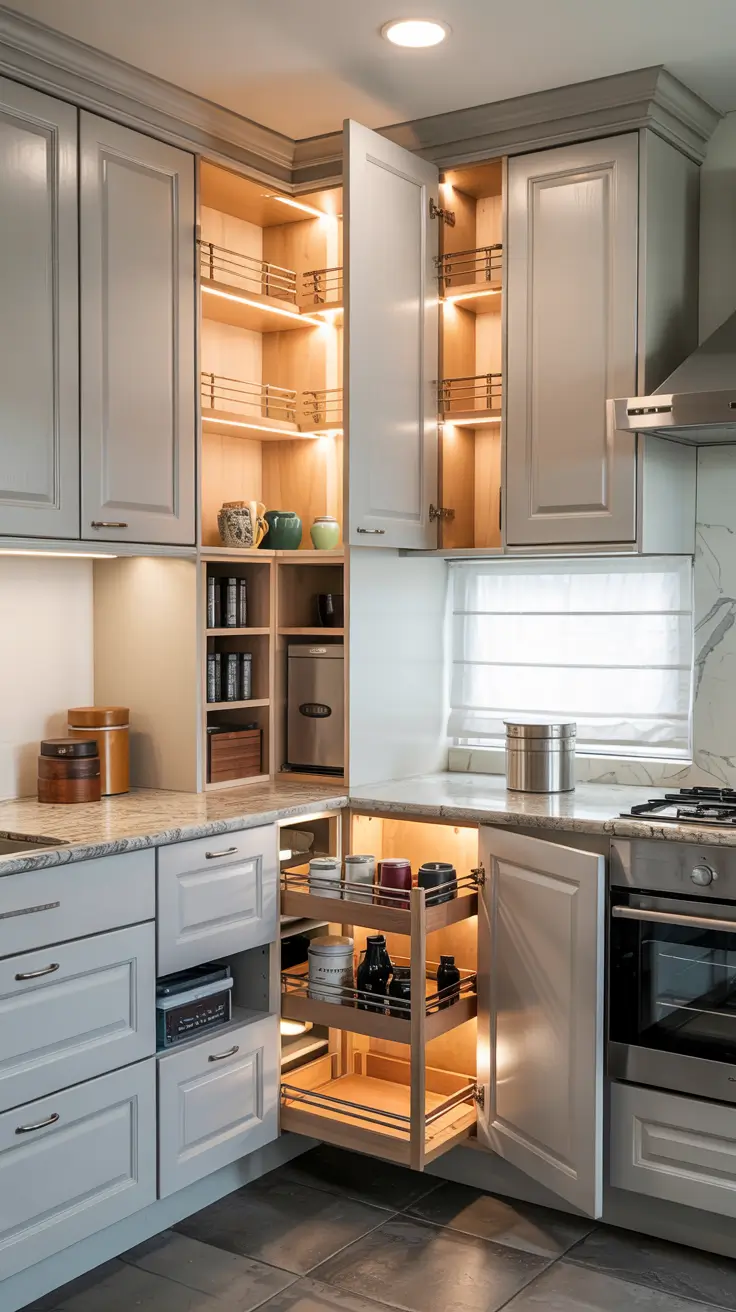
Options include diagonal corner pull-outs, kidney-shaped carousels with solid trays, and full-extension blind-corner pull-outs with two-stage access. Tray dividers beside ovens hold baking sheets upright, freeing carousels for pots. Plumbing corners become shallow cleaning caddy drawers instead of dead zones.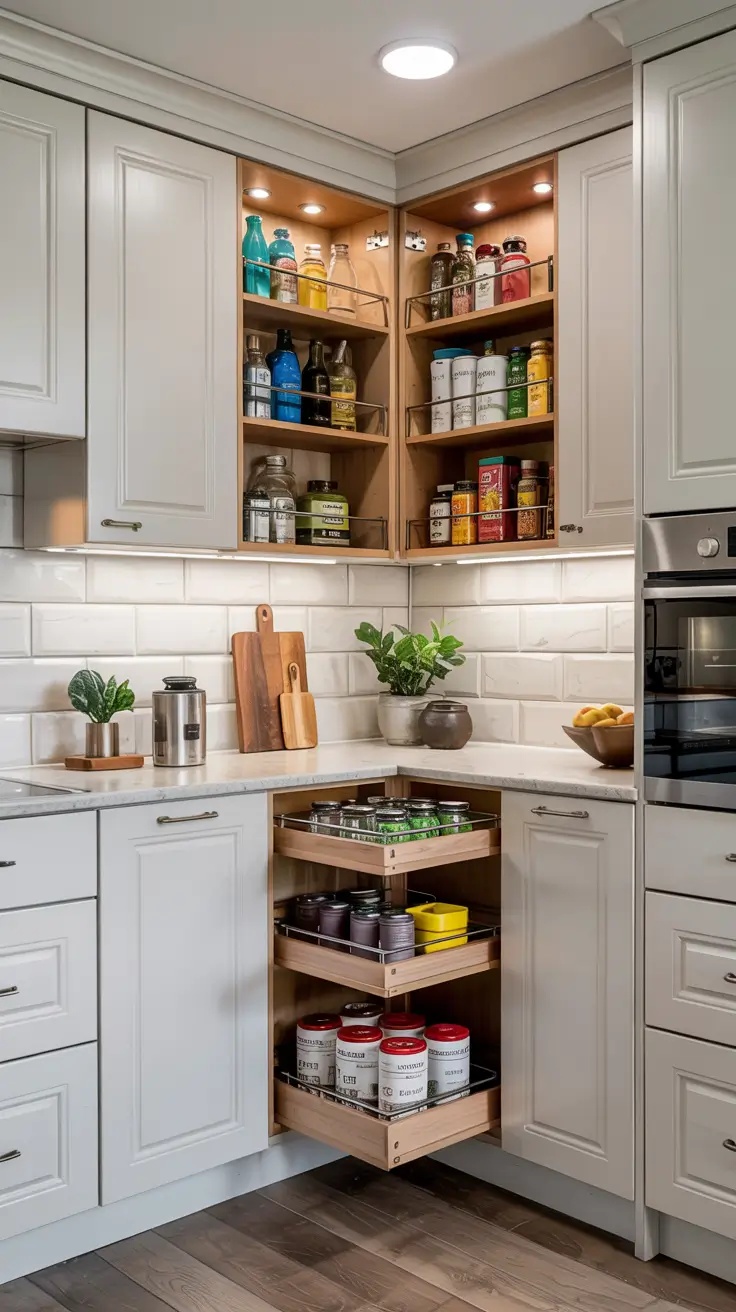
Choosing the right corner solution depends on cooking style: heavy carousels suit large-batch cooks, while vertical sheet storage benefits weekly bakers. For DIY projects, measure spaces carefully and opt for soft-close hardware to minimize noise.
Low-glare LED strips inside deep corners and labeled bins help rotate stock and keep items visible. Slight bumper rails prevent jars from falling off rollers.
As an Amazon Associate I earn from qualifying purchases.