Stylish Modern Kitchen Designs for Every Home
Are you considering how to transform your kitchen into a modern masterpiece that elevates both living and cooking experiences for years to come? This comprehensive guide explores innovative kitchen design concepts that blend timeless elegance with future-ready trends. Emphasizing open layouts, neutral palettes featuring grey, white, and natural wood tones, and smart storage solutions, these ideas promise to keep your kitchen stylish and functional well into the future.
Innovative Kitchen Design Concepts to Embrace
Designing a kitchen that serves as a vibrant social hub without sacrificing efficiency starts with thoughtful spatial planning. Prioritizing natural flow, I envision kitchens with sleek, streamlined cabinetry featuring integrated handles and durable surfaces suited for everyday use. Key elements include concealed storage, subtle color schemes, and layered lighting that adapts from task-focused to ambient moods. Seamless transitions between kitchen and living spaces foster an open, inviting atmosphere.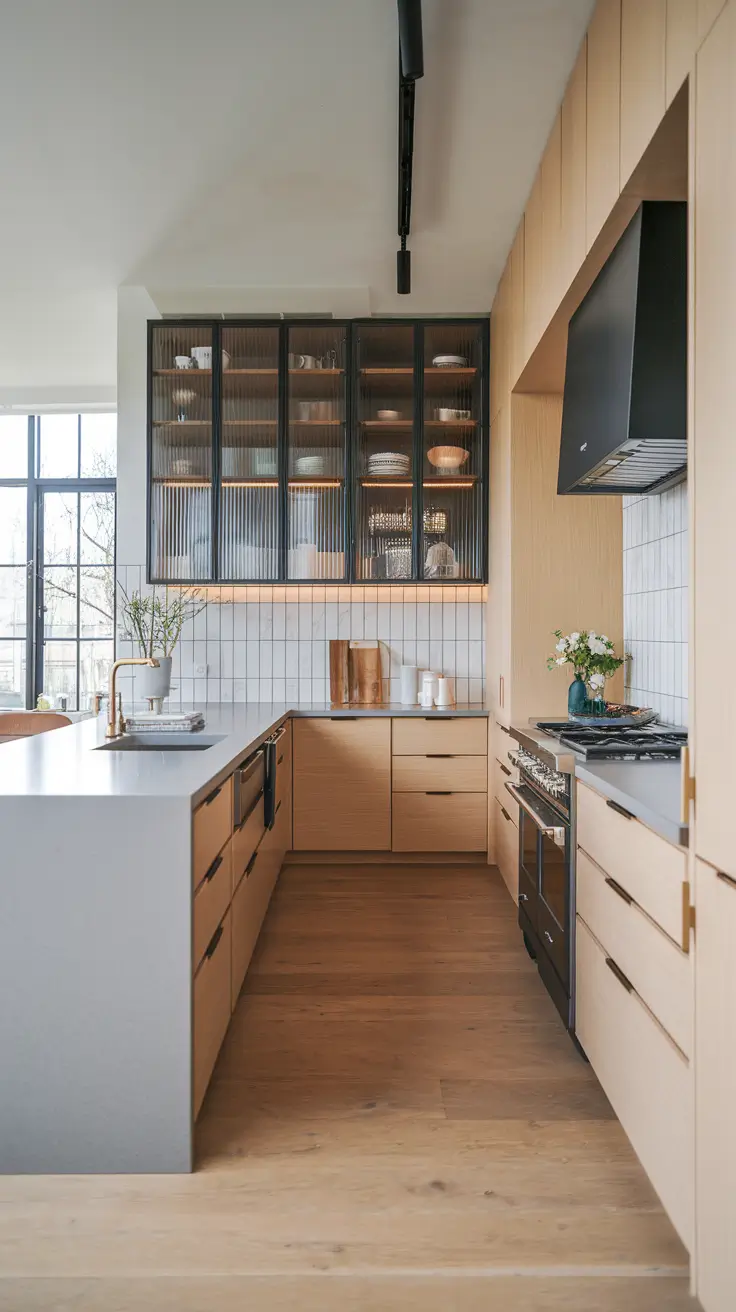
Combining flat-panel cabinetry in light oak or ash with matte-finished quartz or sintered stone countertops creates a balanced, natural aesthetic. Induction cooktops are favored for their safety and efficiency, complemented by built-in hoods camouflaged with matching panels to maintain visual calm. Incorporating ribbed glass shelving and linear LED lighting enhances prep areas, while compact islands or peninsulas provide extra workspace without impeding movement.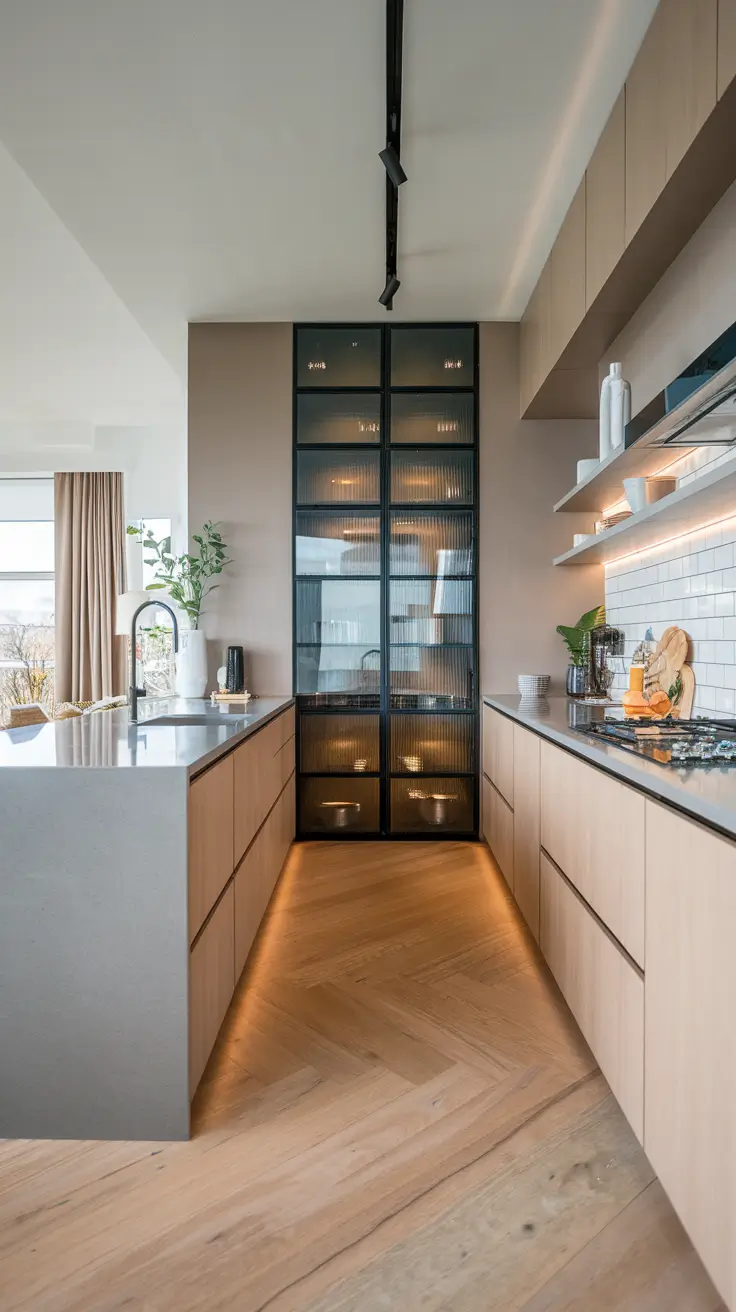
A minimalist approach to accessories exudes luxury, with textured tile backsplashes resembling linen or honed stone softly diffusing light. Designers emphasize task lighting over islands and counters to ensure spaces are both beautiful and practical. Vertical storage is optimized with shallow pull-out pantries near refrigerators and tray dividers above ovens, while narrow shelves adjacent to cooktops keep utensils within easy reach during busy cooking sessions.
Multi-Functional Kitchen Islands: The Heart of Modern Design
Kitchen islands serve as versatile anchors in contemporary layouts. The trend favors slimmer, rounded islands that facilitate smooth traffic flow and reduce accidental bumps. Positioning islands near cooking or cleaning zones minimizes unnecessary steps, allowing two people to work comfortably side by side.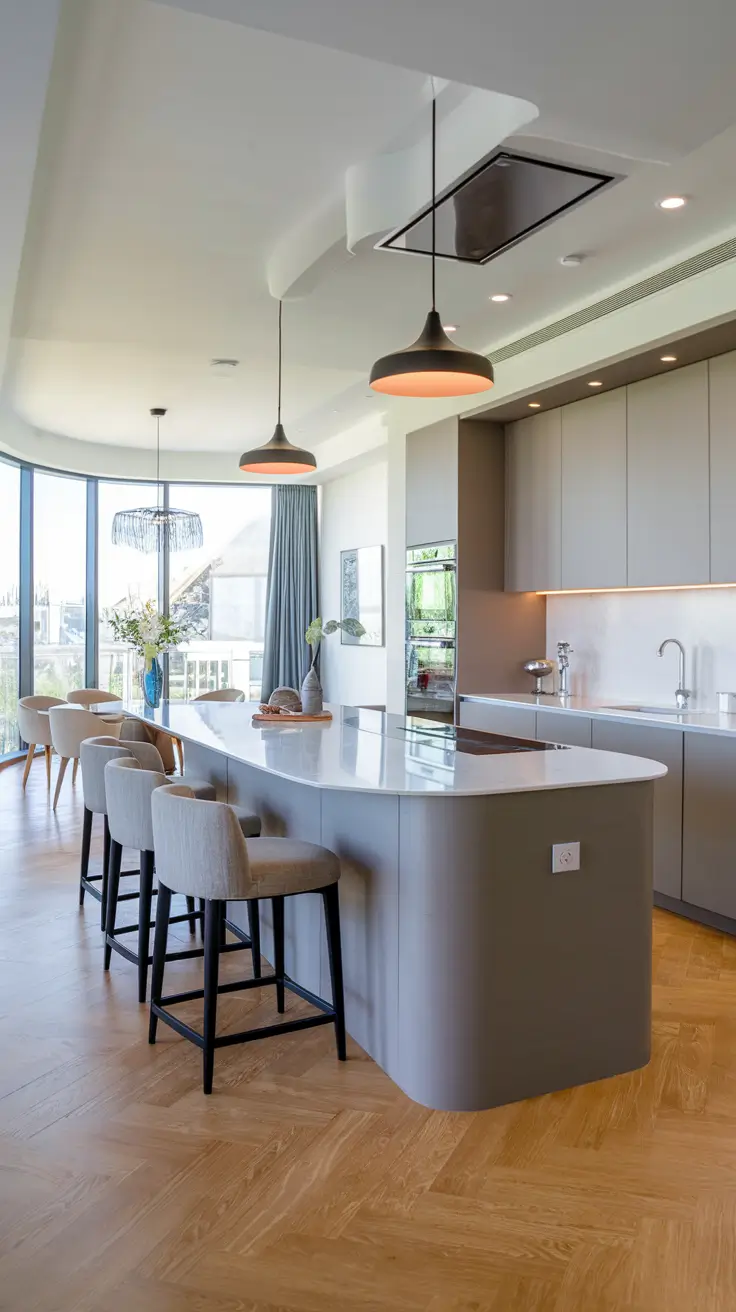
Waterfall-edge countertops with robust finishes add a sculptural element, while flush-mounted induction hobs paired with large windows enhance both function and aesthetics. Seating options include low-profile stools with footrests and performance fabric upholstery for comfort. Open shelving at island ends offers space for cookbooks and decorative bowls, softening the overall mass.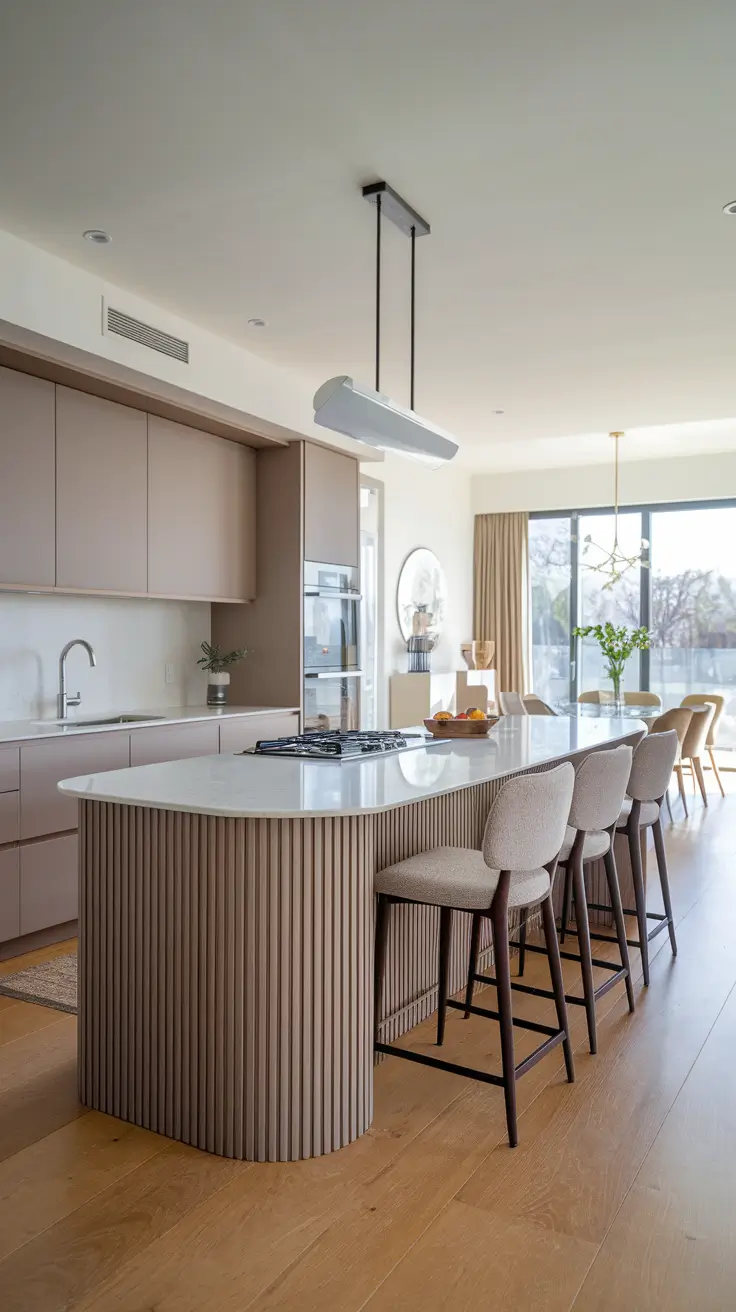
Avoiding irregularly sized blocks prevents cramped spaces, while a two-tier lighting system—discreet downlights for work and a sculptural pendant for ambiance—balances practicality with style. When space permits, adding a prep sink with filtered cold water on the island supports meal preparation and keeps the main sink free for cleanup.
Elevated Luxury in Contemporary Kitchen Spaces
Luxury kitchens emphasize refined materials and understated elegance. Symmetry, integrated appliances, and stone surfaces extending to backsplashes create a cohesive look. Neutral tones like warm beige, rich greens, and deep blacks provide a sophisticated palette, accented by natural wood textures.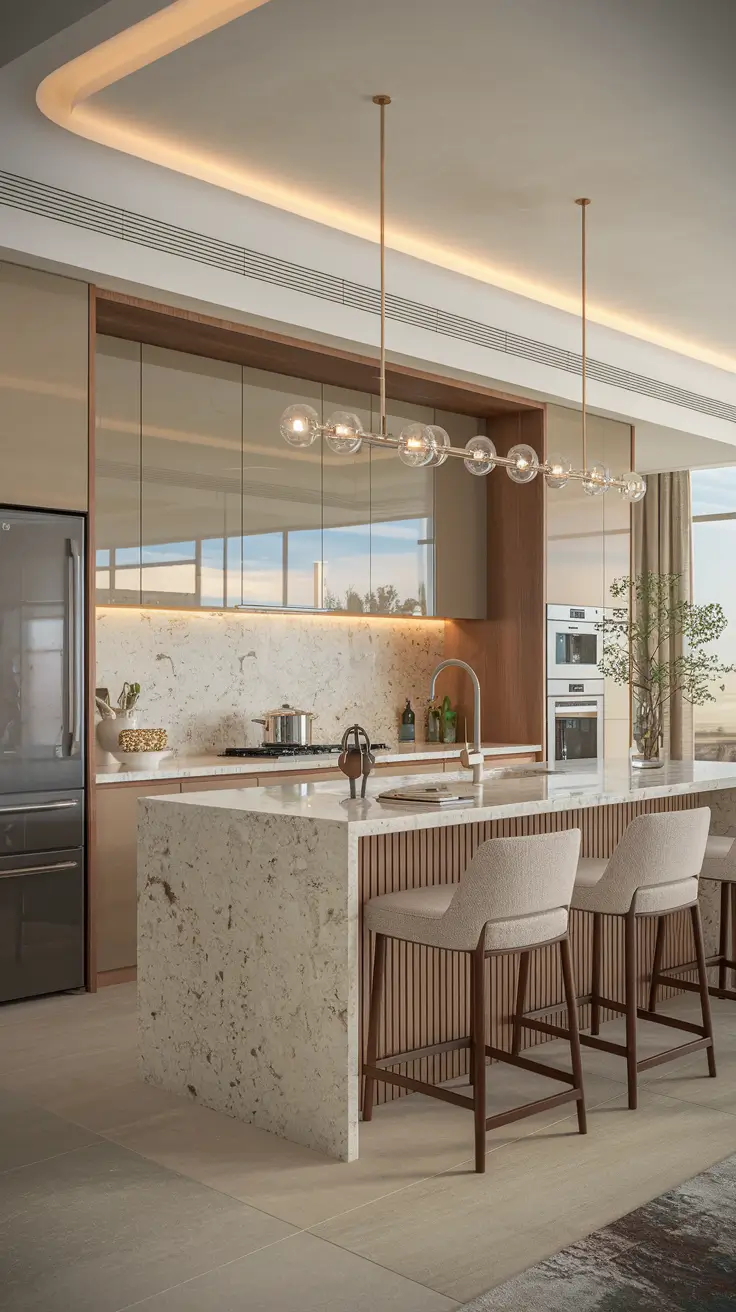
Combining rift-cut oak with lacquered doors, quiet quartzite countertops, and fully integrated refrigerators eliminates visual clutter. Touch-latch mechanisms on tall units enhance sleekness, while stone-wrapped niches serve as elegant coffee bars. Polished nickel or brushed stainless steel fixtures add subtle shine.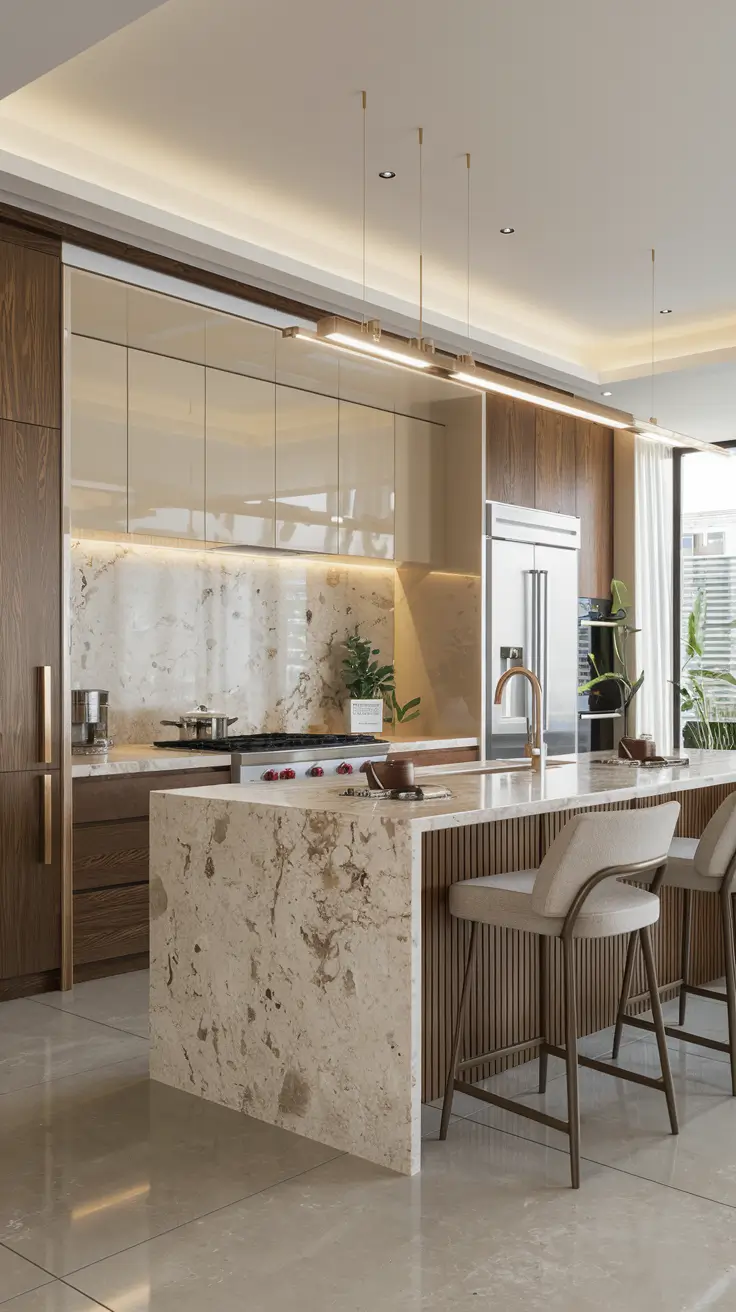
Luxury is about effortless comfort, achieved through acoustic panels, fabric-wrapped stools, soft-close hardware, and under-cabinet lighting. Incorporating warm fabrics and bold green accents complements pale stone surfaces, creating a balanced and inviting environment. A temperature-controlled spice and oil rack near the cooktop adds a practical yet high-end touch.
Maximizing Natural Light with Expansive Windows
Natural light profoundly influences kitchen ambiance and functionality. Large windows paired with tall cabinetry along interior walls preserve sightlines and invite the outdoors in. Aligning window mullions with cabinet breaks establishes visual harmony.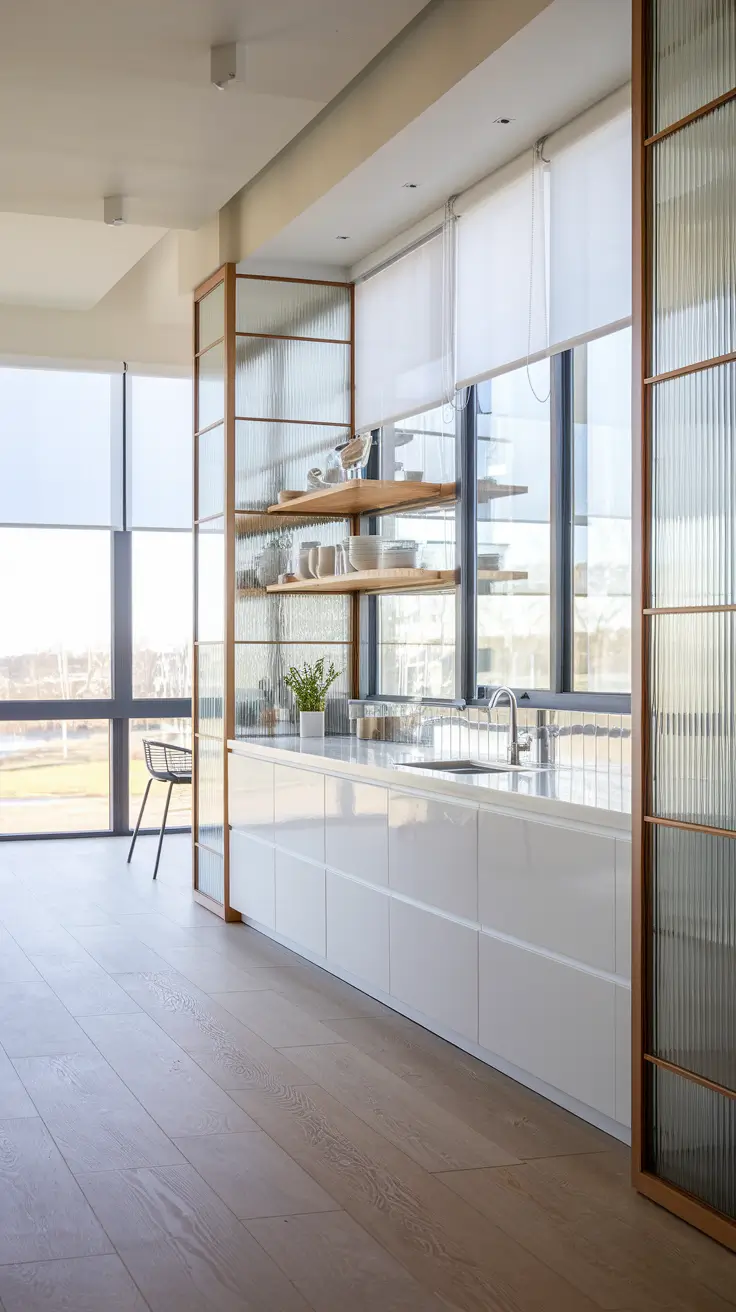
Durable, UV-resistant finishes protect surfaces, while low-profile venting solutions minimize visual disruption. Cantilevered oak shelves along window walls provide display space without obstructing views. Flooring options include wide-plank oak or light porcelain tiles, complemented by motorized shades for light control.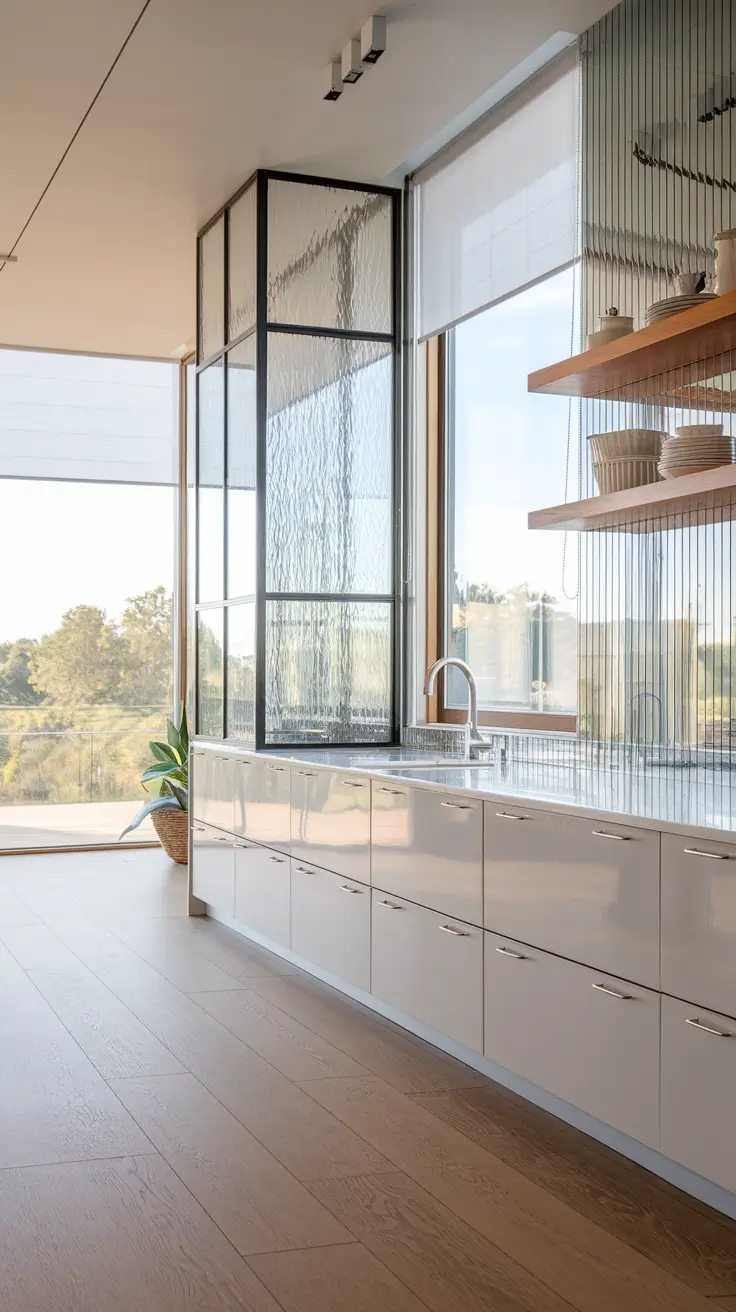
Windows are treated as art pieces, kept free of clutter. For privacy, reeded glass panels diffuse light while maintaining brightness. Dimmable LED track lighting ensures consistent illumination throughout the day. Deep drawers integrated into shaded walls store pots and recycling bins, while reflective backsplashes amplify light in prep zones.
Smart Design Strategies for Compact Kitchens
In smaller homes, meticulous planning is essential. Prioritizing appliance clearance, door swings, and traffic flow prevents installation surprises. Vertical storage maximizes space, while slimline appliances and foldable surfaces enhance functionality. Pocket doors or open galley layouts reclaim valuable inches.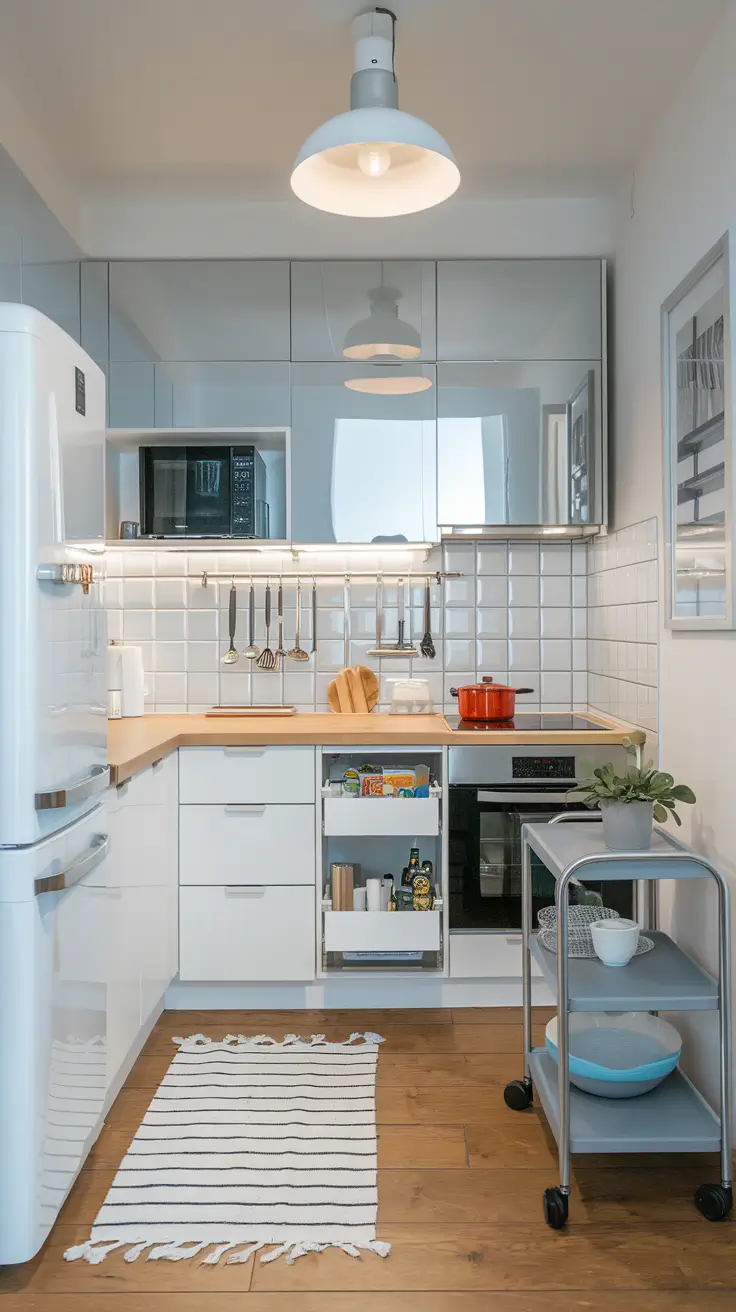
Compact induction ranges or domino hobs, counter-depth refrigerators, and combined microwave-ovens save space. Narrow pull-out pantries store dry goods efficiently, while drop-leaf breakfast tables provide flexible seating. Pale grey cabinetry reflects light, visually expanding the room.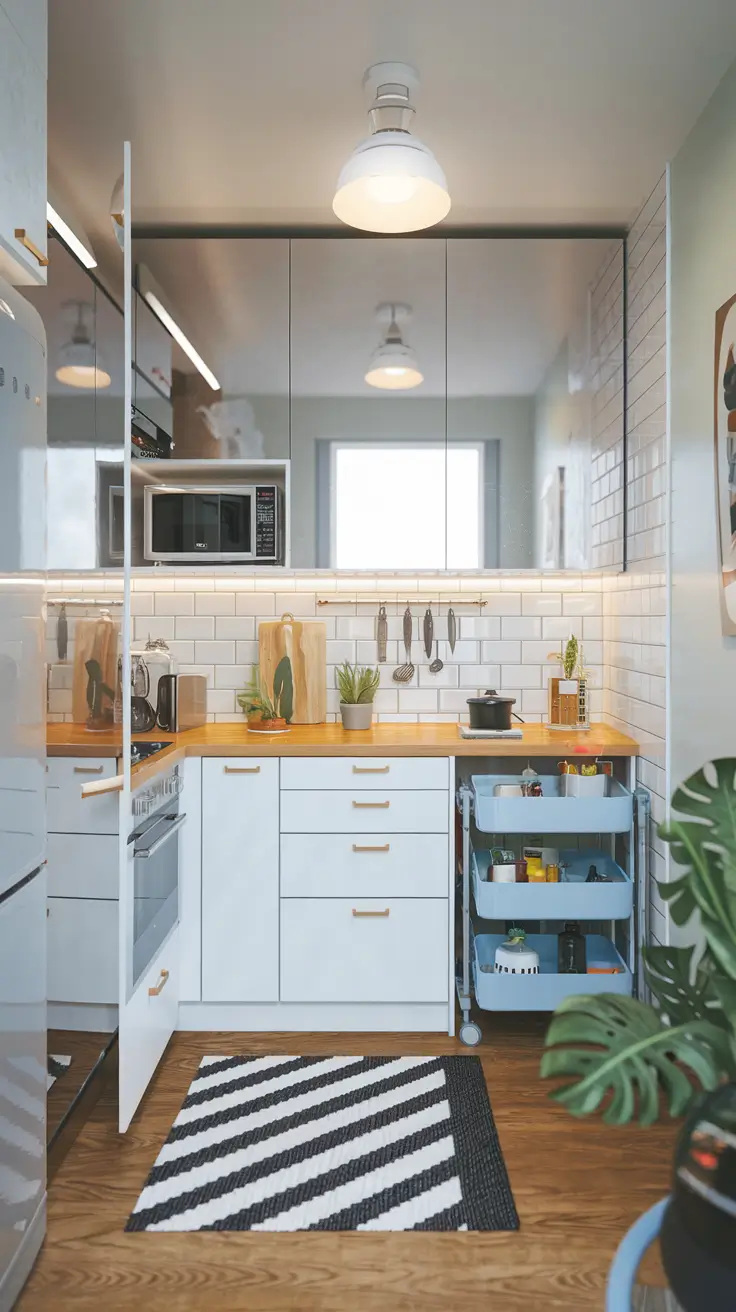
Simplicity reigns in small kitchens: clear counters, rail-mounted hooks, magnetic knife strips, and a single open shelf add personality without clutter. Under-plinth drawers for trays and baking sheets, along with sliding workboards near shallow sinks, effectively add storage and workspace.
Embracing Grey: A Versatile Palette for Modern Kitchens
Grey tones offer a flexible foundation, harmonizing with both warm and cool accents. Layering mid-tone base cabinets with lighter wall units and contrasting stone surfaces prevents monotony. Textured laminates like fluted fronts or linen finishes add subtle depth.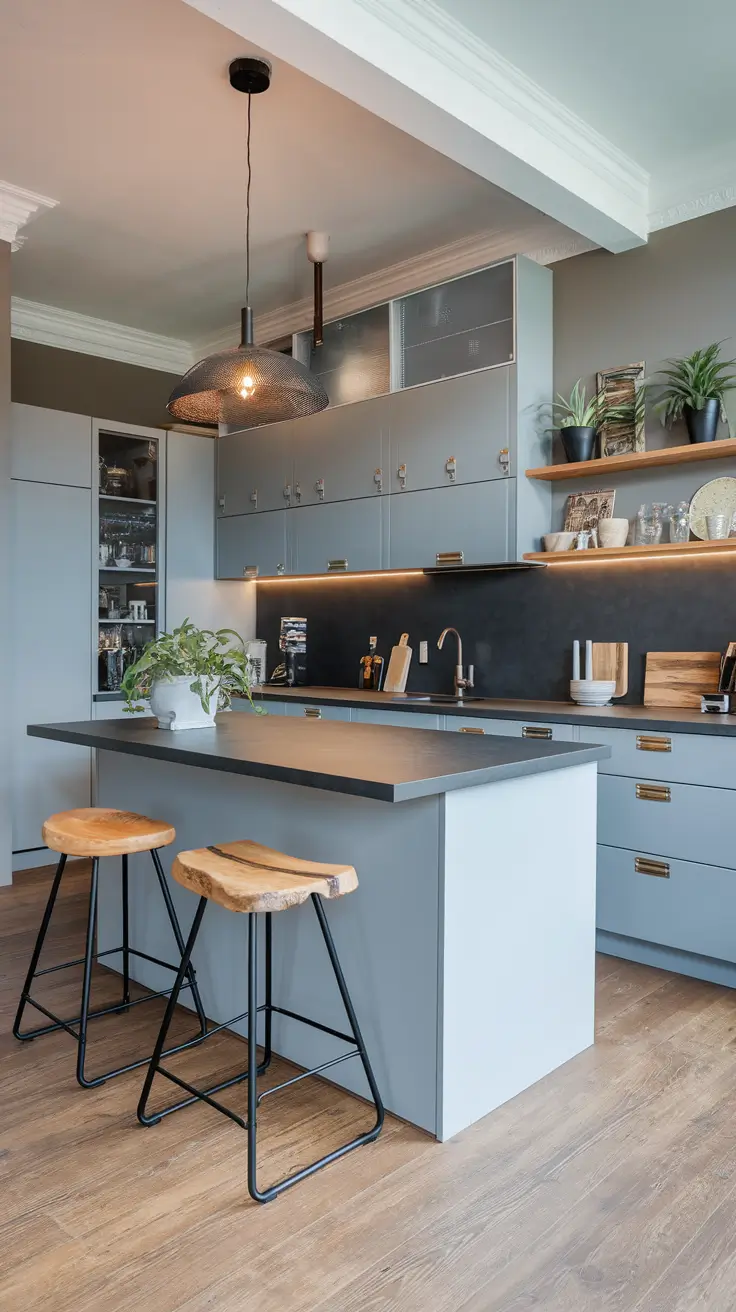
Warm grey flooring paired with oak introduces a modern rustic charm. Hardware in brushed stainless, graphite, or antique brass lends maturity. Zellige or satin-finished porcelain backsplashes create gentle movement, while green accents in stools or planters enliven the space.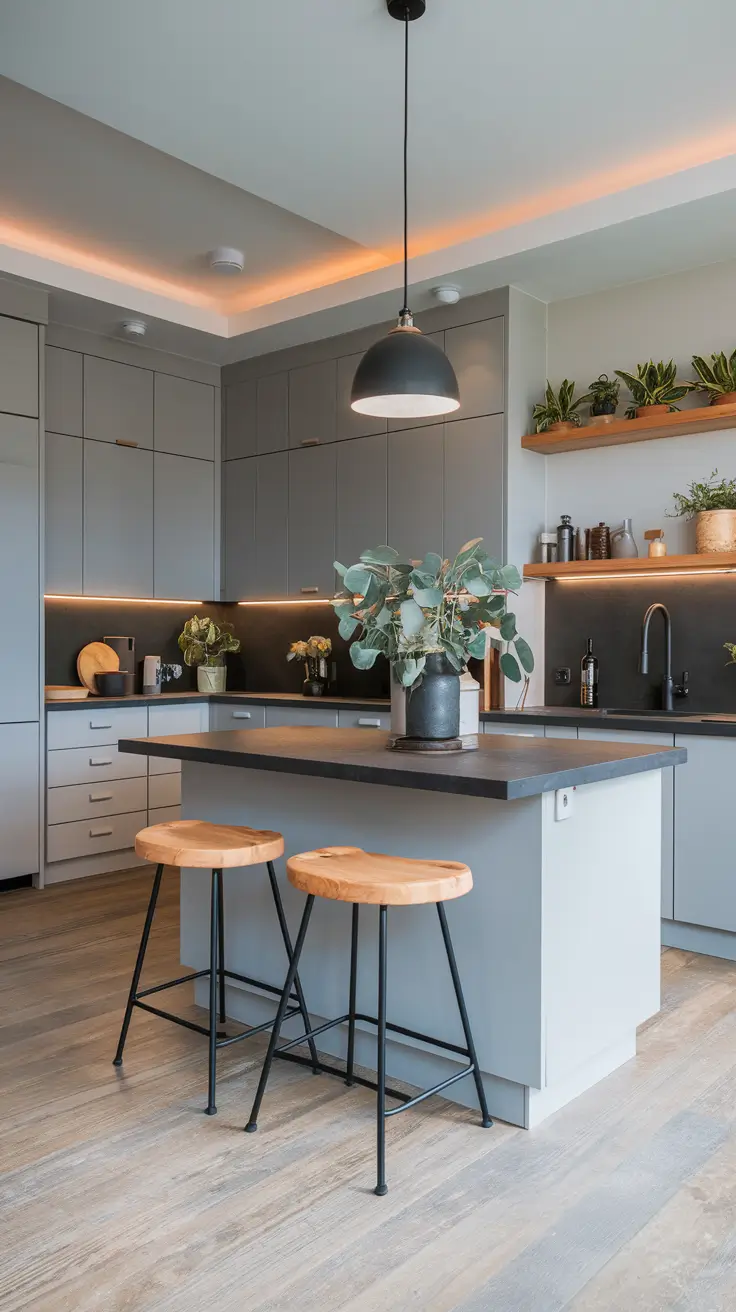
Lighting is key: warmer LEDs over seating areas and neutral-white task lighting prevent dullness. Incorporating fabric cushions or carpet runners softens the coolness, while natural wood open shelves provide visual respite and complete the composition.
Playful Geometry: Minecraft-Inspired Kitchen Aesthetics
When applied thoughtfully, geometric patterns inspired by pixelated games like Minecraft add a contemporary edge. Grid-like cabinetry, square flooring, and checkerboard patterns create a cohesive visual language. Cube-shaped hoods, boxy niches, and blocky stools reinforce the theme without overwhelming.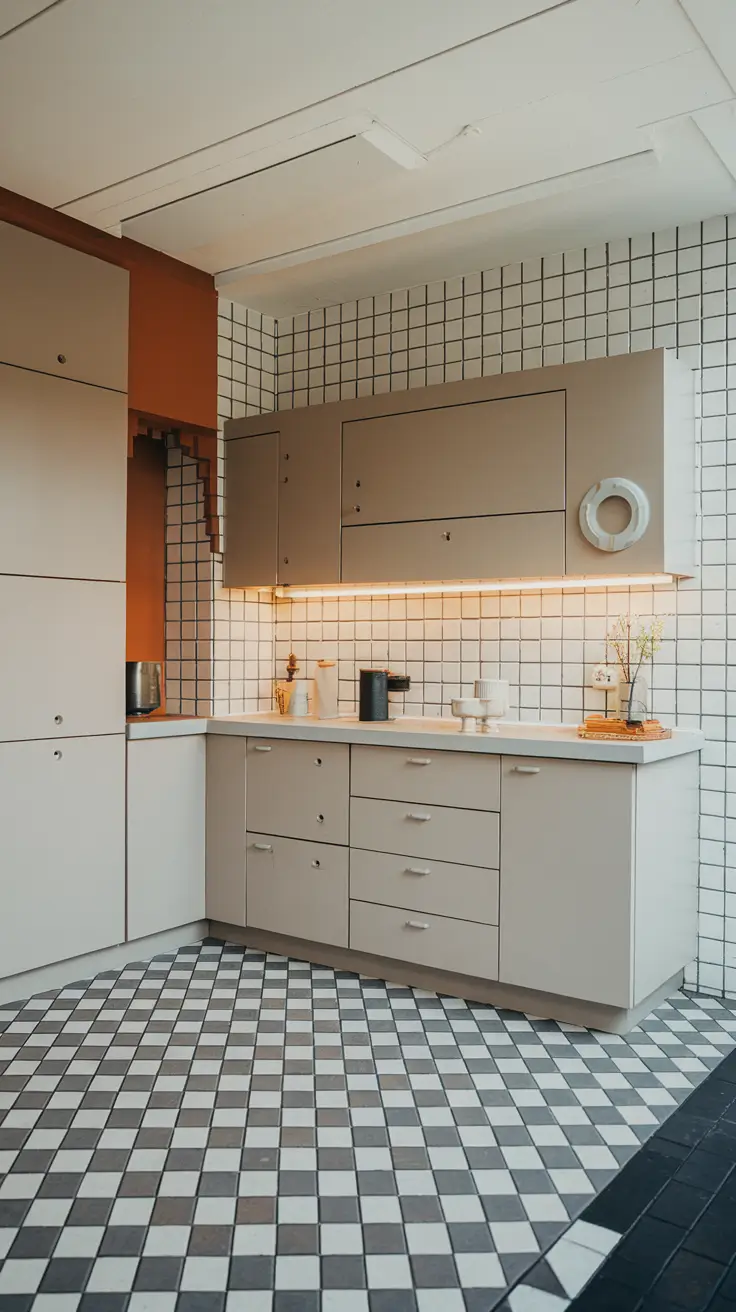
Neutral colors with a single saturated accent keep the space livable. This approach resonates with families who enjoy gaming culture and appreciate clean, modular design. Incorporating LED toe-kick lighting highlights the blocky forms, while pixel-inspired abstract art adds a subtle narrative.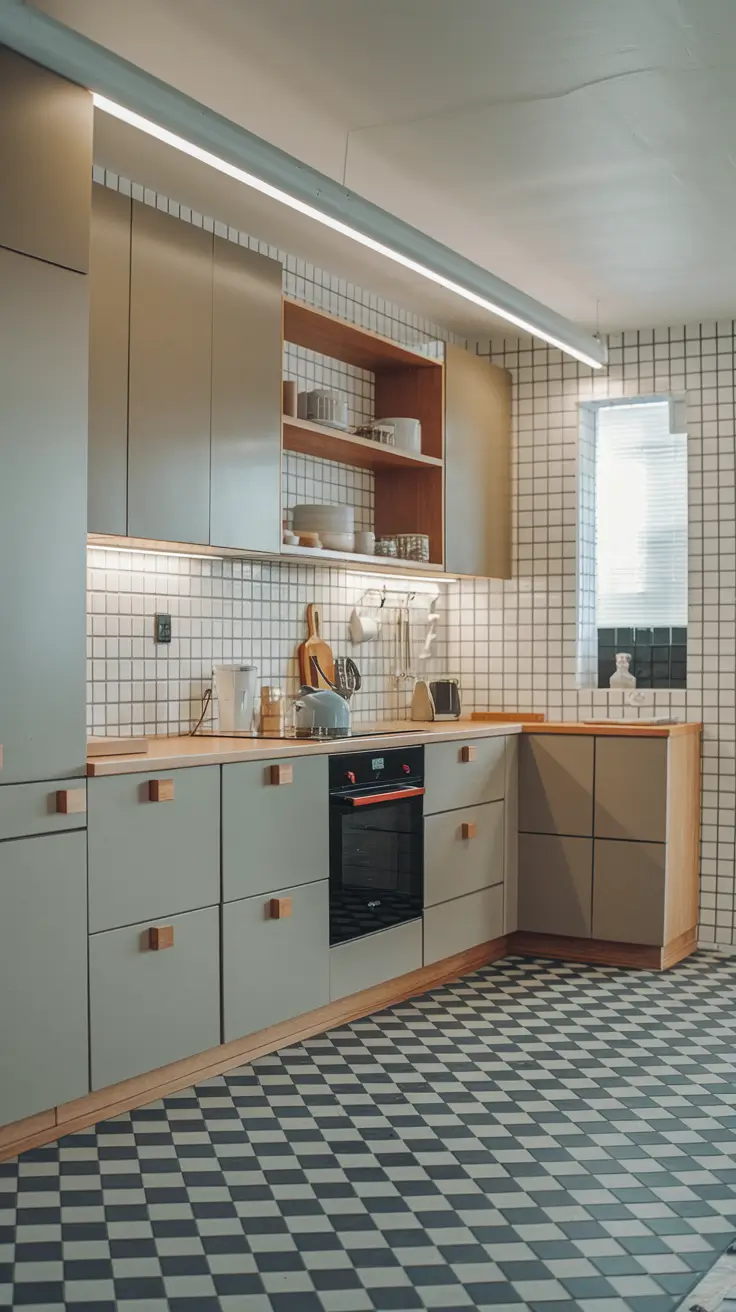
Marble Flooring: A Statement of Elegance and Function
Marble floors, when balanced with minimalist cabinetry, create an airy and grand atmosphere. Large-format tiles reduce grout lines, offering a sleek surface that is both beautiful and practical. Anti-slip and sealed finishes ensure durability.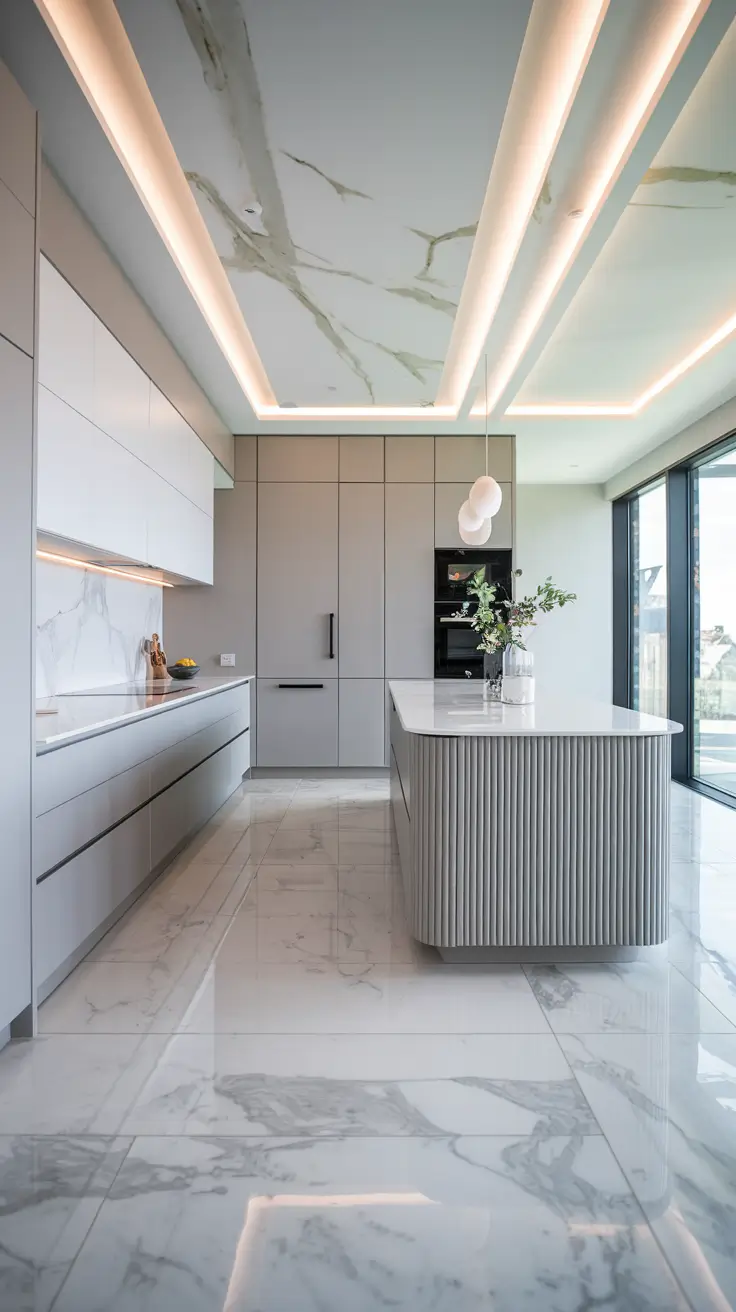
Matching floor and cabinetry in soft whites or greys maintains harmony, while toned-down quartz or porcelain counters prevent visual competition. Integrated appliances and plinths contribute to a seamless look. Rounded corner cabinetry adds softness to the stone-heavy base.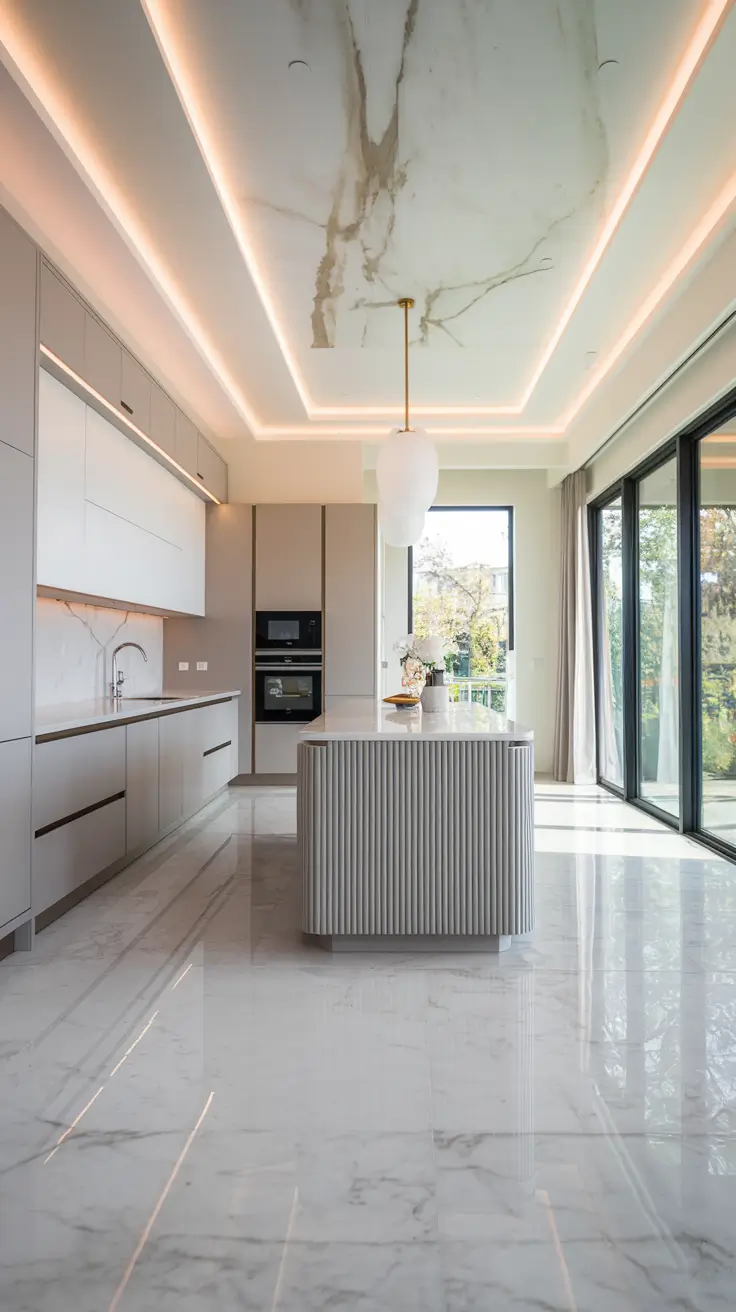
Even lighting distribution avoids harsh reflections, while area rugs near sinks and ranges protect the floor and add warmth. Felt pads on stools and silicone door bumpers prevent damage, and biannual sealing maintains the marble’s resilience.
Striking Black Kitchens: Sophistication Through Contrast
Black kitchens exude luxury when balanced with texture, light, and reflective surfaces. Matte or black-stained oak cabinetry with minimal profiles paired with turquoise quartz countertops and full-height backsplashes create a gallery-like effect. Low-iron glass uppers lighten the visual weight.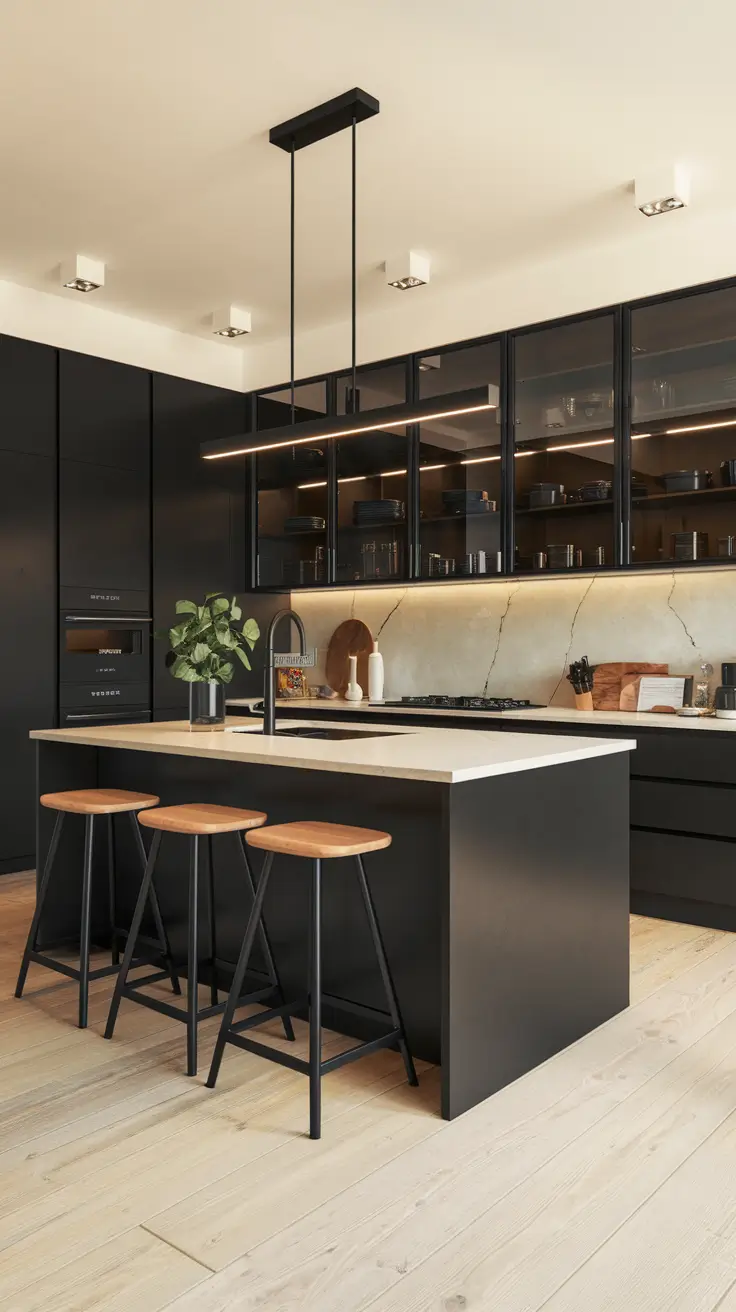
Textural variety—ribbed panels, polished stone, and burnt wood accents—adds depth. Natural wood stools and light plank flooring soften transitions. Reflective or reeded inserts in cabinetry enhance light play.
Layered lighting—task, ambient, and accent—prevents shadows and maintains elegance. Incorporating natural wood elements, greenery, and fabric window treatments introduces warmth and softness.
Efficient L-Shaped Kitchen Layouts for Modern Living
L-shaped kitchens optimize workflow by positioning the cooking, cleaning, and prep zones along two connected walls, forming an efficient work triangle. This layout suits apartments and smaller homes, opening into dining or living areas without requiring large islands.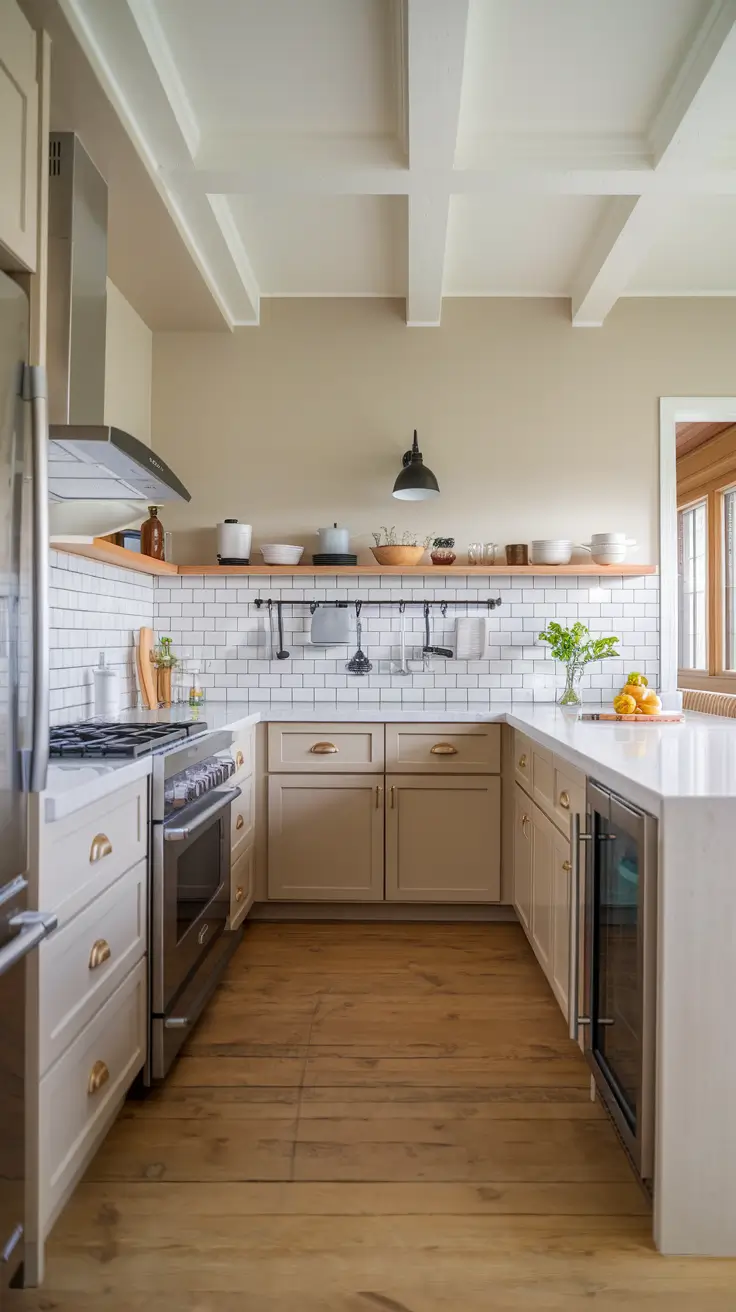
Tall storage units occupy the shorter leg, while the longer run accommodates prep space. Deep drawers near the range, tray dividers, and corner solutions like LeMans shelves maximize storage. Fridges placed at the end of a leg avoid traffic disruption. When space allows, a small peninsula with seating enhances functionality.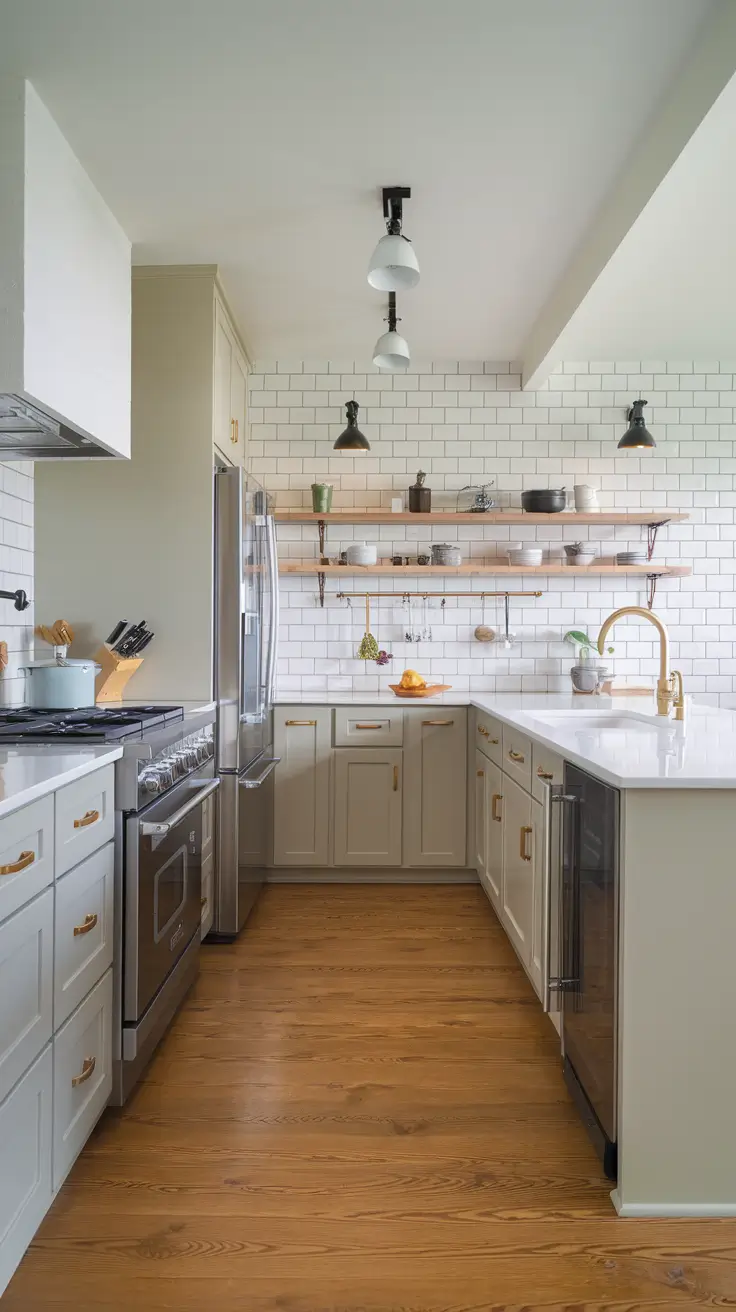
Continuous backsplash shelves and wall rails with shelving near corners eliminate dead space. Task sconces illuminate prep zones without glare, enhancing usability.
Mid-Century Modern Inspirations with a Contemporary Twist
Drawing from mid-century principles of clean lines, honest materials, and human scale, modern kitchens blend walnut or teak finishes with white surfaces and graphic accents. This fusion creates a relaxed yet luxurious environment that supports effortless cooking.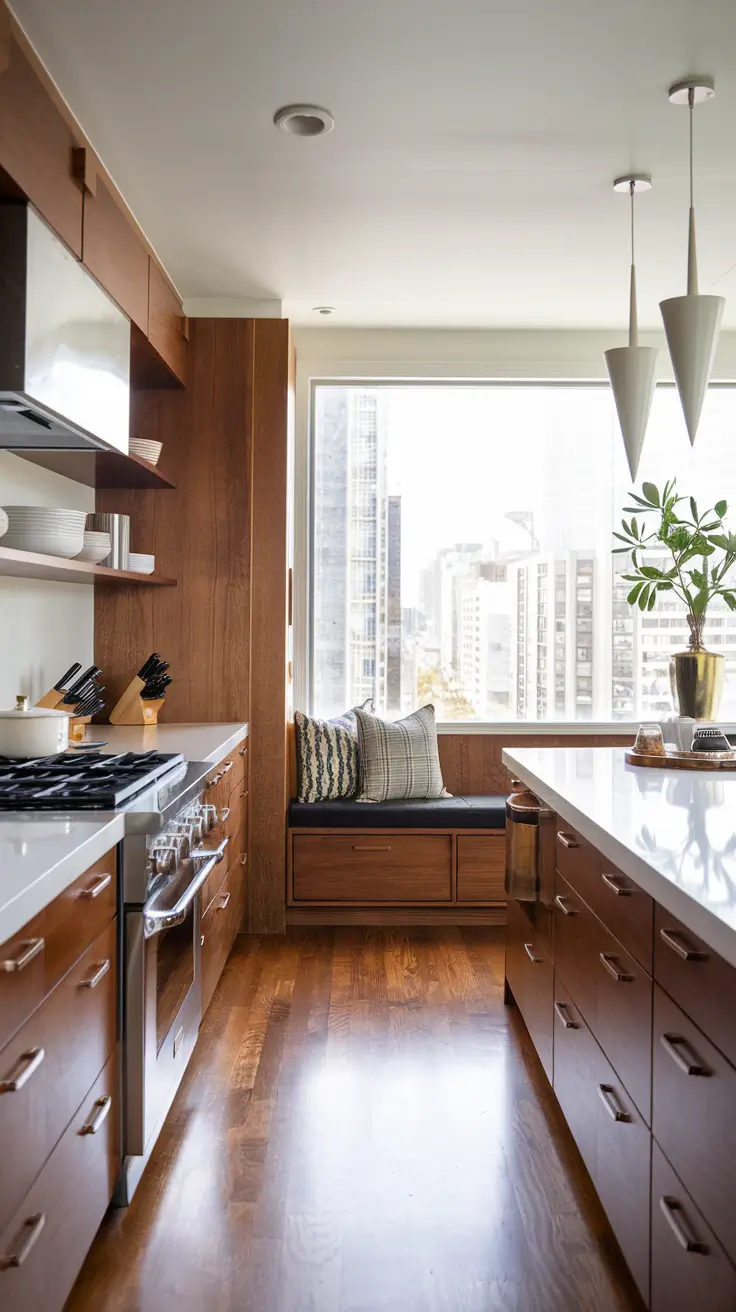
Slab walnut doors paired with solid-surface white counters and ribbed glass appliance garages evoke the era without kitsch. Saucer or cone-shaped pendants reference mid-century style, while integrated finger pulls and sleek induction cooktops maintain a streamlined look.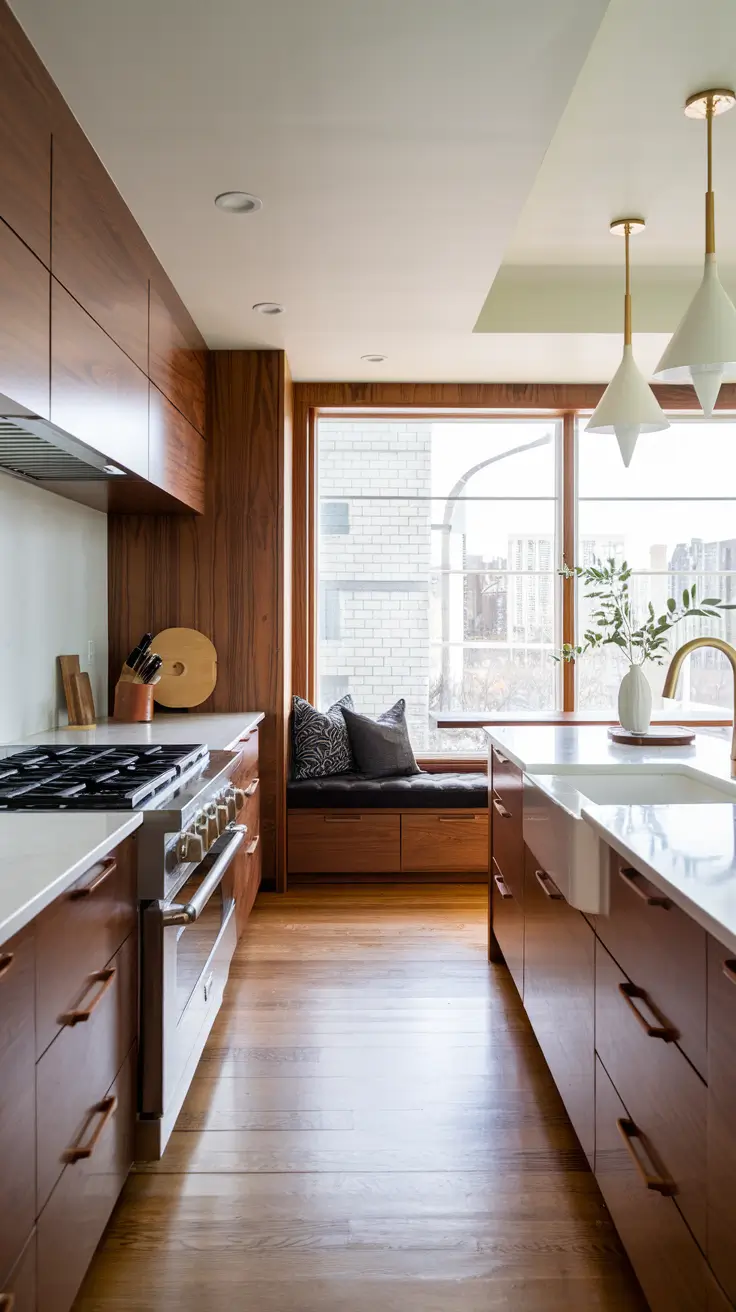
Incorporating hidden storage benches beneath windows offers cozy seating and additional storage without cluttering the space. This style balances timeless appeal with modern performance.
Reimagining Luxury: Soft Edges and Warm Metals
Building on previous luxury trends, contemporary kitchens soften edges and introduce warmer metal finishes and nuanced lighting controls. This approach prioritizes comfort and understated elegance.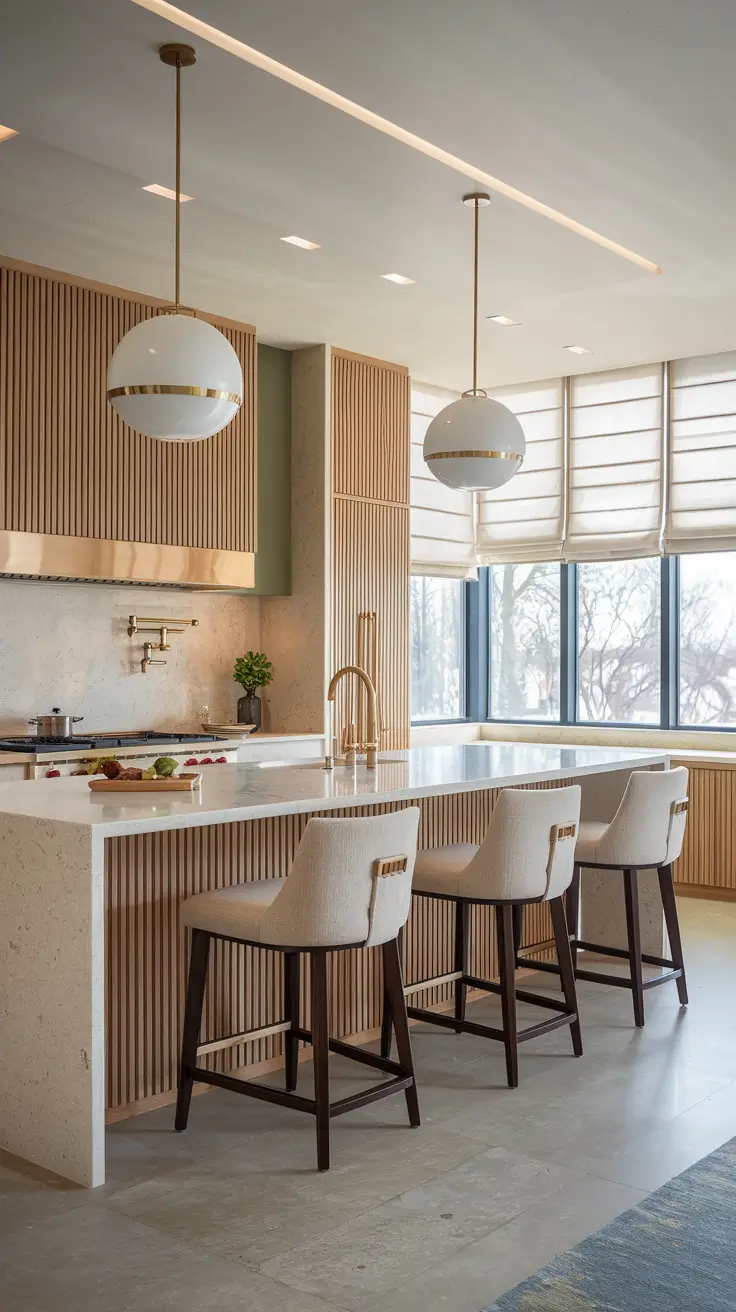
Paneling arranged in cooling columns conceals hoods and creates niches for coffee or tea stations wrapped in stone. Brushed nickel or soft brass fixtures complement performance fabrics on stools. Accents in luminous beige, deep green, and natural wood add personality without overwhelming the palette.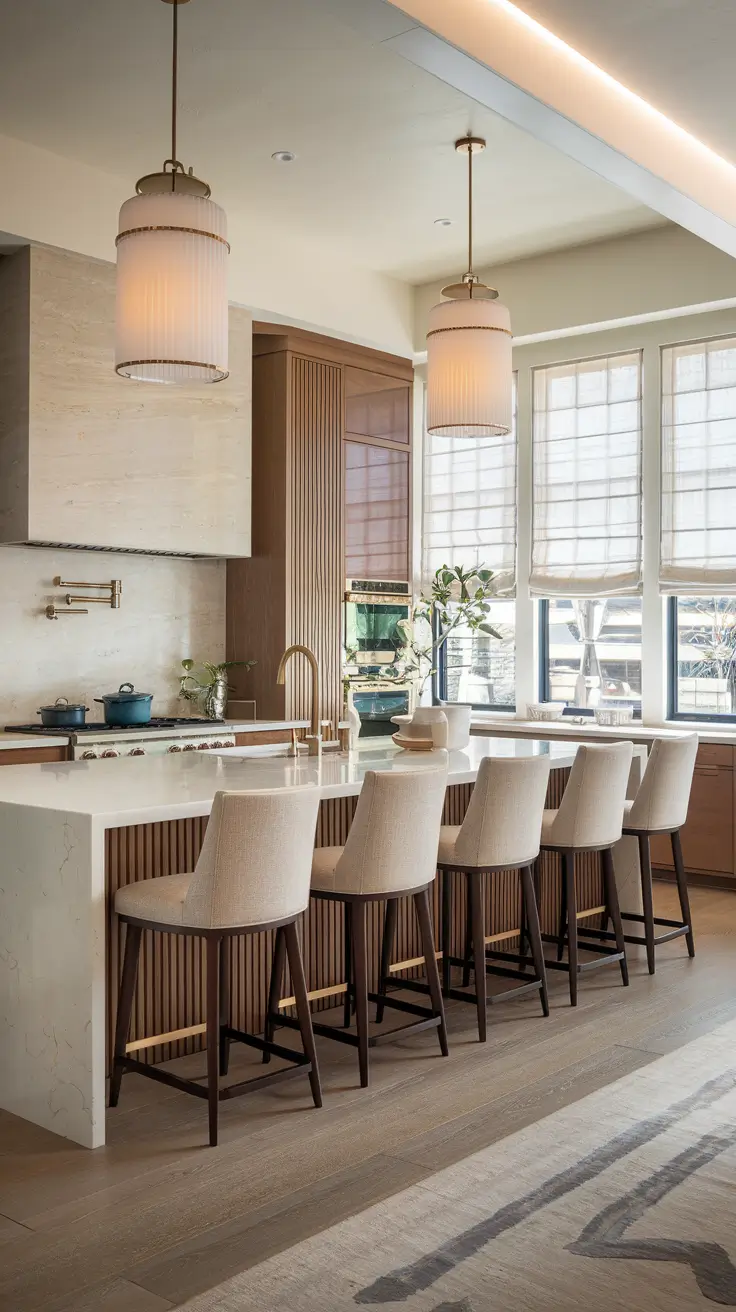
Investing in quality hardware, hinges, and lighting in frequently used areas enhances daily comfort. Incorporating solar or light-equated dimmers and multi-shade window treatments maintains consistent tone throughout the day and night.
Emerging Trends Shaping Contemporary Kitchens
Current trends emphasize light practicality, refined geometry, and nature-inspired palettes. Open shelving is curated and minimal, while pantries, recycling centers, and appliance garages increase in prominence. Islands become sleeker with softened angles, and sustainable materials gain importance.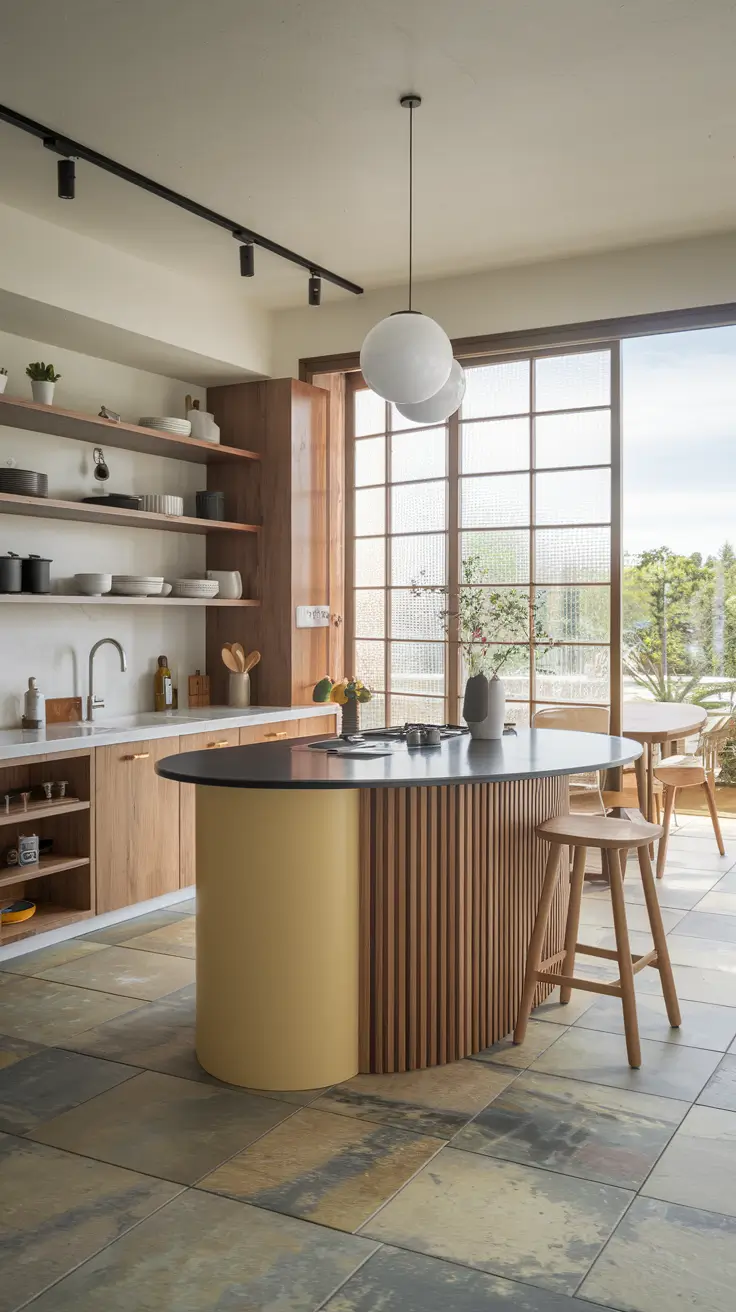
Matte porcelain or sintered stone countertops, low-sheen cabinetry, and mixed wood tones add depth. Hardware shrinks in scale, lighting becomes smarter, and ventilation systems are discreet. Open concepts persist, enhanced by low partitions, glass, or storage walls for view control.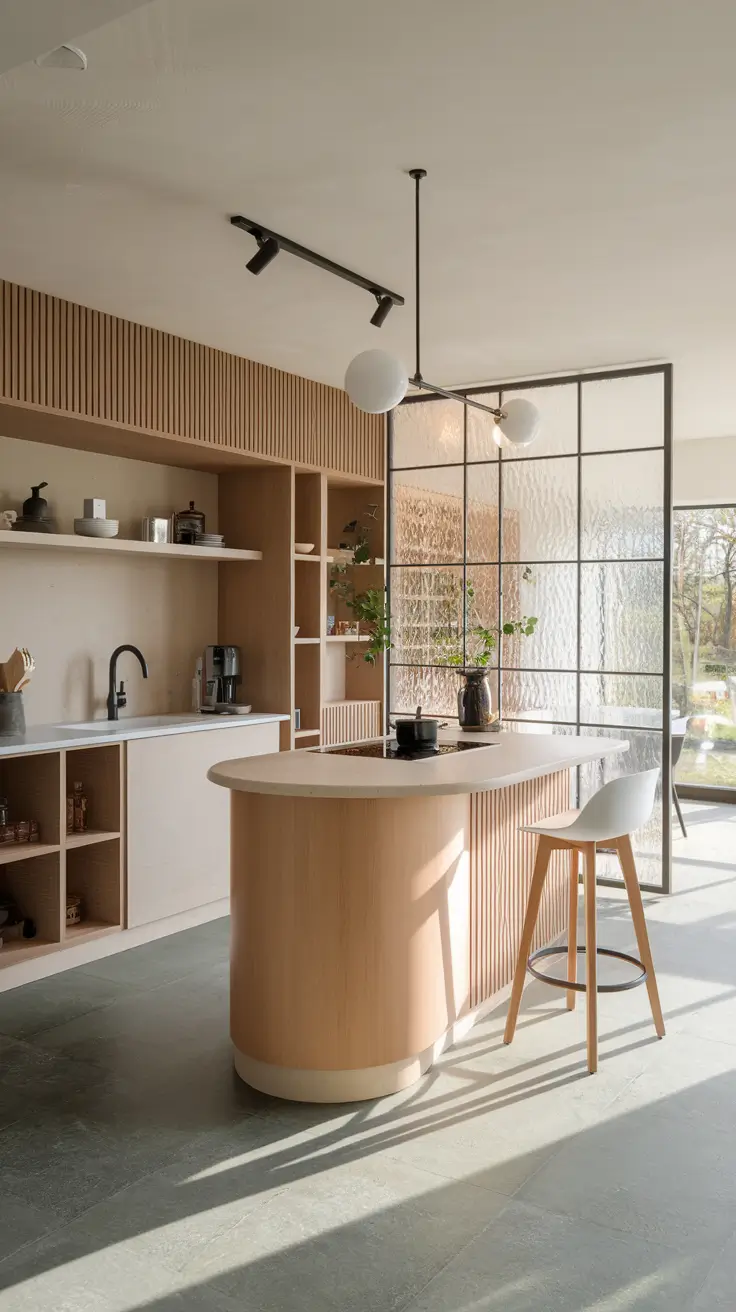
Prioritizing lighting and organization over decorative elements leads to long-term satisfaction, as supported by industry surveys. Features like dedicated charging drawers with cable management and toe-kick air purifiers enhance everyday convenience.
Grey as a Design Statement: Texture and Tone
Grey transcends background status by incorporating tone and texture to create dynamic spaces. Contrasting mid-grey bases with lighter uppers and honed counters introduces movement. Zellige or satin porcelain tiles add subtle pattern, while oak stools and shelves warm the palette.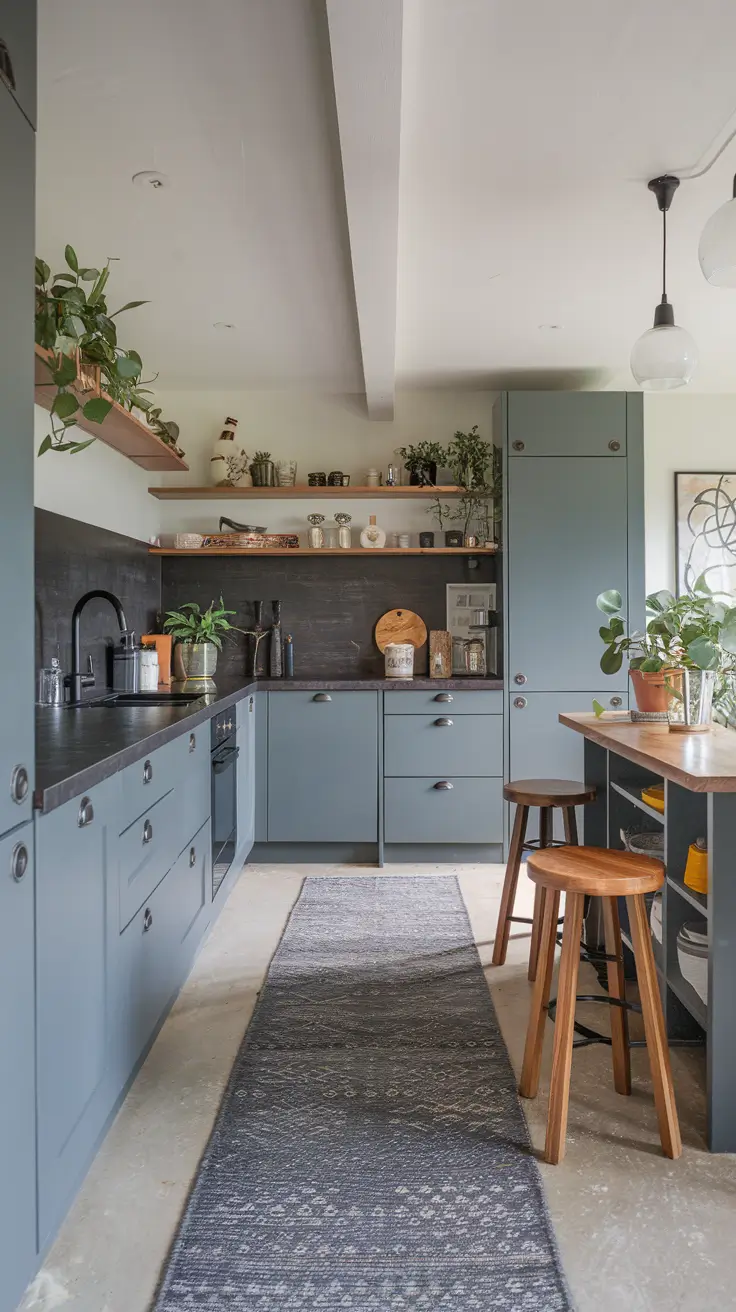
Graphite taps and discreet pulls complete the look. Incorporating plants, ceramics, and woven textiles enlivens the space. For those favoring cooler palettes, intensifying textures and deepening colors refresh the aesthetic.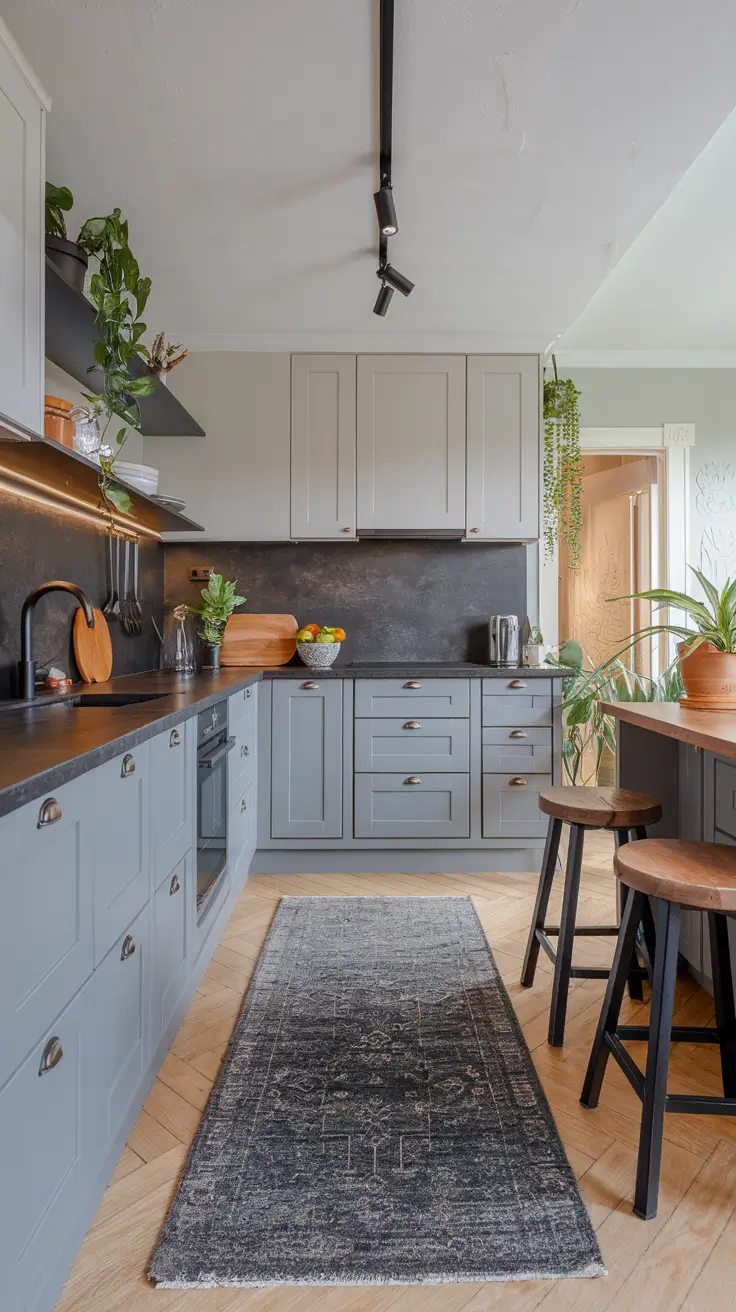
Adding a glass-reeded open cabinet breaks solid expanses and reflects light, while soft runners and acoustic treatments enhance comfort.
Open-Plan Kitchens: Clarity and Connectivity
Open-concept kitchens prioritize clear sightlines, spacious circulation, and fuss-free cooking and entertaining. Central social islands paired with serene, integrated perimeter cabinetry create balanced environments. Large windows flood spaces with natural light, making even compact kitchens feel expansive. Acoustic rugs and upholstered stools manage sound in open layouts.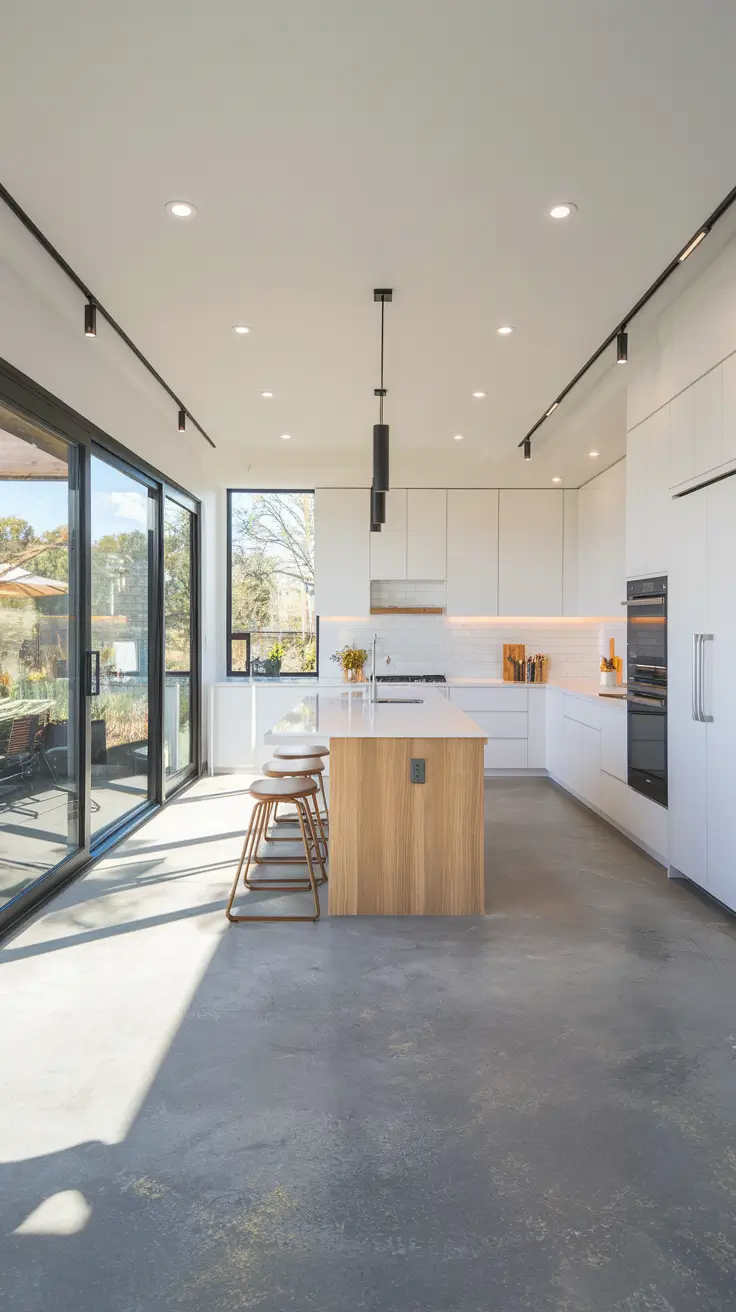
Furnishings include sizable islands with seating, quiet L-shaped perimeters, and hidden walk-in pantries for small appliances. Durable porcelain flooring extends outdoors via pocket glass doors, while thin-framed walls maintain architectural sharpness. Layered lighting—track pendants, under-cabinet task lights, and ceiling spots—eliminates glare.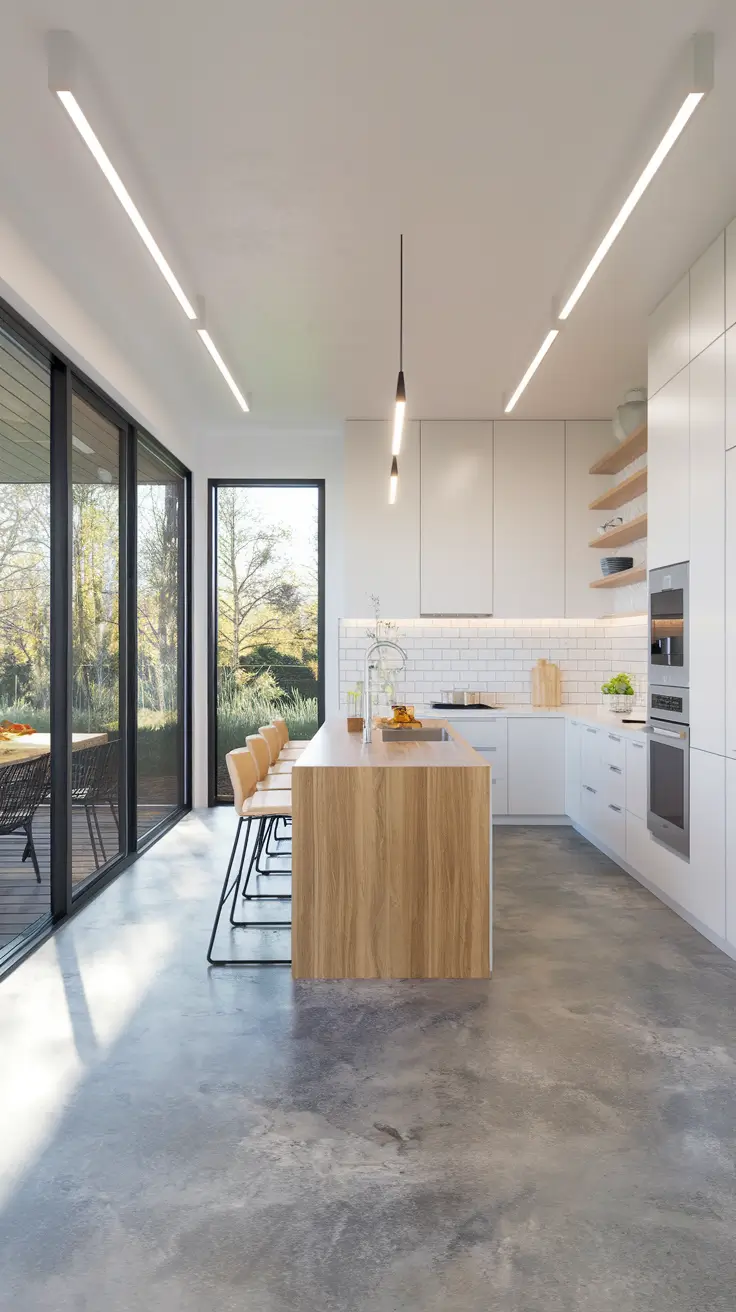
Following NKBA guidelines, aisle clearances of 42 inches for single cooks and 48 inches for multiple cooks ensure smooth navigation. Simple cabinetry with built-in pulls or touch-latch doors maintains timeless elegance. Zoning islands into prep, serve, and socialize areas optimizes flow.
Additional features include drop-off zones at entrances, charging pullouts, soft-close waste sorting, and quiet hoods rated below 50 dB to facilitate conversation.
Timeless White Kitchens with Warmth and Texture
White kitchens remain a classic choice, blending warmth, texture, and contrast beyond pure white. Satin or matte cabinetry paired with subtly veined slabs and pale oak or walnut accents create inviting spaces. This approach complements black accents for definition and balances light in rooms with limited daylight.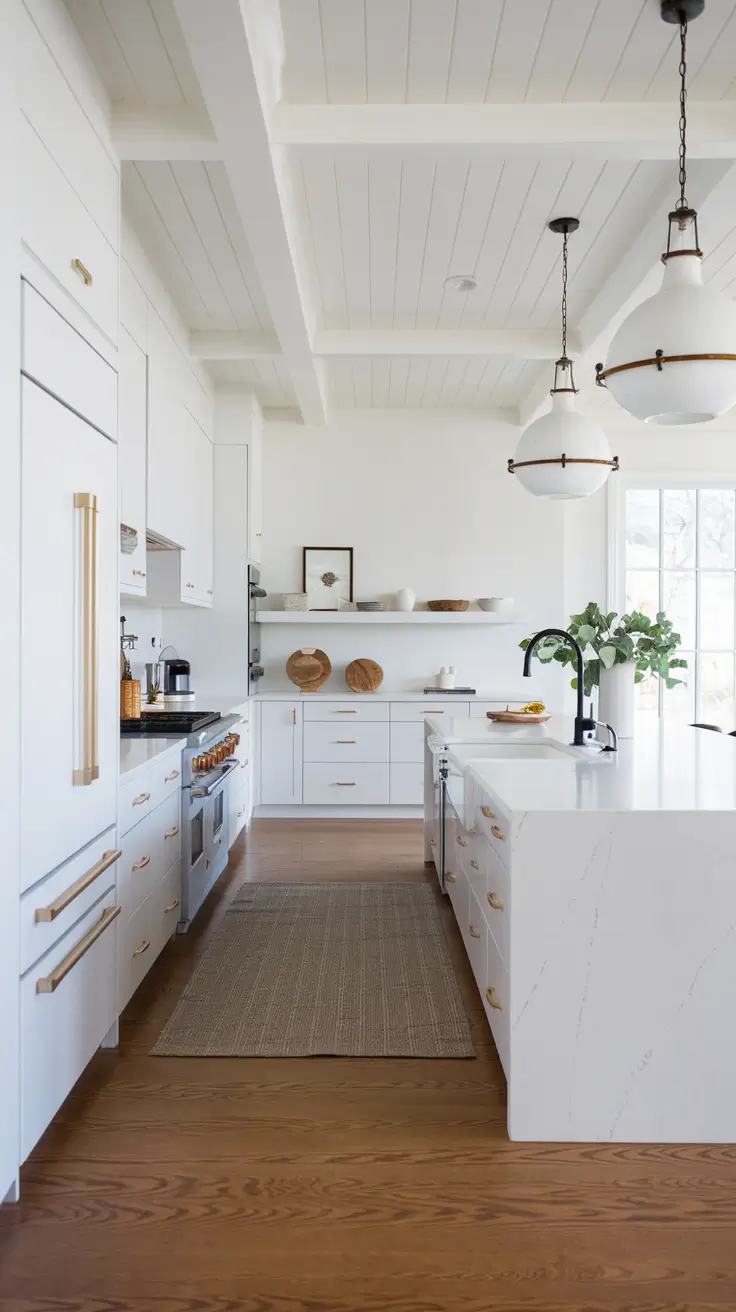
The palette centers on white perimeter cabinetry, quiet stone or quartz counters, and a standout element like a sculptural island or fluted paneling. Large-format porcelain flooring or honed marble adds drama and functionality. Paneled refrigerators and carefully chosen hardware ground the design.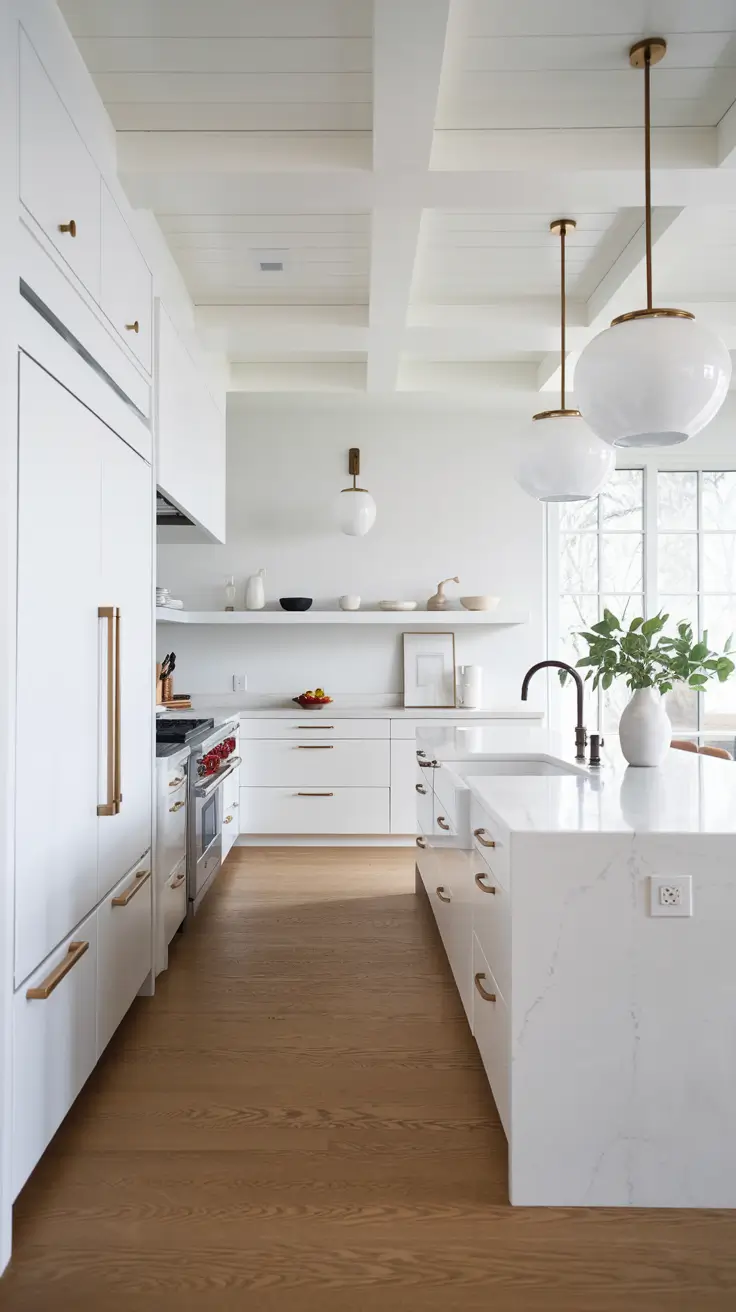
Matte or satin finishes minimize fingerprints, while ribbed glass cabinets and tambour appliance garages introduce texture. Narrow art ledges with framed prints personalize the space without clutter. Contrasting elements like black stone snack ledges or stained oak bars add interest, complemented by layered window treatments.
Natural Wood and White: A Harmonious Blend
Combining white cabinetry with natural wood elements creates relaxed, character-rich kitchens that endure. Rift-cut white oak islands paired with white perimeter cabinets balance warmth and brightness, fitting both open and closed layouts. This style suits small spaces by infusing coziness without relying on color.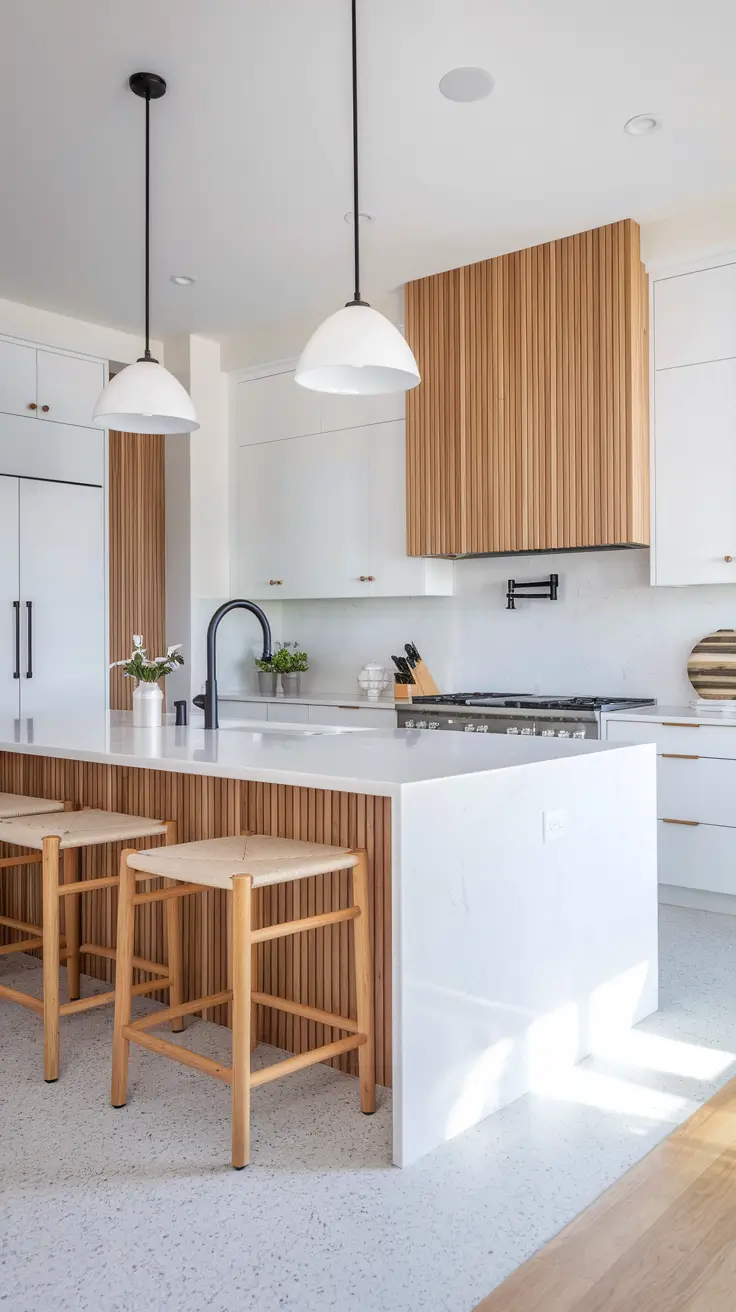
Waterfall edges showcase wood grain, while white uppers prevent visual heaviness. Fluted wood accents on hood surrounds or bar backs add subtle movement. Woven leather or paper cord stools introduce tactile warmth, contrasted by slim black faucets and pulls. Pale oak or terrazzo-like porcelain floors complete the look.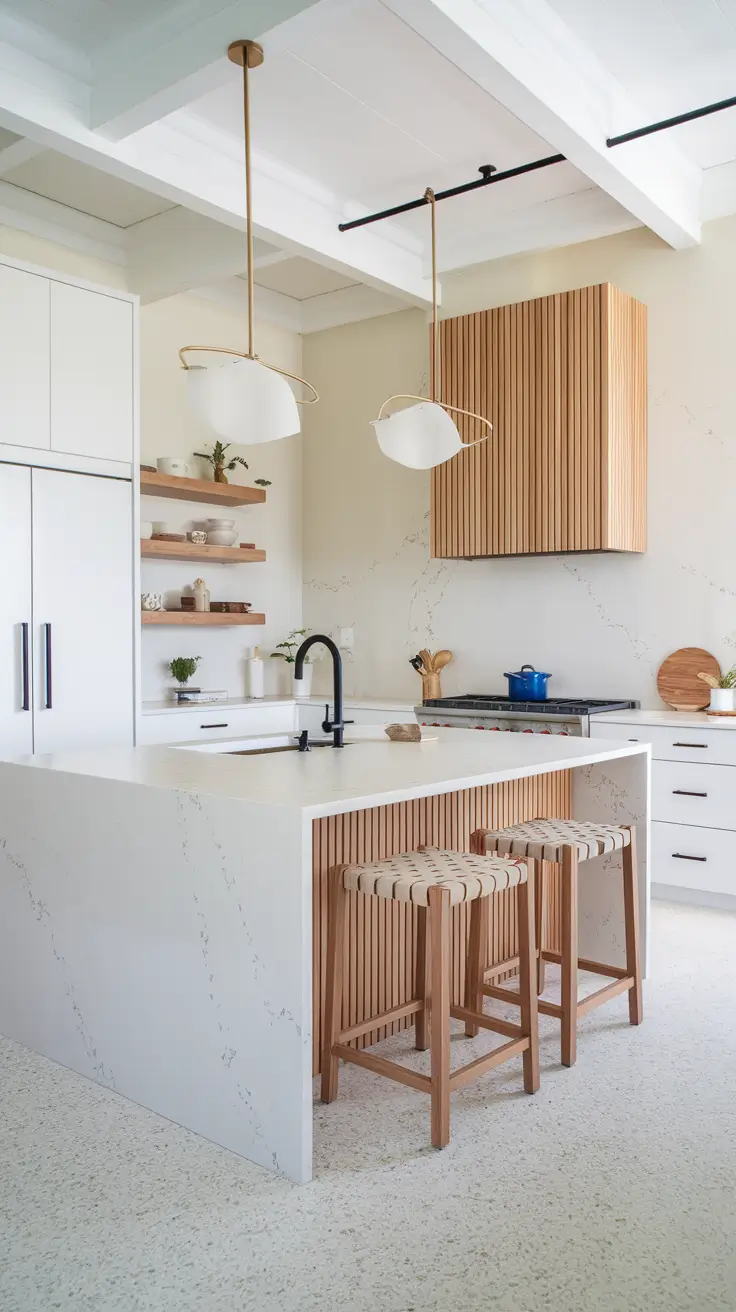
Clients appreciate how this palette photographs beautifully and ages gracefully, with scuffs blending into wood rather than painted surfaces. FSC-certified woods and low-VOC finishes future-proof kitchens, while UV-resistant coatings protect against sun damage. Discreet glass cabinets, charging nooks, and small herb gardens enhance functionality and natural themes.
Sources of Inspiration for Unique Kitchen Designs
Inspiration is drawn from diverse sources to ensure personalized, original designs. European trade fairs, evolving trends, and digital platforms like Minecraft and Bloxburg inform spatial and aesthetic choices. Observing lighting and storage solutions in restaurants and boutique hotels offers practical insights.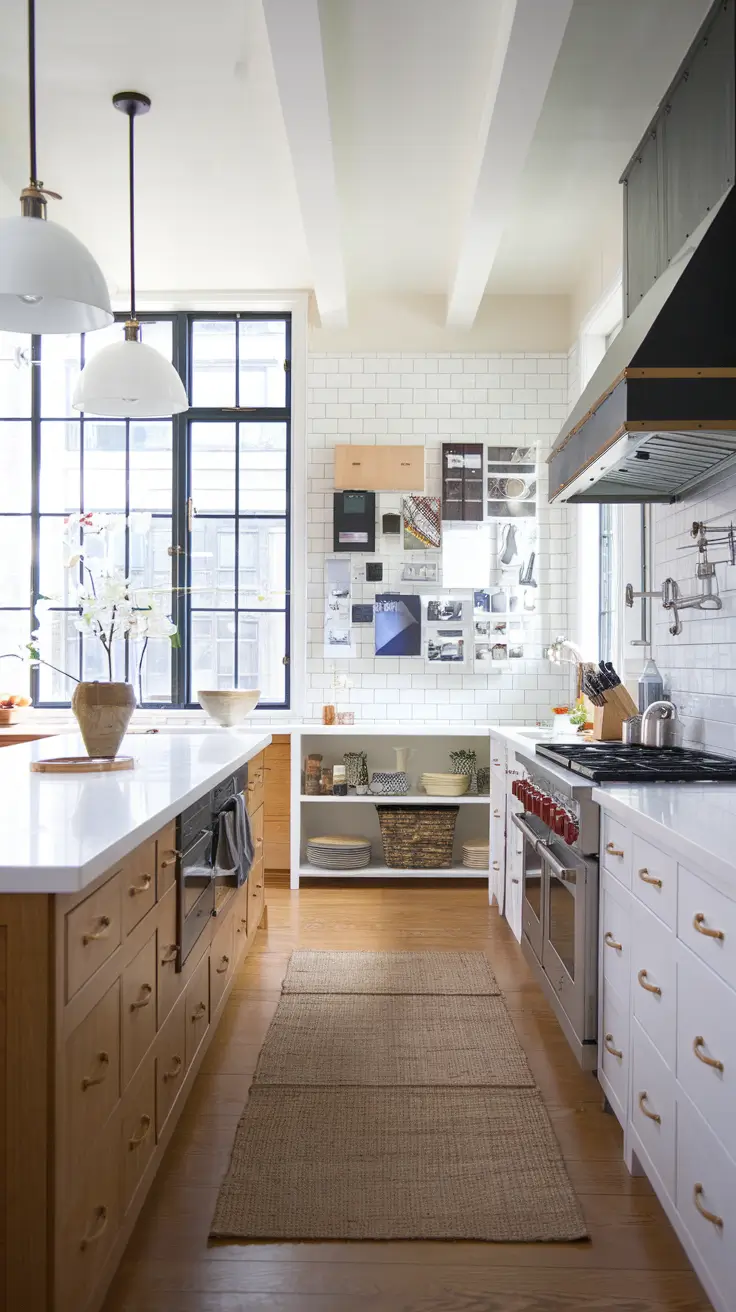
Design processes begin with mood boards featuring floor samples, paint chips, metal finishes, and countertop options. Plans explore island-centric layouts and work triangles versus zoned approaches. Material samples are provided for tactile evaluation. Complex projects benefit from 3D renderings to assess sightlines and spatial relationships.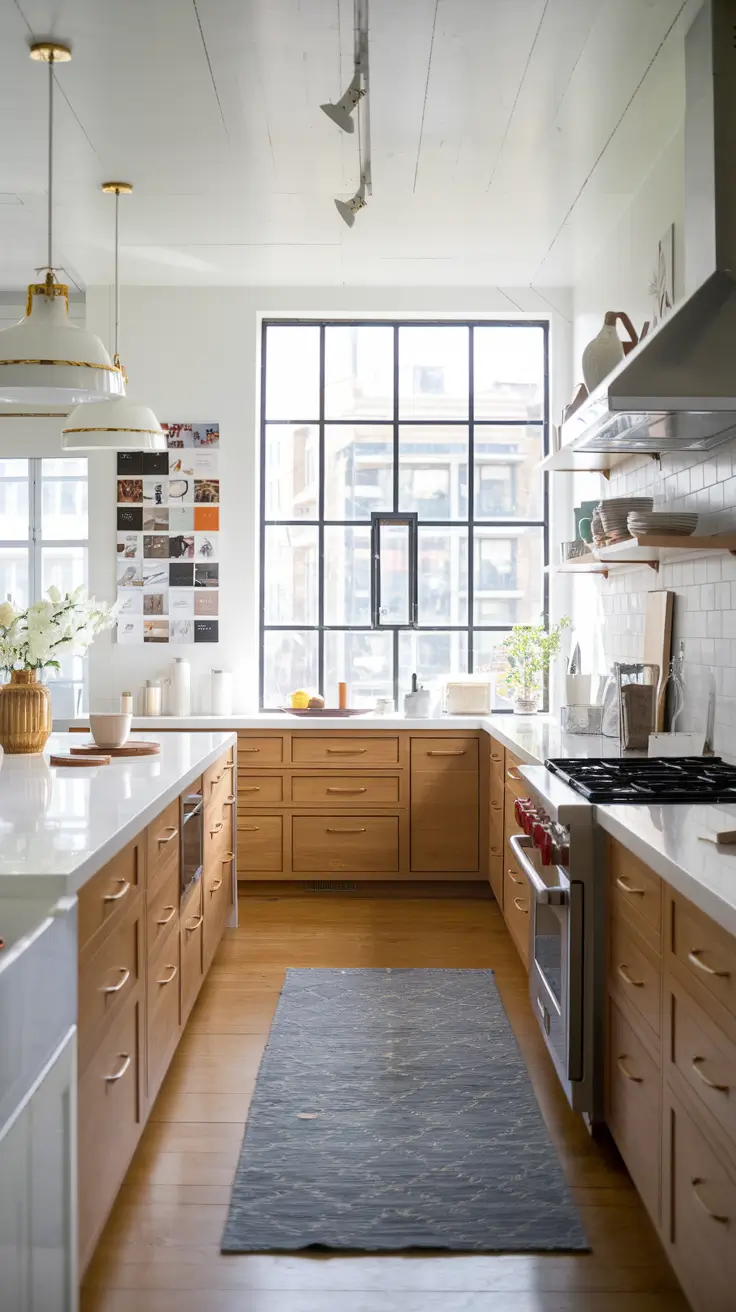
Architectural discipline, as emphasized by leading design publications, favors bold, singular gestures over numerous minor details. Visiting stone yards, appliance showrooms, and cabinet makers provides invaluable hands-on understanding of finishes, seams, and reveals.
Black Kitchens: Balancing Drama and Practicality
Black kitchens achieve sophistication through balanced light, texture, and reflection. Black-stained oak or matte laminate cabinetry with minimal profiles pairs well with glazed surfaces and porcelain slabs mimicking marble for durability. In smaller spaces, black is concentrated on base units and islands, with lighter uppers to maintain openness.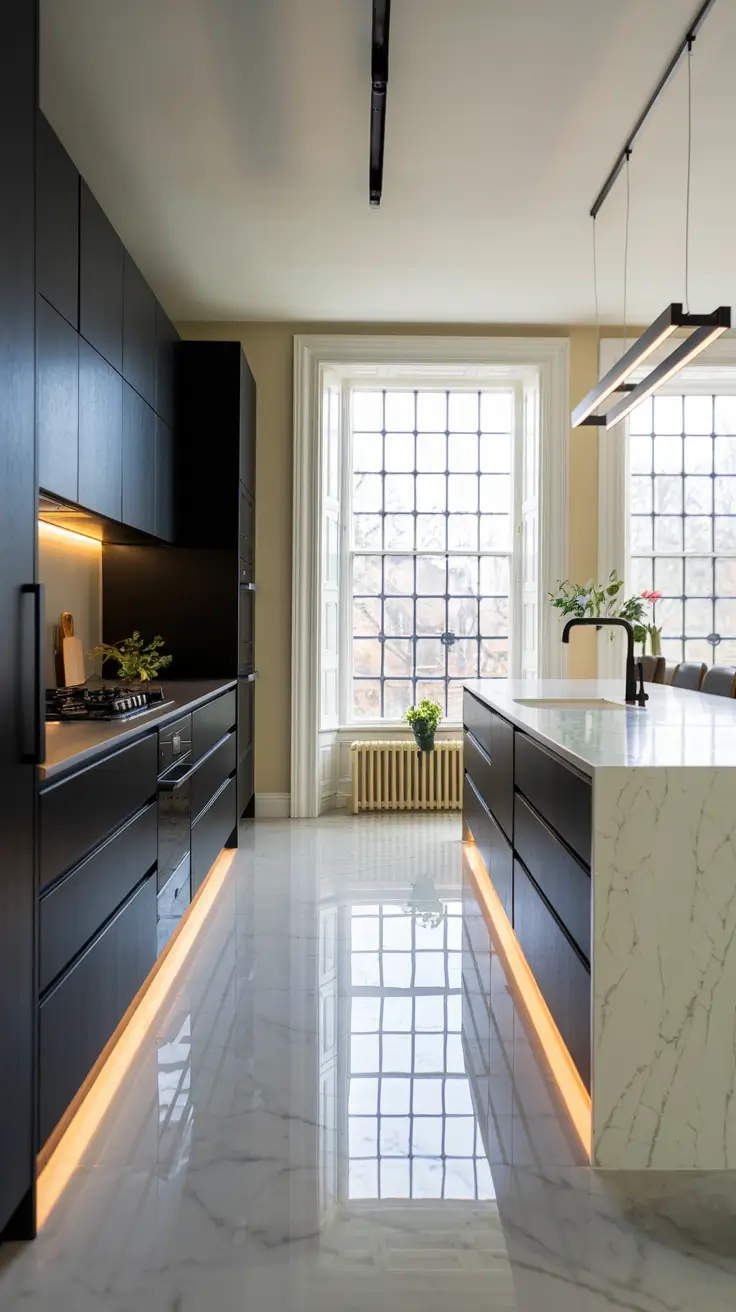
Fingerproof finishes, fluted black glass, and porcelain slabs ensure longevity. Polished marble flooring adds grandeur without sacrificing practicality. Slim brass or stainless steel inlays elevate cabinetry, while black composite sinks with pull-out faucets enhance functionality. Warm white LED cabinet lighting showcases contents against dark backgrounds.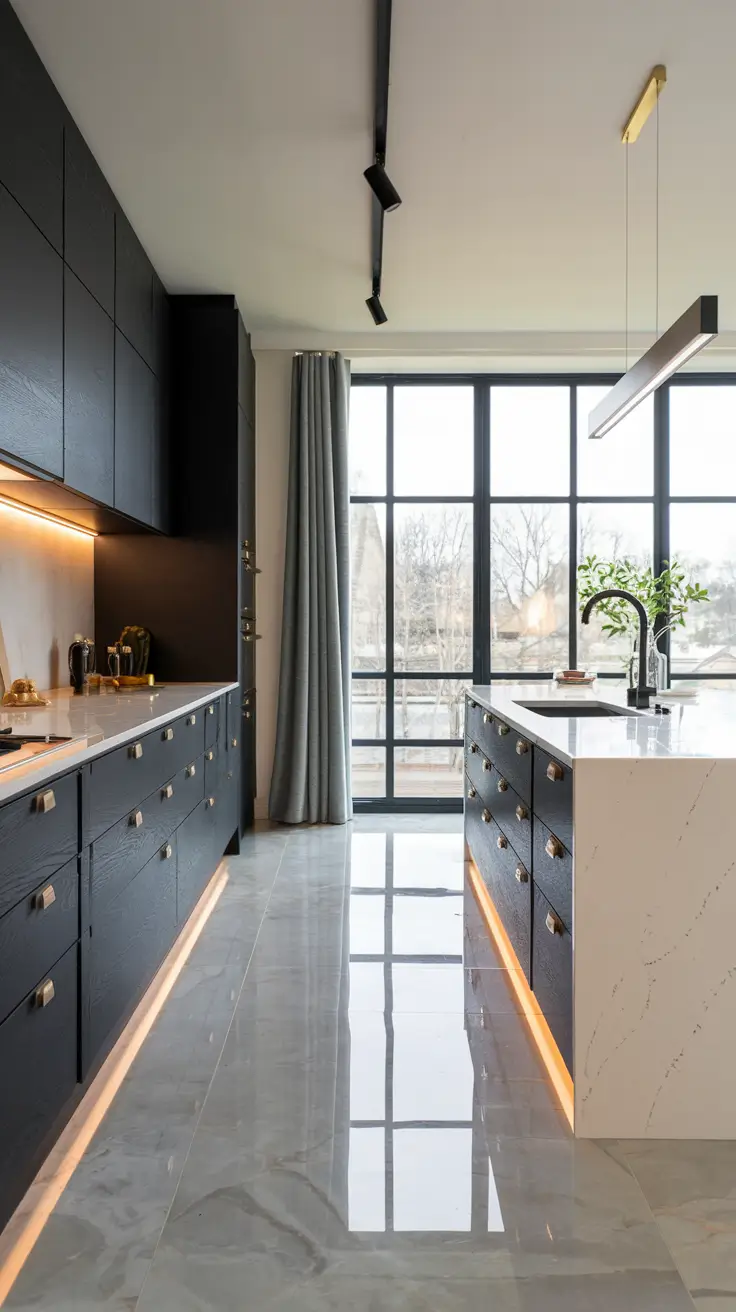
Contrast is key to preventing heaviness, with grey counters and layered lighting maintaining balance. Matte cabinetry paired with reflective backsplash tiles enhances light play. Natural wood seating, greenery, and fabric window treatments soften the overall effect.
Bloxburg-Inspired Minimalist Kitchens
Bloxburg aesthetics emphasize clean geometry, neutral tones, and minimal clutter. Blocky volumes in white, camel, and black with ample negative space create serene, functional kitchens ideal for small living.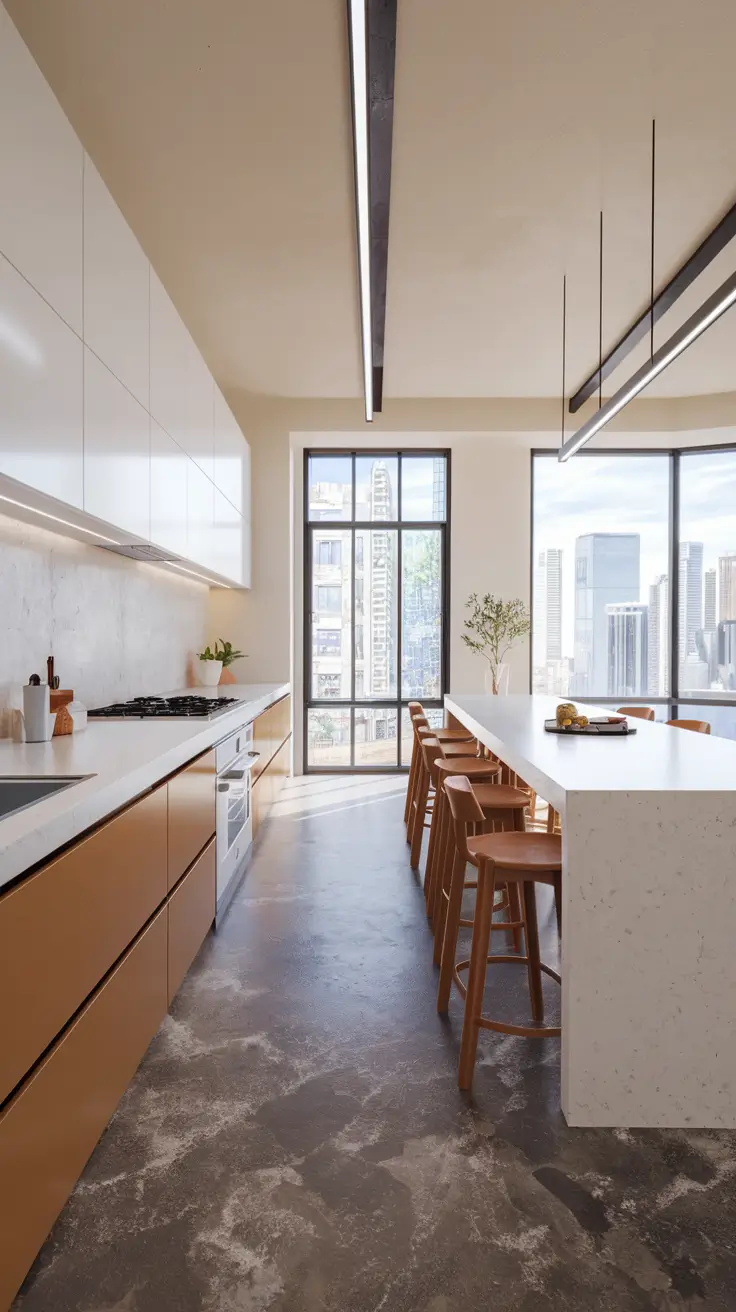
Flat-panel cabinetry, seamless reveals, large islands doubling as dining tables, and slim-framed windows highlight clean massing. Lighting is minimal, with under-cabinet lines and low-profile island lamps. Wide-plank oak or concrete-look porcelain floors ground the space. Accessories are purposeful and sparse.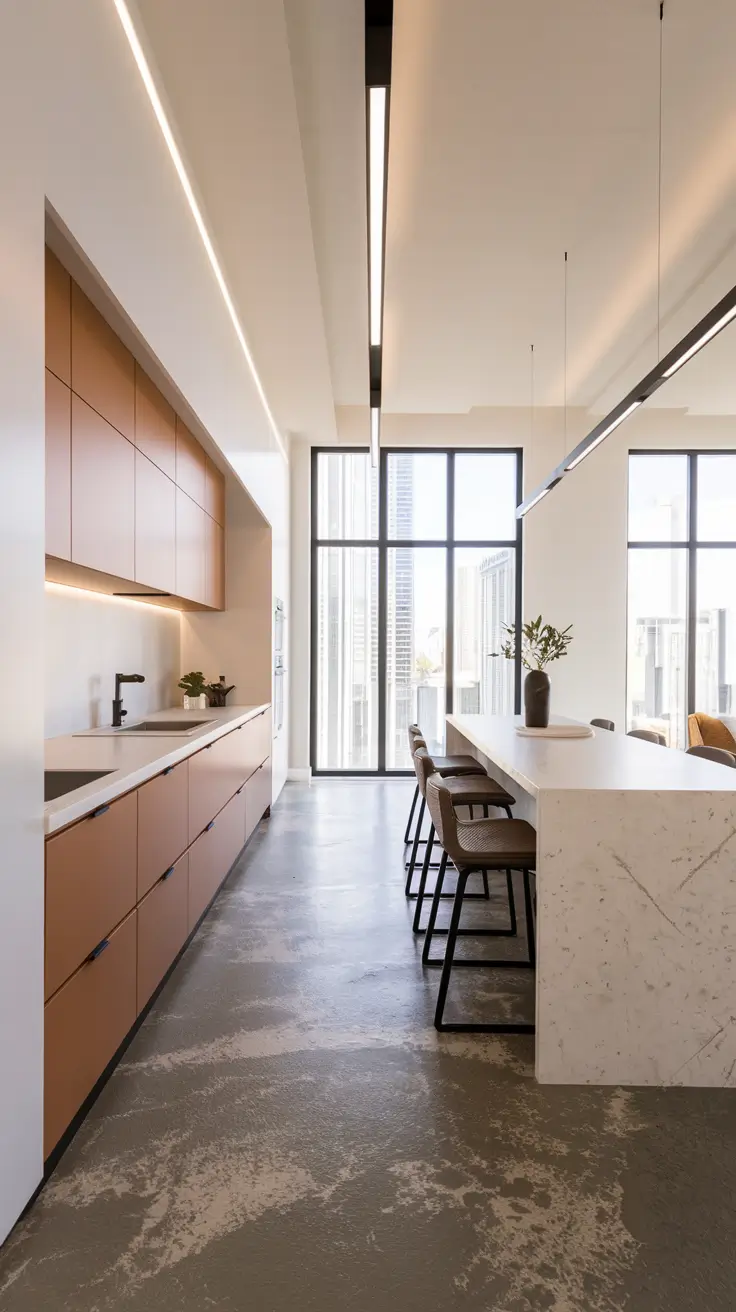
Using three tones throughout simplifies maintenance and enhances architectural clarity. Minimal hardware and quality drawer inserts ensure interiors are as polished as exteriors. Soft elements like upholstered stools and textured runners add warmth. Sheer window treatments, herb planters, and sculptural pendants complete the look.
Effective Planning for Modern Kitchens
Successful kitchen design begins with aligning client needs with spatial constraints, choosing layouts such as L-shape, U-shape, or island-centric plans. Maintaining clear circulation and defining kitchen versus living zones are essential. Islands require at least 36 inches of clearance on all sides, with overhangs sized for seating.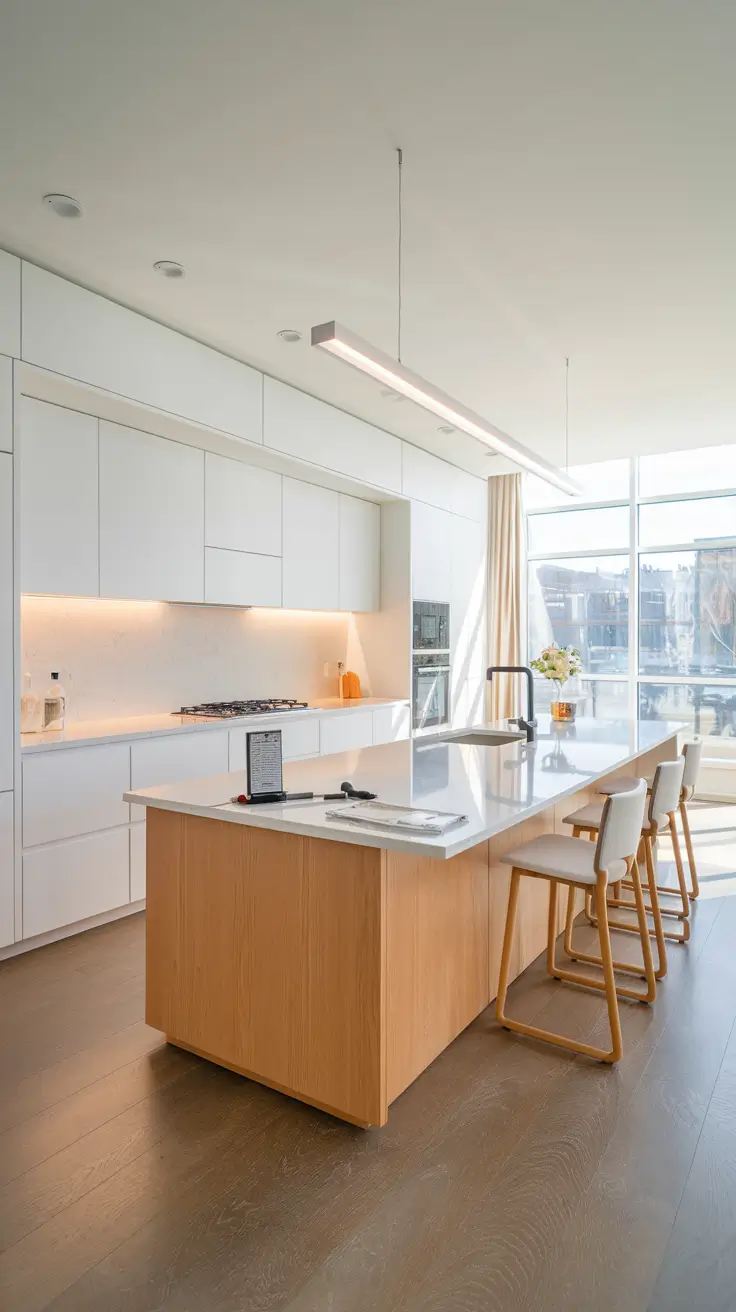
Traditional work triangles suit smaller spaces, while zoned layouts accommodate multiple cooks in larger kitchens. Islands sized proportionally to rooms—around 90 by 180 centimeters—balance function and scale. Strategic placement of pantries, drawers, and pull-outs optimizes storage. Early planning of outlets, lighting, and windows prevents costly changes.
Budget contingencies, permit checks, and construction sequencing—from demolition to cabinetry and backsplash installation—ensure smooth project flow. Predefined punch lists facilitate hassle-free completion.
Rustic Elements in Contemporary Kitchen Designs
Incorporating rustic charm involves honest materials, soft textures, and clear functionality. Flush cabinetry complements exposed beams, limewash walls, and aged metals, creating contemporary yet warm spaces. Maximizing natural light through large windows and open L-shaped layouts with social islands enhances usability.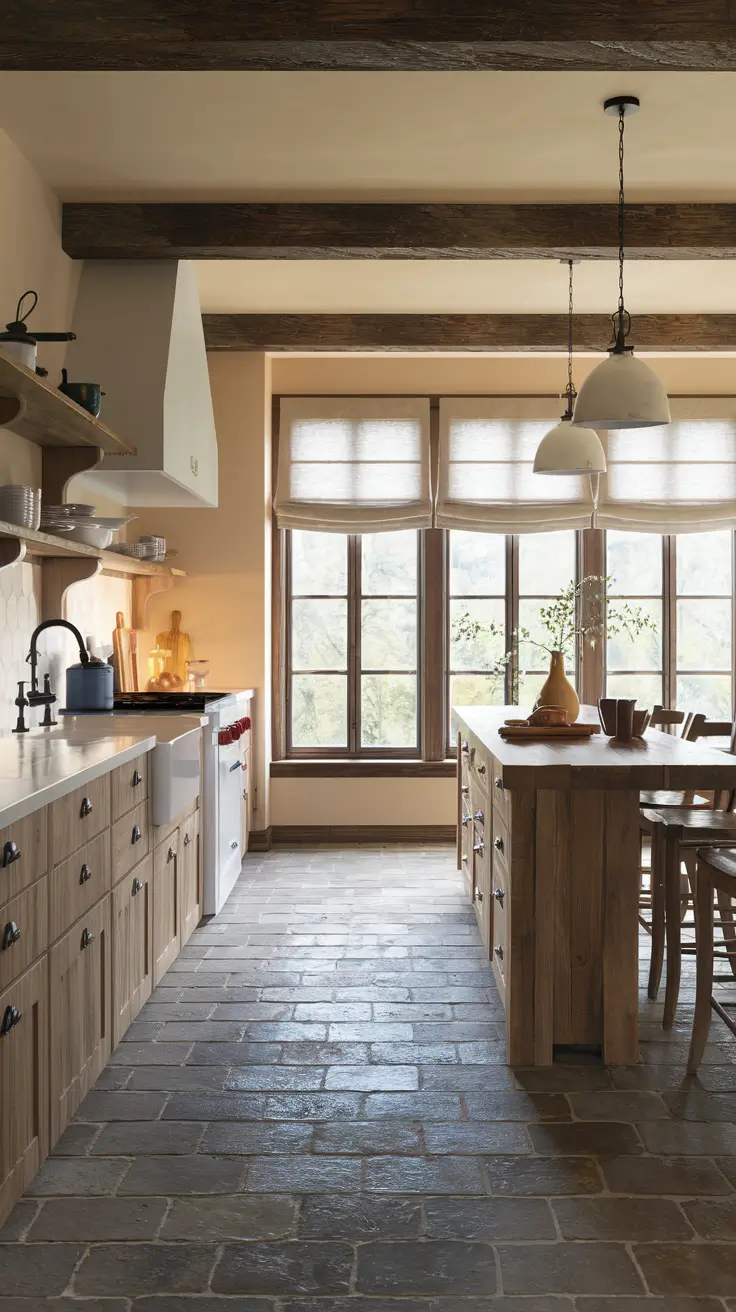
Flat-panel rift oak with warm stains, apron-front sinks, and plaster hoods add sculptural interest. Porcelain stone floors offer rustic appeal without high maintenance. Matte black or aged brass hardware quiets details, while wood-backed open shelves introduce layered textures. Hidden utensil rails and oil pull-outs streamline workflows.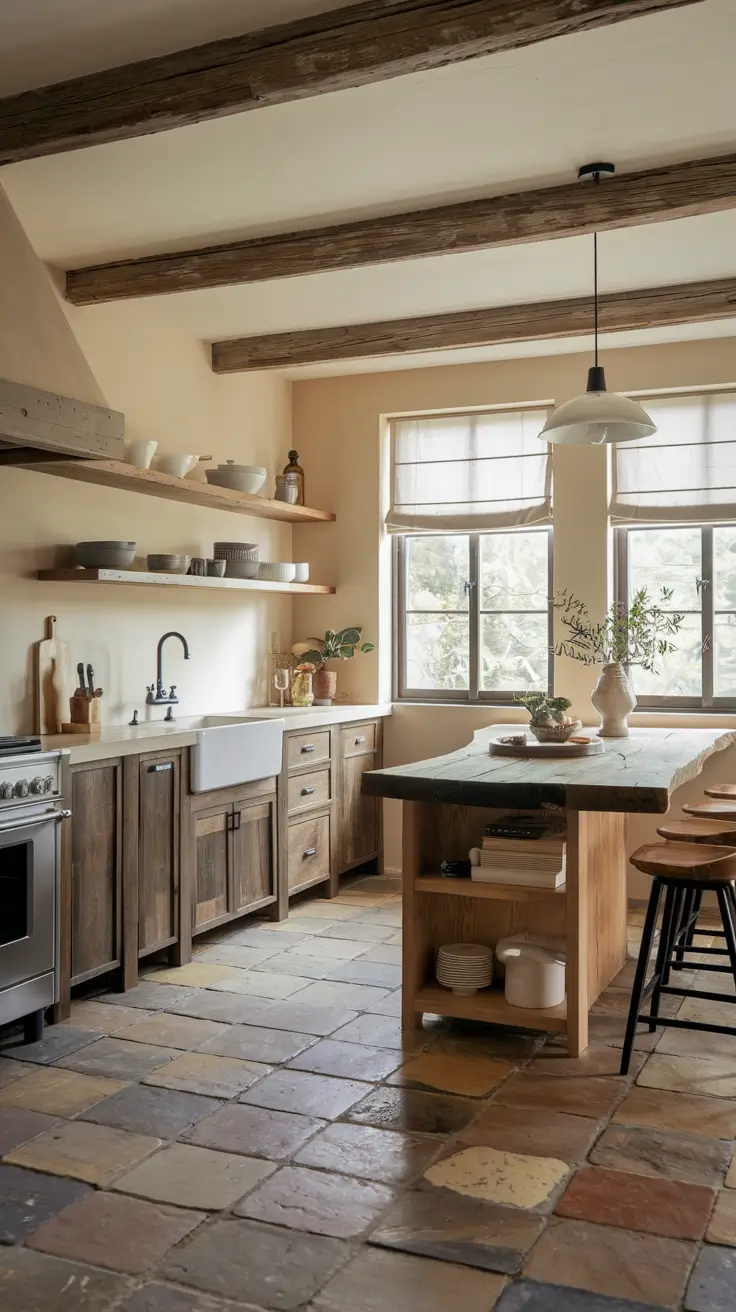
Balancing texture and light is crucial; simple counters paired with well-placed windows and warm LED lighting brighten darker woods. Induction cooking complements rustic aesthetics by offering quiet, safe, and easy-to-clean surfaces.
Indian-Inspired Kitchen Designs: Function Meets Culture
Indian-inspired kitchens focus on ventilation, durable surfaces, and ample storage for spices and cookware. L-shaped layouts with islands support parallel prep and cooking zones, while secondary wet areas handle heavy cooking days. Large windows and easy-to-clean finishes address heat and turmeric stains.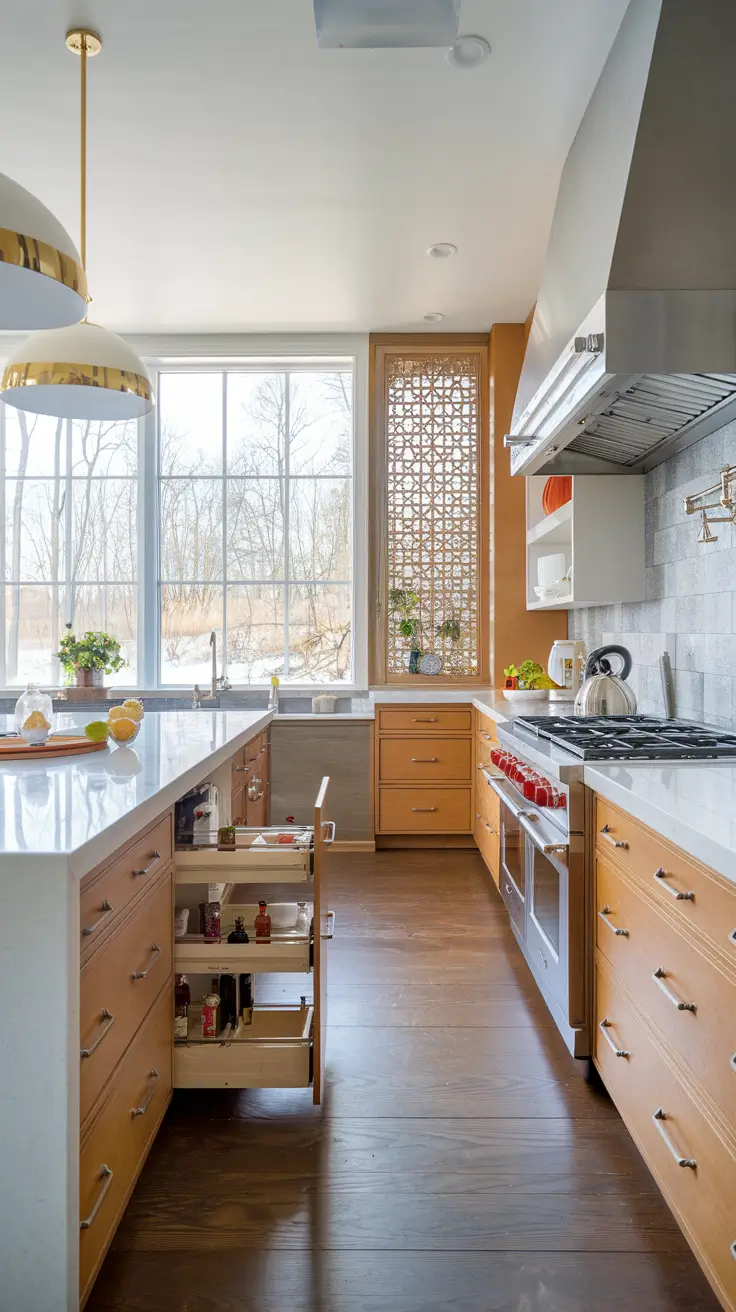
Dedicated masala compartments, tall pull-outs for oils and ghee, and deep storage for large pots optimize organization. Quartz or ultra-compact stone counters resist staining, paired with high-capacity, quiet hoods for fresh air. Warm wood lowers, light uppers, brass or brushed steel fittings, and patterned tile or carved jaali panels add cultural flair. Islands double as family gathering spots.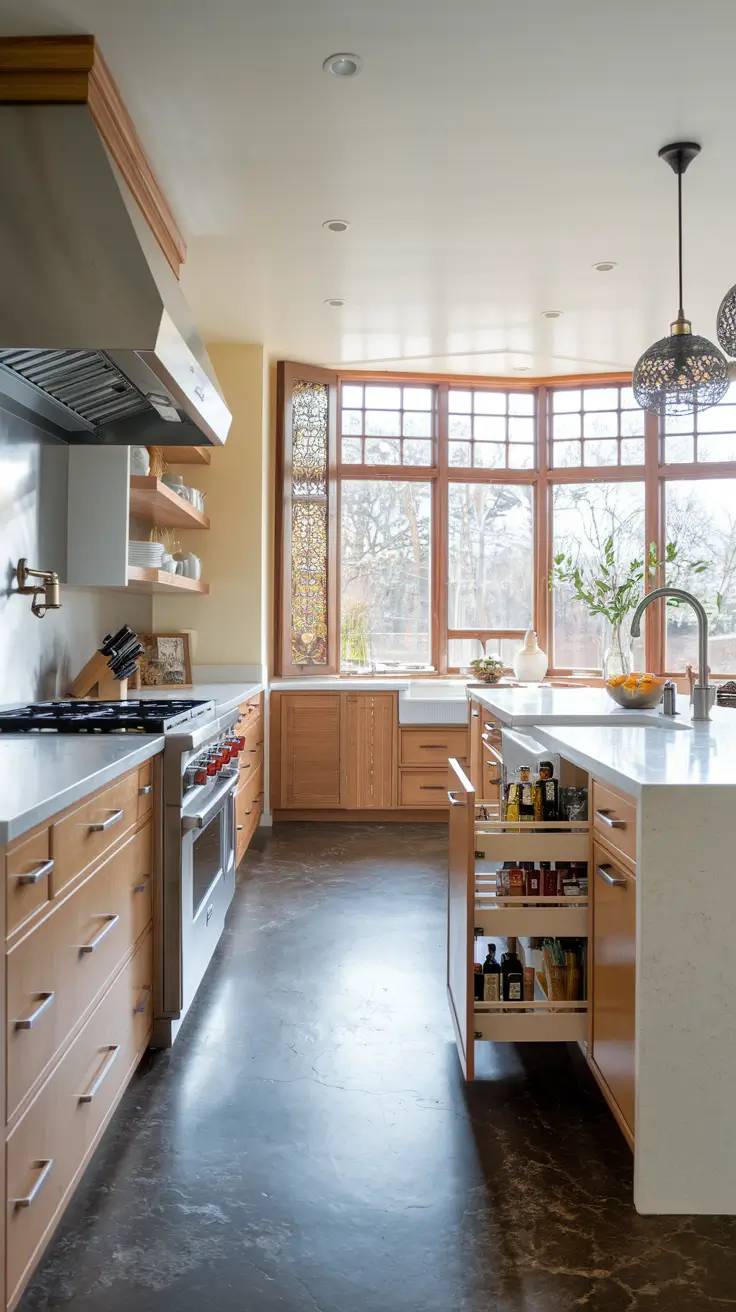
Non-porous materials and movable lids enhance efficiency. Induction cooktops paired with high-output burners accommodate traditional cookware while controlling indoor air quality. Discreet pooja or display niches maintain decor simplicity. Additional prep sinks, mixer-grinder garages, stainless steel backsplashes, and organized recycling pull-outs complete the design.
Biophilic Kitchens: Green and Wood Synergy
Integrating green hues with natural wood creates biophilic kitchens that feel fresh and timeless. Soft sage or deep forest base cabinets grounded by white oak or ash upper units harmonize with open living spaces and outdoor views. In smaller homes, light wood or white uppers maintain brightness, while reflective backsplashes amplify light.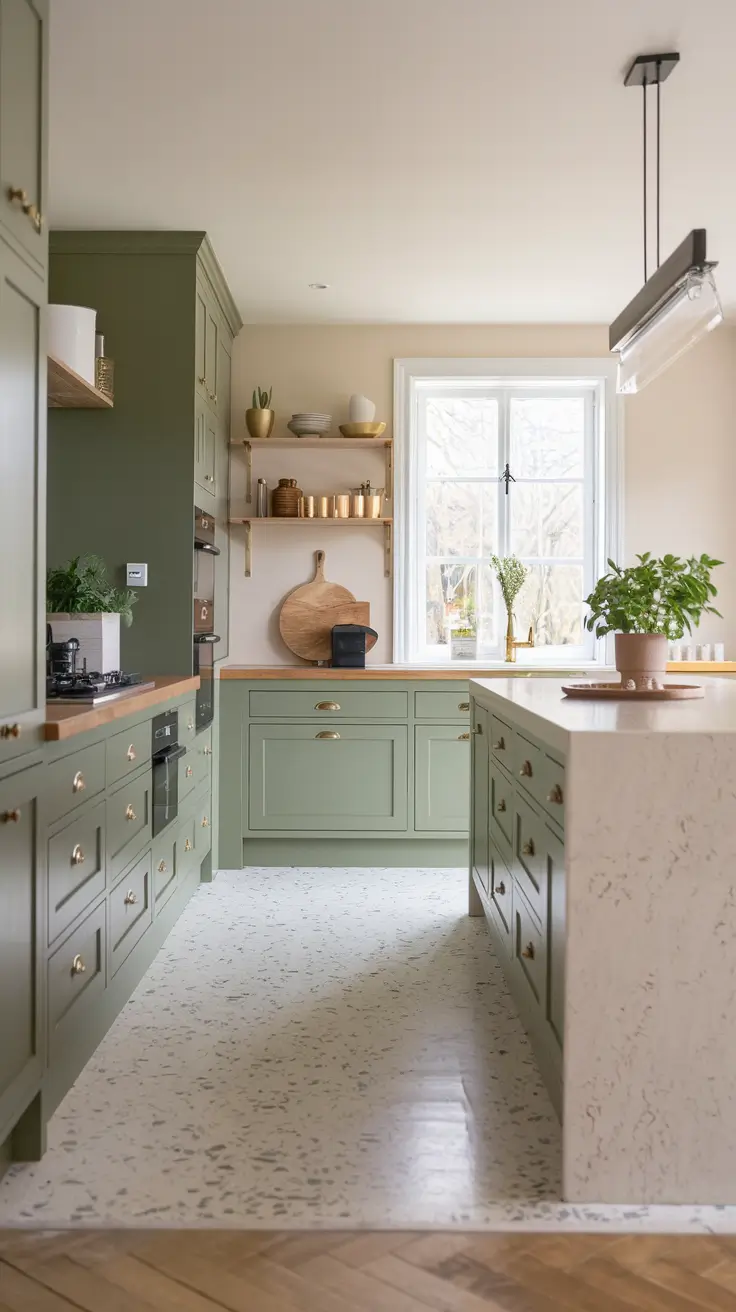
Painted green satin-finish base cabinets, white oak islands with waterfall edges, and light-veined quartz counters form the core palette. Warm brass or matte black hardware complements live plants and herb troughs, enhancing the natural narrative. Pale oak or terrazzo-like porcelain floors keep the space light and linear pendant lighting maintains geometry.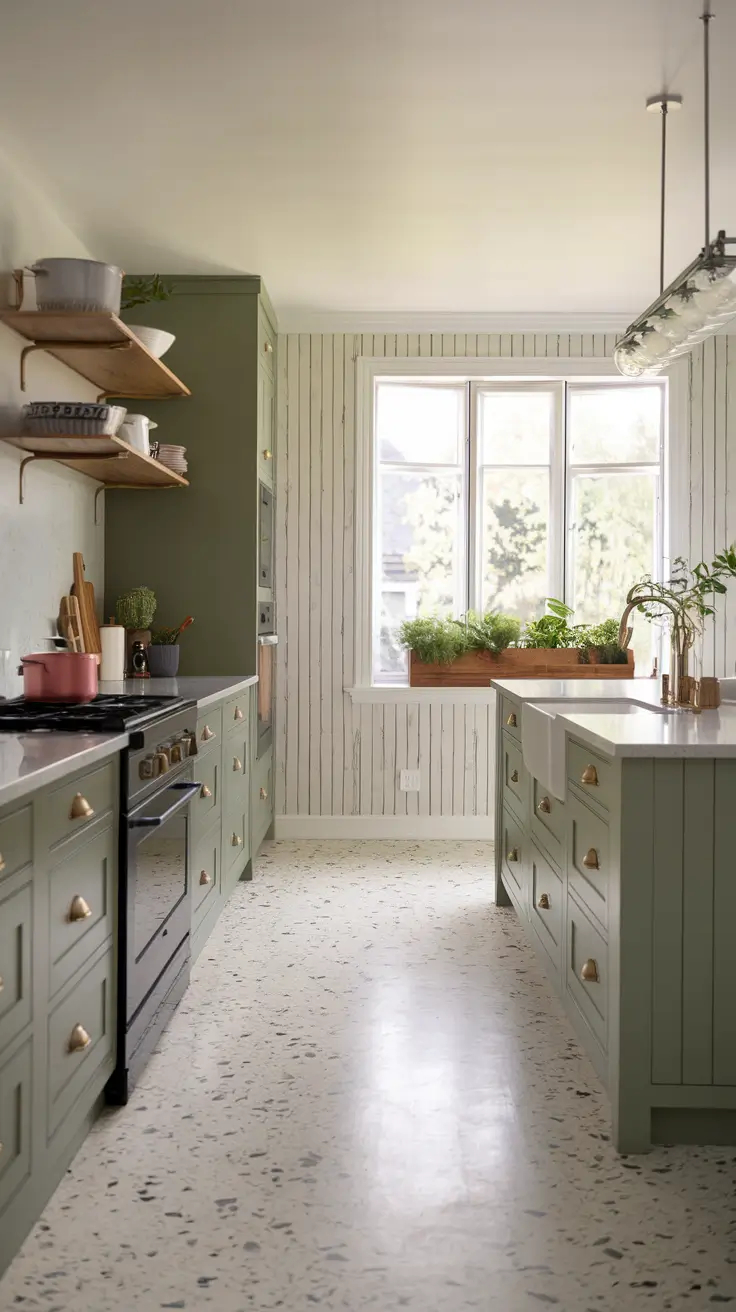
Green acts as a neutral, reducing visual fatigue and blending effortlessly with wood and stone. Repeating three core materials throughout the space creates unity. Linen window shades, fluted glass cabinets, soft runners, and pre-wired picture lighting enhance comfort and style.
Warm Neutrals: Luxury Beige Kitchens
Luxury beige kitchens layer warm neutrals with tactile finishes for an inviting yet opulent feel. Matte taupe or beige lacquered cabinets paired with honed limestone or travertine-look porcelain counters and backsplashes create softness. Rounded island edges add gentle profiles.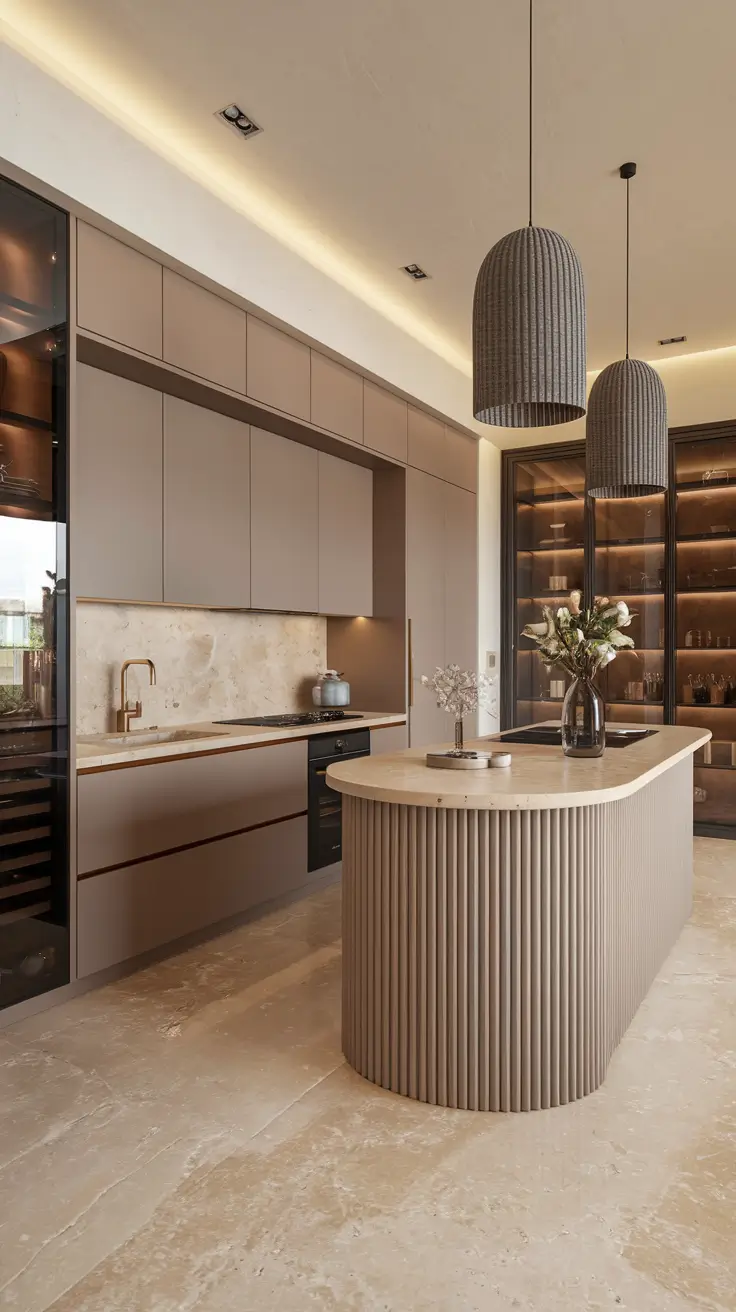
Bronze or champagne hardware adds warmth, while fabric-shaded pendants soften lighting. Large-format beige stone floors extend visually, allowing furniture placement without breaks. Ribbed cabinetry, upholstered stools, and quiet textures enrich the sensory experience.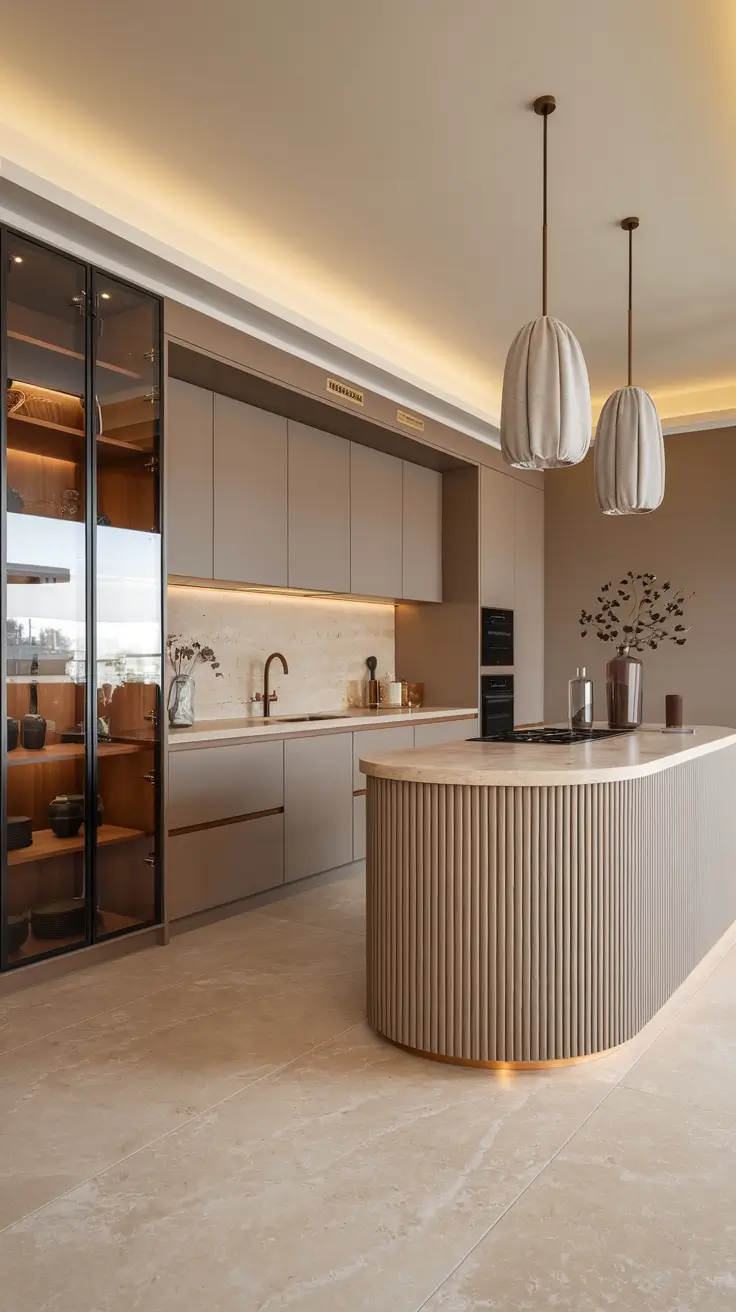
High texture contrast with low value contrast enhances depth. Warm demiglow LED lighting between 2700K and 3000K creates cozy evenings. Plaster or limewash walls, bronze-framed glass cabinets, and built-in coffee stations behind pocket doors complete the luxurious yet practical design. Adjustable lighting scenes transition from bright prep to elegant dining.
Enduring Trends Influencing Kitchen Design
Key trends include integrated pulls, curved corners for safety, widespread induction cooking, and enhanced ventilation. Durable porcelain slabs remain popular for high-traffic workstations. Mixed metals and layered whites add versatility. Islands are scaled to room size, and L-shaped layouts maintain clear circulation. Warmer mushroom tones replace cooler greys for a more inviting atmosphere.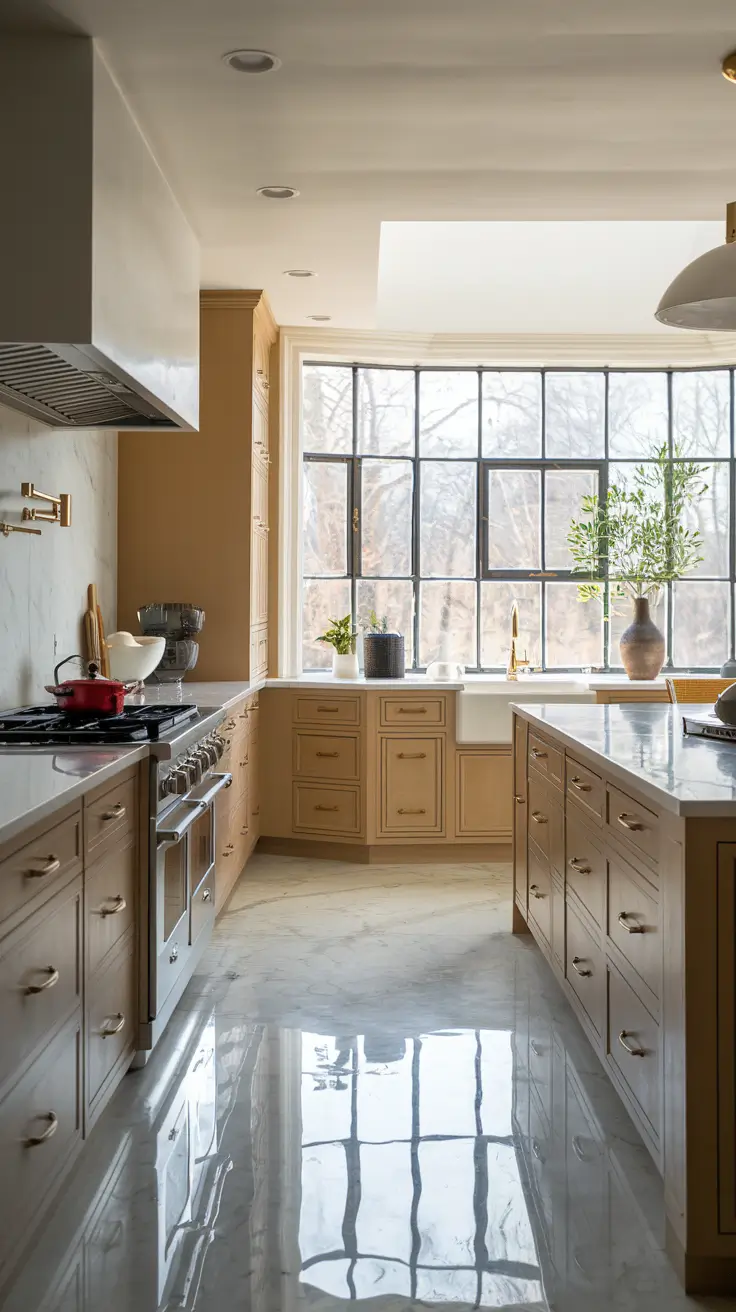
Increasing window sizes that extend to countertops enhance spaciousness. Honed marble flooring offers silent luxury without glare. Maintenance remains the ultimate trend filter, favoring easy-to-clean, age-resistant materials. Adhering to clearance and lighting standards ensures functionality. Planning for future electrification upgrades and adjustable storage maximizes longevity.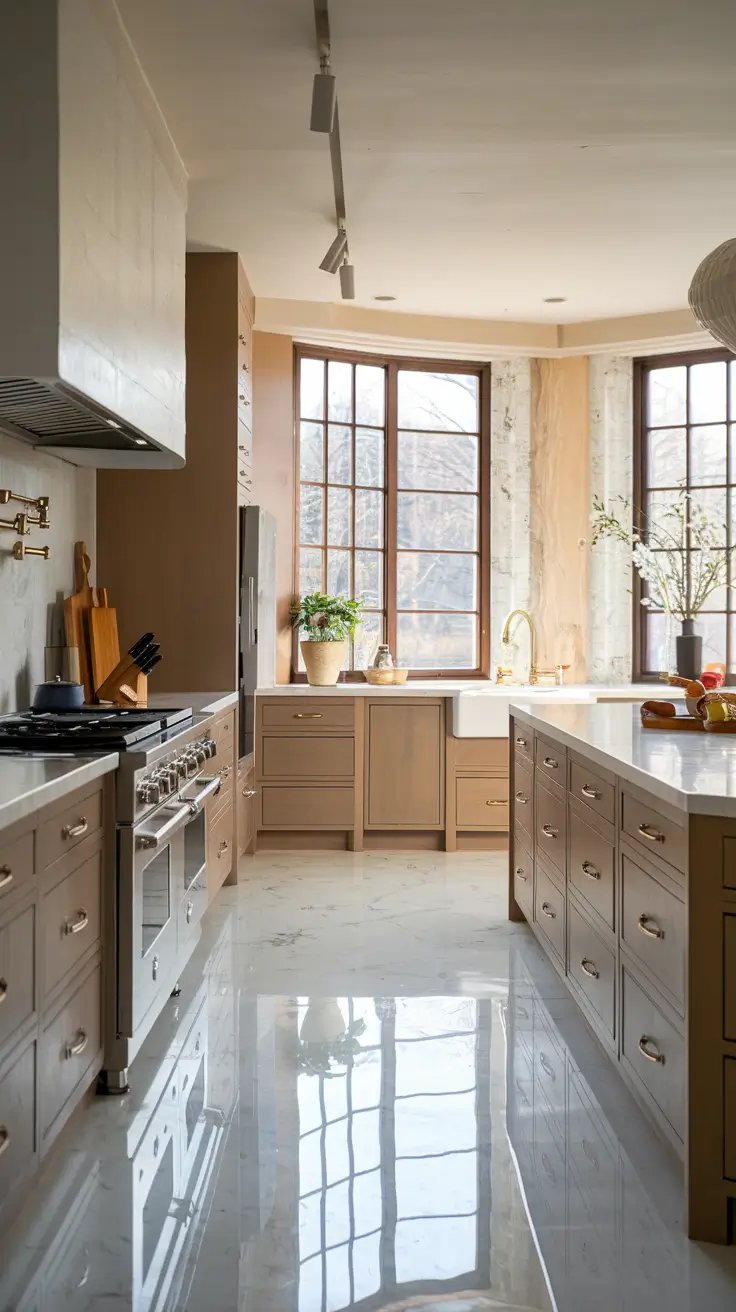
Open Concept Kitchens: Flexibility and Flow
Open concept kitchens continue to evolve with adaptable zones for everyday use and entertaining. Glass partitions and pocket doors offer privacy without sacrificing light. Long runs of uniform materials, including tall appliances, maintain visual continuity. Islands remain central, complemented by built-in banquettes and quiet perimeters.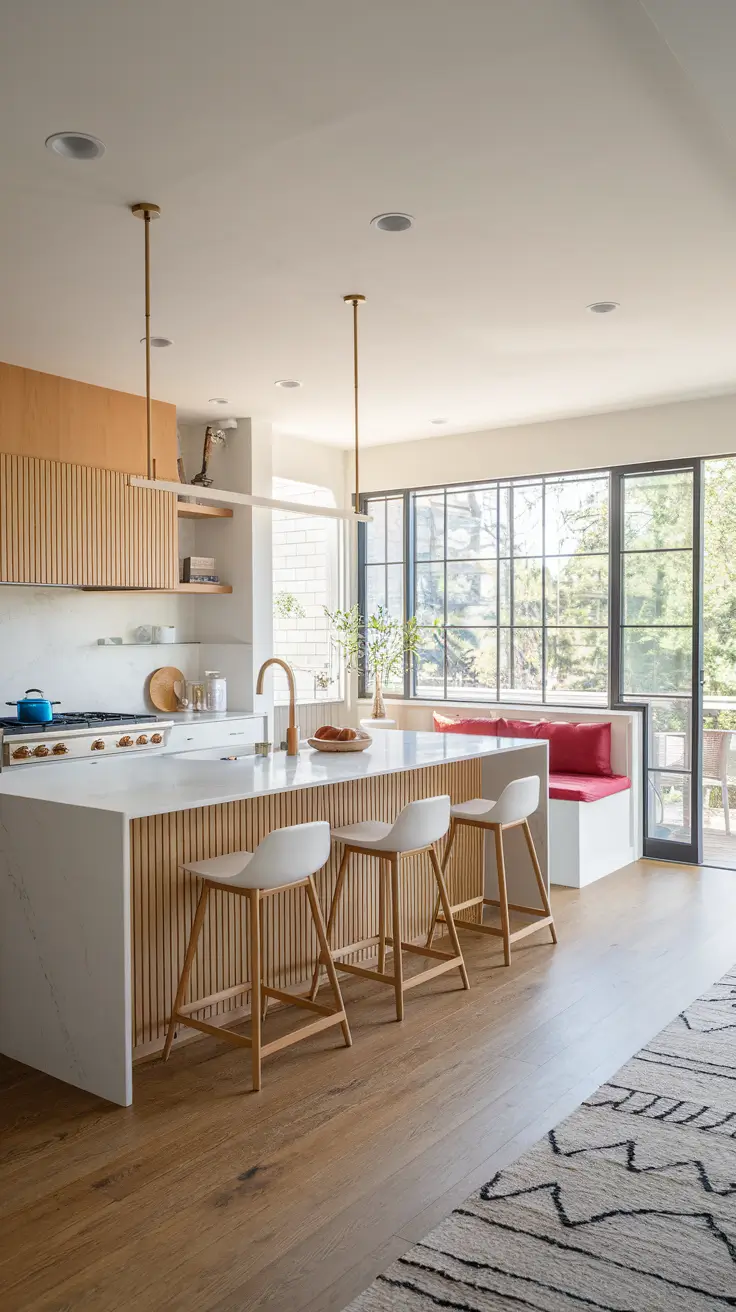
Terrace access with thin-framed doors extends entertaining spaces. Acoustic rugs and upholstered stools control sound. Layered lighting with table lamps, spotlights, and linear pendants creates ambiance and purpose.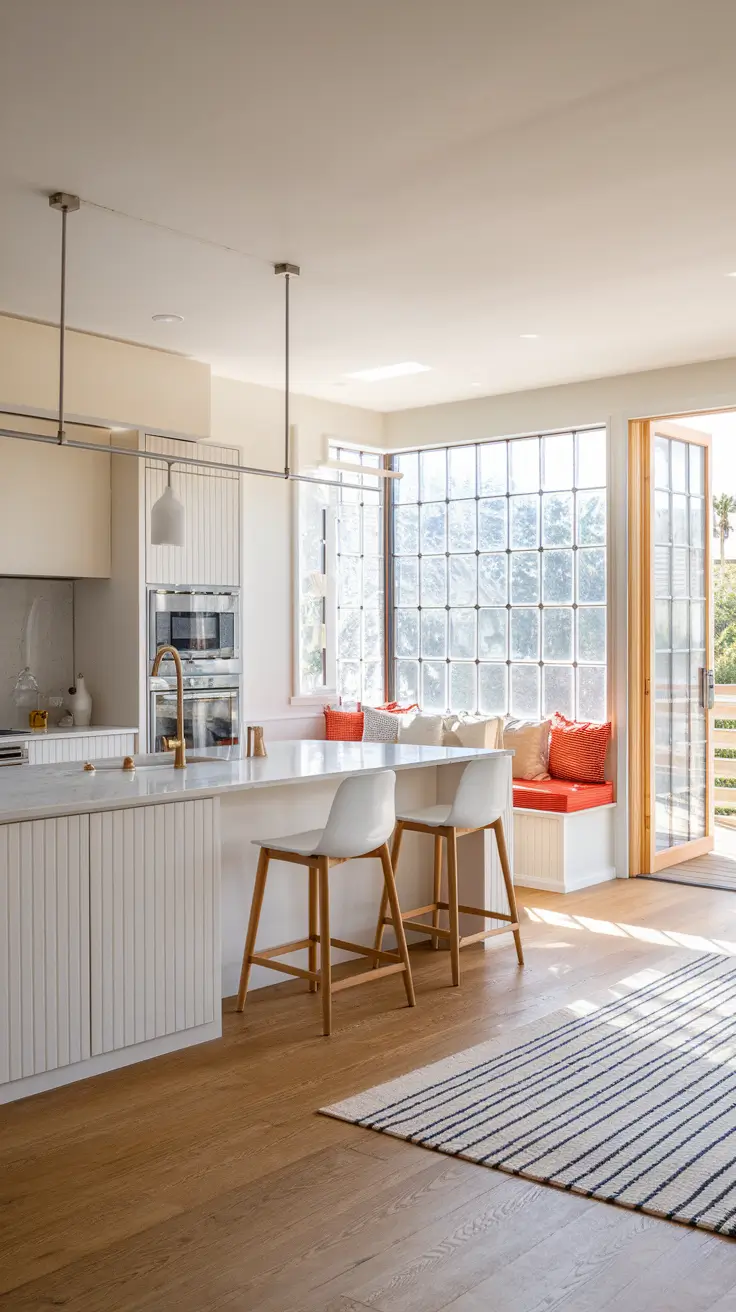
Concealing clutter in sculleries or appliance garages maintains order. Minimizing floor transitions facilitates movement. Lessons from open concept planning include managing traffic lanes and visual terminations of tile or stone.
Additional features include floor outlets near banquettes, built-in mini bars or coffee niches, integrated shading for glare control, and intelligent dimming scenes for versatile atmospheres.
Reimagined Luxury Green Kitchens
Luxury green kitchens blend soft biophilic elements with understated elegance. Combining eucalyptus or olive-toned cabinets with warm wood and satin brass or burnished nickel accents creates fresh, timeless spaces. Creamy quartzite counters and high-reflectance ceilings maintain brightness.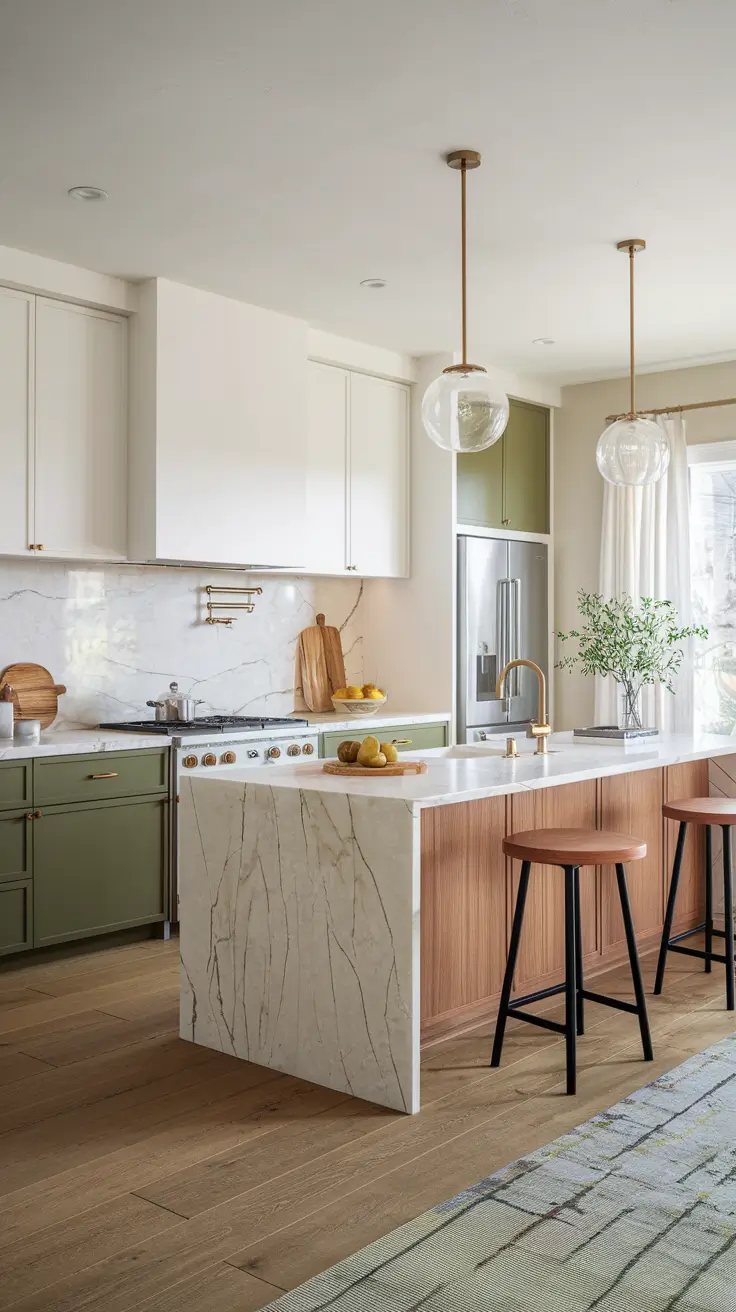
Painted hardwood frames or lacquered MDF doors, honed quartzite or porcelain slabs, built-in pulls, and paneled appliances define the aesthetic. Large islands feature workstation sinks, induction cooktops with downdraft or hidden hoods, and social seating. Wide plank oak or large-format porcelain floors accommodate underfloor heating. Satin brass hardware and thin linear LED task lighting complete the look.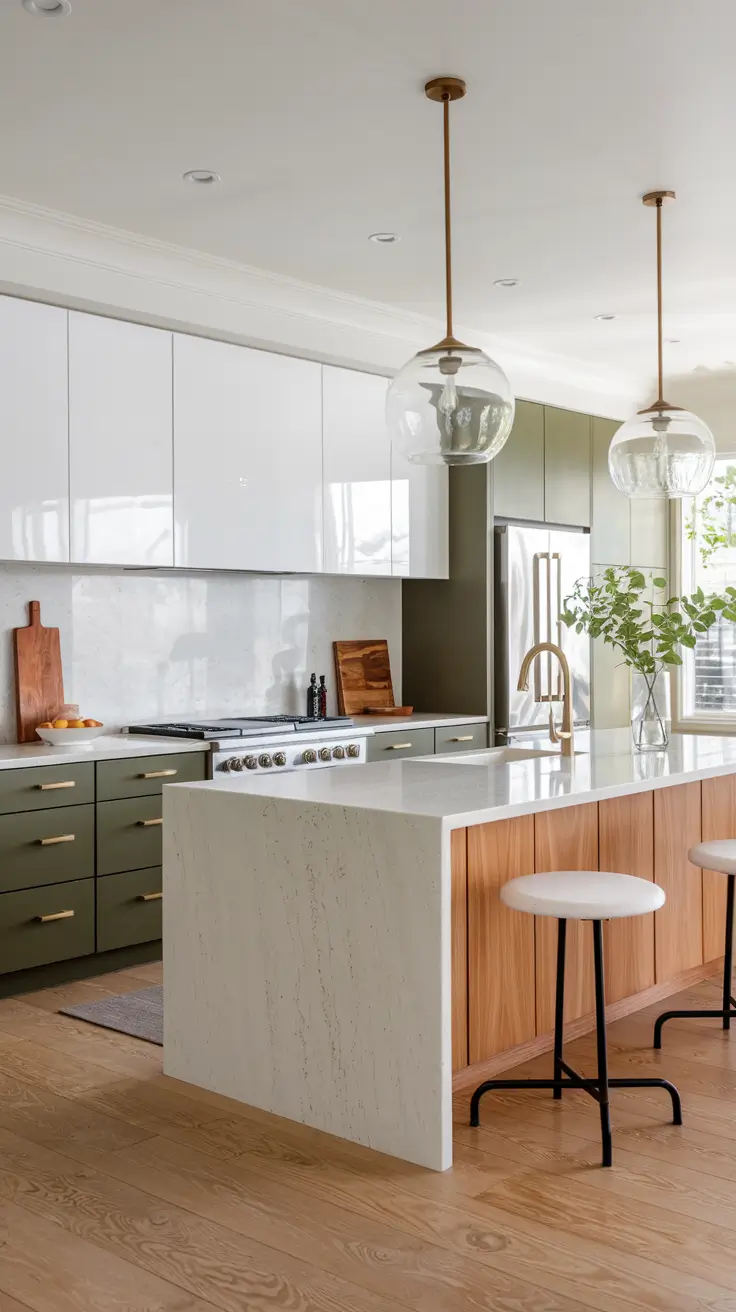
Silent operation is paramount, avoiding high-chroma greens in favor of layered tones with wood and off-white. NKBA guidelines emphasize layered lighting and adequate ventilation, with hood sizes matching appliance output and makeup air plans as needed. Fluted panels add depth without overwhelming.
Natural stone backsplashes and soft green furnishings like boucle stools complete the harmonious design.
Maximizing Impact in Small Kitchens
Small kitchens benefit from efficient layouts such as one-wall with peninsulas or horseshoe designs, creating compact work triangles with ample prep space. Vertical cabinetry extends to ceilings with two-tier storage, placing daily items within easy reach and seasonal items higher up. Counter-depth refrigerators, 24-inch dishwashers, and 30-inch induction ranges save space.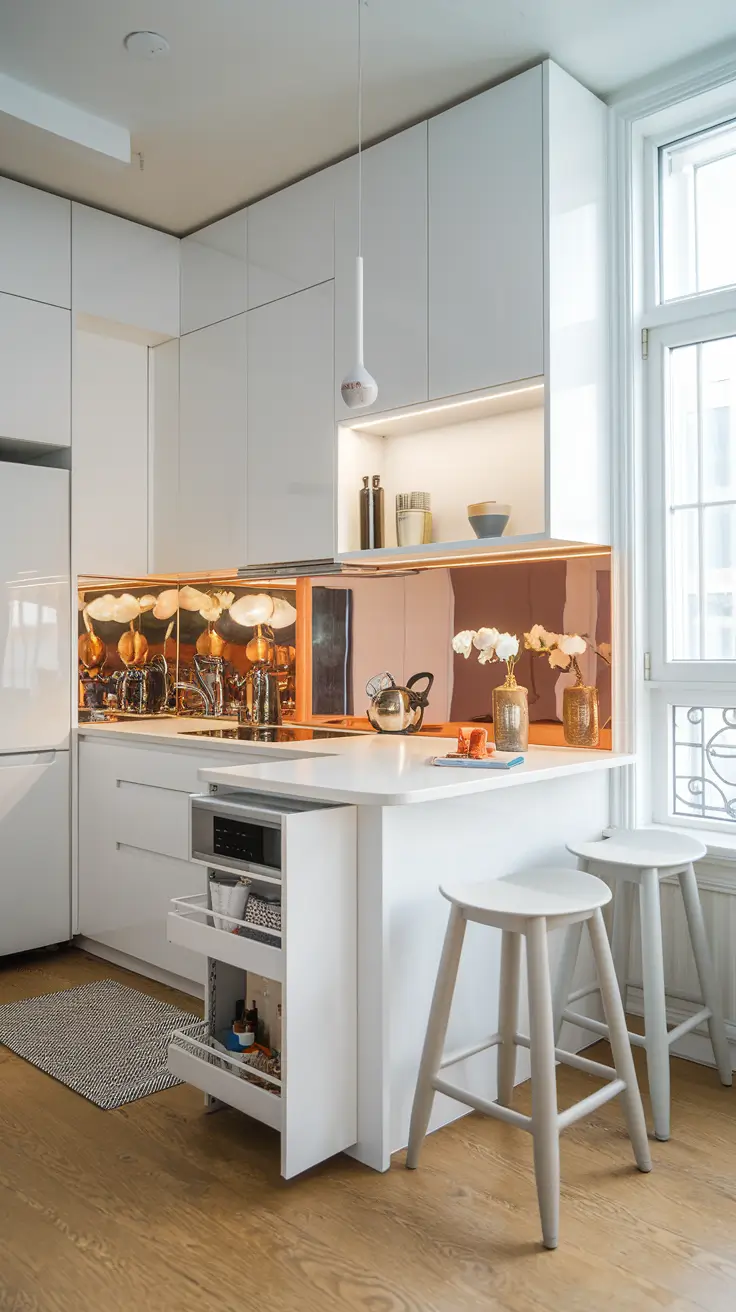
Pull-out pantries between 9 and 15 inches wide store dry goods efficiently. Layered lighting includes ambient ceiling fixtures, bright under-cabinet strips, and small decorative pendants. Open shelving is effective when carefully curated and limited.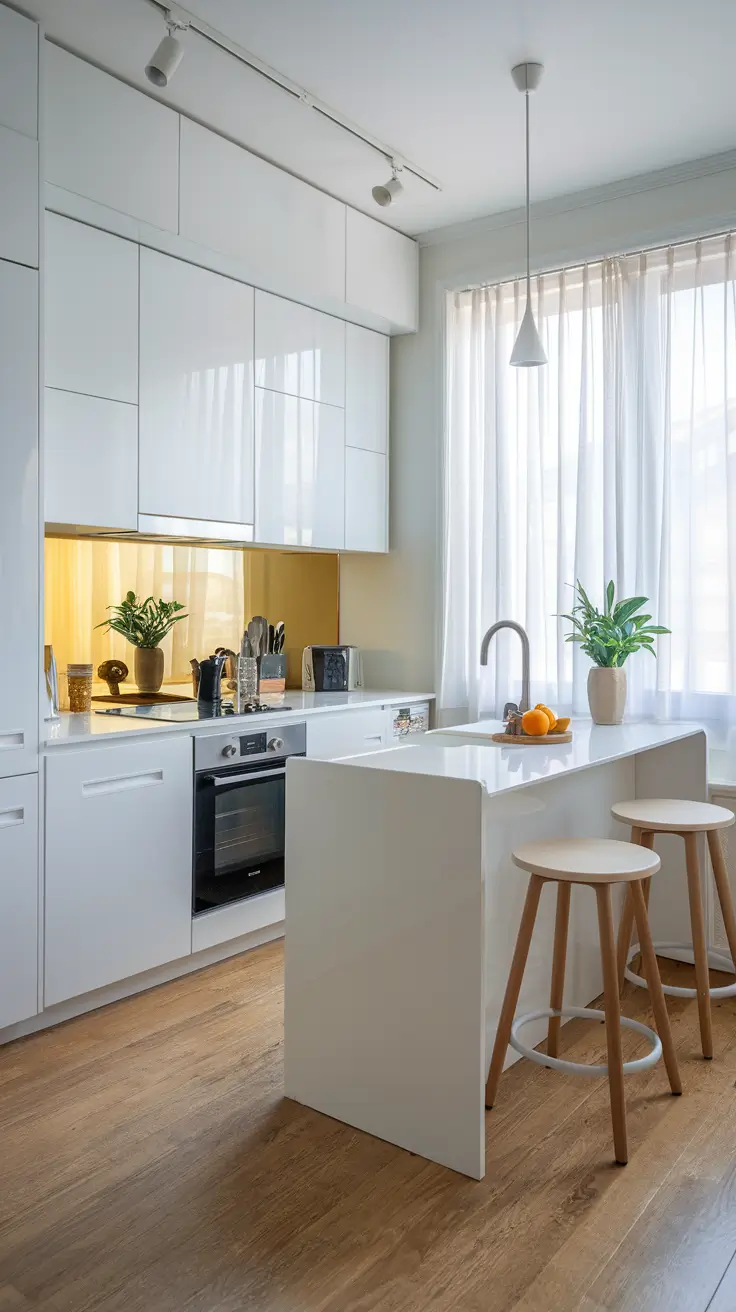
Digital tools like Minecraft and Bloxburg assist in visualizing block planning, scaled to real-world dimensions and clearances. Fold-out or pocket door workstations and appliance garages with built-in outlets keep counters clutter-free.
Elegant Simplicity in Kitchen Design
Simplicity involves thoughtful restraint, focusing on fewer, higher-quality elements arranged cleanly. A three-material palette—such as white or linen cabinetry, natural wood accents, and stone or porcelain surfaces—creates harmony. This approach complements mid-century-inspired lines without feeling themed.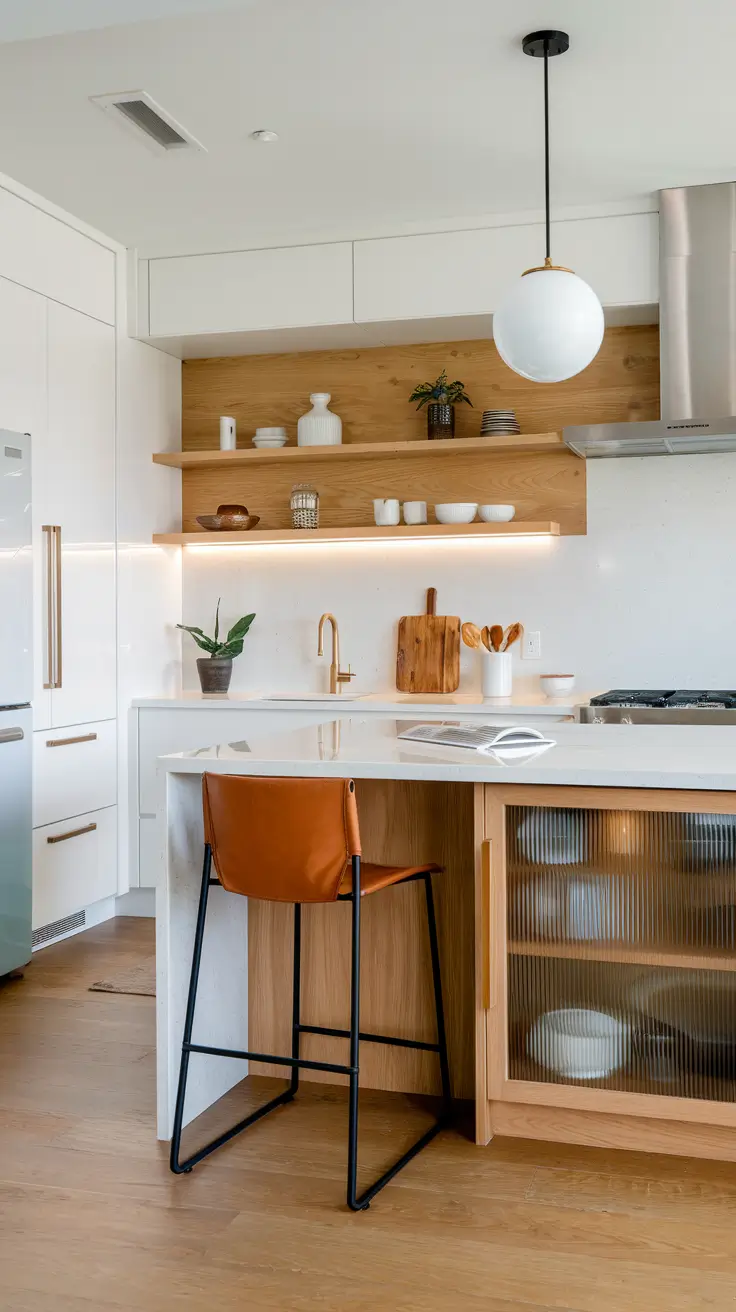
Flat-panel doors with subtle radius edges, continuous pulls or finger rails, and low-contrast slab backsplashes extending beneath hoods maintain visual flow. Waterfall island edges at seating areas add sculptural interest. Cream or cognac leather seating, large pendants, and invisible accessory rails keep counters clear. Panel-ready appliances and large single-bowl sinks with pull-down faucets in stainless or champagne finishes enhance functionality.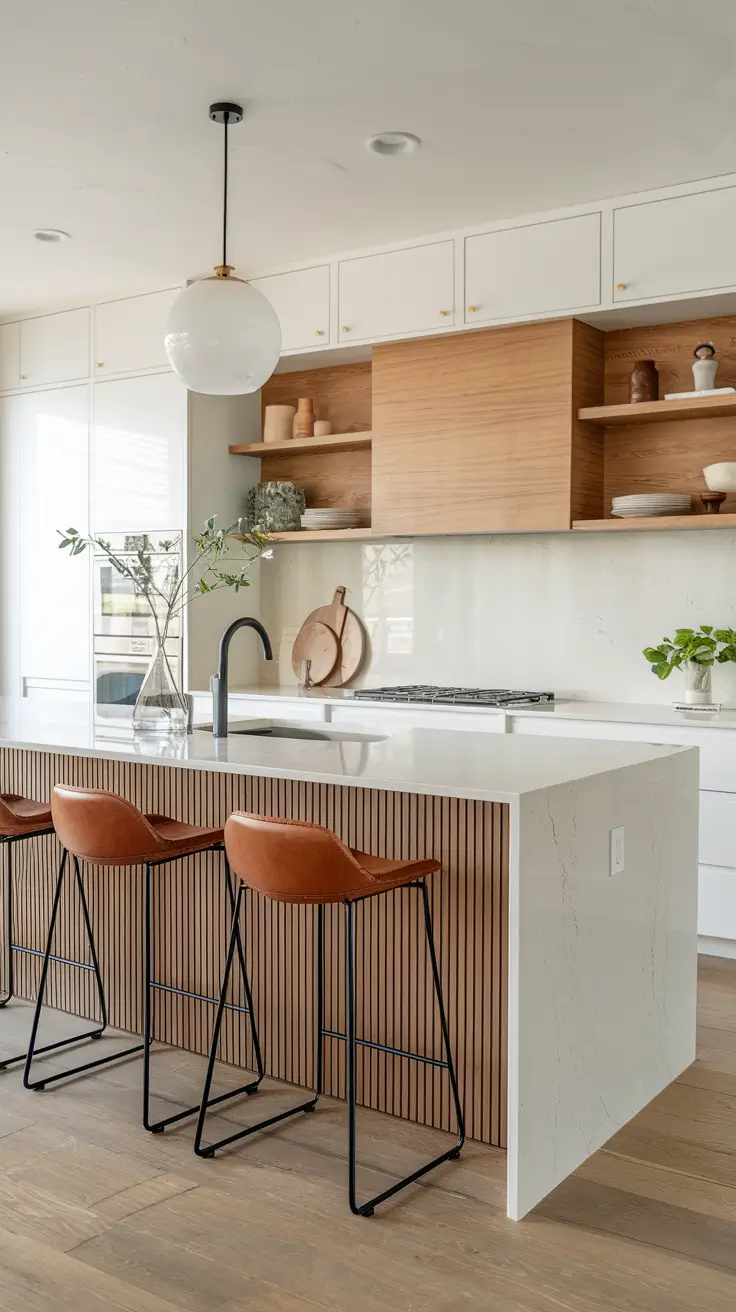
Reflective splash panels or mirror-finished niches behind cooktops amplify light in windowless prep areas, anchoring flat walls with subtle depth.
As an Amazon Associate I earn from qualifying purchases.