Stylish Wood Kitchen Ideas: Natural and Modern Designs
Wood remains an enduring favorite in kitchen design, continuously evolving while retaining its timeless appeal. Today’s wood kitchen concepts blend warmth, eco-friendliness, and elegance in fresh ways. Whether you prefer the organic charm of natural wood grains or the sleek sophistication of darker finishes, wood offers unmatched adaptability and classic beauty. This guide explores a variety of wood kitchen inspirations—from natural aesthetics and decorative accents to smart solutions for compact spaces—helping you craft a kitchen that balances innovation with comfort.
Contemporary Wood Kitchen Designs: Minimalism Meets Warmth
Current trends in wood kitchens emphasize a harmonious blend of simplicity and coziness. Smooth walnut or oak cabinetry paired with monochrome accents creates striking contrasts that add dimension without clutter. Flat-panel cabinets with integrated handles and built-in appliances streamline the look, while white quartz countertops and industrial-style black bar stools inject modern flair. Matte finishes and crisp edges contribute to an understated elegance that’s both stylish and practical.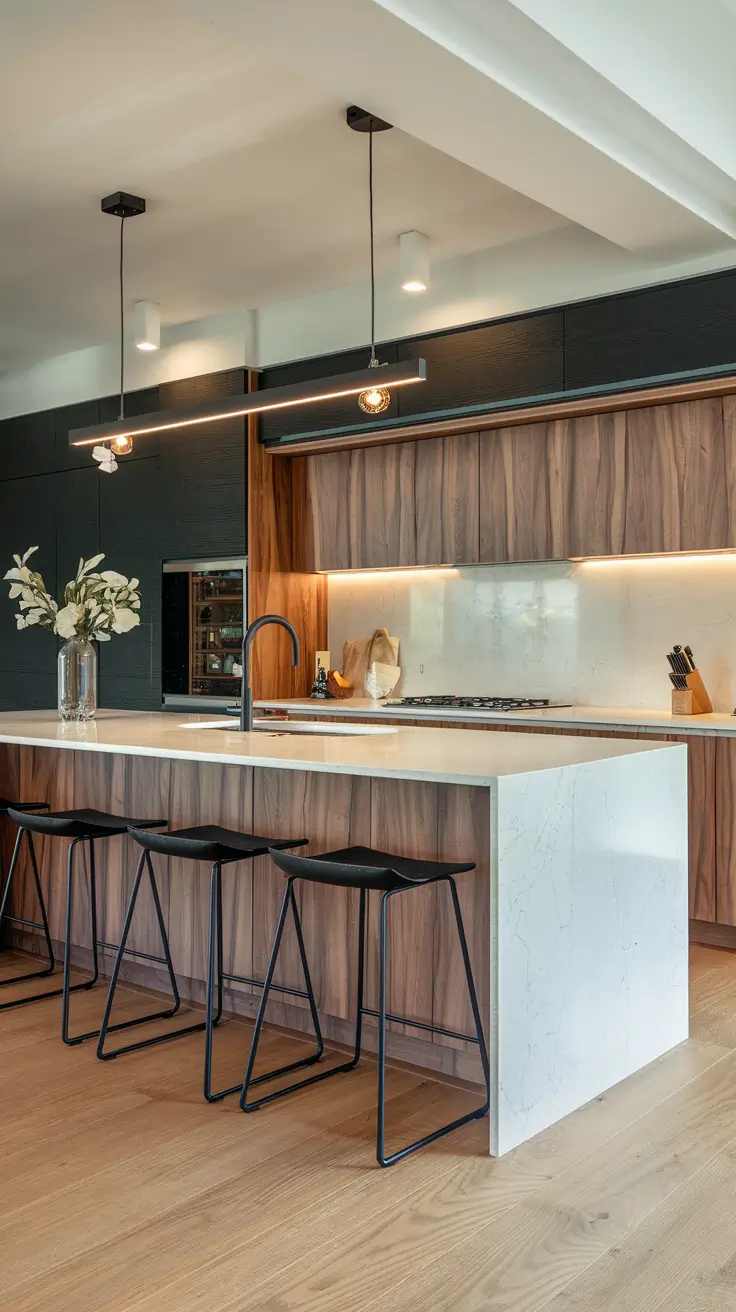
Incorporating natural textures enhances the personal feel of these kitchens. Subtle under-cabinet lighting accentuates wood grain patterns, bringing the material to life. Adding greenery, such as potted herbs or sage plants, softens sharp lines and introduces a calming, organic touch that complements the sleek design.
Embracing Natural Wood: Warmth and Texture in Kitchen Spaces
Highlighting the inherent beauty of wood, natural kitchen designs focus on light oak tones, beige, and soft cream palettes to create inviting, earthy environments. Embracing imperfections like knots and grain variations tells a story and adds character.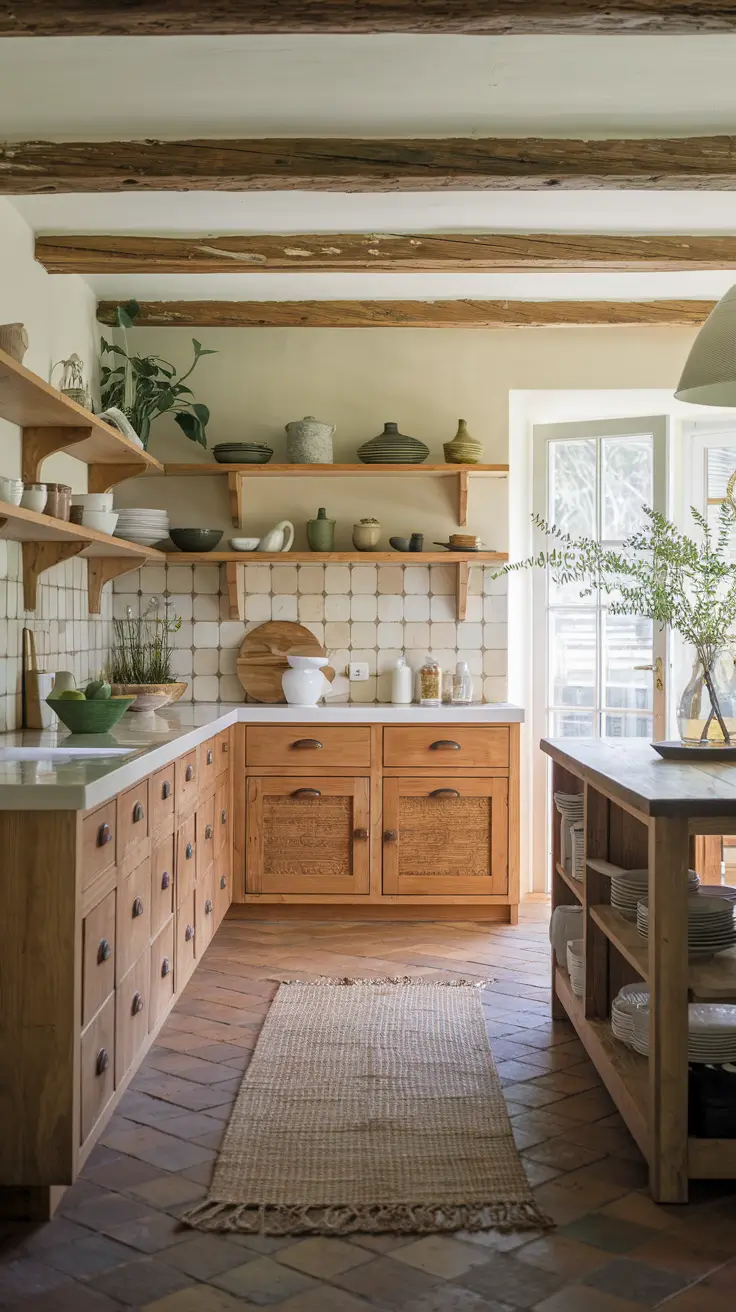
Furniture crafted from reclaimed wood, open shelving, and soft textiles enhance the tactile experience. Complementing these with green and gray accents, natural stone countertops, or terracotta flooring reinforces a cozy, welcoming atmosphere.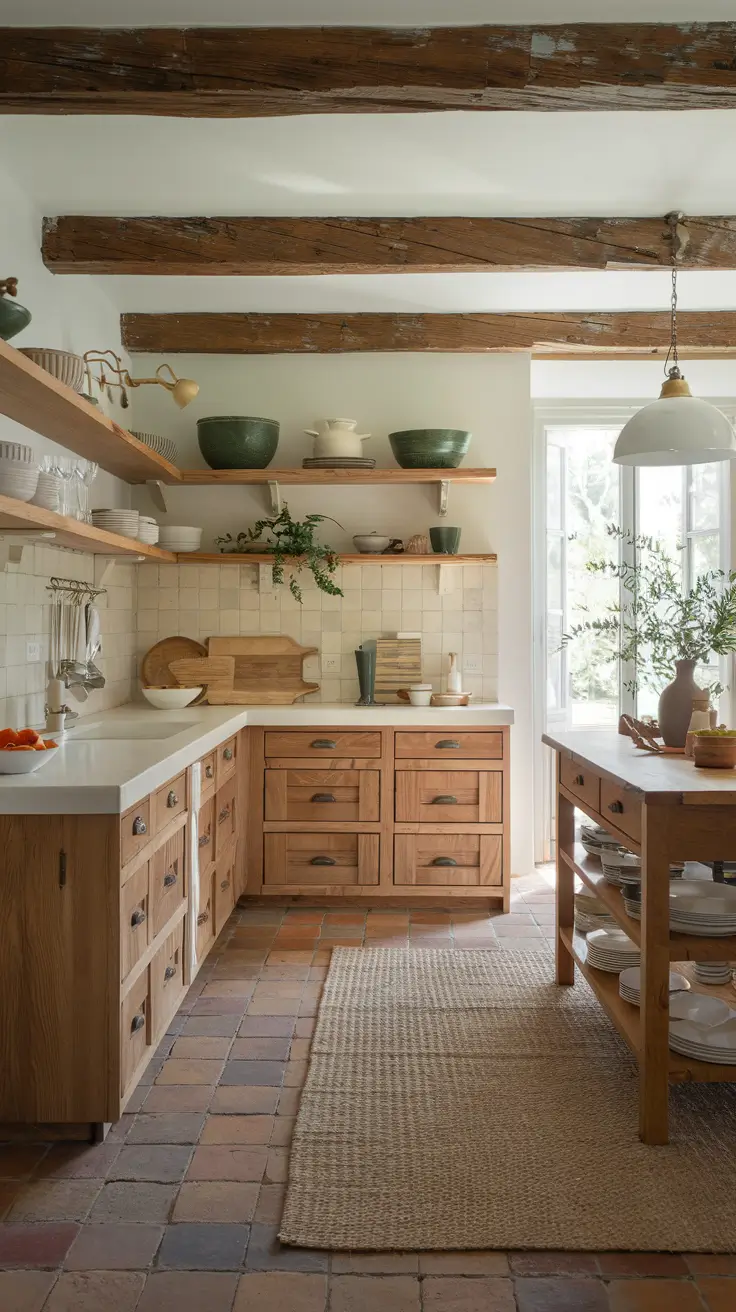
Layering textures through woven baskets, clay pottery, and linen fabrics completes the sensory richness, appealing to those who cherish authentic, grounded interiors.
Personalized Wood Kitchen Decor: Infusing Character and Style
Decorative elements breathe life into wood kitchens, reflecting individual taste and enhancing functionality. Wooden ceiling beams, carved stools, and floating shelves transform kitchens into expressive spaces.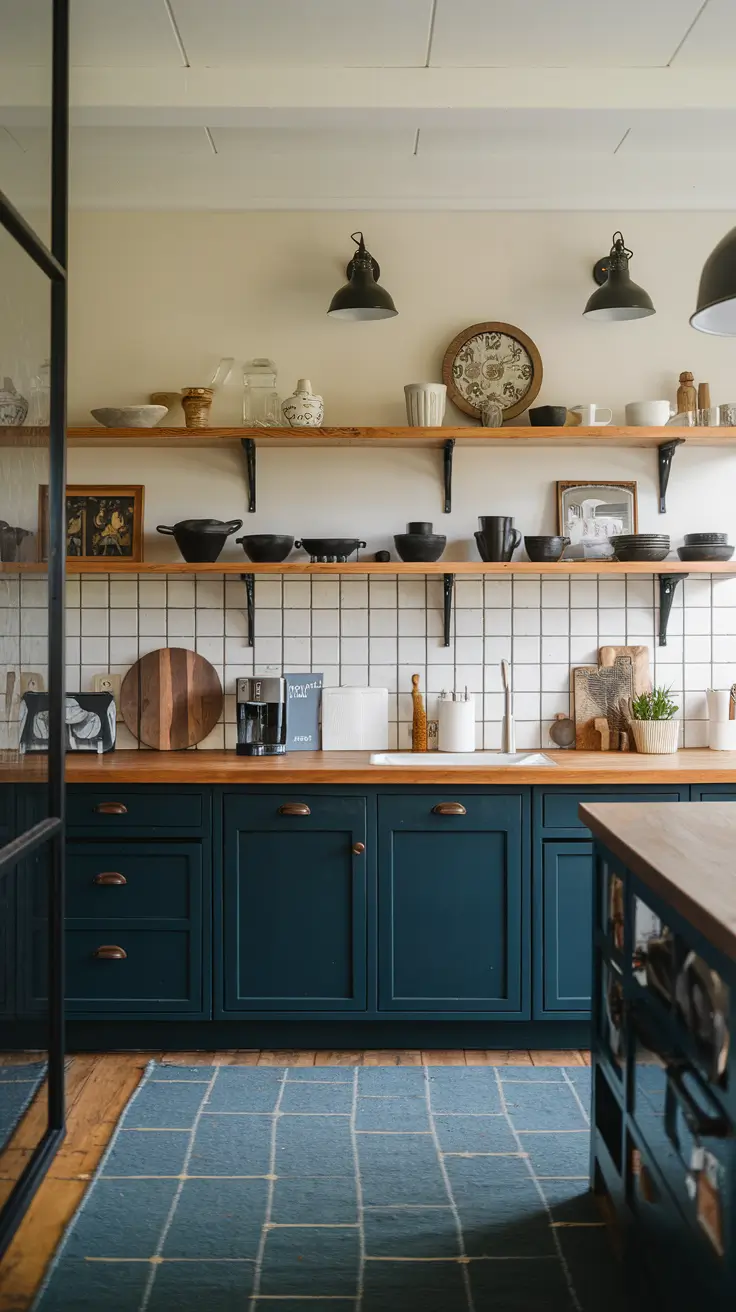
Rustic black metal frames, contemporary dark pendant lighting, and ceramics in gray and white add visual interest. Combining dark blue cabinetry with lighter oak shelves creates a dynamic interplay of textures, blending modernity with tradition.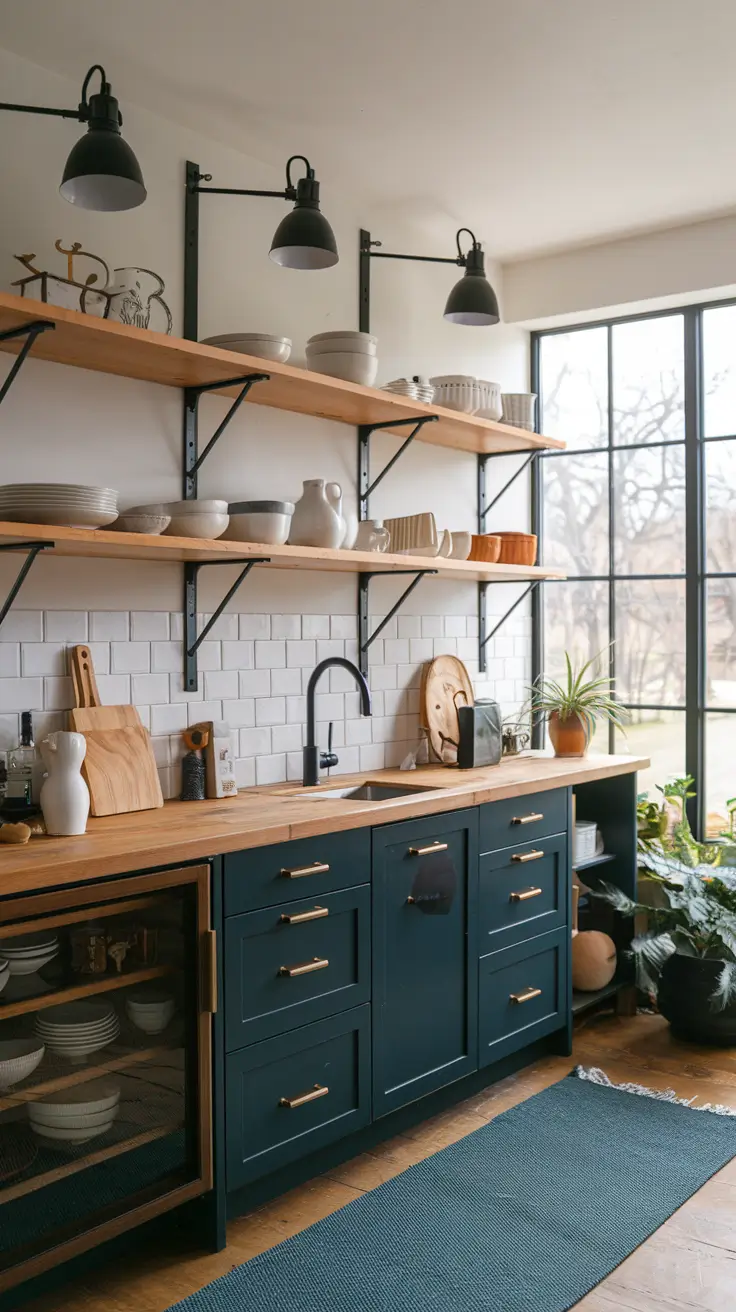
Small details like handcrafted handles or textured tiles can dramatically elevate the space. Seasonal accessories and adaptable color schemes allow for effortless updates without major renovations.
Optimizing Small Kitchens with Wood: Stylish Solutions for Limited Spaces
Compact kitchens can be both functional and elegant with the right wood design strategies. Vertical storage, multi-purpose furniture, and light wood finishes such as cream and oak help maximize space and reflect natural light.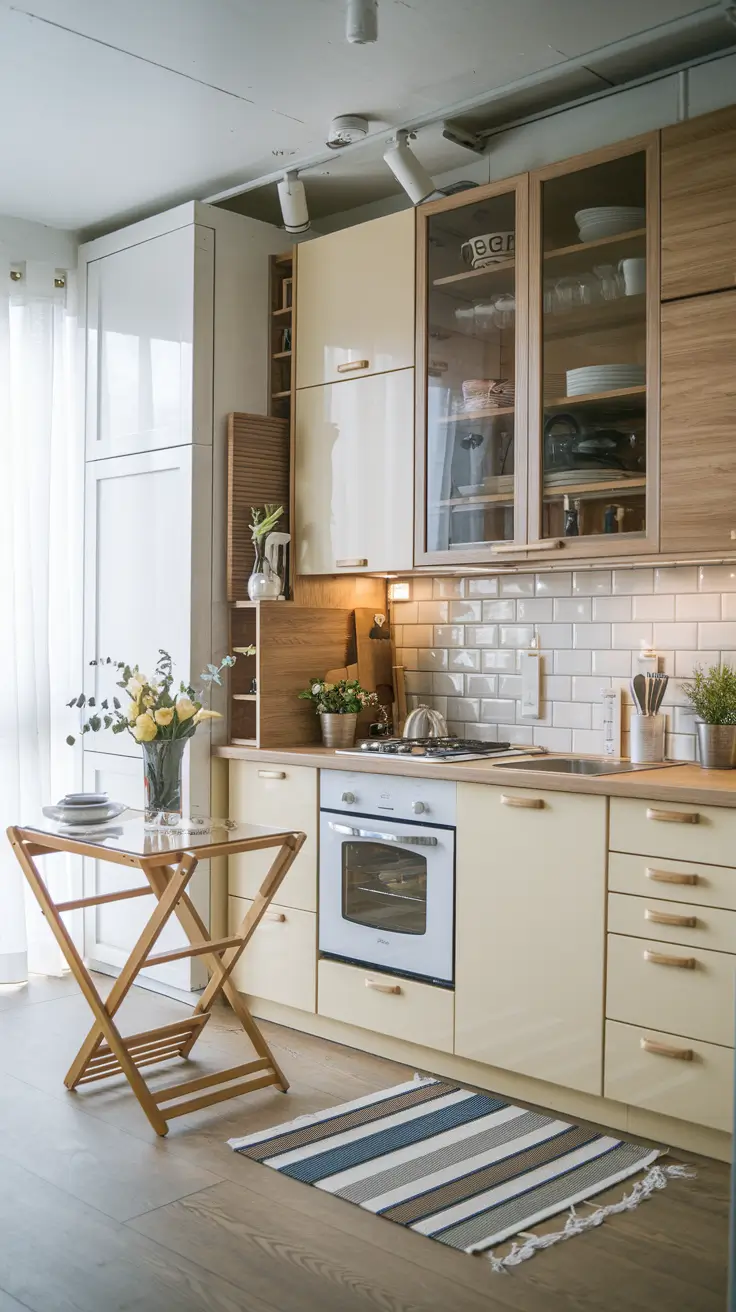
Compact cabinetry with modern white finishes, foldable wooden tables, and hidden storage beneath benches maintain balance and reduce clutter. Incorporating bright under-cabinet lighting and glass accents enhances the sense of openness.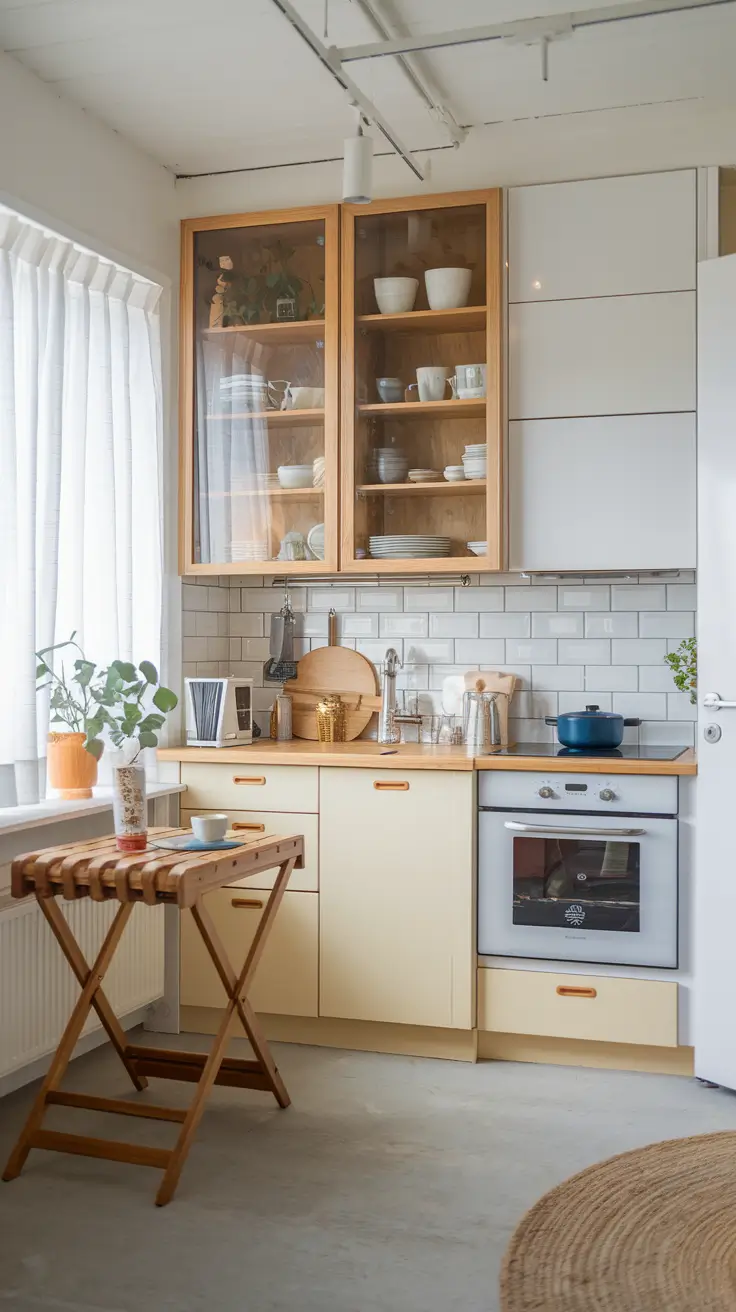
Smart appliances, pull-out pantries, and sliding counters further boost efficiency without compromising style.
Wood Kitchen Islands: Central Features for Modern Homes
Kitchen islands crafted from dark oak or cherry wood with marble or quartz countertops serve as striking focal points. These islands often incorporate built-in storage, sinks, and seating, fostering a communal atmosphere.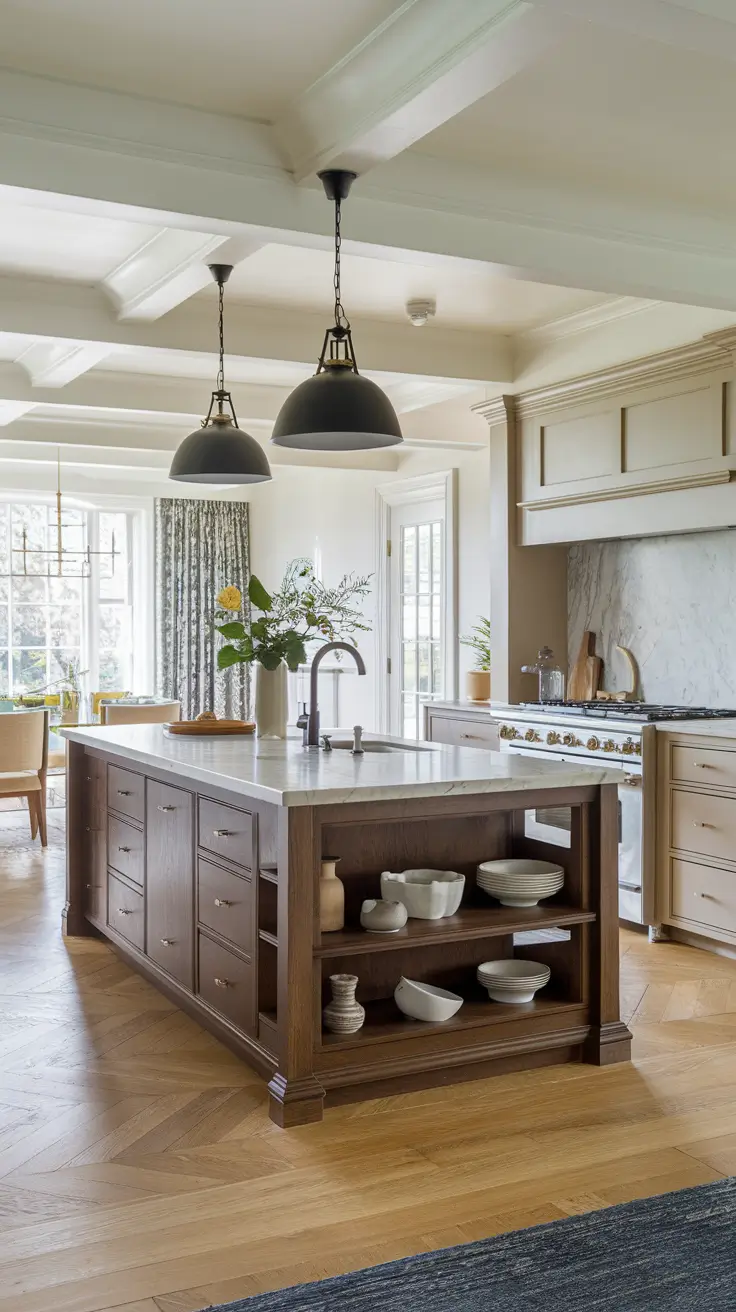
Industrial black pendant lighting above the island adds drama and focus, while surrounding cabinetry in warm neutrals complements the overall aesthetic.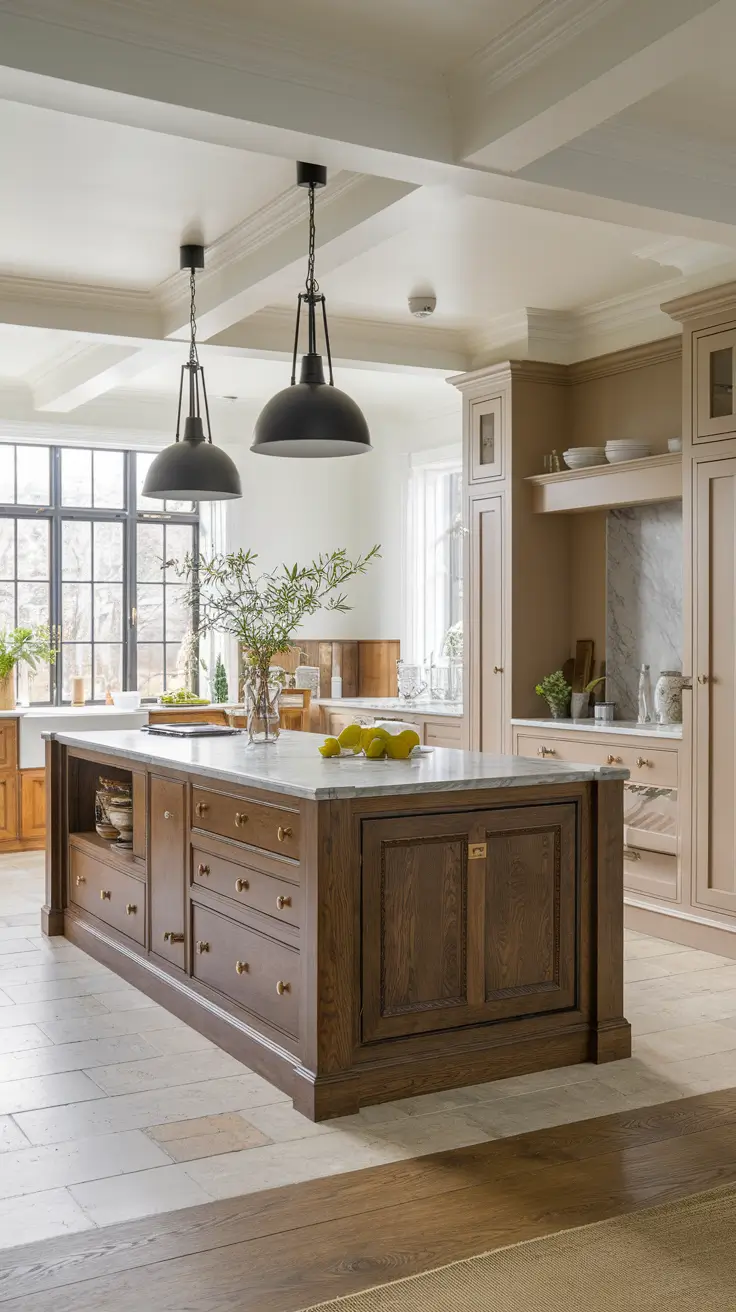
Islands serve as multifunctional hubs for food prep, dining, and work, enhancing both utility and social interaction. Incorporating ergonomic designs and additional storage beneath the island can further optimize the space.
Backsplash Inspirations for Dark Wood Cabinets
When pairing backsplashes with dark wood cabinetry, contrast and light management are key. Bright, large-format porcelain tiles in warm cream or beige tones can illuminate the space, allowing the wood grain to stand out.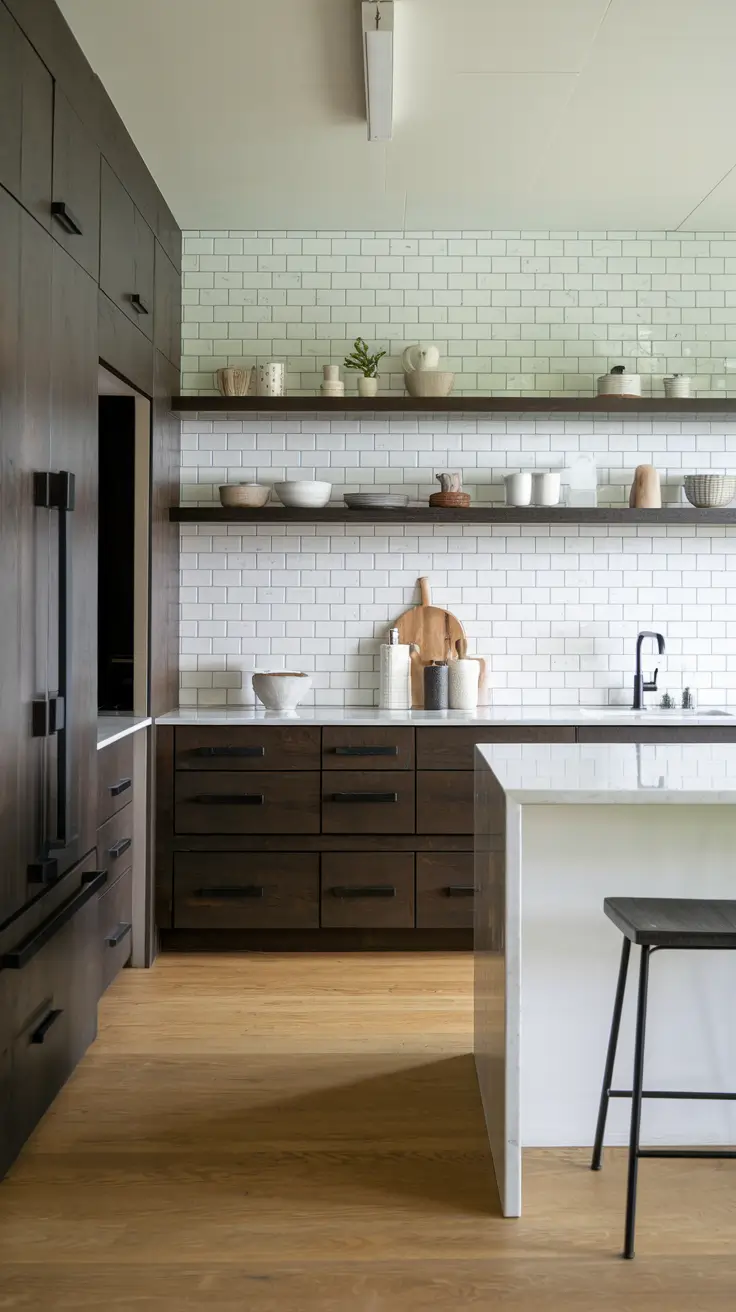
Stacked handmade white tiles or honed marble slabs with subtle gray veining add texture and sophistication. Industrial black metallic trims frame the backsplash elegantly.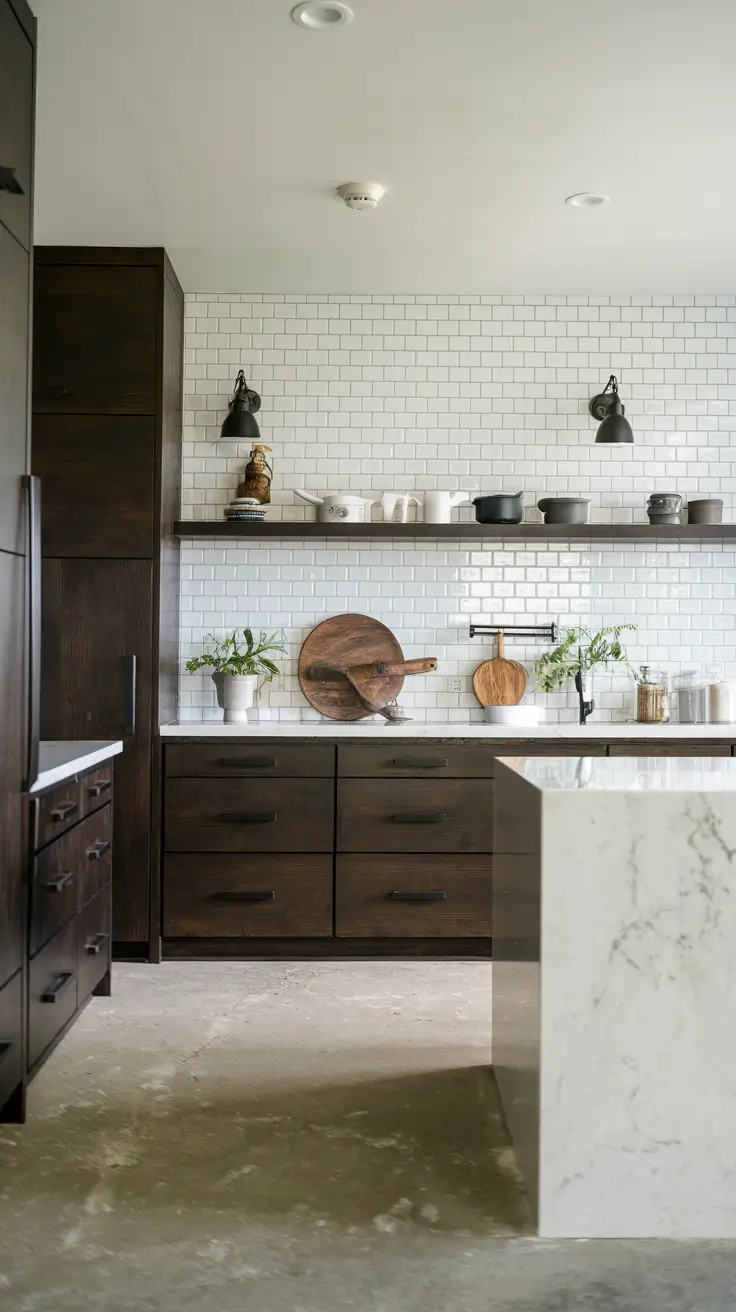
For darker countertops, white zellige tiles lift the eye line, while lighter counters pair well with dark blue or sage green enamel tiles for a modern twist. Continuous slab backsplashes create a serene backdrop, and under-cabinet lighting enhances texture without overwhelming the space. Using grout in slightly deeper tones helps minimize staining in high-use areas, and aligning tile layouts with cabinet widths ensures a tailored finish.
Seamless Flooring Transitions: Combining Tile and Wood
Integrating tile flooring alongside wood requires thoughtful transitions to maintain flow and purpose. Selecting tile colors that harmonize with adjacent oak or cherry wood planks, while prioritizing slip resistance and easy upkeep, is essential.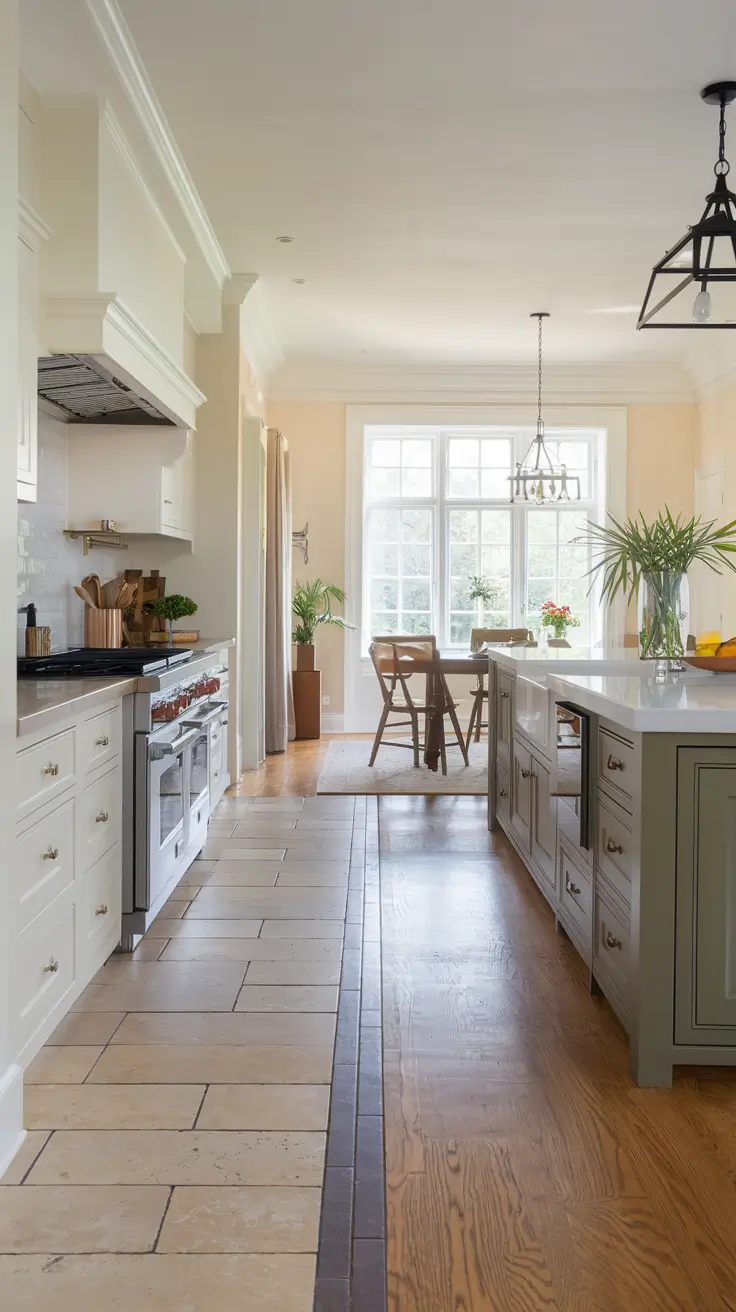
Popular palettes include buttery porcelain paired with medium brown wood or gray terrazzo alongside natural oak. Transition strips, whether metal or wood, should be precisely installed to create smooth, visually appealing junctions. Large-format matte tiles or textured porcelain in herringbone patterns provide grip and style in high-traffic zones.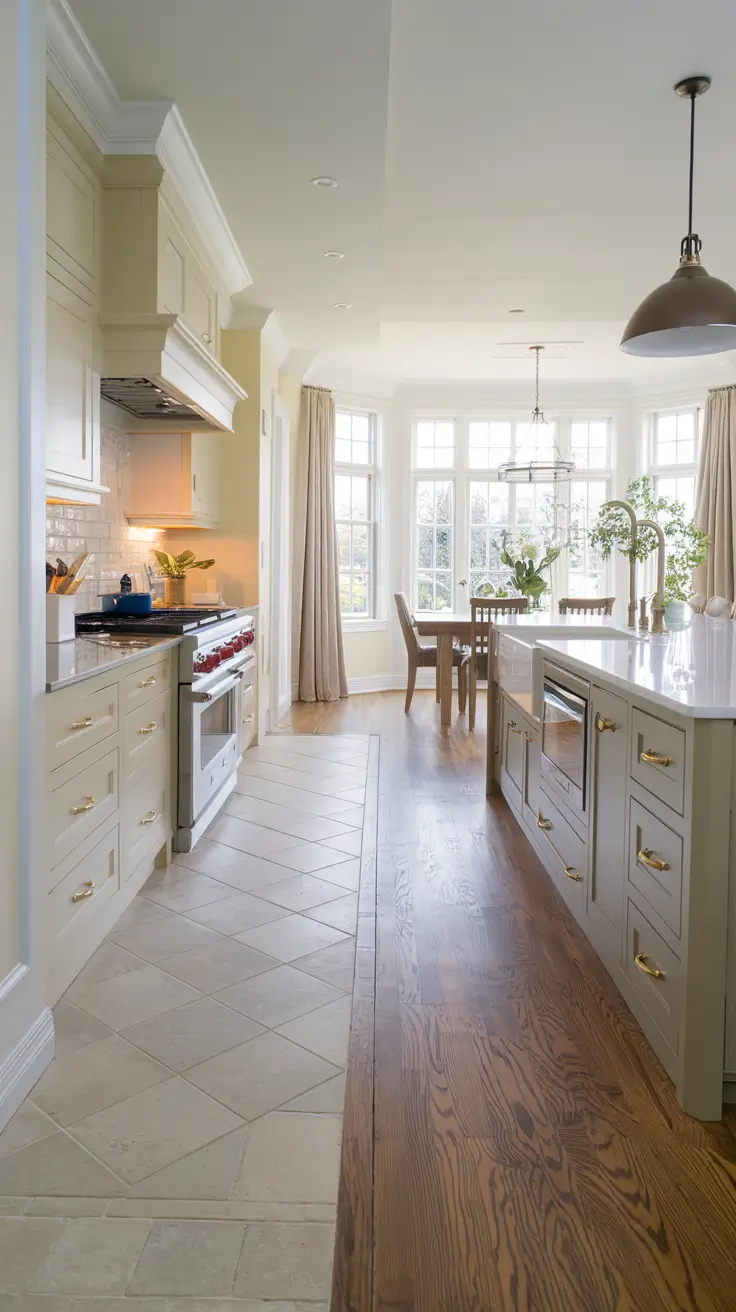
Proper subfloor preparation ensures flush surfaces, preventing tripping hazards and easing cleaning. Incorporating soundproofing underlayments and decoupling membranes protects against noise and cracking. Testing samples under various lighting conditions helps avoid unexpected color clashes and ensures cohesive tones throughout the day.
Vent Hood Designs That Complement Wood Cabinetry
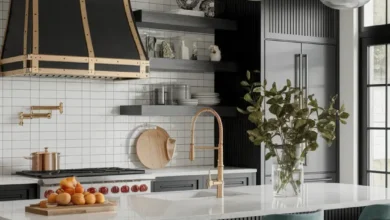
Choosing the right kitchen vent hood involves deciding whether it should blend seamlessly or stand out as a sculptural feature. In modern dark kitchens, hoods clad in plaster or matching paneling keep the focus on wood cabinetry. Metal oxide finishes with patina add character in rustic or industrial schemes.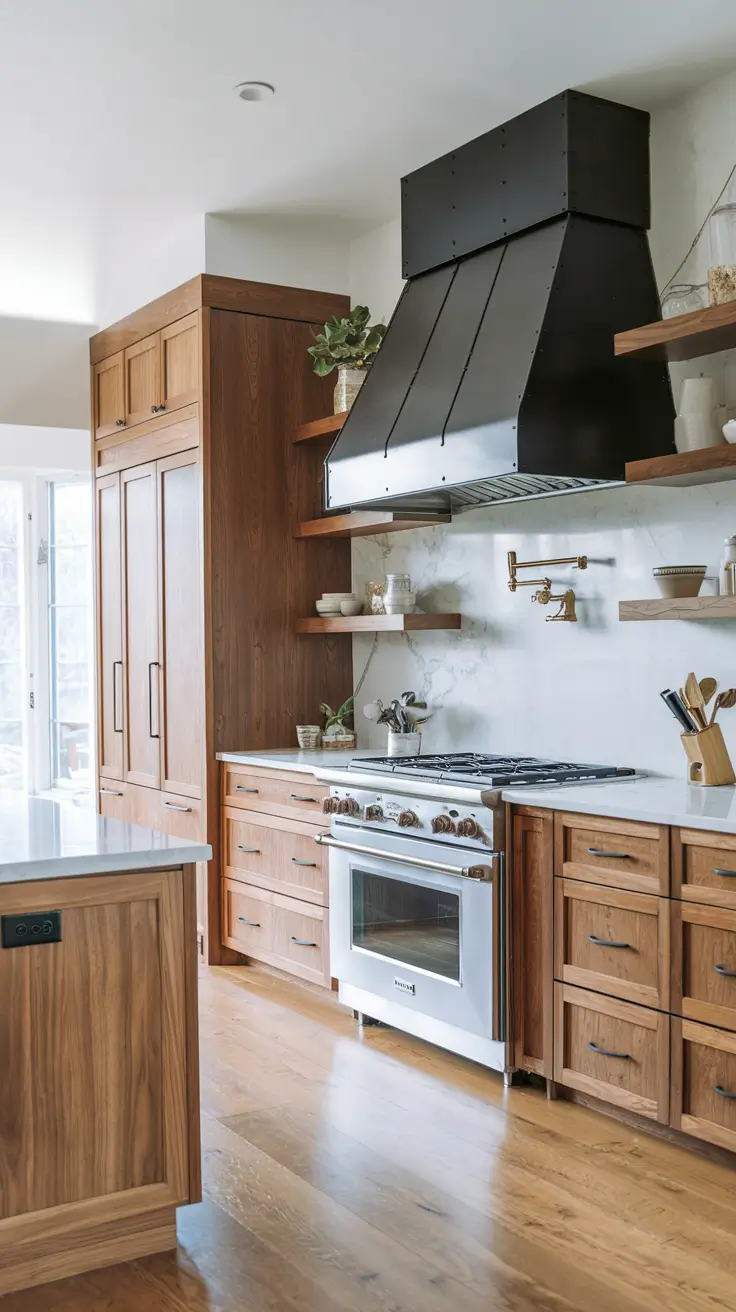
Design details include black, white, and steel trim that aligns with cabinet rails, oak veneer cladding, and terrazzo inserts for a minimalist look. LED task lighting beneath the hood ensures even illumination of the cooktop.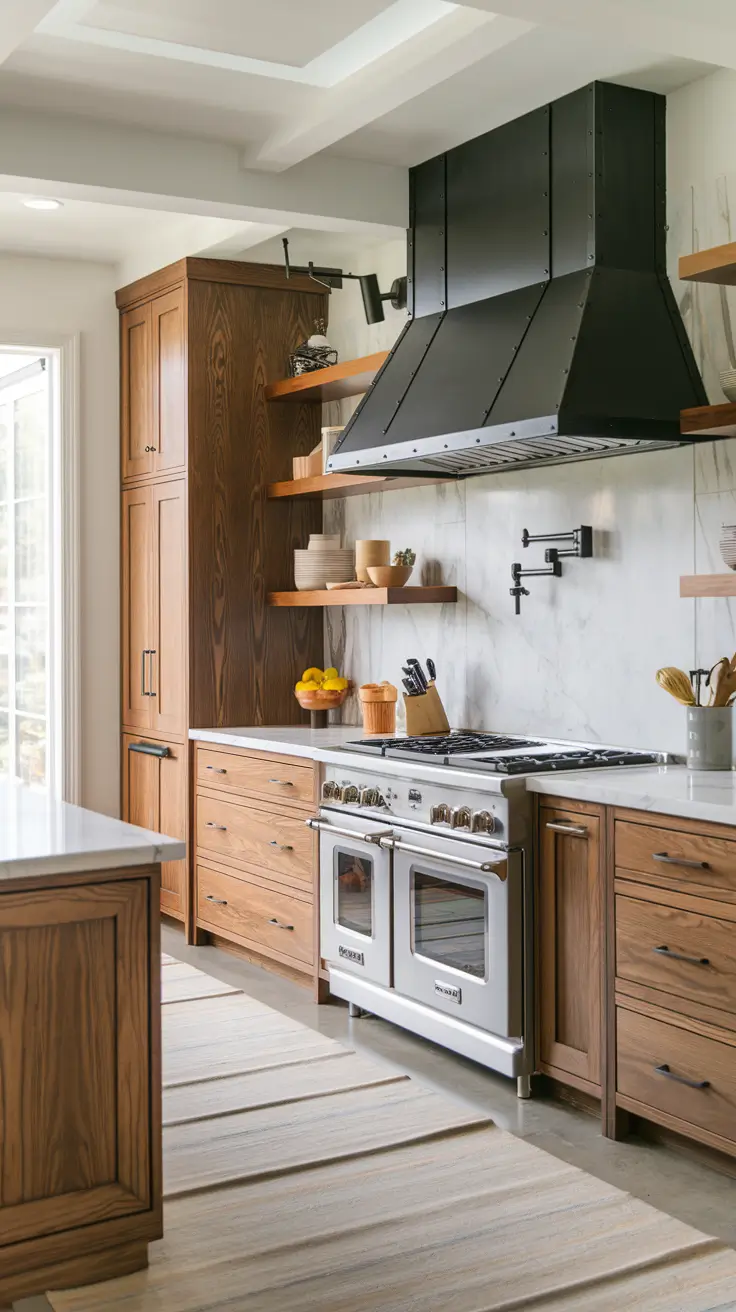
Proper sizing and placement are crucial to avoid obstructing headroom or reducing ventilation efficiency. Washable baffle filters, make-up air strategies, and scrubbable wall finishes simplify maintenance and keep the kitchen fresh.
Cabinet Colors That Harmonize with Wood Flooring
When selecting cabinetry colors to pair with wood floors, understanding undertones is vital. Warm oak or cherry floors pair beautifully with modern whites, creams, or sage greens to balance warmth with coolness. Gray floors complement deep greens, navy, or dark blues, enhancing the modern wood kitchen aesthetic.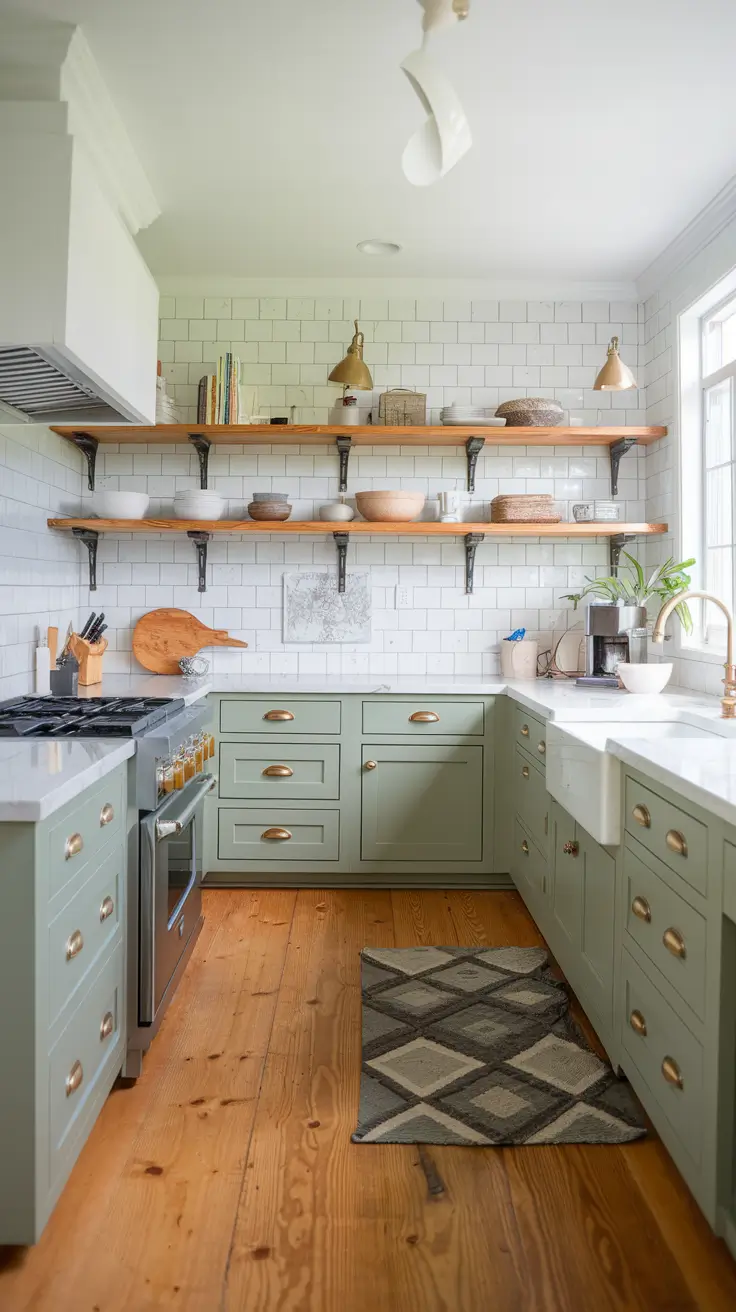
Matte lacquers or durable enamels with paneled ends and subtle floor lighting create depth. Rustic black or soft brass hardware adds refined touches. Combining light upper cabinets with darker bases maintains openness while grounding the design.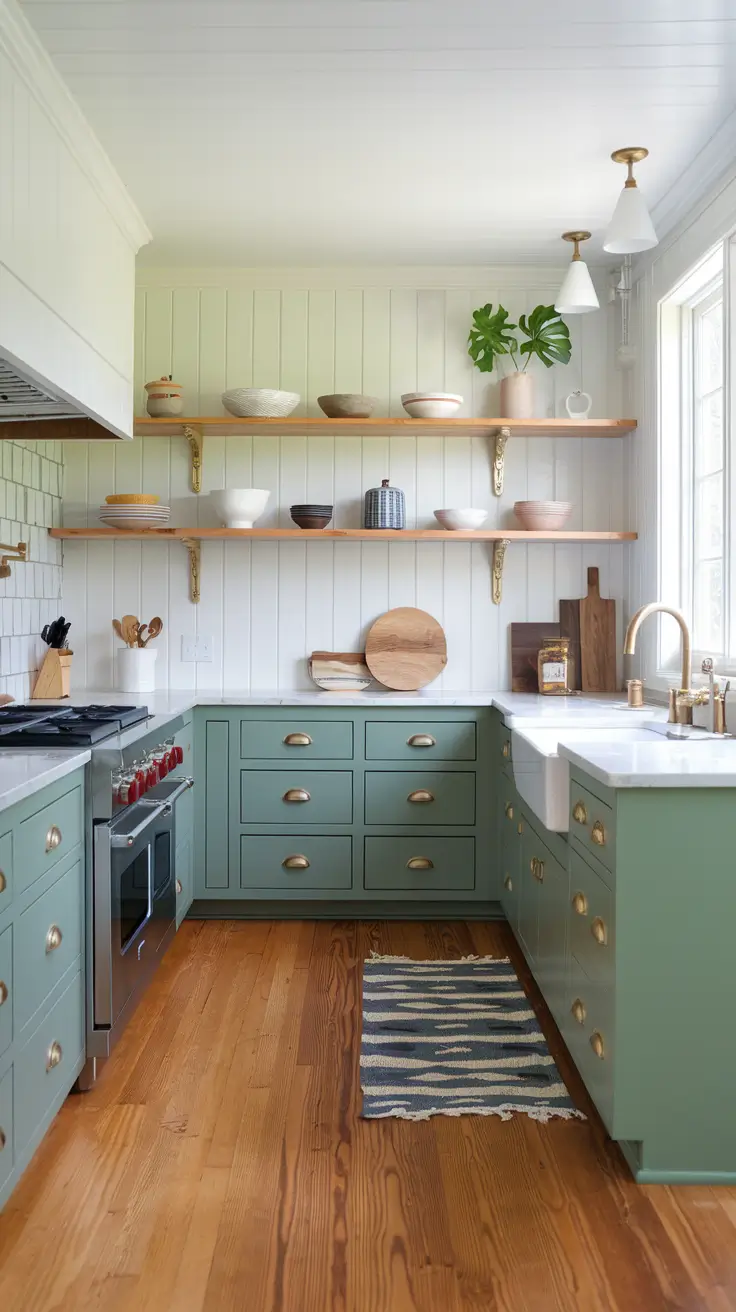
Sampling paint chips under various lighting conditions ensures color harmony with floors, countertops, and backsplashes. Slim shaker or flat slab door profiles complement modern sensibilities and allow wood flooring to shine.
Wooden Dividers: Defining Spaces with Style and Function
Wooden room dividers offer elegant solutions for separating kitchen and living areas without sacrificing light or openness. Slatted oak or walnut screens, open shelving walls, and ribbed panels maintain sightlines while creating distinct zones.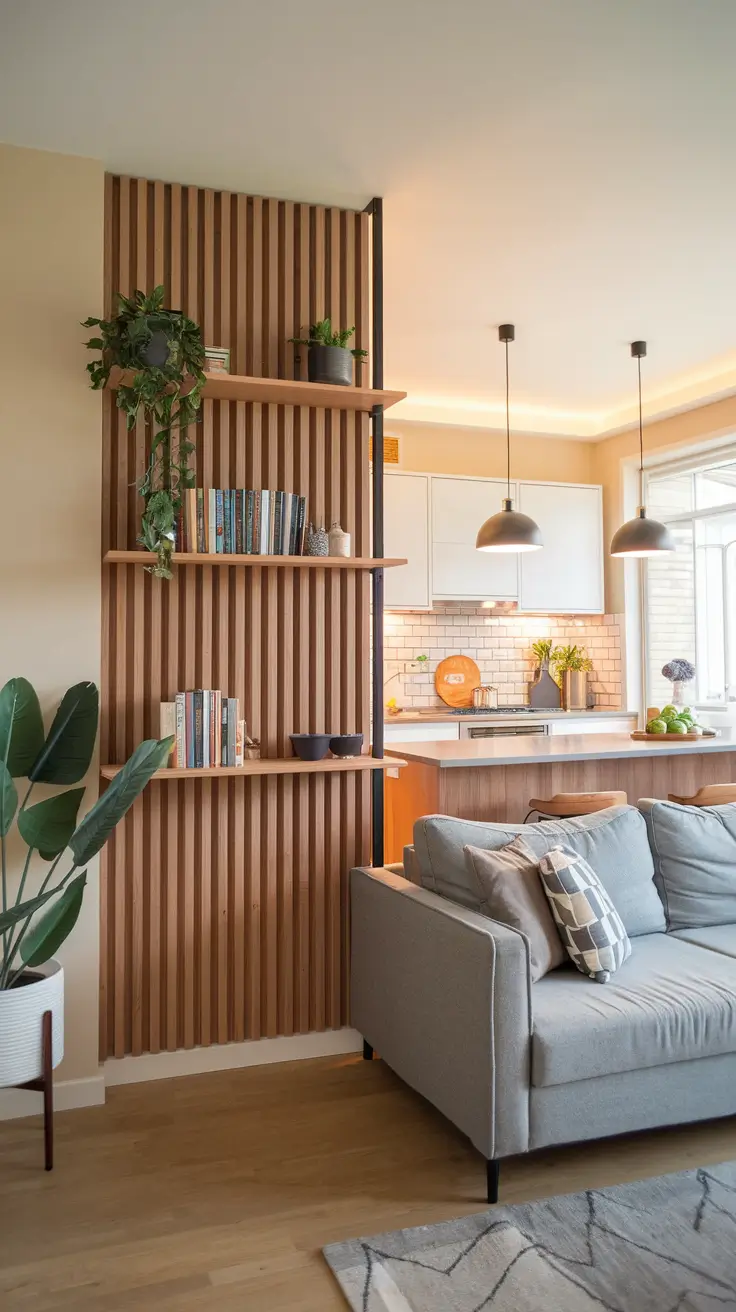
In industrial black schemes, steel frames with wood infill provide structure. Integrated shelving holds decor, greenery, and cookbooks, enhancing both aesthetics and storage.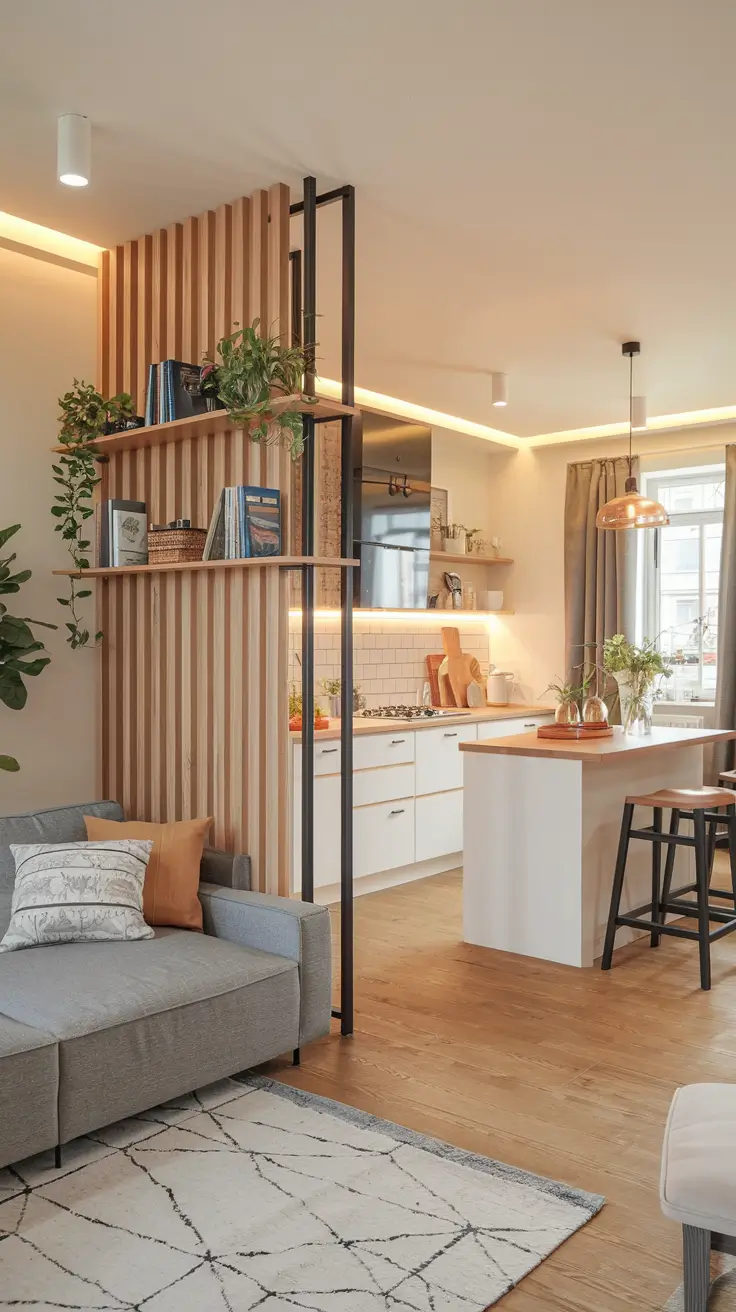
Successful dividers resemble furniture rather than walls, improving acoustics, concealing clutter, and offering display space. Ensuring stability by anchoring freestanding pieces and rounding edges in high-traffic areas enhances safety and durability.
Dark Wood Kitchens: Richness with Reflective Elegance
Dark wood kitchens exude timeless luxury by combining deep tones with reflective surfaces. Rift-cut oak or stained walnut paired with light quartz or marble countertops creates a balanced, inviting space.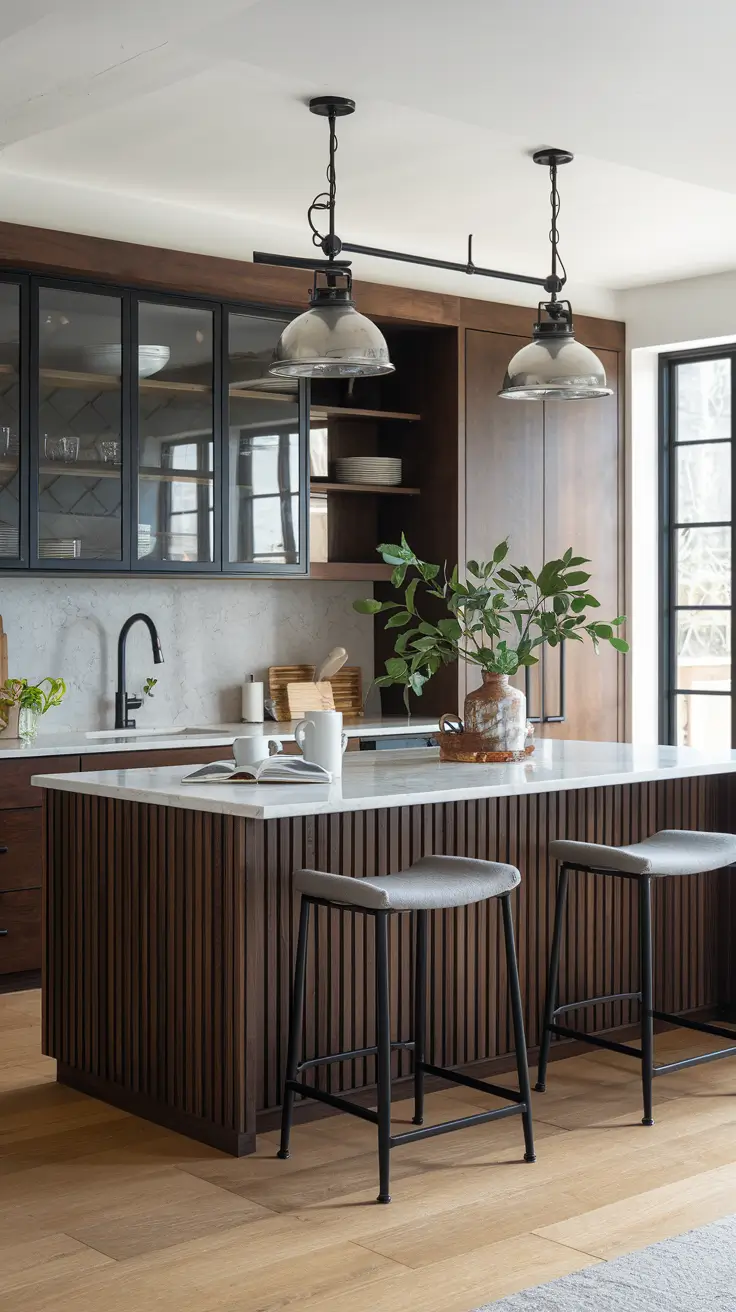
Accents in gray, beige, and black-white add sophistication. Glass cabinet doors and mirrored backsplashes reflect light and showcase ceramics. Texture plays a key role, with knurled pulls, ribbed glass, and fluted panels adding tactile interest.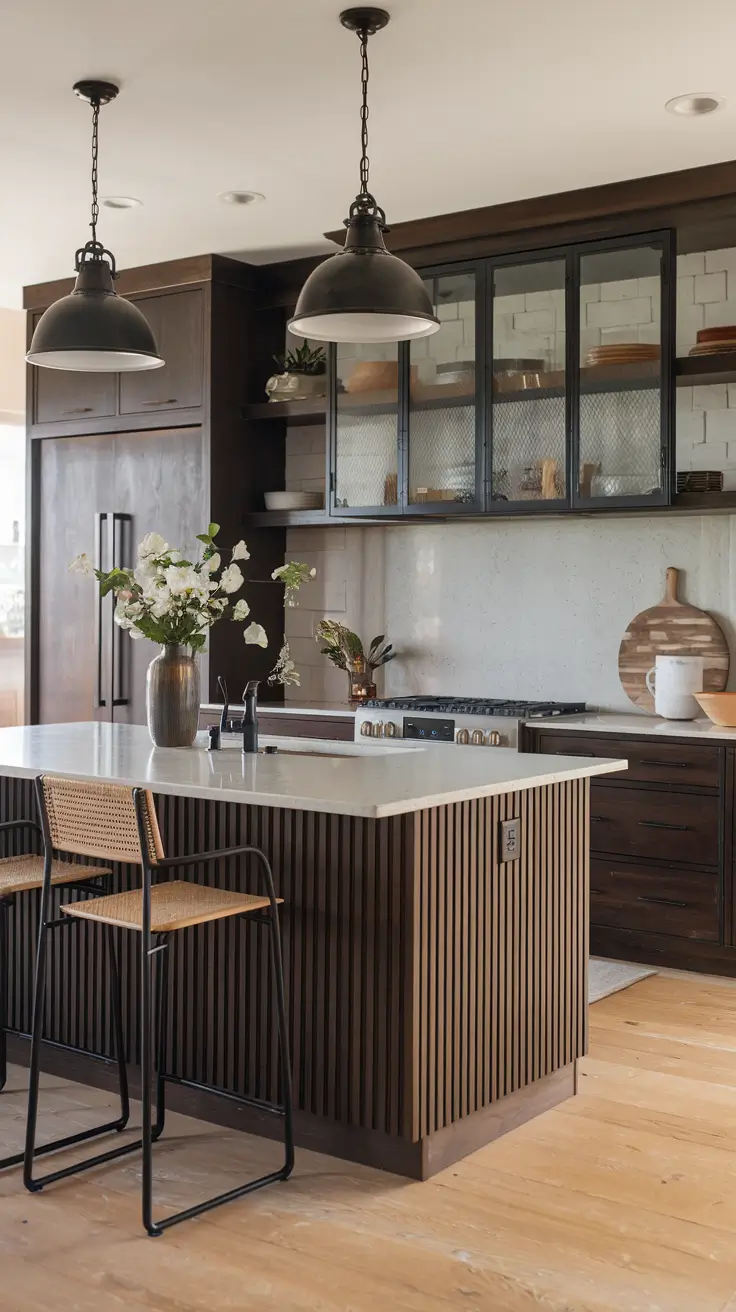
Maintaining these surfaces with wipeable finishes and pH-neutral cleaners keeps them free of smudges and fingerprints.
Striking Black and Wood Combinations for Bold Kitchens
Pairing matte black cabinetry or appliances with natural oak panels creates a visually compelling yet warm kitchen. Black-framed glass, industrial pendants, and oak stools complement white or beige stone islands for a balanced look.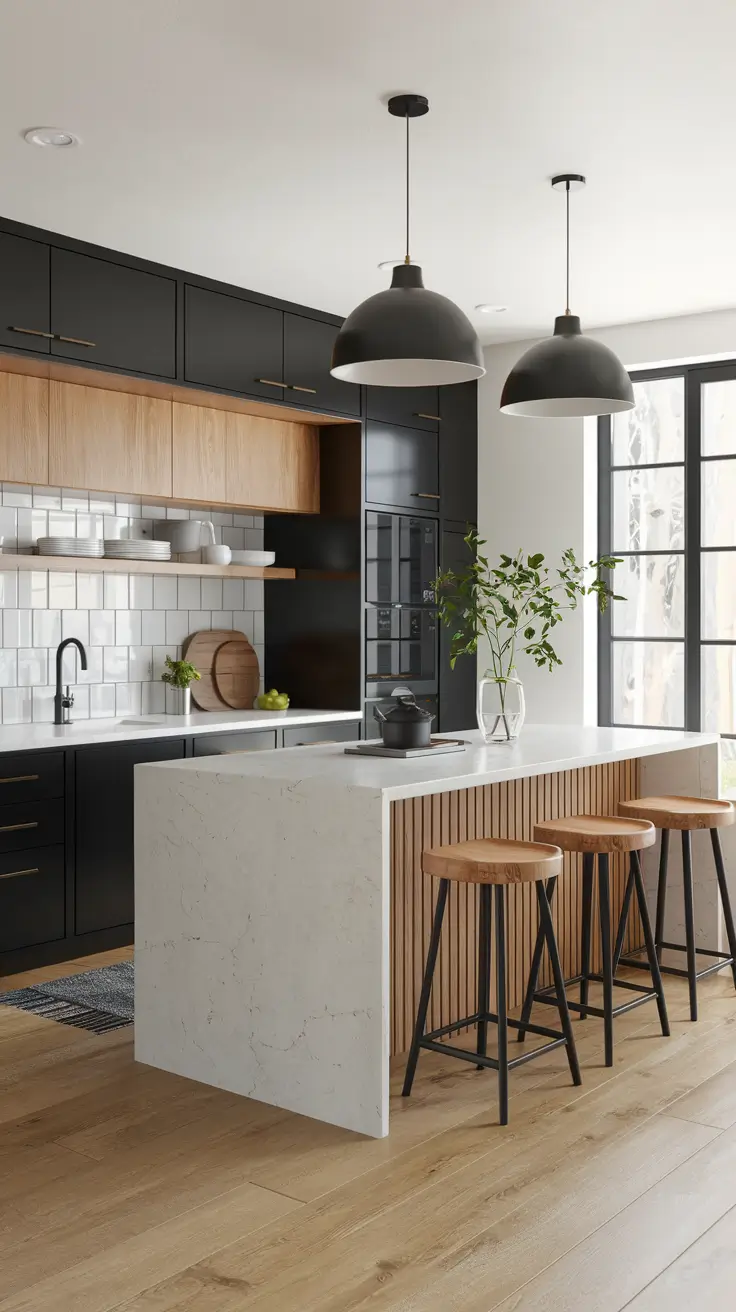
Simple hardware and touches of sage or dark green in upholstery soften the palette. Keeping ceilings and walls white maintains brightness in smaller dark kitchens.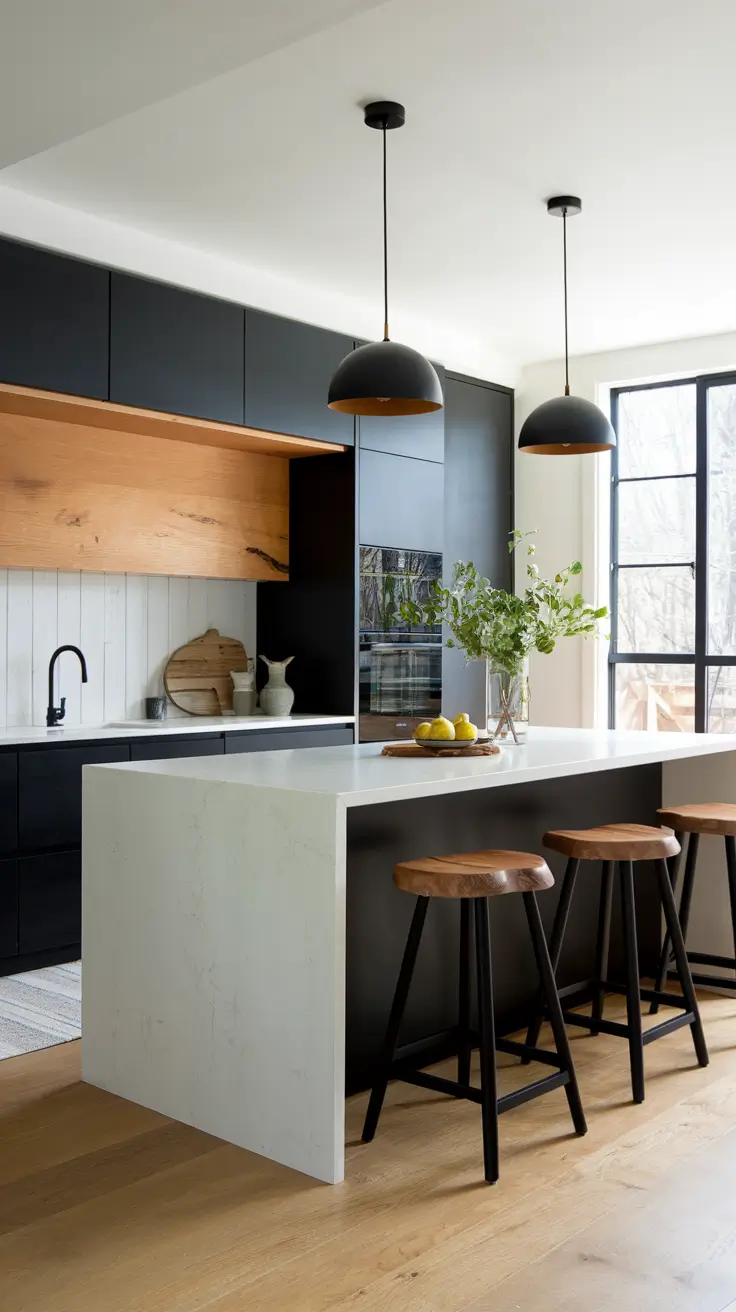
Layering matte, glossy, and polished finishes prevents monotony, while acoustic rugs and diffused LED lighting create a cozy atmosphere from morning to night.
Bright and Airy White and Wood Kitchens
Combining white cabinetry with natural wood elements results in kitchens that feel fresh, inviting, and timeless. White upper cabinets paired with oak or beige lower drawers and brushed nickel hardware create a harmonious balance.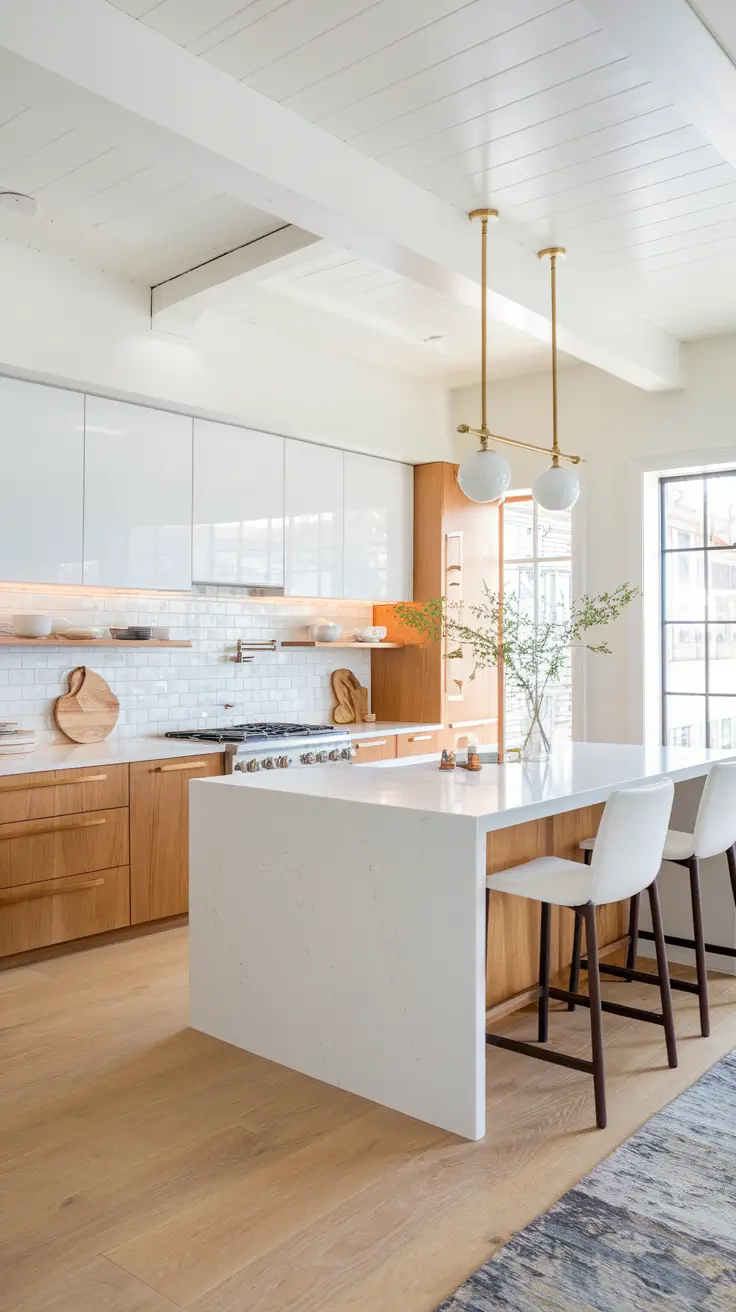
Light wood flooring and subtle lighting enhance the sense of space. White marble or glass tile backsplashes add depth and reflectivity.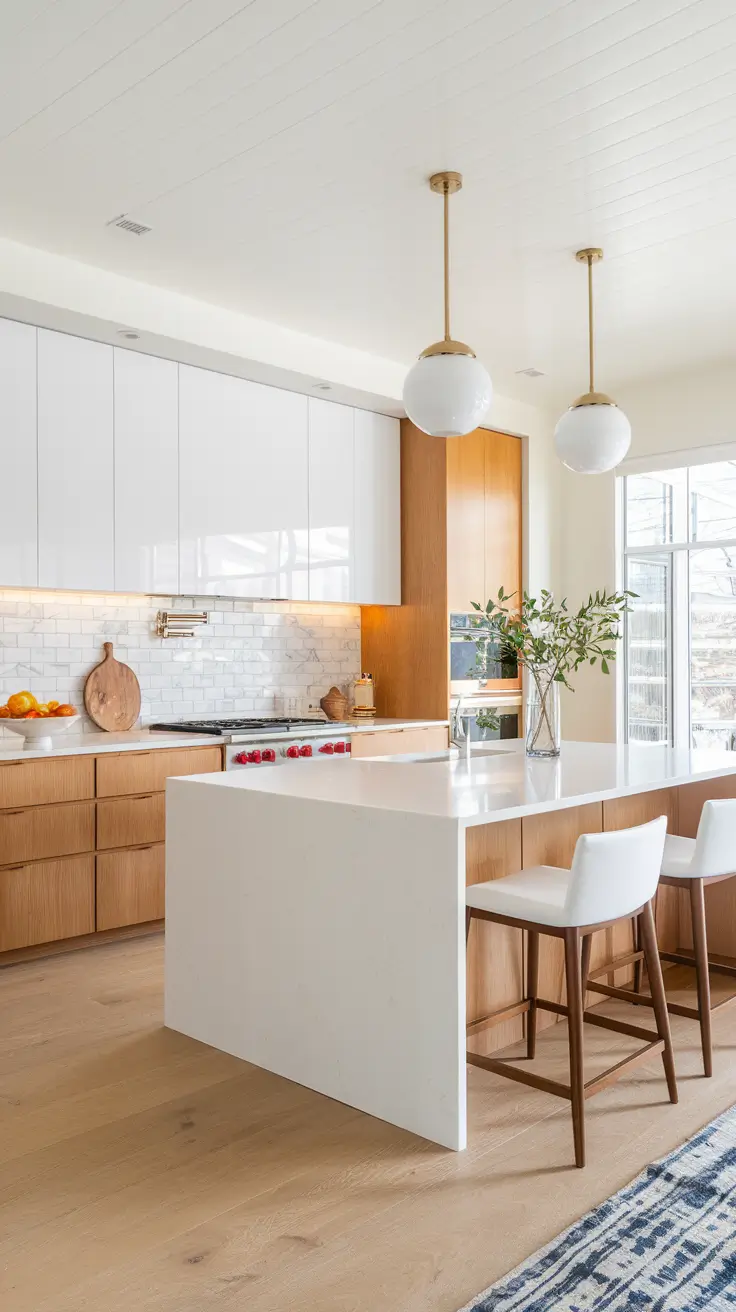
Adding a white quartz island or breakfast bar balances textures and maximizes storage, promoting interaction in smaller kitchens. This versatile palette adapts effortlessly to evolving decor trends.
Green and Wood Kitchens: Bringing Nature Indoors
Green cabinetry paired with walnut or oak wood finishes creates serene, nature-inspired kitchens. Sage or dark green tones combined with warm wood evoke a grounded, peaceful ambiance.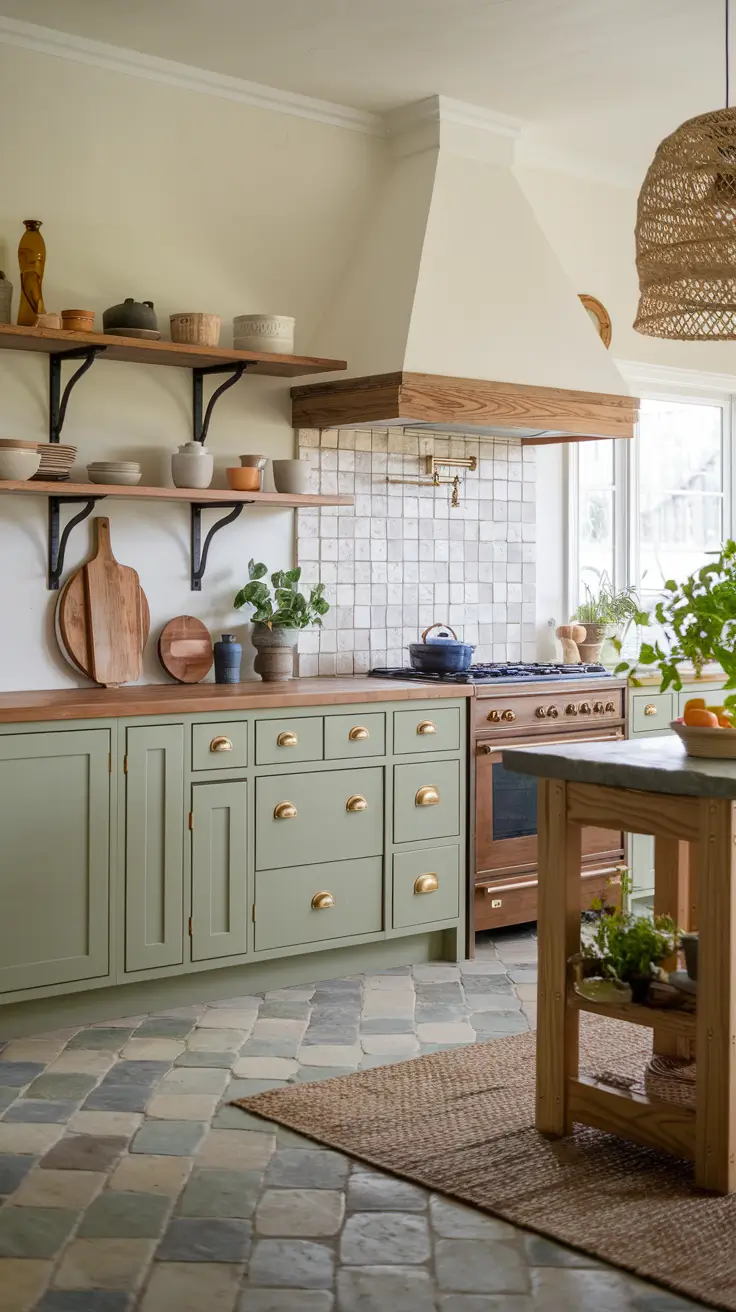
Matte cabinets, brass hardware, and wood-trimmed vent hoods complement stone or terracotta flooring, creating seamless transitions between wet and dining areas.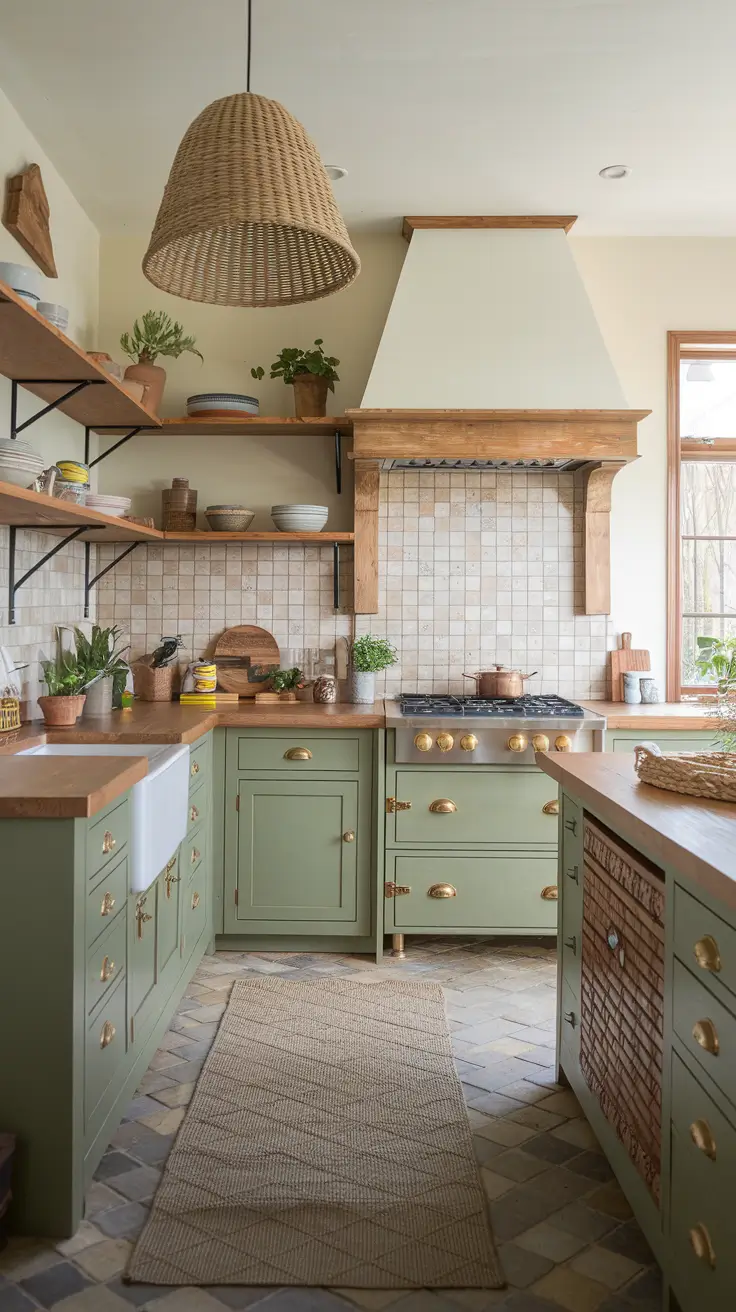
This palette aligns with sustainable design trends, fostering tranquility and earth-consciousness. Woven pendant lights and ceramic accents enhance the organic feel without overwhelming the space.
Light Wood Kitchens: Creating Spacious, Contemporary Interiors
Light wood cabinetry in ash, birch, or pale oak offers a minimalist, airy foundation ideal for Scandinavian or Japanese-inspired homes. These tones visually expand small kitchens, making them feel open and inviting.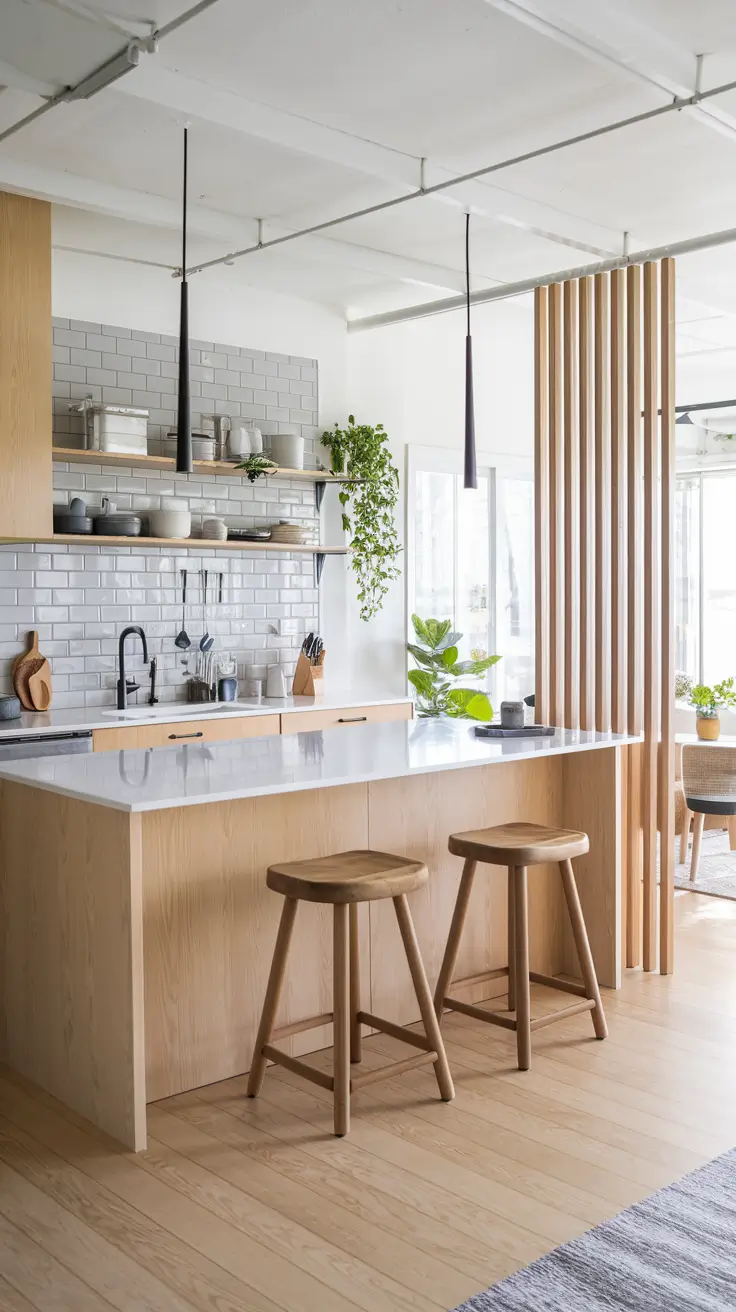
Pairing matte white countertops with subtle gray and beige backsplash tiles adds softness. Open shelving, minimalist hardware, and slim black fixtures introduce contrast and sophistication.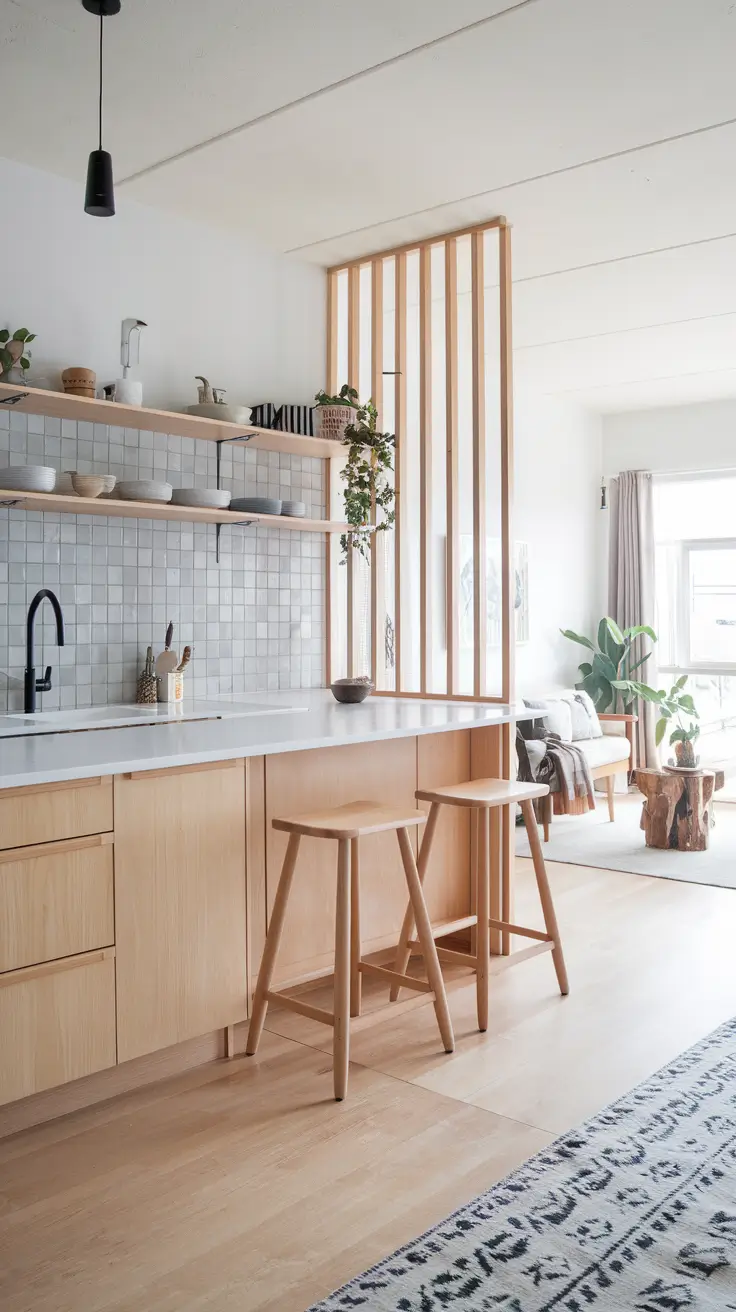
Wooden room dividers can subtly define spaces without blocking light, maintaining a clean, uncluttered look that’s easy to maintain. Adding touches of green or blue ceramic decor introduces color and interest.
Gray and Wood Kitchens: Urban Elegance Meets Natural Warmth
Combining dark gray cabinetry with walnut or rustic brown wood trim creates kitchens that are both sophisticated and inviting. Matte finishes, black-and-white stone countertops, and soft undercabinet lighting enhance the refined atmosphere.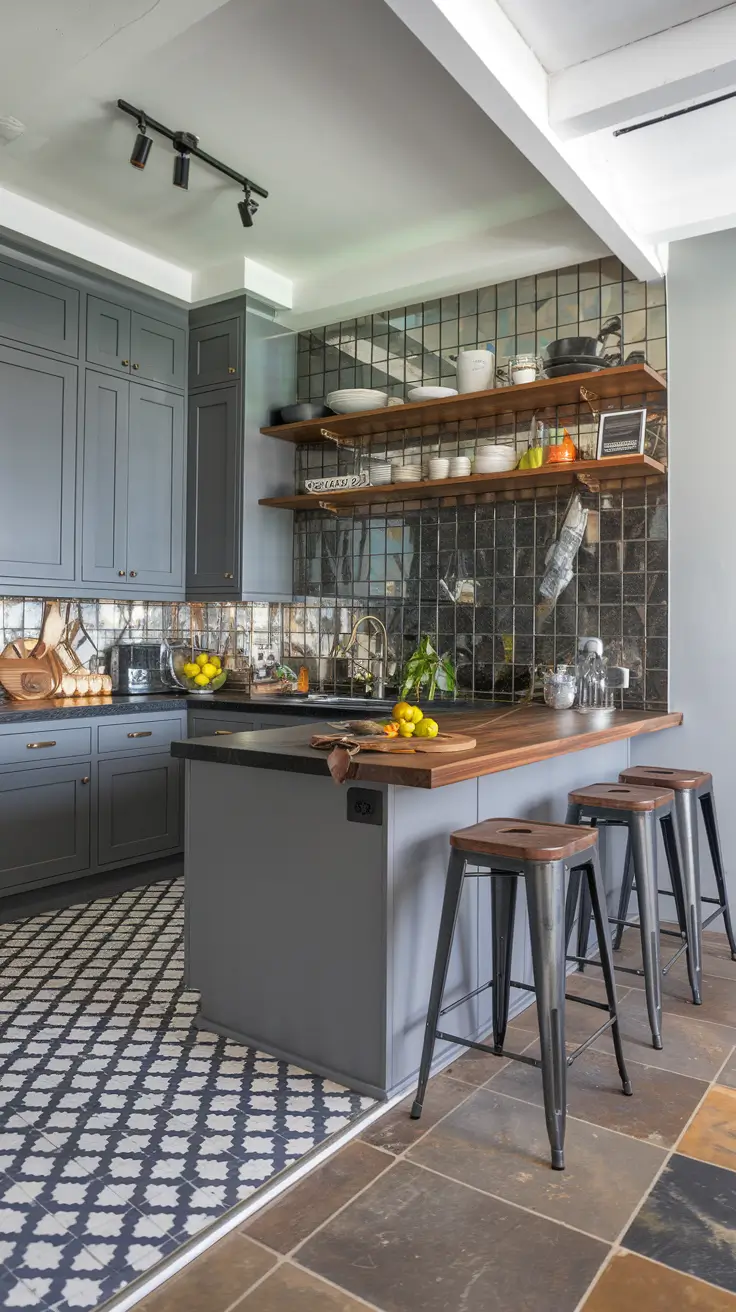
Metallic or geometric backsplash patterns add visual intrigue, while transitioning from wood to tile flooring helps define zones.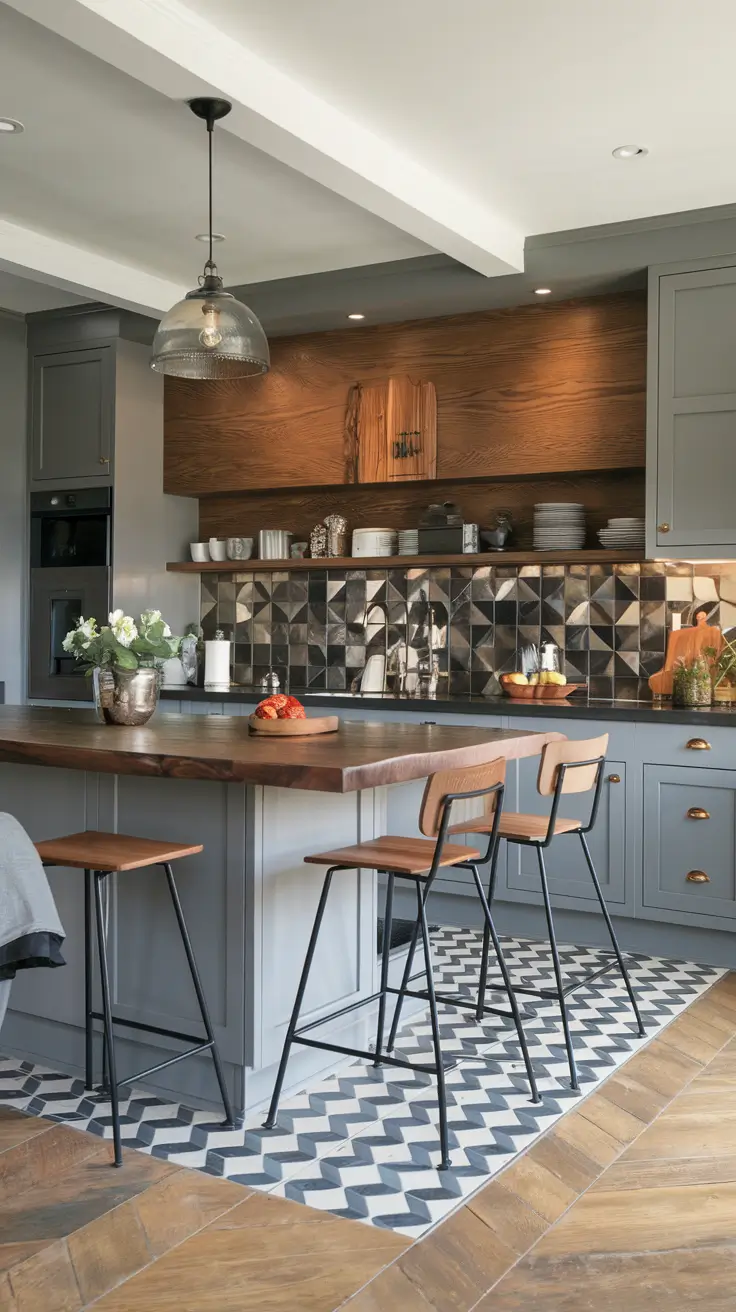
This style suits open-concept homes and those who appreciate understated elegance. Sleek steel-based bar stools with neutral upholstery add comfort without overwhelming the design.
Rustic Black Wood Kitchens: Cozy Yet Refined
Rustic black wood kitchens combine warmth and sophistication. Dark wood cabinets paired with matte industrial black metal accents and warm lighting create a classic, atmospheric space ideal for spacious or loft-style kitchens.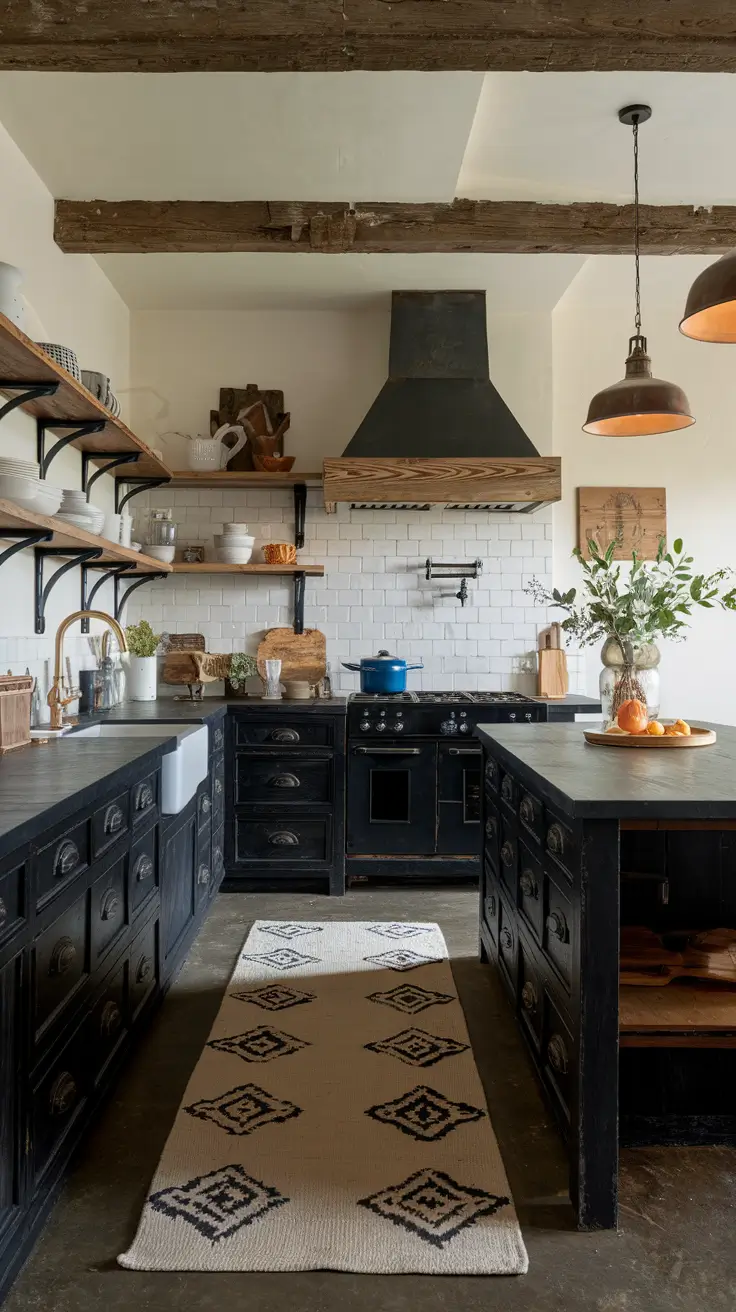
Distressed cherry wood, aged brass hardware, reclaimed shelves, and dark blue stone countertops work together to form a cohesive look. Wood-clad vent hoods add texture and serve as focal points.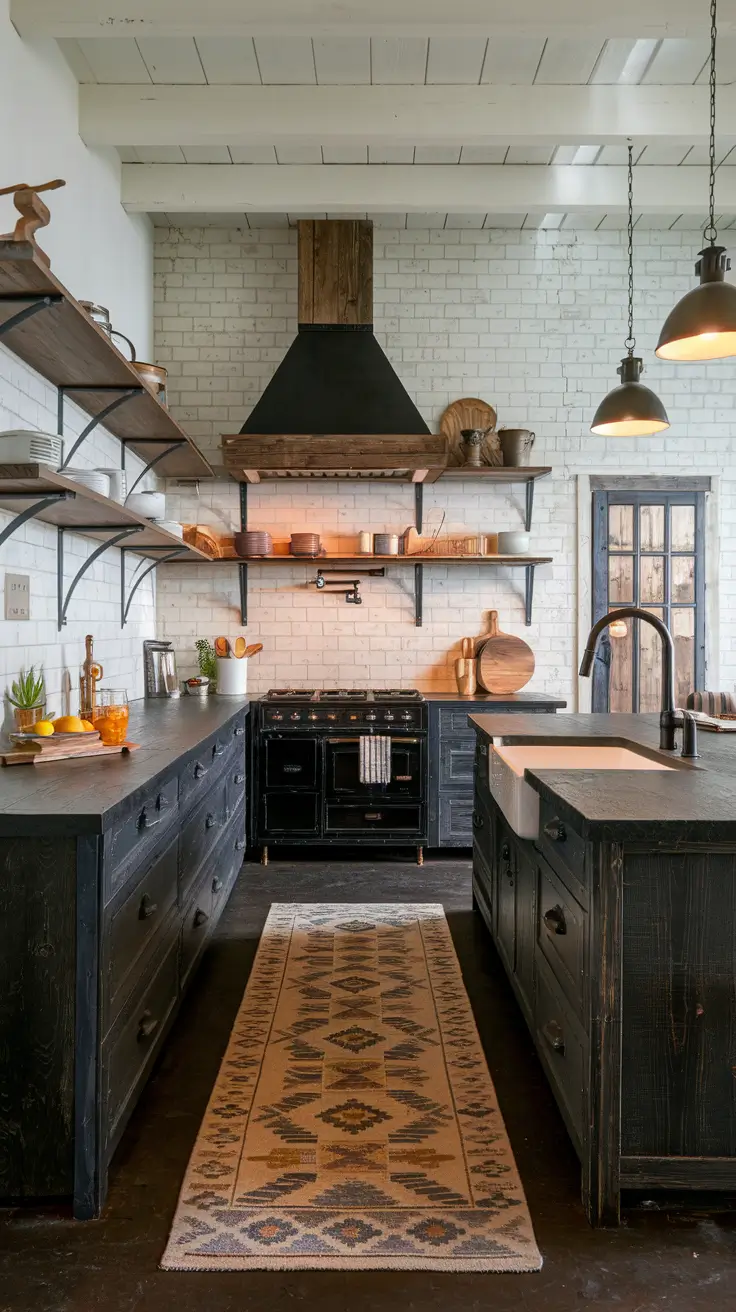
Though some hesitate to use black, pairing it with warm wood creates a luxurious, inviting atmosphere. Incorporating light-toned fabrics or runners softens the palette and maintains coziness.
Classic Oak Kitchens: Timeless Elegance
Oak kitchens blend modern and natural styles effortlessly. Medium-tone oak paired with black, white, green, or beige accents creates a balanced, upscale look.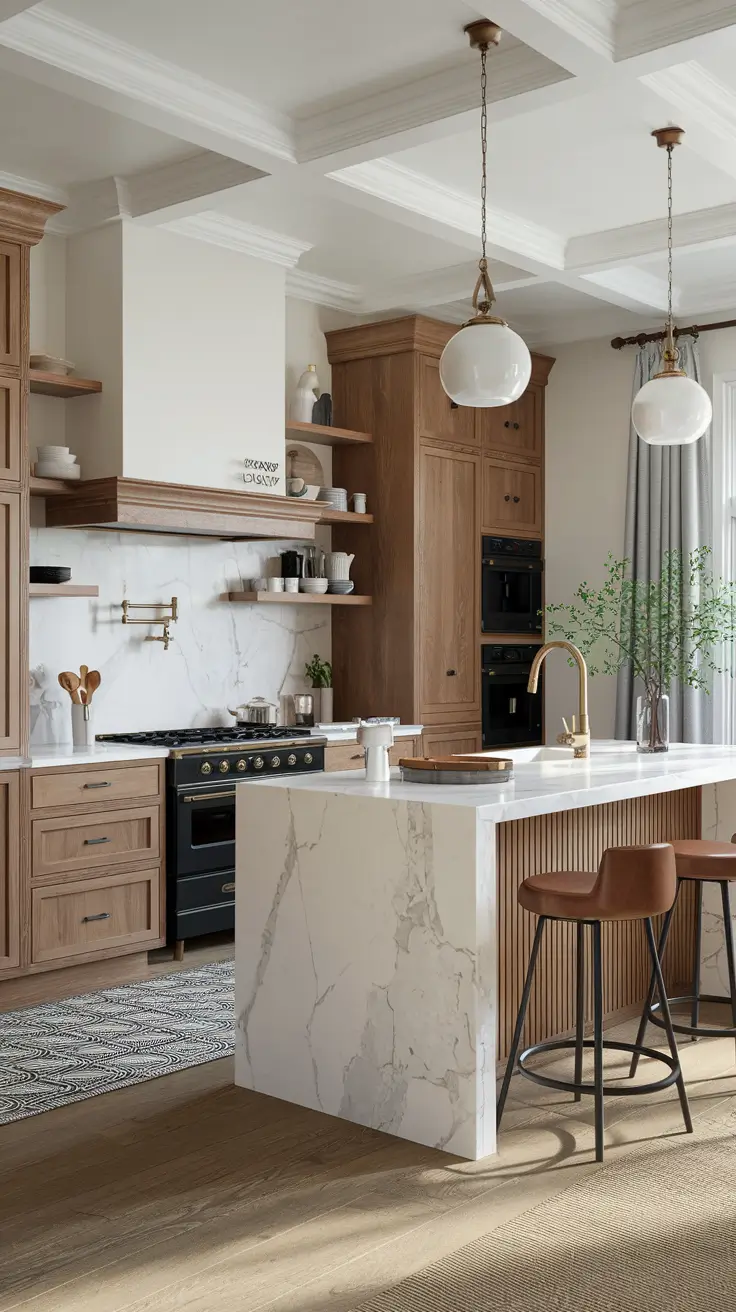
Flat-panel cabinetry with soft-close features, white marble countertops, and contrasting kitchen islands form the core. Brass faucets, brown stools, and matte pendant lighting complete the ensemble.
Oak’s versatility allows it to adapt to changing trends, making it a lasting investment. Incorporating natural textiles and handcrafted ceramics adds authenticity and warmth.
Cream and Wood Kitchens: Soft, Inviting Comfort
Cream walls paired with natural oak cabinetry create serene, sophisticated kitchens that blend modern and farmhouse styles.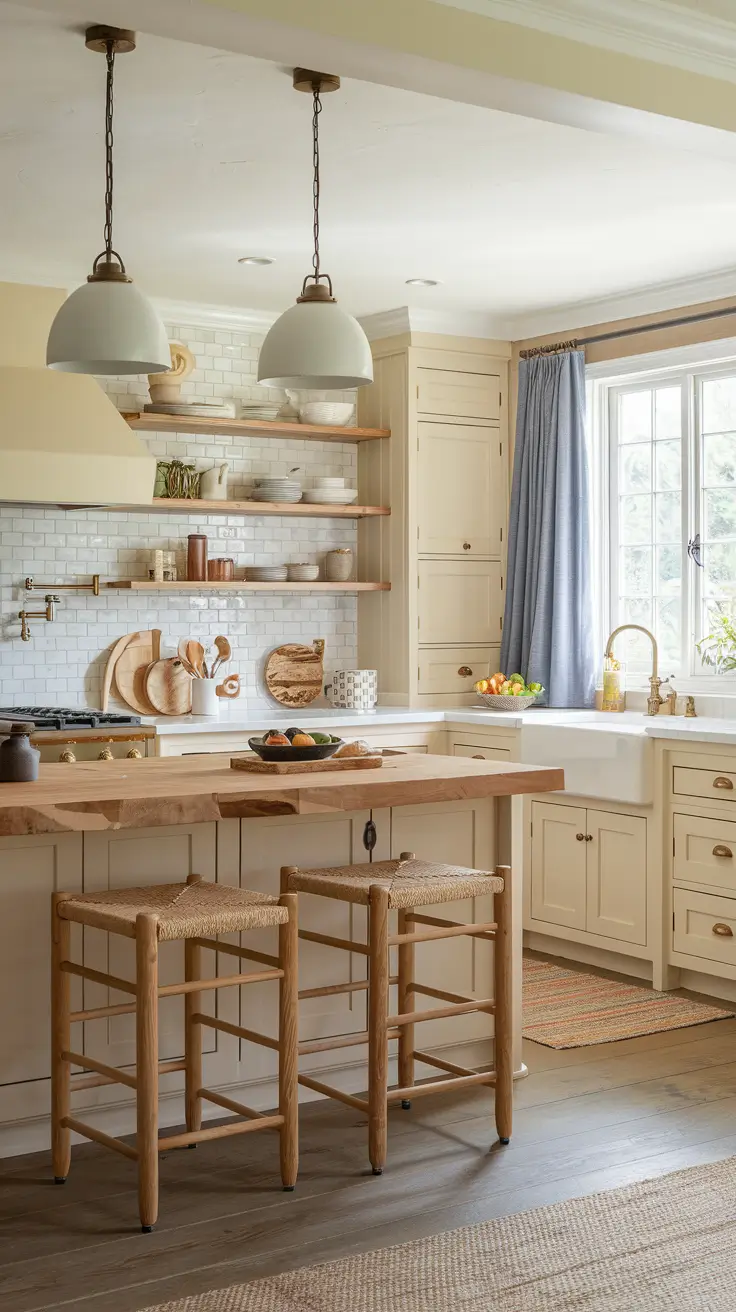
Rustic black or bronze hardware, textured backsplashes, and soft linen curtains enhance the cozy vibe. Butcher block island tops and woven bar stools add tactile appeal and functionality.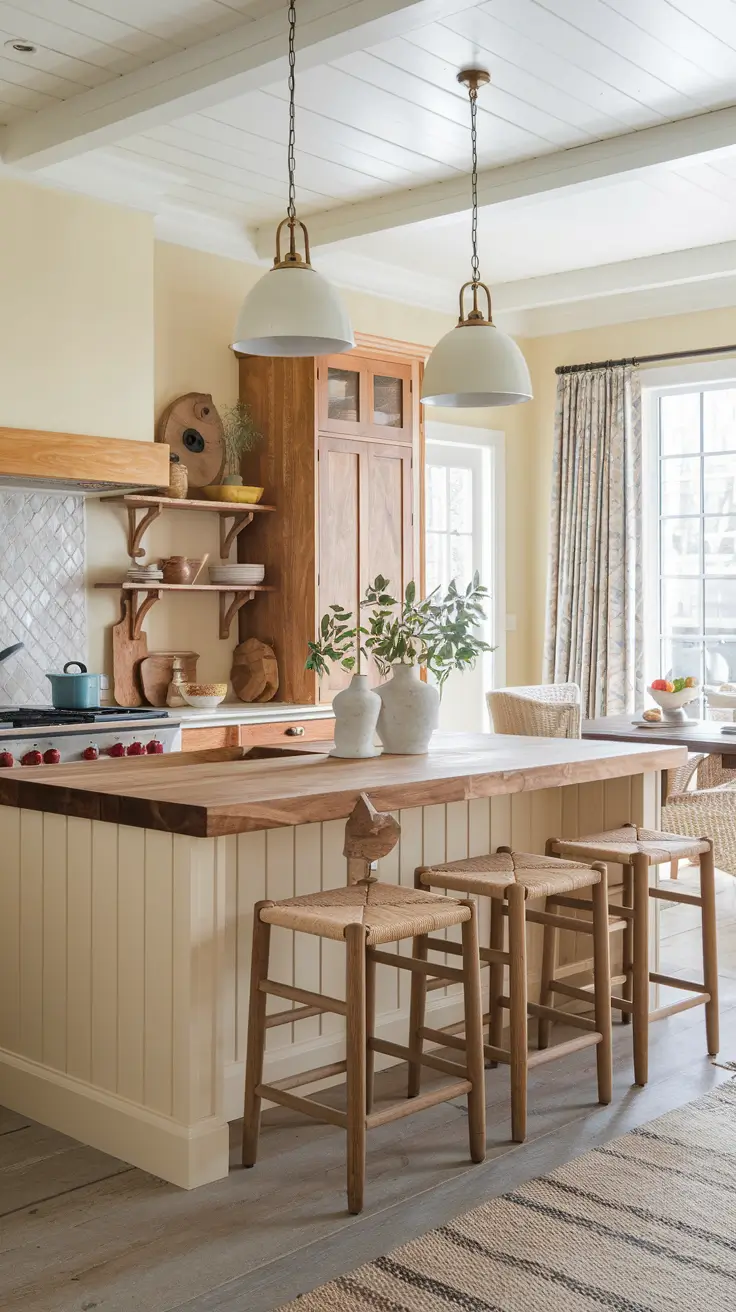
This palette suits homes seeking a cheerful yet calm atmosphere. Subtle metal accents like brass lighting and vintage frames introduce sophistication without sacrificing warmth.
Luxurious Modern Dark Wood Kitchens
Richly grained walnut and smoked oak create kitchens that feel both luxurious and practical. Layered finishes balance dark cabinetry with lighter countertops to reflect light and avoid heaviness.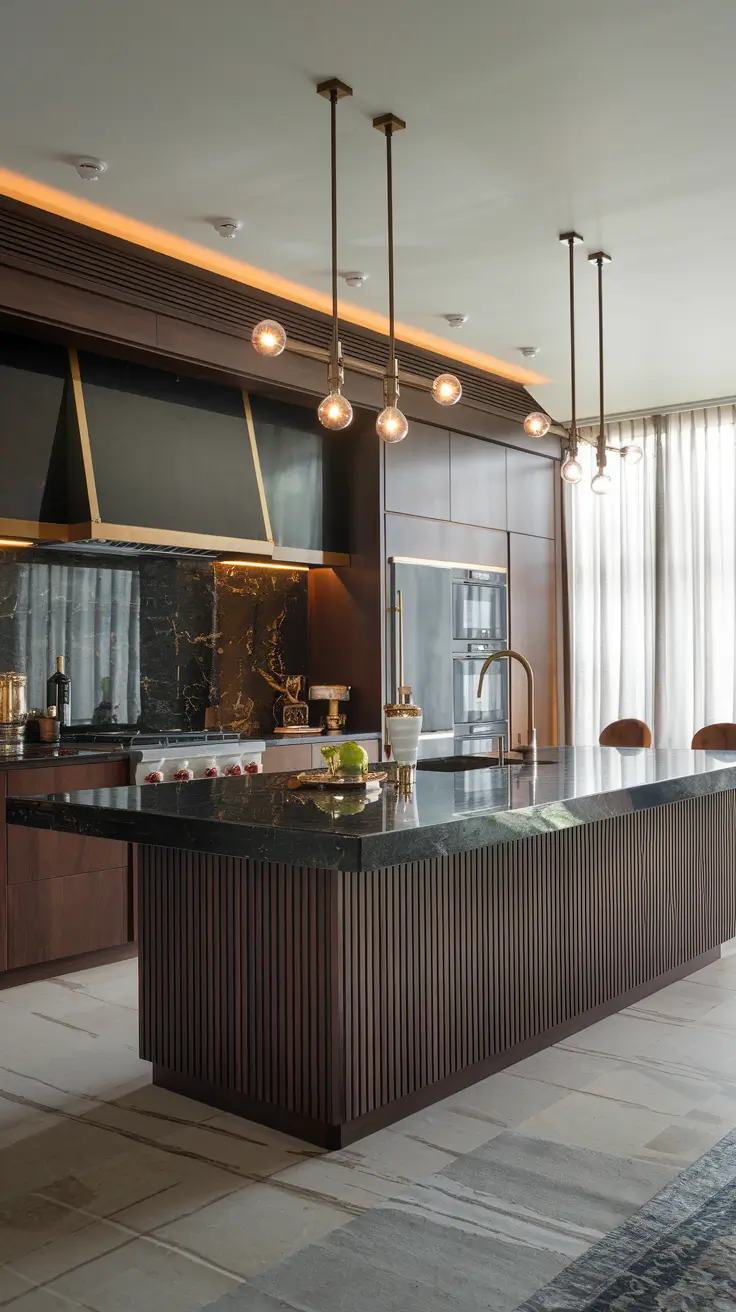
Rift-cut veneer cabinetry with integrated pulls, soft gray quartzite or porcelain slabs, and paneled appliances create a seamless look. Rounded island edges and hidden rails add refinement.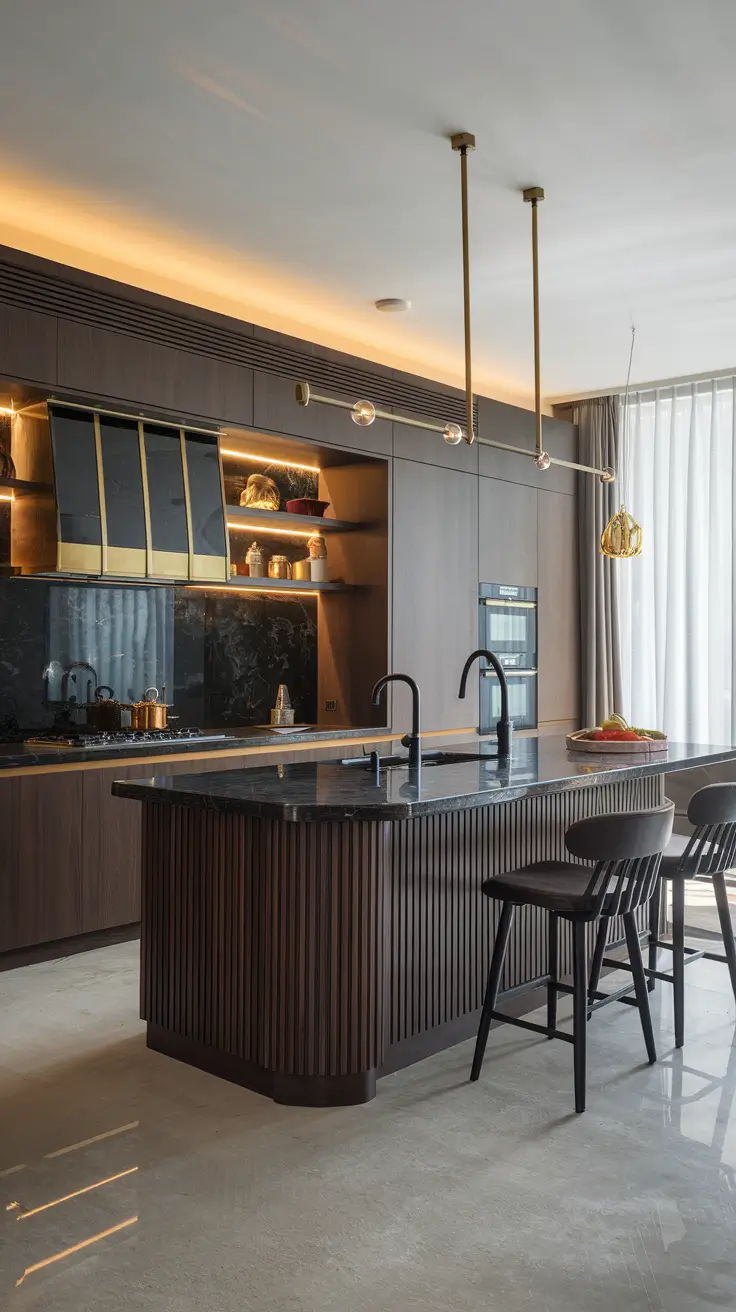
Task lighting, toe-kick LEDs, and pendant lights provide layered illumination. Maintaining a minimum 42-inch walkway around islands ensures comfort and functionality. Contrasting accents are used judiciously to create visual interest without overwhelming the space.
Sage Green and Wood: A Biophilic Kitchen Retreat
Sage green lower cabinets paired with oak uppers create a calming, nature-inspired kitchen. Off-white plaster walls and woven elements enhance lightness and airiness.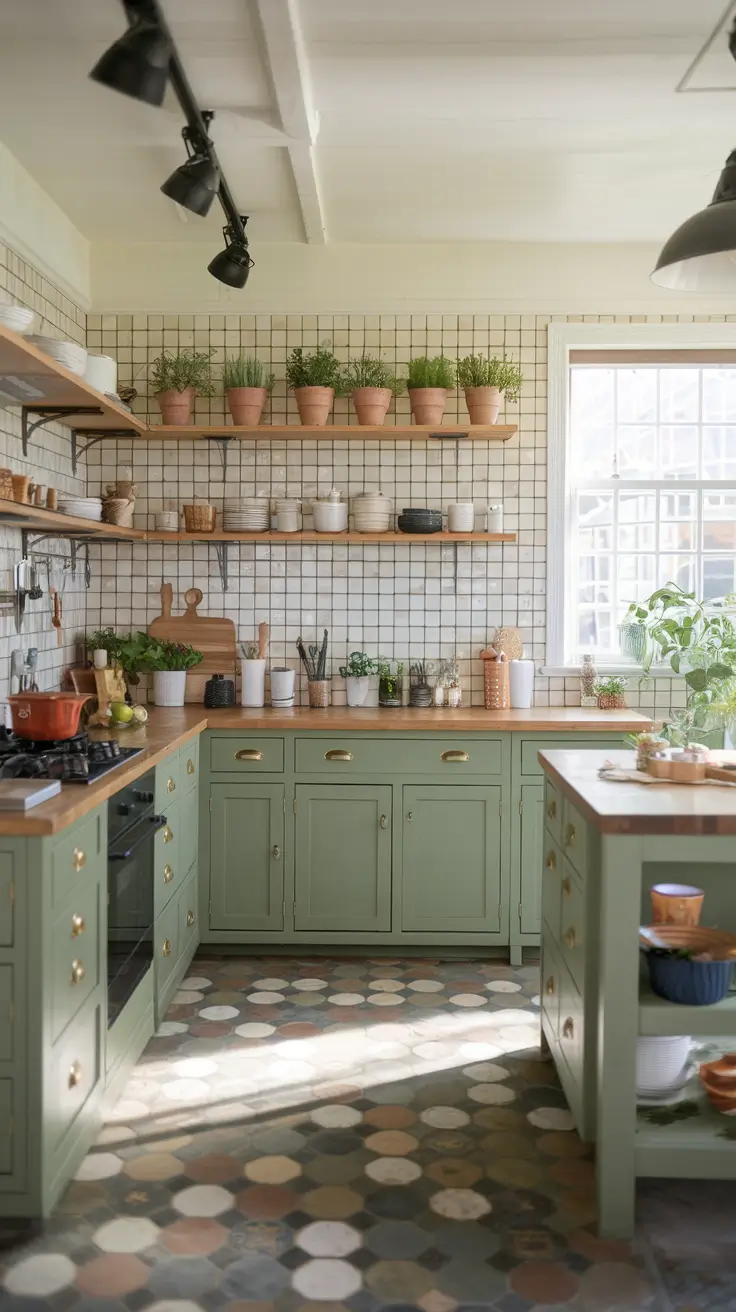
Shaker or slab fronts in mid-tone sage, warm brass or aged nickel hardware, and durable backsplash tiles like zellige or glazed porcelain complete the look.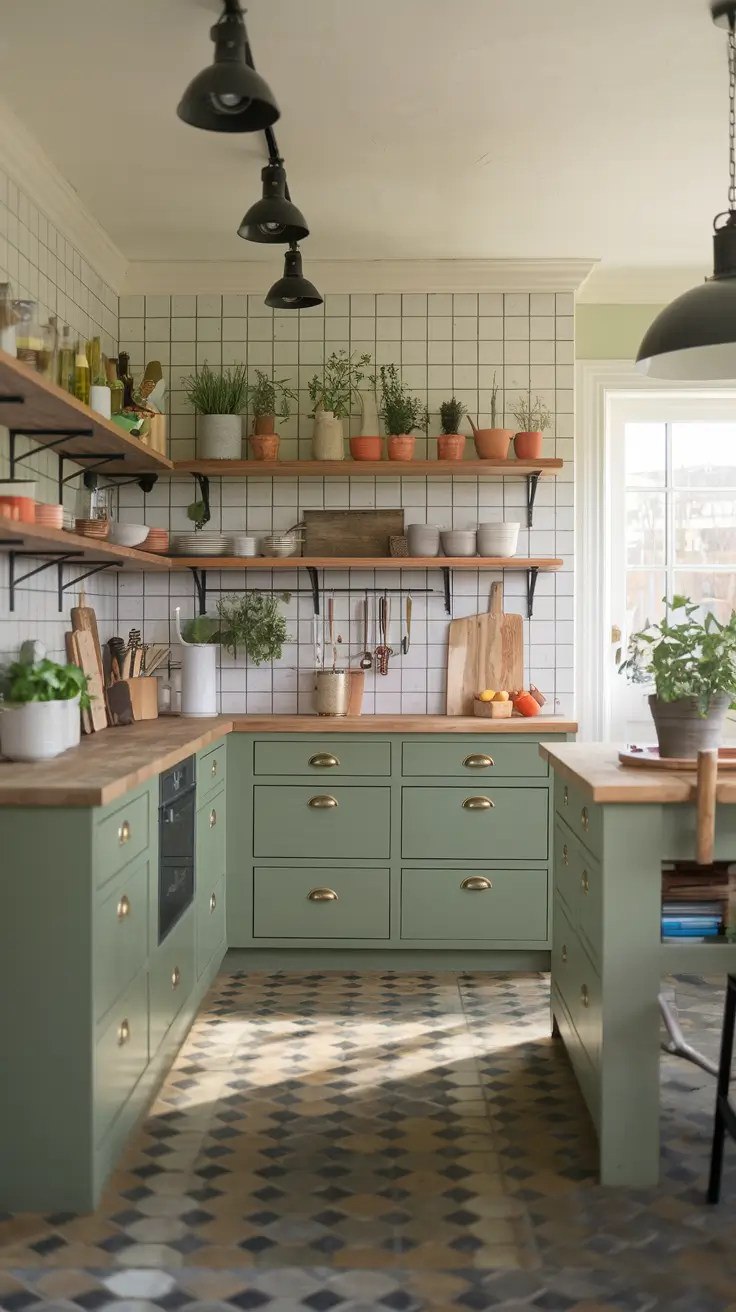
This palette invites organic decor and garden-inspired accents, fostering a relaxing atmosphere. Industrial black lighting adds edge and contrast. Incorporating potted herbs and discreet recycling solutions maintains a clean, natural aesthetic.
Nautical-Inspired Navy and Wood Kitchens
Navy base cabinets combined with tall oak pantry doors and light quartz countertops evoke a coastal yet sophisticated vibe. Unlacquered brass hardware, beadboard panels, and spindle stools enhance the maritime feel.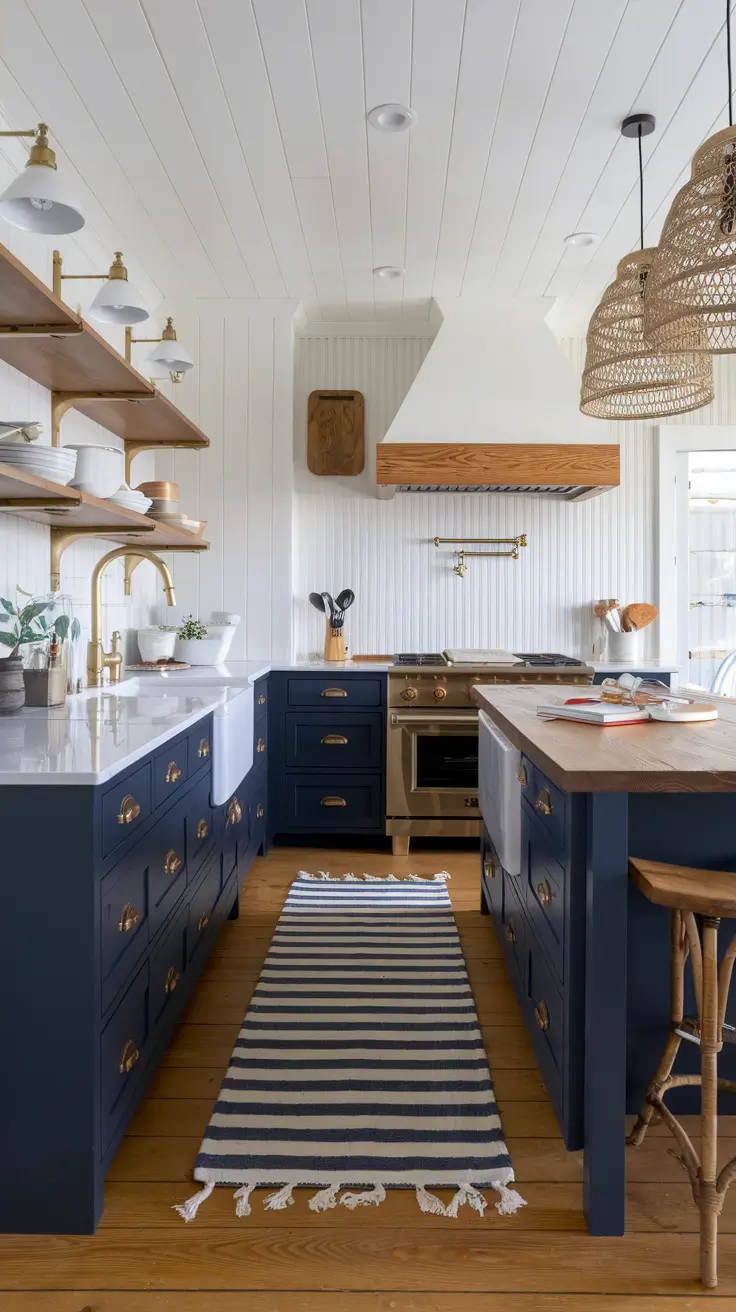
Islands with built-in charging stations and shallow cabinets connect with broader kitchen layouts. White crackle or soft gray marble tiles complement the color scheme.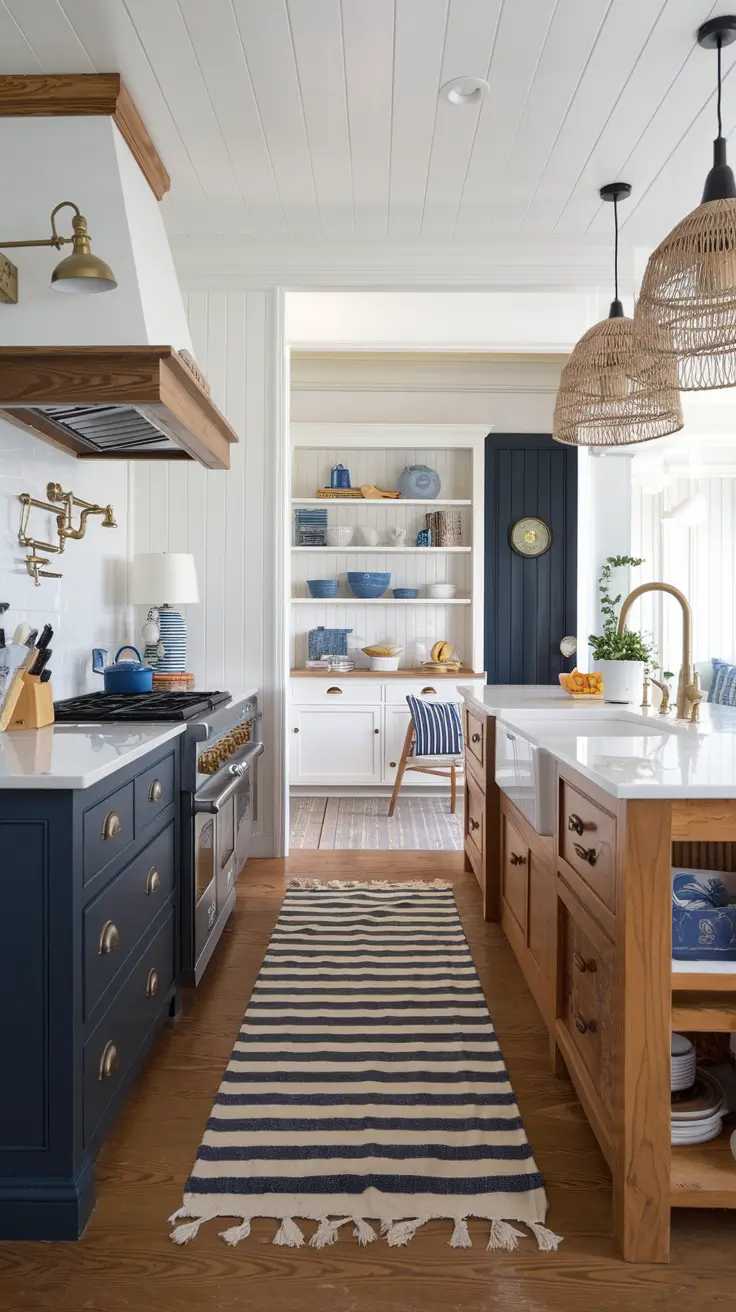
Woven pendant lights and striped runners add rhythm, while shallow oak dressers provide stylish storage and display options.
Balanced Gray and Beige Wood Kitchens
Taupe gray cabinets paired with beige and pale oak create serene, balanced kitchens suitable for various architectural styles.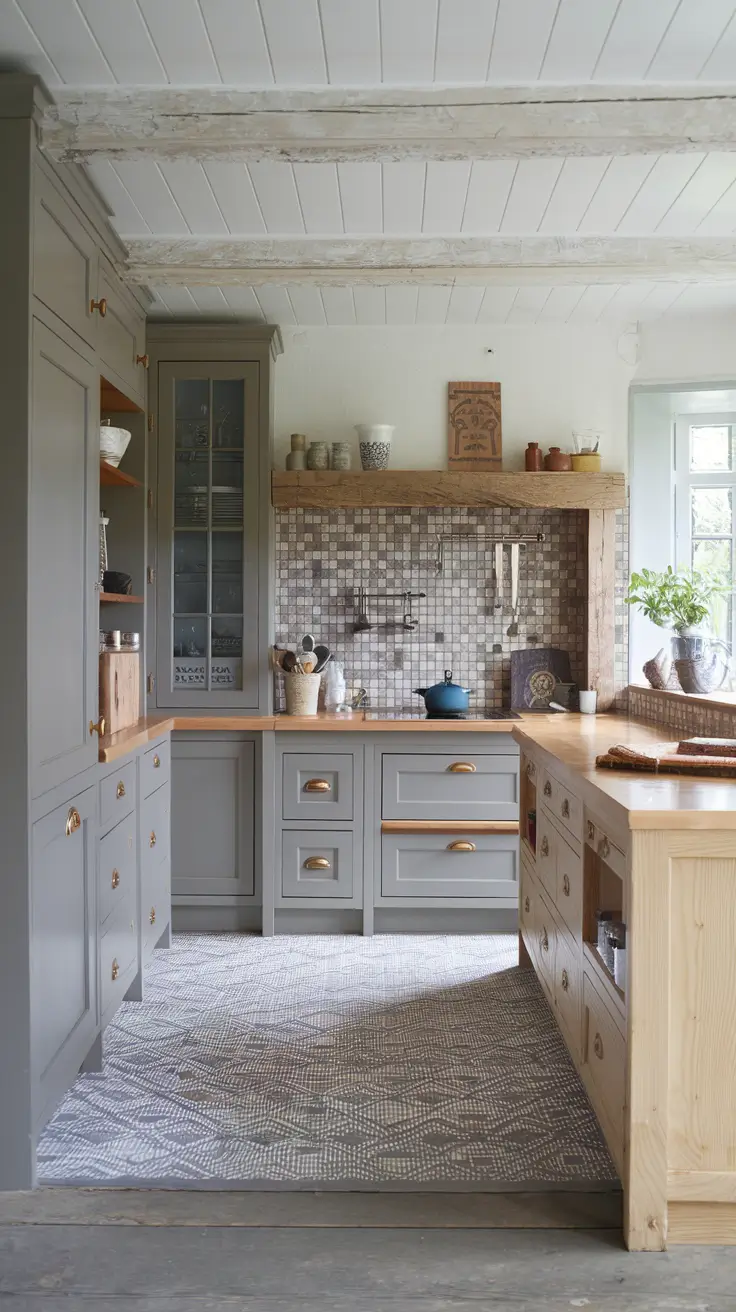
Materials include warm gray paint, pale oak panels, and honed porcelain countertops. Mosaic or linear ceramic tile backsplashes add subtle texture.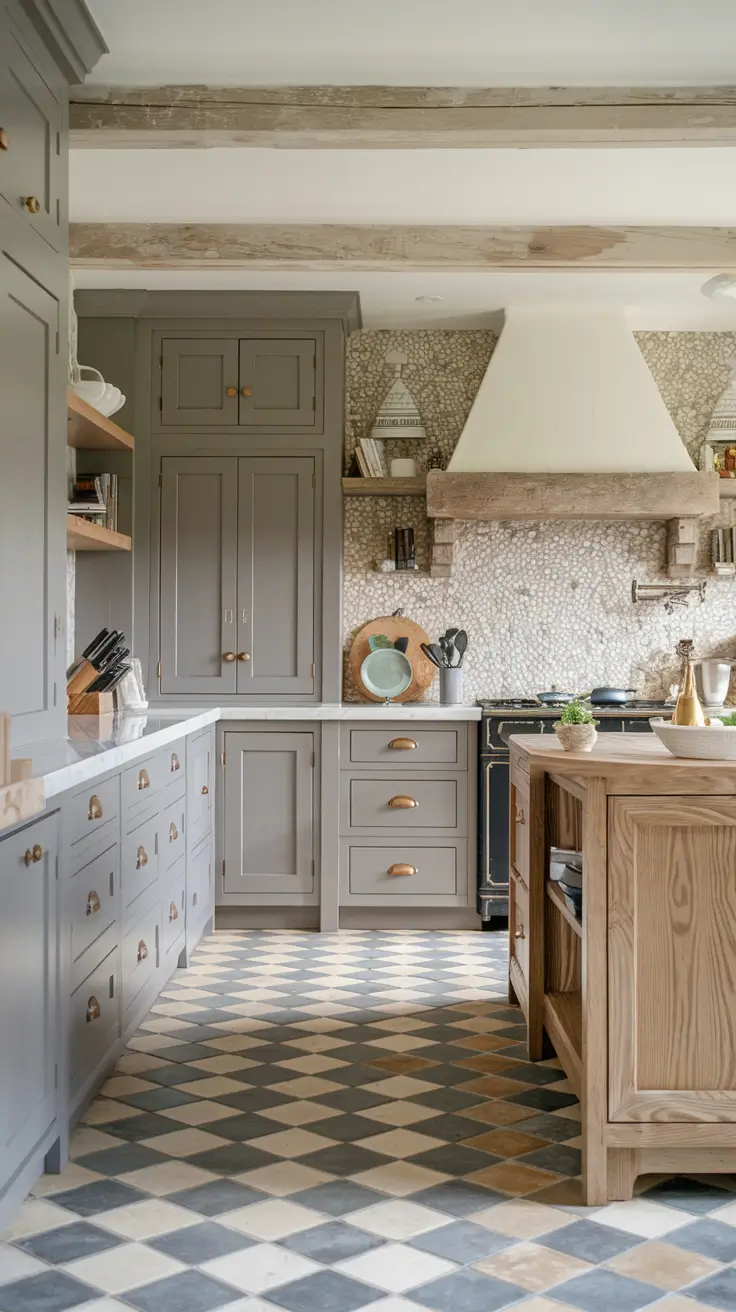
In open-plan spaces, thin structural screens echo wood divider concepts, separating areas without blocking light. Beige softens gray tones, while rustic textures in stools or cutting boards add warmth. Slight sheen variations reflect light and maintain depth.
An inbuilt coffee nook with oak tambour doors offers functional charm without visual clutter.
Deep and Stylish Dark Green Wood Kitchens
Dark green cabinetry paired with walnut or smoked oak creates kitchens rich in mood and sophistication. Clay-toned bases and plastered ceilings add warmth and texture.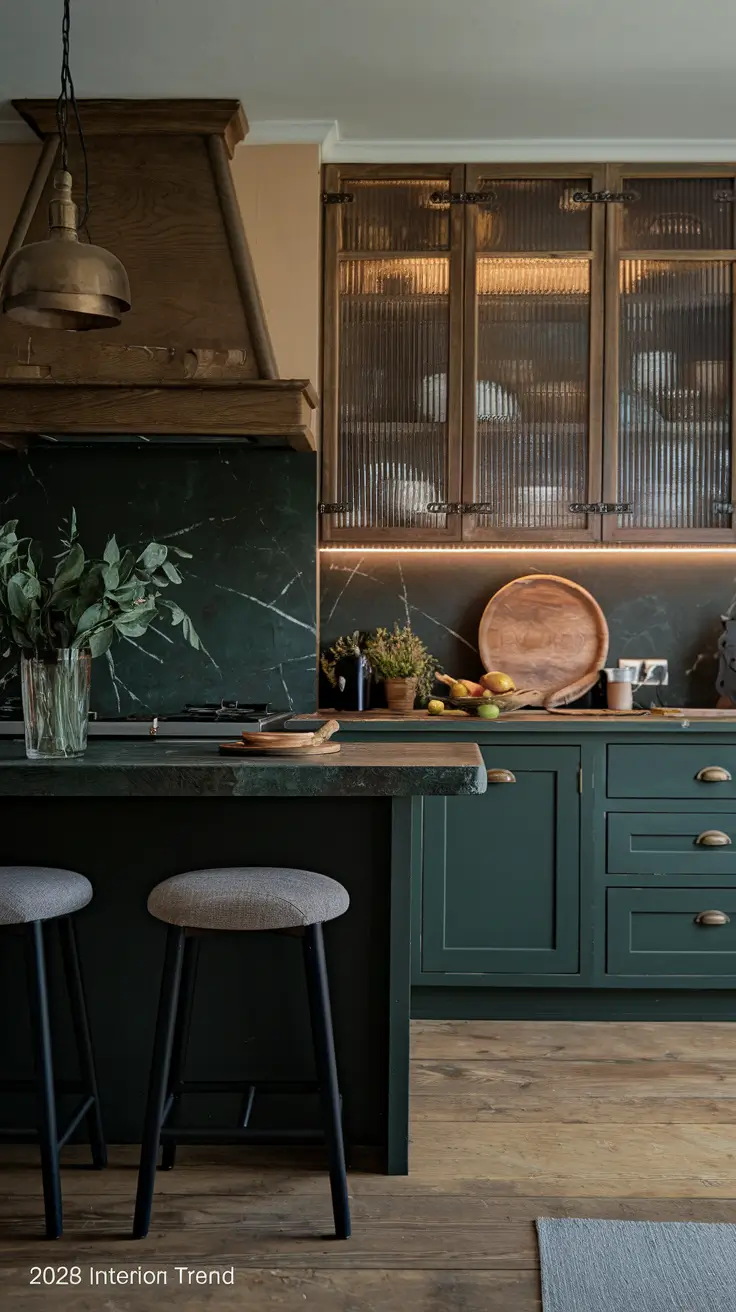
Gray marble or quartz counters with intricate seams, deep ceramic or soapstone backsplashes, and brass reveals around islands or shelves enhance luxury.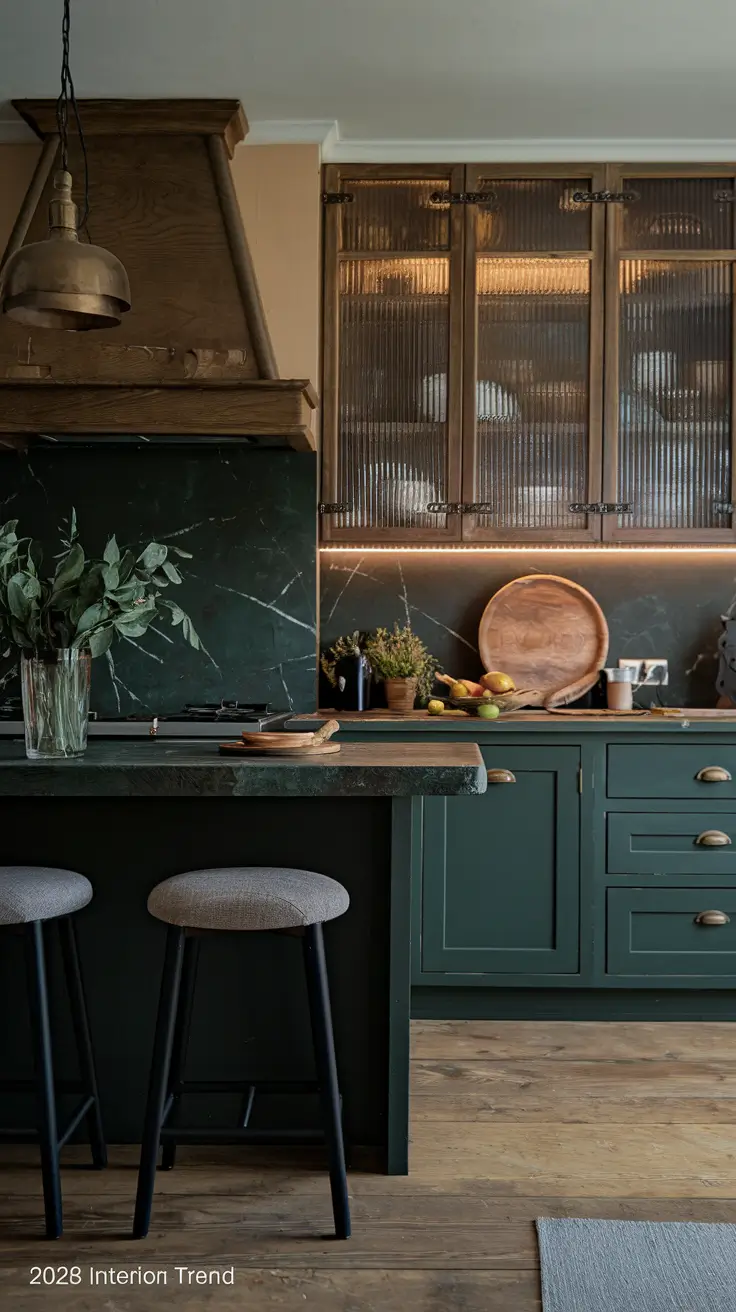
Warm metals and linens complement the palette, while light runners and reflective pendant shades brighten artificial lighting. Green’s versatility bridges black, white, and wood finishes.
Glass-fronted cabinets with reeded glass reduce visual weight, and pull-out spice racks optimize cooking efficiency.
Cherry Wood Kitchens: Inviting Warmth and Character
Cherry wood cabinetry offers a warm, dynamic base for family-friendly kitchens. Flat or eased-edge shaker fronts paired with parched quartz or creamy porcelain countertops create a modern yet cozy feel.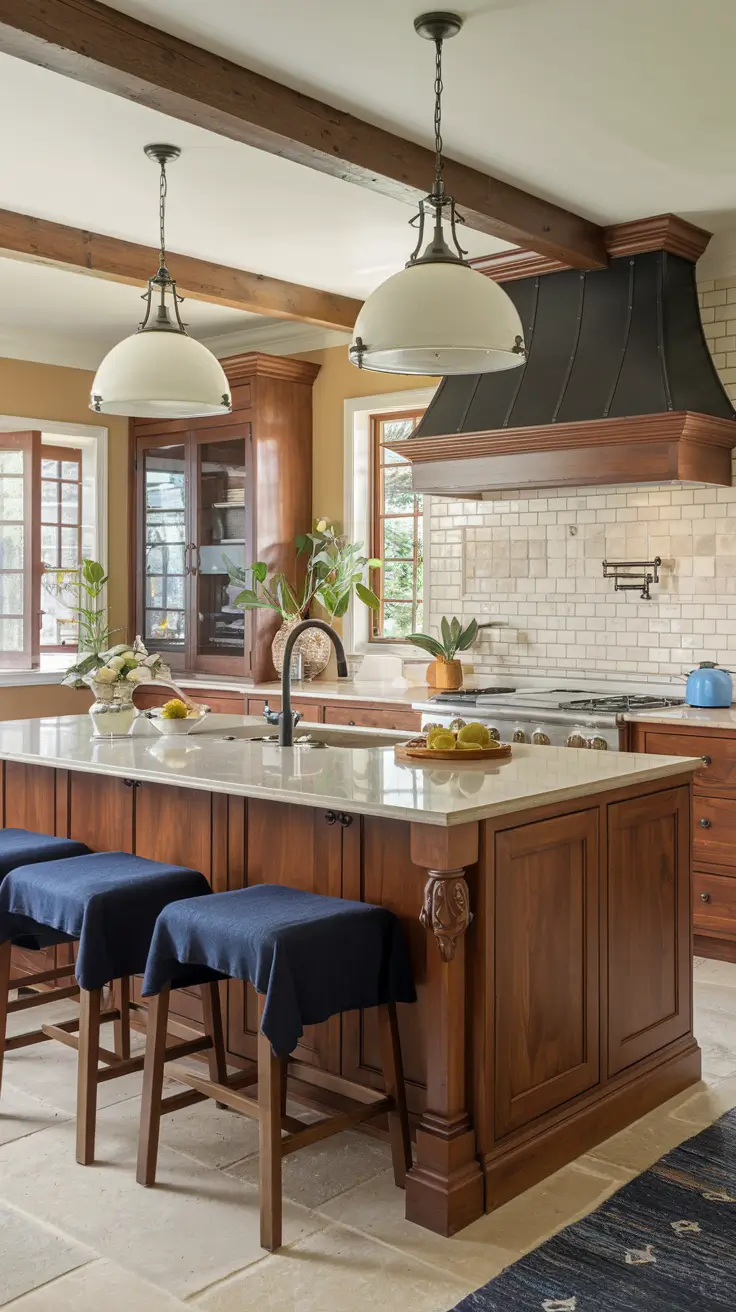
High-gloss nickel or patinated bronze hardware and matte ceramic backsplashes in bone or parchment complement the warm tones. Coordinating with cream and yellow hues adds depth.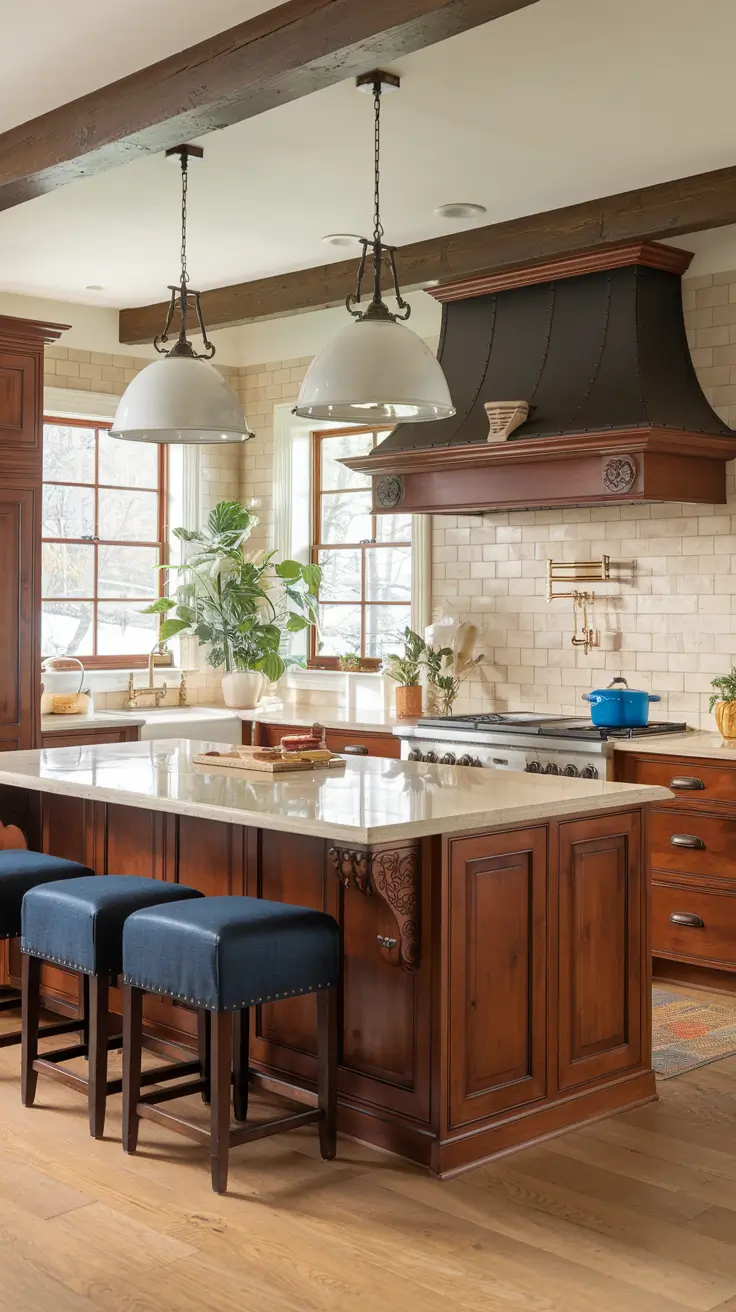
Under-cabinet LEDs and cherry-rail flush-veil hoods maintain continuity. Navy linen stools introduce subtle contrast. Open plate ledges or short rails accommodate copper pans, encouraging natural patina development.
Rustic Wood Kitchens: Combining Charm with Practicality
Modern rustic kitchens focus on texture and soul, featuring reclaimed oak, rubbed finishes, and honest hardware. This style suits both cabins and urban apartments, blending rustic black tones with natural timber and stone.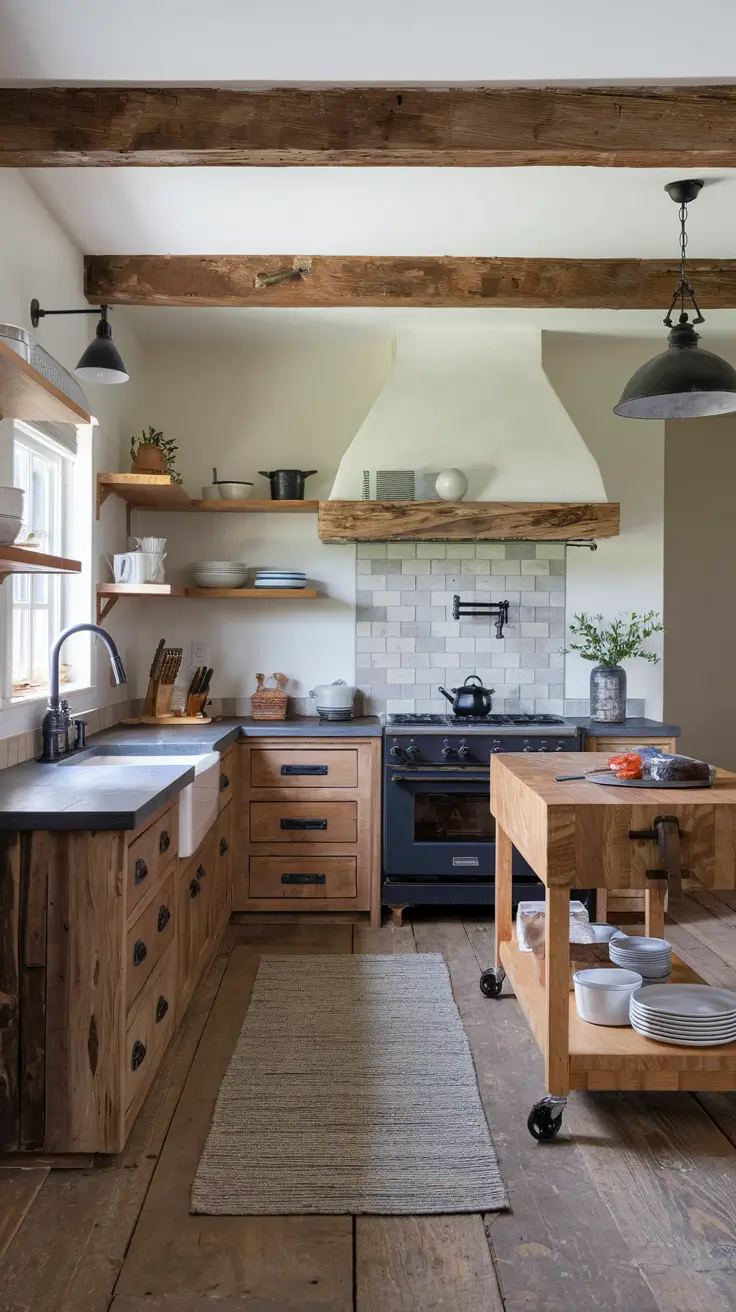
Wide-plank oak fronts, soapstone countertops, and timber-wrapped canopies celebrate tongue-and-groove cabinetry. Stone flooring near wet areas transitions smoothly to wood in dining zones.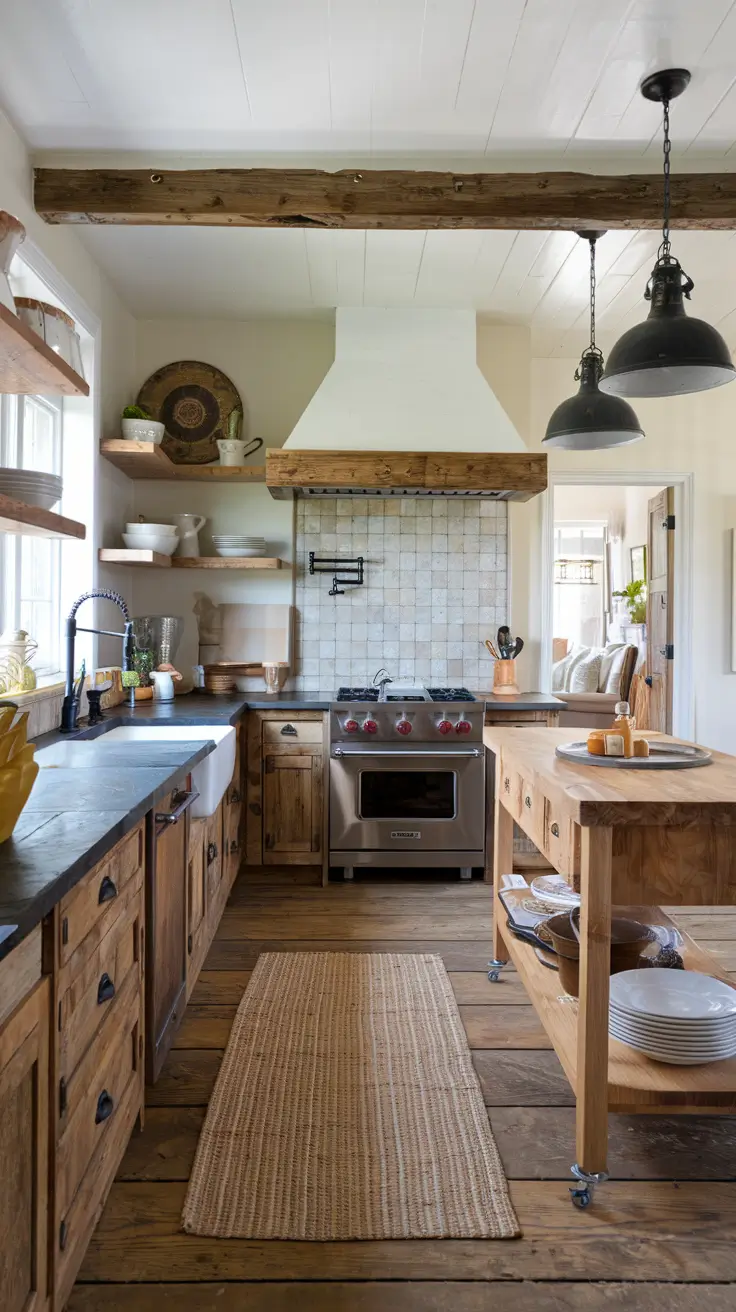
Controlled clutter with hidden storage and recycling keeps the space functional. Dark or dark blue accents contrast beautifully with textured wood, balanced by modern white walls or ceilings.
A butcher-block island on casters adds versatility and a handcrafted vibe.
Compact Dark Wood Kitchens: Elegance in Small Spaces
Designing small dark kitchens requires careful attention to vertical lines, low-sheen cabinetry, and layered lighting to create mood without glare. Dark walnut or wenge paired with black, white, and stone surfaces results in a contemporary, refined look.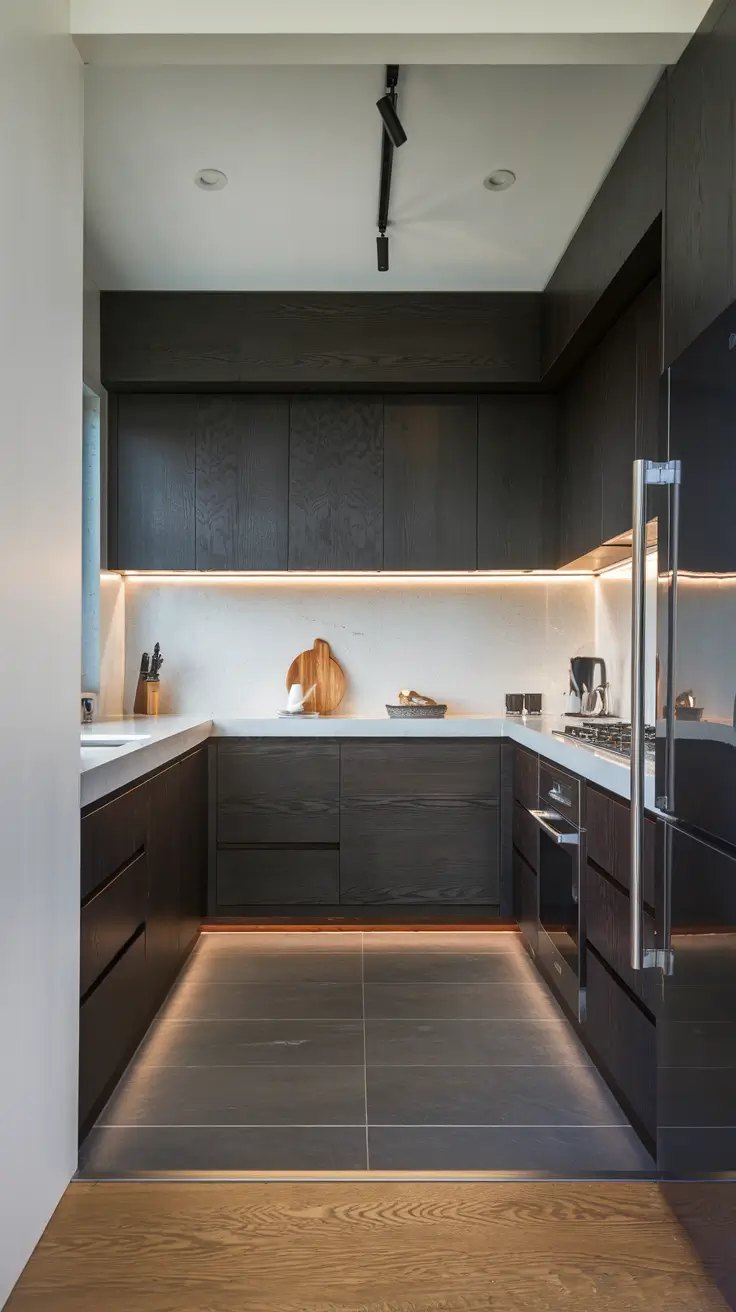
Flat-panel dark wood cabinets with knurled pulls, slim porcelain countertops, and continuous stone or micro-mosaic backsplashes in warm cream add subtle variation.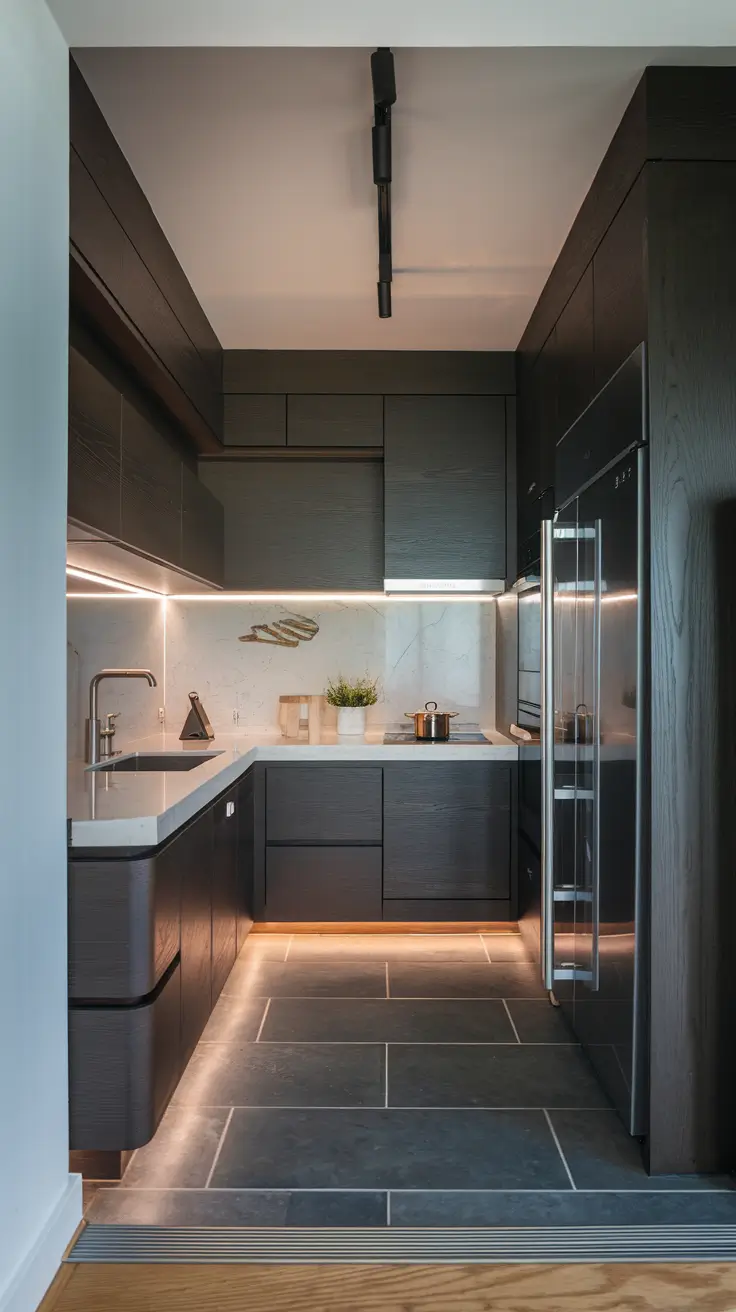
Shallow pull-out pantries, under-cabinet luminaires, and panel-ready appliances optimize space. Mixing tile and wood flooring with precise metal transition strips ensures seamless flow.
Minimalist decor with limited counter clutter and smoked glass fronts maintains visual calm. Dimmable under-cabinet lighting supports task and ambient needs. Updating hardware with black or white metal adds subtle excitement.
Adding pops of sage green through herbs or ceramics enlivens the space. Spice pullouts near cooking zones improve workflow. If ceiling height allows, shallow soffits with concealed lighting enhance verticality and natural ambiance.
As an Amazon Associate I earn from qualifying purchases.