Creative Small Laundry Room Ideas: Smart Storage, Stylish Design, and Budget-Friendly Inspiration
Living in a compact home often means your laundry area needs to be both functional and spacious-feeling despite limited square footage. This comprehensive guide offers practical storage solutions and design strategies tailored for small laundry rooms, including budget-friendly upgrades that won’t overwhelm your wallet. We’ll explore efficient appliance stacking, optimal sink placement, window integration, and paint color choices that brighten shadowy corners. Additionally, you’ll discover how to incorporate décor thoughtfully, creating a cohesive and intentional space rather than a haphazard setup. By the end, you’ll have a clear blueprint for remodeling smarter, maximizing organization, and transforming your laundry zone into a space you genuinely enjoy. Let’s dive into five impactful changes you can implement over a weekend or two.
Maximizing Space with Vertical Stacked Washer and Dryer Plus Overhead Storage
When floor space is at a premium, stacking your washer and dryer vertically is a smart starting point. This frees up valuable room to add vertical storage solutions. I like to enclose the laundry alcove with a shallow cabinet above the stacked units and a tall broom closet on one side to neatly store detergents, cleaning tools, and hampers. Painting the background and slim shelving in the same light color keeps the area feeling airy and uncluttered. Proper task lighting is essential—install a ceiling fixture centered over the machines and an LED strip beneath the upper cabinet for clear visibility. Even with stacked appliances, you can still utilize a 16 to 20-inch wall section for hooks, perfect for a foldable drying rack.
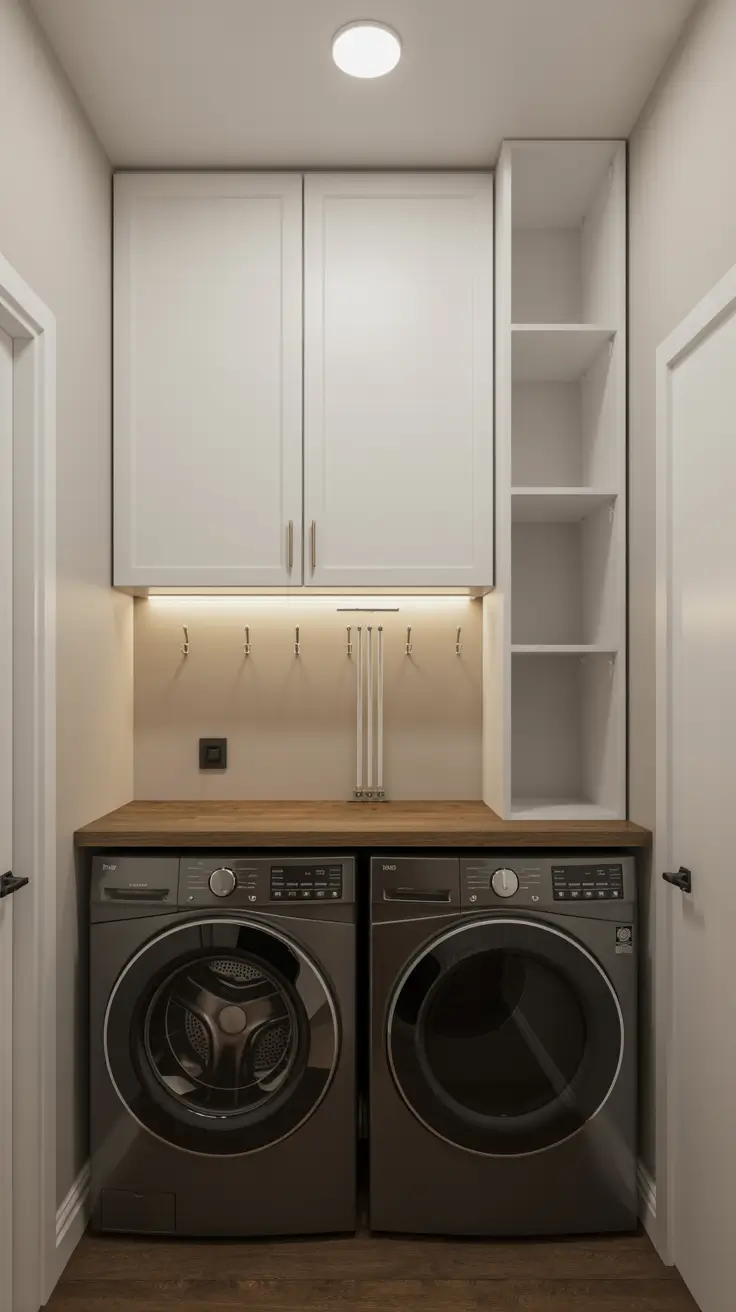
For cabinetry, I recommend 12-inch deep upper cabinets with adjustable shelves and soft-close doors, including a flip-up door to clear machine service lines. The tall cabinet can feature roll-out bins for pods and a vertical slot for an ironing board. Adding a maple or oak countertop above the appliances provides a handy spot to collect stray socks and fold laundry. If budget allows, a narrow pull-out drawer between the tower and side panel can double as a drip tray for muddy boots or sheet pans. Each element has its place, promoting quick and easy access.
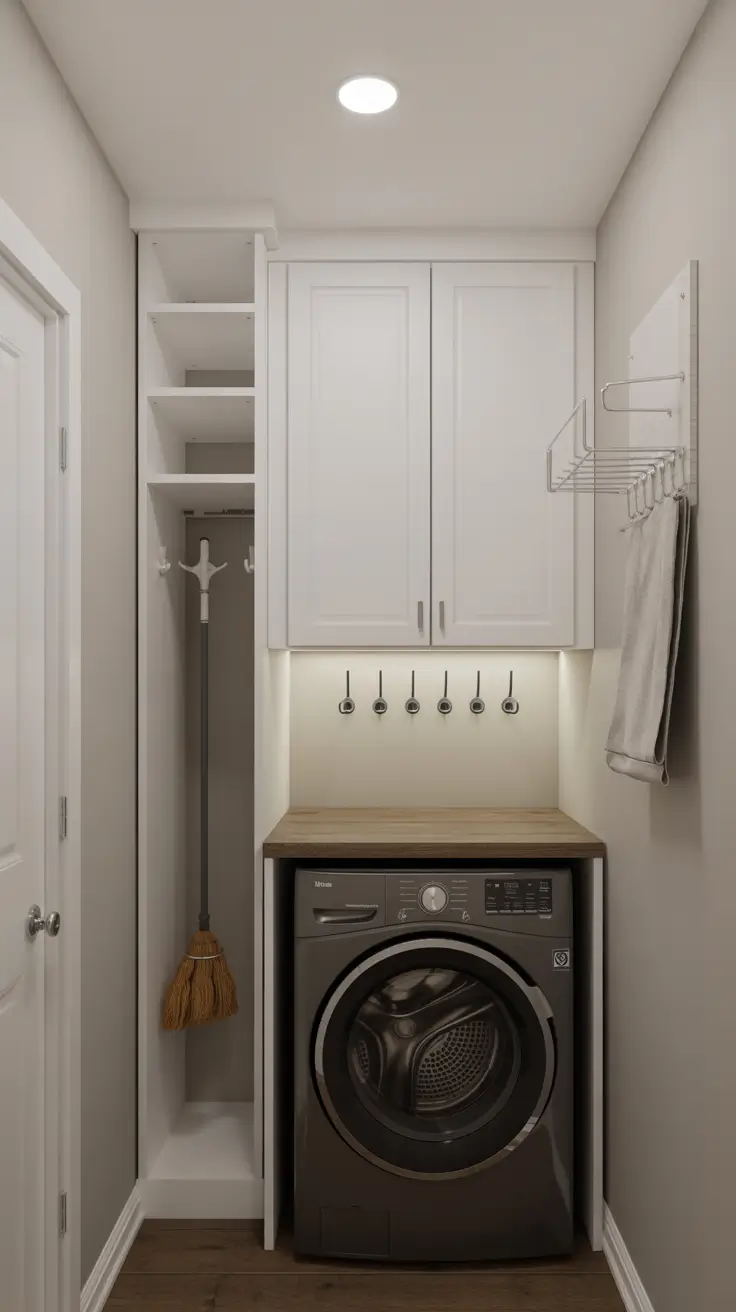
From experience, stacked machines work best when the midpoint of the dryer door aligns roughly with eye level, so always verify dimensions before installation. Maintain at least a 2-inch gap between units and follow manufacturer venting guidelines to reduce noise and heat buildup. Avoid overbuilding around appliances; ensure there’s an access panel for maintenance. I also like to add a slim magnetic caddy on the side panel for lost items and numbered bins in the upper cabinet for off-season supplies. If the space feels dark, swapping the door for a glass-lite slab can borrow light from adjacent areas and enhance verticality.
Affordable Pegboard Wall for Adaptable Storage
For a budget-conscious yet highly customizable storage solution, a painted pegboard wall is ideal. Extending the pegboard to the ceiling creates a seamless backdrop rather than a cluttered array of hooks. I paint the pegboard to match the room’s color palette and mount simple pine shelves and powder-coated hooks for a modern, graphic look that adapts to changing needs. This is one of the easiest small laundry room ideas to install in just a few hours.
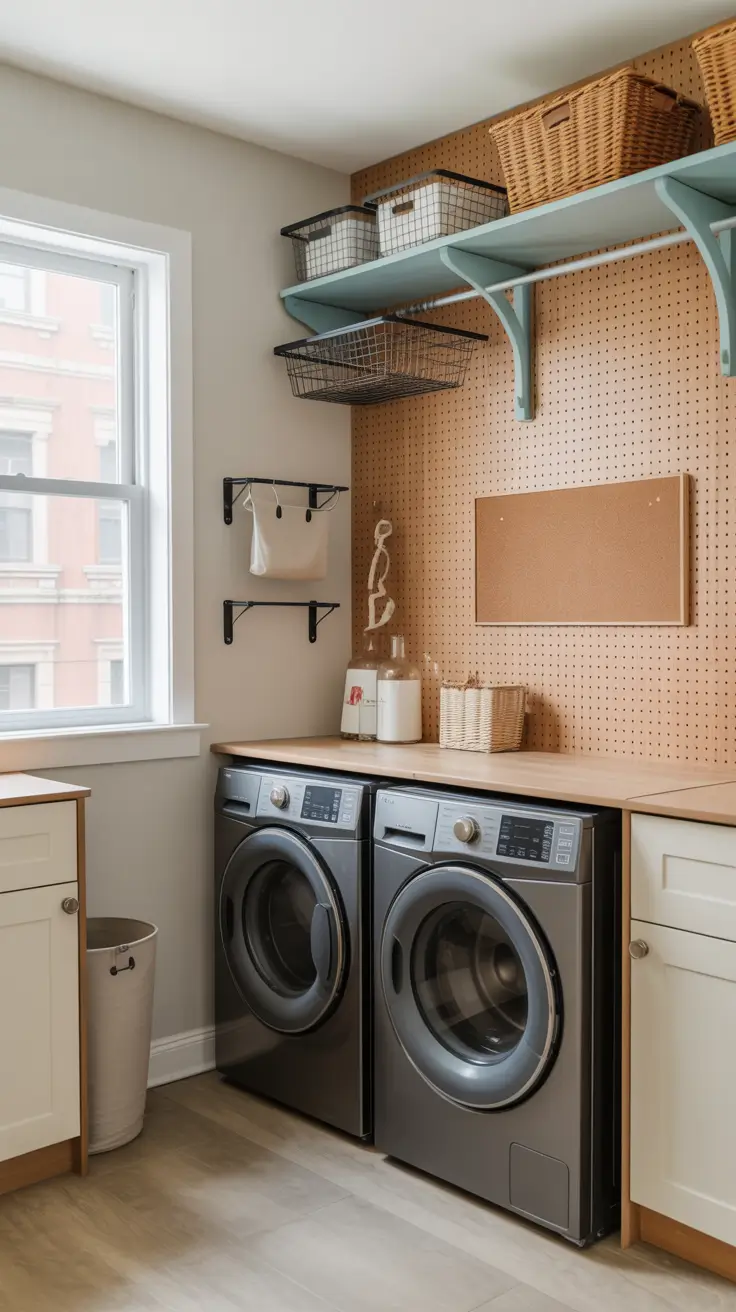
I outfit the pegboard with a shallow shelf for stain removers, a dowel for twine and dryer sheets, and a framed pocket for mail, turning the area into a mini command center. A wire basket collects single socks, and a fold-down valet rod provides space-efficient air drying. Below, a 36-inch-wide wall rail holds clip-on hampers labeled for lights, darks, and towels. A cork strip nearby displays care tags and reminders. This setup keeps everything within reach and off the counter, maintaining a tidy workspace.
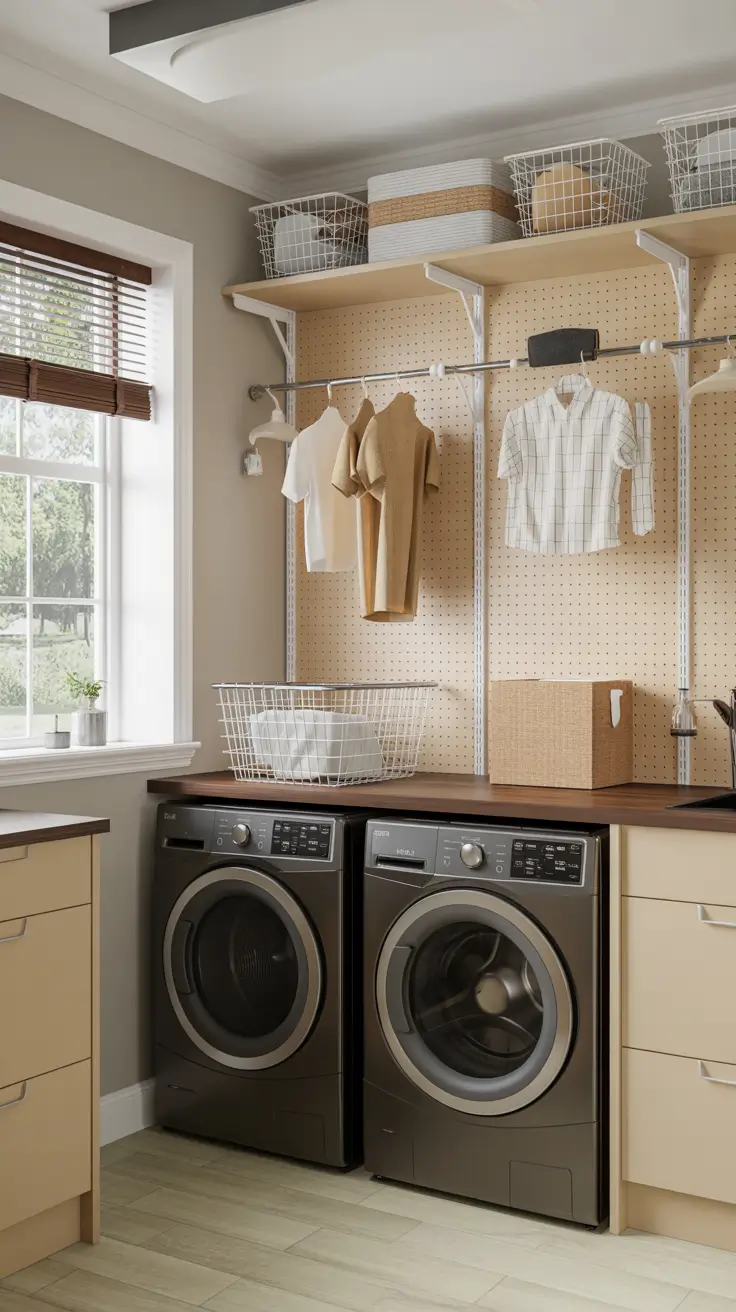
In my experience, this arrangement works well in rentals and owner-occupied homes alike, delivering excellent value. To enhance the look, color-match screws and trim the board close to baseboards and crown molding for a built-in effect. While many professionals recommend closet storage only, I find that curated open storage sets the pace for laundry tasks and reduces rummaging. Keeping a cohesive color palette prevents the space from feeling chaotic. Adding a small shelf with a plant or artwork above the pegboard softens the look. For pet owners, a metal bucket on the bottom row is perfect for chew-resistant, easy-to-clean supplies.
Combining Mudroom and Laundry for Streamlined Functionality
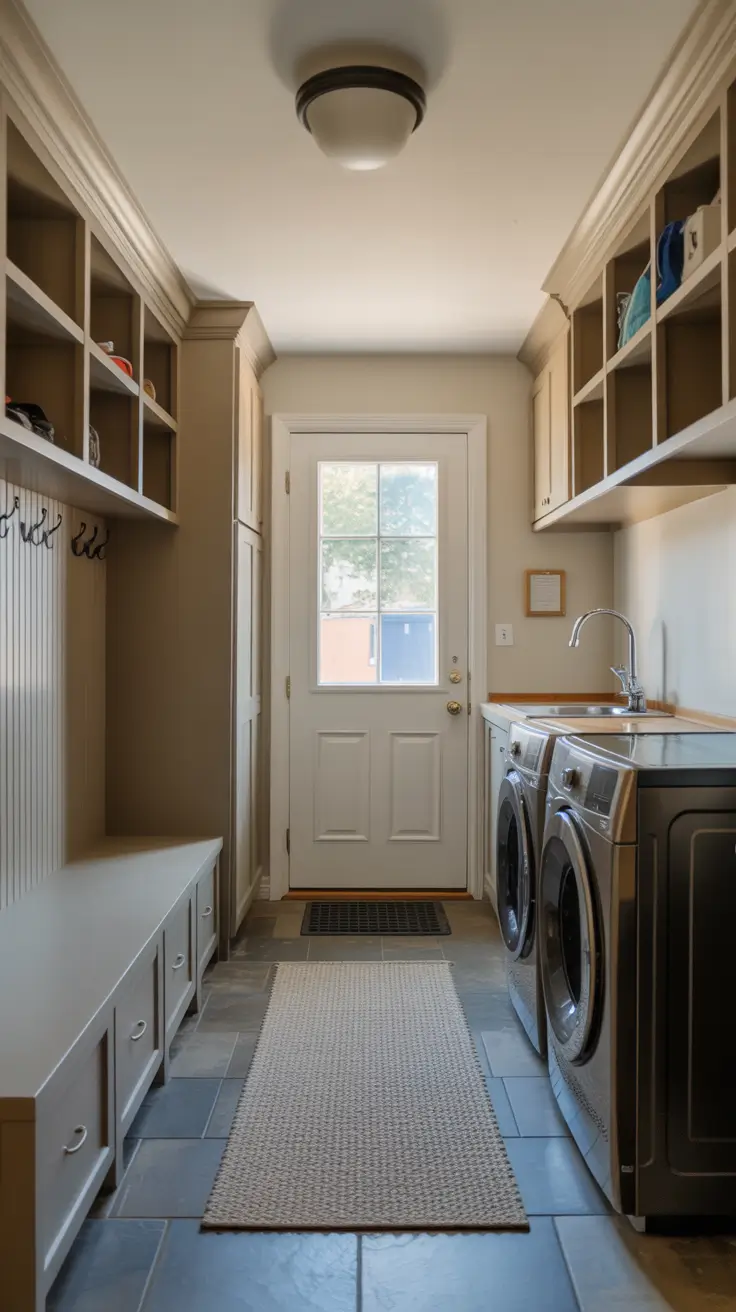
When the laundry area doubles as an entryway, integrating mudroom features is a smart design choice. I create a shallow bench with cubbies, a row of sturdy hooks, and overhead cabinets that coordinate with the laundry finishes. Tilt-out hampers hidden behind the bench sort laundry by the door, keeping floors clean. A washable runner and durable semi-gloss paint withstand scuffs and dirt. This combo keeps clutter contained at the entrance, preserving the tidiness of main living spaces.
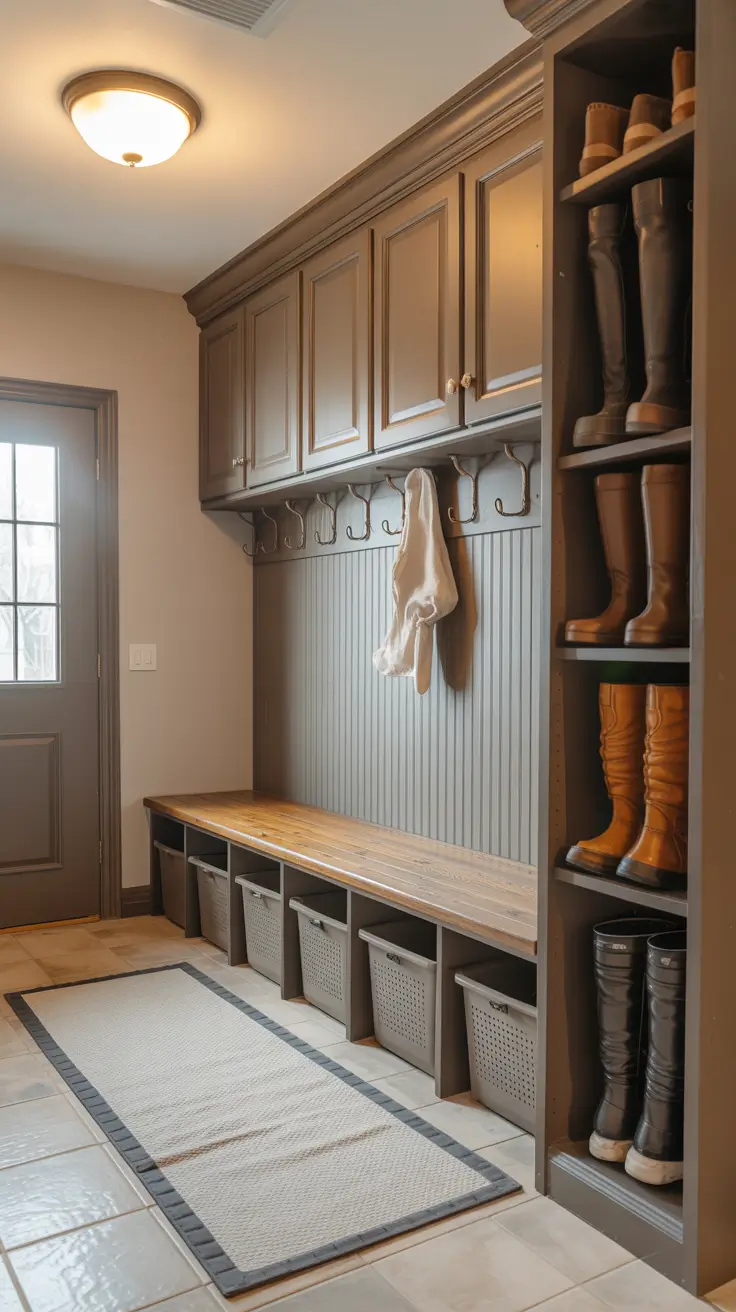
Under the bench, I install three tilt-out hampers sized for standard laundry bags, and above, 8 to 10 hooks spaced about 6 inches apart accommodate coats and backpacks. A shelf rail with baskets adds extra storage. Adjacent to the laundry wall, a counter-depth boot tower with a tray manages melting snow and mud. If space permits, a narrow shelf above the machines holds baskets for transporting dirty laundry to bedrooms. Durable finishes like porcelain tile, enamel paint, and removable laminates ensure longevity.
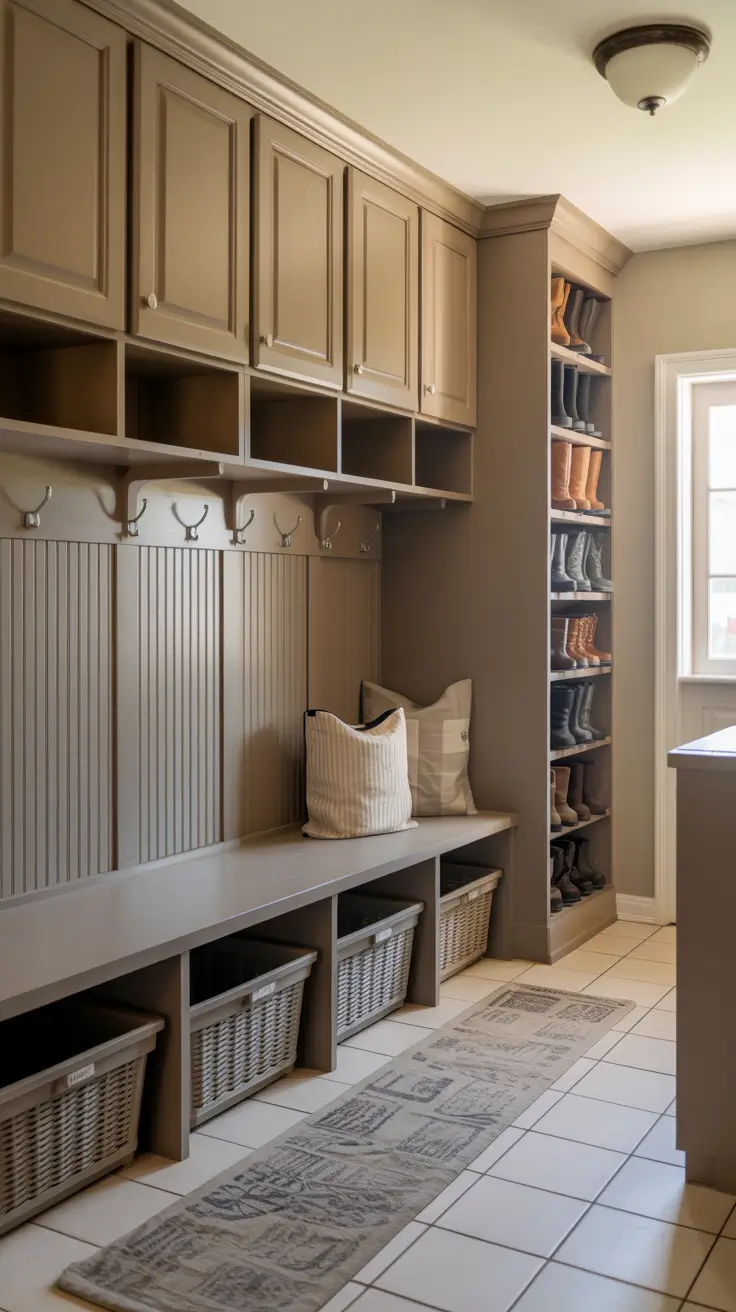
This hybrid design is especially popular with families, as it creates a dedicated home base for gear and laundry that everyone appreciates. To soften the locker-room vibe, I use plain beadboard panels and a two-tone color scheme. Consistent finishes unify the space, a principle echoed by many home editors. I also recommend incorporating a charging station inside an upper cabinet to keep cords off counters. For sports gear, a ventilated shelf or ceiling rack stores helmets and pads away from clean clothes.
Compact Utility Sink Positioned Under a Window for Convenient Pre-Wash
Installing a small utility sink beneath a window is a game-changer, offering pre-wash and soaking capabilities without sacrificing counter space. I prefer an 18 to 21-inch single-bowl sink with a high-arc pull-down faucet, complemented by tiled walls to protect the window sill. The natural light enhances visibility for stain treatment and makes the space feel larger. The base cabinet is fully utilized for storing bottles and includes a trash pull-out for lint. This compact sink setup is one of my favorite space-saving ideas.
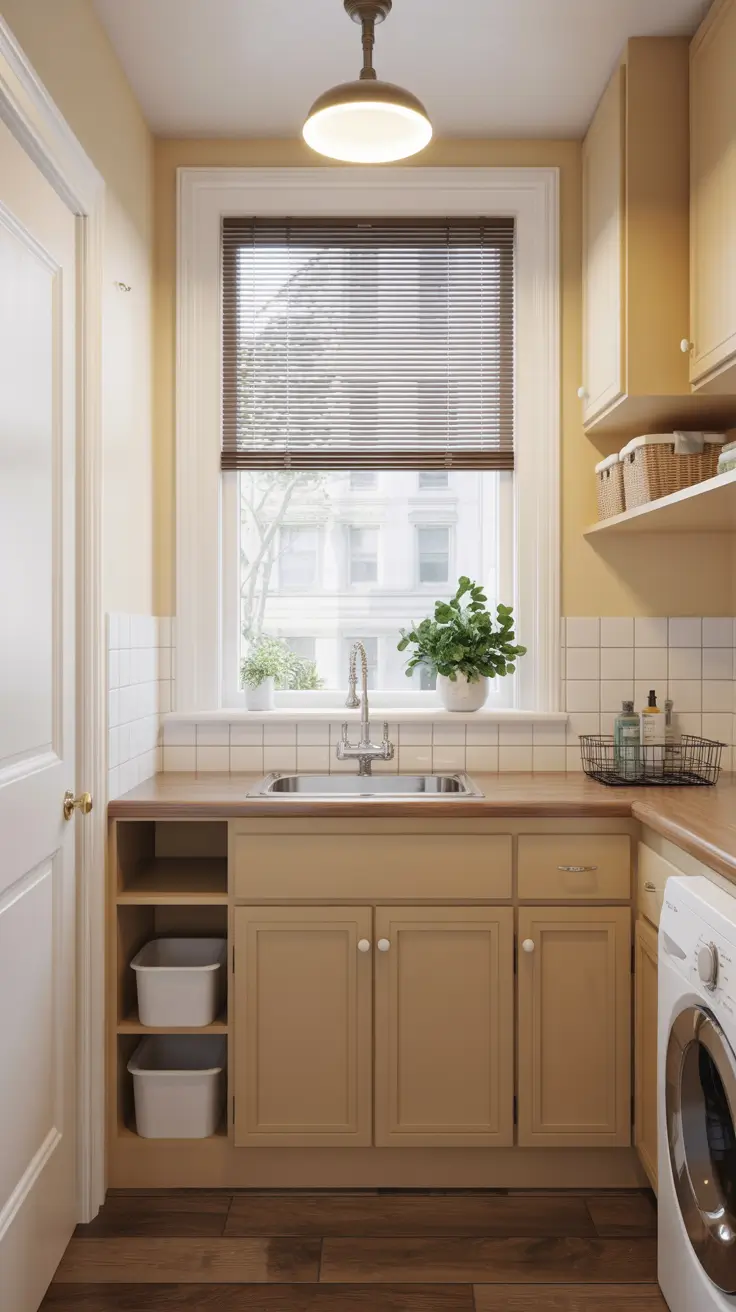
To keep brushes and cloths organized, I design the base with one door and one drawer, including a tip-out tray for small items like scrubbers. A slim tray cabinet stores baking sheets that double as drip pans. Above the window, a shallow open shelf holds a small plant to soften hard lines. A splash guard protects the counter from water damage.
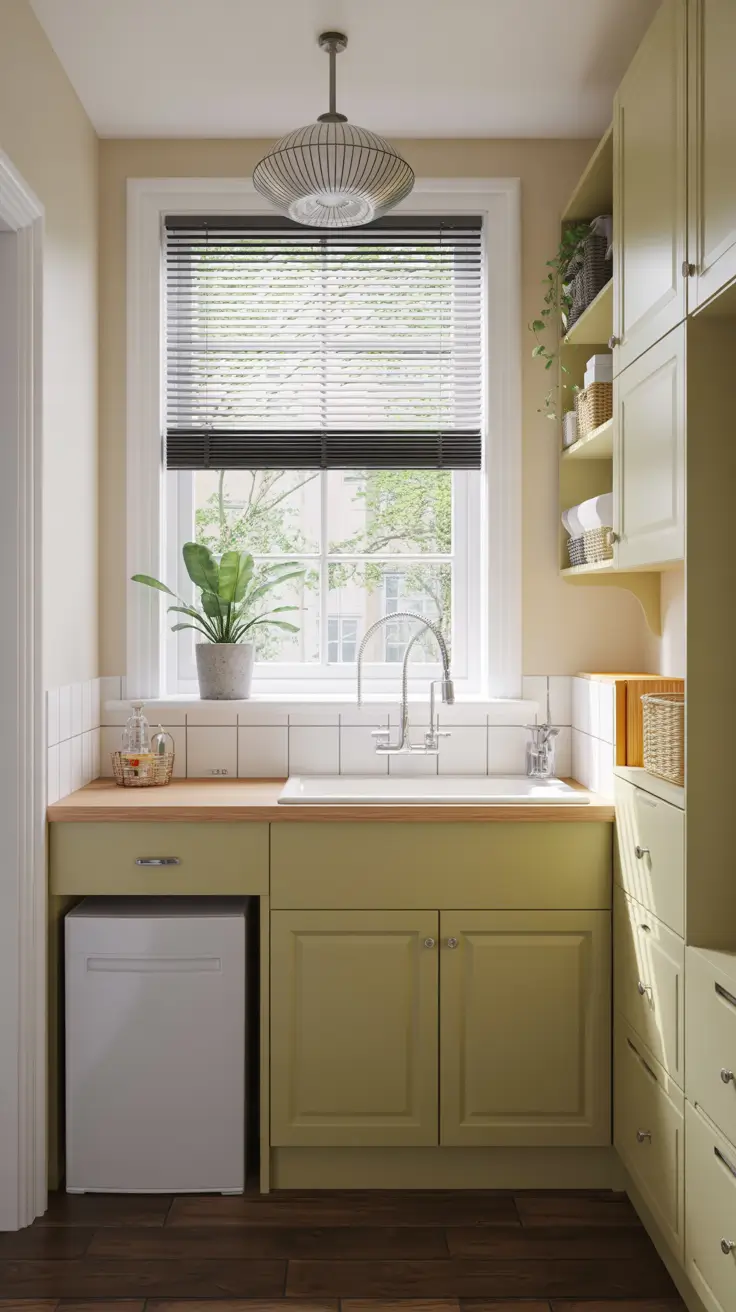
Stainless steel or composite sinks are more chip-resistant than enamel, ideal for high-use laundry areas. I opt for simple, replaceable faucets since grit and detergents wear out cartridges faster. While some designers avoid sinks in small rooms, I’ve noticed clients wash more efficiently with one, saving water and reducing rewashing. Adding a motion-sensor under-cabinet light near the sink makes late-night stain treatment easier. For privacy, a light-filtering shade can be installed that doesn’t obstruct faucet access.
Sleek Stackable Laundry Design with Slim Counter and Rail
For a modern, streamlined look, I flank stackable machines with side panels and connect them with a thin countertop, creating a continuous, unified volume. The counter serves as a folding surface, with a front rail preventing items from slipping behind the units. Minimalist lines, sleek hardware, and matte finishes soften the space. This custom design is quiet, clean, and highly efficient—perfect for studios or narrow hallways.
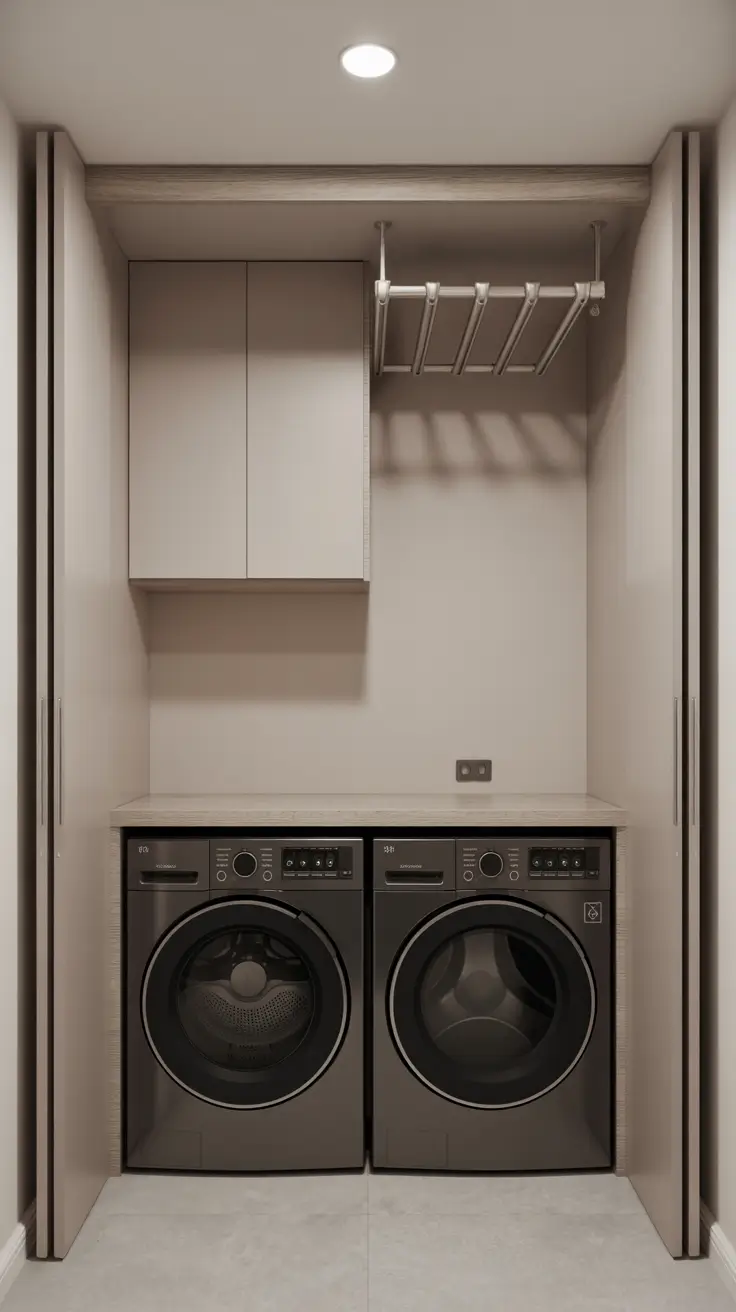
The setup includes 24-inch deep side panels, a 1-inch thick countertop, and a 2-inch front rail. A deep upper shelf stores bulk supplies, while a standing niche with a lip holds daily essentials. A ceiling-mounted drying rack pulls down for delicates. The floor-to-ceiling cabinet creates a serene atmosphere in small spaces.
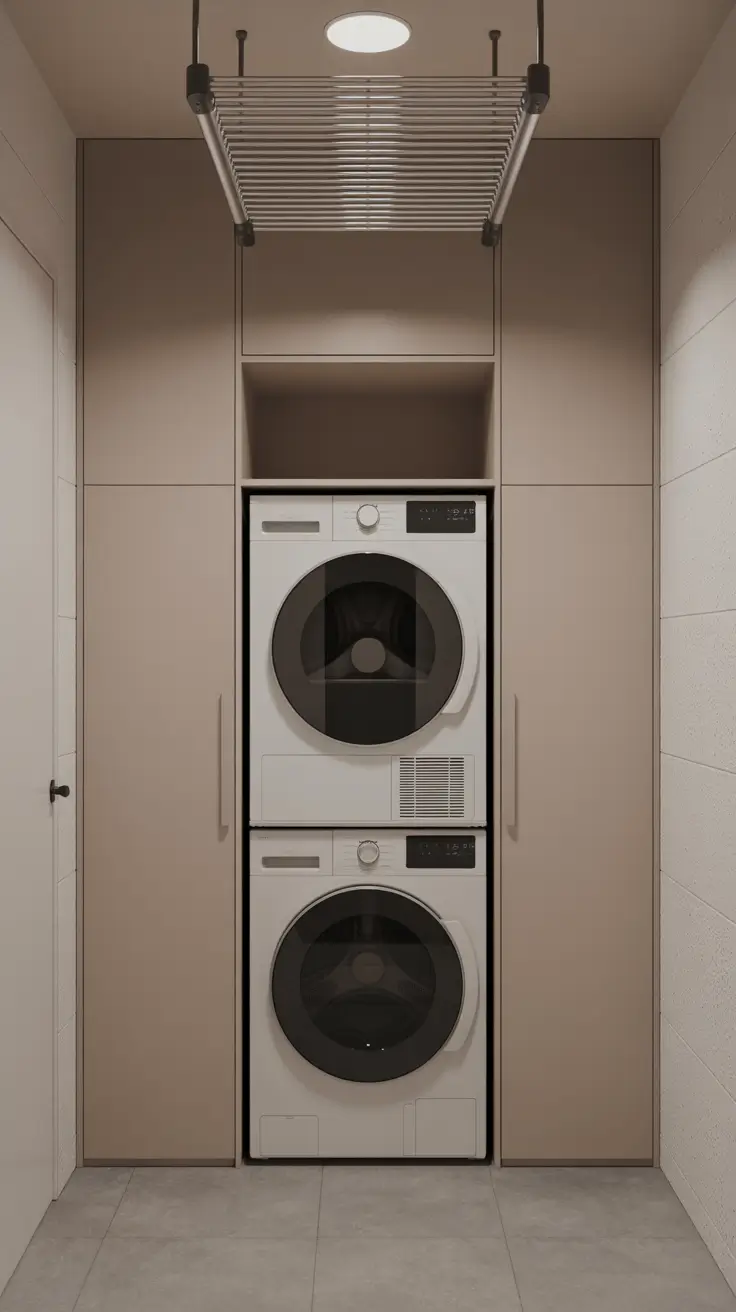
I prefer painting panels and counters to match wall colors, visually blending the elements. Anti-tip brackets and leveling feet keep the counter stable during spin cycles. Silicone bumpers on the rail and a removable dust shield behind prevent socks from falling. If ventilation is tight, replacing upper cabinet doors with slatted panels improves airflow around machines.
Brightening Small Laundry Rooms with Window Features
In tiny laundry spaces, positioning the layout around a window that floods the room with natural light makes the area feel larger. I place washer and dryer along an adjacent wall to keep the sightline clear between door and window. Light-colored tiles and satin paint reflect sunlight, reducing the need for artificial lighting. Keeping the layout simple, I avoid blocking the window with baskets or hampers, and a ledge beneath the sill adds storage. A mirror opposite the window can amplify daylight and visually widen the room.
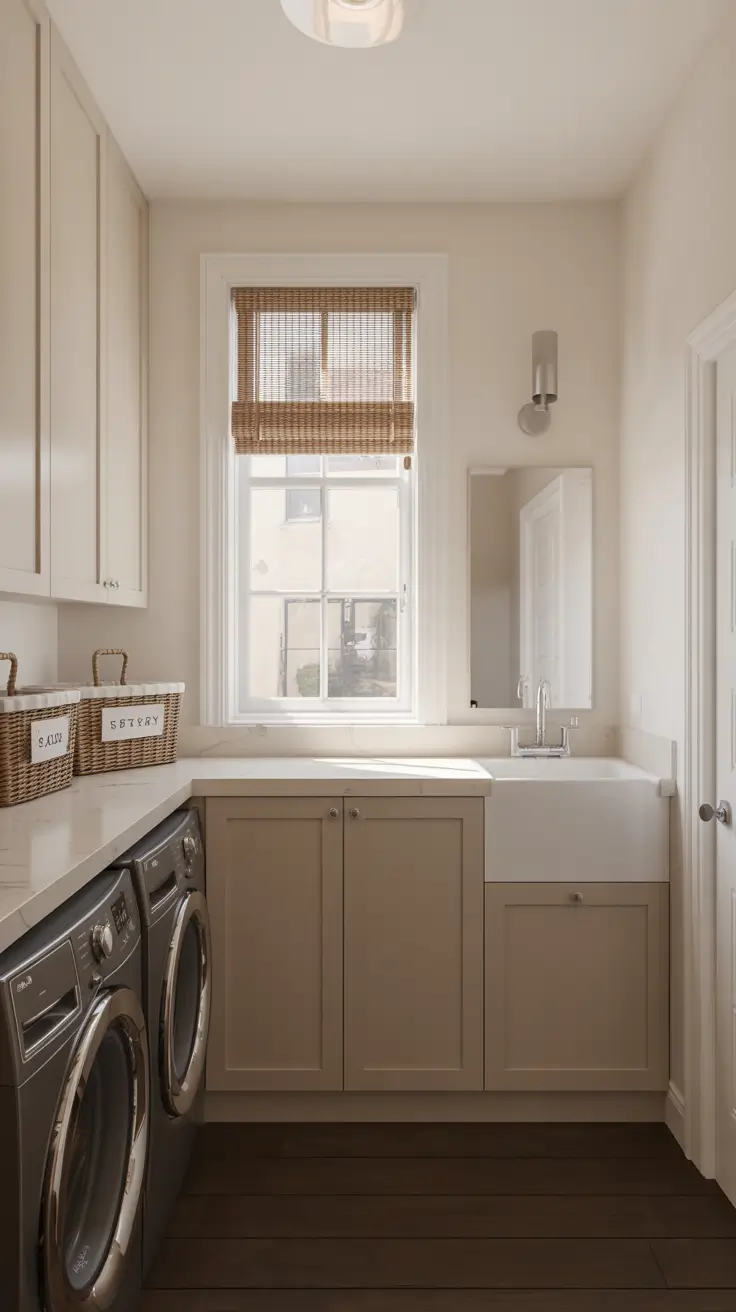
I specify durable vinyl or fiberglass window frames resistant to humidity, paired with privacy glass to maintain a clean view without heavy coverings. Cordless woven shades block glare and fit neatly behind stacked machines or slim sink bases. Layered lighting includes trimless recessed lights and a wall sconce near folding areas for balanced illumination at night. A thin radiator cover or toe-kick heater prevents condensation on the sill in cooler climates.
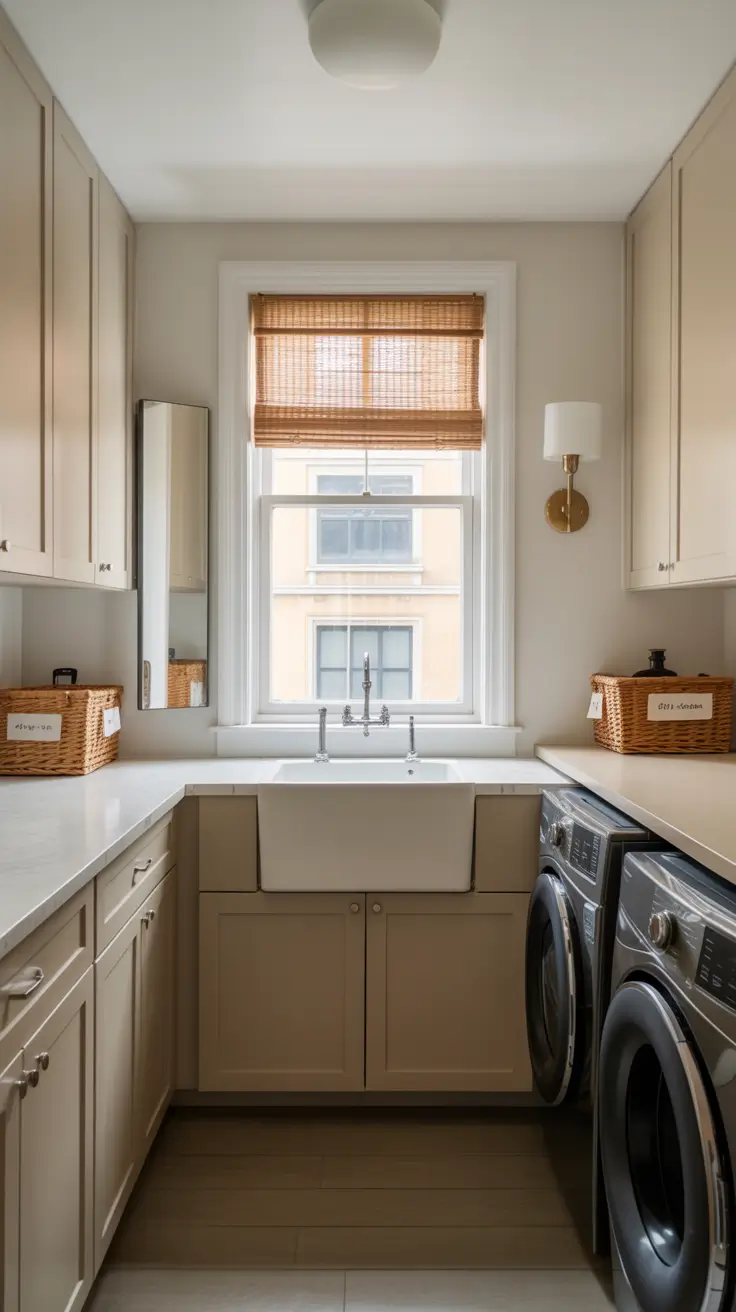
Light is the most valuable material in small utility rooms. Higher window sills increase wall space for shallow shelves and décor. Casement windows that swing outward avoid interfering with interior storage. Ventilation is critical; I always specify a quiet, timer-controlled exhaust fan. In tight spaces, solar tubes can substitute for traditional windows to bring in daylight. Additional features include weatherstripping, summer ventilation screens, moisture sensors that adjust fan speed, a small plant shelf for inspiration, and a stain removal chart near the window. Ensuring the folding surface doesn’t cast shadows preserves daylight benefits.
Optimal Paint Colors for Small Laundry Rooms
Choosing paint colors that visually lift ceilings and expand walls is key in compact laundry rooms. Warm whites, soft greiges, and pale mineral hues like misty blue or eucalyptus create a clean, inviting atmosphere without feeling sterile. I combine washable satin finishes on walls with semi-gloss on cabinets for durability. Light bounces off windows and LED fixtures, enhancing the sense of space. Avoid harsh lines by extending wall color to the ceiling, unifying the room.
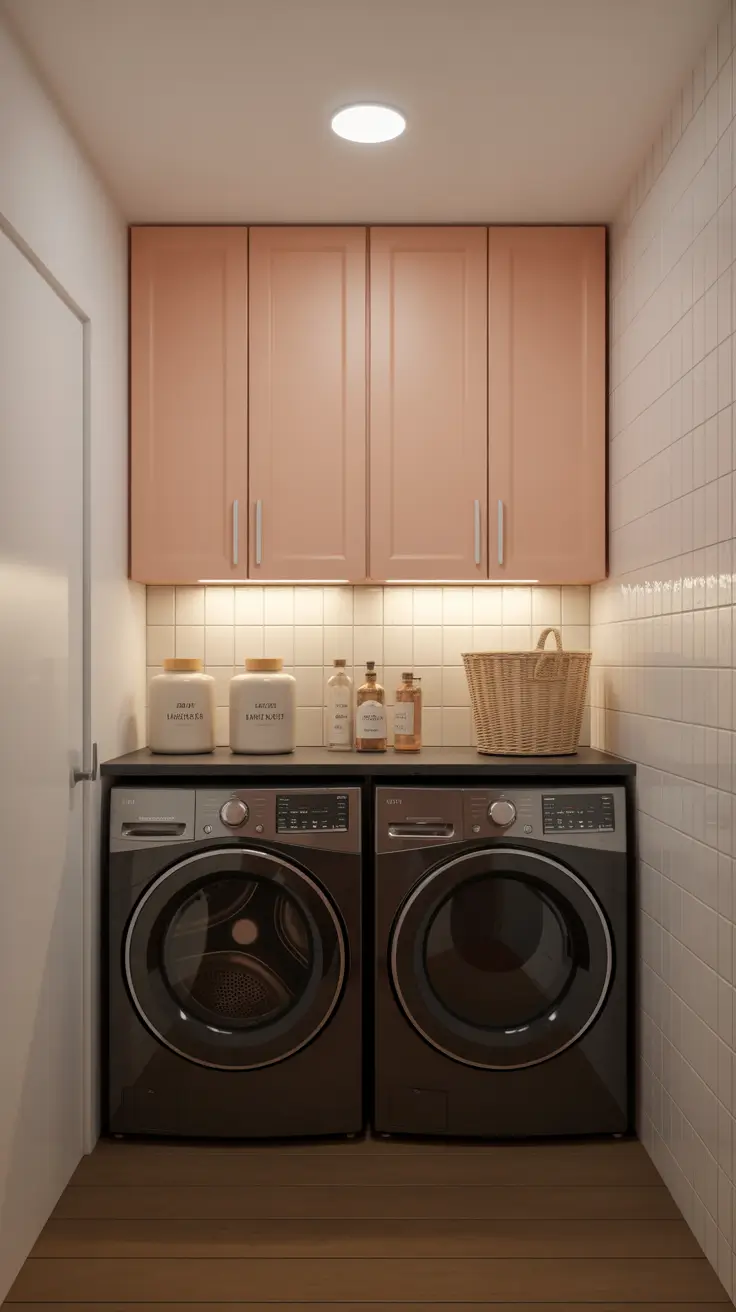
Adding purposeful tones to surfaces elevates the design. Cabinets painted in muted clay or mushroom shades pair beautifully with subtle glossy backsplash tiles. Medium-warm floors hide lint between cleanings. When using stacked washer-dryers, slightly contrasting wall colors highlight them as intentional design features. Coordinating baskets and labels in the same palette harmonizes organization without visual clutter.
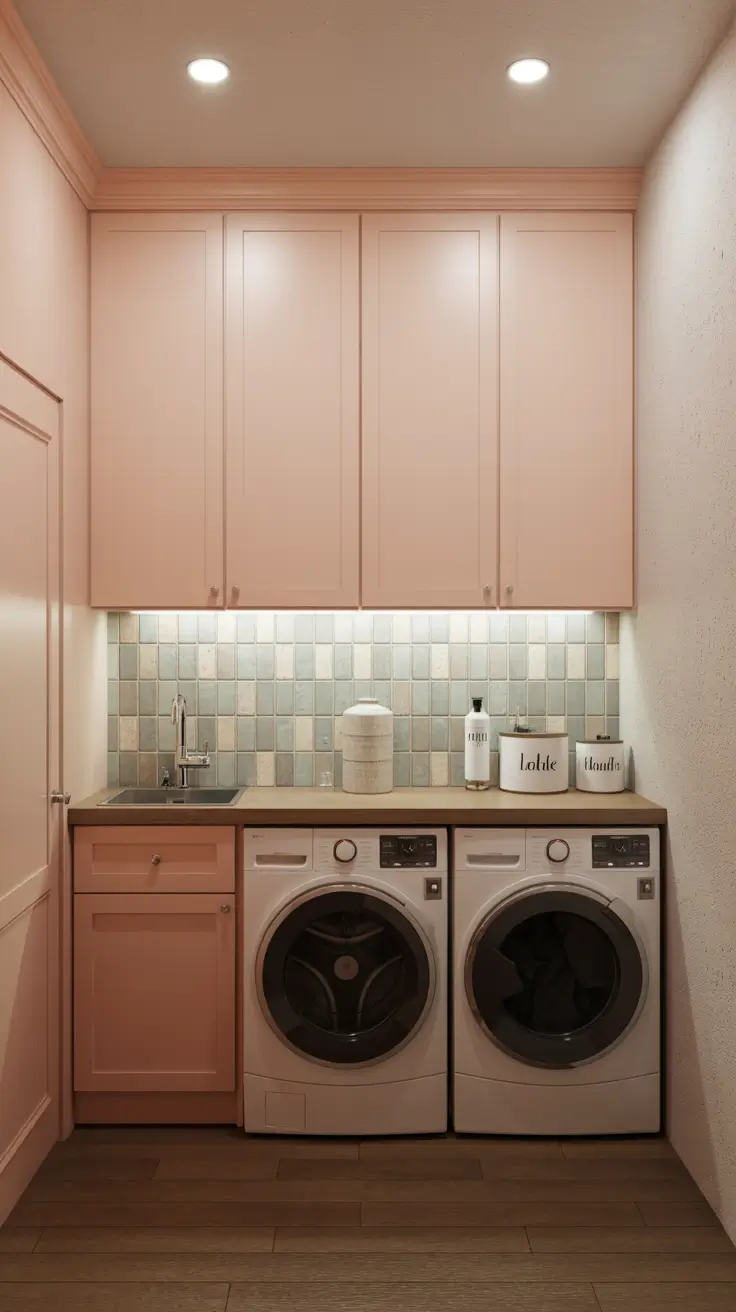
Paints with high light reflectance values amplify small spaces effectively. In damp areas near sinks, mildew-resistant formulas withstand steam and splashes. For clients requesting bold colors, I suggest applying them to a single plane like a door or cabinet panel to avoid overwhelming the room. Maintaining a uniform palette makes budget-friendly ideas appear more polished. Always test swatches in natural and artificial light, as laundry rooms operate around the clock.
Additional tips include priming glossy factory finishes for better adhesion, matching paint touch-up sticks to appliance colors, and using paintable silicone caulk on trim for flexible, durable finishes.
Remodeling Tips for Small Laundry Spaces
When remodeling a compact laundry, I start by defining a clear workflow: hamper to washer, washer to dryer, dryer to folding, and folding to storage. I arrange layouts to prevent door conflicts and prefer stacked washer-dryers to free floor space. For top loaders, I design split folding surfaces with hinged leaves to clear lids. Utilizing wall space for future shelves and leaving access panels behind machines ensures easy maintenance. Upgrading electrical systems and installing leak pans protect flooring.
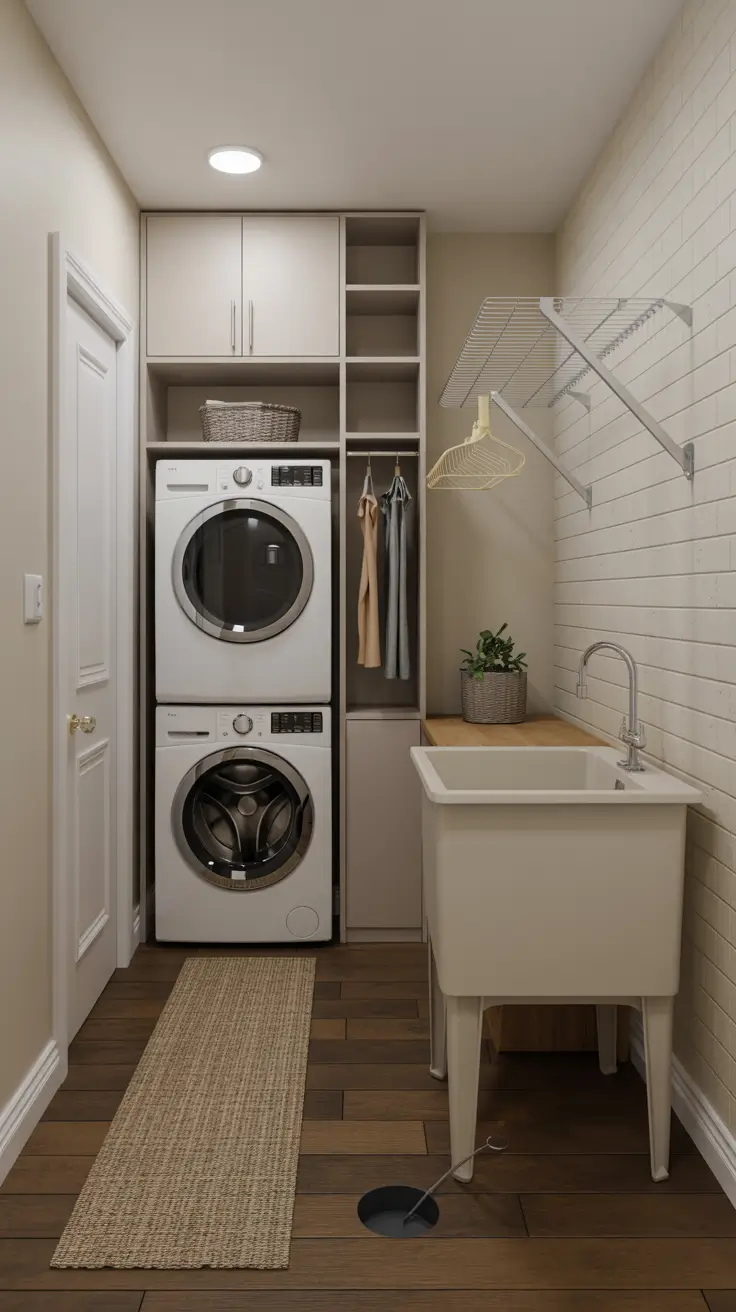
I incorporate small lighting fixtures and multipurpose items. A 21-inch-wide utility sink with a pull-down faucet fits comfortably without crowding. Unused wall areas house full-height shallow cabinets for detergents, steamers, and vacuum attachments. To save swing space and maintain openness, I favor barn or pocket doors. Task zones benefit from under-cabinet LED strips that reduce shadows. Hooks, rails, and retractable drying racks maximize vertical storage.
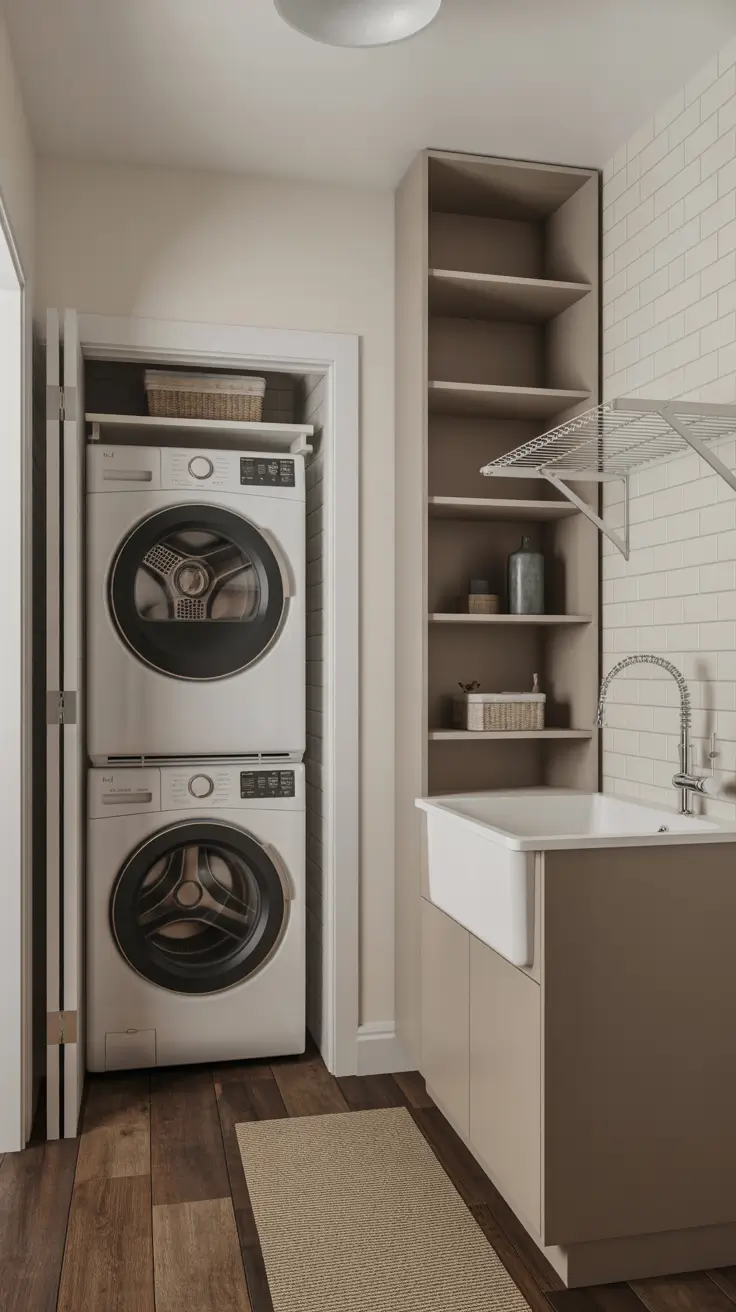
My experience shows investing in the room’s envelope and electrical upgrades yields the best returns, followed by flexible furniture. Quiet, energy-efficient ventilation and sealed floors that resist splashes are essential. Stacked machines transform small rooms but require vibration pads and clearance to minimize noise. For top loaders, I position lighting centrally over open lids to brighten the space. A simple remodel is effective when details align and the color story is cohesive.
Additional features I recommend include labeled shutoff valves for quick access, anti-tip brackets on tall storage towers, narrow runner rugs to define pathways, charging shelves for handheld vacuums, message strips for stain recipes, and sliding hampers tucked under counters to avoid traffic obstruction.
Smart Organization Strategies for Small Laundry Rooms
Efficient organization is the backbone of any compact laundry. I divide the space into zones: incoming laundry, treatment near the sink, washing, drying, folding, and storage for clean items. Daily essentials are stored on easy-reach shelves above machines, while bulk supplies go on higher shelves. Grouping items by task—such as stain removers, brushes, and boosters—in pull-out caddies reduces clutter. Labeling and standardized containers minimize visual noise and help everyone maintain order.
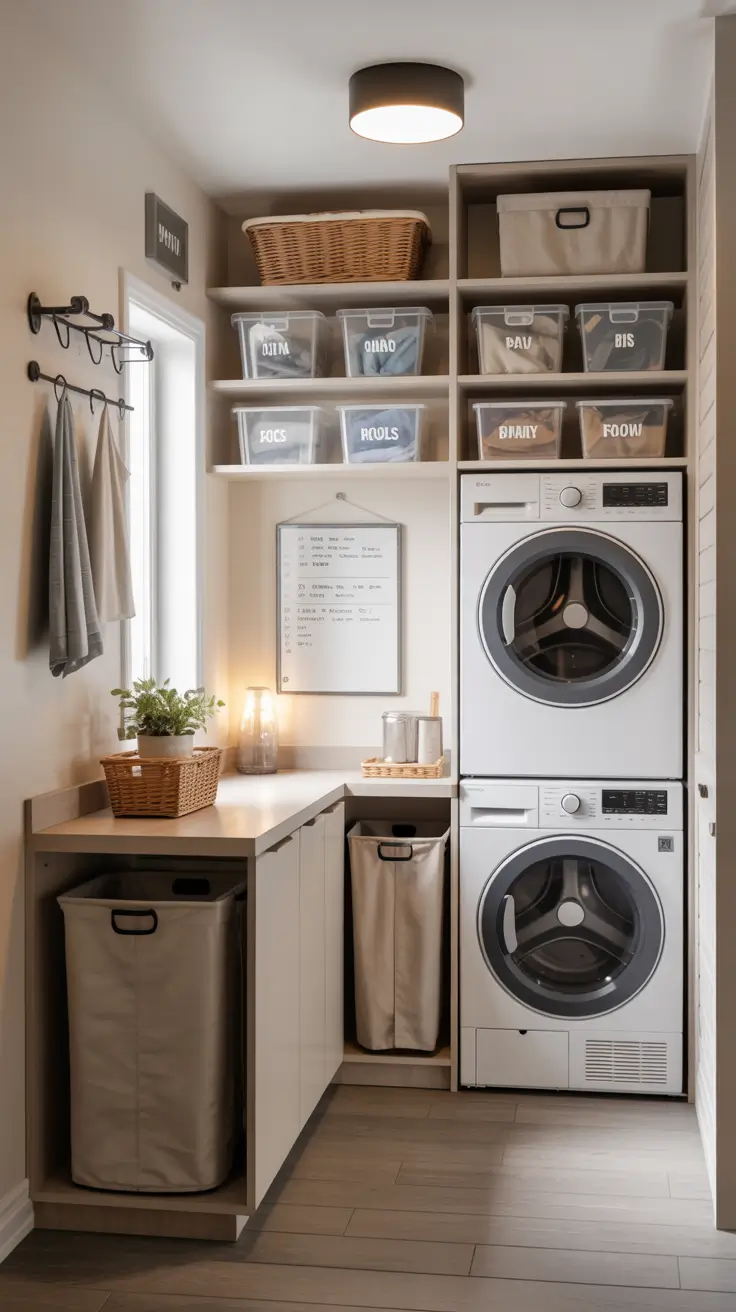
I prefer modular, adjustable systems that adapt to seasonal changes. Under-counter hampers sort laundry without taking up floor space. Wall-mounted drying racks fold flat to conserve space. Essential tools like lint brushes, scissors, and folding boards hang on narrow rails with S-hooks. Small items such as clothespins and dryer sheets fit neatly into over-door pockets without requiring extra cabinetry.
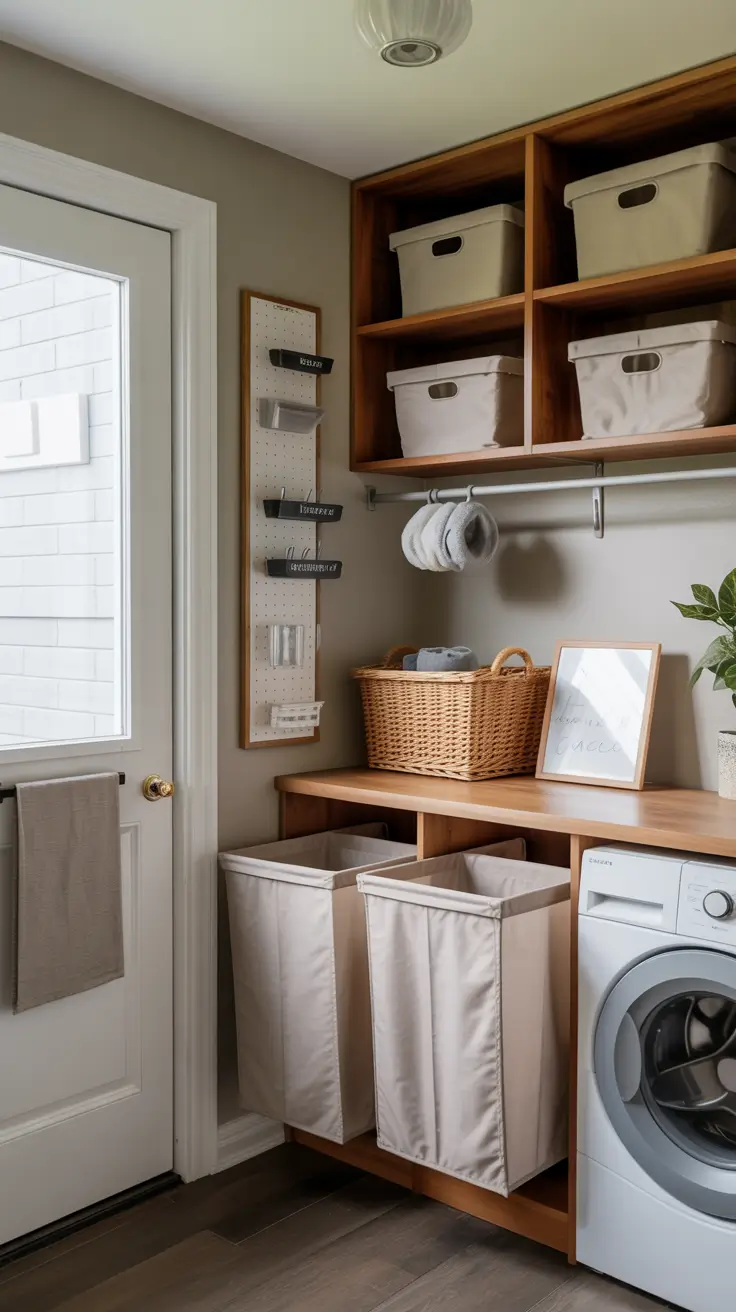
Years of trial and error have taught me that one-touch storage makes the biggest difference in tight spaces. When every item has a designated spot near its point of use, tasks flow smoothly and counters stay clear. Adding small decorative touches like framed photos or plants boosts motivation to maintain the space. Laundry timers or small speakers help manage cycles efficiently. Good organization isn’t about more containers but respecting the natural flow of laundry tasks.
To finish, I suggest a weekly reset checklist inside a cabinet door, a magnetic whiteboard for lost sock notes, a slim lint container with a tight lid, a recycling jar for pocket finds, and soft-close hardware to reduce noise and wear.
Cabinetry Ideas That Enhance Small Laundry Rooms
In small laundry spaces, cabinetry blends architecture with storage. I design shallow towers 12 to 15 inches deep to hold a week’s worth of supplies without crowding walkways. Mixing closed towers with open basket cubbies keeps frequently used items accessible. For stacked machines, side panels and shallow shelves create a built-in look. A floating countertop over front loaders extends folding space.
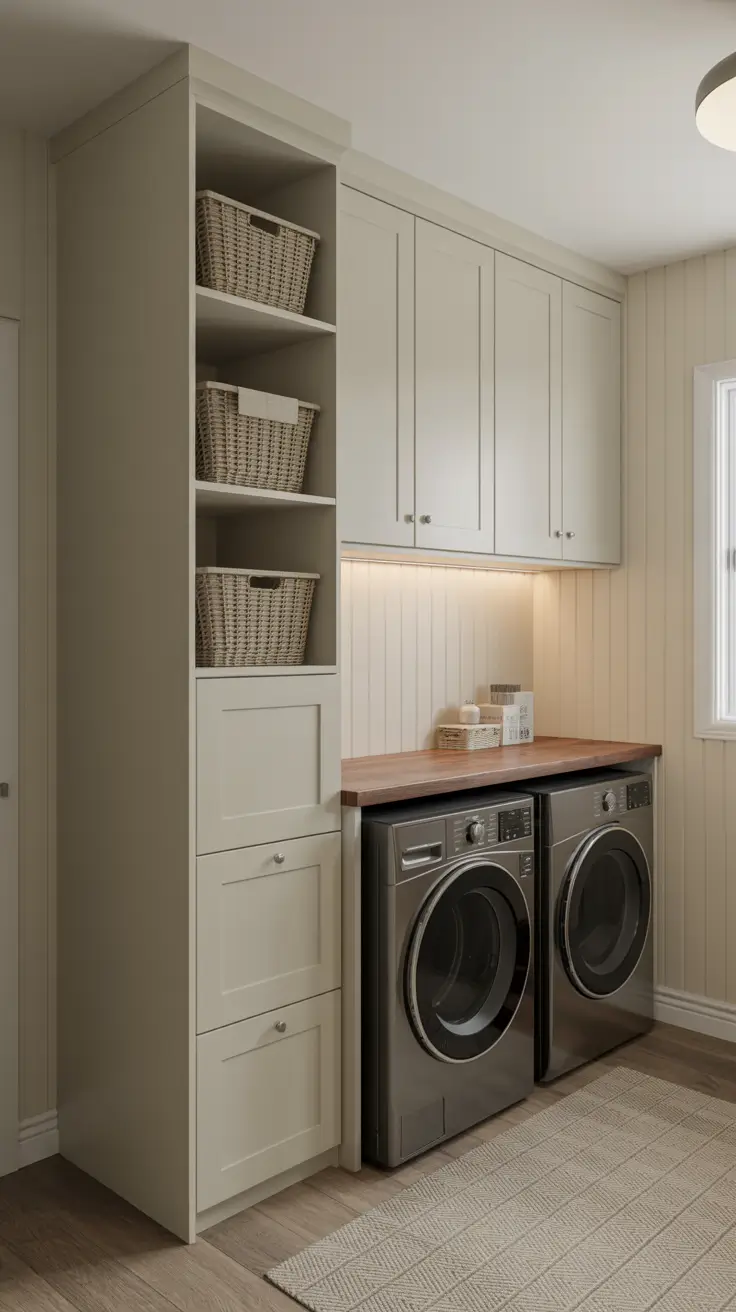
I select door styles and hardware that complement the room’s tone—slim shaker or flat slab fronts with finger pulls minimize visual bulk. For a farmhouse makeover, painted lowers paired with wood open shelves and beadboard backs add warmth. Matte laminates resist scratches and maintain a slim profile. Inside cabinets, rollout trays, dividers, and vertical sheet pan holders aid folding and organization.
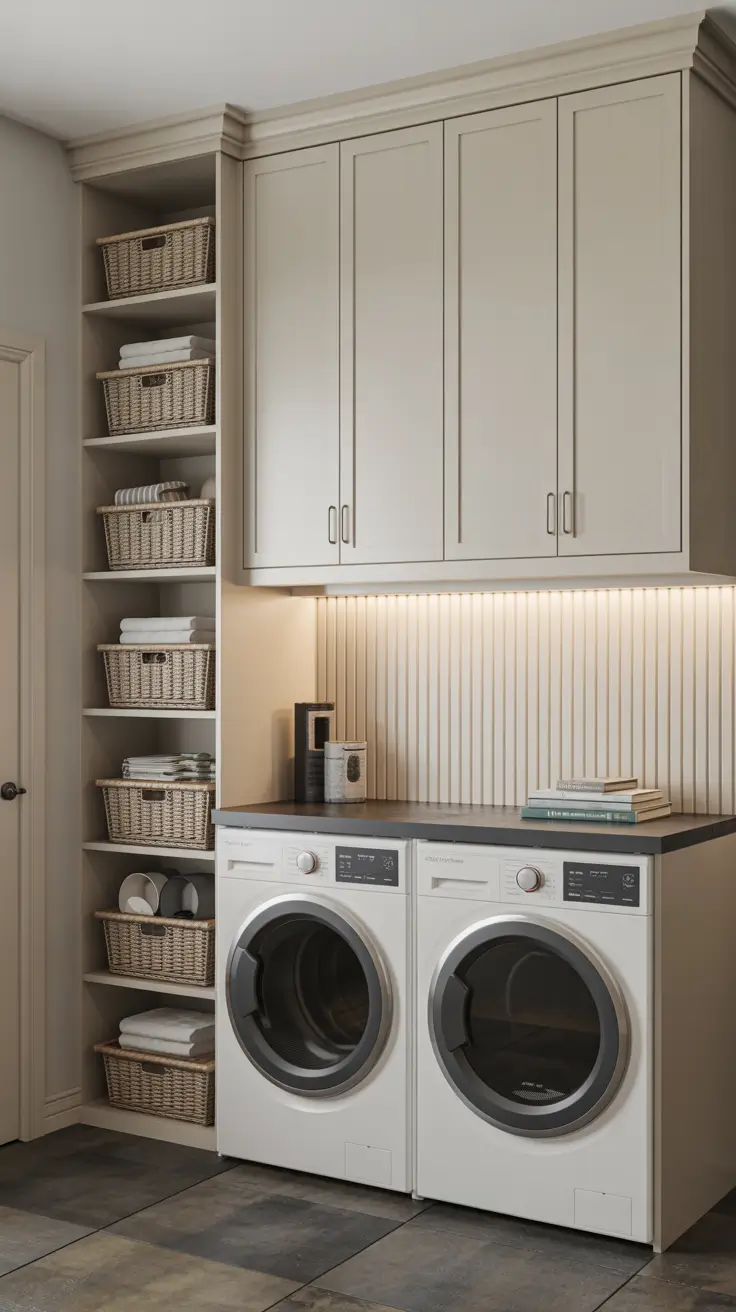
Measuring contents before designing cabinetry is crucial; if a favorite steamer or tall bottle won’t fit, the cabinet won’t function well. Adjustable shelves accommodate future changes. Matching cabinet and wall colors reduces visual disruption and enlarges the space. Coordinated baskets prevent clutter and maintain a muted palette.
Additional features include door bumpers to protect walls, vented bottom panels for appliance airflow, toe-kick lighting for nighttime safety, narrow broom cabinets with charging points for cordless tools, and hidden pull-outs for pet supplies or paper towels.
Farmhouse Style Refresh for Small Laundry Rooms
My farmhouse-inspired laundry designs blend warm textures with clean lines, creating a space that feels both hardworking and welcoming. Vertical shiplap or beadboard adds subtle rhythm without overwhelming small rooms. Soft neutrals like warm white or pale greige bounce light and visually expand the space. Linen shades on windows maintain privacy while allowing daylight. The layout remains simple: one wall of appliances, a slim countertop, and a compact work triangle.
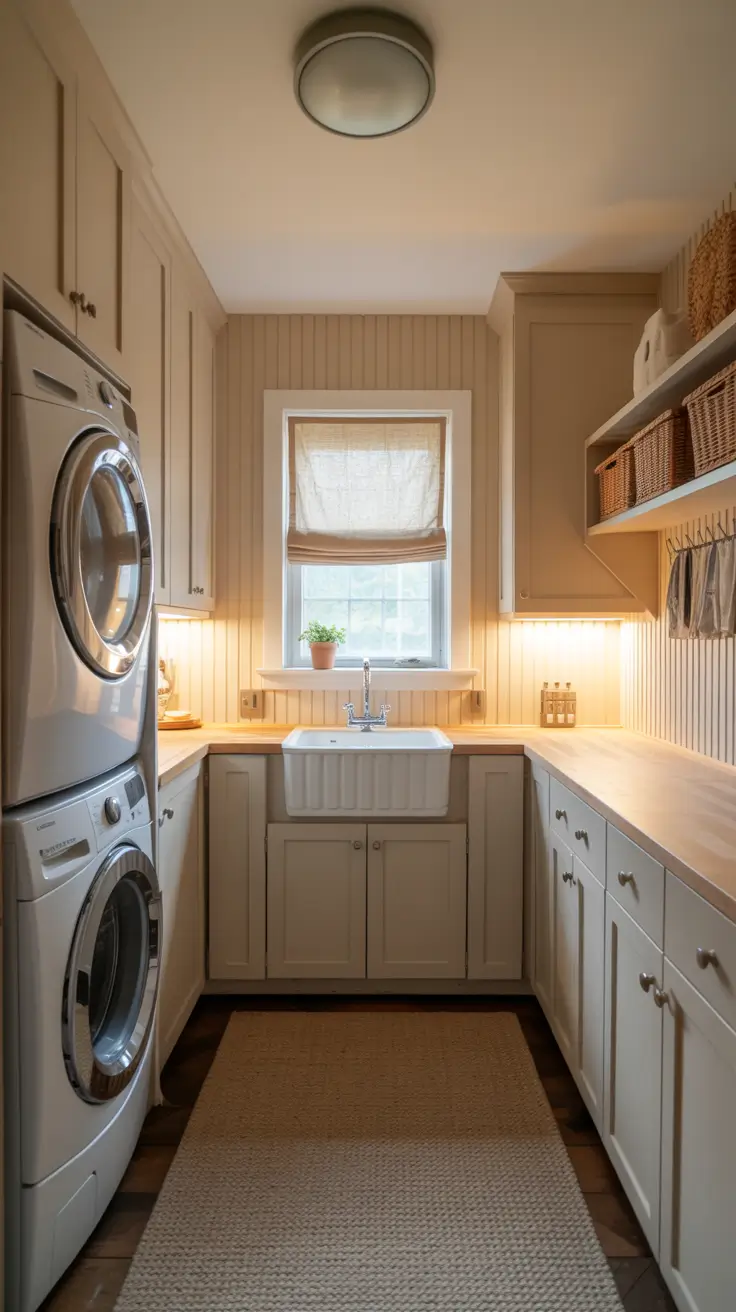
Stacked machines free floor space for folding and movement, complemented by a thin apron-front sink for handwashing. Cabinetry features slim shaker doors with finger pulls and adjustable shelves for flexible storage. A wooden drying rod between cabinets and peg rails for brushes and dustpans add function. Natural fiber baskets soften the look and hide supplies. A washable flat-weave rug keeps floors warm.
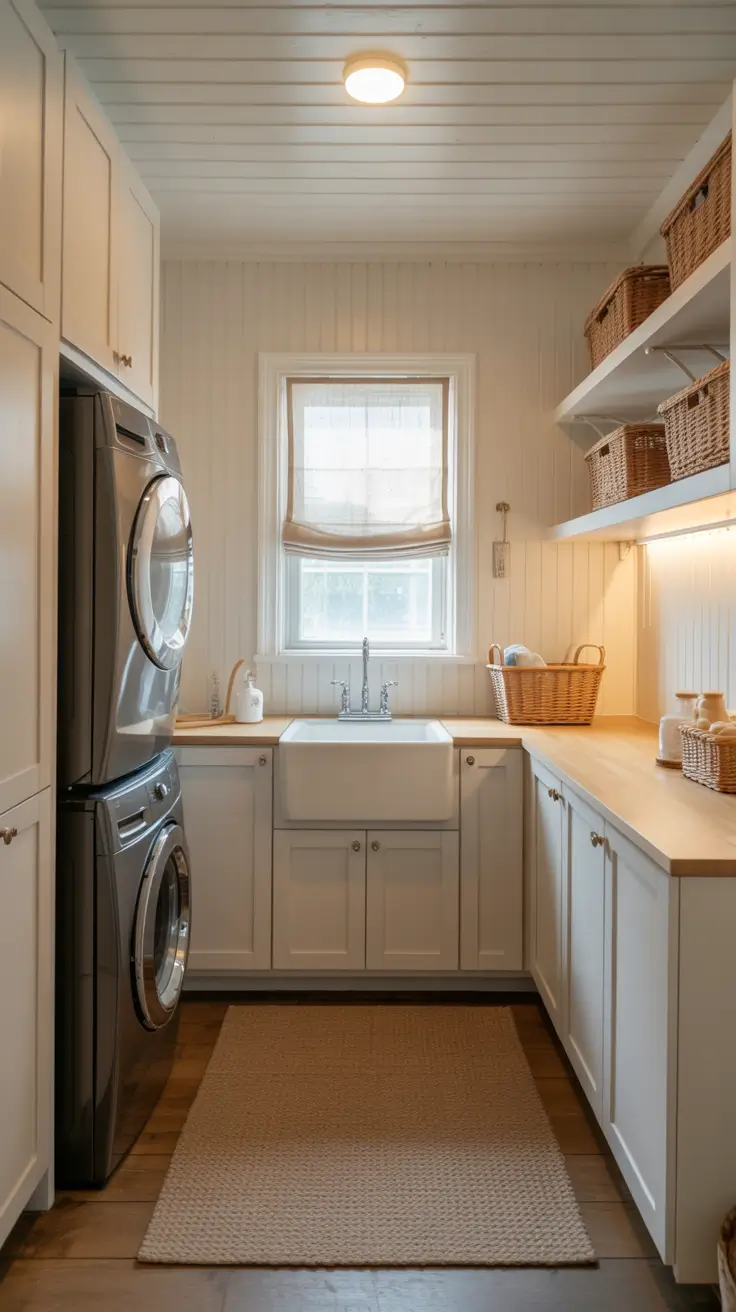
Farmhouse style works best when edited, not themed. Limiting finishes to one wood, one metal, and one paint color prevents visual overload and enlarges the room. For vintage lovers, a single antique stool or simple art print adds charm without clutter. Task lighting near counters and sinks improves stain treatment accuracy. Tilt-out hampers keep laundry sorted but out of sight. Moisture sensor fans protect wood details over time.
Integrating Laundry and Mudroom for Practical Design
In combined mudroom-laundry spaces, I treat the area as two overlapping zones sharing storage and traffic flow. The laundry side requires power, water, ventilation, and clear service aisles, while the mudroom side focuses on drop zones, seating, and durable surfaces. Porcelain or luxury vinyl tile withstands wet boots and pet paws. I arrange the bench facing appliances to keep walkways open. Back windows or exterior doors maintain sightlines for openness.
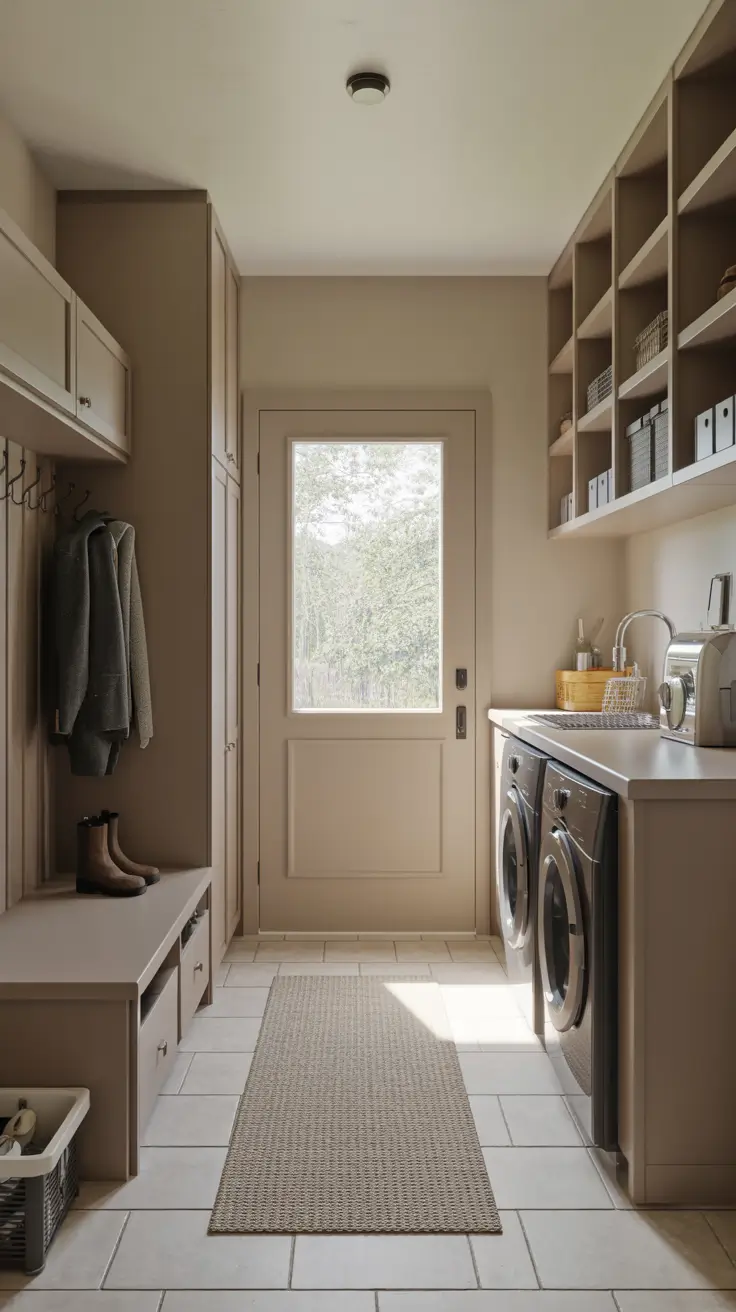
Furniture includes built-in benches with deep drawers for gloves and hats, lockers or open cubbies with hooks for daily coats, and tall cabinets for seasonal gear. Stacked washer-dryers free wall space for broom closets and narrow sink cabinets. Drip zones and boot trays protect floors. Durable paint and runners withstand family and pet traffic.
Separating clean and dirty zones prevents disorder. Durable finishes recommended by experts—tile, flat paint, sealed counters—stand up to heavy use. Motion-activated fans or dehumidifiers speed drying and protect cabinetry. Ventilated doors or woven baskets contain odors from sports gear. Additional touches include charging ledges near benches, wall-mounted key/mail organizers, and movable or folding doors to divide spaces without sacrificing floor area.
Inspiration for Compact, Functional Laundry Layouts
For general inspiration, I focus on brightening the shell and simplifying forms. Continuous light paint colors, reflective hardware, and uniform flooring unify the space. Pocket or barn doors free swing space, while mirrors or high-gloss tiles amplify light. Without windows, layered lighting—ambient overhead, under-cabinet task, and accent lamps—adds warmth. Designs emphasize slim silhouettes and avoid bulky profiles.
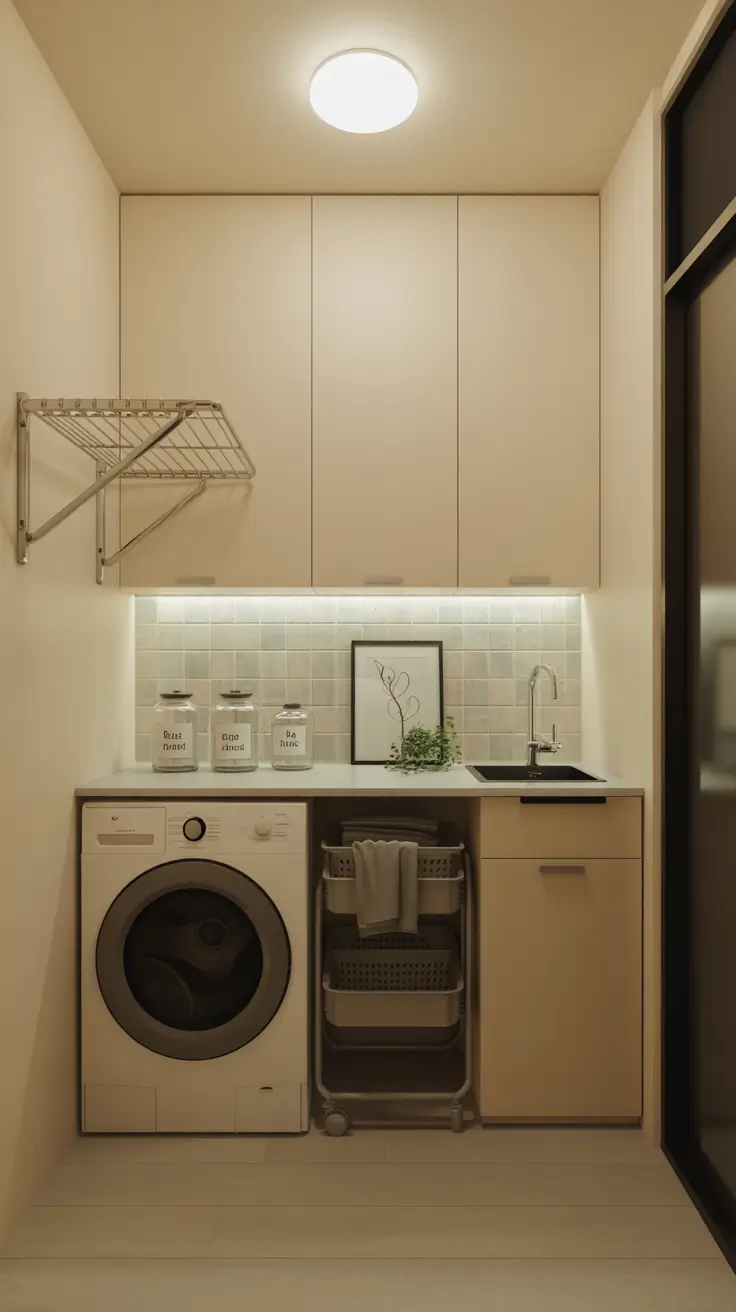
My preferred toolkit includes a wall-mounted drying rack that folds flat, a slim mobile cart fitting between appliances, and adjustable shelving sized for standard bins. A narrow sink facilitates pre-treating at the source. Cabinets have shallow uppers with lift-up doors where swing is limited. Visual clutter is minimized with labeled clear containers. Hooks, magnetic shelves on machine sides, and clip rails for mitts and socks create vertical storage without mess.
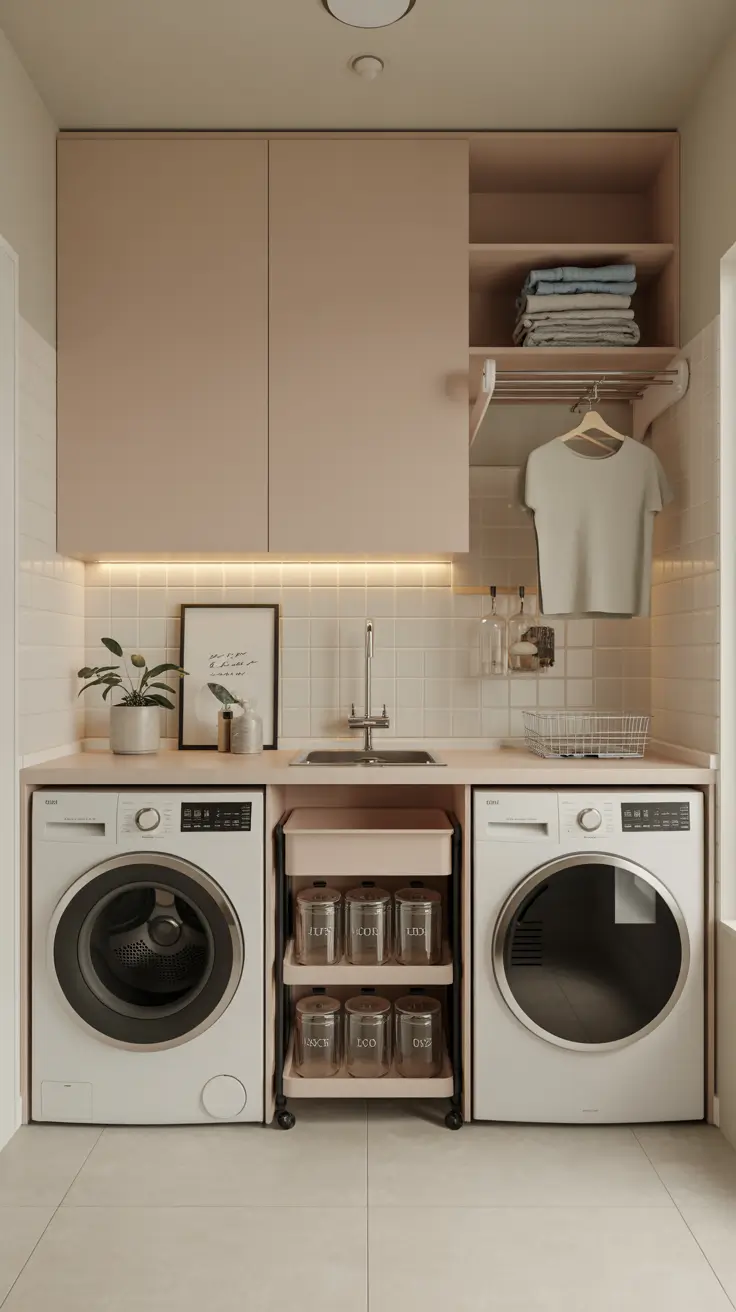
The most effective small spaces use a restrained material palette, a principle echoed by Apartment Therapy. I avoid filling entire walls with open shelves, instead mixing open sections for everyday items with closed cabinets. A single artwork, plant, or woven basket adds life without stealing space. Even a small framed print can serve as a focal point.
To reduce vibration and scratches, I add acoustic pads under appliances and felt pads on baskets. Solid-core doors help with noise control. A small fragrance tray with dryer balls and stain sticks keeps the top tidy. Leak sensors and floor pans provide insurance in tight apartment setups.
Space-Saving Solutions for Stackable Laundry Units
When designing stackable laundry setups, I carefully consider appliance dimensions and clearances. The lateral space occupied by stacked units is repurposed for storage or landing surfaces. I prefer built-in niches framing the washer and dryer with side panels for a purposeful look. Cabinets above hold light items, with shallow shelves below for daily detergents. Bright lighting is essential since controls are higher up.
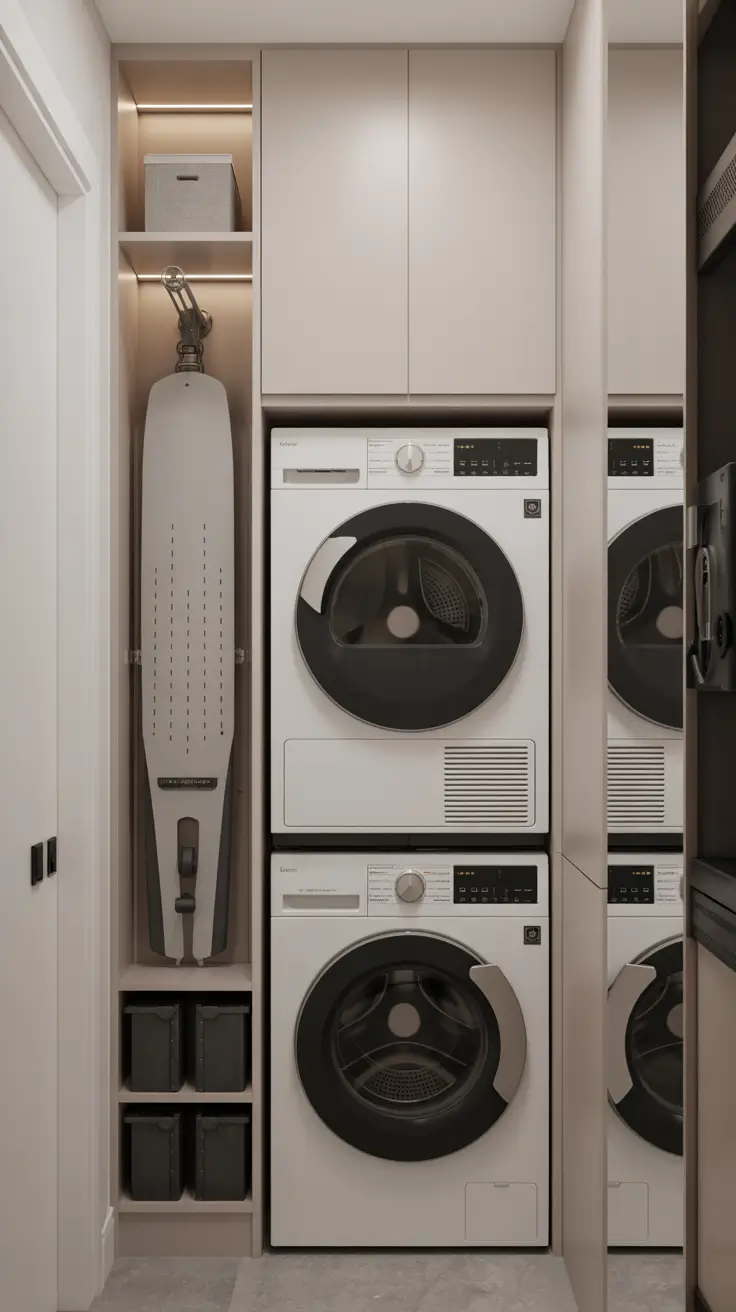
I select compact 24 to 27-inch units based on capacity, always using manufacturer stacking kits for safety. Pull-out trays or drop-down folding tables add workspace. Tall cabinets store ironing boards, vacuums, and collapsible ladders. Ventilation paths remain clear, and removable side panels allow service access. Vibration pads and level bases keep noise low.
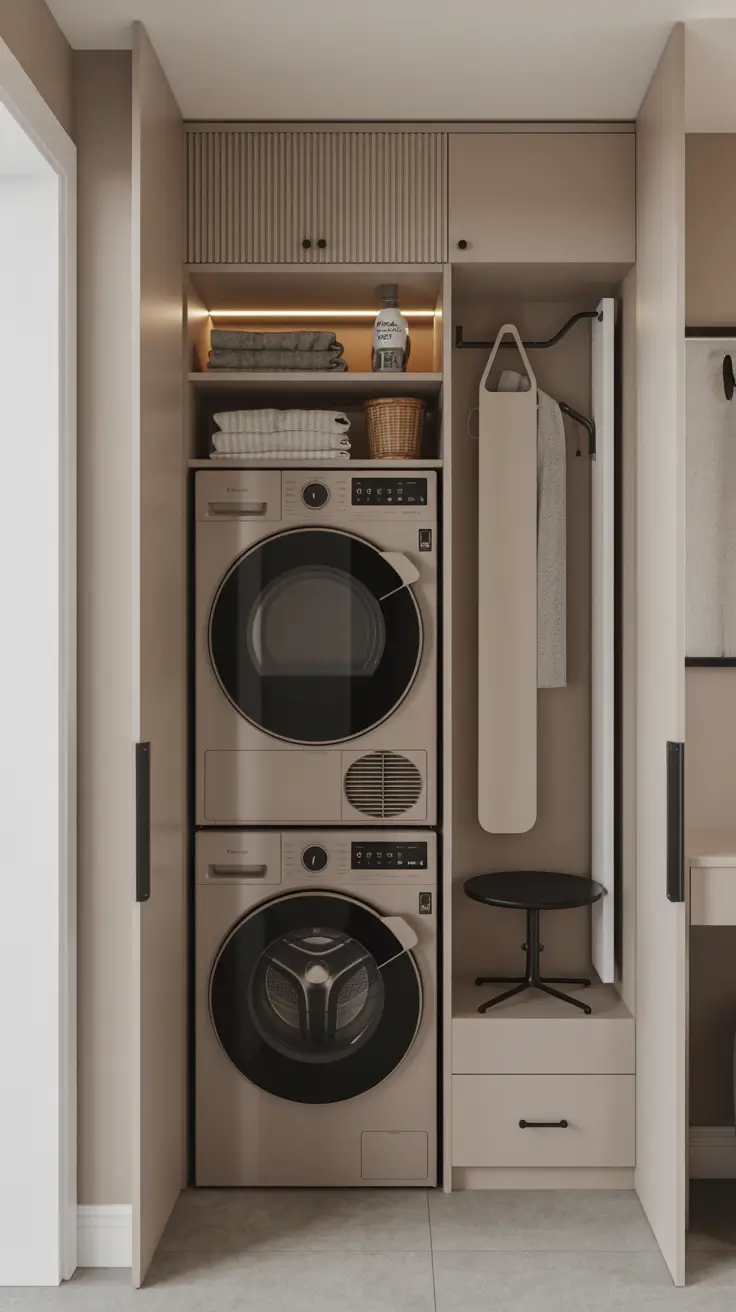
Planning door swings carefully prevents daily frustrations. I prefer dryer doors that open backward to avoid basket collisions and use pocket or bifold doors in alcoves. Heat-pump dryers with minimal venting are ideal for condos or interior closets. Slim bottles and wall dispensers keep towers tidy. LED strips at eye level illuminate controls.
Additional features include back-of-door organizers for cleaning tools, narrow vertical trays for sheets and pans, leak detectors, quick shutoff valves, and small mirrors to visually expand the closet.
Designing for Top-Loading Washers in Small Spaces
Top loaders require clearance for lids to open fully, so I design staggered counters that fold over machines, maintaining clean surfaces without obstructing lids. Storage includes higher uppers or shelves behind machines to accommodate lid swings. Budget-friendly options include freestanding wire shelves and wall-mounted drying racks. Window treatments are simple shades that don’t interfere with lids.
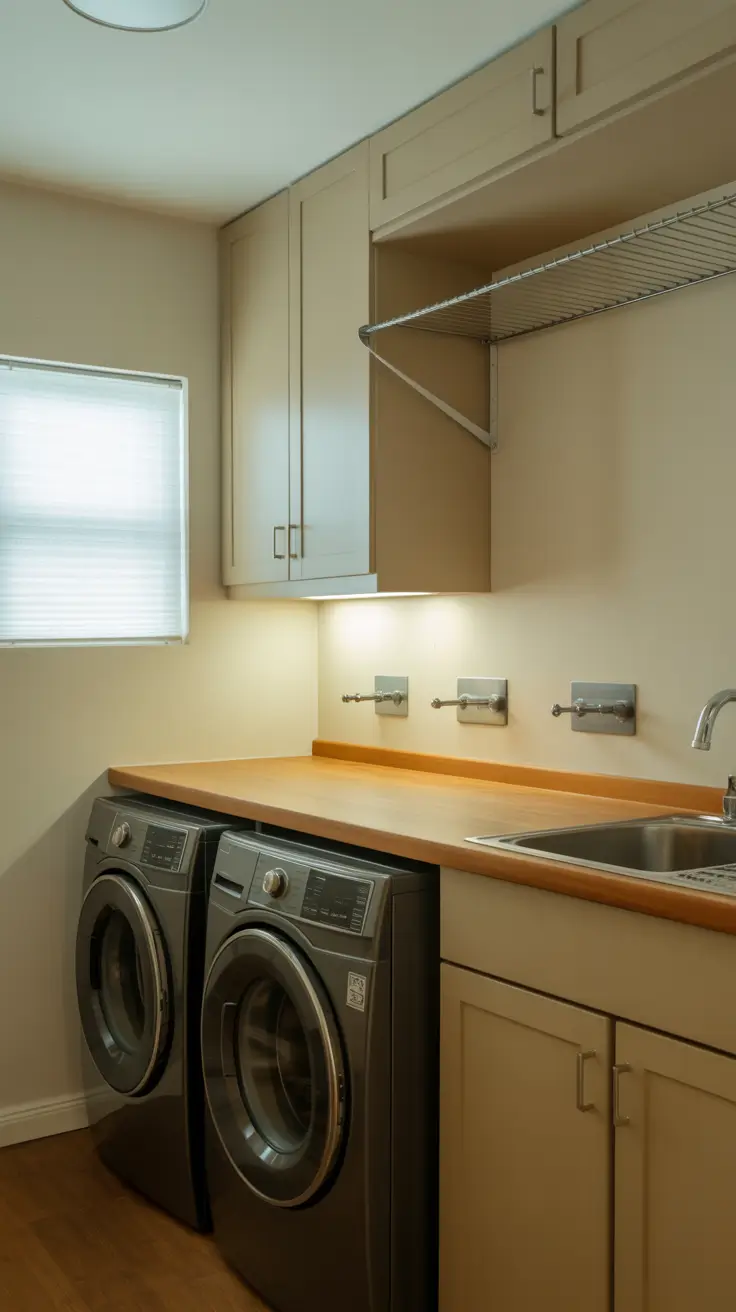
Moisture-resistant paint and backsplash panels behind faucets protect walls. Hinged countertop sections above top loaders solve lid conflicts while maintaining visual continuity. Pull-out caddies for detergent pods, large bins for clothespins, and wall magnets for stray socks keep essentials organized. Tall, shallow cabinets store bleach and cleaning tools securely.
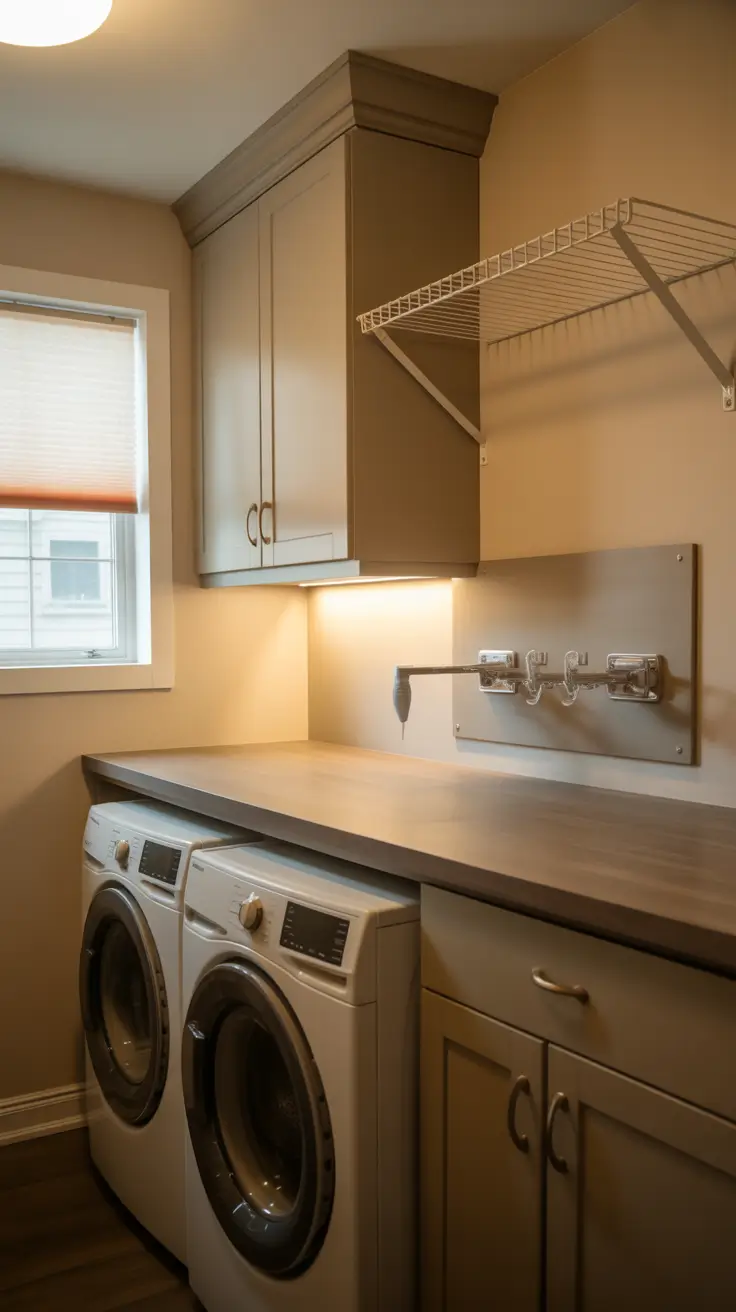
Families who prefer top loaders often appreciate quick cycles and soaking options. Ventilated shelves between tubs hold drip-dry items. Hose access and visible shutoff valves are safety essentials. For older floors, level checks and additional subfloor layers may be necessary to reduce vibration.
Finishing touches include LED tape lighting under rear shelves, wall-mounted foldable step stools for accessibility, and clear labeling to maintain order.
Styling Stacked Washer-Dryer Units in Tight Spaces
Styling stacked laundry units is about creating relaxed lines and repeating materials to avoid an improvised look. I paint walls and cabinetry in a single color, adding interest with woven baskets, ribbed glass, or beadboard panels used sparingly. Centering the stack and flanking it with balanced storage creates visual symmetry. Low-pile carpets add warmth without trapping lint, and narrow artwork personalizes the space. In mudroom combos, hooks and benches on opposite walls maintain clear traffic flow.
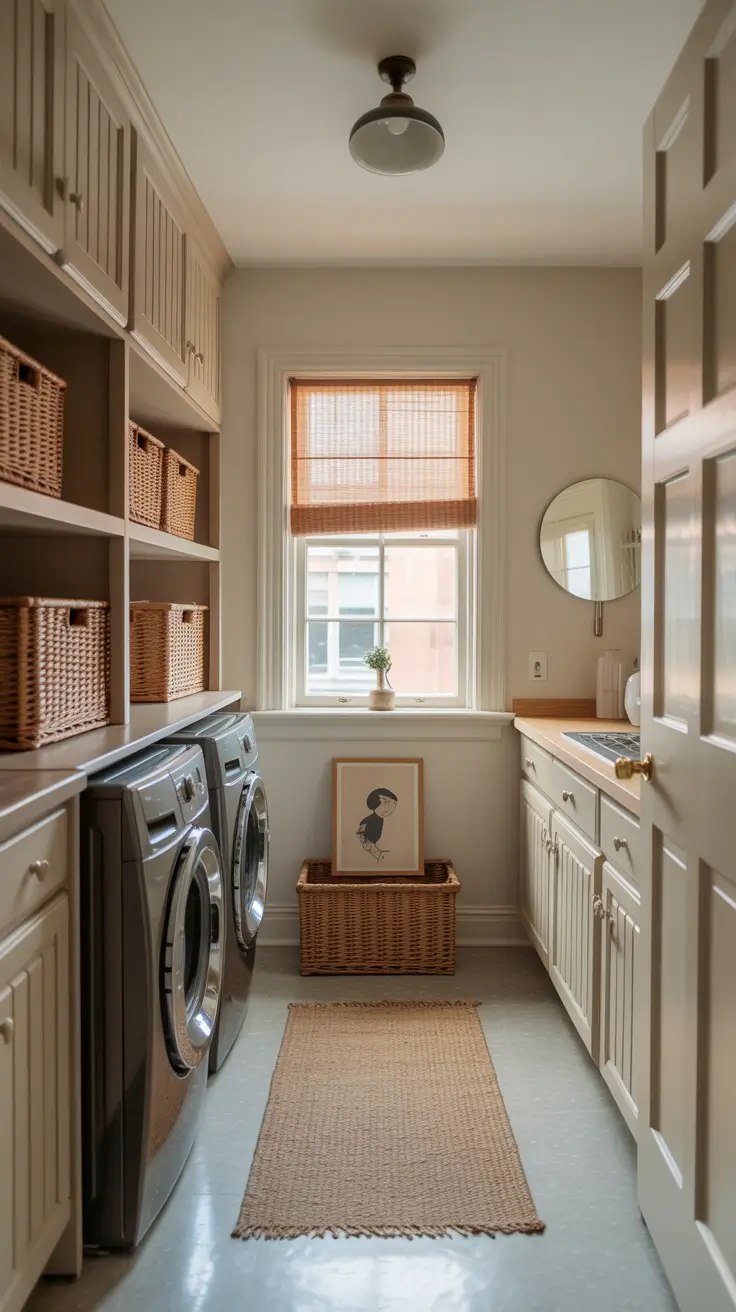
I choose matte hardware that resists fingerprints, recessed pulls for sliding doors, and consistent wooden hangers for drying. Design elements include oversized jars for powder detergent, lidded containers for dryer balls, and small wall clocks to time cycles. Window treatments are simple sheers or roller shades to soften light and highlight neat silhouettes. Sealed floors like LVP or porcelain are easy to clean and water-resistant.
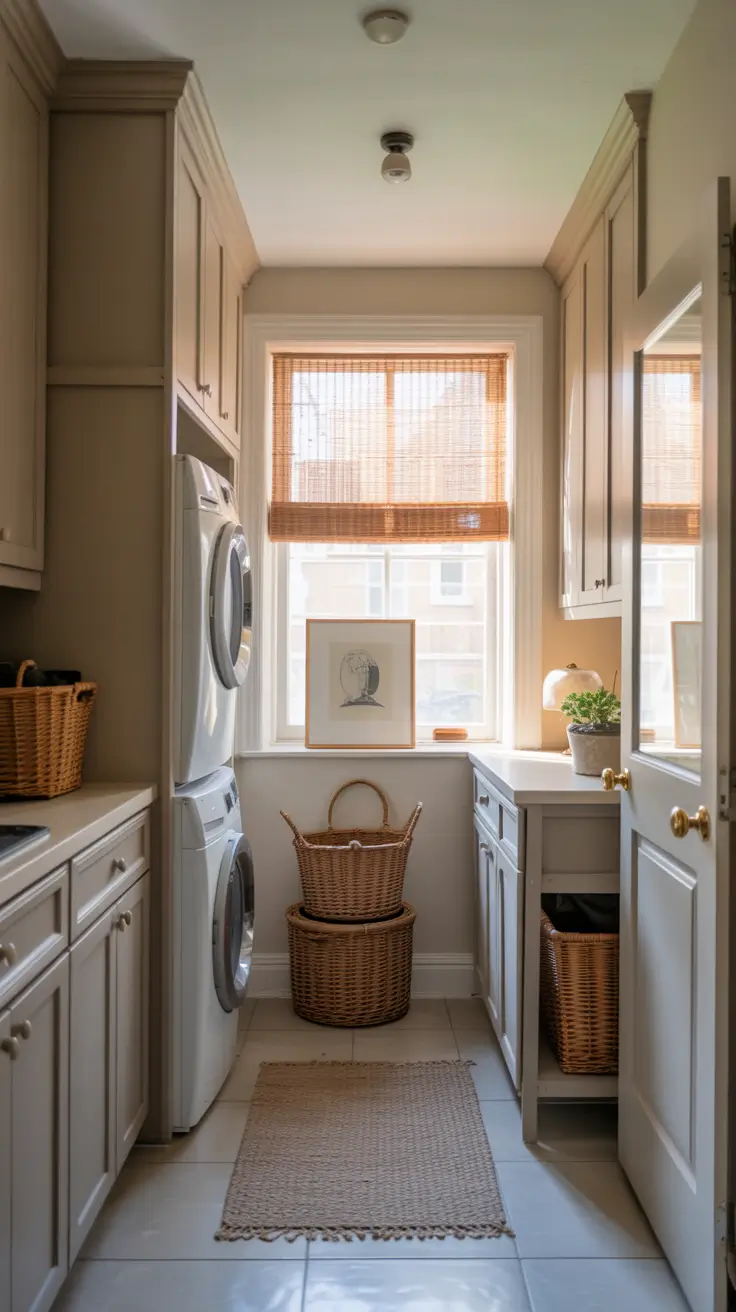
My most successful styled stacks use fewer finishes and conceal visual clutter like bottle labels. Adding plants brings life; in low-light spaces, faux plants are practical. Narrow mirrors near doors visually enlarge rooms and assist with last-minute checks. Additional upgrades include picture ledges for stain guides, hidden outlets for steamers, wall-mounted lint bins, and acoustic ceiling panels to reduce noise subtly.
Functional Laundry Rooms Featuring Sinks
A sink transforms a small laundry into a true workspace for handwashing, cleaning boots, and treating stains. I prefer basins 21 to 24 inches wide with tall arc faucets and sprayers, installed in compact cabinets that also store cleaning supplies. In tight spaces, wall-mounted utility sinks free floor area, paired with narrow counters for sorting. Light paint colors enhance task lighting, and backsplashes protect walls from splashes. For farmhouse vibes, apron-front sinks with beadboard backs add charm without overwhelming.
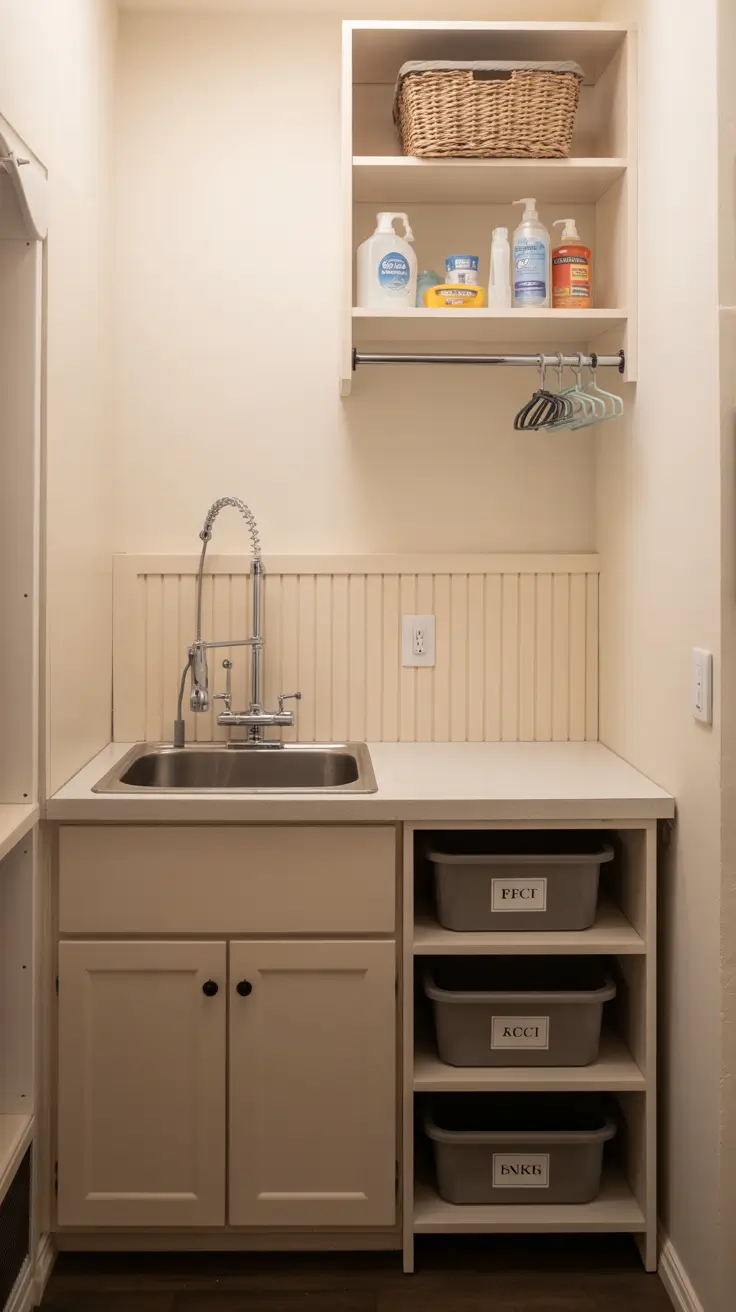
Components include basket strainers to trap debris, pull-out trash bins near the sink, and tilt-out trays for brushes. Rails above counters display drying clips, and open shelves showcase stain removers at eye level. Under-sink organization uses stacking bins and removable caddies. GFCI outlets near the basin accommodate small appliances, and drip trays protect cabinetry from leaks.
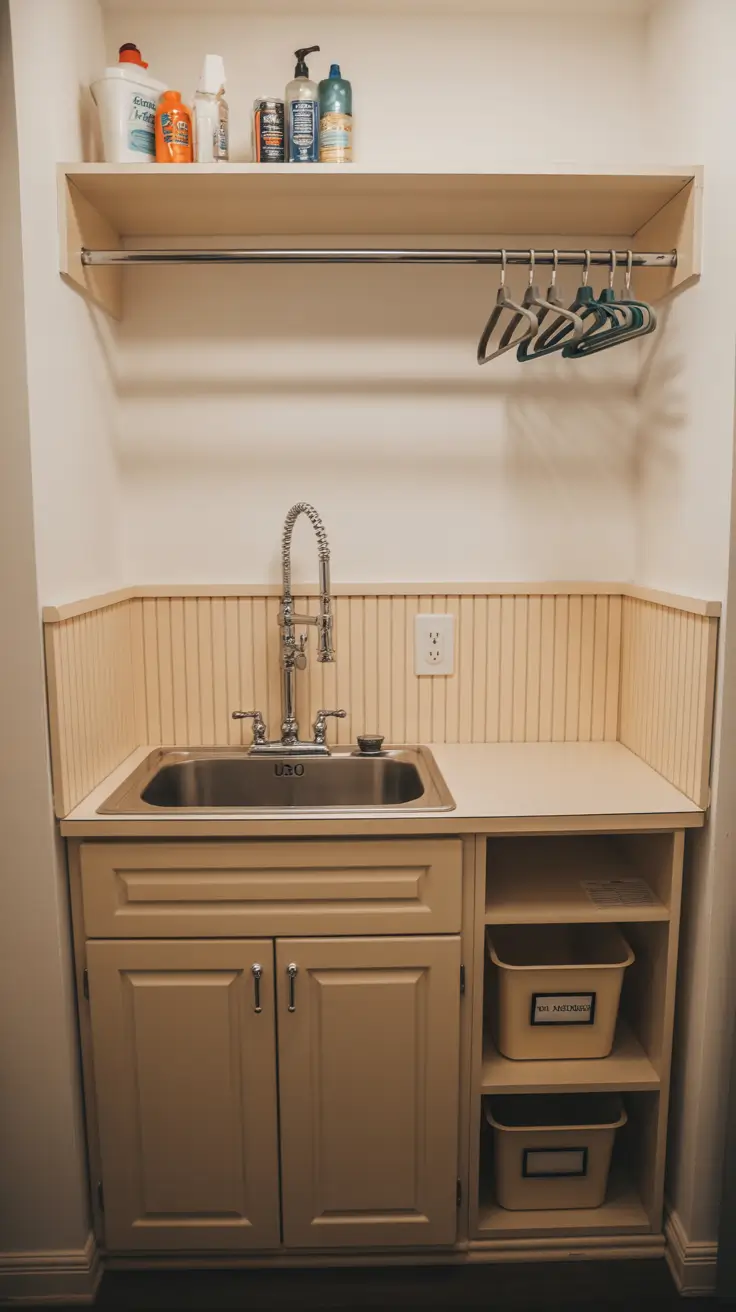
Plumbing details like faucet splash room and shutoff valve accessibility are often overlooked but critical. Experts recommend labeling shutoff valves for quick access during remodels. Nonporous counters around sinks prevent swelling from water exposure. Optional extras include stain removal charts, microfiber drying mats, slim pull-outs for tall bottles, and water sensors to detect leaks early.
Selecting the Ideal Sink for Compact Laundry Rooms
The right sink is foundational for efficient laundry work, providing space for cleaning, soaking, and stain treatment. In small rooms, I choose 18 to 24-inch single bowls with at least 9-inch depth for versatility without crowding. Positioning the sink near a window maximizes natural light for color accuracy and brightens the workspace. Combining sinks with stacked washer-dryers frees base cabinet space and preserves countertop area. Investing in durable drop-in or stainless undermount faucets pays off long-term.
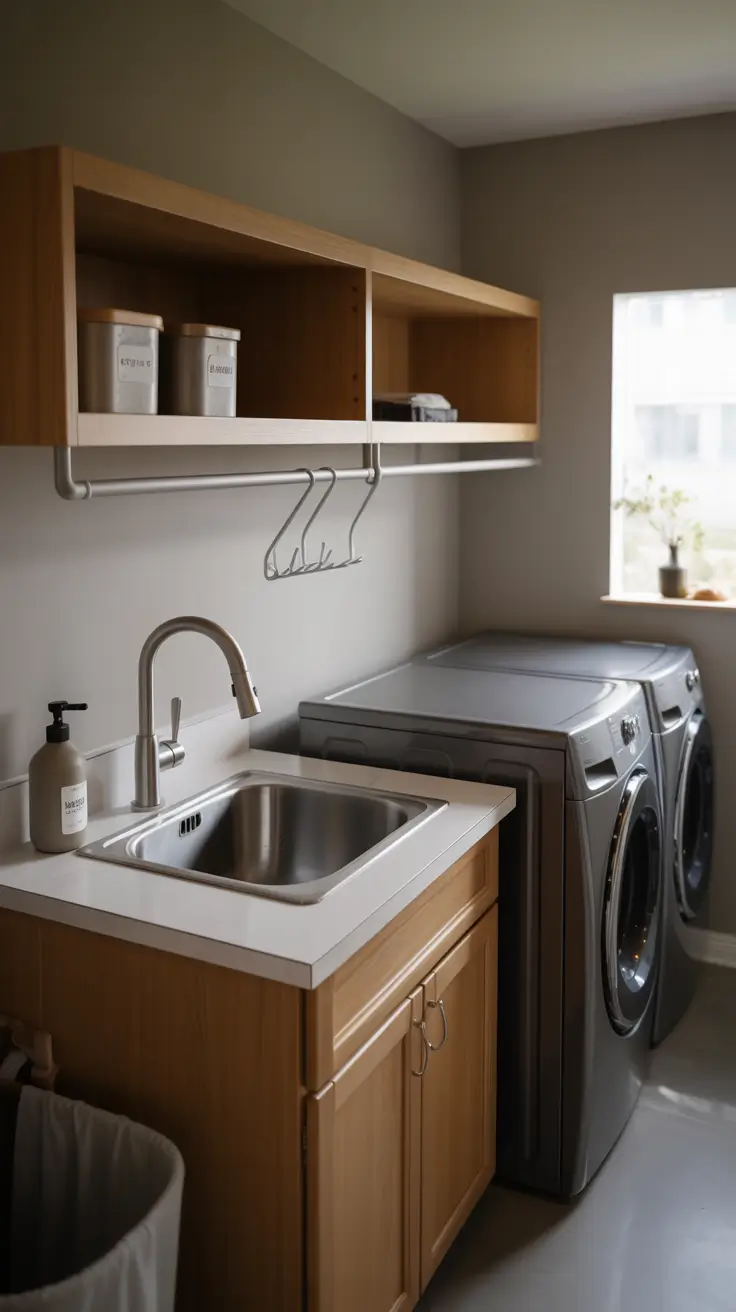
Every item around the sink must justify its place. I include small pull-out trash bins for lint and packaging, tilt-out trays for scrub brushes, and pull-out spray faucets with pause buttons for efficient rinsing. Cabinets above feature colored containers for detergents and rails with S-hooks for frequently used tools. If no window is available, high-CRI task lighting ensures accurate color perception.
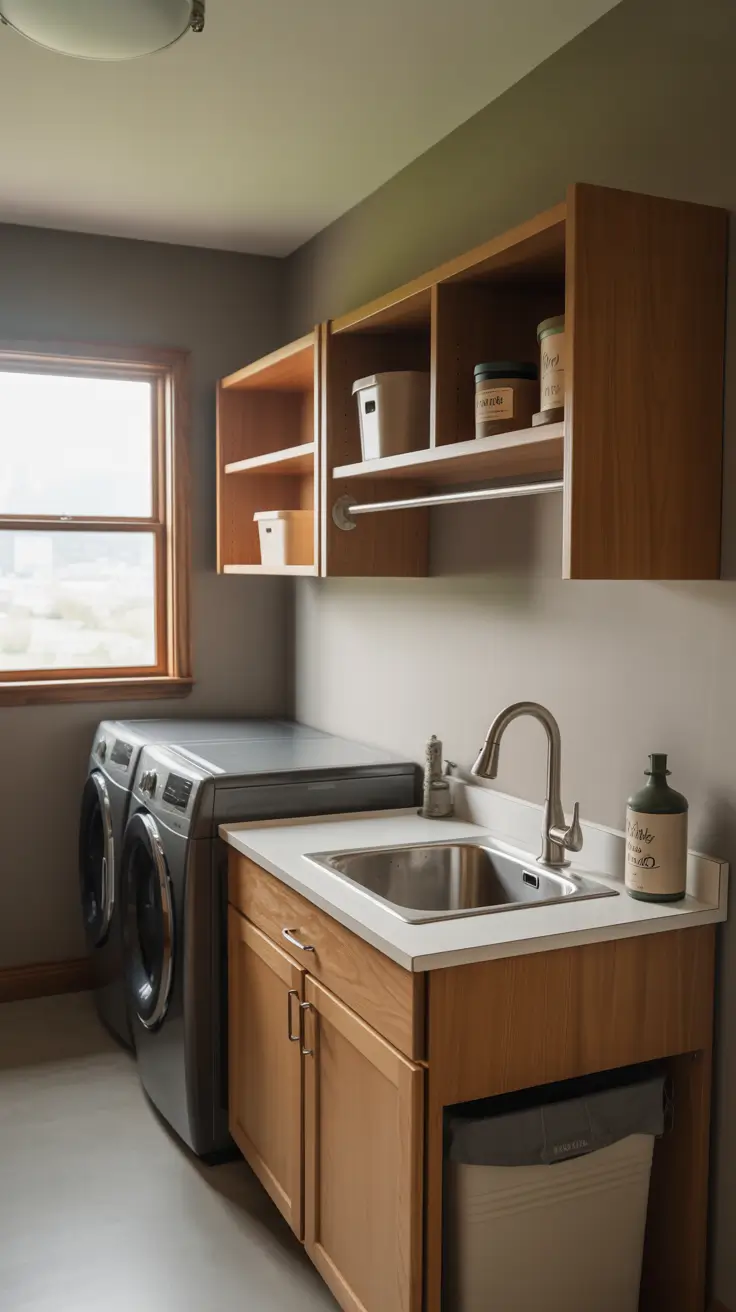
Sinks with built-in drainboards save counter space by providing a landing for wet items. Composite granite or stainless steel resists staining from bleach and dyes, important for stain treatment and color testing. Petite apron-front fireclay sinks suit farmhouse styles if cabinet support and front overhang are managed. Prioritizing front-to-back depth maintains ergonomic posture and reduces fatigue. For top loaders, I offset the sink to avoid lid interference and maintain continuous counters.
Additional features include built-in handheld sprayers for pet gear or shoes, slim drying rails between upper cabinets over the sink, magnetic strips inside cabinet doors for small tools, and prewired puck lights for quick access to plumbing shutoffs during maintenance.
Efficient Layout Planning for Small Laundry Rooms
Layout planning begins with mapping door swings, walkway clearances, and the workflow from wet items to hanging areas. Galley layouts work well, placing stacked machines opposite counters and sinks with 36-inch aisles for safe movement. When windows are present, folding spaces beneath them maximize daylight. Hallway closets benefit from one-wall plans with stacked units and fold-down counters. Mudroom combos separate laundry to one side, with benches and hooks opposite to keep grit away from textiles.
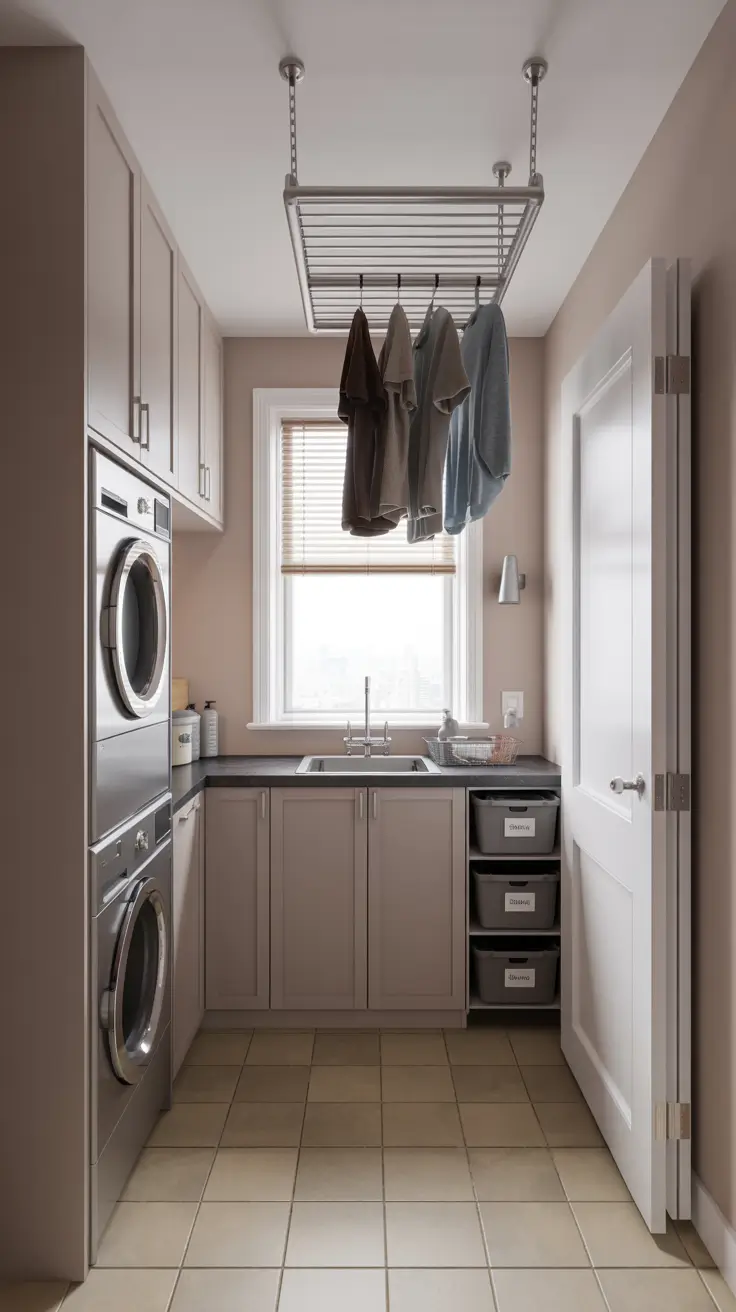
Exact clearances and depths are critical. I maintain at least 1 inch side clearance and 3 inches behind stacked machines for ventilation and vibration control. Ventless dryers suit tight duct paths. For top loaders, 21 inches clearance above open lids is essential, and sinks are placed opposite hinges to avoid obstruction. Pullout hampers fit under 24-inch counters, and 12-inch deep uppers provide ample headroom. Bi-fold or pocket doors eliminate swing conflicts in small closets.
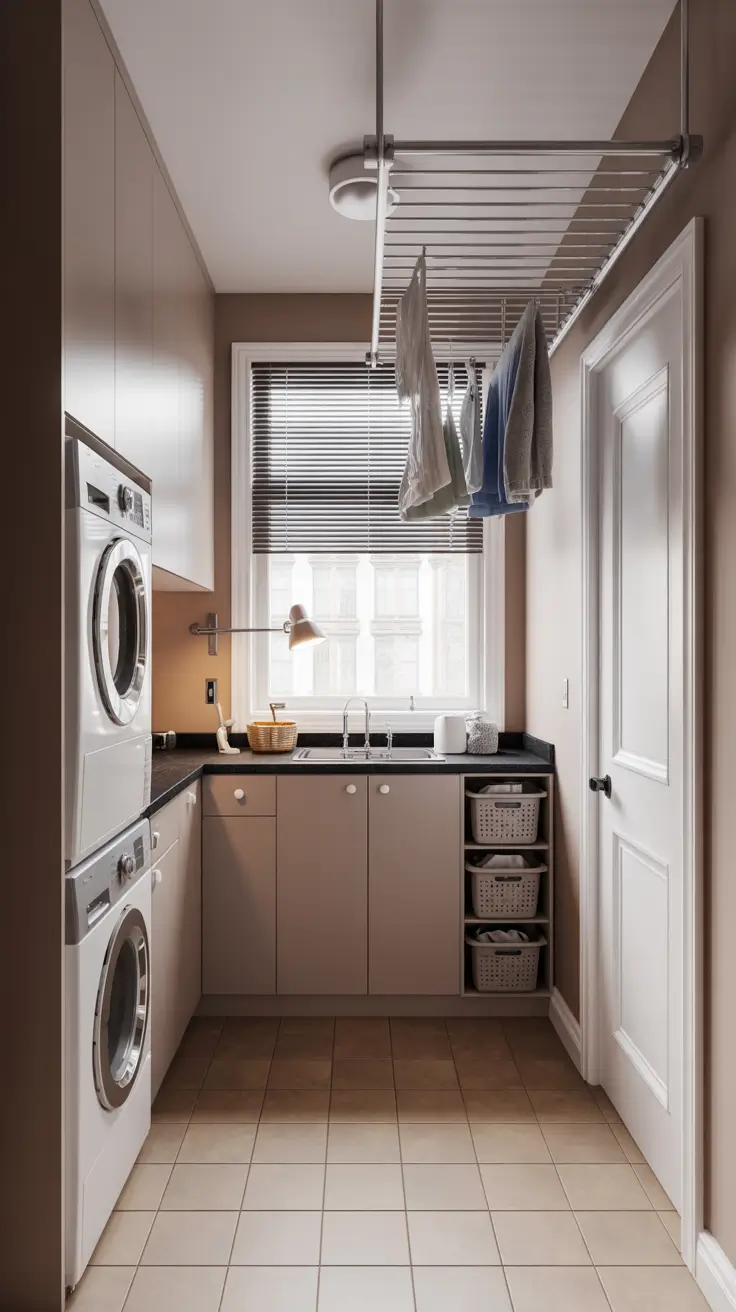
I favor L-shaped layouts in square rooms, combining storage and counters with corners concealing tall bottles. A short leg near the window creates a bright folding area and drying tower. I use lighter paint on edges and slightly darker counters to frame the space elegantly. Adjustable shelf rails add versatility. Matching machine and sink counter heights smooth transitions and improve sorting.
Enhancements include recessed trenches behind machines for hose depth, ceiling-mounted pulley drying racks to save door swing space, low curbs or trays under machines for overflow protection, and pre-planned charging stations for cordless vacuums and steamers.
Innovative Storage Solutions to Maintain Order
In the smallest laundry rooms, I treat floors as walls, creating vertical storage from floor to ceiling. Large 15 to 18-inch wide roll-out cabinets hold bottles and bulk paper products without crowding layouts. Twelve-inch deep uppers above machines with hanging rails accommodate drip-dry items near windows. Shallow niches between studs store stain pens, sewing kits, and dryer sheets, keeping counters clear and organization clean. In mudroom combos, color zoning separates dirty and clean areas, with closed storage near entrances to hide mess.
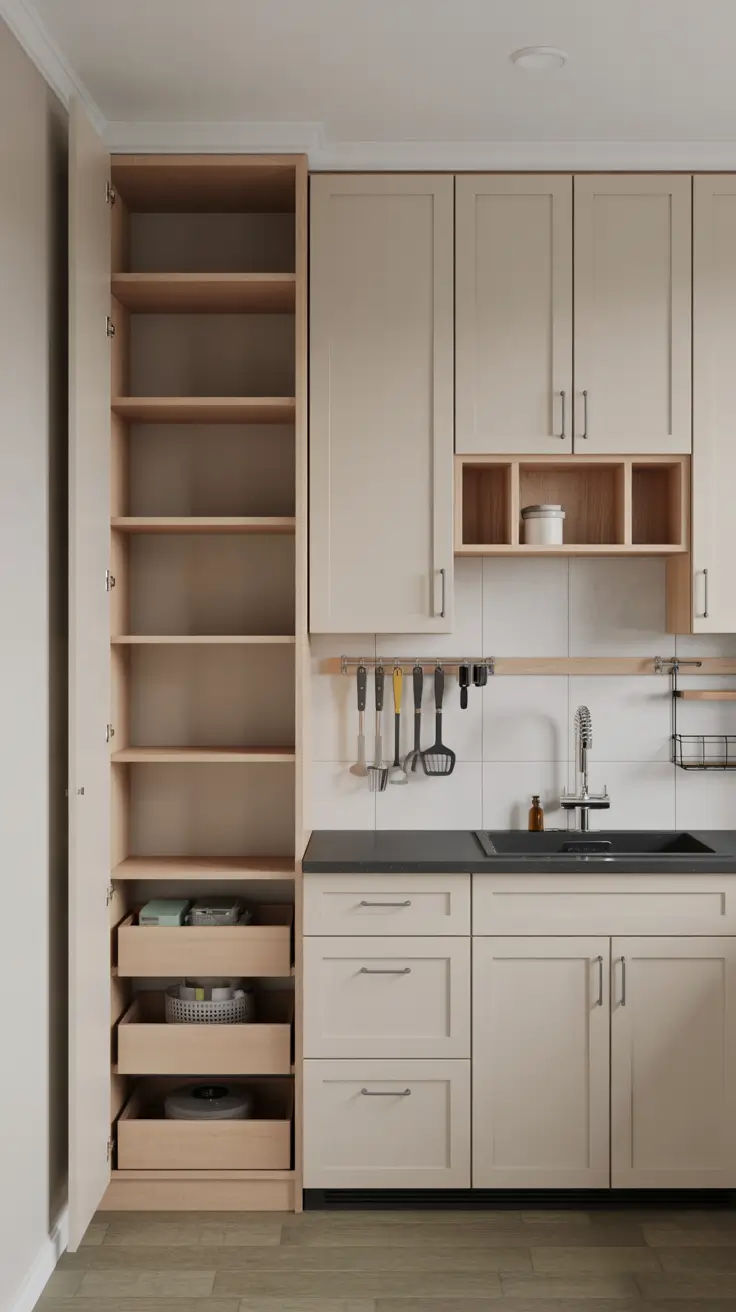
Every organizing item has a purpose and size. My favorite roll-out trays are 6 inches high, hand towel baskets 10 inches deep, and tilt-out hampers 24 inches wide. Peg rails hold brushes and lint rollers, and flip-down ironing boards in 4-inch deep wall cases free floor space. Labeled bins and decanted containers at eye level solve half the organization challenge. Back-of-door caddies hold gloves, and magnetic clips inside sink bases keep laundry codes handy.
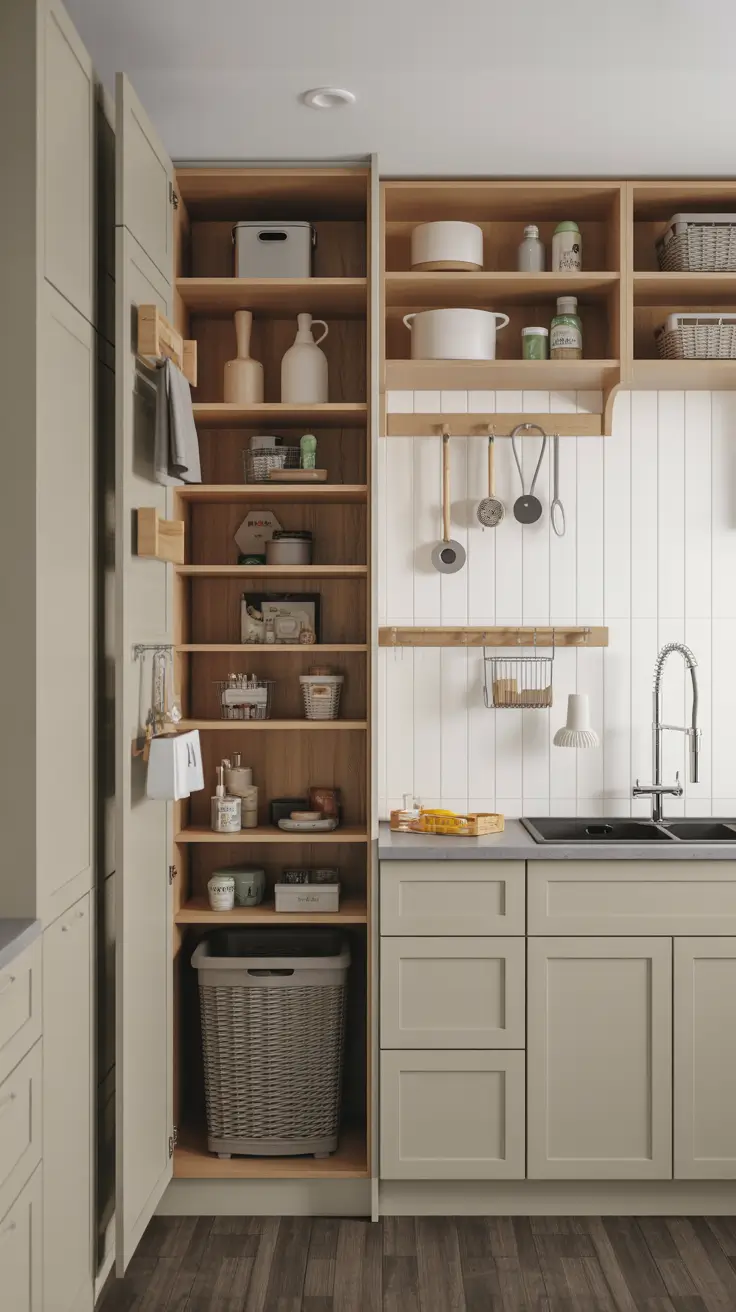
My preferred storage concepts are modest but well-planned, like thin rails holding folding drying racks. Matching basket colors to paint creates a cohesive look, and consistent metal finishes on hardware and rods establish rhythm. Open shelves are placed at least 20 inches above counters for folding clearance and visual separation. In windowless rooms, shelves with lighting aid label reading. To save costs, I repurpose pantry-grade materials and custom-build only where necessary.
Additional features include 6-inch-wide slide-out broom garages with clips and drip trays, slim over-door racks for lightweight items, lockable drawers for hazardous supplies, and perforated metal panels around machines for vertical storage while allowing ventilation.
Current Decor Trends for Small Laundry Rooms
Today’s small laundry rooms favor serene neutrals paired with natural fabrics, creating low-key, distraction-free spaces. Soft greige and clay taupe paint reflect light and widen tight layouts. Misty blue tones also broaden spaces visually. Ribbed wood, light oak, or cane-inset doors add depth without heavy patterns. Hardware is simple, matte, and features small-radius pulls to avoid snagging. Even small windows get linen or woven wood shades to soften glare while preserving color accuracy.
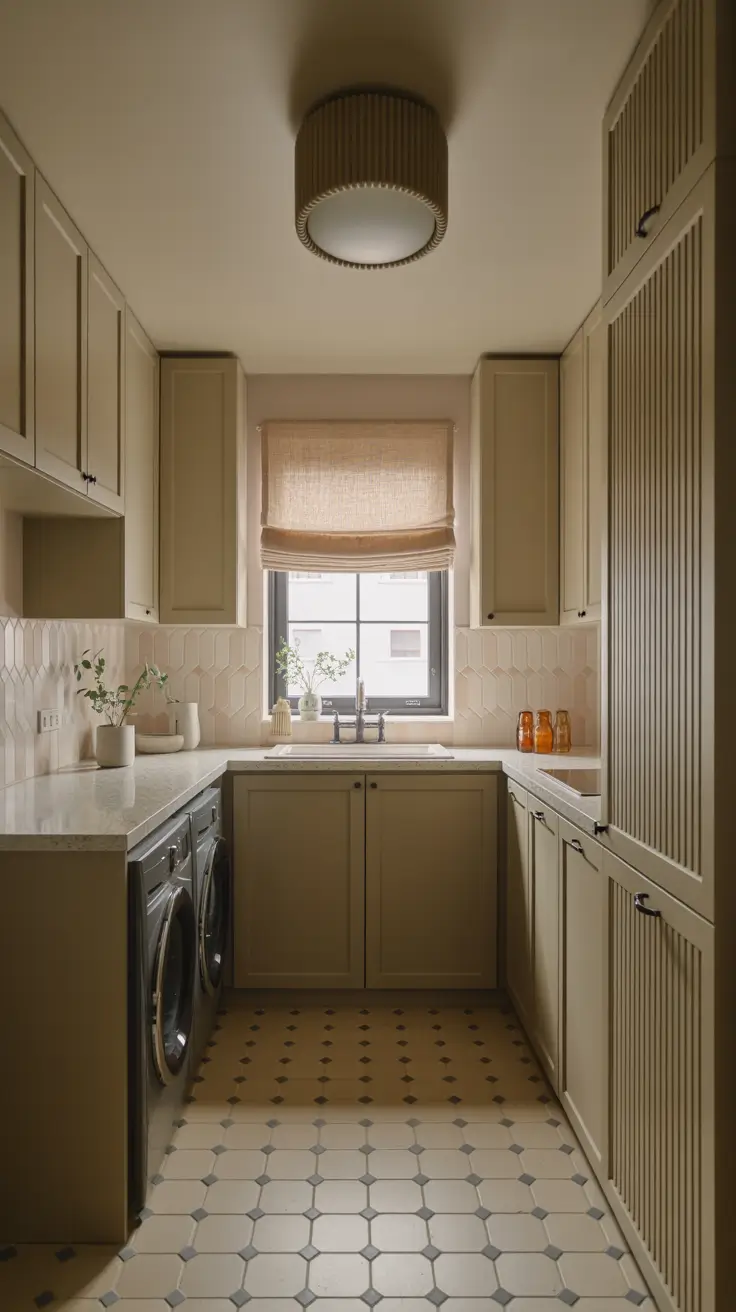
Surfaces balance utility and aesthetics. Quartz countertops with subtle veining resist spills and heat, while porcelain floor tiles in soft checkerboard patterns add subtle movement. Beadboard or vertical tongue-and-groove on lower walls protect sinks and nod to farmhouse style without overdoing it. Subway or zellige-like backsplash tiles provide texture that reads well both in photos and real life. Small art shelves above counters allow seasonal décor rotation.
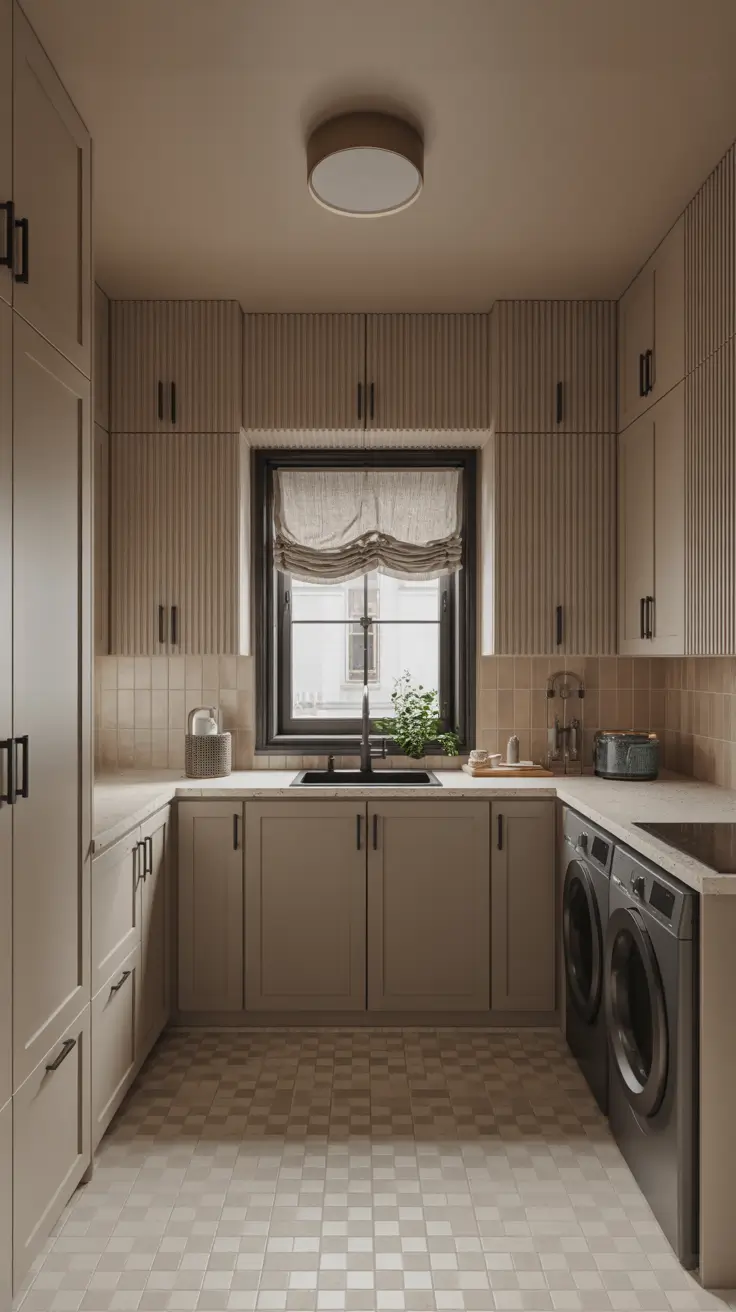
Appliance choices influence décor; I sometimes select white-front stacked machines to blend with cabinetry or darker graphite tones for contrast. Layered lighting includes ceiling flush mounts for general light and small sconces above sinks for task accuracy. Budget-friendly ideas include painting side panels to match walls and wrapping open shelves in matching paint for a custom look. Repeating black accents in faucets and frames provides visual rest points. Plants near windows or under grow lights add life to utility spaces.
Finishing touches include micro-patterned runners for softness and sound dampening, slim picture-frame molding on single walls for rental upgrades, small shelf diffusers for subtle scents, and statement knobs or rail styles repeated for cohesiveness.
Small Laundry Room Ideas That Deliver Big Impact
Creating a big impression in small spaces is about editing, not adding more. I start by identifying a single hero element—bold cabinet colors, fluted panels behind sinks, or patterned floors that mimic rugs. The rest of the palette is muted to let the hero shine, avoiding lines that lead the eye away. In laundry closets, the hero might be a perfectly organized shelving system, as organization itself is a form of décor. Travel photos or textured accents provide quick inspiration and a personal touch.
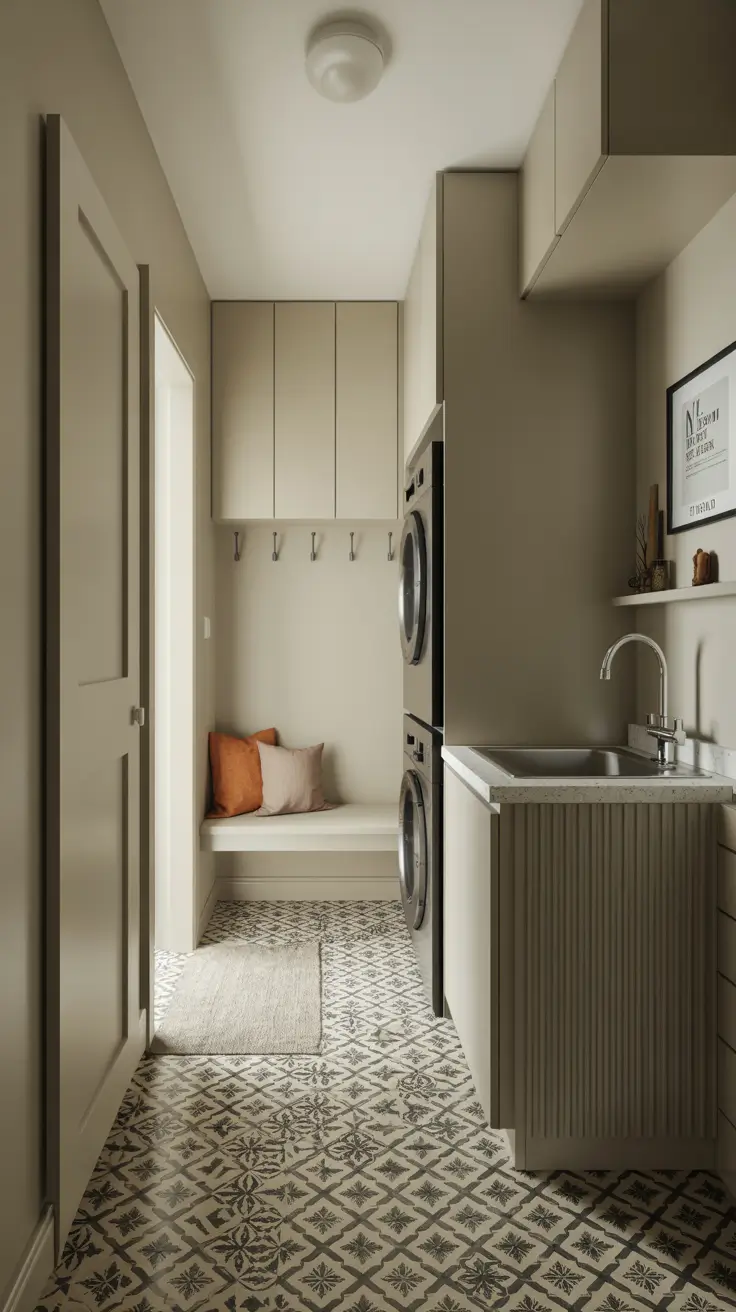
These ideas remain functional; the hero move comes after the basics are right. Stacked washer-dryers free base cabinet runs for folding and hidden hampers, anchored by small sinks for pre-wash tasks. For top loaders, floating shelves and fold-down counters free workspace without lid obstruction. Plain slab cabinet fronts simplify cleaning and visually expand rooms. Entry doors sharing laundry space benefit from narrow benches and hook rails for mini mudroom combos.
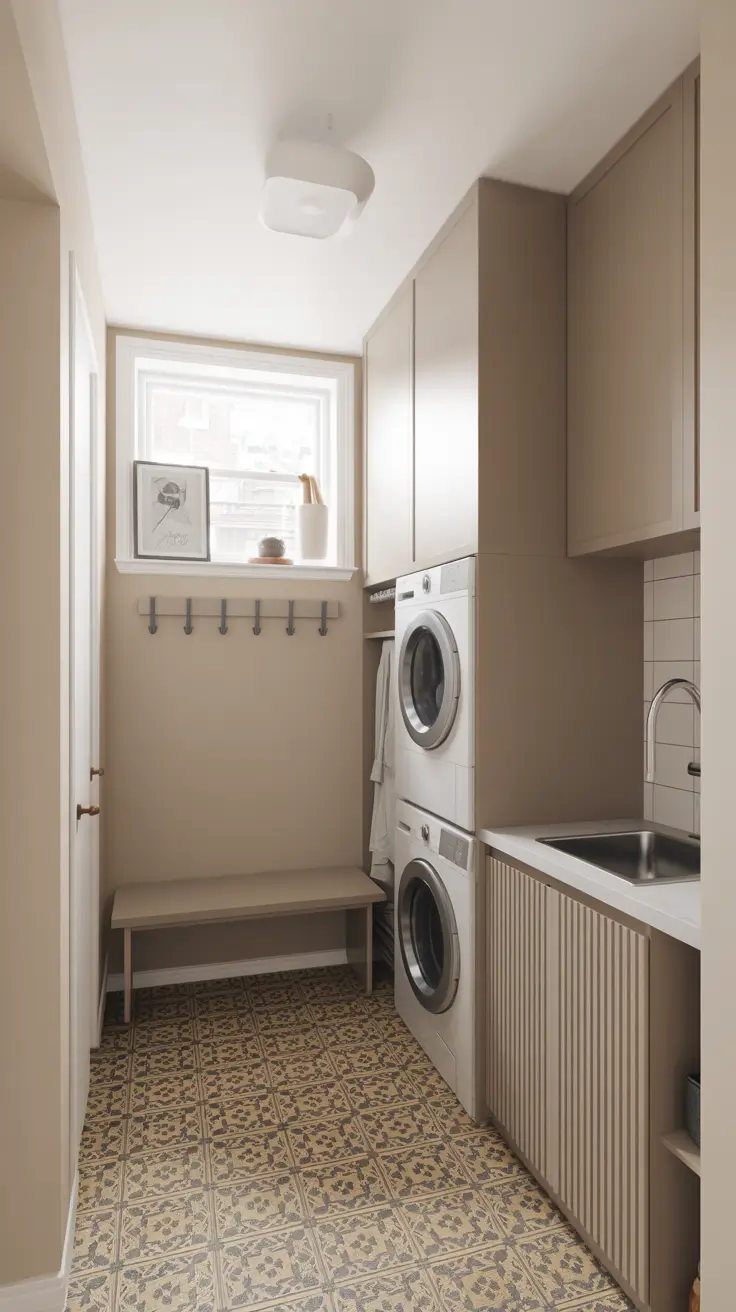
My most rewarding makeovers are often budget-friendly. Simple upgrades like uniform bottles, additional picture lights over open shelves, and repainting uppers in light-reflective satin finishes transform spaces quickly. Renters often use peel-and-stick tiles around sinks to protect splash zones and frame workspaces like art. Multipurpose rooms benefit from ceiling-mounted curtains to conceal machines, instantly cooling studio apartments. I advise tackling one project per weekend and one long-term upgrade to maintain momentum.
Additional ideas include cork boards inside cabinet doors for fabric care tags and paint samples, rechargeable clip lights for task lighting, small ceramic art pieces above windows to tie palettes, and pre-wiring extra outlets for steamers or drying cabinets.
Compact Vertical Laundry Walls with Tall Cabinets
My preferred layout features stacked washer-dryers nestled in a 60 to 66-inch wall bay, wrapped with floor-to-ceiling cabinetry for a clean built-in look. Mounted appliances free half the wall for a deep counter extending beyond the units. I use warm white cabinet paint and dull porcelain floor tiles to visually enlarge the room. Without windows, high-CRI ceiling lights and slim LED strips under counters prevent shadows on folding areas. Vented upper cabinets conceal hoses and allow machine ventilation. This quick remodel suits spaces as small as resort wardrobes or hall niches.
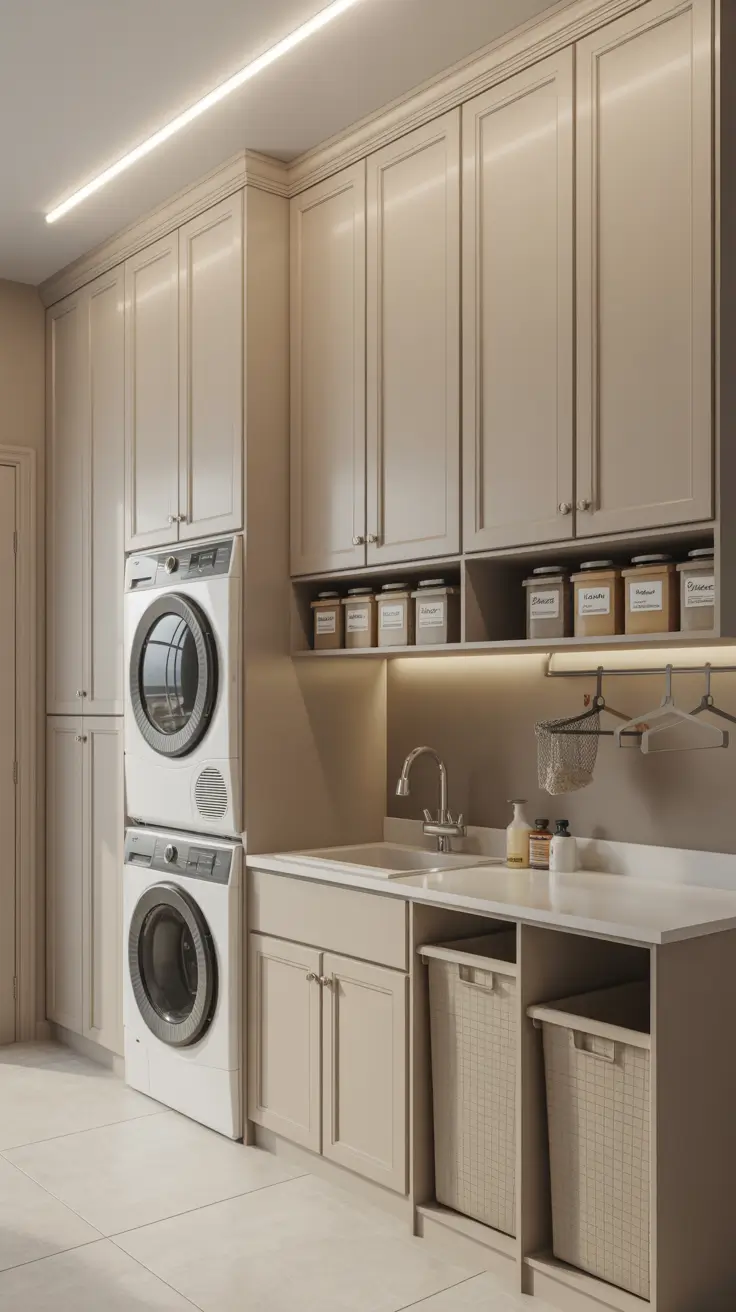
A 74 to 78-inch tall cabinet bank on one side with full-height doors stores brooms, ironing boards, and bulk detergents. The stack sits above a 22 to 25-inch deep laminate or quartz counter for stain treatment and folding, with a 12-inch deep upper shelf for overflow bins. Two pull-out hampers on soft-close slides and a slim drawer for dryer sheets and stain sticks enhance organization. Matte black bar pulls add a modern touch, and a 2-inch maple edge warms the counter. A shallow rail holds mesh bags and lint brushes, keeping small tools off shelves. The result is a streamlined design that conceals clutter and simplifies daily routines.
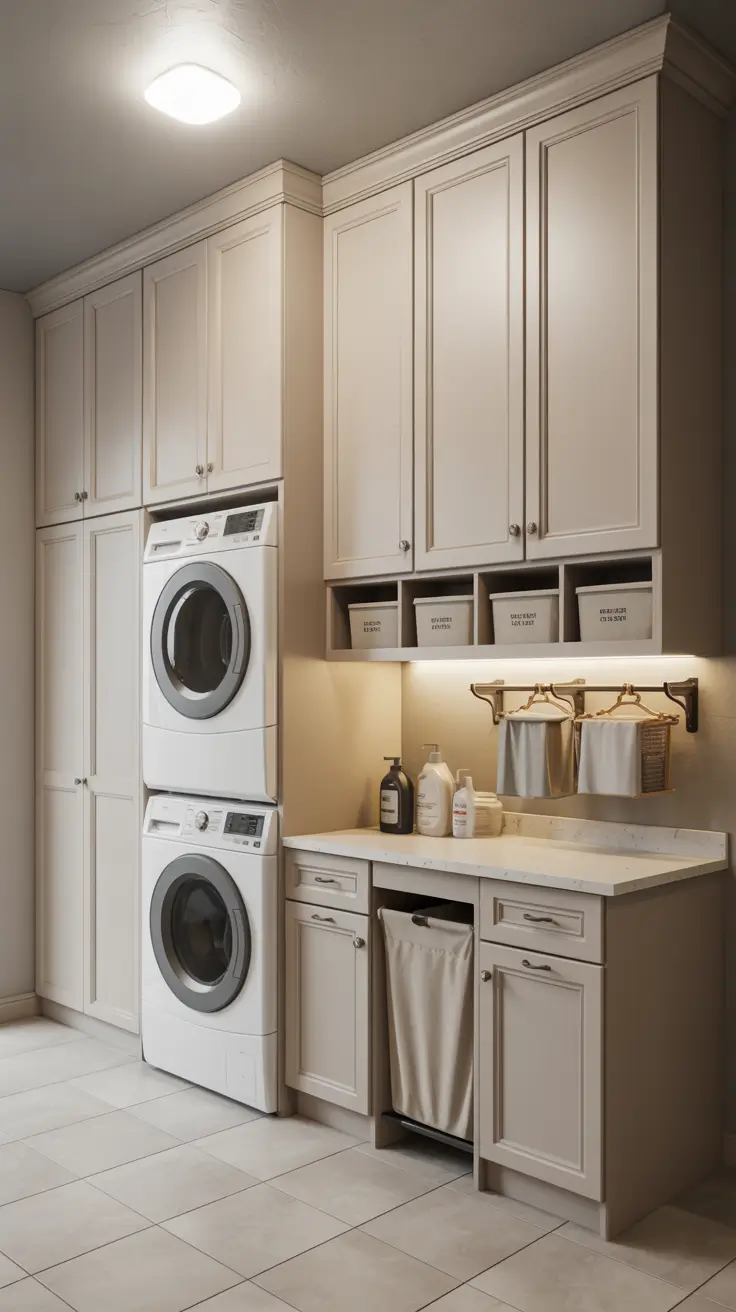
Common mistakes include neglecting side clearances and service access. I ensure at least 1 inch on sides and 3 inches behind hoses and vents to avoid damage. Machines are leveled and fitted with anti-vibration pads to reduce noise. For farmhouse style, swapping flat doors for beadboard panels and adding unlacquered brass knobs changes the look without altering footprints. This simple swap can shift style from urban to cottage effortlessly.
Missing elements include a narrow open cubby above counters for charging trays and label makers, 24-inch wall rails with flip-down drying arms for delicates, and drip lips on counters to contain splashes. These small storage ideas are affordable yet protect cabinetry and streamline daily tasks.
As an Amazon Associate I earn from qualifying purchases.